
Patellar instability different type of patella dislocations explain in detail the signs and symptoms and investigations and evaluation treatment explain in detail with appropriate illustrative diagrams and images
Reading File
Now let me search the medical library for patellar instability and dislocation content in parallel.
Finding Sources
Finding Sources
Searching the Web
patellar instability types dislocation classification signs symptoms investigations treatment 2024
Now let me read the key textbook sections in parallel:
Reading File
Reading File
Finding Sources
Reading Web Page
https://pmc.ncbi.nlm.nih.gov/articles/PMC12139600
I found key content. Now let me read the Miller's Review section and the Campbell's patellar dislocation section in parallel:
Reading File
Reading File
Reading File
Now let me get the Campbell's patellar dislocation section and Miller's treatment section, plus fetch key images:
Reading File
Finding Sources
Finding Sources
Excellent! Let me now read the key sections from Campbell's, Rockwood & Green's, and Tintinalli's:
Reading File
Reading File
Reading File
Now let me fetch the key images from Miller's and get the Campbell's surgical treatment section:
Loading Image
Loading Image
Loading Image
Reading File
I now have excellent material. Let me fetch a few more important images and get the Campbell's surgical treatment section:
Loading Image
Loading Image
Finding Sources
I now have comprehensive material from multiple authoritative textbooks plus current literature. Let me compile the full detailed answer.
Patellar Instability and Patellar Dislocations: A Comprehensive Guide
1. ANATOMY AND BIOMECHANICS
The patellofemoral joint depends on both bony containment and soft tissue constraints for stability:
Bony stabilizers:
- The femoral trochlear groove guides the patella through a cam-like mechanism
- The lateral trochlear facet is normally more prominent than the medial, resisting lateral patellar displacement
- The patella begins engaging the trochlea at approximately 20-30 degrees of knee flexion - below this arc, soft tissues dominate
Soft tissue stabilizers:
- Medial Patellofemoral Ligament (MPFL): The primary medial restraint (50-60% of resistance to lateral translation). Runs from the superomedial patella to the medial femoral epicondyle (Schottle's point)
- Vastus Medialis Obliquus (VMO): Active dynamic medial stabilizer
- Lateral retinaculum: Normally thicker/stronger - imbalance predisposes to lateral dislocation
- Patellotibial and patellomeniscal ligaments: Secondary restraints
Key measurements for instability assessment:
- Q angle: Angle between ASIS-patella line and patella-tibial tubercle line; normal <15° men, <20° women
- TT-TG distance (tibial tubercle to trochlear groove): Normal 9-13 mm; >20 mm = high risk for instability
- Patella alta: Caton-Deschamps index >1.2 or Insall-Salvati ratio >1.2
- Trochlear sulcus angle: Normally <140° on axial views
2. CLASSIFICATION OF PATELLAR INSTABILITY
A. Functional Classification (Lyon/Dejour School)
Three major groups, as described by H. Dejour:
| Group | Definition |
|---|---|
| Objective Patellar Instability (OPI) | At least one documented episode of lateral dislocation + identifiable anatomical risk factor. The most common and clinically relevant group. Subtypes: acute, recurrent (>3 events), habitual (dislocation consistently in early flexion), permanent (persistent displacement throughout ROM) |
| Potential Patellar Instability (PPI) | Anatomical risk factors present + knee discomfort, but NO documented dislocation episode. Risk of future instability |
| Painful Patellar Syndrome (PPS) | Knee pain without anatomical risk factors or documented subluxation/dislocation |
- Patellar instability: current approach, PMC 2026
B. Types of Patellar Dislocation by Direction
| Type | Description | Mechanism | Frequency |
|---|---|---|---|
| Lateral dislocation | Patella displaced laterally out of trochlear groove | Knee flexion + valgus stress + external tibial rotation; or direct medial blow | By far the most common (~95%) |
| Medial dislocation | Patella displaced medially - almost always iatrogenic (after overzealous lateral release or realignment surgery) | Surgical over-correction | Rare; iatrogenic |
| Superior dislocation | Patella locks on the anterior femoral margin in full extension | Hyperextension; osteophyte entrapment in osteoarthritic knees | Very rare; <50 cases reported |
| Intraarticular/horizontal dislocation | Patella rotates 90° within joint | Violent direct trauma | Extremely rare |
| Habitual dislocation | Occurs consistently at a specific knee flexion angle during normal gait | Underlying dysplasia; congenital laxity | Uncommon |
| Permanent/obligate dislocation | Patella remains dislocated throughout entire range of motion | Severe dysplasia; congenital anomaly | Rare |
C. Trochlear Dysplasia: Dejour Classification
Trochlear dysplasia is the strongest anatomical risk factor for patellar instability. Classified by lateral radiograph and axial CT/MRI:
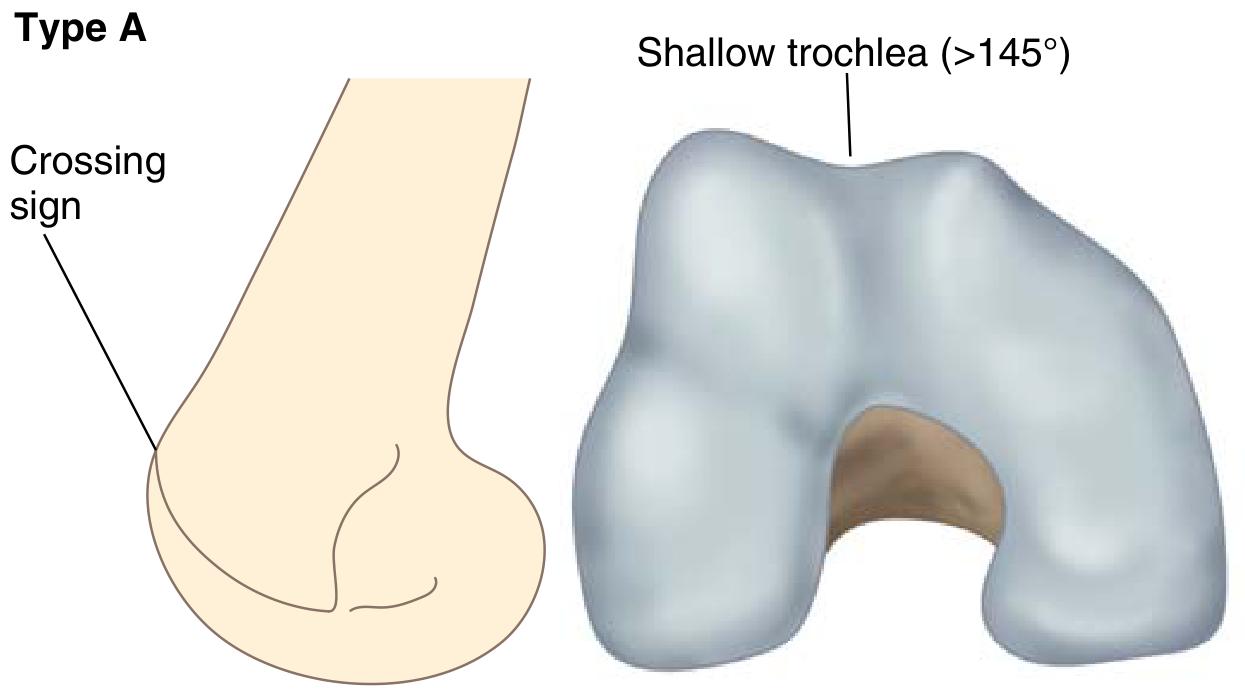
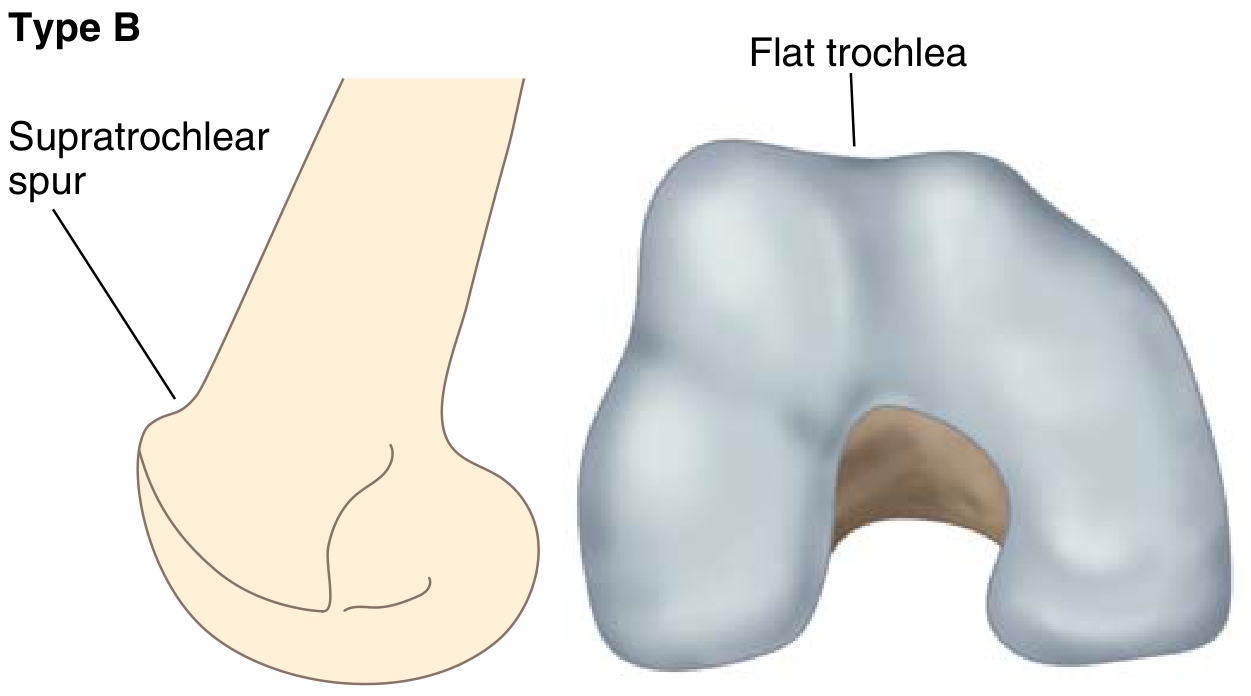
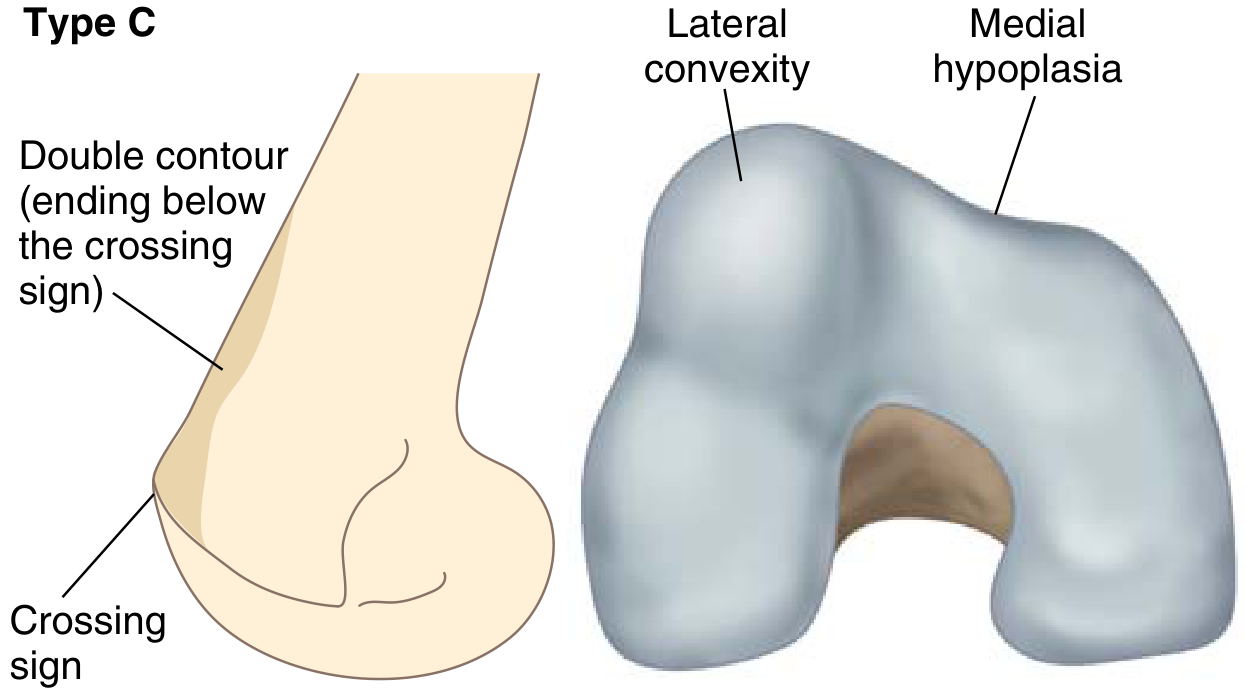
| Type | Lateral X-ray sign | Morphology |
|---|---|---|
| A | Crossing sign only | Shallow trochlea (sulcus angle >145°) |
| B | Crossing sign + supratrochlear spur | Flat/convex trochlea |
| C | Crossing sign + double contour | Lateral convexity + medial hypoplasia |
| D | Crossing sign + spur + double contour | Cliff pattern - most severe |
Updated Dejour V3.0 (2024 - MRI-based):
- Type 0 (no dysplasia): Sulcus angle <157°; lateral trochlear inclination (LTI) >14°
- Type 1 (low-grade): Sulcus angle >157°; LTI <14°; central bump <5 mm
- Type 2 (moderate): Sulcus angle/LTI unmeasurable; central bump <5 mm
- Type 3 (high-grade): Sulcus angle >157° or unmeasurable; LTI <14° or unmeasurable; central bump >5 mm
3. RISK FACTORS AND PREDISPOSING ANATOMY
| Factor | Detail |
|---|---|
| Trochlear dysplasia | Most important; significantly reduces bony containment |
| Patella alta | Delayed entry into the trochlear groove; more time unstabilized |
| Increased TT-TG distance | Lateral pull vector on patella; >20 mm = high risk |
| MPFL incompetence | Traumatic rupture (most commonly at patellar insertion) |
| VMO weakness/atrophy | Reduced active medial stabilization |
| Generalized ligamentous laxity | Hypermobility syndromes (Ehlers-Danlos, Down syndrome) |
| Femoral anteversion | Increases effective valgus alignment |
| Genu valgum | Increases Q angle and lateral force vector |
| Female sex | Higher incidence; greater physiological laxity |
| Age 10-17 years | Peak incidence; incidence 29/100,000 in this group |
| Family history | Genetic predisposition to dysplasia |
| "Miserable malalignment syndrome" | Femoral anteversion + genu valgum + pronated feet - exacerbates symptoms, especially in adolescents |
- Miller's Review of Orthopaedics 9th Ed, p. 365
- Campbell's Operative Orthopaedics 15th Ed, p. 1861
4. SIGNS AND SYMPTOMS
History
- Mechanism: Pivoting/twisting injury with foot planted (non-contact); external tibial rotation with knee in slight flexion; or direct blow to the medial aspect of the patella
- Subjective dislocation event: Patient may report seeing or feeling the kneecap "slip out," followed by spontaneous reduction as the knee extends
- Pop: Often heard/felt - can mimic ACL tear; in patients aged 9-14 years, this mechanism is more likely a patellar instability event than ACL injury
- Previous episodes: Recurrence rate 15-60% after first dislocation; younger patients and those with dysplasia at higher risk
Symptoms
| Symptom | Description |
|---|---|
| Acute pain | Immediate, severe; localised anteriorly around the patella |
| Swelling/effusion | Develops hours post-injury; hemarthrosis common (especially with osteochondral fracture) |
| Inability to weight bear | Difficulty walking and flexing the knee |
| Visible deformity | Patella displaced laterally if not yet reduced |
| Catching/locking | Particularly with loose osteochondral bodies |
| Giving way | Episodes of buckling - hallmark of recurrent instability |
| Stiffness | Especially in early morning or after activity |
| Subluxation sensation | Patella "threatening to give way" without complete dislocation |
Physical Examination Findings
Inspection:
- Knee held in flexion (guarding)
- Visible lateral displacement of the patella (if not spontaneously reduced)
- Swelling/effusion
- Bruising (ecchymosis) developing within hours, particularly medially (from medial retinaculum/MPFL tear)
Palpation:
- Medial tenderness: Tenderness along the medial retinaculum, medial patellar border, and MPFL origin at the medial femoral condyle - highly specific for MPFL rupture
- Joint effusion: Ballottement sign; wave sign
- Hemarthrosis: Suggests osteochondral fracture
- Defect: Palpable defect at medial retinaculum
Special Tests:
| Test | Technique | Positive Finding |
|---|---|---|
| Patellar apprehension test | Patient supine, knee at 30°; examiner gently translates patella laterally | Patient grabs examiner's hand, exhibits fear/anxiety or contracts quadriceps - highly specific for patellar instability |
| Patellar glide test | Divide patellar width into quarters; assess lateral and medial translation | >3 quadrants lateral glide = lateral hypermobility; <1 quadrant = medial tightness |
| J-sign | Watch the patella track during active knee extension from 90° | Patella jumps laterally like a "J" as it exits the trochlea near full extension = suggests dysplasia/alta |
| Tilt test | Examiner lifts lateral patellar edge while patient relaxed | <0° tilt = lateral retinacular tightness |
| Clarke's test | Compress patella, patient contracts quadriceps | Pain = patellofemoral chondromalacia (non-specific) |
| Vastus medialis assessment | Look for VMO atrophy | Indicates chronic quadriceps imbalance |
- Miller's Review of Orthopaedics 9th Ed, p. 365
- Rosen's Emergency Medicine, p. 721
5. INVESTIGATIONS AND EVALUATION
Radiographs (First-Line)
Views Required:
| View | What It Shows |
|---|---|
| AP (anteroposterior) | Gross alignment, fractures, loose bodies, patella position |
| True lateral (30° flexion) | Patella alta/baja, trochlear morphology, crossing sign, supratrochlear spur, double contour sign |
| Axial/Merchant view (30-45° flexion) | Patellar tilt, subluxation, sulcus angle, congruence angle; difficult to obtain pre-reduction |
| Sunrise view (post-reduction) | Patella centering in trochlear groove, confirmed reduction, osteochondral fragments |
Expected X-ray findings with dislocation:
- Empty trochlear groove (if not yet reduced)
- Displaced patella (lateral)
- Joint effusion (radiopaque soft tissue swelling)
- Osteochondral fracture fragment - most commonly at the medial inferior patella edge or lateral femoral condyle
- Lipohemarthrosis (on horizontal beam lateral) - suggests intra-articular fracture
Lateral radiograph trochlear signs:
- Crossing sign: Trochlear groove line crosses the anterior femoral condyle outline = dysplasia present
- Supratrochlear spur: Bony bump proximal to trochlea = Type B dysplasia
- Double contour sign: Hypoplastic medial condyle creates second contour = Type C/D dysplasia
CT Scan
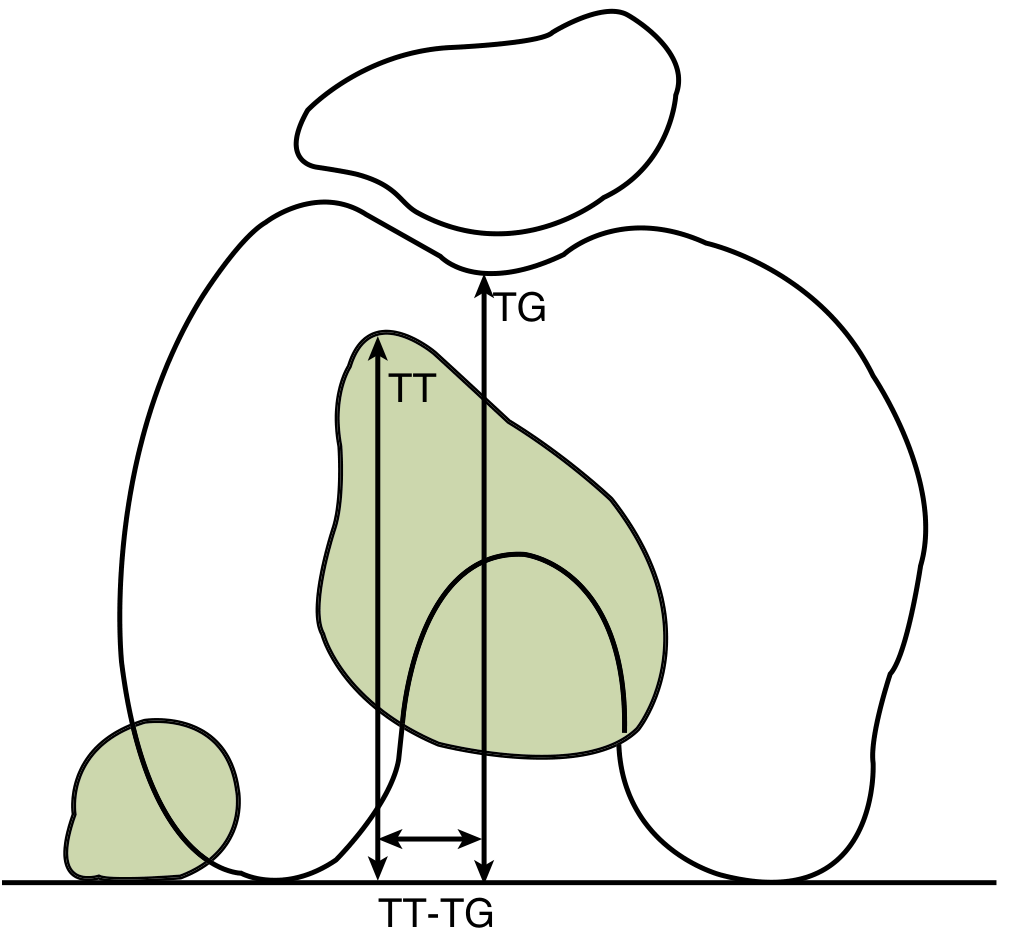
- Gold standard for measuring TT-TG distance (most accurate)
- Normal: 9-13 mm
- 15-20 mm: borderline
-
20 mm: significantly associated with instability
- Quantifies trochlear morphology in cross-section
- Detects osseous loose bodies
- Identifies torsional deformities (femoral anteversion, tibial torsion)
- Dynamic CT can assess patellar tracking in different flexion angles
MRI (Essential in Acute Dislocation with Effusion)
Recommended when effusion is present after patellar instability event to rule out osteochondral injury.
| MRI finding | Significance |
|---|---|
| Lateral femoral condyle bone bruise | Pathognomonic "kissing contusions" pattern - confirms dislocation mechanism |
| Medial patellar bone bruise | From lateral wall impact during reduction |
| MPFL tear | Most commonly at patellar insertion; seen as disruption of medial soft tissues |
| Osteochondral fracture | High incidence (~95% have cartilage injury); common on medial patellar facet and lateral femoral condyle |
| VMO injury | Associated disruption |
| Loose bodies | Free fragments requiring arthroscopic removal |
| TT-TG on MRI | Underestimates true distance vs CT; CT preferred for this measurement |
The International Patellofemoral Study Group recommends MRI for patients with large hemarthrosis to detect osteochondral fractures.
- Rockwood and Green's Fractures in Adults 10th Ed, p. 3020
Arthroscopy (Selective Use)
- Not routine; reserved for:
- Large hemarthrosis with suspected loose osteochondral fragments
- Failure of conservative management
- Pre-surgical assessment
- Concurrent intra-articular pathology
Patient-Reported Outcome Measures
- Kujala Score (AKPS): Anterior knee pain scale; gold standard for patellofemoral outcomes
- IKDC (International Knee Documentation Committee)
- Lysholm score
- KOOS (Knee Injury and Osteoarthritis Outcome Score)
6. EVALUATION FRAMEWORK (SYSTEMATIC APPROACH)
STEP 1: Establish dislocation vs subluxation vs alternative diagnosis
         ↓
STEP 2: Assess for urgent reduction (if still dislocated)
         ↓
STEP 3: Post-reduction imaging (X-ray: AP + lateral + sunrise)
         ↓
STEP 4: Identify osteochondral fracture / loose bodies
         ↓
STEP 5: MRI if hemarthrosis or suspected osteochondral injury
         ↓
STEP 6: Risk-stratify for recurrence (age, sex, trochlear dysplasia,
         TT-TG distance, patella alta, prior episodes)
         ↓
STEP 7: If surgical candidate: CT for TT-TG; full morphological assessment
         ↓
STEP 8: Outcome measures + physiotherapy assessment
7. TREATMENT
A. Emergency / Acute Management: Closed Reduction
Technique:
- Provide adequate analgesia (oral analgesics usually sufficient; rarely needs sedation)
- Patient supine, hip flexed to relax hamstrings
- Slowly and gently extend the knee (passively)
- Apply inferomedial pressure to the lateral patella as the knee extends
- A second provider may assist with gentle downward pressure on the lateral patella to "open" the medial facet
- Confirm reduction - a palpable/audible "click" as patella seats into trochlea
Post-reduction:
- Neurovascular examination
- Knee immobilizer in full extension
- Post-reduction radiographs: AP + lateral + sunrise (to confirm centering + exclude fracture)
- Weight bear as tolerated with crutches
- Orthopedic follow-up within 1-2 weeks
B. Conservative (Non-Operative) Treatment
Indicated for: First-time dislocations without osteochondral fracture or loose bodies.
Phase 1: Acute (0-2 weeks)
- Knee immobilizer in extension
- Cryotherapy + NSAIDs for pain and swelling
- Isometric quadriceps exercises
Phase 2: Rehabilitation (2-6 weeks)
- Patella-stabilizing brace
- Progressive range of motion
- Closed-chain quadriceps exercises (especially VMO emphasis)
- Hip abductor/external rotator strengthening
- Proprioception training
Phase 3: Return to Sport (6-12 weeks)
- Return when full passive ROM regained, no effusion, quadriceps strength ≥80% of contralateral side
- Functional sport-specific training
Outcomes:
- Recurrence rates 15-44% (conservative) to 15-60% in some series
- Recurrence risk highest in: age <15, trochlear dysplasia, patella alta, elevated TT-TG, female sex
- Surgically and conservatively managed patients have similar long-term functional outcomes in first-time dislocators without major structural injury
C. Surgical Treatment
Indications for surgery:
- Osteochondral fracture with free fragment (fix or remove)
- Large complete MPFL avulsion/midsubstance tear (selected cases)
- Failure of conservative management / recurrent instability
- First-time dislocation in high-risk patients (trochlear dysplasia grade B-D, TT-TG >20 mm, high-level athletes)
- Medial iatrogenic instability (if from prior surgery)
Surgical Procedures:
1. MPFL Reconstruction (Proximal Realignment)
The current gold standard for recurrent patellar instability.
- Autograft: gracilis or semitendinosus tendon
- Graft routed from patella (patellar tunnels or suture anchors) to anatomic femoral origin
- Schottle's point = anatomic femoral attachment of MPFL, identified on lateral radiograph:
- 1 mm anterior to posterior cortex extension line
- 2.5 mm distal to posterior origin of medial femoral condyle
- Proximal to posterior point of Blumensaat line
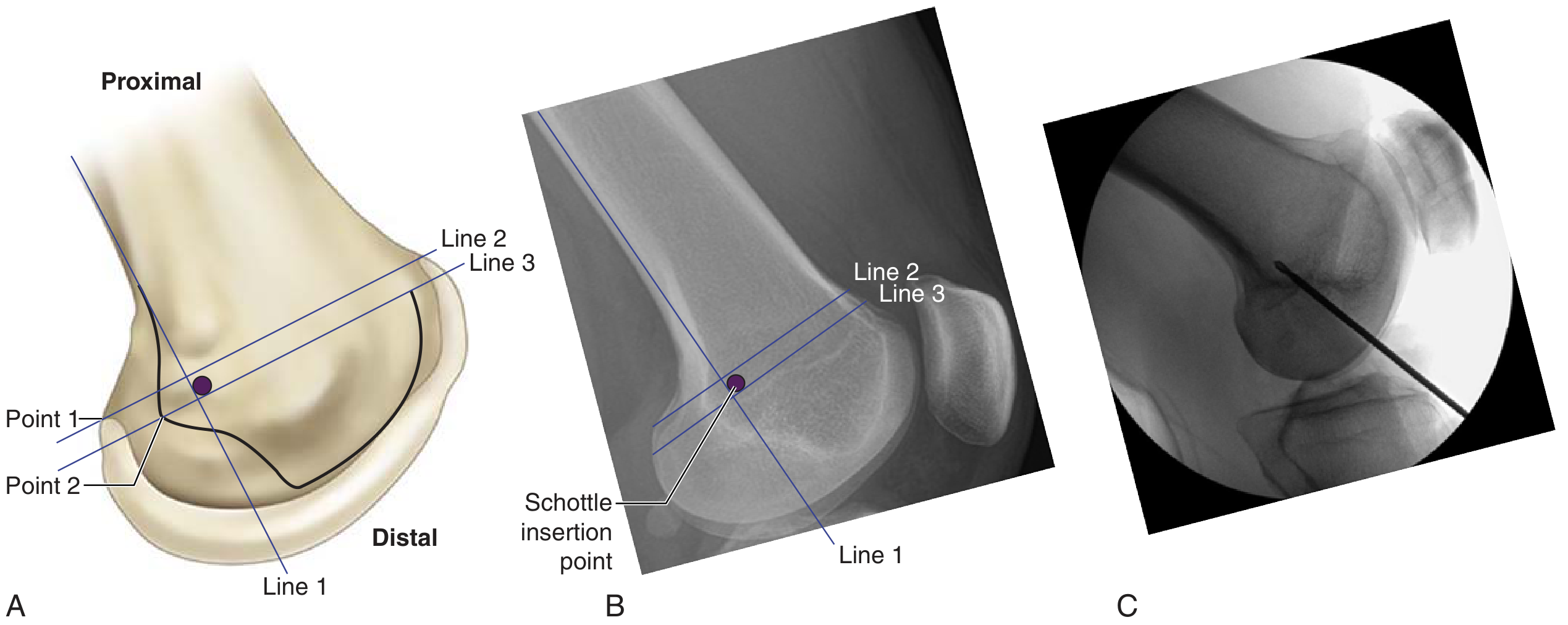
- Isolated medial retinacular plication and VMO advancement have largely fallen out of favour due to higher failure rates
2. Tibial Tubercle Osteotomy (Distal Realignment)
- Anteromedialization (Fulkerson osteotomy): Combined anteromedial transfer of the tibial tubercle
- Indicated when: TT-TG >20 mm, associated distal patellar chondromalacia (anteriorization offloads the patella)
- Contraindication: Proximal patellar arthrosis of the medial facet
- Medial transfer alone (Elmslie-Trillat): For isolated TT-TG elevation without chondral disease
- Fixed with screws; partial weight-bearing post-op
3. Trochleoplasty
- Surgical deepening/reshaping of the trochlear groove
- Indicated for: High-grade trochlear dysplasia (Dejour B/D with supratrochlear bump) when bony containment is insufficient
- Technically demanding; usually combined with MPFL reconstruction
- Sulcus-deepening trochleoplasty (Bereiter technique) most common
4. Lateral Release / Lateral Retinacular Lengthening
- Isolated lateral release should NOT be performed for patellar instability (causes medial iatrogenic instability)
- Can be added as an adjunct to address excessive lateral tightness alongside other procedures
5. Proximal Femoral Osteotomy
- For patients with significant femoral anteversion (>25-30°) contributing to instability
- Derotational femoral osteotomy corrects excessive anteversion
6. Loose Body Removal / Osteochondral Repair
- Arthroscopic removal of free intra-articular fragments
- OATS (osteochondral autograft transfer) or autologous chondrocyte implantation for large cartilage defects
Decision algorithm for surgery:
Recurrent instability / first-time with risk factors
         ↓
Assess TT-TG distance (CT)
         ↓
TT-TG <20 mm                    TT-TG >20 mm
     ↓                                ↓
MPFL reconstruction alone       MPFL + tibial tubercle
                                 anteromedialisation
         ↓
Assess trochlear dysplasia (Dejour)
         ↓
Grade A/C (no bump)            Grade B/D (bump present)
MPFL +/- TTO               MPFL + trochleoplasty +/- TTO
8. SPECIAL CONSIDERATIONS
Pediatric Patients (Open Physes)
- First-time dislocation remains most common cause of traumatic hemarthrosis in children
- Bony procedures at tibial tubercle risk physeal damage until skeletal maturity
- MPFL reconstruction can be performed physeal-sparing
- Higher recurrence risk in children <15 years
Superior Patellar Dislocation
- Rare (fewer than 50 cases reported)
- Presents with: high-riding patella, acute knee pain, inability to perform straight leg raise, skin dimple deformity
- Often in patients with large osteophytes (knee osteoarthritis) - the osteophyte entraps the patella in hyperextension
- Requires manual reduction; may need surgical osteophyte removal if recurs
Iatrogenic Medial Dislocation
- Occurs after overzealous lateral release or distal realignment over-correction
- Presents with medial apprehension, locking in flexion
- Requires revision realignment (medial retinacular release + lateral reconstruction)
Habitual Dislocation
- Occurs predictably at a consistent flexion angle during normal walking
- Usually congenital/developmental basis
- Often requires surgical correction combining MPFL reconstruction + trochleoplasty
9. COMPLICATIONS
| Complication | Detail |
|---|---|
| Osteochondral fracture | Up to 95% articular cartilage injury in first-time dislocators |
| Recurrent dislocation | 15-60% after conservative management |
| Medial iatrogenic instability | Excessive lateral release or over-correction |
| Post-traumatic osteoarthritis | Cartilage injury leads to early patellofemoral OA |
| Stiffness | Post-immobilization; especially after tibial tubercle osteotomy |
| MPFL graft failure | Incorrect tunnel placement; isometry failure |
| Infection | Post-operative |
| Neurovascular injury | Rare; saphenous nerve at risk in medial approaches |
Summary Table
| Parameter | Key Points |
|---|---|
| Most common type | Lateral dislocation |
| Peak incidence | Age 10-17 years; 29/100,000 |
| Key risk factors | Trochlear dysplasia, patella alta, TT-TG >20 mm, MPFL rupture, female sex |
| Gold standard imaging | CT for TT-TG; MRI for soft tissue/cartilage |
| First-line treatment | Closed reduction + immobilizer + rehab |
| Surgery indications | Osteochondral fracture, recurrence, high-risk anatomy |
| Best surgical procedure | MPFL reconstruction ± TTO ± trochleoplasty |
| Recurrence risk (conservative) | 15-60% |
| TT-TG normal | 9-13 mm |
| MPFL tear location | Most commonly patellar insertion |
Sources:
- Miller's Review of Orthopaedics, 9th Ed - pp. 364-366 (patellar instability, Dejour classification, MPFL)
- Campbell's Operative Orthopaedics, 15th Ed 2026 - p. 1861 (patellar dislocations, treatment)
- Rockwood and Green's Fractures in Adults, 10th Ed 2025 - pp. 3019-3021 (acute patellar dislocations)
- Rosen's Emergency Medicine - pp. 720-721 (acute management)
- Tintinalli's Emergency Medicine - p. 960 (patellar dislocations in children)
- Patellar instability: current approach (PMC, 2026) - Dejour V3.0 classification, updated surgical algorithms
Patellar instability different type of patella dislocations explain in detail the signs and symptoms and investigations and evaluation treatment explain in detail with appropriate illustrative diagrams and images
Reading File
Good - I have the skill instructions. Now let me run all searches in parallel to gather comprehensive content from the library and web simultaneously.
Finding Sources
Finding Sources
Searching the Web
patellar instability types classification dislocation signs symptoms investigations treatment 2025 orthopaedics
The FTS searches returned no results - let me try different search terms and look for the specific textbook blocks I know exist:
Finding Sources
Finding Sources
Reading Web Page
https://pmc.ncbi.nlm.nih.gov/articles/PMC12139600
Excellent - I have the textbook file paths. Now let me read all key sections in parallel:
Reading File
Reading File
Finding Sources
Finding Sources
Let me now read the Miller's patellar instability section and the Rosen's patellar dislocation section, plus fetch the key images:
Reading File
Reading File
Reading File
Now let me fetch all the key images and read the Miller's surgical treatment section:
Loading Image
Loading Image
Loading Image
Reading File
Now let me fetch the remaining important images - the TT-TG diagram and Schottle's point:
Loading Image
Loading Image
Loading Image
I now have all four Dejour types illustrated, the TT-TG diagram, and the Schottle's point MPFL images. I have comprehensive textbook content from Campbell's, Rockwood & Green's, Miller's, and Rosen's, plus the latest 2024-2026 evidence. Let me now compose the full, detailed, well-illustrated answer.
Patellar Instability and Patellar Dislocations: A Complete Clinical Guide
SECTION 1 — ANATOMY AND STABILIZERS OF THE PATELLOFEMORAL JOINT
The patella sits within the femoral trochlear groove and is stabilized by a combination of bony and soft tissue restraints. Understanding these is essential to understanding why instability occurs.
Bony Stabilizers
- The lateral trochlear facet is normally taller and more prominent than the medial, creating a "wall" that resists lateral patellar displacement
- The patella engages the trochlea at approximately 20-30° of knee flexion - below this arc, soft tissues provide primary restraint
- Any trochlear shallowness (dysplasia) eliminates this bony containment
Soft Tissue Stabilizers
| Structure | Role |
|---|---|
| MPFL (Medial Patellofemoral Ligament) | Primary medial restraint - provides ~50-60% of resistance to lateral translation. Runs from superomedial patella to medial femoral epicondyle (Schottle's point). Ruptured in >90% of acute dislocations |
| VMO (Vastus Medialis Obliquus) | Active dynamic medial stabilizer; weakness allows lateral subluxation |
| Lateral retinaculum | Normally thicker than medial; excessive tightness contributes to patellar tilt and lateral tracking |
| Patellotibial and patellomeniscal ligaments | Secondary distal restraints |
Key Biomechanical Measurements
| Measurement | Normal Values | Significance |
|---|---|---|
| Q angle | <15° (male), <20° (female) | Represents lateralizing force vector; increased with femoral anteversion/genu valgum |
| TT-TG distance | 9-13 mm | Lateral tubercle displacement increases lateral pull; >20 mm = high instability risk |
| Insall-Salvati ratio | 0.8-1.2 | >1.2 = patella alta; reduces trochlear engagement |
| Caton-Deschamps index | 0.6-1.2 | >1.2 = patella alta |
| Trochlear sulcus angle | <140° (axial view) | >145-150° = trochlear dysplasia |
SECTION 2 — CLASSIFICATION OF PATELLAR INSTABILITY
A. By Functional Pattern (Lyon/Dejour Classification)
Three major clinical groups, introduced by H. Dejour:
| Group | Definition |
|---|---|
| Objective Patellar Instability (OPI) | At least one documented dislocation + identifiable anatomical risk factor. Lateral dislocation during knee extension (non-contact) is the most common presentation. Within OPI: acute (first-time), recurrent (>3 events), habitual (occurs at a consistent knee flexion angle every time), permanent (patella stays dislocated throughout full ROM) |
| Potential Patellar Instability (PPI) | Anatomical risk factors present + knee discomfort, but no documented complete dislocation - only subluxation or apprehension |
| Painful Patellar Syndrome (PPS) | Anterior knee pain without risk factors or dislocation - often misdiagnosed as instability |
B. By Direction of Dislocation
| Type | Description | Mechanism | Frequency |
|---|---|---|---|
| Lateral dislocation | Patella displaced laterally - the patella completely exits the trochlea laterally | Knee flexion + valgus stress + external tibial rotation on planted foot; or direct medial blow | ~95% - by far the most common |
| Medial dislocation | Patella displaced medially | Almost exclusively iatrogenic (over-aggressive lateral release surgery or over-correction of realignment); traumatic medial dislocation is exceedingly rare | Rare |
| Superior dislocation | High-riding patella locked on the anterior femoral condyle in extension | Hyperextension (often in osteoarthritic knees with large osteophytes that trap the patella) | Very rare (<50 cases reported) |
| Intra-articular / horizontal dislocation | Patella rotates 90° inside the joint | High-energy direct trauma | Extremely rare |
| Habitual dislocation | Predictable dislocation occurring at a specific flexion angle during normal gait | Congenital/developmental; tight lateral structures or abnormal muscle insertions | Uncommon |
| Permanent / obligate dislocation | Patella remains permanently displaced, irreducible throughout entire ROM | Severe congenital dysplasia; neuromuscular conditions | Rare |
C. Dejour Classification of Trochlear Dysplasia
Trochlear dysplasia is the single strongest predictor of patellar instability. It is classified based on lateral radiograph signs and axial cross-sectional morphology:
Dejour Type A - Shallow Trochlea
Type A: The trochlear groove line crosses the anterior femoral condyle outline (crossing sign) on the lateral view. Axially the trochlea is shallower than normal but still concave. Sulcus angle >145°.
Dejour Type B - Flat Trochlea with Supratrochlear Spur
Type B: Crossing sign PLUS a supratrochlear spur (bony bump protruding proximally). Axially the trochlea is flat or frankly convex - no groove to contain the patella.
Dejour Type C - Lateral Convexity with Medial Hypoplasia
Type C: Crossing sign PLUS double contour (a second line below the crossing sign representing the hypoplastic medial condyle). Axially: lateral facet is convex while medial facet is hypoplastic.
Dejour Type D - Most Severe "Cliff Pattern"
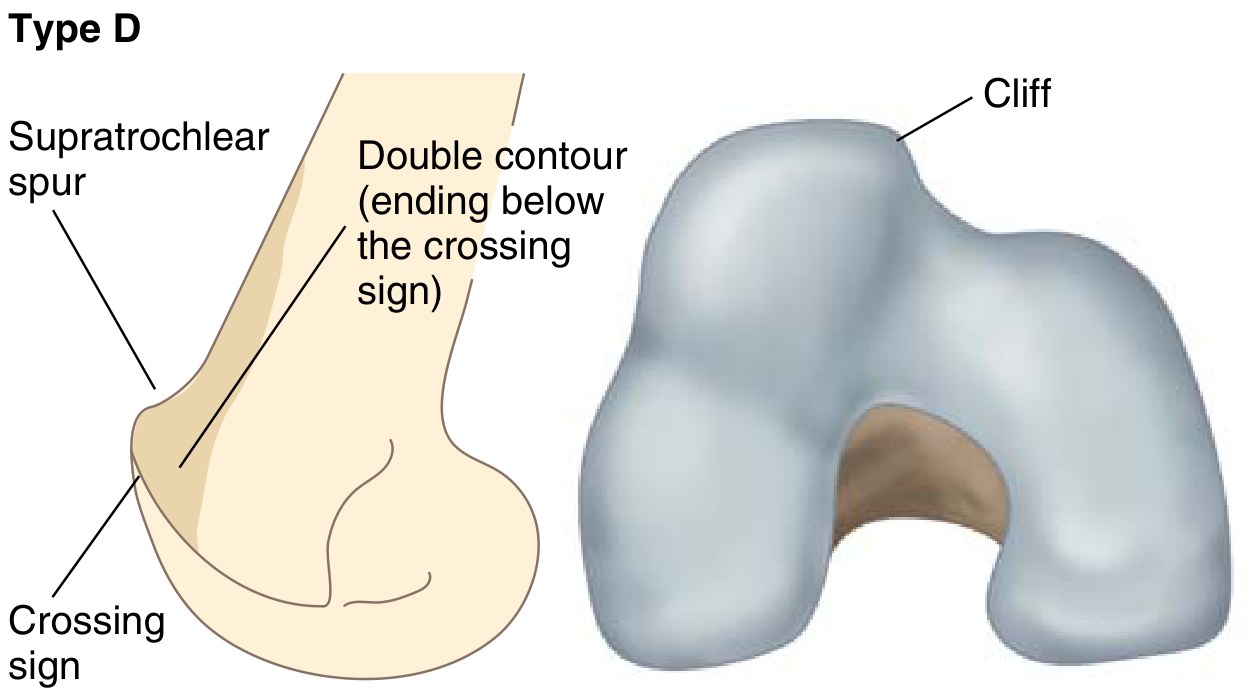 Type D: All three lateral signs present (crossing sign + supratrochlear spur + double contour). Axially there is an abrupt asymmetry ("cliff") between the two facets - the most unstable bony morphology. Type D requires trochleoplasty.
| Dejour Type | Lateral X-ray Signs | Axial Morphology | Surgical Implication |
|---|---|---|---|
| A | Crossing sign only | Shallow trochlea | MPFL recon ± TTO |
| B | Crossing sign + spur | Flat/convex trochlea | MPFL recon + trochleoplasty |
| C | Crossing sign + double contour | Convex lateral + medial hypoplasia | MPFL recon ± TTO |
| D | Crossing sign + spur + double contour | Cliff/asymmetric | MPFL recon + trochleoplasty + TTO |
Updated Dejour V3.0 (2024 - quantitative MRI-based):
- Type 0 (no dysplasia): Sulcus angle <157°; LTI >14°
- Type 1 (low-grade): Sulcus angle >157°; LTI <14°; central bump <5 mm
- Type 2 (moderate): Sulcus angle/LTI unmeasurable; central bump <5 mm
- Type 3 (high-grade): Bump >5 mm; most severe - requires trochleoplasty
SECTION 3 — RISK FACTORS AND PREDISPOSING ANATOMY
| Risk Factor | Detail |
|---|---|
| Trochlear dysplasia | Most powerful single risk factor; eliminates bony containment |
| Patella alta | Delayed engagement into the trochlea; the patella is "free" for longer during flexion |
| Increased TT-TG distance | Lateral pull vector; >20 mm is strongly associated with instability |
| MPFL deficiency | Traumatic rupture or congenital laxity; >90% ruptured in acute dislocation |
| VMO weakness / hypoplasia | Loss of dynamic medial stabilization |
| Ligamentous laxity | Hypermobility syndromes (Ehlers-Danlos, Down syndrome, Marfan's) |
| Female sex | Higher physiological laxity; broader pelvis increases Q angle |
| Age 10-17 years | Peak incidence 29/100,000 in this age group |
| Femoral anteversion | Increases effective valgus; rotates the trochlea into a less favorable orientation |
| Genu valgum | Increases Q angle and lateral pull |
| Positive family history | Genetic predisposition to dysplasia and laxity |
| "Miserable malalignment syndrome" | Femoral anteversion + genu valgum + pronated feet - compounds instability, especially in adolescents |
- Campbell's Operative Orthopaedics 15th Ed, p. 1861
- Miller's Review of Orthopaedics 9th Ed, p. 365
SECTION 4 — SIGNS AND SYMPTOMS
History
- Mechanism: Pivoting/twisting on a planted foot (most common - non-contact); external tibial rotation with knee flexed; or direct blow to the medial patella
- Age 9-14: A pop + swelling after twisting is more likely patellar instability than ACL tear
- Prior episodes: Recurrence rate is 15-75% after first dislocation
- Spontaneous reduction: Patella often self-reduces as the knee extends; patient describes seeing or feeling the kneecap "pop out and back in"
Symptoms
| Symptom | Description |
|---|---|
| Acute, severe anterior knee pain | Immediate, localised to the patella |
| Swelling / effusion | Develops within hours post-injury; hemarthrosis common especially with osteochondral fracture |
| Inability to weight bear | Difficulty walking and bending the knee |
| Giving way | Episodic buckling - hallmark of recurrent instability |
| Catching / locking | Suggests loose osteochondral bodies |
| Pop or crack | Heard/felt at time of dislocation; should not be confused with ACL rupture |
| Visible deformity | Patella displaced laterally if not yet spontaneously reduced |
| Stiffness | Post-injury; worse in the morning |
| Subluxation sensation | Patella "threatening to shift" without complete dislocation (in chronic instability) |
| Numbness / paraesthesia | Occasional; from pressure on saphenous nerve or peroneal nerve with significant displacement |
Physical Examination
Inspection:
- Knee held in partial flexion (guarding)
- Visible lateral displacement if still dislocated
- Diffuse swelling and ecchymosis (especially medially - from medial retinaculum/MPFL tear)
- Quadriceps wasting in chronic cases
Palpation:
- Medial retinacular tenderness - the cardinal sign; along medial patellar border and at MPFL attachment on medial femoral condyle
- Hemarthrosis / joint effusion - ballottement, fluctuance
- Palpable defect in the medial retinaculum (acute)
- Diffuse patellar tenderness
Special Clinical Tests:
| Test | Technique | Positive Finding | Significance |
|---|---|---|---|
| Patellar apprehension test (Fairbank's sign) | Patient supine, knee at 20-30°; examiner pushes patella laterally | Fear, quadriceps contraction, patient grabs examiner's hand | Most specific test for lateral instability; sensitivity ~39%, specificity ~92% |
| Patellar glide test | Divide patella into 4 quadrants mediolaterally; assess excursion | >3 quadrants lateral = hypermobility; <1 quadrant medial = lateral retinacular tightness | Quantifies passive restraints |
| J-sign | Observe patella tracking during active extension from 90° to 0° | Patella jumps laterally ("J" shape) as it exits the trochlea near full extension | Suggests patella alta or trochlear dysplasia |
| Patellar tilt test | Examiner lifts lateral patellar edge with knee extended | <0° tilt (lateral edge cannot be elevated to neutral) = lateral retinacular tightness | Guides lateral release decision |
| Medial apprehension test | Medially directed pressure on patella | Apprehension = iatrogenic medial instability (post lateral release) | |
| Clarke's test | Compress patella into trochlea, patient contracts quadriceps | Pain under patella | Non-specific; patellofemoral chondromalacia |
| VMO assessment | Palpate VMO during straight leg raise | Atrophy or absent contraction | Chronic instability |
SECTION 5 — INVESTIGATIONS AND EVALUATION
Step-by-Step Investigation Framework
ACUTE PRESENTATION
        ↓
1. Clinical examination → Confirm dislocation or spontaneous reduction
        ↓
2. Plain radiographs (AP + lateral ± Merchant/sunrise)
        ↓
3. Reduce if still dislocated → Post-reduction films
        ↓
4. Is there hemarthrosis or suspected osteochondral fracture?
   YES → MRI
   NO → Conservative management
        ↓
5. Recurrent/chronic instability: CT for TT-TG measurement
        ↓
6. Risk stratification → Guide surgical planning
Radiography (First-Line in All Cases)
Views Required:
| View | What It Shows |
|---|---|
| AP (weight-bearing) | Overall alignment, fractures, loose bodies, patella position |
| True lateral (30° flexion) | Patella alta/baja; trochlear morphology (crossing sign, supratrochlear spur, double contour); Blumensaat line |
| Axial/Merchant (30-45°) | Patellar tilt and subluxation; sulcus angle; congruence angle; typically hard to obtain pre-reduction |
| Sunrise view (post-reduction) | Confirms patella centred in groove; detects residual subluxation; osteochondral fragments |
Radiographic findings in acute dislocation:
- Empty or shallow trochlear groove (AP/axial)
- Laterally displaced patella
- Soft tissue swelling/effusion
- Osteochondral fracture fragment at medial inferior patellar margin (pathognomonic avulsion) or lateral femoral condyle
- Lipohemarthrosis on horizontal-beam lateral = intra-articular fracture
Trochlear dysplasia signs on lateral X-ray:
- Crossing sign: Floor of trochlear groove crosses the anterior femoral condyle line = dysplasia present
- Supratrochlear spur: Bony prominence proximal to trochlea = Type B/D
- Double contour: Hypoplastic medial condyle line below crossing sign = Type C/D
MRI (Recommended for All Acute Dislocations with Effusion)
The International Patellofemoral Study Group recommends MRI for patients with large hemarthrosis to detect osteochondral fractures. (Rockwood and Green's, p. 3020)
| MRI Finding | Significance |
|---|---|
| "Kissing contusions" - lateral femoral condyle + medial patellar bone bruise | Pathognomonic of lateral patellar dislocation mechanism |
| MPFL disruption | Present in >90% of first-time dislocations; most commonly at patellar insertion |
| Osteochondral fracture | Articular cartilage injury in up to 95% of first-time dislocators; patellar side (26.5%) > femoral side (15%) |
| Loose bodies | Free chondral/osteochondral fragments requiring arthroscopic removal |
| VMO injury | Tear or haematoma in medial soft tissues |
| Cartilage mapping | Grading of chondral damage on patellar and femoral surfaces |
| TT-TG measurement | Possible on MRI but underestimates vs CT; CT preferred for this measurement |
CT Scan (For Surgical Planning - TT-TG Measurement)
| TT-TG Value | Interpretation |
|---|---|
| 9-13 mm | Normal |
| 15-20 mm | Borderline; consider clinical context |
| >20 mm | Significantly abnormal; indication for tibial tubercle osteotomy |
Other CT uses:
- Precise trochlear depth and sulcus angle measurement
- Torsional profile (femoral anteversion, tibial torsion)
- Detect osseous loose bodies
- Dynamic CT to assess patellar tracking during flexion
Arthroscopy (Selective)
Reserved for:
- Large hemarthrosis with suspected loose osteochondral fragments
- Concurrent intra-articular pathology
- Pre-surgical assessment of cartilage
- Removal of free fragments
Patient-Reported Outcomes
- Kujala score (AKPS) - gold standard patellofemoral outcome tool
- IKDC - International Knee Documentation Committee
- KOOS - Knee Injury and Osteoarthritis Outcome Score
- Lysholm score
SECTION 6 — TREATMENT
A. Emergency Management: Closed Reduction
Indications: Patella still dislocated on presentation.
Technique:
- Analgesia (oral/IV; conscious sedation usually not needed)
- Patient supine, hip flexed to relax hamstrings
- Gently and slowly extend the knee while simultaneously applying inferomedially-directed pressure to the patella
- If difficult: gentle downward pressure on the lateral patellar border to "open" the medial facet
- A "click" is felt/heard as the patella seats into the trochlea
- Neurovascular check immediately after reduction
- Post-reduction radiographs (AP + lateral + sunrise) to confirm centring and exclude osteochondral fracture
Post-reduction care:
- Knee immobilizer in full extension
- Weight bear as tolerated with crutches
- Orthopedic follow-up within 1-2 weeks
- Ice + elevation + NSAIDs for pain/swelling
B. Conservative (Non-Operative) Management
Indicated for: First-time dislocation without osteochondral fracture. (Campbell's, p. 1861; Rockwood and Green's, p. 3020)
| Phase | Timeline | Treatment |
|---|---|---|
| Phase 1 - Acute protection | 0-2 weeks | Knee immobilizer in extension; partial weight-bearing; cryotherapy; NSAIDs; isometric quad sets |
| Phase 2 - Rehabilitation | 2-6 weeks | Transition to patellar-stabilizing brace; progressive ROM; closed-chain quadriceps exercises with VMO emphasis; hip abductor/ER strengthening; patellar taping; proprioception training |
| Phase 3 - Return to sport | 6-12 weeks | Full ROM, no effusion, quad strength ≥80% of contralateral side; sport-specific training |
Outcomes of conservative treatment:
- Recurrence rate: 15-44% (Rockwood & Green) to 15-75% (Campbell's)
- No long-term functional difference vs surgery in first-time dislocators without osteochondral injury
C. Surgical Treatment
Indications for surgery:
| Indication | Evidence Level |
|---|---|
| Displaced osteochondral fracture / free loose body | Strong - most authors agree |
| Recurrent instability (≥2 dislocations) | Strong |
| Large complete MPFL avulsion on MRI | Relative indication |
| Patellar subluxation on Merchant view post-reduction | Relative |
| First-time dislocation in high-risk anatomy (Dejour B/D, TT-TG >20 mm) | Relative - growing consensus |
| High-level athletes with predisposing anatomy | Relative |
| Persistent pain/laxity after failed conservative management | Strong |
Surgical Procedure 1: MPFL Reconstruction (Proximal Realignment)
The current gold standard for recurrent lateral patellar instability.
Principle: Restore the medial soft tissue restraint by reconstructing the MPFL with a tendon graft.
Technique:
- Graft: gracilis or semitendinosus tendon (autograft or allograft)
- Patellar attachment: suture anchors or bone tunnels at superomedial patellar border
- Femoral attachment: Schottle's point (anatomically critical)
- Miller's Review of Orthopaedics 9th Ed, p. 366
Procedures that have fallen out of favour:
- Isolated lateral release (contraindicated for instability - causes medial iatrogenic dislocation)
- VMO advancement (Green procedure)
- Medial retinacular plication alone
Surgical Procedure 2: Tibial Tubercle Osteotomy (Distal Realignment)
Indicated when: TT-TG >20 mm, or symptomatic distal patellar chondromalacia (anteriorization component offloads the distal pole).
Main techniques:
| Procedure | Components | Primary Indication |
|---|---|---|
| Fulkerson osteotomy (anteromedialization - AMZ) | Osteotomy moves TT anteriorly + medially | TT-TG >20 mm + distal patellar chondromalacia |
| Elmslie-Trillat | Purely medial transfer of TT | Isolated TT-TG elevation without chondral disease |
| Maquet | Anterior transfer only (rarely used now) | Isolated patellar chondromalacia |
Contraindication to medialization: Proximal patellar arthrosis of the medial facet (would impinge the medially transferred patella against medial osteophytes).
Surgical Procedure 3: Trochleoplasty
- Indicated for: High-grade trochlear dysplasia with supratrochlear bump (Dejour Type B, D, and V3.0 Type 3) where the bony deformity is too severe for soft tissue procedures alone
- Technique: Bereiter sulcus-deepening trochleoplasty - the supratrochlear bump is resected/levelled by elevating a thin osteochondral flap, deepening the underlying groove, then reseating the cartilage flap
- Usually combined with MPFL reconstruction
- Technically demanding; requires significant surgical expertise
- Indicated when: central bump >5 mm on MRI (V3.0 Type 3)
Current Treatment Algorithm (2024-2026)
ACUTE FIRST-TIME DISLOCATION
         ↓
Osteochondral fracture present?
   YES → Surgery (fix or remove fragment)
   NO → Conservative management
         ↓
RECURRENT INSTABILITY / SURGICAL CANDIDATE
         ↓
Step 1: ALWAYS include MPFL reconstruction (ruptured >90% of cases)
         ↓
Step 2: Evaluate TT-TG distance (CT)
         ↓
      TT-TG <20 mm              TT-TG >20 mm
      MPFL alone                 MPFL + tibial tubercle
                                  osteotomy (medialization)
         ↓
Step 3: Evaluate trochlear dysplasia (Dejour)
         ↓
    Type A/C (no bump)        Type B/D or V3.0 Type 3 (bump)
    No trochleoplasty          Add trochleoplasty
         ↓
Step 4: Evaluate patella height
         ↓
    Patella alta (CDI >1.2)    Target: PHI <1.16 post-op
    Consider tubercle          SPE >38%, TT-TG 8-14 mm post-op
    distalization
D. Specific Management of Rare Dislocation Types
| Type | Specific Management |
|---|---|
| Medial dislocation (iatrogenic) | Medial retinacular release + lateral retinacular reconstruction; address over-corrected anatomy |
| Superior dislocation | Manual closed reduction (flex the knee while applying inferior pressure); surgical osteophyte removal if recurs; common in osteoarthritic knees |
| Habitual dislocation | Typically requires surgery: MPFL reconstruction + trochleoplasty; lateral retinacular lengthening if the distal ITB/VL is too tight |
| Permanent dislocation | Surgical: requires complete lateral soft tissue release + reconstruction; high complexity |
| Congenital dislocation | Often associated with syndromes (Down, Larsen, nail-patella syndrome); early surgical correction before gait patterns are established |
| Intra-articular dislocation | May require surgical reduction + fixation/removal of osteochondral fragment |
SECTION 7 — COMPLICATIONS
| Complication | Detail |
|---|---|
| Osteochondral fracture | Up to 95% articular cartilage injury in first-time dislocators |
| Recurrent instability | 15-75% after conservative management; highest in young patients with dysplasia |
| Post-traumatic patellofemoral osteoarthritis | Long-term consequence of cartilage damage |
| Iatrogenic medial instability | After over-aggressive lateral release; disabling |
| MPFL graft failure | Incorrect tunnel position (non-isometric placement); over-tensioning |
| Stiffness/loss of flexion | Especially after tibial tubercle osteotomy or prolonged immobilization |
| Osteotomy non-union / hardware issues | After tibial tubercle osteotomy |
| Saphenous nerve injury | At risk in medial surgical approaches |
| Patellar fracture | Complication of patellar tunnel MPFL technique |
SECTION 8 — SUMMARY TABLE
| Parameter | Key Points |
|---|---|
| Most common type | Lateral dislocation (~95%) |
| Peak incidence | Age 10-17 years; 29/100,000/year |
| Most important risk factor | Trochlear dysplasia |
| Strongest instability predictor | TT-TG >20 mm |
| MPFL rupture rate in acute dislocation | >90% |
| First-line imaging | AP + lateral + post-reduction sunrise X-ray |
| MRI indications | Hemarthrosis, suspected osteochondral fracture, effusion present |
| CT indication | TT-TG measurement for surgical planning |
| First-line treatment | Closed reduction + immobilizer + physiotherapy |
| Surgery - first-time dislocation | Only if osteochondral fracture/loose body, or high-risk anatomy |
| Surgery - recurrent instability | MPFL reconstruction ± TTO ± trochleoplasty |
| TT-TG normal | 9-13 mm |
| Recurrence rate (conservative) | 15-75% |
| Gold standard surgical procedure | MPFL reconstruction at Schottle's point |
Sources cited:
- Campbell's Operative Orthopaedics, 15th Ed 2026, p. 1861 - patellar dislocations, treatment
- Miller's Review of Orthopaedics, 9th Ed, pp. 364-366 - patellar instability, Dejour classification, MPFL, surgical techniques
- Rockwood and Green's Fractures in Adults, 10th Ed 2025, pp. 3019-3021 - acute patellar dislocations, preferred treatment
- Rosen's Emergency Medicine, pp. 720-721 - clinical features, closed reduction technique
- Tintinalli's Emergency Medicine - pediatric patellar dislocations
- Patellar instability: current approach (PMC 2026) - Dejour V3.0 classification, 2024 updated treatment algorithm
This is a shared conversation. Sign in to Orris to start your own chat.