
I’m 5th year medical student in abroad and preparing for fmge .could you tell me strategy to pass the exam
FMGE 2025 2026 exam strategy pass tips subjects weightage
FMGE exam pattern syllabus 2025 subject wise marks distribution
https://academically.com/blogs/fmge-subject-wise-weightage
FMGE Preparation Strategy - Complete Guide
Exam Overview (Know the Battlefield)
| Feature | Details |
|---|---|
| Total Questions | 300 MCQs |
| Total Marks | 300 (1 mark each) |
| Pass Mark | 150/300 (50%) |
| Negative Marking | None |
| Mode | Computer-based test |
| Schedule | Twice a year (January & June) |
| Parts | Part A (100 marks) + Part B (200 marks) |
Subject-Wise Weightage
Part A - Pre & Para Clinical (100 marks)
| Subject | Marks |
|---|---|
| Anatomy | 17 |
| Physiology | 17 |
| Biochemistry | 17 |
| Pathology | 13 |
| Pharmacology | 13 |
| Microbiology | 13 |
| Forensic Medicine | 10 |
Part B - Clinical (200 marks) - Your Primary Focus
| Subject | Marks |
|---|---|
| Medicine | 33 |
| General Surgery | 32 |
| OBG | 30 |
| Community Medicine (PSM) | 30 |
| Paediatrics | 15 |
| Orthopaedics | 15 |
| Ophthalmology | 15 |
| ENT | 15 |
3-Phase Study Plan
Phase 1 - Subject Coverage (First 60 Days)
- Medicine - Diabetes, hypertension, thyroid disorders, ECG interpretation, chest conditions
- Surgery - Hernias, burns, trauma, ATLS basics
- OBG - ANC protocols, postpartum hemorrhage, contraception, normal labor
- PSM - National health programs, vaccines, biostatistics, epidemiology
- Then: Paediatrics, ENT, Ophthalmology, Orthopaedics
- Then: Anatomy, Physiology, Biochemistry (use condensed notes only)
- Finally: Pathology, Pharmacology, Microbiology, Forensic Medicine
Phase 2 - MCQ Intensive (Next 45 Days)
- Solve 150-300 MCQs daily - this is non-negotiable
- Work through all FMGE Previous Year Questions (PYQs) from at least the last 10 years
- Maintain a mistake notebook - review it daily
- Give subject-wise mock tests to find gaps
Phase 3 - Revision (Final 30 Days)
- Rotate through subjects daily
- Revise high-yield notes at least 3 times (spaced repetition)
- Use rapid video revisions and Q-bank explanations
- Take full grand tests (300 MCQ mocks) under timed conditions
- Do not touch any new topics in the last 2 weeks
Subject-Specific High-Yield Topics
| Subject | Must-Cover Topics |
|---|---|
| Medicine | Diabetes, hypertension, thyroid, ECG, rheumatology, nephrology basics |
| Surgery | Hernias, burns, thyroid/breast surgery, trauma, colorectal cancers |
| OBG | ANC, PPH, preeclampsia, contraception, PCOS, obstetric emergencies |
| PSM | National programs (RNTCP, NHM, ASHA), vaccines schedule, biostatistics |
| Ophthalmology | Glaucoma, cataract, retinopathy, strabismus, eye emergencies |
| ENT | Otitis media, epistaxis, vertigo, CSOM, laryngeal conditions |
| Orthopaedics | Fractures, nerve injuries, dislocations, bone tumors |
| Pharmacology | Antibiotics, autonomic drugs, cardiovascular drugs, antiepileptics |
| Pathology | Inflammation, neoplasia, cell injury, specific tumor markers |
| Microbiology | Gram staining, sterilization, common bacterial/viral diseases |
| Forensic | Medico-legal reports, cause of death, forensic toxicology basics |
Difficulty Map - Where to Spend Your Time
| Priority | Subjects |
|---|---|
| Hardest but Most Marks | Medicine, Surgery, OBG, PSM |
| Moderate Effort | Pathology, Pharmacology, Paediatrics |
| Easy + High ROI | Forensic Medicine, Orthopaedics, Dermatology |
| Most Image-Based | Pathology, Radiology, Ophthalmology, ENT |
Recommended Resources
- Medicine: Harrison's condensed / USMLE-style notes + Mudit Khanna FMGE guide
- Surgery: Bailey & Love highlights / SRB Surgery notes
- OBG: Dutta Obstetrics + Dutta Gynaecology (select chapters)
- PSM: K. Park (selective reading)
- Anatomy/Physiology/Biochemistry: Use class notes and rapid revision modules
- PrepLadder FMGE - highly recommended for concept + MCQs
- DAMS FMGE Q-bank
- FMGE Solutionz / Marrow FMGE modules
- Solve all FMGE PYQs from NBE (minimum last 10 years)
Being Abroad - Specific Tips
- Bridge the India-specific gap - PSM questions are highly India-centric (national programs, Indian epidemiology, MCI regulations). Make this a dedicated study block.
- Start now, not after final exams - Integrate FMGE prep alongside your current coursework. Cover the overlapping topics simultaneously.
- Time zone adjustment - Write mocks at the same time you'll sit the actual exam (IST morning slot) so you're mentally sharp then.
- Online coaching - DAMS, PrepLadder, and Marrow all have FMGE-specific online programs accessible from abroad.
- Join FMGE study groups - Telegram/WhatsApp groups of fellow FMGE aspirants help with PYQ discussions and keeping motivation up.
- Eligibility certificate - Make sure your university provides the required documents for NBE eligibility registration well before the exam.
The Golden Rules
- PYQs are the bible - FMGE repeats questions more than any other Indian medical exam. A significant number of questions each year are direct or twisted PYQs.
- Never skip a question - No negative marking means attempt every single one, even if you're guessing.
- Revision > Reading new content - Most failures happen not from lack of knowledge but from poor recall on exam day.
- Mock tests under real conditions - Sitting 300 MCQs in one go is mentally exhausting. Practice this regularly.
- Aim for 170+, not just 150 - A safety buffer protects you against blanks or tricky twists.
Find recent clinical guidelines for FMGE high-yield topics (diabetes, hypertension, OBG)
"diabetes mellitus"[MeSH Terms] AND "guideline"[pt]
"hypertension"[MeSH Terms] AND "guideline"[pt]
"preeclampsia"[MeSH Terms] AND "guideline"[pt]
"preeclampsia"[MeSH Terms] AND management
"gestational diabetes"[MeSH Terms] AND management
PMID: 38852020
PMID: 39210715
"postpartum hemorrhage" OR "antepartum care" management obstetrics
PMID: 40811516
"type 2 diabetes"[MeSH Terms] AND "insulin" AND "metformin" AND treatment
Clinical Guidelines for FMGE High-Yield Topics
1. DIABETES MELLITUS
Diagnostic Criteria (WHO / ADA)
| Test | Diagnostic Value |
|---|---|
| Fasting plasma glucose | ≥ 126 mg/dL (7.0 mmol/L) |
| 2-hour OGTT glucose | ≥ 200 mg/dL (11.1 mmol/L) |
| HbA1c | ≥ 6.5% |
| Random glucose + symptoms | ≥ 200 mg/dL |
Glycemic Targets
- HbA1c goal: < 7% for most adults (stricter < 6.5% in younger patients with short duration; relaxed < 8% in elderly/frail)
- Fasting glucose: 80-130 mg/dL
- Post-meal (2h): < 180 mg/dL
Treatment Algorithm (Goodman & Gilman's Pharmacological Basis of Therapeutics)
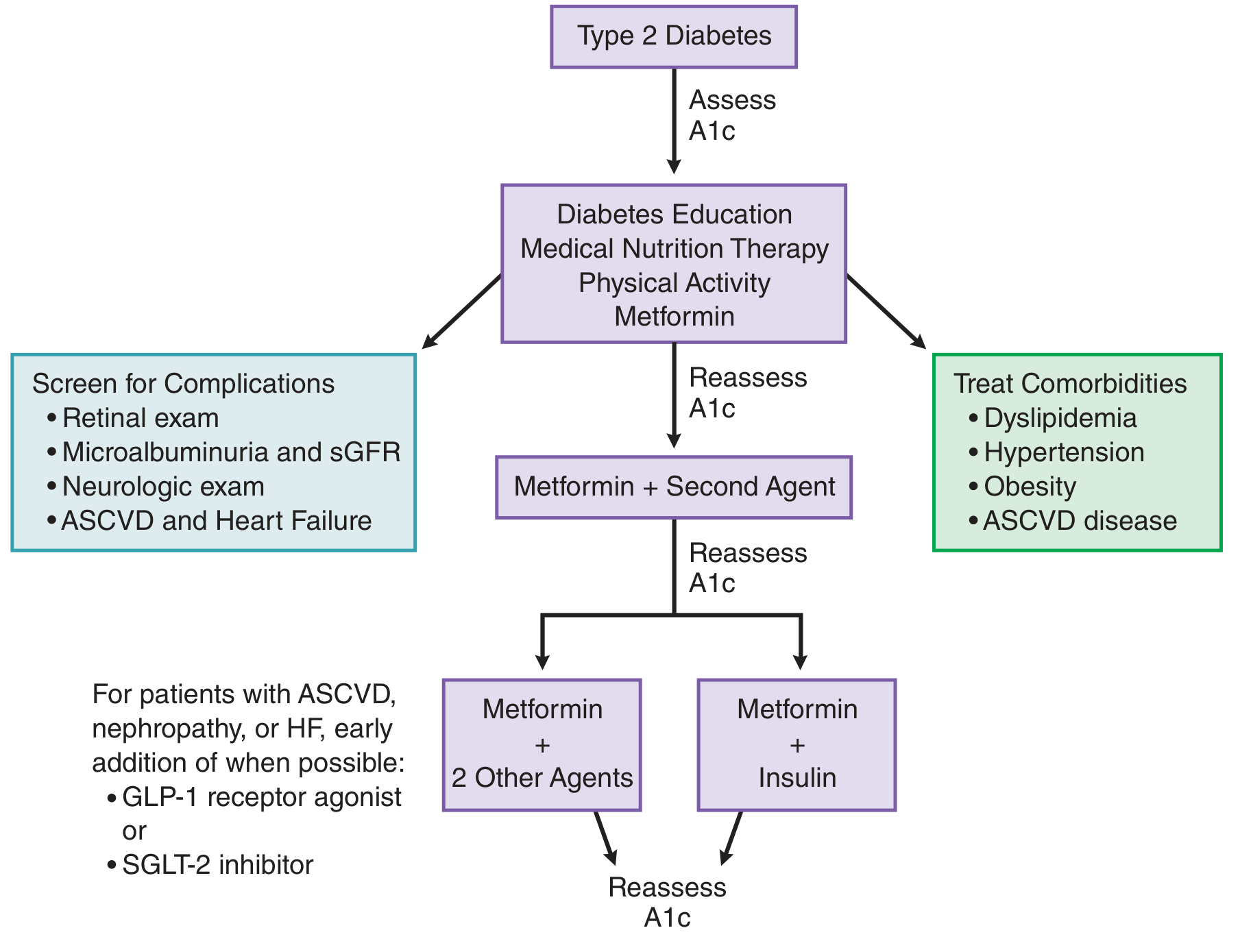
- Sulfonylurea (glimepiride, glipizide)
- DPP-4 inhibitor (sitagliptin)
- GLP-1 receptor agonist (liraglutide, semaglutide)
- SGLT-2 inhibitor (empagliflozin, dapagliflozin)
- Thiazolidinedione (pioglitazone)
- Basal insulin
- ASCVD or high CV risk: Add GLP-1 agonist or SGLT-2 inhibitor early
- Heart failure or diabetic nephropathy: Prefer SGLT-2 inhibitor (empagliflozin/dapagliflozin)
- Obesity: GLP-1 agonists preferred (weight loss benefit)
Key FMGE Points - Diabetes
- Metformin = first-line always (contraindicated in eGFR < 30, severe liver disease)
- HbA1c reflects 3-month average glucose control
- Microvascular complications: retinopathy, nephropathy, neuropathy
- Macrovascular: CAD, stroke, PAD (patients with diabetes have ~10x higher amputation rate)
- Screen for: retinal exam, microalbuminuria + eGFR, neurologic exam, cardiovascular disease
- Gestational DM: first-line is diet, then metformin or insulin; oral agents generally avoided in pregnancy (insulin preferred)
- Diabetic ketoacidosis (DKA): mainly T1DM; HONK/HHS: mainly T2DM (no ketonemia, very high glucose, hyperosmolar)
2. HYPERTENSION
Classification (Based on 2025 AHA/ACC Guideline [PMID: 40811516])
| Category | Systolic (mmHg) | Diastolic (mmHg) |
|---|---|---|
| Normal | < 120 | and < 80 |
| Elevated | 120-129 | and < 80 |
| Stage 1 | 130-139 | or 80-89 |
| Stage 2 | ≥ 140 | or ≥ 90 |
| Hypertensive Urgency | > 180 | and/or > 120, no organ damage |
| Hypertensive Emergency | > 180 | and/or > 120, with organ damage |
Note for FMGE: The older JNC 7 classification (Normal <120/80, Pre-hypertension 120-139/80-89, Stage 1 140-159/90-99, Stage 2 ≥160/≥100) is still commonly tested in Indian exams. Know BOTH.
BP Targets
- General adults: < 130/80 mmHg (2025 AHA/ACC); < 140/90 (JNC 7 / ESH 2023)
- CKD with proteinuria: < 130/80
- Diabetics: < 130/80
- Elderly (> 65 yr): < 130 systolic where tolerable
- Pregnancy: < 160/110 to treat (aggressive treatment threshold per current guidelines)
Drug Classes - First-Line Choices (2024 ESC Guideline [PMID: 39210715] + 2025 AHA/ACC [PMID: 40811516])
| Drug Class | Indications / Preferred |
|---|---|
| ACE inhibitors (ramipril, lisinopril) | Diabetes with nephropathy, heart failure, post-MI, CKD with proteinuria |
| ARBs (losartan, telmisartan) | Same as ACEi; use when ACEi-intolerant (cough) |
| CCBs (amlodipine) | Elderly, isolated systolic HTN, angina, Black patients |
| Thiazide diuretics (hydrochlorothiazide, chlorthalidone) | Uncomplicated HTN, heart failure, elderly, Black patients |
| Beta-blockers (atenolol, metoprolol) | Post-MI, heart failure with reduced EF, tachyarrhythmias; NOT first-line for uncomplicated HTN |
Compelling Indications - FMGE Favourite
| Condition | Preferred Drug |
|---|---|
| DM with nephropathy | ACEi or ARB |
| Post-MI | Beta-blocker + ACEi |
| Heart failure | ACEi/ARB + Beta-blocker + Aldosterone antagonist |
| Stable angina | Beta-blocker or CCB |
| Isolated systolic HTN (elderly) | CCB or Thiazide |
| Pregnancy (HTN) | Methyldopa, labetalol, nifedipine (ACEi and ARBs are CONTRAINDICATED in pregnancy) |
| Benign prostatic hyperplasia | Alpha-blocker (prazosin, doxazosin) |
| Pheochromocytoma | Alpha-blocker first, then beta-blocker |
Hypertensive Emergency Treatment
- Target: Reduce MAP by 25% in first hour, then to 160/100 over next 2-6 hours
- Drugs: IV labetalol, IV nicardipine, IV nitroprusside (for aortic dissection: target SBP < 120 rapidly)
- Special: In ischemic stroke - treat only if BP > 220/120 (or > 185/110 if thrombolysis planned)
3. OBSTETRICS & GYNAECOLOGY
Preeclampsia
- SBP ≥ 160 or DBP ≥ 110 mmHg
- Thrombocytopenia (platelets < 100,000)
- Creatinine > 1.1 mg/dL or doubling
- Pulmonary edema
- New-onset headache, visual disturbance
- Impaired liver function (AST/ALT > 2x normal)
- Nulliparity (greatest population attributable fraction: 32.3%)
- Prior preeclampsia, chronic hypertension
- Chronic renal failure, pregestational diabetes mellitus
- Antiphospholipid syndrome, SLE, IVF
- Multiple gestation, extremes of maternal age, Black race
- Definitive treatment = delivery (the only cure)
- BP ≥ 160/110 persistent for ≥ 15 min: must treat acutely with IV labetalol, IV hydralazine, or oral nifedipine
- Magnesium sulfate: for seizure prophylaxis (eclampsia prevention) in severe preeclampsia; also treatment of eclamptic seizures
- Antepartum steroids (betamethasone) if < 34 weeks for fetal lung maturity
- HELLP Syndrome: Hemolysis + Elevated Liver enzymes + Low Platelets - obstetric emergency; prompt delivery, blood bank consultation early
Postpartum Hemorrhage (PPH)
| Cause | Examples |
|---|---|
| Tone (70-80%) | Uterine atony (most common) |
| Trauma | Lacerations, uterine rupture |
| Tissue | Retained placenta/products |
| Thrombin | Coagulopathy |
| Drug | Dose | Notes |
|---|---|---|
| Oxytocin (first-line) | 20-40 units in 1L crystalloid at 200-500 mL/hr IV | Never give IV bolus - causes severe hypotension |
| Methylergonovine | 0.2 mg IM | Contraindicated in preeclampsia/hypertension |
| Carboprost (PGF2α) | 0.25 mg IM, repeat q15 min, max 2 mg | Give antiemetics; avoid in asthma |
| Misoprostol | 800-1000 mcg PR (rectal) | Single dose; useful when IV access unavailable |
| Tranexamic acid | 1g IV within 3h of delivery | Reduces PPH mortality (WOMAN trial) |
Antenatal Care (ANC) - Key FMGE Points
- Blood group + Rh typing
- CBC, urine routine
- Blood glucose (FPG or OGTT at 24-28 weeks for GDM screening)
- HIV, VDRL, HBsAg
- Rubella immunity
- Iron (100 mg/day) + Folic acid (500 mcg/day) throughout pregnancy
- Calcium supplementation
- Tetanus toxoid: 2 doses in primigravida (TT1 at 16 weeks, TT2 at 20 weeks or 4 weeks later)
- Standard women: 400 mcg/day, starting 1 month before conception
- High-risk (prior NTD, antiepileptics): 5 mg/day
Recent Guideline References (PubMed)
| Guideline | Year | PMID |
|---|---|---|
| 2025 AHA/ACC Hypertension Guideline (replaces 2017) | 2025 | PMID 40811516 |
| 2024 ESC Guidelines for Hypertension | 2024 | PMID 39210715 |
| DCRM 2.0: Diabetes + Cardiorenal Management | 2024 | PMID 38852020 |
| ISPAD Pediatric Type 1 Diabetes Guidelines | 2024 | PMID 39662065 |
| PPH Qualitative Evidence Synthesis (Cochrane) | 2023 | PMID 38009552 |
Quick FMGE Memory Tricks
- Metformin = first and always first for T2DM (unless contraindicated)
- ACEi/ARB = go-to for DM + HTN + nephropathy
- ACEi/ARB = CONTRAINDICATED in pregnancy (teratogenic - Potter sequence)
- Magnesium sulfate = drug of choice for eclampsia AND preeclampsia seizure prophylaxis
- Methylergonovine = avoid in hypertension/preeclampsia
- Oxytocin IV bolus = forbidden (causes hypotension)
- HELLP = emergency - deliver promptly
- Tranexamic acid = reduces PPH deaths (give within 3 hours)This summary covers all three topics in exam-ready depth. A few things worth highlighting for your FMGE prep specifically:
-
Hypertension - The brand-new 2025 AHA/ACC guideline (published September 2025, PMID 40811516) replaces the 2017 ACC/AHA guideline. It maintains the Stage 1 threshold at 130/80 mmHg. FMGE questions still heavily reference JNC 7 thresholds (140/90 = Stage 1), so know both systems.
-
Diabetes - The 2024 DCRM 2.0 guideline (PMID 38852020) now places GLP-1 agonists and SGLT-2 inhibitors as preferred second agents when ASCVD, heart failure, or nephropathy is present - this is heavily tested in newer FMGE papers.
-
PPH - Tranexamic acid is now firmly in the PPH bundle (the WOMAN trial established it reduces mortality when given within 3 hours of delivery). Older PYQs may not include this, but newer questions will.
-
Preeclampsia - Treatment threshold of SBP ≥ 160 or DBP ≥ 110 persistent for ≥ 15 minutes is the current standard trigger for acute antihypertensive therapy in pregnancy.