
Can you teach me respiratory drugs from basic as i sm i
I'll start by reading the medical library skill, then pull comprehensive respiratory pharmacology content for you.
Reading File
Now let me search the library in parallel for all major respiratory drug topics:
Finding Sources
Finding Sources
Found Katzung's pharmacology textbook. Let me read those sections now in parallel:
Reading File
Finding Sources
Excellent - I have rich content. Let me read the next section (clinical pharmacology part) and fetch the key diagram:
Reading File
Loading Image
Loading Image
I now have everything I need from Katzung's textbook. Let me compile a thorough, beginner-friendly lesson on all respiratory drugs.
Respiratory Drugs - A Complete Beginner's Guide
Based on Katzung's Basic & Clinical Pharmacology, 16th Edition
Why Do We Need Respiratory Drugs?
The airways can become too narrow (bronchoconstriction) due to:
- Muscle spasm (smooth muscle contracts)
- Inflammation and swelling (mucosal edema)
- Excess mucus production
The drugs we use either open the airways (bronchodilators) or reduce inflammation (controllers). Think of it like a pipe - you either widen it or stop it from getting clogged.
The Big Picture - How Bronchial Tone Is Controlled
This is the most important concept. Look at this diagram:
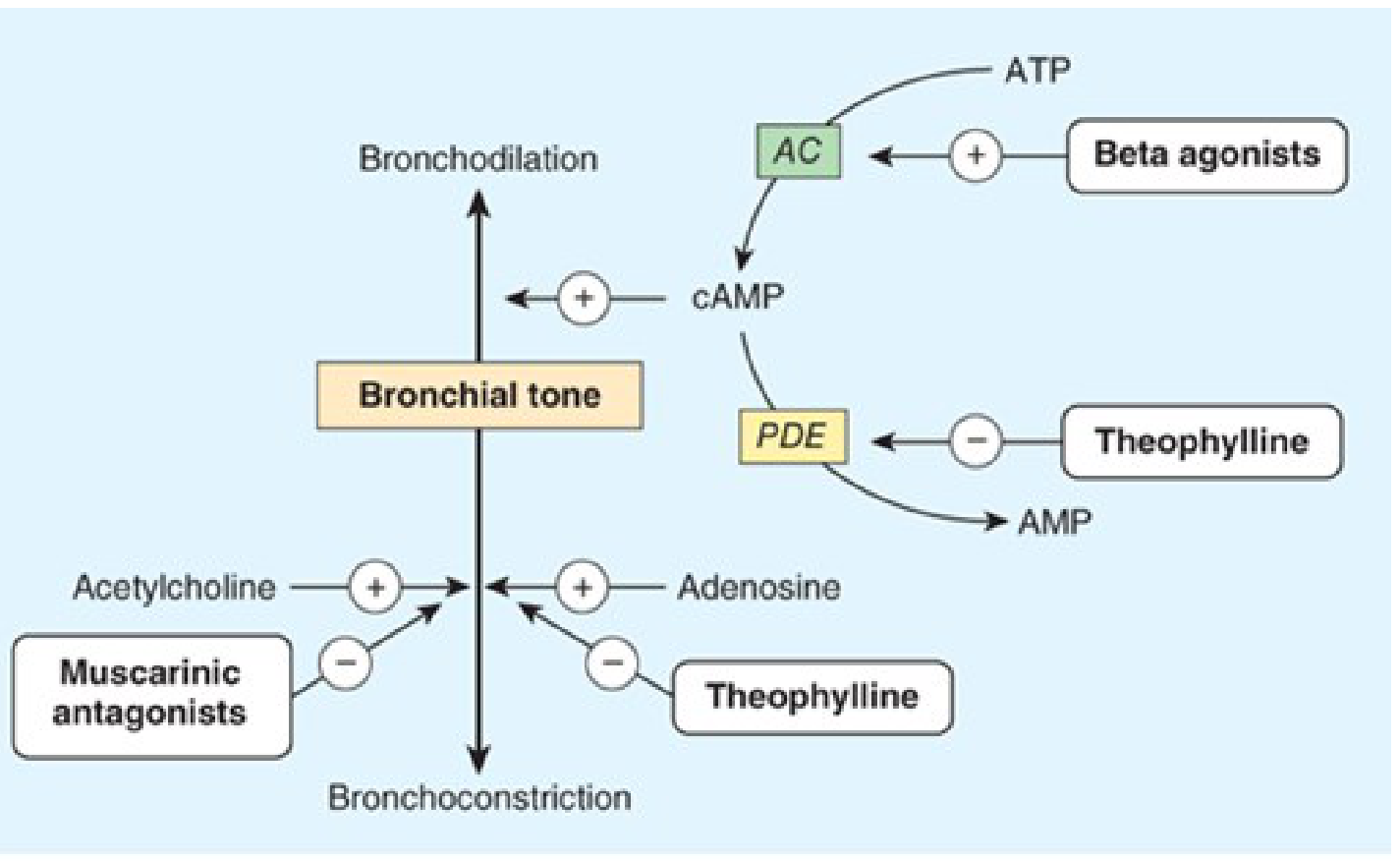
Key concept:
- cAMP = bronchodilation (high cAMP = open airways)
- Acetylcholine (via muscarinic receptors) = bronchoconstriction
- Adenosine = bronchoconstriction
So drugs work by either:
- Increasing cAMP (Beta agonists - activate adenylyl cyclase AC)
- Preventing cAMP breakdown (Theophylline - blocks PDE enzyme)
- Blocking acetylcholine (Muscarinic antagonists like ipratropium)
CLASS 1: Beta-2 Agonists (Bronchodilators / "Relievers")
How they work
Beta agonists bind to beta-2 (β2) receptors on airway smooth muscle → activate adenylyl cyclase (AC) → increase cAMP → smooth muscle relaxes → airways open.
They also:
- Inhibit mast cell mediator release
- Reduce microvascular leakage
- Increase mucociliary transport (helps clear mucus)
The Drug Structures
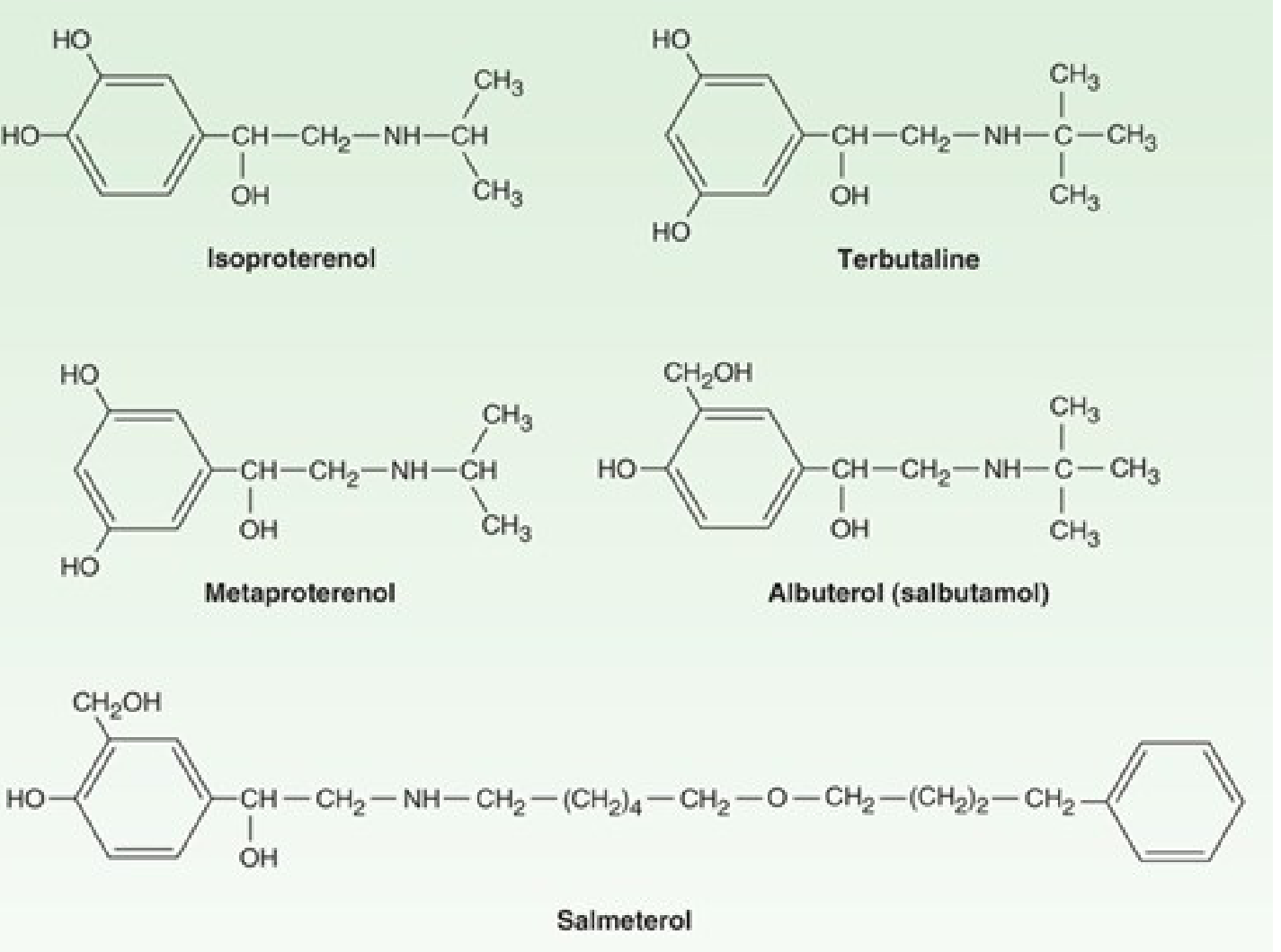
Short-Acting Beta-2 Agonists (SABAs) - "Rescue Inhalers"
| Drug | Key Points |
|---|---|
| Albuterol (Salbutamol) | Most widely used SABA; onset 5-15 min; lasts 4-6 hrs |
| Terbutaline | Also available SC (subcutaneous) injection for severe attacks |
| Metaproterenol | Older, less selective than albuterol |
Use: Acute bronchospasm relief. Using >2 canisters/month = danger sign of poorly controlled asthma.
Long-Acting Beta-2 Agonists (LABAs) - "Controllers"
| Drug | Key Points |
|---|---|
| Salmeterol | Onset ~20 min; duration 12+ hrs; note the very long tail in the chemical structure above! |
| Formoterol | Faster onset than salmeterol; also 12 hr duration |
Important rule: LABAs are NEVER used alone in asthma - always combined with an inhaled corticosteroid (ICS) because using a LABA alone without ICS increases the risk of fatal asthma attacks.
Adverse Effects of Beta Agonists
- Tachycardia (from β1 receptor activation)
- Skeletal muscle tremor (very common, especially with systemic use)
- Hypokalemia (decreased serum potassium - can worsen with high doses)
Route: Why Inhaled?
Inhalation delivers drug directly to airways, giving the greatest local effect with least systemic toxicity. However, even with the optimal particle size (2-5 µm), 80-90% of the aerosol is deposited in the mouth/pharynx - this is why rinsing the mouth after using inhalers matters (especially with corticosteroids).
CLASS 2: Anticholinergics / Muscarinic Antagonists
How they work
Block muscarinic (M3) receptors in airway smooth muscle → prevent acetylcholine from causing bronchoconstriction → airways stay open.
Think of it as "removing the brake pedal" from the bronchoconstriction reflex.
Key Drugs
| Drug | Type | Duration | Use |
|---|---|---|---|
| Ipratropium | Short-acting (SAMA) | 4-6 hrs | Acute COPD exacerbations; added to albuterol in severe asthma attacks |
| Tiotropium | Long-acting (LAMA) | 24 hrs (once daily) | Maintenance therapy for COPD; also used in difficult asthma |
| Glycopyrronium, Umeclidinium, Aclidinium | LAMAs | 12-24 hrs | COPD maintenance |
Adverse Effects (classic anticholinergic: "dry as a bone, blind as a bat")
- Dry mouth (most common)
- Urinary retention (caution in BPH)
- Blurred vision if accidentally sprayed in eyes
- Constipation
- No significant cardiac effects at inhaled doses (unlike systemic atropine)
CLASS 3: Methylxanthines (Theophylline)
How they work (two mechanisms - look at the diagram again)
- Inhibit phosphodiesterase (PDE) → cAMP is NOT broken down → stays high → bronchodilation
- Adenosine receptor antagonism → blocks adenosine-mediated bronchoconstriction
Also has anti-inflammatory effects and stimulates respiratory drive (useful in apnea of prematurity).
Theophylline - Key Drug
- Given orally (sustained-release) or IV (aminophylline = theophylline + ethylenediamine)
- Narrow therapeutic index - requires blood level monitoring (target: 5-15 mg/L)
- Half-life is variable - affected by smoking, liver disease, drugs
Adverse Effects (dose-dependent, watch levels!)
- Mild: Nausea, vomiting, headache, insomnia, tremor
- Moderate: Tachycardia, arrhythmias
- Severe/Toxic: Seizures (can be life-threatening), ventricular arrhythmias
Drug interactions that raise theophylline levels (risk of toxicity)
- Ciprofloxacin, erythromycin (CYP1A2 inhibitors)
- Cimetidine
Theophylline levels decreased by
- Smoking (induces CYP1A2)
- Phenytoin, rifampin
Clinical note: Theophylline is now a third-line agent for asthma due to its toxicity profile. Still used in some COPD patients for bronchodilation + respiratory muscle stimulation.
CLASS 4: Inhaled Corticosteroids (ICS) - "Controllers"
How they work
Bind to glucocorticoid receptors → enter the nucleus → inhibit transcription of inflammatory cytokines (IL-4, IL-5, IL-13, TNF-α) → reduce eosinophilic inflammation → decrease airway hyperresponsiveness and mucus production.
They do NOT cause immediate bronchodilation - they treat the underlying inflammation.
Key Drugs
| Drug | Notes |
|---|---|
| Beclomethasone | Older ICS, first widely used |
| Fluticasone | High potency, low systemic bioavailability |
| Budesonide | Can also be nebulized; safe in pregnancy |
| Mometasone | Once-daily dosing; also used for T2-high asthma |
| Ciclesonide | Pro-drug, activated in the lung; lower oral candidiasis risk |
Adverse Effects
- Local: Oral candidiasis (thrush), dysphonia (hoarse voice) - both prevented by rinsing mouth/using a spacer
- Systemic (at high doses): Adrenal suppression, osteoporosis, growth retardation in children, cataracts
Combination Products (ICS + LABA)
These are the most commonly prescribed inhalers for moderate-severe asthma and COPD:
- Fluticasone + Salmeterol (Advair/Seretide)
- Budesonide + Formoterol (Symbicort)
- Fluticasone furoate + Vilanterol (Breo Ellipta)
CLASS 5: Leukotriene Modifiers
Background
Leukotrienes (LTC4, LTD4, LTE4) are inflammatory mediators released from mast cells and eosinophils. They cause:
- Bronchoconstriction
- Increased mucus secretion
- Airway edema
Two Types of Drugs
a) Leukotriene Receptor Antagonists (LTRAs)
- Montelukast (most widely used) - oral, once daily
- Zafirlukast - oral, twice daily
Mechanism: Block CysLT1 receptors → block leukotriene effects
Use: Mild persistent asthma, aspirin-exacerbated asthma (excellent!), allergic rhinitis + asthma
Adverse effects: Generally well tolerated; rare: Churg-Strauss syndrome (systemic vasculitis); Montelukast now has an FDA black box warning for neuropsychiatric effects (mood changes, suicidality - especially in children)
b) 5-Lipoxygenase Inhibitor
- Zileuton - blocks the enzyme that makes leukotrienes
Adverse effects: Hepatotoxicity (requires LFT monitoring)
CLASS 6: Cromones (Mast Cell Stabilizers)
Key Drugs
- Cromolyn sodium (sodium cromoglycate)
- Nedocromil
How they work
Stabilize mast cell membranes → prevent degranulation → no release of histamine, leukotrienes, or other mediators.
Use
- Prophylaxis of asthma (especially exercise-induced or allergen-induced)
- Must be used before exposure - no use in acute attacks
- Very safe (minimal side effects)
- Now rarely used due to availability of better alternatives
CLASS 7: Biologics / Monoclonal Antibodies
These target specific immune pathways - used for severe, refractory asthma when standard therapy fails.
| Drug | Target | Use |
|---|---|---|
| Omalizumab | Anti-IgE (binds free IgE) | Allergic asthma with high IgE |
| Mepolizumab | Anti-IL-5 | Eosinophilic asthma |
| Benralizumab | Anti-IL-5Rα (IL-5 receptor) | Eosinophilic asthma |
| Dupilumab | Anti-IL-4Rα (blocks IL-4 & IL-13) | Moderate-severe asthma + atopic dermatitis |
| Tezepelumab | Anti-TSLP | Severe asthma (all phenotypes) |
T2-high asthma = eosinophilic inflammation → responds to mepolizumab, benralizumab, dupilumab
T2-low asthma = non-eosinophilic → harder to treat; tezepelumab may help
CLASS 8: Mucolytics and Expectorants
These drugs thin and help clear mucus.
| Drug | Mechanism | Notes |
|---|---|---|
| N-acetylcysteine (NAC) | Breaks disulfide bonds in mucus glycoproteins | Also used for paracetamol overdose |
| Guaifenesin | Increases respiratory secretion hydration | Common OTC expectorant |
| Dornase alfa | DNase enzyme breaks down DNA in thick mucus | Used in cystic fibrosis |
| Hypertonic saline | Osmotic - draws water into airway lumen | Cystic fibrosis, bronchiectasis |
Quick Summary Table: Asthma Step-Up Therapy
| Severity | Treatment |
|---|---|
| Intermittent | SABA (albuterol) as needed only |
| Mild persistent | Low-dose ICS + SABA PRN |
| Moderate persistent | Low-medium ICS + LABA (or medium ICS alone) |
| Severe persistent | High-dose ICS + LABA +/- LAMA +/- biologic |
| Very severe | Add systemic corticosteroids; consider omalizumab or other biologics |
COPD vs Asthma - Drug Differences
| Feature | Asthma | COPD |
|---|---|---|
| Main problem | Reversible bronchoconstriction + inflammation | Irreversible airflow limitation + emphysema |
| First-line bronchodilator | SABA (albuterol) | LAMA (tiotropium) or LABA |
| Anti-inflammatory | ICS (essential) | ICS only in frequent exacerbators |
| Biologic use | Yes (for severe) | Not routine |
| Theophylline | Third-line | Still used adjunct |
| Phosphodiesterase-4 inhibitor | Rarely | Roflumilast (for severe COPD) |
Roflumilast (PDE-4 inhibitor, oral) - specifically for COPD with chronic bronchitis + frequent exacerbations. Reduces inflammation. Side effects: nausea, diarrhea, weight loss, psychiatric effects.
Memory Tips
- SABAs = "Save-A-Breath Acutely" = rescue inhalers
- LABAs = "Long-Acting, never Alone in Asthma"
- ICS = treat the fire (inflammation), not the smoke (symptoms)
- Theophylline = narrow index, need levels, watch for seizures
- Tiotropium = "Tio for COPD daily" (once daily LAMA)
- Montelukast = good for aspirin-sensitive asthma + allergic rhinitis
Source: Katzung's Basic & Clinical Pharmacology, 16th Edition, Chapter 20
This covers all the major respiratory drug classes from first principles. Would you like me to go deeper on any particular class - for example, more detail on inhalers/devices, specific drug doses, or drug interactions? I can also create a visual summary diagram or quiz you on the material!
This is a shared conversation. Sign in to Orris to start your own chat.