
m ycobacterium Avium complex pharmacology
I'll read the medical library skill first, then search for MAC pharmacology content in parallel.
Reading File
Now I'll run parallel searches across the library and PubMed simultaneously.
Finding Sources
Finding Sources
Searching PubMed
"Mycobacterium avium complex" AND treatment
Good. Now let me read the key pharmacology sections in parallel - the Murray & Nadel respiratory medicine section and the Jawetz microbiology section are most relevant.
Reading File
Reading File
Finding Sources
Excellent. Now let me read the dedicated pharmacology sections from Goodman & Gilman and Katzung, plus the Murray & Nadel therapy section, in parallel.
Reading File
Reading File
Reading File
Now let me read the pulmonary MAC therapy section and get the MAC colony image, plus search for prophylaxis and resistance information.
Reading File
Finding Sources
Loading Image
I now have comprehensive data from multiple authoritative sources. Let me also read the Harrison's section quickly and get the nodular bronchiectatic CT image.
Reading File
Loading Image
I now have comprehensive data from Goodman & Gilman, Katzung, Murray & Nadel, Harrison's, and Jawetz. Let me compose the full answer.
Mycobacterium Avium Complex (MAC) - Pharmacology
Overview
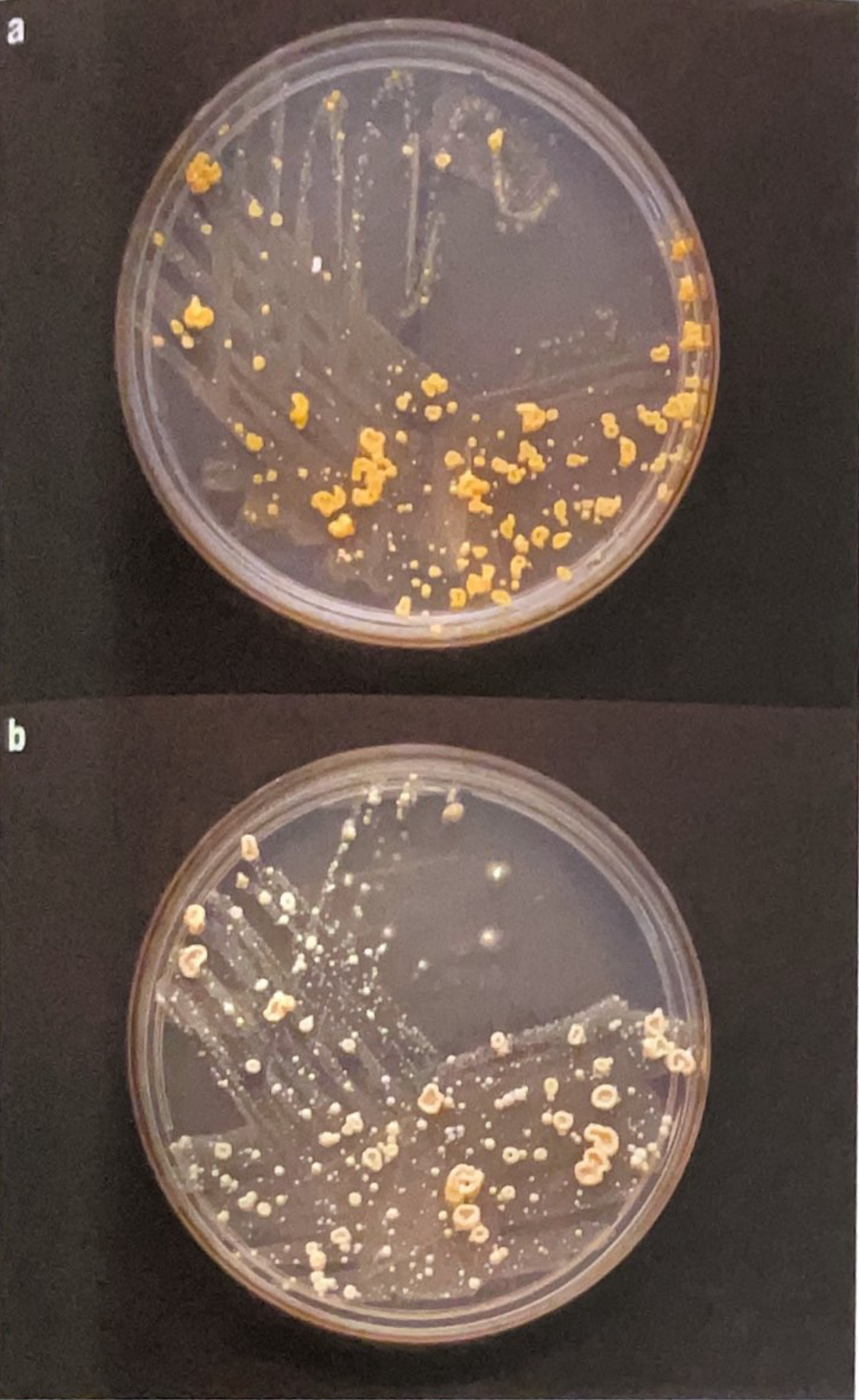
MAC (also called MAI complex) comprises slow-growing, nonchromogenic nontuberculous mycobacteria (NTM) - primarily M. avium, M. intracellulare, and M. chimaera. They grow optimally at 41°C, produce smooth, nonpigmented colonies (shown below), and are ubiquitous in soil, water, and animals. They are the most common NTM to cause human disease.
Why Standard Anti-TB Drugs Fail
MAC organisms are intrinsically resistant to first-line antituberculosis drugs (isoniazid, pyrazinamide). Unlike M. tuberculosis, in vitro susceptibility testing for MAC correlates reliably only with macrolides and amikacin - results for other agents are an imperfect guide to clinical outcomes. This makes combination therapy with macrolide-anchored regimens essential. - Murray & Nadel's Textbook of Respiratory Medicine, p. 1253
Core Drug Classes
1. Macrolides (Cornerstones of Therapy)
The most important agents - correlation between in vitro susceptibility and in vivo response is established only for this class and aminoglycosides.
| Drug | Dose | Notes |
|---|---|---|
| Azithromycin | 250-600 mg daily or 500-600 mg 3x/week | Preferred - fewer drug interactions, better tolerated, less macrolide resistance breakthrough than daily clarithromycin |
| Clarithromycin | 500 mg twice daily (or 1000 mg/day) | Effective but more drug-drug interactions; twice daily dosing less convenient |
Mechanism: Inhibit bacterial protein synthesis by binding the 50S ribosomal subunit (23S rRNA).
Macrolide resistance: Mediated by point mutations in the 23S rRNA rrl gene. Resistance emerges when a macrolide is used as monotherapy, with a fluoroquinolone alone, or without ethambutol. Macrolide-resistant MAC carries a substantially worse prognosis and high mortality. - Fishman's Pulmonary Diseases, p. 744
2. Ethambutol (EMB)
- Dose: 15 mg/kg/day
- Mechanism: Inhibits arabinosyltransferase, disrupting mycobacterial cell wall arabinogalactan synthesis
- Role: Always used in combination; prevents emergence of macrolide resistance
- Key toxicity: Optic neuritis (dose- and duration-dependent) - monitor visual acuity and color discrimination
3. Rifamycins
| Drug | Dose | Notes |
|---|---|---|
| Rifampin | 450-600 mg daily | Preferred in HIV-negative patients |
| Rifabutin | 300 mg daily | Preferred in HIV+ patients on ART - less potent CYP3A4 inducer, fewer interactions with antiretrovirals |
Mechanism: Inhibit DNA-dependent RNA polymerase.
Drug interaction warning: Clarithromycin + rifabutin increases rifabutin toxicity (uveitis, leukopenia) via CYP3A4 inhibition. When using rifabutin, azithromycin is the preferred companion macrolide. - Murray & Nadel, p. 1254
4. Aminoglycosides (Parenteral Intensification)
| Drug | Notes |
|---|---|
| Amikacin 10-15 mg/kg IV/IM | Drug of choice for parenteral intensification; reserve for cavitary, severe, or macrolide-resistant disease |
| Streptomycin 1 g IV/IM daily | Alternative; less desirable due to toxicity |
| Inhaled liposomal amikacin (ALIS) | Novel formulation approved for refractory MAC lung disease; CONVERT trial demonstrated improved culture conversion when added to standard 3-drug oral regimen |
Toxicities: Ototoxicity (cochlear and vestibular), nephrotoxicity.
5. Fluoroquinolones (Second-line / Adjunctive)
- Moxifloxacin 400 mg daily or Levofloxacin 500 mg daily
- Used when macrolide resistance is present, or as a 3rd/4th agent for severe disease
- Mechanism: Inhibit DNA gyrase (topoisomerase II) and topoisomerase IV
- Poor in vitro-to-clinical outcome correlation; use with caution as sole companion agents
6. Clofazimine
- Riminophenazine dye with antimycobacterial activity; mechanism not fully elucidated (likely membrane disruption and free radical generation)
- Used in combination for treatment-refractory or macrolide-resistant MAC
- Toxicity: red-black skin discoloration, GI disturbance
Treatment Regimens by Clinical Syndrome
Pulmonary MAC Disease
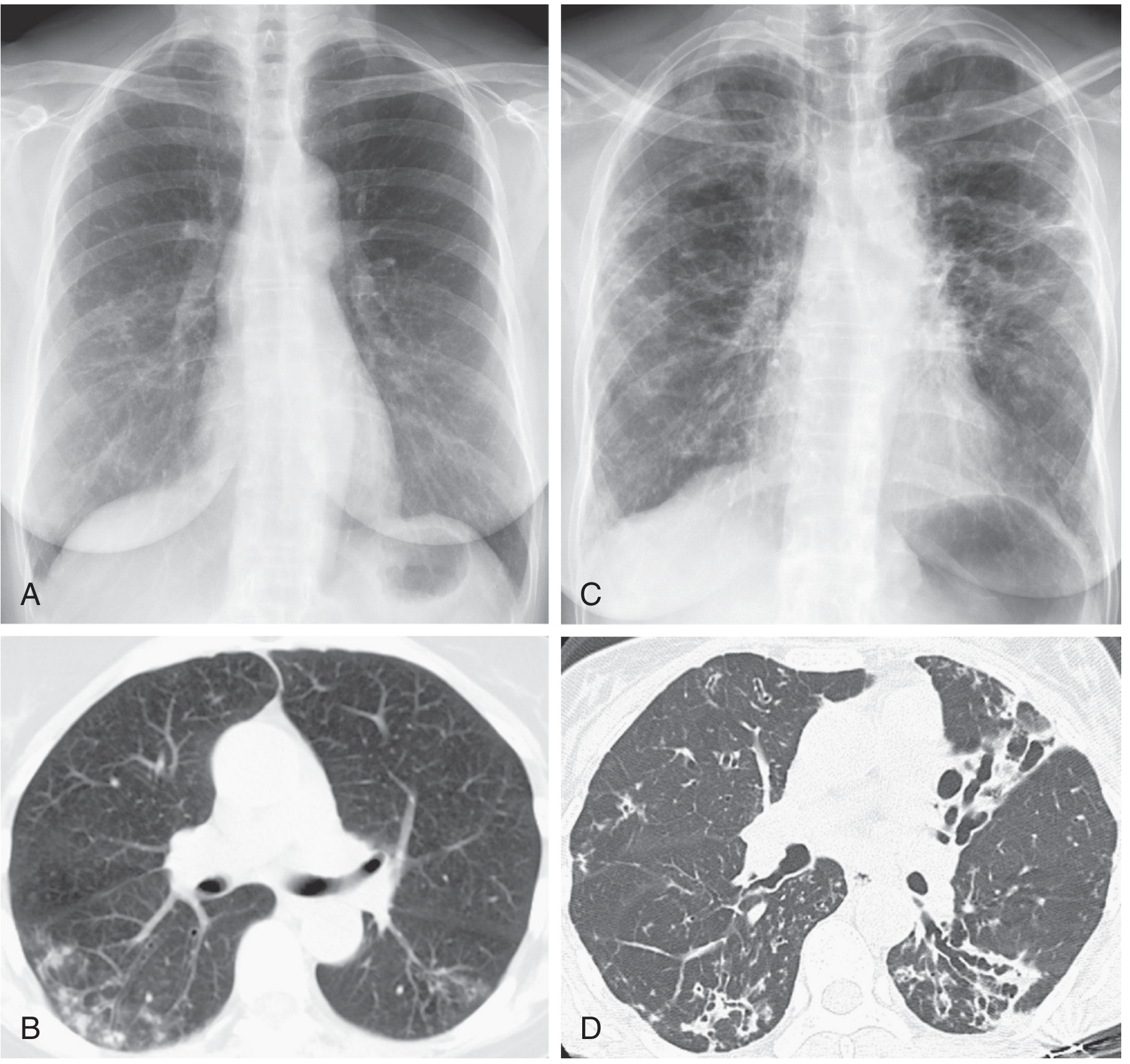
| Disease Type | Regimen | Frequency | Duration |
|---|---|---|---|
| Nodular bronchiectatic | Azithromycin + Ethambutol + Rifampin (or rifabutin) | 3x/week | ≥12 months after culture conversion |
| Cavitary / fibrocavitary | Azithromycin + Ethambutol + Rifampin ± Amikacin (initial phase) | Daily | ≥12 months after culture conversion |
| Macrolide-resistant | Amikacin + Ethambutol + Rifamycin + Fluoroquinolone ± Clofazimine | Daily | Individualized |
Key principle: The best chance for treatment success is the first treatment effort. Patients who fail prior MAC therapy have lower sputum conversion rates even with susceptible isolates on re-treatment. - Murray & Nadel, p. 1253
Disseminated MAC Disease (HIV/AIDS)
Background: Most common in HIV+ patients with CD4 count <50/mm³ not on ART. Risk is markedly reduced by HAART.
Treatment:
- First-line: Clarithromycin 500 mg twice daily (or azithromycin 500-600 mg daily) + Ethambutol 15 mg/kg/day
- Third drug (high bacterial load): Add rifabutin 300 mg + consider levofloxacin, moxifloxacin, or amikacin
- Duration: Minimum 12 months; can discontinue when: (1) ≥12 months therapy, (2) CD4 >100/mm³ for ≥6 months on ART, and (3) asymptomatic
- ART should be started as soon as possible - beware drug-drug interactions between antimycobacterials and antiretrovirals
Source: Goodman & Gilman's Pharmacological Basis of Therapeutics, p. 3279; Murray & Nadel, p. 1254
MAC Lymphadenopathy
- Treatment of choice: Complete surgical excision (curative in most cases, especially in children)
- When surgery is not feasible: macrolide + ethambutol ± rifamycin regimen - Red Book 2021
Prophylaxis Against Disseminated MAC (HIV+)
| Situation | Recommendation |
|---|---|
| HIV+ on suppressive ART | No prophylaxis needed |
| HIV+ NOT on ART, CD4 <50/mm³ | Azithromycin 1200 mg once weekly (preferred) OR clarithromycin 500 mg BID OR rifabutin 300 mg daily |
| Primary prophylaxis discontinuation | Safe to stop when on fully suppressive ART |
| Secondary prophylaxis | Required if CD4 drops below 100/mm³ without suppressive ART |
Azithromycin is preferred for prophylaxis because it is once weekly and associated with lower risk of breakthrough macrolide resistance compared to daily clarithromycin. - Murray & Nadel, p. 1255
Drug Interaction Summary
| Combination | Interaction |
|---|---|
| Clarithromycin + Rifabutin | Clarithromycin inhibits CYP3A4 → ↑rifabutin levels → uveitis, neutropenia |
| Rifampin + most antiretrovirals | Potent CYP3A4 inducer → ↓ART levels; use rifabutin instead |
| Clarithromycin + many ARTs | CYP3A4 bidirectional interactions |
Susceptibility Testing
- Macrolides: Test all isolates at baseline and at 6 months in failing regimens
- Aminoglycosides: Amikacin MIC correlates with outcomes
- Other drugs (fluoroquinolones, rifamycins, ethambutol): Poor correlation with clinical outcome; test but interpret with caution
Recent Evidence (2025)
A 2025 systematic review and meta-analysis (PMID 40024220) in the Journal of Infection and Public Health compared two-drug vs three-drug regimens for MAC infection, providing updated evidence on optimal regimen composition. The current standard remains 3-drug macrolide-based therapy; two-drug data is insufficient to change guidelines.
Key sources: Goodman & Gilman's Pharmacological Basis of Therapeutics (16e); Murray & Nadel's Textbook of Respiratory Medicine; Harrison's Principles of Internal Medicine 22e (2025); Katzung's Basic and Clinical Pharmacology 16e; Jawetz Medical Microbiology 28e
This is a shared conversation. Sign in to Orris to start your own chat.