
Why should a surgeon be careful while removing an impacted fish bone in the pyriform fossa
Reading File
The pyriform fossa is intimately related to the internal laryngeal nerve and the recurrent laryngeal nerve, and lies just lateral to the larynx adjacent to major vascular structures. A surgeon must be careful not to injure these nerves or vessels during fish bone removal.
Searching sources...
Finding Sources
Finding Sources
Finding Sources
Finding Sources
Reading File
Reading File
Finding Sources
Finding Sources
Finding Sources
Finding Sources
Finding Sources
Loading Image
Searching the Web
impacted fish bone pyriform fossa surgical removal danger internal laryngeal nerve
Now I have everything I need. Here is a detailed answer:
Why a Surgeon Must Be Careful Removing an Impacted Fish Bone from the Pyriform Fossa
The primary danger is the intimate anatomical relationship of the pyriform fossa with two critical nerves - specifically the internal branch of the superior laryngeal nerve (iSLN) and its connections to the recurrent laryngeal nerve (RLN).
Key Anatomical Relations of the Pyriform Fossa
The pyriform fossa (piriform sinus) is a pear-shaped recess of the hypopharynx that lies on either side of the laryngeal inlet, between the aryepiglottic fold medially and the thyroid cartilage / thyrohyoid membrane laterally. Its floor and medial wall are formed by the mucosa overlying the cricoid cartilage and the lateral surface of the arytenoid cartilage.
Nerve relations that place the surgeon at risk:
- Internal branch of the Superior Laryngeal Nerve (iSLN) The inferior branch of the iSLN runs directly along the medial wall of the pyriform fossa (and to the postcricoid region), forming anastomoses with the RLN, as confirmed in Scott-Brown's Otorhinolaryngology:
"The inferior branch runs to the pyriform sinus (or pyriform fossa) and to the postcricoid region, forming various anastomoses with the RLN. The density of nerve endings providing sensory innervation appears to be greatest at the laryngeal inlet..."
- Scott-Brown's Otorhinolaryngology Head & Neck Surgery
This nerve carries sensory and parasympathetic secretomotor fibres to the supraglottic larynx. Injury causes loss of sensation above the vocal cords, impairing the cough and laryngeal protective reflexes - a potentially life-threatening complication predisposing to aspiration.
-
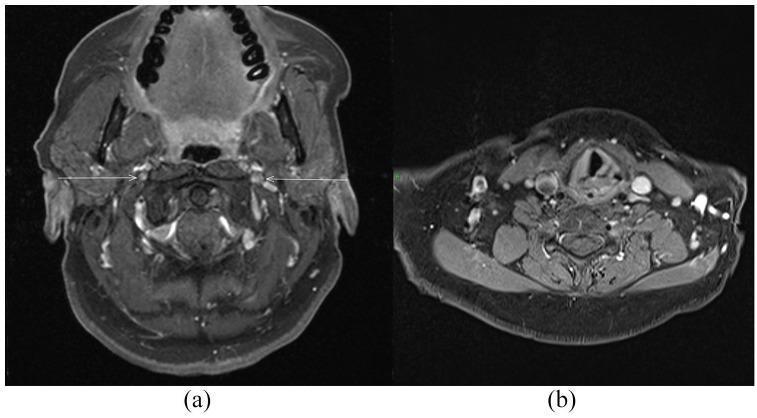
Recurrent Laryngeal Nerve (RLN) The RLN ascends in the tracheoesophageal groove just deep to the pyriform fossa mucosa before entering the larynx behind the cricothyroid joint. An impacted fish bone can embed itself close to or even through the pyriform wall, placing the RLN at direct risk during retrieval. Injury to the RLN causes ipsilateral vocal cord paralysis (hoarseness, breathy voice, aspiration). Real-world case reports document fishbone-induced RLN palsy from inflammatory fibrosis compressing the nerve even without direct surgical trauma - illustrating how close this nerve sits to the fossa (PMC case report).
-
External branch of the SLN also courses nearby, supplying the cricothyroid muscle; injury here causes subtle pitch changes and voice fatigue.
Other Important Anatomical Dangers
| Structure | Location relative to fossa | Risk if injured |
|---|---|---|
| Internal branch of SLN | Runs under the mucosa of the medial wall | Loss of supraglottic sensation, aspiration |
| Recurrent laryngeal nerve | Ascends just deep to the posterior/medial wall | Vocal cord paralysis, hoarseness |
| Superior thyroid artery & vein | Lateral wall, near thyrohyoid membrane | Significant haemorrhage |
| Common carotid artery | Lateral to the fossa | Catastrophic haemorrhage |
| Thyroid cartilage | Lateral wall | Fracture, chondritis if penetrated |
| Pharyngeal mucosa | Thin wall of the fossa | Perforation - deep neck space infection, mediastinitis |
Mechanism of Injury
Fish bones are sharp and tend to embed themselves into the mucosa of the pyriform fossa rather than lying freely. During endoscopic or open retrieval:
- Blind or forceful manipulation can lacerate the thin mucosa, causing the bone to migrate deeper
- The iSLN lies just submucosally - even a small mucosal tear can involve the nerve
- The RLN lies deep to the posterior wall and is at risk if the bone has already perforated the mucosa and sits in the parapharyngeal/tracheoesophageal groove tissue
- A perforation here can track into the retropharyngeal/parapharyngeal space, causing deep neck infection or descending mediastinitis
Clinical Implications
- Always perform the procedure under good illumination and direct vision (rigid laryngoscopy or endoscopy)
- Avoid blind probing with forceps in the pyriform fossa
- If the bone is deeply embedded or not visible, CT scan should localise it before any surgical exploration
- Post-removal, always assess vocal cord mobility to detect RLN injury early
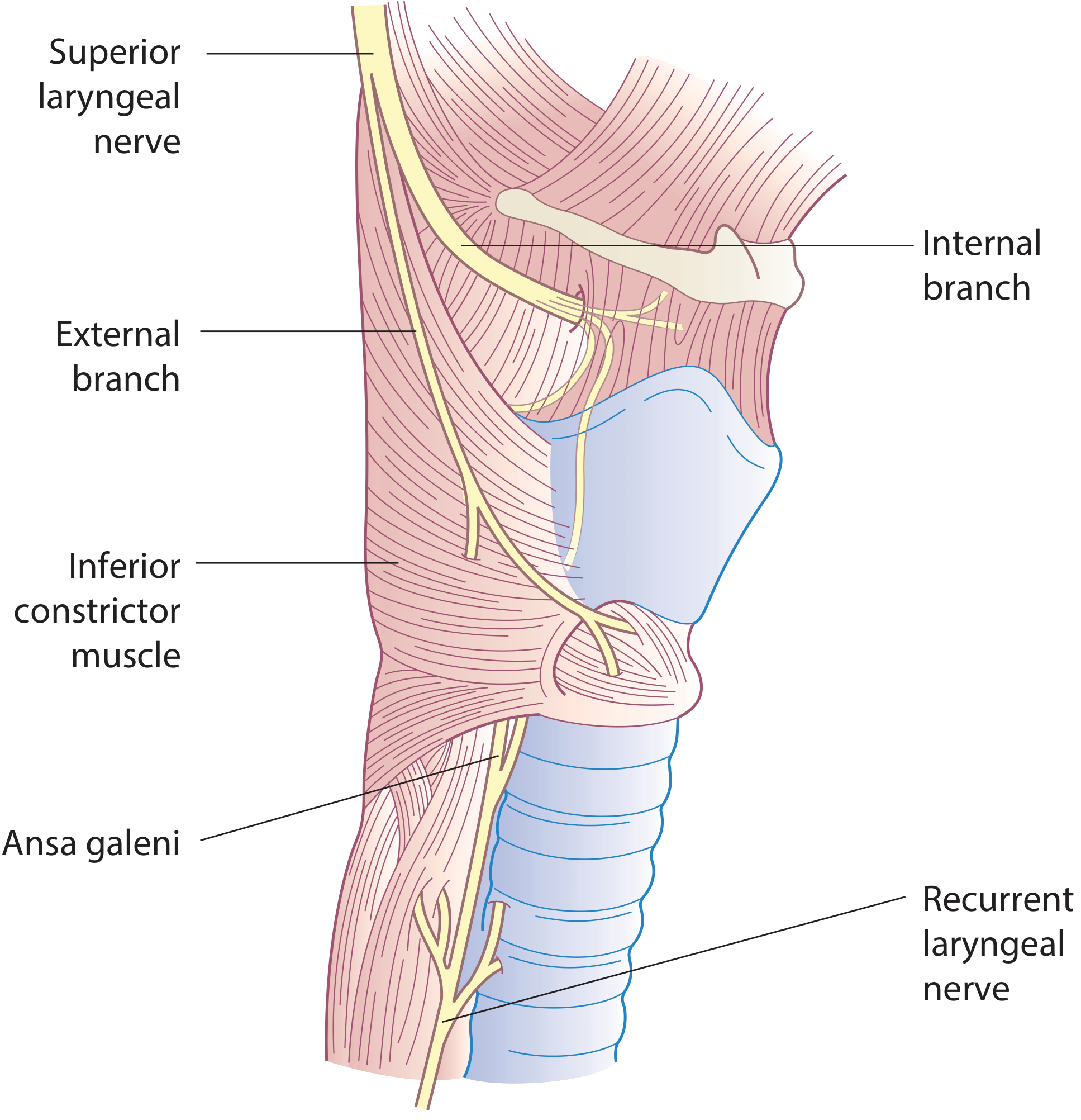
In summary: The pyriform fossa is a "danger zone" because the internal branch of the SLN runs directly under its mucosal lining, and the RLN lies immediately deep to its posterior wall. Careless manipulation or penetrating injury during fish bone removal can paralyse the ipsilateral vocal cord (RLN damage) and abolish supraglottic sensation (iSLN damage), leading to aspiration, dysphonia, and life-threatening airway complications.
- Scott-Brown's Otorhinolaryngology Head & Neck Surgery (laryngeal innervation section, line 3200)
- Bailey and Love's Short Practice of Surgery, 28th Ed. (foreign bodies in oesophagus section)
This is a shared conversation. Sign in to Orris to start your own chat.