
Differentiate between Epiphora and Hyperlacrimation (TABLE POINTWISE MINIMUM 10 POINTS
Epiphora vs. Hyperlacrimation - Differentiation Table
| # | Feature | Epiphora | Hyperlacrimation |
|---|---|---|---|
| 1 | Definition | Overflow of tears at the eyelid margin due to impaired drainage of a normal or increased tear volume | Excessive overproduction of tears by the lacrimal gland, which overwhelms an otherwise patent drainage system |
| 2 | Primary Mechanism | Failure of the tear outflow/drainage system - tears accumulate because they cannot drain normally | Hypersecretion by the lacrimal gland (main gland or accessory glands); the drainage system is intact but simply cannot handle the volume |
| 3 | Lacrimal Drainage System Status | Abnormal - obstruction, malposition, or pump failure present | Normal and patent; syringing is free-flowing with no obstruction |
| 4 | Tear Production Rate | Normal (or reflex-increased secondary to irritation) | Genuinely increased - lacrimal gland produces more tears than baseline |
| 5 | Causes | - Punctal stenosis or ectropion - Nasolacrimal duct obstruction (congenital or acquired) - Canalicular obstruction - Lacrimal pump failure (orbicularis weakness, facial nerve palsy, lid laxity) - Dacryocystitis | - Reflex tearing from ocular surface irritants (dry eye, trichiasis, entropion, conjunctivitis, foreign body, corneal abrasion) - Emotional (psychogenic) crying - Neurological stimulation (e.g. crocodile tears - aberrant VII nerve regeneration) - Pharmacological (pilocarpine, cholinergic agents) - Cluster headache (autonomic) |
| 6 | Relationship to Environment | Worse in cold, windy conditions (drainage demand increases); least evident in warm, dry rooms | Not significantly altered by environmental temperature; tends to be associated with the provoking stimulus |
| 7 | Associated Symptoms | Tears overflow onto cheek; mucopurulent discharge if nasolacrimal sac is involved; medial canthal swelling (dacryocystitis) | Symptoms of the underlying cause - ocular redness, irritation, burning, foreign body sensation, photophobia |
| 8 | Syringing / Irrigation Test | Abnormal - resistance felt; saline does not reach the throat (total obstruction), or regurgitates through the opposite punctum | Normal - saline flows freely into the nasopharynx; patient tastes saline |
| 9 | Jones Dye Test (Primary) | Negative (dye does not reach the nose) due to drainage failure | Positive (dye recoverable from nose) - secretion is high but drainage is intact |
| 10 | Functional (Physiological) Epiphora | A subtype where syringing is patent but lacrimal pump function is impaired (pump failure, e.g. orbicularis weakness); FDT shows delay | Not applicable - in hyperlacrimation the pump is functioning; delay test would be normal |
| 11 | Treatment Approach | Surgical or mechanical correction of the drainage pathway: - Punctoplasty (punctal stenosis) - Dacryocystorhinostomy (DCR) for nasolacrimal duct obstruction - Silicone stenting - Lid-tightening procedures (ectropion repair) | Treat the underlying cause: - Lubricants / anti-inflammatories for dry eye - Epilation for trichiasis - Botulinum toxin to lacrimal gland for pathological hyperlacrimation (e.g. crocodile tears) - Treat systemic/neurological cause |
| 12 | Significance in Infants | Congenital nasolacrimal duct obstruction (CNLDO) is the most common cause in neonates; 90% resolve spontaneously by 1 year; probing deferred until 12 months | Reflex tearing begins a few weeks after birth; true hyperlacrimation in infants is rare |
| 13 | Tear Film Meniscus | Elevated tear meniscus height due to drainage failure | May be elevated during secretory episode but normalises between stimuli |
| 14 | Role of Orbicularis / Lacrimal Pump | Central to pathophysiology - pump failure (laxity, VII palsy) directly causes epiphora even with a patent duct | Orbicularis/pump function is intact and normal; not a contributing factor |
"Epiphora is the overflow of tears at the eyelid margin. There are two mechanisms: hypersecretion secondary to anterior segment disease, and defective drainage due to a compromised lacrimal drainage system."
- Kanski's Clinical Ophthalmology, 10th ed.
"Tearing can occur because of the overproduction of tears or impairment of tear drainage."
- Goldman-Cecil Medicine
Explain etiology, clinical features, complications, and treatment of Ulcerative and Seborrhoeic blepharitis POINTWISE FOR 10 MARKS LAQ
Ulcerative Blepharitis and Seborrhoeic Blepharitis
CLASSIFICATION
- Anterior blepharitis - affects the area around lash bases
- Staphylococcal (Ulcerative) blepharitis
- Seborrhoeic blepharitis
- Posterior blepharitis - meibomian gland dysfunction
- Mixed forms are very common
A. ULCERATIVE (STAPHYLOCOCCAL) BLEPHARITIS
Etiology
- Caused by Staphylococcus aureus colonisation of the lid margin (most common organism)
- An abnormal cell-mediated immune response to components of the S. aureus cell wall plays a key aetiological role
- More common and severe in patients with atopic dermatitis
- Demodex folliculorum longus (hair follicle mite) may act as a co-factor in some patients
- Bacterial toxins and enzymes (e.g. lipase, protease) directly damage lid margin tissue
- Chronic low-grade infection leads to folliculitis around individual lash roots
Clinical Features
- Hard scales and crusting firmly adherent around the bases of the lashes ("collarettes" - cylindrical collections around lash bases) - characteristic finding
- Ulceration of the lid margin between lash follicles - distinguishes it from seborrhoeic type
- Folliculitis - inflammation around individual lash follicles
- Burning, grittiness, and mild photophobia - symptoms worse in the morning
- Bilateral and symmetrical involvement
- Styes (hordeolum externum) - common, due to staphylococcal infection of Zeis/Moll glands
- Papillary conjunctivitis and chronic conjunctival hyperaemia
- Phlyctenular conjunctivitis - hypersensitivity reaction to staph exotoxins
- Poor contact lens tolerance
Complications
- Madarosis - loss of eyelashes from repeated folliculitis and scarring
- Trichiasis - misdirected lashes due to scarring of follicles, causing corneal abrasion
- Poliosis - whitening/depigmentation of lashes
- Lid margin notching and scarring - from chronic ulceration
- Ectropion - from cicatricial changes of chronic disease
- Corneal complications: punctate epithelial erosions (inferior cornea), peripheral corneal infiltrates (marginal/catarrhal infiltrates from hypersensitivity to staph antigens), corneal vascularisation
- Dry eye syndrome - from tear film instability secondary to lid margin disease
- Recurrent hordeolum/chalazion - from chronic meibomian/Zeis gland involvement
- Atopic keratoconjunctivitis - in patients with underlying atopic dermatitis
B. SEBORRHOEIC BLEPHARITIS
Etiology
- Strongly associated with seborrhoeic dermatitis - a systemic condition affecting the scalp (dandruff), nasolabial folds, skin behind the ears, and sternum
- Malassezia (Pityrosporum ovale) - a lipophilic yeast - contributes to seborrhoeic dermatitis and indirectly to lid margin disease
- Hormonal factors - sebaceous gland overactivity, more common in middle-aged to elderly individuals
- Not primarily an infective/ulcerative process - the sebaceous glands of the lid (meibomian glands, Zeis glands) are overactive
- Demodex folliculorum infestation may play a contributory role
- Often co-exists with staphylococcal blepharitis (mixed anterior blepharitis)
Clinical Features
- Hyperaemic and greasy anterior lid margins - hallmark feature
- Soft, oily, greasy scales (unlike the hard scales of staphylococcal blepharitis) loosely adherent to lash bases
- Sticking of lashes to each other ("matting") due to greasy secretions
- No ulceration of the lid margin - distinguishing feature from ulcerative blepharitis
- Less lash loss compared to ulcerative type
- Bilateral and symmetrical; chronic, relapsing course
- Burning, grittiness, mild photophobia - similar to staphylococcal type
- Often associated with scaly, flaky skin of the scalp and eyebrows
- Tear film instability and mild dry eye symptoms
Complications
- Dry eye syndrome - from altered tear film lipid layer
- Tear film instability - reduced tear break-up time
- Corneal punctate epithelial erosions - from tear film abnormality
- Corneal vascularisation - in chronic, severe cases
- Madarosis - mild degree of lash loss (less severe than ulcerative type)
- Chalazion - from retained, inspissated sebaceous secretions blocking meibomian glands
- Secondary staphylococcal infection - seborrhoeic blepharitis predisposes to superinfection
- Conjunctival changes - chronic papillary conjunctivitis
TREATMENT (Both Types)
1. Lid Hygiene (First-line - for both types)
- Warm compresses applied for several minutes to soften crusts and loosen scales
- Lid margin scrubs using a wet cotton bud or commercially available medicated wipes/pads - mechanically removes crusts, debris, and organisms
- Note: Baby shampoo should NOT be used - it destabilises the tear film and causes contact dermatitis
- When meibomian involvement is present, digital expression of accumulated meibum by rolling finger over the lid margin
- Initially once or twice daily; frequency reduced as condition improves
2. Topical Antibiotics (Primarily for Ulcerative/Staphylococcal type)
- Topical sodium fusidic acid, erythromycin, bacitracin, azithromycin, or chloramphenicol ointment - applied to the anterior lid margin with a cotton bud after lid hygiene
- Used for active folliculitis in anterior (staphylococcal) disease
3. Systemic Antibiotics (Oral - when topical treatment is insufficient)
- Doxycycline 50-100 mg twice daily for 1 week, then 50 mg daily for 6-24 weeks
- Lymecycline 408 mg capsule daily for up to 3 months
- Azithromycin 500 mg daily for 3 days x 3 cycles (at 1-week intervals)
- Erythromycin 250 mg once or twice daily (for children, pregnant/breastfeeding women - as tetracyclines are contraindicated)
- Mechanism: reduce bacterial colonisation; tetracyclines also inhibit staphylococcal lipase production
- Tetracyclines are contraindicated in children under 12 and in pregnancy/breastfeeding
4. Topical Steroids
- Short course of a low-potency topical steroid (fluorometholone 0.1% or loteprednol four times daily for 1 week) for patients with active inflammation, especially papillary conjunctivitis
- Higher-strength preparation occasionally required in severe cases
5. Treatment of Seborrhoeic Component
- Treat associated seborrhoeic dermatitis with anti-dandruff shampoo (selenium sulfide, ketoconazole) for the scalp
- Topical ketoconazole cream for periocular skin
6. Tear Substitutes
- Lubricating artificial tear drops - for associated dry eye and tear film instability (common in both types)
7. Anti-Demodex Treatment (when Demodex is implicated)
- Tea tree oil (50% scrub) for lid/eyebrow cleansing once daily; 5% tea tree oil ointment to lid margins
- Commercially available terpinen-4-ol 2.5% wipes once or twice daily for 4 weeks
- Topical permethrin is an alternative
8. Dietary Supplementation
- Plant and fish oil (omega-3) supplements - shown to benefit some cases by improving tear film lipid composition
KEY DIFFERENTIATING SUMMARY TABLE
| Feature | Ulcerative (Staphylococcal) | Seborrhoeic |
|---|---|---|
| Organism | S. aureus | Malassezia (indirectly) |
| Scales | Hard, brittle, collarettes | Soft, greasy, oily |
| Ulceration | Present (+) | Absent |
| Lash loss (Madarosis) | Marked (++) | Mild (+) |
| Lid distortion/Trichiasis | Marked (++) | Mild (+) |
| Hordeolum | Common (++) | Uncommon |
| Associated skin condition | Atopic dermatitis | Seborrhoeic dermatitis |
| Phlyctenule | May occur | Does not occur |
- Kanski's Clinical Ophthalmology, 10th ed., Table 2.4 and pp. 85-87
Describe etiology, clinical features and management(MEDICAL AND SURGICAL MANAGEMENT ) of External and Internal Hordeolum. LAQ 10 MARKS
External and Internal Hordeolum
DEFINITION
- Hordeolum = acute bacterial abscess of an eyelid gland
- External hordeolum (Stye) = abscess of the gland of Zeis (sebaceous gland of lash follicle) or gland of Moll (sweat gland), located at the anterior lid margin/skin surface
- Internal hordeolum = acute bacterial abscess of a meibomian gland within the tarsal plate, pointing onto the conjunctival (posterior) surface of the lid
I. ETIOLOGY
Causative Organisms
- Staphylococcus aureus - the most common organism responsible for both types
- Staphylococcus epidermidis - less commonly implicated
- Other bacteria - Streptococcus species rarely involved
Predisposing Factors
- Chronic blepharitis (ulcerative/staphylococcal) - most important predisposing condition; bacterial colonisation of lid margins leads to glandular infection
- Acne rosacea - associated with meibomian gland dysfunction and recurrent internal hordeolum
- Seborrhoeic dermatitis - increases risk of meibomian gland obstruction
- Poor eyelid hygiene - allows staphylococcal colonisation
- Rubbing the eyes - inoculates bacteria into lash follicles and glands
- Immunocompromised states (diabetes mellitus, malnutrition) - recurrent or multiple hordeola
- Sebaceous gland hyperactivity - predisposes to duct plugging, especially for internal hordeolum
- Wearing contact lenses with inadequate hygiene
- Previous hordeolum - scar tissue narrows gland ducts predisposing to recurrence
Glands Involved
| Type | Gland | Location |
|---|---|---|
| External | Gland of Zeis (sebaceous of lash follicle) or Gland of Moll (apocrine sweat gland) | Anterior lid margin / skin surface |
| Internal | Meibomian gland (large sebaceous gland in tarsal plate) | Deep within the tarsus; points onto conjunctival surface |
II. CLINICAL FEATURES
A. External Hordeolum (Stye)
- Acute onset of pain and tenderness at the eyelid margin
- Tender, red, swollen pustule at the lid margin, usually with an eyelash at its apex (pathognomonic of external type)
- Points anteriorly through the skin toward the skin surface or lid margin
- Associated oedema and erythema of the surrounding eyelid skin
- Localised to one lash follicle - may involve multiple follicles in severe cases
- May show frank abscess formation with visible pus at the lash base
- More common in children and young adults
- Usually self-limiting - spontaneous drainage occurs in 5-7 days
- Epiphora (watering) may be present due to adjacent inflammation
- Preauricular lymphadenopathy may be present in severe cases
B. Internal Hordeolum
- Deeper, more severe pain - because the abscess is within the rigid tarsus
- Tender swelling within the substance of the eyelid (not just at the lid margin)
- Points onto the palpebral conjunctival surface - a yellowish area of pus visible on everting the eyelid (characteristic sign)
- Eyelid diffusely swollen, erythematous, and warm - more diffuse than external hordeolum
- No lash at the apex (unlike external type)
- Greater tendency to cause preseptal (periorbital) cellulitis due to deeper location
- More indolent and severe than external hordeolum
- Conjunctival hyperaemia over the affected area on eversion
- May evolve into a chronic chalazion if not fully resolved (granulomatous transformation)
- Fever and malaise may be present in extensive cases with cellulitis
Common Features to Both
- Bilateral involvement can occur if blepharitis is the underlying cause
- Recurrent or multiple lesions suggest chronic blepharitis, rosacea, or immunosuppression
- Rarely, an abscess may involve the entire lid margin
III. COMPLICATIONS
- Preseptal (periorbital) cellulitis - spread of infection to the pre-septal tissues; eyelid erythema, oedema, warmth; more common with internal hordeolum
- Orbital cellulitis - rare but serious; post-septal spread; presents with proptosis, ophthalmoplegia, pain on eye movement, chemosis, systemic toxicity
- Chalazion formation - chronic sterile granulomatous reaction if the hordeolum fails to resolve; meibomian gland secretions incite a lipogranuloma
- Lid scarring and notching - from repeated episodes
- Recurrence - due to underlying chronic blepharitis or rosacea
- Abscess of the entire lid - in severe neglected cases
IV. MANAGEMENT
A. MEDICAL MANAGEMENT
1. Warm Compresses (First-line for all hordeola)
- Apply warm compresses for 10-15 minutes, 4 times daily (q.i.d.)
- Warmth increases local blood supply, promotes suppuration, and aids spontaneous drainage
- Gentle massage over the lesion after compresses facilitates expression of blocked secretions
- Most hordeola respond to this alone, with spontaneous drainage and resolution in 5-7 days
2. Epilation of the Causative Lash (External hordeolum)
- Epilate (remove) the eyelash at the apex of the external hordeolum
- This opens the follicle, allows drainage of pus, and accelerates resolution
- Simple, effective, and often immediately relieves pain
3. Topical Antibiotics
- Bacitracin, erythromycin, tobramycin, or chloramphenicol ophthalmic ointment - applied to the lid margin twice daily for 7-14 days
- Reduces bacterial load and prevents spread to adjacent follicles/glands
- Topical moxifloxacin or gatifloxacin drops may be used as an alternative
- Used for mild-to-moderate hordeolum or as adjunct after drainage
4. Systemic (Oral) Antibiotics
- Significant surrounding preseptal cellulitis
- Multiple or recurrent lesions
- Immunocompromised patients
- Failure to respond to topical therapy
- Flucloxacillin / dicloxacillin - first choice (anti-staphylococcal penicillin)
- Co-amoxiclav (amoxicillin-clavulanate) - if mixed infection suspected
- Erythromycin or azithromycin - for penicillin-allergic patients and in children/pregnant women
- Doxycycline 20-50 mg daily (low dose) - for recurrent hordeola with associated rosacea/blepharitis; has antibacterial + anti-inflammatory properties
- Culture and sensitivity from expressed pus should guide therapy if cellulitis is significant
5. Topical Antibiotic-Steroid Combination
- Neomycin/polymyxin B/dexamethasone ointment - for cases with significant local inflammation
- Reduces inflammation along with combating infection
- Use with caution - not more than 1-2 weeks; monitor intraocular pressure
B. SURGICAL MANAGEMENT
Indications for Incision and Drainage (I&D)
- Hordeolum failing to resolve after 48-72 hours of medical treatment
- Significant pain with obvious fluctuance
- Localised accumulation of pus - clearly pointing, "ripe" abscess
- Previous or current preseptal cellulitis associated with hordeolum
- Large or tense abscess causing significant lid distortion
Contraindications
- Hordeolum located nasal to the medial canthus (near lacrimal punctum) - refer to ophthalmologist; risk of damaging lacrimal drainage system
- Uncontrolled bleeding disorder / anticoagulated patient (relative)
Pre-operative Preparation
- Discontinue aspirin or antiplatelet agents 1 week before (if possible); anticoagulants 4 days before
- Counsel patient regarding risks: scarring, recurrence, short-term swelling/bruising, excessive bleeding, spread of infection, rare damage to lacrimal duct
- Patient must remain motionless during the procedure
Technique of I&D
- Instil topical ophthalmic anaesthetic drops (tetracaine/proparacaine)
- Inject 2% lidocaine with adrenaline (epinephrine) subcutaneously around the hordeolum using a 30-gauge needle; infiltrate the area
- Note: anaesthesia is harder to achieve in the presence of acute inflammation
- Insert a tongue blade or metal elevator behind the lid to protect the eye from inadvertent injury
- A chalazion clamp may be used to stabilise the hordeolum and provide haemostasis
- Use a No. 11 scalpel blade (pointed)
- External hordeolum: incise vertically through the skin along the direction of the lid margin (to avoid cutting across orbicularis fibres and minimize scarring)
- Internal hordeolum: evert the lid and incise perpendicular to the lid margin (horizontal incision through the conjunctiva, over the pointing area) to avoid damage to the eyelid margin
- The hordeolum should be incised from whichever surface allows best access to the pus collection
- Take care to avoid a through-and-through eyelid defect or injury to the lid margin
- Allow pus to drain; gently express remaining contents
- Send pus for culture and sensitivity if significant cellulitis is present
- No suturing of the incision - presence of acute bacterial infection contraindicates primary closure
- Apply direct pressure with gauze pads for 5-10 minutes
- An eye patch is not routinely necessary
Post-operative Management
- Oral antibiotics with good staphylococcal coverage (e.g. flucloxacillin) prescribed
- Review next day - monitor for recurrence of pus or progression of cellulitis
- Daily review for several days until cellulitis is clearly resolving
- Final assessment at 2-3 weeks - may take several weeks for full resolution of swelling
- If inadvertent lacrimal duct injury occurs - prompt ophthalmology referral
For Recurrent/Chronic Cases (Chalazion-like transformation)
- Intralesional steroid injection: triamcinolone acetonide 40 mg/mL (0.2-1.0 mL) mixed 1:1 with 2% lidocaine with adrenaline - injected directly into the lesion
- Alternative steroids: betamethasone 6 mg/mL or dexamethasone 4 mg/mL
- Caution: permanent skin depigmentation/atrophy especially in dark-skinned individuals; rare risk of central retinal artery occlusion from retrograde intra-arterial injection
- Incision and curettage (I&C) - if failure after 3-4 weeks of medical therapy; all excised chalazion/hordeolum material should be sent for histopathology to rule out sebaceous carcinoma (especially in recurrent or atypical cases)
V. DIFFERENTIAL DIAGNOSIS
| Condition | Features distinguishing from Hordeolum |
|---|---|
| Chalazion | Chronic, painless/subacute; no acute infection; sterile granuloma; no pus |
| Preseptal cellulitis | Diffuse lid swelling not localised to a gland; no abscess point |
| Pyogenic granuloma | Deep-red pedunculated conjunctival lesion; often post-hordeolum |
| Sebaceous carcinoma | Older patients; recurrent "chalazion"; madarosis; chronic unilateral blepharitis - must biopsy |
KEY DIFFERENTIATING SUMMARY
| Feature | External Hordeolum | Internal Hordeolum |
|---|---|---|
| Gland involved | Gland of Zeis / Moll | Meibomian gland |
| Location | Anterior lid margin / skin | Within tarsus / palpebral conjunctiva |
| Points toward | Skin surface | Conjunctival surface |
| Lash at apex | Present (characteristic) | Absent |
| Pain severity | Moderate | Moderate to severe (within rigid tarsus) |
| Cellulitis risk | Lower | Higher |
| Incision direction | Vertical through skin | Perpendicular to lid margin (conjunctival) |
| Chalazion risk | Lower | Higher (meibomian gland) |
Describe the etiology, clinical features, and medical and surgical management of Chalazion.LAQ 10 MARKS
Chalazion (Meibomian Cyst)
DEFINITION
- It is not an infection (sterile) - this distinguishes it from an internal hordeolum
- It may arise de novo or evolve from an unresolved internal hordeolum
I. ETIOLOGY AND PATHOGENESIS
Primary Mechanism
- Blockage of the meibomian gland duct - inspissated (thickened) meibomian secretions plug the duct
- The gland continues to produce lipid secretions which accumulate and eventually leak through the gland wall into the surrounding tarsal connective tissue
- The leaked lipid material incites a chronic granulomatous (lipogranulomatous) inflammatory reaction - this is the chalazion
Histopathology
- Lipogranuloma with:
- Extracellular fat deposits
- Surrounded by lipid-laden epithelioid cells and multinucleated giant cells
- Lymphocytes in surrounding tissue
Predisposing / Causative Factors
- Chronic blepharitis (staphylococcal or seborrhoeic) - most important predisposing factor; bacterial toxins (lipases) alter meibomian secretion viscosity
- Acne rosacea - associated with meibomian gland dysfunction and multiple/recurrent chalazia
- Seborrhoeic dermatitis - increases sebaceous gland overactivity and duct plugging
- Meibomian gland dysfunction (MGD) - intrinsic abnormality of gland secretion
- Hormonal factors - sebaceous gland hyperactivity in young and middle-aged adults
- Poor eyelid hygiene - incomplete lid cleansing promotes duct obstruction
- Immunosuppression - recurrent or multiple chalazia
- Drug-induced: Bortezomib (proteasome inhibitor used in multiple myeloma) - predisposes to chalazion formation within 3 months of starting treatment
- Previous chalazion - scar tissue narrows gland orifices promoting recurrence
- Dietary factors - high-fat diet may contribute to altered meibomian secretion composition
II. CLINICAL FEATURES
Symptoms
- Gradually enlarging, painless, rounded nodule within the eyelid - the hallmark presentation
- May be present for weeks to months before the patient seeks attention
- Cosmetic concern from the visible lid swelling
- Blurring of vision - large chalazia can exert pressure on the globe, inducing astigmatism (due to corneal distortion)
- Foreign body sensation from conjunctival surface pressure in large lesions
- Can affect upper or lower eyelid; upper lid is more common (more meibomian glands)
Signs
- Firm, non-tender, smooth, well-defined nodule palpable within the tarsal plate - the characteristic sign
- Can be felt by rolling the nodule over the tarsal plate - the cyst is deep to the skin
- On lid eversion: yellowish/grey elevation visible on the palpebral conjunctival surface at the site of the blocked gland
- Bulging inspissated secretions may be visible at the orifice of the involved meibomian gland
- Associated conjunctival granuloma - a pedunculated red fleshy growth on the conjunctiva (pyogenic granuloma) may develop, especially if the chalazion has ruptured through the conjunctival surface
- Mild lid erythema may be present (especially in inflamed phase)
- Multiple chalazia - suggests acne rosacea or chronic blepharitis as underlying cause
- Signs of associated blepharitis - lid margin thickening, telangiectasias, meibomian gland orifice capping
Location
- Within the tarsal plate (deeper than a hordeolum or skin lesion)
- Upper lid is more common (contains ~25-30 meibomian glands vs ~20 in lower lid)
- A marginal chalazion at the anterior lid margin may be connected to a deeper one or involve an isolated gland of Zeis
III. COMPLICATIONS
- Astigmatism and visual blurring - mechanical pressure on cornea from large upper-lid chalazia
- Recurrence - same location in same lid in elderly patients must raise suspicion of sebaceous gland carcinoma
- Conjunctival granuloma (pyogenic granuloma) - from spontaneous rupture through conjunctiva
- Secondary bacterial infection → internal hordeolum → preseptal cellulitis
- Skin fistula - from spontaneous external rupture through skin
- Lid scarring - from repeated chalazia or surgical intervention
- Masquerading malignancy - sebaceous gland carcinoma can mimic a recurrent chalazion; must biopsy recurrent or atypical lesions, especially in older patients
TIP (Kanski's): "If a chalazion recurs in the same lid position in an older patient, consider undertaking a biopsy to exclude malignancy."
IV. MANAGEMENT
A. MEDICAL (CONSERVATIVE) MANAGEMENT
1. Observation
- At least one-third of chalazia resolve spontaneously - observation alone is appropriate, especially for small lesions or those showing signs of improvement
- Reassure the patient and review after 4-6 weeks
2. Warm Compresses
- Apply a warm compress for 10-15 minutes, 4 times daily (q.i.d.)
- Softens inspissated meibomian secretions, liquefies the fatty material, and aids spontaneous expression
- Most effective in early/fresh lesions
- Continue for minimum 4 weeks before declaring failure
3. Eyelid Scrubs / Lid Hygiene
- Lid margin scrubs at bedtime using commercially available ocular cleansing pads or diluted baby shampoo (half strength, applied with a cotton swab/washcloth)
- Removes bacterial colonisation and reduces meibomian gland blockage
- Treats the underlying blepharitis
4. Expression
- Compression of a fresh marginal lesion between two cotton-tipped applicators can directly express the contents
- Effective only for lesions near the lid margin that are soft and early
5. Topical Antibiotics (for infected/inflamed phase)
- Erythromycin or bacitracin ointment applied to the lid margin after washing
- Oral antibiotics (e.g. flucloxacillin, co-amoxiclav) are required for significant secondary bacterial infection - but NOT needed for the sterile chalazion itself
6. Systemic Tetracyclines (for recurrent chalazia)
- Doxycycline 20-50 mg daily (low dose) - oral, for its anti-inflammatory and anti-lipase properties
- First-line for patients with recurrent chalazia + acne rosacea or MGD
- Alternatives: lymecycline, minocycline
- Contraindicated in children <12 years, pregnant/breastfeeding women
7. Intralesional Steroid Injection (Medical-Surgical)
- Triamcinolone acetonide 40 mg/mL, 0.2-1.0 mL, injected through the conjunctival surface using a 27- or 30-gauge needle after topical anaesthetic drops
- Diluted with 2% lidocaine to a working concentration of ~5 mg/mL (Kanski regimen); or 0.2-0.4 mL undiluted (Pfenninger regimen)
- Reported success rate ~80% after one injection; a second injection may be given 1-2 weeks later if needed
- Advantages: no skin scar; preferred for marginal lesions or those near the lacrimal punctum where surgery carries structural risk
- Complications of steroid injection:
- Local skin depigmentation and fat atrophy (less likely via conjunctival approach; a particular concern in dark-skinned individuals)
- Retinal vascular occlusion (rare but serious - from retrograde intra-arterial injection)
- Lid margin necrosis (rare)
- Alternative steroids: betamethasone sodium phosphate/acetate 6 mg/mL; dexamethasone sodium phosphate 4 mg/mL
B. SURGICAL MANAGEMENT
Indications for Incision and Curettage (I&C)
- Chalazion unresponsive to 3-4 weeks of medical therapy
- Substantially large lesion (large enough to palpate prominently)
- Cosmetic deformity unacceptable to the patient
- Visual problems - astigmatism, blurring of vision from corneal pressure
- Patient requests surgical removal
Contraindications to Surgery
- Chalazion that has recently drained spontaneously through the skin, or very thin overlying skin - risk of "buttonhole" full-thickness lid defect
- Skin grossly inflamed or crusted (operate from conjunctival surface; if skin is compromised, buttonhole defect risk rises)
- Anticoagulated patient (relative contraindication)
- Chalazion near the lacrimal punctum - risk of damaging the lacrimal drainage system; refer to ophthalmologist
Pre-operative Preparation
- Mark the chalazion position with a skin marker pen before injecting local anaesthetic (anaesthetic distorts tissue, making palpation difficult)
- Discontinue aspirin/antiplatelet agents 1 week before; anticoagulants 4 days before (if possible)
- Counsel on risks: scarring, recurrence, swelling/bruising, bleeding, infection, rare lacrimal duct injury
Instruments Required
- Topical ophthalmic anaesthetic drops (tetracaine/proparacaine)
- 2% lidocaine with adrenaline (epinephrine), 3-mL syringe, 30-gauge needle
- Chalazion clamp (2-3 sizes) - provides haemostasis and everts the lid
- No. 15 scalpel blade (some use No. 11)
- Chalazion curettes (2 sizes)
- Cotton swabs, gauze pads
- Ocular tissue forceps (0.2 mm tips)
- Westcott conjunctival scissors
- Antibiotic-steroid ointment (e.g. tobramycin-dexamethasone/Maxitrol)
- Suture (6-0 nylon) - only if full-thickness buttonhole defect occurs as a complication
Technique of Incision and Curettage
- Instil topical ophthalmic anaesthetic drops (tetracaine)
- Inject 2% lidocaine with epinephrine subcutaneously through the skin around the chalazion area
- Place the chalazion clamp over the lesion with the open ring on the palpebral conjunctival surface, chalazion centred in the ring
- Tighten to maintain haemostasis - do not over-tighten
- Evert the eyelid using the clamp as a lever - the chalazion now bulges through the clamp opening
- Using a No. 15 scalpel blade, make an incision in the axis of the meibomian gland (i.e. vertical/perpendicular to the lid margin on the conjunctival surface) - this avoids cutting across multiple adjacent glands
- Some surgeons make a cross ("X") incision to open the cavity fully
- Take care not to perforate through to the skin surface (avoid buttonhole defect)
- Use chalazion curettes to scrape out all soft, lipogranulomatous material from the cavity
- Cotton swabs assist in removing residual material
- Remove granulation tissue with tissue forceps
- Using Westcott conjunctival scissors and tissue forceps, excise a small amount of the inflamed tarsal plate if necessary
- Exercise care not to tent the deeper tissue - avoid inadvertent skin perforation
- In recurrent chalazia, the cyst wall must be dissected away using scissors - simple curettage of the contents will result in rapid recurrence if the epithelialised wall is left intact
- Release the clamp; apply direct pressure with gauze for several minutes
- Do not suture the conjunctival incision (closes spontaneously)
- If a full-thickness skin buttonhole occurs - suture with 6-0 nylon
- Apply antibiotic-steroid ointment (tobramycin-dexamethasone) to the conjunctival sac
Post-operative Management
- Topical antibiotic ointment 3 times daily for 5 days after curettage
- Eye pad for 1-2 hours for haemostasis
- Review at 2-3 weeks to assess healing
- Histopathological examination of all excised material - mandatory, especially for recurrent or atypical lesions, to exclude sebaceous gland carcinoma
V. PROPHYLAXIS (Prevention of Recurrence)
- Lid hygiene - daily warm compresses and lid margin scrubbing treats underlying blepharitis
- Long-term low-dose doxycycline - in patients with recurrent chalazia, especially with acne rosacea
- Treat any associated skin condition (rosacea, seborrhoeic dermatitis)
VI. DIFFERENTIAL DIAGNOSIS
| Condition | Distinguishing Feature |
|---|---|
| Internal Hordeolum | Acute, painful, tender; bacterial (staph); may show pus; very similar acutely |
| External Hordeolum | At lid margin; lash at apex; points through skin |
| Sebaceous Gland Carcinoma | Older patient; recurrent "chalazion" in same position; madarosis; chronic unilateral blepharitis - MUST BIOPSY |
| Pyogenic Granuloma | Red pedunculated fleshy conjunctival lesion; often post-chalazion rupture |
| Preseptal Cellulitis | Diffuse lid swelling; no discrete nodule; systemic features |
| Dermoid Cyst | Congenital; firm, attached to orbital rim |
Describe etiology, clinical features, complications and principle of treatment in Trichiasis LAQ 10 MARKS WITH APPROPRIATE PICTURE OF IT
trichiasis misdirected eyelashes clinical photo ophthalmology
Trichiasis
CLINICAL PHOTOGRAPHS


DEFINITION
Important distinction:
- True Trichiasis = lid margin in normal position, but individual lashes misdirected
- Pseudotrichiasis (Entropion) = entire lid margin inverted, pushing normal lashes inward
- Distichiasis = aberrant second row of lashes from meibomian gland orifices
I. ETIOLOGY
A. Cicatricial (Scarring) Causes - Most Important
- Trachoma - chronic chlamydial conjunctivitis; the world's leading infectious cause of blindness; conjunctival scarring (tarsal conjunctival fibrosis) contracts the tarsal plate, pulling lash follicles inward
- Chronic blepharitis (staphylococcal) - repeated cycles of inflammation and scarring of the lid margin redirect follicles
- Stevens-Johnson syndrome (SJS) / Toxic epidermal necrolysis (TEN) - acute mucosal blistering disease causes severe conjunctival and lid margin scarring
- Mucous membrane pemphigoid (ocular cicatricial pemphigoid) - progressive cicatricial conjunctivitis leading to symblepharon, entropion, and trichiasis
- Trauma - physical, chemical (acid/alkali burns), or thermal burns to the lid margin scar the follicles
- Post-surgical scarring - after lid surgery, blepharoplasty, or repeated incision procedures
B. Inflammatory (Non-Cicatricial) Causes
- Chronic blepharitis - ongoing inflammatory damage to follicle orientation even without overt scarring
- Rosacea - associated meibomian gland disease and chronic lid inflammation
- Herpes zoster ophthalmicus - nerve damage and inflammation of lid structures
C. Structural/Positional Causes
- Entropion - inward turning of the eyelid pushes otherwise normal lashes onto the cornea (pseudotrichiasis)
- Epiblepharon - congenital or familial condition with redundant anterior lid lamella redirecting lashes vertically; common in Asian children
D. Developmental/Congenital
- Distichiasis - aberrant second row of lashes arising from meibomian gland orifices posterior to normal lash line; can be congenital (hereditary - meibomian glands replaced by lash follicles) or acquired (chronic inflammation, MMP)
- Cilia inversum - rare; lash originates in the tarsal conjunctiva
- Cilia incarnata - lash trapped beneath the skin near lid margin (akin to ingrown hair)
E. Drug-Induced
- Prostaglandin analogues (topical, e.g. bimatoprost, latanoprost) - both systemic and topical use can cause hypertrichosis and misdirected growth
- Epidermal growth factor receptor (EGFR) inhibitors - cause abnormal lash growth
F. Idiopathic
- Occurs without any identifiable cause in some patients; may be related to the aging process and involutional changes in follicle orientation
II. CLINICAL FEATURES
Symptoms
- Foreign body sensation - the most prominent and distressing symptom; persistent scratching feeling in the eye
- Ocular irritation and grittiness - constant rubbing sensation from lashes on the cornea
- Epiphora (watering) - reflex hypersecretion in response to corneal irritation
- Redness of the eye - conjunctival injection from chronic irritation
- Photophobia - in cases with corneal involvement
- Blurring of vision - from corneal epithelial damage (superficial punctate keratopathy, abrasion, or scarring)
- Blepharospasm - involuntary lid closure in severe cases
Signs
- Critical sign: Misdirected eyelashes visibly rubbing against the globe - seen on slit lamp or penlight examination
- Conjunctival injection - diffuse or localised to the area of lash contact
- Superficial punctate keratopathy (SPK) - fine epithelial erosions on the cornea at the site of lash contact (inferior cornea for lower lid trichiasis; superior for upper lid)
- Corneal epithelial defect - frank abrasion or erosion from repeated lash trauma
- Corneal infiltrate - inflammatory cellular infiltrate in response to chronic irritation
- Corneal vascularisation (pannus) - in long-standing cases; superficial blood vessels growing into cornea
- Corneal scarring and opacity - in neglected cases; permanent visual impairment
- Signs of the underlying cause: tarsal scarring, symblepharon, lid position abnormality, blepharitis, lid notching, madarosis, poliosis
III. COMPLICATIONS
- Corneal abrasion - from repeated mechanical trauma by lashes on the corneal epithelium
- Recurrent corneal erosion syndrome - repeated breakdown of healed epithelium due to poor adhesion
- Bacterial corneal ulcer - broken epithelium is a portal of entry for organisms (especially Staphylococcus, Pseudomonas); can lead to perforation
- Corneal vascularisation (neovascularisation) - superficial pannus formation from chronic inflammatory stimulus
- Corneal opacity/leucoma - stromal scarring causing permanent visual loss; particularly from trachoma-related trichiasis (leading infectious cause of blindness worldwide)
- Amblyopia - in children, from deprivation or induced astigmatism secondary to corneal scarring
- Astigmatism - mechanical distortion of the cornea from chronic lash pressure
- Symblepharon and ankyloblepharon - from the underlying cicatricial disease (MMP, SJS)
- Dry eye - from disruption of the tear film and goblet cells in the area of chronic irritation
- Painful blindness - end-stage in severe trachoma: combination of corneal opacity, dry eye, trichiasis and repeated infection creates an irreversibly damaged, chronically painful, blind eye
IV. PRINCIPLES OF TREATMENT
- Number of misdirected lashes (localised vs. diffuse)
- Underlying cause (treatment of the primary disease)
- Recurrence rate (definitive follicle destruction vs. simple epilation)
- Whether entropion/lid malpositioning is present (requires lid surgery)
A. CONSERVATIVE / TEMPORARY MEASURES
1. Simple Epilation (Forceps)
- Manually epilate (pluck) the offending lash(es) with fine forceps at the slit lamp
- Provides immediate relief of symptoms
- Fast, simple, no anaesthesia required for a single lash
- Major drawback: lashes regrow in 4-6 weeks; recurrence is the rule without follicular destruction
- Suitable for: occasional isolated lash, temporary measure, frail/elderly patients
- Upper lid lash follicle is ~2.4 mm deep; lower lid follicle is ~1.4 mm deep
2. Lubricating Eye Drops / Ointment
- Topical lubricants and artificial tears reduce friction between lash and cornea
- Only palliative - does not address the underlying lash misdirection
- Used as an adjunct while awaiting definitive treatment
3. Bandage Contact Lens
- A therapeutic soft contact lens can temporarily shield the cornea from lash trauma
- Useful in patients with corneal abrasion or erosion pending definitive treatment
- Not a permanent solution
4. Topical Antibiotic Ointment
- Erythromycin or bacitracin ointment b.i.d.-q.i.d. for associated SPK or epithelial defects
- Treats secondary bacterial colonisation and promotes epithelial healing
B. DEFINITIVE TREATMENT (Permanent Follicle Destruction)
5. Electrolysis (Radiofrequency Epilation)
- A fine insulated needle electrode (e.g. Ellman Surgitron) is inserted along the hair shaft into the follicle to the level of the bulb (~2.4 mm on upper lid, ~1.4 mm on lower)
- Radiofrequency current (coagulation mode, ≤10 W) is applied to thermally destroy the follicle
- The hair should then epilate without resistance
- Advantages: precise follicle destruction; less collateral damage than electrocautery
- Complications: recurrence (permanent ablation not 100%); lid scarring; hypopigmentation/hyperpigmentation; cicatricial conjunctival disease; herpes reactivation
- Contraindications: demand cardiac pacemaker (RF can interfere); active herpetic infection
6. Cryotherapy
- Liquid nitrogen or nitrous oxide cryoprobe applied to the anterior lid margin over the affected follicles
- Double freeze-thaw cycle (-20°C) destroys the hair follicle
- Best for diffuse or multiple lashes - can treat a segment of the lid at once
- Advantages: can treat a wide area simultaneously
- Complications: lid depigmentation (especially in dark-skinned patients); lid notching; excessive scarring; risk of damage to adjacent structures; madarosis of normal lashes; recurrence (~30%)
- Followed by topical antibiotics for 3-5 days
7. Argon Laser Photoepilation
- Argon laser (green light, 514 nm) directed at the pigmented hair follicle
- Absorption by melanin in the hair follicle root causes thermal destruction of the follicle
- Works best for pigmented (dark) lashes; less effective for white/poliotic lashes
- Advantages: precise, non-contact, less lid scarring
- Complications: recurrence; corneal or conjunctival burns (metal scleral shield must be placed); depigmentation
8. Diathermy / Electrocautery
- Direct application of electrical current to destroy the follicle
- Not recommended by most authorities due to high rate of collateral tissue damage and lid scarring
C. SURGICAL MANAGEMENT
- Trichiasis is secondary to entropion or cicatricial lid disease requiring anatomical correction
- Diffuse or widespread trichiasis not amenable to focal follicle destruction
- Lashes near the lacrimal punctum (risk of damaging drainage system with electrolysis)
9. Lid Margin Surgery (Lid Splitting / Anterior Lamellar Repositioning)
- Eyelid margin is split along the grey line (anterior and posterior lamellae separated)
- The anterior lamella (with lash follicles) is rotated away from the globe and sutured in a new position
- Allows redirection of the follicular row away from the cornea
10. Tarsal Rotation / Bilamellar Tarsal Rotation (BLTR) - for Trachomatous Trichiasis
- The tarsal plate is incised full-thickness 3 mm from the lid margin
- The lash-bearing margin is rotated away from the globe and sutured
- The gold standard surgical procedure for trachomatous trichiasis (WHO-endorsed)
- Reduces recurrence compared to simple epilation
- Surgical correction is the only effective long-term management for trichiasis from trachoma; eyelid rotation surgery prevents corneal abrasion and blindness
- "Trichiasis can recur after surgery in 10-30% of patients" (Goldman-Cecil Medicine)
11. Treatment of Underlying Cause
- Trachoma: Tetracycline/erythromycin topically; azithromycin systemically (WHO SAFE strategy: Surgery, Antibiotics, Facial cleanliness, Environmental improvement)
- Blepharitis: Lid hygiene, topical/oral antibiotics, tetracyclines for rosacea-related disease
- Entropion: Entropion repair (lid tightening, tarsal fracture, or lamellar procedures)
- MMP/SJS: Systemic immunosuppression to halt progressive cicatrisation; topical lubricants
V. SUMMARY TABLE
| Feature | Details |
|---|---|
| Definition | Acquired misdirection of lashes toward cornea/conjunctiva with normal lid margin position |
| Most common cause worldwide | Trachoma (chronic chlamydial conjunctivitis) |
| Most common cause in developed world | Chronic blepharitis, entropion, MMP |
| Key symptom | Foreign body sensation, watering, photophobia |
| Key sign | Lashes rubbing against globe; SPK; corneal abrasion |
| Worst complication | Corneal ulcer, vascularisation, opacity - blindness |
| Temporary treatment | Epilation with forceps |
| Permanent treatment | Electrolysis, cryotherapy, argon laser, surgery |
| Surgery of choice (trachoma) | Bilamellar tarsal rotation (BLTR) |
.Describe etiology, clinical features, complications and principle of treatment in Entropion. LAQ 10 MARKS WITH APPROPRIATE PICTURE
Entropion
CLINICAL PHOTOGRAPHS
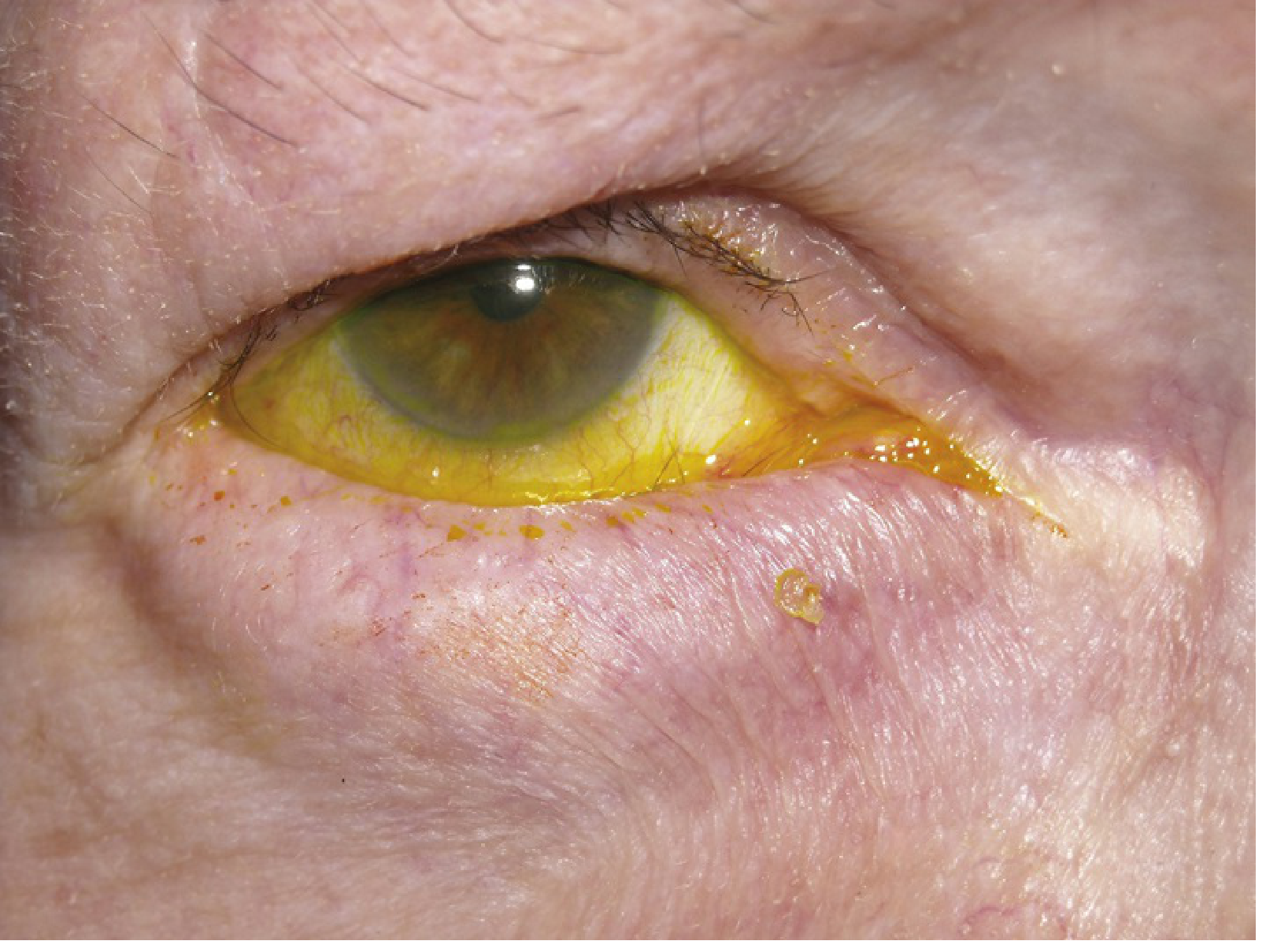
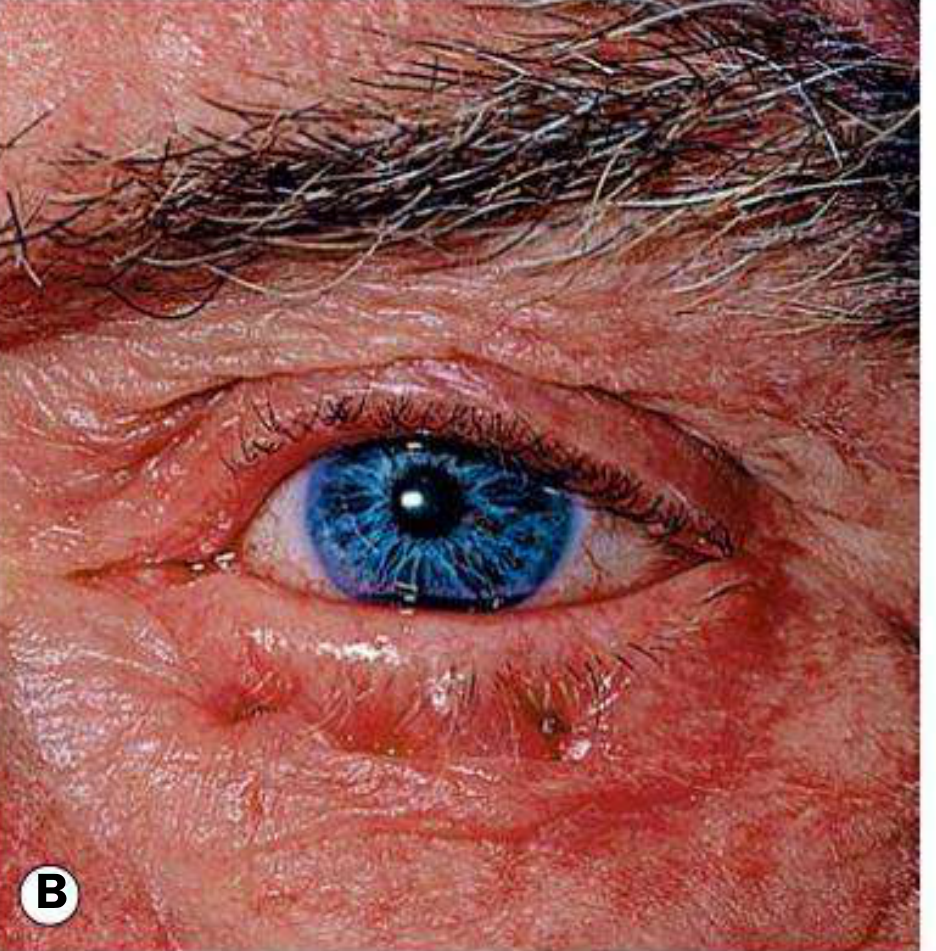
DEFINITION
- Affects the lower eyelid most commonly (especially involutional type)
- The upper eyelid is involved mainly in cicatricial and congenital types
- Differs from trichiasis in that the entire lid margin is inverted (in trichiasis, the lid margin is normal but individual lashes are misdirected)
I. CLASSIFICATION AND ETIOLOGY
1. Involutional (Senile/Age-Related) Entropion - Most Common
- Horizontal lid laxity - age-related attenuation and stretching of the medial and lateral canthal tendons and the tarsal plate; the lower lid "sags" and loses its normal taut apposition to the globe
- Lower lid retractor (capsulopalpebral fascia) weakness - attenuation, dehiscence, or disinsertion of the lower lid retractors (analogous to the levator in the upper lid); recognised clinically by reduced excursion of the lower lid in downgaze
- Orbicularis oculi override - the preseptal orbicularis overrides the pretarsal orbicularis during lid closure; the lower border of the tarsal plate is pushed anteriorly and the upper border tips inward, rotating the lid margin toward the globe
- Orbital septum laxity with prolapse of orbital fat into the lower lid, further reducing structural support
2. Cicatricial Entropion
- Trachoma - chronic chlamydial conjunctivitis; a leading global cause; forms the basis of the WHO-recognised "TT" stage (trachomatous trichiasis)
- Mucous membrane pemphigoid (ocular cicatricial pemphigoid - OCP) - progressive autoimmune cicatrising conjunctivitis; causes symblepharon, fornix shortening, and entropion
- Stevens-Johnson syndrome (SJS) / Toxic epidermal necrolysis (TEN) - acute drug reaction with severe mucosal blistering and subsequent cicatrisation
- Chemical and thermal burns - alkali burns especially; rapid and severe conjunctival and tarsal scarring
- Trauma - penetrating or blunt lid injuries with tarsal involvement
- Post-surgical - after lid surgery, cryotherapy, or repeated conjunctival procedures
- Herpes zoster ophthalmicus - late cicatricial changes
- Radiation to the eyelid area
3. Spastic Entropion
- Ocular irritation - any cause of ocular surface discomfort (dry eye, foreign body, post-operative irritation)
- Blepharospasm - benign essential blepharospasm
- Post-surgical - following ocular surgery, the increased blink reflex and orbicularis spasm can produce spastic entropion
- May trigger involutional entropion in a predisposed (lid-lax) patient
4. Congenital Entropion
- Upper lid: usually secondary to microphthalmos (small globe mechanically causes upper lid inversion)
- Lower lid: caused by maldevelopment of the inferior retractor aponeurosis; must be distinguished from epiblepharon (see below)
- Epiblepharon: not true entropion; an extra horizontal fold of redundant anterior lamella skin across the lid margin redirects lashes vertically; common in Eastern Asian individuals especially children; most resolve spontaneously
II. CLINICAL FEATURES
Symptoms
- Foreign body sensation - the most prominent complaint; constant scratching/abrasion sensation
- Ocular irritation and grittiness
- Epiphora (watering) - reflex hypersecretion from corneal irritation
- Redness of the eye
- Photophobia - when corneal epithelium is compromised
- Blurring of vision - from corneal epithelial damage or ulceration
- Symptoms worse in the morning (lid closure during sleep allows prolonged lash-cornea contact); better on awakening with the eye open
- Patients often report the eye being "stuck" or uncomfortable on waking
Signs
- Critical sign: Inward turning (inversion) of the eyelid margin, pushing otherwise normal lashes against the globe - visible on penlight or slit lamp examination
- Pseudotrichiasis - normal lashes turned inward against the cornea due to lid inversion (the lash position is abnormal because of the lid position, not the follicle direction)
- Conjunctival injection - diffuse or localised
- Superficial punctate keratopathy (SPK) - fine fluorescein-staining epithelial erosions at the site of lash contact (inferior cornea for lower lid entropion, superior for upper)
- Corneal epithelial defect - frank abrasion from repeated mechanical trauma
- Reduced lower lid excursion in downgaze - sign of retractor disinsertion (involutional type)
- Horizontal lid laxity - "snap-back test" or distraction test confirms the lid laxity component
- On eversion of the lid: tarsal conjunctival scarring, subconjunctival fibrosis, fornix shortening, symblepharon (in cicatricial types)
- Signs of underlying cause: trachomatous scarring (Arlt's line, Herbert's pits), rosacea, blepharitis, pemphigoid-type changes
III. COMPLICATIONS
- Corneal abrasion - from repetitive lash trauma against the epithelium
- Recurrent corneal erosion syndrome - repeated spontaneous breakdown of healed epithelium
- Bacterial keratitis / Corneal ulcer - compromised epithelium allows bacterial entry; organisms include Staphylococcus, Streptococcus, Pseudomonas; risk of corneal perforation
- Corneal vascularisation (superficial pannus) - from chronic inflammatory stimulus; indicates prolonged untreated disease
- Corneal opacity / Leucoma - stromal scarring leading to permanent visual loss; most severe in trachoma-associated disease
- Astigmatism - from irregular corneal surface caused by chronic mechanical distortion
- Amblyopia - in children with congenital or early-onset entropion if visual axis is affected
- Dry eye - disruption of normal lid-globe apposition disturbs the tear film and blink reflex
- Symblepharon - adhesions between tarsal and bulbar conjunctiva, especially in cicatricial types (OCP, SJS, burns)
- Corneal perforation and endophthalmitis - end-stage neglected bacterial ulceration
- Conjunctival keratinisation - from chronic exposure and irritation in severe cicatricial disease
IV. PRINCIPLES OF TREATMENT
A. TEMPORARY / CONSERVATIVE MEASURES
1. Lubricants and Topical Antibiotics
- Topical lubricants (artificial tears, gel) - reduce friction between lashes and cornea, protect the epithelium
- Antibiotic ointment (erythromycin or bacitracin q.i.d.) - treats associated SPK and prevents secondary bacterial infection
- Bandage contact lens - shields the cornea temporarily
2. Taping
- Adhesive taping of the lower lid skin - everting the lid margin away from the globe and securing with tape to the cheek
- Simple, non-invasive, immediate relief
- Only a temporising measure - not a permanent solution; useful while awaiting surgery
3. Botulinum Toxin Injection (Orbicularis Chemodenervation)
- Botulinum toxin A (Botox) injected into the preseptal orbicularis weakens the overriding orbicularis
- Useful for spastic entropion and as a temporary measure for involutional entropion
- Effect lasts 6-12 weeks; suitable for frail patients who are poor surgical candidates
4. Treat the Underlying Cause
- Spastic entropion: treat the precipitating ocular irritation; remove foreign body; treat dry eye
- Trachoma: systemic azithromycin (single dose 1 g oral); topical tetracycline/erythromycin
- OCP/SJS: systemic immunosuppression to arrest cicatrisation (dapsone, cyclophosphamide, rituximab)
B. SURGICAL MANAGEMENT
For INVOLUTIONAL Entropion
1. Transverse Everting Sutures (Quickert-Rathbun Sutures)
- Three double-armed sutures passed full-thickness through the lower lid to evert the margin
- Rapidly performed at the bedside or office setting under local anaesthesia
- Provides correction lasting several months - not permanent
- Useful for confused or frail patients who cannot tolerate a more complex procedure
- Also used as a Quickert suture for temporary spastic entropion correction
2. Wies Procedure (Full-Thickness Lid Splitting with Everting Sutures)
- Full-thickness horizontal incision through the lid below the tarsal plate
- Everting sutures are inserted: passed through conjunctiva and lower lid retractors, then anterior to the tarsal plate, exiting inferior to the lashes
- The horizontal scar creates a barrier between preseptal and pretarsal orbicularis, preventing override
- The everting sutures transfer retractor pull to the skin/orbicularis
- Provides durable correction
3. Lower Lid Retractor Reinsertion
- Direct surgical exposure of the disinserted lower lid retractor (capsulopalpebral fascia)
- The retractor is advanced and reattached to the inferior border of the tarsal plate
- More precise than the Wies procedure for addressing the retractor component
- Subciliary skin incision and its repair also prevent orbicularis override
- May be reserved for recurrence after a primary procedure
4. Horizontal Lid Tightening (Lateral Canthal Sling / Tarsal Strip Procedure)
- Addresses the horizontal lid laxity component (often co-exists with other mechanisms)
- A strip of tarsus from the lateral canthal region is tightened and reattached to the lateral orbital rim periosteum
- Shortens and tightens the lower lid; restores apposition to the globe
- Often combined with the above procedures for a complete repair
- "Horizontal lid laxity should be corrected with a lateral tarsal sling procedure" (Kanski)
For CICATRICIAL Entropion
5. Tarsal Fracture (Transverse Tarsotomy with Anterior Lamella Rotation)
- The tarsal plate is fractured/incised transversely through its full thickness
- The lash-bearing anterior lid margin is rotated anteriorly and away from the globe
- The two tarsal edges are sutured in the new position, fixing the margin in an everted position
- Used for mild cicatricial entropion
6. Posterior Lamellar Grafting (Mucous Membrane / Hard Palate Graft)
- For severe cicatricial entropion with significant tarsal and conjunctival deficiency:
- The scarred and contracted posterior lamella (conjunctiva + tarsus) is excised
- Replaced with mucosal grafts (hard palate mucosa, buccal mucosa, labial mucosa) or composite grafts (hard palate provides rigid support + mucosal lining)
- Reconstructs both the conjunctival surface and structural tarsal support
- Horizontal lid laxity must also be corrected with a lateral tarsal sling
7. Bilamellar Tarsal Rotation (for Trachomatous Trichiasis/Entropion)
- Full-thickness incision 3 mm from the lid margin parallel to it
- Lash-bearing margin rotated away from globe and sutured - the WHO-endorsed procedure for trachoma
For CONGENITAL Entropion
8. Hotz Procedure
- Excision of an ellipse of skin and muscle from the lower lid
- Fixation of the skin crease to the lower border of the tarsal plate - creates an adhesion that prevents the fold from overriding and inverting the margin
- Standard surgery for congenital lower lid entropion
V. SUMMARY TABLE
| Feature | Involutional | Cicatricial | Spastic | Congenital |
|---|---|---|---|---|
| Lid affected | Lower | Upper or lower | Lower | Upper (micro) / Lower |
| Age group | Elderly | Any age | Any | Neonates/children |
| Key mechanism | Laxity + retractor disinsertion + orbicularis override | Conjunctival/tarsal scarring | Orbicularis spasm | Retractor maldevelopment / microphthalmos |
| Common causes | Senile changes | Trachoma, OCP, SJS, burns | Ocular irritation, post-op | Congenital |
| Surgery of choice | Wies procedure / retractor reinsertion + tarsal strip | Tarsal fracture / posterior lamellar graft | Quickert sutures / Botox | Hotz procedure |
"Involutional (age-related) entropion affects mainly the lower lid. The constant rubbing of the lashes on the cornea in long-standing entropion may cause irritation, corneal punctate epithelial erosions and, in severe cases, pannus formation and ulceration."
- Kanski's Clinical Ophthalmology, 10th edition