
Meconium aspiration syndrom
I'll start by reading the medical library skill, then search for comprehensive information on Meconium Aspiration Syndrome (MAS).
Reading File
Now let me search the library and PubMed in parallel:
Finding Sources
Searching PubMed
"meconium aspiration syndrome"[MeSH Terms]
Searching Images
meconium aspiration syndrome chest X-ray CXR newborn
Excellent - three strong sources found. Let me read all three in parallel:
Reading File
Reading File
Reading File
Let me get more detailed content from the Maternal-Fetal Medicine textbook (the richest source) and fetch the CXR images:
Reading File
Loading Image
I now have comprehensive information from three authoritative textbooks plus imaging. Let me compile the full answer.
Meconium Aspiration Syndrome (MAS)
Definition
MAS is a clinical diagnosis defined by three criteria occurring together:
- Delivery through meconium-stained amniotic fluid (MSAF)
- Respiratory distress in the newborn
- A characteristic chest X-ray appearance
Meconium is confirmed by its presence below the level of the vocal cords.
- Creasy & Resnik's Maternal-Fetal Medicine, p. 1789
Epidemiology
- MSAF occurs in 4%-22% of all deliveries; more frequent in post-term gestation (>42 weeks)
- Intrauterine meconium passage is unusual before 36 weeks (requires maturation of intestinal smooth muscle and myenteric plexus)
- Only 1%-2% of deliveries with MSAF are complicated by MAS
- MAS is most common in post-mature (post-term) infants
Pathophysiology
MAS is no longer considered a simple obstructive disease. Multiple mechanisms operate simultaneously:
1. Mechanical Airway Obstruction
Meconium is thick and tenacious - it migrates to the distal airways causing:
- Complete obstruction → segmental atelectasis
- Partial obstruction ("ball-valve" effect) → air trapping and overinflation
- Alternating areas of atelectasis and hyperinflation on imaging
2. Chemical Pneumonitis
Meconium directly irritates the bronchial mucosa and lung parenchyma, triggering inflammation.
3. Surfactant Inactivation
Meconium inactivates surfactant, worsening alveolar collapse and V/Q mismatch.
4. Pulmonary Hypertension (PPHN)
- Chronic fetal hypoxia causes increased muscle in distal pulmonary arterial vessels (vascular remodeling)
- This leads to persistent pulmonary hypertension of the newborn (PPHN), which is the most dangerous complication
- The normal postnatal drop in pulmonary vascular resistance (PVR) fails to occur
- Right-to-left shunting across the ductus arteriosus and foramen ovale persists → severe hypoxemia

Figure: In infants with MAS + PPHN, muscle extends into the most peripheral (intra-acinar) pulmonary arteries - Barash's Clinical Anesthesia, p. 3581
Fetal Trigger
Clinical experience indicates that a stressed/hypoxic fetus passes meconium prior to birth. Infants born through MSAF are more likely to have:
- Lower umbilical cord pH
- Non-reassuring fetal heart rate tracings
- Perinatal asphyxia
Clinical Features
Severe MAS hallmarks:
- Need for positive-pressure ventilation
- Presence of pulmonary hypertension (PPHN)
- Cyanosis disproportionate to lung findings
Complications:
- Air leak (pneumothorax, pulmonary interstitial emphysema) - common
- Small pleural effusions
- Chronic lung disease
- Developmental delay
- Mortality (significant in severe disease)
Chest X-Ray Findings
Classic radiographic features:
- Bilateral hyperinflation (due to air trapping)
- Asymmetrical coarse opacification (patchy infiltrates) - chemical pneumonitis
- Small pleural effusions
- Alternating atelectasis and overinflation
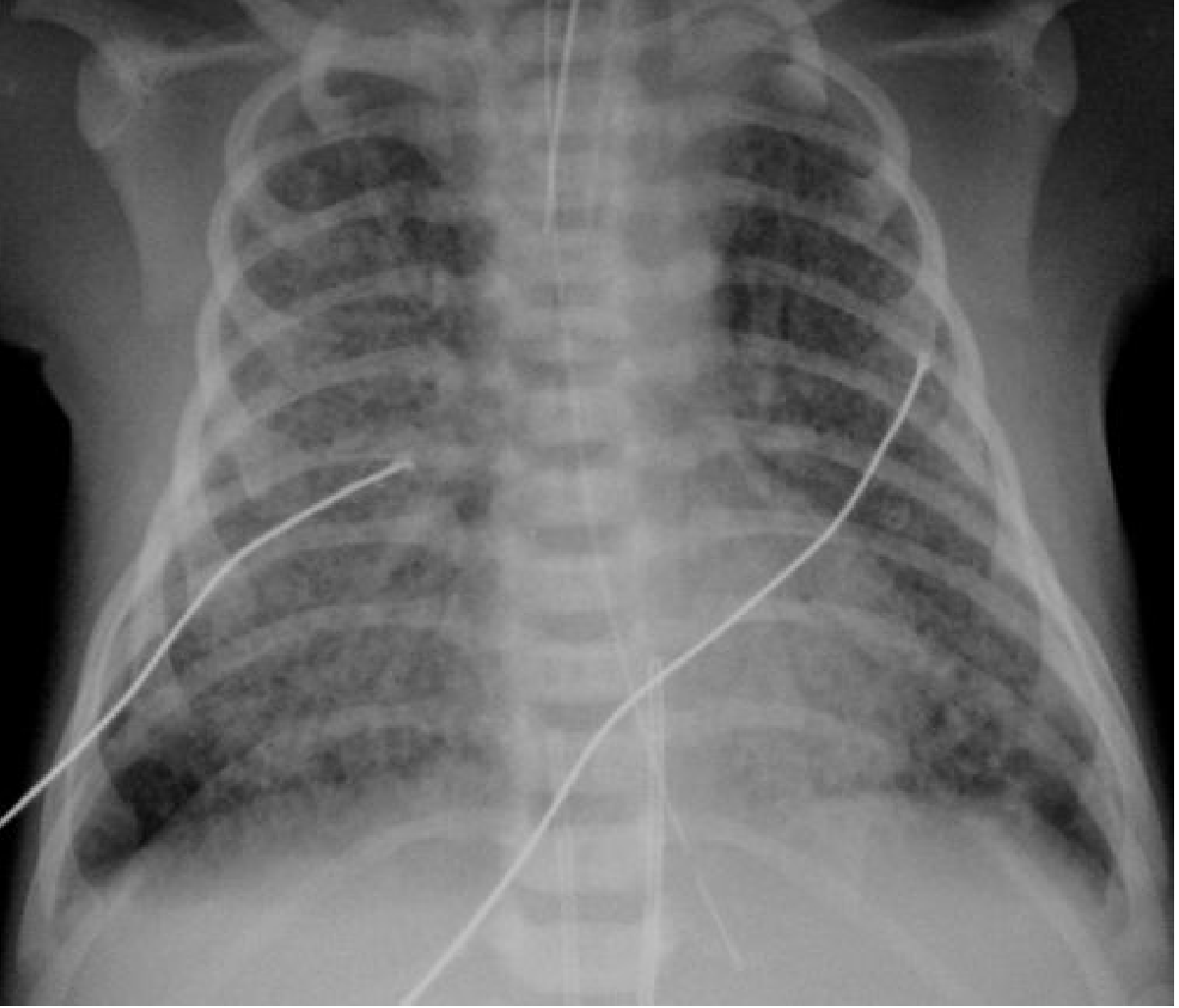
Fig. 70.13: Infant born at 42 weeks showing bilateral hyperinflation, small left pleural effusion, and asymmetrical coarse opacification - Grainger & Allison's Diagnostic Radiology, p. 1765
Prevention Strategies
Obstetric Prevention
- Induction of labor at 41 weeks reduces MSAF and MAS compared to expectant management
- Amnioinfusion to dilute thick meconium did NOT reduce MAS incidence when peripartum surveillance was adequate
Peripartum Suctioning - Evolved Recommendations
| Era | Recommendation |
|---|---|
| 1970s - 2005 | Aggressive airway suctioning (obstetrician + neonatologist) |
| 2004 | Large RCT showed no benefit of intrapartum suctioning |
| Post-2005 | Perineal/nasopharyngeal suctioning abandoned |
| 2015 (ILCOR/AAP) | No routine endotracheal suctioning for either vigorous OR depressed infants |
| Current | Focus on prompt positive-pressure ventilation if needed |
Key principle: Delaying positive-pressure ventilation (to perform suctioning) causes more harm than benefit. Personnel skilled in ventilation should attend any expected depressed delivery.
Management
Treatment is directed at managing hypoxemia and respiratory failure:
Respiratory Support
- Positive-pressure ventilation in ~30% of affected infants
- Conventional mechanical ventilation with lung-protective strategy
- High-frequency oscillatory ventilation in refractory cases
Pulmonary Vasodilators (for PPHN)
| Agent | Route | Notes |
|---|---|---|
| Inhaled nitric oxide (iNO) | Inhaled | Selective pulmonary vasodilator; first-line for PPHN |
| Sildenafil | Oral/IV | PDE-5 inhibitor |
| Bosentan | Oral | Endothelin receptor antagonist |
These agents also allow less injurious ventilator strategies, reducing air leak and chronic lung disease.
Surfactant
- Early exogenous surfactant is a useful treatment modality (counteracts inactivation by meconium)
Extracorporeal Membrane Oxygenation (ECMO)
Used when conventional treatments fail:
- VA-ECMO (veno-arterial): cannulas via internal jugular vein + common carotid artery; bypasses pulmonary circulation when PVR is very high
- VV-ECMO (veno-venous): double-lumen catheter via internal jugular vein; used for isolated respiratory failure
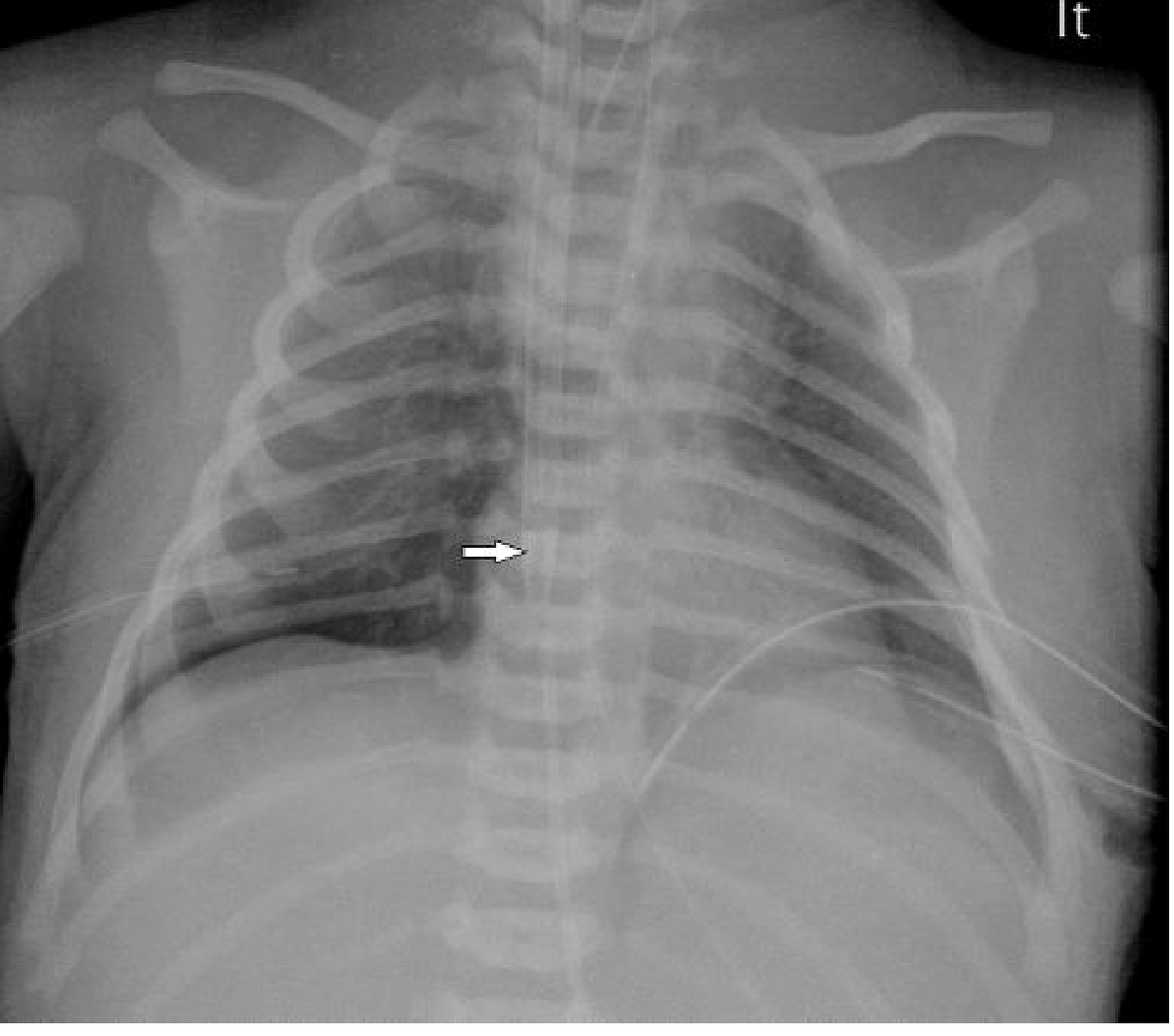
Fig. 70.14: Term infant with MAS on VV-ECMO following bilateral pneumothoraces - Grainger & Allison's Diagnostic Radiology, p. 1765
Antibiotics and Steroids
Selectively used - no demonstrated effectiveness in clinical trials.
Outcome
- Mortality and morbidity have dramatically improved with iNO and ECMO
- Severe MAS remains associated with: air leaks, chronic lung disease, developmental delay
- The overall incidence of MAS has declined at many centers with improved obstetric surveillance and abandonment of routine suctioning
Key Points Summary
| Feature | Detail |
|---|---|
| Incidence | 1-2% of MSAF deliveries |
| Peak risk | Post-term (>42 weeks), fetal distress |
| Core mechanisms | Obstruction + surfactant inactivation + chemical pneumonitis + PPHN |
| Worst complication | PPHN (persistent pulmonary hypertension) |
| CXR finding | Bilateral hyperinflation + coarse asymmetric opacities |
| Routine suctioning | NOT recommended (current ILCOR/AAP guidelines) |
| Key treatment | iNO for PPHN; surfactant; PPV; ECMO as rescue |
Sources:
- Creasy & Resnik's Maternal-Fetal Medicine, 8e, pp. 1789-1790
- Grainger & Allison's Diagnostic Radiology, pp. 1765-1766
- Barash, Cullen & Stoelting's Clinical Anesthesia, 9e, pp. 3580-3582
Recent evidence note: A 2023 meta-analysis (PMID 35016248) confirmed no benefit of endotracheal suctioning in infants born through MSAF, consistent with current guidelines. A 2025 systematic review (PMID 39541964) on respiratory conditions in newborns in low/middle-income countries highlights ongoing management challenges in resource-limited settings.
This is a shared conversation. Sign in to Orris to start your own chat.