
Diabetes mellitus pharmacology in detailed all drug and classification
Reading File
Finding Sources
Finding Sources
Finding Sources
Finding Sources
Finding Sources
Finding Sources
Finding Sources
Reading File
Reading File
Reading File
Reading File
Reading File
Reading File
I now have comprehensive content from both Lippincott and Katzung pharmacology textbooks. Let me compile the complete, detailed answer.
Diabetes Mellitus Pharmacology: Complete Drug Classification
Sources: Lippincott Illustrated Reviews Pharmacology (9781975170561); Katzung's Basic and Clinical Pharmacology 16e (9781260463309)
Overview of Diabetes Types
| Feature | Type 1 DM | Type 2 DM |
|---|---|---|
| Pathophysiology | Absolute insulin deficiency (autoimmune β-cell destruction) | Insulin resistance + progressive β-cell insufficiency |
| Treatment | Insulin (mandatory) | Lifestyle, oral agents, injectables, insulin as disease progresses |
| Goal | A1C ≤7% (154 mg/dL mean glucose) | A1C ≤7%, prevent cardiovascular/renal complications |
Complete Drug Classification
CLASS 1: INSULIN
Mechanism: Binds insulin receptor (tyrosine kinase) → facilitates glucose uptake into muscle/fat via GLUT-4, inhibits hepatic gluconeogenesis, promotes glycogen synthesis, lipogenesis, and protein synthesis.
Physiology of secretion: Blood glucose → uptake via GLUT into β-cell → glucokinase phosphorylates glucose → ATP rises → K⁺ channel block → membrane depolarization → Ca²⁺ influx → pulsatile insulin exocytosis.
Route: Subcutaneous injection (standard); IV (emergency hyperglycemia); inhaled (Afrezza); insulin pump (CSII - continuous subcutaneous insulin infusion).
A. Rapid-Acting Insulin Analogs
| Drug | Brand | Onset | Peak | Duration | Notes |
|---|---|---|---|---|---|
| Insulin lispro | Humalog, Lyumjev, Admelog | 15 min | 1-1.5 h | 3-4 h | Lys-Pro swap at B28-B29; U100 and U200 |
| Insulin aspart | Novolog, Fiasp | 10-20 min | 1-3 h | 3-5 h | Pro→Asp at B28; Fiasp is faster-acting |
| Insulin glulisine | Apidra | 15 min | 1 h | 3-4 h | Lys→Glu at B3, Asn→Lys at B29 |
Key point: Amino acid substitutions disrupt dimer/hexamer formation → faster subcutaneous absorption. Given just before meals (mealtime bolus).
B. Short-Acting (Regular) Insulin
| Drug | Brand | Onset | Peak | Duration |
|---|---|---|---|---|
| Regular human insulin | Humulin R, Novolin R | 30-60 min | 2-4 h | 6-10 h |
| Regular insulin inhaled | Afrezza | 12-15 min | ~1 h | 2-3 h |
Note: Regular insulin must be given 30-60 min before meals. U500 concentration available for insulin-resistant patients. Used IV in hyperglycemic emergencies (DKA, HHS).
C. Intermediate-Acting Insulin
| Drug | Brand | Onset | Peak | Duration |
|---|---|---|---|---|
| NPH insulin (Neutral Protamine Hagedorn) | Humulin N, Novolin N | 1-2 h | 4-8 h | 12-18 h |
Note: Cloudy suspension. Given twice daily. Used for basal glycemic control.
D. Long-Acting Insulin Analogs (Basal Insulins)
| Drug | Brand | Onset | Peak | Duration |
|---|---|---|---|---|
| Insulin glargine | Lantus, Toujeo (U300), Basaglar, Semglee | 1-2 h | Peakless | ~24 h |
| Insulin detemir | Levemir | 1-2 h | Relatively flat | Up to 24 h |
| Insulin degludec | Tresiba | 1 h | Peakless | >42 h |
Mechanism of prolonged action:
- Glargine: altered pH → precipitates at injection site, slowly dissolves. Cannot mix with other insulins.
- Detemir: fatty acid chain → albumin binding → prolonged release.
- Degludec: forms multi-hexamer depot → ultra-long action, very low day-to-day variability.
E. Premixed Insulins
| Preparation | Content |
|---|---|
| 70/30 (NPH/Regular) | 70% NPH + 30% Regular |
| 75/25 (NPL/Lispro) | Humalog Mix 75/25 |
| 50/50 (NPL/Lispro) | Humalog Mix 50/50 |
| 70/30 (NPA/Aspart) | Novolog Mix 70/30 |
| 70/30 (Degludec/Aspart) | Ryzodeg |
F. Insulin Adverse Effects
| Effect | Details |
|---|---|
| Hypoglycemia | Most serious; more frequent with intensive regimens |
| Weight gain | Anabolic effect |
| Lipodystrophy | Lipoatrophy or lipohypertrophy at injection sites |
| Hypokalemia | Insulin drives K⁺ intracellularly |
| Insulin allergy | Rare with human insulin |
Intensive vs. Standard Therapy: Intensive therapy (3+ injections/day, A1C ≤7%) significantly reduces microvascular complications (retinopathy, nephropathy, neuropathy) but increases hypoglycemic episodes. Not recommended for elderly, longstanding DM, hypoglycemia unawareness, or advanced microvascular disease.
CLASS 2: BIGUANIDES
Drug: Metformin (only clinically used biguanide; phenformin withdrawn due to lactic acidosis)
Mechanism:
- Primary: Inhibits hepatic gluconeogenesis (decreases hepatic glucose output)
- Activates AMP-activated protein kinase (AMPK) → reduces fatty acid synthesis
- Mild increase in peripheral insulin sensitivity (GLUT-4 translocation)
- Stimulates intestinal GLP-1 secretion
- Does NOT stimulate insulin secretion → no hypoglycemia as monotherapy
Pharmacokinetics: Not protein-bound; not metabolized; excreted unchanged by kidneys (tubular secretion and glomerular filtration).
Indications: First-line for Type 2 DM (ADA-recommended); also used in PCOS, prevention of Type 2 DM in high-risk patients.
Adverse effects:
- GI: nausea, diarrhea, abdominal discomfort (most common, minimize with meals, slow titration)
- Lactic acidosis (rare but serious; more risk in renal failure, hepatic failure, alcoholism, IV contrast)
- Vitamin B12 deficiency (long-term use)
- Metallic taste
Contraindications:
- eGFR <30 mL/min (absolute); caution if eGFR 30-45
- Acute heart failure, sepsis, acute illness with hemodynamic instability
- Hold 48 h before/after IV contrast dye
- Hepatic failure, alcohol abuse
Advantages: Low cost, weight neutral or modest weight loss, no hypoglycemia alone, cardiovascular benefit (UKPDS).
CLASS 3: SULFONYLUREAS
Mechanism: Bind to sulfonylurea receptor (SUR-1) on pancreatic β-cells → close ATP-sensitive K⁺ channels → membrane depolarization → Ca²⁺ influx → insulin exocytosis. Require functioning β-cells.
Key point: Stimulate insulin secretion regardless of blood glucose level → hypoglycemia risk.
First-Generation (largely obsolete):
Tolbutamide, chlorpropamide, tolazamide, acetohexamide
Second-Generation (clinically used):
| Drug | Brand | Duration | Notes |
|---|---|---|---|
| Glipizide | Glucotrol, Glucotrol XL | 12-24 h | Short-acting; preferred in elderly; hepatically metabolized |
| Glyburide (glibenclamide) | Micronase, DiaBeta | 16-24 h | Also binds cardiac/vascular SUR → avoid in CAD; not preferred in elderly |
| Glimepiride | Amaryl | 24 h | Once daily; least hypoglycemia; some insulin-sensitizing effect |
Adverse effects:
- Hypoglycemia (most significant - especially glyburide)
- Weight gain
- Disulfiram-like reaction (chlorpropamide - 1st gen)
- Hyponatremia/SIADH (chlorpropamide)
- Glyburide unique: sequesters in β-cell → prolonged hypoglycemia
Contraindications: Type 1 DM, pregnancy, severe renal/hepatic disease.
CLASS 4: MEGLITINIDES (Non-Sulfonylurea Insulin Secretagogues)
Mechanism: Same as sulfonylureas - bind SUR-1 on β-cells → K⁺ channel closure → insulin release. But different binding site; shorter duration → target postprandial glucose.
| Drug | Brand | Duration | Dosing |
|---|---|---|---|
| Repaglinide | Prandin | 1-3 h | Before each meal (2-4x/day); avoid if skipping meals |
| Nateglinide | Starlix | <2 h | Fastest-acting; most selective for postprandial glucose |
Advantages over sulfonylureas: Shorter action → less hypoglycemia risk; more flexible dosing (take only with meals).
Adverse effects: Hypoglycemia (less than sulfonylureas), weight gain.
CLASS 5: THIAZOLIDINEDIONES (TZDs) - "Glitazones"
Mechanism: Bind and activate PPAR-γ (peroxisome proliferator-activated receptor gamma) - nuclear receptor → alter gene transcription → increase insulin sensitivity in muscle, adipose tissue, liver. Do NOT stimulate insulin secretion. Require weeks for full effect.
| Drug | Brand | Notes |
|---|---|---|
| Pioglitazone | Actos | Preferred; may reduce cardiovascular events (PROactive trial); PPAR-α partial agonist |
| Rosiglitazone | Avandia | Restricted - FDA black box for MI risk; PPAR-γ only |
| Troglitazone | Rezulin | Withdrawn - fatal hepatotoxicity |
Adverse effects:
- Fluid retention/edema (increase renal sodium reabsorption)
- Weight gain (fluid + fat redistribution)
- Heart failure exacerbation (contraindicated in Class III-IV HF)
- Osteoporosis/fractures (inhibit osteoblast differentiation) - especially in women
- Bladder cancer risk (pioglitazone - controversial; FDA added warning)
- Macular edema
Benefits: Durable glycemic control, reduce triglycerides, increase HDL (pioglitazone).
CLASS 6: DPP-4 INHIBITORS ("Gliptins")
Mechanism: Inhibit dipeptidyl peptidase-4 (DPP-4) enzyme → prevent rapid degradation of endogenous GLP-1 and GIP → prolong incretin action → glucose-dependent insulin secretion + glucagon suppression.
Key advantage: Glucose-dependent → very low hypoglycemia risk. Weight neutral.
| Drug | Brand | Dosing |
|---|---|---|
| Sitagliptin | Januvia | Once daily; dose-adjust in renal impairment |
| Linagliptin | Tradjenta | Once daily; no renal dose-adjustment (biliary excretion) |
| Alogliptin | Nesina | Once daily |
| Saxagliptin | Onglyza | Once daily; concern for heart failure hospitalization (SAVOR-TIMI) |
| Vildagliptin | Galvus | Available in Europe; twice daily |
Adverse effects:
- Nasopharyngitis, upper respiratory infections
- Urinary tract infections
- Rare: pancreatitis, joint pain
- Saxagliptin/alogliptin: possible increased heart failure hospitalization
Contraindications: History of pancreatitis (relative), Type 1 DM.
CLASS 7: GLP-1 RECEPTOR AGONISTS ("Incretins")
Mechanism: Mimic native GLP-1 → activate GLP-1 receptors → glucose-dependent insulin secretion, glucagon suppression, delayed gastric emptying (reduces postprandial glucose), central satiety effects → weight loss. Resistant to DPP-4 degradation (modified structure).
Incretin effect background: Oral glucose causes 60-70% of postprandial insulin release via incretins (GLP-1, GIP). This is markedly reduced in Type 2 DM.
| Drug | Brand | Route/Frequency | CV Benefit |
|---|---|---|---|
| Exenatide | Byetta | SC, twice daily | No |
| Exenatide XR | Bydureon | SC, once weekly | No |
| Liraglutide | Victoza | SC, once daily | Yes (LEADER trial) |
| Dulaglutide | Trulicity | SC, once weekly | Yes (REWIND trial) |
| Semaglutide | Ozempic (SC), Rybelsus (oral) | SC weekly or oral daily | Yes (SUSTAIN-6) |
| Lixisenatide | Adlyxin | SC, once daily | Neutral |
| Tirzepatide | Mounjaro | SC, once weekly | GLP-1 + GIP dual agonist |
Cardiovascular benefits: Liraglutide, dulaglutide, and semaglutide approved to reduce cardiovascular mortality in Type 2 DM with established CVD.
Adverse effects:
- Nausea, vomiting, diarrhea (most common; often transient)
- Pancreatitis (rare but serious)
- Thyroid C-cell tumors (rodents - black box warning; contraindicated in personal/family history of medullary thyroid carcinoma or MEN2)
- Injection site reactions
- Weight loss (beneficial)
Contraindications: MEN2, medullary thyroid carcinoma, history of pancreatitis, pregnancy.
Premixed combinations: Insulin glargine + lixisenatide (Soliqua); insulin degludec + liraglutide (Xultophy).
CLASS 8: SGLT-2 INHIBITORS ("Gliflozins")
Mechanism: Inhibit sodium-glucose cotransporter-2 (SGLT-2) in the proximal renal tubule → prevent glucose reabsorption → urinary glucose excretion (glucosuria) → reduces blood glucose independent of insulin.
SGLT-2 handles ~90% of filtered glucose reabsorption in the kidney.
| Drug | Brand | Notable Benefits |
|---|---|---|
| Empagliflozin | Jardiance | CV mortality reduction (EMPA-REG); heart failure, CKD benefit |
| Canagliflozin | Invokana | CV events reduction (CANVAS); CKD progression reduction |
| Dapagliflozin | Farxiga/Forxiga | Heart failure, CKD benefit (DAPA-HF); approved for HFrEF even without DM |
| Ertugliflozin | Steglatro | CV neutral |
Adverse effects:
- Genital mycotic infections (most common - due to glucosuria)
- UTI
- Euglycemic DKA (especially in Type 1 DM or fasting states - rare but serious)
- Increased urination/dehydration/hypotension
- Canagliflozin: lower limb amputations (black box warning), fractures
- Fournier's gangrene (rare, necrotizing fasciitis of perineum)
Contraindications: eGFR <30 (for glycemic efficacy; some still used for HF/CKD protection at lower eGFR with adjusted thresholds), recurrent UTIs/fungal infections, Type 1 DM (relative).
Key benefits: Weight loss (~2-3 kg), blood pressure reduction, heart failure protection, renal protection - independent of glycemic effect.
CLASS 9: ALPHA-GLUCOSIDASE INHIBITORS
Mechanism: Competitively inhibit alpha-glucosidase enzymes in the intestinal brush border → delay digestion and absorption of complex carbohydrates → reduce postprandial glucose spikes. No effect on fasting glucose.
| Drug | Brand |
|---|---|
| Acarbose | Precose |
| Miglitol | Glyset |
Adverse effects:
- Flatulence, bloating, diarrhea, abdominal cramps (very common; limits use)
- No hypoglycemia when used as monotherapy
- If hypoglycemia occurs with combination therapy, must treat with glucose (not sucrose - sucrose absorption is inhibited)
Contraindications: Inflammatory bowel disease, gastroparesis, cirrhosis.
CLASS 10: AMYLIN ANALOG
Drug: Pramlintide (Symlin)
Mechanism: Synthetic analog of amylin (co-secreted with insulin from β-cells) → delays gastric emptying, suppresses postprandial glucagon, promotes satiety.
Indications: Adjunct to mealtime insulin in Type 1 AND Type 2 DM.
Administration: Subcutaneous injection immediately before meals. When initiated, reduce mealtime insulin by 50% to prevent hypoglycemia. Cannot be mixed in same syringe as insulin.
Adverse effects: Nausea, vomiting, anorexia, severe hypoglycemia (when combined with insulin).
Contraindications: Diabetic gastroparesis, hypoglycemia unawareness, cresol hypersensitivity.
CLASS 11: DOPAMINE AGONIST
Drug: Bromocriptine (Cycloset - quick-release formulation for DM)
Mechanism: Activates dopamine D2 receptors in hypothalamus → improves insulin sensitivity by resetting circadian regulation of glucose metabolism; reduces postprandial glucose.
Adverse effects: Nausea, orthostatic hypotension, somnolence, rhinitis.
Advantage: Weight neutral; some cardiovascular protection signal (Cycloset Safety Trial).
CLASS 12: BILE ACID SEQUESTRANTS
Drug: Colesevelam (Welchol)
Mechanism for DM: Not fully understood; may reduce hepatic glucose production by altering bile acid signaling in the gut and liver via FXR pathway.
Adverse effects: Constipation, bloating, hypertriglyceridemia.
Note: Also lowers LDL cholesterol - dual benefit in DM patients with dyslipidemia.
Summary Comparison Table
| Class | Drugs | Mechanism | Hypoglycemia | Weight | CV/Renal Benefit |
|---|---|---|---|---|---|
| Insulin | Lispro, Aspart, Regular, NPH, Glargine, Degludec | Direct insulin replacement | Yes (major risk) | Gain | Yes (essential) |
| Biguanide | Metformin | ↓ Hepatic gluconeogenesis | No | Neutral/Loss | Yes (UKPDS) |
| Sulfonylureas | Glipizide, Glyburide, Glimepiride | ↑ Insulin secretion (SUR-1) | Yes | Gain | No |
| Meglitinides | Repaglinide, Nateglinide | ↑ Insulin secretion (SUR-1) | Low risk | Gain | No |
| TZDs | Pioglitazone, Rosiglitazone | PPAR-γ agonist → insulin sensitivity | No | Gain | Pioglitazone (modest) |
| DPP-4 inhibitors | Sitagliptin, Linagliptin, Alogliptin | Prolong endogenous GLP-1/GIP | Very low | Neutral | Neutral |
| GLP-1 agonists | Liraglutide, Semaglutide, Dulaglutide | GLP-1 receptor activation | Low | Loss | Yes (CV mortality) |
| SGLT-2 inhibitors | Empagliflozin, Canagliflozin, Dapagliflozin | Glucosuria via SGLT-2 block | No | Loss | Yes (HF, CKD, CV) |
| α-Glucosidase inhibitors | Acarbose, Miglitol | Delay CHO absorption | No | Neutral | No |
| Amylin analog | Pramlintide | Amylin receptor → ↓ glucagon, gastric emptying | With insulin | Loss | No |
| Dopamine agonist | Bromocriptine | D2 receptor → insulin sensitivity | No | Neutral | Possible |
| Bile acid sequestrant | Colesevelam | ↓ Hepatic glucose + ↓ LDL | No | Neutral | Lipid benefit |
Treatment Algorithm for Type 2 DM (ADA Guidelines)
- Start: Metformin + lifestyle modification at diagnosis
- If A1C not at goal with metformin AND...
- Established ASCVD or high CV risk → add GLP-1 RA (liraglutide, semaglutide, dulaglutide) or SGLT-2i (empagliflozin, canagliflozin)
- Heart failure (HFrEF) → add SGLT-2i (empagliflozin, dapagliflozin)
- CKD → add SGLT-2i or GLP-1 RA
- Need to minimize hypoglycemia → DPP-4i, GLP-1 RA, or SGLT-2i
- Need to minimize weight → GLP-1 RA or SGLT-2i
- Cost is a concern → Sulfonylureas (generic, inexpensive)
- Advanced disease with inadequate control: Add/intensify insulin therapy
Standard vs. Intensive Insulin Therapy (Landmark DCCT Trial)
- Intensive therapy (A1C ≤7%): Significant reduction in retinopathy (76%), nephropathy (50%), neuropathy (60%)
- Trade-off: 3x higher rate of severe hypoglycemia
- NOT recommended for: elderly patients, hypoglycemia unawareness, longstanding diabetes with advanced complications
Lippincott Illustrated Reviews: Pharmacology, Ch. 24 | Katzung Basic & Clinical Pharmacology 16e, Ch. 41
Lab diagnosis of Cholera vibrio
Reading File
Finding Sources
Finding Sources
Reading File
Reading File
Reading File
Reading File
Reading File
Reading File
Reading File
Loading Image
Reading File
I now have comprehensive textbook content from Jawetz, Park's, and Medical Microbiology. Let me now compile the full detailed answer.
Laboratory Diagnosis of Cholera (Vibrio cholerae)
Sources: Jawetz Melnick & Adelberg's Medical Microbiology 28e; Medical Microbiology 9e; Park's Textbook of Preventive & Social Medicine; Quick Compendium of Clinical Pathology 5e
1. The Organism at a Glance
| Feature | Detail |
|---|---|
| Morphology | Comma-shaped / curved Gram-negative rod, 1 × 2-4 µm |
| Motility | Single polar flagellum; highly motile |
| Metabolism | Fermentative, facultative anaerobe; oxidase positive |
| pH preference | Grows optimally at alkaline pH 8.5-9.5; rapidly killed by acid |
| Salt requirement | V. cholerae O1 can grow WITHOUT additional NaCl (unlike other vibrios) |
| Key serogroups causing epidemic cholera | O1 and O139 only |
| O1 serotypes | Ogawa, Inaba, Hikojima |
| O1 biotypes | Classical and El Tor (El Tor is VP positive, hemolysin-producing, polymyxin B resistant) |
| O139 features | Encapsulated (unlike O1); produces cholera toxin; causes cholera-like epidemics |
2. Specimen Collection
(a) Stool (Primary Specimen)
- Collect early in the course of illness - vibrio numbers are highest at onset and fall rapidly
- Collect before antibiotic therapy
- Methods:
- Rubber catheter (best): Sterilized No. 26-28 soft rubber catheter introduced 4-5 cm into rectum; specimen collected directly into transport medium
- Rectal swab: Cotton-tipped swab soaked in liquid stool or introduced into rectum, immediately dipped in holding medium
- Liquid stool in a sterile container is also acceptable
(b) Transport Media (Critical - especially for delayed processing)
| Medium | Notes |
|---|---|
| Cary-Blair medium | Best for delayed transport; keeps organisms viable for days; refrigerate |
| Alkaline Peptone Water (APW), pH 8.5 | Doubles as enrichment; standard holding medium |
| Venkatraman-Ramakrishnan (VR) medium | Used for larger stool specimens; classic Indian field medium |
| No transport medium available | Soak rectal swab in stool, seal in sterile plastic bag; must reach lab within hours |
Specimens must be inoculated onto agar within 2-4 hours of collection for optimal recovery.
3. Direct Microscopic Examination
Dark-Field / Phase-Contrast Microscopy
- Fresh stool or enrichment broth (after 5-6 hours incubation in APW) examined under dark-field illumination
- Positive finding: "Shooting star motility" - vibrios dart across the dark field like shooting stars in a dark sky
- Can diagnose ~80% of cases within minutes during epidemics
- Immobilization test (presumptive confirmation): Add a drop of polyvalent anti-O1 antiserum to a wet preparation:
- Motility ceases → presumptively V. cholerae O1
- No change in motility → organism is NOT V. cholerae O1
- Limitation: not distinctive on routine smears; becomes negative as disease progresses; not routinely recommended outside epidemic settings
Gram Stain
- Curved to comma-shaped Gram-negative rods (Figure above - Jawetz)
- On prolonged culture may appear as straight rods
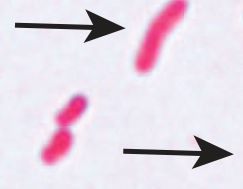
Gram stain of V. cholerae showing the characteristic curved (comma-shaped) morphology. (Jawetz Medical Microbiology)
4. Culture Methods
Step 1 - Enrichment (Selective enrichment broth)
| Medium | Details |
|---|---|
| Alkaline Peptone Water (APW) pH 8.5, with 1% NaCl | Inoculate 0.5-1.0 ml stool; incubate 6-8 h at 37°C; V. cholerae grows on surface pellicle |
| Taurocholate Peptone Broth (TCP) pH 8.0-9.0 | Alternative enrichment; subculture after 6-8 h |
| Peptone Water Tellurite (PWT) | Used in some labs; incubate 4-6 h at 37°C then subculture |
After enrichment, loop from the surface (vibrios grow as a pellicle at the top) and subculture onto selective agar.
Step 2 - Selective Agar Plates
TCBS Agar (Thiosulfate-Citrate-Bile Salts-Sucrose) - Primary Selective Medium
| Feature | V. cholerae on TCBS |
|---|---|
| Colony color | Yellow (ferments sucrose) |
| Background | Dark green agar |
| Colony appearance | Glistening, 2-3 mm, yellow colonies surrounded by diffuse yellowing of indicator |
| Incubation | 18-24 h at 37°C |
| Selectivity | Inhibits most enteric bacteria (coliforms, Salmonella, Shigella) |
Comparison: V. parahaemolyticus and V. vulnificus produce green colonies (do not ferment sucrose).
Bile Salt Agar (BSA), pH 8.6
- V. cholerae: translucent, moist, raised, smooth, easily emulsifiable colonies ~1 mm diameter
- Plates screened under oblique light illumination for typical vibrio colonies
- Used when TCBS not available
Other media that support growth:
- Blood agar - grows well (smooth, round, opaque, granular in transmitted light)
- MacConkey agar - grows (some strains may be inhibited)
- Note: Alkaline pH strongly favors vibrio growth over normal enteric flora
5. Biochemical Identification
| Test | V. cholerae result |
|---|---|
| Oxidase test | Positive (key preliminary test - distinguishes vibrios from Enterobacteriaceae) |
| Gram stain | Curved Gram-negative rod |
| Sucrose fermentation | Positive (yellow on TCBS) |
| Mannose fermentation | Positive |
| Arabinose fermentation | Negative |
| String test (0.5% sodium deoxycholate) | Positive - forms mucoid string (cell lysis releases DNA) |
| TSI (Triple Sugar Iron) agar | Acid/Acid (yellow slant/yellow butt - sucrose fermentation); no H₂S |
| Indole test | Positive |
| Voges-Proskauer (VP) test | Positive (El Tor biotype); Negative (Classical biotype) |
| Growth at 0% NaCl | Positive (unlike other halophilic vibrios) |
| Polymyxin B sensitivity | Resistant (El Tor); Sensitive (Classical) |
| Hemolysin production | El Tor: positive; Classical: variable |
The oxidase test is the single most important preliminary step - distinguishes Vibrio from Enterobacteriaceae (all of which are oxidase negative).
6. Serological Identification (Serogrouping/Serotyping)
Slide Agglutination Test
- Pick a suspected colony from BSA/TCBS
- Make a homogeneous suspension in 0.85% sterile saline on a glass slide
- Add one drop of polyvalent anti-cholera O1 diagnostic serum
- Positive agglutination = V. cholerae O1
- If positive with polyvalent serum → repeat with monovalent Inaba serum and Ogawa serum:
- Agglutinates with Inaba antiserum only → Inaba serotype
- Agglutinates with Ogawa antiserum only → Ogawa serotype
- Agglutinates with both → Hikojima serotype (rare)
- If no agglutination with O1 antiserum → test with O139 antiserum
- Colonies that don't agglutinate with either O1 or O139 sera → test oxidase + string tests → classify as non-O1/non-O139 V. cholerae
Antigenic Structure
| Antigen | Details |
|---|---|
| H antigen | Single heat-labile flagellar antigen; shared by all vibrios; not protective |
| O antigen (LPS) | Determines serogroup; >200 serogroups; O1 and O139 cause epidemic cholera |
| O1 antigen | Not capsulated; further divided into Inaba, Ogawa, Hikojima |
| O139 capsular polysaccharide | Encapsulated; does not carry O1 LPS genes; also produces cholera toxin |
7. Biotyping (Differentiating Classical vs. El Tor)
| Test | Classical | El Tor |
|---|---|---|
| Voges-Proskauer | Negative | Positive |
| Hemolysin of sheep RBCs | Negative | Positive (thermostable hemolysin) |
| Polymyxin B (50 IU disc) | Sensitive (inhibited) | Resistant |
| Phage IV sensitivity | Sensitive | Resistant |
| Agglutination of chicken RBCs | Negative | Positive |
| El Tor disease | Milder (75% asymptomatic) | Pandemic strain since 7th pandemic |
8. Rapid/Newer Diagnostic Methods
| Method | Notes |
|---|---|
| Immunochromatographic dipstick test | Rapid field test; detects O1 and O139 LPS antigens in stool; sensitive and specific; results in 10-15 min; used in epidemic settings |
| Immunofluorescence | Direct detection using fluorescent-labeled antibodies against O1/O139 |
| Latex agglutination | Rapid; detects V. cholerae O1 antigens |
| ELISA (cholera toxin detection) | Detects cholera toxin; variable analytical performance |
| Multiplex PCR / NAAT (nucleic acid amplification) | Test of choice per Medical Microbiology 9e; detects ctxA (cholera toxin gene), tcpA (toxin-coregulated pilus), and ompW genes; can simultaneously detect many enteric pathogens; highly sensitive and specific |
| MALDI-TOF MS | Rapid and reproducibly accurate identification from culture; promising newer methodology |
| Widal-like serology (vibriocidal antibodies) | Vibriocidal antibody titer ≥1:20 in serum = associated with protection; used in seroepidemiological surveys, not acute diagnosis |
9. Stepwise Laboratory Diagnosis Summary
PATIENT STOOL (early in illness, before antibiotics)
         │
         ▼
TRANSPORT MEDIUM: Cary-Blair / Alkaline Peptone Water
         │
         ▼
DIRECT EXAMINATION
  • Wet mount: "Shooting star" motility on dark-field
  • Immobilization with polyvalent O1 antiserum → presumptive
  • Gram stain: curved Gram-negative rods
         │
         ▼
ENRICHMENT: Alkaline Peptone Water (APW), pH 8.5 - 6-8 h at 37°C
         │
         ▼
SUBCULTURE ON SELECTIVE MEDIA
  • TCBS agar → YELLOW colonies (sucrose fermenter)
  • Bile Salt Agar → translucent, moist, smooth colonies
         │
         ▼
PRELIMINARY IDENTIFICATION
  • Oxidase test → POSITIVE ✓ (key step)
  • String test → POSITIVE ✓
  • Gram stain and motility (hanging drop)
         │
         ▼
SEROLOGICAL CONFIRMATION
  • Slide agglutination with polyvalent O1 antiserum
  • If positive → Inaba + Ogawa monovalent sera → serotyping
  • If O1 negative → test with O139 antiserum
         │
         ▼
BIOCHEMICAL CONFIRMATION + BIOTYPING
  • Fermentation: sucrose+, mannose+, arabinose-
  • VP test, polymyxin B sensitivity (El Tor vs Classical)
         │
         ▼
FINAL REPORT: V. cholerae O1 (serotype Ogawa/Inaba), El Tor biotype
              OR V. cholerae O139 Bengal
              OR non-O1/non-O139 V. cholerae
10. Key Colony/Media Characteristics at a Glance
| Medium | V. cholerae appearance | Significance |
|---|---|---|
| TCBS agar | Yellow, glistening, 2-3 mm | Primary selective medium; sucrose fermentation |
| Blood agar | Smooth, round, opaque; may show beta-hemolysis (El Tor) | Non-selective; all vibrios grow |
| MacConkey agar | Small, pale (non-lactose fermenter) | Non-selective; some strains inhibited |
| Bile Salt Agar | Translucent, moist, 1 mm, easily emulsifiable | Classic medium; viewed under oblique light |
| TCBS - V. parahaemolyticus | Green (no sucrose fermentation) | Important differential |
11. Special Points
- Notification: Cholera is a notifiable disease - must be reported to WHO within 24 hours under International Health Regulations
- Non-O1/non-O139 strains: cause self-limited gastroenteritis; do NOT produce cholera toxin; do not cause epidemic cholera
- O139 Bengal: emerged in 1992; encapsulated; produces cholera toxin; can affect individuals immune to O1; requires specific O139 antiserum for identification
- False-negative cultures: V. cholerae can enter a viable but non-culturable (VBNC) state in the aquatic environment between outbreaks - PCR detects these when culture fails
- Specimen from contacts/water: 1-3 L water samples filter-concentrated; or added to peptone water (1:9) for enrichment
Jawetz Melnick & Adelberg's Medical Microbiology 28e, Ch. 17 | Medical Microbiology 9e | Park's Textbook of Preventive & Social Medicine, Ch. Cholera | Quick Compendium of Clinical Pathology 5e
This is a shared conversation. Sign in to Orris to start your own chat.