
Explain me 10 common heart diseases with ecg changes and ecg images of those diseases gujrati language
Reading File
Finding Sources
Finding Sources
Reading File
Finding Sources
Finding Sources
Searching the Web
ECG changes 10 common heart diseases atrial fibrillation MI heart block WPW images
Reading Web Page
https://mesimedical.com/insights/frequently-diagnosed-condit…
Reading File
Reading File
Finding Sources
I now have excellent textbook content on ECG changes. Let me fetch the key ECG images from the textbook and also search for additional ECG images.
Loading Image
Loading Image
Reading File
Loading Image
Loading Image
Reading File
Loading Image
Finding Sources
Reading File
Finding Sources
Loading Image
Searching the Web
ECG images atrial flutter heart block WPW syndrome ventricular fibrillation pericarditis free educational
I now have excellent textbook ECG images and comprehensive content. Let me fetch a couple more key ECG images from the textbook to cover additional diseases.
Finding Sources
Reading File
I now have comprehensive information from the textbooks. Let me compile the complete Gujarati response with ECG changes for all 10 heart diseases.નીચે 10 સામાન્ય હૃદય રોગો, તેમના ECG ફેરફારો અને ECG છબીઓ સહિત ગુજરાતીમાં સમજાવ્યા છે:
❤️ 10 સામાન્ય હૃદય રોગો - ECG ફેરફારો સાથે
૧. STEMI - ST-Elevation Myocardial Infarction (હૃદયરોગનો હુમલો)
રોગ શું છે?
હૃદયની ધમનીમાં સંપૂર્ણ અવરોધ આવવાથી હૃદયના સ્નાયુ (myocardium) ને ઓક્સિજન મળતો બંધ થઈ જાય છે, જેના કારણે સ્નાયુ મૃત્યુ (necrosis) પામે છે.
ECG ફેરફારો:
- ST Segment Elevation - અસરગ્રસ્ત leads માં ST segment ઊંચો (elevated) થઈ જાય છે
- Hyperacute T waves - સૌથી પહેલાં ઊંચા, સૂચક T waves દેખાય છે
- Q Waves - કેટલાક કલાકો/દિવસો પછી pathological Q waves આવે છે
- Reciprocal ST depression - વિરુદ્ધ leads માં ST depression
- Anterior Wall MI: V1-V6, I, aVL leads માં ST elevation
- Inferior Wall MI: II, III, aVF leads માં ST elevation
📚 Harrison's Principles of Internal Medicine, 22E - STEMI ઓળખ માટે ST vector નો અભ્યાસ
Anterior STEMI - Evolving Q-waves (ECG Image):
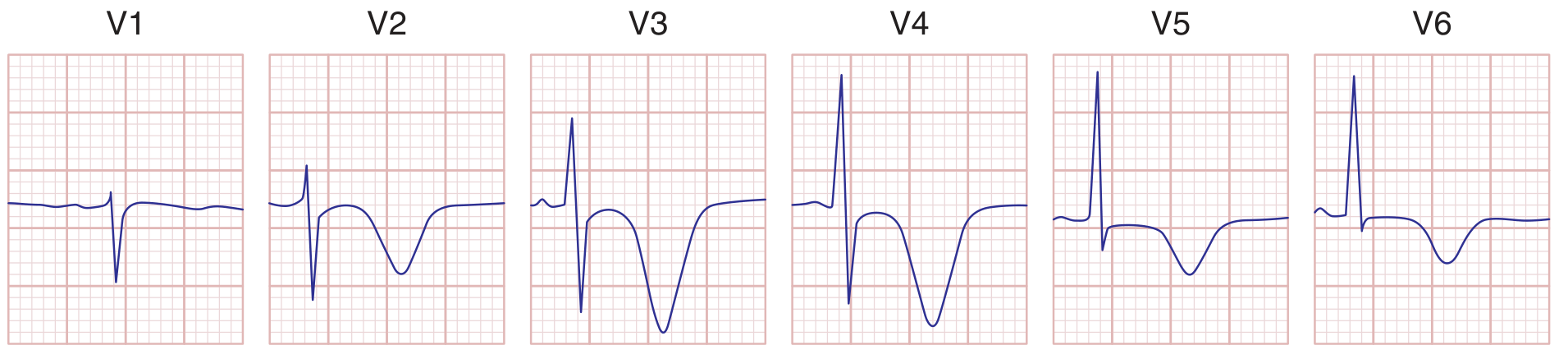
ઉપરની ECG: Anterior Wall STEMI - V1-V6 leads માં deep T-wave inversions (Wellens sign), left anterior descending coronary artery ની high-grade stenosis નો સૂચક
Ischemia Current of Injury (Diagram):
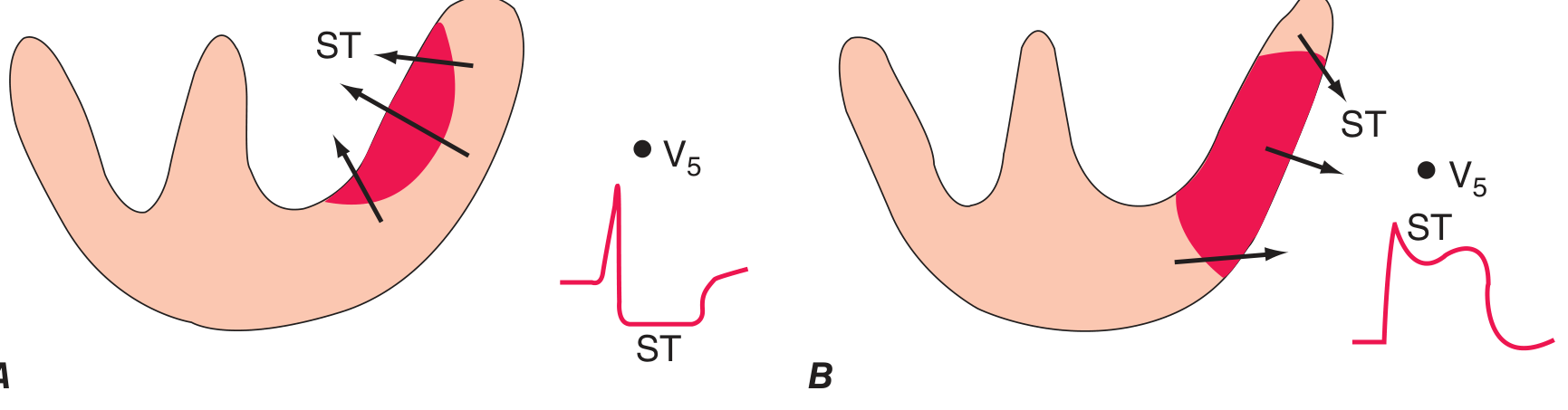
A = Subendocardial ischemia → ST depression | B = Transmural ischemia → ST elevation
Anterior + Inferior MI ECG sequence:
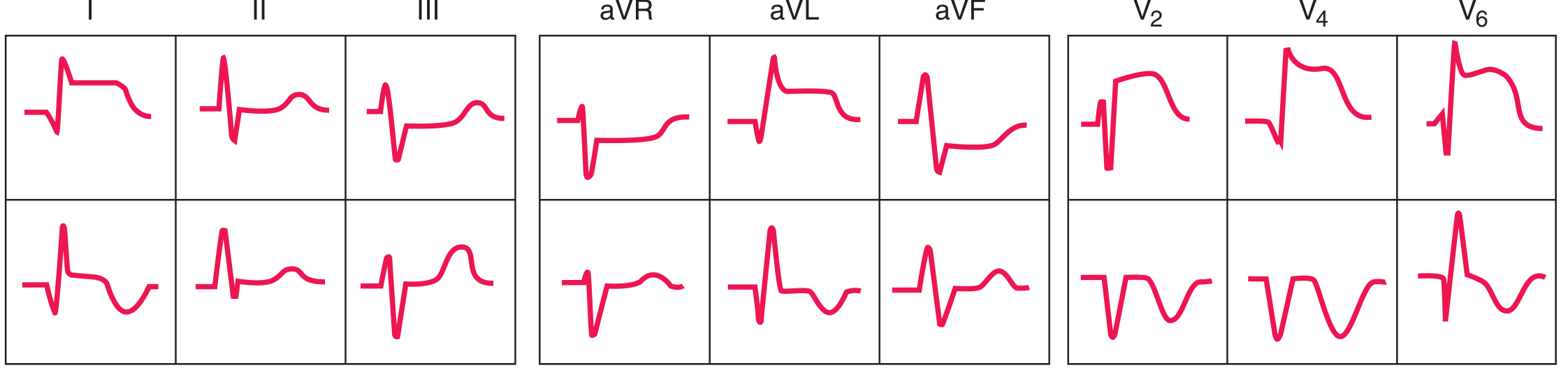
Anterior MI (ઉપર): I, aVL, V2-V6 માં ST elevation; II, III, aVF માં reciprocal depression
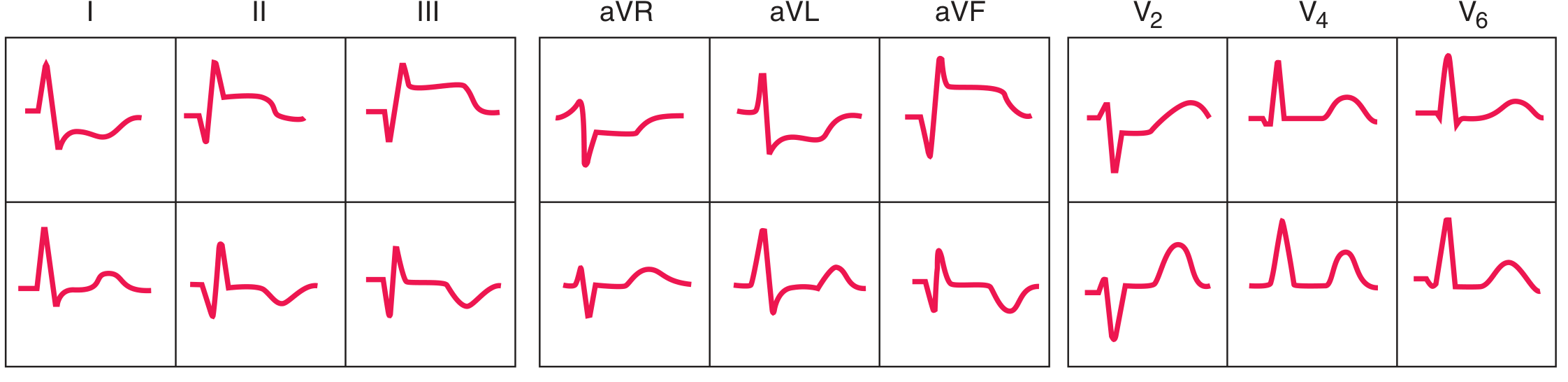
Inferior MI (નીચે): II, III, aVF માં ST elevation; V1-V4 માં reciprocal ST depression
૨. NSTEMI / Unstable Angina (Non-ST Elevation MI)
રોગ શું છે?
ધમનીમાં આંશિક અવરોધ - સ્નાયુ મૃત્યુ થાય છે (NSTEMI) અથવા ન્હોય (Unstable Angina), પણ troponin વધે છે.
ECG ફેરફારો:
- ST Depression - precordial leads માં ST segment નીચો ઊતરે
- T wave inversion - Negative T waves (ischemic marker)
- Transient ST elevation - ક્યારેક હોઈ શકે
- Normal ECG - ઘણા NSTEMI cases માં ECG normal પણ હોઈ શકે; diagnosis troponin elevation પર આધાર રાખે
⚠️ ST elevation નઆવ્યો હોય, છતાં troponin elevated હોય, તો NSTEMI ગણો.
૩. Atrial Fibrillation (AF - ધ્રૂજારી ધબકારા)
રોગ શું છે?
Atria (ઉપલા ચેમ્બર) અનિયમિત, ઝડપી અને અવ્યવસ્થિત રીતે ધ્રૂજે છે - heartbeat અત્યંત અનિયમિત (irregularly irregular) બને છે.
ECG ફેરફારો:
- P Waves ગેરહાજર - Atrial P waves સ્પષ્ટ દેખાતા નથી
- Fibrillatory Baseline - ઝીણા, ઝડપી, અનિયમિત fibrillatory waves (350-600/min)
- Irregularly Irregular Ventricular Response - RR interval સ્પષ્ટ pattern વગર બદલતો રહે
- Narrow QRS - સામાન્ય રીતે (bundle branch block ન હોય ત્યાં સુધી)
Atrial Fibrillation - 12-Lead ECG:
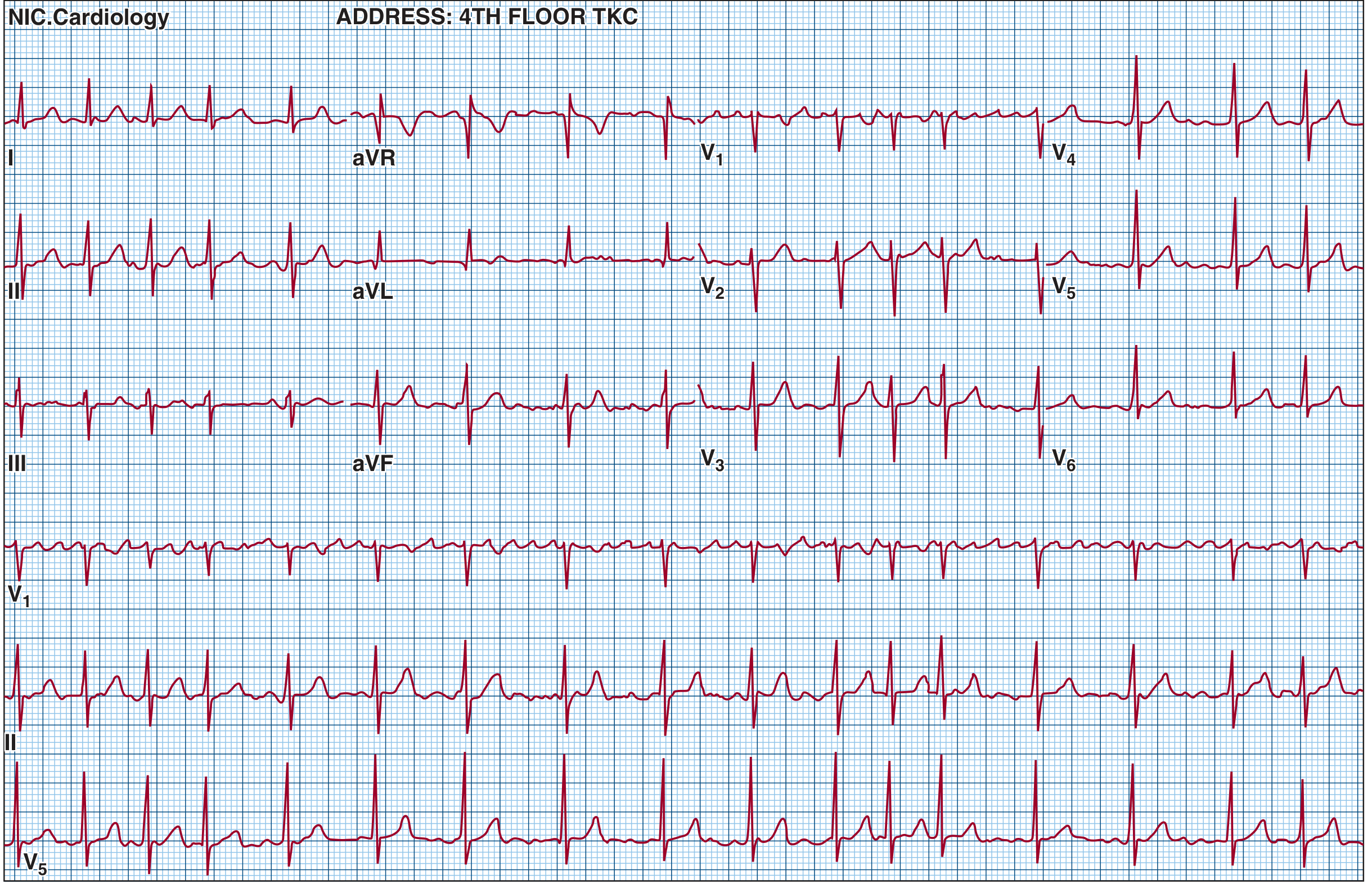
Note: P waves ગેરહાજર, baseline માં fibrillatory waves, QRS complexes irregularly irregular - આ atrial fibrillation ની classic ECG image
📚 Fuster and Hurst's The Heart, 15th Edition - Figure 36-5
૪. Atrial Flutter (ઝડપી Atrial ધ્રૂજ)
રોગ શું છે?
Atrium માં re-entry circuit ની વજહ્ He atrial rate 250-350/min થઈ જાય. Atrioventricular node "filter" ની ભૂમિકા ભજવે.
ECG ફેરફારો:
- Sawtooth (આરી જેવા) Flutter Waves - II, III, aVF leads માં સ્પષ્ટ "F waves"
- Atrial rate ≈ 300/min (250-350)
- Regular અથવા irregular ventricular response (2:1, 3:1 AV block)
- 2:1 block - ventricular rate ≈ 150/min (most common)
- P waves ઓળખવા મુશ્કેલ - QRS complexes ની વચ્ચે flutter waves
૫. Complete Heart Block / Third-Degree AV Block (સંપૂર્ણ Heart Block)
રોગ શું છે?
Atria અને Ventricles વચ્ચે electrical signal ની સંપૂર્ણ disconnection. AV node signal pass કરી શકતો નથી.
ECG ફેરફારો:
- AV Dissociation - P waves અને QRS complexes સ્વતંત્ર (independent) રીતે ચાલે
- P waves: Atrial rate > Ventricular rate (e.g., P: 80/min, QRS: 40/min)
- Wide QRS escape rhythm - distal His/bundle branch escape (>120ms)
- Narrow QRS - AV nodal escape rhythm (proximal block)
- PR interval variable - fixed relationship ઓળખ ન કરી શકાય
AV Block Classification (Harrison's Textbook):
| પ્રકાર | ECG ફેરફાર |
|---|---|
| 1st Degree | PR > 200ms, બધા P conduct |
| 2nd Degree Mobitz I (Wenckebach) | PR ધીમે ધીમે વધ્યા પછી 1 QRS drop |
| 2nd Degree Mobitz II | Fixed PR, અચાનક QRS drop |
| 3rd Degree (Complete) | P waves અને QRS completely independent |
૬. Ventricular Tachycardia (VT)
રોગ શું છે?
Ventricle માંથી ઝડપી, abnormal electrical impulses ઉત્પન્ન - rate >100/min, life-threatening.
ECG ફેરફારો:
- Wide QRS Complex (>120ms / >3 small squares)
- Rate: 100-250/min
- Regular rhythm (mostly)
- AV Dissociation - P waves Qrs complexes સ્无 independent
- Fusion beats - normal + VT beat ની mixture
- Capture beats - ક્યારેક sinus beat conduct થાય (narrow QRS)
- Negative concordance: V1-V6 બધા leads માં negative QRS = VT diagnostic
- No P waves before QRS
૭. Ventricular Fibrillation (VF - જીવ-ઘાતક ધ્રૂજ)
રોગ શું છે?
Ventricles chaotically ધ્રૂજે, effective pumping બંધ - cardiac arrest. Immediate defibrillation જોઈએ.
ECG ફેરફારો:
- Irregular, chaotic, coarse/fine waves
- No recognizable P, QRS, T waves
- Undulating baseline - amplitude variable
- Rate: 300-500/min (actual contraction ન્હોય)
- Coarse VF (amplitude >1mm) - defibrillation વધારે effective
- Fine VF (amplitude <1mm) - prolonged VF / poor prognosis
૮. Wolff-Parkinson-White (WPW) Syndrome (પ્રી-ઉત્તેજના)
રોગ શું છે?
Accessory pathway (Bundle of Kent) via atria-ventricle direct connection - normal AV node bypass. Pre-excitation syndrome - sudden tachyarrhythmia.
ECG ફેરફારો:
- Short PR Interval (<120ms / <3 small squares)
- Delta Wave - QRS ની શરૂઆતમાં slurred upstroke (pre-excitation ની નિશાની)
- Wide QRS (>120ms) - delta wave ના કારણે
- ST-T changes - secondary repolarization abnormalities
- SVT episodes (AVRT) - narrow QRS tachycardia
- Type A WPW: V1 માં positive delta wave (left-sided accessory pathway)
- Type B WPW: V1 માં negative delta wave (right-sided accessory pathway)
૯. Left Ventricular Hypertrophy (LVH - ડાબા વેન્ટ્રિકલ નું જાડું થવું)
રોગ શું છે?
Hypertension, aortic stenosis, cardiomyopathy ની વ્ job`he left ventricle ની wall જાડી (hypertrophied) બને છે.
ECG ફેરફારો:
- Tall R waves left-sided leads (I, aVL, V5, V6) - amplitude વધે
- Deep S waves right-sided leads (V1, V2)
- Sokolow-Lyon criteria: S(V1) + R(V5 or V6) ≥35mm
- Cornell criteria: R(aVL) + S(V3) >28mm (men) / >20mm (women)
- ST-T changes (strain pattern) - V5, V6 leads માં ST depression + T wave inversion (downsloping)
- Left axis deviation
- QRS prolongation (ક્યારેક)
૧૦. Acute Pericarditis (Pericardium ની સોજો)
રોગ શું છે?
Pericardium (હૃ ane ticovering membrane) ની inflammation - viral, bacterial, autoimmune ના કારણે.
ECG ફેરફારો:
- Diffuse ST Elevation - બધા (almost all) leads માં ST elevation (not just one territory)
- Saddle-shaped ST elevation - Concave/saddle shape (STEMI ના ST elevation convex/dome shape)
- PR Depression - II, V4-V6 leads માં PR segment depression (hallmark)
- PR elevation in aVR - reciprocal change
- T wave inversions - late (after ST normalizes)
- No Reciprocal changes - (STEMI vs Pericarditis ભેદ)
- Electrical alternans - Pericardial effusion / tamponade ના case માં
⚠️ Pericarditis vs STEMI ભેદ: Pericarditis માં ST elevation diffuse, saddle-shaped, PR depression present; STEMI માં focal, convex, reciprocal changes present
📊 Summary Table (સારાંશ)
| # | રોગ | ECG ફેરફારો (Key) |
|---|---|---|
| 1 | STEMI | ST elevation, Q waves, hyperacute T |
| 2 | NSTEMI | ST depression, T inversion (no elevation) |
| 3 | Atrial Fibrillation | No P waves, irregularly irregular RR |
| 4 | Atrial Flutter | Sawtooth F waves, rate 300/min |
| 5 | Complete Heart Block | AV dissociation, escape rhythm |
| 6 | Ventricular Tachycardia | Wide QRS, >100/min, AV dissociation |
| 7 | Ventricular Fibrillation | Chaotic, no P/QRS/T, cardiac arrest |
| 8 | WPW Syndrome | Short PR, delta wave, wide QRS |
| 9 | LVH | Tall R waves, strain pattern, S+R ≥35mm |
| 10 | Acute Pericarditis | Diffuse ST elevation, PR depression |
📚 Sources: Harrison's Principles of Internal Medicine 22E (2025) | Fuster and Hurst's The Heart, 15th Edition | Goldman-Cecil Medicine | Braunwald's Heart Disease
નોંધ: ECG interpretation ફક્ત trained cardiologist/physician દ્વારા clinical context સાથે જ કરવો જોઈએ. ઉપરની માહિતી educational purpose માટે છે.
This is a shared conversation. Sign in to Orris to start your own chat.