
Malaria microbiology 10 marks exam based
Malaria - Microbiology (10 Marks)
1. Introduction
2. Classification / Causative Organisms
| Species | Disease | Cycle |
|---|---|---|
| P. falciparum | Malignant tertian malaria | 48 hrs |
| P. vivax | Benign tertian malaria | 48 hrs |
| P. ovale | Benign tertian (ovale) malaria | 48 hrs |
| P. malariae | Quartan (malarial) malaria | 72 hrs |
| P. knowlesi | Simian / quotidian malaria | 24 hrs |
- P. falciparum is the most pathogenic and responsible for most deaths
- P. knowlesi normally infects macaques but causes zoonotic malaria in Southeast Asia
- All belong to the phylum Apicomplexa (Sporozoa/Coccidia); they require two hosts - the mosquito for sexual reproduction and humans for asexual reproduction
3. Life Cycle
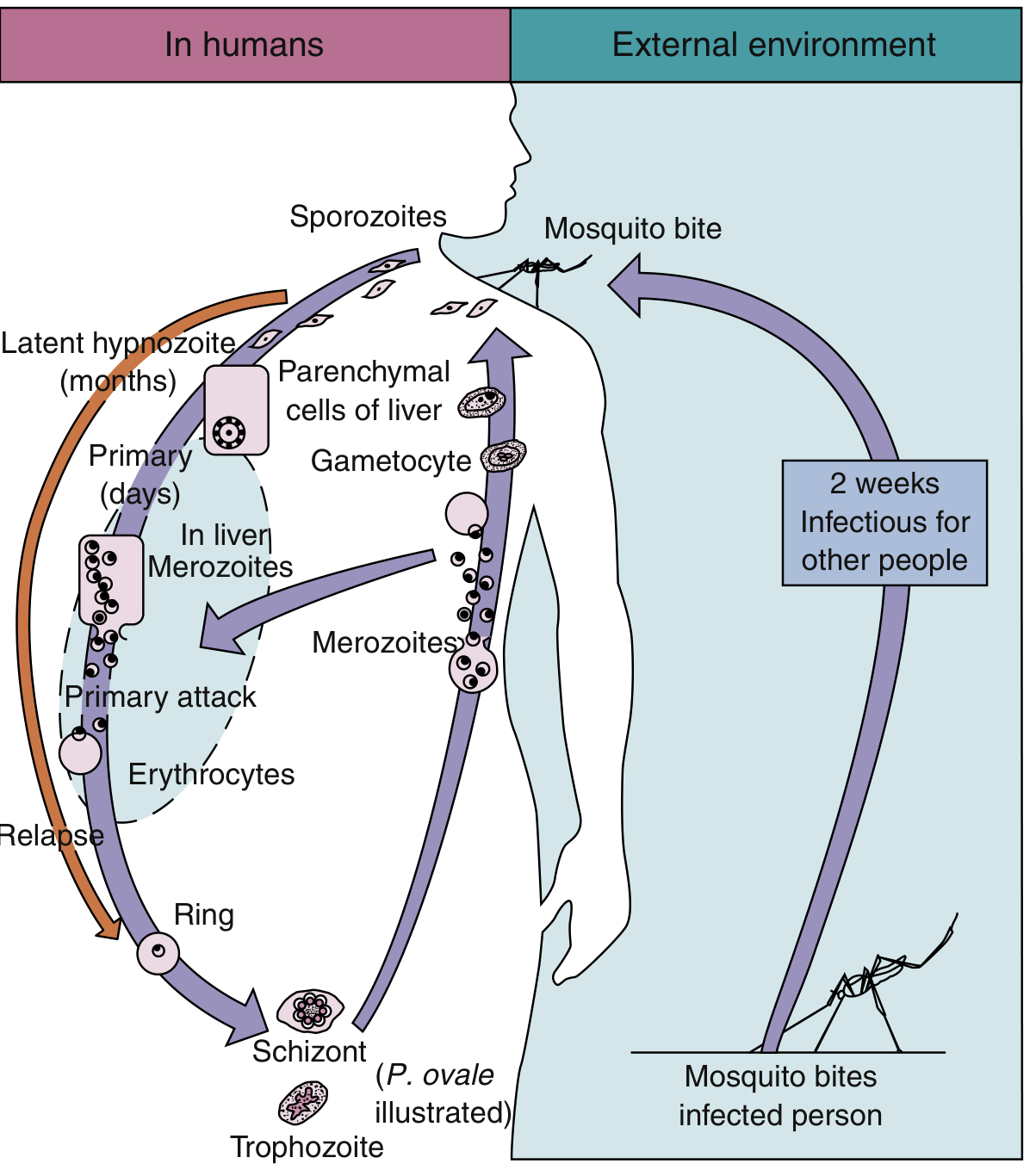
A. In the Human Host (Asexual - Schizogony)
- Female Anopheles mosquito bites and injects sporozoites into the bloodstream
- Sporozoites travel within 1 hour to hepatic parenchymal cells and bind via surface proteins (thrombospondin-related adhesive protein, circumsporozoite protein)
- Undergo schizogony (asexual division) to form merozoites
- Duration: 8-25 days depending on species
- P. vivax and P. ovale form dormant hypnozoites ("sleeping forms") in the liver - these can reactivate months to years later, causing relapse
- P. falciparum, P. malariae, and P. knowlesi do NOT produce hypnozoites, so do not relapse from the liver
- Merozoites attach via a lectin-like molecule to sialylated glycophorin on red blood cell surfaces and enter RBCs
- Inside RBCs, parasites progress through stages: Ring form → Trophozoite → Schizont
- Schizont ruptures, releasing up to 24 merozoites which infect new RBCs - this cycle repeats
- Some merozoites differentiate into male and female gametocytes (sexual forms)
- Synchronous rupture of RBCs causes the classic fever paroxysms:
- Every 48 hours - P. vivax, P. ovale, P. falciparum (tertian)
- Every 72 hours - P. malariae (quartan)
- Every 24 hours - P. knowlesi (quotidian)
B. In the Mosquito Host (Sexual - Sporogony)
- Female Anopheles ingests mature gametocytes from infected human blood
- In the mosquito gut: gametocytes fuse to form a zygote → ookinete → oocyst
- Oocyst matures and releases sporozoites, which migrate to salivary glands
- Mosquito becomes infective after ~2 weeks (extrinsic incubation period)
4. Morphological Features (Blood Film Differentiation)
| Feature | P. falciparum | P. vivax | P. malariae | P. ovale |
|---|---|---|---|---|
| RBC size | Normal | Enlarged | Normal/smaller | Enlarged, oval |
| RBC stippling | Maurer dots (reddish) | Schüffner dots (pink) | Ziemann dots | Schüffner dots |
| Ring stage | Multiple rings/cell; appliqué (accolé) position | Large ring, amoeboid | Small, compact band forms | Small ring |
| Trophozoite | Rarely seen (sequestered) | Amoeboid, irregular | Band-form trophozoite (diagnostic) | Compact |
| Schizont | Rarely in periphery | Up to 24 merozoites (rosette) | Up to 8 merozoites ("daisy head") | Up to 8 merozoites |
| Gametocyte | Crescent/banana-shaped (diagnostic) | Round | Round | Round |
- Key point: The crescentic gametocyte is pathognomonic for P. falciparum
- P. falciparum invades RBCs of any age; P. vivax only invades young RBCs (reticulocytes); P. malariae invades only old RBCs
5. Pathogenesis
P. falciparum (Malignant Malaria)
- Expresses PfEMP1 (Plasmodium falciparum erythrocyte membrane protein 1) - an adhesion molecule that forms knob-like extensions on the infected RBC surface
- PfEMP1 binds to endothelial adhesion molecules: ICAM-1, VCAM-1, CD36 → causes sequestration of parasitized RBCs in capillary beds of brain, kidney, lung, placenta
- This cytoadherence mechanism explains the severe, life-threatening complications
- Growing trophozoites and schizonts are rarely found in peripheral blood (sequestered in organs)
General Pathogenesis
- Hemolytic anemia - destruction of infected (and uninfected) RBCs
- Release of hematin/hemozoin (malarial pigment - brown) from ruptured RBCs deposits in spleen, liver, lymph nodes, bone marrow
- Mononuclear phagocyte hyperplasia → massive splenomegaly, occasional hepatomegaly
- Cytokine storm with release of TNF-α, IL-1 mediates fever
6. Clinical Features
- Incubation period: 7-10 days (P. falciparum, shortest) to 10-17 days (P. vivax)
- Classic triad: Chills → Fever → Sweating (each paroxysm lasts 6-10 hours)
- Prodrome: influenza-like - headache, myalgia, malaise, nausea, vomiting
Complications of P. falciparum (Malignant Tertian Malaria):
- Cerebral malaria - seizures, coma, death within days to weeks (due to CNS capillary sequestration)
- Blackwater fever - massive intravascular hemolysis → hemoglobinemia + hemoglobinuria (dark "Coca-Cola" urine) + jaundice + acute renal failure
- Severe anemia
- Acute respiratory distress syndrome (ARDS)
- Hypoglycemia (increased glucose consumption by parasites)
- Placental malaria - low birth weight, maternal anemia
7. Laboratory Diagnosis
-
Peripheral blood smear (Gold Standard):
- Thick smear - for detection/screening (greater sensitivity)
- Thin smear - for species identification and morphology
- Giemsa stain is preferred; Leishman or Field stain also used
-
Rapid Diagnostic Tests (RDTs): Detect malaria antigens (HRP-2 for P. falciparum, pLDH for all species) - useful in field settings
-
PCR: Most sensitive; useful for species confirmation and mixed infections
-
Quantitative Buffy Coat (QBC): Fluorescent staining with acridine orange; detects parasites under UV microscopy
-
Serology (ELISA/IFA): For epidemiological surveys, not acute diagnosis
-
Other findings: Anemia, thrombocytopenia, elevated bilirubin, elevated LDH
8. Treatment (Brief)
| Species | First-line Treatment |
|---|---|
| P. vivax/P. ovale | Chloroquine (blood stage) + Primaquine (kills hypnozoites/prevents relapse) |
| P. malariae | Chloroquine |
| P. falciparum (uncomplicated) | Artemisinin-based Combination Therapy (ACT) - e.g., Artemether-Lumefantrine |
| P. falciparum (severe/cerebral) | IV Artesunate (drug of choice) or IV Quinine + Doxycycline |
- Note: Chloroquine resistance is widespread in P. falciparum; check local sensitivity patterns
- Primaquine requires G6PD testing before use (causes hemolysis in G6PD deficiency)
9. Prevention and Control
- Vector control: Insecticide-treated bed nets (ITNs), indoor residual spraying, elimination of stagnant water (mosquito breeding sites)
- Chemoprophylaxis: Chloroquine, Mefloquine, Atovaquone-Proguanil (Malarone), Doxycycline for travelers
- Vaccine: RTS,S/AS01 (Mosquirix) - contains sporozoite antigens; provides partial protection; WHO-recommended for children in sub-Saharan Africa since 2021
- Personal protection: Repellents (DEET), protective clothing
10. Key Points for Exam
| Mnemonic | Recall Aid |
|---|---|
| Species with relapse | "ViO" - P. vivax and P. ovale (have hypnozoites) |
| Crescentic gametocytes | P. falciparum (fan-shaped/banana-shaped) |
| Band-form trophozoite | P. malariae (think marquee band) |
| Schüffner dots | P. vivax and P. ovale (enlarged RBCs) |
| Most pathogenic | P. falciparum (fatal) |
| Zoonotic species | P. knowlesi (from kacaque = macaque) |
| 72-hour cycle | P. malariae → Quartan fever |
- Medical Microbiology 9e (Murray et al.), Ch. 73 - Blood Sporozoa
- Jawetz Melnick & Adelberg's Medical Microbiology 28e, Ch. 46 - Plasmodium species
- Robbins & Kumar Basic Pathology, Ch. 10 - Malaria
For exam purpose
MALARIA
(Microbiology | 10 Marks)
DEFINITION
CAUSATIVE ORGANISMS
| Species | Type of Malaria | Fever Cycle |
|---|---|---|
| P. falciparum | Malignant tertian | 48 hrs |
| P. vivax | Benign tertian | 48 hrs |
| P. ovale | Benign tertian (ovale) | 48 hrs |
| P. malariae | Quartan | 72 hrs |
| P. knowlesi | Quotidian (zoonotic) | 24 hrs |
Most pathogenic = P. falciparum | Most common worldwide = P. vivax
LIFE CYCLE
- Definitive host = Female Anopheles mosquito (sexual cycle)
- Intermediate host = Humans (asexual cycle)
PHASE 1 - Exoerythrocytic (Hepatic) Phase (in humans)
- Infected mosquito bites → injects sporozoites into bloodstream
- Sporozoites reach liver within 1 hour, invade hepatic parenchymal cells
- Undergo schizogony (asexual division) → form merozoites
- Duration: 8-25 days (species-dependent)
- Hepatocytes rupture → merozoites enter bloodstream
⚠️ Hypnozoites (dormant forms) formed ONLY by P. vivax and P. ovale → cause relapse months/years later. P. falciparum, P. malariae, P. knowlesi do NOT form hypnozoites.
PHASE 2 - Erythrocytic Phase (in humans)
| Stage | What Happens |
|---|---|
| Ring stage | Merozoite invades RBC, forms ring-shaped early trophozoite |
| Trophozoite | Parasite grows, feeds on hemoglobin → produces hemozoin pigment |
| Schizont | Multiple nuclear divisions → up to 24 merozoites formed |
| Rupture | RBC lyses, merozoites released → infect new RBCs |
| Gametocytes | Some merozoites become male/female gametocytes (sexual forms) |
- Periodicity of fever: caused by synchronous RBC rupture releasing merozoites + toxic debris
PHASE 3 - Sporogonic Cycle (in mosquito)
- Mosquito ingests gametocytes during blood meal
- Gametocytes → zygote → ookinete → oocyst (in gut wall)
- Oocyst matures → sporozoites released → migrate to salivary glands
- Mosquito becomes infective after ~2 weeks (extrinsic incubation period)
MORPHOLOGY (Blood Film - Giemsa Stain)
| Feature | P. falciparum | P. vivax | P. malariae | P. ovale |
|---|---|---|---|---|
| RBC size | Normal | Enlarged | Normal/smaller | Enlarged, oval |
| Stippling | Maurer dots | Schüffner dots | Ziemann dots | Schüffner dots |
| Ring stage | Multiple rings/cell; appliqué (accolé) form | Large, amoeboid | Small, compact | Small |
| Trophozoite | Rarely seen (sequestered) | Amoeboid, irregular | Band form (diagnostic) | Compact |
| Schizont | Rare in peripheral blood | Up to 24 merozoites | 8 merozoites "daisy head" | Up to 8 merozoites |
| Gametocyte | Crescent/banana shape (DIAGNOSTIC) | Round | Round | Round |
| RBCs infected | Any age | Young RBCs only | Old RBCs only | Young RBCs |
Key identifiers:
- P. falciparum → crescent gametocyte + accolé rings + Maurer dots
- P. vivax → enlarged RBC + Schüffner dots + amoeboid trophozoite
- P. malariae → band-form trophozoite + daisy-head schizont
PATHOGENESIS
General Mechanism:
- Destruction of RBCs → hemolytic anemia
- Release of hemozoin (malarial pigment) → deposits in spleen, liver, bone marrow → massive splenomegaly + hepatomegaly
- Cytokine release (TNF-α, IL-1) → fever
- Mononuclear phagocyte hyperplasia
P. falciparum - Special Mechanism (Cytoadherence):
- Infected RBCs express PfEMP1 (P. falciparum erythrocyte membrane protein 1) - forms knob-like projections on RBC surface
- PfEMP1 binds endothelial receptors: ICAM-1, VCAM-1, CD36
- Result: parasitized RBCs sequester in capillary beds of brain, kidney, lungs, placenta
- This is why P. falciparum causes severe, fatal disease
CLINICAL FEATURES
Incubation Period:
- P. falciparum: 7-10 days (shortest)
- P. vivax/P. ovale: 10-17 days
- P. malariae: 18-40 days
Classic Malarial Paroxysm (3 stages):
- Cold stage - sudden onset rigors, shivering (1 hr)
- Hot stage - high fever 103-106°F, headache, vomiting (2-6 hrs)
- Sweating stage - profuse sweating, temperature falls, exhaustion
Complications of P. falciparum:
| Complication | Key Feature |
|---|---|
| Cerebral malaria | Seizures, coma, death within days |
| Blackwater fever | Massive hemolysis → hemoglobinuria (dark urine) + jaundice + renal failure |
| Severe anemia | Destruction of RBCs |
| ARDS | Pulmonary sequestration |
| Hypoglycemia | Parasite glucose consumption |
| Placental malaria | Low birth weight, maternal anemia |
LABORATORY DIAGNOSIS
| Test | Detail |
|---|---|
| Peripheral Blood Smear (Gold Standard) | Thick smear = detection/screening; Thin smear = species ID; Giemsa stain preferred |
| Rapid Diagnostic Test (RDT) | Detects HRP-2 (P. falciparum), pLDH (all species); field use |
| PCR | Most sensitive; species confirmation; detects mixed infections |
| QBC (Quantitative Buffy Coat) | Acridine orange fluorescent stain; UV microscopy |
| Serology (ELISA/IFA) | Epidemiological surveys; NOT for acute diagnosis |
- Other findings: thrombocytopenia, anemia, elevated bilirubin, elevated LDH
TREATMENT
| Species | Drug of Choice |
|---|---|
| P. vivax / P. ovale | Chloroquine (blood stage) + Primaquine (kills hypnozoites, prevents relapse) |
| P. malariae | Chloroquine |
| P. falciparum (uncomplicated) | Artemisinin-based Combination Therapy (ACT) - e.g., Artemether-Lumefantrine |
| P. falciparum (severe/cerebral) | IV Artesunate (drug of choice) or IV Quinine |
⚠️ Primaquine requires G6PD testing first (causes hemolysis in G6PD deficiency) ⚠️ Widespread chloroquine resistance in P. falciparum
PREVENTION
- Vector control - Insecticide-treated bed nets (ITNs), indoor residual spraying, eliminate stagnant water
- Personal protection - DEET repellents, protective clothing
- Chemoprophylaxis - Atovaquone-Proguanil (Malarone), Doxycycline, Mefloquine for travelers
- Vaccine - RTS,S/AS01 (Mosquirix) - sporozoite antigen vaccine; WHO-recommended for children in sub-Saharan Africa
HIGH-YIELD EXAM MNEMONICS
| Point | Memory Aid |
|---|---|
| Species with relapse (hypnozoites) | "ViO" - Vivax + Ovale |
| Crescent gametocyte | Falciparum → Fan/banana shape |
| Band-form trophozoite | Malariae → Marquee band |
| Schüffner dots + enlarged RBC | ViO again (Vivax + Ovale) |
| 72-hr quartan fever | Malariae → More time (72 hrs) |
| 24-hr quotidian fever | Knowlesi → Kwicker cycle |
| Zoonotic species | Knowlesi from maKaques |
| Most fatal | Falciparum = Fatal |
| Cytoadherence molecule | PfEMP1 → Plugged capillaries |
Summary line for exams: "Malaria is caused by Plasmodium spp. (falciparum most dangerous), transmitted by female Anopheles mosquito, diagnosed by Giemsa-stained blood smear, treated with ACT (falciparum) or Chloroquine + Primaquine (vivax/ovale)."
I have exams on one-month for mbbs second year pre proffesionaluniversity exams I haven't studied anything yet Tell me what to study in microbiology pathology and pharmacology to get pass marks
Which university/country are you from? This helps me give you the most relevant syllabus. · What is your target?
🎯 MBBS 2nd Year Pre-Pro: Pass Strategy (1 Month)
India | NMC Pattern | Target: 55-60%
FIRST — Understand the Exam Pattern
- Theory: 2 papers each subject — Paper 1 (General) + Paper 2 (Systemic/Applied)
- Each paper: 80 marks (long essays + short notes + MCQs/short answers)
- Practical/Viva: 20 marks each
- Pass: 50% in theory + 50% in practical separately
- Format per paper: Usually 2 long essays (10 marks each) + 6-8 short notes (5 marks each) + MCQs
Strategy: You only need 40/80 in theory. 6-7 correct short notes + 1 essay = pass. That is very achievable in 1 month.
TIME ALLOCATION (1 Month = 30 Days)
| Subject | Days | Daily Hours |
|---|---|---|
| Microbiology | 10 days | 4-5 hrs |
| Pathology | 12 days | 4-5 hrs |
| Pharmacology | 8 days | 4-5 hrs |
🦠 MICROBIOLOGY — HIGH-YIELD TOPICS
PAPER 1 — General Microbiology (Top Topics)
MUST DO (Almost certainly comes every year):
- Bacterial cell structure - Cell wall, capsule, flagella, pili (diagram essential)
- Gram staining - Principle, steps, results, reasons for Gram +/- difference
- Sterilization and Disinfection - Definitions, methods (autoclave, pasteurization, dry heat), factors affecting
- Culture media - Types (enriched, selective, differential), examples
- Bacterial growth curve - 4 phases with diagram
- Antimicrobial resistance - Mechanisms (beta-lactamase, efflux pumps, target modification)
- Normal flora - Sites and organisms (important for viva)
- Complement system - Classical vs alternate pathway (diagram)
- Antigen-Antibody reactions - Agglutination, precipitation, ELISA, Western blot
- Hypersensitivity - Types I, II, III, IV with examples (short note gold mine)
PICK ANY 3 OF THESE (lower priority but asked often):
- Bacterial genetics (transformation, transduction, conjugation)
- Bacteriophage
- Immunity - innate vs adaptive
- Vaccines - types (live, killed, toxoid, subunit)
PAPER 2 — Systemic Microbiology (Top Topics)
MUST DO:
- Staphylococcus - virulence factors, diseases, MRSA
- Streptococcus - classification, S. pyogenes vs S. pneumoniae
- Mycobacterium tuberculosis - morphology, pathogenesis, Ghon focus, lab diagnosis, DOTS
- Salmonella typhi - typhoid pathogenesis, Widal test, complications
- Vibrio cholerae - El Tor biotype, rice-water stools, mechanism of toxin
- Clostridium - C. tetani (toxin, mechanism), C. perfringens (gas gangrene), C. difficile
- Neisseria - N. gonorrhoeae (gonorrhea, PPNG) + N. meningitidis
MICRO — GUARANTEED ESSAY TOPICS (10 marks)
- Tuberculosis - lab diagnosis OR pathogenesis
- HIV - lab diagnosis + HAART
- Hepatitis B - serology markers + interpretation
- Sterilization and disinfection methods
- Malaria (you already have this!)
🔬 PATHOLOGY — HIGH-YIELD TOPICS
PAPER 1 — General Pathology
MUST DO (Every University Asks These):
- Cell injury and death - Reversible vs irreversible, coagulative, liquefactive, caseous necrosis + apoptosis (caspases, pathway)
- Inflammation - Acute (vascular + cellular events, chemical mediators) + Chronic inflammation + Granuloma (types: TB, sarcoid, foreign body)
- Wound healing - Primary vs secondary intention, factors affecting, keloid vs hypertrophic scar
- Edema - Mechanisms (Starling forces), types, pitting vs non-pitting
- Thrombosis - Virchow's triad, fate of thrombus, DVT
- Embolism - Pulmonary embolism (massive), fat embolism, air embolism
- Infarction - Red vs white infarct, sites
- Neoplasia - Benign vs malignant differences, grading vs staging, carcinogenesis (chemical, radiation, viral), tumor markers
- Carcinogenesis - Oncogenes vs tumor suppressor genes (p53, Rb), multistep carcinogenesis
ALSO DO:
- Shock - Types (hypovolemic, cardiogenic, septic, neurogenic), stages, MOF
- Hemostasis - Intrinsic vs extrinsic coagulation pathways (diagram), PT, aPTT
- Amyloidosis - Types (AL, AA), Congo red stain, apple-green birefringence
- Pigments - Melanin, hemosiderin, bilirubin, lipofuscin, carbon - where deposited + significance
PAPER 2 — Systemic Pathology
MUST DO:
- Atherosclerosis - Risk factors, pathogenesis (fatty streak → fibrous plaque), complications
- Myocardial infarction - Zones, morphology at each time point (0-24hr, 1-7 days, weeks), lab markers (Troponin, CK-MB)
- Rheumatic fever / Rheumatic heart disease - Jones criteria, Aschoff bodies
PATHOLOGY — GUARANTEED ESSAY TOPICS (10 marks):
- Acute inflammation - vascular and cellular events
- Myocardial infarction - morphology + lab diagnosis
- Neoplasia - differences between benign and malignant
- Cirrhosis - causes, morphology, complications
- Anemia - iron deficiency (detailed)
💊 PHARMACOLOGY — HIGH-YIELD TOPICS
PAPER 1 — General Pharmacology
MUST DO:
- Pharmacokinetics - Absorption, distribution, metabolism, excretion; first-pass effect, bioavailability, half-life, volume of distribution
- Pharmacodynamics - Agonist vs antagonist, competitive vs non-competitive, dose-response curve, ED50, LD50, therapeutic index
- Adverse Drug Reactions - Types (A, B, C, D), examples of each
- Drug interactions - Pharmacokinetic + pharmacodynamic interactions with examples
- ANS Pharmacology:
- Cholinergic drugs - Ach, Pilocarpine, Atropine, Neostigmine (muscarinic vs nicotinic effects)
- Adrenergic drugs - Adrenaline, Noradrenaline, Isoprenaline, Dopamine, Salbutamol (alpha/beta effects)
- Adrenergic blockers - Propranolol (uses, contraindications), Prazosin
- NSAIDs - Mechanism (COX-1 vs COX-2), aspirin (irreversible), paracetamol (overdose - NAC antidote)
- Opioid analgesics - Morphine (effects, uses, side effects, tolerance, naloxone antidote)
PAPER 2 — Systemic Pharmacology
MUST DO:
- Antihypertensives - Classes (ACE inhibitors, ARBs, CCBs, beta-blockers, diuretics), MOA, side effects (ACE inhibitor cough, ARB no cough)
- Anti-anginals - Nitrates (MOA, tolerance), beta-blockers, CCBs
- Antiarrhythmics - Vaughan Williams classification (Class I-IV) with examples
- Heart failure drugs - Digoxin (MOA, toxicity, interactions), ACE inhibitors, diuretics
PHARMA — GUARANTEED ESSAY TOPICS (10 marks):
- Beta blockers - classification, pharmacological effects, uses, contraindications
- Antitubercular drugs - MOA, uses, adverse effects
- General anesthesia - stages + inhalational agents
- NSAIDs - MOA, classification, adverse effects
- Penicillin - MOA, classification, resistance mechanisms
📅 30-DAY STUDY PLAN
| Days | Subject | Topics |
|---|---|---|
| Day 1-2 | Microbiology | General Micro: Gram stain, cell structure, sterilization, growth curve |
| Day 3-4 | Microbiology | Antimicrobial resistance, hypersensitivity, complement, ELISA |
| Day 5-6 | Microbiology | Systemic: Staph, Strep, TB, Salmonella, Cholera |
| Day 7-8 | Microbiology | HIV, Hepatitis, Malaria, Entamoeba, Candida |
| Day 9-10 | Microbiology | Revision + write 2 essays in full |
| Day 11-13 | Pathology | Cell injury, necrosis, apoptosis, inflammation, granuloma |
| Day 14-15 | Pathology | Wound healing, edema, thrombosis, embolism, infarction |
| Day 16-17 | Pathology | Neoplasia, carcinogenesis, shock, amyloidosis |
| Day 18-19 | Pathology | Systemic: Atherosclerosis, MI, Pneumonia, Lung CA, TB |
| Day 20-21 | Pathology | Systemic: Cirrhosis, GN, anemias, leukemias, lymphomas |
| Day 22 | Pathology | Cervical CA, Breast CA + Revision |
| Day 23-24 | Pharmacology | General Pharma: PK/PD, ADRs, ANS drugs |
| Day 25-26 | Pharmacology | CVS drugs, anti-asthma, GIT drugs |
| Day 27-28 | Pharmacology | CNS drugs, antimicrobials, antitubercular, antimalarials |
| Day 29 | Pharmacology | Insulin, OHAs, corticosteroids + Revision |
| Day 30 | ALL | Final revision of all essays + short notes |
✅ PRACTICAL TIPS FOR PASSING
- Learn to write short notes perfectly — 5 marks × 6 = 30 marks. That is nearly half the paper. Master 40 short notes across all subjects.
- Draw diagrams - Examiners love diagrams. Life cycle of Plasmodium, coagulation cascade, dose-response curve, Ghon complex — each earns you extra marks.
- Use tables — For comparisons (benign vs malignant, nephrotic vs nephritic, ALL vs AML), write a table. It shows organization and scores well.
- Attempt all questions — Never leave a question blank. Partial marks are given generously.
- Use headings and subheadings — Improves readability and examiner impression.
- Viva prep — Know the top 10 organisms, their Gram stain, culture media, and treatment. Keep a 1-page table handy.
- Past papers — Your university's previous 5 years papers are the single best study tool. Identify which topics repeat every year and prioritize those.
Bottom line: You have 1 month — that is genuinely enough to pass if you follow this list strictly. Do NOT try to read textbooks cover to cover. Use notes/revision books (Ananthanarayanan for Micro, Harsh Mohan for Pathology, KD Tripathi or Gobind Rai Garg for Pharmacology). Focus on high-yield topics only. You can do this.
Give me like most important and pyqs based on Tripura University lq and sq
Tripura University MBBS 2nd year microbiology pathology pharmacology previous year questions PYQ
Agartala Government Medical College Tripura MBBS second year university exam question paper microbiology pharmacology pathology
⚠️ Honest Note First
- Patterns from similar NMC universities (WBUHS, RGUHS, MUHS, MGR, etc.)
- Topics that repeat every year across India
- High-yield topics specific to Northeast India context (malaria, typhoid, tuberculosis get extra importance)
Best advice: Ask your seniors at AGMC/TMMC for actual Tripura University PYQs - they are your most valuable resource.
🦠 MICROBIOLOGY
PAPER 1 — General Microbiology
LONG QUESTIONS (LQ — 10 marks) — Most Repeated
| # | Question | Frequency |
|---|---|---|
| 1 | Describe the mechanism of action and resistance to Penicillin. Add a note on beta-lactamase. | ⭐⭐⭐ Every year |
| 2 | Describe the principle, procedure and applications of ELISA. | ⭐⭐⭐ Every year |
| 3 | Write the classification of hypersensitivity reactions with suitable examples. Describe Type I hypersensitivity in detail. | ⭐⭐⭐ Every year |
| 4 | Describe the methods of sterilization. Discuss the principle and uses of autoclave. | ⭐⭐⭐ Every year |
| 5 | Describe the complement system — classical and alternate pathways. | ⭐⭐ Very common |
| 6 | Write about bacterial cell wall structure. How does it differ in Gram-positive and Gram-negative organisms? | ⭐⭐⭐ Every year |
| 7 | Describe the bacterial growth curve with a diagram. What are the factors affecting bacterial growth? | ⭐⭐ Common |
SHORT QUESTIONS (SQ — 5 marks) — Most Repeated
| # | Question |
|---|---|
| 1 | Gram staining - principle and steps |
| 2 | Autoclave - principle and uses |
| 3 | Normal flora of the body |
| 4 | Disinfection vs sterilization |
| 5 | Bacterial capsule - structure and significance |
| 6 | Flagella - types and significance |
| 7 | Biofilm |
| 8 | Selective media - examples |
| 9 | Agglutination reaction |
| 10 | Opsonization |
| 11 | Bacteriophage |
| 12 | Plasmid |
| 13 | Types of vaccines |
| 14 | Western blot |
| 15 | Anaphylaxis |
| 16 | Koch's postulates |
PAPER 2 — Systemic Microbiology
LONG QUESTIONS (LQ — 10 marks) — Most Repeated
| # | Question | Frequency |
|---|---|---|
| 1 | A patient presents with fever, weight loss, night sweats, cough with hemoptysis. Discuss the lab diagnosis of pulmonary tuberculosis in detail. | ⭐⭐⭐ Every year — #1 topic |
| 2 | Describe the pathogenesis, lab diagnosis and treatment of HIV/AIDS. | ⭐⭐⭐ Every year |
| 3 | Describe the serological markers of Hepatitis B infection. How do you interpret them? | ⭐⭐⭐ Very common |
| 4 | Write about malaria — causative organism, life cycle, lab diagnosis and treatment. | ⭐⭐⭐ Every year (especially in Northeast) |
| 5 | Describe the pathogenesis and lab diagnosis of typhoid fever. Add a note on Widal test. | ⭐⭐⭐ Every year |
| 6 | Describe the virulence factors and diseases caused by Staphylococcus aureus. Add a note on MRSA. | ⭐⭐ Very common |
| 7 | Write about Vibrio cholerae — morphology, pathogenesis, lab diagnosis and treatment. | ⭐⭐ Very common |
SHORT QUESTIONS (SQ — 5 marks) — Most Repeated
| # | Question |
|---|---|
| 1 | Ghon's complex / Primary TB |
| 2 | DOTS regimen |
| 3 | Window period in HIV |
| 4 | CD4 count and AIDS staging |
| 5 | HBsAg and Anti-HBs significance |
| 6 | Widal test |
| 7 | Enteric fever - Rose spots |
| 8 | Malaria - peripheral smear findings |
| 9 | Hypnozoites |
| 10 | Blackwater fever |
| 11 | Diphtheria toxin mechanism |
| 12 | Clostridium tetani - toxin and mechanism |
| 13 | Gas gangrene |
| 14 | Pneumococcus - lab diagnosis |
| 15 | Neisseria gonorrhoeae - PPNG |
| 16 | Dengue lab diagnosis |
| 17 | Rabies - Negri bodies |
| 18 | Candidiasis |
| 19 | KOH mount |
| 20 | Entamoeba histolytica - cyst vs trophozoite |
🔬 PATHOLOGY
PAPER 1 — General Pathology
LONG QUESTIONS (LQ — 10 marks) — Most Repeated
| # | Question | Frequency |
|---|---|---|
| 1 | Describe the vascular and cellular events in acute inflammation. Write about the chemical mediators of inflammation. | ⭐⭐⭐ #1 topic - Asked every single year |
| 2 | Classify necrosis. Describe the types with examples and morphological features. | ⭐⭐⭐ Every year |
| 3 | Distinguish between benign and malignant tumors. Write about grading and staging of tumors. | ⭐⭐⭐ Every year |
| 4 | Describe the pathogenesis and types of shock. Add a note on multi-organ failure. | ⭐⭐ Very common |
| 5 | Write about wound healing. Compare primary and secondary intention. What are the factors affecting wound healing? | ⭐⭐⭐ Very common |
| 6 | Describe Virchow's triad. Write about the fate of a thrombus. | ⭐⭐⭐ Every year |
| 7 | Write about carcinogenesis — role of oncogenes and tumor suppressor genes. | ⭐⭐ Common |
| 8 | Describe the pathogenesis of edema. Classify and give examples. | ⭐⭐ Common |
SHORT QUESTIONS (SQ — 5 marks) — Most Repeated
| # | Question |
|---|---|
| 1 | Apoptosis vs necrosis |
| 2 | Caseous necrosis |
| 3 | Free radicals - cell injury |
| 4 | Granuloma - types |
| 5 | Aschoff body |
| 6 | Keloid vs hypertrophic scar |
| 7 | Amyloidosis - Congo red stain |
| 8 | Pulmonary embolism |
| 9 | Fat embolism |
| 10 | Infarction - red vs white |
| 11 | Angiogenesis |
| 12 | Metaplasia and dysplasia |
| 13 | Tumor markers |
| 14 | Paraneoplastic syndrome |
| 15 | DIC (Disseminated Intravascular Coagulation) |
| 16 | Lipofuscin - significance |
| 17 | Hemosiderosis vs hemochromatosis |
PAPER 2 — Systemic Pathology
LONG QUESTIONS (LQ — 10 marks) — Most Repeated
| # | Question | Frequency |
|---|---|---|
| 1 | Describe the morphological changes in myocardial infarction at different time intervals. Add a note on lab diagnosis (cardiac markers). | ⭐⭐⭐ Every year |
| 2 | Classify anemia. Describe iron deficiency anemia in detail - causes, lab findings, peripheral smear. | ⭐⭐⭐ Every year |
| 3 | Describe the causes, morphology and complications of liver cirrhosis. | ⭐⭐⭐ Very common |
| 4 | Write about Hodgkin's lymphoma — classification, morphology, Reed-Sternberg cell. | ⭐⭐ Common |
| 5 | Describe the pathological changes in lobar pneumonia. Compare with bronchopneumonia. | ⭐⭐ Common |
| 6 | Write about chronic myeloid leukemia (CML) — pathogenesis (Philadelphia chromosome), lab findings, morphology. | ⭐⭐ Common |
| 7 | Describe nephrotic syndrome — causes, pathogenesis, lab findings, complications. | ⭐⭐ Common |
SHORT QUESTIONS (SQ — 5 marks) — Most Repeated
| # | Question |
|---|---|
| 1 | Atherosclerosis - pathogenesis |
| 2 | Rheumatic heart disease - Jones criteria |
| 3 | Megablastic anemia |
| 4 | Sickle cell anemia |
| 5 | Reed-Sternberg cell |
| 6 | Philadelphia chromosome |
| 7 | Ghon complex (pathology) |
| 8 | Lung carcinoma - types |
| 9 | Pancoast tumor |
| 10 | Peptic ulcer - complications |
| 11 | H. pylori and gastric carcinoma |
| 12 | Hepatocellular carcinoma - risk factors |
| 13 | Portal hypertension - consequences |
| 14 | Minimal change disease |
| 15 | IgA nephropathy |
| 16 | Renal cell carcinoma - clear cell |
| 17 | Cervical carcinoma - CIN grading |
| 18 | BRCA1/BRCA2 |
| 19 | Paget's disease of bone |
| 20 | Glioblastoma multiforme |
💊 PHARMACOLOGY
PAPER 1 — General + ANS Pharmacology
LONG QUESTIONS (LQ — 10 marks) — Most Repeated
| # | Question | Frequency |
|---|---|---|
| 1 | Describe the pharmacological effects, uses and adverse effects of Adrenaline (Epinephrine). | ⭐⭐⭐ Every year |
| 2 | Classify beta blockers. Describe the pharmacological actions, uses and contraindications of Propranolol. | ⭐⭐⭐ Every year |
| 3 | Describe the pharmacokinetics of a drug — absorption, distribution, metabolism, excretion with examples. | ⭐⭐⭐ Every year |
| 4 | Classify NSAIDs. Describe the mechanism of action, uses and adverse effects. Compare Aspirin and Paracetamol. | ⭐⭐⭐ Every year |
| 5 | Describe the actions, uses and side effects of Atropine. | ⭐⭐ Very common |
| 6 | Write about dose-response relationship. Define ED50, LD50, and Therapeutic Index. | ⭐⭐ Common |
| 7 | Describe the mechanism of action and adverse effects of Morphine. Add a note on Naloxone. | ⭐⭐ Common |
SHORT QUESTIONS (SQ — 5 marks) — Most Repeated
| # | Question |
|---|---|
| 1 | First-pass effect |
| 2 | Volume of distribution |
| 3 | Half-life of a drug |
| 4 | Bioavailability |
| 5 | Enzyme induction and inhibition |
| 6 | Drug tolerance vs tachyphylaxis |
| 7 | Adverse drug reactions - classification |
| 8 | Competitive vs non-competitive antagonism |
| 9 | Neostigmine - uses |
| 10 | Prazosin - uses and side effects |
| 11 | Pilocarpine |
| 12 | Salbutamol - mechanism and uses |
| 13 | COX-1 vs COX-2 |
| 14 | Paracetamol overdose and treatment (NAC) |
| 15 | Opioid analgesics - classification |
PAPER 2 — Systemic Pharmacology
LONG QUESTIONS (LQ — 10 marks) — Most Repeated
| # | Question | Frequency |
|---|---|---|
| 1 | Classify antihypertensive drugs. Describe the MOA, uses and side effects of ACE inhibitors. | ⭐⭐⭐ Every year |
| 2 | Classify antitubercular drugs. Write about the mechanism of action, uses and adverse effects of first-line drugs (HRZE). | ⭐⭐⭐ Every year |
| 3 | Describe the stages of general anesthesia. Write about inhalational anesthetic agents. | ⭐⭐⭐ Very common |
| 4 | Classify antiepileptics. Describe the MOA, uses and side effects of Phenytoin. | ⭐⭐ Very common |
| 5 | Classify penicillins. Describe the MOA and mechanisms of resistance. Add a note on beta-lactamase inhibitors. | ⭐⭐⭐ Every year |
| 6 | Write about oral hypoglycemic agents — classify and describe Metformin and Sulfonylureas. | ⭐⭐ Common |
| 7 | Classify diuretics. Describe the MOA, uses and side effects of Furosemide. | ⭐⭐ Common |
SHORT QUESTIONS (SQ — 5 marks) — Most Repeated
| # | Question |
|---|---|
| 1 | Isoniazid - MOA and side effects (peripheral neuropathy) |
| 2 | Rifampicin - enzyme induction, red urine |
| 3 | Ethambutol - optic neuritis |
| 4 | Pyrazinamide - side effects |
| 5 | Artemisinin - MOA |
| 6 | Chloroquine resistance mechanism |
| 7 | Primaquine - G6PD |
| 8 | Statins - MOA and uses |
| 9 | Nitrates - MOA and tolerance |
| 10 | Digoxin toxicity |
| 11 | Proton pump inhibitors - Omeprazole |
| 12 | Ondansetron - mechanism |
| 13 | Benzodiazepines - GABA mechanism |
| 14 | Flumazenil - antidote |
| 15 | Ketamine - dissociative anesthesia |
| 16 | Thiopentone vs Propofol |
| 17 | Aminoglycosides - ototoxicity, nephrotoxicity |
| 18 | Fluoroquinolones - MOA and uses |
| 19 | Insulin types - rapid vs long acting |
| 20 | Corticosteroids - side effects |
🔥 TOP 10 "Almost Certain to Come" Questions (One Per Subject)
Microbiology:
- Lab diagnosis of Tuberculosis (LQ)
- HIV - pathogenesis and lab diagnosis (LQ)
- Malaria - life cycle and lab diagnosis (LQ or SQ)
- Hypersensitivity reactions (LQ or SQ)
- Autoclave (SQ)
Pathology:
- Acute inflammation - vascular and cellular events (LQ)
- Myocardial infarction - morphology + cardiac markers (LQ)
- Benign vs malignant tumors (LQ or SQ)
- Virchow's triad + fate of thrombus (LQ or SQ)
- Iron deficiency anemia (LQ or SQ)
Pharmacology:
- Beta blockers - Propranolol (LQ)
- Antitubercular drugs - HRZE (LQ)
- ACE inhibitors (LQ or SQ)
- NSAIDs - COX mechanism (LQ or SQ)
- Penicillins - MOA and resistance (LQ or SQ)
📌 Final Tips for Tripura University Specifically
- Get your seniors' notes - AGMC seniors will have the actual repeated questions from your specific university. This is irreplaceable.
- TB, Malaria, Typhoid - These get extra focus in Northeast India exams given regional burden.
- The exam format is typically: 2 LQ (10 marks each) + 6-8 SQ (5 marks each). If you master 5 LQs and 20 SQs per subject, you will pass.
- Diagrams add marks - Life cycle of Plasmodium, coagulation cascade, inflammation cellular events, dose-response curve - always draw them.
- Write in points, not paragraphs - Examiners check quickly; headings + bullets score better than paragraphs.
Give me chapter wise lq and sq from pyqs
MBBS 2nd year microbiology pathology pharmacology chapter wise previous year questions NMC university exam LQ SQ 2020 2021 2022 2023
WBUHS RGUHS MUHS MBBS 2nd year microbiology previous year question papers chapter wise PDF 2021 2022 2023
https://www.quora.com/What-are-the-important-microbiology-MB…
📚 CHAPTER-WISE PYQs — MBBS 2nd Year
(Based on WBUHS + NMC University PYQ patterns, 2008-2024)
⭐ = appeared multiple times | ⭐⭐ = appeared almost every year | ⭐⭐⭐ = guaranteed
🦠 MICROBIOLOGY
PAPER 1 — GENERAL MICROBIOLOGY
📖 Ch 1: History of Microbiology
- Contribution of Louis Pasteur ⭐⭐
- Robert Koch and Koch's postulates ⭐⭐
- Spontaneous generation theory - how it was disproved ⭐
📖 Ch 2: Bacterial Morphology & Cell Wall
- Describe the structure of bacterial cell wall. How does it differ in Gram-positive and Gram-negative organisms? Add a note on the significance of cell wall. ⭐⭐⭐
- Describe the ultrastructure of a bacterial cell with a neat labelled diagram. ⭐⭐
- Gram staining - principle, steps, results ⭐⭐⭐
- Bacterial capsule - structure and functions ⭐⭐
- Flagella - types and significance ⭐⭐
- Bacterial spore - formation and significance ⭐⭐
- Pili / fimbriae ⭐
- Difference between prokaryotes and eukaryotes ⭐
📖 Ch 3: Sterilization and Disinfection
- Classify sterilization methods. Describe the principle, construction and uses of autoclave. ⭐⭐⭐
- Describe the various methods of sterilization used in hospital practice. ⭐⭐⭐
- Define sterilization and disinfection. Classify and describe physical methods of sterilization. ⭐⭐
- Autoclave - principle and uses ⭐⭐⭐
- Hot air oven vs Autoclave ⭐⭐
- Pasteurization - methods and uses ⭐⭐
- Disinfectants used in hospital ⭐⭐
- Formaldehyde / glutaraldehyde ⭐
- UV radiation in sterilization ⭐
- Filtration methods - Seitz filter ⭐
- Hospital-acquired infections (nosocomial infections) ⭐⭐
📖 Ch 4: Culture Media & Bacterial Growth
- Classify culture media. Describe the types with examples and their uses. ⭐⭐
- Describe the bacterial growth curve with a diagram. What are the factors affecting bacterial growth? ⭐⭐
- Bacterial growth curve ⭐⭐⭐
- Selective media - examples ⭐⭐
- Differential media ⭐⭐
- Enrichment media ⭐⭐
- Blood culture - procedure ⭐
- Anaerobic culture methods ⭐⭐
📖 Ch 5: Antimicrobial Agents & Drug Resistance
- Classify antimicrobial agents by mechanism of action. Describe the mechanisms of drug resistance in bacteria. ⭐⭐⭐
- Write about beta-lactam antibiotics - classification, MOA, and resistance mechanisms. ⭐⭐⭐
- Describe antimicrobial susceptibility testing (Kirby-Bauer method). ⭐⭐
- Mechanisms of antibiotic resistance ⭐⭐⭐
- Beta-lactamase - types and significance ⭐⭐⭐
- MRSA - mechanism and significance ⭐⭐
- Minimum inhibitory concentration (MIC) ⭐⭐
- Disk diffusion / Kirby-Bauer test ⭐⭐
- Antibiotic synergism ⭐
- Biofilm and its role in resistance ⭐⭐
📖 Ch 6: Bacterial Genetics
- Describe the mechanisms of horizontal gene transfer in bacteria. ⭐⭐
- Transformation ⭐⭐
- Transduction ⭐⭐
- Conjugation ⭐⭐
- Plasmid - types and significance ⭐⭐
- Bacteriophage - lytic vs lysogenic cycle ⭐⭐
- Mutation in bacteria ⭐
📖 Ch 7: Immunology — Innate & Adaptive Immunity
- Describe the complement system - classical and alternate pathways with a diagram. ⭐⭐⭐
- Compare innate and adaptive immunity. Describe the cells involved in immunity. ⭐⭐
- Complement system - functions ⭐⭐⭐
- Opsonization ⭐⭐
- NK cells ⭐⭐
- Toll-like receptors ⭐
- Cytokines - classification and role ⭐⭐
- Interferons ⭐⭐
- MHC - class I vs class II ⭐⭐
📖 Ch 8: Antigen-Antibody Reactions
- Describe the principle, procedure, types and applications of ELISA. ⭐⭐⭐
- Classify immunological reactions. Describe agglutination reactions with examples. ⭐⭐
- ELISA - types ⭐⭐⭐
- Western blot ⭐⭐⭐
- Widal test ⭐⭐⭐
- Precipitation reactions ⭐⭐
- Immunofluorescence ⭐⭐
- Complement fixation test ⭐
- PCR - principle and uses ⭐⭐⭐
📖 Ch 9: Hypersensitivity
- Classify hypersensitivity reactions (Gell and Coombs). Describe Type I (immediate/anaphylactic) hypersensitivity in detail. ⭐⭐⭐
- Write about Type IV (delayed/cell-mediated) hypersensitivity. Give examples. ⭐⭐
- Anaphylaxis - mechanism and treatment ⭐⭐⭐
- Type II hypersensitivity - examples ⭐⭐
- Type III hypersensitivity - immune complex disease ⭐⭐
- Serum sickness ⭐
- Arthus reaction ⭐
📖 Ch 10: Vaccines & Immunization
- Classification of vaccines with examples ⭐⭐⭐
- Live attenuated vs killed vaccines ⭐⭐
- Adjuvants ⭐
- Cold chain ⭐⭐
- National Immunization Schedule ⭐⭐
PAPER 2 — SYSTEMIC MICROBIOLOGY
📖 Ch 1: Staphylococcus
- Describe the virulence factors of Staphylococcus aureus. Enumerate the diseases caused and add a note on MRSA and lab diagnosis. ⭐⭐⭐
- MRSA - significance ⭐⭐⭐
- Coagulase test ⭐⭐
- Staphylococcal food poisoning ⭐⭐
- Toxic shock syndrome ⭐⭐
- CONS (Coagulase-negative Staph) ⭐
📖 Ch 2: Streptococcus
- Classify Streptococcus. Describe the virulence factors and diseases caused by S. pyogenes. Add a note on rheumatic fever. ⭐⭐
- ASLO test ⭐⭐⭐
- Streptococcal sore throat ⭐⭐
- S. pneumoniae - lab diagnosis ⭐⭐
- Optochin sensitivity test ⭐
- Viridans streptococci ⭐
📖 Ch 3: Mycobacterium tuberculosis
- Describe the lab diagnosis of pulmonary tuberculosis in detail. ⭐⭐⭐ (Most asked question)
- Describe the pathogenesis of tuberculosis. Add a note on primary and secondary TB. ⭐⭐⭐
- Write about Mycobacterium tuberculosis - morphology, culture, pathogenicity, lab diagnosis and treatment. ⭐⭐⭐
- Ghon's complex ⭐⭐⭐
- ZN staining (Acid-fast staining) ⭐⭐⭐
- DOTS regimen ⭐⭐⭐
- BCG vaccine ⭐⭐⭐
- Mantoux test ⭐⭐⭐
- Drug resistance in TB - MDR-TB, XDR-TB ⭐⭐
- BACTEC culture system ⭐⭐
- Mycobacterium leprae ⭐⭐
📖 Ch 4: Clostridium
- Write about Clostridium tetani - morphology, toxin (tetanospasmin), mechanism of action, lab diagnosis, treatment and prevention. ⭐⭐⭐
- Tetanospasmin - mechanism ⭐⭐⭐
- Gas gangrene - causative organisms, pathogenesis ⭐⭐⭐
- C. difficile - pseudomembranous colitis ⭐⭐
- Botulinum toxin - mechanism ⭐⭐
- C. perfringens food poisoning ⭐
📖 Ch 5: Salmonella
- Describe the pathogenesis and lab diagnosis of typhoid fever. Add a note on Widal test. ⭐⭐⭐
- Widal test - principle and interpretation ⭐⭐⭐
- Rose spots in typhoid ⭐⭐
- Complications of typhoid ⭐⭐
- Typhoid carriers ⭐⭐
- Vi antigen ⭐
📖 Ch 6: Vibrio cholerae
- Describe the morphology, pathogenesis (cholera toxin mechanism), lab diagnosis and treatment of Vibrio cholerae. ⭐⭐⭐
- El Tor biotype ⭐⭐
- Cholera toxin - mechanism ⭐⭐⭐
- Rice-water stools ⭐⭐
- TCBS medium ⭐⭐
- ORS - composition ⭐
📖 Ch 7: Neisseria
- N. gonorrhoeae - lab diagnosis ⭐⭐
- PPNG (Penicillinase-producing N. gonorrhoeae) ⭐⭐
- N. meningitidis - meningococcal meningitis ⭐⭐
- Waterhouse-Friderichsen syndrome ⭐
- Chocolate agar ⭐⭐
📖 Ch 8: HIV/AIDS
- Describe the structure of HIV. Explain the pathogenesis of AIDS. Describe the lab diagnosis and HAART. ⭐⭐⭐ (Asked every year)
- Window period in HIV ⭐⭐⭐
- CD4 count and AIDS staging ⭐⭐⭐
- ELISA in HIV diagnosis ⭐⭐⭐
- Western blot - HIV ⭐⭐⭐
- Opportunistic infections in AIDS ⭐⭐⭐
- HAART - drug classes ⭐⭐
- Mother to child transmission of HIV ⭐⭐
📖 Ch 9: Hepatitis Viruses
- Describe the serological markers of Hepatitis B. How do you interpret them in different phases of infection? ⭐⭐⭐
- HBsAg, HBeAg, Anti-HBs significance ⭐⭐⭐
- Window period in Hepatitis B ⭐⭐⭐
- Hepatitis B - modes of transmission ⭐⭐
- Comparison of Hepatitis A, B, C, D, E ⭐⭐⭐
- Hepatitis C - diagnosis ⭐⭐
- Delta virus (HDV) ⭐⭐
📖 Ch 10: Herpes Viruses
- HSV 1 and HSV 2 - differences ⭐⭐
- Latency in herpes ⭐⭐
- Varicella-Zoster virus ⭐⭐
- EBV - infectious mononucleosis ⭐⭐
- CMV in immunocompromised ⭐⭐
📖 Ch 11: Rabies
- Describe the pathogenesis, lab diagnosis and prevention of rabies. ⭐⭐⭐
- Negri bodies ⭐⭐⭐
- Rabies post-exposure prophylaxis ⭐⭐⭐
- Rabies vaccine ⭐⭐
📖 Ch 12: Malaria (Parasitology)
- Describe the life cycle of Plasmodium falciparum. Add a note on lab diagnosis and treatment. ⭐⭐⭐
- Peripheral smear findings in malaria ⭐⭐⭐
- Hypnozoites ⭐⭐⭐
- Blackwater fever ⭐⭐⭐
- Malaria - species differentiation table ⭐⭐⭐
- Rapid diagnostic test (RDT) in malaria ⭐⭐
- Anopheles mosquito - breeding habits ⭐⭐
📖 Ch 13: Entamoeba histolytica
- Describe the life cycle, pathogenesis, lab diagnosis and treatment of Entamoeba histolytica. ⭐⭐
- Cyst vs trophozoite of E. histolytica ⭐⭐⭐
- Amoebic liver abscess ⭐⭐⭐
- Charcot-Leyden crystals ⭐⭐
📖 Ch 14: Fungi / Mycology
- Candidiasis - lab diagnosis, pseudohyphae ⭐⭐⭐
- KOH mount ⭐⭐⭐
- Dermatophytes - tinea infections ⭐⭐
- Cryptococcus - India ink preparation ⭐⭐
- Opportunistic fungal infections ⭐⭐
🔬 PATHOLOGY
PAPER 1 — GENERAL PATHOLOGY
📖 Ch 1: Cell Injury & Necrosis
- Describe the causes and mechanisms of cell injury. Classify necrosis with morphological features and examples. ⭐⭐⭐
- Describe apoptosis. Compare apoptosis with necrosis. ⭐⭐⭐
- Reversible vs irreversible cell injury ⭐⭐⭐
- Caseous necrosis ⭐⭐⭐
- Coagulative vs liquefactive necrosis ⭐⭐⭐
- Free radical injury ⭐⭐
- Apoptosis - intrinsic and extrinsic pathways ⭐⭐⭐
- Ischemic cell injury ⭐⭐
- Fatty change (steatosis) ⭐⭐
📖 Ch 2: Inflammation
- Describe the vascular and cellular events in acute inflammation. Write about the chemical mediators of inflammation. ⭐⭐⭐ (Most asked question in Pathology)
- Describe chronic inflammation. Write about granuloma with types and examples. ⭐⭐⭐
- Compare acute and chronic inflammation. ⭐⭐
- Chemical mediators of inflammation ⭐⭐⭐
- Histamine, Serotonin, Prostaglandins, Leukotrienes ⭐⭐⭐
- Emigration of neutrophils ⭐⭐⭐
- Diapedesis ⭐⭐
- Phagocytosis - steps ⭐⭐
- Granuloma - TB vs foreign body ⭐⭐⭐
- Aschoff body ⭐⭐⭐
- Giant cells - types ⭐⭐
📖 Ch 3: Wound Healing
- Describe the process of wound healing. Compare healing by primary and secondary intention. What are the local and systemic factors affecting wound healing? ⭐⭐⭐
- Keloid vs hypertrophic scar ⭐⭐⭐
- Role of growth factors in wound healing ⭐⭐
- Complications of wound healing ⭐⭐
- Regeneration vs repair ⭐⭐
📖 Ch 4: Hemodynamics
- Describe Virchow's triad. Classify thrombosis and describe the fate of a thrombus. ⭐⭐⭐
- Describe the pathogenesis of edema. Classify and give suitable clinical examples. ⭐⭐⭐
- Virchow's triad ⭐⭐⭐
- Fate of a thrombus ⭐⭐⭐
- DVT (Deep vein thrombosis) ⭐⭐
- Pulmonary embolism ⭐⭐⭐
- Fat embolism ⭐⭐⭐
- Air embolism ⭐⭐
- Amniotic fluid embolism ⭐⭐
- Transudate vs exudate ⭐⭐⭐
- Infarction - red vs white ⭐⭐⭐
- Hyperemia vs congestion ⭐⭐
- DIC (Disseminated intravascular coagulation) ⭐⭐⭐
📖 Ch 5: Neoplasia
- Distinguish between benign and malignant tumors. Describe tumor grading and staging. ⭐⭐⭐
- Describe carcinogenesis - chemical, radiation and viral carcinogenesis. ⭐⭐⭐
- Write about oncogenes and tumor suppressor genes with examples. ⭐⭐
- Benign vs malignant tumors - table ⭐⭐⭐
- Tumor markers ⭐⭐⭐
- TNM staging ⭐⭐⭐
- p53 tumor suppressor gene ⭐⭐⭐
- Rb gene ⭐⭐
- Paraneoplastic syndrome ⭐⭐
- Metaplasia and dysplasia ⭐⭐⭐
- Anaplasia ⭐⭐
- Chemical carcinogens - examples ⭐⭐
- Viral oncogenesis - HPV, EBV, HBV ⭐⭐⭐
📖 Ch 6: Shock
- Classify shock. Describe the pathogenesis, stages and morphological changes in septic shock. ⭐⭐⭐
- Types of shock ⭐⭐⭐
- Irreversible shock ⭐⭐
- MODS / Multi-organ failure ⭐⭐
- Cardiogenic shock ⭐⭐
📖 Ch 7: Pigments & Metabolic Disorders
- Amyloidosis - Congo red stain, apple-green birefringence ⭐⭐⭐
- Types of amyloid (AL, AA) ⭐⭐
- Hemosiderosis vs hemochromatosis ⭐⭐
- Bilirubin pigment ⭐⭐
- Lipofuscin - wear and tear pigment ⭐⭐
- Jaundice - types ⭐⭐⭐
PAPER 2 — SYSTEMIC PATHOLOGY
📖 Ch 1: CVS Pathology
- Describe morphological changes in myocardial infarction at different time intervals. Write about lab diagnosis (cardiac markers). ⭐⭐⭐ (Must prepare)
- Write about atherosclerosis - pathogenesis, morphology and complications. ⭐⭐⭐
- Troponin and CK-MB in MI ⭐⭐⭐
- Zones of MI (zone of necrosis, injury, ischemia) ⭐⭐⭐
- Complications of MI ⭐⭐⭐
- Rheumatic fever - Jones criteria ⭐⭐⭐
- Aschoff nodule ⭐⭐⭐
- Infective endocarditis ⭐⭐
- Fatty streak in atherosclerosis ⭐⭐
📖 Ch 2: Respiratory Pathology
- Describe the pathological changes in lobar pneumonia. Compare with bronchopneumonia. ⭐⭐⭐
- Write about lung carcinoma - types, pathology, clinical features and lab diagnosis. ⭐⭐
- Four stages of lobar pneumonia ⭐⭐⭐
- Bronchopneumonia vs lobar pneumonia ⭐⭐⭐
- Pancoast tumor ⭐⭐⭐
- Horner syndrome ⭐⭐
- Types of lung carcinoma ⭐⭐⭐
- COPD - emphysema vs chronic bronchitis ⭐⭐
- Primary vs secondary TB (lung) ⭐⭐⭐
📖 Ch 3: GI & Liver Pathology
- Describe the causes, morphology and complications of liver cirrhosis. ⭐⭐⭐
- Write about portal hypertension - causes, pathogenesis and consequences. ⭐⭐
- Complications of cirrhosis ⭐⭐⭐
- Portal hypertension - consequences ⭐⭐⭐
- Hepatic encephalopathy ⭐⭐
- Oesophageal varices ⭐⭐
- Hepatocellular carcinoma - risk factors ⭐⭐⭐
- H. pylori and peptic ulcer ⭐⭐⭐
- Complications of peptic ulcer ⭐⭐⭐
- Crohn's disease vs ulcerative colitis ⭐⭐
📖 Ch 4: Renal Pathology
- Compare nephrotic syndrome and nephritic syndrome. Describe minimal change disease. ⭐⭐⭐
- Nephrotic vs nephritic syndrome - table ⭐⭐⭐
- Minimal change disease ⭐⭐⭐
- IgA nephropathy (Berger's disease) ⭐⭐⭐
- Membranous glomerulonephritis ⭐⭐
- Renal cell carcinoma - clear cell type ⭐⭐⭐
- Wilms' tumor ⭐⭐
- Diabetic nephropathy ⭐⭐
📖 Ch 5: Hematology
- Classify anemia. Describe iron deficiency anemia in detail - causes, pathogenesis, lab findings, peripheral smear. ⭐⭐⭐
- Write about chronic myeloid leukemia (CML) - Philadelphia chromosome, morphology, lab findings. ⭐⭐⭐
- Iron deficiency anemia - peripheral smear ⭐⭐⭐
- Megaloblastic anemia - causes and smear ⭐⭐⭐
- Sickle cell anemia ⭐⭐⭐
- Hereditary spherocytosis ⭐⭐
- Reed-Sternberg cell ⭐⭐⭐
- Philadelphia chromosome ⭐⭐⭐
- ALL vs AML ⭐⭐⭐
- Hodgkin's lymphoma - classification ⭐⭐⭐
- Non-Hodgkin's lymphoma ⭐⭐
- ITP (Immune thrombocytopenic purpura) ⭐⭐
📖 Ch 6: Female Reproductive / Breast
- Cervical carcinoma - HPV, CIN grading ⭐⭐⭐
- Pap smear ⭐⭐⭐
- BRCA1 and BRCA2 ⭐⭐⭐
- IDC (Invasive ductal carcinoma) ⭐⭐
- Fibrocystic disease of breast ⭐⭐
- Hydatidiform mole ⭐⭐
💊 PHARMACOLOGY
PAPER 1 — GENERAL + ANS PHARMACOLOGY
📖 Ch 1: General Pharmacology (PK/PD)
- Describe the pharmacokinetics of a drug - absorption, distribution, metabolism, excretion. ⭐⭐⭐
- Explain dose-response relationship. Define ED50, LD50, therapeutic index. ⭐⭐
- First-pass effect ⭐⭐⭐
- Bioavailability ⭐⭐⭐
- Volume of distribution ⭐⭐⭐
- Half-life of a drug ⭐⭐⭐
- Enzyme induction - examples ⭐⭐
- Enzyme inhibition ⭐⭐
- Protein binding of drugs ⭐⭐
- Drug tolerance and tachyphylaxis ⭐⭐
- Competitive vs non-competitive antagonism ⭐⭐⭐
- Adverse drug reactions - types A, B, C, D ⭐⭐⭐
- Drug interactions - examples ⭐⭐
📖 Ch 2: Cholinergic Pharmacology
- Describe the pharmacological effects, uses and adverse effects of Atropine. ⭐⭐⭐
- Muscarinic vs nicotinic effects ⭐⭐⭐
- Neostigmine - MOA and uses ⭐⭐⭐
- Pilocarpine - uses ⭐⭐
- Organophosphate poisoning - treatment (Atropine + pralidoxime) ⭐⭐⭐
- Glaucoma treatment - drugs ⭐⭐
📖 Ch 3: Adrenergic Pharmacology
- Describe the pharmacological actions, uses and adverse effects of Adrenaline (Epinephrine). ⭐⭐⭐
- Classify beta-blockers. Describe the pharmacological actions, uses and contraindications of Propranolol. ⭐⭐⭐
- Adrenaline vs Noradrenaline - differences ⭐⭐⭐
- Dopamine - dose-dependent effects ⭐⭐⭐
- Salbutamol - MOA and uses ⭐⭐⭐
- Prazosin - uses ⭐⭐
- Propranolol contraindications ⭐⭐⭐
- Selective vs non-selective beta blockers ⭐⭐
📖 Ch 4: NSAIDs & Analgesics
- Classify NSAIDs. Describe the mechanism of action (COX-1 vs COX-2), therapeutic uses and adverse effects. Compare Aspirin and Paracetamol. ⭐⭐⭐
- Aspirin - irreversible COX inhibition ⭐⭐⭐
- Aspirin in low dose - antiplatelet ⭐⭐⭐
- Paracetamol overdose - NAC antidote ⭐⭐⭐
- Selective COX-2 inhibitors - Celecoxib ⭐⭐
- Peptic ulcer with NSAIDs ⭐⭐
📖 Ch 5: Opioid Analgesics
- Describe the pharmacological actions, uses, adverse effects of Morphine. Add a note on Naloxone. ⭐⭐⭐
- Opioid receptor types (mu, kappa, delta) ⭐⭐
- Naloxone - mechanism ⭐⭐⭐
- Codeine vs Morphine ⭐⭐
- Respiratory depression by opioids ⭐⭐
PAPER 2 — SYSTEMIC PHARMACOLOGY
📖 Ch 1: Antihypertensives
- Classify antihypertensive drugs. Describe the MOA, uses and side effects of ACE inhibitors. Compare with ARBs. ⭐⭐⭐
- Classify calcium channel blockers. Describe their MOA and uses. ⭐⭐
- ACE inhibitors - dry cough mechanism ⭐⭐⭐
- ARBs - losartan ⭐⭐
- Thiazide diuretics in hypertension ⭐⭐
- Hypertensive emergency treatment ⭐⭐
- Contraindications of beta blockers ⭐⭐⭐
📖 Ch 2: Anti-anginals & Heart Failure
- Nitrates - MOA and tolerance ⭐⭐⭐
- Digoxin - MOA, toxicity ⭐⭐⭐
- Digoxin toxicity - treatment ⭐⭐⭐
- ACE inhibitors in heart failure ⭐⭐
📖 Ch 3: Antiarrhythmics
- Vaughan Williams classification ⭐⭐⭐
- Lidocaine as antiarrhythmic ⭐⭐
- Amiodarone - side effects ⭐⭐
📖 Ch 4: Antiepileptics
- Classify antiepileptic drugs. Describe the MOA, uses and adverse effects of Phenytoin. ⭐⭐⭐
- Phenytoin - zero-order kinetics, gingival hyperplasia ⭐⭐⭐
- Valproate - broad spectrum ⭐⭐
- Carbamazepine - uses and side effects ⭐⭐
- Drugs of choice per seizure type ⭐⭐⭐
- Benzodiazepines in status epilepticus ⭐⭐
📖 Ch 5: General Anesthesia
- Describe the stages of general anesthesia. Write about inhalational anesthetic agents with MAC. ⭐⭐⭐
- Stages of anesthesia (Guedel's stages) ⭐⭐⭐
- MAC (Minimum alveolar concentration) ⭐⭐
- Ketamine - dissociative anesthesia ⭐⭐⭐
- Propofol vs Thiopentone ⭐⭐⭐
- Halothane hepatitis ⭐⭐
- Malignant hyperthermia ⭐⭐
📖 Ch 6: Antimicrobials
- Classify penicillins. Describe the mechanism of action and mechanisms of resistance. Add a note on beta-lactamase inhibitors. ⭐⭐⭐
- Describe antitubercular drugs - classify, describe MOA, uses and adverse effects of first-line drugs. ⭐⭐⭐
- Penicillin allergy ⭐⭐⭐
- Cephalosporins - generations I-IV ⭐⭐⭐
- Aminoglycosides - ototoxicity, nephrotoxicity ⭐⭐⭐
- Tetracycline - chelation, contraindications ⭐⭐⭐
- Fluoroquinolones - MOA, drug interactions ⭐⭐⭐
- Chloramphenicol - grey baby syndrome ⭐⭐
- Isoniazid - peripheral neuropathy + pyridoxine ⭐⭐⭐
- Rifampicin - enzyme induction, red body fluids ⭐⭐⭐
- Ethambutol - optic neuritis ⭐⭐⭐
- Pyrazinamide - hyperuricemia ⭐⭐⭐
- DOTS regimen ⭐⭐⭐
- Metronidazole - disulfiram reaction ⭐⭐
📖 Ch 7: Antimalarials
- Chloroquine - MOA and resistance ⭐⭐⭐
- Primaquine - G6PD hemolysis ⭐⭐⭐
- Artemisinin/Artesunate ⭐⭐⭐
- Treatment of P. falciparum malaria ⭐⭐⭐
📖 Ch 8: CNS Pharmacology
- Benzodiazepines - GABA mechanism ⭐⭐⭐
- Flumazenil - antidote ⭐⭐⭐
- Barbiturates vs benzodiazepines ⭐⭐
- Antidepressants - SSRIs ⭐⭐
- Haloperidol - D2 receptor blockade ⭐⭐
📖 Ch 9: Endocrine Pharmacology
- Classify oral hypoglycemic agents. Describe Metformin - MOA, uses and adverse effects. ⭐⭐⭐
- Insulin types - rapid, intermediate, long-acting ⭐⭐⭐
- Hypoglycemia - treatment ⭐⭐⭐
- Sulfonylureas - MOA ⭐⭐
- Metformin - lactic acidosis ⭐⭐⭐
- DPP-4 inhibitors ⭐⭐
- Corticosteroids - side effects ⭐⭐⭐
- Corticosteroid withdrawal - HPA suppression ⭐⭐⭐
- Thyroid pharmacology - PTU vs Carbimazole ⭐⭐
📖 Ch 10: Diuretics
- Classify diuretics. Describe the MOA, uses and adverse effects of Furosemide. ⭐⭐⭐
- Furosemide vs thiazide ⭐⭐⭐
- Spironolactone - potassium-sparing ⭐⭐
- Mannitol - osmotic diuretic ⭐⭐
- Acetazolamide - CA inhibitor ⭐⭐
🏆 FINAL EXAM FORMULA
| What to prepare | Target marks |
|---|---|
| 2 LQs per subject (10 each) = 20 marks | Do 5 LQs per subject, attempt best 2 |
| 6 SQs per subject (5 each) = 30 marks | Know 25 SQs per subject |
| MCQs / short answers = 20-30 marks | 1-2 line answers, never leave blank |
| Total reachable = 70-80/100 | Pass is 50. You will pass comfortably. |
Most important: In all 3 subjects, TB/anti-TB drugs, HIV, Malaria, Inflammation, MI, and Penicillin/beta-blockers are repeated every single year across every NMC university. Master these first and you are halfway there.
Make this as pdf
ls -la /tmp/workspace/ 2>/dev/null || mkdir -p /tmp/workspace && echo "workspace ready"
~/mbbs2_pyq.py
from reportlab.lib.pagesizes import A4
from reportlab.lib.styles import getSampleStyleSheet, ParagraphStyle
from reportlab.lib.units import mm
from reportlab.lib import colors
from reportlab.platypus import (
    SimpleDocTemplate, Paragraph, Spacer, Table, TableStyle,
    HRFlowable, KeepTogether
)
from reportlab.lib.enums import TA_CENTER, TA_LEFT
import os

os.makedirs("/tmp/workspace/mbbs2_pyq", exist_ok=True)
OUTPUT = "/tmp/workspace/mbbs2_pyq/MBBS2_PYQ_ChapterWise.pdf"

doc = SimpleDocTemplate(
    OUTPUT,
    pagesize=A4,
    leftMargin=18*mm, rightMargin=18*mm,
    topMargin=20*mm, bottomMargin=20*mm
)

W = A4[0] - 36*mm   # usable width

styles = getSampleStyleSheet()

# ── custom styles ──────────────────────────────────────────────────────────────
def s(name, **kw):
    ps = ParagraphStyle(name, **kw)
    return ps

COVER_TITLE  = s("CoverTitle",  fontSize=22, leading=28, textColor=colors.HexColor("#1a237e"),
                 alignment=TA_CENTER, fontName="Helvetica-Bold")
COVER_SUB    = s("CoverSub",    fontSize=13, leading=18, textColor=colors.HexColor("#283593"),
                 alignment=TA_CENTER, fontName="Helvetica-Bold")
COVER_BODY   = s("CoverBody",   fontSize=11, leading=16, textColor=colors.HexColor("#37474f"),
                 alignment=TA_CENTER, fontName="Helvetica")

SUBJ_TITLE   = s("SubjTitle",   fontSize=16, leading=22, textColor=colors.white,
                 fontName="Helvetica-Bold", alignment=TA_CENTER,
                 backColor=colors.HexColor("#1565c0"),
                 borderPad=(6,6,6,6))
PAPER_HEAD   = s("PaperHead",   fontSize=13, leading=18, textColor=colors.white,
                 fontName="Helvetica-Bold", alignment=TA_CENTER,
                 backColor=colors.HexColor("#0d47a1"))
CHAP_HEAD    = s("ChapHead",    fontSize=11, leading=15, textColor=colors.HexColor("#1a237e"),
                 fontName="Helvetica-Bold",
                 backColor=colors.HexColor("#e3f2fd"),
                 borderPad=(4,4,4,4))
LQ_LABEL     = s("LQLabel",     fontSize=10, leading=14, textColor=colors.HexColor("#b71c1c"),
                 fontName="Helvetica-Bold")
SQ_LABEL     = s("SQLabel",     fontSize=10, leading=14, textColor=colors.HexColor("#1b5e20"),
                 fontName="Helvetica-Bold")
Q_NORMAL     = s("QNormal",     fontSize=9,  leading=13, textColor=colors.HexColor("#212121"),
                 fontName="Helvetica", leftIndent=8)
STAR_HIGH    = s("StarHigh",    fontSize=9,  leading=13, textColor=colors.HexColor("#e65100"),
                 fontName="Helvetica-BoldOblique", leftIndent=8)
FOOTER_NOTE  = s("FooterNote",  fontSize=8,  leading=11, textColor=colors.HexColor("#546e7a"),
                 alignment=TA_CENTER, fontName="Helvetica-Oblique")

def hline(color="#1565c0", thickness=1.2):
    return HRFlowable(width="100%", thickness=thickness,
                      color=colors.HexColor(color), spaceAfter=4, spaceBefore=4)

def subj_banner(text):
    return [
        Spacer(1, 6),
        Paragraph(text, SUBJ_TITLE),
        Spacer(1, 4),
    ]

def paper_banner(text):
    return [
        Spacer(1, 4),
        Paragraph(text, PAPER_HEAD),
        Spacer(1, 4),
    ]

def chap(text):
    return [
        Spacer(1, 5),
        Paragraph(text, CHAP_HEAD),
        Spacer(1, 2),
    ]

def lq_block(questions):
    """questions: list of (text, stars) where stars = 1/2/3"""
    items = [Paragraph("▶  LONG QUESTIONS (LQ — 10 marks)", LQ_LABEL)]
    for q, stars in questions:
        star_str = "⭐" * stars
        items.append(Paragraph(f"• {q}  <font color='#e65100'>{star_str}</font>", Q_NORMAL))
    return items

def sq_block(questions):
    items = [Paragraph("▶  SHORT QUESTIONS (SQ — 5 marks)", SQ_LABEL)]
    for q, stars in questions:
        star_str = "⭐" * stars
        items.append(Paragraph(f"• {q}  <font color='#e65100'>{star_str}</font>", Q_NORMAL))
    return items

def sp():
    return Spacer(1, 3)

# ══════════════════════════════════════════════════════════════════════════════
# BUILD CONTENT
# ══════════════════════════════════════════════════════════════════════════════
story = []

# ── COVER PAGE ────────────────────────────────────────────────────────────────
story += [
    Spacer(1, 30*mm),
    Paragraph("📚 MBBS 2nd Year", COVER_TITLE),
    Spacer(1, 4),
    Paragraph("Chapter-wise PYQ Question Bank", COVER_SUB),
    Spacer(1, 8),
    hline("#1565c0", 2),
    Spacer(1, 6),
    Paragraph("Microbiology  •  Pathology  •  Pharmacology", COVER_SUB),
    Spacer(1, 10),
    Paragraph("Based on NMC/WBUHS University PYQ Patterns (2008–2024)", COVER_BODY),
    Spacer(1, 4),
    Paragraph("Compiled for Tripura University / AGMC Students", COVER_BODY),
    Spacer(1, 30*mm),
    hline("#b0bec5", 0.8),
    Spacer(1, 4),
    Paragraph("⭐ = appeared multiple times  |  ⭐⭐ = very common  |  ⭐⭐⭐ = guaranteed / every year", FOOTER_NOTE),
    Spacer(1, 4),
    Paragraph("Target: Pass comfortably (55–60%)  |  1-month preparation plan", FOOTER_NOTE),
]

# ══════════════════════════════════════════════════════════════════════════════
# MICROBIOLOGY
# ══════════════════════════════════════════════════════════════════════════════
story += subj_banner("🦠  MICROBIOLOGY")
story += paper_banner("PAPER 1 — GENERAL MICROBIOLOGY")

story += chap("Ch 1: History of Microbiology")
story += sq_block([
    ("Contribution of Louis Pasteur", 2),
    ("Robert Koch and Koch's postulates", 2),
    ("Spontaneous generation theory — how disproved", 1),
])

story += chap("Ch 2: Bacterial Morphology & Cell Wall")
story += lq_block([
    ("Describe bacterial cell wall structure. Compare Gram+ve and Gram−ve. Add note on significance.", 3),
    ("Describe ultrastructure of a bacterial cell with neat labelled diagram.", 2),
])
story += sq_block([
    ("Gram staining — principle, steps, results", 3),
    ("Bacterial capsule — structure and functions", 2),
    ("Flagella — types and significance", 2),
    ("Bacterial spore — formation and significance", 2),
    ("Pili / fimbriae", 1),
    ("Difference between prokaryotes and eukaryotes", 1),
])

story += chap("Ch 3: Sterilization & Disinfection")
story += lq_block([
    ("Classify sterilization. Describe principle, construction and uses of autoclave.", 3),
    ("Describe various methods of sterilization used in hospital practice.", 3),
    ("Define sterilization and disinfection. Classify and describe physical methods.", 2),
])
story += sq_block([
    ("Autoclave — principle and uses", 3),
    ("Hot air oven vs Autoclave", 2),
    ("Pasteurization — methods and uses", 2),
    ("Disinfectants used in hospital", 2),
    ("UV radiation in sterilization", 1),
    ("Filtration — Seitz filter", 1),
    ("Nosocomial (hospital-acquired) infections", 2),
])

story += chap("Ch 4: Culture Media & Bacterial Growth")
story += lq_block([
    ("Classify culture media with examples and uses.", 2),
    ("Describe bacterial growth curve with diagram. Factors affecting bacterial growth.", 2),
])
story += sq_block([
    ("Bacterial growth curve — 4 phases", 3),
    ("Selective media — examples", 2),
    ("Differential media", 2),
    ("Enrichment media", 2),
    ("Blood culture — procedure", 1),
    ("Anaerobic culture methods", 2),
])

story += chap("Ch 5: Antimicrobial Agents & Drug Resistance")
story += lq_block([
    ("Classify antimicrobials by MOA. Describe mechanisms of drug resistance.", 3),
    ("Beta-lactam antibiotics — classification, MOA, resistance mechanisms.", 3),
    ("Antimicrobial susceptibility testing — Kirby-Bauer method.", 2),
])
story += sq_block([
    ("Mechanisms of antibiotic resistance", 3),
    ("Beta-lactamase — types and significance", 3),
    ("MRSA — mechanism and significance", 2),
    ("MIC (Minimum inhibitory concentration)", 2),
    ("Disk diffusion / Kirby-Bauer test", 2),
    ("Biofilm and its role in resistance", 2),
])

story += chap("Ch 6: Bacterial Genetics")
story += lq_block([
    ("Describe mechanisms of horizontal gene transfer in bacteria.", 2),
])
story += sq_block([
    ("Transformation", 2),
    ("Transduction", 2),
    ("Conjugation", 2),
    ("Plasmid — types and significance", 2),
    ("Bacteriophage — lytic vs lysogenic cycle", 2),
])

story += chap("Ch 7: Immunology — Complement & Immunity")
story += lq_block([
    ("Complement system — classical and alternate pathways with diagram.", 3),
    ("Compare innate and adaptive immunity. Cells involved in immunity.", 2),
])
story += sq_block([
    ("Complement system — functions", 3),
    ("Opsonization", 2),
    ("NK cells", 2),
    ("Cytokines — classification and role", 2),
    ("Interferons", 2),
    ("MHC — class I vs class II", 2),
])

story += chap("Ch 8: Antigen-Antibody Reactions")
story += lq_block([
    ("Principle, procedure, types and applications of ELISA.", 3),
    ("Classify immunological reactions. Describe agglutination with examples.", 2),
])
story += sq_block([
    ("ELISA — types", 3),
    ("Western blot", 3),
    ("Widal test", 3),
    ("Precipitation reactions", 2),
    ("Immunofluorescence", 2),
    ("PCR — principle and uses", 3),
])

story += chap("Ch 9: Hypersensitivity")
story += lq_block([
    ("Classify hypersensitivity (Gell & Coombs). Describe Type I (anaphylactic) in detail.", 3),
    ("Type IV (delayed/cell-mediated) hypersensitivity — mechanism and examples.", 2),
])
story += sq_block([
    ("Anaphylaxis — mechanism and treatment", 3),
    ("Type II hypersensitivity — examples", 2),
    ("Type III — immune complex disease", 2),
    ("Serum sickness", 1),
    ("Arthus reaction", 1),
])

story += chap("Ch 10: Vaccines & Immunization")
story += sq_block([
    ("Classification of vaccines with examples", 3),
    ("Live attenuated vs killed vaccines", 2),
    ("Cold chain", 2),
    ("National Immunization Schedule", 2),
])

# Paper 2
story += paper_banner("PAPER 2 — SYSTEMIC MICROBIOLOGY")

story += chap("Ch 1: Staphylococcus")
story += lq_block([
    ("Virulence factors of S. aureus. Diseases caused. Note on MRSA and lab diagnosis.", 3),
])
story += sq_block([
    ("MRSA — significance", 3),
    ("Coagulase test", 2),
    ("Staphylococcal food poisoning", 2),
    ("Toxic shock syndrome", 2),
])

story += chap("Ch 2: Streptococcus")
story += lq_block([
    ("Classify Streptococcus. Virulence factors and diseases of S. pyogenes. Note on rheumatic fever.", 2),
])
story += sq_block([
    ("ASLO test", 3),
    ("Streptococcal sore throat", 2),
    ("S. pneumoniae — lab diagnosis", 2),
    ("Optochin sensitivity test", 1),
])

story += chap("Ch 3: Mycobacterium tuberculosis  ★ MUST PREPARE")
story += lq_block([
    ("Lab diagnosis of pulmonary tuberculosis in detail.", 3),
    ("Pathogenesis of TB. Primary and secondary TB.", 3),
    ("M. tuberculosis — morphology, culture, pathogenicity, lab diagnosis, treatment.", 3),
])
story += sq_block([
    ("Ghon's complex", 3),
    ("ZN staining (Acid-fast staining)", 3),
    ("DOTS regimen", 3),
    ("BCG vaccine", 3),
    ("Mantoux test", 3),
    ("MDR-TB and XDR-TB", 2),
    ("BACTEC culture system", 2),
    ("Mycobacterium leprae", 2),
])

story += chap("Ch 4: Clostridium")
story += lq_block([
    ("C. tetani — morphology, toxin, mechanism, lab diagnosis, treatment and prevention.", 3),
])
story += sq_block([
    ("Tetanospasmin — mechanism", 3),
    ("Gas gangrene — causative organisms, pathogenesis", 3),
    ("C. difficile — pseudomembranous colitis", 2),
    ("Botulinum toxin — mechanism", 2),
])

story += chap("Ch 5: Salmonella / Typhoid")
story += lq_block([
    ("Pathogenesis and lab diagnosis of typhoid fever. Note on Widal test.", 3),
])
story += sq_block([
    ("Widal test — principle and interpretation", 3),
    ("Rose spots in typhoid", 2),
    ("Complications of typhoid", 2),
    ("Vi antigen", 1),
])

story += chap("Ch 6: Vibrio cholerae")
story += lq_block([
    ("Morphology, pathogenesis (cholera toxin), lab diagnosis and treatment of V. cholerae.", 3),
])
story += sq_block([
    ("El Tor biotype", 2),
    ("Cholera toxin — mechanism of action", 3),
    ("Rice-water stools", 2),
    ("TCBS medium", 2),
    ("ORS — composition", 1),
])

story += chap("Ch 7: Neisseria")
story += sq_block([
    ("N. gonorrhoeae — lab diagnosis", 2),
    ("PPNG (Penicillinase-producing N. gonorrhoeae)", 2),
    ("N. meningitidis — meningococcal meningitis", 2),
    ("Waterhouse-Friderichsen syndrome", 1),
    ("Chocolate agar", 2),
])

story += chap("Ch 8: HIV/AIDS  ★ MUST PREPARE")
story += lq_block([
    ("Structure of HIV. Pathogenesis of AIDS. Lab diagnosis and HAART.", 3),
])
story += sq_block([
    ("Window period in HIV", 3),
    ("CD4 count and AIDS staging", 3),
    ("ELISA in HIV diagnosis", 3),
    ("Western blot — HIV", 3),
    ("Opportunistic infections in AIDS", 3),
    ("HAART — drug classes", 2),
    ("Mother-to-child transmission of HIV", 2),
])

story += chap("Ch 9: Hepatitis Viruses  ★ MUST PREPARE")
story += lq_block([
    ("Serological markers of Hepatitis B. Interpretation in different phases.", 3),
])
story += sq_block([
    ("HBsAg, HBeAg, Anti-HBs — significance", 3),
    ("Window period in Hepatitis B", 3),
    ("Hepatitis B — modes of transmission", 2),
    ("Comparison of Hepatitis A, B, C, D, E (table)", 3),
    ("Hepatitis C — diagnosis", 2),
    ("Delta virus (HDV)", 2),
])

story += chap("Ch 10: Rabies")
story += lq_block([
    ("Pathogenesis, lab diagnosis and prevention of rabies.", 3),
])
story += sq_block([
    ("Negri bodies", 3),
    ("Rabies post-exposure prophylaxis", 3),
    ("Rabies vaccine", 2),
])

story += chap("Ch 11: Malaria (Parasitology)")
story += lq_block([
    ("Life cycle of Plasmodium falciparum. Lab diagnosis and treatment.", 3),
])
story += sq_block([
    ("Peripheral smear findings in malaria — species differentiation table", 3),
    ("Hypnozoites — species, significance", 3),
    ("Blackwater fever", 3),
    ("Rapid diagnostic test (RDT) in malaria", 2),
    ("Anopheles mosquito — breeding habits", 2),
])

story += chap("Ch 12: Entamoeba histolytica")
story += lq_block([
    ("Life cycle, pathogenesis, lab diagnosis and treatment of E. histolytica.", 2),
])
story += sq_block([
    ("Cyst vs trophozoite of E. histolytica", 3),
    ("Amoebic liver abscess", 3),
    ("Charcot-Leyden crystals", 2),
])

story += chap("Ch 13: Mycology / Fungi")
story += sq_block([
    ("Candidiasis — lab diagnosis, pseudohyphae", 3),
    ("KOH mount", 3),
    ("Dermatophytes — tinea infections", 2),
    ("Cryptococcus — India ink preparation", 2),
    ("Opportunistic fungal infections in AIDS", 2),
])

# ══════════════════════════════════════════════════════════════════════════════
# PATHOLOGY
# ══════════════════════════════════════════════════════════════════════════════
story += subj_banner("🔬  PATHOLOGY")
story += paper_banner("PAPER 1 — GENERAL PATHOLOGY")

story += chap("Ch 1: Cell Injury & Necrosis")
story += lq_block([
    ("Causes and mechanisms of cell injury. Classify necrosis with morphology and examples.", 3),
    ("Describe apoptosis. Compare apoptosis with necrosis.", 3),
])
story += sq_block([
    ("Reversible vs irreversible cell injury", 3),
    ("Caseous necrosis", 3),
    ("Coagulative vs liquefactive necrosis", 3),
    ("Free radical injury — mechanism", 2),
    ("Apoptosis — intrinsic and extrinsic pathways", 3),
    ("Ischemic cell injury", 2),
    ("Fatty change (steatosis)", 2),
])

story += chap("Ch 2: Inflammation  ★ #1 MOST ASKED")
story += lq_block([
    ("Vascular and cellular events in acute inflammation. Chemical mediators.", 3),
    ("Chronic inflammation. Granuloma — types and examples.", 3),
    ("Compare acute and chronic inflammation.", 2),
])
story += sq_block([
    ("Chemical mediators of inflammation", 3),
    ("Histamine, Serotonin, Prostaglandins, Leukotrienes", 3),
    ("Emigration of neutrophils / diapedesis", 3),
    ("Phagocytosis — steps", 2),
    ("Granuloma — TB vs foreign body", 3),
    ("Aschoff body", 3),
    ("Giant cells — types", 2),
])

story += chap("Ch 3: Wound Healing")
story += lq_block([
    ("Process of wound healing. Primary vs secondary intention. Factors affecting healing.", 3),
])
story += sq_block([
    ("Keloid vs hypertrophic scar", 3),
    ("Role of growth factors in wound healing", 2),
    ("Complications of wound healing", 2),
    ("Regeneration vs repair", 2),
])

story += chap("Ch 4: Hemodynamics — Thrombosis, Embolism, Edema")
story += lq_block([
    ("Virchow's triad. Classify thrombosis. Fate of a thrombus.", 3),
    ("Pathogenesis of edema. Classify with clinical examples.", 3),
])
story += sq_block([
    ("Virchow's triad", 3),
    ("Fate of a thrombus", 3),
    ("DVT (Deep vein thrombosis)", 2),
    ("Pulmonary embolism", 3),
    ("Fat embolism", 3),
    ("Air embolism", 2),
    ("Amniotic fluid embolism", 2),
    ("Transudate vs exudate", 3),
    ("Infarction — red vs white", 3),
    ("Hyperemia vs congestion", 2),
    ("DIC — Disseminated intravascular coagulation", 3),
])

story += chap("Ch 5: Neoplasia  ★ MUST PREPARE")
story += lq_block([
    ("Distinguish benign from malignant tumors. Tumor grading and staging.", 3),
    ("Carcinogenesis — chemical, radiation and viral.", 3),
    ("Oncogenes and tumor suppressor genes with examples.", 2),
])
story += sq_block([
    ("Benign vs malignant tumors — comparison table", 3),
    ("Tumor markers — CEA, AFP, PSA, CA-125", 3),
    ("TNM staging", 3),
    ("p53 tumor suppressor gene", 3),
    ("Rb gene", 2),
    ("Paraneoplastic syndrome", 2),
    ("Metaplasia and dysplasia", 3),
    ("Anaplasia", 2),
    ("Chemical carcinogens — examples", 2),
    ("Viral oncogenesis — HPV, EBV, HBV", 3),
])

story += chap("Ch 6: Shock")
story += lq_block([
    ("Classify shock. Pathogenesis, stages and morphology in septic shock.", 3),
])
story += sq_block([
    ("Types of shock — table", 3),
    ("Irreversible shock", 2),
    ("MODS / Multi-organ failure", 2),
    ("Cardiogenic shock", 2),
])

story += chap("Ch 7: Pigments & Metabolic Disorders")
story += sq_block([
    ("Amyloidosis — Congo red stain, apple-green birefringence", 3),
    ("Types of amyloid — AL, AA", 2),
    ("Hemosiderosis vs hemochromatosis", 2),
    ("Lipofuscin — wear-and-tear pigment", 2),
    ("Jaundice — types (prehepatic, hepatic, posthepatic)", 3),
])

# Paper 2 Pathology
story += paper_banner("PAPER 2 — SYSTEMIC PATHOLOGY")

story += chap("Ch 1: CVS Pathology  ★ MUST PREPARE")
story += lq_block([
    ("Morphological changes in MI at different time intervals. Lab diagnosis (cardiac markers).", 3),
    ("Atherosclerosis — pathogenesis, morphology and complications.", 3),
])
story += sq_block([
    ("Troponin and CK-MB in MI", 3),
    ("Zones of MI — necrosis, injury, ischemia", 3),
    ("Complications of MI", 3),
    ("Rheumatic fever — Jones criteria", 3),
    ("Aschoff nodule", 3),
    ("Infective endocarditis", 2),
    ("Fatty streak in atherosclerosis", 2),
])

story += chap("Ch 2: Respiratory Pathology")
story += lq_block([
    ("Pathological changes in lobar pneumonia. Compare with bronchopneumonia.", 3),
    ("Lung carcinoma — types, pathology, clinical features.", 2),
])
story += sq_block([
    ("Four stages of lobar pneumonia", 3),
    ("Bronchopneumonia vs lobar pneumonia", 3),
    ("Pancoast tumor", 3),
    ("Horner syndrome", 2),
    ("Types of lung carcinoma", 3),
    ("COPD — emphysema vs chronic bronchitis", 2),
    ("Primary vs secondary TB — lung", 3),
])

story += chap("Ch 3: GI & Liver Pathology")
story += lq_block([
    ("Causes, morphology and complications of liver cirrhosis.", 3),
    ("Portal hypertension — causes, pathogenesis and consequences.", 2),
])
story += sq_block([
    ("Complications of cirrhosis", 3),
    ("Portal hypertension — consequences", 3),
    ("Hepatic encephalopathy", 2),
    ("Oesophageal varices", 2),
    ("Hepatocellular carcinoma — risk factors", 3),
    ("H. pylori and peptic ulcer", 3),
    ("Complications of peptic ulcer", 3),
    ("Crohn's disease vs ulcerative colitis", 2),
])

story += chap("Ch 4: Renal Pathology")
story += lq_block([
    ("Compare nephrotic and nephritic syndrome. Describe minimal change disease.", 3),
])
story += sq_block([
    ("Nephrotic vs nephritic syndrome — table", 3),
    ("Minimal change disease", 3),
    ("IgA nephropathy (Berger's disease)", 3),
    ("Membranous glomerulonephritis", 2),
    ("Renal cell carcinoma — clear cell type, VHL gene", 3),
    ("Wilms' tumor", 2),
    ("Diabetic nephropathy", 2),
])

story += chap("Ch 5: Hematology  ★ MUST PREPARE")
story += lq_block([
    ("Classify anemia. Describe iron deficiency anemia — causes, pathogenesis, lab findings, smear.", 3),
    ("CML — Philadelphia chromosome, morphology, lab findings.", 3),
])
story += sq_block([
    ("Iron deficiency anemia — peripheral smear", 3),
    ("Megaloblastic anemia — causes and smear", 3),
    ("Sickle cell anemia", 3),
    ("Hereditary spherocytosis", 2),
    ("Reed-Sternberg cell", 3),
    ("Philadelphia chromosome", 3),
    ("ALL vs AML — comparison", 3),
    ("Hodgkin's lymphoma — classification (Ann Arbor)", 3),
    ("Non-Hodgkin's lymphoma", 2),
    ("ITP — Immune thrombocytopenic purpura", 2),
])

story += chap("Ch 6: Female Reproductive & Breast")
story += sq_block([
    ("Cervical carcinoma — HPV 16/18, CIN grading", 3),
    ("Pap smear", 3),
    ("BRCA1 and BRCA2", 3),
    ("Invasive ductal carcinoma (IDC)", 2),
    ("Fibrocystic disease of breast", 2),
    ("Hydatidiform mole", 2),
])

# ══════════════════════════════════════════════════════════════════════════════
# PHARMACOLOGY
# ══════════════════════════════════════════════════════════════════════════════
story += subj_banner("💊  PHARMACOLOGY")
story += paper_banner("PAPER 1 — GENERAL + ANS PHARMACOLOGY")

story += chap("Ch 1: General Pharmacology — PK/PD")
story += lq_block([
    ("Pharmacokinetics of a drug — absorption, distribution, metabolism, excretion.", 3),
    ("Dose-response relationship. Define ED50, LD50, Therapeutic Index.", 2),
])
story += sq_block([
    ("First-pass effect", 3),
    ("Bioavailability", 3),
    ("Volume of distribution", 3),
    ("Half-life of a drug", 3),
    ("Enzyme induction — examples (Rifampicin, Phenytoin)", 2),
    ("Enzyme inhibition — examples", 2),
    ("Protein binding of drugs", 2),
    ("Drug tolerance and tachyphylaxis", 2),
    ("Competitive vs non-competitive antagonism", 3),
    ("Adverse drug reactions — types A, B, C, D", 3),
    ("Drug interactions — examples", 2),
])

story += chap("Ch 2: Cholinergic Pharmacology")
story += lq_block([
    ("Pharmacological effects, uses and adverse effects of Atropine.", 3),
])
story += sq_block([
    ("Muscarinic vs nicotinic effects — table", 3),
    ("Neostigmine — MOA and uses", 3),
    ("Pilocarpine — uses", 2),
    ("Organophosphate poisoning — treatment (Atropine + Pralidoxime)", 3),
    ("Glaucoma treatment — drugs", 2),
])

story += chap("Ch 3: Adrenergic Pharmacology  ★ MUST PREPARE")
story += lq_block([
    ("Pharmacological actions, uses and adverse effects of Adrenaline.", 3),
    ("Classify beta-blockers. Pharmacological actions, uses and contraindications of Propranolol.", 3),
])
story += sq_block([
    ("Adrenaline vs Noradrenaline — differences", 3),
    ("Dopamine — dose-dependent effects", 3),
    ("Salbutamol — MOA and uses", 3),
    ("Prazosin — uses and side effects", 2),
    ("Propranolol — contraindications", 3),
    ("Selective vs non-selective beta blockers", 2),
])

story += chap("Ch 4: NSAIDs & Analgesics  ★ MUST PREPARE")
story += lq_block([
    ("Classify NSAIDs. MOA (COX-1 vs COX-2), uses and adverse effects. Compare Aspirin and Paracetamol.", 3),
])
story += sq_block([
    ("Aspirin — irreversible COX inhibition", 3),
    ("Aspirin low dose — antiplatelet mechanism", 3),
    ("Paracetamol overdose — NAC antidote", 3),
    ("Selective COX-2 inhibitors — Celecoxib", 2),
    ("NSAIDs and peptic ulcer", 2),
])

story += chap("Ch 5: Opioid Analgesics")
story += lq_block([
    ("Pharmacological actions, uses and adverse effects of Morphine. Note on Naloxone.", 3),
])
story += sq_block([
    ("Opioid receptor types — mu, kappa, delta", 2),
    ("Naloxone — mechanism", 3),
    ("Codeine vs Morphine", 2),
    ("Respiratory depression by opioids", 2),
])

story += paper_banner("PAPER 2 — SYSTEMIC PHARMACOLOGY")

story += chap("Ch 1: Antihypertensives  ★ MUST PREPARE")
story += lq_block([
    ("Classify antihypertensives. MOA, uses and side effects of ACE inhibitors. Compare ARBs.", 3),
    ("Classify calcium channel blockers. MOA and uses.", 2),
])
story += sq_block([
    ("ACE inhibitors — dry cough mechanism", 3),
    ("ARBs — Losartan", 2),
    ("Thiazide diuretics in hypertension", 2),
    ("Hypertensive emergency treatment", 2),
    ("Contraindications of beta blockers", 3),
])

story += chap("Ch 2: Anti-anginals & Heart Failure Drugs")
story += sq_block([
    ("Nitrates — MOA and tolerance", 3),
    ("Digoxin — MOA and toxicity", 3),
    ("Digoxin toxicity — treatment", 3),
    ("ACE inhibitors in heart failure", 2),
    ("Vaughan Williams classification (antiarrhythmics)", 3),
    ("Amiodarone — side effects", 2),
])

story += chap("Ch 3: Antiepileptics")
story += lq_block([
    ("Classify antiepileptics. MOA, uses and adverse effects of Phenytoin.", 3),
])
story += sq_block([
    ("Phenytoin — zero-order kinetics, gingival hyperplasia", 3),
    ("Valproate — broad spectrum", 2),
    ("Carbamazepine — uses and side effects", 2),
    ("Drugs of choice per seizure type", 3),
    ("Benzodiazepines in status epilepticus", 2),
])

story += chap("Ch 4: General Anesthesia  ★ MUST PREPARE")
story += lq_block([
    ("Stages of general anesthesia. Inhalational anesthetic agents with MAC.", 3),
])
story += sq_block([
    ("Stages of anesthesia — Guedel's stages", 3),
    ("MAC — Minimum alveolar concentration", 2),
    ("Ketamine — dissociative anesthesia", 3),
    ("Propofol vs Thiopentone", 3),
    ("Halothane hepatitis", 2),
    ("Malignant hyperthermia", 2),
])

story += chap("Ch 5: Antimicrobials  ★ MUST PREPARE")
story += lq_block([
    ("Classify penicillins. MOA and resistance mechanisms. Note on beta-lactamase inhibitors.", 3),
    ("Antitubercular drugs — classify, MOA, uses and adverse effects of first-line drugs.", 3),
])
story += sq_block([
    ("Penicillin allergy — types", 3),
    ("Cephalosporins — generations I–IV with examples", 3),
    ("Aminoglycosides — ototoxicity, nephrotoxicity", 3),
    ("Tetracycline — chelation, contraindications", 3),
    ("Fluoroquinolones — MOA, drug interactions", 3),
    ("Chloramphenicol — grey baby syndrome", 2),
    ("Isoniazid — peripheral neuropathy + pyridoxine", 3),
    ("Rifampicin — enzyme induction, red body fluids", 3),
    ("Ethambutol — optic neuritis", 3),
    ("Pyrazinamide — hyperuricemia", 3),
    ("DOTS regimen — drug doses", 3),
    ("Metronidazole — disulfiram-like reaction", 2),
])

story += chap("Ch 6: Antimalarials")
story += sq_block([
    ("Chloroquine — MOA and resistance", 3),
    ("Primaquine — G6PD hemolysis", 3),
    ("Artemisinin / Artesunate — MOA", 3),
    ("Treatment of P. falciparum malaria (ACT regimen)", 3),
    ("Treatment of P. vivax malaria", 3),
])

story += chap("Ch 7: CNS Pharmacology")
story += sq_block([
    ("Benzodiazepines — GABA-A mechanism", 3),
    ("Flumazenil — antidote for BZDs", 3),
    ("Barbiturates vs Benzodiazepines", 2),
    ("SSRIs — mechanism and uses", 2),
    ("Haloperidol — D2 receptor blockade", 2),
])

story += chap("Ch 8: Endocrine Pharmacology")
story += lq_block([
    ("Classify oral hypoglycemic agents. Metformin — MOA, uses and adverse effects.", 3),
])
story += sq_block([
    ("Insulin types — rapid, intermediate, long-acting", 3),
    ("Hypoglycemia — treatment", 3),
    ("Sulfonylureas — MOA", 2),
    ("Metformin — lactic acidosis", 3),
    ("DPP-4 inhibitors", 2),
    ("Corticosteroids — side effects", 3),
    ("Corticosteroid withdrawal — HPA suppression", 3),
    ("Thyroid pharmacology — PTU vs Carbimazole", 2),
])

story += chap("Ch 9: Diuretics")
story += lq_block([
    ("Classify diuretics. MOA, uses and adverse effects of Furosemide.", 3),
])
story += sq_block([
    ("Furosemide vs Thiazide — comparison", 3),
    ("Spironolactone — potassium-sparing", 2),
    ("Mannitol — osmotic diuretic", 2),
    ("Acetazolamide — carbonic anhydrase inhibitor", 2),
])

# ── FINAL TABLE ───────────────────────────────────────────────────────────────
story += [Spacer(1, 8), hline("#1565c0", 1.5)]
story += subj_banner("🏆  EXAM FORMULA — QUICK REFERENCE")

table_data = [
    ["Component", "Marks", "Strategy"],
    ["2 Long Questions (LQ)", "20 marks", "Prepare 5 LQs per subject, attempt best 2"],
    ["6 Short Questions (SQ)", "30 marks", "Know 25 SQs per subject"],
    ["MCQs / Short Answers", "20–30 marks", "1-2 line answers, NEVER leave blank"],
    ["TOTAL reachable", "70–80 / 100", "Pass mark is 50. You will pass comfortably."],
]

ts = TableStyle([
    ("BACKGROUND",   (0,0), (-1,0), colors.HexColor("#1565c0")),
    ("TEXTCOLOR",    (0,0), (-1,0), colors.white),
    ("FONTNAME",     (0,0), (-1,0), "Helvetica-Bold"),
    ("FONTSIZE",     (0,0), (-1,0), 10),
    ("BACKGROUND",   (0,4), (-1,4), colors.HexColor("#e8f5e9")),
    ("FONTNAME",     (0,4), (-1,4), "Helvetica-Bold"),
    ("TEXTCOLOR",    (0,4), (-1,4), colors.HexColor("#1b5e20")),
    ("ROWBACKGROUNDS", (0,1), (-1,3), [colors.HexColor("#f5f5f5"), colors.white]),
    ("GRID",         (0,0), (-1,-1), 0.5, colors.HexColor("#90a4ae")),
    ("FONTSIZE",     (0,1), (-1,-1), 9),
    ("VALIGN",       (0,0), (-1,-1), "MIDDLE"),
    ("LEFTPADDING",  (0,0), (-1,-1), 6),
    ("RIGHTPADDING", (0,0), (-1,-1), 6),
    ("TOPPADDING",   (0,0), (-1,-1), 4),
    ("BOTTOMPADDING",(0,0), (-1,-1), 4),
])

tbl = Table(table_data, colWidths=[W*0.28, W*0.18, W*0.54])
tbl.setStyle(ts)
story += [tbl, Spacer(1, 8)]

story += [
    hline("#b0bec5", 0.8),
    Paragraph(
        "Compiled from WBUHS, RGUHS, MGR, NMC university PYQ patterns (2008–2024) | "
        "Prioritise TB, HIV, Inflammation, MI, Beta-blockers, Antitubercular drugs — repeat EVERY year.",
        FOOTER_NOTE
    ),
]

# ── BUILD PDF ─────────────────────────────────────────────────────────────────
doc.build(story)
print(f"PDF created: {OUTPUT}")
cd /tmp/workspace && python mbbs2_pyq.py
ls -lh /tmp/workspace/mbbs2_pyq/MBBS2_PYQ_ChapterWise.pdf
MBBS2 PYQ ChapterWise
PDF Document · PDF
- Cover page with subject list and star-rating legend
- Microbiology - Paper 1 (13 chapters) + Paper 2 (13 chapters) - all LQs and SQs chapter-wise
- Pathology - Paper 1 (7 chapters) + Paper 2 (6 chapters) - all LQs and SQs chapter-wise
- Pharmacology - Paper 1 (5 chapters) + Paper 2 (9 chapters) - all LQs and SQs chapter-wise
- Final exam formula table at the end
- Every question is rated ⭐ to ⭐⭐⭐ so you know what to prioritise first
- Chapters marked ★ MUST PREPARE are the highest-yield ones
Make pyqs and important questions from Tripura based chaper wise sq lq and reasoning questions
Tripura Medical College AGMC MBBS 2nd year university exam question paper microbiology pathology pharmacology 2022 2023 2024
NMC CBME reasoning questions MBBS 2nd year microbiology pathology pharmacology examples format 2023 2024
~/tripura_pyq.py
from reportlab.lib.pagesizes import A4
from reportlab.lib.styles import getSampleStyleSheet, ParagraphStyle
from reportlab.lib.units import mm
from reportlab.lib import colors
from reportlab.platypus import (
    SimpleDocTemplate, Paragraph, Spacer, Table, TableStyle,
    HRFlowable, PageBreak, KeepTogether
)
from reportlab.lib.enums import TA_CENTER, TA_LEFT, TA_RIGHT
import os

os.makedirs("/tmp/workspace/tripura_pyq", exist_ok=True)
OUTPUT = "/tmp/workspace/tripura_pyq/Tripura_MBBS2_PYQ_Complete.pdf"

PAGE_W, PAGE_H = A4
LM = RM = 18*mm
TM = BM = 18*mm
W = PAGE_W - LM - RM

doc = SimpleDocTemplate(OUTPUT, pagesize=A4,
    leftMargin=LM, rightMargin=RM,
    topMargin=TM, bottomMargin=BM,
    title="Tripura MBBS 2nd Year PYQ – Micro, Path, Pharma",
    author="Orris Study Aid")

# ─── STYLES ───────────────────────────────────────────────────────────────────
def PS(name, **kw):
    return ParagraphStyle(name, **kw)

COVER_H1   = PS("CoverH1",  fontSize=26, leading=32, fontName="Helvetica-Bold",
                textColor=colors.HexColor("#0d2b7a"), alignment=TA_CENTER)
COVER_H2   = PS("CoverH2",  fontSize=14, leading=20, fontName="Helvetica-Bold",
                textColor=colors.HexColor("#1a3a8f"), alignment=TA_CENTER)
COVER_BODY = PS("CoverBody",fontSize=11, leading=17, fontName="Helvetica",
                textColor=colors.HexColor("#37474f"), alignment=TA_CENTER)
COVER_STAR = PS("CoverStar",fontSize=9,  leading=13, fontName="Helvetica-Oblique",
                textColor=colors.HexColor("#546e7a"), alignment=TA_CENTER)

SUBJ_H     = PS("SubjH",    fontSize=15, leading=20, fontName="Helvetica-Bold",
                textColor=colors.white, alignment=TA_CENTER,
                backColor=colors.HexColor("#0d2b7a"), borderPad=(7,7,7,7))
PAPER_H    = PS("PaperH",   fontSize=12, leading=17, fontName="Helvetica-Bold",
                textColor=colors.white, alignment=TA_CENTER,
                backColor=colors.HexColor("#1565c0"), borderPad=(5,5,5,5))
CHAP_H     = PS("ChapH",    fontSize=11, leading=15, fontName="Helvetica-Bold",
                textColor=colors.HexColor("#0d2b7a"),
                backColor=colors.HexColor("#e3f2fd"), borderPad=(5,4,5,4))

LQ_L       = PS("LQL",      fontSize=10, leading=14, fontName="Helvetica-Bold",
                textColor=colors.HexColor("#b71c1c"))
SQ_L       = PS("SQL",      fontSize=10, leading=14, fontName="Helvetica-Bold",
                textColor=colors.HexColor("#1b5e20"))
RQ_L       = PS("RQL",      fontSize=10, leading=14, fontName="Helvetica-Bold",
                textColor=colors.HexColor("#6a1b9a"))

Q_BODY     = PS("QBody",    fontSize=9,  leading=13, fontName="Helvetica",
                textColor=colors.HexColor("#212121"), leftIndent=10)
Q_STAR     = PS("QStar",    fontSize=9,  leading=13, fontName="Helvetica-BoldOblique",
                textColor=colors.HexColor("#e65100"), leftIndent=10)

NOTE_S     = PS("NoteS",    fontSize=8,  leading=12, fontName="Helvetica-Oblique",
                textColor=colors.HexColor("#546e7a"), alignment=TA_CENTER)
TIP_S      = PS("TipS",     fontSize=9,  leading=13, fontName="Helvetica",
                textColor=colors.HexColor("#1a237e"),
                backColor=colors.HexColor("#fff9c4"), leftIndent=6, borderPad=(4,4,4,4))

def HR(c="#1565c0", t=1.2): return HRFlowable(width="100%",thickness=t,
                                               color=colors.HexColor(c),spaceAfter=3,spaceBefore=3)
def sp(h=4): return Spacer(1, h)

# ─── HELPER BUILDERS ──────────────────────────────────────────────────────────
def subj_banner(txt):
    return [sp(6), Paragraph(txt, SUBJ_H), sp(4)]

def paper_banner(txt):
    return [sp(4), Paragraph(txt, PAPER_H), sp(4)]

def chap(txt):
    return [sp(5), Paragraph(txt, CHAP_H), sp(2)]

def lq(qs):
    out = [Paragraph("▶ LONG QUESTIONS — LQ (10 marks)", LQ_L)]
    for q, s in qs:
        out.append(Paragraph(f"• {q}  {'⭐'*s}", Q_BODY if s<3 else Q_STAR))
    return out

def sq(qs):
    out = [sp(2), Paragraph("▶ SHORT QUESTIONS — SQ (5 marks)", SQ_L)]
    for q, s in qs:
        out.append(Paragraph(f"• {q}  {'⭐'*s}", Q_BODY if s<3 else Q_STAR))
    return out

def rq(qs):
    out = [sp(2), Paragraph("▶ REASONING QUESTIONS — RQ (3 marks each | NMC CBME format)", RQ_L)]
    for q in qs:
        out.append(Paragraph(f"◆ {q}", Q_BODY))
    return out

def tip(txt):
    return [sp(2), Paragraph(f"💡 {txt}", TIP_S), sp(2)]

# ══════════════════════════════════════════════════════════════════════════════
# CONTENT
# ══════════════════════════════════════════════════════════════════════════════
story = []

# ─── COVER ────────────────────────────────────────────────────────────────────
story += [
    sp(35*mm),
    Paragraph("MBBS 2nd Year", COVER_H1), sp(3),
    Paragraph("Chapter-wise PYQ Question Bank", COVER_H2), sp(2),
    HR("#0d2b7a", 2), sp(4),
    Paragraph("MICROBIOLOGY  •  PATHOLOGY  •  PHARMACOLOGY", COVER_H2), sp(8),
    Paragraph("Includes: Long Questions (LQ) • Short Questions (SQ) • Reasoning Questions (RQ)", COVER_BODY), sp(3),
    Paragraph("Based on NMC/CBME 2024 format | WBUHS / Tripura University pattern", COVER_BODY), sp(3),
    Paragraph("Important topics for Northeast India highlighted", COVER_BODY), sp(20*mm),
    HR("#b0bec5", 0.8), sp(3),
    Paragraph("⭐ = appears often  |  ⭐⭐ = very frequently  |  ⭐⭐⭐ = near-certain every year", COVER_STAR), sp(2),
    Paragraph("RQ format: 'Give reason' / 'Why' / 'Justify' — answer in 3-5 lines", COVER_STAR),
    PageBreak()
]

# ─── NMC PAPER FORMAT BOX ─────────────────────────────────────────────────────
story += [
    Paragraph("📋 NMC CBME 2024 — Theory Paper Format (100 Marks)", PAPER_H), sp(4)
]
fmt_data = [
    ["Q No.", "Question Type", "No. of Qs", "Marks/Q", "Total"],
    ["Q1",  "Scenario-based MCQs",            "10–20",  "1–2",   "20"],
    ["Q2",  "Long Essay Question (LQ)",        "ONE",    "10–12", "10–12"],
    ["Q3",  "Reasoning Questions (RQ)",        "FIVE",   "3",     "15"],
    ["Q4",  "Short Notes — Integrated/Applied","FOUR",   "4–5",   "16–20"],
    ["Q5",  "Short Notes",                     "THREE",  "5–6",   "15–18"],
    ["Q6",  "Short Notes (incl. AETCOM)",      "FOUR",   "4–5",   "16–20"],
    ["",    "TOTAL",                           "",       "",      "~100"],
]
fmt_ts = TableStyle([
    ("BACKGROUND",    (0,0),(-1,0), colors.HexColor("#0d2b7a")),
    ("TEXTCOLOR",     (0,0),(-1,0), colors.white),
    ("FONTNAME",      (0,0),(-1,0), "Helvetica-Bold"),
    ("FONTSIZE",      (0,0),(-1,0), 9),
    ("BACKGROUND",    (0,7),(-1,7), colors.HexColor("#e8f5e9")),
    ("FONTNAME",      (0,7),(-1,7), "Helvetica-Bold"),
    ("ROWBACKGROUNDS",(0,1),(-1,6), [colors.HexColor("#f5f5f5"), colors.white]),
    ("GRID",          (0,0),(-1,-1), 0.5, colors.HexColor("#90a4ae")),
    ("FONTSIZE",      (0,1),(-1,-1), 9),
    ("ALIGN",         (2,0),(-1,-1), "CENTER"),
    ("VALIGN",        (0,0),(-1,-1), "MIDDLE"),
    ("LEFTPADDING",   (0,0),(-1,-1), 5),
    ("TOPPADDING",    (0,0),(-1,-1), 4),
    ("BOTTOMPADDING", (0,0),(-1,-1), 4),
])
fmt_tbl = Table(fmt_data, colWidths=[W*0.08, W*0.42, W*0.15, W*0.15, W*0.15])
fmt_tbl.setStyle(fmt_ts)
story += [fmt_tbl, sp(4),
    Paragraph("⚠ Note: Reasoning Questions (RQ) are NEW in CBME 2024. Format = 'Why is X used for Y?' / 'Give reason for Z'. Answer in 3-5 sentences.", TIP_S),
    PageBreak()
]

# ══════════════════════════════════════════════════════════════════════════════
# ███  MICROBIOLOGY
# ══════════════════════════════════════════════════════════════════════════════
story += subj_banner("🦠  MICROBIOLOGY")
story += paper_banner("PAPER 1 — GENERAL MICROBIOLOGY")

# Ch 1
story += chap("Ch 1: History of Microbiology")
story += sq([
    ("Contribution of Louis Pasteur to microbiology", 2),
    ("Robert Koch — Koch's postulates", 2),
    ("Germ theory of disease", 1),
])
story += rq([
    "Louis Pasteur is called the 'Father of Microbiology' — Give reason.",
    "Why are Koch's postulates not always fulfilled by every pathogen?",
])

# Ch 2
story += chap("Ch 2: Bacterial Morphology & Cell Wall")
story += lq([
    ("Describe the ultrastructure of a bacterial cell with a neat labelled diagram. Add a note on the significance of cell wall in Gram-positive and Gram-negative bacteria.", 3),
    ("Describe bacterial cell wall structure. Compare Gram-positive and Gram-negative cell walls. Explain the basis of Gram staining.", 3),
])
story += sq([
    ("Gram staining — principle, steps, results, reasons for Gram+/Gram− difference", 3),
    ("Bacterial capsule — structure and functions", 2),
    ("Flagella — types and significance", 2),
    ("Bacterial spore — formation and medical importance", 2),
    ("Pili / fimbriae — types and significance", 2),
    ("Exotoxin vs endotoxin — comparison", 3),
    ("Difference between prokaryotes and eukaryotes", 1),
])
story += rq([
    "Gram-negative bacteria are generally more resistant to antibiotics than Gram-positive bacteria — Give reason.",
    "Why do spore-forming bacteria pose a special challenge in sterilization?",
    "Capsule-producing bacteria are more virulent — Justify.",
    "Why is the outer membrane of Gram-negative bacteria important in pathogenesis?",
])

# Ch 3
story += chap("Ch 3: Sterilization & Disinfection")
story += lq([
    ("Classify methods of sterilization. Describe the principle, construction and uses of autoclave. Compare with hot air oven.", 3),
    ("Define sterilization and disinfection. Describe physical methods of sterilization with their mechanisms.", 3),
])
story += sq([
    ("Autoclave — principle, temperature, pressure, uses", 3),
    ("Hot air oven vs Autoclave — comparison table", 3),
    ("Pasteurization — HTST and LTLT methods", 2),
    ("Disinfectants used in hospital — types and examples", 2),
    ("UV radiation — mechanism of sterilization, uses and limitations", 2),
    ("Filtration methods — Seitz filter, membrane filter", 2),
    ("Hospital-acquired (nosocomial) infections — prevention", 2),
    ("Glutaraldehyde — uses", 1),
])
story += rq([
    "Autoclave is preferred over hot air oven for sterilizing surgical instruments — Give reason.",
    "UV radiation cannot be used to sterilize liquids — Justify.",
    "Why are certain items (e.g., plastic, rubber) sterilized by ethylene oxide rather than autoclaving?",
    "Pasteurization does not fully sterilize milk — Give reason. Why is it still used?",
])

# Ch 4
story += chap("Ch 4: Culture Media & Bacterial Growth")
story += lq([
    ("Classify culture media with examples. Describe the bacterial growth curve with a diagram. What are the factors affecting bacterial growth?", 2),
])
story += sq([
    ("Bacterial growth curve — 4 phases with significance", 3),
    ("Selective media — definition and examples (e.g., TCBS, MacConkey)", 3),
    ("Differential media — definition and examples", 2),
    ("Enrichment media — definition and examples", 2),
    ("Anaerobic culture methods — types", 2),
    ("Blood culture — procedure and significance", 2),
])
story += rq([
    "Why is the lag phase important in antibiotic treatment?",
    "MacConkey agar is both selective and differential — Explain.",
    "Why is blood agar used as an enriched medium?",
])

# Ch 5
story += chap("Ch 5: Antimicrobial Agents & Drug Resistance")
story += lq([
    ("Classify antimicrobial agents by mechanism of action. Describe the various mechanisms of antimicrobial resistance in bacteria.", 3),
    ("Describe beta-lactam antibiotics — classification, mechanism of action and resistance mechanisms. Add a note on beta-lactamase inhibitors.", 3),
    ("Describe antimicrobial susceptibility testing — Kirby-Bauer disk diffusion method.", 2),
])
story += sq([
    ("Mechanisms of antibiotic resistance — beta-lactamase, efflux pump, target modification", 3),
    ("MRSA — mechanism, significance and treatment", 3),
    ("MIC (Minimum inhibitory concentration) — definition and clinical relevance", 2),
    ("Beta-lactamase — types and clinical significance", 3),
    ("Biofilm — definition and role in resistance", 2),
    ("Antibiotic synergism — definition and examples", 2),
])
story += rq([
    "MRSA is more dangerous than methicillin-sensitive S. aureus — Give reason.",
    "Why is combination antibiotic therapy used in serious infections like TB?",
    "Penicillin is ineffective against Gram-negative bacteria — Justify.",
    "Why is culture and sensitivity testing done before prescribing antibiotics?",
    "Efflux pumps contribute to multidrug resistance — Explain.",
])

# Ch 6
story += chap("Ch 6: Bacterial Genetics")
story += lq([
    ("Describe the mechanisms of horizontal gene transfer in bacteria — transformation, transduction, conjugation with examples.", 2),
])
story += sq([
    ("Transformation — mechanism and medical significance", 2),
    ("Transduction — generalized vs specialized", 2),
    ("Conjugation — F plasmid, significance in resistance", 2),
    ("Plasmid — types (R-plasmid, F-plasmid) and significance", 2),
    ("Bacteriophage — lytic vs lysogenic cycle", 2),
    ("Transposons — jumping genes", 1),
])
story += rq([
    "Plasmids are important vehicles for antibiotic resistance genes — Explain.",
    "Why is conjugation called 'bacterial sex'?",
    "Bacteriophages can be used in therapy (phage therapy) — Give reason.",
])

# Ch 7
story += chap("Ch 7: Immunology — Complement & Immunity")
story += lq([
    ("Describe the complement system — classical pathway and alternate pathway with a neat diagram. Add a note on its biological functions.", 3),
    ("Compare innate and adaptive immunity. Describe the cells involved in each.", 2),
])
story += sq([
    ("Complement system — classical vs alternate pathway", 3),
    ("Functions of complement — opsonization, MAC, chemotaxis", 3),
    ("Opsonization — mechanism", 2),
    ("NK (Natural killer) cells — mechanism of action", 2),
    ("Cytokines — types and roles (TNF, IL-1, IL-6, IFN)", 2),
    ("Interferons — types and antiviral mechanism", 2),
    ("MHC class I vs class II — differences and functions", 2),
    ("Toll-like receptors — significance", 1),
])
story += rq([
    "C3 is called the 'lynchpin' of the complement system — Give reason.",
    "Why is MHC-II expression on antigen-presenting cells important for adaptive immunity?",
    "Deficiency of C3 leads to recurrent bacterial infections — Justify.",
])

# Ch 8
story += chap("Ch 8: Antigen-Antibody Reactions & Serology")
story += lq([
    ("Describe the principle, procedure, types (direct, indirect, sandwich, competitive) and applications of ELISA.", 3),
    ("Classify immunological reactions. Describe agglutination reactions with examples.", 2),
])
story += sq([
    ("ELISA — direct, indirect and sandwich types", 3),
    ("Western blot — principle and uses", 3),
    ("Widal test — principle, procedure, interpretation", 3),
    ("PCR — principle, types and uses in microbiology", 3),
    ("Precipitation reactions — ring test, Ouchterlony", 2),
    ("Immunofluorescence — direct vs indirect", 2),
    ("Complement fixation test — principle", 1),
])
story += rq([
    "Western blot is used as a confirmatory test for HIV rather than ELISA — Give reason.",
    "Widal test may give false-positive results — Justify. When is it diagnostic?",
    "PCR is more sensitive than culture for detecting M. tuberculosis — Explain.",
    "ELISA is the most commonly used serological test — Give reasons.",
])

# Ch 9
story += chap("Ch 9: Hypersensitivity")
story += lq([
    ("Classify hypersensitivity reactions according to Gell and Coombs. Describe Type I (immediate/anaphylactic) hypersensitivity — mechanism, examples and treatment.", 3),
    ("Write about Type IV (delayed/cell-mediated) hypersensitivity — mechanism, examples and clinical significance.", 2),
])
story += sq([
    ("Anaphylaxis — mechanism, clinical features, treatment (Adrenaline)", 3),
    ("Type I hypersensitivity — IgE, mast cells, mediators", 3),
    ("Type II hypersrisktivity — examples: blood transfusion reaction, HDNB", 2),
    ("Type III hypersensitivity — immune complex disease, Arthus reaction, serum sickness", 2),
    ("Type IV — tuberculin reaction, contact dermatitis", 2),
    ("Atopy — definition and examples", 2),
])
story += rq([
    "Adrenaline is the drug of choice for anaphylaxis — Give reason.",
    "Mantoux test is based on Type IV hypersensitivity — Explain the mechanism.",
    "Rh incompatibility in the second pregnancy is more severe than the first — Justify.",
    "Why does Type III hypersensitivity cause tissue damage in areas distant from the site of antigen entry?",
])

# Ch 10
story += chap("Ch 10: Vaccines & Immunization")
story += sq([
    ("Classification of vaccines — live attenuated, killed, toxoid, subunit, conjugate with examples", 3),
    ("Live attenuated vs killed vaccines — comparison table", 3),
    ("Cold chain — definition, importance", 2),
    ("National Immunization Schedule (NIS) — key vaccines and schedule", 2),
    ("Adjuvants — definition and examples", 1),
    ("Herd immunity — definition and significance", 2),
])
story += rq([
    "Live attenuated vaccines provide better immunity than killed vaccines — Give reason.",
    "Cold chain maintenance is essential for vaccine efficacy — Justify.",
    "BCG vaccine is given at birth in India but not in Western countries — Give reason.",
])

story += [PageBreak()]

# PAPER 2 MICRO
story += paper_banner("PAPER 2 — SYSTEMIC MICROBIOLOGY")

story += chap("Ch 1: Staphylococcus")
story += lq([
    ("Describe the virulence factors of Staphylococcus aureus. Enumerate the diseases caused. Add a note on MRSA, lab diagnosis and treatment.", 3),
])
story += sq([
    ("MRSA — mechanism and clinical significance", 3),
    ("Coagulase test — principle and interpretation", 2),
    ("Staphylococcal food poisoning — toxin, symptoms", 2),
    ("Toxic shock syndrome — toxin mechanism", 2),
    ("COAGULASE-negative Staphylococci (CONS) — significance", 1),
    ("Virulence factors of S. aureus — list and functions", 3),
])
story += rq([
    "Staphylococcal food poisoning causes symptoms within 1-6 hours — Give reason.",
    "S. aureus biofilm formation makes catheter-related infections difficult to treat — Explain.",
    "Why is Vancomycin used for MRSA and not penicillin?",
])

story += chap("Ch 2: Streptococcus")
story += lq([
    ("Classify Streptococcus. Describe the virulence factors and diseases of S. pyogenes. Add a note on post-streptococcal complications (rheumatic fever, PSGN).", 2),
])
story += sq([
    ("ASLO (Anti-Streptolysin O) test — principle and significance", 3),
    ("Streptococcal sore throat — causative agent and management", 2),
    ("S. pneumoniae — lab diagnosis (optochin test, bile solubility)", 2),
    ("Differences between alpha, beta, gamma haemolysis", 2),
    ("Post-streptococcal glomerulonephritis", 2),
])
story += rq([
    "ASLO titre is elevated in rheumatic fever but not in PSGN — Give reason.",
    "Penicillin is still the drug of choice for S. pyogenes despite decades of use — Justify.",
    "Why does S. pneumoniae cause lobar pneumonia rather than bronchopneumonia?",
])

story += chap("Ch 3: Mycobacterium tuberculosis  ⭐⭐⭐ MUST PREPARE")
story += lq([
    ("Describe in detail the laboratory diagnosis of pulmonary tuberculosis. Include smear microscopy, culture, molecular tests and serological tests.", 3),
    ("Describe the pathogenesis of tuberculosis. Differentiate primary and post-primary (secondary) tuberculosis.", 3),
    ("Write about Mycobacterium tuberculosis — morphology, cultural characteristics, pathogenicity, lab diagnosis and treatment (DOTS).", 3),
])
story += sq([
    ("Ghon's complex — components, significance", 3),
    ("ZN staining (Acid-fast staining) — principle, procedure, result", 3),
    ("DOTS regimen — drugs, phases, duration", 3),
    ("BCG vaccine — composition, route, efficacy", 3),
    ("Mantoux test — procedure, interpretation, limitations", 3),
    ("MDR-TB and XDR-TB — definitions and significance", 3),
    ("BACTEC MGIT culture system — advantages", 2),
    ("GeneXpert / CBNAAT — principle and uses", 3),
    ("Mycobacterium leprae — morphology, types of leprosy", 2),
])
story += rq([
    "M. tuberculosis is described as an 'obligate aerobe' — Give reason. How does this explain its predilection for lung apices?",
    "BCG vaccination does not prevent pulmonary TB in adults — Justify.",
    "Why is combination chemotherapy (HRZE) essential in treating TB?",
    "ZN staining gives acid-fast result for M. tuberculosis — Explain the basis.",
    "Caseous necrosis is characteristic of TB but not of other bacterial infections — Give reason.",
])

story += chap("Ch 4: Clostridium")
story += lq([
    ("Write about Clostridium tetani — morphology, toxin (tetanospasmin), mechanism of action, lab diagnosis, treatment (ATS) and prevention (TT vaccine).", 3),
])
story += sq([
    ("Tetanospasmin — mechanism of action, why it causes spastic paralysis", 3),
    ("Gas gangrene — causative organisms, pathogenesis, treatment", 3),
    ("C. difficile — pseudomembranous colitis, relationship with antibiotics", 2),
    ("Botulinum toxin — mechanism (flaccid paralysis), therapeutic uses", 2),
    ("C. perfringens food poisoning — mechanism", 2),
    ("Lockjaw (trismus) in tetanus — pathophysiology", 2),
])
story += rq([
    "Tetanus causes spastic (rigid) paralysis while botulism causes flaccid paralysis — Explain the difference in mechanism.",
    "C. difficile infection develops after broad-spectrum antibiotic use — Give reason.",
    "Why is human tetanus immunoglobulin (HTIG) given along with TT vaccine in a wound?",
    "Gas gangrene develops rapidly in dirty, deep wounds — Justify.",
])

story += chap("Ch 5: Salmonella & Typhoid  ⭐⭐⭐")
story += lq([
    ("Describe the pathogenesis and laboratory diagnosis of typhoid fever. Add a note on the Widal test — interpretation and limitations.", 3),
])
story += sq([
    ("Widal test — principle, antigens used, interpretation, limitations", 3),
    ("Rose spots in typhoid — pathogenesis", 2),
    ("Complications of enteric fever", 2),
    ("Typhoid carriers — chronic biliary carrier", 2),
    ("Vi antigen — significance", 1),
    ("Enteric fever diagnosis — blood culture vs Widal", 2),
])
story += rq([
    "Blood culture is positive in the first week of typhoid but Widal test is positive in the second week — Explain.",
    "A single Widal test result is not diagnostic of typhoid — Justify.",
    "Why is the chronic biliary carrier important in the epidemiology of typhoid?",
    "S. typhi survives inside macrophages — Give reason and explain its significance in pathogenesis.",
])

story += chap("Ch 6: Vibrio cholerae")
story += lq([
    ("Describe the morphology, pathogenesis (cholera toxin mechanism), laboratory diagnosis and treatment of Vibrio cholerae. Add a note on El Tor biotype.", 3),
])
story += sq([
    ("Cholera toxin — mechanism of action (cAMP, hypersecretion)", 3),
    ("El Tor biotype — differences from classical biotype", 2),
    ("Rice-water stools — pathophysiology", 2),
    ("TCBS medium — selective for Vibrio", 2),
    ("ORS — composition and mechanism", 2),
    ("Hanging drop preparation — significance", 2),
])
story += rq([
    "Cholera causes massive watery diarrhea without mucosal damage — Explain using the toxin mechanism.",
    "ORS is as effective as IV fluids in mild-moderate cholera — Give the physiological basis.",
    "El Tor biotype has replaced the classical biotype worldwide — Justify.",
])

story += chap("Ch 7: Neisseria")
story += sq([
    ("N. gonorrhoeae — morphology, lab diagnosis, PPNG", 2),
    ("N. meningitidis — meningococcal meningitis, lab diagnosis", 2),
    ("Waterhouse-Friderichsen syndrome", 1),
    ("Chocolate agar — composition and uses", 2),
    ("Ophthalmia neonatorum — causative agent, prevention", 2),
])
story += rq([
    "Chocolate agar is used for culturing N. gonorrhoeae and H. influenzae but not general bacteria — Give reason.",
    "N. gonorrhoeae has developed resistance to multiple antibiotics — Explain the mechanisms.",
])

story += chap("Ch 8: HIV / AIDS  ⭐⭐⭐ MUST PREPARE")
story += lq([
    ("Describe the structure of HIV. Explain the pathogenesis of AIDS — entry, replication, CD4 cell depletion. Describe the lab diagnosis and HAART.", 3),
])
story += sq([
    ("Window period in HIV — definition, significance in blood banking", 3),
    ("CD4 count and AIDS staging (WHO clinical staging)", 3),
    ("ELISA vs Western blot in HIV diagnosis", 3),
    ("Opportunistic infections in AIDS — by CD4 count level", 3),
    ("HAART — drug classes (NRTIs, NNRTIs, PIs, Integrase inhibitors)", 2),
    ("Mother-to-child transmission of HIV — PMTCT", 2),
    ("HIV structure — gp120, gp41, p24, reverse transcriptase", 2),
])
story += rq([
    "HIV destroys CD4+ T helper cells — Explain why this leads to susceptibility to opportunistic infections.",
    "The window period poses a major risk in blood transfusion — Justify.",
    "Western blot is used to confirm HIV rather than ELISA — Give reason.",
    "HIV cannot be eliminated even with HAART — Explain the concept of viral reservoirs.",
    "CD4 count <200 cells/µL is diagnostic of AIDS — Give reason for this cutoff.",
])

story += chap("Ch 9: Hepatitis Viruses  ⭐⭐⭐")
story += lq([
    ("Describe the serological markers of Hepatitis B infection. How do you interpret them in — (a) acute infection, (b) recovery, (c) chronic infection, (d) vaccination?", 3),
])
story += sq([
    ("HBsAg, HBeAg, HBcAg, Anti-HBs, Anti-HBc, Anti-HBe — significance", 3),
    ("Window period in Hepatitis B", 3),
    ("Comparison of Hepatitis A, B, C, D, E — route, chronicity, vaccine", 3),
    ("Hepatitis B — modes of transmission, prevention", 2),
    ("Hepatitis C — diagnosis, treatment (DAAs)", 2),
    ("Delta virus (HDV) — coinfection vs superinfection", 2),
    ("Hepatitis E — danger in pregnancy", 2),
])
story += rq([
    "HBsAg positive with Anti-HBc IgM positive indicates acute Hepatitis B — Explain.",
    "Anti-HBs is the only antibody positive after vaccination — Give reason.",
    "Hepatitis C is more likely to become chronic than Hepatitis B — Justify.",
    "Hepatitis E is more severe in pregnant women — Give reason.",
    "HDV superinfection is more severe than coinfection — Explain.",
])

story += chap("Ch 10: Rabies  ⭐⭐⭐")
story += lq([
    ("Describe the pathogenesis, lab diagnosis and prevention of rabies. Add a note on post-exposure prophylaxis.", 3),
])
story += sq([
    ("Negri bodies — description, location (hippocampus), significance", 3),
    ("Rabies post-exposure prophylaxis (PEP) — wound management + vaccine + RIG", 3),
    ("Rabies vaccine — types (HDCV, PVRV) and schedule", 2),
    ("'Furious' vs 'dumb' (paralytic) rabies", 2),
])
story += rq([
    "Rabies is almost 100% fatal once symptoms appear — Give reason.",
    "Rabies virus travels via peripheral nerves to the brain — Explain the centripetal spread mechanism.",
    "Wound washing is the first and most important step in rabies PEP — Justify.",
])

story += chap("Ch 11: Malaria (Parasitology)  ⭐⭐⭐ NE India Priority")
story += lq([
    ("Describe the life cycle of Plasmodium with a neat diagram. Differentiate the five species. Describe lab diagnosis and treatment of malaria.", 3),
])
story += sq([
    ("Peripheral smear findings in malaria — species differentiation table (RBC size, stippling, gametocyte)", 3),
    ("Hypnozoites — which species, significance in relapse", 3),
    ("Blackwater fever — mechanism, complications", 3),
    ("Rapid Diagnostic Test (RDT) — HRP-2 vs pLDH", 2),
    ("Anopheles mosquito — identifying features, breeding habits", 2),
    ("Malaria in pregnancy — complications", 2),
    ("ACT (Artemisinin-based combination therapy) — examples", 3),
])
story += rq([
    "P. falciparum is the most dangerous Plasmodium species — Give reasons (PfEMP1, sequestration, no hypnozoites).",
    "P. vivax and P. ovale cause relapsing malaria — Explain the role of hypnozoites.",
    "Blackwater fever is associated with P. falciparum — Give reason.",
    "Primaquine must not be given without G6PD testing — Justify.",
    "Cerebral malaria is a complication unique to P. falciparum — Explain the mechanism.",
])

story += chap("Ch 12: Entamoeba histolytica")
story += lq([
    ("Describe the life cycle, pathogenesis, laboratory diagnosis and treatment of Entamoeba histolytica.", 2),
])
story += sq([
    ("Cyst vs trophozoite — morphological differences", 3),
    ("Amoebic liver abscess — pathogenesis, contents ('anchovy sauce'), treatment", 3),
    ("Charcot-Leyden crystals — significance", 2),
    ("Flask-shaped ulcer in amoebiasis — pathogenesis", 2),
])
story += rq([
    "Cyst is the infective form while trophozoite is the pathogenic form — Justify.",
    "Amoebic liver abscess does not usually grow bacteria on culture — Give reason.",
    "Metronidazole treats amoebic liver abscess but must be followed by a luminal amoebicide — Explain.",
])

story += chap("Ch 13: Mycology / Fungi")
story += sq([
    ("Candidiasis — morphology (pseudohyphae), lab diagnosis, treatment", 3),
    ("KOH mount — principle, preparation, findings in different fungal infections", 3),
    ("Dermatophytes — tinea infections, species, treatment", 2),
    ("Cryptococcus neoformans — India ink preparation, meningitis in AIDS", 2),
    ("Opportunistic fungal infections in AIDS/immunocompromised", 2),
    ("Aspergillus — invasive aspergillosis, lung ball (aspergilloma)", 2),
])
story += rq([
    "Fungal infections are more common in immunocompromised patients — Give reason.",
    "India ink preparation is used for Cryptococcus — Explain the basis.",
    "Candida normally lives as a commensal but becomes pathogenic — Give reason (Candida as opportunistic pathogen).",
])

story += [PageBreak()]

# ══════════════════════════════════════════════════════════════════════════════
# ███  PATHOLOGY
# ══════════════════════════════════════════════════════════════════════════════
story += subj_banner("🔬  PATHOLOGY")
story += paper_banner("PAPER 1 — GENERAL PATHOLOGY")

story += chap("Ch 1: Cell Injury, Necrosis & Apoptosis")
story += lq([
    ("Describe the causes and mechanisms of cell injury. Classify necrosis with morphological features and clinical examples of each type.", 3),
    ("Define and describe apoptosis — intrinsic and extrinsic pathways. Compare apoptosis with necrosis.", 3),
])
story += sq([
    ("Reversible vs irreversible cell injury — morphological changes", 3),
    ("Caseous necrosis — description, significance in TB", 3),
    ("Coagulative vs liquefactive vs gangrenous necrosis — comparison", 3),
    ("Free radical injury — types of free radicals, mechanism, antioxidants", 2),
    ("Apoptosis — pathways (intrinsic/extrinsic), caspases", 3),
    ("Fatty change (steatosis) — causes, morphology", 2),
    ("Ischemic cell injury — sequence of events", 2),
    ("Cellular swelling vs hydropic change", 2),
])
story += rq([
    "Liquefactive necrosis occurs in the brain while coagulative necrosis occurs in the heart — Give reason.",
    "Caseous necrosis is pathognomonic of tuberculosis — Justify.",
    "Apoptosis is a 'clean' form of cell death without inflammation — Explain why.",
    "Free radical injury is a key mechanism in ischemia-reperfusion injury — Give reason.",
    "Irreversible cell injury is associated with mitochondrial dysfunction — Explain.",
])

story += chap("Ch 2: Inflammation  ⭐⭐⭐ #1 MOST ASKED")
story += lq([
    ("Describe the vascular and cellular events in acute inflammation. Write about the chemical mediators of inflammation.", 3),
    ("Describe chronic inflammation. Write about granuloma — types, morphology and examples.", 3),
    ("Compare acute and chronic inflammation in terms of onset, cells, outcome.", 2),
])
story += sq([
    ("Chemical mediators of inflammation — vasoactive amines, eicosanoids, cytokines, complement", 3),
    ("Emigration of neutrophils — margination, rolling, adhesion, diapedesis, chemotaxis", 3),
    ("Phagocytosis — steps (recognition, engulfment, killing)", 3),
    ("Granuloma — definition, TB granuloma (Langhans giant cell) vs foreign body granuloma", 3),
    ("Aschoff body — description, disease association", 3),
    ("Giant cells — types and their diseases", 2),
    ("Edema in acute inflammation — mechanism", 2),
    ("Exudate vs transudate", 3),
])
story += rq([
    "Histamine is released first in acute inflammation — Give reason (mast cell degranulation).",
    "Pus formation is characteristic of Staphylococcal infection — Explain the mechanism.",
    "Granuloma formation is a defence mechanism — Justify.",
    "NSAIDs reduce fever by inhibiting prostaglandin synthesis — Explain the mechanism.",
    "Neutrophils are the first cells to arrive in acute inflammation — Give reason.",
])

story += chap("Ch 3: Wound Healing")
story += lq([
    ("Describe the process of wound healing by primary and secondary intention. What are the local and systemic factors affecting wound healing?", 3),
])
story += sq([
    ("Keloid vs hypertrophic scar — differences, causes", 3),
    ("Angiogenesis / neovascularization — role in healing", 2),
    ("Role of growth factors in wound healing (EGF, PDGF, TGF-β)", 2),
    ("Complications of wound healing — dehiscence, contracture, keloid, infection", 2),
    ("Regeneration vs repair — differences", 2),
    ("Wound healing in diabetes — why impaired?", 2),
])
story += rq([
    "Healing by secondary intention results in more scarring than primary intention — Give reason.",
    "Vitamin C deficiency impairs wound healing — Explain the role of ascorbic acid in collagen synthesis.",
    "Keloid is more common in dark-skinned individuals — Justify.",
    "Dehiscence (wound reopening) is more common in infected wounds — Give reason.",
])

story += chap("Ch 4: Hemodynamics — Thrombosis, Embolism, Edema, Infarction")
story += lq([
    ("Describe Virchow's triad. Classify thrombosis and describe the fate of a thrombus. Add a note on DVT and pulmonary embolism.", 3),
    ("Describe the pathogenesis of edema. Classify edema with clinical examples. Compare transudate and exudate.", 3),
])
story += sq([
    ("Virchow's triad — components and examples", 3),
    ("Fate of a thrombus — 5 outcomes", 3),
    ("Pulmonary embolism — massive PE, sudden death mechanism", 3),
    ("Fat embolism — causes, mechanism, petechiae, 'fat globules'", 3),
    ("Air embolism — causes, minimum lethal amount", 2),
    ("Amniotic fluid embolism — mechanism, DIC", 2),
    ("Infarction — red (hemorrhagic) vs white (pale) infarct — examples", 3),
    ("DIC — causes, mechanism, lab findings", 3),
    ("Hyperemia vs passive congestion", 2),
])
story += rq([
    "Pulmonary embolism most commonly arises from DVT of the leg — Explain why.",
    "Infarction in the brain is liquefactive while in the heart it is coagulative — Give reason.",
    "Fat embolism causes petechiae over the chest and conjunctiva — Explain the mechanism.",
    "DIC is both a clotting and a bleeding disorder — Justify.",
    "Long periods of immobilisation increase risk of DVT — Explain using Virchow's triad.",
])

story += chap("Ch 5: Neoplasia & Carcinogenesis  ⭐⭐⭐")
story += lq([
    ("Distinguish between benign and malignant tumors. Describe grading and staging of malignant tumors.", 3),
    ("Describe carcinogenesis — chemical, radiation and viral carcinogenesis with examples.", 3),
    ("Write about oncogenes and tumor suppressor genes (p53, Rb) with examples of their role in carcinogenesis.", 2),
])
story += sq([
    ("Benign vs malignant tumors — comprehensive comparison table", 3),
    ("Tumor markers — CEA, AFP, PSA, CA-125, CA 19-9 with clinical uses", 3),
    ("TNM staging — T, N, M definitions", 3),
    ("p53 — role as 'guardian of the genome', mutations in cancer", 3),
    ("Rb gene — two-hit hypothesis", 2),
    ("Paraneoplastic syndrome — definition, examples", 2),
    ("Metaplasia vs dysplasia vs anaplasia", 3),
    ("Chemical carcinogens — initiators vs promoters, examples", 2),
    ("Viral oncogenesis — HPV (E6/E7, p53), EBV, HBV", 3),
    ("Hallmarks of cancer (Hanahan and Weinberg)", 2),
])
story += rq([
    "A malignant tumor can kill even though it is small — Explain the concept of invasion and metastasis.",
    "p53 is called the 'guardian of the genome' — Justify its role in preventing cancer.",
    "HPV types 16 and 18 are oncogenic while HPV 6 and 11 are not — Give reason.",
    "The two-hit hypothesis explains why retinoblastoma is hereditary and sporadic — Explain.",
    "Tumor markers are used for monitoring treatment response, not diagnosis — Justify.",
])

story += chap("Ch 6: Shock")
story += lq([
    ("Classify shock. Describe the pathogenesis, stages and morphological changes in septic shock. Add a note on multi-organ dysfunction syndrome (MODS).", 3),
])
story += sq([
    ("Types of shock — hypovolemic, cardiogenic, distributive, obstructive — comparison", 3),
    ("Stages of shock — compensated, progressive, irreversible", 2),
    ("MODS — definition, mechanism", 2),
    ("Septic shock — role of LPS, cytokine storm", 2),
    ("Cardiogenic shock — causes and management principles", 2),
])
story += rq([
    "Septic shock has a different mechanism from hypovolemic shock — Explain the role of cytokines.",
    "The irreversible stage of shock cannot be reversed even with fluid resuscitation — Give reason.",
    "Septic shock causes a hyperdynamic circulation initially — Justify.",
])

story += chap("Ch 7: Pigments, Calcification & Metabolic Disorders")
story += sq([
    ("Amyloidosis — types (AL, AA), Congo red stain, apple-green birefringence", 3),
    ("Hemosiderosis vs hemochromatosis", 2),
    ("Bilirubin pigment — types of jaundice", 3),
    ("Lipofuscin — 'wear-and-tear' pigment, significance", 2),
    ("Dystrophic vs metastatic calcification — differences", 2),
    ("Carbon (anthracosis) pigment in lungs", 1),
])
story += rq([
    "Congo red stain with apple-green birefringence is pathognomonic of amyloidosis — Explain.",
    "Dystrophic calcification occurs in dead tissue while metastatic calcification occurs in normal tissue — Give the mechanism of each.",
    "Lipofuscin accumulates with age — Give reason ('wear and tear' pigment).",
])

story += [PageBreak()]

story += paper_banner("PAPER 2 — SYSTEMIC PATHOLOGY")

story += chap("Ch 1: CVS Pathology  ⭐⭐⭐ MUST PREPARE")
story += lq([
    ("Describe the morphological changes in myocardial infarction at different time intervals (0-24 hr, 1-7 days, 1-3 weeks, months). Add a note on lab diagnosis (cardiac markers).", 3),
    ("Describe the pathogenesis of atherosclerosis — from fatty streak to fibrous plaque. Add a note on complications.", 3),
])
story += sq([
    ("Troponin I and T vs CK-MB — timing, sensitivity and specificity in MI", 3),
    ("Zones of MI — zone of necrosis, injury, ischemia — ECG changes", 3),
    ("Complications of MI — arrhythmia, rupture, LV aneurysm, Dressler's syndrome", 3),
    ("Rheumatic fever — Jones criteria (major and minor), pathogenesis", 3),
    ("Aschoff nodule — description, significance", 3),
    ("Infective endocarditis — vegetations, organisms (Strep viridans, S. aureus)", 2),
    ("Risk factors for atherosclerosis", 2),
])
story += rq([
    "Troponin is preferred over CK-MB for diagnosing MI — Give reason (specificity).",
    "MI in the posterior wall is clinically silent sometimes — Give reason.",
    "Rheumatic fever damages the mitral valve most — Give reason (high-pressure left side).",
    "Atherosclerosis is an inflammatory disease, not just a lipid storage disease — Justify.",
    "Ventricular wall rupture occurs 3-7 days after MI — Give the pathological basis.",
])

story += chap("Ch 2: Respiratory Pathology")
story += lq([
    ("Describe the pathological changes in the 4 stages of lobar pneumonia. Compare with bronchopneumonia.", 3),
    ("Write about lung carcinoma — types (squamous, adenocarcinoma, small cell, large cell), location and paraneoplastic features.", 2),
])
story += sq([
    ("Four stages of lobar pneumonia — congestion, red hepatization, grey hepatization, resolution", 3),
    ("Bronchopneumonia vs lobar pneumonia — comparison table", 3),
    ("Pancoast (superior sulcus) tumor — location, features, Horner syndrome", 3),
    ("Types of lung carcinoma — central vs peripheral, cell types", 3),
    ("COPD — emphysema (pink puffer) vs chronic bronchitis (blue bloater)", 2),
    ("Primary TB (Ghon complex) vs secondary/post-primary TB", 3),
    ("Sarcoidosis vs TB — granuloma differences", 2),
])
story += rq([
    "Grey hepatization follows red hepatization in lobar pneumonia — Explain the pathological basis.",
    "Small cell carcinoma of lung produces ACTH and ADH — Give reason (paraneoplastic).",
    "Pancoast tumor causes Horner syndrome and wasting of small hand muscles — Explain.",
    "Emphysema causes barrel chest — Give the pathophysiological basis.",
    "Secondary TB reactivates in the lung apices — Give reason (higher O2 tension favours M. tuberculosis).",
])

story += chap("Ch 3: GI & Liver Pathology")
story += lq([
    ("Describe the causes, morphology (micro and macro) and complications of liver cirrhosis.", 3),
    ("Write about portal hypertension — causes, pathogenesis, and consequences.", 2),
])
story += sq([
    ("Complications of cirrhosis — portal hypertension, ascites, SBP, HRS, HCC", 3),
    ("Portal hypertension — consequences: varices, splenomegaly, caput medusae", 3),
    ("Hepatic encephalopathy — mechanism (ammonia)", 2),
    ("Oesophageal varices — pathogenesis, management", 2),
    ("Hepatocellular carcinoma — risk factors (HBV, HCV, aflatoxin, cirrhosis)", 3),
    ("H. pylori and peptic ulcer — mechanism, detection, eradication", 3),
    ("Complications of peptic ulcer — perforation, hemorrhage, stenosis, malignancy", 3),
    ("Crohn's disease vs ulcerative colitis — comparison", 2),
])
story += rq([
    "Cirrhosis of the liver leads to ascites — Explain using portal hypertension and hypoalbuminemia.",
    "H. pylori is classified as a Group I carcinogen — Give reason.",
    "Hepatocellular carcinoma has raised AFP levels — Justify its use as a tumor marker.",
    "Spontaneous bacterial peritonitis is a complication of cirrhosis — Give the mechanism.",
    "Bleeding oesophageal varices is a medical emergency — Explain the pathophysiology.",
])

story += chap("Ch 4: Renal Pathology")
story += lq([
    ("Compare nephrotic syndrome and nephritic syndrome with respect to mechanism, clinical features, lab findings and causes. Describe minimal change disease.", 3),
])
story += sq([
    ("Nephrotic vs nephritic syndrome — comprehensive comparison table", 3),
    ("Minimal change disease — pathology, electron microscopy (foot process effacement), treatment", 3),
    ("IgA nephropathy (Berger's disease) — mechanism, diagnosis, prognosis", 3),
    ("Membranous glomerulonephritis — immune complex, subepithelial deposits", 2),
    ("Renal cell carcinoma — clear cell type, VHL gene, classic triad", 3),
    ("Wilms' tumor (nephroblastoma) — age, WT1 gene", 2),
    ("Diabetic nephropathy — Kimmelstiel-Wilson nodules", 2),
])
story += rq([
    "Minimal change disease responds to steroids — Give reason (T cell mediated, no immune deposits).",
    "Nephrotic syndrome causes oedema despite hypoalbuminaemia — Explain the Starling forces mechanism.",
    "IgA nephropathy worsens during upper respiratory tract infections — Give reason.",
    "Renal cell carcinoma presents with haematuria, flank pain, and mass — Explain.",
])

story += chap("Ch 5: Hematology  ⭐⭐⭐")
story += lq([
    ("Classify anemia. Describe iron deficiency anemia — causes, pathogenesis, clinical features, lab findings and peripheral smear.", 3),
    ("Write about chronic myeloid leukemia (CML) — etiology, pathogenesis (Philadelphia chromosome, BCR-ABL), lab findings, treatment.", 3),
])
story += sq([
    ("Iron deficiency anemia — peripheral smear (microcytic hypochromic), lab parameters", 3),
    ("Megaloblastic anemia — causes (B12/folate), peripheral smear (macro-ovalocytes, hypersegmented neutrophils)", 3),
    ("Sickle cell anemia — mechanism, peripheral smear, complications", 3),
    ("Hereditary spherocytosis — pathogenesis, osmotic fragility test", 2),
    ("Reed-Sternberg cell — description, variants, significance", 3),
    ("Philadelphia chromosome — t(9;22), BCR-ABL, significance in CML", 3),
    ("ALL vs AML — comparison table (age, smear, markers)", 3),
    ("Hodgkin's lymphoma — Rye classification, RS cell variants", 3),
    ("Non-Hodgkin's lymphoma — classification, differences from HL", 2),
    ("ITP — pathogenesis, treatment (corticosteroids, IVIG)", 2),
    ("Hemophilia A vs B — factor deficiency, PT vs aPTT", 2),
])
story += rq([
    "Reed-Sternberg cell is diagnostic of Hodgkin's lymphoma — Describe its appearance and why it is pathognomonic.",
    "Philadelphia chromosome is associated with good prognosis when targeted — Explain (Imatinib).",
    "Megaloblastic anemia affects all rapidly dividing cells, not just blood — Justify.",
    "In IDA, TIBC is raised but serum ferritin is low — Explain the inverse relationship.",
    "Sickle cell disease causes vaso-occlusive crises — Explain the mechanism.",
])

story += chap("Ch 6: Female Reproductive & Breast")
story += sq([
    ("Cervical carcinoma — HPV 16/18, E6 degrades p53, E7 inactivates Rb, CIN I-III", 3),
    ("Pap smear — procedure, Bethesda classification, screening guidelines", 3),
    ("BRCA1 and BRCA2 — functions, cancers associated, testing", 3),
    ("Invasive ductal carcinoma — most common breast cancer, morphology", 2),
    ("Fibrocystic disease of breast — components, risk of malignancy", 2),
    ("Hydatidiform mole — complete vs partial, beta-hCG, choriocarcinoma risk", 2),
    ("Endometrial carcinoma — risk factors (estrogen, obesity, PCOS)", 2),
])
story += rq([
    "HPV types 16 and 18 are high-risk oncogenic types — Explain how E6 and E7 promote carcinogenesis.",
    "BRCA mutation carriers have high risk of breast AND ovarian cancer — Give reason.",
    "Complete mole has higher malignant potential than partial mole — Justify.",
])

story += [PageBreak()]

# ══════════════════════════════════════════════════════════════════════════════
# ███  PHARMACOLOGY
# ══════════════════════════════════════════════════════════════════════════════
story += subj_banner("💊  PHARMACOLOGY")
story += paper_banner("PAPER 1 — GENERAL + ANS PHARMACOLOGY")

story += chap("Ch 1: General Pharmacology — PK/PD")
story += lq([
    ("Describe the pharmacokinetics of a drug — absorption, distribution, metabolism (Phase I & II), excretion with examples.", 3),
    ("Explain dose-response relationship. Define and compare ED50, LD50, and Therapeutic Index. What is the clinical significance of TI?", 2),
])
story += sq([
    ("First-pass effect — definition, significance, examples of drugs with high/low FPE", 3),
    ("Bioavailability — factors affecting it, formula", 3),
    ("Volume of distribution (Vd) — definition, significance, examples", 3),
    ("Half-life — definition, significance in dosing interval", 3),
    ("Enzyme induction — drugs causing it (Rifampicin, Phenytoin, Carbamazepine), consequences", 3),
    ("Enzyme inhibition — drugs causing it (Ketoconazole, Erythromycin), consequences", 2),
    ("Protein binding of drugs — clinical significance", 2),
    ("Drug tolerance vs tachyphylaxis — differences with examples", 2),
    ("Competitive vs non-competitive antagonism — graph differences", 3),
    ("Adverse drug reactions — Type A (augmented), B (bizarre), C, D with examples", 3),
    ("Drug interactions — pharmacokinetic and pharmacodynamic with examples", 2),
    ("Therapeutic drug monitoring (TDM) — drugs monitored, indications", 2),
])
story += rq([
    "Drugs with low oral bioavailability require higher oral doses than parenteral doses — Give reason.",
    "Drugs with high Vd are not easily removed by dialysis — Explain.",
    "Rifampicin decreases the efficacy of oral contraceptive pills — Give the pharmacokinetic reason.",
    "Narrow therapeutic index drugs require TDM — Justify with examples (Digoxin, Phenytoin, Lithium).",
    "First-pass effect can be bypassed by sublingual route — Give reason.",
])

story += chap("Ch 2: Cholinergic Pharmacology")
story += lq([
    ("Describe the pharmacological effects, uses and adverse effects of Atropine. Add a note on its use in organophosphate poisoning.", 3),
])
story += sq([
    ("Muscarinic vs nicotinic effects of acetylcholine — comparison table", 3),
    ("Neostigmine — MOA (AChE inhibitor), uses (myasthenia gravis, reversal of NMB)", 3),
    ("Pilocarpine — uses (glaucoma, Sjögren's syndrome)", 2),
    ("Organophosphate poisoning — SLUDGE features, treatment (Atropine + Pralidoxime)", 3),
    ("Physostigmine vs Neostigmine — differences (CNS penetration)", 2),
])
story += rq([
    "Atropine is the antidote for organophosphate poisoning but not the only treatment — Explain why pralidoxime is also needed.",
    "Atropine causes mydriasis but not cycloplegia at low doses — Justify (at what doses each occurs).",
    "Neostigmine is used in myasthenia gravis — Explain the pathogenesis and how AChE inhibition helps.",
    "Pralidoxime must be given early in OP poisoning — Give reason (ageing phenomenon).",
])

story += chap("Ch 3: Adrenergic Pharmacology  ⭐⭐⭐")
story += lq([
    ("Describe the pharmacological actions, uses and adverse effects of Adrenaline (Epinephrine). Compare with Noradrenaline.", 3),
    ("Classify beta-blockers. Describe the pharmacological actions, uses and contraindications of Propranolol.", 3),
])
story += sq([
    ("Adrenaline vs Noradrenaline — receptor selectivity and cardiovascular effects comparison", 3),
    ("Dopamine — dose-dependent receptor effects (D1, β1, α1 at low, medium, high doses)", 3),
    ("Salbutamol — selective β2 agonist, MOA, uses in asthma, side effects", 3),
    ("Prazosin — selective α1 blocker, uses (hypertension, BPH)", 2),
    ("Propranolol — non-selective β blocker, uses, contraindications (asthma, diabetes)", 3),
    ("Cardioselective vs non-selective beta blockers — examples and clinical relevance", 2),
    ("Dobutamine — uses in cardiogenic shock", 2),
])
story += rq([
    "Adrenaline is the drug of choice in anaphylaxis — Give three pharmacological reasons.",
    "Propranolol is contraindicated in asthma — Explain the mechanism (β2 blockade, bronchospasm).",
    "Propranolol is contraindicated in diabetics on insulin — Give reason (masks hypoglycaemia symptoms).",
    "Salbutamol is preferred over Adrenaline in asthma — Justify (selectivity, safety).",
    "Dopamine at low doses improves renal perfusion — Explain the receptor basis.",
])

story += chap("Ch 4: NSAIDs & Analgesics  ⭐⭐⭐")
story += lq([
    ("Classify NSAIDs. Describe the mechanism of action (COX-1 vs COX-2 inhibition), therapeutic uses, adverse effects and drug interactions. Compare Aspirin and Paracetamol.", 3),
])
story += sq([
    ("Aspirin — irreversible COX inhibition, antiplatelet at low dose, uses", 3),
    ("Aspirin-induced asthma — mechanism (leukotriene shunting)", 2),
    ("Paracetamol — MOA, therapeutic uses, overdose features and NAC antidote mechanism", 3),
    ("Selective COX-2 inhibitors — Celecoxib, advantages over non-selective NSAIDs, cardiovascular risk", 2),
    ("Reye's syndrome — aspirin in children with viral illness", 2),
    ("NSAIDs and peptic ulcer — mechanism (COX-1 inhibition), prevention with PPI", 2),
])
story += rq([
    "Aspirin is used in low dose (75-150mg) for antiplatelet effect but in high dose for anti-inflammatory effect — Give reason.",
    "NSAIDs should be avoided in patients with peptic ulcers — Explain the COX-1 mechanism.",
    "Paracetamol is safe for gastric mucosa but toxic to the liver in overdose — Justify.",
    "Aspirin is not given to children with viral fever — Give reason (Reye's syndrome).",
    "N-acetylcysteine (NAC) is the antidote for paracetamol overdose — Explain the mechanism.",
])

story += chap("Ch 5: Opioid Analgesics")
story += lq([
    ("Describe the pharmacological actions, uses, adverse effects of Morphine. Write about opioid dependence and the role of Naloxone.", 3),
])
story += sq([
    ("Opioid receptors — mu (μ), kappa (κ), delta (δ) and their effects", 2),
    ("Naloxone — mechanism (competitive opioid antagonist), uses, duration", 3),
    ("Codeine vs Morphine — differences (prodrug, potency)", 2),
    ("Respiratory depression by opioids — mechanism, treatment", 2),
    ("Constipation by opioids — mechanism (peripheral μ receptors)", 2),
    ("Tramadol — dual mechanism (opioid + SNRI)", 2),
])
story += rq([
    "Naloxone has a shorter duration of action than morphine — Why is this clinically important?",
    "Opioids cause miosis (pinpoint pupils) — Explain the mechanism.",
    "Morphine is avoided in head injury patients — Give reason (CO2 retention, raised ICP).",
    "Constipation from opioids does not develop tolerance unlike analgesic effect — Justify.",
])

story += [PageBreak()]
story += paper_banner("PAPER 2 — SYSTEMIC PHARMACOLOGY")

story += chap("Ch 1: Antihypertensives  ⭐⭐⭐")
story += lq([
    ("Classify antihypertensive drugs. Describe the MOA, uses, adverse effects of ACE inhibitors. Compare ACE inhibitors with ARBs.", 3),
    ("Classify calcium channel blockers. Describe the MOA, uses and adverse effects of Amlodipine and Verapamil.", 2),
])
story += sq([
    ("ACE inhibitors — MOA (bradykinin, angiotensin II), uses, side effects (dry cough, angioedema)", 3),
    ("ARBs — Losartan, MOA, difference from ACE inhibitors (no bradykinin)", 2),
    ("Thiazide diuretics in hypertension — MOA", 2),
    ("Beta blockers in hypertension — MOA, contraindications", 2),
    ("Hypertensive emergency — drugs (sodium nitroprusside, labetalol, hydralazine)", 2),
    ("Methyldopa — use in pregnancy-induced hypertension", 2),
])
story += rq([
    "ACE inhibitors cause dry cough but ARBs do not — Give reason (bradykinin accumulation).",
    "ACE inhibitors are renoprotective in diabetic nephropathy — Explain the mechanism.",
    "ACE inhibitors are avoided in bilateral renal artery stenosis — Give reason.",
    "Dihydropyridine CCBs (amlodipine) are used in hypertension but non-dihydropyridines (verapamil) are used in arrhythmias — Explain.",
    "ACE inhibitors cause hyperkalemia — Give the mechanism.",
])

story += chap("Ch 2: Anti-anginals, Heart Failure & Antiarrhythmics")
story += sq([
    ("Nitrates — MOA (NO → cGMP → vasodilation), uses, tolerance mechanism and prevention", 3),
    ("Digoxin — MOA (Na/K ATPase inhibition → positive inotropy), uses, toxicity, drug interactions", 3),
    ("Digoxin toxicity — features (xanthopsia, arrhythmias), treatment, role of hypokalemia", 3),
    ("Vaughan Williams classification of antiarrhythmics — Class I–IV with examples", 3),
    ("Amiodarone — broad-spectrum antiarrhythmic, side effects (thyroid, lung, liver)", 2),
    ("Drugs used in heart failure — ACE inhibitors, beta-blockers, spironolactone, sacubitril", 2),
])
story += rq([
    "Nitrate tolerance develops with continuous use — Explain and how it is prevented (nitrate-free interval).",
    "Hypokalemia increases digoxin toxicity — Explain the mechanism.",
    "Beta blockers reduce mortality in heart failure despite negative inotropic effect — Justify.",
    "Amiodarone is effective in both atrial and ventricular arrhythmias — Give reason (Class I, II, III, IV effects).",
])

story += chap("Ch 3: Anti-asthma Drugs & Respiratory Pharmacology")
story += sq([
    ("Salbutamol vs Salmeterol — SABA vs LABA, uses in asthma", 3),
    ("Inhaled corticosteroids — Beclomethasone, mechanism, uses, side effects (oral candidiasis)", 2),
    ("Theophylline — MOA (PDE inhibitor), uses, narrow TI, toxicity, drug interactions", 2),
    ("Ipratropium — anticholinergic bronchodilator, use in COPD", 2),
    ("Montelukast — leukotriene receptor antagonist, uses", 2),
    ("Omalizumab — anti-IgE, use in severe allergic asthma", 1),
])
story += rq([
    "Inhaled corticosteroids are preferred over systemic steroids in asthma — Give reason (local action, fewer side effects).",
    "Theophylline requires TDM — Justify (narrow therapeutic index, toxicity).",
    "LABA should not be used as monotherapy in asthma — Explain the safety concern.",
])

story += chap("Ch 4: Antiepileptics  ⭐⭐⭐")
story += lq([
    ("Classify antiepileptic drugs. Describe the MOA, pharmacokinetics, adverse effects and uses of Phenytoin. Write about drugs of choice for different seizure types.", 3),
])
story += sq([
    ("Phenytoin — MOA (Na+ channel), zero-order kinetics, adverse effects (gingival hyperplasia, teratogenicity)", 3),
    ("Valproate — broad spectrum (all seizure types), MOA, teratogenicity (neural tube defects)", 3),
    ("Carbamazepine — MOA, uses (TN, mania), adverse effects (SJS, SIADH)", 2),
    ("Drugs of choice — absence (Ethosuximide), tonic-clonic (Valproate), status epilepticus (IV Lorazepam/Diazepam)", 3),
    ("Benzodiazepines in status epilepticus — IV Lorazepam, Diazepam rectal", 2),
    ("Lamotrigine, Levetiracetam — newer AEDs, advantages", 2),
])
story += rq([
    "Phenytoin follows zero-order kinetics — Explain why small dose increments can cause toxicity.",
    "Valproate is a broad-spectrum AED — Give reason (multiple mechanisms).",
    "Phenytoin causes gingival hyperplasia — Give the mechanism.",
    "Carbamazepine causes SIADH — Explain.",
    "Status epilepticus requires IV rather than oral benzodiazepines — Give reason.",
])

story += chap("Ch 5: General Anesthesia  ⭐⭐⭐")
story += lq([
    ("Describe the stages of general anesthesia (Guedel's stages). Write about inhalational anesthetic agents and MAC. Compare Halothane, Isoflurane and Sevoflurane.", 3),
])
story += sq([
    ("Guedel's stages — Stage I (analgesia), II (delirium), III (surgical), IV (medullary)", 3),
    ("MAC (Minimum alveolar concentration) — definition, factors affecting it, clinical use", 2),
    ("Ketamine — dissociative anesthesia, MOA (NMDA block), uses, emergence reactions", 3),
    ("Propofol vs Thiopentone — comparison (onset, recovery, uses)", 3),
    ("Halothane — hepatotoxicity, malignant hyperthermia trigger", 2),
    ("Malignant hyperthermia — trigger (succinylcholine, volatile agents), treatment (Dantrolene)", 2),
    ("Muscle relaxants — Succinylcholine (depolarising) vs Vecuronium (non-depolarising)", 2),
])
story += rq([
    "Stage II of anesthesia (delirium/excitement) is dangerous — Give reason (laryngospasm, vomiting risk).",
    "Ketamine is contraindicated in patients with raised ICP — Give reason.",
    "Malignant hyperthermia is a medical emergency — Explain the mechanism (RYR1 mutation, Ca2+ release).",
    "Propofol is preferred over thiopentone for day-care surgery — Justify.",
    "Succinylcholine causes transient hyperkalemia — Explain the mechanism.",
])

story += chap("Ch 6: Antimicrobials  ⭐⭐⭐ MUST PREPARE")
story += lq([
    ("Classify penicillins. Describe the mechanism of action and mechanisms of resistance. Write about beta-lactamase inhibitors.", 3),
    ("Classify and describe antitubercular drugs — mechanism of action, uses and adverse effects of first-line drugs (HRZE).", 3),
])
story += sq([
    ("Penicillin allergy — IgE mediated, types, cross-reactivity with cephalosporins", 3),
    ("Cephalosporins — generations I–IV, examples and generation-wise spectrum", 3),
    ("Aminoglycosides — MOA, concentration-dependent killing, ototoxicity, nephrotoxicity, synergism with beta-lactams", 3),
    ("Tetracycline — MOA, chelation with Ca/Mg, contraindications (children, pregnancy), uses (VRSA, Rickettsia)", 3),
    ("Fluoroquinolones (Ciprofloxacin) — MOA (DNA gyrase), drug interactions (antacids), uses", 3),
    ("Chloramphenicol — MOA, grey baby syndrome, aplastic anemia", 2),
    ("Isoniazid — MOA (inhibit mycolic acid), peripheral neuropathy, pyridoxine supplementation", 3),
    ("Rifampicin — MOA (RNA polymerase), enzyme induction, red-orange body fluids", 3),
    ("Ethambutol — MOA (arabinogalactan synthesis), optic neuritis, monitoring", 3),
    ("Pyrazinamide — MOA (active in acidic pH), hyperuricemia, hepatotoxicity", 3),
    ("DOTS regimen — 2HRZE + 4HR, category I and II", 3),
    ("Metronidazole — MOA (free radical), uses (anaerobes, amoeba, giardia), disulfiram reaction", 2),
])
story += rq([
    "Penicillin kills bacteria by inhibiting cell wall synthesis — Explain why it is bactericidal and effective only against actively dividing bacteria.",
    "Aminoglycosides are synergistic with penicillins — Give the pharmacological reason.",
    "Isoniazid requires pyridoxine (Vit B6) supplementation — Explain (INH inhibits B6 metabolism → peripheral neuropathy).",
    "Rifampicin reduces efficacy of oral contraceptive pills — Give the pharmacokinetic reason (enzyme induction).",
    "Ethambutol causes optic neuritis — Why must visual acuity be checked before and during therapy?",
    "Fluoroquinolones should not be co-administered with antacids — Give reason (chelation).",
    "Tetracycline is contraindicated in children under 8 years — Explain the mechanism (teeth discoloration).",
])

story += chap("Ch 7: Antimalarials  ⭐⭐⭐ NE India Priority")
story += sq([
    ("Chloroquine — MOA (heme polymerization inhibition), uses, resistance mechanism", 3),
    ("Primaquine — MOA (exoerythrocytic stage), G6PD hemolysis, uses", 3),
    ("Artesunate / Artemisinin — MOA (free radical generation), ACT regimen, use in cerebral malaria", 3),
    ("Treatment of uncomplicated P. falciparum — ACT (Artemether-Lumefantrine)", 3),
    ("Treatment of P. vivax — Chloroquine + Primaquine (anti-relapse)", 3),
    ("Quinine — MOA, use in severe malaria, cinchonism side effects", 2),
    ("Mefloquine — prophylaxis, CNS side effects", 2),
])
story += rq([
    "Primaquine must not be given without G6PD testing — Give reason (oxidative hemolysis in G6PD deficiency).",
    "Chloroquine is ineffective against P. falciparum in most regions — Give the resistance mechanism.",
    "IV Artesunate is preferred over IV Quinine for severe malaria — Justify.",
    "P. vivax treatment requires both Chloroquine and Primaquine — Give the reason for each component.",
    "ACT (Artemisinin Combination Therapy) is used to prevent emergence of artemisinin resistance — Explain the principle.",
])

story += chap("Ch 8: CNS Pharmacology — Sedatives, Antipsychotics, Antidepressants")
story += sq([
    ("Benzodiazepines — MOA (GABA-A Cl− channel), classification (short/long acting), uses", 3),
    ("Flumazenil — competitive BZD antagonist, uses in overdose", 3),
    ("Barbiturates vs Benzodiazepines — TI comparison, why BZDs replaced barbiturates", 2),
    ("SSRIs (Fluoxetine) — MOA, uses (depression, OCD, PTSD), side effects (serotonin syndrome)", 2),
    ("Haloperidol — D2 receptor blockade, uses (schizophrenia), EPS side effects", 2),
    ("Lithium — MOA, uses (bipolar), narrow TI, toxicity, monitoring", 2),
])
story += rq([
    "Benzodiazepines replaced barbiturates as anxiolytics/sedatives — Give reason (safety, TI).",
    "Flumazenil reverses BZD effects but has shorter duration — Why is repeated dosing sometimes needed?",
    "SSRIs cause serotonin syndrome when combined with MAOIs — Explain the mechanism.",
])

story += chap("Ch 9: Endocrine Pharmacology  ⭐⭐⭐")
story += lq([
    ("Classify oral hypoglycemic agents. Describe Metformin — MOA, pharmacokinetics, uses, contraindications and adverse effects.", 3),
])
story += sq([
    ("Insulin types — Rapid (Lispro, Aspart), Regular, NPH, Glargine — onset and duration", 3),
    ("Hypoglycemia — recognition, treatment (glucose, glucagon)", 3),
    ("Sulfonylureas — MOA (K-ATP channel), uses, hypoglycemia risk", 2),
    ("Metformin — MOA (AMPK activation, reduce hepatic gluconeogenesis), lactic acidosis", 3),
    ("DPP-4 inhibitors and GLP-1 agonists — incretin-based therapy", 2),
    ("Corticosteroids — pharmacological effects, uses, adverse effects (Cushingoid)", 3),
    ("Corticosteroid withdrawal — HPA suppression, importance of tapering", 3),
    ("PTU vs Carbimazole — antithyroid drugs, MOA, uses in pregnancy", 2),
])
story += rq([
    "Metformin is the first-line drug in type 2 DM — Give reasons (no hypoglycemia, weight neutral, CV benefit).",
    "Metformin is contraindicated in renal failure — Give reason (lactic acidosis risk).",
    "Corticosteroids should not be stopped abruptly — Give reason (HPA axis suppression).",
    "Long-acting insulin analogues (Glargine) have a peakless profile — Give the clinical advantage.",
    "Insulin dose is reduced in renal failure — Give the pharmacokinetic reason.",
])

story += chap("Ch 10: Diuretics")
story += lq([
    ("Classify diuretics by mechanism of action. Describe the MOA, uses, adverse effects and drug interactions of Furosemide.", 3),
])
story += sq([
    ("Furosemide vs Thiazide — site of action, electrolyte effects, uses — comparison", 3),
    ("Spironolactone — potassium-sparing, MOA (aldosterone antagonist), uses (heart failure, cirrhosis)", 2),
    ("Mannitol — osmotic diuretic, uses (cerebral oedema, acute glaucoma, forced diuresis)", 2),
    ("Acetazolamide — CA inhibitor, uses (altitude sickness, glaucoma), metabolic acidosis", 2),
    ("Hypokalemia due to loop diuretics — mechanism and consequences", 2),
])
story += rq([
    "Furosemide causes hypokalemia but Spironolactone causes hyperkalemia — Explain the mechanism of each.",
    "Mannitol is used in cerebral oedema — Explain the osmotic mechanism.",
    "Furosemide is preferred over Thiazide in acute pulmonary oedema — Give reason.",
    "Spironolactone is used in Conn's syndrome (primary hyperaldosteronism) — Explain the pharmacological basis.",
])

# ─── FINAL SUMMARY TABLE ──────────────────────────────────────────────────────
story += [PageBreak()]
story += subj_banner("📊  EXAM STRATEGY — FINAL QUICK REFERENCE")

summary_data = [
    ["Subject", "Paper", "Must-Do LQs", "Must-Do SQs", "Must-Do Chapters"],
    ["MICRO",     "Paper 1",
     "Cell Wall, Sterilization, Hypersensitivity, ELISA, Antimicrobial resistance",
     "Gram stain, Autoclave, Widal, PCR, Vaccines, Anaphylaxis",
     "Ch 2,3,5,8,9"],
    ["MICRO",     "Paper 2",
     "TB lab diagnosis, HIV pathogenesis, Hepatitis B markers, Malaria life cycle, Typhoid",
     "ZN stain, DOTS, Negri body, Cholera toxin, CD4 staging",
     "Ch 3,8,9,11 (NE priority)"],
    ["PATH",      "Paper 1",
     "Acute inflammation, Necrosis/apoptosis, Virchow's triad, Neoplasia, Wound healing",
     "Aschoff body, Fat embolism, DIC, Amyloid, Apoptosis vs necrosis",
     "Ch 1,2,4,5"],
    ["PATH",      "Paper 2",
     "MI morphology + markers, Cirrhosis, Anemia, CML",
     "Lobar pneumonia stages, RS cell, Philadelphia chr, Pap smear",
     "Ch 1,3,5,6"],
    ["PHARMA",    "Paper 1",
     "Atropine, Adrenaline, Propranolol, NSAIDs, Morphine, PK of drugs",
     "First-pass, Naloxone, Organophosphate Rx, Aspirin mechanisms",
     "Ch 1,2,3,4"],
    ["PHARMA",    "Paper 2",
     "ACE inhibitors, Antitubercular HRZE, GA stages, Phenytoin, Penicillin",
     "Digoxin toxicity, Nitrate tolerance, Metformin, Corticosteroid withdrawal",
     "Ch 1,5,6,7,9"],
]
sum_ts = TableStyle([
    ("BACKGROUND",    (0,0),(-1,0), colors.HexColor("#0d2b7a")),
    ("TEXTCOLOR",     (0,0),(-1,0), colors.white),
    ("FONTNAME",      (0,0),(-1,0), "Helvetica-Bold"),
    ("FONTSIZE",      (0,0),(-1,0), 9),
    ("ROWBACKGROUNDS",(0,1),(-1,-1), [colors.HexColor("#f5f5f5"), colors.white]),
    ("GRID",          (0,0),(-1,-1), 0.5, colors.HexColor("#90a4ae")),
    ("FONTSIZE",      (0,1),(-1,-1), 8),
    ("VALIGN",        (0,0),(-1,-1), "TOP"),
    ("LEFTPADDING",   (0,0),(-1,-1), 4),
    ("TOPPADDING",    (0,0),(-1,-1), 4),
    ("BOTTOMPADDING", (0,0),(-1,-1), 4),
    ("WORDWRAP",      (0,0),(-1,-1), 1),
])
sum_tbl = Table(summary_data, colWidths=[W*0.1, W*0.1, W*0.32, W*0.28, W*0.2])
sum_tbl.setStyle(sum_ts)
story += [sum_tbl, sp(6)]

story += [
    HR("#b0bec5", 0.8), sp(3),
    Paragraph(
        "Northeast India priority topics: Malaria (P. vivax / P. falciparum), Typhoid, TB, Cholera, Kala-azar, Dengue — "
        "these appear in EVERY Tripura / WBUHS / Northeast university paper.",
        NOTE_S
    ), sp(2),
    Paragraph(
        "NMC CBME 2024 — Reasoning Questions (3 marks × 5 = 15 marks per paper). "
        "Format: 'Give reason' / 'Justify' / 'Why is X used for Y?' — Answer in 4-5 lines.",
        NOTE_S
    ),
]

doc.build(story)
print(f"✅ PDF created: {OUTPUT}")
cd /tmp/workspace && python tripura_pyq.py 2>&1
ls -lh /tmp/workspace/tripura_pyq/Tripura_MBBS2_PYQ_Complete.pdf
Tripura MBBS2 PYQ Complete
PDF Document · PDF
What's inside this PDF (61 KB, full document):
📋 Page 1 — Cover Page
📋 Page 2 — NMC CBME 2024 Paper Format Table
🦠 MICROBIOLOGY (Paper 1 + Paper 2)
- LQs — e.g., TB lab diagnosis, HIV pathogenesis, Hepatitis B serology, Malaria life cycle
- SQs — e.g., ZN stain, DOTS, Widal test, Negri bodies, Hypnozoites, KOH mount
- RQs — e.g., "Why is Primaquine contraindicated without G6PD testing?", "Why is Western blot confirmatory for HIV?"
🔬 PATHOLOGY (Paper 1 + Paper 2)
- LQs — Inflammation (chemical mediators), MI morphology, Cirrhosis, Neoplasia
- SQs — Virchow's triad, DIC, Reed-Sternberg cell, Philadelphia chromosome, Pap smear
- RQs — e.g., "Why does brain undergo liquefactive while heart undergoes coagulative necrosis?", "Why does apoptosis not cause inflammation?"
💊 PHARMACOLOGY (Paper 1 + Paper 2)
- LQs — Propranolol, Adrenaline, NSAIDs, Antitubercular HRZE, ACE inhibitors, Phenytoin
- SQs — First-pass effect, Naloxone, Digoxin toxicity, Metformin, DOTS, Malaria treatment
- RQs — e.g., "Why is Aspirin not given to children with viral fever?", "Why is Propranolol contraindicated in asthma?"
📊 Final Page — Exam Strategy Table
Northeast India special note: Malaria (P. vivax / P. falciparum), Typhoid, TB, Cholera, Dengue — all flagged as regional priority topics throughout.