
Classification of Anti cancer drugs
Reading File
Now let me search the medical library for anticancer drug classification in parallel.
Finding Sources
Finding Sources
Finding Sources
Finding Sources
Excellent - found great sources. Let me read the key pharmacology textbook sections in parallel.
Reading File
Reading File
Reading File
Reading File
Reading File
Reading File
I now have comprehensive data from Katzung's pharmacology textbook. Let me read the key classification section with drug listings and the targeted agents section.
Reading File
Reading File
I now have all the core classification data. Let me fetch the cell cycle diagram image and compile the comprehensive answer.
Loading Image
I now have all the information needed. Here is the comprehensive classification of anticancer drugs.
Classification of Anticancer Drugs
Anticancer drugs are classified along two main axes: (1) mechanism/pharmacological class and (2) cell cycle specificity. Both frameworks are used in practice and in exam settings.
Framework 1: Cell Cycle-Based Classification
This is fundamental to understanding scheduling and combination chemotherapy. Two major groups exist:
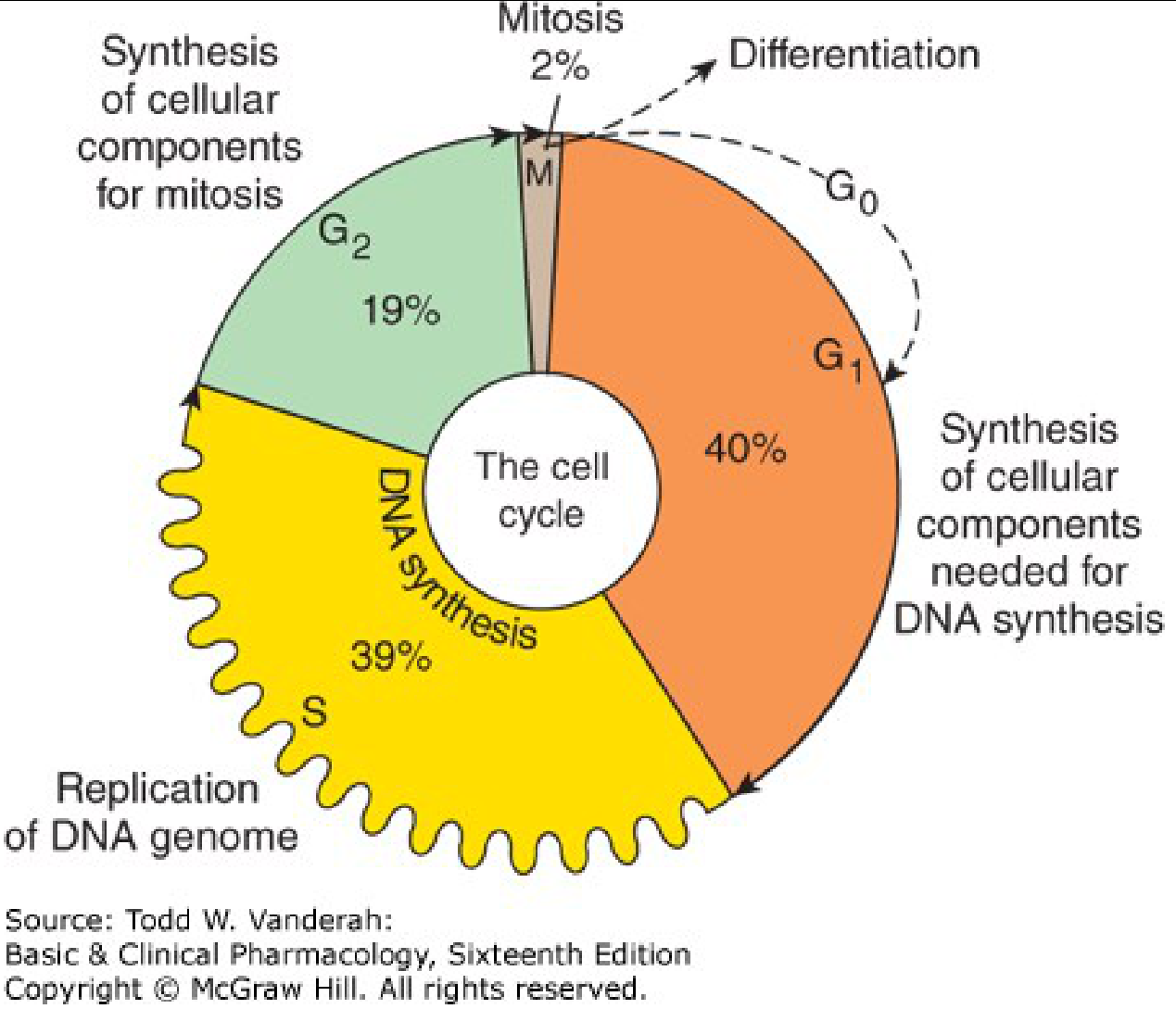
Source: Katzung's Basic and Clinical Pharmacology, 16th Edition (Table 54-1)
A. Cell Cycle-Specific (CCS) Agents
These drugs kill cells only when they are actively traversing the cell cycle. They are most effective against tumors with a high growth fraction.
| Subclass | Phase | Key Drugs |
|---|---|---|
| Antimetabolites | S phase | Methotrexate (MTX), 5-Fluorouracil (5-FU), Capecitabine, Gemcitabine, Cytarabine (ara-C), 6-Mercaptopurine (6-MP), 6-Thioguanine, Fludarabine, Cladribine, Clofarabine, TAS-102 |
| Topoisomerase II inhibitors | G1-S phase | Etoposide |
| Topoisomerase I inhibitors (Camptothecins) | G2-M phase | Irinotecan (CPT-11), Topotecan, Govitecan (SN-38), Deruxtecan (DXd) |
| Taxanes | M phase | Paclitaxel, Docetaxel, Cabazitaxel, Nab-paclitaxel |
| Vinca Alkaloids | M phase | Vincristine, Vinblastine, Vinorelbine |
| Antimicrotubule inhibitors | M phase | Ixabepilone, Eribulin |
| Antitumor antibiotics (some) | G2-M phase | Bleomycin |
B. Cell Cycle-Nonspecific (CCNS) Agents
These drugs can kill both cycling AND resting (G0) cells - they work regardless of the cell cycle phase, though cycling cells are still more sensitive.
| Subclass | Key Drugs |
|---|---|
| Alkylating agents | Cyclophosphamide, Chlorambucil, Mechlorethamine, Melphalan, Busulfan, Carmustine (BCNU), Lomustine (CCNU), Dacarbazine, Temozolomide, Thiotepa, Bendamustine, Altretamine, Trabectedin, Lurbinectedin |
| Antitumor antibiotics | Doxorubicin, Daunorubicin, Epirubicin, Idarubicin, Mitoxantrone (anthracyclines), Dactinomycin, Mitomycin C |
| Platinum analogs | Cisplatin, Carboplatin, Oxaliplatin |
Framework 2: Pharmacological/Mechanistic Classification
1. Alkylating Agents
Form covalent bonds with DNA (especially N-7 of guanine), causing intrastrand and interstrand DNA crosslinks that block replication.
Subclasses:
- Nitrogen mustards: Cyclophosphamide, Ifosfamide, Chlorambucil, Mechlorethamine, Melphalan
- Nitrosoureas (lipid-soluble, cross BBB): Carmustine (BCNU), Lomustine (CCNU), Streptozocin
- Alkyl sulfonates: Busulfan
- Triazines/Imidazotetrazines: Dacarbazine, Temozolomide
- Ethylenimine: Thiotepa, Altretamine
- Others: Bendamustine, Trabectedin, Lurbinectedin
Key toxicity: Myelosuppression, mucosal damage, gonadal toxicity, secondary malignancies (especially AML); cyclophosphamide causes hemorrhagic cystitis (prevented by mesna).
2. Antimetabolites
Structurally similar to normal metabolites; interfere with DNA/RNA synthesis by competing with natural substrates or by fraudulent incorporation.
Subclasses:
- Folate antagonists: Methotrexate, Pemetrexed - inhibit dihydrofolate reductase (DHFR); block thymidylate and purine synthesis
- Pyrimidine analogs:
- 5-Fluorouracil (5-FU) - inhibits thymidylate synthase
- Capecitabine - oral prodrug of 5-FU
- Cytarabine (ara-C) - inhibits DNA polymerase (used in leukemia)
- Gemcitabine - inhibits ribonucleotide reductase and DNA polymerase
- TAS-102 (trifluridine/tipiracil)
- Purine analogs:
- 6-Mercaptopurine (6-MP), 6-Thioguanine - inhibit de novo purine synthesis
- Fludarabine, Cladribine, Clofarabine - used in lymphoid malignancies
3. Natural Products
a) Vinca Alkaloids
Derived from the periwinkle plant (Vinca rosea). Inhibit tubulin polymerization → block mitotic spindle formation → arrest in M phase (metaphase).
- Drugs: Vincristine, Vinblastine, Vinorelbine
- Key toxicity: Vincristine - peripheral neuropathy (NOT myelosuppression); Vinblastine - myelosuppression
b) Taxanes
Stabilize microtubules (opposite to vincas) → prevent depolymerization → mitotic arrest.
- Drugs: Paclitaxel (Taxol), Docetaxel, Cabazitaxel, Nab-paclitaxel
- Key toxicity: Peripheral neuropathy, myelosuppression, hypersensitivity
c) Topoisomerase Inhibitors
- Topo I inhibitors (Camptothecins): Irinotecan, Topotecan - cause single-strand DNA breaks; irinotecan converted to active SN-38 by carboxylesterase
- Topo II inhibitors: Etoposide (epipodophyllotoxin) - prevents relegation of DNA strands → double-strand breaks
d) Antitumor Antibiotics
Products of Streptomyces species:
- Anthracyclines: Doxorubicin, Daunorubicin, Epirubicin, Idarubicin, Mitoxantrone - intercalate DNA, inhibit topo II, generate free radicals. Key toxicity: cumulative dose-dependent cardiomyopathy (mechanism: free radical injury)
- Bleomycin: Generates oxygen free radicals → single- and double-strand DNA breaks. Key toxicity: pulmonary fibrosis
- Mitomycin C: Alkylates DNA after bioreductive activation
- Dactinomycin (Actinomycin D): Intercalates between G-C base pairs, blocks RNA polymerase
4. Platinum Analogs
Coordinate covalently with DNA, forming intrastrand crosslinks (mainly between adjacent guanines) - functionally similar to alkylators but classified separately.
- Cisplatin: Used in testicular, ovarian, bladder, lung, head and neck cancers. Key toxicity: nephrotoxicity (prevent with vigorous hydration), ototoxicity, peripheral neuropathy
- Carboplatin: Less nephrotoxic/neurotoxic, more myelosuppressive than cisplatin
- Oxaliplatin: Cold-induced peripheral neuropathy (unique); used in colorectal cancer (FOLFOX regimen)
5. Targeted Therapy
a) Monoclonal Antibodies (mAbs - suffix "-mab")
| Drug | Target | Indication |
|---|---|---|
| Trastuzumab | HER2 | Breast, gastric cancer |
| Rituximab | CD20 | B-cell lymphoma, CLL |
| Bevacizumab | VEGF-A | CRC, NSCLC, ovarian, cervical, RCC |
| Cetuximab, Panitumumab | EGFR (HER1) | CRC, head and neck |
| Ramucirumab | VEGF-R2 | Gastric, NSCLC, CRC, HCC |
| Ziv-aflibercept | VEGF-A, VEGF-B, PlGF (decoy receptor) | CRC |
b) Small Molecule Tyrosine Kinase Inhibitors (TKIs - suffix "-ib")
- BCR-ABL inhibitors: Imatinib, Dasatinib, Nilotinib (CML - Philadelphia chromosome positive)
- EGFR inhibitors: Erlotinib, Gefitinib, Osimertinib (NSCLC)
- HER2 inhibitors: Lapatinib, Neratinib
- VEGFR inhibitors (multi-kinase): Sorafenib, Sunitinib, Pazopanib, Cabozantinib
- ALK inhibitors: Crizotinib, Alectinib (ALK+ NSCLC)
- BRAF inhibitors: Vemurafenib, Dabrafenib (BRAF V600E melanoma)
- CDK4/6 inhibitors: Palbociclib, Ribociclib, Abemaciclib (breast cancer)
- PARP inhibitors: Olaparib, Rucaparib (BRCA-mutated ovarian, breast cancer)
- BTK inhibitors: Ibrutinib (CLL, mantle cell lymphoma)
- mTOR inhibitors: Everolimus, Temsirolimus (RCC, breast cancer)
- PI3K inhibitors: Idelalisib (CLL, follicular lymphoma)
- JAK inhibitors: Ruxolitinib (myelofibrosis, polycythemia vera)
c) Antibody-Drug Conjugates (ADCs)
Monoclonal antibody linked to a cytotoxic payload:
- Trastuzumab emtansine (T-DM1) - HER2+ breast cancer
- Trastuzumab deruxtecan (T-DXd) - HER2+ breast, gastric cancer (Deruxtecan is a topo I inhibitor)
- Brentuximab vedotin - CD30+ lymphoma
6. Hormonal Agents
Used in hormone-sensitive tumors (breast, prostate, endometrial).
| Subclass | Drugs | Use |
|---|---|---|
| Selective Estrogen Receptor Modulators (SERMs) | Tamoxifen | ER+ breast cancer |
| Aromatase inhibitors | Anastrozole, Letrozole, Exemestane | Postmenopausal ER+ breast cancer |
| GnRH analogs | Leuprolide, Goserelin | Prostate cancer (medical castration) |
| Antiandrogens | Enzalutamide, Flutamide, Bicalutamide | Prostate cancer |
| Progestins | Megestrol acetate | Endometrial, breast |
| Estrogens (supraphysiologic) | Diethylstilbestrol | Prostate cancer |
7. Immunotherapy / Immune Checkpoint Inhibitors
Unleash the immune system against cancer by blocking inhibitory checkpoints.
| Drug | Target | Indications |
|---|---|---|
| Ipilimumab | CTLA-4 | Melanoma |
| Pembrolizumab, Nivolumab | PD-1 | Melanoma, NSCLC, bladder, many others |
| Atezolizumab, Durvalumab | PD-L1 | NSCLC, bladder, triple-negative breast |
8. Miscellaneous Agents
- Hydroxyurea: Inhibits ribonucleotide reductase (S phase specific); used in CML, sickle cell disease
- L-Asparaginase: Depletes asparagine (ALL cells cannot synthesize asparagine); used in ALL
- Arsenic trioxide: Induces differentiation/apoptosis in APL (acute promyelocytic leukemia)
- All-trans retinoic acid (ATRA): Differentiating agent in APL
- Proteasome inhibitors: Bortezomib, Carfilzomib (multiple myeloma)
- Thalidomide/Lenalidomide/Pomalidomide (IMiDs): Anti-angiogenic + immunomodulatory; multiple myeloma
- Venetoclax: BCL-2 inhibitor; CLL, AML
Quick Memory Summary
| Class | Prototype | Key Mechanism |
|---|---|---|
| Alkylating agent | Cyclophosphamide | DNA crosslinks |
| Antimetabolite | Methotrexate | Inhibit DHFR |
| Vinca alkaloid | Vincristine | Tubulin depolymerization |
| Taxane | Paclitaxel | Tubulin stabilization |
| Anthracycline | Doxorubicin | Topo II + free radicals |
| Platinum analog | Cisplatin | Intrastrand DNA crosslinks |
| Topo I inhibitor | Irinotecan | DNA single-strand breaks |
| Topo II inhibitor | Etoposide | DNA double-strand breaks |
| Hormonal | Tamoxifen | ER antagonism |
| Targeted | Imatinib | BCR-ABL TK inhibition |
| Checkpoint inhibitor | Pembrolizumab | Anti-PD-1 |
Sources: Katzung's Basic and Clinical Pharmacology, 16th Edition (Chapter 54 - Cancer Chemotherapy); Goldman-Cecil Medicine, International Edition
तू जो मेरा तोह गम खो गए। तूने कहा जो हम धो गए। सीने पे रख के सिर को तेरे हम सर दिखाए।
ये बहुत खूबसूरत पंक्तियाँ हैं। इनमें एक गहरी भावना है - किसी के साथ होने से सारे गम भूल जाना, उनकी बातों से मन का बोझ धुल जाना, और उनके सीने पर सिर रखकर खुद को सुरक्षित महसूस करना।
क्या आप चाहते हैं कि मैं —
- इन पंक्तियों का अर्थ/भावार्थ समझाऊं?
- इन्हें किसी गाने या शायरी से पहचानने में मदद करूं?
- या आप खुद कुछ लिख रहे हैं और आगे की पंक्तियाँ चाहते हैं?
बताइए, मैं हाज़िर हूँ। 😊
This is a shared conversation. Sign in to Orris to start your own chat.