
Giardiasis
Reading File
Now let me search the library for Giardiasis content in parallel:
Finding Sources
Searching PubMed
giardiasis treatment diagnosis
Excellent results. Now let me read the most comprehensive sources in parallel - Harrison's (most detailed) and Sleisenger (GI specialist) plus the Tietz lab medicine section:
Reading File
Reading File
Reading File
Let me get more from Harrison's (the most comprehensive source) and also read the Goodman & Gilman pharmacology section and Goldman-Cecil section:
Reading File
Reading File
Reading File
Let me get the remaining Harrison's content (treatment/diagnosis sections) and the Goldman-Cecil more detailed content, plus fetch the trophozoite image:
Reading File
Reading File
Loading Image
Let me get the rest of Goldman-Cecil's content (clinical features, diagnosis, treatment) and fetch the cyst image:
Reading File
Loading Image
I now have comprehensive information from multiple authoritative sources. Let me also fetch the cyst image from Goldman-Cecil:
Loading Image
I now have comprehensive, well-sourced information. Here is the complete answer:
Giardiasis
The Pathogen
Giardia duodenalis (synonyms: G. lamblia, G. intestinalis) is a flagellated protozoan parasite of the small intestine. It is the most common parasitic infection of the gastrointestinal tract worldwide and in the United States, affecting upward of 300 million people annually. - Goldman-Cecil Medicine, p. 3437
Two morphological forms exist:
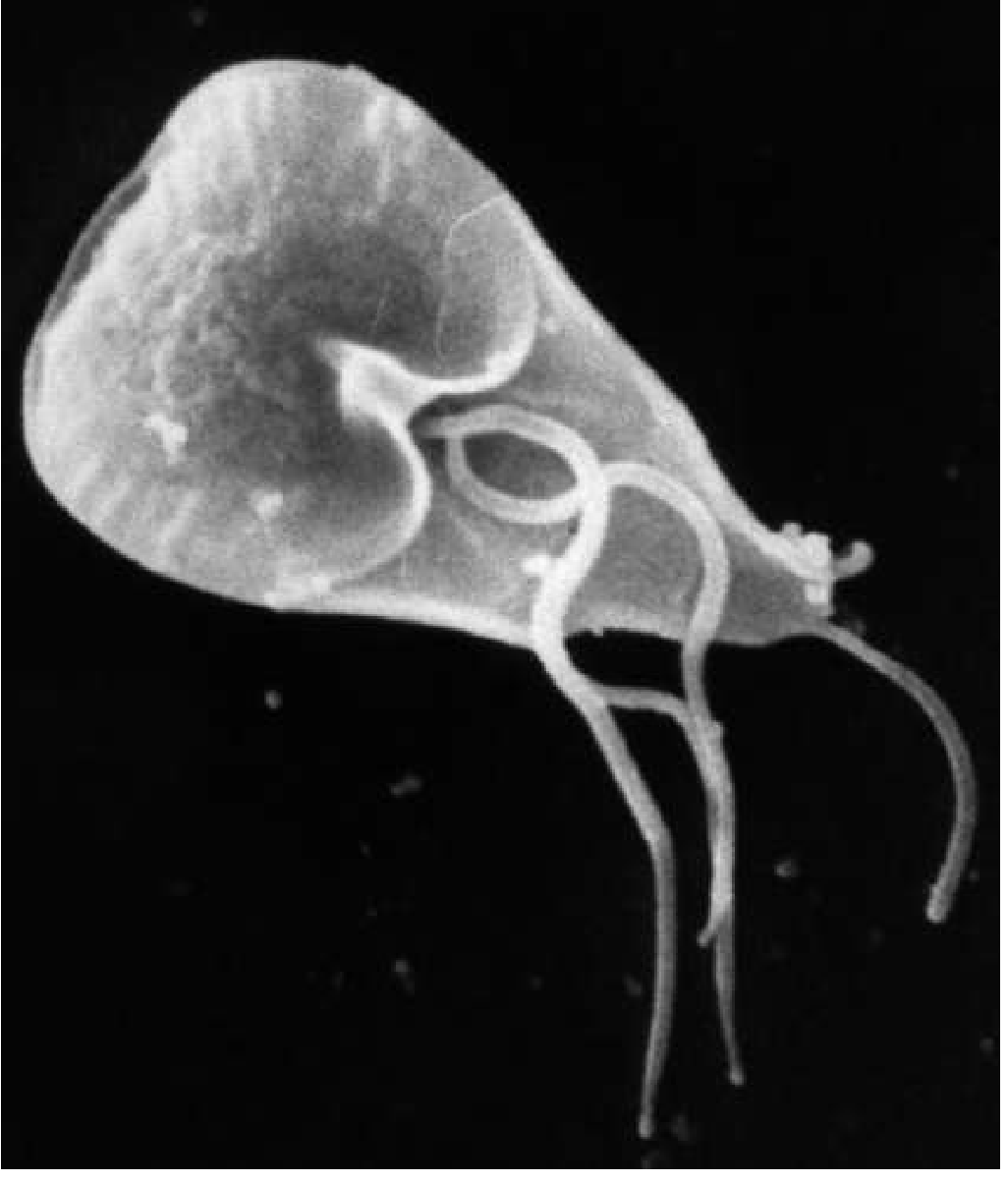
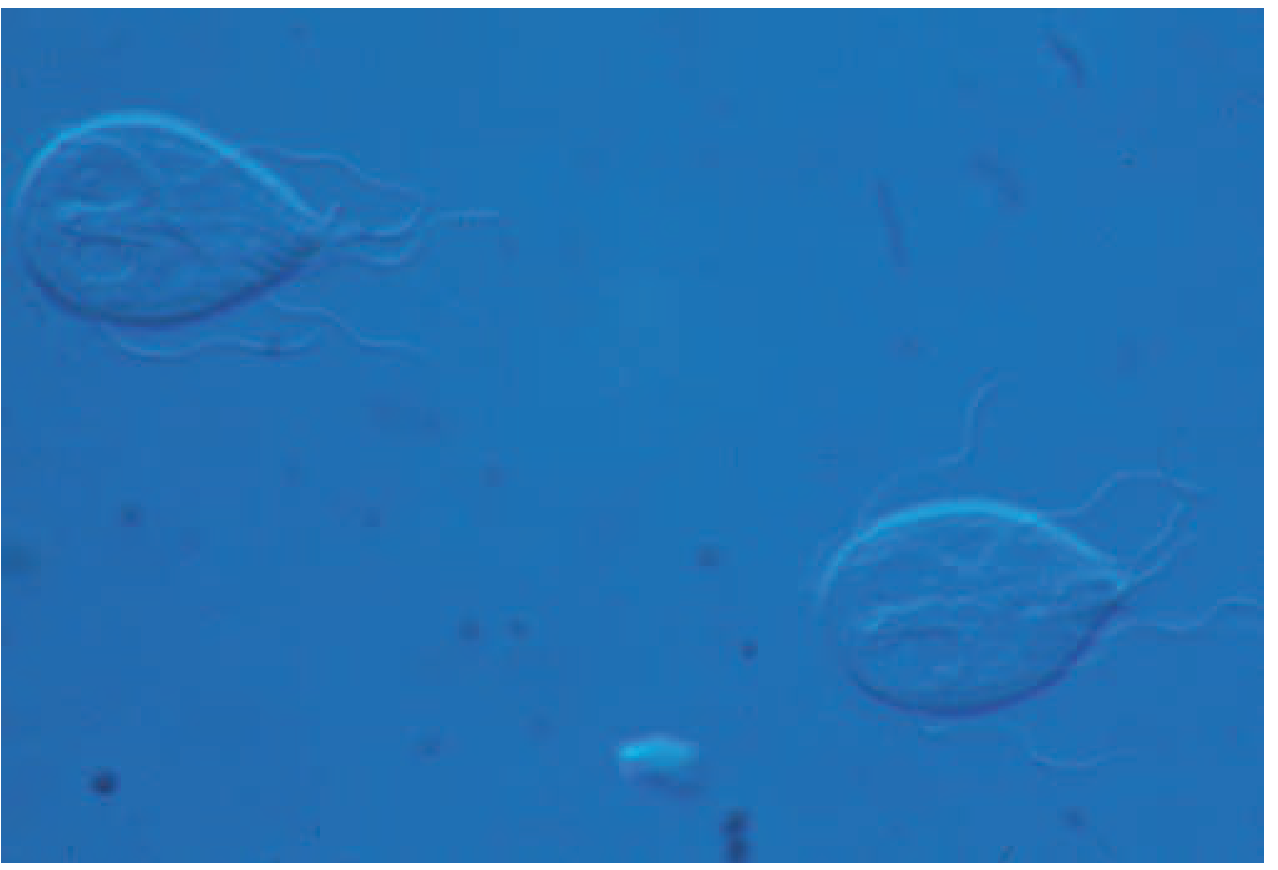
- Trophozoite - the active, disease-causing form; pear-shaped, 9-21 µm long, 5-15 µm wide, with 4 pairs of flagella, two characteristic nuclei, and a ventral sucking disc used to adhere to intestinal epithelium. The trophozoite lacks mitochondria and peroxisomes.
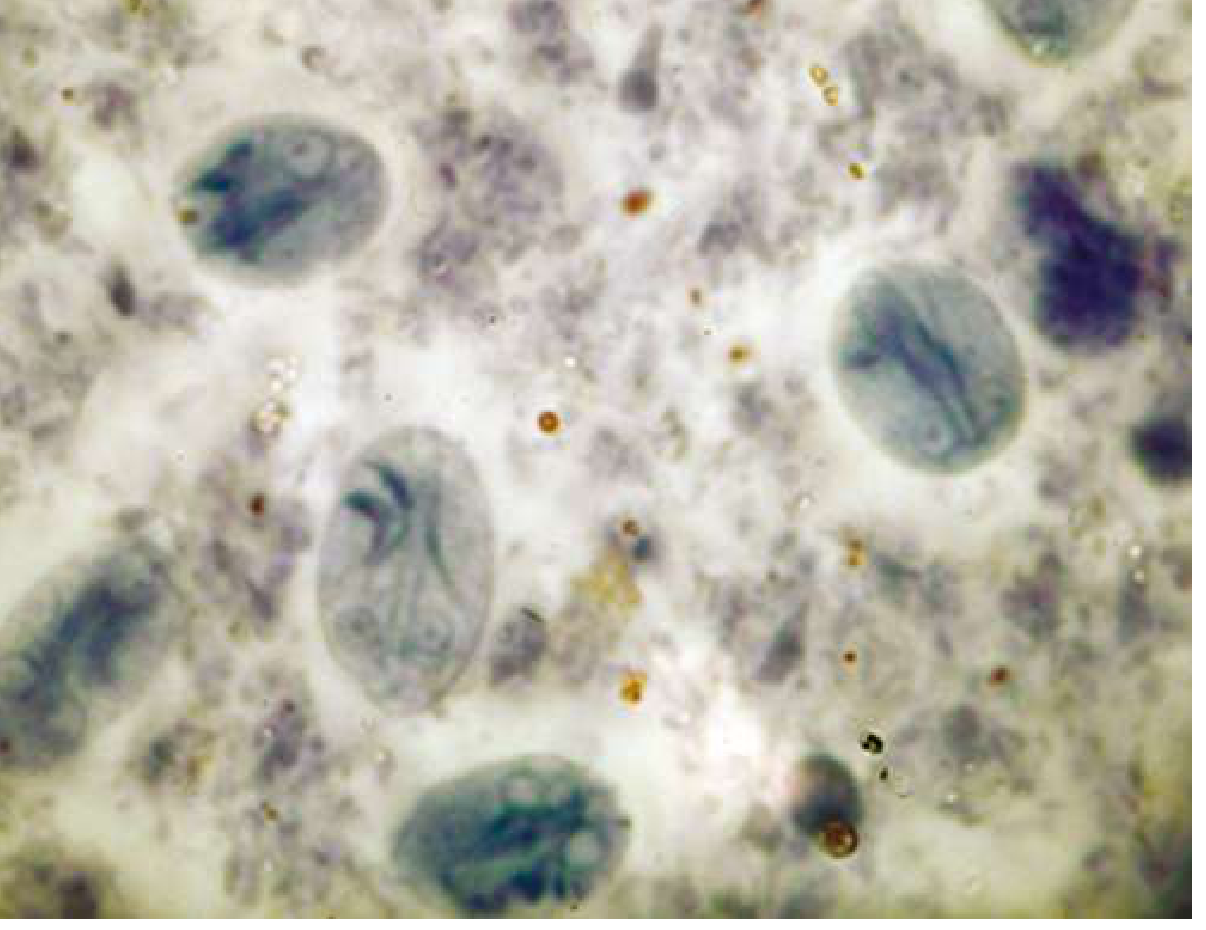
- Cyst - the environmentally resistant, infectious form; oval, 8-12 µm long, excreted in feces.
Scanning electron micrograph of a Giardia trophozoite (Goldman-Cecil Medicine):
Light microscopy of Giardia trophozoites (Harrison's Principles):
Stained Giardia cysts in stool (Goldman-Cecil Medicine):
There are eight genotypic assemblages; assemblages A and B infect humans (and are likely two separate species). Other assemblages infect animals. - Goldman-Cecil Medicine, p. 3438
Life Cycle
- Ingestion of cysts from contaminated water, food, or via fecal-oral contact (as few as 10-100 cysts can establish infection).
- Excystation in the small intestine - each cyst releases two trophozoites.
- Trophozoites multiply by binary fission (doubling every 6 hours in vitro) and attach to mucosal epithelium via the ventral disc. They remain strictly intraluminal - no hematogenous spread.
- As trophozoites encounter altered conditions in the lower small bowel, they encyst - cysts are excreted in feces.
- Trophozoites predominate in watery/loose stools; cysts are the main form in formed stools and are responsible for transmission.
- Cysts survive for months in cold fresh water, are resistant to routine chlorination, but are killed by boiling or filtration.
- Harrison's Principles of Internal Medicine 22E, p. 1848
Epidemiology
| Setting | Prevalence / Key Features |
|---|---|
| Developed countries | ~0.4-6 cases/100,000/year; epidemic via waterborne or foodborne outbreaks |
| Developing countries | Up to 20-40%; endemic, mainly person-to-person; children infected by age 2-3 |
| United States | ~20,000 reported cases/year; actual may exceed 1 million; peaks in summer/fall |
| High-risk groups | Young children in daycare, travelers (esp. South Asia), backpackers, men who have sex with men, immunocompromised patients |
Giardia is a nationally reportable disease in the United States. Before modern water treatment, municipal reservoir contamination caused large outbreaks; today, recreational water (pools, lakes) is a more common outbreak source. - Goldman-Cecil Medicine, p. 3437; Tietz Textbook of Laboratory Medicine, p. 3565
Unique feature: Giardia is the only bowel-dwelling parasite that undergoes antigenic variation - only one of ~250 variant-specific surface proteins (VSPs) is expressed at a time, enabling immune evasion. - Goldman-Cecil Medicine, p. 3437
Pathophysiology
The mechanisms behind symptomatic disease are not fully understood. Giardia is non-invasive but causes disease via:
- Physical coating of the intestinal epithelial surface, interfering with brush-border disaccharidase activity → carbohydrate malabsorption and lactose intolerance
- Cysteine proteases (cathepsin B-like) that disrupt epithelial tight junctions, cause enterocyte apoptosis, break down mucus, and degrade host immune factors
- Epithelial barrier dysfunction → increased permeability
- Associated small intestinal bacterial overgrowth (SIBO) with bile salt deconjugation → steatorrhea
- No classic secretory enterotoxin is produced
In chronic symptomatic cases, small bowel biopsy shows flattened villi, elongated crypts, and mononuclear inflammatory infiltrate in the lamina propria - resembling tropical sprue or celiac disease. In most acute infections, bowel morphology is unaltered. - Harrison's, p. 1848; Sleisenger & Fordtran's GI and Liver Disease
Host immunity: Both cellular and humoral responses develop. Patients with hypogammaglobulinemia suffer prolonged, severe, treatment-resistant infections - indicating humoral immunity is important. Common variable immunodeficiency (CVID) is the key immunodeficiency associated with severe giardiasis (selective IgA deficiency does NOT increase severity). - Goldman-Cecil Medicine, p. 3438
Clinical Manifestations
The spectrum ranges from asymptomatic carriage to severe chronic malabsorption:
Acute giardiasis:
- Incubation: 1-3 weeks after ingestion
- Watery, foul-smelling, greasy/fatty diarrhea (no blood, no mucus - non-dysenteric)
- Abdominal cramping, bloating, excessive flatulence
- Nausea, anorexia
- Weight loss
- Patients are generally less ill than those with bacterial diarrhea (no high fever, no significant systemic toxicity)
- Self-limited: typically 7-10 days in immunocompetent hosts
Chronic giardiasis:
- Intermittent or persistent diarrhea lasting weeks to months
- Malabsorption syndrome (similar to celiac sprue) with steatorrhea, fat-soluble vitamin deficiencies
- Significant weight loss
- Failure to thrive in children
- Post-infectious lactose intolerance may persist after eradication (due to delayed regeneration of brush-border enzymes)
Asymptomatic carriage is common, especially in endemic regions where children are repeatedly exposed. Diarrhea is associated with trophozoites in stool; the presence of cysts alone should be interpreted with caution. - Sleisenger & Fordtran's, p. 2160; Tietz Laboratory Medicine, p. 3566
Diagnosis
| Method | Notes |
|---|---|
| Stool ova & parasites (O&P) microscopy | Identifies cysts and/or trophozoites; at least 3 specimens on separate days recommended (intermittent shedding) |
| Direct fluorescence assay (DFA) | Sensitive and specific; uses fluorescent-labeled antibodies |
| Stool antigen immunoassay (ELISA or DFA) | Sensitive and specific; detects Giardia-specific antigens; widely used clinically |
| Fecal NAATs (nucleic acid amplification) | Increasingly standard in the US; multiplex PCR panels now standard for enteric pathogens |
| Duodenal/jejunal biopsy | Does NOT increase diagnostic yield over stool examination; shows trophozoites in mucus layer |
The diagnostic approach per Harrison's is summarized in the table below:
| Test | Giardia |
|---|---|
| Stool O-P | + |
| Fecal acid-fast stain | - |
| Fecal antigen immunoassay | + |
| Fecal NAATs | + |
| Other | DFA |
- Harrison's Principles of Internal Medicine 22E, p. 1848
Treatment
Drug of choice:
| Drug | Dose | Duration | Notes |
|---|---|---|---|
| Tinidazole | 2 g orally once | Single dose | Preferred; may be more effective than metronidazole |
| Metronidazole | 250-500 mg TID | 5-7 days | Cure rates >90%; widely used |
| Nitazoxanide | 500 mg BID | 3 days | Alternative; also active against Cryptosporidium |
| Paromomycin | 500 mg TID | 5-10 days | Preferred in pregnancy (not absorbed); less reliable |
| Albendazole / Mebendazole | Varies | Varies | Alternative; lower efficacy than tinidazole |
| Quinacrine, Ornidazole, Secnidazole, Furazolidone | Varies | Varies | Other alternatives |
Refractory/Recurrent disease:
- Document ongoing infection with repeat stool testing before retreating
- Investigate for reinfection from family members or environmental source
- Evaluate for hypogammaglobulinemia
- Prolonged metronidazole (750 mg TID × 21 days) or combination therapy for multiple treatment failures
Post-treatment note: Some patients experience delayed symptom resolution after eradication due to slow regeneration of intestinal brush-border enzymes (particularly lactase). - Harrison's Principles of Internal Medicine 22E, p. 1849; Sleisenger & Fordtran's, p. 2160
Prevention
- Boiling or filtration of potentially contaminated water (chlorination alone is insufficient)
- Personal hygiene, hand washing - especially in daycare settings
- Avoid swallowing recreational water
- Travelers to endemic regions should drink only treated or bottled water
Key Summary Points
| Feature | Detail |
|---|---|
| Organism | Giardia duodenalis (lamblia/intestinalis) |
| Type | Flagellated protozoan; assemblages A and B in humans |
| Infectious form | Cyst (10-100 cysts sufficient) |
| Disease form | Trophozoite |
| Location | Proximal small intestine only; never invasive |
| Classic stool | Foul-smelling, greasy, fatty; no blood |
| Unique features | No mitochondria; antigenic variation (VSPs); ventral sucking disc |
| DOC | Tinidazole (single dose) or Metronidazole |
| Pregnancy | Paromomycin (non-absorbed) |
| Immunodeficiency risk | CVID / hypogammaglobulinemia (NOT selective IgA deficiency) |
Sources: Harrison's Principles of Internal Medicine 22E (2025), Goldman-Cecil Medicine, Sleisenger & Fordtran's Gastrointestinal and Liver Disease, Tietz Textbook of Laboratory Medicine 7th Ed., Goodman & Gilman's Pharmacological Basis of Therapeutics.
This is a shared conversation. Sign in to Orris to start your own chat.