
Breast feeding disadvantage and contraindications
Breastfeeding - Disadvantages and Contraindications
Disadvantages of Breastfeeding
For the Mother
- Physical demands - Breastfeeding requires significant time and effort. Nursing sessions can be frequent (8-12 times/day in newborns), which is exhausting.
- Nipple and breast problems - Nipple soreness or trauma, plugged ducts, mastitis, and breast abscesses can occur, especially in the early weeks.
- Medication restrictions - Many drugs must be avoided or used with caution. The number of truly contraindicated drugs is small but real (see below), and every prescription must be carefully evaluated.
- Dietary and lifestyle limitations - Alcohol, caffeine, certain foods, illicit drugs, and smoking can affect milk quality and the infant.
- Reduced contraceptive effect concerns - Lactational amenorrhoea is not a reliable contraceptive.
- Work and social constraints - Returning to work complicates breastfeeding; pumping and storage logistics can be burdensome.
- Psychological burden - Mothers may experience anxiety about milk supply sufficiency or social stigma in some settings.
- Radioactive iodine treatment is contraindicated - Women requiring radioiodine (e.g., for thyroid cancer) cannot breastfeed; RAI (iodine-131) is an absolute contraindication to breastfeeding, and women planning pregnancy should not receive RAI within 6 months.
For the Infant
- Nutritional deficiencies in some cases - Exclusively breastfed infants may develop vitamin D deficiency (breast milk is low in vitamin D) and iron deficiency without supplementation after 4-6 months.
- Risk of jaundice - Breast milk jaundice can persist for weeks due to factors in mature breast milk inhibiting bilirubin conjugation.
- Drug/toxin exposure - Drugs, alcohol, nicotine, and environmental chemicals pass into breast milk and can affect the infant.
- Infection transmission risk - Certain maternal infections can be transmitted via breast milk (detailed below).
- CMV transmission to premature infants - Cytomegalovirus (CMV) is transmitted through breast milk. In full-term infants it acts as "natural immunization," but in premature or very-low-birth-weight infants, there are conflicting data regarding rates of symptomatic disease and long-term sequelae.
Contraindications to Breastfeeding
Absolute Contraindications (TRUE contraindications - very few exist)
1. Maternal Infections
- HIV - HIV-1 is transmissible via breastfeeding; risk of transmission to infant is approximately 14% (meta-analysis, 95% CI 7-22%). In high-income countries (USA, UK, etc.), HIV-positive mothers are advised NOT to breastfeed regardless of antiretroviral therapy status. In resource-limited settings, WHO recommends antiretroviral prophylaxis for both mother and infant while breastfeeding to balance the risks.
- HTLV-I (Human T-lymphotropic virus type 1) - Contraindicated; transmitted via breast milk.
- Ebola virus disease - CDC and WHO recommend separation of infected mothers from infants until recovery, if safe alternative feeding is available.
- Marburg and Lassa virus infections - Same as Ebola; breastfeeding should be suspended if safe alternatives exist.
- Dengue virus - Recommend suspending breastfeeding once maternal diagnosis is confirmed; resume when the mother is well.
- Active pulmonary tuberculosis (untreated) - Breastfeeding should be deferred until the mother has been on treatment for 2 weeks and is deemed non-infectious; the infant receives prophylactic isoniazid. After the mother is non-infectious, breastfeeding may be resumed.
- HIV + HCV coinfection - Even though HCV alone is NOT a contraindication, HIV/HCV co-infection IS a contraindication to breastfeeding in high-income countries.
2. Infant Conditions
- Classic galactosemia (severe form) - Infants with classic galactosemia lack galactose-1-phosphate uridyltransferase and cannot metabolize galactose in breast milk; this is a contraindication to breastfeeding. Milder variants require individual assessment.
3. Maternal Medications (Lactation Risk L5 - Contraindicated)
- Radioactive iodine (iodine-131) - Absolute contraindication; high concentration in breast milk; requires pumping and discarding for a specific period. Iodine-131 for therapy (not diagnostic) requires cessation of breastfeeding.
- Cytotoxic/chemotherapy agents - Drugs like methotrexate, cyclophosphamide, and other antineoplastics are contraindicated.
- Drugs of abuse (cocaine, amphetamines, PCP, heroin in high doses) - Generally contraindicated; however, opioids as a class are NOT an absolute contraindication (most post-cesarean women receive opioids and breastfeed).
Conditions That Are NOT Contraindications (Common Misconceptions)
| Condition | Status |
|---|---|
| Hepatitis C (HCV, HIV-negative) | NOT a contraindication (CDC, AAP) |
| Hepatitis B (with infant vaccination) | NOT a contraindication |
| COVID-19 | NOT a contraindication (AAP) |
| Varicella (chickenpox) immunization | NOT a contraindication |
| Maternal smoking | NOT an absolute contraindication (AAP 2012) - though it may reduce protective effects |
| Maternal opioid use (therapeutic) | NOT an absolute contraindication |
| SLE/rheumatoid arthritis | Lupus itself is NOT a contraindication; most medications compatible |
| Most TB treatment medications | Breastfeeding should be continued during TB chemotherapy |
Medications Requiring Caution (Not Absolute Contraindications)
- Bromocriptine, ergotamine compounds - Effect on nursing infants unknown; may be of concern
- Lithium - Passes into breast milk; monitor infant serum levels
- Antihistamines - Hydroxyzine is contraindicated (seizure risk); loratadine and cetirizine are preferred and compatible
- Antiepileptics - Many are compatible; individualize
- Antipsychotics - Limited data; weigh risk vs. benefit
Drug Transfer Into Breast Milk - Key Principles
- Molecular weight - Small molecules (MW <200) pass through water-filled pores
- Lipid solubility - Highly lipid-soluble drugs concentrate in milk fat
- Protein binding - Drugs bound to plasma proteins do NOT pass into milk as easily
- pH - Plasma pH 7.4 vs. milk pH 7.0; weakly basic drugs may concentrate in milk (ion trapping)
- Route of administration - Affects blood and therefore milk levels
- Milk-to-plasma (M:P) ratio - Most drugs have M:P <1; a ratio of 1 does not always indicate high risk if absolute levels are low
Hale's Lactation Risk Classification
| Category | Meaning |
|---|---|
| L1 | Safest |
| L2 | Safer |
| L3 | Moderately safe |
| L4 | Possibly hazardous |
| L5 | Contraindicated |
Summary
Sources: Creasy & Resnik's Maternal-Fetal Medicine: Principles and Practice (Ch. 11 - Breastfeeding); Red Book 2021 - AAP Committee on Infectious Diseases
Healthy food diet for breastfeeding
healthy diet for breastfeeding mothers nutrition recommendations 2025
https://pmc.ncbi.nlm.nih.gov/articles/PMC8299915
breastfeeding foods to eat avoid vitamins minerals WHO AAP guidelines lactation
https://www.cdc.gov/breastfeeding-special-circumstances/hcp/…
breastfeeding healthy diet nutrition food groups infographic
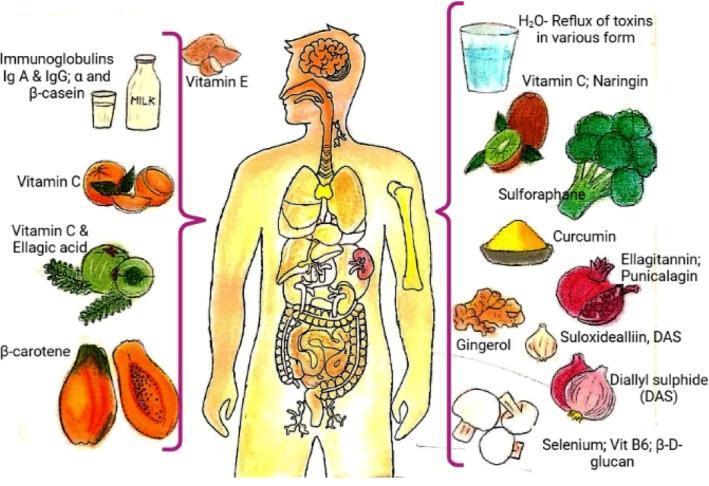
An educational infographic titled 'Bioactive compounds in various food items for boosting human immunity.' The central figure is a simplified anatomical diagram of the human body, highlighting major organ systems including the brain, respiratory tract (lungs), cardiovascular system (heart), and gastrointestinal tract (stomach, intestines). Flanking the figure are illustrations of various foods categorized by their bioactive nutritional components. On the left, items include milk (Immunoglobulins IgA & IgG, alpha/beta-casein), citrus/oranges (Vitamin C), gooseberries (Vitamin C & Ellagic acid), and papayas (beta-carotene). On the right, items include water (H2O), kiwis (Vitamin C, Naringin), broccoli (Sulforaphane), turmeric (Curcumin), pomegranates (Ellagitannin, Punicalagin), ginger (Gingerol), garlic and onions (Suloxidealliin, Diallyl sulphide), and mushrooms (Selenium, Vitamin B6, beta-D-glucan). The diagram illustrates the relationship between diet, nutrition, and systemic health, focusing on micronutrients and phytochemicals that support the immune system. This material is suitable for health science students and educators discussing clinical nutrition and preventive medicine.

An educational infographic and clinical conceptual image illustrating the relationship between dietary diversity and the human microbiome. The image features a sequential progression of human silhouettes in profile, each with an open mouth receiving a different dietary item. The food sequence includes a cocktail with a garnish, a shrimp, a fried protein, a carbohydrate-rich bun, a floret of broccoli (representing high-fiber vegetable intake), and a cube of cheese. This visual composition serves as a metaphorical representation of the diverse environmental exposures introduced through diet. Centrally, the image focuses on how individual dietary choices serve as the primary substrate for intestinal bacteria. Clinically, it illustrates concepts related to gastroenterology, nutrition, and personalized medicine, highlighting how variations in the gut microbiome may influence individual susceptibility to environmentally-induced diseases through the differential metabolism and bioavailability of ingested compounds.
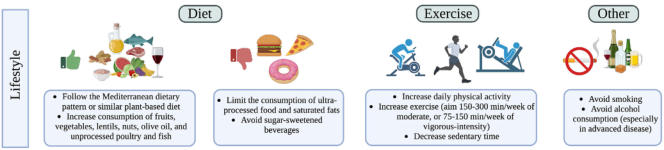
Summary : This figure presents lifestyle recommendations for health, organized into three main categories: Diet, Exercise, and Other, each with specific guidance and illustrative icons. infographic: # Categories : • Diet • Exercise • Other # Diet : • Follow the Mediterranean dietary pattern or a similar plant-based diet. – Increase consumption of fruits, vegetables, lentils, nuts, olive oil, and unprocessed poultry and fish. • Limit the consumption of ultra-processed food and saturated fats. – Avoid sugar-sweetened beverages. • Icons: Thumbs up with healthy foods (fruits, vegetables, fish, olive oil, wine); thumbs down with unhealthy foods (burger, pizza, donut). # Exercise : • Increase daily physical activity. • Increase exercise (aim for 150–300 min/week of moderate, or 75–150 min/week of vigorous-intensity). • Decrease sedentary time. • Icons: People cycling, running, and using gym equipment. # Other : • Avoid smoking. • Avoid alcohol consumption (especially in advanced disease). • Icons: No smoking and no alcohol symbols. # Layout : • Three main sections (Diet, Exercise, Other) arranged horizontally with icons above bullet points. • "Lifestyle" label vertically on the left. # Analysis : • The figure emphasizes a holistic approach to health, prioritizing a Mediterranean or plant-based diet, regular physical activity, and avoidance of smoking and alcohol. Visual icons reinforce the recommendations for easy understanding and recall.
Healthy Diet for Breastfeeding Mothers
1. Calorie Needs
- Age and body weight
- Activity level
- Whether exclusively breastfeeding or mixed feeding
- First vs. second 6 months of lactation (+330 kcal in first 6 months; +400 kcal in second 6 months)
2. Core Food Groups - What to Eat
Vegetables (2.5 - 3.5 cups/day)
- Aim to "eat the rainbow" - dark green (spinach, broccoli, collards), orange and red (carrots, sweet potato, tomatoes, squash), and starchy vegetables
- High in fiber, potassium, folate, vitamins A and C
- Beans, peas, and lentils count as both protein and vegetables
Fruits (2 cups/day)
- Fresh, frozen, or canned (no added sugar)
- Rich in vitamin C, folate, potassium, antioxidants
- Citrus fruits also help improve iron absorption from plant sources
Whole Grains (at least 3 oz equivalents/day; total 6 oz/day)
- Oatmeal, whole-grain bread, brown rice, popcorn, whole-wheat pasta
- Provide sustained energy, fiber, B vitamins, iron
- At least half of all grains should be whole grains
Protein Foods (5.5 oz equivalents/day)
- Lean meats and poultry - chicken, turkey, lean beef
- Eggs - excellent source of choline, which is critical for infant brain development
- Legumes - lentils, chickpeas, black beans, tofu, soy products
- Nuts and seeds - almonds, walnuts, flaxseed, chia (unsalted)
- Fish and seafood - see guidance below
Dairy (3 cups/day)
- Low-fat or fat-free milk, yogurt, cheese
- Fortified soy beverages count as dairy equivalent
- Key source of calcium, vitamin D (when fortified), protein, iodine, and B12
Healthy Oils (27 g/day)
- Olive oil, canola oil, vegetable oil
- Avocados, nuts, fatty fish
- Omega-3 fatty acids (DHA/EPA) support infant brain and eye development
3. Key Nutrients with Increased Requirements During Lactation
| Nutrient | Why It Matters | Best Food Sources |
|---|---|---|
| Iodine (290 mcg/day - highest of any life stage) | Essential for infant thyroid and brain development | Dairy, seafood, iodized salt, seaweed |
| Choline (550 mg/day) | Infant brain development; breast milk is primary source | Eggs (1 large egg = ~147 mg), meat, fish, soybeans |
| Calcium (1,000 mg/day) | Maternal bone preservation; infant bone growth | Dairy, fortified soy milk, leafy greens, tofu |
| Iron | Maternal recovery from blood loss; avoid deficiency | Red meat, lentils, beans, fortified cereals, leafy greens |
| Vitamin D | Breast milk is naturally LOW in vitamin D | Fortified dairy/soy milk, fatty fish, eggs; sun exposure |
| Folate (500 mcg/day) | Cell growth and infant neural development | Leafy greens, legumes, fortified cereals |
| Vitamin B12 | Nerve development; critical if vegan/vegetarian | Meat, dairy, eggs, fortified plant foods |
| Omega-3 (DHA) | Infant brain and retinal development | Salmon, sardines, mackerel, trout, algae-based supplements |
| Zinc | Immune function, growth | Meat, shellfish, legumes, nuts, seeds |
| Magnesium | Energy production, bone health | Whole grains, nuts, seeds, leafy greens |
4. Fluid Intake
- Breastfeeding mothers lose significant fluid through milk production (roughly 700-900 mL/day in milk)
- Aim for 13 cups (about 3 liters) of total fluid daily
- Water is the best choice - drink to thirst, and whenever you nurse
- Limit sugary drinks and fruit juices
- Herbal teas are generally fine; avoid teas with high herbal concentrations (some herbs can suppress lactation)
5. Foods and Substances to Limit or Avoid
Fish - Eat Wisely, Not Less
| Category | Guidance | Examples |
|---|---|---|
| Best choices (2-3 servings/week) | Low mercury, high omega-3 | Salmon, sardines, trout, herring, shrimp, tilapia, catfish |
| Good choices (1 serving/week) | Moderate mercury | Canned light tuna, snapper, mahi-mahi |
| Avoid completely | High mercury | Shark, swordfish, king mackerel, tilefish (Gulf of Mexico), bigeye tuna |
Caffeine
- Small amounts are generally safe (up to 200-300 mg/day, about 1-2 cups of coffee)
- Caffeine does pass into breast milk - can make some babies fussy or disrupt sleep
- Newborns clear caffeine more slowly than older infants; extra caution in first few weeks
Alcohol
- No amount of alcohol in breast milk is considered safe for infants
- If you do drink, wait at least 2 hours per standard drink before breastfeeding (alcohol clears from milk as it clears from blood - "pumping and dumping" does NOT speed this up)
- Alcohol can reduce milk production and the let-down reflex
Foods Causing Infant Fussiness (Individual Variation)
- Some babies react to specific foods in the mother's diet (cow's milk protein, cruciferous vegetables, garlic, spicy foods)
- There is no reason to eliminate any food unless the infant shows a consistent reaction
- The mother's varied diet actually helps expose the infant to different flavors and may ease acceptance of solid foods later
6. Supplements
- Prenatal vitamins - Continued use is reasonable but check that iodine and choline are included (many prenatal vitamins are deficient in these)
- Vitamin D - Breast milk is low in vitamin D. Either the mother takes 6,400 IU/day (which adequately supplies the infant) OR the infant gets 400 IU/day as a supplement
- Iodine - Iodine needs rise sharply during lactation; ensure iodized salt use or supplementation if diet is low
- Choline - Many prenatal vitamins do not contain adequate choline; eggs and animal products are the best dietary sources
- Vitamin B12 + Iron - Mandatory supplements for vegans/vegetarians; discuss with provider
7. Special Dietary Patterns
Vegetarian/Vegan Mothers
- Vitamin B12 (found almost exclusively in animal products) - supplement required
- Iron - non-heme iron from plants is less bioavailable; pair with vitamin C foods
- Calcium - from fortified plant milks, tofu, leafy greens
- Omega-3 DHA - from algae-based supplements if no fish consumed
- Zinc and Iodine - supplementation may be needed
8. Sample Day of Eating for a Breastfeeding Mother (~2,200 kcal)
| Meal | Foods |
|---|---|
| Breakfast | Oatmeal with berries and walnuts + 2 scrambled eggs + fortified milk or soy milk |
| Mid-morning snack | Greek yogurt with sliced fruit or a handful of almonds |
| Lunch | Grilled salmon over leafy green salad with chickpeas, avocado, olive oil dressing + whole-grain bread |
| Afternoon snack | Apple with peanut butter or whole-grain crackers with hummus |
| Dinner | Lentil and vegetable soup or chicken/turkey stir-fry with brown rice and broccoli |
| Evening | Warm milk or fortified soy milk, banana |
| Throughout the day | Water (aim 8-13 glasses) |
Summary
Sources: Creasy & Resnik's Maternal-Fetal Medicine (Ch. 11); CDC - Maternal Diet and Breastfeeding; Dietary Guidelines for Americans 2020-2025; Mayo Clinic - Breastfeeding Nutrition; AAP Policy Statement on Breastfeeding
Wt are condition if more breast feeding for too long
prolonged breastfeeding too long effects mother infant risks benefits
https://www.medicalnewstoday.com/articles/extended-breastfee…
prolonged breastfeeding effects on mother bone loss nutritional depletion conditions
Effects and Conditions Associated with Prolonged (Extended) Breastfeeding
FOR THE MOTHER
1. Bone Density Loss (Temporary)
- During breastfeeding, the body withdraws 200-300 mg of calcium per day from the skeleton to make milk
- Bone density decreases 4-7% in the lumbar spine and femoral (hip) neck
- Research from Lund University found up to a 7% reduction in bone density in the hips among breastfeeding women
- The good news: This is largely reversible - bone density typically recovers within 6-12 months after weaning, and studies show it can recover to even slightly better than pre-breastfeeding levels
- Risk of Pregnancy and Lactation-Associated Osteoporosis (PLO) - a rare but real condition involving fractures (spine or hip) in women with risk factors:
- Very low body weight
- Low lifetime calcium intake
- Smoking
- Family history of osteoporosis
- Multiple closely spaced pregnancies
2. Nutritional Depletion in the Mother
| Nutrient | Effect of Depletion |
|---|---|
| Calcium | Bone loss, muscle weakness, dental fragility |
| Vitamin D | Osteomalacia, immune dysfunction, fatigue |
| Iron | Anemia, fatigue, reduced immunity |
| Iodine | Thyroid dysfunction |
| Vitamin B12 | Nerve damage, anemia (especially in vegans) |
| Zinc | Immune weakness, skin problems |
| Folate | Macrocytic anemia |
3. Suppressed Fertility / Lactational Amenorrhea
- High prolactin levels during breastfeeding suppress ovulation and menstruation
- This is a useful natural spacing mechanism, but NOT reliable as contraception (especially as feeding frequency drops with age)
- Prolonged breastfeeding can delay the return of menstrual cycles and fertility - this matters for women who wish to conceive again
- As the baby nurses less frequently (older toddlers), ovulation is more likely to return unpredictably
4. Nipple and Breast Problems
- Prolonged nursing - especially with teeth - can cause nipple pain, cracking, trauma, and soreness
- A tight maxillary frenulum in the older nursing child can cause chafing of the nipple
- Risk of recurrent mastitis if the breast is not fully drained regularly
- Breast engorgement if the child suddenly reduces feeding frequency
5. Physical and Emotional Fatigue
- Extended breastfeeding is physically demanding, particularly for working mothers
- Night nursing (nocturnal breastfeeding) in toddlers can cause chronic sleep deprivation
- Some mothers experience nursing aversion - a feeling of discomfort, irritability, or disgust during feeding, often appearing during pregnancy while continuing to breastfeed ("tandem nursing")
6. Body Image and Breast Changes
- Prolonged lactation leads to breast tissue changes (involution), which some women find bothersome
- However, these changes occur with any duration of breastfeeding, not specifically with "too long"
FOR THE CHILD
1. Dental Caries (Tooth Decay)
- One of the more debated concerns with prolonged, especially nocturnal, breastfeeding
- Breast milk contains lactose, which can pool around teeth if the child falls asleep while nursing
- The AAP and dental organizations note that breastfeeding at night after teeth erupt is associated with higher rates of early childhood caries
- Good oral hygiene (wiping/brushing teeth) after feeding reduces this risk
2. Nutritional Insufficiency if Complementary Foods are Neglected
- After 6 months, breast milk alone is not sufficient for all nutritional needs
- If a toddler/child gets most nutrition from breast milk and refuses solid foods, deficiencies in:
- Iron (breast milk is low in iron after 6 months)
- Zinc
- Calories and protein (for older children) can develop
- This is not caused by breastfeeding itself but by inadequate complementary feeding
3. Vitamin D Deficiency in the Infant
- Breast milk is naturally low in vitamin D regardless of duration
- Exclusively breastfed children at any age need 400 IU vitamin D/day supplementation unless the mother takes 6,400 IU/day herself
4. Sleep Association and Behavioral Dependence
- Some children who breastfeed to sleep develop a strong feeding-sleep association, making independent sleep difficult
- This is a parenting challenge rather than a medical condition, but it can significantly disrupt family sleep
- Not all breastfed children have this issue
5. Theoretical Concern: Over-Reliance on Breastfeeding as a Comfort Mechanism
- Some clinicians express concern that very prolonged nursing may delay a child's development of other self-soothing strategies
- However, the evidence on this is mixed - many studies show no negative psychological effects, and some show better emotional security in extended breastfed children
WHAT GUIDELINES SAY ABOUT DURATION
| Organization | Recommendation |
|---|---|
| WHO | Exclusive breastfeeding for 6 months, then continued with complementary foods up to 2 years and beyond |
| AAP (2022 updated) | Exclusive breastfeeding for ~6 months, continued breastfeeding with solids for at least 2 years as mutually desired |
| UNICEF | Same as WHO - supports breastfeeding to 2 years+ |
SUMMARY TABLE
| Condition | Affects | Severity | Reversible? |
|---|---|---|---|
| Bone density loss | Mother | Moderate | Yes - recovers within ~12 months of weaning |
| Nutritional depletion | Mother | Mild-moderate | Yes - with adequate diet/supplements |
| Lactational amenorrhea/fertility delay | Mother | Mild-moderate | Yes - returns after weaning |
| Nipple trauma, mastitis | Mother | Mild-moderate | Yes |
| Fatigue, nursing aversion | Mother | Mild | Yes |
| Dental caries (nocturnal nursing) | Child | Mild-moderate | Preventable with oral hygiene |
| Iron/zinc deficiency (if solids neglected) | Child | Moderate | Yes - with dietary correction |
| Vitamin D deficiency | Child | Moderate | Yes - with supplementation |
| Sleep association difficulty | Child/Family | Mild | Yes |
| Pregnancy-lactation osteoporosis (PLO) | Mother | Rare but serious | Partially reversible |