
Irida indetailed
IRIDA iron-refractory iron deficiency anemia TMPRSS6
IRIDA iron-refractory iron deficiency anemia TMPRSS6 hepcidin detailed review 2024 2025
Iron-Refractory Iron Deficiency Anemia (IRIDA)
Definition
- Microcytic, hypochromic anemia
- Complete refractoriness to oral iron therapy
- Slow or partial response to parenteral (intravenous) iron
- Inappropriately elevated hepcidin levels relative to iron stores
Genetics
| Feature | Detail |
|---|---|
| Gene | TMPRSS6 (chromosome 22q12-13) |
| Inheritance | Autosomal recessive (biallelic mutations required for full phenotype) |
| Protein encoded | Matriptase-2 (MT-2) - a type II transmembrane serine protease |
| Expression site | Liver (hepatocytes) |
| Mutation spectrum | >65 IRIDA families identified of different ethnic origins; both homozygous and compound heterozygous mutations reported |
| Monoallelic effects | Rarely, single-allele defects have been described; TMPRSS6 variants also confer susceptibility to acquired iron deficiency in the general population |
Molecular Pathophysiology
Normal Iron Regulation
- Hepcidin (encoded by HAMP) is the master regulator of systemic iron homeostasis, produced by hepatocytes
- Hepcidin binds to and induces internalization/degradation of ferroportin (the only known cellular iron export protein), found on duodenal enterocytes and macrophages
- When hepcidin is elevated: ferroportin is degraded → iron is trapped inside enterocytes and macrophages → less iron enters plasma → iron-restricted erythropoiesis
- When hepcidin is low (iron-deficient states): ferroportin is upregulated → increased intestinal absorption and macrophage iron release
The BMP-SMAD-HJV Pathway (Hepcidin Activation)
- BMP ligands (particularly BMP6) bind to BMP receptors along with the co-receptor hemojuvelin (HJV) on hepatocyte surfaces
- This activates the SMAD1/5/8 signaling cascade, which enters the nucleus and drives HAMP (hepcidin) gene transcription
Role of Matriptase-2 (TMPRSS6)
- Matriptase-2 is a protease that cleaves HJV from the hepatocyte surface, thereby dampening the BMP-SMAD pathway
- In conditions of iron deficiency, matriptase-2 is upregulated, HJV is cleaved, BMP signaling is reduced, and hepcidin falls - allowing maximum iron absorption
- In IRIDA: loss-of-function mutations in TMPRSS6 → non-functional matriptase-2 → HJV remains intact → BMP-SMAD pathway is constitutively active → inappropriately high hepcidin production even in the face of iron deficiency
- Elevated hepcidin → ferroportin degradation on enterocytes → iron retained within enterocytes, cannot be exported to plasma → functional block of intestinal iron absorption
- Oral iron is absorbed into enterocytes but cannot be exported across the basolateral membrane into the circulation
- IV iron bypasses this block (delivered directly to plasma), explaining the partial response to parenteral iron
Clinical Features
Presentation
- Can present at any age from infancy to adulthood, but often detected in childhood or early adulthood
- More severe cases tend to present in infancy/childhood
- Female predominance (due to additional iron demands from menstruation)
- Symptoms of chronic anemia: fatigue, pallor, exercise intolerance, poor growth (in children)
- No response to oral iron supplements - this is the hallmark clinical clue
Physical Examination
- Pallor
- Tachycardia in moderate-severe anemia
- Absence of signs of GI pathology (no malabsorption signs)
- Sometimes associated with alopecia (hair loss) - documented in mouse models and some human cases
Laboratory Findings
| Parameter | Typical Result in IRIDA |
|---|---|
| Hemoglobin | Low (variable severity, often moderate) |
| MCV | Low (microcytic, often <70 fL) |
| MCH | Low (hypochromic) |
| Serum iron | Very low |
| Transferrin saturation (TSAT) | Markedly low (<5-10%) |
| TIBC | Elevated |
| Serum ferritin | Low to low-normal (may normalize or slightly elevate after IV iron) |
| Serum hepcidin | Inappropriately elevated (key diagnostic clue) |
| Hepcidin/TSAT ratio | Markedly elevated |
| TSAT/hepcidin ratio | Markedly low (useful diagnostic biomarker) |
| Reticulocytes | Decreased (hypoproliferative) |
| Peripheral smear | Microcytic, hypochromic RBCs |
| ZPP (zinc protoporphyrin) | Elevated |
Diagnostic Biomarker
- A TSAT/hepcidin ratio that is very low strongly suggests IRIDA vs. regular IDA
- In regular IDA: low iron → low hepcidin → TSAT/hepcidin ratio is normal-to-high
- In IRIDA: low iron + high hepcidin → very low TSAT/hepcidin ratio
- Studies show this ratio has an AUC of ~0.88 for discriminating IRIDA from other causes of IDA, as noted in a 2022 study on transferrin saturation/hepcidin ratio discrimination
Diagnosis
Diagnostic Criteria
- Microcytic hypochromic anemia
- Very low TSAT (often <5%)
- Low-normal ferritin
- No/poor response to oral iron (after adequate trial)
- Partial response to IV iron
- Elevated hepcidin despite iron deficiency
- Confirmation: biallelic pathogenic mutations in TMPRSS6 (genetic testing)
Differential Diagnosis
| Condition | Ferritin | TSAT | Hepcidin | Response to oral Fe |
|---|---|---|---|---|
| IRIDA | Low-normal | Very low | High | None |
| Common IDA | Low | Low | Low | Good |
| Thalassemia trait | Normal-high | Normal | Normal | N/A (not iron-deficient) |
| Anemia of chronic disease | Normal-high | Low | High | Poor (but not primary cause) |
| Sideroblastic anemia | High | High | - | None (different etiology) |
- Hepcidin is inappropriately high (should be low in iron deficiency)
- No response to oral iron despite compliance
- Family history (autosomal recessive - siblings may be affected)
- No identifiable cause of IDA (no GI blood loss, no malabsorption syndrome)
Treatment
Intravenous (IV) Iron
- First-line treatment for IRIDA
- Bypasses the blocked intestinal ferroportin, delivering iron directly into plasma
- Common preparations: ferric carboxymaltose, iron sucrose, low-molecular-weight iron dextran
- Response is typically partial - hemoglobin improves but may not normalize
- Repeat dosing is often required (every few months in severe cases)
- Hepcidin remains elevated even after IV iron, so effect is sustained only while iron load is being processed via macrophage recycling pathways
Oral Iron
- Ineffective - do not use as sole therapy
- Some very mild/heterozygous cases may show a partial response to high-dose oral iron, but this is not reliable
Supportive Management
- Folic acid supplementation in some cases
- Address any co-existing nutritional deficiencies
- In women: manage menstrual blood loss to reduce iron demand
Monitoring
- Hemoglobin, ferritin, TSAT at regular intervals
- Hepcidin levels to guide treatment
- Symptom assessment
Emerging/Experimental Therapies
- Anti-hepcidin antibodies / hepcidin antagonists: Block hepcidin action, potentially restoring ferroportin function and iron absorption
- TMPRSS6 upregulators: Theoretically boost matriptase-2 expression; currently experimental
- The same TMPRSS6 pathway is being investigated as a therapeutic target (inhibition) in disorders of iron overload such as beta-thalassemia (to increase hepcidin)
Mouse Models
- Tmprss6-knockout mice develop a phenotype closely mirroring human IRIDA: severe microcytic anemia, hepatic hepcidin overexpression, alopecia
- Duodenal enterocytes of knockout mice show decreased basolateral ferroportin protein - iron is retained within enterocytes, confirming the pathomechanism
- Both the anemia and alopecia were rescuable by iron administration in these models
Epidemiology and Clinical Relevance
- IRIDA is rare - exact prevalence unknown, but cases reported across multiple ethnicities worldwide
- Often underdiagnosed or misdiagnosed as refractory common IDA
- Patients frequently undergo unnecessary invasive workup (endoscopy, bone marrow biopsy) before the diagnosis is considered
- Recognizing IRIDA prevents costly, unhelpful investigations and directly changes management (oral iron → IV iron)
- TMPRSS6 variants in the general population may contribute to genetic susceptibility to iron deficiency even without full IRIDA - heterozygous carriers may have lower iron stores, especially with co-existing risk factors (menstruation, inflammation, infection)
Summary Table
| Feature | IRIDA |
|---|---|
| Gene | TMPRSS6 (chr 22q12-13) |
| Inheritance | Autosomal recessive |
| Protein | Matriptase-2 |
| Mechanism | Loss of HJV cleavage → high hepcidin → ferroportin degradation → blocked iron export |
| Key lab finding | High hepcidin + very low TSAT despite iron deficiency |
| Response to oral iron | None |
| Response to IV iron | Partial |
| Confirmation | Biallelic TMPRSS6 mutations |
| Treatment | IV iron (repeated dosing) |
Generate a clinical decision-making flowchart for diagnosing iron-refractory anemia
A detailed clinical decision-making flowchart for diagnosing Iron-Refractory Iron Deficiency Anemia (IRIDA). The flowchart should be clean, professional, and medical in style with the following structure: START: "Patient with Microcytic Hypochromic Anemia (low MCV, low MCH)" Step 1 box: "Initial Iron Studies" → Serum Iron, TSAT, Ferritin, TIBC, CBC Decision diamond: "TSAT low (<15%), Ferritin low, TIBC high?" → YES arrow goes down → NO arrow goes right to box "Consider: Thalassemia trait / ACD / Sideroblastic anemia" with note "Check HbA2, hepcidin, serum iron, marrow" Step 2 box: "Trial of Oral Iron Therapy (3 months, adequate dose)" Decision diamond: "Hemoglobin rise ≥2 g/dL?" → YES arrow goes right to box "Common Iron Deficiency Anemia — Identify and treat underlying cause (blood loss, diet, malabsorption)" → NO arrow goes down to "Poor/No Response to Oral Iron" Step 3 box: "Extended Workup" listing: • Rule out non-compliance • Rule out ongoing blood loss • Rule out GI malabsorption (celiac, H. pylori) • Measure serum hepcidin • Calculate TSAT/Hepcidin ratio Decision diamond: "Hepcidin ELEVATED despite iron deficiency? TSAT/Hepcidin ratio LOW?" → YES arrow goes down → NO arrow goes right to box "Acquired causes of refractory IDA" with sub-boxes: "Celiac disease / IBD / H. pylori / Post-gastrectomy / Medications" Step 4 box (highlighted in blue): "Suspect IRIDA" with bullet points: • No identifiable cause of IDA • No response to oral iron • Elevated hepcidin inappropriate to iron status • Family history (autosomal recessive) Action box: "Genetic Testing: TMPRSS6 Gene Sequencing" Decision diamond: "Biallelic pathogenic TMPRSS6 mutations found?" → YES arrow → Final box (green): "DIAGNOSIS: IRIDA CONFIRMED — Treat with IV Iron (ferric carboxymaltose / iron sucrose) — Repeat dosing as needed — Monitor Hb, ferritin, TSAT" → NO arrow → box: "Consider incomplete penetrance / monoallelic variant / alternative diagnosis — Refer to hematologist" Color coding: decision diamonds in yellow, action boxes in light blue, confirmed diagnosis in green, alternative diagnoses in orange. Medical/clinical aesthetic with clear arrows, bold headings, white background.
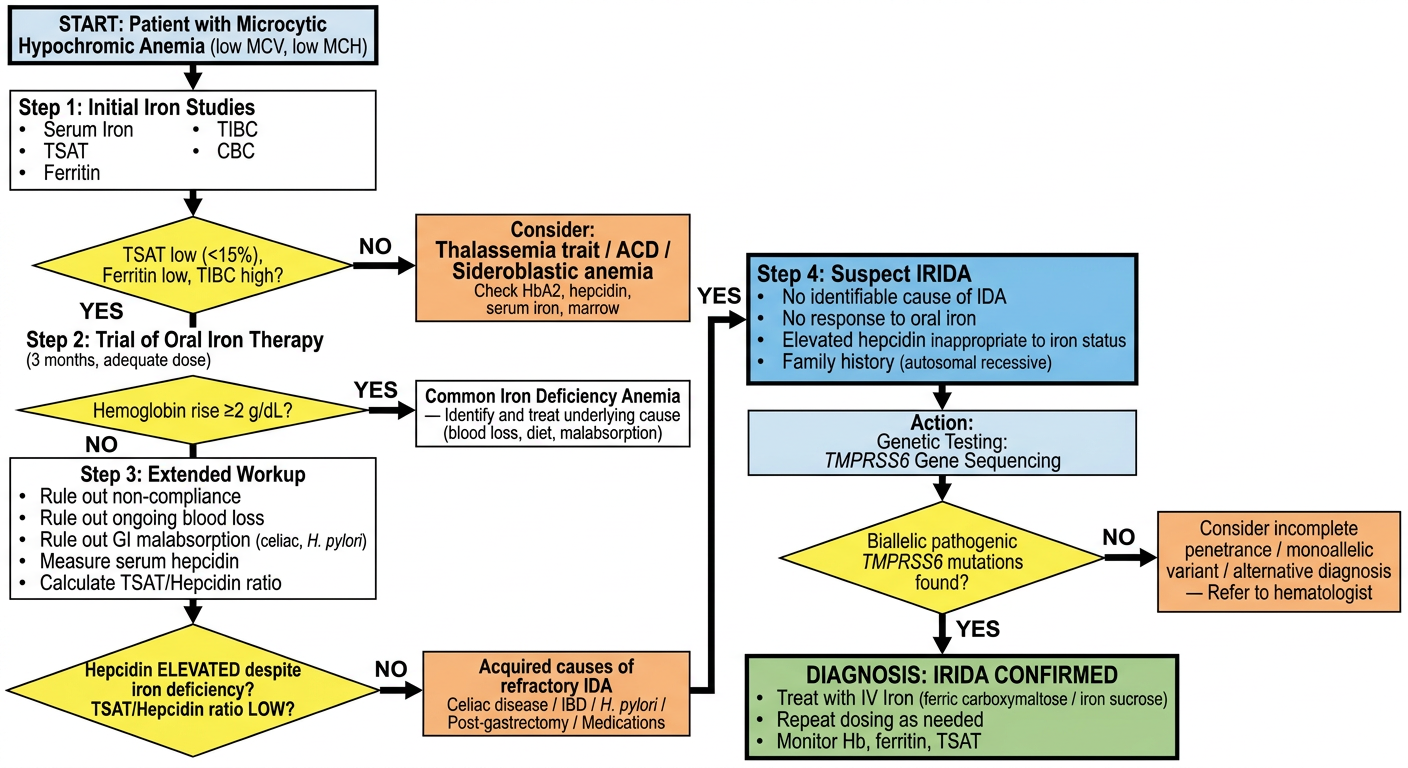
- Entry point - Microcytic, hypochromic anemia with initial iron studies
- First branch - Confirm typical IDA pattern (low TSAT, low ferritin, high TIBC) vs. other causes of microcytosis (thalassemia, ACD, sideroblastic anemia)
- Oral iron trial - 3-month adequate-dose trial; good responders exit as common IDA
- Extended workup - For non-responders: rule out non-compliance, GI blood loss, malabsorption; then measure serum hepcidin and calculate TSAT/hepcidin ratio - the key discriminating step
- IRIDA confirmation - Inappropriately high hepcidin without inflammation → genetic testing for biallelic TMPRSS6 mutations → confirmed IRIDA → IV iron therapy
- No identifiable cause of IDA after full workup
- Oral iron fails despite compliance
- Hepcidin elevated when it should be suppressed by iron deficiency
- Autosomal recessive family pattern
Mam child indetailed
What topic are you asking about with 'Mam child'?
moderate acute malnutrition children management
moderate acute malnutrition MAM children WHO definition diagnosis treatment 2024
https://saludeverywhere.com/en/health-in-humanitarian-crises…
Moderate Acute Malnutrition (MAM) in Children - Detailed Overview
1. Definition and Classification
| Category | WHZ Score | MUAC (6 mo - 5 yr) | Clinical Signs |
|---|---|---|---|
| Normal | > -2 Z | ≥ 125 mm | None |
| MAM (Moderate Acute Malnutrition) | -3 to -2 Z | 115-125 mm | Wasting without edema |
| SAM (Severe Acute Malnutrition) | < -3 Z | < 115 mm | Severe wasting ± bilateral pitting edema |
2. Global Burden
- ~32.8 million children under 5 years are affected by MAM globally
- In 2022, ~45 million children suffered wasting (6.8% of children under 5), of which ~13.6 million had SAM
-
75% of all wasted children live in Asia; ~22% in Africa
- Over 20% of children under 5 (~148 million) suffer stunting, which overlaps with chronic undernutrition
- MAM is the gateway to SAM - untreated MAM significantly increases risk of progression to SAM and death
3. Classification Frameworks
Waterlow Classification (Weight for Height / Height for Age)
| Parameter | Normal | Mild | Moderate | Severe |
|---|---|---|---|---|
| Weight for Height (Wasting) - % of NCHS median | 90-100% | 80-89% | 70-79% | <70% |
| WHZ score | +Z to -Z | -1.1 to -2 Z | -2.1 to -3 Z | < -3 Z |
| Height for Age (Stunting) - % of NCHS median | 95-105% | 90-94% | 85-89% | <85% |
| HAZ score | +Z to -Z | -1.1 to -2 Z | -2.1 to -3 Z | < -3 Z |
4. Etiology and Risk Factors
Primary Causes
- Insufficient caloric/protein intake - inadequate food supply, poverty, food insecurity
- Early/inappropriate weaning - transitioning from breast milk to calorie-dense but protein-poor diets (e.g., carbohydrate-only porridge)
- Poor diet quality - monotonous diets lacking micronutrients (zinc, iron, vitamin A)
- Low birth weight / preterm birth - starting with depleted nutritional reserves
Secondary/Contributing Causes
- Recurrent infections - diarrhea, respiratory infections, malaria, measles all increase catabolism and reduce appetite (the malnutrition-infection cycle)
- Intestinal malabsorption - chronic diarrhea, parasitic infections (Giardia, hookworm), celiac disease
- Inadequate breastfeeding practices
- Poor water, sanitation, and hygiene (WASH) - enteric infections and environmental enteropathy
- Maternal malnutrition - in utero programming and poor breast milk composition
- Socioeconomic factors - poverty, food insecurity, displacement (refugees/humanitarian crises), inadequate caregiving
The Malnutrition-Infection Cycle
5. Pathophysiology
Protein and Energy Compartments
| Compartment | Represents | Affected in |
|---|---|---|
| Somatic | Skeletal muscle proteins | Primarily marasmus |
| Visceral | Liver and organ proteins (albumin, transferrin) | Primarily kwashiorkor |
In MAM (Moderate Wasting / Pre-Marasmic State)
- Caloric deficit develops over weeks to months
- Body mobilizes subcutaneous fat and muscle glycogen as initial energy reserves
- With ongoing deficit, muscle catabolism begins - providing amino acids for gluconeogenesis
- The somatic protein compartment is moderately depleted but not severely
- Visceral protein compartment (albumin) is largely preserved in pure wasting (MAM/marasmus)
- Leptin production falls → stimulates hypothalamic-pituitary-adrenal axis → elevated cortisol → promotes lipolysis and muscle catabolism
- Immune compromise: T-cell mediated immunity is impaired; secretory IgA levels fall; complement components decrease → increased vulnerability to infections
- Gut microbiome alterations have been documented - differences in microbial flora between malnourished and well-nourished children may play a pathogenic role
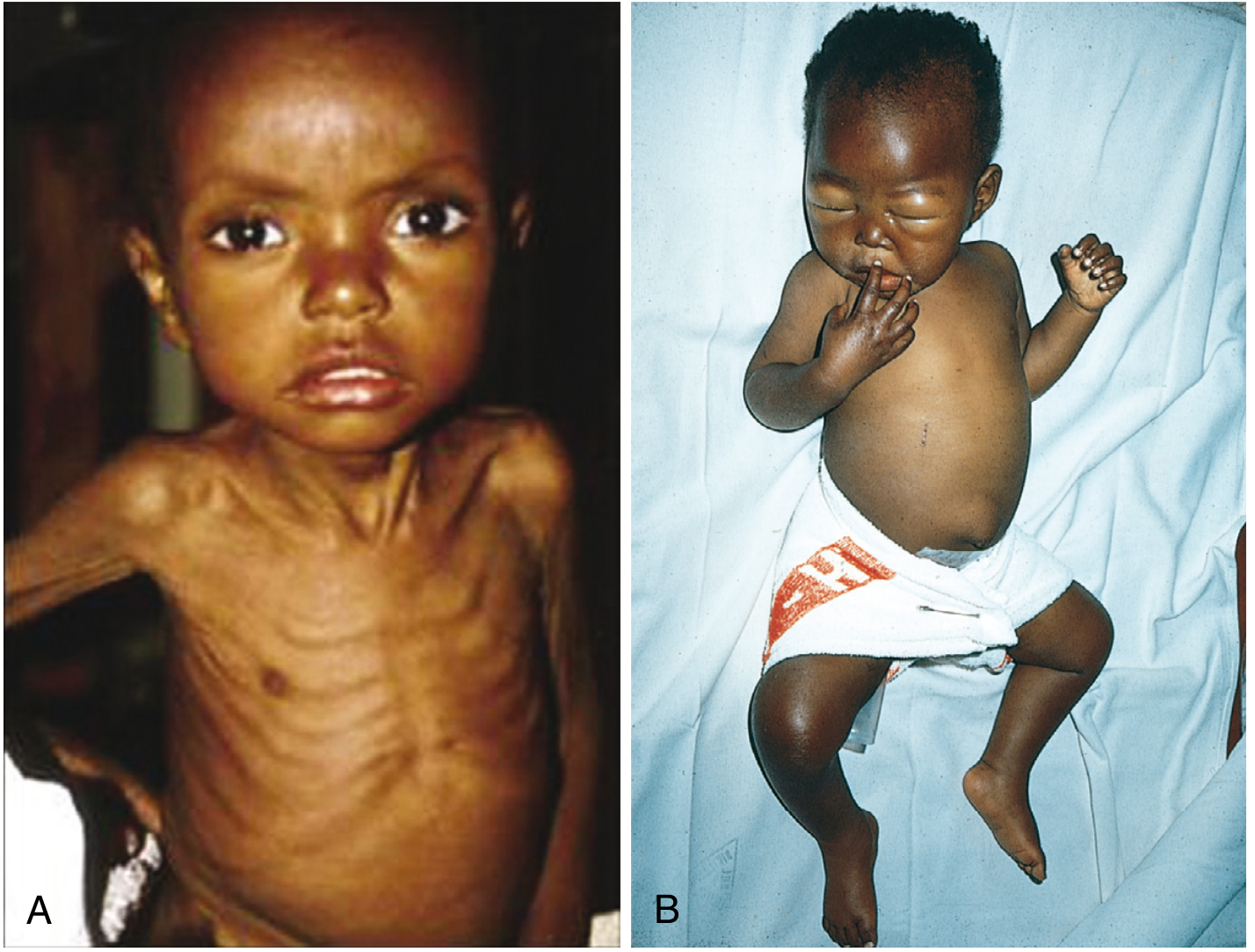
Comparison of MAM vs Marasmus vs Kwashiorkor
| Feature | MAM | Marasmus (Severe Wasting) | Kwashiorkor |
|---|---|---|---|
| Deficit type | Calories + protein (moderate) | Severe caloric deficit | Predominantly protein deficit |
| WHZ | -2 to -3 | < -3 | -2 to -3 (but edema present) |
| Edema | Absent | Absent | Present (bilateral pitting) |
| Subcutaneous fat | Reduced | Severely reduced | Relatively preserved |
| Muscle wasting | Moderate | Severe | Moderate |
| Serum albumin | Normal/borderline | Normal/slightly low | Markedly low |
| Mood | Alert | Alert | Apathetic/irritable |
| Appetite | Preserved | Good | Poor |
| Weight for age | 70-79% | <60% | 60-80% (masked by edema) |
| Fatty liver | Absent | Absent | Present |
| Skin/hair changes | Mild | Dry, lax, fine scaling | "Flaky paint" hyperpigmentation, flag sign in hair |
6. Clinical Features of MAM
Anthropometric
- Weight-for-height Z-score: -2 to -3
- MUAC: 115-125 mm (in 6 months to 5 years)
- Mid-arm muscle circumference: reduced (reflects somatic protein depletion)
- Skinfold thickness: reduced (reflects fat depletion)
Physical Examination
- General: Child is thin but alert and has preserved appetite (distinguishes from kwashiorkor)
- Skin: Dry, pale, slightly lax; mild scaling
- Hair: May be slightly dull; thin
- Muscles: Visibly reduced bulk, particularly in buttocks, thighs, shoulders
- Subcutaneous fat: Reduced in cheeks, limbs, abdomen
- No edema (presence of edema = SAM by definition)
- No hepatomegaly typically
- May have co-existing micronutrient deficiency signs (angular cheilitis from riboflavin, Bitot's spots from vitamin A, pallor from iron deficiency)
Co-morbidities
- Recurrent diarrhea
- Acute respiratory infections
- Malaria
- Anemia (iron, folate, B12)
- Vitamin A, zinc, iodine deficiencies are common co-morbidities
7. Diagnosis
Step 1 - Screening (Community Level)
- MUAC tape measurement: Simple, low-cost, performed by community health workers
- Green zone: ≥ 125 mm (normal)
- Yellow zone: 115-125 mm (MAM)
- Red zone: < 115 mm (SAM)
- Bilateral pitting edema check: Press thumbs on dorsum of both feet for 3 seconds - pitting = SAM (kwashiorkor)
Step 2 - Anthropometric Confirmation (Health Facility)
- Weight-for-height Z-score (WHZ): Requires weight scale and height board; compared against WHO Child Growth Standards 2006
- MUAC: Confirmatory measurement
- Weight for age and height for age to assess stunting alongside wasting
Step 3 - Clinical Assessment
- Full history: dietary intake, breastfeeding, illness episodes, immunization status
- Appetite test (offer RUTF - ready-to-use therapeutic food; good appetite = MAM / poor = SAM indicator)
- Check for bilateral edema
- Signs of infection (fever, respiratory rate, jaundice)
- Examination for micronutrient deficiency signs
Step 4 - Laboratory Tests (if available)
- Hemoglobin / complete blood count (anemia)
- Blood glucose (hypoglycemia risk in SAM but also MAM with illness)
- HIV testing (where indicated)
- Stool microscopy (parasites)
- Malaria RDT (endemic areas)
- Serum albumin (low in kwashiorkor, normal in MAM/marasmus)
Differential Diagnosis of Wasting in Children
- Chronic infection (TB, HIV)
- Malabsorption (celiac disease, cystic fibrosis, giardiasis)
- Congenital heart disease
- Chronic renal disease
- Inflammatory bowel disease
- Endocrine causes (diabetes mellitus type 1)
- Thalassemia / hemolytic anemias
8. Management of MAM
Core Principles
Setting
- MAM → Outpatient management (Supplementary Feeding Programme)
- SAM without complications → Outpatient (Community-based Management of Acute Malnutrition - CMAM)
- SAM with complications → Inpatient (Therapeutic Feeding Centre)
Nutritional Treatment
A. Dietary Counselling (All settings)
- Optimize local available foods: animal-source proteins, legumes, fortified cereals, vegetables
- Promote continued breastfeeding in children <2 years
- Increase meal frequency: 5-6 small meals/day
- Improve complementary feeding practices
B. Supplementary Foods (Context-dependent)
| Product | Type | Use |
|---|---|---|
| Ready-to-Use Supplementary Food (RUSF) | Lipid-based, peanut-based paste | Primary supplementary food for MAM |
| Super Cereal Plus (CSB++) | Corn-soy blend + milk powder | Blanket supplementary feeding |
| Lipid-Based Nutrient Supplements (LNS-MQ) | Medium-quantity LNS | MAM treatment in community |
| Fortified blended foods (FBF) | Corn-soy blend | Supplementary feeding |
- High community prevalence of wasting
- Food insecurity at household/community level
- As part of an integrated care continuum
C. Micronutrient Supplementation
- Vitamin A supplementation (per national schedule; therapeutic dosing if deficiency signs present)
- Iron and folic acid if anemia is confirmed
- Zinc supplementation (especially during diarrheal illness)
- Iodine (via iodized salt)
- Multivitamin formulations in some protocols
D. Treatment of Concurrent Illness
- Antibiotics for confirmed infections (not routinely prophylactic in MAM, unlike SAM)
- Anti-malarial treatment if malaria confirmed
- Antihelminthics (mebendazole/albendazole) if parasitic infection present or in endemic areas
- Oral rehydration for diarrhea
- Vaccination catch-up (especially measles, which causes acute nutritional deterioration)
Modified Dosage Strategy (2023 WHO Innovation)
Community Health Worker (CHW) Role (2023 WHO Endorsement)
9. Monitoring Response
Frequency
- Weekly or bi-weekly visits during supplementary feeding
Response Criteria (Discharge from MAM programme)
- WHZ > -2 (or MUAC ≥ 125 mm)
- No bilateral edema
- Minimum stay of 8 weeks (to ensure sustained recovery)
- No acute illness
Failure to Respond (Transfer criteria to SAM programme)
- Deterioration: WHZ falls to < -3 or MUAC < 115 mm
- Development of bilateral edema
- Development of medical complications
- No weight gain after 4 weeks
10. Consequences of Untreated MAM
Short-term
- Progression to SAM (2-3x increased risk)
- Increased mortality from common infections (pneumonia, diarrhea, malaria)
- Prolonged hospitalization
Long-term (if MAM occurs in early life)
- Stunting (impaired linear growth) - permanent height deficit
- Neurocognitive impairment - reduced brain development, lower IQ, poor school performance
- Impaired immunity - increased lifetime susceptibility to infection
- Metabolic programming - paradoxically increased risk of obesity, type 2 diabetes, and cardiovascular disease later in life (if high-energy foods given non-selectively during recovery - the "thrifty phenotype" hypothesis)
11. Prevention
| Strategy | Mechanism |
|---|---|
| Exclusive breastfeeding for 6 months | Optimal nutrition + immune protection |
| Appropriate complementary feeding from 6 months | Prevent dietary gap |
| Fortification of staple foods | Address micronutrient deficiencies at scale |
| WASH (water, sanitation, hygiene) | Reduce infection burden |
| Growth monitoring (monthly weight checks) | Early detection |
| Vaccination programs | Reduce measles and other infections that precipitate acute wasting |
| Social protection / cash transfers | Address household food insecurity |
| Maternal nutrition programs | Prevent low birth weight and in utero malnutrition |
12. Recent Evidence
Summary
| Feature | MAM |
|---|---|
| Definition | WHZ -2 to -3 OR MUAC 115-125 mm, no edema |
| Pathology | Moderate caloric/protein deficit; somatic wasting; preserved visceral proteins |
| Key clinical signs | Wasting (muscle/fat loss), alert, good appetite, no edema |
| Diagnosis | MUAC + WHZ + clinical assessment |
| Treatment setting | Outpatient (Supplementary Feeding Programme) |
| Nutrition | Dietary counselling ± RUSF/LNS in food-insecure contexts |
| Micronutrients | Vitamin A, iron, zinc as indicated |
| Monitoring | Bi-weekly; discharge when WHZ > -2 |
| If worsens | Transfer to SAM protocol |
| Prevention | Breastfeeding, complementary feeding, WASH, vaccines, social protection |
Aicardi syndrome
Aicardi syndrome diagnosis management
Aicardi syndrome detailed review pathophysiology genetics diagnosis 2024 2025
https://www.ncbi.nlm.nih.gov/books/NBK1381
https://emedicine.medscape.com/article/941426-workup
Aicardi Syndrome - Detailed Overview
1. Historical Background
- Flexion spasms (infantile spasms)
- Agenesis of the corpus callosum
- Ocular abnormalities (chorioretinal lacunae)
2. Genetics and Pathophysiology
Sex Restriction
- Affects almost exclusively females (46,XX)
- Rare cases in 47,XXY (Klinefelter) males have been reported
- Normal (46,XY) males are not affected - believed to be lethal in utero in hemizygous males
Inheritance Pattern
- X-linked dominant - strongly supported by the near-exclusive female prevalence and skewed X-inactivation patterns observed in affected girls
- De novo mutations - virtually all cases are sporadic; familial recurrence is extremely rare
- The causative gene has NOT been identified despite decades of research
Molecular Pathogenesis (2023-2025 Updates)
| Gene | Pathway |
|---|---|
| TEAD1 | Hippo signaling |
| WNT8B | Wnt signaling |
| KMT2B | Chromatin remodeling |
| SMARCB1 | SWI/SNF chromatin remodeling |
| SZT2 | mTOR signaling / seizure susceptibility |
| OCEL1 | Developmental regulation |
| SLF1 | DNA damage response |
3. Classic Diagnostic Triad
| Feature | Description |
|---|---|
| 1. Agenesis of the corpus callosum (ACC) | Complete or partial absence of the interhemispheric commissure |
| 2. Chorioretinal lacunae | Multiple bilateral depigmented "punched-out" lesions clustered around the optic disc |
| 3. Infantile spasms | Epileptic spasms presenting in early infancy (typically 3-5 months of age) |
4. Ocular Findings (Detailed)
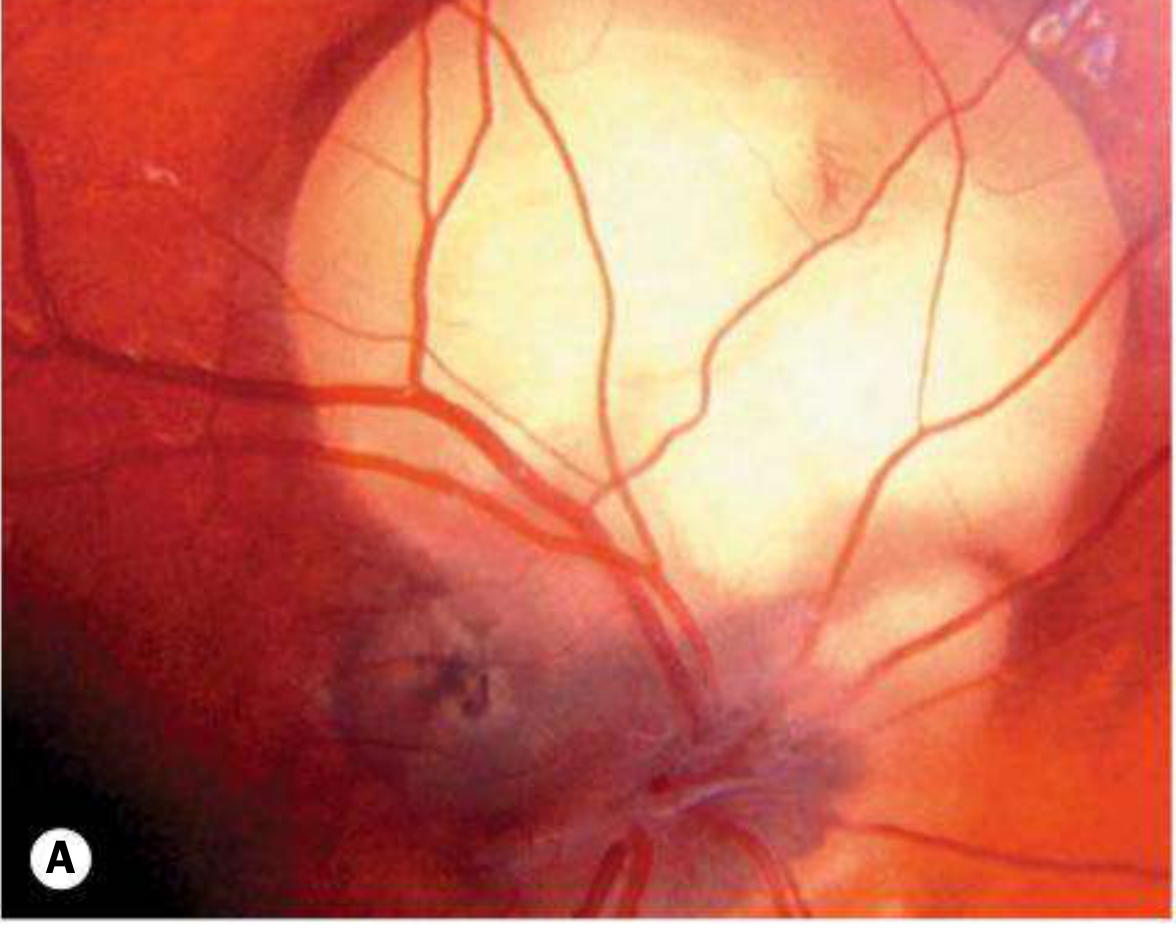
Specific Ocular Features
| Feature | Detail |
|---|---|
| Chorioretinal lacunae | Multiple bilateral depigmented patches; clustered around optic disc; pathognomonic |
| Optic disc abnormalities | Hypoplastic disc, colobomatous disc, pigmented disc |
| Coloboma | Of the optic nerve, choroid, iris |
| Microphthalmia | Small globe, unilateral or bilateral |
| Staphyloma | Posterior bulging of sclera |
| Cataract | Lens opacity |
| Nystagmus | Due to poor visual input |
| Optic nerve hypoplasia | Underdevelopment of optic nerve |
5. Neurological Features
Seizures (Epilepsy)
- Infantile spasms (West syndrome pattern) are the classic seizure type, typically presenting at age 3-5 months
- Seizures are almost universally present and usually severe and refractory to treatment
- Other seizure types occur: focal seizures, tonic seizures, myoclonic seizures, atonic seizures, Lennox-Gastaut pattern
- Seizure control is typically very difficult - polypharmacy is the norm
- Seizures may evolve over time from infantile spasms to other types
EEG Pattern
- Classic EEG finding: Burst-suppression pattern with complete interhemispheric asynchrony - the two hemispheres fire completely independently
- This asynchronous burst-suppression is highly diagnostic in the appropriate clinical context
- After ~6 months of onset: classic EEG may be replaced by multiple epileptic foci with a disorganized background
- Asynchronous sleep spindles after 18 months of age are a good diagnostic clue
- The "batwing" deformity of the third and lateral ventricles is a described radiological-EEG correlate (Adams and Victor's Principles of Neurology)
Brain Malformations (Neuroimaging)
| Brain Finding | Frequency/Details |
|---|---|
| Agenesis/hypoplasia of corpus callosum | Complete or partial; anterior commissure also often absent |
| Polymicrogyria | Most commonly frontal/perisylvian; cortex with abnormally oriented neurons |
| Periventricular nodular heterotopia | Ectopic grey matter nodules lining ventricles |
| Interhemispheric cysts | Characteristic; often large |
| Choroid plexus cysts | Frequently seen on imaging |
| Gross hemispheric asymmetry | Asymmetry between two cerebral hemispheres |
| Cortical heterotopias | Disorganized cortical migration |
| Colpocephaly | Dilatation of occipital horns secondary to posterior white matter deficiency |
| Absent anterior commissure | Often accompanies ACC |
Intellectual Disability
- Present in virtually all cases, typically severe to profound
- Most affected girls have very limited or no purposeful hand use
- Some girls show relative preservation of social engagement despite severe cognitive impairment
- A small subset has milder intellectual disability
Motor and Tone
- Hypotonia in infancy, often followed by spasticity
- Most girls are non-ambulatory
- Feeding difficulties are common (due to hypotonia + neurological dysfunction)
6. Systemic Features
Skeletal Anomalies
- Costovertebral abnormalities - vertebral defects (hemivertebrae, butterfly vertebrae, absent/fused ribs), commonly involving thoracic vertebrae
- Scoliosis - progressive; often requiring orthopedic management; can become severe
- Rib anomalies - fused ribs, bifid ribs
- Plain radiographs will show these skeletal changes
Other Systemic Features
- Microcephaly (in some cases)
- Feeding difficulties - gastroesophageal reflux, aspiration risk; gastrostomy tube often required
- Constipation
- Growth delay / short stature
- Skin anomalies - described in some cases (association with MIDAS syndrome - microphthalmia, dermal aplasia, sclerocornea - has been noted in literature)
- Choroid plexus papilloma - reported with increased frequency in Aicardi syndrome (rare brain tumor)
7. Diagnosis
Diagnostic Criteria
- Agenesis of corpus callosum
- Chorioretinal lacunae
- Infantile spasms
- Two features of classic triad PLUS at least two major or supporting features
- Cortical malformations (polymicrogyria, heterotopia)
- Periventricular/subcortical grey matter heterotopias
- Interhemispheric cysts
- Optic disc coloboma or hypoplasia
- Other seizure types
- Vertebral/rib anomalies
- Microphthalmia
- Choroid plexus papilloma
- Intellectual disability
- Absent anterior commissure
- Asymmetric cerebral hemispheres
Investigations
Neuroimaging
- Brain MRI (preferred): Shows ACC, interhemispheric cysts, polymicrogyria, heterotopias, hemispheric asymmetry
- Prenatal MRI: A triad of ACC + interhemispheric cysts + polymicrogyria on fetal MRI is a validated highly sensitive predictor of Aicardi syndrome in utero
- CT brain: Less preferred but shows calcifications and gross malformations
Ophthalmology
- Fundoscopy/Indirect ophthalmoscopy under anesthesia if needed to visualize chorioretinal lacunae
- Must be performed by an experienced pediatric ophthalmologist
- Reveals pathognomonic bilateral depigmented lacunae clustered around the disc
EEG
- Video-EEG: Asynchronous burst-suppression between hemispheres is the hallmark
- Later: multifocal discharges with chaotic background
Skeletal Imaging
- Spine X-rays: Vertebral/rib anomalies
- Scoliosis monitoring X-rays (standing/supine)
Genetic Testing
- Chromosomal microarray / chromosomal analysis: Rule out chromosomal abnormalities
- Whole exome/genome sequencing: May identify variants in heterogeneous cases (TEAD1, WNT8B, KMT2B, SZT2, SMARCB1, etc.) but negative result does not exclude diagnosis
- X-inactivation studies: May show skewing, supporting X-linked hypothesis
- Karyotype: Standard chromosomal analysis; identify 47,XXY in rare male cases
8. Differential Diagnosis
| Condition | Distinguishing Features |
|---|---|
| Andermann syndrome | Autosomal recessive; ACC + mental deficiency + peripheral neuropathy; no chorioretinal lacunae |
| Microcephaly with chorioretinopathy (MCCRP) | Chorioretinal findings but central (not peripheral); optic nerve less affected; AR inheritance |
| MIDAS syndrome | ACC + microphthalmia + dermal aplasia; skin scarring is distinctive |
| Walker-Warburg syndrome | Lissencephaly + congenital muscular dystrophy + retinal dysplasia; AR, both sexes |
| Septooptic dysplasia | ACC/absent septum pellucidum + optic disc hypoplasia + pituitary insufficiency; no lacunae |
| Aicardi-Goutieres syndrome | Different entity - interferonopathy; basal ganglia calcifications, CSF lymphocytosis; AR inheritance; genes TREX1, RNASEH2A/B/C, SAMHD1, ADAR, IFIH1 |
| Lissencephaly | Smooth brain, both sexes affected; associated genes (LIS1, DCX) |
9. Management
Seizure Management
- Anti-seizure medications (ASMs): First-line treatment; polypharmacy almost always required
- ACTH (adrenocorticotropic hormone) or vigabatrin for infantile spasms (West syndrome protocol)
- Multiple ASMs trialled: valproate, clonazepam, topiramate, levetiracetam, lamotrigine, phenobarbital
- Ketogenic diet: Often helpful in refractory epilepsy; should be considered early
- Vagus nerve stimulation (VNS): May provide partial benefit in refractory seizures
- Complete seizure freedom is rarely achieved
Ophthalmological Care
- Regular monitoring for retinal detachment
- Management of refractive errors and amblyopia
- Cataract surgery if vision-threatening
- Low vision aids
Developmental and Rehabilitation
- Early intervention programs (physiotherapy, occupational therapy, speech therapy) from infancy
- Augmentative and alternative communication (AAC) for non-verbal children
- Feeding support: Speech therapy for feeding difficulties; consideration of gastrostomy tube (G-tube) if aspiration risk or inadequate nutrition
Orthopedic Management
- Scoliosis surveillance: Regular clinical and radiological monitoring
- Bracing for mild-moderate scoliosis
- Surgical correction (spinal fusion) for severe progressive scoliosis
- Physical therapy to maintain mobility and prevent contractures
Multidisciplinary Team
- Pediatric neurology
- Ophthalmology
- Orthopedic surgery
- Developmental pediatrics
- Physiotherapy + occupational therapy + speech therapy
- Dietitian (ketogenic diet management, nutritional support)
- Genetics counseling
- Palliative care team (for advanced care planning)
10. Prognosis
| Age | Estimated Survival Probability |
|---|---|
| 1 year | ~94% |
| 5 years | ~83% |
| 20 years | ~62% |
- For individuals who reach age 25, probability of surviving another 5 years is >85%
- Highest mortality risk: Infancy and adolescence
- The Aicardi Syndrome Foundation data suggest median survival potentially exceeding 30 years for survivors of adolescence
- Death typically results from respiratory complications (aspiration pneumonia, status epilepticus, respiratory failure from severe scoliosis)
- Cognitive prognosis: Most affected individuals have profound intellectual disability with very limited functional independence; however, the range is broad - a small minority has milder impairment
11. Summary Table
| Feature | Detail |
|---|---|
| Eponym | Jean Aicardi, 1965 |
| OMIM | 304050 |
| Sex | Almost exclusively female (46,XX); rare 47,XXY males |
| Inheritance | X-linked dominant; de novo; lethal in 46,XY males |
| Gene | Unknown (genetically heterogeneous; candidate genes: TEAD1, WNT8B, KMT2B, SMARCB1, SZT2) |
| Classic triad | Agenesis of corpus callosum + Chorioretinal lacunae + Infantile spasms |
| Key EEG finding | Asynchronous burst-suppression between hemispheres |
| Key imaging finding | ACC + polymicrogyria + interhemispheric cysts + periventricular heterotopia |
| Diagnosis | Clinical only - no confirmatory genetic test exists |
| Treatment | Symptomatic - ASMs (polytherapy), ketogenic diet, VNS; G-tube feeding; scoliosis management |
| Prognosis | Severe disability; 62% survival at 20 years; seizure control rarely complete |
| Prevalence | ~4,000 cases worldwide |
Microcephaly explain indetailed
microcephaly etiology genetics management
microcephaly detailed review primary secondary causes genetics pathophysiology diagnosis management 2024
https://emedicine.medscape.com/article/2500048-overview
Microcephaly - Detailed Overview
1. Definition
- Severe microcephaly: OFC more than 3 SD below the mean (some define as >3 SD, others >-2 SD on CDC curves)
- Microcephaly vera (true primary microcephaly): Head circumference < 45 cm in adult life (5 SD below mean); brain weight often < 300 g (normal: 1,100-1,500 g)
2. Epidemiology
- Prevalence in the US: approximately 1 in 1,150 births (~8.7 per 10,000 live births) per CDC estimates
- In high-income countries generally: 0.3-0.9 per 1,000 newborns
- Higher rates reported in consanguineous populations (autosomal recessive forms more prevalent)
- Higher rates during Zika virus outbreaks in endemic areas (Brazil 2015-2016)
- Can occur as an isolated finding or with other congenital anomalies
3. Classification
By Timing of Onset
| Type | Definition |
|---|---|
| Congenital (Primary) | Head circumference small at birth or detectable prenatally; brain failed to develop normally during fetal life |
| Postnatal (Secondary/Progressive) | Head circumference normal at birth but fails to grow during the first year of life as the brain degenerates or fails to mature |
By Cause
| Type | Mechanism |
|---|---|
| Primary (Genetic) | Intrinsic genetic defect in brain development; typically affects neural progenitor cell proliferation |
| Secondary (Acquired) | Extrinsic insult to a previously normally developing brain (infection, toxin, metabolic, ischemia) |
By Proportionality
- Proportionate microcephaly: Small head proportionate to overall small body (may suggest global growth restriction)
- Disproportionate microcephaly: Small head with relatively normal body size (more likely primary brain defect)
4. Normal Brain Development (Embryological Basis)
| Gestational Period | Event |
|---|---|
| Weeks 3-4 | Neural tube formation; forebrain vesicle formation |
| Weeks 5-16 | Neural proliferation - neuronal progenitors divide in the ventricular zone; this is when primary microcephaly genes act |
| Weeks 8-20 | Neuronal migration - neurons migrate from germinal matrix to cortex |
| Weeks 20-40 | Cortical organization - synaptogenesis, gyrification, programmed apoptosis |
| Postnatal | Myelination, dendritic arborization, further cortical growth |
- The founder population of neural progenitor cells adequately expanding (mitotic spindle integrity is key)
- Correct neuronal migration to appropriate cortical layers
- Normal programmed apoptosis (not excessive)
- Adequate vascular supply and metabolic support
5. Etiology
A. Primary (Genetic) Microcephaly
Autosomal Recessive Primary Microcephaly (MCPH)
| Locus | Gene | Protein Function |
|---|---|---|
| MCPH1 | MCPH1 (Microcephalin) | DNA damage response; chromosome condensation |
| MCPH2 | WDR62 | Spindle pole; mitotic spindle assembly |
| MCPH3 | CDK5RAP2 | Centrosomal protein; spindle organization |
| MCPH4 | KNL1 (CASC5) | Kinetochore assembly |
| MCPH5 | ASPM | Spindle pole body; most commonly mutated gene in MCPH |
| MCPH6 | CENPJ (CPAP) | Centriole elongation |
| MCPH7 | STIL | Centriole biogenesis |
| MCPH8 | CEP135 | Centriole assembly |
| MCPH12 | CDK6 | Cell cycle regulation |
Other Genetic Causes
| Condition | Gene/Mechanism | Features |
|---|---|---|
| Microcephaly vera | Multiple AR genes | Severe OFC reduction (< -5 SD), simplified gyri, severe ID, near-normal face; brain < 300 g |
| Seckel syndrome | ATR, RBBP8, CEP152 | Primordial dwarfism, microcephaly, beaked nose, ID |
| Microcephalic osteodysplastic primordial dwarfism (MOPD) | PCNT, CEP152 | Extreme dwarfism + microcephaly |
| Nijmegen breakage syndrome | NBN | Microcephaly + immunodeficiency + cancer predisposition |
| Fanconi anemia | FANCA/B/C etc. | Microcephaly + aplastic anemia + radial ray defects |
| Rett syndrome | MECP2 (X-linked) | Progressive microcephaly in females; autism features, regression |
| Angelman syndrome | UBE3A (15q11-13) | Progressive microcephaly, seizures, happy affect, ataxia |
| Cornelia de Lange syndrome | NIPBL, SMC1A | Microcephaly + distinctive facies + limb anomalies |
| Lissencephaly (Miller-Dieker) | LIS1, YWHAE (17p13.3 deletion) | Microcephaly + lissencephaly + distinctive facial features |
| Chromosomal trisomies | Trisomy 13, 18, 21 | Variable microcephaly + other anomalies |
| Trisomy 13 (Patau syndrome) | Chromosome 13 | Severe microcephaly + holoprosencephaly + midline defects |
| Trisomy 18 (Edwards syndrome) | Chromosome 18 | Microcephaly + IUGR + overlapping fingers |
| Phenylketonuria (PKU) - maternal | PAH (AR) | Untreated maternal PKU → fetal microcephaly even in heterozygous fetus |
B. Secondary (Acquired) Microcephaly
Congenital Infections (TORCH + Zika)
| Pathogen | Mechanism | Additional Features |
|---|---|---|
| Zika virus (ZIKV) | Tropism for radial glia (neural progenitors); AXL receptor entry; progenitor cell death; TLR3 activation; centrosomal abnormalities | Calcifications (subcortical); brain simplification; eye anomalies; disproportionately severe microcephaly |
| Cytomegalovirus (CMV) | Most common congenital infection; periventricular necrosis and calcification | Periventricular calcifications; sensorineural hearing loss; chorioretinitis |
| Toxoplasma gondii | Granulomatous inflammation; calcifications (scattered) | Hydrocephalus, chorioretinitis, scattered calcifications |
| Rubella | Endothelial damage + direct neuronal infection; abnormal neurogenesis | Cataracts, cardiac defects (PDA, PS), deafness |
| Herpes simplex virus (HSV) | Encephalitis; neuronal necrosis | Skin/eye/mouth lesions, encephalitis |
| Varicella-Zoster | Direct embryonic damage | Limb hypoplasia, skin scarring, eye involvement |
| Syphilis (Treponema pallidum) | Vasculitis + direct infection | Multi-organ involvement |
- ZIKV selectively infects radial glia cells (neural progenitors) via the AXL receptor
- Infected progenitors die → massively reduced neuronal output → severe microcephaly
- Also causes centrosomal abnormalities and altered cleavage plane of mitotic radial glia → premature differentiation
- This was confirmed using human iPSC-derived neural organoid models in 2016 studies
Teratogens and Toxic Exposures
| Exposure | Mechanism |
|---|---|
| Fetal alcohol syndrome | Ethanol → neuronal apoptosis via NMDA antagonism + oxidative stress; most common preventable cause |
| Radiation | DNA damage → progenitor cell death; particularly first and second trimester exposure |
| Phenytoin (fetal hydantoin syndrome) | Folate antagonism + direct teratogenicity |
| Valproic acid | Histone deacetylase inhibition; neural tube and brain development disruption |
| Cocaine | Cerebrovascular vasoconstriction → ischemia |
| Maternal hyperphenylalaninemia | Phenylalanine is teratogenic to fetal brain even when fetal PKU is heterozygous |
Hypoxic-Ischemic and Vascular Causes
- Neonatal hypoxic-ischemic encephalopathy (HIE): Post-natal brain injury → failure of subsequent brain growth
- Placental insufficiency / IUGR: Chronic fetal undernutrition → impaired brain growth
- Stroke / thromboembolism
- Twin-to-twin transfusion syndrome: Vascular steal
Metabolic Causes
- Maternal phenylketonuria (untreated): Elevated maternal phenylalanine is teratogenic
- Congenital disorders of glycosylation (CDG)
- Organic acidemias: Methylmalonic acidemia, propionic acidemia
- Mitochondrial disorders: Impaired energy for neuronal growth
- Aminoacidopathies
- Severe maternal iodine deficiency / hypothyroidism
Other Acquired Causes
- Severe chronic fetal/neonatal malnutrition
- Craniosynostosis (premature suture fusion) - can restrict brain growth secondarily (though craniosynostosis itself is a separate primary cause of small head size via mechanical restriction)
6. Neuropathology
In Primary Microcephaly (Microcephaly Vera)
- Brain weight severely reduced (often < 300 g vs normal 1,100-1,500 g)
- Simplified gyral pattern (few primary and secondary sulci - pachygyria or simplified gyri)
- Cerebral cortex: Thick, unlaminated (poorly laminated), grossly deficient in neurons
- Abnormally oriented neurons
- Polymicrogyric cortex in some subtypes
- Forehead: Narrow, receding sharply (anthropoid appearance)
- Face is of normal size - creating a disproportionately small cranium relative to face
- Skull: cranial sutures present, convolutional markings on inner table (brain tried to grow)
In Secondary Microcephaly
- Depends on cause:
- Periventricular calcifications (CMV, Zika, toxoplasma)
- Cortical necrosis (ischemia, herpes)
- White matter loss/gliosis (HIE)
- Scattered calcifications (toxoplasmosis)
- Cortical migration defects
7. Clinical Features
Head and Facial Appearance
- Small head with OFC ≤ -2 SD (severe: ≤ -3 SD)
- Sloping forehead - narrow, receding
- Prominent ears appearing large relative to small head
- Disproportionately large face compared to small cranium (in microcephaly vera)
- Scalp may appear loose or redundant (skin folds on scalp) in very severe cases
- Premature fontanelle closure may be noted on exam
- Cranial sutures: Present and identifiable (distinguishes from craniosynostosis)
Neurological Features
| Feature | Frequency / Details |
|---|---|
| Intellectual disability | Present in most; severity correlates with degree of microcephaly |
| Epilepsy / Seizures | Common; multiple types; may be refractory |
| Spasticity | Frequent; pyramidal tract involvement |
| Cerebral palsy | Common, especially in acquired/secondary causes |
| Hyperreflexia | Upper motor neuron pattern |
| Hypotonia (early) | Especially in metabolic/syndromic causes |
| Developmental delay | Motor, speech, cognitive all delayed |
Sensory Features
- Vision and hearing are spared in primary microcephaly vera (Adams & Victor)
- But secondary causes may cause: visual impairment (CMV chorioretinitis, Zika eye anomalies), sensorineural hearing loss (CMV, rubella)
Associated Systemic Features (Syndromic Cases)
- Scoliosis (in Rett syndrome, various genetic syndromes)
- Short stature (Seckel, MOPD, chromosomal)
- Facial dysmorphism (syndrome-specific)
- Heart defects (trisomy 13/18, rubella)
- Limb anomalies (Fanconi, Cornelia de Lange)
- Skin abnormalities (Angelman, Rett)
8. Diagnosis
Step 1 - Accurate Measurement of OFC
- Measure occipitofrontal circumference (OFC) - largest circumference using a non-stretchable tape measure
- Measure on at least two occasions
- Plot against WHO Child Growth Standards (for infants/young children) or CDC growth charts
- Must correct for gestational age in preterm infants
- Compare to parental head circumferences - familial small heads without intellectual disability = familial microcephaly (benign)
Step 2 - Detailed History
- Pregnancy history: Infections (TORCH symptoms, Zika exposure, travel), medications/teratogens, alcohol use, radiation exposure, IUGR
- Birth history: HIE, birth trauma, birth weight, gestational age
- Family history: Consanguinity (AR primary microcephaly), other affected siblings, parental OFC measurements
- Developmental history: Was head normal at birth then stopped growing? (secondary) vs. small at birth (primary)
- Neonatal course: Seizures, jaundice, metabolic crises
Step 3 - Physical Examination
- Complete anthropometrics (head, length, weight)
- Dysmorphic features (syndromes)
- Neurological examination
- Fundoscopy (chorioretinitis - toxo, CMV, Zika)
- Skin examination
- Hearing assessment
Step 4 - Investigations
Neuroimaging
- MRI brain (preferred over CT): Structural brain abnormalities, cortical malformations, migration defects, white matter changes
- CT brain: Calcifications (CMV periventricular, toxoplasmosis scattered, Zika subcortical)
- Prenatal ultrasound: Can detect microcephaly after 20-24 weeks; OFC < 2 SD
- Fetal MRI: More detailed assessment of cortical malformations prenatally
Laboratory Studies
- TORCH serology (IgM and IgG): CMV, toxoplasma, rubella, HSV
- Urine CMV PCR (most sensitive in first 2-3 weeks of life)
- Zika virus PCR / serology (if exposure history)
- Metabolic screen: Amino acids (plasma), organic acids (urine), blood glucose, ammonia, lactate
- Phenylalanine levels (maternal PKU workup if indicated)
- Thyroid function tests
Genetic Testing
- Chromosomal microarray (CMA): High yield in syndromic/multiple anomaly cases; detects copy number variants
- Karyotype: Trisomies, chromosomal rearrangements
- Whole exome sequencing (WES) / Whole genome sequencing (WGS): For suspected monogenic causes; identifies MCPH gene mutations, ASPM, WDR62 etc.
- MECP2 gene sequencing (if Rett syndrome suspected in girls with progressive microcephaly)
- Specific gene panels: If clinical phenotype suggests specific syndrome
Other Tests
- EEG: Baseline seizure characterization; epileptic encephalopathy pattern
- Ophthalmology evaluation: Chorioretinitis, optic nerve hypoplasia, visual acuity
- Audiology: Hearing screen (especially CMV, rubella)
- Echocardiogram: If cardiac anomalies suspected
- Skeletal survey: If skeletal dysplasia features
Prenatal Diagnosis
- Ultrasound with detailed fetal biometry (BPD, HC measurements) from 18-20 weeks
- Fetal MRI from 20-22 weeks: Best detail of cortical development
- Prenatal genetic testing: Amniocentesis or CVS + chromosomal microarray/WES for families with known genetic risk
9. Differential Diagnosis
| Condition | Key Distinguishing Feature |
|---|---|
| Craniosynostosis | Ridged fused suture palpable; abnormal head shape (scaphocephaly, trigonocephaly etc.); brain may be normal |
| Positional plagiocephaly | Skull deformity from positioning; sutures open; brain normal |
| Familial small head | Both parents have small OFC; child normal developmental milestones |
| Lissencephaly | Severe microcephaly + completely smooth brain on MRI |
| Holoprosencephaly | Failure of forebrain to divide; midline facial defects |
| Congenital hypothyroidism | Treatable cause; thyroid function tests diagnostic |
| Down syndrome (Trisomy 21) | Brachycephaly but OFC often normal; characteristic facies |
10. Management
Seizure Management
- Anti-seizure medications appropriate to seizure type
- EEG-guided therapy
- Consider ketogenic diet for refractory epilepsy
Developmental Support
- Early intervention programs (from birth): Physical therapy, occupational therapy, speech-language therapy
- Physiotherapy: Prevent contractures, maintain mobility
- Augmentative and alternative communication (AAC): For non-verbal or minimally verbal children
- Cognitive stimulation: Special education, adapted learning programs
Feeding Support
- Assess for dysphagia (swallowing assessment)
- Gastrostomy tube (G-tube) if aspiration risk or inadequate oral intake
- Nutritional optimization
Vision and Hearing
- Ophthalmology follow-up: Refraction, amblyopia treatment
- Hearing aids if sensorineural hearing loss (especially CMV, rubella)
Orthopedic Management
- Scoliosis monitoring and management
- Baclofen (oral or intrathecal) for spasticity
- Orthotic devices for positioning
Specific Etiological Treatment
- Congenital CMV: Oral valganciclovir for 6 months in symptomatic neonates - shown to improve hearing and neurodevelopmental outcomes
- Congenital hypothyroidism: Levothyroxine replacement - prevents progressive brain damage if treated early
- PKU: Strict phenylalanine-restricted diet; maternal PKU requires strict dietary control before and throughout pregnancy
- Metabolic disorders: Specific dietary/enzymatic treatment where available
Surveillance
- Regular OFC measurements and growth monitoring
- Developmental surveillance at each visit
- Seizure diary and medication review
- Annual ophthalmology and audiology reviews
Psychosocial Support
- Genetic counseling: Recurrence risk; prenatal diagnosis for subsequent pregnancies
- Family support: Caregiver respite, support groups
- Palliative care input for severe cases
11. Prognosis
| Factor | Influence on Prognosis |
|---|---|
| Severity of OFC reduction | More severe microcephaly (-3 SD or more) → worse outcome |
| Underlying etiology | Primary genetic causes often have better brain structure than acquired; metabolic causes depend on treatability |
| Presence of other brain malformations | Polymicrogyria, lissencephaly, heterotopias worsen prognosis |
| Seizure control | Refractory epilepsy worsens developmental outcomes |
| Timing of insult | Earlier insult (first trimester) → more severe damage |
- Intellectual disability (mild to profound - severity varies widely)
- Epilepsy (frequently refractory)
- Cerebral palsy (especially spastic)
- Visual impairment
- Sensorineural hearing loss (infection-related)
- Behavioral and psychiatric comorbidities
- Severe genetic microcephaly with profound cortical malformations
- Trisomy 13/18 (most die in infancy)
- Severe Zika-associated congenital syndrome with calcifications
12. Brain Organoid Research (Cutting Edge)
- Organoids from a CDK5RAP2-mutant patient showed fewer proliferating progenitor cells and premature neural differentiation - directly demonstrating the MCPH mechanism in human tissue
- A CRISPR loss-of-function screen of 173 potential microcephaly genes in organoids discovered novel mechanisms including an endoplasmic reticulum function pathway and extracellular matrix production pathway involved in brain size control
- Zika virus studies using organoids demonstrated AXL-mediated tropism for radial glia, progenitor cell death, TLR3 upregulation, and centrosomal abnormalities - providing the causal link between ZIKV and microcephaly
- Organoid platforms are being used for high-throughput drug screening to identify protective agents against ZIKV microcephaly
13. Summary Table
| Feature | Primary (Genetic) | Secondary (Acquired) |
|---|---|---|
| Timing | Congenital; present at birth | May be congenital or postnatal |
| Cause | Mutations in MCPH genes (ASPM, WDR62, CDK5RAP2 etc.) | TORCH infections, toxins, HIE, metabolic |
| Key mechanism | Premature depletion of neural progenitor pool | Destruction / impaired growth of existing brain |
| Brain structure | Simplified gyri, thick cortex, few neurons | Calcifications, cortical necrosis, gliosis |
| Inheritance | Autosomal recessive (most MCPH), X-linked (Rett, some lissencephaly) | Not inherited (though maternal factors play a role) |
| Family history | Positive (consanguinity, affected siblings) | Negative; exposure history positive |
| Treatment | Supportive only; genetic counseling | Specific if cause treatable (CMV → valganciclovir; hypothyroidism → T4) |
| Recurrence risk | 25% (AR); informed by genetic testing | Low unless maternal disease (PKU, hypothyroid) |
Neonatal seizures
neonatal seizures management treatment guidelines
neonatal seizures causes classification diagnosis treatment 2024 2025 detailed review
Neonatal Seizures - Detailed Overview
1. Definition
- Almost always acute symptomatic (provoked) - not primary epilepsy
- More common in the first 28 days than at any other time of life
- Manifestations are subtle and atypical due to brain immaturity
-
50% are electrographic-only (subclinical) - detectable only on EEG
- Clinical-EEG dissociation is common (clinical signs may cease while EEG seizures persist)
2. Epidemiology
- Incidence: approximately 1-5 per 1,000 live term births; up to 10-15 per 1,000 in preterm infants
- Most common neurological emergency in the newborn period
- Highest risk: preterm neonates, term neonates with perinatal asphyxia
- Represent a manifestation of serious underlying brain pathology in the vast majority
3. Pathophysiology
Why Neonates Are Prone to Seizures
GABA Paradox - The Central Mechanism
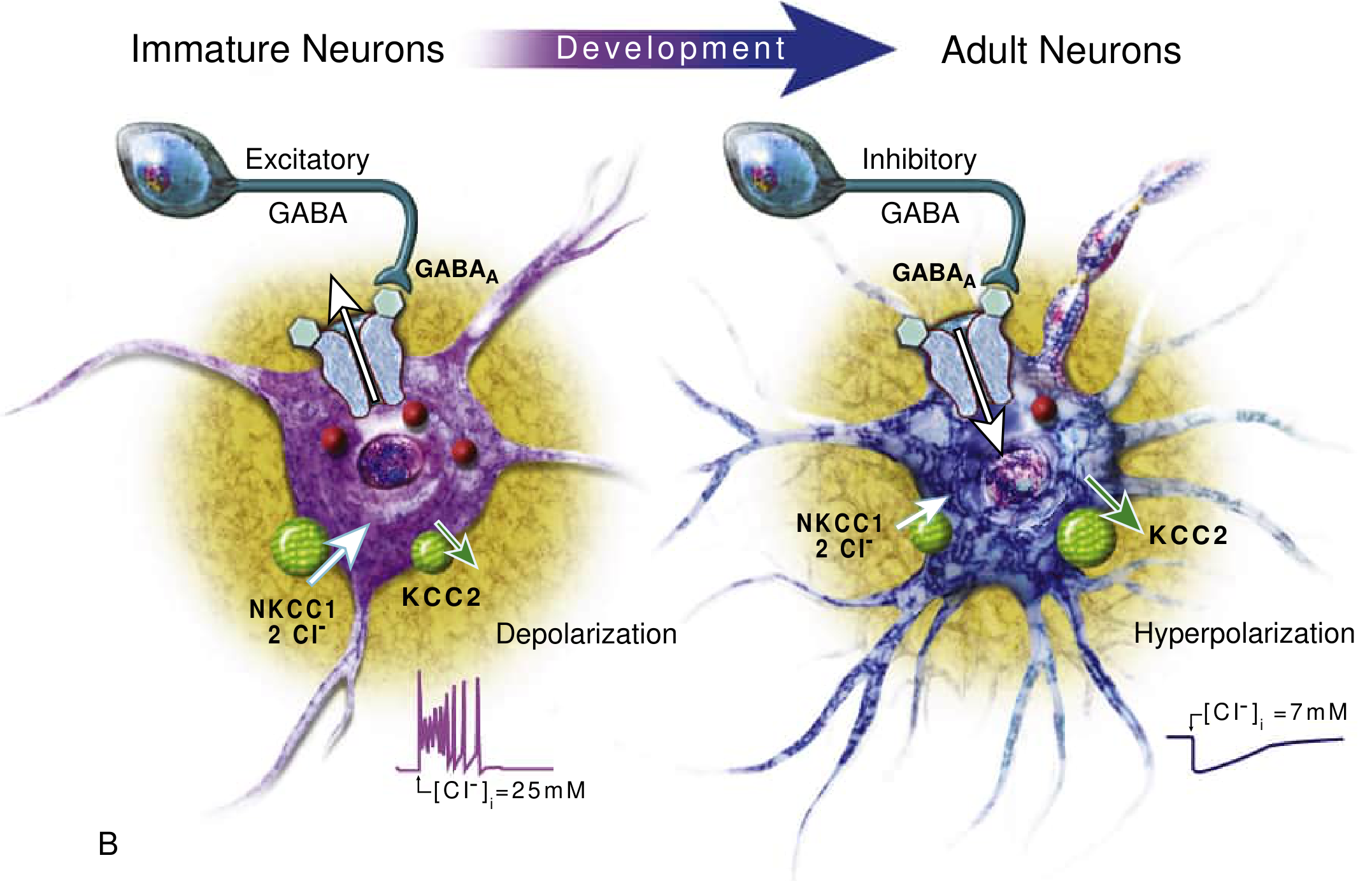
- NKCC1 (Na-K-Cl cotransporter 1) is highly expressed → accumulates Cl⁻ inside the cell → high intracellular Cl⁻ (~25 mM)
- When GABA_A receptors open → Cl⁻ flows OUT → membrane depolarizes → excitation
- This is the opposite of mature neurons where GABA is inhibitory
- KCC2 (K-Cl cotransporter 2) becomes dominant → extrudes Cl⁻ → low intracellular Cl⁻ (~7 mM)
- GABA_A activation → Cl⁻ flows IN → hyperpolarization → inhibition
Other Factors Contributing to Seizure Susceptibility
- Immature inhibitory interneuron networks - few inhibitory synapses fully established
- Abundant NMDA receptors - excitatory amino acid receptors over-expressed in early development
- More advanced limbic system development compared to cortex → mouthing, eye deviation, apnea as predominant seizure manifestations
- Incomplete corticocortical myelination prevents bihemispheric spread → no generalized tonic-clonic seizures; only focal or subtle seizures
- Incomplete lamination of cortex → less organized and more fragile electrical activity
Consequences of Neonatal Seizures
- Cerebral energy depletion → excitotoxicity → neuronal death
- Suppression of neuronal stem cell proliferation
- Morphological and physiological deficits in the developing brain (shown in animal models)
- In humans: neonatal seizures are independently associated with:
- Further hypoxic-ischemic brain injury (measured by MR spectroscopy)
- Later neurodevelopmental impairment
- Increased risk of epilepsy
4. Etiology
Timing Guides Etiology
| Onset Timing | Most Likely Cause |
|---|---|
| Day 1 (0-24 hours) | Hypoxic-ischemic encephalopathy (HIE), severe metabolic (hypoglycemia, hyponatremia), prenatal stroke, congenital brain malformations |
| Days 2-3 | HIE (continuing), hypoglycemia, hypocalcemia, intracranial hemorrhage (IVH), bacterial meningitis, herpes encephalitis |
| Days 3-7 | Hypocalcemia, inborn errors of metabolism, bacterial meningitis, pyridoxine-dependent epilepsy, herpes, congenital infections, drug withdrawal |
| After day 7 | Metabolic disorders (PKU, organic acidemias), herpes, meningitis, congenital brain malformations, neonatal epilepsy syndromes |
Major Causes by Category
1. Hypoxic-Ischemic Encephalopathy (HIE) - Most Common
- Accounts for ~50% of neonatal seizures in term infants
- In preterm: HIE + intraventricular hemorrhage each account for ~one-third
- Seizures typically begin 6-24 hours after asphyxia
- EEG shows burst-suppression → progresses to multifocal spikes
- Often associated with other signs: altered tone, encephalopathy, multiorgan dysfunction
2. Intracranial Hemorrhage
- Intraventricular hemorrhage (IVH): Most important in preterm infants (<30 weeks) - accounts for majority of preterm neonatal seizures
- Subarachnoid hemorrhage: Common; often benign "well baby seizures" in term infants
- Subdural hematoma: Birth trauma; large fontanelle, bulging
- Intraparenchymal hemorrhage: Often severe; associated with coagulopathy
3. Metabolic Causes
| Metabolic Cause | Mechanism | Specific Features |
|---|---|---|
| Hypoglycemia | Most common metabolic cause; energy deprivation | Glucose < 45 mg/dL; jitteriness + seizures; IDM babies, SGA, LGA |
| Hypocalcemia | Reduced neuronal membrane stability | Early (<72h): hypoparathyroidism, maternal DM; Late (>72h): high phosphate feeds, hypomagnesemia |
| Hyponatremia | Cerebral edema from osmotic shifts | Na < 125 mEq/L; SIADH, water intoxication |
| Hypernatremia | Intracellular dehydration | Dehydration, hyperglycemia |
| Hypomagnesemia | Often accompanies hypocalcemia | Mg < 0.6 mmol/L; refractory hypocalcemia |
| Hyperbilirubinemia (kernicterus) | Bilirubin toxicity to basal ganglia | Jaundice + choreoathetosis + hearing loss + upward gaze palsy |
4. Congenital Infections (TORCH + others)
- Herpes simplex virus (HSV): Day 5-14; focal, refractory seizures; CSF pleocytosis; treat with IV acyclovir urgently
- Cytomegalovirus (CMV): Periventricular calcifications; microcephaly; chorioretinitis
- Toxoplasmosis: Hydrocephalus; scattered calcifications; chorioretinitis
- Group B Streptococcus (GBS) meningitis: Fever; bulging fontanelle; CSF findings
- E. coli meningitis: Similar presentation; gram-negative
5. Inborn Errors of Metabolism (IEM)
| Condition | Key Feature | Treatment |
|---|---|---|
| Pyridoxine-dependent epilepsy (ALDH7A1 / antiquitin deficiency) | Refractory seizures; responds dramatically to IV pyridoxine 100 mg | Pyridoxine lifelong |
| Pyridoxal-5'-phosphate (PLP) oxidase deficiency (PNPO gene) | Similar to pyridoxine-dependent but responds to PLP, not pyridoxine | PLP lifelong |
| Folinic acid-responsive seizures (also antiquitin allelic) | Responds to folinic acid | Folinic acid |
| Non-ketotic hyperglycinemia (NKH) | Glycine encephalopathy; burst suppression EEG; hiccups | Sodium benzoate; limited response |
| Maple syrup urine disease (MSUD) | Sweet odor of urine; branched-chain amino acid accumulation | Dietary restriction |
| Organic acidemias (methylmalonic, propionic) | Metabolic acidosis; hyperammonemia | Dietary management |
| Urea cycle defects | Hyperammonemia; encephalopathy | Nitrogen scavengers |
| 3-Phosphoglycerate dehydrogenase deficiency | Serine-responsive | Serine supplementation |
| Biotinidase deficiency | Responds to biotin supplementation | Biotin lifelong |
| Congenital disorders of glycosylation (CDG) | Multi-system | Specific (some) |
6. Congenital Brain Malformations
- Lissencephaly, polymicrogyria, schizencephaly, holoprosencephaly
- Account for 5-10% of neonatal seizures
- Seizures are particularly refractory and typically progress to chronic epilepsy
7. Neonatal Epilepsy Syndromes (Genetic)
| Syndrome | Gene | Features |
|---|---|---|
| Benign familial neonatal epilepsy (BFNE) | KCNQ2, KCNQ3 (K⁺ channel) | AD; onset day 2-7; remits by 1-4 months; normal development |
| Benign neonatal seizures (non-familial) | Unknown | Onset day 4-6; "fifth-day fits"; clonic; remits; good prognosis |
| Ohtahara syndrome | STXBP1, ARX, SCN2A, others | Tonic seizures; burst-suppression EEG; refractory; severe prognosis |
| Early myoclonic encephalopathy | SLC25A22, ERBB4, others | Erratic focal myoclonus; burst-suppression; severe prognosis |
| KCNQ2 epileptic encephalopathy | KCNQ2 (gain-of-function) | Tonic seizures; responds to sodium channel blockers (phenytoin, carbamazepine) |
| SCN2A epilepsy | SCN2A | Early or neonatal onset; variable severity |
8. Perinatal Stroke
- Perinatal arterial ischemic stroke (PAIS): Often presents as focal seizures in otherwise well-appearing term infant; MRI confirms
- Cerebral sinovenous thrombosis (CSVT): Associated with dehydration, polycythemia, infections
9. Drug Withdrawal / Neonatal Abstinence Syndrome (NAS)
- Maternal opioid, benzodiazepine, SSRI use
- Irritability, tremors, sweating, feeding difficulties, seizures
- Seizures typically respond to phenobarbital
10. Polycythemia / Hyperviscosity
- Hematocrit > 65% → sluggish cerebral blood flow → ischemia
5. Clinical Classification of Seizure Types
A. By Electroclinical Correlation
| Type | Definition |
|---|---|
| Electroclinical seizures | Abnormal clinical behavior that correlates with an EEG ictal pattern |
| Clinical-only seizures | Clinical events without EEG correlate (usually non-epileptic) |
| Electrographic-only (subclinical) | EEG ictal activity without any clinical manifestation; >50% of neonatal seizures |
B. By Clinical Manifestation
| Seizure Type | Description | Key Features |
|---|---|---|
| Subtle | Most common type (~50%); lip-smacking, eye deviation, chewing, bicycling, tonic eye deviation, blinking, apnea | Often subclinical; easily missed; apnea alone may be a seizure |
| Clonic - Focal | Rhythmic jerking of one limb or face; does not march | Common; indicates focal pathology (stroke) |
| Clonic - Multifocal | Sequential clonic movements migrating between body parts in non-Jacksonian pattern | HIE, metabolic |
| Tonic - Focal | Sustained tonic posturing of one limb | Preterm; IVH |
| Tonic - Generalized | Extension/flexion of all four limbs | Associated with Ohtahara; brainstem release |
| Myoclonic - Focal | Single isolated jerk of a limb | |
| Myoclonic - Multifocal | Asynchronous jerks of multiple body parts | IEM, early myoclonic encephalopathy |
| Myoclonic - Generalized | Bilateral synchronous jerks | Severe brain damage |
| Spasms | Brief axial flexion/extension; may cluster | Begin in neonatal period → evolve to West syndrome |
Seizure vs. Jitteriness (Key Differential)
| Feature | Seizure | Jitteriness |
|---|---|---|
| Triggered by stimuli | No | Yes - stimulus-sensitive |
| Eye deviation / abnormal eye movements | Yes | No |
| Apnea component | Yes | No |
| Abolished by restraint | No | Yes |
| Autonomous features | Yes (tachycardia) | No |
| EEG | Abnormal (ictal) | Normal |
6. Diagnosis
Clinical Assessment
- Birth history: Fetal distress, emergency C-section, low Apgar scores, cord blood pH → HIE
- Maternal history: Infections, medications, drug use, diabetes → exposure history
- Family history: Parental seizures → benign familial neonatal epilepsy
- Observation: Video documentation of events is invaluable
- Neurological examination: Tone, responsiveness, fontanelle tension, cranial nerve assessment
EEG - The Gold Standard
-
50% of neonatal seizures are subclinical (electrographic-only)
- Clinical seizure detection is unreliable
- Electroclinical dissociation is common after medication
Conventional EEG findings:
- Burst-suppression: Alternating bursts of activity and flat periods → HIE (severe), Ohtahara syndrome
- Multifocal sharp waves: HIE, metabolic, infection
- Focal sharp/slow waves: Stroke, focal hemorrhage
- Discontinuous theta: Benign neonatal seizures ("fifth-day fits")
- Hypsarrhythmia: In infants evolving to West syndrome
- Interhemispheric asynchrony: Aicardi syndrome (see prior discussion)
aEEG (Amplitude-Integrated EEG):
- Continuous bedside monitoring tool; simplified display
- Detects seizures as sudden rises in the lower amplitude margin
- Less sensitive than full EEG; misses brief or low-amplitude seizures
- Used for ongoing surveillance in NICU
Laboratory Investigations
- Blood glucose (bedside)
- Serum electrolytes: Na, K, Cl, HCO₃, Ca, Mg, phosphate
- Blood gas (metabolic acidosis, pH)
- Full blood count
- Blood cultures (if infection suspected)
- CSF: Cell count, protein, glucose, culture, Gram stain, HSV PCR, enterovirus PCR
- Serum ammonia
- TORCH serology (CMV, toxoplasma, rubella, HSV, Zika)
- Urine CMV PCR (within first 2-3 weeks)
- Serum amino acids
- Urine organic acids
- Urine α-aminoadipic semialdehyde (AASA) - pyridoxine-dependent epilepsy marker
- CSF / serum pipecolic acid
- Lactate (mitochondrial disorders)
- Thyroid function tests
Neuroimaging
| Modality | Use |
|---|---|
| Cranial ultrasound | Bedside; IVH, hydrocephalus, periventricular leukomalacia in preterm; limited for cortical injury |
| MRI brain (preferred) | Best for HIE (DWI shows restricted diffusion within 24-48h), stroke, malformations, white matter injury |
| CT brain | Rapid; hemorrhage, calcifications (CMV, toxo), structural abnormalities; limited soft tissue detail |
Genetic Testing
- Chromosomal microarray: Structural abnormalities, copy number variants
- Gene panels for neonatal epilepsy: KCNQ2, SCN2A, STXBP1, ARX, and others
- Whole exome sequencing (WES): For refractory/unexplained seizures
- Trial of pyridoxine + pyridoxal phosphate + folinic acid should be started empirically in refractory seizures of unknown etiology pending genetic results
7. Management
Step 1 - Stabilization (ABCs)
- Airway, breathing, circulation
- Oxygen supplementation; prepare for intubation if needed
- IV access; continuous cardiorespiratory monitoring
- Continuous EEG/aEEG monitoring
Step 2 - Treat Underlying Cause Simultaneously
| Cause | Immediate Treatment |
|---|---|
| Hypoglycemia | 2 mL/kg of D10% IV bolus, then maintenance IV glucose infusion |
| Hypocalcemia | 10% calcium gluconate 2 mL/kg IV slowly over 10 min (monitor for bradycardia) |
| Hypomagnesemia | Magnesium sulfate 50% 0.2-0.4 mL/kg IV or IM |
| Hyponatremia (severe) | 3% NaCl, correct gradually to prevent central pontine myelinolysis |
| Bacterial meningitis | Empiric IV antibiotics (ampicillin + gentamicin or ampicillin + cefotaxime) |
| HSV encephalitis | IV acyclovir 20 mg/kg every 8 hours |
| HIE | Therapeutic hypothermia (33-34°C for 72 hours) if eligible |
| Pyridoxine-dependent epilepsy | IV pyridoxine 100 mg (or up to 500 mg) with concurrent EEG monitoring |
- Duration > 3 minutes
- ≥ 3 seizures per hour
- Associated with cardiorespiratory compromise
-
3 subclinical seizures on aEEG within 60 minutes
Step 3 - Anti-Seizure Medication (ASM) Protocol
First-Line: Phenobarbital
- Mechanism: GABA_A agonist + NMDA antagonist
- Dose: 20 mg/kg IV over 20 minutes
- Repeat dose: 10 mg/kg if seizures continue; total not to exceed 40 mg/kg without additional agents
- Efficacy: Controls seizures in approximately 50-60% of cases
- Why it may fail: GABA is paradoxically excitatory in immature neurons (NKCC1/KCC2 mechanism)
- Monitoring: Respiratory depression, hypotension; have bag-mask ventilation ready
If Phenobarbital Fails - Second-Line Options
| Drug | Dose | Notes |
|---|---|---|
| Phenytoin / Fosphenytoin | Phenytoin 20 mg/kg IV at ≤1 mg/kg/min | Sodium channel blocker; particularly effective for KCNQ2 channelopathies; risk of cardiac arrhythmia |
| Levetiracetam | 40-60 mg/kg IV over 15 min | RCT (Sharpe et al., 2020) showed less effective than phenobarbital as first-line; used as second/third-line; well tolerated |
| Midazolam | 0.15-0.2 mg/kg IV bolus → infusion | Benzodiazepine; useful for acute seizure clusters; risk of respiratory depression |
| Lorazepam | 0.05-0.1 mg/kg IV | Short duration; useful for acute control |
| Diazepam | 0.25-0.5 mg/kg IV/rectal | Short duration; respiratory depression |
| Clonazepam | 0.1 mg/kg IV | Long-acting benzodiazepine |
| Lidocaine | 2 mg/kg IV bolus → infusion | Sodium channel blocker; effective in studies; particularly useful in HIE; NOT after phenytoin (cardiac risk) |
| Midazolam infusion | 0.06-0.4 mg/kg/hour | For refractory seizures; status epilepticus |
| Carbamazepine / Oxcarbazepine | Oral; limited IV formulation | Specifically for KCNQ2 encephalopathy |
Specific Metabolic Treatments (for refractory seizures of unknown cause)
- Pyridoxal phosphate (PLP) 30 mg/kg/day divided 3 times daily for 3 days
- Folinic acid 3-5 mg/kg/day for 3 days
- Continue if clinical improvement seen, pending genetic results
- Pyridoxine IV 100 mg with EEG monitoring (beware: can cause apnea)
- Biotin 10-20 mg/day (biotinidase deficiency)
Step 4 - Therapeutic Hypothermia (for HIE)
- Indicated for term/near-term neonates with moderate-severe HIE
- Core temperature maintained at 33.5°C for 72 hours, then rewarmed slowly
- Reduces death and disability by ~25-30% (NNT ≈ 7-9)
- Seizures are a major indication for monitoring and treatment during cooling
Step 5 - Maintenance Therapy and Weaning
- Seizures resolve with correction of underlying cause → discontinue ASMs before discharge in many cases
- Most neonatologists discontinue phenobarbital before discharge if seizures are resolved and EEG normalized
- Long-term maintenance is reserved for:
- Structural brain abnormalities with ongoing seizure risk
- Genetic epilepsy syndromes (KCNQ2, SCN2A, Ohtahara)
- Abnormal EEG at discharge
8. Neonatal Status Epilepticus
- Associated with worse neurodevelopmental outcomes
- Requires escalating treatment through the ASM protocol
- May require continuous midazolam infusion
- Continuous EEG monitoring mandatory
- A 2025 ILAE neonatal task force scoping review has refined criteria for neonatal status epilepticus
9. Prognosis
| Etiology | Prognosis |
|---|---|
| Benign familial neonatal seizures (KCNQ2/3) | Excellent; seizures remit by 1-4 months; normal development |
| Benign neonatal seizures / fifth-day fits | Excellent; no recurrence, normal development |
| Subarachnoid hemorrhage (well baby) | Good |
| Hypocalcemia (correctable) | Good if no other brain injury |
| HIE - mild | Moderate; ~25% have sequelae |
| HIE - moderate/severe | Poor; ~40-50% mortality/disability without cooling; better with hypothermia |
| Perinatal stroke | Variable; often focal deficits; epilepsy risk ~20-30% |
| IVH (severe grade III-IV) | Poor; high rate of CP, hydrocephalus, disability |
| Bacterial meningitis | Poor; high morbidity |
| Ohtahara / early myoclonic encephalopathy | Very poor; severe epileptic encephalopathy; evolves to West/Lennox-Gastaut |
| Metabolic (treatable: pyridoxine, biotin) | Good if treated promptly; poor if delayed |
| Non-treatable IEM | Very poor |
| Brain malformations | Poor; refractory epilepsy |
Long-Term Outcomes After Neonatal Seizures
- Epilepsy: 15-30% develop subsequent epilepsy
- Cerebral palsy: 20-30%
- Cognitive impairment / intellectual disability: Variable
- Adverse neurobehavioral outcomes: Neonatal seizures (especially frequent, intractable, or prolonged) are independently associated with later neurodevelopmental impairment beyond the underlying injury
10. Summary Table
| Feature | Detail |
|---|---|
| Definition | Paroxysmal neurological alteration + EEG ictal activity; first 28 days of life |
| Most common cause (term) | HIE (~50%) |
| Most common cause (preterm) | IVH + HIE (each ~1/3) |
| Most common seizure type | Subtle (lip-smacking, eye deviation, bicycling, apnea) |
| % subclinical | >50% electrographic-only - requires EEG for detection |
| Key pathophysiology | GABA is excitatory in immature neurons (NKCC1 > KCC2) |
| Gold standard diagnosis | Continuous EEG (or aEEG) |
| First-line treatment | Phenobarbital 20 mg/kg IV |
| Key metabolic emergency | Hypoglycemia - treat with D10% immediately |
| Vitamin-responsive | Pyridoxine, PLP, folinic acid, biotin - trial empirically if refractory |
| HIE treatment | Therapeutic hypothermia + seizure management |
| Best prognosis | Benign familial neonatal seizures; correctable metabolic causes |
| Worst prognosis | Ohtahara syndrome, severe HIE, non-treatable IEM, severe brain malformations |