
A short note on sle 2nd yr patho refer harsh mohan
Systemic Lupus Erythematosus (SLE)
Definition
Epidemiology
- Prevalence ~1 in 2500 in some populations
- Female predominance: F:M = 9:1 in reproductive age (17–55 years); 2:1 in childhood and post-65
- More prevalent/severe in African, Hispanic, and Asian individuals
- Peak onset: 20s–30s
Etiology & Pathogenesis
Autoantibodies — The Hallmark
| Antibody | Notes |
|---|---|
| Anti-dsDNA | Highly specific for SLE; correlates with disease activity |
| Anti-Sm (Smith antigen) | Highly specific for SLE |
| Anti-histone | Seen in drug-induced lupus |
| Anti-phospholipid | → False positive VDRL, thrombosis, recurrent abortions |
| Anti-Ro (SS-A), Anti-La (SS-B) | Neonatal lupus, congenital heart block |
| Anti-RBC | Hemolytic anemia |
| Anti-platelet | Thrombocytopenia |
Pathogenetic Mechanisms
- Genetic factors: HLA-DR2, HLA-DR3 associations; defects in complement genes (C1q, C2, C4) → impaired clearance of apoptotic cells/immune complexes
- Defective clearance of apoptotic cells → persistence of nuclear antigens (dsDNA, histones, ribonucleoproteins) → stimulate autoreactive B and T lymphocytes
- TLR dysregulation: Self nucleic acids engage Toll-like receptors (TLR7, TLR9) on B cells and dendritic cells → overproduction of Type I interferons (IFN-α) → amplify autoimmune response
- Environmental triggers: UV light induces apoptosis + enhances DNA immunogenicity; drugs (hydralazine, procainamide, isoniazid)
- Sex hormones: Estrogen promotes disease (explains female dominance)
Tissue Injury — Mechanisms
- Type III hypersensitivity (immune complex deposition) — responsible for most systemic lesions: glomerulonephritis, vasculitis, serositis
- Type II hypersensitivity — autoantibodies against RBCs, platelets, neutrophils → hemolytic anemia, thrombocytopenia, leukopenia
LE Cell & Hematoxylin Bodies
- LE body (hematoxylin body): Nuclear material of damaged cells reacted with ANAs → loses chromatin pattern, becomes homogeneous, stains with hematoxylin
- LE cell: A phagocytic neutrophil/monocyte that has engulfed a denatured nucleus (LE body) — historically used as a diagnostic test, now superseded by ANA testing
Morphology (Organ Lesions)
1. Kidney (most important — lupus nephritis)
- Glomerular changes — classified by WHO/ISN-RPS (Class I–VI):
- Class I: Minimal mesangial LN
- Class II: Mesangial proliferative LN
- Class III: Focal LN (<50% glomeruli)
- Class IV: Diffuse LN (>50% glomeruli) — most common and severe; "wire loop" lesions on LM; granular (lumpy-bumpy) deposits on IF; subendothelial deposits on EM
- Class V: Membranous LN
- Class VI: Advanced sclerosing LN
- Wire-loop lesion: Thickened glomerular capillary walls due to massive subendothelial immune complex deposition
2. Skin
- Butterfly (malar) rash over nose and cheeks
- Photosensitivity
- Discoid lupus: Erythematous patches with follicular plugging
- Histology: Liquefaction degeneration of basal layer, edema, mononuclear infiltrate; IF → immunoglobulin + complement deposition at dermoepidermal junction ("lupus band test" — positive even in uninvolved skin)
3. Joints
- Non-erosive synovitis; no pannus formation (unlike RA)
4. Heart
- Libman-Sacks endocarditis: Small, sterile, warty vegetations on both surfaces of the mitral valve (pathognomonic); caused by immune complex deposition
- Pericarditis (most common cardiac manifestation)
- Myocarditis
5. Blood Vessels
- Acute necrotizing vasculitis; perivascular fibrosis ("onion-skin lesion") in the spleen — periarteriolar fibrosis
6. Serosal Surfaces
- Fibrinous pleuritis, pericarditis, peritonitis (serositis)
7. Lungs
- Pleuritis, diffuse alveolar damage
8. CNS
- Microinfarcts, cerebritis (due to vasculitis and antineuronal antibodies)
9. Blood
- Hemolytic anemia, leukopenia, lymphopenia, thrombocytopenia
Clinical Features (ACR/SLICC Criteria Mnemonic: DOPAMINE RASH)
| Feature | Detail |
|---|---|
| Discoid rash | Chronic cutaneous lesion |
| Oral ulcers | Painless |
| Photosensitivity | Malar butterfly rash |
| Arthritis | Non-erosive, ≥2 joints |
| Malar rash | Butterfly distribution |
| Immunologic disorder | Anti-dsDNA, anti-Sm, anti-phospholipid |
| Neurologic disorder | Seizures, psychosis |
| Erythrocytes (hemolytic anemia) | Coombs positive |
| Renal disorder | Proteinuria >0.5 g/day, red cell casts |
| ANA positive | Screening test |
| Serositis | Pleuritis/pericarditis |
| Hematologic | Leukopenia, lymphopenia, thrombocytopenia |
Antiphospholipid Syndrome in SLE
Drug-Induced Lupus
- Drugs: Hydralazine, Procainamide, Isoniazid, D-penicillamine, Anti-TNF agents
- Key difference from classic SLE:
- Anti-histone antibodies (not anti-dsDNA)
- Renal and CNS involvement uncommon
- Resolves on stopping the drug
Laboratory Diagnosis
| Test | Significance |
|---|---|
| ANA (immunofluorescence) | Screening test; >95% sensitive |
| Anti-dsDNA | Specific; correlates with activity and nephritis |
| Anti-Sm | Most specific for SLE |
| Complement (C3, C4, CH50) | Low levels → active disease |
| CBC | Hemolytic anemia, cytopenia |
| Urinalysis | Proteinuria, hematuria, casts |
| LE cell prep | Historical; now obsolete |
Prognosis
- 10-year survival >90% with treatment
- Main causes of death: Renal failure, infections (from immunosuppression), cardiovascular disease (accelerated atherosclerosis)
- Disease activity monitored by anti-dsDNA titers and complement levels
Primary Tuberculosis - pathogenesis ,common sites, Primary Complex - components, Evolution of Tubercle - draw schematic diagram
primary tuberculosis Ghon complex primary complex
A clean educational schematic diagram titled "Evolution of the Tubercle" showing the sequential stages of tubercle development in tuberculosis pathology. The diagram flows top to bottom with labeled stages: 1. STAGE 1 - NONSPECIFIC PNEUMONIA: Small focus with polymorphonuclear leukocytes infiltrating alveoli, M. tuberculosis bacilli shown as small rods 2. STAGE 2 - EPITHELIOID CELL GRANULOMA: Central zone of epithelioid macrophages (large pale oval cells), surrounded by lymphocytes. No necrosis yet. 3. STAGE 3 - CASEATING GRANULOMA (TUBERCLE): Central pale acellular caseous necrosis (cheese-like material), surrounded by a ring of epithelioid cells and Langhans giant cells (horseshoe-shaped multinucleate cells), outer rim of lymphocytes and fibroblasts 4. STAGE 4a - HEALING/FIBROSIS: Caseous material replaced by dense fibrous tissue and calcification (shown as dark deposits). Labeled "Fibro-calcific nodule (Ghon focus / Ranke complex on X-ray)" 4b. STAGE 4b - PROGRESSION/CAVITATION: Liquefaction of caseous center, cavity formation with thick fibrous wall, bacilli spilling out. Labeled "Cavity → bronchogenic spread" Arrows connect each stage downward. The diagram is on a white background with clean sans-serif labels, colored zone fills (pink for cellular zones, cream for caseous areas, blue for lymphocyte rings), and a neat box around the title. Medical textbook style, no photographs.
Primary Tuberculosis
Definition
Pathogenesis
Step-by-Step Sequence
Inhalation of M. tuberculosis droplet nuclei
            ↓
Bacilli deposit in distal alveoli (lower upper lobe / upper lower lobe)
            ↓
Phagocytosed by alveolar macrophages → bacilli survive & multiply inside
(escape killing via inhibition of phagolysosome fusion)
            ↓
Macrophages carry bacilli via lymphatics → hilar/tracheobronchial LN
(Bacteremia may occur → seeding of liver, spleen, kidneys, meninges, bone)
            ↓
~ 3–8 weeks: Cell-mediated immunity (CMI) develops
Th1 cells activated → secrete IFN-γ
            ↓
IFN-γ activates macrophages → produce:
 • Reactive nitrogen intermediates (NO)
 • TNF → recruits more macrophages
            ↓
Activated macrophages transform into EPITHELIOID CELLS
+ Fuse to form LANGHANS GIANT CELLS
→ GRANULOMA formation (TUBERCLE)
            ↓
Central CASEOUS NECROSIS develops
(due to DTH — Type IV hypersensitivity)
            ↓
95% → Fibrosis + Calcification → GHON COMPLEX → RANKE COMPLEX
5% → Progressive primary TB (in immunocompromised)
Key Immune Mechanisms
| Component | Role |
|---|---|
| Th1 CD4+ cells | Central mediators; produce IFN-γ |
| IFN-γ | Activates macrophages to kill bacilli |
| TNF | Granuloma formation, macrophage recruitment |
| Nitric oxide (NO) | Direct mycobactericidal activity |
| IL-12 | Drives Th1 differentiation |
| Caseous necrosis | Due to DTH (Type IV hypersensitivity) — destructive side of immunity |
Loss of tuberculin positivity (anergy) = ominous sign of failing immunity and severe disease.
Common Sites
Primary TB — Site of Implantation
| Route | Site |
|---|---|
| Respiratory (most common) | Subpleural, lower part of upper lobe OR upper part of lower lobe of the lung (well-aerated zones) |
| Ingestion (bovine TB, rare now) | Intestine — terminal ileum/ileocecal region |
| Skin inoculation (rare) | Skin (lupus vulgaris, prosector's wart) |
| Tonsil | Cervical lymph nodes |
Sites of Hematogenous Seeding (during primary bacteremia)
- Apices of lungs (Simon foci)
- Liver, spleen
- Kidneys
- Vertebrae (Pott's disease potential)
- Meninges
- Adrenal glands
- Epididymis/fallopian tubes
Primary Complex (Ghon Complex)
┌─────────────────────────────────────────────────────────────┐
│                   GHON COMPLEX                              │
│                                                             │
│  1. GHON FOCUS (Ghon's focus / Primary focus)              │
│     • 1–1.5 cm gray-white area of consolidation            │
│     • In lung parenchyma (subpleural)                       │
│     • Center = caseous necrosis                             │
│                                                             │
│  2. LYMPHANGITIS                                            │
│     • Lymphatic vessel inflammation                         │
│     • Connects Ghon focus to hilar nodes                    │
│                                                             │
│  3. HILAR / TRACHEOBRONCHIAL LYMPHADENOPATHY               │
│     • Draining lymph nodes enlarged + caseous               │
│     • Often larger than the Ghon focus itself               │
└─────────────────────────────────────────────────────────────┘
Ranke Complex = Calcified Ghon Complex (seen on chest X-ray as calcified parenchymal nodule + calcified hilar node)
Schematic Diagram — Evolution of the Tubercle
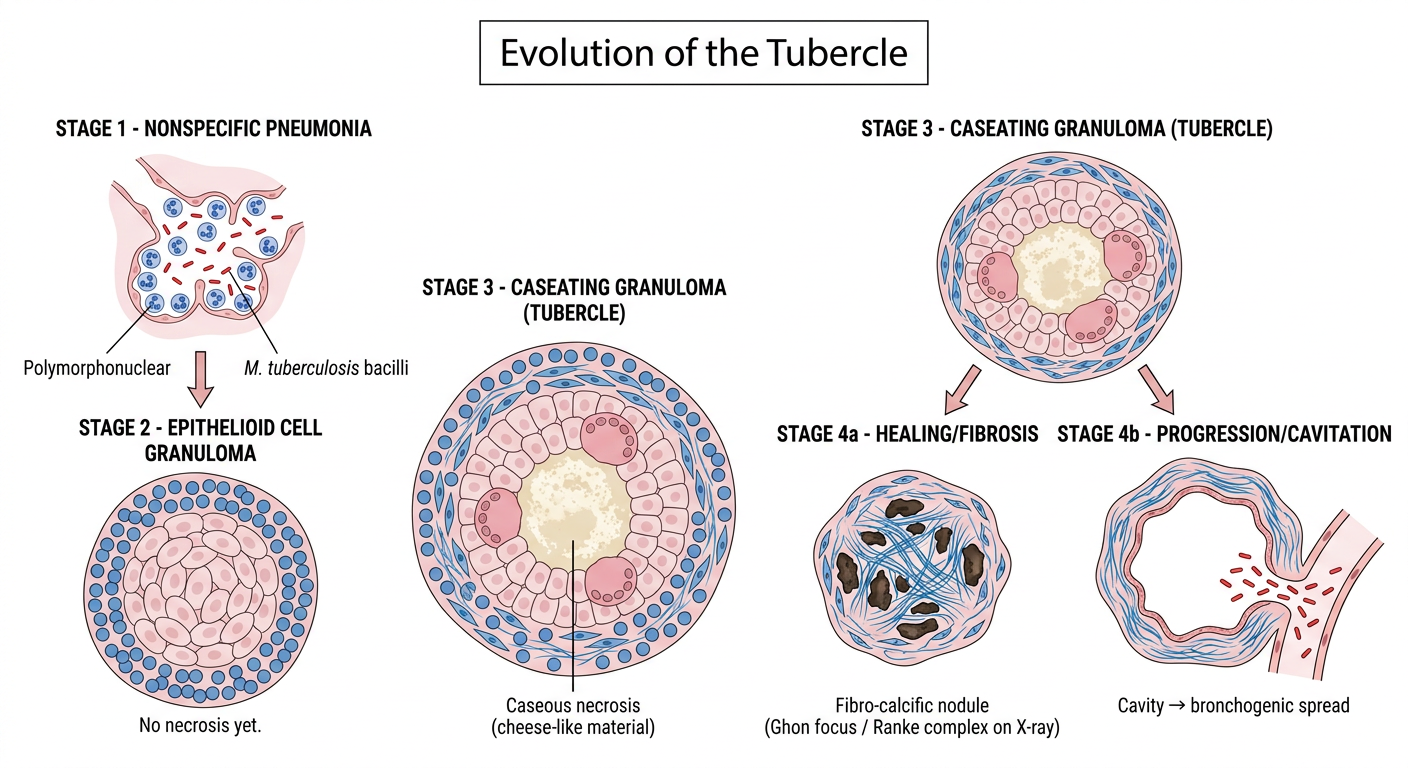
Evolution of the Tubercle — Detailed Description
Stage 1: Non-specific Pneumonia
- Bacilli inhaled → alveolar exudate
- PMNs + macrophages → non-specific acute inflammation
- No granuloma yet
Stage 2: Epithelioid Cell Granuloma (Early Tubercle)
- Macrophages activated by IFN-γ → transform into epithelioid cells (elongated, pale, abundant cytoplasm)
- Multiple epithelioid cells fuse → Langhans giant cells (nuclei arranged in horseshoe/peripheral pattern)
- Surrounded by a rim of lymphocytes
- No necrosis yet → non-caseating granuloma
Stage 3: Caseating Granuloma (Classic Tubercle)
- Central caseous necrosis develops (firm, cheesy material — coagulative necrosis with cell outlines lost)
- Caused by DTH (Type IV hypersensitivity) to mycobacterial antigens
- Structure from inside out:
Central caseous necrosis ↓ surrounded by Epithelioid cells + Langhans giant cells ↓ surrounded by Lymphocytes + plasma cells ↓ surrounded by Fibroblasts (outer collar) - Tubercle = the characteristic granuloma of TB
Stage 4: Fate / Evolution
              CASEATING TUBERCLE
                     │
         ┌───────────┴───────────┐
         ▼                       ▼
   HEALING (95%)           PROGRESSION (5%)
         │                       │
  Fibrosis → Calcification   Liquefaction of caseous centre
  (Fibro-calcific nodule)         │
  Ranke complex on X-ray    ┌────┴────┐
                            ▼         ▼
                         CAVITY    Spread
                    (Thick fibrous   • Bronchogenic
                      wall; air       spread
                      crescent       • Miliary TB
                      sign)          • Lymphatic
                                     • Hematogenous
| Outcome | Mechanism | Result |
|---|---|---|
| Resolution | Strong CMI + DTH, healthy host | Fibro-calcific scar (Ghon focus) |
| Liquefaction & Cavity | Proteolytic enzymes liquefy caseous material | Cavity in lung → bronchogenic spread |
| Miliary TB | Hematogenous dissemination | Multiple millet-seed-sized foci throughout lungs/other organs |
| Progressive primary TB | Immunocompromise (HIV, malnutrition) | No granuloma → sheets of macrophages with bacilli |
Radiological Correlates
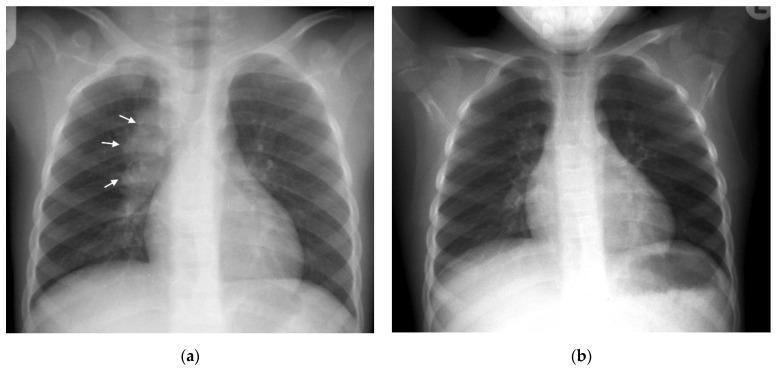
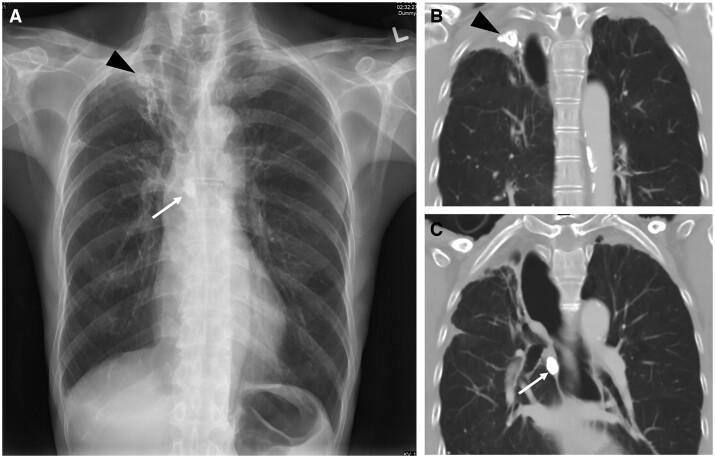
Key Exam Points (Harsh Mohan Emphasis)
| Point | Fact |
|---|---|
| Causative organism | M. tuberculosis (acid-fast bacillus — ZN stain: red rods on blue background) |
| Ghon focus size | 1–1.5 cm |
| Location | Subpleural, lower upper lobe / upper lower lobe |
| Primary complex = | Ghon focus + lymphangitis + hilar LN |
| Ranke complex | Calcified Ghon complex (X-ray finding) |
| Caseous necrosis | Pathognomonic of TB; due to Type IV (DTH) hypersensitivity |
| Langhans giant cell | Nuclei in horseshoe/peripheral arrangement (vs. foreign body giant cell = random) |
| Tuberculin test | Positive 3–8 weeks after primary infection |
| Fate in 95% | Fibrosis + calcification |
| Fate in 5% | Progressive primary TB (especially in HIV, malnutrition, extremes of age) |
Lung Tumors - WHO classification, etiopathogenesis, morphology