
Approach to obesity in children
"childhood obesity"[MeSH Terms] AND management
pediatric obesity treatment
childhood obesity BMI assessment pediatric
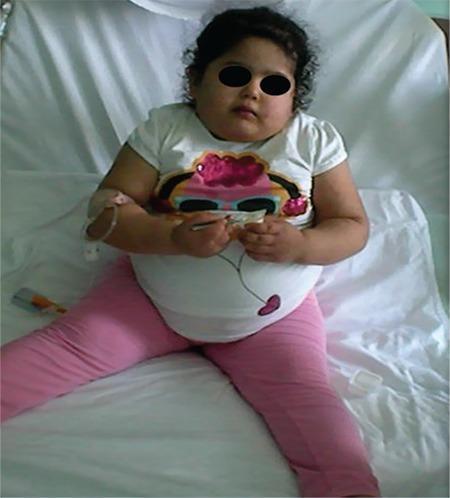
This clinical photograph shows a 5-year-old female patient presenting with severe early-onset childhood obesity. The patient exhibits a high body mass index (BMI), characterized by significant truncal adiposity and excess soft tissue in the facial and proximal limb regions. She is seated on a clinical examination bed, and an intravenous (IV) catheter is visible on her right distal forearm, indicating active medical management. The patient has dark curly hair and is shown in a frontal view. Clinically, this presentation is associated with complex endocrine and autonomic dysregulation, including secondary adrenal insufficiency, central hypothyroidism, and autonomic dysfunction. The visual evidence of rapid weight gain in early childhood is a key diagnostic indicator for evaluating genetic obesity syndromes or hypothalamic-pituitary disorders. The photograph serves as a clinical example of the physical manifestations associated with multi-system endocrine failure and pulmonary hypertension in a pediatric setting.
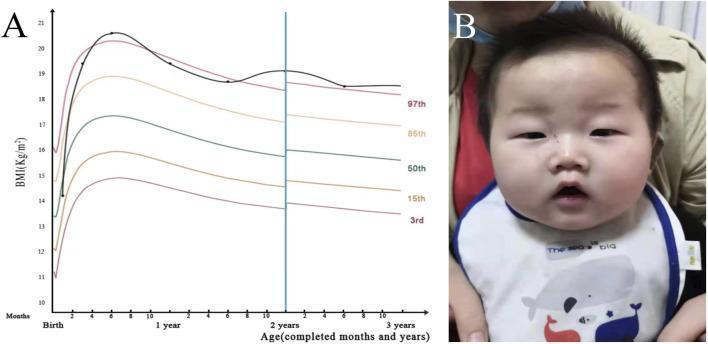
This composite educational graphic includes a growth chart (Panel A) and a clinical photograph (Panel B) illustrating phenotypic features associated with a genetic developmental disorder. Panel A displays a longitudinal Body Mass Index (BMI) growth curve from birth to 3 years. The patient's BMI (black line) shows a rapid ascent following birth, remaining consistently above the 97th percentile, indicating childhood obesity. Panel B is a frontal clinical photograph of an infant demonstrating characteristic dysmorphic features. Visible signs include macrocephaly (large head circumference), a prominent forehead (frontal bossing), and a significantly plump, rounded face with full cheeks. Ocular findings include small palpebral fissures (narrowed eye openings) and hypertelorism (increased distance between the eyes). The mouth exhibits downturned corners, contributing to a triangular-shaped lower facial contour. The neck appears shortened. These findings are clinically relevant for the assessment of syndromic obesity and global developmental delay, specifically in the context of TCF20-related neurodevelopmental disorders.
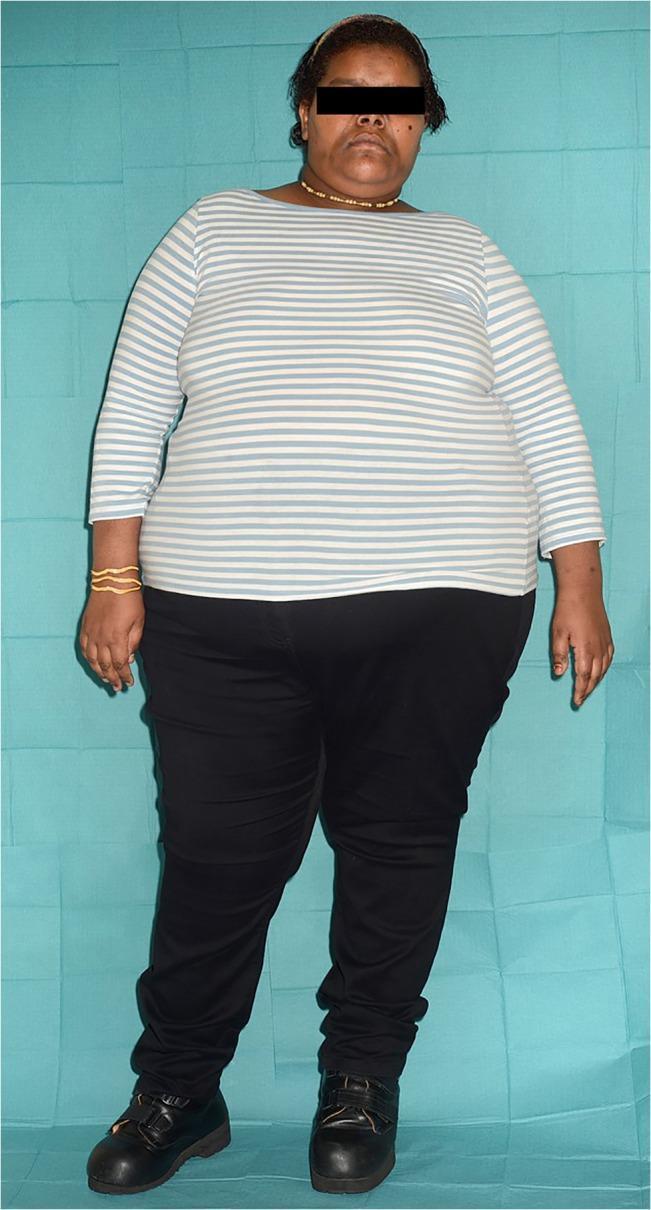
This full-body clinical photograph depicts a 20-year-old female patient exhibiting morbid obesity, with a clinical body mass index (BMI) of 51.5 kg/m". The patient demonstrates a generalized distribution of excess adipose tissue across the trunk and extremities, characteristic of childhood-onset severe obesity. The photograph is utilized in a clinical genetics context to illustrate the phenotype associated with a homozygous truncating mutation in the Carboxypeptidase E (CPE) gene. Other associated clinical findings, though not all visible, include hypogonadotrophic hypogonadism, type 2 diabetes mellitus, and intellectual disability. The patient's feet show a slight inward rotation (pigeon-toed appearance), but there is no evidence of peripheral edema. The image serves as a reference for identifying rare monogenic forms of obesity and endocrine dysfunction, specifically highlighting the systemic physical manifestations of CPE deficiency in humans.

Summary : This image communicates that BMI (Body Mass Index) is not a reliable tool for identifying complications related to obesity. illustration: # Main Message : • Large, bold text states: "BMI IS NOT AN ACCURATE TOOL FOR IDENTIFYING OBESITY-RELATED COMPLICATIONS". • The word "NOT" is highlighted in yellow for emphasis. # Visual Elements : • A stylized gauge or meter is shown on the left, with a black needle pointing to the lower range. • The gauge is colored in yellow and set against a red background, reinforcing the warning or cautionary message. # Design Encodings : • White and yellow text on a red background for high visibility. • The gauge visually suggests measurement or assessment, but the needle position and color scheme imply inadequacy or caution. # Analysis : • The image visually and textually emphasizes that BMI should not be solely relied upon for diagnosing or identifying obesity-related health complications, highlighting the need for more accurate or comprehensive assessment tools.
PMID: 36622115
Approach to Obesity in Children
1. Definition and Classification
| Category | BMI Percentile (children ≥2 yrs) |
|---|---|
| Underweight | <5th percentile |
| Healthy weight | 5th to <85th percentile |
| Overweight | 85th to <95th percentile |
| Obese | ≥95th percentile or BMI ≥30 kg/m² |
- For children <2 years, weight-for-length >95th percentile defines overweight; no consensus obesity definition exists.
- Extended growth charts using modified z-scores (BMI z or %BMIp95) are used for children persistently >95th percentile, as standard z-scores fail to track them accurately.
- A BMI that is crossing two percentile lines upward is itself a risk factor for future obesity, even if still in the normal range.
2. Epidemiology
- Approximately 18.5% of US children ages 2-19 have obesity, with higher rates among Hispanic and African American populations.
- Rates have risen sharply since the 1980s; while overall obesity prevalence has plateaued somewhat, severe obesity continues to rise.
- ~84% of children with a BMI at the 95th-98th percentile go on to have a BMI >30 kg/m² as adults, demonstrating the strong tracking of childhood to adult obesity.
3. Etiology and Contributing Factors
- Polygenic predisposition (FTO, MC4R gene variants)
- Rare monogenic causes: leptin deficiency, leptin receptor deficiency, POMC deficiency, MC4R mutations, CPE deficiency
- Syndromic obesity: Prader-Willi, Bardet-Biedl, Alström syndromes
- Excess caloric intake; high-glycemic-index diet; sugary beverages
- Sedentary lifestyle and screen time
- Short sleep duration (associated with elevated ghrelin, cortisol, insulin; decreased leptin)
- Psychosocial stress, adverse childhood experiences (ACEs)
- Gut microbiome composition
- Maternal obesity and gestational weight gain
- Hypothyroidism
- Cushing syndrome
- Hypothalamic lesions (craniopharyngioma)
- Growth hormone deficiency
Clinical clue: Secondary (endocrine) obesity is typically associated with short stature and slow linear growth. Exogenous (simple) obesity is associated with tall stature and advanced bone age. Always measure height to help distinguish.
4. Initial Assessment
History
- Age of onset (early-onset suggests genetic/syndromic cause)
- Dietary intake (24-hour recall), eating behaviors (binge eating, emotional eating)
- Physical activity levels, screen time
- Sleep patterns (snoring, apnea)
- Family history of obesity, T2DM, cardiovascular disease
- Medications (steroids, antipsychotics, anticonvulsants)
- Psychosocial history - school performance, bullying, depression, anxiety
- Pubertal history
Physical Examination
- BMI calculated and plotted on age/sex-appropriate growth chart
- Blood pressure (use appropriate-sized cuff)
- Height (short stature = secondary cause?)
- Signs of insulin resistance: acanthosis nigricans (neck, axilla)
- Striae, cushingoid features
- Dysmorphic features (syndromic obesity)
- Waist circumference
- Tanner staging (puberty)
- Thyroid exam
5. Laboratory Investigations
| BMI Status | Recommended Labs |
|---|---|
| Normal BMI (9-11 years) | Nonfasting lipid panel (screen for genetic dyslipidemia) |
| Overweight (≥85th percentile) | Fasting glucose OR HbA1c OR OGTT, fasting lipid panel, ALT, AST |
| Obese (≥95th percentile) | All of the above + consider fasting insulin, vitamin D |
- Thyroid function (TSH) if short stature or symptoms of hypothyroidism
- Morning cortisol / 24-hour urinary free cortisol if Cushing suspected
- Liver ultrasound if transaminases elevated (NAFLD)
- Polysomnography if OSA suspected
6. Comorbidities to Actively Screen For
- Prediabetes / Type 2 diabetes mellitus
- Polycystic ovarian syndrome (PCOS) in adolescent girls
- Precocious puberty
- Hypertension
- Dyslipidemia
- Non-alcoholic fatty liver disease (NAFLD/MASLD)
- Cholelithiasis (gallstones)
- Gastroesophageal reflux disease (GERD)
- Pseudotumor cerebri (idiopathic intracranial hypertension)
- Blount disease (tibia vara)
- Slipped capital femoral epiphysis (SCFE)
- Obstructive sleep apnea (OSA)
- Depression
- Anxiety
- Binge eating disorder
- Low self-esteem, bullying victimization
7. Management - Stepwise Approach
Stage 1: Prevention Plus (Primary Care Setting)
- Diet: Reduce sugar-sweetened beverages; increase fruits, vegetables, fiber; reduce fast food and energy-dense snacks; prefer low glycemic-load meals
- Physical activity: At least 60 minutes of moderate-to-vigorous exercise daily
- Screen time limits: Based on AAP guidelines:
- <18 months: no screen media (except video chatting)
- 18-24 months: only with parental co-viewing
- 2-5 years: max 1 hour/day of high-quality programming
- ≥6 years: consistent limits, technology-free family time
- Breastfeeding: Exclusive breastfeeding until 6 months is protective against obesity
- Sleep: Ensure age-appropriate sleep duration; screen for OSA
- Family meals: Daily family mealtimes are recommended
- Counseling approach: Use motivational interviewing - empathetic, non-judgmental, empowering style
Stage 2: Structured Weight Management
- Refer to a structured, moderate-to-high intensity program
- Includes supervised dietary intervention, physical activity program, and behavioral therapy
- Multidisciplinary team (dietitian, behavioral health, physical therapist)
- Monitor weight, blood pressure at each follow-up
Weight Goals by Age:
- Ages 2-5 with obesity: Gradual weight maintenance; no more than 1 lb/month weight loss
- Ages 6+ / adolescents: Weight maintenance to gradual loss; no more than 2 lbs/week average
- Young children should aim to "grow into" their weight rather than lose aggressively
Stage 3: Comprehensive Multidisciplinary Intervention
- Tertiary care center referral
- Intensive behavioral program (>26 contact hours/year)
- Consider pharmacological evaluation
8. Pharmacotherapy
| Drug | Mechanism | Age Approval | Notes |
|---|---|---|---|
| Orlistat (Xenical) | Lipase inhibitor; reduces fat absorption | ≥12 years | GI side effects (steatorrhea, oily discharge); supplement fat-soluble vitamins A, D, E, K |
| Liraglutide (Saxenda) | GLP-1 receptor agonist; reduces appetite, slows gastric emptying | ≥12 years | Subcutaneous injection; GI side effects, pancreatitis risk |
| Semaglutide (Wegovy) | GLP-1 receptor agonist | ≥12 years (FDA approved 2023) | Once weekly SC injection; superior weight loss vs. liraglutide |
| Setmelanotide (Imcivree) | MC4R agonist | ≥6 years | Only for monogenic obesity (POMC, PCSK1, or leptin receptor deficiency) |
- Metformin is used off-label for insulin resistance and prediabetes in obese children, but its primary indication is not weight loss per se.
- All medications should be used at a BMI ≥30 kg/m² (or ≥95th percentile), combined with lifestyle modification.
9. Bariatric Surgery in Adolescents
- BMI ≥35 kg/m² with major comorbidities (T2DM, severe NAFLD, severe OSA)
- BMI ≥40 kg/m² with minor comorbidities (hypertension, dyslipidemia, insulin resistance)
- Mean weight loss: 28% (LRYGB), 26% (SG)
- T2DM remission: 95%
- Abnormal kidney function remission: 86%
- Prediabetes remission: 76%
- Elevated BP remission: 74%
- Dyslipidemia remission: 66%
- Key complication: hypoferritemia in 57% - nutritional monitoring is essential
10. Monitoring Protocol
| Visit | Actions |
|---|---|
| Every well-child visit | Measure height, weight, calculate and plot BMI |
| Overweight/obese: 2-4 weeks | Weight, blood pressure, empathetic counseling, labs |
| Follow-up | Track BMI velocity, blood pressure, metabolic labs |
| If no improvement at 3-6 months | Escalate to next stage |
11. Recent Evidence Update
- 2023 AAP Clinical Practice Guideline (Pediatrics, PMID: 36622115) - landmark guideline recommending early, intensive treatment including pharmacotherapy when appropriate; moved away from "watchful waiting"
- 2025 JAMA Network Open meta-analysis (PMID: 40214992) - found combined dietary + physical activity + behavioral interventions effective for reducing childhood central obesity
- 2025 CMAJ guideline (PMID: 40228835) - Canadian guideline supporting individualized, family-centered, non-stigmatizing care
- 2025 GLP-1 RA meta-analysis (PMID: 40952752) - confirmed GLP-1 receptor agonist efficacy and safety in pediatric obesity
Summary: Key Clinical Takeaways
- Use age/sex-specific BMI percentiles - not adult thresholds - in children ≥2 years
- Always check height: short stature points to a secondary (endocrine) cause
- Screen for comorbidities (insulin resistance, dyslipidemia, NAFLD, hypertension, OSA, SCFE/Blount, mental health) at every visit
- Treatment is staged and family-centered: lifestyle first, structured programs next, pharmacotherapy and surgery for eligible older adolescents
- Use motivational interviewing - avoid weight stigma, which worsens outcomes
- GLP-1 receptor agonists (semaglutide, liraglutide) are now FDA-approved and evidence-backed for ≥12-year-olds, representing a major therapeutic advance
- Bariatric surgery is appropriate for severe obesity with comorbidities in adolescents and produces excellent metabolic outcomes