
differentiate between parotid & sublingual gland in 5 points according to histology,location,nerve supply
Reading File
Now let me search the library for parotid and sublingual gland content in parallel.
Finding Sources
Finding Sources
Finding Sources
Excellent. Now let me read the most relevant sources in parallel - the histology textbook for both glands, and Gray's Anatomy for location/nerve supply.
Reading File
Reading File
Reading File
Good. Let me now get the histology textbook sections for the parotid gland, and the sublingual nerve supply section from Scott-Brown's.
Finding Sources
Reading File
Now let me get the histology textbook's parotid plate and the nerve supply details from Gray's for the sublingual gland.
Finding Sources
Reading File
Now let me get the histology plate for the parotid gland, and also nerve supply details.
Finding Sources
Finding Sources
Reading File
Reading File
I now have all the information needed to give a thorough, well-sourced answer. Let me also fetch the histology images for visual clarity.
Loading Image
Loading Image
Here is a complete, textbook-sourced comparison of the parotid and sublingual glands across five parameters.
Parotid Gland vs. Sublingual Gland - 5-Point Comparison
1. Histology (Type of Secretion)
| Feature | Parotid Gland | Sublingual Gland |
|---|---|---|
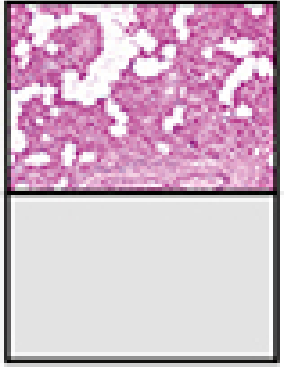
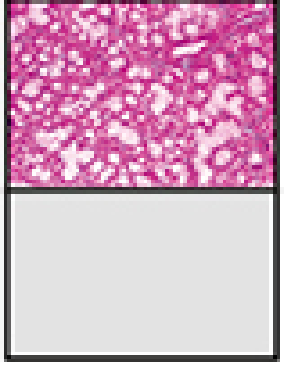
| Secretion type | Purely serous | Predominantly mucous (seromucous) |
| Acini | Only serous acini; no mucous acini | Mucous acini predominate; serous cells appear as demilunes |
| Adipose tissue | Adipose cells commonly interspersed - a distinguishing feature | Adipose cells not a feature |
| Striated ducts | Well-developed striated ducts with prominent basal infoldings | Intralobular ducts present but lack the extensive basal infoldings/striations of striated ducts |
| Intercalated ducts | Present (long) | Short or nearly absent |
Parotid (H&E x160): Pure serous acini with scattered adipose cells and well-defined striated ducts.
Sublingual (H&E x160): Predominantly pale-staining mucous acini with occasional serous demilunes.
Histology A Text and Atlas (Gartner), Plates 16.5 and 16.6
2. Location
| Feature | Parotid Gland | Sublingual Gland |
|---|---|---|
| Position | Largest salivary gland. Lies in a triangular fossa anterior to and below the external ear, superficial/posterior/deep to the ramus of mandible | Smallest of the three major pairs. Lies in the floor of the mouth, beneath the oral mucosa, immediately lateral to the submandibular duct and lingual nerve |
| Boundaries | Bounded by: SCM (behind), ramus of mandible (front), external acoustic meatus + zygomatic arch (above) | Rests on the sublingual fossa of the mandible near the symphysis; mylohyoid muscle below; genioglossus medially |
| Duct | Parotid (Stensen's) duct opens into the oral cavity opposite the 2nd upper molar tooth | 8-20 small ducts (ducts of Rivinus) open on the sublingual fold; occasionally unite as Bartholin's duct opening near Wharton's duct |
| Relations | Facial nerve [VII], external carotid artery, and retromandibular vein all pass through the gland | Lingual nerve and submandibular duct lie medial to it |
| Weight/Size | Largest (~20-30 g) | Smallest (~3-4 g, almond-shaped) |
Gray's Anatomy for Students, pp. 1051, 1242; Scott-Brown's Otorhinolaryngology, p. 691
3. Parasympathetic (Secretomotor) Nerve Supply
| Step | Parotid Gland | Sublingual Gland |
|---|---|---|
| Preganglionic nucleus | Inferior salivatory nucleus (medulla oblongata) | Superior salivatory nucleus (pons) |
| Preganglionic nerve | CN IX (glossopharyngeal) → Jacobson's nerve (tympanic branch) → tympanic plexus → lesser petrosal nerve | CN VII (facial) → nervus intermedius → chorda tympani |
| Exit from skull | Lesser petrosal nerve exits via foramen ovale | Chorda tympani exits via petrotympanic fissure |
| Ganglion (synapse) | Otic ganglion (below foramen ovale) | Submandibular ganglion (suspended from lingual nerve on hyoglossus) |
| Postganglionic nerve | Postganglionic fibers travel with the auriculotemporal nerve (branch of V3) to the parotid | Postganglionic fibers pass directly to the sublingual gland (and submandibular gland) |
Cummings Otolaryngology, p. 3869; Scott-Brown's Otorhinolaryngology, p. 692
4. Sympathetic Nerve Supply
| Feature | Parotid Gland | Sublingual Gland |
|---|---|---|
| Origin | Superior cervical ganglion | Superior cervical ganglion |
| Route | Via external carotid plexus | Via external carotid plexus (facial artery branch) |
| Effect | Vasoconstriction; reduces (thickens) secretion | Same |
Both glands share the same sympathetic origin - the superior cervical ganglion via the external carotid plexus.
5. Additional Distinguishing Points (Size, Capsule, Clinical)
| Feature | Parotid Gland | Sublingual Gland |
|---|---|---|
| Capsule | Well-defined fibrous capsule (derived from deep cervical fascia) | No true capsule - lies directly beneath oral mucosa |
| Saliva produced | Watery, enzyme-rich (serous) saliva; rich in amylase | Thick, mucous saliva; relatively low amylase content |
| Facial nerve relationship | Facial nerve [VII] passes through and divides within the gland - surgically significant | No major nerve passes through the gland |
| Common pathology | Mumps (viral parotitis), Stensen's duct calculi, pleomorphic adenoma | Ranula (mucous retention cyst from duct obstruction); rarely calculi |
| Lymph nodes | Has intraglandular and periglandular lymph nodes - can harbor lymphoma/metastases | No lymph nodes within the gland |
Histology A Text and Atlas (Gartner), Plate 16.5-16.6; Cummings Otolaryngology, p. 3869; Scott-Brown's, p. 691
Quick Summary Table
| Parameter | Parotid | Sublingual |
|---|---|---|
| Type | Purely serous | Predominantly mucous (seromucous) |
| Location | Preauricular, below ear | Floor of mouth, beneath mucosa |
| Parasympathetic nucleus | Inferior salivatory (medulla) | Superior salivatory (pons) |
| Preganglionic nerve | CN IX → lesser petrosal | CN VII → chorda tympani |
| Ganglion | Otic ganglion | Submandibular ganglion |
| Postganglionic nerve | Auriculotemporal nerve (V3) | Direct to gland via lingual nerve |
| Capsule | Present | Absent |
| Size | Largest (~20-30 g) | Smallest (~3-4 g) |
make one chart as directed
Asking for Preferences
What format should the chart be in?
Reading File
Running Command
mkdir -p /home/daytona/workspace/salivary-gland-chart && ls /home/daytona/workspace/salivary-gland-chart/
Writing File
~/salivary-gland-chart/generate_chart.py
from reportlab.lib.pagesizes import A4, landscape
from reportlab.platypus import SimpleDocTemplate, Table, TableStyle, Paragraph, Spacer
from reportlab.lib.styles import getSampleStyleSheet, ParagraphStyle
from reportlab.lib import colors
from reportlab.lib.units import cm
from reportlab.lib.enums import TA_CENTER, TA_LEFT

output_path = "/home/daytona/workspace/salivary-gland-chart/Parotid_vs_Sublingual_Gland.pdf"

doc = SimpleDocTemplate(
    output_path,
    pagesize=landscape(A4),
    rightMargin=1.5*cm,
    leftMargin=1.5*cm,
    topMargin=1.5*cm,
    bottomMargin=1.5*cm,
)

styles = getSampleStyleSheet()

title_style = ParagraphStyle(
    "Title",
    parent=styles["Heading1"],
    fontSize=18,
    textColor=colors.HexColor("#1a3c5e"),
    alignment=TA_CENTER,
    spaceAfter=10,
    fontName="Helvetica-Bold",
)

subtitle_style = ParagraphStyle(
    "Subtitle",
    parent=styles["Normal"],
    fontSize=10,
    textColor=colors.HexColor("#555555"),
    alignment=TA_CENTER,
    spaceAfter=16,
    fontName="Helvetica-Oblique",
)

cell_style = ParagraphStyle(
    "Cell",
    parent=styles["Normal"],
    fontSize=9,
    leading=13,
    fontName="Helvetica",
    textColor=colors.HexColor("#1a1a1a"),
)

header_cell_style = ParagraphStyle(
    "HeaderCell",
    parent=styles["Normal"],
    fontSize=10,
    leading=14,
    fontName="Helvetica-Bold",
    textColor=colors.white,
    alignment=TA_CENTER,
)

param_style = ParagraphStyle(
    "Param",
    parent=styles["Normal"],
    fontSize=9.5,
    leading=13,
    fontName="Helvetica-Bold",
    textColor=colors.HexColor("#1a3c5e"),
    alignment=TA_LEFT,
)

def p(text, style=cell_style):
    return Paragraph(text, style)

# Table data
data = [
    # Header row
    [
        p("Parameter", header_cell_style),
        p("Parotid Gland", header_cell_style),
        p("Sublingual Gland", header_cell_style),
    ],
    # Row 1 - Histology
    [
        p("<b>1. Histology</b><br/>(Type of Secretion)", param_style),
        p("<b>Purely serous</b> gland<br/>"
          "• Only serous acini — no mucous acini<br/>"
          "• Adipose cells commonly interspersed (distinguishing feature)<br/>"
          "• Well-developed <b>striated ducts</b> with prominent basal infoldings<br/>"
          "• Long intercalated ducts present<br/>"
          "• Zymogen (secretory) granules visible in acinar cells"),
        p("<b>Predominantly mucous</b> (seromucous) gland<br/>"
          "• Mucous acini predominate; serous cells appear as <b>demilunes</b><br/>"
          "• Purely serous acini rarely present<br/>"
          "• No prominent adipose tissue<br/>"
          "• Intralobular ducts <b>lack extensive basal infoldings</b> — not true striated ducts<br/>"
          "• Short/nearly absent intercalated ducts"),
    ],
    # Row 2 - Location
    [
        p("<b>2. Location</b>", param_style),
        p("<b>Largest</b> salivary gland (~20–30 g)<br/>"
          "• Lies <b>anterior to and below the external ear</b>, in a triangular fossa<br/>"
          "• Bounded by: SCM (behind), ramus of mandible (front), EAM + zygomatic arch (above)<br/>"
          "• Parotid (Stensen's) duct opens opposite the <b>2nd upper molar tooth</b><br/>"
          "• Facial nerve [VII], ext. carotid artery, retromandibular vein pass <b>through</b> it"),
        p("<b>Smallest</b> salivary gland (~3–4 g, almond-shaped)<br/>"
          "• Lies in the <b>floor of the mouth</b>, beneath the oral mucosa<br/>"
          "• Rests in the sublingual fossa of the mandible near the symphysis<br/>"
          "• Mylohyoid muscle below; genioglossus medially<br/>"
          "• 8–20 ducts of Rivinus open on the sublingual fold; occasionally form Bartholin's duct"),
    ],
    # Row 3 - Parasympathetic nerve supply
    [
        p("<b>3. Parasympathetic<br/>Nerve Supply</b>", param_style),
        p("<b>Inferior salivatory nucleus</b> (medulla oblongata)<br/>"
          "• Preganglionic: CN IX (glossopharyngeal) → Jacobson's nerve → tympanic plexus → <b>lesser petrosal nerve</b><br/>"
          "• Exits skull via <b>foramen ovale</b><br/>"
          "• Synapse in <b>otic ganglion</b><br/>"
          "• Postganglionic fibers travel with <b>auriculotemporal nerve</b> (V3) to parotid"),
        p("<b>Superior salivatory nucleus</b> (pons)<br/>"
          "• Preganglionic: CN VII → nervus intermedius → <b>chorda tympani</b><br/>"
          "• Exits skull via <b>petrotympanic fissure</b><br/>"
          "• Carried by <b>lingual nerve</b> (V3) to synapse in <b>submandibular ganglion</b><br/>"
          "• Postganglionic fibers innervate the sublingual gland directly"),
    ],
    # Row 4 - Sympathetic nerve supply
    [
        p("<b>4. Sympathetic<br/>Nerve Supply</b>", param_style),
        p("<b>Superior cervical ganglion</b><br/>"
          "• Postganglionic fibers travel via the <b>external carotid plexus</b><br/>"
          "• Effect: vasoconstriction; thick, scanty secretion<br/>"
          "• Neurotransmitter: noradrenaline"),
        p("<b>Superior cervical ganglion</b><br/>"
          "• Postganglionic fibers via <b>external carotid plexus</b> (facial artery branch)<br/>"
          "• Same effect: vasoconstriction; reduces secretion<br/>"
          "• (Both glands share the same sympathetic origin)"),
    ],
    # Row 5 - Additional features
    [
        p("<b>5. Additional<br/>Distinguishing Features</b>", param_style),
        p("<b>Capsule:</b> Well-defined fibrous capsule (deep cervical fascia)<br/>"
          "<b>Facial nerve:</b> Passes through and divides inside — surgically significant<br/>"
          "<b>Lymph nodes:</b> Intraglandular + periglandular nodes present<br/>"
          "<b>Saliva:</b> Watery, enzyme-rich; high <b>amylase</b> content<br/>"
          "<b>Common pathology:</b> Mumps, Stensen's duct calculi, pleomorphic adenoma"),
        p("<b>Capsule:</b> <b>No true capsule</b> — lies directly under oral mucosa<br/>"
          "<b>Facial nerve:</b> No major nerve passes through it<br/>"
          "<b>Lymph nodes:</b> None within the gland<br/>"
          "<b>Saliva:</b> Thick, mucous; relatively low amylase<br/>"
          "<b>Common pathology:</b> Ranula (mucous retention cyst from duct obstruction)"),
    ],
]

# Column widths: param | parotid | sublingual
col_widths = [4.5*cm, 12.5*cm, 12.5*cm]

table = Table(data, colWidths=col_widths, repeatRows=1)

HEADER_BG   = colors.HexColor("#1a3c5e")
ROW_ODD     = colors.HexColor("#f0f5fa")
ROW_EVEN    = colors.white
ACCENT      = colors.HexColor("#2e6da4")
BORDER      = colors.HexColor("#b0c4de")
PARAM_BG    = colors.HexColor("#dce8f5")

table_style = TableStyle([
    # Header
    ("BACKGROUND",    (0,0), (-1,0),  HEADER_BG),
    ("TEXTCOLOR",     (0,0), (-1,0),  colors.white),
    ("FONTNAME",      (0,0), (-1,0),  "Helvetica-Bold"),
    ("FONTSIZE",      (0,0), (-1,0),  11),
    ("ALIGN",         (0,0), (-1,0),  "CENTER"),
    ("VALIGN",        (0,0), (-1,0),  "MIDDLE"),
    ("TOPPADDING",    (0,0), (-1,0),  10),
    ("BOTTOMPADDING", (0,0), (-1,0),  10),

    # Parameter column background
    ("BACKGROUND",    (0,1), (0,-1),  PARAM_BG),

    # Alternating row colors for parotid/sublingual cols
    ("BACKGROUND",    (1,1), (2,1),   ROW_ODD),
    ("BACKGROUND",    (1,2), (2,2),   ROW_EVEN),
    ("BACKGROUND",    (1,3), (2,3),   ROW_ODD),
    ("BACKGROUND",    (1,4), (2,4),   ROW_EVEN),
    ("BACKGROUND",    (1,5), (2,5),   ROW_ODD),

    # Grid
    ("GRID",          (0,0), (-1,-1), 0.5, BORDER),
    ("LINEBELOW",     (0,0), (-1,0),  2,   ACCENT),

    # Padding
    ("TOPPADDING",    (0,1), (-1,-1), 7),
    ("BOTTOMPADDING", (0,1), (-1,-1), 7),
    ("LEFTPADDING",   (0,0), (-1,-1), 8),
    ("RIGHTPADDING",  (0,0), (-1,-1), 8),

    # Vertical align
    ("VALIGN",        (0,1), (-1,-1), "TOP"),
])

table.setStyle(table_style)

story = [
    Paragraph("Parotid Gland vs. Sublingual Gland", title_style),
    Paragraph("Comparison: Histology · Location · Nerve Supply", subtitle_style),
    table,
    Spacer(1, 0.4*cm),
    Paragraph(
        "Sources: Histology A Text and Atlas (Gartner) · Gray's Anatomy for Students · "
        "Cummings Otolaryngology · Scott-Brown's Otorhinolaryngology",
        ParagraphStyle("Footer", parent=styles["Normal"], fontSize=7,
                       textColor=colors.grey, alignment=TA_CENTER)
    ),
]

doc.build(story)
print(f"PDF created: {output_path}")
Running Command
python /home/daytona/workspace/salivary-gland-chart/generate_chart.py
Your chart is ready. Download it here:
Parotid vs Sublingual Gland
PDF Document · PDF
The PDF is landscape A4, with a single clean comparison table covering all 5 points:
- Histology - serous vs. predominantly mucous, acini types, duct differences
- Location - preauricular fossa vs. floor of mouth, size, duct openings
- Parasympathetic nerve supply - inferior salivatory nucleus/CN IX/otic ganglion vs. superior salivatory nucleus/chorda tympani/submandibular ganglion
- Sympathetic nerve supply - both via superior cervical ganglion/external carotid plexus
- Additional features - capsule, facial nerve relationship, common pathology
I asked for a table
The PDF I made is a table - a formatted comparison table with 5 rows (one per parameter) and 3 columns (Parameter | Parotid | Sublingual).
Could you clarify what you mean?
Asking for Preferences
What did you have in mind?
pdf seems unavailable
Here is the full comparison table directly in chat:
| Parameter | Parotid Gland | Sublingual Gland |
|---|---|---|
| 1. Histology | Purely serous gland. Only serous acini — no mucous acini. Adipose cells scattered throughout (distinguishing feature). Well-developed striated ducts with basal infoldings. Long intercalated ducts present. | Predominantly mucous (seromucous) gland. Mucous acini predominate; serous cells appear only as demilunes. No adipose tissue. Intralobular ducts lack basal infoldings — not true striated ducts. Intercalated ducts short/absent. |
| 2. Location | Largest gland (~20-30 g). Lies anterior to and below the external ear in a triangular fossa bounded by SCM (behind), ramus of mandible (front), zygomatic arch (above). Stensen's duct opens opposite 2nd upper molar tooth. | Smallest gland (~3-4 g, almond-shaped). Lies in the floor of the mouth beneath oral mucosa, in the sublingual fossa of the mandible. Mylohyoid below, genioglossus medially. 8-20 ducts of Rivinus open on sublingual fold. |
| 3. Parasympathetic Nerve Supply | Nucleus: Inferior salivatory nucleus (medulla). Path: CN IX → Jacobson's nerve → tympanic plexus → lesser petrosal nerve → exits via foramen ovale → synapses in otic ganglion → postganglionic via auriculotemporal nerve (V3). | Nucleus: Superior salivatory nucleus (pons). Path: CN VII → nervus intermedius → chorda tympani → exits via petrotympanic fissure → carried by lingual nerve (V3) → synapses in submandibular ganglion → postganglionic directly to gland. |
| 4. Sympathetic Nerve Supply | Origin: Superior cervical ganglion. Route: via external carotid plexus. Effect: vasoconstriction, thick/scanty secretion. | Origin: Superior cervical ganglion. Route: via external carotid plexus (facial artery branch). Same effect. Both glands share identical sympathetic origin. |
| 5. Additional Features | Has a well-defined fibrous capsule. Facial nerve [VII] passes through and divides inside it (surgically significant). Contains intra- and periglandular lymph nodes. Saliva is watery, enzyme-rich, high amylase. Common pathology: mumps, Stensen's duct calculi, pleomorphic adenoma. | No true capsule - lies directly under oral mucosa. No major nerve passes through it. No lymph nodes within the gland. Saliva is thick and mucous, low amylase. Common pathology: ranula (mucous retention cyst). |
Let me also regenerate the PDF so you can download it fresh:
Running Command
python /home/daytona/workspace/salivary-gland-chart/generate_chart.py && ls -lh /home/daytona/workspace/salivary-gland-chart/
PDF regenerated:
Parotid vs Sublingual Gland
PDF Document · PDF
The table above in chat has the same content - use whichever is easier for you.
This is a shared conversation. Sign in to Orris to start your own chat.