
It fracture is extracapsular or intracapsular
The hip (femur) fractures are classified based on their relationship to the hip joint capsule. Here's a quick overview:
Intracapsular = within the joint capsule (femoral head/neck region)
Extracapsular = outside the joint capsule (trochanteric/subtrochanteric region)
Searching sources...
Reading File
Finding Sources
Finding Sources
Reading File
Reading File
Reading File
Now let me fetch the key diagram images to show visual clarity:
Loading Image
Loading Image
Here is a complete breakdown of hip (proximal femur) fractures by their relationship to the joint capsule:
Hip Fractures: Intracapsular vs. Extracapsular
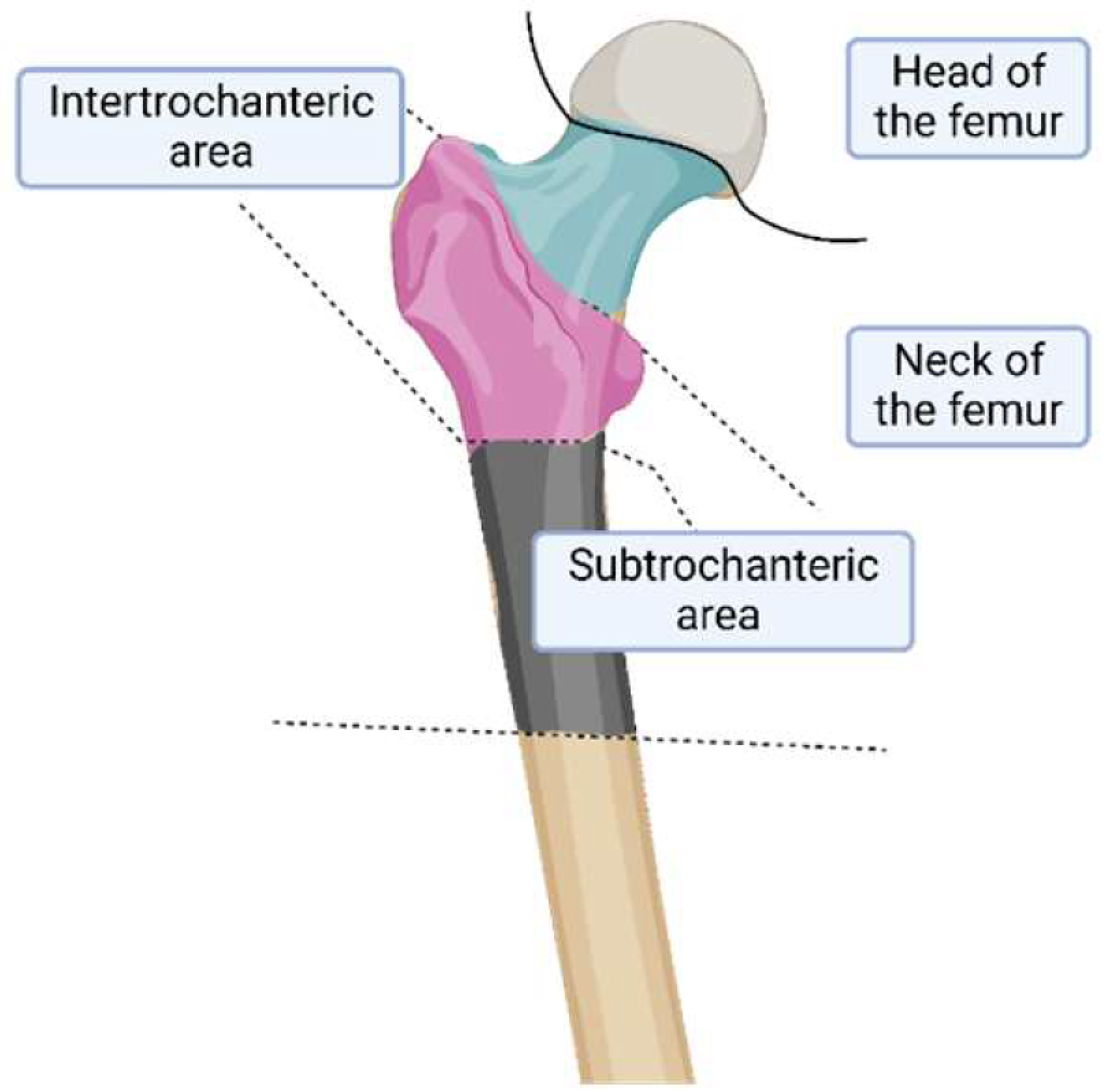
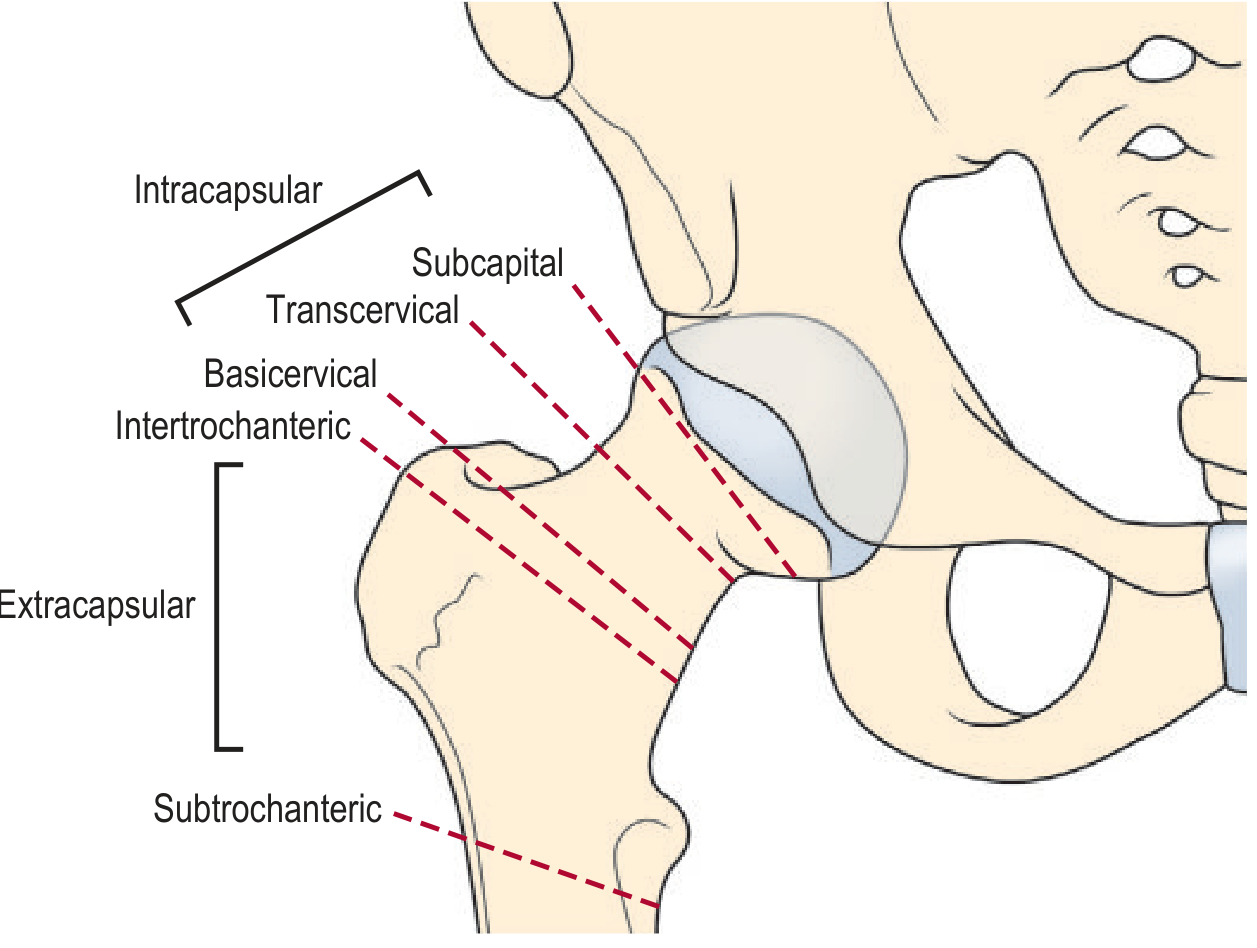
INTRACAPSULAR Fractures
These occur within the hip joint capsule - at the femoral head and neck.
| Sub-type | Location |
|---|---|
| Subcapital | Just below the femoral head (most common intracapsular type) |
| Transcervical | Through the middle of the femoral neck |
| Basicervical | At the base of the femoral neck (at the capsular attachment) |
Key concern - blood supply: The retinacular arteries (from the medial circumflex femoral artery) run within the capsule and supply ~80% of blood to the femoral head. Intracapsular fractures, especially displaced ones, disrupt these vessels and risk avascular necrosis (AVN) in 15-35% of cases.
Treatment:
- Undisplaced (Garden I & II): internal fixation (dynamic hip screw or multiple screws), especially in younger patients
- Displaced (Garden III & IV): hemiarthroplasty or total hip replacement in elderly; fixation attempts in young patients (<60 years)
EXTRACAPSULAR Fractures
These occur outside the joint capsule - below the capsular attachment.
| Sub-type | Location |
|---|---|
| Intertrochanteric | Between the greater and lesser trochanter |
| Trochanteric | At the trochanteric region |
| Subtrochanteric | Within 5 cm below the lesser trochanter |
Key advantage: Because these are outside the capsule, the blood supply to the femoral head is not typically at risk. AVN is uncommon. However, extracapsular fractures (especially intertrochanteric) tend to have greater occult blood loss than intracapsular ones.
Treatment: Internal fixation - dynamic hip screw with plate, or intramedullary nail (especially for subtrochanteric fractures due to high bending forces).
Quick Summary Table
| Feature | Intracapsular | Extracapsular |
|---|---|---|
| Location | Femoral head + neck | Intertrochanteric, trochanteric, subtrochanteric |
| AVN risk | High (15-35%) | Low |
| Blood loss | Less | More (occult) |
| Nonunion risk | Higher | Lower |
| Treatment | Arthroplasty or fixation | Internal fixation (DHS / IMN) |
Classification used for intracapsular fractures: The Garden classification (Stages I-IV based on displacement) is the most widely used system to guide treatment decisions for femoral neck fractures.
- Tintinalli's Emergency Medicine, p. 1884
- Grainger & Allison's Diagnostic Radiology, p. 1162
- Osteosynthesis, Hemiarthroplasty, Total Hip Arthroplasty - Scoping Review, p. 2
This is a shared conversation. Sign in to Orris to start your own chat.