
Teach Cirrhosis according to pathology
Reading File
Now let me search the medical library for comprehensive cirrhosis pathology content in parallel:
Finding Sources
Finding Sources
Robbins Pathologic Basis of Disease is the gold standard for pathology. Let me find the dedicated cirrhosis section there, plus search for key pathological topics:
Finding Sources
Finding Sources
Excellent! Found dedicated cirrhosis sections in both Robbins books. Let me read all of them in parallel:
Reading File
Reading File
Finding Sources
Excellent content! Let me continue reading both Robbins texts for pathogenesis, consequences, and images:
Reading File
Reading File
Now let me read more of Robbins Pathologic Basis of Disease for pathogenesis, complications, and portal hypertension:
Reading File
Finding Sources
I have rich content. Let me now fetch the key pathology images and read the pathogenesis section more thoroughly:
Loading Image
Loading Image
Loading Image
Reading File
I now have excellent pathological content and images. Let me also search for the pathogenesis of fibrosis (stellate cells) section and fetch one more key image:
Finding Sources
Finding Sources
I have very rich content from multiple authoritative pathology texts. Let me read the stellate cell/fibrosis pathogenesis section from Goldman-Cecil and the Schwartz morphologic classification:
Reading File
Reading File
Let me fetch the Goldman-Cecil gross/micro comparison image:
Loading Image
Loading Image
I now have all the material needed for a comprehensive, image-rich pathology lecture on cirrhosis. Let me compile the complete response:
Cirrhosis - A Pathology-Based Teaching Guide
Sources: Robbins & Cotran Pathologic Basis of Disease (10e), Robbins & Kumar Basic Pathology, Goldman-Cecil Medicine, Schwartz's Principles of Surgery
1. Definition
Cirrhosis is defined as the diffuse transformation of the entire liver into regenerative parenchymal nodules surrounded by fibrous bands, with a variable degree of vascular (portosystemic) shunting. It represents the morphologic endpoint of virtually any chronic liver injury.
Three cardinal features must ALL be present:
- Diffuse fibrosis (fibrous septa bridging portal tracts and/or central veins)
- Regenerative nodules (islands of hepatocytes attempting repair)
- Disruption of the normal hepatic architecture (loss of the lobular and vascular organization)
Note: Cirrhosis ≠ Chronic liver failure. Not all cirrhosis leads to liver failure, and not all end-stage liver disease is cirrhotic. (e.g., primary biliary cholangitis, primary sclerosing cholangitis, and nodular regenerative hyperplasia may reach end-stage without fully established cirrhosis.) - Robbins & Cotran PBD
2. Etiology
| Category | Examples |
|---|---|
| Alcohol-associated | Most common in Western nations |
| Viral hepatitis | HBV, HCV, HDV (superinfection) |
| Metabolic | MASLD/NASH (now the most common worldwide), NAFLD |
| Cholestatic/Autoimmune | Primary biliary cholangitis (PBC), primary sclerosing cholangitis (PSC), autoimmune hepatitis |
| Genetic/Metabolic disorders | Hemochromatosis, Wilson disease, alpha-1-antitrypsin deficiency, glycogen storage diseases, galactosemia, tyrosinemia |
| Vascular | Budd-Chiari syndrome, right heart failure (cardiac cirrhosis) |
| Drugs/Toxins | Methotrexate, amiodarone |
| Cryptogenic | No identifiable cause (~10-15%) |
3. Pathogenesis - The Core Mechanism
The fundamental sequence is: Hepatocyte injury → Inflammation → Stellate cell activation → Fibrosis → Architectural distortion → Nodular regeneration
Step 1: The Key Cell - Hepatic Stellate Cells (Ito Cells)
The central pathogenic feature is activation of hepatic stellate cells (HSCs), also known as Ito cells or perisinusoidal cells. - Goldman-Cecil Medicine
- Normal state: HSCs reside quiescent in the Space of Disse (between hepatocytes and sinusoidal endothelial cells), storing retinoids (vitamin A) as lipid droplets.
- Activated state: In response to chronic liver injury, HSCs undergo a dramatic transformation:
- Lose their vitamin A lipid droplets
- Proliferate and develop prominent rough endoplasmic reticulum
- Transform into contractile myofibroblasts (smooth muscle actin-positive)
- Begin secreting extracellular matrix: collagen types I and III, sulfated proteoglycans, and glycoproteins
Step 2: Triggers of Stellate Cell Activation
Stellate cells are activated by signals from multiple sources:
- Kupffer cells (resident macrophages) release TGF-β, TNF-α, IL-1
- Damaged hepatocytes release reactive oxygen species (ROS), lipid peroxidation products
- Inflammatory cells (T cells, NK cells, NKT cells) release inflammatory cytokines
- TGF-β1 is the dominant pro-fibrotic cytokine
- PDGF (platelet-derived growth factor) is the main stimulus for stellate cell proliferation
Step 3: Progressive Fibrosis
Continued activation leads to:
- Deposition of collagen in the perisinusoidal space (normally collagen-free)
- Formation of fibrous septa linking portal tracts to each other (portal-portal bridging) or to central veins (portal-central bridging)
- Capillarization of sinusoids - loss of sinusoidal fenestrae and deposition of basement membrane → impairs exchange between blood and hepatocytes
- Ductular reactions - proliferating bile ductule-like structures appear, driven by progenitor cell activation; increase with disease progression and are most prominent in cirrhosis
Step 4: Nodular Regeneration
Hepatocytes that survive attempt regeneration, but because the fibrous framework is disrupted:
- Regenerating hepatocytes form discrete nodules (not lobules)
- The regenerative nodules have no proper central vein or portal tract - architecture is completely disorganized
- Adjacent nodules may coalesce over time
Fibrosis Regression (Important Concept)
Fibrosis - and even established cirrhosis - can regress if the underlying cause is eliminated (e.g., alcohol abstinence, cure of hepatitis C with antivirals). Scars become thinner and more densely compacted, then begin to fragment. Fibrous septa break apart and adjacent nodules coalesce into larger islands. - Robbins & Cotran PBD
4. Morphology
Gross Pathology
Fig. 18.6 - Cirrhosis from chronic viral hepatitis. The normally smooth liver capsule is converted into a bumpy, nodular surface with depressed areas of dense scar and bulging regenerative nodules.
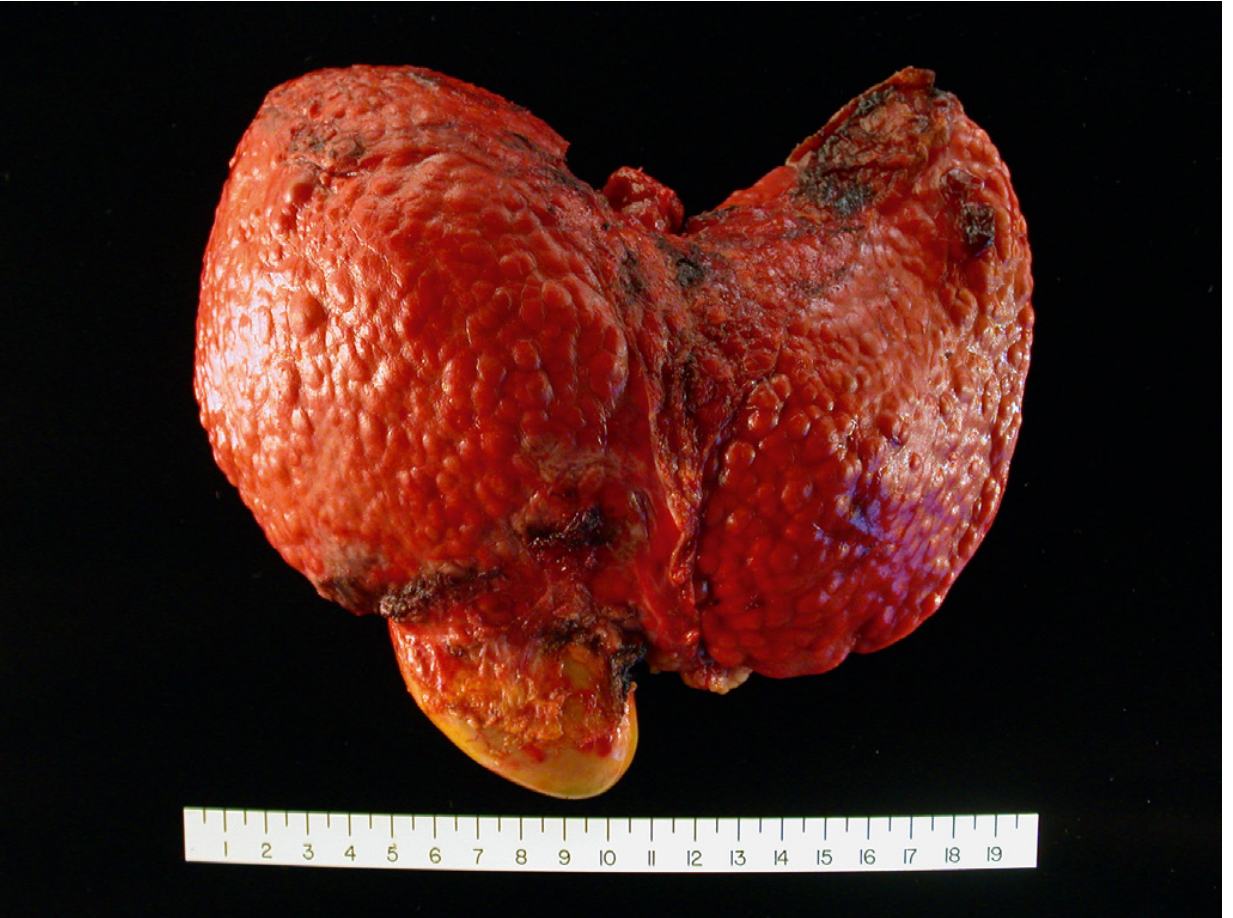
Robbins & Cotran Pathologic Basis of Disease - Gross specimen of cirrhosis from chronic viral hepatitis
Normal vs. Cirrhotic liver comparison (Goldman-Cecil Medicine):
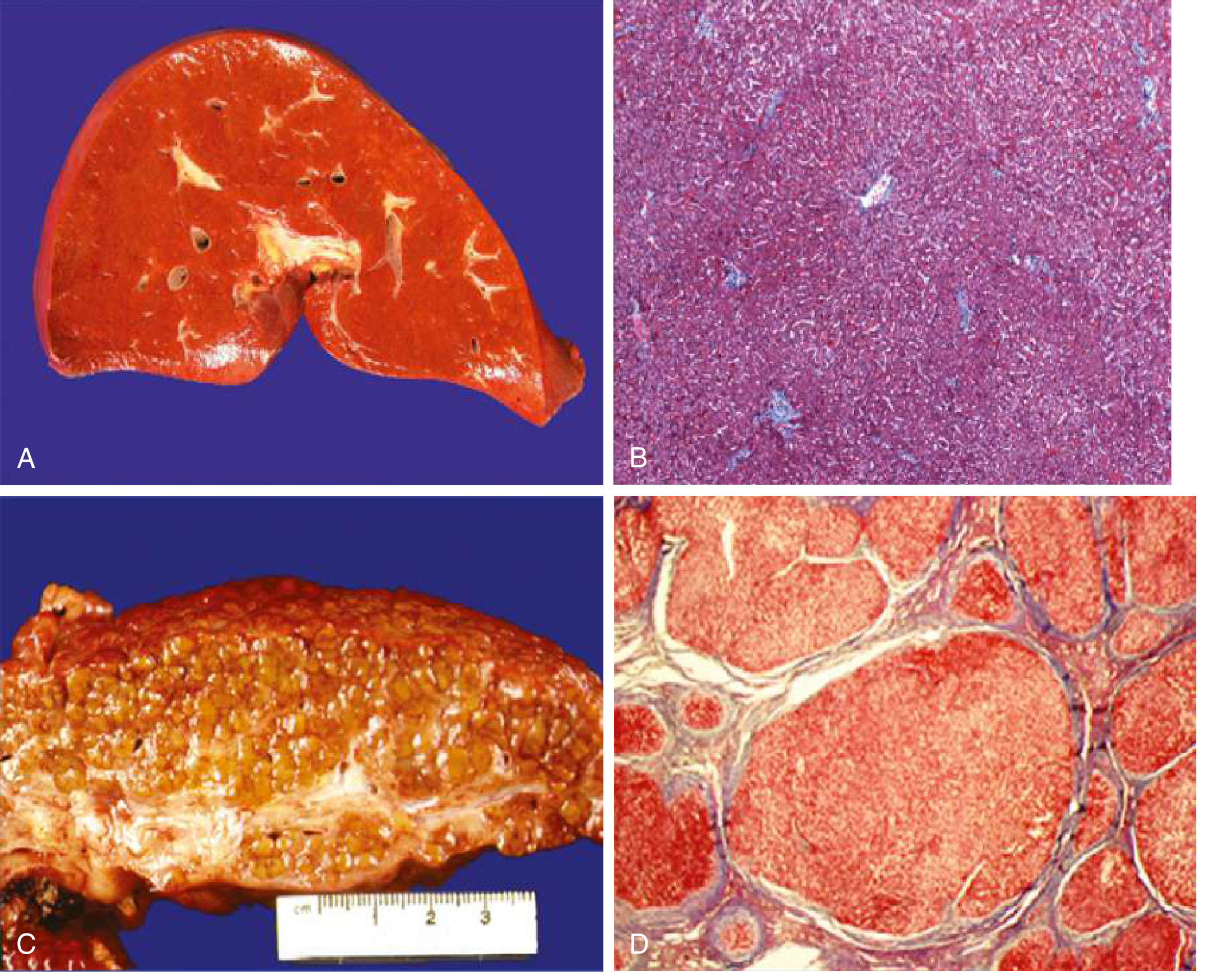
- A: Normal liver - smooth surface, homogeneous texture
- B: Normal histology - organized sinusoids, normal vascular structures
- C: Cirrhotic liver - orange-tawny color, irregular nodular surface
- D: Cirrhotic histology - disorganized architecture, regenerative nodules surrounded by fibrous tissue
Microscopic Pathology
Masson Trichrome stain is the key special stain - highlights collagen (blue) against pink hepatocytes.
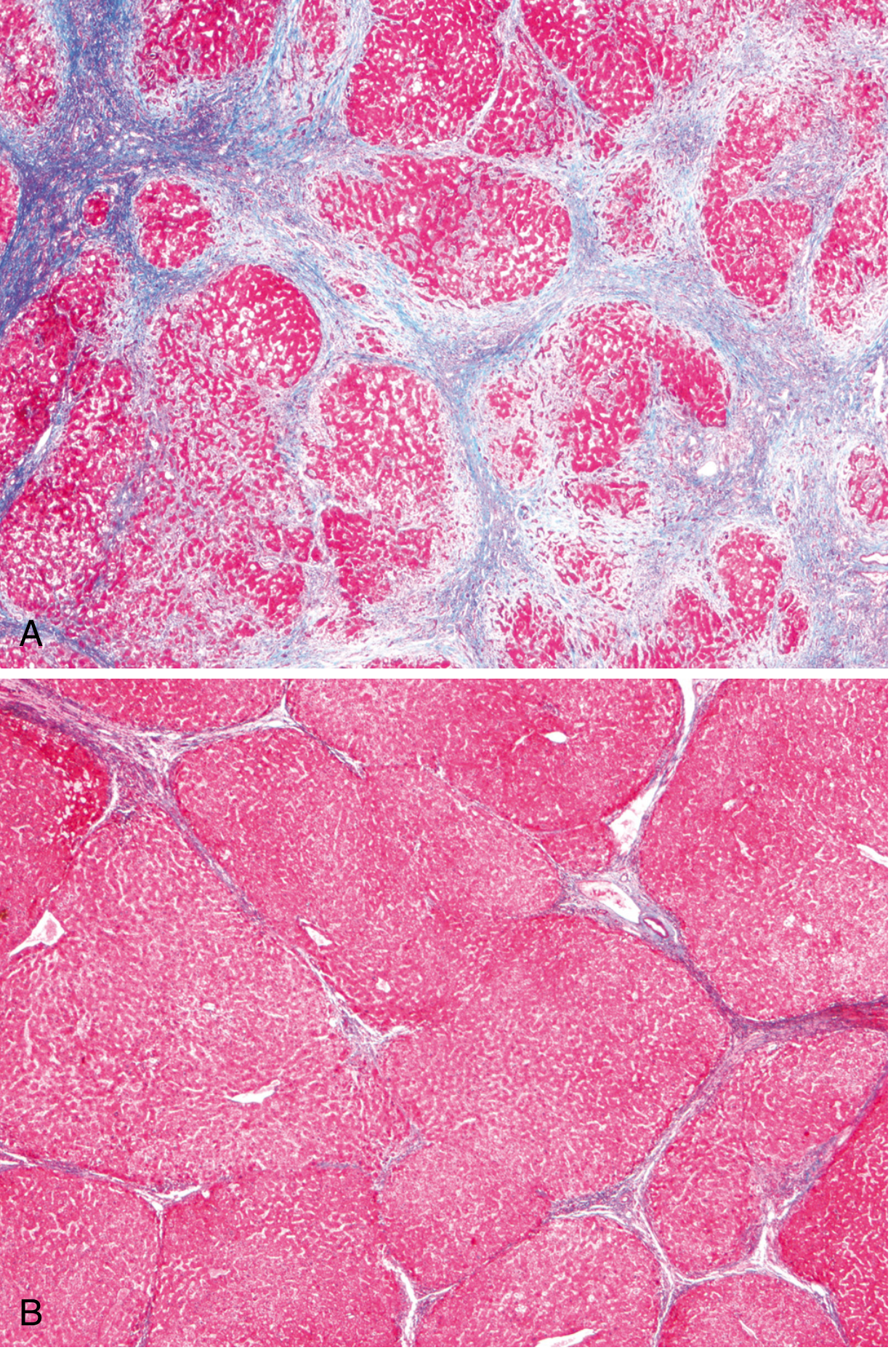
- (A) Active cirrhosis: Thick bands of blue-stained collagen separating rounded cirrhotic nodules
- (B) After 1 year of abstinence: Most scars are gone, thin residual septa remain - demonstrates reversibility
Macronodular cirrhosis with bridging fibrosis (H&E):
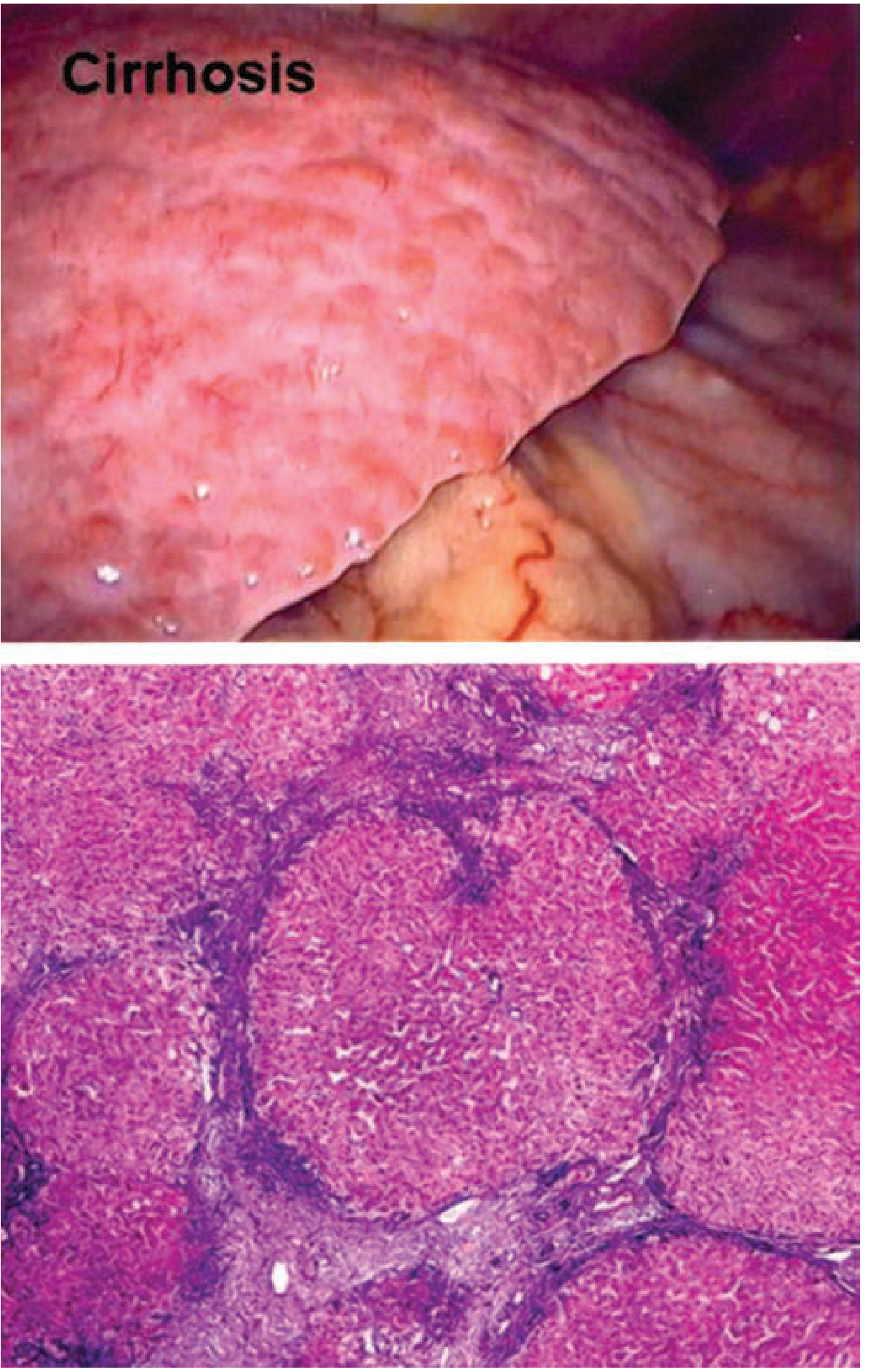
Morphologic Classification (Nodule Size)
| Type | Nodule Size | Pattern | Typical Association |
|---|---|---|---|
| Micronodular | < 3 mm | Thick regular septa, uniform small nodules, all lobules involved | Alcohol-associated (classic), early cirrhosis |
| Macronodular | > 3 mm | Varying nodule and septum size, irregular | Viral hepatitis, PBC, post-necrotic |
| Mixed | Both | Transition pattern | Micronodular converting to macronodular |
Important: This WHO morphologic classification has limited utility - the same pattern can arise from different etiologies, and the same etiology can show multiple patterns. Cirrhosis is a dynamic process in which nodule size changes over time. - Schwartz's Principles of Surgery
5. Consequences and Complications (Pathophysiology)
A. Portal Hypertension
This is the single most important complication and is intrahepatic in origin due to two mechanisms:
- Mechanical obstruction - fibrous bands and regenerative nodules compress and distort sinusoids and portal venules, increasing resistance to portal blood flow
- Increased portal blood flow - peripheral and splanchnic vasodilation (mediated by nitric oxide and other vasodilators) causes a hyperdynamic circulation that further increases portal inflow
Causes of portal hypertension (by location):
| Location | Examples |
|---|---|
| Prehepatic | Portal vein thrombosis, splenomegaly with increased splenic vein flow |
| Intrahepatic (dominant) | Cirrhosis (any cause), nodular regenerative hyperplasia, schistosomiasis, massive fatty change, sarcoidosis |
| Posthepatic | Right heart failure, constrictive pericarditis, hepatic vein outflow obstruction (Budd-Chiari) |
Consequences of portal hypertension:
- Esophageal and gastric varices - collateral vessels at the gastroesophageal junction that can rupture catastrophically. The most feared acute complication - variceal hemorrhage is a leading cause of death.
- Caput medusae - dilated periumbilical collaterals from recanalization of the umbilical vein
- Hemorrhoids - collaterals at the anorectal junction
- Congestive splenomegaly → hypersplenism (thrombocytopenia, anemia, leukopenia)
- Ascites (see below)
B. Ascites
Mechanism (multifactorial):
- Portal hypertension → increased hydrostatic pressure in splanchnic capillaries
- Hypoalbuminemia (liver failure) → reduced oncotic pressure
- Splanchnic vasodilation → arterial underfilling → activation of renin-angiotensin-aldosterone system (RAAS) and ADH → sodium and water retention
C. Hepatic Encephalopathy
- The liver normally clears ammonia (from gut bacteria and amino acid metabolism) by converting it to urea. In cirrhosis + portosystemic shunting, ammonia bypasses the liver and reaches the brain.
- Other neurotoxins (mercaptans, short-chain fatty acids, false neurotransmitters) also contribute.
- Clinically: ranges from subtle personality changes → asterixis (flapping tremor) → coma.
D. Hepatorenal Syndrome
- Renal failure WITHOUT intrinsic renal pathology
- Mechanism: Hepatic failure → excess vasodilator production (nitric oxide) → reduced renal perfusion pressure → activation of renal sympathetic nervous system and RAAS → afferent arteriolar vasoconstriction → progressive renal failure
- Reversible if liver function is restored (e.g., by transplantation)
E. Hyperestrogenemia
Due to impaired hepatic estrogen metabolism:
- Spider angiomas (central pulsating arteriole with radiating vessels)
- Palmar erythema (local vasodilation)
- Gynecomastia and hypogonadism in males
- Menstrual irregularities in females
F. Coagulopathy
- Reduced synthesis of clotting factors (all factors except vWF are made in the liver)
- Thrombocytopenia from hypersplenism
- Vitamin K malabsorption (due to cholestasis)
G. Hepatocellular Carcinoma (HCC)
- Cirrhosis is the strongest risk factor for HCC, regardless of etiology
- Repeated cycles of cell death and regeneration → accumulation of genetic mutations → malignant transformation
- HBV-related HCC can arise without cirrhosis (HBV DNA integrates into the genome)
- Annual ultrasound surveillance is standard of care in cirrhotic patients
H. Other
- Bacterial infections/Spontaneous Bacterial Peritonitis (SBP) - Kupffer cell dysfunction + gut mucosal barrier damage → bacteremia → seeding of ascitic fluid
- Cholestasis and pruritus - persistent pruritus from bile salt accumulation can be profound and debilitating
- Jaundice - impaired bilirubin conjugation and excretion
6. Compensated vs. Decompensated Cirrhosis
| Feature | Compensated | Decompensated |
|---|---|---|
| Definition | Cirrhosis without major complications | Development of ascites, variceal hemorrhage, encephalopathy, or jaundice |
| Median survival | >12 years | ~2 years without transplant |
| Mechanism | Adequate functional reserve | Portal hypertension + liver insufficiency |
Decompensation is defined by any of four events: ascites, variceal hemorrhage, encephalopathy, jaundice - Goldman-Cecil Medicine
7. Clinical Features Summary
About 40% of patients with cirrhosis are asymptomatic until advanced stages. The common causes of death are:
- Hepatic encephalopathy
- Bleeding from esophageal varices
- Bacterial infections (SBP, sepsis)
- Hepatocellular carcinoma
8. Key Pathology Exam Points
| Fact | Detail |
|---|---|
| Hallmark stain | Masson Trichrome (collagen = blue) |
| Central cell in pathogenesis | Hepatic stellate cell (Ito cell) in Space of Disse |
| Transformation | Quiescent stellate cell → contractile myofibroblast |
| Key cytokine | TGF-β1 (pro-fibrotic); PDGF (proliferation) |
| Collagen types deposited | Types I and III |
| Alcohol-associated cirrhosis histology | Micronodular pattern, Mallory bodies (hyaline), neutrophil infiltrate, steatosis |
| Key special stain to highlight nodules | Trichrome or reticulin |
| Key reversibility concept | Fibrosis - even cirrhosis - can regress with removal of the causative agent |
| HCC risk | Present in all forms of cirrhosis; screen with AFP + ultrasound every 6 months |
Sources: Robbins & Cotran Pathologic Basis of Disease (10e), pp. 769-770; Robbins & Kumar Basic Pathology, pp. 597-598; Goldman-Cecil Medicine, p. 1614; Schwartz's Principles of Surgery (11e), p. 1390
This is a shared conversation. Sign in to Orris to start your own chat.