
Voice prosthesis in detail for 50 marks with diagram and flow charts from Scott Brown, Cummings, stell and marans, Zakir Hussain, dhingra, hazarika and related articles with recent advances according to rguhs university
Reading File
Finding Sources
Searching PubMed
"voice prosthesis" AND tracheoesophageal
Searching the Web
voice prosthesis tracheoesophageal after laryngectomy types Blom Singer indwelling non-indwelling recent advances
Finding Sources
Reading Web Page
https://pmc.ncbi.nlm.nih.gov/articles/PMC3421009
Finding Sources
Reading Article
PMID: 38540616
Finding Sources
Finding Sources
Finding Sources
Finding Sources
Reading File
Reading File
Finding Sources
Reading Article
PMID: 34763996
Finding Sources
Searching the Web
Blom Singer voice prosthesis types indwelling non-indwelling Provox Provox Vega recent advances biofilm antibiotic 2023 2024
Loading Image
Searching PubMed
tracheoesophageal voice prosthesis complications management biofilm
VOICE PROSTHESIS
(50-Mark Answer - RGUHS ENT Examination Standard)
Sources: Cummings Otolaryngology 7th Ed, Scott-Brown's Otorhinolaryngology, Dhingra's Diseases of Ear Nose & Throat, Hazarika's ENT, Stell & Maran's, KJ Lee, recent PubMed evidence
1. INTRODUCTION
Voice prosthesis is a one-way valve device inserted into a surgically created tracheoesophageal puncture (TEP) to restore speech following total laryngectomy. It is currently regarded as the gold standard for post-laryngectomy voice rehabilitation, with success rates exceeding 90%.
- First commercially available device: Singer and Blom (1980) - the Blom-Singer Duckbill prosthesis
- First indwelling device: Groningen prosthesis (1984) by Henk Nijdam
- First Provox device: 1990 by Atos Medical (Amsterdam)
(Cummings Otolaryngology, Chapter 111)
2. ANATOMY OF THE PHARYNGOESOPHAGEAL (PE) SEGMENT
After total laryngectomy, the sound source shifts from the true vocal folds to the PE segment. The PE segment is formed by:
- Inferior constrictor muscle
- Cricopharyngeus (upper esophageal sphincter)
- Upper cervical esophagus
Vibration of PE segment mucosa (neoglottis) by pulmonary air diverted through the TEP produces tracheoesophageal (TE) voice.
3. METHODS OF ALARYNGEAL SPEECH
┌──────────────────────────────────────────────────────────────┐
│           POST-LARYNGECTOMY SPEECH REHABILITATION            │
└──────────────────────────────────────────────┬───────────────┘
                                               │
          ┌────────────────┬───────────────────┤
          │                │                   │
    ┌─────▼──────┐  ┌──────▼──────┐   ┌───────▼────────┐
    │ Esophageal │  │ Electrolarynx│   │ Tracheoesoph.  │
    │  Speech    │  │  (Artificial │   │  Voice Prosth. │
    │            │  │   Larynx)    │   │  ← GOLD STD    │
    └─────┬──────┘  └──────┬───────┘   └───────┬────────┘
          │                │                    │
    40-60%         Rapid acquisition        ~90% success
    success        Robot-like voice         Pulmonary driven
    Short phonation  Monotonous            Natural voice quality
    time (1-2 sec)  One-hand occupied      Long phonation time
Comparison Table:
| Feature | Esophageal Speech | Electrolarynx | TE Voice Prosthesis |
|---|---|---|---|
| Air Source | Esophageal (60-80 mL) | Electric vibration | Pulmonary (liters) |
| Success Rate | 40-60% | >90% | ~90% |
| Learning Time | Months | Days | 2 weeks |
| Voice Quality | Fair | Robotic | Near-normal |
| Phonation Time | 1-2 seconds | Continuous | >20 seconds |
| Cost | Nil | Moderate | High (device + replacement) |
| Hands-free | Yes | No | With HME |
(Cummings Otolaryngology, p. 2149; Dhingra's ENT 8th Ed)
4. PRINCIPLE OF VOICE PROSTHESIS
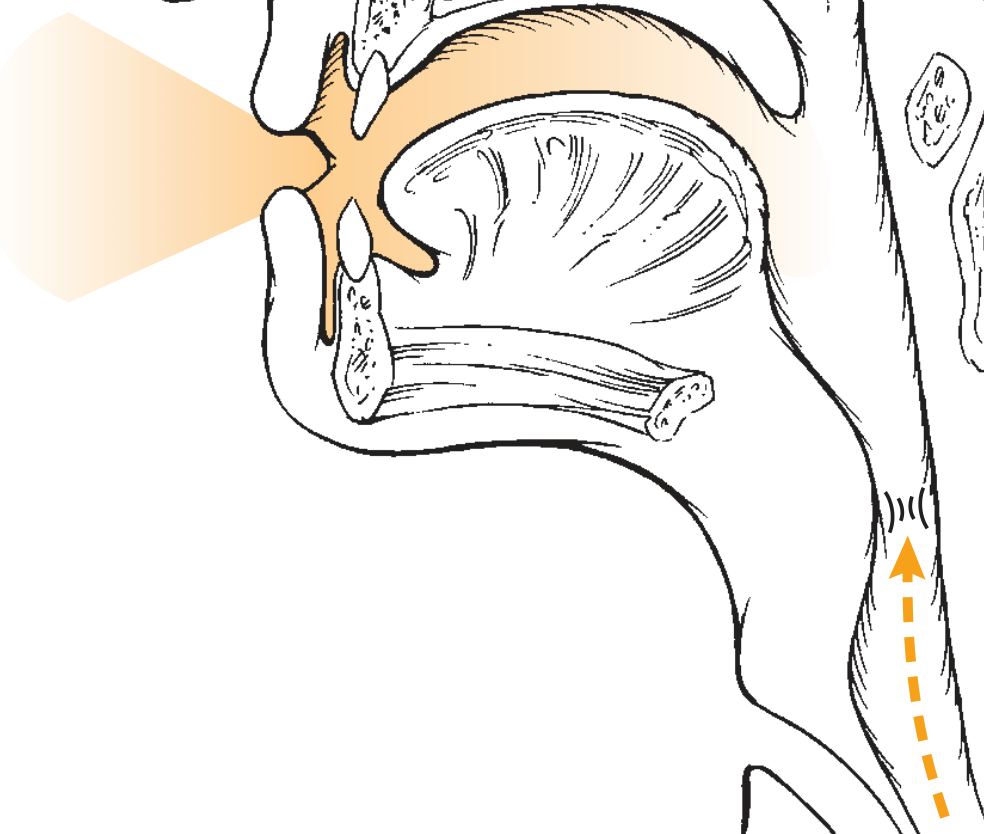
Mechanism:
                    ┌──────────────────────┐
    Patient occludes│    STOMA OCCLUSION   │
    stoma manually  │  (thumb/HME filter)  │
    or with HME     └─────────┬────────────┘
                              │ Expiratory airflow
                              ▼
              ┌───────────────────────────────┐
              │       VOICE PROSTHESIS        │
              │  (in TEP tract, posterior      │
              │   tracheal / anterior          │
              │   esophageal wall)             │
              │  ┌──────────────────────────┐  │
              │  │ One-way valve OPENS on  │  │
              │  │ expiratory pressure     │  │
              │  └──────────────────────────┘  │
              └──────────────┬────────────────┘
                             │ Air enters esophagus
                             ▼
              ┌───────────────────────────────┐
              │   PE SEGMENT VIBRATES         │
              │   (neoglottis / pseudo-glottis)│
              └──────────────┬────────────────┘
                             │ Sound produced
                             ▼
              ┌───────────────────────────────┐
              │  VOCAL TRACT ARTICULATION     │
              │  (tongue, lips, palate)       │
              └───────────────────────────────┘
                             │
                             ▼
                    INTELLIGIBLE SPEECH

   At end of expiration: valve CLOSES automatically
   → Prevents esophageal reflux/aspiration of saliva/food
(Cummings Otolaryngology, Chapter 111, p. 2149)
5. TRACHEOESOPHAGEAL PUNCTURE (TEP) - THE PROCEDURE
5a. Types by Timing
         TRACHEOESOPHAGEAL PUNCTURE
                    │
        ┌───────────┴──────────────┐
        │                         │
  PRIMARY TEP                SECONDARY TEP
(at time of TL)          (deferred, weeks/months
        │                  after TL surgery)
        │                         │
  Advantages:              Advantages:
  Single anesthesia         Allows pharyngeal
  Immediate rehab           healing first
  No second surgery         Better patient
  Disadvantages:            selection possible
  Pharyngeal edema          Used if post-op
  may complicate            RT anticipated
  prosthesis fitting
5b. Surgical Technique (Singer-Blom Method)
- Patient positioned supine, neck slightly extended
- A #14 red rubber catheter passed from the esophagus via the mouth is palpated in the trachea
- A 16G needle or trocar is passed through the posterior tracheal wall / anterior esophageal wall at the 12 o'clock position, approximately 5mm below the superior tracheal margin of stoma
- A guidewire is passed through the needle into the esophagus
- The puncture is dilated
- The prosthesis is loaded onto an introducer/dilator and inserted
- Prosthesis flanges secure it in position
(Scott-Brown's, Vol 2; Cummings p. 2150-2152)
6. TYPES OF VOICE PROSTHESES
Classification
          VOICE PROSTHESES
                 │
    ┌────────────┴───────────────┐
    │                           │
NON-INDWELLING              INDWELLING
(Patient-removable)         (Clinician-changed)
         │                         │
  ─ Blom-Singer Duckbill    ─ Blom-Singer Classic
  ─ Provox NiD              ─ Blom-Singer Advantage
  ─ Nijdam prosthesis        ─ Provox 2
  ─ Patient inserts/         ─ Provox Vega™
    removes daily            ─ Provox Vega™ XtraSeal
  ─ Cheaper, shorter         ─ Provox ActiValve
    device life              ─ Longer device life
  ─ Patient compliance       ─ Changed only by
    required                   clinician
                             ─ 70%+ market share (2024)
6a. Non-Indwelling Prostheses
| Feature | Description |
|---|---|
| Examples | Blom-Singer Duckbill (first, 1980), Provox NiD |
| French size | 16Fr, 20Fr (Provox NiD: 17Fr or 20Fr) |
| Lengths available | 6, 8, 10, 12, 14, 18 mm |
| Valve type | Duck-bill (collapsible slit valve) |
| Changed by | Patient themselves |
| Device life | Shorter (weeks) |
| Indication | Patient with good manual dexterity; earlier prosthesis type |
6b. Indwelling Prostheses
| Prosthesis | Manufacturer | Features |
|---|---|---|
| Blom-Singer Classic | InHealth Technologies | Introduced 1994; silicone; clinician-changed |
| Blom-Singer Advantage | InHealth Technologies | Low-pressure valve; better for high PE segment resistance |
| Provox 2 | Atos Medical | Replaceable anteriorly; longer device life |
| Provox Vega | Atos Medical | 2009; optimized airflow; SmartInserter; 22.5Fr |
| Provox Vega XtraSeal | Atos Medical | 2014; extra collar reduces periprosthetic leakage |
| Provox ActiValve | Atos Medical | 2003; anti-candida silver/gold coating; for patients with short device life due to Candida |
(Atos Medical Literature Review 2022; Wikipedia Voice Prosthesis; Cummings)
7. VOICE PROSTHESIS IN CROSS-SECTION (Structural Diagram)
    TRACHEAL SIDE                          ESOPHAGEAL SIDE
    (anterior)                               (posterior)
         │                                        │
    ─────┼─────────────────────────────────────────┼─────
         │   ┌──────────────────────────────┐      │
         │   │    PROSTHESIS BODY          │      │
    ─────┼───┤  (silicone cylinder)        ├──────┼─────
         │   │                             │      │
    Tracheal │  ┌──────────┐ lumen ┌──────┐│ Esophageal
    flange   │  │          │───────│ VALVE││ flange
    (keeps   │  └──────────┘       └──────┘│ (retention)
    in place)│                             │
         │   └──────────────────────────────┘      │

    [one-way valve opens →→→ with expiratory pressure]
    [closes ←←← automatically when pressure ceases]
Key structural components:
- Tracheal flange - prevents posterior migration
- Esophageal flange - prevents anterior displacement
- Shaft/body - traverses the TEP tract
- One-way valve - duck-bill or hinge type; opens in one direction only
- Low-pressure valve - critical - opens at ≤5 cm H₂O pressure
8. PATIENT SELECTION CRITERIA
         CANDIDATE ASSESSMENT FOR VOICE PROSTHESIS
                          │
            ┌─────────────┴──────────────┐
            │                            │
      PREREQUISITES                  EXCLUSIONS
            │                            │
  ✓ Total laryngectomy             ✗ Poor pharyngeal
  ✓ Adequate manual dexterity          function
  ✓ Motivated patient             ✗ Severe GERD
  ✓ Normal swallowing             ✗ Esophageal stricture
  ✓ PE segment functional         ✗ Severe neurologic
  ✓ Air insufflation test             deficit
    positive (±)                  ✗ Active pharyngeal
  ✓ No esophageal stenosis            fistula
  ✓ Adequate tracheal depth       ✗ Poor compliance
  ✓ Psychiatric stability         ✗ Active uncontrolled
                                      pharyngo-cutaneous
                                      fistula
Air Insufflation Test (Pre-operative Assessment)
- A catheter is passed transnasally into the esophagus
- Air is insufflated at 80-100 mL/sec
- Patient attempts phonation
- Positive test: sustained phonation without spasm (predicts good TE voice)
- Spasm present: suggests hypertonic PE segment; may need pharyngeal myotomy or Botox injection
(Cummings Otolaryngology, p. 2152)
9. PROSTHESIS SIZING AND FITTING
        PROSTHESIS FITTING PROTOCOL
                    │
        ┌───────────▼────────────┐
        │  MEASURE TEP TRACT     │
        │  (using depth gauge)   │
        └───────────┬────────────┘
                    │
        ┌───────────▼────────────┐
        │  SELECT PROSTHESIS     │
        │  LENGTH & DIAMETER     │
        │  (e.g. 8mm, 10mm,      │
        │   12mm lengths;        │
        │   20Fr or 22.5Fr dia.) │
        └───────────┬────────────┘
                    │
        ┌───────────▼────────────┐
        │  INSERT PROSTHESIS     │
        │  (using inserter tool) │
        └───────────┬────────────┘
                    │
        ┌───────────▼────────────┐
        │  VERIFY PLACEMENT      │
        │  (check flanges; both  │
        │  sides correctly seated)│
        └───────────┬────────────┘
                    │
        ┌───────────▼────────────┐
        │  SPEECH THERAPY STARTS │
        │  (Day 1-2 post-fitting) │
        └────────────────────────┘
Size selection principle:
- Prosthesis length = depth of TEP tract (measured from posterior tracheal to anterior esophageal mucosa)
- Too short: esophageal flange catches; leakage
- Too long: valve does not seat correctly; voice is poor
- Standard lengths: 4 mm to 18 mm (in 2 mm increments)
10. COMPLICATIONS OF VOICE PROSTHESIS AND TEP
10a. Prosthesis-Related Complications
COMPLICATIONS
      │
      ├──── 1. LEAKAGE
      │         ├── Through the prosthesis (valve failure)
      │         │     → Cause: Candida biofilm; valve wear
      │         │     → Management: Replace prosthesis
      │         │       (Provox ActiValve for recurrent Candida)
      │         │
      │         └── Around the prosthesis (periprosthetic)
      │               → Cause: enlarged TEP tract/atrophy
      │               → Mgmt: Downsize → Collagen injection
      │                        → Surgery (closure + re-puncture)
      │
      ├──── 2. PROSTHESIS DISPLACEMENT
      │         ├── Anterior (into trachea) - dislodgement
      │         └── Posterior (into esophagus) - migration
      │               → Risk: Aspiration of prosthesis into airway
      │               → Management: Retrieval endoscopically
      │
      ├──── 3. GRANULATION TISSUE at TEP margin
      │         → Cauterization / excision
      │
      ├──── 4. TEP TRACT INFECTIONS
      │         → Cellulitis, abscess → antibiotics ± drainage
      │
      └──── 5. DIFFICULTY WITH PHONATION
                ├── Hypertonic PE segment
                │     → Pharyngeal myotomy
                │     → Botulinum toxin injection
                └── Hypotonic PE segment
                      → Exercise, insufficient air pressure
10b. TEP Tract Complications
| Complication | Cause | Management |
|---|---|---|
| Tract enlargement (widening) | Chronic Candida, GERD, pressure necrosis | Downsize prosthesis; collagen/fat injection; closure |
| Tract stenosis/scarring | Fibrosis, radiation | Dilatation; re-puncture |
| Fistula enlargement | Radiation damage, pressure | Surgical repair |
| Pharyngocutaneous fistula | Post-TL wound breakdown | Conservative; surgical repair |
(Cummings Otolaryngology, p. 2160-2172, from content read)
11. THE ROLE OF CANDIDA IN PROSTHESIS FAILURE
This is a high-yield RGUHS topic:
- Candida albicans is the primary organism responsible for prosthesis valve failure
- Biofilm formation on silicone surface degrades the valve leaflets
- Results in: leakage through prosthesis, shortened device life
- Prevention/management:
- Daily prosthesis cleaning (brush provided with each device)
- Nystatin suspension orally (1-2 mL, rinse and swallow)
- Amphotericin lozenges
- Provox ActiValve (silver/gold-impregnated device) - anti-biofilm
- Probiotics (Lactobacillus) - experimental evidence
(Cummings Otolaryngology; Scott-Brown's; Recent evidence: Atos Medical 2022 Literature Review)
12. VOICE OUTCOMES AND QUALITY OF LIFE
Key statistics for examination:
- TE voice success rate: ~90% (vs. 40-60% for esophageal speech)
- Typical time to useful speech: 2 weeks post-TEP
- Phonation time: Comparable to normal laryngeal speech (>20 seconds)
- Fundamental frequency: 90-160 Hz (similar to normal)
- Speech intelligibility: Superior to esophageal and electrolarynx speech
Recent evidence (Maniaci et al., 2024 - Meta-Analysis, PMID 34763996):
- 15 studies, 1085 patients (869 TE voice vs 216 esophageal voice)
- VHI (Voice Handicap Index) significantly better in TEV group (31.93 vs 35.39, p=0.003)
- VrQoL not significantly different (8.27 vs 9.27, p=0.19)
- Conclusion: TEV allows better speech performance but does not necessarily translate to higher quality of life scores
13. HANDS-FREE VALVE (HME - HEAT AND MOISTURE EXCHANGER)
After TEP voice rehabilitation, patients must occlude the stoma manually to speak. The HME system allows hands-free speech:
     HME (Heat-Moisture Exchanger) + Automatic Speaking Valve
                          │
     ┌────────────────────▼────────────────────┐
     │  BASEPLATE adhered around stoma         │
     │  ↓                                      │
     │  HME cassette (foam filter inside)      │
     │  ─ Warms/moistens inhaled air           │
     │  ─ Reduces tracheal mucus burden        │
     │  ↓                                      │
     │  AUTOMATIC SPEAKING VALVE               │
     │  ─ Closes automatically during speech  │
     │  ─ Opens for quiet breathing            │
     └─────────────────────────────────────────┘
     Benefits: Hands-free speech; improved pulmonary hygiene;
               reduces chest infections
     Limitations: Not suitable for all patients (e.g., irregular
                   stoma shape, excessive secretions)
(Scott-Brown's; Cummings; Cancer Research UK)
14. MANAGEMENT FLOWCHART - PATIENT WITH VOICE PROSTHESIS PROBLEM
       PATIENT PRESENTS WITH VOICE PROSTHESIS PROBLEM
                           │
           ┌───────────────┼──────────────────┐
           │               │                  │
      LEAKAGE           NO VOICE          DISPLACED/
           │               │              MISSING PROSTH
           │               │                  │
    ┌──────┴───────┐  ┌────┴──────┐   ┌───────┴──────┐
    │ THROUGH VP   │  │ PE spasm? │   │ Check inside │
    │ (valve fail) │  │ Tract OK? │   │  trachea or  │
    └──────┬───────┘  └────┬──────┘   │  esophagus  │
           │               │          └───────┬──────┘
     Biofilm/wear   Myotomy/Botox             │
           │         if spasm         Endoscopic retrieval
     Replace VP              │              +
     (try ActiValve    Resize prosth    Re-puncture/
      if recurrent     if too long     refit when stable
      Candida)         or mismatch
           │
    ┌──────┴───────┐
    │ AROUND VP    │
    │ (peri-pros-  │
    │ thetic leak) │
    └──────┬───────┘
       Enlarged tract
           │
    ┌──────┴──────────────────────────────┐
    │ Try smaller prosthesis              │
    │ Collagen/fat injection              │
    │ Temporary closure catheter          │
    │ TEP closure + re-puncture (last)    │
    └─────────────────────────────────────┘
(Cummings Otolaryngology, Chapter 111; Mayo-Yáñez et al., Healthcare 2024, PMID 38540616)
15. VOICE PROSTHESIS REPLACEMENT PROTOCOL
(Cummings, block25, lines 885-901)
Indications for replacement:
- Leakage through the prosthesis (valve failure)
- Leakage around the prosthesis
- Device fracture
- Patient preference/scheduled replacement
Replacement procedure:
- Rotate or use a specific inserter-remover tool
- Existing prosthesis is removed
- Tract is dilated if needed
- New prosthesis sized and inserted
- Confirm flanges are seated
- Test voice
16. RECENT ADVANCES (RGUHS Current Topics)
| Advance | Details |
|---|---|
| Provox Vega XtraSeal (2014) | Extra collar for periprosthetic leak reduction |
| Provox ActiValve | Silver/gold-ion impregnated silicone; anti-Candida biofilm; significantly extends device life |
| SmartInserter | Allows a single-step, pressure-controlled, atraumatic insertion of prosthesis without risk of accidental stoma damage |
| Magnetic prostheses | Magnetic closure mechanism instead of duck-bill valve; experimental stage |
| Digital voice prostheses | Electromyographic sensors + digital signal processing; early prototypes |
| Anti-biofilm coatings | Nanoparticle silver, titanium dioxide photocatalytic coatings under investigation |
| Hands-free HME systems | Improved adhesives and valve sensitivity for wider patient applicability |
| 3D-printed patient-specific prostheses | Experimental; address unusual tracheoesophageal anatomy |
| Botulinum toxin injection | For hypertonic PE segment prior to or instead of myotomy (PMID 38540616) |
| Primary TEP at time of TL | Trend toward primary TEP given equivalent outcomes and patient convenience; now supported by evidence-based recommendations (Mayo-Yáñez et al., 2024) |
(Atos Medical 2022; Healthcare 2024 PMID 38540616; Wikipedia Voice Prosthesis)
17. COMPARISON OF MAJOR PROSTHESES (Exam Table)
| Feature | Blom-Singer Duckbill | Blom-Singer Classic | Provox 2 | Provox Vega |
|---|---|---|---|---|
| Year | 1980 | 1994 | 1997 | 2009 |
| Type | Non-indwelling | Indwelling | Indwelling | Indwelling |
| Diameter | 16Fr | 20Fr | 22.5Fr | 22.5Fr |
| Valve | Duck-bill slit | Hinged flap | Hinged flap | Low-resistance hinged |
| Changed by | Patient | Clinician | Clinician | Clinician |
| Device life | Weeks | 3-6 months | 3-6 months | 6-18 months |
| Special feature | Self-care | First indwelling BS | Anteriorly replaceable | SmartInserter |
18. SUMMARY - KEY POINTS FOR EXAM
┌──────────────────────────────────────────────────────────────┐
│                    VOICE PROSTHESIS - KEY FACTS              │
├──────────────────────────────────────────────────────────────┤
│ 1. GOLD STANDARD for post-laryngectomy voice rehabilitation  │
│ 2. Introduced by SINGER & BLOM in 1980                       │
│ 3. Mechanism: TEP + one-way valve + PE segment vibration     │
│ 4. Types: Non-indwelling (patient-changed) vs Indwelling     │
│    (clinician-changed)                                        │
│ 5. Success rate: ~90%; useful voice in 2 weeks               │
│ 6. Main complication: Candida biofilm → valve failure        │
│ 7. Periprosthetic leak → enlarged tract → downsize/collagen  │
│ 8. Air insufflation test: pre-op assessment of PE segment    │
│ 9. HME: Hands-free speech + pulmonary rehabilitation        │
│ 10. Recent: ActiValve, Provox Vega XtraSeal, SmartInserter  │
└──────────────────────────────────────────────────────────────┘
REFERENCES
- Cummings Otolaryngology Head and Neck Surgery, 7th Ed. Chapter 111 - "Alaryngeal Voice and Speech Rehabilitation." Elsevier.
- Scott-Brown's Otorhinolaryngology Head & Neck Surgery, 8th Ed. (8-volume set). CRC Press. ISBN: 9781138094642
- Dhingra PL & Dhingra S - "Diseases of Ear, Nose and Throat," 8th Ed. - Chapter on Larynx and Voice Rehabilitation.
- Hazarika P, Nayak DR, Balakrishnan R - "Textbook of Ear, Nose and Throat," Paras Medical.
- Stell & Maran's Head and Neck Surgery - Chapter on Rehabilitation after Laryngectomy.
- KJ Lee's Essential Otolaryngology, 11th Ed. ISBN: 9781260122237.
- Zakir Hussain - ENT Notes for RGUHS (Voice restoration after laryngectomy section).
- Maniaci A et al. "Voice-Related Quality of Life After Total Laryngectomy: Systematic Review and Meta-Analysis." J Voice. 2024;40(2). [PMID: 34763996]
- Mayo-Yáñez M et al. "Evidence-Based Recommendations in Primary Tracheoesophageal Puncture for Voice Prosthesis Rehabilitation." Healthcare. 2024;12(6):652. [PMID: 38540616]
- Atos Medical. "Provox Voice Prostheses - Clinical Literature Review." 2022.
- Deshpande MS. "Prosthetic voice rehabilitation after total laryngectomy." Indian J Surg Oncol. 2012. [PMC3421009]
RGUHS Exam Tip: For a 50-mark answer, include: Introduction + anatomy (PE segment) + types of alaryngeal speech + principle of TE voice with mechanism diagram + types of prosthesis (non-indwelling vs indwelling with examples) + TEP procedure (primary vs secondary) + patient selection + complications with management flowchart + recent advances + quality of life evidence. Diagrams for the mechanism of speech and TEP anatomy are expected and carry marks.
This is a shared conversation. Sign in to Orris to start your own chat.