
Skin tb
cutaneous tuberculosis
Cutaneous Tuberculosis (Skin TB)
Causative Organisms
- Mycobacterium tuberculosis (predominant)
- Occasionally M. bovis and BCG (attenuated M. bovis) can produce skin lesions
- M. tuberculosis is an acid- and alcohol-fast bacillus with a waxy, high-lipid coat that resists degradation after phagocytosis
Classification
| Route | Immunity | Clinical Form |
|---|---|---|
| Exogenous inoculation | No prior sensitization (low immunity) | Tuberculous chancre (primary inoculation TB) |
| Exogenous inoculation | Previously sensitized (high immunity) | TB verrucosa cutis |
| Endogenous spread | High immunity | Lupus vulgaris |
| Endogenous - contiguous spread | Low immunity | Scrofuloderma |
| Endogenous hematogenous | Low immunity | Acute miliary TB, tuberculous gumma |
| Endogenous hematogenous | Low immunity | Orificial TB |
| Immune reaction | High immunity | Tuberculids |
Clinical Forms
1. Tuberculous Chancre (Primary Inoculation TB)
- Occurs in non-sensitized (previously unexposed) individuals
- Develops at the site of direct inoculation - a painless, firm, red-brown papule or nodule that may ulcerate ("chancriform" appearance)
- Associated with regional lymphadenopathy (together forming the "primary complex")
- TST is initially negative, becomes positive within 4-8 weeks
- Self-healing but can disseminate
- DDx: sporotrichosis, blastomycosis, syphilis, tularemia, leishmaniasis, cat-scratch disease, atypical mycobacterial infection
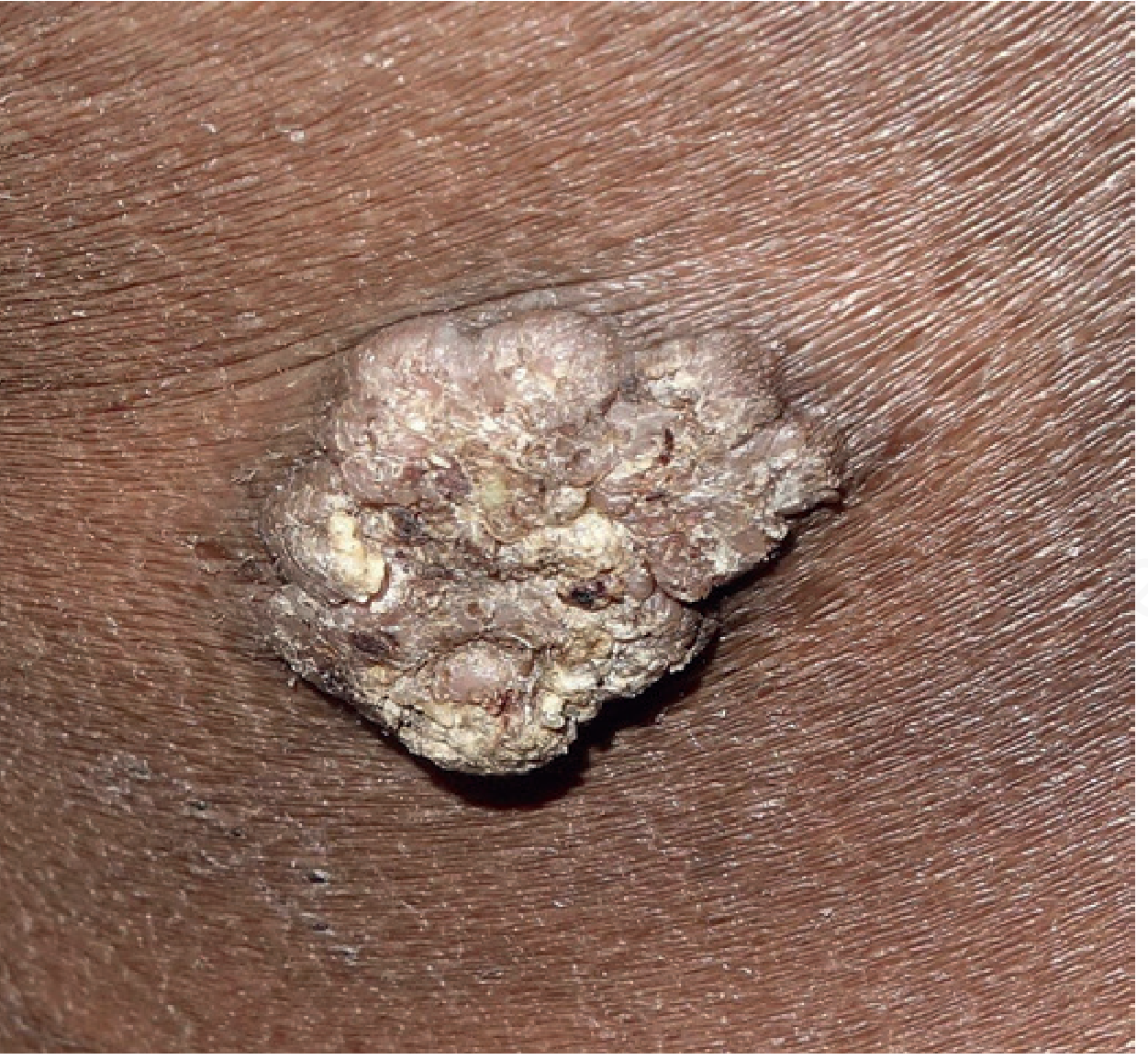
2. Tuberculosis Verrucosa Cutis (Prosector's Wart)
- Exogenous inoculation in a previously sensitized person with strong immunity
- The classic "prosector's wart" from autopsy inoculation
- Begins as a small papule becoming hyperkeratotic and wart-like, enlarging by peripheral expansion with or without central clearing
- Surface may fissure with purulent discharge; lesions are almost always solitary
- Commonly on dorsum of fingers/hands (adults) and ankles/buttocks (children)
- TST strongly positive
- Histology: pseudoepitheliomatous hyperplasia, hyperkeratosis, suppurative and granulomatous inflammation; caseation rare; AFB scant
- Culture positive in ~50% of cases
3. Lupus Vulgaris (Most Common Form)
- Most common form of cutaneous post-primary TB
- Follows inoculation, scrofuloderma scars, or hematogenous/lymphatic spread
- ~50% have evidence of TB elsewhere - full systemic evaluation is mandatory
- Moderately high immunity; TST positive
- Classic appearance: single plaque of grouped red-brown papules with characteristic "apple jelly" color on diascopy (blanching with glass slide pressure)
- Dermoscopy: yellowish-orange patches indicating dermal granulomas
- Lesions are destructive and scarring, especially on the face (nose, cheeks); can result in disfigurement
- Slowly progressive, may develop squamous cell carcinoma in chronic lesions
- DDx: sarcoidosis, discoid lupus erythematosus, rosacea, lymphoma
- Histology: tuberculoid granulomas with or without caseation; AFB are few
4. Scrofuloderma
- Results from direct extension of underlying TB to the skin - usually from infected lymph nodes (cervical most common), bones, or joints
- Presents as firm subcutaneous nodules that soften, break down, and form sinus tracts with collar-stud abscesses and undermined ulcers
- Discharges thin, watery pus
- Heals with irregular, cord-like "bridge" scars
- Most common in children and elderly; cervical/submandibular region favored
- TST positive; AFB may be found; histology shows granulomatous inflammation with caseation
5. Orificial Tuberculosis
- Occurs in patients with advanced systemic TB (lungs, intestinal, urogenital)
- M. tuberculosis auto-inoculates onto mucocutaneous orifices from adjacent infected secretions
- Painful ulcers with undermined edges around mouth, anus, genitalia, or nares
- Indicates severe immunosuppression and poor prognosis
- AFB abundant on smear; TST often negative (anergy)
6. Acute Miliary TB of the Skin
- Due to hematogenous dissemination - a sign of overwhelming TB
- Pinhead-sized bluish-red papules capped by minute vesicles, developing central umbilication and crusting
- Heal leaving white scars with brownish rim
- Primary focus often in lungs
7. Tuberculous Gumma
- Also due to hematogenous spread (mycobacteremia with cutaneous seeding)
- Firm subcutaneous nodule that softens to form a fluctuant swelling
- Overlying skin breaks down to form an undermined ulcer with sinus tract formation
- Extremities more commonly affected than trunk
Tuberculids (Immune Reactions)
- TST/IGRA positive
- AFB usually NOT found in lesions (rapid immune destruction)
- Bilateral and symmetric distribution (hematogenous spread)
- Respond to anti-TB therapy
Papulonecrotic Tuberculid
- Asymptomatic, chronic, recurring crops of papules that undergo central necrosis
- Symmetrically distributed on extensor extremities (elbows, knees), dorsal hands/feet, buttocks, face, glans penis
- Most frequent in children and young adults
- Heals leaving varioliform scars
- Histology: wedge-shaped necrosis, vasculitis, granulomatous inflammation
Lichen Scrofulosorum
- Small, lichenoid follicular papules grouped in discoid clusters
- Usually on trunk; associated with lymph node or bone TB
- Asymptomatic; mainly in children and young adults
Erythema Induratum (Bazin Disease)
- Deep, tender nodules on the posterior calves that ulcerate
- Predominantly in women; associated with cold weather
- Histology: lobular panniculitis with granulomatous inflammation and vasculitis
- M. tuberculosis DNA demonstrable by PCR
Histopathology
- Early lesions: mixed infiltrate of lymphocytes, neutrophils, and plasma cells; AFB abundant
- Established lesions: tuberculoid granulomas - epithelioid macrophages, Langhans giant cells, lymphocytic cuffing, ± central caseation necrosis; AFB difficult to find
- The degree of caseation and AFB load inversely correlates with host immunity
Diagnosis
| Investigation | Details |
|---|---|
| TST (Mantoux/PPD) | Positive in most forms (may be negative in miliary/orificial TB due to anergy) |
| IGRA (QuantiFERON-TB Gold, T-SPOT.TB) | Measures IFN-γ response to ESAT-6 and CFP-10 antigens; more specific than TST |
| Skin biopsy + AFB stain | Look for acid-fast bacilli; often negative in paucibacillary forms |
| Culture (Lowenstein-Jensen medium) | Gold standard; slow (4-8 weeks); positive in ~50% of TB verrucosa |
| PCR | Can detect M. tuberculosis DNA in tissue; useful in paucibacillary forms and tuberculids |
| Chest X-ray / systemic workup | Essential in all confirmed cases |
Treatment
- HRZE = Isoniazid (H) + Rifampicin (R) + Pyrazinamide (Z) + Ethambutol (E)
- HR = Isoniazid + Rifampicin
| Drug | Class | Notes |
|---|---|---|
| Rifampicin | Rifamycin antibiotic | Broad spectrum; induces hepatic enzymes |
| Isoniazid | Synthetic | Specific for tubercle bacilli; pyridoxine supplementation needed |
| Pyrazinamide | Synthetic | Active in acidic intracellular environment |
| Ethambutol | Synthetic | Monitor for optic neuritis |
Special Considerations
- HIV co-infection: ~20-37x higher risk of developing TB; more likely to present atypically; IRIS (immune reconstitution inflammatory syndrome) may worsen skin lesions after starting ART
- TNF inhibitors (biologics like infliximab, adalimumab): major risk factor for reactivation; screen with TST/IGRA before starting
- BCG vaccination: rare complications include local ulceration, lupus vulgaris-like lesions, and disseminated BCG infection (especially in immunocompromised infants)
- Long-standing lupus vulgaris can undergo malignant transformation to squamous cell carcinoma
Neck swelling sugery viva question and different diagnosis
Neck Swelling - Surgery Viva
APPROACH TO A NECK SWELLING
- Site - Midline vs. Lateral; which triangle of neck?
- Size - Dimensions in cm
- Shape - Ovoid, spherical, irregular
- Surface - Smooth, nodular
- Consistency - Soft, firm, hard (stony hard), cystic, fluctuant
- Skin over swelling - Normal, inflamed, fixed
- Special tests - Pulsatility, compressibility, transillumination, bruit, movement with swallowing, movement with tongue protrusion (thyroglossal)
CLASSIFICATION BY SITE
MIDLINE NECK SWELLINGS
| Level | Swelling |
|---|---|
| Submental | Ludwig's angina, submental lymph nodes, sublingual dermoid, lipoma |
| Hyoid bone level | Thyroglossal cyst, subhyoid bursitis |
| Thyroid region | Goitre (isthmus, pyramidal lobe), enlarged lymph nodes, lipoma |
| Suprasternal | Lipoma in space of Burns, retrosternal goitre, thymic swelling |
| Anywhere midline | Dermoid cyst |
LATERAL NECK SWELLINGS by Triangle
| Triangle | Swellings |
|---|---|
| Submandibular | Lymph nodes, enlarged submandibular salivary gland, deep/plunging ranula, jaw growth extension |
| Carotid triangle | Carotid aneurysm, carotid body tumour, branchial cyst, branchiogenic carcinoma; thyroid swellings (deep to SCM), sternomastoid tumour (neonate) |
| Posterior triangle | Enlarged supraclavicular lymph nodes (including Virchow's node on left), cystic hygroma, pharyngeal pouch, subclavian aneurysm, aberrant thyroid, cervical rib, lipoma |
CLASSIFICATION BY CHARACTER
Acute Swellings
- Cellulitis, Ludwig's angina
- Boil, carbuncle
- Acute lymphadenitis
Chronic Swellings
| Type | Examples |
|---|---|
| Cystic | Branchial cyst, thyroglossal cyst, dermoid cyst, cystic hygroma, sebaceous cyst, cystic adenoma of thyroid, cold abscess |
| Solid | Thyroid swelling, branchiogenic carcinoma, sternomastoid tumour, lymph nodes |
| Pulsatile | Carotid/subclavian aneurysm, carotid body tumour, lymph node with transmitted pulsation, primary toxic goitre |
DIFFERENTIAL DIAGNOSIS (COMPREHENSIVE)
1. Inflammatory / Infective
| Cause | Key Features |
|---|---|
| Reactive lymphadenitis | Tender, firm, mobile nodes; URTI/tonsillitis history |
| Tuberculous cervical lymphadenitis | Most common cause of cervical LN in Indian subcontinent; matted nodes, "cold abscess", "collar stud abscess", sinus tract formation; no pain/fever early |
| Bacterial adenitis | Streptococcus, Staphylococcus; tender, hot, may suppurate |
| Viral | EBV (infectious mononucleosis), HIV, CMV - bilateral, multiple nodes |
| Cat scratch disease | Bartonella henselae; unilateral nodes, history of cat scratch |
| Sialadenitis | Submandibular/parotid swelling; related to meals (submandibular duct stone) |
| Ludwig's angina | Diffuse, bilateral, floor of mouth + submental; life-threatening; oedema glottis risk |
| Thyroiditis | Tender thyroid, fever, may have transient thyrotoxicosis |
2. Congenital / Developmental
Thyroglossal Cyst (most important midline swelling)
- Origin: Persistence of thyroglossal duct (thyroid descends from foramen caecum to neck)
- Age: Mainly children, but any age
- Site: Midline, just below the hyoid bone (most common); can be at any level from foramen caecum to isthmus
- Pathognomonic sign: Moves upwards on swallowing AND on tongue protrusion (tethered to base of tongue via the tract)
- Character: Cystic, smooth, non-tender, fluctuant
- Complications: Infection, abscess, fistula, malignancy (papillary carcinoma in 1%)
- Investigation: Ultrasound to confirm (must confirm normal thyroid inferiorly); CT scan
- Treatment: Sistrunk operation - excision of cyst + central portion of hyoid bone + tract up to base of tongue (prevents recurrence)
Branchial Cyst
- Origin: Remnants of second branchial cleft (most common); lined by squamous epithelium
- Age: Young adults (does not manifest in childhood despite being congenital)
- Site: Junction of upper 1/3 and middle 1/3 of sternomastoid, at its anterior border (half in front, half behind SCM); upper/lateral neck
- Character: Soft, ovoid, fluctuant; surface smooth; long axis runs forwards and downwards
- Transillumination: Usually NEGATIVE (content is thick, turbid white fluid containing cholesterol crystals and desquamated epithelial cells)
- Diagnostic test: FNA shows cholesterol crystals - pathognomonic
- Key point: In patients >35 years, always exclude metastatic lymph node (necrotic) before assuming branchial cyst
- Treatment: Complete surgical excision (passes superficial to hypoglossal and glossopharyngeal nerves, deep to posterior belly of digastric; identify spinal accessory nerve)
Branchial Fistula
- Persistent second branchial cleft
- External opening: lower 1/3 of neck, anterior border of SCM
- Internal opening: anterior pillar of fauces, behind the tonsil
- May be unilateral or bilateral
Cystic Hygroma (Lymphangioma)
- Origin: Congenital lymphangioma - abnormal lymphatic development
- Age: Infants and children (usually present at birth or by age 2)
- Site: Root of neck, posterior triangle; may extend to axilla, mediastinum
- Character: Multilocular, brilliantly transilluminates (clear fluid); soft; fluid can be compressed from one locule to another; shows impulse on coughing if mediastinal extension
- Treatment: Sclerotherapy (OK-432, bleomycin) or surgical excision
Dermoid Cyst
- Midline, anywhere; smooth, doughy, non-fluctuant; does NOT transilluminate well; does NOT move with swallowing
Laryngocele
- Air-filled or mucus-filled; arises from laryngeal ventricle
- May be internal (within thyroid cartilage) or external (protrudes through thyrohyoid membrane)
- Increases with Valsalva/coughing; reducible
Cervical Rib
- Posterior triangle, supraclavicular; may cause thoracic outlet syndrome (vascular/neurological symptoms in arm)
3. Neoplastic - Benign
| Tumour | Features |
|---|---|
| Goitre | Moves with swallowing (attached to trachea/larynx); midline + bilateral; multiple types |
| Solitary thyroid nodule | Moves with swallowing; consider malignancy (10-15% risk) |
| Carotid body tumour (Paraganglioma) | At carotid bifurcation (C3-4 level, anterior to SCM); pulsatile, bruit; moves laterally but NOT vertically ("Fontaine's sign" or "potato tumour"); transmitted pulsation from carotid |
| Salivary gland tumour | Parotid (angle of jaw), submandibular; pleomorphic adenoma most common |
| Lipoma | Soft, lobulated, non-tender; posterior triangle common |
| Neurofibroma/Schwannoma | Moves horizontally but NOT vertically (tethered to nerve) |
4. Neoplastic - Malignant
Cervical Lymph Node Metastasis (most common malignant neck mass in adults >40)
- Features: Stony hard, irregular surface, fixed to skin or deep structures, painless, rapidly growing
- Majority: Deep to anterior border of SCM
- Search for primary:
- Above clavicle: Oral cavity (floor of mouth, tongue), tonsil, nasopharynx, larynx, thyroid, external auditory meatus, parotid
- Left supraclavicular (Virchow's node / Troisier's sign): Infraclavicular primary - stomach, colon, lung, breast, ovary, testis (via thoracic duct)
- Bilateral supraclavicular: Lymphoma or infraclavicular primary
Primary Lymphoma (Hodgkin's/Non-Hodgkin's)
- Young adults or elderly; rubbery-firm, multiple nodes; systemic "B symptoms" (fever, night sweats, weight loss)
- Hodgkin's: cervical nodes involved in 60-70% of cases
Thyroid Carcinoma
- Moves with swallowing; hard, irregular; may cause hoarseness (recurrent laryngeal nerve invasion), dysphagia, dyspnoea
KEY VIVA QUESTIONS
| Feature | Benign | Malignant |
|---|---|---|
| Tenderness | Present | Absent |
| Consistency | Firm/soft | Stony hard |
| Surface | Smooth | Nodular/irregular |
| Mobility | Mobile | Fixed (late) |
| Skin | Normal | May be adherent |
| Size | Usually <2 cm | Often >2 cm |
INVESTIGATIONS FOR NECK SWELLING
| Investigation | Purpose |
|---|---|
| Ultrasound neck | First-line; cystic vs. solid, thyroid nodule assessment, guide FNAC |
| FNAC | Cytological diagnosis (lymphoma, metastasis, thyroid) |
| CT neck with contrast | Assess extent, vascular involvement, deep structures, staging |
| MRI | Soft tissue delineation, parapharyngeal lesions |
| X-ray chest/neck | Tracheal deviation, mediastinal widening, cervical rib |
| Thyroid function tests | If thyroid swelling suspected |
| Mantoux/IGRA | Suspected TB lymphadenitis |
| LDH, ESR, PET-CT | Lymphoma staging |
| Barium swallow | Pharyngeal pouch |
| Panendoscopy | Search for primary in head and neck malignancy |
Create a visual comparison poster of branchial cyst vs. thyroglossal cyst vs. cystic hygroma
Medical comparison poster for surgery students titled "Neck Cysts: Branchial Cyst vs Thyroglossal Cyst vs Cystic Hygroma". Three-column layout with a clean clinical/academic style on a dark navy blue background. Each column has its own color theme. COLUMN 1 - BRANCHIAL CYST (teal/green accent): - Header: "BRANCHIAL CYST" - Subtitle: "2nd Branchial Cleft Remnant" - Site: Anterior border of SCM, junction of upper 1/3 and middle 1/3 - Age: Young adults (20-30s) - Character: Fluctuant, smooth, ovoid, long axis forward-downward - Transillumination: NEGATIVE (thick turbid fluid) - Pathognomonic: Cholesterol crystals on FNAC - Movement: Does NOT move with swallowing - Treatment: Surgical excision (identify hypoglossal, glossopharyngeal, spinal accessory nerves) - Note: In >35 years — rule out necrotic metastatic node! - Small anatomical diagram showing SCM muscle with cyst position at anterior border COLUMN 2 - THYROGLOSSAL CYST (orange/gold accent): - Header: "THYROGLOSSAL CYST" - Subtitle: "Persistent Thyroglossal Duct" - Site: MIDLINE, just below hyoid bone (most common) - Age: Children (any age) - Character: Smooth, cystic, non-tender, midline - Transillumination: Positive (variable) - Pathognomonic: Moves UP on swallowing AND on tongue protrusion - Movement: YES — swallowing + tongue protrusion - Treatment: SISTRUNK OPERATION — cyst + central hyoid + tract to base of tongue - Note: 1% risk of papillary carcinoma! Confirm normal thyroid on USS first - Small diagram showing midline neck with cyst below hyoid, arrow showing upward movement with tongue protrusion COLUMN 3 - CYSTIC HYGROMA (purple accent): - Header: "CYSTIC HYGROMA" - Subtitle: "Congenital Lymphangioma" - Site: Root of neck / posterior triangle; may extend to axilla, mediastinum - Age: Infants and children (present at birth or by age 2) - Character: Multilocular, brilliantly transilluminates, very soft, compressible between locules - Transillumination: BRILLIANTLY POSITIVE (clear lymph fluid) - Pathognomonic: Brilliant transillumination; impulse on coughing if mediastinal extension - Movement: Does NOT move with swallowing - Treatment: Sclerotherapy (OK-432, bleomycin) or surgical excision - Note: May compromise airway — urgent assessment in neonates! Bottom comparison table with rows: Origin | Site | Age | Fluid | Transillumination | Moves with swallowing | Treatment — filled for all three columns Title banner at top in large white bold text. Footer: "Surgery Viva Essentials — Neck Swellings"
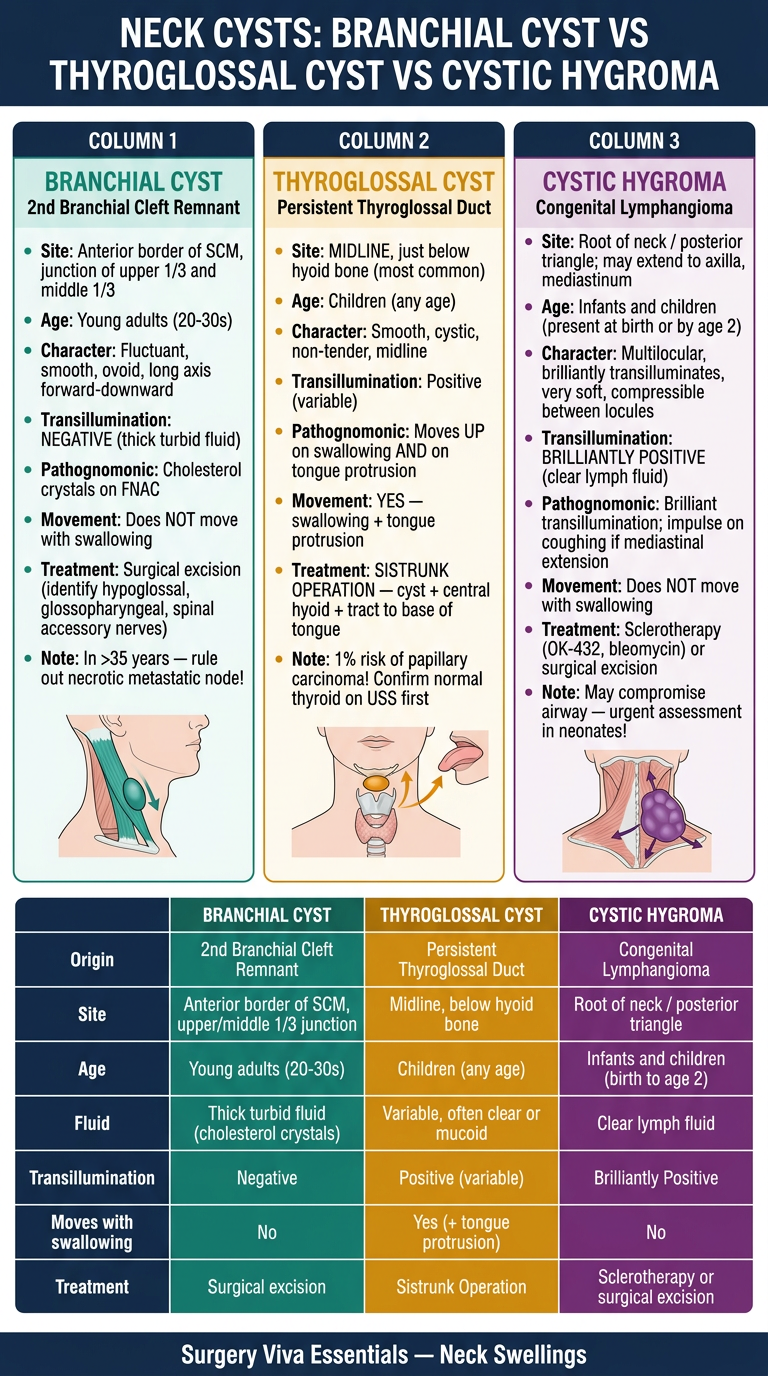
| Feature | Branchial Cyst | Thyroglossal Cyst | Cystic Hygroma |
|---|---|---|---|
| Site | Anterior border of SCM (upper 1/3 - middle 1/3 junction) | Midline, below hyoid | Posterior triangle / root of neck |
| Age | Young adults | Children | Infants / neonates |
| Transillumination | ❌ Negative | ± Variable | ✅ Brilliantly positive |
| Moves with swallowing | ❌ No | ✅ Yes (+ tongue protrusion) | ❌ No |
| Fluid | Thick, turbid, cholesterol crystals | Mucoid | Clear lymph fluid |
| Treatment | Surgical excision | Sistrunk operation | Sclerotherapy / excision |
Chleak leak management
Chyle Leak Management
What is Chyle?
- High concentration of triglycerides and chylomicrons
- Lymphocytes (predominantly)
- Fat-soluble vitamins, proteins, immunoglobulins
Anatomy - Why It Matters
- The thoracic duct ascends from the cisterna chyli through the right chest, crosses to the left at T4-5, and enters the neck to empty into the left subclavian vein at or within 1 cm of the junction with the left IJV
- It is more accurately described as a plexus of tributaries - any branch can create a fistula if transected
- Left-sided leaks: 75% - thoracic duct injury
- Right-sided leaks: 25% - right lymphatic duct injury (also important!)
Causes / Etiology
- Neck dissection (radical or modified) - 1-2% incidence
- Esophagectomy - 4.3% incidence
- Lung, mediastinal, or thoracic aortic surgery
- Subclavian vein catheterization
- Blunt/penetrating chest or neck trauma
- Lymphoma (most common non-traumatic cause)
- Lung, esophageal, mediastinal tumours
- Metastatic carcinoma
- Tuberculous lymphadenitis
- Mediastinitis
- Congenital (most common cause of pleural effusion in neonates; associated with Down, Turner, Noonan syndromes)
- Lymphangioleiomyomatosis
- Venous thrombosis (superior vena cava)
Diagnosis
Clinical
- Neck chyle fistula (post-neck dissection): Drain output changes from serosanguinous to milky white after resumption of feeding
- Chylothorax: Dyspnoea, cough, chest discomfort; pleural effusion on CXR
Biochemical (Diagnostic)
| Test | Chyle Leak | Normal Drain |
|---|---|---|
| Triglycerides (TG) | >110 mg/dL AND > serum TG | <100 mg/dL |
| Appearance | Milky white | Serosanguinous |
| Cell count | >1,000/mL | - |
| Differential | Lymphocyte predominance >80% | - |
| LDH | Low | - |
| Cholesterol | <200 mg/dL | - |
- CXR: essential to rule out concurrent chylothorax when neck chyle leak identified
- Lymphangiography/lymphoscintigraphy: Localize the leak site for percutaneous embolization planning
Intraoperative Detection & Management
- Ask anaesthesiologist to apply positive pressure ventilation - pools milky fluid or reveals discrete lymph vessels
- Meticulous ligation with non-absorbable sutures (silk)
- Adjuncts:
- Operating microscope for identification
- Fat grafting
- Surgicel (oxidised cellulose) application
- Sclerosing agents
Postoperative Management Algorithm
Classification by Output Volume
| Output | Category | Management |
|---|---|---|
| <500 mL/24h (low output) | Conservative | Non-operative management |
| 500-1000 mL/24h (moderate) | Watch & treat | Trial of conservative Rx 3-5 days; if no improvement → surgical |
| >1000 mL/24h (high output) | Surgical | Early intervention regardless of duration |
Conservative Management (Low-Output)
Step 1: Dietary Modification
- Medium-Chain Triglyceride (MCT) diet: MCTs (C6-C12 chain length) are absorbed directly into the portal circulation, bypassing the lymphatic system and reducing chyle flow
- Low-fat or fat-free diet with MCT supplementation
- Note: Long-chain TGs stimulate chyle flow - must be avoided
Step 2: Bowel Rest + Parenteral Nutrition
- NPO (nil per os) + Total Parenteral Nutrition (TPN): Eliminates enteral fat, maximally reduces lymphatic flow
- Most effective at reducing output
Step 3: Pharmacological Reduction of Chyle Flow
| Drug | Mechanism | Notes |
|---|---|---|
| Octreotide (somatostatin analogue) | Reduces splanchnic blood flow → decreases GI chyle production | Long-acting; subcutaneous injection; most evidence |
| Somatostatin | Same as octreotide | Short half-life; IV infusion |
| Etilefrine / Midodrine | Sympathomimetics; reduce lymphatic flow | Used in some centres |
| Orlistat | Pancreatic lipase inhibitor (OTC) | Reduces fat absorption; may be as effective as octreotide |
Step 4: Wound/Drainage Management
- Closed drainage promotes skin flap adherence
- Pressure dressings over neck (if cervical leak)
- Avoid prolonged continuous drainage (causes chyle loss, malnutrition, immunosuppression)
Interventional / Surgical Management (High-Output or Refractory)
1. Percutaneous Thoracic Duct Embolization (TDE)
- Lymphangiography identifies the site of leak
- Intranodal or pedal lymphangiography → opacifies the thoracic duct
- Percutaneous catheter embolization with coils/glue
- Success rate ~70-80% for post-surgical chylothorax
- Less invasive alternative to surgery; increasingly preferred
2. Surgical Thoracic Duct Ligation
- Approach: Via right chest (thoracotomy or VATS) - the thoracic duct is accessed as it enters the thorax through the diaphragmatic hiatus
- The classic technique ligates all tissue en masse between the aorta, esophagus, spine, and azygos vein (mass ligation)
- VATS (Video-Assisted Thoracoscopic Surgery) is the preferred minimally invasive approach
- Thoracic duct ligation for cervical chyle leak via neck wound re-exploration is also performed
3. Pleurodesis
- Chemical pleurodesis (talc, tetracycline) obliterates pleural space
- Used when definitive surgery is not possible
4. Pleuroperitoneal Shunt
- Refractory cases; relieves symptoms, minimises chyle loss, reduces TPN dependency
- Contraindicated if ascites present
- Risk: shunt occlusion (high fibrinogen in chyle)
5. Indwelling Pleural Catheter (IPC)
- Refractory cases not suitable for surgery
- Allows intermittent drainage at home
Fluid & Nutritional Replacement
- Albumin infusion for hypoalbuminaemia
- TPN to replace caloric and protein losses
- Immunoglobulin supplementation in prolonged leaks (lymphocyte depletion causes immunosuppression)
- Close monitoring of electrolytes
Summary Algorithm
Chyle Leak Diagnosed
        |
        ├── Low output (<500 mL/day)
        |       → NPO + TPN + MCT diet + Octreotide
        |       → Pressure dressing / closed drain
        |       → Wait 2-4 weeks for spontaneous closure
        |
        ├── Moderate (500-1000 mL/day)
        |       → Trial conservative Rx 3-5 days
        |       → If not improving → Intervention
        |
        └── High output (>1000 mL/day)
                → Early intervention
                → Lymphangiography + Percutaneous TDE (first line, if available)
                → If failed → Surgical TD ligation (VATS or open right thoracotomy)
                → Pleurodesis / pleuroperitoneal shunt for refractory cases
Key Viva Points
- Diagnostic fluid TG level: >110 mg/dL (some sources: >100 mg/dL) confirms chyle
- MCT rationale: Absorbed via portal vein, NOT lacteals - bypasses lymphatics
- Octreotide mechanism: Reduces splanchnic blood flow → less mesenteric lymph → less chyle
- Surgical approach for TD ligation: Right chest (not left) - thoracic duct enters from right via aortic hiatus
- Cream via NGT before surgery: Increases chyle flow to identify the leaking duct intraoperatively
- Most common cause of chylothorax in neonate: Congenital (commonest cause of neonatal pleural effusion)
- Most common non-traumatic cause in adults: Lymphoma