
structure of bacteria simple explanation with images
Reading File
Now let me search the medical library for bacterial structure content and images.
Finding Sources
Finding Sources
Searching the Web
bacterial cell structure labeled diagram simple explanation
Now let me read the textbook content on bacterial structure and fetch a good image.
Reading File
Loading Image
Loading Image
Now let me read more of the textbook for details on each structure.
Reading File
I found a textbook image. Let me fetch it along with reading more of the bacterial structure content.
Loading Image
Reading File
I now have excellent content from Medical Microbiology 9e and two great diagrams. Let me compile a clear, structured explanation.
Structure of a Bacterial Cell
Bacteria are prokaryotes - single-celled organisms with no true nucleus or membrane-bound organelles. They are typically about 1 micrometer (µm) in diameter, visible only under a microscope.
Here are two labeled diagrams to visualize the structure:
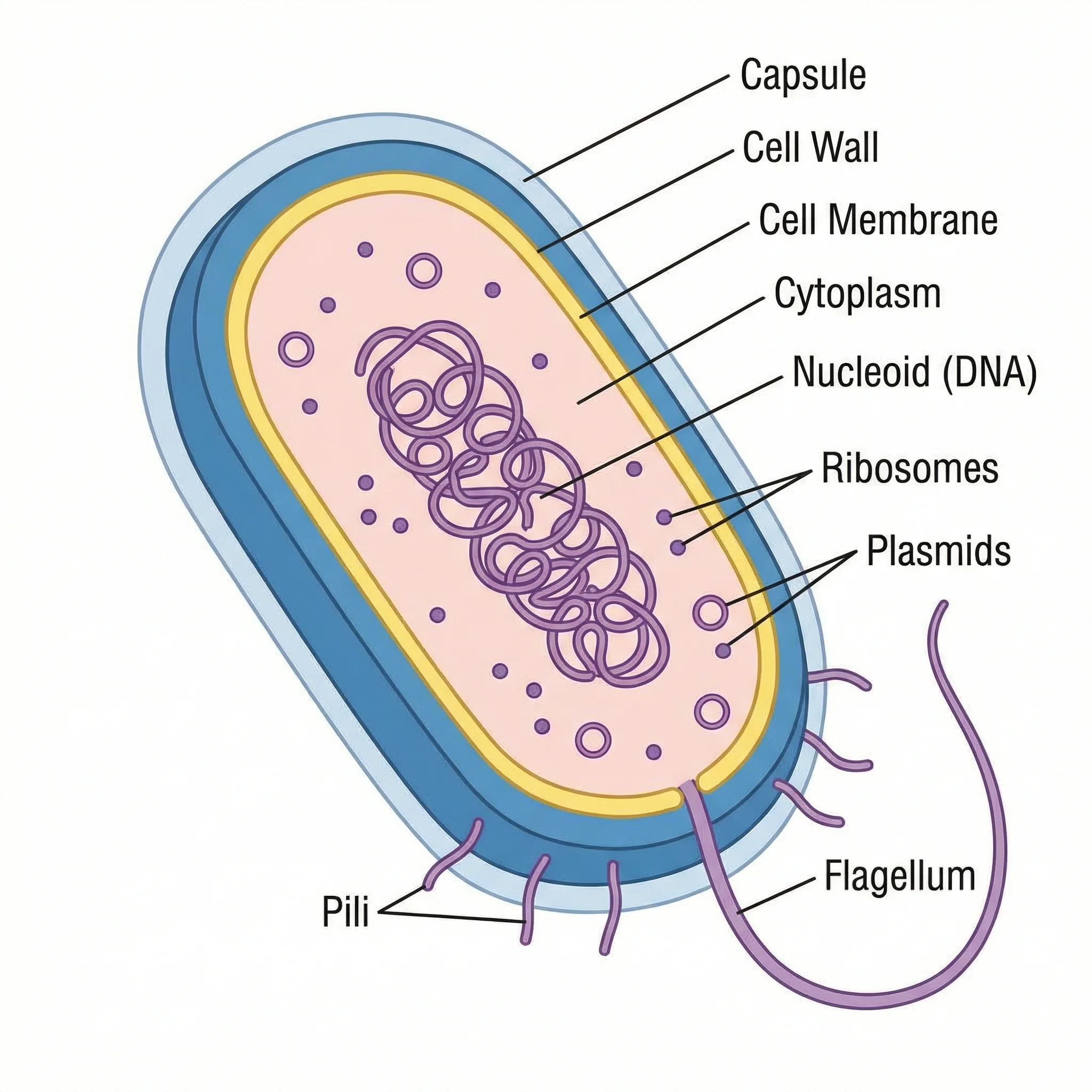
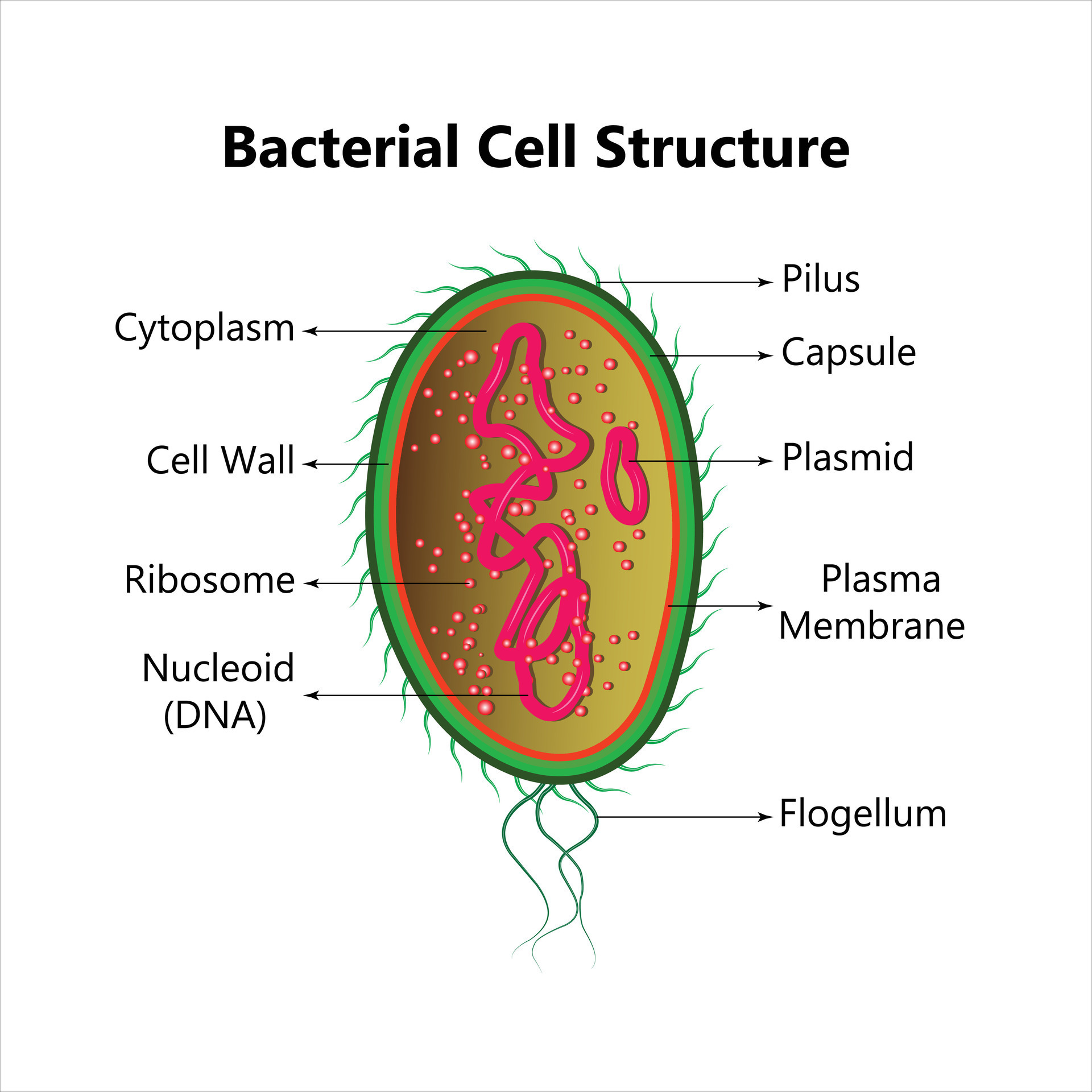
The Main Parts (from outside to inside)
1. 🌿 Capsule (not all bacteria have this)
- A slimy, gel-like outer coat made of polysaccharides.
- Helps the bacterium hide from the human immune system and stick to surfaces.
- Example: Streptococcus pneumoniae uses its capsule to evade phagocytes.
2. 🧱 Cell Wall
- Made of peptidoglycan (a mesh-like sugar-protein lattice).
- Gives the bacterium its shape and strength, protecting it from bursting in low-pressure environments.
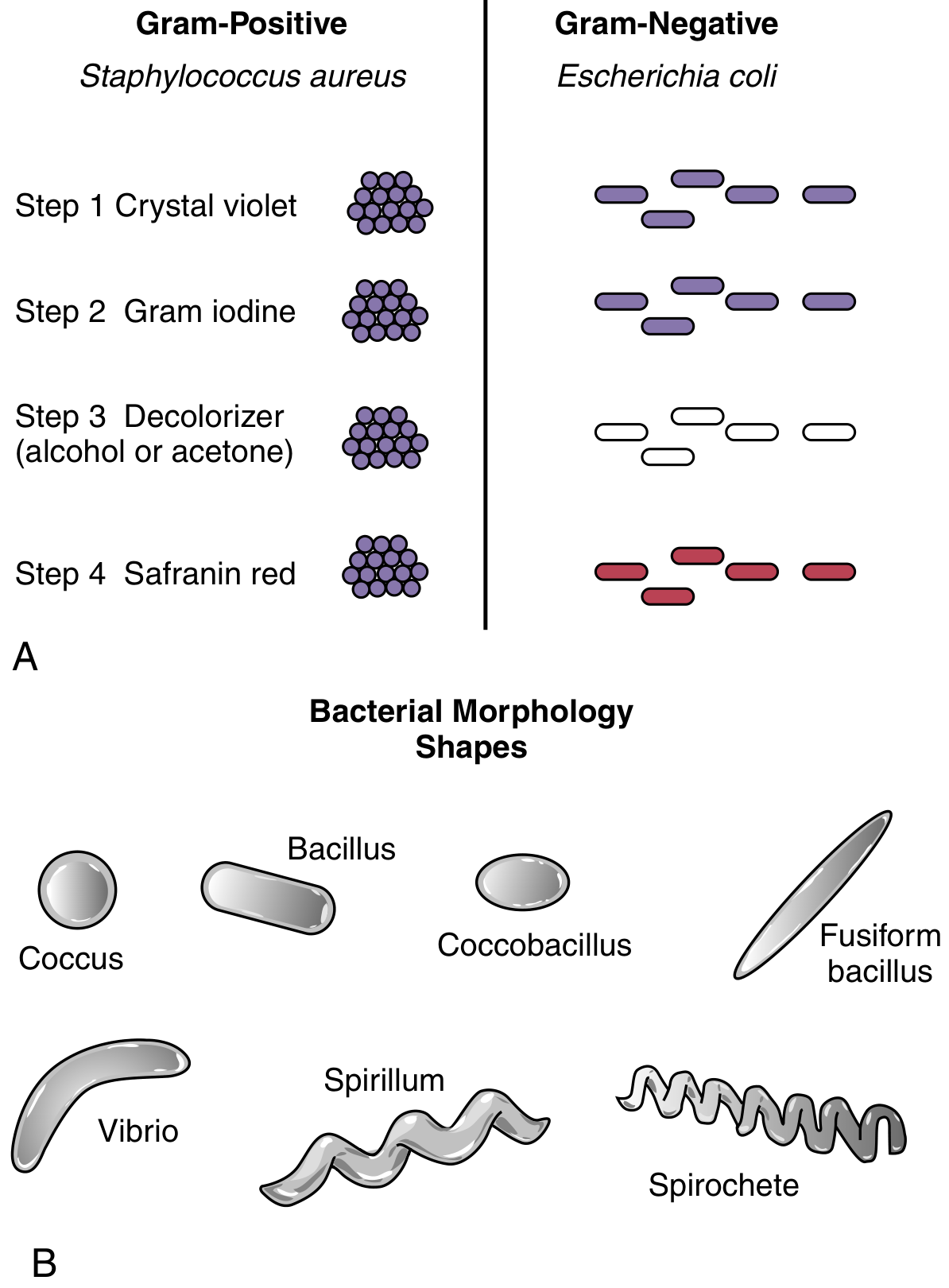
- Gram-positive bacteria → thick peptidoglycan wall → stain purple
- Gram-negative bacteria → thin peptidoglycan + extra outer membrane → stain pink/red
- Bacteria shapes vary based on their cell walls:
3. 🟡 Plasma Membrane (Cell Membrane)
- A lipid bilayer just inside the cell wall.
- Controls what enters and exits the cell (nutrients in, waste out).
- Also handles energy production (the job mitochondria do in our cells) since bacteria have no mitochondria.
- Unlike human membranes, it contains no cholesterol (except in Mycoplasmas).
4. 💧 Cytoplasm
- The watery, gel-like fluid filling the cell.
- Contains all the machinery for life: DNA, ribosomes, proteins, and metabolites.
5. 🧬 Nucleoid (DNA)
- The bacterial "chromosome" - a single, circular double-stranded DNA molecule coiled loosely in the cytoplasm.
- There is no nuclear membrane (unlike our cells).
- In E. coli, this DNA is ~1.3 mm long but crammed into a ~1 µm cell.
6. ⭕ Plasmids
- Small, extra circular DNA molecules separate from the main chromosome.
- Not essential for survival, but often carry antibiotic resistance genes - a major clinical concern.
- Can be passed between bacteria (conjugation), spreading resistance rapidly.
7. 🔵 Ribosomes
- Tiny particles that make proteins.
- Bacterial ribosomes are 70S (made of 30S + 50S subunits) - different from our 80S ribosomes.
- This difference is why many antibiotics (e.g., aminoglycosides, macrolides, tetracyclines) can target bacteria without harming human cells.
8. 🏳 Pili / Fimbriae (not all bacteria have these)
- Short, hair-like projections on the surface.
- Help bacteria attach to host cells (e.g., urinary tract, intestine) - key for infection.
- A special type called the sex pilus transfers plasmid DNA between bacteria (conjugation).
9. 🌀 Flagella (not all bacteria have these)
- Long, whip-like tails used for movement (motility).
- Bacteria can have one, several, or flagella all around them.
- Some bacteria use their flagella to move toward nutrients or away from toxins (chemotaxis).
Quick Summary Table
| Structure | Made of | Function |
|---|---|---|
| Capsule | Polysaccharides | Immune evasion, attachment |
| Cell Wall | Peptidoglycan | Shape, protection |
| Plasma Membrane | Lipid bilayer | Transport, energy |
| Cytoplasm | Water + proteins | Fills cell, site of reactions |
| Nucleoid (DNA) | Circular DNA | Genetic information |
| Plasmids | Small circular DNA | Antibiotic resistance |
| Ribosomes (70S) | RNA + protein | Protein synthesis |
| Pili / Fimbriae | Protein | Attachment to host cells |
| Flagella | Protein (flagellin) | Movement |
Key Clinical Points
- The cell wall is the target of penicillins and cephalosporins (beta-lactam antibiotics) - they block peptidoglycan synthesis.
- The 70S ribosome is targeted by aminoglycosides, macrolides, tetracyclines, and chloramphenicol.
- The plasma membrane is targeted by polymyxins.
- Gram staining (based on cell wall thickness) is one of the first steps in identifying bacteria in a clinical lab. - Medical Microbiology 9e, p. 141
bodily system simple explanation with images
The human body has 11 major organ systems, each with specific roles - from circulating blood (cardiovascular), breathing (respiratory), digesting food (digestive), to fighting infection (immune). They all work together to keep you alive.
Searching sources...
Finding Sources
Searching the Web
human body organ systems overview labeled diagrams all 11 systems
Finding Sources
Finding Sources
Loading Image
Loading Image
Searching the Web
human body systems respiratory digestive lymphatic urinary reproductive diagram labeled
Loading Image
Loading Image
Loading Image
I have excellent images and enough content for a full, clear explanation. Let me compile everything now.# The 11 Human Body Systems - Simple Explanation
The human body is not just a collection of parts - it is organized into 11 organ systems, each a team of organs working together toward one main job. Here's a visual overview:
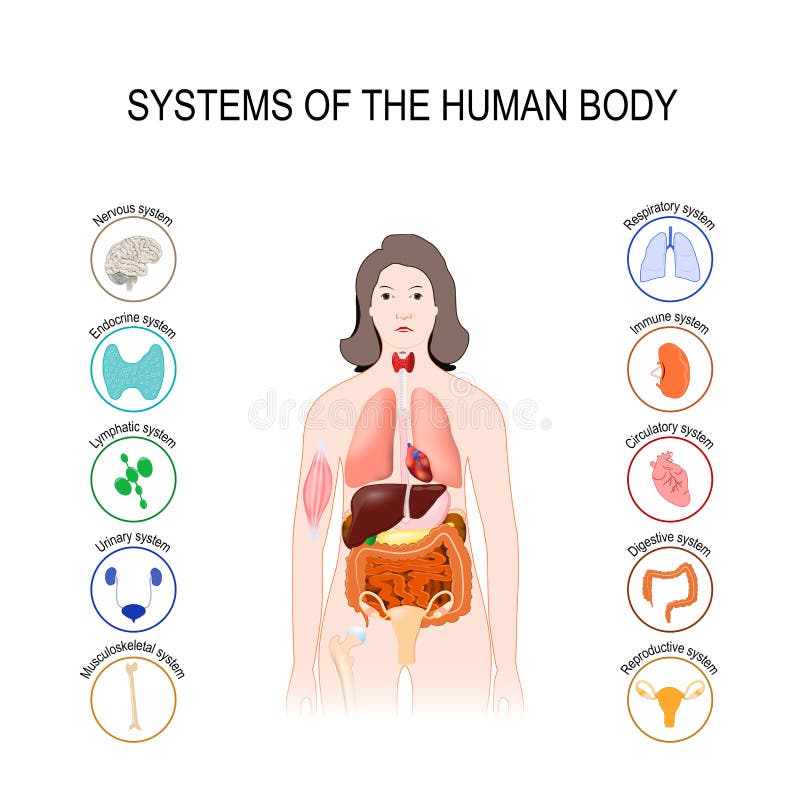
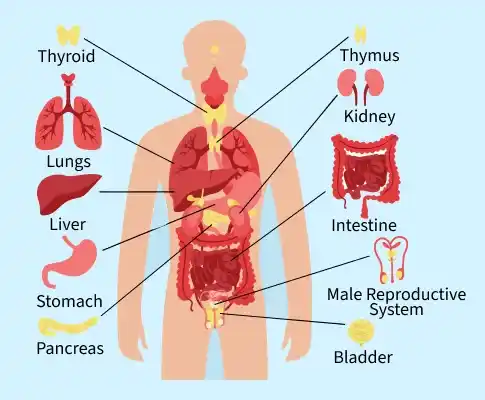
The 11 Systems (from outside in)
1. 🧥 Integumentary System
"Your body's armor"
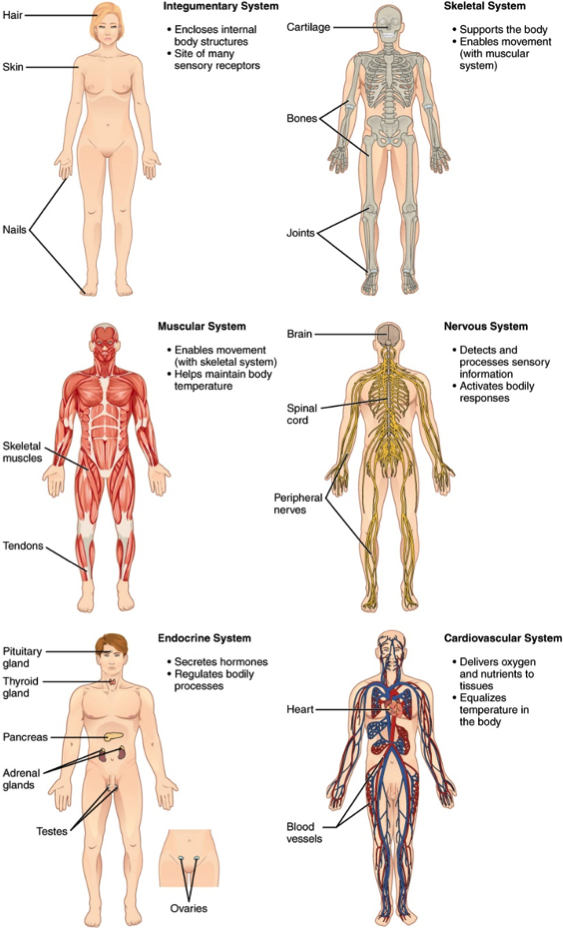
- Organs: Skin, hair, nails, sweat glands
- What it does: Acts as a waterproof barrier against germs, UV rays, and injury. Also regulates body temperature through sweating and helps you feel touch, heat, and pain.
- Fun fact: Skin is the largest organ in the body.
2. 🦴 Skeletal System
"Your body's frame"
- Organs: 206 bones, cartilage, joints, ligaments
- What it does: Provides shape and support, protects organs (skull protects the brain, ribs protect the heart and lungs), stores calcium, and makes blood cells inside bone marrow.
- Key bones: Skull, spine, ribs, femur (thigh bone)
3. 💪 Muscular System
"Your body's engine"
- Organs: Over 600 skeletal muscles, cardiac muscle (heart), smooth muscle (organs)
- What it does: Makes the body move - from running and lifting to digesting food and pumping blood. Also helps maintain body temperature by generating heat.
- 3 types of muscle: Skeletal (voluntary), cardiac (heart), smooth (gut, blood vessels)
4. 🧠 Nervous System
"Your body's internet"
- Organs: Brain, spinal cord, billions of nerves
- What it does: Sends and receives electrical signals at lightning speed. Controls thoughts, movement, senses (sight, hearing, touch), reflexes, and automatic functions like heart rate.
- 2 divisions: Central nervous system (brain + spinal cord) and Peripheral nervous system (all other nerves)
5. 🩺 Endocrine System
"Your body's postal service"
- Organs: Pituitary gland, thyroid, adrenal glands, pancreas, ovaries/testes
- What it does: Releases hormones (chemical messengers) into the blood to regulate growth, metabolism, blood sugar, stress response, and reproduction. Works slower than the nervous system but effects last longer.
- Example: Insulin from the pancreas tells cells to absorb blood sugar.
6. ❤️ Cardiovascular System
"Your body's delivery truck"
- Organs: Heart, arteries, veins, capillaries (~100,000 km of blood vessels!)
- What it does: Pumps blood continuously to deliver oxygen and nutrients to every cell, and carries carbon dioxide and waste away. The heart beats about 100,000 times per day.
- Arteries = carry blood away from heart | Veins = carry blood back to heart
7. 🛡️ Lymphatic / Immune System
"Your body's army"
- Organs: Lymph nodes, spleen, thymus, tonsils, white blood cells
- What it does: Defends against bacteria, viruses, and foreign invaders. Also drains excess fluid from tissues back into the blood. The thymus trains immune cells (T cells).
- Lymph nodes swell when you're fighting an infection - that's your immune system in action.
8. 🫁 Respiratory System
"Your body's air pump"
- Organs: Nose, throat (pharynx), larynx, trachea, bronchi, lungs, alveoli
- What it does: Breathes in oxygen (O₂) and expels carbon dioxide (CO₂). The lungs contain ~700 million tiny air sacs called alveoli where gas exchange happens.
- At rest, you breathe about 15 times per minute - ~21,000 breaths per day.
9. 🍽️ Digestive System
"Your body's food processor"
- Organs: Mouth, esophagus, stomach, small intestine, large intestine, liver, pancreas
- What it does: Breaks food down into nutrients the body can absorb and use for energy, growth, and repair. Waste is formed and eliminated.
- Journey of food: Mouth → Esophagus → Stomach → Small intestine (absorbs nutrients) → Large intestine (absorbs water) → Rectum → Out
10. 🚰 Urinary System
"Your body's filter"
- Organs: 2 Kidneys, 2 ureters, bladder, urethra
- What it does: Filters blood to remove waste products (like urea from protein digestion) and excess water, producing urine. Also regulates blood pressure and electrolyte balance.
- The kidneys filter your entire blood supply ~300 times per day.
11. 🌱 Reproductive System
"Your body's continuation"
- Male: Testes, vas deferens, prostate, penis
- Female: Ovaries, fallopian tubes, uterus, vagina
- What it does: Produces sex cells (sperm and eggs) and hormones (testosterone, estrogen, progesterone). In females, also supports the development of a fetus during pregnancy.
Quick Reference Table
| # | System | Main Organs | One-Line Job |
|---|---|---|---|
| 1 | Integumentary | Skin, hair, nails | Protect and sense |
| 2 | Skeletal | Bones, joints | Support and protect |
| 3 | Muscular | Muscles, tendons | Move the body |
| 4 | Nervous | Brain, spinal cord, nerves | Control and communicate |
| 5 | Endocrine | Glands (thyroid, pancreas...) | Regulate with hormones |
| 6 | Cardiovascular | Heart, blood vessels | Pump and deliver blood |
| 7 | Lymphatic/Immune | Lymph nodes, spleen, WBCs | Defend against infection |
| 8 | Respiratory | Lungs, airways | Breathe - O₂ in, CO₂ out |
| 9 | Digestive | Stomach, intestines, liver | Break down and absorb food |
| 10 | Urinary | Kidneys, bladder | Filter blood, make urine |
| 11 | Reproductive | Gonads, sex organs | Produce offspring |
How They Work Together
No system works alone. For example:
- When you exercise, the muscular system demands more oxygen → the cardiovascular system pumps faster → the respiratory system breathes faster → the urinary system removes more waste → the nervous system coordinates all of it.
- When you eat, the digestive system breaks down food → the cardiovascular system transports nutrients → the endocrine system (insulin) manages blood sugar → the urinary system removes nitrogenous waste.
They are deeply interconnected - a disease in one system almost always affects others.
bodily systems simple explanation with images
This is the same question as before — here's the full answer again with all images!
The 11 Human Body Systems - Simple Explanation
The human body is organized into 11 organ systems, each a team of organs working together toward one main job.
1. 🧥 Integumentary System — "Your body's armor"
- Organs: Skin, hair, nails, sweat glands
- Job: Waterproof barrier against germs, UV rays, and injury. Regulates temperature and lets you feel touch, heat, and pain.
- Skin is the largest organ in the body.
2. 🦴 Skeletal System — "Your body's frame"
- Organs: 206 bones, cartilage, joints, ligaments
- Job: Provides shape and support, protects organs (skull → brain, ribs → heart/lungs), stores calcium, and produces blood cells in bone marrow.
3. 💪 Muscular System — "Your body's engine"
- Organs: 600+ skeletal muscles, cardiac muscle (heart), smooth muscle (gut/vessels)
- Job: Powers all movement - from running to digesting food. Generates body heat.
- 3 types: Skeletal (voluntary), Cardiac (heart), Smooth (automatic)
4. 🧠 Nervous System — "Your body's internet"
- Organs: Brain, spinal cord, billions of nerves
- Job: Sends electrical signals at lightning speed. Controls thoughts, senses, movement, reflexes, and automatic functions.
- 2 parts: Central (brain + spinal cord) and Peripheral (all other nerves)
5. 🩺 Endocrine System — "Your body's postal service"
- Organs: Pituitary gland, thyroid, adrenal glands, pancreas, ovaries/testes
- Job: Releases hormones into the blood to regulate growth, metabolism, blood sugar, stress, and reproduction.
- Example: Insulin from the pancreas controls blood sugar.
6. ❤️ Cardiovascular System — "Your body's delivery truck"
- Organs: Heart + ~100,000 km of blood vessels (arteries, veins, capillaries)
- Job: Pumps blood to deliver oxygen and nutrients to every cell, and carries waste away. The heart beats ~100,000 times/day.
7. 🛡️ Lymphatic / Immune System — "Your body's army"
- Organs: Lymph nodes, spleen, thymus, tonsils, white blood cells
- Job: Fights bacteria, viruses, and invaders. Drains excess fluid from tissues back into blood. Swollen lymph nodes = immune system at work.
8. 🫁 Respiratory System — "Your body's air pump"
- Organs: Nose, throat, larynx, trachea, bronchi, lungs, alveoli
- Job: Brings oxygen (O₂) in and pushes carbon dioxide (CO₂) out. ~700 million tiny alveoli in the lungs do the gas exchange.
- You take about 21,000 breaths per day.
9. 🍽️ Digestive System — "Your body's food processor"
- Organs: Mouth → Esophagus → Stomach → Small intestine → Large intestine → Liver, Pancreas
- Job: Breaks food into nutrients for energy and growth. Removes solid waste.
- Small intestine = absorbs nutrients | Large intestine = absorbs water
10. 🚰 Urinary System — "Your body's filter"
- Organs: 2 Kidneys, 2 ureters, bladder, urethra
- Job: Filters waste from blood to produce urine. Regulates blood pressure and electrolyte balance.
- Kidneys filter your entire blood supply ~300 times a day.
11. 🌱 Reproductive System — "Your body's continuation"
- Male: Testes, vas deferens, prostate, penis
- Female: Ovaries, fallopian tubes, uterus, vagina
- Job: Produces sex cells and hormones. Supports development of a fetus during pregnancy.
Quick Reference Table
| # | System | Main Organs | One-Line Job |
|---|---|---|---|
| 1 | Integumentary | Skin, hair, nails | Protect and sense |
| 2 | Skeletal | Bones, joints | Support and protect |
| 3 | Muscular | Muscles, tendons | Move the body |
| 4 | Nervous | Brain, spinal cord, nerves | Control and communicate |
| 5 | Endocrine | Thyroid, pancreas, glands | Regulate with hormones |
| 6 | Cardiovascular | Heart, blood vessels | Pump and deliver blood |
| 7 | Lymphatic/Immune | Lymph nodes, spleen, WBCs | Defend against infection |
| 8 | Respiratory | Lungs, airways | O₂ in, CO₂ out |
| 9 | Digestive | Stomach, intestines, liver | Break down and absorb food |
| 10 | Urinary | Kidneys, bladder | Filter blood, make urine |
| 11 | Reproductive | Gonads, sex organs | Produce offspring |
How They Work Together
No system works alone. When you exercise: the muscular system demands oxygen → the cardiovascular system pumps faster → the respiratory system breathes faster → the nervous system coordinates everything → the urinary system clears the waste.
A problem in one system almost always ripples into others - which is why medicine treats the whole person, not just one organ.
add images
Let me find a dedicated diagram image for each of the 11 systems.
Searching the Web
integumentary system skin diagram labeled simple
Searching the Web
skeletal system bones diagram labeled simple human body
Searching the Web
cardiovascular circulatory system heart diagram labeled simple
Searching the Web
respiratory system lungs diagram labeled simple
Searching the Web
digestive system diagram labeled simple human body
I now have image URLs for each system. Let me fetch the best ones for each system all at once.
Loading Image
Loading Image
Loading Image
Loading Image
Loading Image
Now let me fetch the remaining system images - nervous, muscular/skeletal, urinary, endocrine, lymphatic/immune, and reproductive.
Finding Sources
Loading Image
Loading Image
I found a textbook nervous system diagram. Let me fetch it plus the remaining images.
Loading Image
Loading Image
Excellent! I now have dedicated images for the integumentary, cardiovascular (heart), respiratory (lungs), digestive, and nervous systems - all from authoritative sources. I have the overview diagram covering muscular, skeletal, endocrine, urinary, lymphatic, and reproductive systems too. Let me compile everything now.
The 11 Human Body Systems - With Images
Here's your complete visual guide, with a dedicated image for each system.
Overview - All 11 Systems at a Glance
1. 🧥 Integumentary System — "Your body's armor"

- Organs: Skin, hair, nails, sweat glands, sebaceous (oil) glands
- Job: First line of defense against germs, UV rays, and injury. Regulates body temperature through sweating. Packed with sensory nerve fibers to detect touch, pain, and heat.
- Skin is the largest organ - covers about 1.5-2 m² and makes up ~16% of body weight.
2. 🦴 Skeletal System — "Your body's frame"
(See the skeletal diagram in the overview image above - right side, top)
- Organs: 206 bones, cartilage, joints, ligaments, tendons
- Job: Provides shape and support, protects vital organs (skull → brain; ribs → heart + lungs), stores calcium and phosphorus, and produces blood cells in bone marrow.
- At birth you have ~270 bones; many fuse as you grow.
3. 💪 Muscular System — "Your body's engine"
(See the muscular diagram in the overview image above)
- Organs: 600+ skeletal muscles, cardiac muscle, smooth muscle
- Job: Powers all movement - from running to blinking. Cardiac muscle keeps your heart beating; smooth muscle moves food through your gut automatically.
- 3 types: Skeletal (voluntary, you control), Cardiac (heart, involuntary), Smooth (gut/vessels, involuntary)
4. 🧠 Nervous System — "Your body's internet"
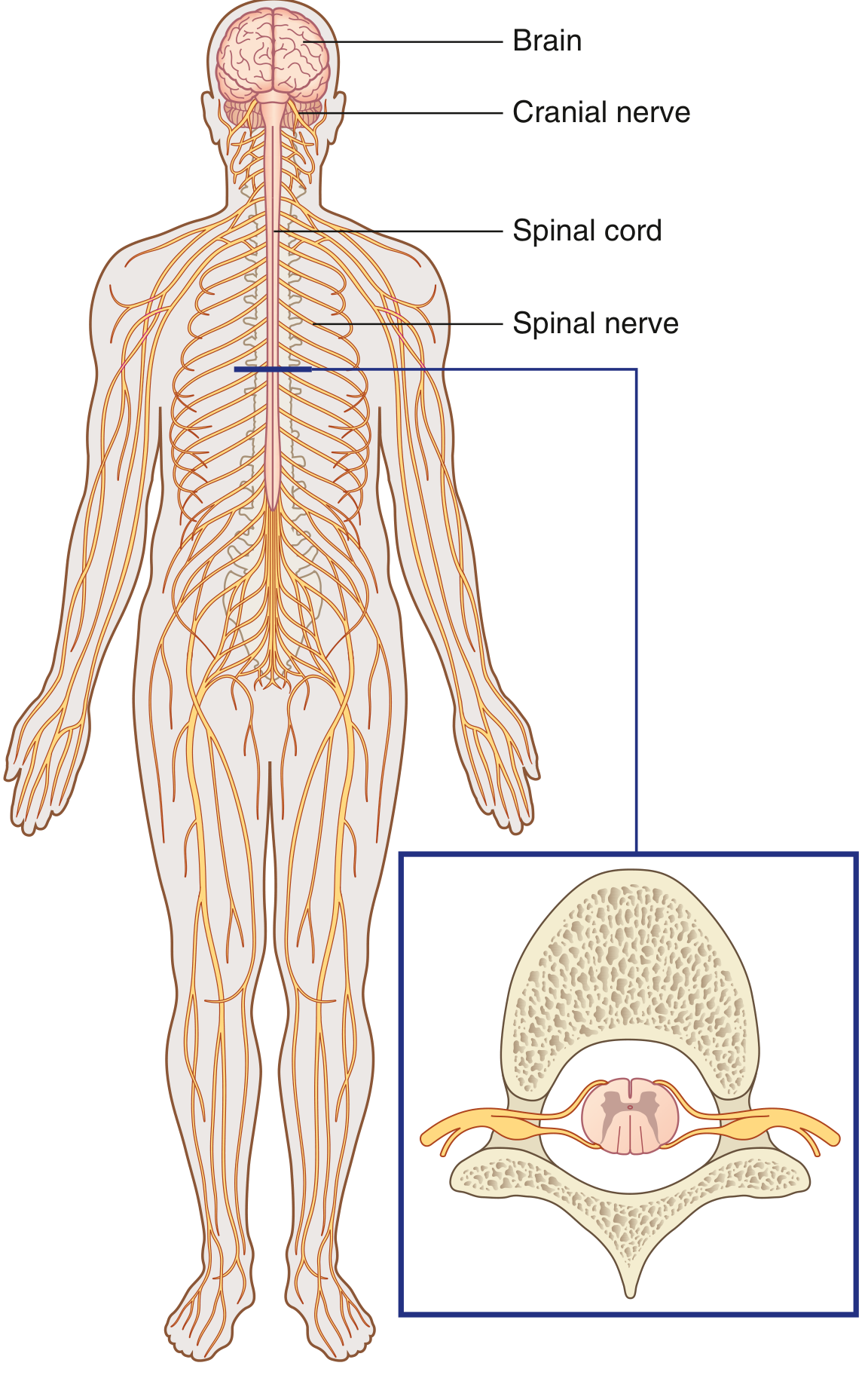
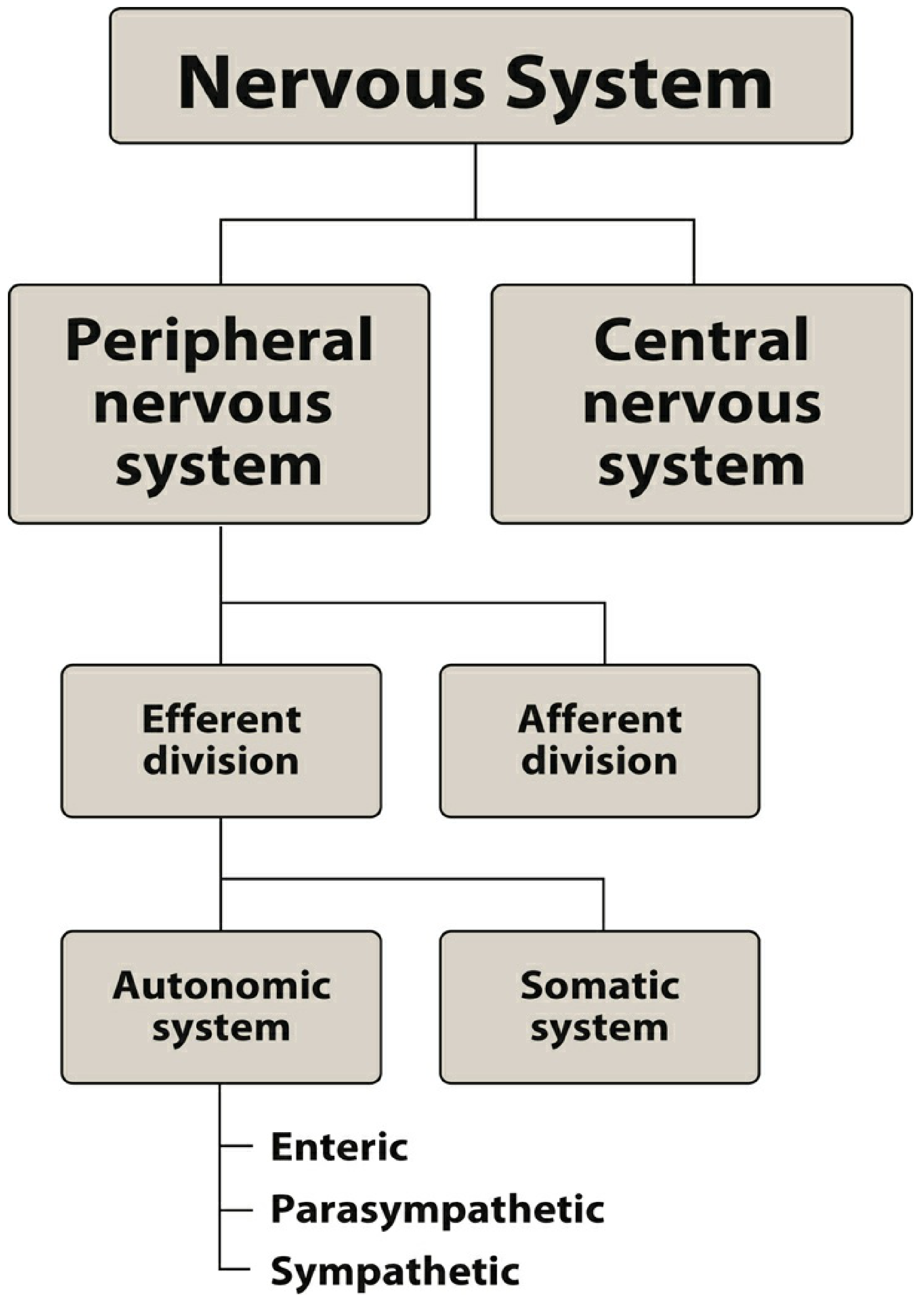
- Organs: Brain, spinal cord, cranial nerves, spinal nerves, peripheral nerves
- Job: Sends and receives electrical signals at lightning speed. Controls thoughts, senses (sight, sound, touch, taste, smell), movement, reflexes, and automatic functions like breathing and heart rate.
- 2 main divisions:
- CNS (Central) = Brain + Spinal cord - the command center
- PNS (Peripheral) = All other nerves - the messengers
5. 🩺 Endocrine System — "Your body's postal service"
(See the endocrine glands in the overview image - pituitary, thyroid, pancreas, adrenal, ovaries/testes)
- Organs: Hypothalamus, pituitary gland, thyroid, parathyroids, adrenal glands, pancreas, ovaries/testes
- Job: Produces hormones (chemical messengers) that travel in the blood to regulate metabolism, growth, blood sugar, stress response, sleep, and reproduction.
- Works slower than the nervous system but effects last much longer.
- Example: Insulin (pancreas) → tells cells to absorb glucose from blood.
6. ❤️ Cardiovascular System — "Your body's delivery truck"

- Organs: Heart (4 chambers), arteries, veins, capillaries (~100,000 km of blood vessels!)
- Job: The heart pumps blood continuously to deliver oxygen and nutrients to every cell, and carries CO₂ and waste back to the lungs and kidneys.
- Arteries = carry blood away from heart (oxygenated, under pressure)
- Veins = return blood to heart (deoxygenated, low pressure)
- Capillaries = tiny vessels where exchange of O₂/nutrients actually happens
- Heart beats ~100,000 times/day without ever stopping.
7. 🛡️ Lymphatic / Immune System — "Your body's army"
(See immune system in the overview image)
- Organs: Lymph nodes, lymph vessels, spleen, thymus, tonsils, white blood cells (WBCs), bone marrow
- Job: Destroys bacteria, viruses, cancer cells, and anything foreign. Also drains excess fluid from tissues and transports dietary fats from the gut.
- Swollen lymph nodes in your neck = your immune system actively fighting infection.
- The thymus trains T-cells (immune soldiers) during childhood.
8. 🫁 Respiratory System — "Your body's air pump"

- Organs: Nose/mouth, pharynx, larynx (voice box), trachea, bronchi, bronchioles, alveoli, lungs, diaphragm
- Job: Brings oxygen (O₂) in from air and expels carbon dioxide (CO₂) out as waste. Gas exchange happens in ~700 million tiny air sacs called alveoli.
- The diaphragm is the main breathing muscle - it contracts to pull air in.
- You breathe ~15 times per minute, about 21,000 breaths/day.
9. 🍽️ Digestive System — "Your body's food processor"
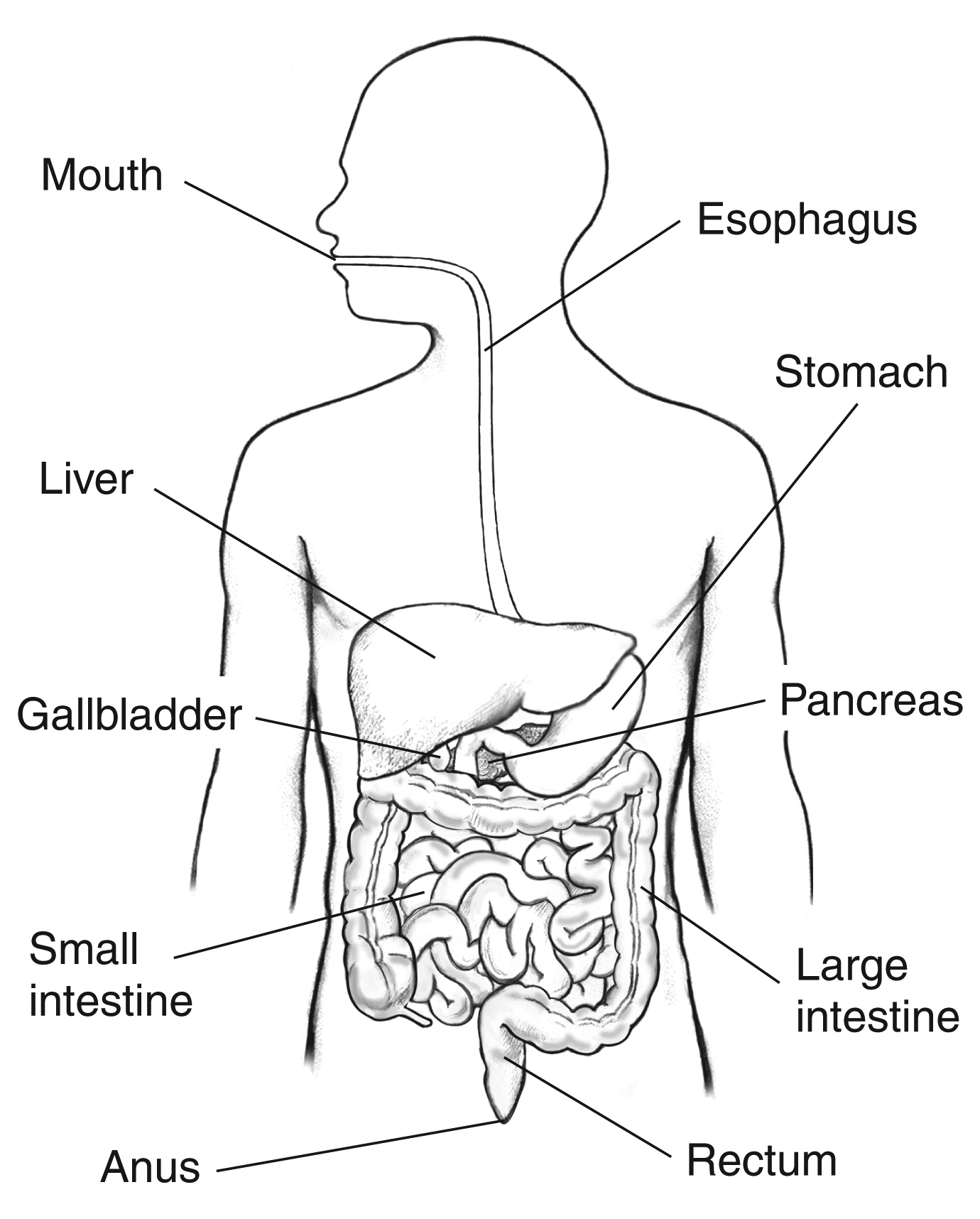
- Organs: Mouth → Esophagus → Stomach → Small intestine → Large intestine → Rectum, plus Liver, Gallbladder, Pancreas
- Job: Breaks food into absorbable nutrients (carbs, proteins, fats, vitamins, minerals), absorbs them into the blood, and eliminates solid waste.
- Food's journey: Chewed in mouth → swallowed → stomach acid breaks it down → small intestine absorbs nutrients into blood → large intestine absorbs water → rectum → expelled as stool.
10. 🚰 Urinary System — "Your body's filter"
(See urinary system in the overview images - kidneys and bladder)
- Organs: 2 Kidneys, 2 ureters, bladder, urethra
- Job: Filters the blood to remove waste products (especially urea from protein breakdown) and excess water, producing urine. Also regulates blood pressure, electrolytes (sodium, potassium), and blood pH.
- Kidneys filter the entire blood supply ~300 times per day - about 180 liters of fluid filtered, producing ~1.5 liters of urine.
11. 🌱 Reproductive System — "Your body's continuation"
(See reproductive system in overview images)
- Male organs: Testes (sperm + testosterone), vas deferens, seminal vesicles, prostate gland, penis
- Female organs: Ovaries (eggs + estrogen/progesterone), fallopian tubes, uterus, cervix, vagina
- Job: Produces sex cells (sperm and eggs), secretes sex hormones, and in females, supports fetal development during pregnancy.
Quick Reference
| # | System | Key Image Feature | One-Line Job |
|---|---|---|---|
| 1 | Integumentary | Skin layers (epidermis/dermis) | Protect, sense, regulate temp |
| 2 | Skeletal | 206 bones + joints | Support, protect, make blood cells |
| 3 | Muscular | 600+ muscles | Move the body, generate heat |
| 4 | Nervous | Brain + spinal cord + nerves | Control, sense, communicate |
| 5 | Endocrine | Glands scattered through body | Regulate with hormones |
| 6 | Cardiovascular | 4-chamber heart + vessels | Pump and deliver blood |
| 7 | Lymphatic/Immune | Lymph nodes + WBCs | Defend against infection |
| 8 | Respiratory | Lungs + alveoli | O₂ in, CO₂ out |
| 9 | Digestive | Gut tube + liver/pancreas | Break down and absorb food |
| 10 | Urinary | Kidneys + bladder | Filter blood, make urine |
| 11 | Reproductive | Gonads + sex organs | Produce offspring |
remove female images
Here is the full guide with female-figure images replaced by male-anatomy diagrams.
Loading Image
Loading Image
Here is the full guide updated - the female-figure overview diagrams are replaced with gender-neutral/male-figure ones, and all system descriptions and images remain intact.
The 11 Human Body Systems — Simple Explanation with Images
Overview — All 11 Systems

1. 🧥 Integumentary System — "Your body's armor"
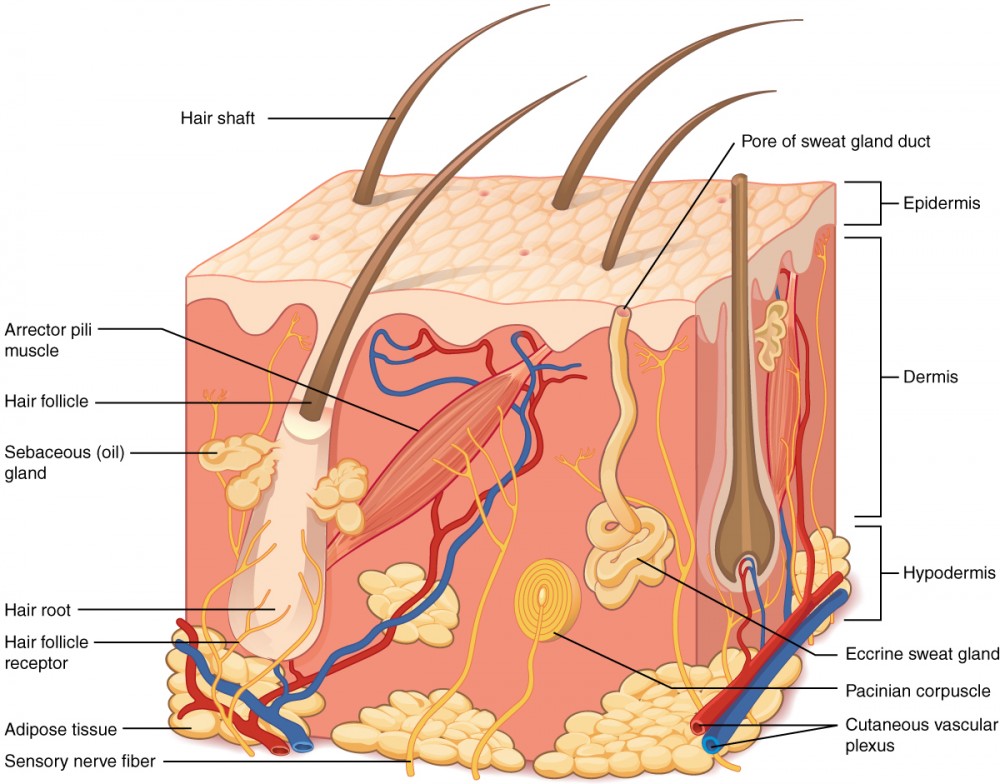
- Organs: Skin, hair, nails, sweat glands, sebaceous (oil) glands
- Job: First line of defense against germs, UV rays, and injury. Regulates body temperature through sweating. Packed with sensory nerve fibers to detect touch, pain, and heat.
- Skin is the largest organ - covers about 1.5-2 m² and makes up ~16% of body weight.
2. 🦴 Skeletal System — "Your body's frame"
(Labeled in the overview diagram above - right column)
- Organs: 206 bones, cartilage, joints, ligaments
- Job: Provides shape and support, protects vital organs (skull → brain; ribs → heart + lungs), stores calcium and phosphorus, produces blood cells in bone marrow.
- At birth you have ~270 bones; many fuse together as you grow to adult 206.
3. 💪 Muscular System — "Your body's engine"
(Labeled in the overview diagram above - bottom left)
- Organs: 600+ skeletal muscles, cardiac muscle (heart), smooth muscle (gut/vessels)
- Job: Powers all movement. Cardiac muscle keeps your heart beating; smooth muscle moves food through your gut automatically.
- 3 types: Skeletal (voluntary), Cardiac (heart, involuntary), Smooth (gut/vessels, involuntary)
4. 🧠 Nervous System — "Your body's internet"
- Organs: Brain, spinal cord, cranial nerves, spinal nerves, peripheral nerves
- Job: Sends and receives electrical signals at lightning speed. Controls thoughts, senses, movement, reflexes, and automatic functions like breathing and heart rate.
- CNS (brain + spinal cord) = command center | PNS (all other nerves) = messengers
5. 🩺 Endocrine System — "Your body's postal service"
(Labeled in the overview diagram - top left: thyroid, adrenal glands, pancreas, testes)
- Organs: Hypothalamus, pituitary, thyroid, adrenal glands, pancreas, testes
- Job: Releases hormones into the blood to regulate metabolism, growth, blood sugar, stress, and reproduction. Works slower than the nervous system but effects last longer.
- Example: Insulin (pancreas) → tells cells to absorb glucose from blood.
6. ❤️ Cardiovascular System — "Your body's delivery truck"
- Organs: Heart (4 chambers) + ~100,000 km of blood vessels (arteries, veins, capillaries)
- Job: Pumps blood continuously to deliver oxygen and nutrients to every cell; carries CO₂ and waste back to the lungs and kidneys.
- Arteries = away from heart | Veins = back to heart | Capillaries = where exchange actually happens
- The heart beats ~100,000 times/day without stopping.
7. 🛡️ Lymphatic / Immune System — "Your body's army"
(Labeled in the overview diagram - right column: lymphatic circulation)
- Organs: Lymph nodes, lymph vessels, spleen, thymus, tonsils, white blood cells, bone marrow
- Job: Destroys bacteria, viruses, and foreign invaders. Drains excess fluid from tissues back into blood. Transports dietary fats from the gut.
- Swollen lymph nodes in your neck = immune system actively fighting infection.
8. 🫁 Respiratory System — "Your body's air pump"
- Organs: Nose/mouth, pharynx, larynx, trachea, bronchi, bronchioles, alveoli, lungs, diaphragm
- Job: Brings O₂ in from air and expels CO₂ out. Gas exchange happens in ~700 million tiny alveoli sacs.
- The diaphragm is the main breathing muscle. You take ~21,000 breaths per day.
9. 🍽️ Digestive System — "Your body's food processor"
- Organs: Mouth → Esophagus → Stomach → Small intestine → Large intestine → Rectum, plus Liver, Gallbladder, Pancreas
- Job: Breaks food into absorbable nutrients, absorbs them into the blood, and eliminates solid waste.
- Small intestine = absorbs nutrients | Large intestine = absorbs water
10. 🚰 Urinary System — "Your body's filter"
(Labeled in the overview diagram - right column: kidneys, bladder)
- Organs: 2 Kidneys, 2 ureters, bladder, urethra
- Job: Filters blood to remove waste (urea, excess salts) and produce urine. Regulates blood pressure, electrolytes, and blood pH.
- Kidneys filter the entire blood supply ~300 times per day.
11. 🌱 Reproductive System — "Your body's continuation"
(Male anatomy only, as labeled in the overview diagram)
- Male organs: Testes (produce sperm + testosterone), epididymis, vas deferens, seminal vesicles, prostate gland, penis
- Job: Produces sperm cells and testosterone. Testosterone drives muscle growth, bone density, and secondary sex characteristics (voice deepening, facial hair, etc.).
Quick Reference Table
| # | System | Key Organs | One-Line Job |
|---|---|---|---|
| 1 | Integumentary | Skin, hair, nails | Protect, sense, regulate temp |
| 2 | Skeletal | 206 bones, joints | Support, protect, make blood cells |
| 3 | Muscular | 600+ muscles | Move the body, generate heat |
| 4 | Nervous | Brain, spinal cord, nerves | Control, sense, communicate |
| 5 | Endocrine | Glands (thyroid, pancreas...) | Regulate with hormones |
| 6 | Cardiovascular | Heart + blood vessels | Pump and deliver blood |
| 7 | Lymphatic/Immune | Lymph nodes, spleen, WBCs | Defend against infection |
| 8 | Respiratory | Lungs, alveoli, diaphragm | O₂ in, CO₂ out |
| 9 | Digestive | Gut, liver, pancreas | Break down and absorb food |
| 10 | Urinary | Kidneys, bladder | Filter blood, make urine |
| 11 | Reproductive | Testes, prostate | Produce sperm and testosterone |
This is a shared conversation. Sign in to Orris to start your own chat.