I now have comprehensive content to answer all questions. Let me write the full answers:Here are comprehensive answers to all 30 practical skills questions:
Practical Skills 2026 - Complete Answers
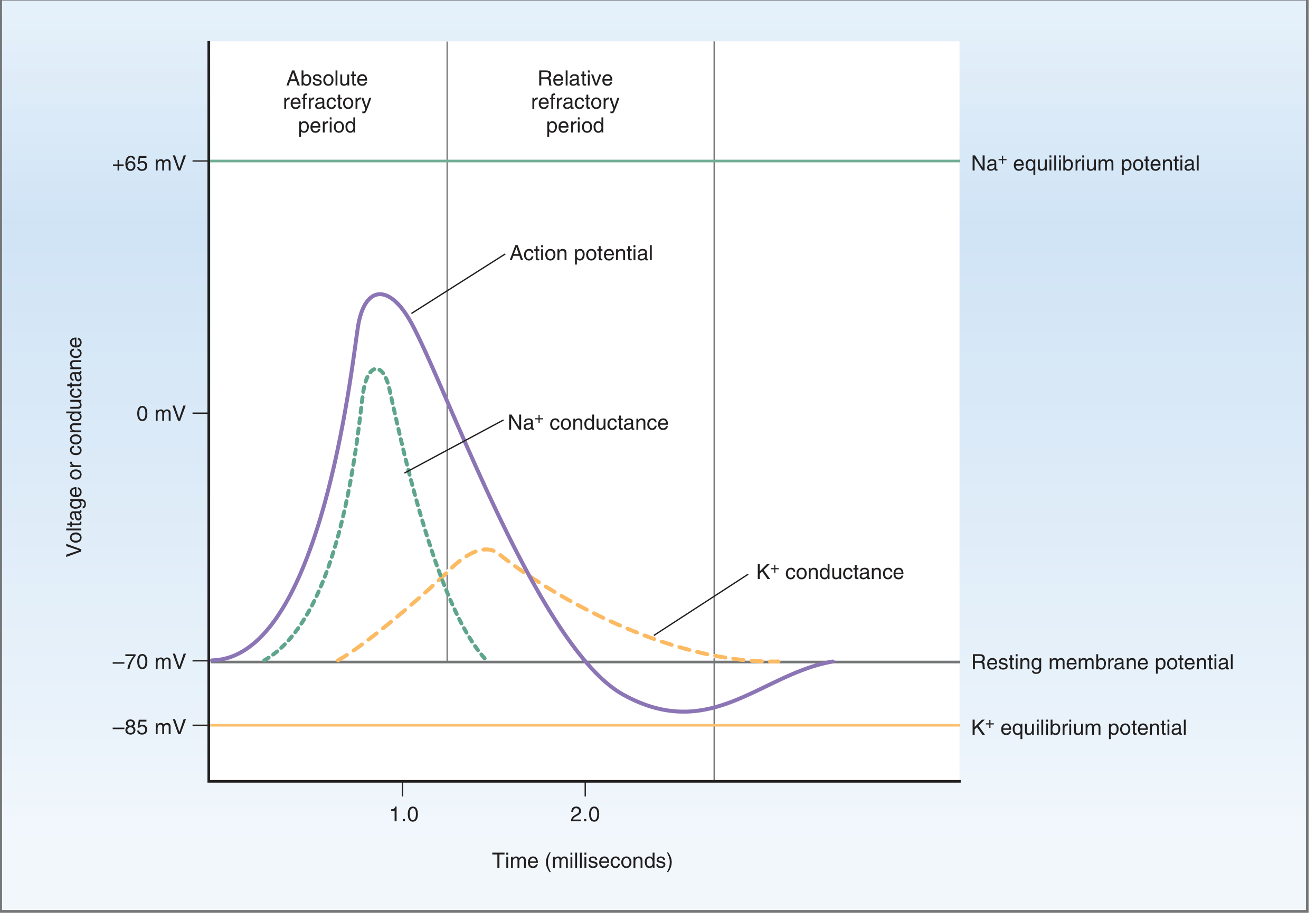
Q1. Draw the graph of action potential. Indicate its phases and explain ionic mechanism of its generation.
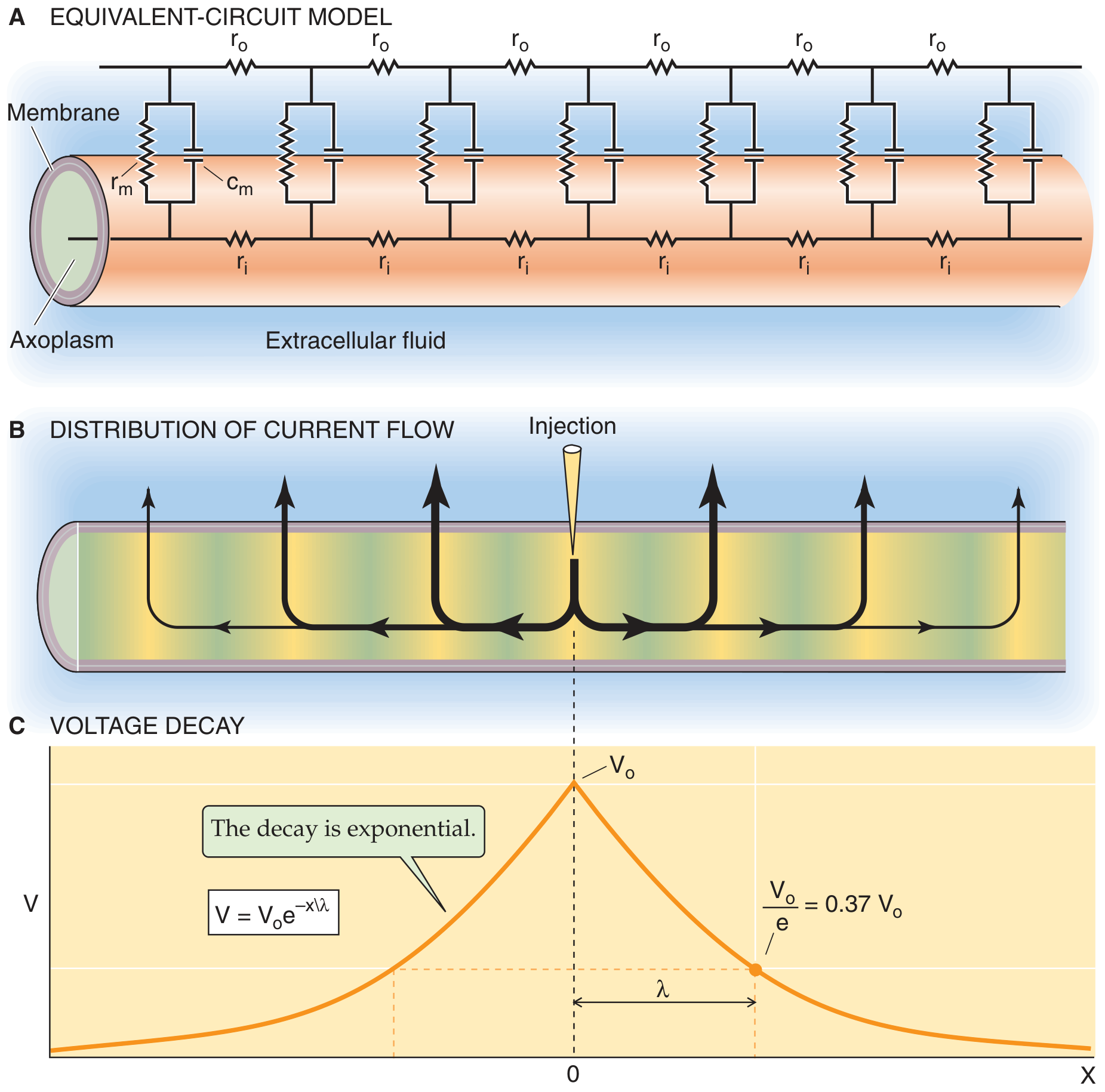
Graph:
+40 mV ─────────────────────────────── peak (overshoot)
/\
/ \
/ \
0 mV ─/──────\──────────────────────────────
\ /‾‾‾‾‾‾‾‾‾‾‾‾ resting
-55 mV ───────\ / (undershoot/AHP)
(threshold) \ /
-70 mV ─────────V─────────────────────────── resting
Phase: 0 1 2 3 4
(nerve: upstroke → repolarization → undershoot)
Phases (nerve/skeletal muscle):
| Phase | Event | Ion(s) |
|---|
| Resting (-70 mV) | K⁺ channels open, K⁺ leaks out | K⁺ |
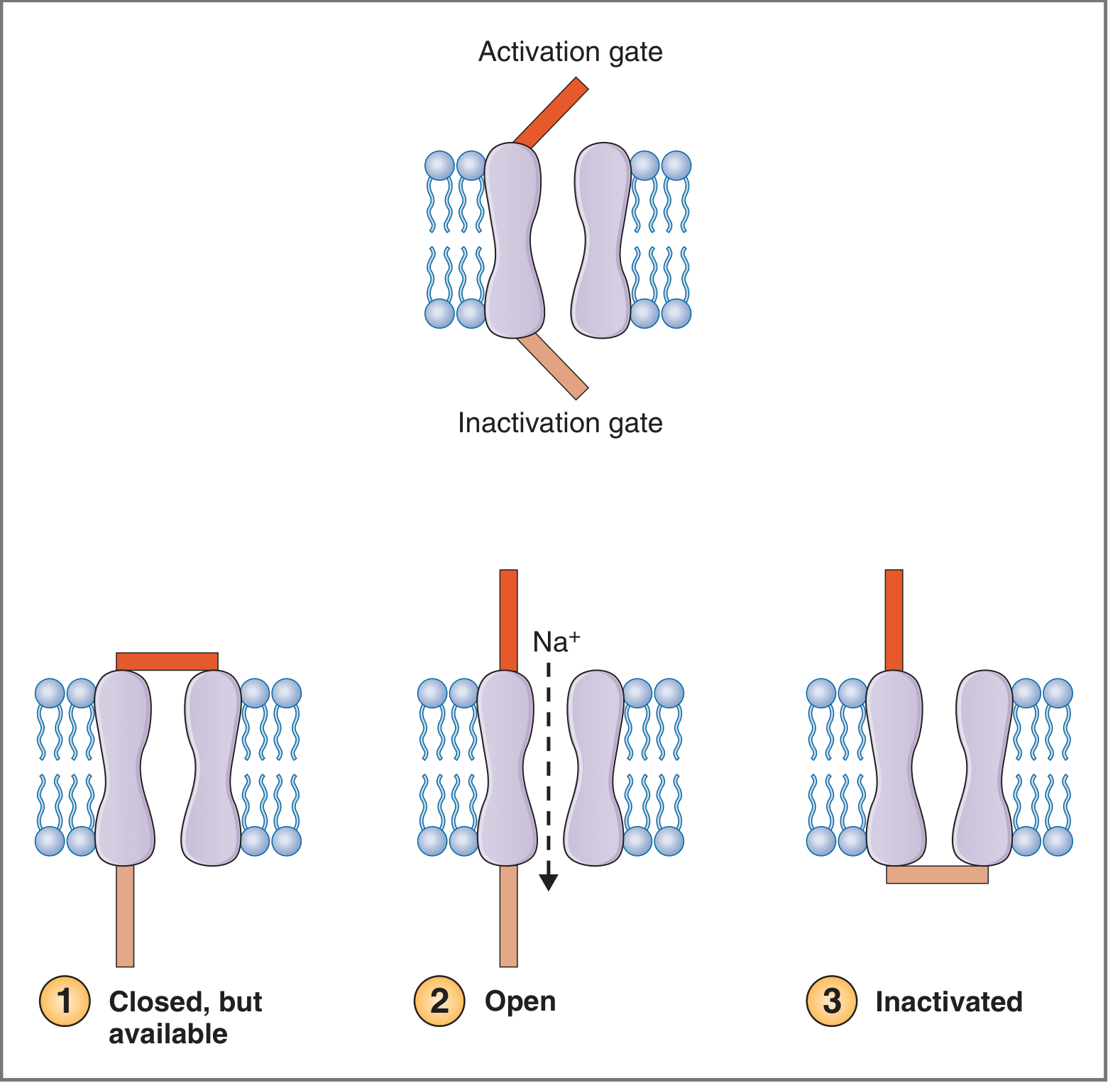
| Upstroke (depolarization) | Depolarization to threshold (~-55 mV) → voltage-gated Na⁺ channels open rapidly (activation gates open) → massive Na⁺ influx → membrane reaches ~+40 mV | Na⁺ in |
| Repolarization | Na⁺ channel inactivation gates close (slow); voltage-gated K⁺ channels open → K⁺ efflux | K⁺ out |
| Undershoot (hyperpolarizing afterpotential) | K⁺ conductance remains transiently elevated → membrane driven closer to E_K (~-90 mV) | K⁺ out |
| Return to resting potential | K⁺ conductance falls back to resting level | K⁺ |
Ionic mechanism summary:
- Resting state: activation gate closed, inactivation gate open (channel available)
- Upstroke: depolarization → activation gate opens quickly → both gates open → Na⁺ flows in
- Repolarization: inactivation gate closes (slowly) + K⁺ channels open → K⁺ flows out
- Undershoot: excess K⁺ conductance persists briefly
- Recovery: Na⁺/K⁺-ATPase restores ion gradients
(Costanzo Physiology 7e, p.27-29)
Q2. Draw the graph of changes in excitability during AP: refractory periods and their phases
Graph:
Membrane potential:
+40 ──── /\
/ \
-70 ───── ────────────────────── (resting)
Excitability:
Normal ─────────────────────────── restored
/
Supranormal ─────────────── (relative refractory → slightly above normal)
/
Subnormal ──────────
ZERO (ARP) ─────
| | |
AP ARP ends RRP ends
Phases:
-
Absolute Refractory Period (ARP): Coincides with the upstroke and most of repolarization. Na⁺ channels are inactivated (inactivation gates closed) - no stimulus of any strength can elicit a new AP. Ensures unidirectional propagation and limits firing frequency.
-
Relative Refractory Period (RRP): Follows ARP. Membrane is still somewhat hyperpolarized; Na⁺ channels partially recovered. A stronger-than-normal stimulus can elicit an AP, but it will be smaller and slower.
-
Supranormal period: Membrane has slightly recovered past resting potential in some cell types - threshold is easier to reach transiently.
-
Subnormal period (undershoot): Membrane is hyperpolarized during AHP - threshold is harder to reach, so excitability is reduced below normal.
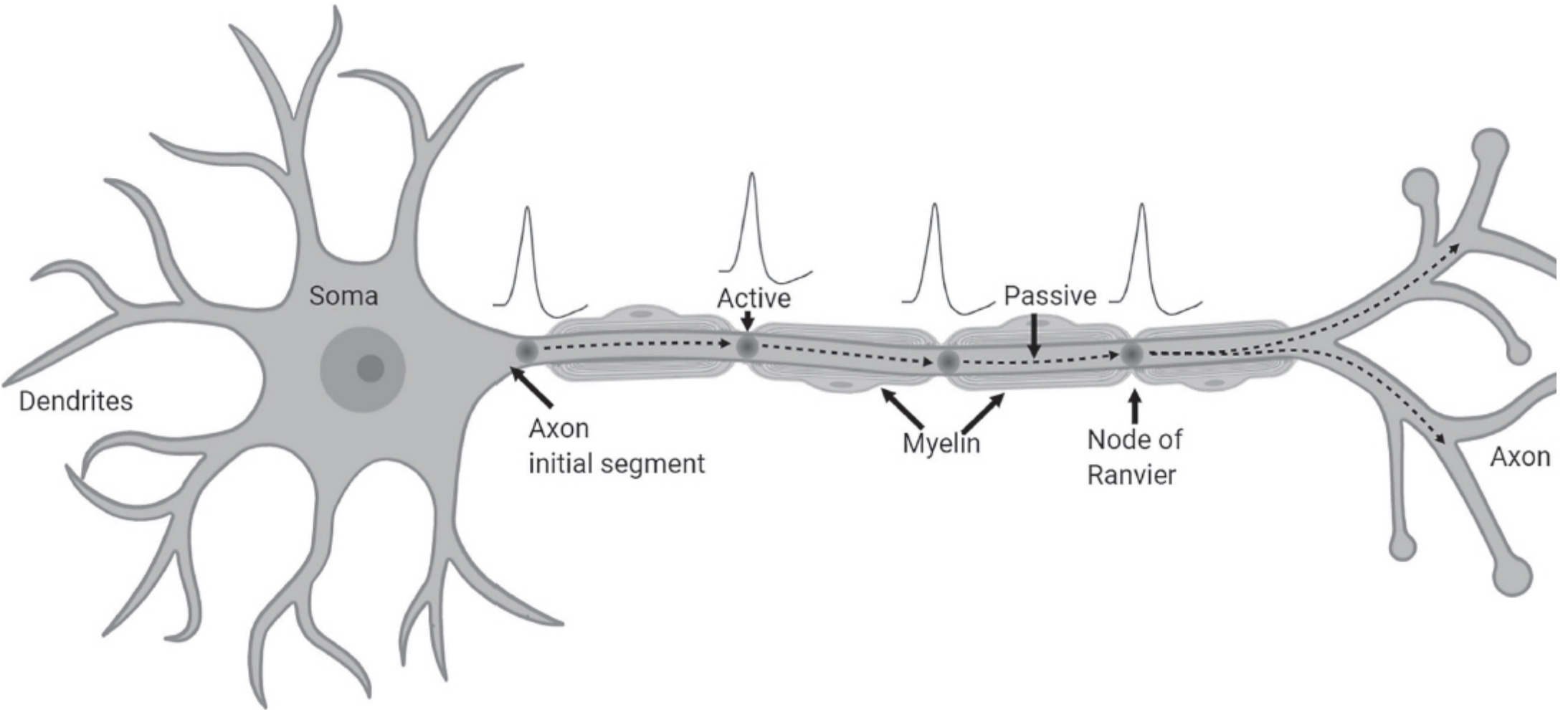
Q3. Draw a scheme explaining mechanism of AP propagation along myelinated and non-myelinated nerve fibers
Non-myelinated (continuous conduction):
Active site Adjacent sites (brought to threshold)
─────────────────────────────────────────────────────────
[Na⁺ in → +] →→→→ current spreads to neighbor → depolarizes
←←←←←←←←←←←← (inside current loop)
─────────────────────────────────────────────────────────
Direction: →→→→→→→→→→→→
- Local current flows from active (+) to inactive (-) segment
- Each adjacent membrane is brought to threshold sequentially
- Slow (0.5-2 m/s), energy-expensive
Myelinated (saltatory conduction):
Node of Node of Node of
Ranvier 1 Ranvier 2 Ranvier 3
| | |
────[AP]───────────[AP]───────────[AP]────
↑ ↑ ↑
myelin sheath (insulator - no ion flow between nodes)
Current jumps: Node 1 → Node 2 → Node 3 (saltatory = "jumping")
- Myelin sheath insulates internodal segments; ion exchange only at nodes of Ranvier
- Current "jumps" from node to node
- Fast (70-120 m/s), energy-efficient
- Multiple sclerosis damages myelin → slows/blocks conduction
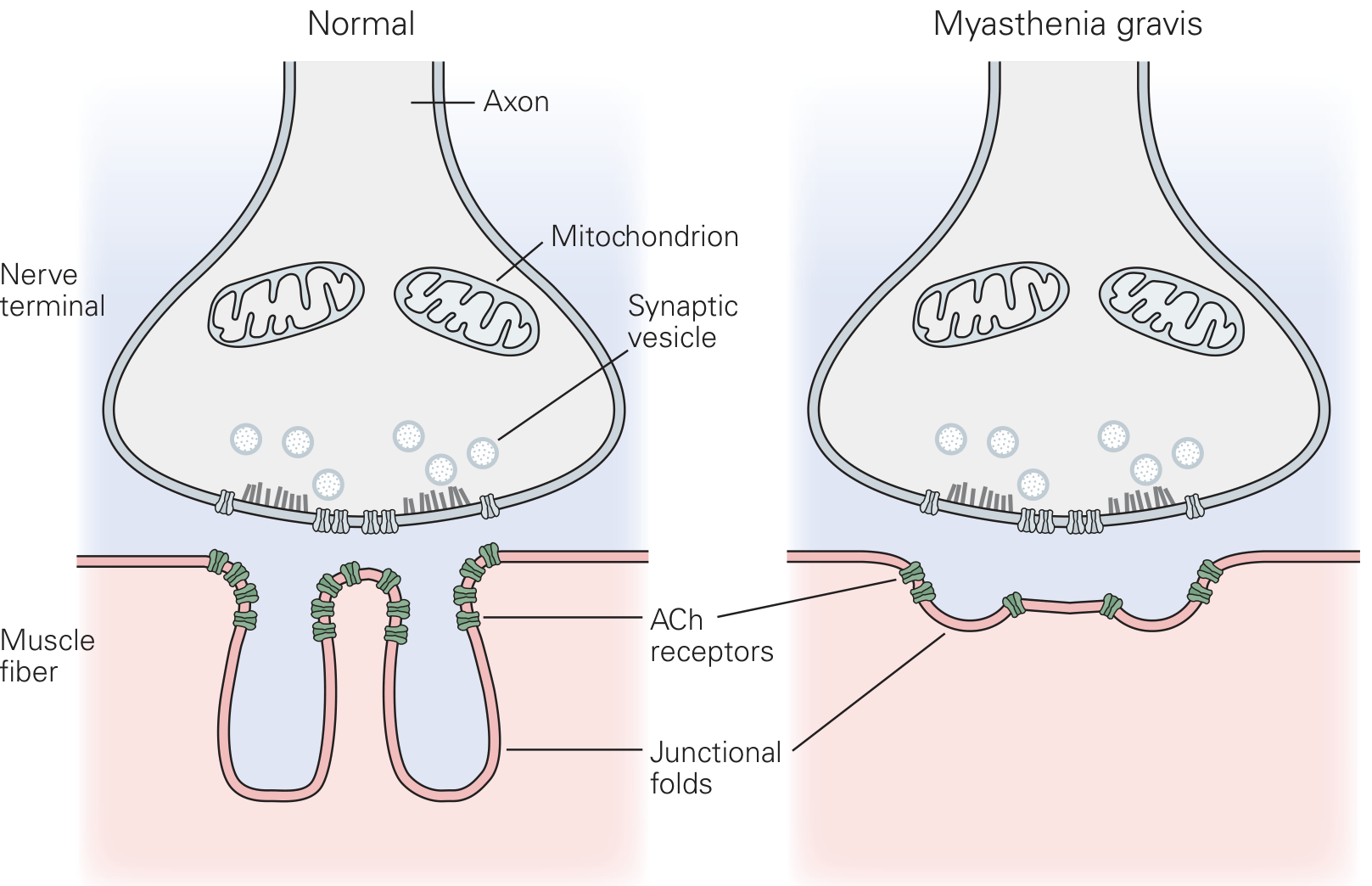
Q4. Draw a scheme of the neuromuscular junction and explain mechanism of synaptic transmission
Scheme:
Motor neuron axon terminal (presynaptic)
┌─────────────────────────────────────────┐
│ Mitochondria ●●●● Vesicles (ACh) │
│ ↓ Ca²⁺ influx │
└─────────────────────────────────────────┘
Synaptic cleft
(AChE present)
┌─────────────────────────────────────────┐
│ Muscle fiber (postsynaptic) │
│ Nicotinic ACh receptors │
│ Motor end plate │
└─────────────────────────────────────────┘
Steps of transmission:
- AP arrives at axon terminal
- Voltage-gated Ca²⁺ channels open → Ca²⁺ enters terminal
- Ca²⁺ triggers vesicle fusion (exocytosis) → acetylcholine (ACh) released into cleft
- ACh diffuses across cleft and binds nicotinic ACh receptors (ligand-gated Na⁺/K⁺ channels) on motor end plate
- Channels open → Na⁺ influx > K⁺ efflux → end-plate potential (EPP) generated
- EPP depolarizes surrounding muscle membrane to threshold → AP in muscle fiber
- Acetylcholinesterase (AChE) in cleft rapidly hydrolyzes ACh → choline recycled back into terminal
Blockers: curare/tubocurarine blocks nicotinic receptors (flaccid paralysis); neostigmine inhibits AChE (prolongs EPP)
Q5. Draw curves of single twitch and tetanic contractions
Graph:
Force
│ ___
│ / \ _____________________ Complete tetanus
│ / \ /
│ / \ / /\/\/\/\/\/\ Incomplete tetanus
│ / \ /
│ / Single \ /
│ / twitch \/
│──────────────────────────────────────────── Time
Latent Contraction Relaxation
period phase phase
Single twitch: One stimulus → one AP → brief Ca²⁺ release from SR → cross-bridge cycling → force rises then falls (refractory period ends, Ca²⁺ pumped back)
Incomplete tetanus: Stimuli before full relaxation → summation of twitches → wave-like force
Complete tetanus: High-frequency stimuli → Ca²⁺ remains elevated continuously → maximal sustained force (~3-4x single twitch)
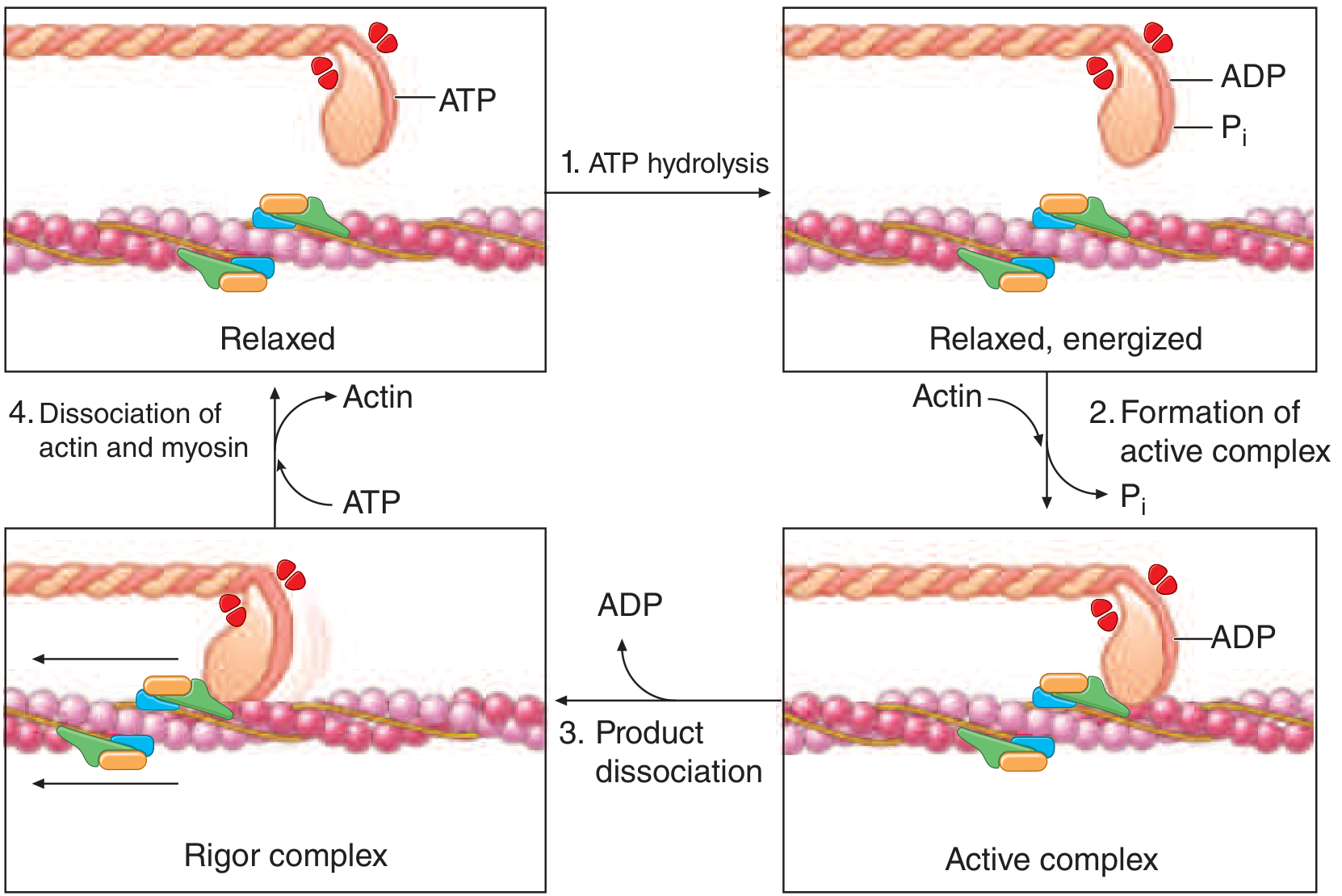
Q6. Draw a scheme illustrating mechanism of muscular contraction and relaxation
Mechanism:
AP in muscle fiber
↓
T-tubule depolarization
↓
Voltage-sensor (DHPR/dihydropyridine receptor) activated
↓
RyR (ryanodine receptor) on SR opens → Ca²⁺ released into cytoplasm
↓
Ca²⁺ binds Troponin C → conformational change in Troponin-Tropomyosin complex
↓
Tropomyosin moves → exposes actin binding sites for myosin
↓
Myosin S1 head (with ADP+Pi) binds actin → POWER STROKE
↓
ADP + Pi released → cross-bridge formed (rigor state)
↓
New ATP binds myosin → cross-bridge detaches
↓
ATP hydrolyzed → myosin re-cocked → cycle repeats → SHORTENING
RELAXATION:
AP stops → Ca²⁺ pumped back into SR by SERCA (SR Ca²⁺-ATPase)
→ Ca²⁺ off Troponin C → Tropomyosin covers actin sites → no more cross-bridges
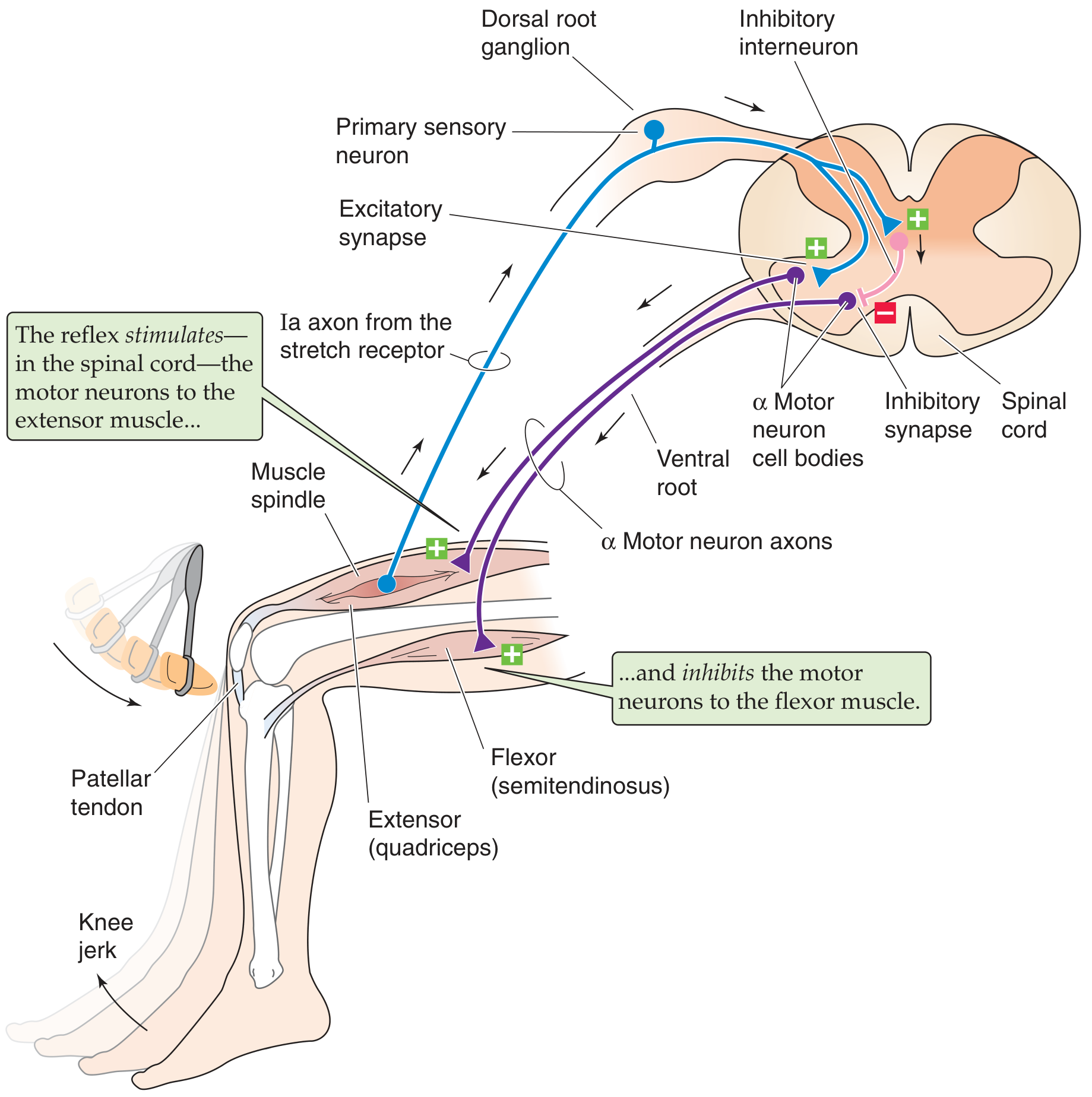
Q7. Draw a scheme of the spinal cord reflex arch
Stimulus (e.g., muscle stretch)
↓
[RECEPTOR] (muscle spindle / skin receptor)
↓
[AFFERENT NEURON] (sensory/dorsal root)
↓
┌──────────────────────────────────┐
│ SPINAL CORD (CNS) │
│ [INTERNEURON] (association) │ ← may be absent in monosynaptic reflex
└──────────────────────────────────┘
↓
[EFFERENT NEURON] (motor/ventral root)
↓
[EFFECTOR] (muscle)
↓
RESPONSE (contraction)
5 components: receptor → afferent neuron → nerve center (interneuron) → efferent neuron → effector
Monosynaptic reflex (knee-jerk): no interneuron - afferent Ia fiber synapses directly on alpha motor neuron
Q8. Draw schemes of pre- and postsynaptic inhibition in the CNS
Presynaptic inhibition:
Excitatory neuron A ────→ [Terminal A]
↓ (reduced neurotransmitter release)
Inhibitory neuron B → [Terminal B]──┤[Terminal A]
(GABA acts on A's terminal → reduces Ca²⁺ → ↓ACh/Glu release)
↓
Postsynaptic cell (less EPSP)
Mechanism: GABA-B receptors on presynaptic terminal → ↑K⁺ conductance or ↓Ca²⁺ → less transmitter released from A → weaker EPSP
Postsynaptic inhibition:
Excitatory neuron A ────────────────→ [Postsynaptic cell]
↑
Inhibitory neuron B ───────── IPSP ──────────┤
(opens Cl⁻ or K⁺ channels → hyperpolarizes postsynaptic membrane)
Mechanism: Inhibitory interneuron releases GABA or glycine → opens Cl⁻ channels (IPSP) → membrane hyperpolarizes → harder to reach threshold
Renshaw cell inhibition (recurrent inhibition) = postsynaptic inhibition of motor neurons
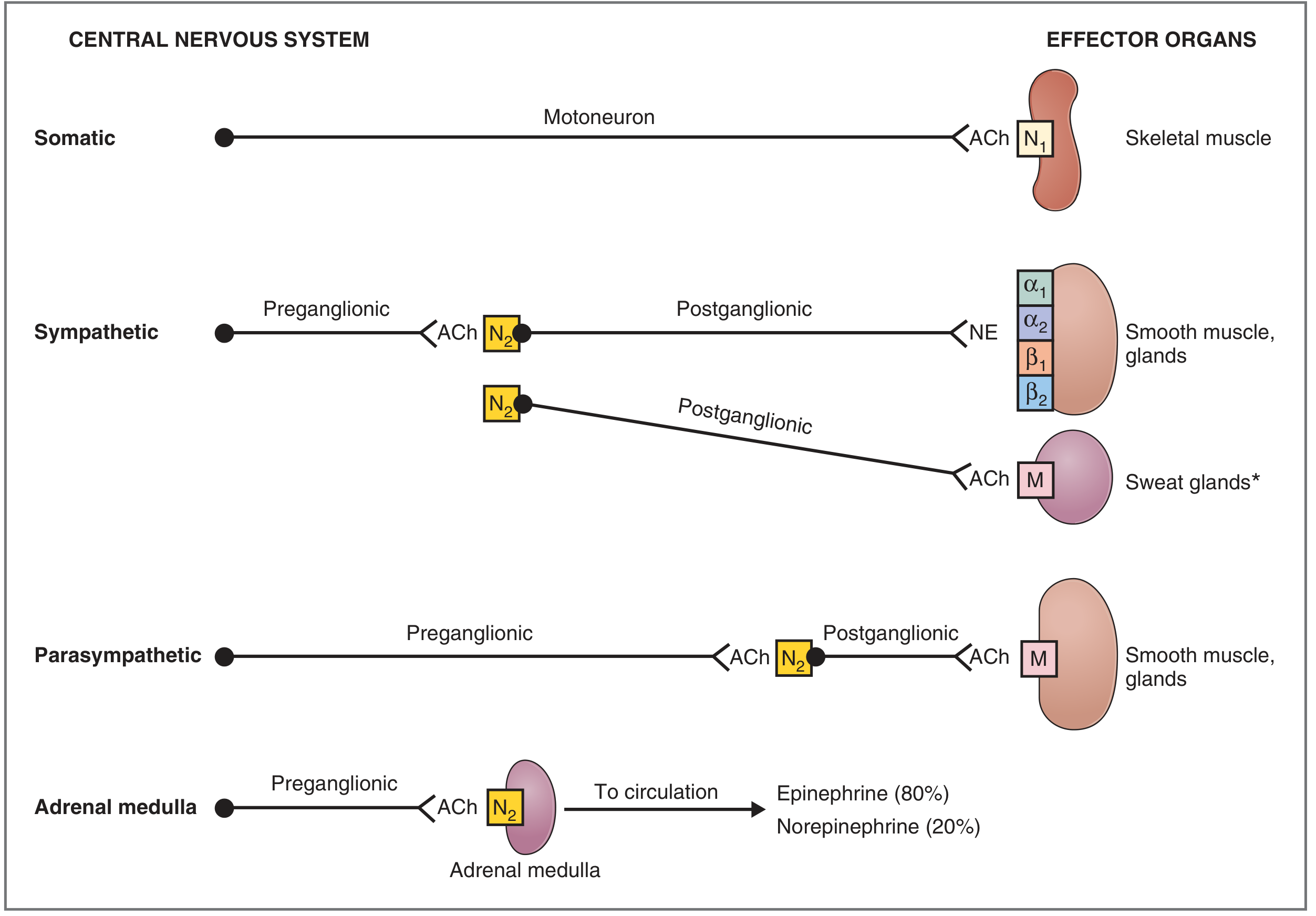
Q9. Draw a scheme of autonomic reflex arch (sympathetic and parasympathetic)
Sympathetic:
[Higher centers / Hypothalamus]
↓
[Preganglionic neuron] - short fiber, ACh, nicotinic receptor
Lateral horn T1-L2 (spinal cord)
↓ (synapse in paravertebral or prevertebral ganglia)
[Postganglionic neuron] - long fiber, Norepinephrine (NE), α/β receptors
↓
[Target organ] → "Fight or flight": ↑HR, vasoconstriction, pupil dilation
Parasympathetic:
[Brainstem (CN III, VII, IX, X) + Sacral S2-S4]
↓
[Preganglionic neuron] - long fiber, ACh, nicotinic receptor
↓ (synapse in ganglion near/within target organ)
[Postganglionic neuron] - short fiber, ACh, muscarinic receptor
↓
[Target organ] → "Rest and digest": ↓HR, ↑GI motility, pupil constriction
Q10. Draw a scheme showing mechanism of protein hormone action on target cells
Protein hormone (e.g., insulin, glucagon, TSH, LH)
│ (hydrophilic - cannot cross membrane)
↓
[Cell surface receptor] (GPCR or receptor tyrosine kinase)
│
├─── GPCR pathway:
│ Hormone + GPCR → G protein (Gs/Gi) activated
│ Gs → adenylyl cyclase → ↑cAMP → activates PKA
│ PKA phosphorylates proteins → cellular response
│ (e.g., glucagon → glycogenolysis in liver)
│
└─── RTK pathway:
Hormone + RTK → receptor dimerizes → autophosphorylation (Tyr)
→ adaptor proteins → RAS/MAPK or PI3K/Akt cascade
→ gene expression, cell growth, glucose uptake
(e.g., insulin → GLUT4 translocation)
Key: protein hormones act via second messengers (cAMP, IP₃/DAG, Ca²⁺) - response is fast but does NOT require entry into nucleus
Q11. Draw a scheme showing mechanism of steroid hormone action on target cells
Steroid hormone (e.g., cortisol, aldosterone, estrogen, testosterone)
│ (lipophilic - crosses plasma membrane freely)
↓
[Cytoplasmic or nuclear receptor]
│
Hormone + receptor → receptor activated (releases heat-shock proteins)
│
Receptor-hormone complex dimerizes
│
Translocates to nucleus
│
Binds Hormone Response Elements (HRE) on DNA
│
Alters gene transcription (↑ or ↓ mRNA synthesis)
│
↓ protein synthesis (new enzymes, structural proteins)
│
CELLULAR RESPONSE (hours to days)
Key differences from protein hormones: slow onset (hours), prolonged effect, directly modifies gene expression
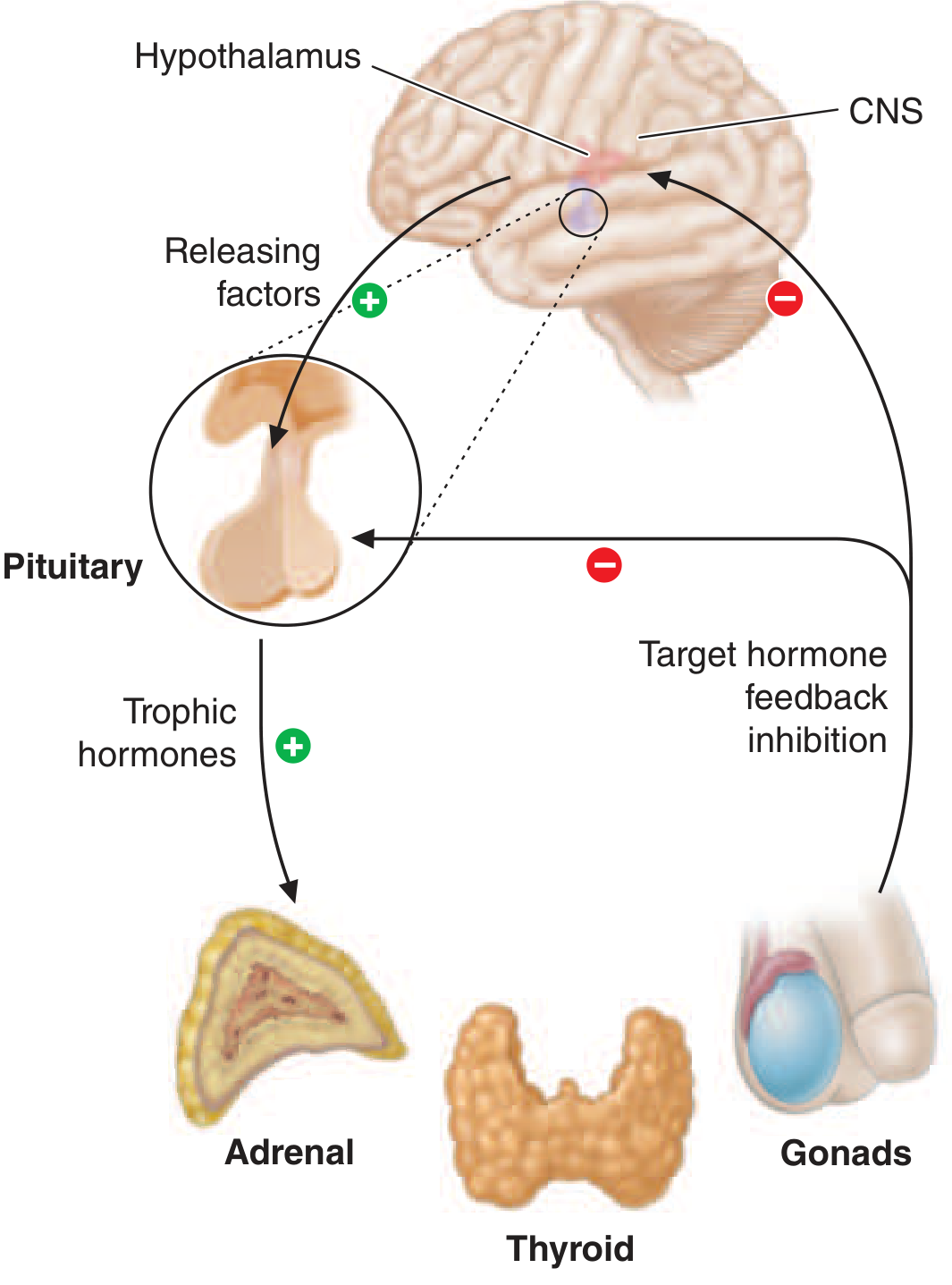
Q12. Draw the hypothalamic-pituitary axis for any peripheral endocrine gland
Example: Hypothalamic-Pituitary-Thyroid (HPT) Axis:
HYPOTHALAMUS
↓ TRH (Thyrotropin-Releasing Hormone) [+]
ANTERIOR PITUITARY
↓ TSH (Thyroid-Stimulating Hormone) [+]
THYROID GLAND
↓ T3, T4 (thyroid hormones)
NEGATIVE FEEDBACK:
T3/T4 ──────────────→ HYPOTHALAMUS [−]
T3/T4 ──────────────→ ANTERIOR PITUITARY [−]
General principle (applies to HPA, HPG axes too):
- Hypothalamus releases releasing hormone → stimulates pituitary
- Pituitary releases tropic hormone → stimulates peripheral gland
- Peripheral gland releases end hormone → negative feedback on both hypothalamus and pituitary
- This maintains homeostatic set-point
HPG axis: GnRH → LH/FSH → sex steroids (testosterone/estrogen)
HPA axis: CRH → ACTH → cortisol
Q13. Interpret blood test results
Normal reference ranges and interpretation framework:
| Parameter | Normal Range | Low suggests | High suggests |
|---|
| Hb (male) | 130-170 g/L | Anemia | Polycythemia |
| Hb (female) | 120-150 g/L | Anemia | Polycythemia |
| RBC (male) | 4.5-5.5 ×10¹²/L | Anemia | Polycythemia |
| WBC | 4.0-9.0 ×10⁹/L | Leukopenia (viral, aplastic) | Leukocytosis (infection, leukemia) |
| Platelets | 150-400 ×10⁹/L | Thrombocytopenia (bleeding risk) | Thrombocytosis |
| Hct (PCV) | 36-48% | Anemia | Dehydration, polycythemia |
| MCV | 80-100 fL | Microcytic (Fe deficiency, thalassemia) | Macrocytic (B12/folate deficiency) |
| MCH | 27-33 pg | Hypochromic | Hyperchromic |
| ESR | <15 mm/hr (M), <20 (F) | - | Inflammation, infection |
| Neutrophils | 50-70% of WBC | Neutropenia | Bacterial infection |
| Lymphocytes | 20-40% | Lymphopenia | Viral infection, CLL |
| Eosinophils | 1-4% | - | Allergy, parasites |
Approach: Check each value against reference range → categorize (normal/low/high) → correlate with clinical picture → form differential diagnosis
Q14. Outline principles of blood typing by ABO and Rh systems
ABO System:
| Blood Group | Antigens on RBC | Antibodies in plasma | Can receive | Can donate to |
|---|
| A | A antigen | Anti-B | A, O | A, AB |
| B | B antigen | Anti-A | B, O | B, AB |
| AB | A + B antigens | None | A, B, AB, O | AB only |
| O | None | Anti-A and Anti-B | O only | A, B, AB, O |
Principles:
- Agglutination occurs when antibody meets corresponding antigen
- ABO antibodies are naturally occurring (no prior sensitization needed)
- Standard typing: add Anti-A and Anti-B sera to patient RBCs → observe agglutination
Rh System:
- Rh+ (D antigen present): ~85% of population
- Rh- (D antigen absent): ~15% of population
- Anti-D antibodies are immune (formed only after exposure to Rh+ blood)
- Danger: Rh- mother with Rh+ fetus → hemolytic disease of the newborn (HDN) in subsequent pregnancies
- Prevention: Anti-D immunoglobulin (RhoGAM) given to Rh- mothers
Procedure:
- Mix patient RBCs with anti-A, anti-B, anti-D sera
- Observe for agglutination (clumping = positive reaction)
- Cross-match: donor cells + recipient serum and vice versa before transfusion
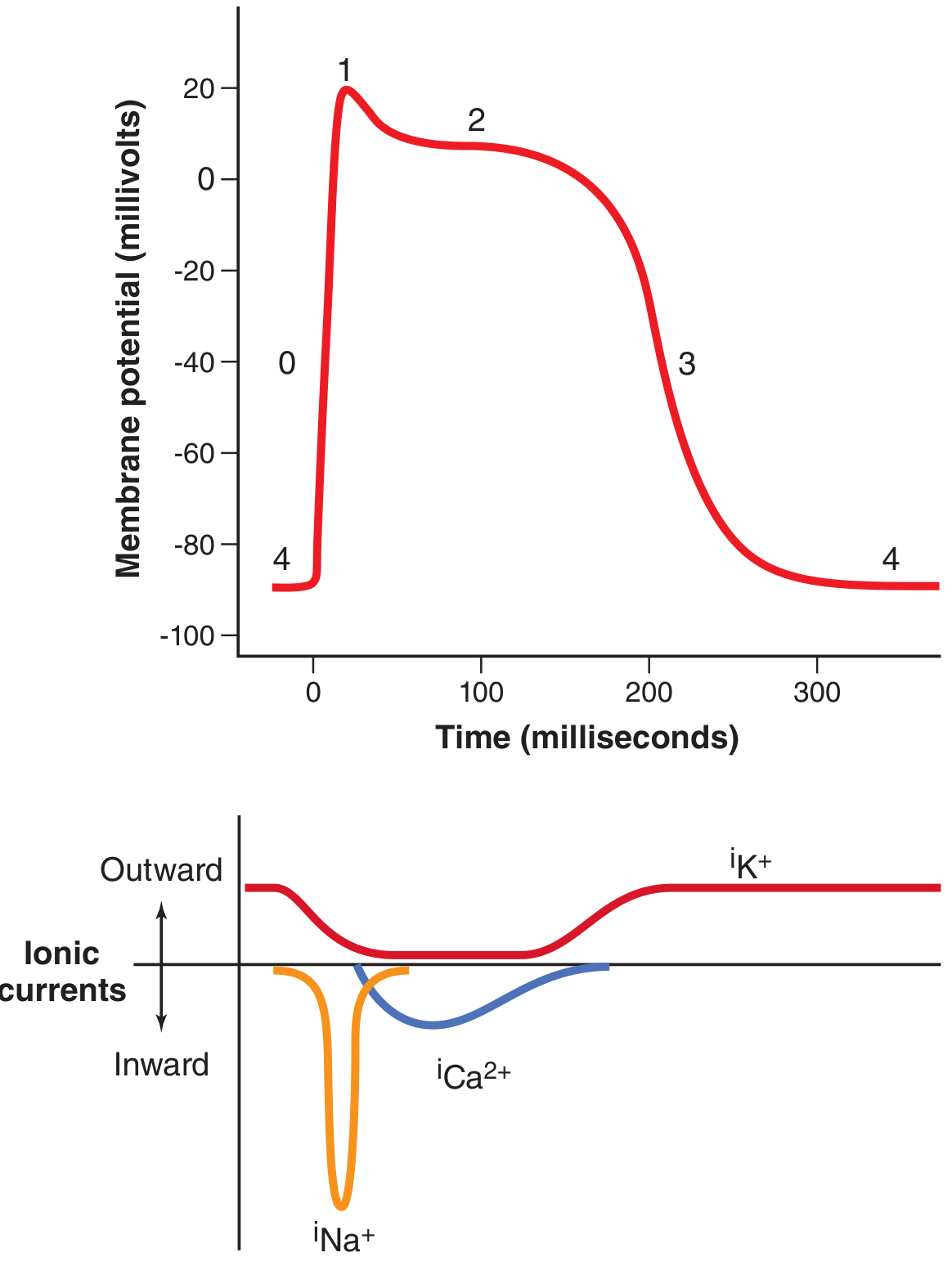
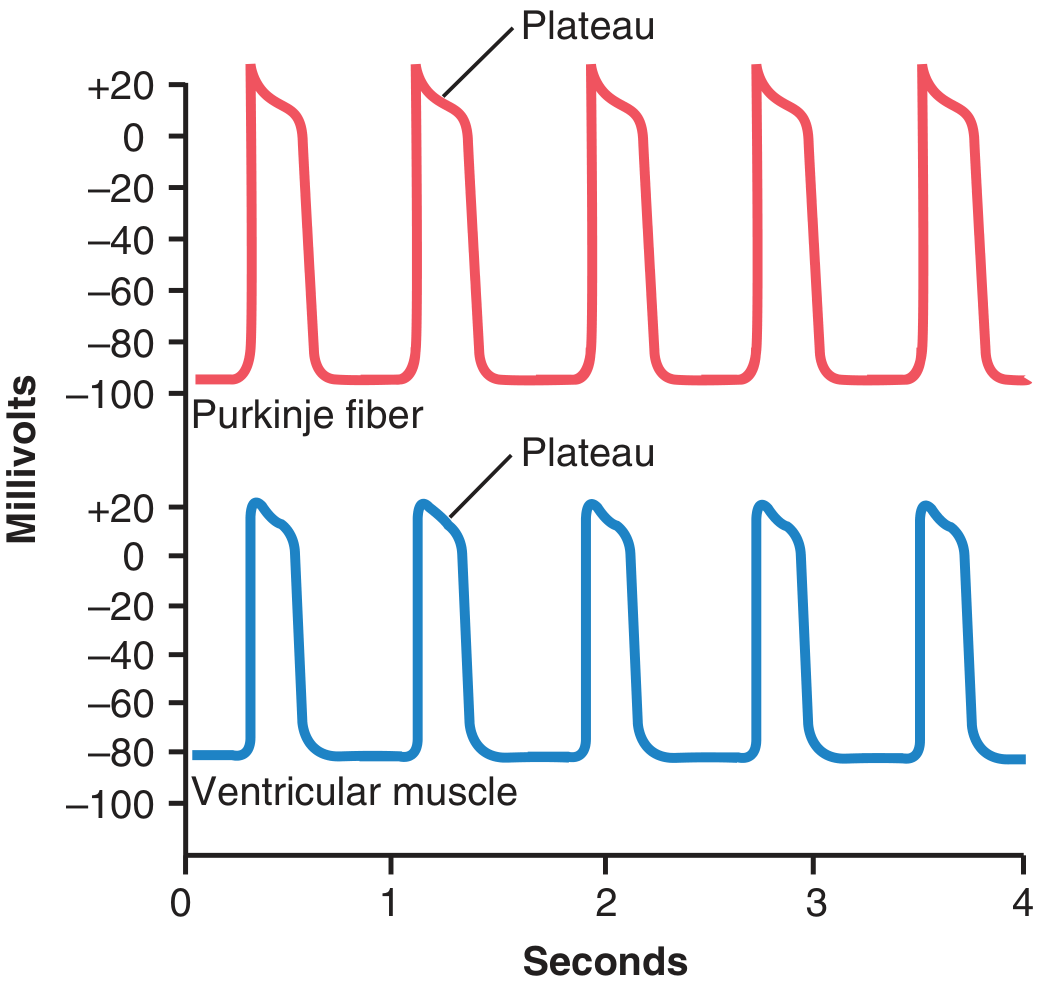
Q15. Draw a graph of action potential of a typical cardiomyocyte and explain mechanism of its formation
Graph (ventricular cardiomyocyte):
mV
+20 ──── Phase 0 (upstroke)
/|
/ | Phase 1 (early repolarization)
/ |\_____________________________
/ | Phase 2 (plateau) |
-40 ─/ | |
| |\ Phase 3
-85 ──────|──────────────────────────────── Phase 4 (resting)
Phases:
| Phase | Name | Ion current |
|---|
| 0 | Rapid depolarization | Voltage-gated Na⁺ channels open → fast inward Na⁺ |
| 1 | Early repolarization | Na⁺ channels inactivate + transient outward K⁺ (Ito) |
| 2 | Plateau (unique to heart!) | L-type Ca²⁺ channels open (slow inward Ca²⁺) balanced by K⁺ efflux; maintains ~0 mV for 200-300 ms |
| 3 | Rapid repolarization | Ca²⁺ channels inactivate; K⁺ channels (IKr, IKs) open → K⁺ out |
| 4 | Resting potential | Resting at -85 mV; IK1 (inward rectifier K⁺) maintains |
Key differences from nerve AP: long plateau (Phase 2) due to Ca²⁺ influx → extended ARP → cannot be tetanized (essential for pumping function). Ca²⁺ from Phase 2 triggers Ca²⁺-induced Ca²⁺ release (CICR) from SR → contraction.
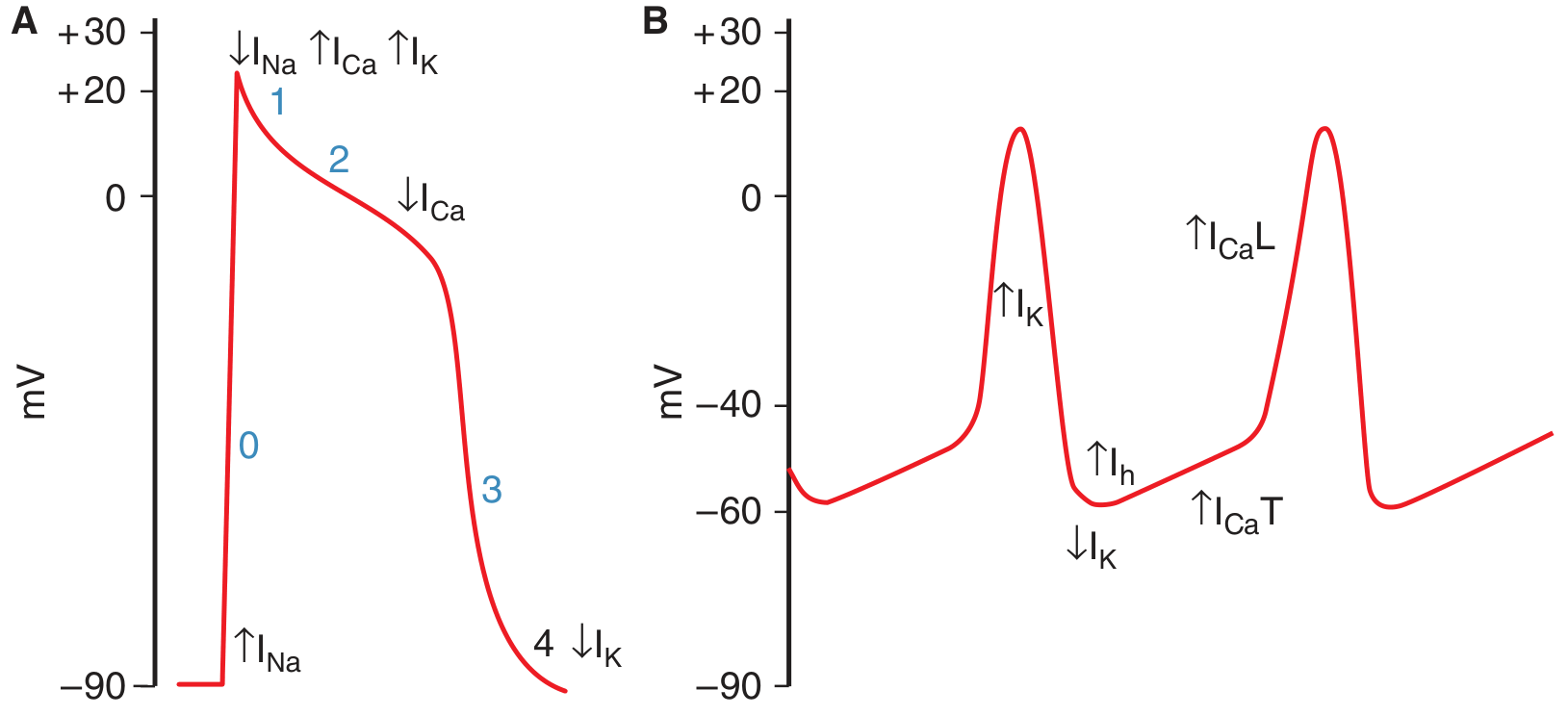
Q16. Draw a graph of action potential of a pacemaker cell and explain mechanism of its formation
Graph (SA node pacemaker cell):
mV
-40 ─────────────────────────────── threshold
/\ /\ /\
/ \ / \ / \
/ \ / \ / \
-60 \ /──/ \ /──/ \ /──→
↑ \ / \ / \ /
| \/ \/ \/
|
Pacemaker potential (If - "funny current")
(slow spontaneous depolarization to threshold)
Mechanism of pacemaker potential (spontaneous depolarization):
-
Phase 4 - Pacemaker potential (slow, spontaneous depolarization):
- Starts at ~-60 mV (not at -85 mV like ventricular cells)
- If ("funny" current / HCN channels): activated by hyperpolarization → slow Na⁺ (and some K⁺) inward current → gradual depolarization
- ICaT (T-type Ca²⁺ channels): activate as membrane reaches ~-50 mV → additional inward Ca²⁺ current
- IK decay: K⁺ channels gradually close → less outward K⁺ current → further depolarization
-
Upstroke (Phase 0): NO fast Na⁺ channels! Upstroke carried by L-type Ca²⁺ channels → slow upstroke, slower conduction
-
Repolarization (Phase 3): K⁺ channels (IK) open → K⁺ efflux → repolarization back to ~-60 mV → cycle repeats
Rate modulation:
- Sympathetic (NE): ↑If, ↑ICa → faster pacemaker potential → ↑HR
- Parasympathetic (ACh): ↓If, ↑IKACh (hyperpolarizes) → slower pacemaker potential → ↓HR
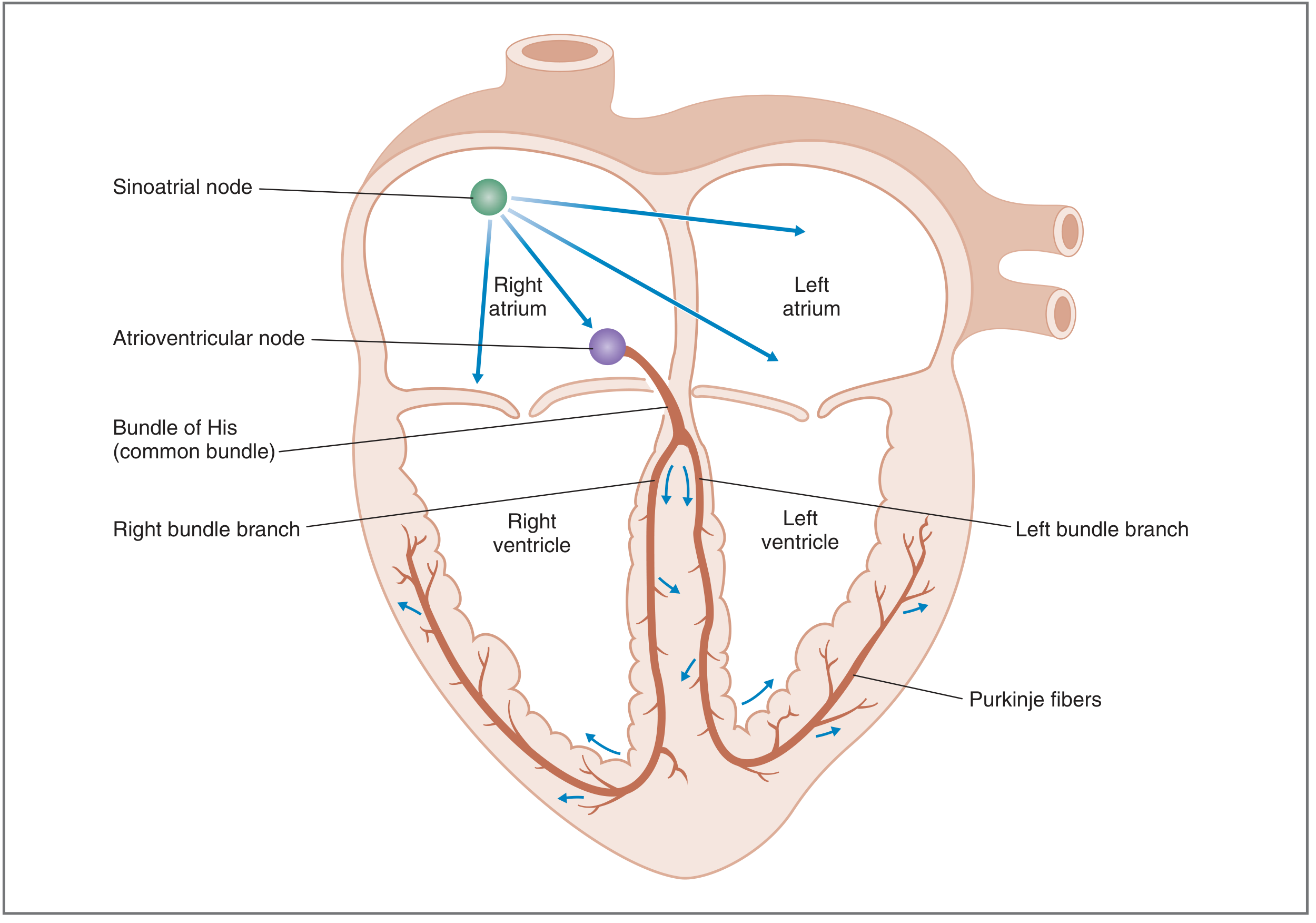
Q17. Draw a scheme of the conduction system of the heart; define frequency of generation and velocity of excitation spread
Scheme:
SA NODE (sinoatrial node)
Right atrium, crista terminalis
Rate: 60-100 bpm (dominant pacemaker)
Velocity: 0.05 m/s
↓ spreads through both atria (0.3-0.5 m/s) → ATRIAL CONTRACTION
↓
AV NODE (atrioventricular node)
Interatrial septum, Koch's triangle
Rate: 40-60 bpm (latent pacemaker)
Velocity: 0.02-0.05 m/s ← SLOW (AV delay 0.1 s - allows atria to fill ventricles)
↓
BUNDLE OF HIS
Velocity: 0.1-0.2 m/s
↓
RIGHT & LEFT BUNDLE BRANCHES
Velocity: 2-4 m/s (fast! for synchronous ventricular contraction)
↓
PURKINJE FIBERS
Rate: 20-40 bpm (latent pacemaker)
Velocity: 2-4 m/s (fastest in heart)
↓
VENTRICULAR MYOCARDIUM
Rate: 20-40 bpm (idioventricular)
Velocity: 0.3-0.5 m/s → VENTRICULAR CONTRACTION
Summary of rates:
- SA node: 60-100/min (dominant)
- AV node: 40-60/min
- Purkinje/ventricle: 20-40/min
Principle of dominance: highest frequency pacemaker drives the whole heart. SA node suppresses lower pacemakers via overdrive suppression.
Q18. Based on ECG analysis - determine the pacemaker and explain the answer
Criteria for identifying pacemaker from ECG:
-
SA node (normal sinus rhythm):
- P wave present before every QRS complex
- P wave is positive in leads II, III, aVF; negative in aVR
- PR interval: 0.12-0.20 s (constant)
- Rate 60-100 bpm
-
AV node (junctional rhythm):
- P waves absent, inverted, or after QRS
- Narrow QRS (normal ventricular conduction)
- Rate 40-60 bpm
-
Ventricular (idioventricular rhythm):
- No P waves
- Wide, bizarre QRS (>0.12 s) - abnormal ventricular conduction
- Rate 20-40 bpm
Rule: Find P waves first. If present and before QRS → SA node. If P absent/inverted → junctional. If wide QRS with no P → ventricular.
Q19. Based on ECG analysis - determine heart rate and cardiac cycle duration
Method 1 (regular rhythm):
- Count the number of large squares (each = 0.2 s) between two consecutive R peaks (R-R interval)
- HR = 300 ÷ (number of large squares between R-R)
- e.g., 3 large squares → HR = 300/3 = 100 bpm
Method 2 (precise):
- Measure R-R interval in seconds
- HR = 60 ÷ R-R interval (in seconds)
- e.g., R-R = 0.8 s → HR = 60/0.8 = 75 bpm
Method 3 (count in 6-second strip):
- Count QRS complexes in 6-second strip × 10 = HR (good for irregular rhythms)
Cardiac cycle duration:
- = R-R interval in seconds
- e.g., HR = 75 bpm → cycle duration = 60/75 = 0.8 s
- HR = 60 bpm → 1.0 s; HR = 80 bpm → 0.75 s
ECG paper speed = 25 mm/s:
- 1 small square = 1 mm = 0.04 s
- 1 large square = 5 mm = 0.2 s
Q20. Based on ECG analysis - determine position of heart electrical axis in frontal plane
Normal axis: -30° to +90°
Quick method using leads I and aVF:
| Lead I | aVF | Axis |
|---|
| + | + | Normal (0° to +90°) |
| + | - | Left axis deviation (LAD) |
| - | + | Right axis deviation (RAD) |
| - | - | Extreme axis (no man's land) |
Precise method:
- Find the most isoelectric (equiphasic) lead in frontal plane
- The axis is perpendicular to that lead
- Look at the perpendicular lead to determine positive or negative direction
Causes:
- LAD: left ventricular hypertrophy, left bundle branch block, inferior MI
- RAD: right ventricular hypertrophy, right bundle branch block, pulmonary hypertension
Q21. Draw a curve of sphygmogram, label and explain its phases
Sphygmogram (arterial pulse wave):
Anacrotic Catacrotic
limb limb
─────────────────────────────────────────
Pressure
/\
/ \ Dicrotic notch (aortic valve closure)
/ \/\
/ \ Dicrotic wave
/ \____
──────────────────────── Time
↑ ↑
Percussion Dicrotic
wave wave
Phases:
- Anacrotic (ascending) limb: Rapid pressure rise during systole (ventricular ejection); steep upstroke
- Peak (percussion wave): Maximum systolic pressure
- Dicrotic notch (incisura): Transient pressure dip when aortic valve closes; marks end of systole
- Dicrotic wave: Small secondary wave caused by elastic recoil of aorta wall after valve closure
- Catacrotic (descending) limb: Gradual pressure fall during diastole as blood flows into periphery
Clinical significance: Shape reflects arterial compliance, cardiac output, and peripheral resistance. Water-hammer pulse (Corrigan's) in aortic regurgitation; pulsus paradoxus in cardiac tamponade.
Q22. Draw a curve of phlebogram, label and explain its phases
Phlebogram (jugular venous pulse):
a c x v y
wave wave wave
/\ /\ /\ /\
/ \ / X \ / \
──/ X \ \/ \────
↓ ↓
x y
descent descent
Waves and descents:
| Component | Cause | Timing |
|---|
| a wave | Atrial contraction (presystolic) | Before QRS on ECG |
| c wave | Tricuspid valve bulging into atrium at onset of ventricular systole | After QRS |
| x descent | Atrial relaxation + downward displacement of tricuspid valve during systole | During systole |
| v wave | Passive venous filling of atrium (tricuspid valve closed during systole) | End systole |
| y descent | Tricuspid valve opens → blood flows into ventricle | Early diastole |
Absent a wave: Atrial fibrillation
Large a wave: Tricuspid stenosis, pulmonary hypertension
Large v wave: Tricuspid regurgitation
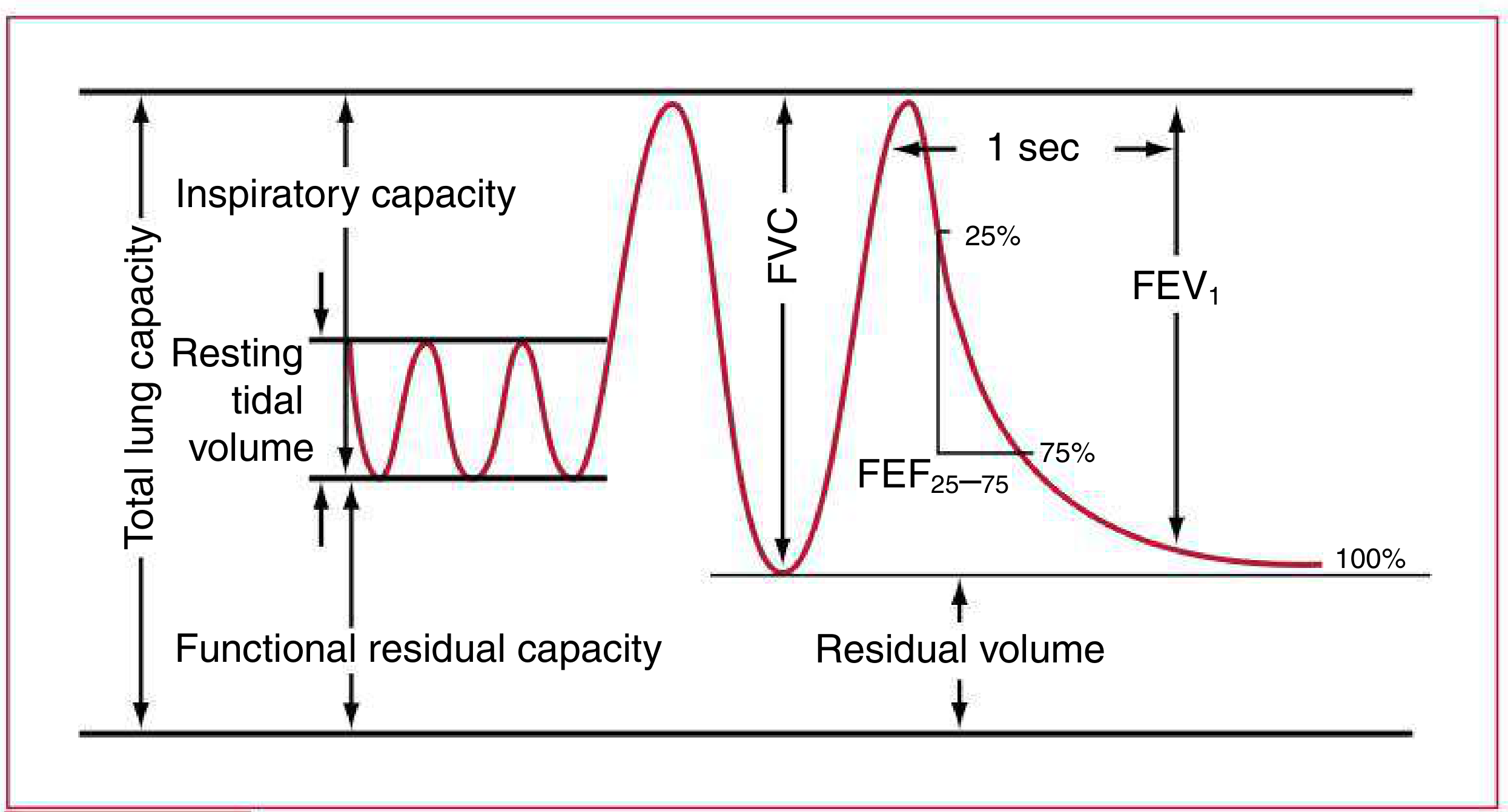
Q23. List and analyze methods of external respiration examination
Methods:
-
Spirometry - measures lung volumes and capacities:
- TV (Tidal Volume): ~500 mL - volume per normal breath
- IRV (Inspiratory Reserve Volume): ~3000 mL
- ERV (Expiratory Reserve Volume): ~1100 mL
- VC (Vital Capacity) = TV + IRV + ERV: ~4600 mL
- FVC (Forced Vital Capacity): vital capacity with maximal forced effort
- FEV₁ (Forced Expiratory Volume in 1 sec): volume exhaled in first second of FVC
- FEV₁/FVC ratio: normal >70-80%; reduced in obstructive disease
- RV (Residual Volume): ~1200 mL - cannot be measured by simple spirometry
- TLC = VC + RV: ~5800 mL
-
Peak Flow Meter (PEFR): measures peak expiratory flow rate; used to monitor asthma
-
Pneumotachography: measures airflow rates; generates flow-volume loops
-
Body Plethysmography: measures FRC and RV (which spirometry cannot)
-
Diffusion capacity (DLCO): measures ability of lungs to transfer gas (CO used as test gas); reduced in emphysema, pulmonary fibrosis, pulmonary hypertension
-
Arterial Blood Gas (ABG): measures PaO₂, PaCO₂, pH, HCO₃⁻ - assesses gas exchange and acid-base status
Pattern recognition:
- Obstructive (asthma, COPD): ↓FEV₁/FVC, ↑TLC (hyperinflation)
- Restrictive (fibrosis, neuromuscular): ↓TLC, ↓VC, FEV₁/FVC normal or ↑
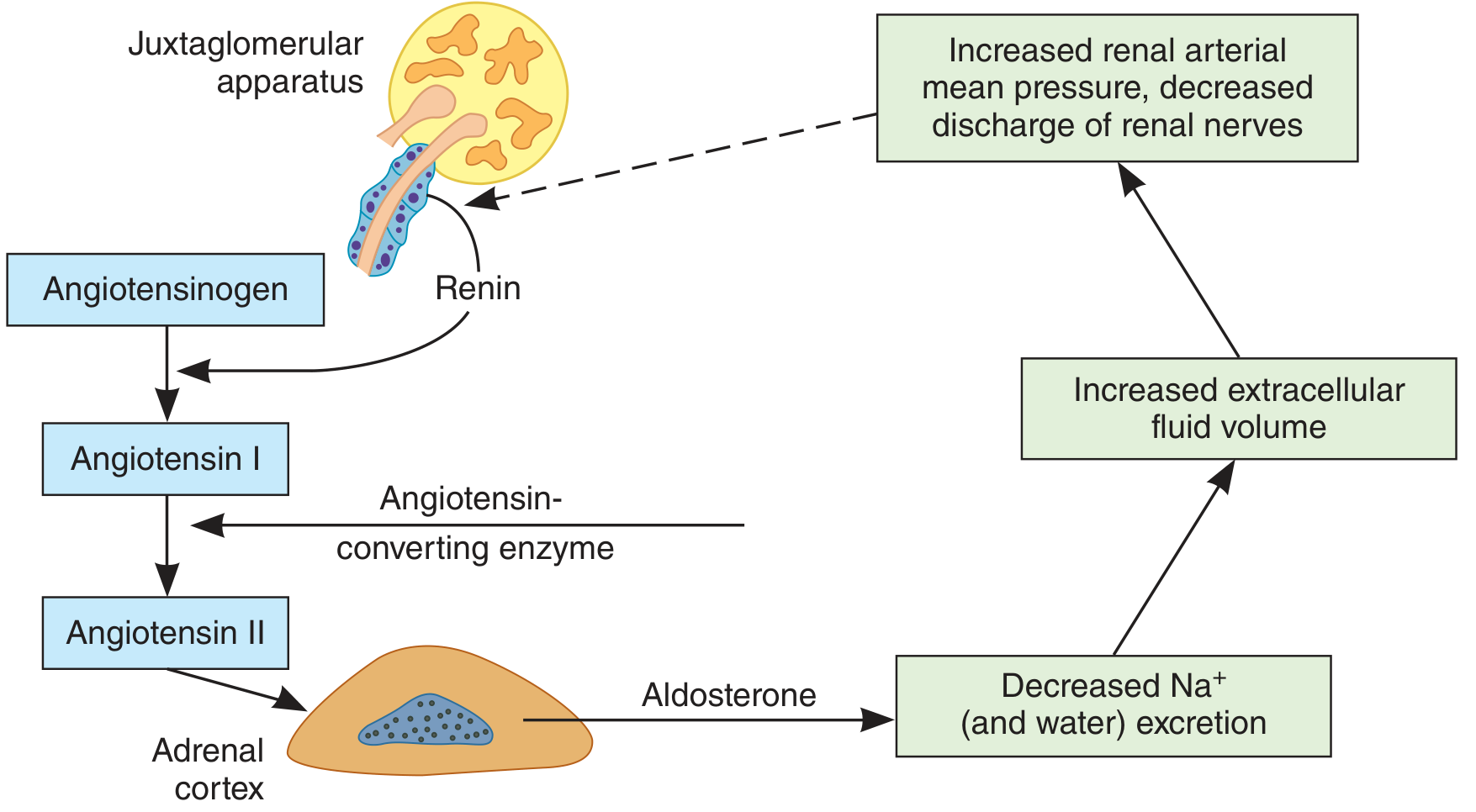
Q24. Draw a scheme of renin-angiotensin-aldosterone system and explain kidney's role in maintenance of arterial blood pressure
↓BP / ↓Na⁺ / ↑sympathetic
↓
JUXTAGLOMERULAR CELLS (kidney)
↓ RENIN secretion
↓
ANGIOTENSINOGEN (liver) → ANGIOTENSIN I
↓ ACE (Angiotensin Converting Enzyme - in lungs)
↓
ANGIOTENSIN II
↙ ↘ ↘ ↘
Vasoconstriction Aldosterone ADH release Thirst (hypothalamus)
(↑BP directly) (adrenal cortex) (↑water retention)
↓
Kidney: ↑Na⁺ & H₂O reabsorption
(collecting duct, DCT)
↓
↑Blood volume → ↑BP → negative feedback on renin release
Kidney's role:
- Renin production (granular cells of JGA): responds to ↓renal perfusion pressure, ↓NaCl at macula densa, sympathetic activation
- Aldosterone effect: ↑Na⁺ reabsorption in collecting duct → ↑ECF volume → ↑BP
- Long-term BP control via volume regulation (Guyton's theory: only the kidney can provide sustained BP regulation)
ACE inhibitors (ramipril) and ARBs (losartan) target this system therapeutically
Q25. Draw a scheme of feedback loop of blood osmotic pressure regulation by kidneys
↑Plasma osmolality (e.g., dehydration, Na⁺ excess)
↓
OSMORECEPTORS (hypothalamus - supraoptic nucleus)
↓ stimulated
┌─────────────────────┐
│ 1. ADH (vasopressin) │
│ secretion ↑ │──→ Kidney collecting duct → ↑H₂O reabsorption
└─────────────────────┘ (aquaporin-2 insertion)
┌─────────────────────┐
│ 2. THIRST │──→ ↑Water intake
└─────────────────────┘
↓
↑Water retention / intake
↓
↓Plasma osmolality → back to ~290 mOsm/kg
↓
NEGATIVE FEEDBACK → ↓ADH secretion
INVERSE:
↓Osmolality → ↓ADH → kidney excretes dilute urine (aquaporin-2 removed)
Key mechanisms:
- ADH acts on V2 receptors in collecting duct principal cells
- Inserts aquaporin-2 (AQP2) water channels
- Water follows osmotic gradient into hyperosmotic medullary interstitium
- Normal plasma osmolality: ~285-295 mOsm/kg H₂O
Q26. Draw the scheme of structural and functional organization of a sensory system
STIMULUS (external/internal)
↓
[RECEPTOR] (transduction: stimulus → generator potential → AP)
Types: extero-, intero-, proprioceptors; mechanoreceptors, thermoreceptors, nociceptors
↓ (1st order neuron - afferent)
[SPINAL CORD / BRAINSTEM]
(processing, reflex arcs, crossover - decussation)
↓ (2nd order neuron)
[THALAMUS] (relay station, filtering)
↓ (3rd order neuron)
[PRIMARY SENSORY CORTEX] (conscious perception)
↓
[ASSOCIATION AREAS] (integration, interpretation, memory)
Properties of sensory systems:
- Adequate stimulus: each receptor responds best to one type of stimulus
- Receptor potential: graded, proportional to stimulus intensity; if reaches threshold → AP
- Adaptation: fast-adapting (Meissner, Pacinian) vs. slow-adapting (Merkel, Ruffini)
- Labeled line code: specific pathway encodes specific modality
- Dermatome: area of skin served by one spinal nerve
- Receptive field: area of body monitored by one receptor/neuron
Q27. Write down the rules and stages of conditioned reflex development
Rules (Pavlov's conditions) for conditioned reflex (CR) development:
- Conditioned stimulus (CS) must precede the unconditioned stimulus (UCS) by a short interval (optimal 0.5-5 seconds)
- CS must be repeated together with UCS multiple times (reinforcement)
- UCS must be stronger (biologically more significant) than CS
- Animal/person must be healthy and in a state of attention; no distracting stimuli
- CS must be initially neutral (not cause a strong reaction by itself before conditioning)
Stages of CR development (using salivary reflex example):
| Stage | Description |
|---|
| 1. Generalization | Initial conditioning: similar stimuli also elicit CR (broad response) |
| 2. Concentration/Specialization | With repeated reinforcement: CR becomes specific to exact CS |
| 3. Stabilization | CR becomes reliable and consistent |
Extinction: CS presented repeatedly without UCS → CR gradually disappears (not destroyed, but inhibited)
Types of inhibition:
- External inhibition: Novel stimulus interrupts CR temporarily
- Internal inhibition: Unreinforced repetition → extinction, differentiation, conditioned inhibition
Q28. Draw scheme illustrating reflex regulation of constant body temperature under HIGH environmental temperature
HIGH ENVIRONMENTAL TEMPERATURE
↓
THERMORECEPTORS (skin + hypothalamic)
→ ↑warm receptor firing
↓
HYPOTHALAMUS (thermoregulatory center - preoptic area)
Activates HEAT DISSIPATION mechanisms:
↓
┌─────────────────────────────────────────────────────┐
│ 1. SWEATING (↑evaporative heat loss) │
│ Sympathetic cholinergic fibers → sweat glands │
│ (1 L sweat = ~580 kcal heat loss) │
│ 2. VASODILATION of skin vessels │
│ → ↑blood flow to skin → ↑radiation/convection │
│ 3. ↓Muscle tone (↓heat production) │
│ 4. ↑Respiratory rate (↑evaporation - panting) │
└─────────────────────────────────────────────────────┘
↓
Body temperature maintained at ~37°C
(NEGATIVE FEEDBACK: T↑ → heat loss ↑ → T returns to normal)
Q29. Draw scheme illustrating reflex regulation of constant body temperature under LOW environmental temperature
LOW ENVIRONMENTAL TEMPERATURE
↓
THERMORECEPTORS (skin + hypothalamic)
→ ↑cold receptor firing
↓
HYPOTHALAMUS (thermoregulatory center - posterior area)
Activates HEAT CONSERVATION & PRODUCTION mechanisms:
↓
┌─────────────────────────────────────────────────────┐
│ HEAT CONSERVATION: │
│ 1. VASOCONSTRICTION of skin vessels │
│ → ↓blood flow to skin → ↓heat loss │
│ 2. PILOERECTION (↑insulation layer - less in humans)│
│ 3. Behavioral: curling up, seeking warmth │
│ │
│ HEAT PRODUCTION: │
│ 4. SHIVERING (involuntary muscle contractions) │
│ → ↑metabolic heat production up to 5x │
│ 5. NON-SHIVERING THERMOGENESIS │
│ ↑Sympathetic → ↑NE → ↑brown adipose tissue │
│ (uncoupling protein - UCP1/thermogenin) │
│ 6. ↑Thyroid hormone (long-term cold adaptation) │
└─────────────────────────────────────────────────────┘
↓
Body temperature maintained at ~37°C
(NEGATIVE FEEDBACK)
Q30. Draw the schemes of conditioned and unconditioned salivary reflexes
Unconditioned Salivary Reflex:
FOOD IN MOUTH (UCS - unconditioned stimulus)
↓
Mechanoreceptors/chemoreceptors in oral cavity
↓ (afferent: CN V, VII, IX)
SALIVARY CENTERS (medulla oblongata - superior & inferior salivatory nuclei)
↓ (efferent: CN VII to submandibular/sublingual glands;
CN IX to parotid gland via otic ganglion)
SALIVARY GLANDS
↓
SALIVATION (UCR - unconditioned response)
- Inborn, innate; does not require learning; consistent and reliable
Conditioned Salivary Reflex (Pavlov's experiment):
BELL (CS - conditioned stimulus) [was neutral]
+
FOOD (UCS) ─────────────────────────→ SALIVATION (UCR)
(paired repeatedly)
↓ After conditioning:
BELL (CS) ALONE
↓
CEREBRAL CORTEX (temporal lobe auditory area)
↓ (conditioned pathway established through learning)
SUBCORTICAL CENTERS → SALIVATORY CENTERS (medulla)
↓
SALIVARY GLANDS
↓
SALIVATION (CR - conditioned response)
- Acquired, learned; requires repeated pairing of CS + UCS; can be extinguished; depends on intact cerebral cortex
Q31. Draw a scheme of the gamma loop and give functional characteristics of alpha- and gamma motoneurons
Gamma Loop Scheme:
MOTOR CORTEX / BRAINSTEM
↓ (upper motor neurons)
├─── ALPHA (α) MOTOR NEURON ──────────────────────────→ Extrafusal muscle fibers
│ (large, Aα fibers, fast) (main contractile force)
│
└─── GAMMA (γ) MOTOR NEURON ──────────────→ Intrafusal fibers (muscle spindle)
↓ (sets spindle sensitivity)
MUSCLE SPINDLE (intrafusal fibers)
─────────────────────────────────
When γ fires → intrafusal fibers contract → spindle is stretched
↓
Ia AFFERENT (annulospiral ending) → fires
↓
α MOTOR NEURON in spinal cord activated
↓
EXTRAFUSAL FIBER CONTRACTS
Alpha-Gamma coactivation: Both α and γ neurons fire simultaneously during voluntary movement → extrafusal fibers contract (via α) while spindle tension maintained (via γ) → continuous proprioceptive feedback during movement
Characteristics:
| Property | Alpha (α) motoneuron | Gamma (γ) motoneuron |
|---|
| Target | Extrafusal muscle fibers | Intrafusal fibers of muscle spindle |
| Function | Generates muscle force/contraction | Adjusts spindle sensitivity |
| Size | Large soma, fast conduction (Aα, 70-120 m/s) | Smaller, slower (Aγ, 15-30 m/s) |
| Proportion | ~70% of ventral horn motoneurons | ~30% |
| Reflex | Stretch reflex effector | Modulates stretch reflex sensitivity |
| Upper motor neuron control | Direct cortical control | Via brainstem (reticulospinal, vestibulospinal) |
Q32. Draw a scheme of the stages of Hans Selye's General Adaptation Syndrome (GAS) and note the role of hormones in each stage
Scheme:
STRESSOR (physical, psychological, chemical)
↓
┌─────────────────────────────────────────────────────────────────────┐
│ STAGE 1: ALARM REACTION │
│ (mobilization of body defenses) │
│ │
│ a) Shock phase: ↓BP, ↓temperature, ↑capillary permeability │
│ ↓resistance (initial disorganization) │
│ │
│ b) Counter-shock: Hypothalamus → CRH → ACTH → CORTISOL ↑↑ │
│ + Sympathetic activation → Epinephrine/NE from adrenal medulla │
│ Effects: ↑HR, ↑BP, ↑glucose, ↑O₂ delivery, ↑alertness │
└─────────────────────────────────────────────────────────────────────┘
↓ (if stress continues)
┌─────────────────────────────────────────────────────────────────────┐
│ STAGE 2: STAGE OF RESISTANCE (adaptation) │
│ Body adapts; resistance to current stressor reaches maximum │
│ │
│ Hormones: │
│ - CORTISOL (sustained) → ↑gluconeogenesis, anti-inflammatory │
│ - ALDOSTERONE → ↑Na⁺ retention → maintains BP/volume │
│ - GH, Glucagon → protein catabolism, fat mobilization │
│ - ↓Reproductive hormones (GnRH, sex hormones suppressed) │
│ Resources mobilized; normal function maintained │
└─────────────────────────────────────────────────────────────────────┘
↓ (if stress is severe/prolonged)
┌─────────────────────────────────────────────────────────────────────┐
│ STAGE 3: STAGE OF EXHAUSTION │
│ Adaptive capacity depleted; resistance breaks down │
│ │
│ - Adrenal cortex exhausted → ↓cortisol, ↓aldosterone │
│ - ↓Glucose, ↓immunity, ↓Na⁺ retention │
│ - Multi-organ failure, disease, death if untreated │
│ - Similar to initial alarm reaction but without adaptive capacity │
└─────────────────────────────────────────────────────────────────────┘
Key hormones summary:
| Stage | Key Hormones | Role |
|---|
| Alarm | Epinephrine, NE, Cortisol | "Fight-or-flight"; mobilize energy, ↑BP |
| Resistance | Cortisol, Aldosterone, GH | Sustained adaptation, anti-inflammation, volume maintenance |
| Exhaustion | ↓All adaptive hormones | Failure of adaptation; tissue damage |
Sources: Costanzo Physiology 7th Edition; Guyton & Hall Medical Physiology; Kandel Principles of Neural Science; Pavlov's classical conditioning theoryAll 30 questions from your practical skills document have been answered. Here is a summary of what was covered:
Questions covered:
| # | Topic |
|---|
| 1 | Action potential graph + phases + ionic mechanism |
| 2 | Excitability changes during AP + refractory periods (ARP, RRP) |
| 3 | AP propagation - myelinated (saltatory) vs. non-myelinated (continuous) |
| 4 | Neuromuscular junction scheme + synaptic transmission steps |
| 5 | Single twitch vs. tetanic contraction curves |
| 6 | Mechanism of muscular contraction and relaxation (Ca²⁺, troponin, cross-bridge cycling) |
| 7 | Spinal cord reflex arch (5 components) |
| 8 | Pre- and postsynaptic inhibition in CNS |
| 9 | Autonomic reflex arch - sympathetic and parasympathetic |
| 10 | Protein hormone action (GPCR/RTK, cAMP, second messengers) |
| 11 | Steroid hormone action (nuclear receptor, gene expression) |
| 12 | Hypothalamic-pituitary axis (HPT axis example + negative feedback) |
| 13 | Blood test interpretation (CBC reference ranges) |
| 14 | ABO and Rh blood typing principles |
| 15 | Ventricular cardiomyocyte AP - phases 0-4 + ionic basis |
| 16 | Pacemaker cell AP - If current, T-type Ca²⁺, spontaneous depolarization |
| 17 | Cardiac conduction system + frequencies + conduction velocities |
| 18 | ECG pacemaker identification criteria |
| 19 | ECG heart rate calculation + cardiac cycle duration |
| 20 | Electrical axis determination in frontal plane |
| 21 | Sphygmogram curve + phases (anacrotic, dicrotic notch, catacrotic) |
| 22 | Phlebogram curve + a, c, x, v, y waves |
| 23 | External respiration methods (spirometry, FEV₁, plethysmography, DLCO, ABG) |
| 24 | RAAS scheme + kidney's role in BP maintenance |
| 25 | Osmotic pressure regulation feedback loop (ADH, osmoreceptors) |
| 26 | Sensory system structural and functional organization |
| 27 | Conditioned reflex rules (Pavlov) + stages of development |
| 28 | Thermoregulation at HIGH temperature (sweating, vasodilation) |
| 29 | Thermoregulation at LOW temperature (shivering, vasoconstriction, thermogenesis) |
| 30 | Conditioned vs. unconditioned salivary reflexes |
| 31 | Gamma loop scheme + alpha vs. gamma motoneuron characteristics |
| 32 | Hans Selye's GAS - 3 stages + hormonal roles |