
Sulfuric acid poisoning in fmt
I'll look up sulfuric acid poisoning in forensic medicine and toxicology textbooks right away.
Searching sources...
Reading File
Now let me search the forensic medicine textbooks for sulfuric acid poisoning:
Finding Sources
Finding Sources
Finding Sources
Excellent! Found the dedicated section in the FMT textbook. Let me read the full content:
Reading File
I have all the content. Let me read the remaining truncated part for treatment and postmortem appearances:
Reading File
Reading File
Reading File
Loading Image
I now have all the comprehensive information. Here is the complete, exam-ready coverage of sulfuric acid poisoning from the FMT textbook:
Sulfuric Acid Poisoning (H₂SO₄)
The Essentials of Forensic Medicine and Toxicology, 36th edition (2026)
Characteristics
- Pure sulfuric acid = oil of vitriol (H₂SO₄)
- Heavy, odorless, colorless, nonfuming, hygroscopic, oily liquid
- Strong tendency to carbonize organic substances
- Commercial form is brown or dark in color
- Causes superficial burns after 1 second and full-thickness burns after 30 seconds of contact
Signs and Symptoms
| Feature | Description |
|---|---|
| Lips | Swollen, excoriated; brown/black streaks from mouth angles to chin/neck |
| Mouth/throat | Corrosion of mucous membranes; immediate burning pain |
| Teeth | Chalky-white |
| Tongue | Swollen, sodden, black |
| Voice | Hoarse and husky |
| Airways | Stridor, drooling; edema of glottis may cause asphyxia |
| Swallowing | Odynophagia, dysphagia; pharyngeal pain is the most common presenting symptom |
| GI | Epigastric pain spreading to abdomen and thorax; eructation, nausea, vomiting |
| Vomit | Brown or black, mucoid, strongly acid, may contain charred shreds of stomach wall |
| Thirst | Intense; any attempt to drink causes vomiting |
| Abdomen | Distended, very tender; severe constipation; tenesmus |
| Eyes | Sunken; pupils usually dilated |
| Sensorium | Mind remains clear until death |
| Late sequelae | Esophageal, gastric, and pyloric strictures/stenoses; permanent scars in skin and oropharynx |
Fatal Dose and Period
- Fatal Dose: 10-5 mL
- Fatal Period: 12-24 hours
Causes of Death
- Circulatory collapse
- Spasm or edema of glottis
- Collapse due to perforation of stomach
- Toxemia
- Delayed death - hypostatic pneumonia, secondary infection, renal failure, or starvation from esophageal stricture
Complications
Acute:
- Upper airway obstruction and injury
- GI hemorrhage
- Esophageal and gastric perforation
- Sepsis
- Tracheobronchial necrosis, atelectasis, obstructive lung injury
Chronic:
- Esophageal obstruction
- Pyloric stenosis
- Vocal cord paralysis with airway obstruction
Treatment
- NO gastric lavage or emetics (contraindicated - risk of re-exposure and perforation)
- Dilute and neutralize in situ - give 1/4 litre of water, milk, milk of magnesia, lime water, soap suds, or aluminium hydroxide gel within 30 minutes
- Do NOT use alkaline carbonates/bicarbonates (liberate CO₂ → gastric distension → rupture)
- Demulcents - olive oil, milk, egg whites, starch water, mineral oil, melted butter
- Prednisolone 60 mg/day in divided doses to prevent esophageal stricture and for shock (generally not recommended due to increased perforation risk)
- 4 cm diameter mercury-filled bougie passed daily if stricture develops
- Flexible fiber optic endoscopy within first 24-48 hours to assess damage; if circumferential 2nd/3rd-degree burns → exploratory laparotomy; if gastric necrosis → esophagogastrostomy
- Tracheostomy if there is edema of glottis
- NPO - IV nutrition for ~1 week, then liquids → soft food → regular diet
- Skin burns - wash with large amounts of water; apply paste of magnesium oxide or sodium bicarbonate
- Eye burns - irrigate with water or sodium bicarbonate solution for 10-15 minutes (suspended IV bag for low-pressure irrigation is ideal)
- Symptomatic treatment
Postmortem Appearances
External
- Corrosion of mucous membranes of lips, mouth, throat
- Corrosion of skin over chin, angles of mouth, and hands
- Necrotic areas initially grayish-white, then become brown or black and leathery
- Examine clothing for burns and stains
Internal
- Upper digestive tract inflamed and swollen with edema and severe interstitial hemorrhage
- Acids mainly affect columnar epithelium of the stomach (squamous esophageal epithelium is relatively resistant) - superficial erosion, coagulation, eschar formation
- Perforation of esophagus is rare
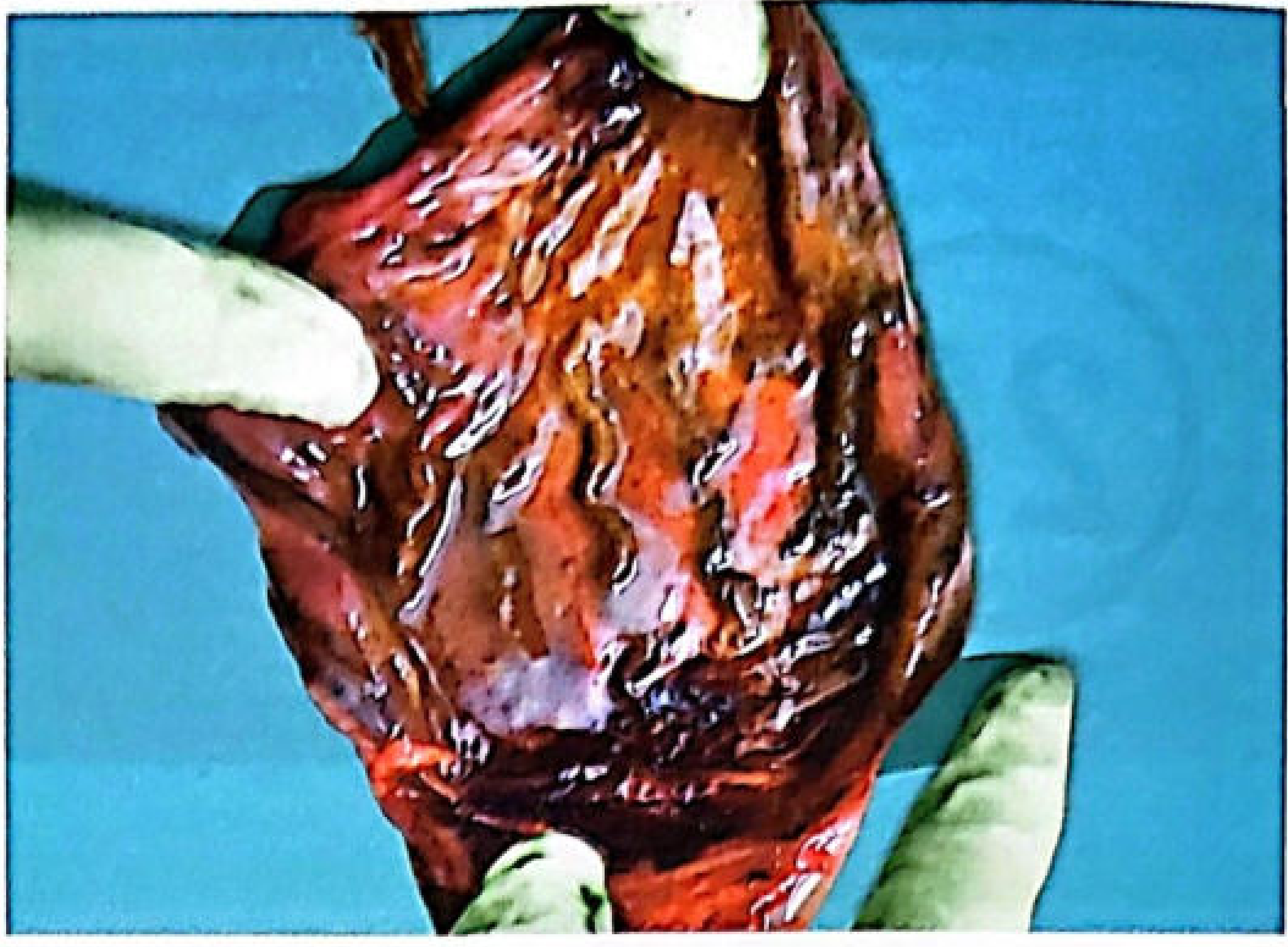
- Greater part of stomach may be converted into a soft, spongy, black mass that readily disintegrates on touch
- Sometimes only the pyloric region is involved (fluid pathway along lesser curvature to pylorus; initial acid exposure causes pyloric spasm, promoting injury there)
- Mucosal ridges more damaged than intervening furrows
- Stomach contains altered blood, dark brown/black from acid hematin; wall studded with acute erosions
- Calcium oxalate crystals may be seen in stomach contents or mucosal scrapings
- Perforation → chemical peritonitis and corrosion of adjacent organs
- Perforation of diaphragm may occur
- Duodenum: similar but less intense changes; small intestine: signs of irritation
- Little to no free acid may be found if victim survived 2+ days (acid converted to normal body substances)
- Larynx and trachea: corrosion or severe inflammation
- Liver and kidney: secondary toxic swelling if survival is prolonged
- Renal tubules: necrosis, primarily in proximal convoluted tubules
Time Course of Injury
| Stage | Time | Features |
|---|---|---|
| Acute inflammatory | Days 1-7 | Perforation and acidosis may occur |
| Granulation | Days 4-7 | |
| Perforation most likely | Days 7-21 | Tissue is weakest at this stage |
| Cicatrization | From ~3rd week | May persist for years; excessive scar → stricture |
Tests / Chemical Analysis
- Only the stomach contents are suitable for analysis (mineral acids decompose rapidly)
- Strong acid chars organic matter
- Barium nitrate or chloride solution produces a white precipitate of barium sulphate (confirmatory for sulfate)
Circumstances of Poisoning
- Accidental - mistaking it for glycerin or castor oil; inhalation of vapors in chemical factories
- Suicidal - most common mode
- Homicide - rare/not used (acid taste, immediate local action, visible physical changes in food make it impractical)
- Also used as an abortifacient (injected into vagina) or out of vengeance
Vitriolage (Vitriol Throwing)
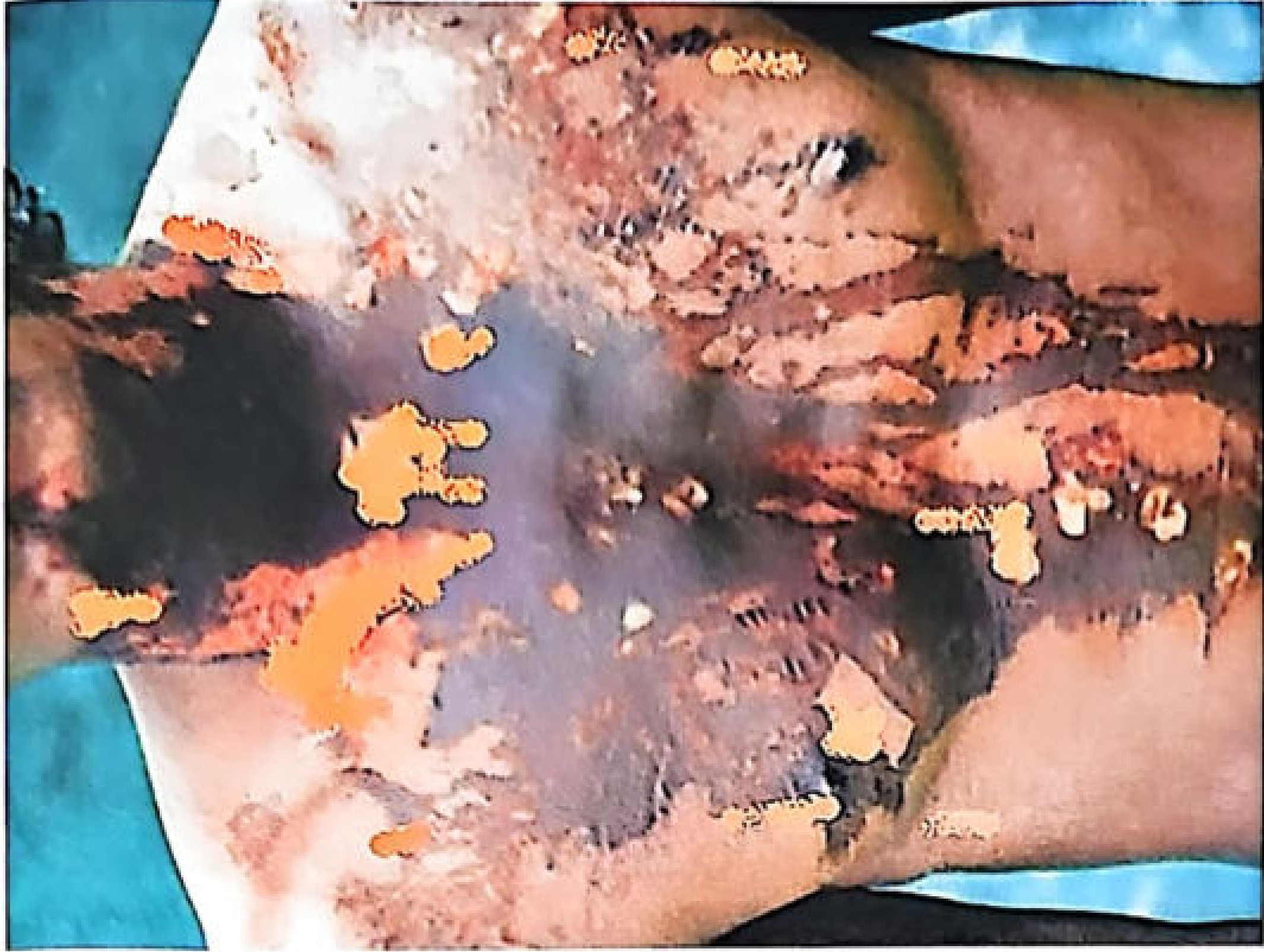
- Throwing of sulfuric acid on another individual
- Done by jealous or disgruntled persons to disfigure and harm enemies
- Burns are penetrating, devitalize tissues, predispose to infection
- Burns initially described as painless
- Repair is slow; scar tissue causes contracture
- Blindness if eyes are involved
- Death from shock or toxemia if extensive area involved
- Other agents also used for vitriolage: nitric acid, carbolic acid, corrosive alkali, juice of marking nut or calotropis
Source: The Essentials of Forensic Medicine and Toxicology, 36th edition (2026), Chapter 26
This is a shared conversation. Sign in to Orris to start your own chat.