
rom of upper limb
Reading File
Finding Sources
Finding Sources
Searching PubMed
upper extremity range of motion
Searching the Web
normal range of motion upper extremity shoulder elbow wrist fingers degrees reference
Reading File
Normal range of motion (ROM) of the upper limb
Values are approximate adult reference ranges and should be compared with the opposite side. Measurement method and age can cause variation.
| Joint | Movement | Normal ROM |
|---|---|---|
| Shoulder | Flexion | 0-180° |
| Extension | 0-45 to 60° | |
| Abduction | 0-150 to 180° | |
| Adduction | 0-30 to 45° | |
| External rotation | 0-90° | |
| Internal rotation | 0-70 to 90° | |
| Elbow | Flexion | 0-150° |
| Extension | 0° | |
| Forearm | Pronation | 0-80 to 90° |
| Supination | 0-80 to 90° | |
| Wrist | Flexion (palmar flexion) | 0-80° |
| Extension (dorsiflexion) | 0-70° | |
| Radial deviation | 0-20° | |
| Ulnar deviation | 0-30 to 40° | |
| Thumb | MCP flexion | 0-50° |
| IP flexion | 0-80° | |
| Abduction | about 0-70° | |
| Fingers II-V | MCP flexion | 0-90° |
| PIP flexion | 0-100° | |
| DIP flexion | 0-70 to 90° |
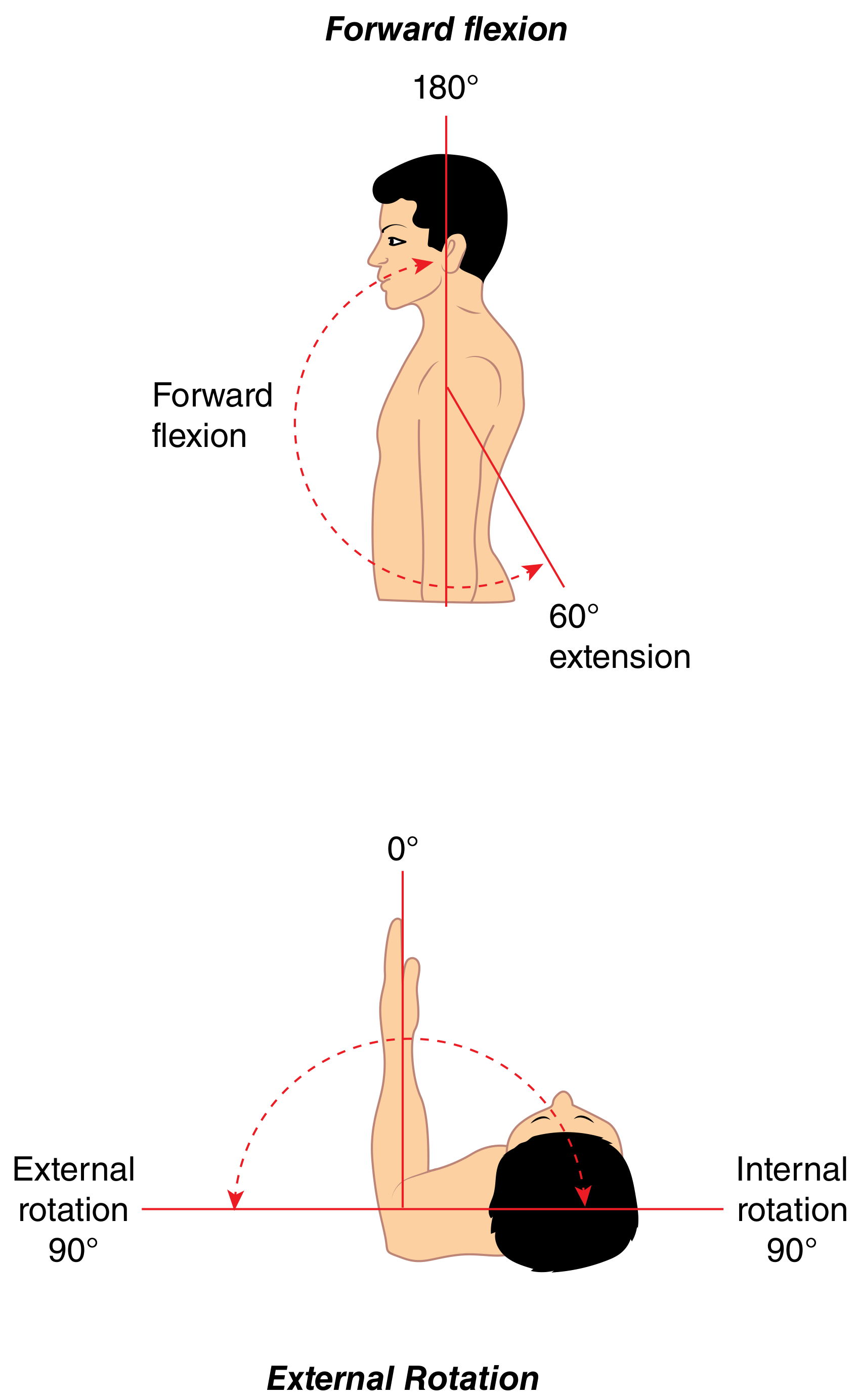
For shoulder examination, the medical text describes flexion as 180°, extension 45-60°, abduction around 150°, and external rotation 90°. Internal rotation may also be recorded by the highest spinal level the thumb can reach behind the back. Firestein & Kelley's Textbook of Rheumatology, p. 883. Population reference values for shoulder and elbow movement also vary with age and sex in the CDC ROM reference data.
This is a shared conversation. Sign in to Orris to start your own chat.