
Hordeolum
Reading File
Finding Sources
Searching PubMed
hordeolum stye treatment management
Reading File
Reading File
Reading File
Reading File
Reading File
Loading Image
Reading File
Reading File
Here is a comprehensive overview of hordeolum drawn from multiple authoritative sources:
Hordeolum (Stye)
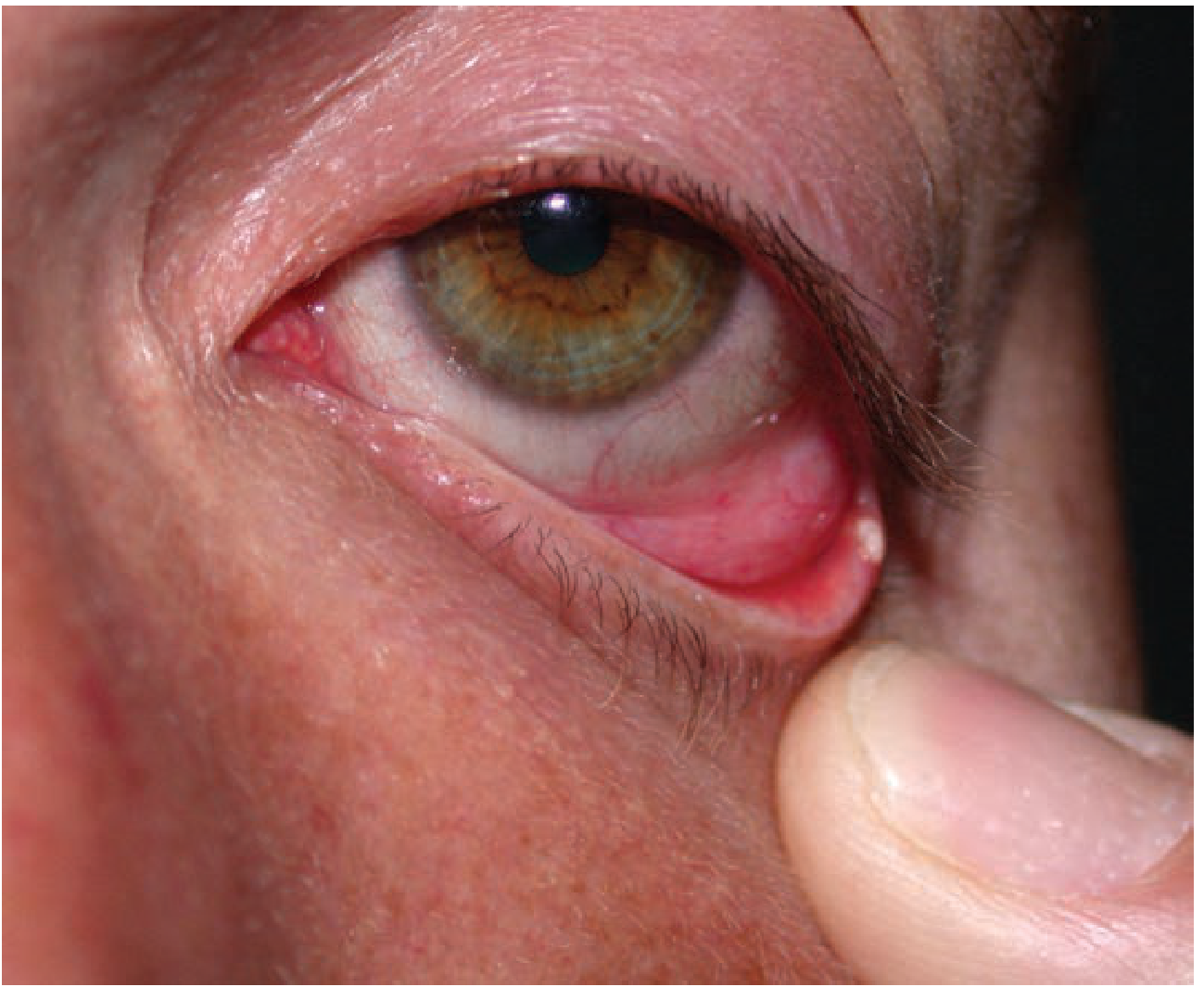
Definition
A hordeolum is an acute, tender infection of an eyelid gland, usually caused by Staphylococcus aureus (occasionally other Staphylococcus species). There are two types:
| Type | Gland Involved | Location |
|---|---|---|
| External hordeolum (stye) | Gland of Zeis (sebaceous) or Moll (sweat glands) of the lash follicle | Lash line, points anteriorly through skin; often has a lash at its apex |
| Internal hordeolum | Meibomian gland | Pustule on inner surface of the tarsal plate |
A chalazion, by contrast, is a chronic, sterile lipogranulomatous inflammation of a meibomian gland - often nontender and may evolve from an unresolved hordeolum. - Tintinalli's Emergency Medicine, p. 1581
Epidemiology
External hordeola are common in children and young adults. Multiple lesions may be present, and occasionally an abscess can involve the entire lid margin. - Kanski's Clinical Ophthalmology, 10th ed.
Clinical Features
- Pain, eyelid edema, and erythema
- Small pustule at the eyelid margin (external) or on the inner tarsal surface (internal)
- Tender swelling pointing toward the skin surface
- Occasionally the abscess may involve the entire lid margin
- Can be complicated by preseptal (periorbital) cellulitis if the infection spreads
Differential Diagnosis
| Condition | Key Feature |
|---|---|
| Chalazion | Chronic, nontender, sterile; lipogranulomatous |
| Preseptal cellulitis | Diffuse eyelid erythema, edema, warmth |
| Sebaceous carcinoma | Older patients, recurrent "chalazia," madarosis, lid thickening - must biopsy |
| Pyogenic granuloma | Benign deep-red pedunculated lesion, often at site of prior chalazion |
| Forniceal foreign body | Eyelid swelling, especially in contact lens wearers |
Red flag: A recurrent chalazion or hordeolum in the same location in an older patient should raise suspicion for sebaceous gland carcinoma. - Wills Eye Manual
Workup
- Diagnosis is clinical - no additional testing needed in typical cases
- History: prior eyelid lesions, ocular surgery/trauma
- External exam: palpate for nodule, look for rosacea
- Slit lamp: evaluate meibomian glands, evert eyelid, check for madarosis or ulceration (to rule out malignancy)
Treatment
First-Line (Conservative)
- Warm compresses - at least 10-15 minutes, 3-5 times per day - with gentle massage over the lesion. This normalizes flow from the obstructed gland.
- Topical antibiotics - bacitracin, erythromycin, or tobramycin ointment b.i.d. for 1-2 weeks; or topical fluoroquinolone drops (moxifloxacin or gatifloxacin)
- Epilation of the associated lash may be considered for external hordeolum
If No Improvement / Worsening
- Systemic antibiotics - indicated if significant surrounding cellulitis develops
- Incision and drainage (I&D) - by ophthalmologist if symptoms do not improve within 48 hours; do not attempt I&D in the ED - refer instead
- Chronic/recurrent cases - low-dose doxycycline 20-50 mg orally daily to b.i.d. (antibacterial and anti-inflammatory; also useful in ocular rosacea)
For Persistent Chalazion (>3-4 weeks)
- Intralesional steroid injection (e.g., triamcinolone 40 mg/mL mixed 1:1 with 2% lidocaine with epinephrine, 0.2-1.0 mL)
- Incision and curettage (I&C) - all excised chalazia should be sent for pathology
Note on steroid injection: Risk of permanent depigmentation or skin atrophy, especially in dark-skinned individuals. Rarely, vigorous injection can cause retrograde intra-arterial infiltration with central retinal artery occlusion. - Wills Eye Manual, p. 382-383
Complications
- Preseptal (periorbital) cellulitis - most common complication; requires systemic antibiotics
- Post-septal (orbital) cellulitis - rare but serious; presents with proptosis, ophthalmoplegia, pain with eye movement, chemosis, and visual changes - requires urgent CT imaging and IV antibiotics
Follow-Up
- Most lesions are self-limited and resolve with warm compresses alone within days to weeks
- Ophthalmology referral if no improvement within 48 hours or if systemic spread is suspected
- Routine follow-up not needed after starting medical therapy unless the lesion persists beyond 3-4 weeks
Sources: Goldman-Cecil Medicine | Tintinalli's Emergency Medicine | Kanski's Clinical Ophthalmology 10th ed. | Wills Eye Manual | Rosen's Emergency Medicine
This is a shared conversation. Sign in to Orris to start your own chat.