
HLA B27
HLA B27 clinical significance spondyloarthropathy 2025
"HLA-B27" AND spondyloarthritis
HLA-B27
What It Is
Epidemiology
| Population | HLA-B27 prevalence |
|---|---|
| White Europeans | ~8-9% |
| Inuit / Indigenous circumpolar | up to 25-40% |
| African / Sub-Saharan | <1% |
| East Asians | ~4-8% |
Associated Diseases (HLA-B27 Syndromes)
| Disease | HLA-B27 positivity |
|---|---|
| Ankylosing spondylitis (r-axSpA) | 85-95% |
| Non-radiographic axial SpA | 50-90% |
| Reactive arthritis | ~50-80% |
| Psoriatic arthritis (with axial involvement) | ~50% |
| Uveitis (anterior, acute) | ~50-60% |
| IBD-associated arthropathy | <50% |
| Undifferentiated SpA | ~70% |
- HLA-B27 confers an odds ratio >50 for AS in White Europeans.
- Only a minority (~1-5%) of HLA-B27 carriers ever develop AS, so population screening is not indicated.
Pathogenic Mechanisms (Three Competing Theories)
1. Arthritogenic Peptide Theory (Classic)
- HLA-B27 presents specific microbial or self-peptides to CD8+ T cells
- Molecular mimicry between microbial antigens and self-peptides drives autoimmune joint inflammation
- Supported by: HLA-B27-restricted CD8+ T cells found in synovial fluid of AS patients
- Weakened by: disease in B27-transgenic rats is independent of CD8+ T cells
2. Unfolded Protein Response (UPR) / ER Stress Theory
- HLA-B27 assembles more slowly in the endoplasmic reticulum than any other HLA molecule
- Misfolded/slow-folding heavy chains accumulate, triggering ER stress
- ER stress activates NF-κB and promotes IL-23 secretion from macrophages
- IL-23 then drives the IL-23/IL-17 axis central to SpA pathogenesis
- Supported in B27-transgenic rats and AS synovium; less evidence in circulating cells
3. Heavy Chain Homodimer (Free Heavy Chain) Theory
- β2-microglobulin can dissociate from surface HLA-B27, leaving free heavy chains
- Free heavy chains dimerize to form B27 homodimers on the cell surface
- Recognized by KIR3DL2 on subsets of T cells and NK cells
- May activate innate and adaptive immune responses independent of classical peptide presentation
SpA Pathogenesis Diagram
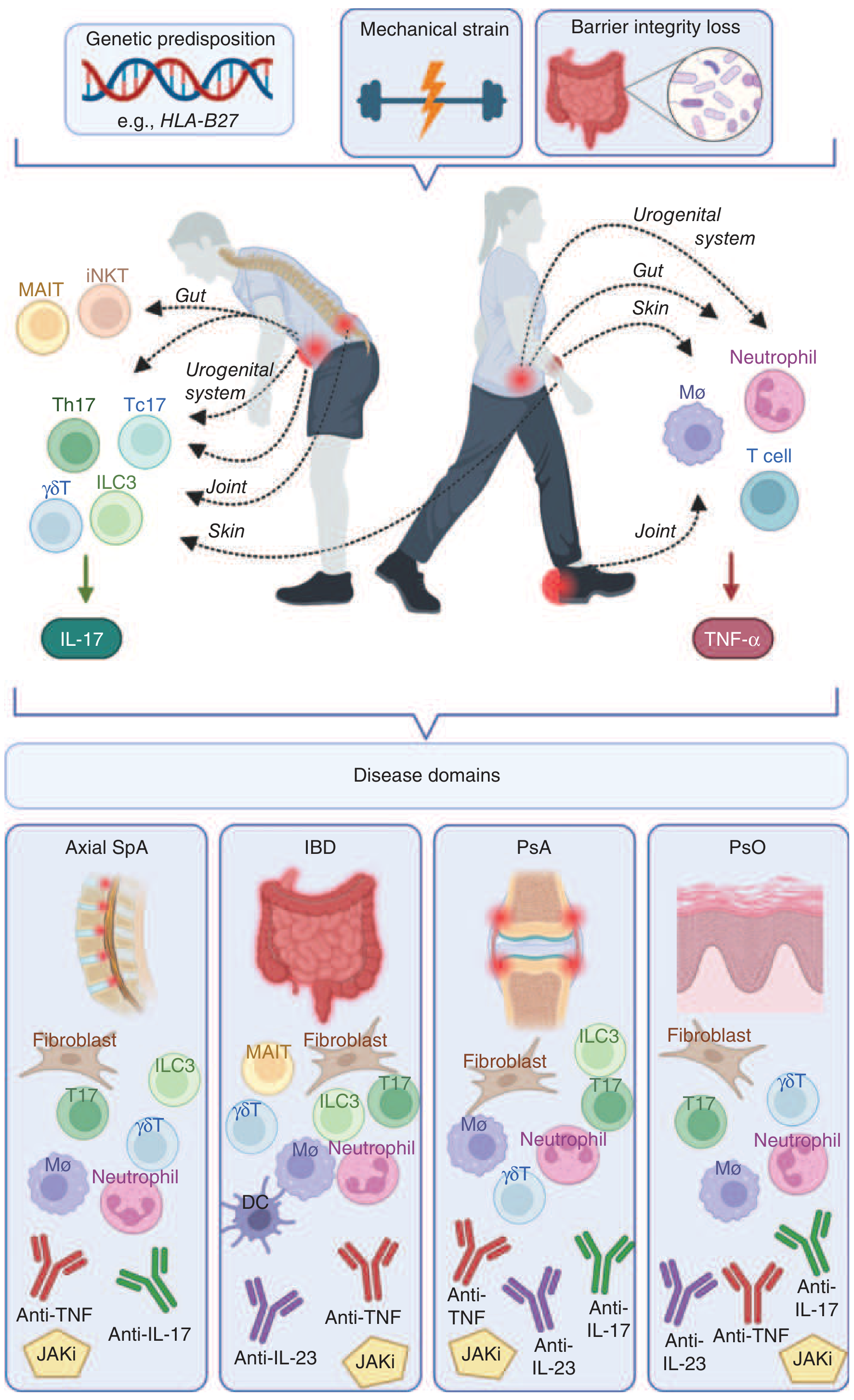
Genetic Context: HLA-B27 Is Not the Whole Story
- IL23R - IL-23 receptor variants (most replicated non-MHC association; protective allele reduces IL-23 signaling)
- ERAP1 - aminopeptidase that trims peptides before loading onto HLA molecules; interacts epistatically with HLA-B27
- STAT3, JAK2, TYK2 - IL-23/IL-17 signaling pathway genes
- CARD9, IL12B, IL1R1/R2, IL6R, IL7R - innate immunity and cytokine signaling
- Other MHC alleles: HLA-B*51, HLA-B*40, HLA-B*13 also confer risk
Diagnostic Use
- Testing indication: Useful in patients with inflammatory back pain (morning stiffness >30 min, improves with exercise, nocturnal pain), uveitis, or peripheral arthritis suspected to be SpA
- Positive predictive value depends heavily on pre-test probability - in a low-risk general population, HLA-B27 positivity alone is not diagnostic
- A 2025 clinical practice analysis (J Rheumatol, 2025) found the most common testing indications were peripheral arthritis (33%), uveitis (22%), and back pain (17%); reactive arthritis had the highest positive test rate (~50%); ophthalmology had the highest overall HLA-B27 positivity rate (15.4%)
- HLA-B27 is commonly co-tested with ANA and RF, though this practice may not always be clinically appropriate
HLA-B27 and Uveitis
- HLA-B27 is the most common identifiable cause of acute anterior uveitis (AAU)
- Over half of HLA-B27-positive patients presenting with uveitis will have an underlying SpA diagnosis - The Wills Eye Manual
- Features: unilateral, recurrent, acute onset, intense flare in anterior chamber
Recent Evidence (2024-2026)
- A 2024 systematic review and meta-analysis (PMID 38305346) confirmed HLA-B27 as one of the strongest individual diagnostic features for SpA across clinical, lab, and imaging parameters.
- HLA-B27 predicts progression from subclinical inflammation to overt axial SpA in first-degree relatives of SpA patients (independent of baseline inflammation levels).
- HLA-B27 is being explored as a potential therapeutic target in axSpA, with research into gene silencing and allele-specific approaches (ScienceDirect, 2025).
There is any cure if the cure will come Which year
HLA-B27 cure gene therapy research 2025 2026
"HLA-B27" AND ("gene therapy" OR "gene silencing" OR cure)
PMID: 40674836
https://www.rheumagen.com/news-events/rheumagen-presents-hla…
Is There a Cure for HLA-B27-Associated Disease?
Current Reality (2026)
| Treatment type | Examples | What they do |
|---|---|---|
| NSAIDs | Naproxen, diclofenac | Reduce pain and stiffness |
| Anti-TNF biologics | Adalimumab, etanercept | Block TNF-driven inflammation |
| Anti-IL-17 biologics | Secukinumab, ixekizumab | Block IL-17 axis |
| JAK inhibitors | Tofacitinib, upadacitinib | Block intracellular cytokine signaling |
| Anti-IL-23 | Risankizumab | Newer option, especially for IBD overlap |
What Research Is Happening Toward a Cure?
1. Gene Editing (CRISPR/Cas9 and similar tools)
- The idea: edit the HLA-B27 gene itself in immune or stem cells so it no longer triggers disease
- RheumaGen Inc. (a US biotech) presented preclinical data at ACR Convergence 2025 showing that editing a single amino acid at position 82 of an HLA molecule blocks the binding of disease-causing peptides to T cells
- This "anchor-position editing" could potentially be a one-time therapy
- Currently: preclinical only (animal/cell models, not yet in humans)
2. RNA Interference (RNAi) / Gene Silencing
- Small interfering RNA (siRNA) molecules designed to silence HLA-B27 expression specifically in inflamed tissue
- Theoretical advantage: reversible, does not permanently alter the genome
- Currently: early experimental stage
3. Viral Vector Gene Delivery
- Using modified viruses to deliver corrective genetic material
- Still conceptual for HLA-B27 diseases specifically
When Might a Cure Come?
| Stage | Estimated timeline |
|---|---|
| Preclinical (animal/cell studies) | Now (2025-2026) |
| Phase 1 human safety trials | Possibly 2027-2030 |
| Phase 2/3 efficacy trials | 2030-2035 |
| Regulatory approval (if successful) | 2035 or later |
- HLA-B27 is expressed on ALL nucleated cells - editing it safely without off-target effects is very challenging
- Even if HLA-B27 is silenced, disease may already be established in joints and may not fully reverse
- Most people with HLA-B27 never get sick - so a "cure" really targets the minority who develop SpA
- Regulatory and safety hurdles for gene editing in non-fatal diseases are very high
Bottom Line
See a person, 18 years old, he have hla b 27 positive what is the common disease for this? He have symptoms, both knee pain, ankle pain, hip pain, no spine, involvement right now diagnose the situation and suggest long-term medicines because he’s 18 years old and which blood test he need to repeat every month.
"peripheral spondyloarthritis" AND management AND "HLA-B27"
spondyloarthritis young onset treatment guidelines biologics
peripheral spondyloarthritis 18 year old HLA-B27 treatment NSAID sulfasalazine monitoring blood tests 2025
ASAS EULAR guidelines peripheral spondyloarthritis treatment stepwise sulfasalazine TNF inhibitor monitoring 2024 2025
https://rheumnow.com/news/2026-guidelines-treatment-axial-sp…
Important disclaimer: This is educational information based on medical textbooks and guidelines. All treatment decisions for a real patient must be made by a qualified rheumatologist. An 18-year-old with active joint disease needs formal specialist care.
Clinical Assessment: 18-Year-Old, HLA-B27 Positive
Step 1: Diagnosis
Most Likely: Peripheral Spondyloarthritis (pSpA)
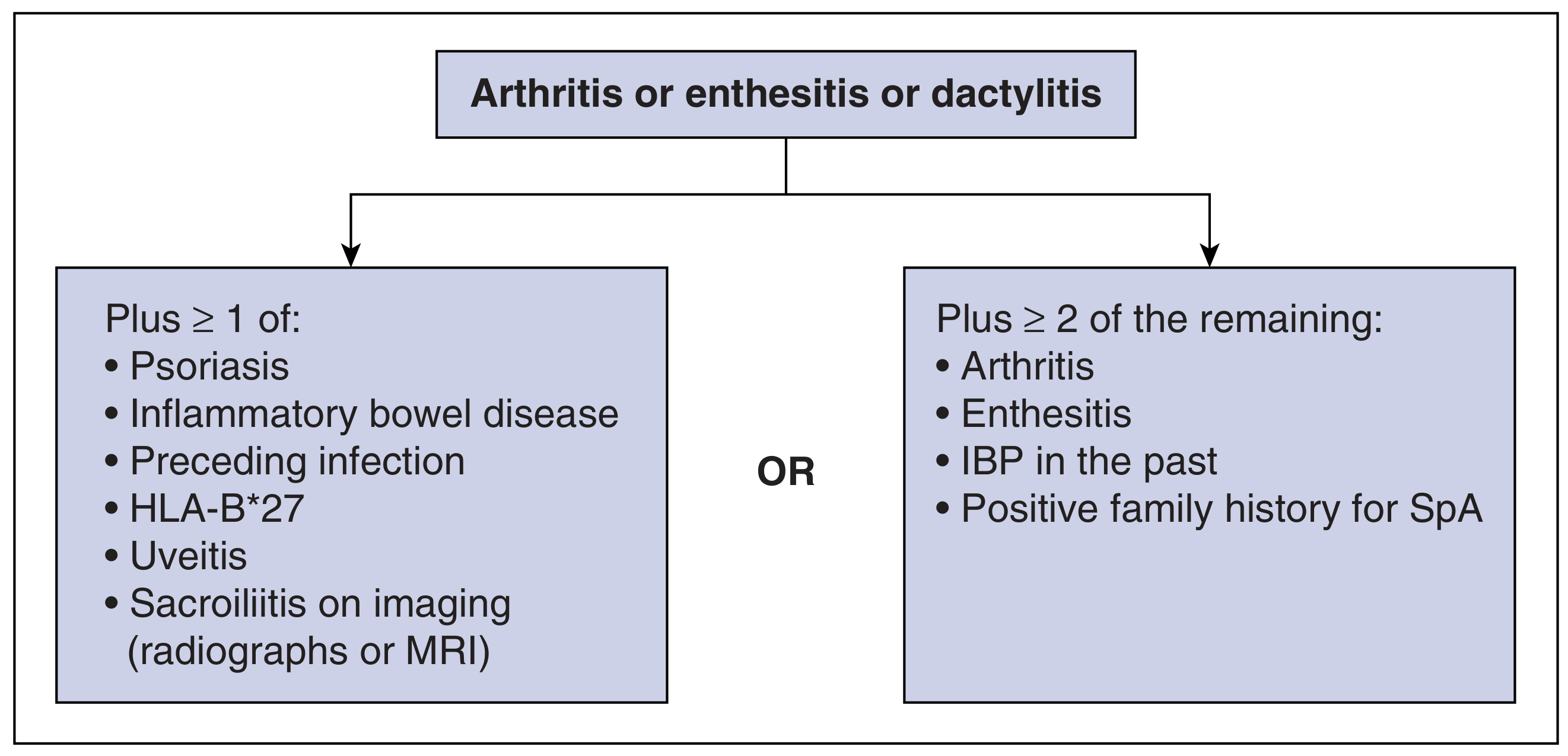
Differential Diagnoses to Rule Out
| Diagnosis | Why it fits | How to differentiate |
|---|---|---|
| Peripheral SpA / undifferentiated SpA | Most likely - HLA-B27 +, lower limb arthritis, young age | MRI sacroiliac joints (may show early sacroiliitis not visible on X-ray) |
| Reactive arthritis (ReA) | HLA-B27 +, asymmetric lower limb arthritis, young male | Ask about preceding infection (throat, GI, urogenital 2-6 weeks prior) |
| Juvenile Spondyloarthritis | Age 18, HLA-B27 +, peripheral arthritis at presentation | Overlaps with pSpA; same workup |
| Early ankylosing spondylitis | Spinal involvement may come later; hips are commonly affected in early AS | MRI SI joints, look for morning stiffness >30 min |
| Enthesitis-related arthritis (ERA) | JIA subtype in HLA-B27 + young patients | Enthesitis at heel/patellar tendon insertion |
Key Clinical Questions to Ask This Patient
- Was there a preceding infection 2-6 weeks ago (throat infection, diarrhea, urinary symptoms)? - points to reactive arthritis
- Any eye redness/pain (uveitis)?
- Any skin rash or psoriasis in family?
- Any bowel symptoms (IBD)?
- Morning stiffness - how long? Does it improve with movement?
- Night pain that improves after getting up?
- Any heel pain (enthesitis at Achilles insertion)?
- Family history of AS, psoriasis, IBD?
Step 2: Investigations Needed Now (Baseline)
Imaging
| Test | Purpose |
|---|---|
| X-ray pelvis (SI joints) | Look for sacroiliitis (grade 1-4) |
| MRI sacroiliac joints | Detect early bone marrow edema before X-ray changes appear - preferred in young patients per 2026 guidelines |
| X-ray both knees, ankles, hips | Assess joint damage, rule out other pathology |
Blood Tests (Baseline Before Starting Treatment)
| Test | Purpose |
|---|---|
| CBC (Complete Blood Count) | Baseline; detect anemia of inflammation |
| ESR (Erythrocyte Sedimentation Rate) | Inflammation marker |
| CRP (C-Reactive Protein) | More sensitive acute inflammation marker |
| LFT (Liver Function Tests) | Baseline before NSAIDs/sulfasalazine |
| Renal function (creatinine, urea) | Baseline before NSAIDs |
| Urine routine examination | Baseline; NSAIDs affect kidneys |
| HLA-B27 | Already positive - confirmed |
| RF (Rheumatoid Factor) | Should be negative in SpA (seronegative) |
| Anti-CCP antibodies | Should be negative - rule out RA |
| ANA | Rule out SLE, especially at this age |
| Blood culture / stool culture / urine culture | If reactive arthritis suspected |
| Throat swab / ASOT | If recent infection history |
| Uric acid | Rule out gout (less likely at 18 but worth checking) |
Step 3: Long-Term Treatment Plan
Treatment Ladder (Per ASAS-EULAR 2022 + 2026 Guidelines)
STEP 1: NSAIDs (First Line - Start Here)
    ↓ [If inadequate response after 2-4 weeks per NSAID × 2 trials]
STEP 2: Sulfasalazine (for peripheral arthritis specifically)
    ↓ [If inadequate response after 3 months]
STEP 3: Biologic DMARD (TNF inhibitor or IL-17 inhibitor)
STEP 1 - NSAIDs (Start Immediately)
Per 2026 guidelines: NSAIDs are first-line therapy for all SpA patients
| Drug | Dose | Notes |
|---|---|---|
| Naproxen | 500 mg twice daily | Preferred NSAID in young patients - better GI profile |
| Diclofenac | 75 mg twice daily | Alternative; good anti-inflammatory |
| Indomethacin | 25-50 mg three times daily | More potent but more GI side effects |
STEP 2 - Sulfasalazine (For Peripheral Joint Disease)
Per ASAS-EULAR: "Sulfasalazine may be considered in patients with peripheral arthritis" - this patient has peripheral arthritis, so sulfasalazine is appropriate if NSAIDs alone are insufficient.
| Drug | Dose | Titration |
|---|---|---|
| Sulfasalazine | Start: 500 mg/day | Increase by 500 mg/week up to 2000-3000 mg/day in divided doses |
- Takes 6-12 weeks to show full effect
- Safe in young adults; widely used in JIA/ERA/SpA
STEP 3 - Biologics (If Steps 1-2 Fail)
Per 2026 guidelines: TNF inhibitors and IL-17 inhibitors are equally recommended as initial biologic DMARDs
| Drug Class | Examples | Notes |
|---|---|---|
| Anti-TNF | Adalimumab (Humira), Etanercept, Golimumab | Approved for peripheral SpA; very effective |
| Anti-IL-17 | Secukinumab (Cosentyx), Ixekizumab | Especially good if psoriasis present |
| JAK inhibitors | Tofacitinib, Upadacitinib | Second-line biologics per 2026 guidelines |
Note for 18-year-old: All these biologics have been studied and used in adolescents. Etanercept and adalimumab have the most pediatric/young adult data. However, screening for TB, hepatitis B, varicella is mandatory before starting any biologic.
Non-Pharmacological (Equally Important)
- Physiotherapy: Daily stretching exercises, especially hip flexors, quadriceps
- Swimming / hydrotherapy: Low-impact, excellent for SpA
- Avoid prolonged sitting: Get up and move every 30-60 minutes
- No smoking: Smoking worsens SpA outcomes significantly
- Weight control: Reduces joint load
Step 4: Monthly Blood Test Monitoring
If on NSAIDs Only
| Test | Frequency | Why |
|---|---|---|
| CBC | Every 3 months | Detect GI blood loss (chronic NSAID use can cause occult GI bleeding) |
| Renal function (creatinine, urea) | Every 3 months | NSAIDs reduce renal blood flow long-term |
| LFT | Every 3 months | NSAID-related hepatotoxicity (rare but possible) |
| ESR + CRP | Monthly initially, then every 3 months | Track disease activity/inflammation |
If on Sulfasalazine (Monthly Monitoring Required)
| Test | Frequency | Why |
|---|---|---|
| CBC with differential | Every month for 3 months, then every 3 months | Sulfasalazine can cause leukopenia, thrombocytopenia, megaloblastic anemia |
| LFT (ALT, AST, bilirubin) | Every month for 3 months, then every 3 months | Hepatotoxicity risk |
| Renal function | Every 3 months | Sulfasalazine can rarely affect kidneys |
| ESR + CRP | Monthly initially | Track response |
| Urine routine | Monthly | Crystalluria with sulfasalazine |
If on Biologics (Anti-TNF / Anti-IL-17)
| Test | Frequency | Why |
|---|---|---|
| CBC | Every 3 months | Biologics can cause cytopenia |
| LFT | Every 3 months | Hepatotoxicity especially with anti-TNF |
| ESR + CRP | Every 3 months | Disease activity monitoring |
| TB screening (IGRA/Mantoux) | Annually | Anti-TNF reactivates latent TB |
| Hepatitis B serology | Before starting, then as needed | Reactivation risk |
| Lipid profile | Every 6 months (especially JAKi) | JAK inhibitors raise LDL |
Summary Card for This Patient
| Diagnosis | Peripheral SpA (most likely) - confirm with MRI SI joints |
| Start now | Naproxen 500 mg twice daily + Omeprazole 20 mg once daily |
| Add if NSAIDs fail | Sulfasalazine 2000-3000 mg/day (titrate up over 4-6 weeks) |
| Escalate to biologic if | Still active after 3-6 months on sulfasalazine + NSAIDs |
| Monthly blood tests | CBC, LFT, renal function, ESR, CRP, urine routine (monthly for first 3 months on sulfasalazine, then every 3 months) |
| Watch for | Uveitis, back pain onset (may develop axial involvement over years) |
| Urgent referral to | Rheumatologist - this patient needs specialist-supervised care |
The spine is not involved now, but ~30-40% of peripheral SpA patients develop axial involvement over time. Annual monitoring with clinical assessment and MRI if new back symptoms appear is recommended. - Harrison's Principles of Internal Medicine 22E; Rheumatology 2-Volume Set (Elsevier 2022); 2026 ACR/EULAR SpA Guidelines
Tofacitinib ip 5mg 18 years old boy, how many years he can use this tablet for AS how this tablet will damage the organs. The damaged Arcos will be alright after stopping or using this table correct that organ.
tofacitinib long-term safety organ toxicity spondyloarthritis
tofacitinib 5mg long term use safety organs liver cardiovascular young adults AS 2024 2025
tofacitinib long-term safety JAK inhibitor adverse effects
PMID: 38054155
tofacitinib ORAL surveillance study cardiovascular risk malignancy reversible after stopping JAK inhibitor
tofacitinib reversible organ damage stopping drug liver lipids blood counts recovery 2024
https://www.ncbi.nlm.nih.gov/books/NBK547848
PMID: 36932434
not well-formed (invalid token): line 7, column 70
We encountered an error while processing your request. Please try again or reach out to us for help.
Tofacitinib ip 5mg 18 years old boy, how many years he can use this tablet for AS how this tablet will damage the organs. The damaged Arcos will be alright after stopping or using this table correct that organ.
tofacitinib long-term safety organ adverse effects
tofacitinib 5mg long term organ damage liver cardiovascular lipids reversible after stopping 2024 2025
tofacitinib safety young patients 18 years adolescent AS SpA how long duration treatment FDA warning
https://pmc.ncbi.nlm.nih.gov/articles/PMC11503147
Medical disclaimer: This is educational information. All prescribing decisions for an 18-year-old must be made by a qualified rheumatologist. Tofacitinib in AS is a 3rd-line drug per 2026 guidelines - not first-line.
Tofacitinib 5mg for an 18-Year-Old with AS/SpA
Part 1: How Long Can He Take It?
- The disease is active and it is helping
- No serious side effects develop
- Regular monitoring shows no organ damage
- Tofacitinib has been studied for up to 9.5 years in RA patients (longest integrated safety analysis)
- In JIA patients (ages 2-18), long-term extension studies have tracked patients for up to 4+ years with acceptable safety
- The FDA requires long-term safety monitoring for at least 24 months in JIA patients on tofacitinib
- For AS specifically, tofacitinib was FDA-approved in 2021 - long-term AS data beyond 5 years is still being collected
Part 2: How Tofacitinib Works and How It Damages Organs
Mechanism (Why organ effects happen)
Part 3: Organ-by-Organ Damage Chart
1. LIVER (Hepatotoxicity)
| What happens | Details |
|---|---|
| How it damages | Tofacitinib is metabolized 70% in the liver via CYP3A4 enzyme. Toxic metabolites can injure liver cells. Causes elevated ALT, AST (transaminitis) |
| How common | Mild liver enzyme elevation: common. Severe liver injury (hepatic failure): rare but reported |
| Risk in 18-year-old | A published case report (2023) described liver failure in an 18-year-old female on tofacitinib. Young patients can be affected |
| Reversible? | YES - mostly reversible. In most cases, stopping tofacitinib leads to normalization of liver enzymes within 4-12 weeks. Supportive treatment helps. However, severe hepatic failure may cause lasting damage |
| What to monitor | ALT, AST, bilirubin, ALP every month for 3 months, then every 3 months |
2. HEART AND BLOOD VESSELS (Cardiovascular)
| What happens | Details |
|---|---|
| How it damages | Raises LDL cholesterol + total cholesterol. The ORAL Surveillance trial (the most important safety study) showed tofacitinib 5mg raised the risk of MACE (heart attack, stroke, cardiovascular death) compared to TNF inhibitors - HR 1.33 |
| Risk in 18-year-old | The ORAL Surveillance studied patients aged 50+ with pre-existing CV risk factors. An 18-year-old with no cardiovascular risk factors has a much lower absolute risk - but the lipid changes still happen and accumulate over decades |
| FDA action | FDA placed a BLACK BOX WARNING on all JAK inhibitors for increased risk of MACE, malignancy, thrombosis, and serious infection |
| Reversible? | Partially reversible. Cholesterol elevations: YES, reversible after stopping - studies confirm lipid levels return toward baseline. However, atherosclerotic plaque that builds up over years of elevated LDL is NOT fully reversible. A statin (e.g., atorvastatin) can be added to counter the lipid rise without stopping tofacitinib |
| What to monitor | Lipid panel (LDL, HDL, total cholesterol, triglycerides) at baseline, then every 3-6 months |
3. BLOOD CELLS (Bone Marrow/Hematological)
| What happens | Details |
|---|---|
| How it damages | JAK2 inhibition affects erythropoietin signaling → anemia. JAK1/3 inhibition affects lymphocyte production → lymphopenia. Can also cause neutropenia |
| Rule | Tofacitinib must NOT be started if hemoglobin <9 g/dL. Must be stopped or reduced if severe anemia/neutropenia develops |
| Reversible? | YES - fully reversible. Blood counts normalize within 4-8 weeks of stopping the drug |
| What to monitor | CBC (hemoglobin, WBC with differential, neutrophils, lymphocytes) monthly for 3 months, then every 3 months |
4. IMMUNE SYSTEM - INFECTIONS
| What happens | Details |
|---|---|
| How it damages | Primary risk of tofacitinib. Blocks JAK-STAT immune signaling → weakens body's defence against viruses, bacteria, fungi |
| Herpes Zoster (Shingles) | Most common serious infection with JAK inhibitors. Risk is 2-3x higher than general population. Especially important in a young patient who may carry latent varicella virus |
| Tuberculosis reactivation | Must screen (IGRA/Mantoux) before starting. If positive, treat latent TB first for 1-2 months before tofacitinib |
| Opportunistic infections | Pneumocystis pneumonia, cryptococcosis, CMV reactivation - all more likely |
| Reversible? | Infections themselves can be treated with appropriate antibiotics/antivirals. However, severe sepsis or organ failure from infection may cause permanent damage (e.g., lung fibrosis after pneumonia). The immunosuppression itself reverses when drug is stopped |
5. KIDNEYS (Renal)
| What happens | Details |
|---|---|
| How it damages | Tofacitinib is metabolized 30% by the kidneys. Can cause mild creatinine elevations. In JIA long-term studies, renal events occurred in ~3.6% of patients |
| Reversible? | Usually reversible with dose reduction or stopping. Dose adjustment required if creatinine clearance <30 mL/min |
| What to monitor | Serum creatinine, urea, eGFR every 3 months |
6. CANCER / MALIGNANCY
| What happens | Details |
|---|---|
| How it damages | JAK-STAT pathway is involved in tumor surveillance. Blocking it may reduce the body's ability to destroy cancer cells. ORAL Surveillance showed increased overall malignancy rate vs TNF inhibitors |
| Types of cancer increased | Lung cancer (especially in smokers), lymphoma, non-melanoma skin cancer (NMSC) |
| Risk in 18-year-old | Absolute risk is very low at age 18. But using JAK inhibitors for 10-20 years significantly raises cumulative lifetime cancer risk |
| Reversible? | NO - cancer is NOT reversible by stopping the drug. Once malignancy develops, it requires separate treatment |
| What to monitor | Annual skin check, annual chest X-ray if smoker, report unexplained weight loss/night sweats/lumps |
7. BLOOD CLOTS (Venous Thromboembolism - VTE)
| What happens | Details |
|---|---|
| How it damages | Tofacitinib increases the risk of deep vein thrombosis (DVT) and pulmonary embolism (PE). The 10mg dose has a higher risk than 5mg |
| Reversible? | Clots themselves require anticoagulation treatment (blood thinners). The underlying risk reduces after stopping tofacitinib, but an established clot needs treatment regardless |
| What to monitor | Report leg swelling, calf pain, sudden breathlessness immediately |
8. GI TRACT (Gastrointestinal Perforation)
| What happens | Details |
|---|---|
| How it damages | Rare but serious. JAK inhibition may weaken intestinal wall integrity. Risk is higher with concurrent NSAIDs or steroids |
| Reversible? | Surgical emergency - NOT reversible without treatment |
Part 4: Summary - What Reverses, What Does Not
| Organ/Effect | Reversible after stopping? | Notes |
|---|---|---|
| Liver enzyme elevation (ALT/AST) | ✅ YES | Normalizes in 4-12 weeks |
| Liver failure (severe) | ⚠️ Partial | Mild-moderate: recovers. Severe: may have lasting damage |
| Cholesterol (LDL) rise | ✅ YES | Reverses after stopping; statin can correct it during treatment |
| Cardiovascular plaque (long-term) | ❌ NO | Plaque does not disappear |
| Anemia / Low WBC / Low platelets | ✅ YES | Counts normalize within weeks |
| Kidney function (mild elevation) | ✅ YES | Usually recovers with dose reduction |
| Infections | ✅ YES (if treated early) | Permanent damage possible if infection is severe |
| Malignancy | ❌ NO | Cancer needs independent treatment |
| Thrombosis (DVT/PE) | ⚠️ Partial | Needs anticoagulation; clot risk reduces after stopping |
| Immunosuppression | ✅ YES | Immune function recovers within ~2-4 weeks of stopping |
Part 5: Special Concerns for THIS 18-Year-Old
-
Tofacitinib is NOT first-line for AS - per 2026 guidelines, TNF inhibitors (adalimumab, etanercept) and IL-17 inhibitors (secukinumab) should be tried first. These have a longer and safer track record in young patients.
-
If tofacitinib is truly necessary (failed 1-2 biologics), use the lowest effective dose (5mg twice daily) and keep duration as short as possible.
-
Vaccinate before starting: Shingles vaccine (recombinant, Shingrix - can be given at 18), TB screening, Hepatitis B check.
-
No smoking - ever: Tofacitinib + smoking = significantly higher lung cancer and cardiovascular risk.
-
Annual rheumatology review to reassess whether continuing tofacitinib is still necessary, or whether the disease has gone into remission and the drug can be tapered.
18 years old and boy going every day, masturbation is good or bad
masturbation health effects young men frequency
daily masturbation 18 year old male health effects medical evidence good bad 2024
masturbation benefits prostate health ejaculation frequency male
https://www.medicalnewstoday.com/articles/320265
Daily Masturbation in an 18-Year-Old Male: Good or Bad?
The Short Medical Answer
What Medical Science CONFIRMS is TRUE
Benefits (Real, Evidence-Based)
| Benefit | Explanation |
|---|---|
| Stress relief | Orgasm releases endorphins, dopamine, and oxytocin - natural mood-improving hormones. Reduces cortisol (stress hormone) |
| Better sleep | Prolactin released after ejaculation promotes relaxation and drowsiness |
| Prostate health (long term) | A Harvard study (Giovannucci et al.) found men who ejaculate 21+ times per month in their 20s had a lower risk of prostate cancer later in life |
| Relieves sexual tension safely | Safer than unprotected sex with multiple partners - no STI risk, no unwanted pregnancy |
| Normal sexual development | At 18, testosterone is at lifetime peak. Sexual urges are physiologically normal and strong |
| Pain relief | Endorphins released can temporarily relieve mild pain, including joint pain (relevant for this patient with SpA) |
| Improves mood and self-awareness | Helps young men understand their own body and sexual responses |
What Medical Science CONFIRMS is FALSE (Myths)
| ❌ Myth | ✅ Truth |
|---|---|
| Makes you weak / drains energy permanently | FALSE - mild temporary fatigue only, recovers fully |
| Reduces testosterone | FALSE - testosterone levels are not reduced by ejaculation frequency |
| Causes hair loss | FALSE - no evidence |
| Reduces sperm count / causes infertility | FALSE - sperm replenish within 24-72 hours |
| Shrinks or curves the penis | FALSE - no physical deformity |
| Causes mental illness | FALSE - no causal link |
| "Wasting" vital energy (semen retention myths) | FALSE - no scientific basis |
| Causes acne | FALSE |
| Damages kidneys or liver | FALSE |
When Daily Masturbation CAN Become a Problem
Physical concerns (minor, from excess)
- Skin irritation or soreness of the penis from friction - use lubrication, take a day off
- Mild fatigue on the day of - normal, not permanent
- Desensitization - if done very roughly or very frequently, sensitivity may temporarily reduce; this usually recovers
Psychological/Behavioral concerns (when it becomes problematic)
| Warning sign | What it means |
|---|---|
| Missing school, work, or sleep to masturbate | May indicate compulsive sexual behavior |
| Unable to stop even when wanting to | Behavioral compulsion - needs counseling |
| Only aroused by specific online material, not real partners | May indicate pornography dependency |
| Feeling guilty, shameful, or distressed every time | Psychological burden - worth speaking to a doctor |
| Relationship or social life suffering | Problematic pattern |
Special Note: This Patient Has AS/SpA
- Fatigue: Both AS and tofacitinib can cause fatigue. If daily masturbation adds to fatigue levels noticeably, reducing frequency may help his energy and physical recovery
- No direct interaction between masturbation and his medications or disease course
- Sexual activity (including masturbation) is not contraindicated in AS at all - in fact, physical activity and maintained circulation are encouraged
What is a "Normal" Frequency?
- Teenage males (15-19): Most masturbate - frequency ranges widely from daily to a few times per week
- Once daily at age 18 is statistically within the normal range worldwide
- There is no medical "maximum" recommended frequency
Bottom Line
| Answer | |
|---|---|
| Is daily masturbation at 18 normal? | Yes, very common and within normal range |
| Does it cause permanent physical harm? | No - myths are not supported by science |
| Any real risks? | Minor: skin soreness, temporary fatigue only |
| When does it become a problem? | Only when it interferes with daily life, relationships, or becomes compulsive |
| Recommendation | No need to stop or feel guilty - but balance with sleep, exercise, studies, and social life |