
Make assignment on Automated estrus detection using activity monitors and pedometers using relevant images flowcharts and diagrams for dvm student in plain text
estrus detection activity monitors pedometers cattle
estrus detection cattle activity monitor pedometer
bovine estrous cycle signs standing heat mounting behavior
automated estrus detection cattle accelerometer sensor
pedometer leg attachment dairy cow heat detection steps
estrous cycle bovine hormones progesterone LH estradiol diagram
PMID: 38798195
PMID: 33685699
AUTOMATED ESTRUS DETECTION USING ACTIVITY MONITORS AND PEDOMETERS
TABLE OF CONTENTS
- Introduction
- The Bovine Estrous Cycle — Overview
- Importance of Estrus Detection in Dairy Cattle
- Traditional Methods of Estrus Detection
- Automated Estrus Detection — Rationale
- Pedometers — Principle and Application
- Activity Monitors / Accelerometers — Principle and Application
- How the Systems Work — Flowcharts
- Comparison of Automated Systems
- Accuracy and Performance Metrics
- Limitations and Challenges
- Future Perspectives
- Conclusion
- References
1. INTRODUCTION
2. THE BOVINE ESTROUS CYCLE — OVERVIEW
2.1 Estrous Cycle Duration
- Average cycle length: 21 days (range: 18–24 days)
- Divided into four phases:
- Proestrus (days 17–21): Follicle growth, rising estradiol
- Estrus (day 0): Ovulation-associated standing heat, peak behavioral signs
- Metestrus (days 1–5): Corpus hemorrhagicum formation, early CL development
- Diestrus (days 6–16): Active CL, high progesterone, behavioral quiescence
2.2 Hormonal Profile During the Cycle
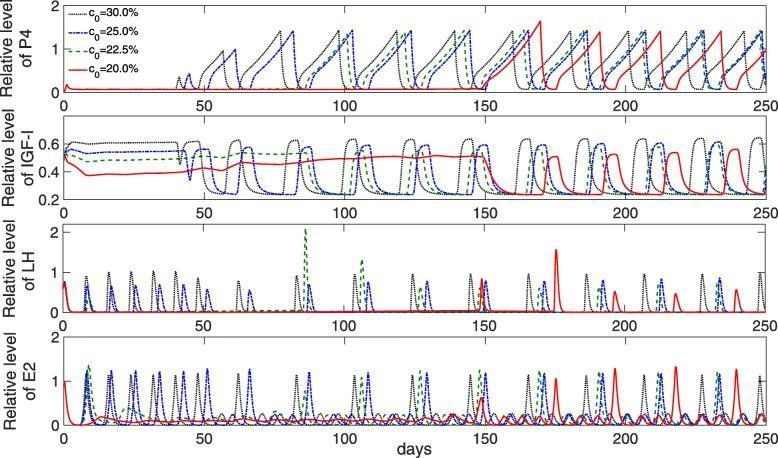
HORMONAL CHANGES ACROSS THE BOVINE ESTROUS CYCLE
=================================================
HIGH P4 HIGH P4
(Diestrus) (Diestrus)
| |
P4 DROPS --> ESTRADIOL RISES --> LH SURGE --> OVULATION --> P4 RISES
|
v
BEHAVIORAL ESTRUS
(Standing to be mounted,
increased locomotion,
restlessness, bellowing)
| Hormone | Source | Role in Estrus |
|---|---|---|
| Estradiol (E2) | Dominant follicle | Drives CNS-mediated behavioral estrus |
| LH | Anterior pituitary | Surge triggers ovulation ~28–32 h after estrus onset |
| Progesterone (P4) | Corpus luteum | Falls prior to estrus; inhibits estrous behavior |
| GnRH | Hypothalamus | Pulsatile release drives LH surge |
3. IMPORTANCE OF ESTRUS DETECTION IN DAIRY CATTLE
3.1 Economic Impact
- Extended calving intervals (target: 12–13 months; 1 day of extension costs approximately USD 2–5)
- Reduced lifetime milk production per cow
- Increased culling rates due to reproductive failure
- Higher AI costs when multiple inseminations are needed
3.2 The "21-Day Conception Rate" Concept
REPRODUCTIVE EFFICIENCY EQUATION
==================================
21-Day Pregnancy Rate = Estrus Detection Rate (EDR) x Conception Rate (CR)
Example:
EDR = 50%, CR = 50% --> 21-Day PR = 25% (POOR)
EDR = 90%, CR = 50% --> 21-Day PR = 45% (EXCELLENT)
Improving EDR from 50% to 90% effectively doubles pregnancy rates
without any change in conception rate.
3.3 Why Manual Observation Fails
- Estrus duration in high-producing cows: often < 8 hours
- Standing mounts occur most frequently between 10 PM and 6 AM
- Milking, feeding, and other management activities interrupt observation
- Large herd sizes make continuous 24-hour observation impractical
4. TRADITIONAL METHODS OF ESTRUS DETECTION
4.1 Visual Observation
- Best practice: 3 observations/day, 30 minutes each
- Signs: Standing to be mounted (primary sign), chin-resting, sniffing, bellowing, swollen vulva, clear mucous discharge, restlessness
- Efficiency: 50–70% under ideal conditions; falls to <40% in large herds
4.2 Teaser Animals
- Vasectomized bulls or androgenized cows fitted with chin-ball markers (paint/ink dispensed on mounted animals)
- Kamar patches — pressure-sensitive patches applied to the tailhead; color change indicates mounting
4.3 Tail Painting
- Paint or chalk applied along the tail-head and rump
- Rubbing and smearing indicates mounting activity
- Simple and inexpensive; detects mounts but not duration/intensity
4.4 Hormonal Assays
- Serum or milk progesterone profiling confirms luteal regression prior to estrus
- Not practical for real-time on-farm estrus detection
4.5 Summary of Traditional Methods
TRADITIONAL ESTRUS DETECTION METHODS — EFFICIENCY COMPARISON
==============================================================
Method | Detection Rate | Cost | Labor |
--------------------|----------------|-------|-------|
Visual observation | 50-70% | Low | High |
Tail paint | 60-75% | Low | Low |
Chin-ball markers | 70-85% | Low | Medium|
Kamar patches | 65-80% | Medium| Low |
Milk progesterone | ~90% (confirm) | High | Medium|
5. AUTOMATED ESTRUS DETECTION — RATIONALE
5.1 The Biological Basis for Activity-Based Detection
- Walk 2–5 times more than during non-estrus periods
- Take significantly more steps per hour
- Display restless, pacing behavior
- Reduce time spent ruminating and eating
- Increase mounting and being mounted frequency
5.2 Threshold Principle
ACTIVITY THRESHOLD CONCEPT FOR ESTRUS DETECTION
================================================
Activity
Level
| *
| * * *
| * *
| baseline * * baseline
|.................* - - - - - *................. <-- THRESHOLD
|
+---+---+---+---+---+---+---+---+---+---+----> Time (Days)
Day18 Day19 Day20 Day21 Day1 Day2 Day3
^
ESTRUS
(Alert triggered)
When activity exceeds the individually calibrated threshold,
the system generates an ESTRUS ALERT.
Alert = Cow's current activity > (Mean baseline activity + 2-3 SD)
6. PEDOMETERS — PRINCIPLE AND APPLICATION
6.1 Definition and Design
6.2 How Pedometers Work
PEDOMETER WORKING PRINCIPLE — FLOWCHART
=========================================
[COW MOVES]
|
v
[MECHANICAL/ELECTRONIC SENSOR
in pedometer counts each stride]
|
v
[STEP COUNT STORED in memory
at set intervals (e.g., 2-hour blocks)]
|
v
[DATA TRANSMITTED to base station
(wired docking or RFID/wireless)]
|
v
[COMPUTER ALGORITHM COMPARES
current step count vs.
individual cow's 3-5 day baseline]
|
______|______
| |
v v
[Activity [Activity
NORMAL] ELEVATED > Threshold]
|
v
[ESTRUS ALERT GENERATED]
|
v
[Farmer/Manager NOTIFIED
via SMS, app, or panel display]
|
v
[Cow PRESENTED for AI
within 6-12 hours of alert]
6.3 Types of Pedometers
| Type | Technology | Transmission |
|---|---|---|
| Mechanical pedometer | Spring-lever counter | Manual reading at milking |
| Electronic pedometer | Piezoelectric sensor | RFID at milking station |
| Smart pedometer | Microprocessor + memory | Wireless/Bluetooth continuous |
6.4 Commercially Available Pedometers for Cattle
- SCR Engineers HR-LD Tag — leg-mounted, multi-axis
- Afimilk Silent Herdsman — collar and leg versions
- Enfotra Pedometer — widely used in India and EU
- AfiAct II (AfiMilk) — attaches below the knee, high sensitivity
6.5 Data Interpretation
- Baseline: 80–150 steps per 2 hours
- Estrus: 400–1,200 steps per 2 hours (3–8x increase)
7. ACTIVITY MONITORS / ACCELEROMETERS — PRINCIPLE AND APPLICATION
7.1 Definition
7.2 Physics of Accelerometry
3-AXIS ACCELEROMETER MEASUREMENTS
===================================
Z-axis (vertical)
|
|
X-axis (lateral) --+-- Y-axis (fore-aft/longitudinal)
Each axis measures acceleration in m/s^2 or g-units.
During ESTRUS:
- X-axis: Increased lateral swaying
- Y-axis: Increased forward/backward locomotion
- Z-axis: Increased vertical motion (mounting, jumping)
Combined vector = sqrt(X^2 + Y^2 + Z^2) = Activity Score
7.3 How Accelerometer Systems Work
ACCELEROMETER-BASED ESTRUS DETECTION — SYSTEM FLOWCHART
=========================================================
[SENSOR on collar/ear tag/leg]
|
v
[RAW ACCELERATION DATA sampled
at 10-100 Hz continuously]
|
v
[ONBOARD MICROPROCESSOR:
Filters noise, computes activity
scores per time block (e.g., 15 min)]
|
v
[DATA TRANSMITTED wirelessly to
BASE STATION or CLOUD SERVER
(Bluetooth, WiFi, RFID, GSM)]
|
v
[ALGORITHM PROCESSES data:
- Activity index per time block
- Rumination time monitoring
- Lying/standing time analysis
- Individual baseline calibration]
|
______|_______________________________
| | |
v v v
[NORMAL [RUMINATION [ACTIVITY
Activity] DECREASES SURGES
(secondary sign)] (primary sign)]
| |
+----------+-----------+
|
v
[ESTRUS ALERT TRIGGERED
with confidence score %]
|
v
[NOTIFICATION sent to
farmer (app/SMS/
herd management software)]
|
v
[AI scheduled: optimal
window = 6-24 h after
alert onset]
7.4 Additional Behavioral Parameters Monitored
BEHAVIORAL PARAMETERS MONITORED BY ACCELEROMETERS
===================================================
Parameter | Change During Estrus | Detection Value
-------------------|-------------------------|----------------
Locomotor activity | INCREASES 2-5x | Primary sign
Rumination time | DECREASES by 20-40% | Secondary sign
Lying time | DECREASES | Secondary sign
Feeding time | DECREASES | Secondary sign
Mounting events | INCREASES | Primary sign
Head motion index | INCREASES | Secondary sign
7.5 Collar vs. Ear Tag vs. Leg-Mounted Systems
PLACEMENT COMPARISON OF ACCELEROMETER SYSTEMS
===============================================
COLLAR-BASED:
Advantages: Captures head/neck motion, easy to fit, detects eating/rumination
Disadvantages: May slip, heavier, less accurate for step counting
Examples: SCR Heatime, Nedap CowControl, Allflex SenseHub
EAR TAG-BASED:
Advantages: Permanent ID integration, lightweight, tamper-resistant
Disadvantages: Limited axis accuracy for locomotion
Examples: Smartbow (Zoetis), Allflex ear sensor
LEG/ANKLE-MOUNTED:
Advantages: Most accurate for step counting, direct locomotion measure
Disadvantages: Can be kicked off, leg injuries risk, more labor to attach
Examples: AfiAct II, GEA CowScout
RUMEN BOLUS:
Advantages: Internal, non-detachable, measures temperature
Disadvantages: Indirect activity measurement; not for step counting
Examples: smaXtec, CowManager
8. INTEGRATED SYSTEM ARCHITECTURE — FULL FLOWCHART
COMPLETE AUTOMATED ESTRUS DETECTION SYSTEM — FARM TO ALERT
===========================================================
ANIMAL LEVEL:
[Dairy Cow wearing
pedometer/accelerometer]
|
| (continuous data: steps, acceleration, rumination)
v
SENSOR LEVEL:
[Wearable Device]
- Samples data every few seconds
- Computes activity score locally (edge processing)
- Stores in memory buffer
|
| (wireless transmission every 15-30 min)
v
FARM INFRASTRUCTURE LEVEL:
[Antenna/Base Station in barn]
- Multiple antennae cover different zones (feeding, resting, milking)
- Receives data from all collars/tags in range
- Timestamps and stores raw data
|
| (Ethernet/WiFi/GSM)
v
SERVER/CLOUD LEVEL:
[Herd Management Software]
- Aggregates data per cow
- Runs algorithmic analysis:
* Compares to individual 3-7 day baseline
* Applies threshold criteria
* Calculates confidence score (e.g., 60-100%)
* Cross-references reproductive calendar
(days since last calving, last AI date,
expected next heat)
|
____|____
| |
v v
[No Alert] [ESTRUS ALERT]
- Cow ID
- Alert time
- Confidence %
- Recommended AI window
- Days since last heat
|
| (push notification, app, SMS, display panel)
v
FARM MANAGER LEVEL:
[Farmer/Herd Manager receives alert]
|
v
[Cow identified and separated]
|
v
[Rectal palpation or ultrasound
confirmation (optional)]
|
v
[ARTIFICIAL INSEMINATION
performed at optimal time]
|
v
[Pregnancy confirmation
28-35 days post-AI via USG/PSPB assay]
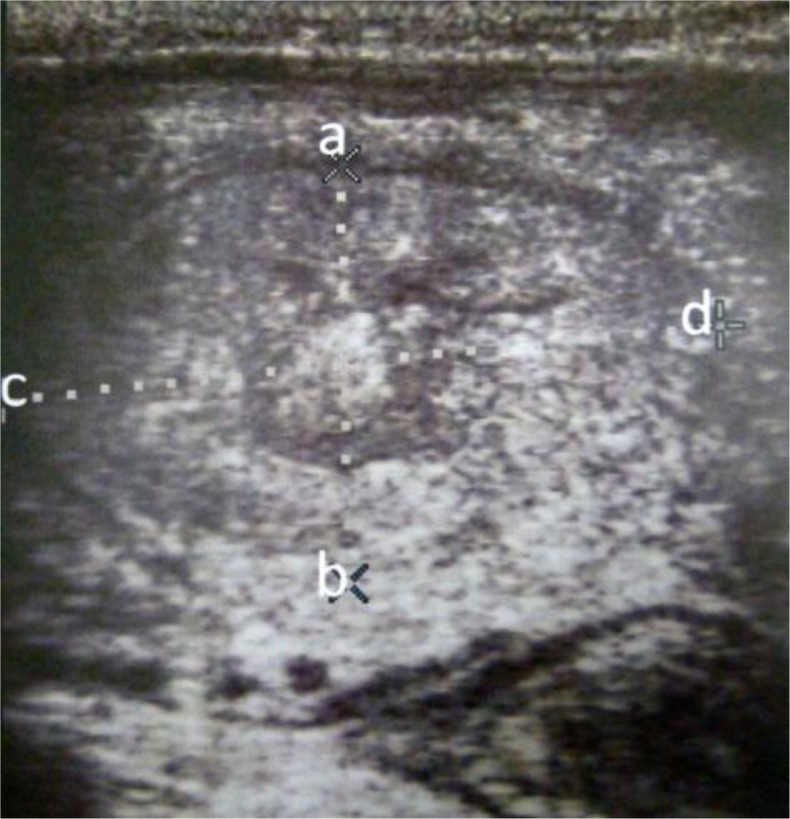
9. BOVINE REPRODUCTIVE ULTRASONOGRAPHY — MONITORING TOOL
10. COMPARISON OF PEDOMETERS vs. ACCELEROMETERS
SIDE-BY-SIDE COMPARISON
========================
Feature | Pedometer | Accelerometer
---------------------|--------------------|------------------
Measurement | Step count only | Multi-axis motion
Axes monitored | 1D (vertical) | 3D (X, Y, Z)
Behavioral parameters| Steps/activity | Steps + rumination
| | + lying + mounting
Placement | Leg only | Collar, ear, leg
Data transmission | Docking/RFID | Wireless (BT/WiFi)
Baseline calibration | Yes | Yes (individual)
Alert mechanism | Threshold crossing | Algorithm + AI
Sensitivity | 70-85% | 75-95%
Specificity | 60-75% | 70-92%
Cost | Lower | Higher
Battery life | 1-3 years | 1-3 years
Integration with HM | Partial | Full (most systems)
Rumination tracking | No | Yes (collar)
11. ACCURACY AND PERFORMANCE METRICS
11.1 Key Performance Indicators
PERFORMANCE METRICS DEFINITIONS
=================================
SENSITIVITY (Recall):
= True Positives / (True Positives + False Negatives) x 100
= % of actual estrus events correctly detected
Target: > 80%
SPECIFICITY:
= True Negatives / (True Negatives + False Positives) x 100
= % of non-estrus periods correctly not flagged
Target: > 85%
POSITIVE PREDICTIVE VALUE (PPV):
= True Positives / (True Positives + False Positives) x 100
= Probability that an alert = true estrus
Target: > 70%
FALSE ALERT RATE:
= Number of alerts not associated with ovulation / Total alerts
Target: < 20%
11.2 Published Performance Data
- Sensitivity: 91.6% (vs. behavioral estrus reference)
- Specificity: 69.2% (vs. behavioral reference); 91.7% (vs. ovulation reference)
- Mean interval from luteolysis to estrus alert: 72.2 ± 18.1 hours
- Alert duration: 13.5 ± 3.8 hours
- Interval from alert onset to ovulation: 23.8 ± 7.1 hours
11.3 Optimal AI Timing Relative to Alerts
OPTIMAL AI TIMING RELATIVE TO ESTRUS ALERT
============================================
[Estrus Alert generated]
|
+-- 0h: Alert onset
|
+-- 6h: Earliest optimal AI time
|
+-- 12h: PEAK AI window (highest conception)
|
+-- 18h: Acceptable AI time
|
+-- 24h: Last acceptable time
|
+-- 28-32h: OVULATION occurs
|
+-- 36h: Oocyte no longer fertile
RULE: Inseminate 6-18 hours after FIRST alert
for maximum conception rates.
11.4 Factors Affecting System Performance
- Flooring type: Slippery floors suppress activity; reduces sensitivity
- Herd size: Larger herds perform better (more data for algorithm training)
- Days in milk: Periparturient cows show weaker heat expression
- Body condition score: Thin cows (<2.5 BCS) show reduced behavioral estrus
- Season/heat stress: Summer heat blunts estrous behavior
- Algorithm version: Newer systems use machine learning for higher accuracy
12. MAJOR COMMERCIAL SYSTEMS — OVERVIEW
MAJOR AUTOMATED ESTRUS DETECTION SYSTEMS
==========================================
System | Company | Type | Sensor Location
----------------|------------|-------------|----------------
Heatime Pro | SCR/Allflex| Accelero- | Collar
| | meter |
AfiAct II | AfiMilk | Pedometer + | Leg
| | Accelero. |
Smartbow | Zoetis | 3D Acceler- | Ear tag
| | ometer |
CowControl | Nedap | Multi-sensor| Collar
| | accelero. |
SenseHub | Allflex | 3D Acceler- | Collar/Ear
| | ometer |
CowScout | GEA | Pedometer + | Leg
| | Accelero. |
smaXtec | smaXtec | Rumen bolus | Internal
| | + temp. |
13. INTEGRATION WITH HERD REPRODUCTIVE MANAGEMENT
13.1 Estrus Synchronization + AEDS
- Ovsynch (GnRH → PGF2α → GnRH → TAI)
- Double Ovsynch
- PreSynch-Ovsynch
13.2 Decision Algorithm — What to Do with an Alert
FARM DECISION FLOWCHART AFTER ESTRUS ALERT
===========================================
[ESTRUS ALERT received from AEDS]
|
v
[Check alert confidence score]
| |
<60% >/=60%
| |
v v
[Verify [Check cow's
manually] reproductive record]
| |
v +--[In voluntary waiting
[If confirmed, | period (<50 DIM)?]
proceed] | |
| YES --> Wait, monitor
| |
| NO --> Proceed to AI
| |
| v
| [Confirm no recent AI
| in past 17-25 days
| (would indicate return
| to estrus = non-pregnant)]
| |
| v
| [PERFORM AI within
| 6-18 h of alert]
| |
| v
| [Record AI date,
| sire, technician]
| |
| v
| [Schedule pregnancy check
| at 28-35 days via USG
| or PSPB blood test]
14. LIMITATIONS AND CHALLENGES
14.1 Technical Limitations
- Battery failure: Devices with dead batteries silently miss estrus events
- Tag/collar loss: Lost sensors go undetected unless daily checks performed
- Signal dead zones: Barns with poor WiFi/RFID coverage create data gaps
- False positives: Increased activity from lameness, regrouping, or feeding competition can mimic estrus patterns
14.2 Animal-Related Limitations
- Silent estrus (anovulatory): Cows may ovulate without behavioral estrus; activity systems miss these
- Weak estrus expression: High-producing cows (>35 kg/day milk) show blunted behavioral estrus
- Lameness: Lame cows have reduced basal activity, distorting the algorithm's threshold calculation
- Anestrus: Cows in true anestrus (postpartum or nutritional) will not generate alerts — correct interpretation is required
14.3 Management Limitations
- High initial investment: Systems cost USD 50–150 per cow sensor + infrastructure
- Training required: Farm staff must understand alert interpretation, not just respond to every alert blindly
- Internet dependency: Cloud-based systems may fail during connectivity outages
- No replacement for veterinary expertise: AEDS should complement, not replace, routine reproductive examinations
CAUSES OF FALSE-POSITIVE ALERTS
=================================
Cause | How to Distinguish
-------------------------|--------------------
Lameness treatment/ | Check lameness records;
regrouping stress | activity spike + no P4 drop
Heat stress recovery | Seasonal pattern; no hormonal
| confirmation
Mixing with new animals | Management records
Social aggression | Multiple cows alert simultaneously
| in absence of cycle timing
Estrus synchronization | Alert expected; check timing
protocol side effects | against PGF2a date
15. SPECIAL TOPIC: RUMINATION MONITORING AS A SECONDARY INDICATOR
- Chewing (eating): Rapid, rhythmic jaw motion
- Rumination: Slower, repetitive jaw motion with characteristic pause-chew-swallow pattern
- Inactive periods: No jaw motion
- Rumination time drops by 20–40% (from ~450–500 min/day to ~280–350 min/day)
- This secondary parameter is incorporated into multi-parameter algorithms, significantly improving specificity
16. FUTURE PERSPECTIVES
-
Machine Learning / AI Algorithms: Deep learning models trained on millions of cow-data points can detect subtle estrus patterns invisible to threshold-based systems
-
Multi-modal sensor fusion: Combining activity + temperature (vaginal/ear) + milk yield + progesterone (inline milking analyzer) for near-perfect estrus prediction
-
Computer Vision: Camera-based systems using AI image processing to detect mounting behavior, vulvar swelling, and gait changes automatically
-
Precision Insemination Timing: Combining LH surge detection (saliva/blood sensors) with activity data to predict exact ovulation time within ±2 hours
-
Wearable Progesterone Sensors: Milking robot inline progesterone assays (Herd Navigator, QWES) can confirm true estrus by verifying P4 drop, complementing activity-based detection
-
Smartphone Integration: Farmers in developing countries can use Bluetooth-connected ear tags with smartphone apps, dramatically reducing the cost barrier
17. SUMMARY COMPARISON — ALL METHODS
ESTRUS DETECTION METHODS — COMPREHENSIVE COMPARISON
=====================================================
Method | Sensitivity | Specificity | Cost | Labor
-----------------|-------------|-------------|--------|-------
Visual (3x/day) | 50-70% | 90%+ | Very Low| High
Tail paint | 60-75% | Moderate | Low | Low
Kamar patch | 65-80% | Moderate | Low | Low
Chin-ball marker | 75-85% | Moderate | Low | Medium
Pedometer | 70-85% | 70-80% | Medium | Low
Accelerometer | 85-95% | 85-95% | High | Very Low
Combined (Acc + | 90-96% | 88-96% | High | Very Low
rumination) | | | |
Progesterone | 90-95% | 95%+ | High | Medium
(inline milk) | (confirms) | | |
18. CONCLUSION
- Advising farmers on system selection and implementation
- Interpreting alerts in the context of the cow's reproductive history
- Troubleshooting false positives and missed heats
- Integrating AEDS data into estrus synchronization and AI programs
- Improving 21-day pregnancy rates and overall herd reproductive performance
19. REFERENCES
-
Rajput AS, Mishra B, Rajawat D, Bhakat M (2024). Early prediction of oestrus for herd fertility management in cattle and buffaloes — a review. Reproduction in Domestic Animals, 10.1111/rda.14597. [PMID: 38798195]
-
Schilkowsky EM, Granados GE, Sitko EM, et al. (2021). Evaluation and characterization of estrus alerts and behavioral parameters generated by an ear-attached accelerometer-based system for automated detection of estrus. Journal of Dairy Science, 104(5):5664–5679. [PMID: 33685699]
-
Merkelytė I, Šiukščius A, Nainienė R (2025). The Role of Sensor Technologies in Estrus Detection in Beef Cattle: A Review of Current Applications. Animals (Basel). [PMID: 40805102]
-
Løvendahl P, Munksgaard L (2016). Innovative technologies for estrus detection in dairy cows. Animal, 10:1009–1016.
-
Roelofs J, López-Gatius F, Hunter RHF, et al. (2010). When is a cow in estrus? Clinical and practical aspects. Theriogenology, 74:327–344.
-
Palmer MA, Olmos G, Boyle LA, Mee JF (2012). A comparison of the estrous behavior of Holstein-Friesian cows when cubicle-housed and at pasture. Theriogenology, 77:382–388.
-
Saint-Dizier M, Chastant-Maillard S (2012). Towards an automated detection of oestrus in dairy cattle. Reproduction in Domestic Animals, 47:1056–1061.
| Section | Content |
|---|---|
| Estrous Cycle Biology | 21-day cycle phases, hormonal profiles (P4, E2, LH, GnRH), activity-behavior link |
| Economic Importance | 21-day pregnancy rate equation, cost of missed heats |
| Traditional Methods | Visual, tail paint, chin-ball, Kamar patch — efficiency comparison table |
| Pedometers | Working principle, step-count thresholds, types, commercial brands (AfiAct, Enfotra) |
| Accelerometers | 3-axis physics, collar vs. ear tag vs. leg placement, multi-parameter monitoring |
| Flowcharts | 6 original flowcharts: pedometer workflow, accelerometer system, full farm-to-alert architecture, AI timing, decision algorithm, false-positive guide |
| Performance Metrics | Sensitivity/specificity definitions, Smartbow data (91.6% sensitivity from PMID 33685699) |
| Comparison Tables | All detection methods side-by-side; pedometer vs. accelerometer |
| Limitations | Technical, animal-related, and management challenges |
| Future Perspectives | ML algorithms, computer vision, inline progesterone, smartphone integration |
| References | 7 peer-reviewed citations including 2 PubMed-verified 2021–2025 reviews |
- Figure 1: Bovine estrous cycle hormonal simulation (P4, IGF-I, LH, E2 cycles)
- Figure 2: Transrectal ultrasound of bovine uterine horn for estrus confirmation
Make assignment on Automated estrus detection using activity monitors and pedometers using relevant images flowcharts and diagrams for dvm student in plain text
Make assignment on pituitary gland and thyroid gland for pharmacy student
pituitary gland anatomy anterior posterior lobe hormones diagram
thyroid gland anatomy follicle histology T3 T4 synthesis iodine
PITUITARY GLAND AND THYROID GLAND
TABLE OF CONTENTS
- Introduction and Anatomy
- Histology of the Pituitary
- Anterior Pituitary — Hormones and Functions
- Posterior Pituitary — Hormones and Functions
- Hypothalamo-Pituitary Axis
- Pituitary Disorders and Pharmacological Management
- Drugs Acting on the Pituitary
PART A — PITUITARY GLAND
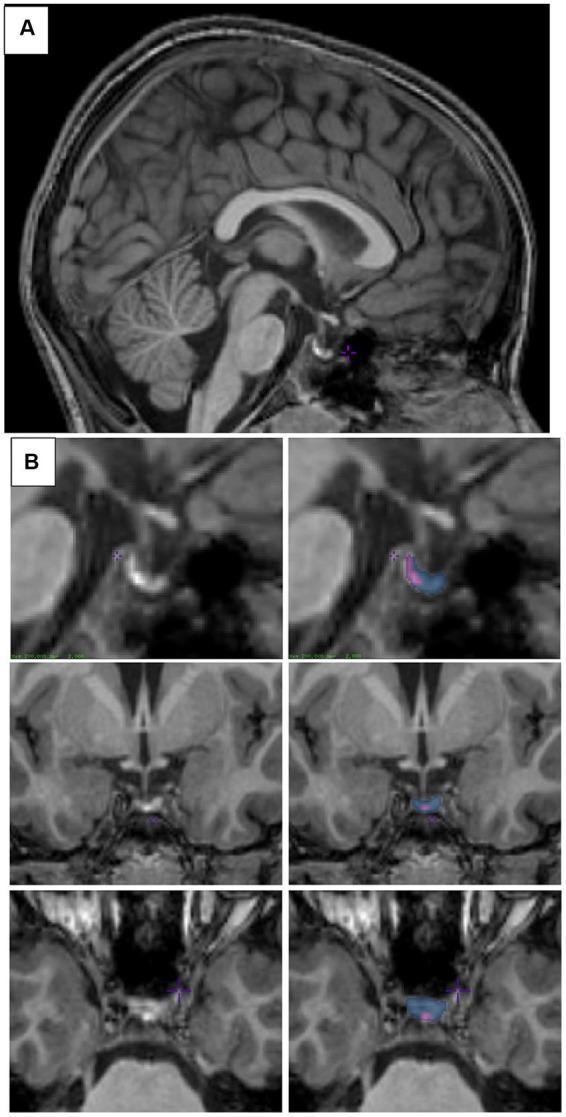
1. INTRODUCTION AND ANATOMY
LOCATION AND ANATOMICAL RELATIONSHIPS
=======================================
HYPOTHALAMUS (above)
|
| (pituitary stalk / infundibulum)
|
+-----+------+
| PITUITARY | <-- located in SELLA TURCICA
| GLAND | of sphenoid bone
+-----+------+
|
Adjacent structures:
- Optic chiasm (superior) --> tumors compress --> bitemporal hemianopia
- Cavernous sinuses (lateral) --> contain CN III, IV, V, VI
- Sphenoid sinus (inferior)
- Internal carotid arteries (lateral)
| Division | Alternative Name | Origin | Proportion |
|---|---|---|---|
| Anterior lobe | Adenohypophysis | Rathke's pouch (oral ectoderm) | ~80% |
| Posterior lobe | Neurohypophysis | Downgrowth of hypothalamus (neuroectoderm) | ~20% |
| Intermediate lobe | Pars intermedia | Rathke's pouch (rudimentary in adults) | Vestigial |
2. HISTOLOGY OF THE PITUITARY GLAND
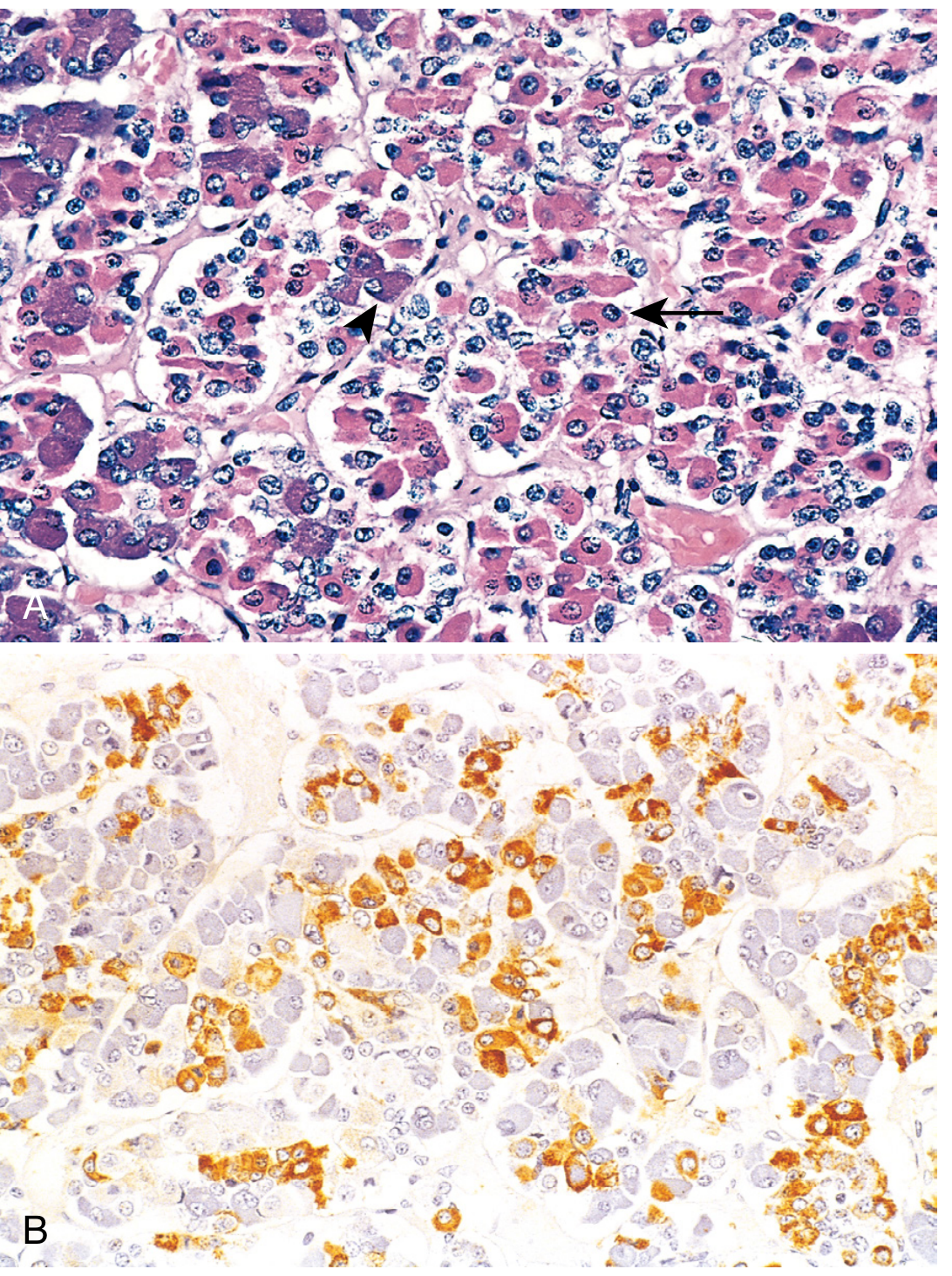
2.1 Anterior Pituitary Cell Types
ANTERIOR PITUITARY CELL CLASSIFICATION
========================================
Staining Group | Cell Type | Hormone Produced
-------------------|-------------------|-----------------
ACIDOPHILS | Somatotrophs | Growth Hormone (GH)
(eosinophilic) | Lactotrophs | Prolactin (PRL)
| Mammosomatotrophs | GH + PRL
BASOPHILS | Corticotrophs | ACTH
(basophilic) | Thyrotrophs | TSH
| Gonadotrophs | FSH + LH
CHROMOPHOBES | Undifferentiated | (Precursor cells or
(poorly staining) | stem cells | degranulated cells)
- POU1F1 (PIT-1): Somatotrophs, Lactotrophs, Mammosomatotrophs, Thyrotrophs
- TPIT (Tbx19): Corticotrophs
- SF-1 + GATA-2: Gonadotrophs
3. ANTERIOR PITUITARY — HORMONES AND FUNCTIONS
3.1 Overview of Anterior Pituitary Hormones
ANTERIOR PITUITARY HORMONES AT A GLANCE
=========================================
HORMONE | CELL TYPE | TARGET ORGAN | PRIMARY ACTION
---------|---------------|-----------------|----------------------------------
GH | Somatotrophs | Liver, bone, | Promotes linear growth;
| | muscle | stimulates IGF-1 release
PRL | Lactotrophs | Mammary gland | Milk synthesis; inhibits
| | | gonadotropin release
ACTH | Corticotrophs | Adrenal cortex | Stimulates cortisol synthesis
| | | (zona fasciculata)
TSH | Thyrotrophs | Thyroid gland | Stimulates T3 and T4 synthesis
| | | and release
FSH | Gonadotrophs | Ovary/Testis | Follicle development;
| | | spermatogenesis
LH | Gonadotrophs | Ovary/Testis | Ovulation; testosterone
| | | synthesis
3.2 Growth Hormone (GH)
- Chemical nature: Single-chain polypeptide, 191 amino acids
- Receptor: Transmembrane receptor; signals via JAK-STAT pathway
- Actions:
- Direct: Lipolysis, insulin antagonism, protein synthesis
- Indirect (via IGF-1 from liver): Linear bone growth, organ growth
- Regulation: Stimulated by GHRH, ghrelin; inhibited by somatostatin and IGF-1 (negative feedback)
3.3 Prolactin (PRL)
- Unique feature: The ONLY anterior pituitary hormone under tonic inhibitory control (by dopamine from the hypothalamus)
- Dopamine acts on D2 receptors on lactotrophs to suppress PRL secretion
- Clinical relevance for pharmacy: Drugs blocking dopamine receptors (antipsychotics: haloperidol, risperidone; antiemetics: metoclopramide, domperidone) cause drug-induced hyperprolactinemia
PROLACTIN REGULATION — KEY PRINCIPLE
======================================
Hypothalamus --> DOPAMINE --> INHIBITS lactotroph --> PRL DOWN
(tonic inhibition)
Dopamine-blocking drugs (e.g., haloperidol, metoclopramide)
--> Remove inhibition --> PRL UP --> Galactorrhea, amenorrhea
3.4 ACTH
- Derived from pro-opiomelanocortin (POMC) precursor (also produces beta-endorphin, MSH)
- Stimulates cortisol from adrenal cortex via cAMP/PKA pathway
- Regulated by corticotropin-releasing hormone (CRH) from hypothalamus
4. POSTERIOR PITUITARY — HORMONES AND FUNCTIONS
POSTERIOR PITUITARY HORMONES
==============================
HORMONE | SYNTHESIS SITE | STIMULUS FOR RELEASE | TARGET | ACTION
----------------|-----------------|---------------------|---------|--------------------
Vasopressin | Supraoptic | Increased plasma | Kidney | Water reabsorption
(ADH) | nucleus | osmolality, | tubules | (V2 receptor, aquaporin-2)
| | decreased BP | | Vasoconstriction (V1)
----------------|-----------------|---------------------|---------|--------------------
Oxytocin | Paraventricular | Cervical stretching, | Uterus, | Uterine contractions;
| nucleus | suckling | breast | milk ejection reflex
- Desmopressin (DDAVP): Synthetic V2-selective ADH analog — used for diabetes insipidus, nocturnal enuresis, von Willebrand disease
- Vasopressin (terlipressin): V1 agonist — used for vasodilatory shock, esophageal varices
- Oxytocin (Pitocin/Syntocinon): Used for labor induction, postpartum hemorrhage prevention
- Carbetocin: Long-acting oxytocin analog — single-dose prevention of PPH
5. HYPOTHALAMO-PITUITARY AXIS
COMPLETE HYPOTHALAMO-PITUITARY AXIS
=====================================
HYPOTHALAMUS
|
| Releasing Hormones (portal blood)
|
+-- TRH --> TSH --> Thyroid hormones (T3, T4)
|
+-- CRH --> ACTH --> Cortisol
|
+-- GHRH --> GH --> IGF-1 (liver)
|
+-- GnRH --> FSH --> Follicle development / Spermatogenesis
| --> LH --> Ovulation / Testosterone
|
+-- Dopamine (inhibits) --> PRL (down)
|
+-- Somatostatin (inhibits) --> GH (down), TSH (down)
|
NEGATIVE FEEDBACK:
End-organ hormones (cortisol, T3/T4, sex steroids, IGF-1)
feed back to inhibit both hypothalamus and pituitary
- Primary capillary plexus in the median eminence (receives hypothalamic hormones from axon terminals)
- Long portal veins descending along the pituitary stalk
- Secondary sinusoidal capillaries in the anterior pituitary
6. PITUITARY DISORDERS AND PHARMACOLOGICAL MANAGEMENT
6.1 Pituitary Adenomas
- Size: Microadenoma (< 10 mm) vs. Macroadenoma (≥ 10 mm)
- Function: Secretory (hormone-producing) vs. Non-secretory
PITUITARY ADENOMA TYPES AND MANAGEMENT
========================================
ADENOMA TYPE | EXCESS HORMONE | SYNDROME | PHARMACOTHERAPY
-----------------|----------------|-------------------|------------------
Somatotroph | GH | Gigantism (child) | Octreotide (SSA),
adenoma | | Acromegaly (adult)| Pegvisomant, Lanreotide
Lactotroph | Prolactin | Hyperprolactinemia| Cabergoline (1st line),
(prolactinoma) | | Amenorrhea, | Bromocriptine
| | galactorrhea |
Corticotroph | ACTH | Cushing disease | Pasireotide,
adenoma | | | Metyrapone, Ketoconazole
Thyrotroph | TSH | Secondary | SSA; definitive:
adenoma | | hyperthyroidism | surgery
Non-secretory | None | Mass effects, | Surgery; dopamine
| | hypopituitarism | agonists
6.2 Drugs for Acromegaly (GH Excess)
MECHANISM OF SOMATOSTATIN ANALOGS
====================================
Hypothalamus --> Somatostatin
|
v
Somatostatin receptors (SSTR2, SSTR5)
on somatotroph cells
|
v
INHIBITS adenylyl cyclase --> decreased cAMP
|
v
Decreased GH secretion
|
v
Decreased IGF-1 (liver) --> tumor shrinkage
DRUGS: Octreotide (short-acting, IM/SC injection)
Lanreotide (long-acting depot, q28 days)
- GH receptor antagonist (pegylated GH analog)
- Blocks GH action at peripheral tissues
- Highly effective at normalizing IGF-1
- Does NOT reduce tumor size
- First-line for prolactinomas
- Activate D2 receptors on lactotrophs → suppress PRL secretion and tumor shrinkage
- Bromocriptine: twice-daily dosing, more side effects
- Cabergoline: once or twice weekly, better tolerated, preferred agent
6.3 Hypopituitarism — Hormone Replacement
HYPOPITUITARISM — REPLACEMENT THERAPY
========================================
Deficient Axis | Replacement Drug | Route
---------------------|-------------------------|--------
GH deficiency | Recombinant human GH | SC injection
| (Somatropin) | daily
ACTH deficiency | Hydrocortisone | Oral, daily
(secondary adrenal) | (glucocorticoid) |
TSH deficiency | Levothyroxine (T4) | Oral, daily
(secondary hypothyroid)| |
FSH/LH deficiency | Testosterone (men) | IM/TD
(hypogonadism) | Estrogen + Progesterone | Oral/TD
| (women) |
ADH deficiency (DI) | Desmopressin (DDAVP) | Intranasal/oral
7. DRUG SUMMARY — PITUITARY PHARMACOLOGY
PHARMACOLOGICAL AGENTS TARGETING THE PITUITARY AXIS
=====================================================
DRUG | CLASS | Mechanism | Use
---------------------|------------------|----------------------|------------------
Octreotide | Somatostatin | SSTR2/5 agonist | Acromegaly,
Lanreotide | analog (SSA) | --> decreased GH/TSH | carcinoid syndrome
---------------------|------------------|----------------------|------------------
Pegvisomant | GH receptor | Blocks GH receptor | Acromegaly
| antagonist | --> no IGF-1 signal | (2nd line)
---------------------|------------------|----------------------|------------------
Cabergoline | Dopamine agonist | D2 receptor agonist | Prolactinoma,
Bromocriptine | (ergot alkaloid) | --> inhibits PRL | hyperprolactinemia
---------------------|------------------|----------------------|------------------
Somatropin | Recombinant GH | Replaces endogenous | GH deficiency,
| | GH | Turner syndrome
---------------------|------------------|----------------------|------------------
Desmopressin | Synthetic ADH | V2 receptor agonist | Diabetes insipidus,
(DDAVP) | analog | --> aquaporin-2 | nocturnal enuresis,
| | insertion in kidney | vWD type I
---------------------|------------------|----------------------|------------------
Oxytocin | Posterior | OT receptor agonist | Labor induction,
| pituitary | on uterus/breast | PPH prevention
| hormone | |
---------------------|------------------|----------------------|------------------
Pasireotide | SSA | Multi-receptor SSA | Cushing disease
| | (SSTR1,2,3,5) |
---------------------|------------------|----------------------|------------------
Cosyntropin | Synthetic ACTH | Stimulates adrenal | Diagnostic test
| | cortisol production | (ACTH stimulation)
PART B — THYROID GLAND
8. INTRODUCTION AND ANATOMY
THYROID GLAND — ANATOMICAL STRUCTURE
======================================
[LARYNX]
|
Left lobe Isthmus Right lobe
\-----------+-----------/
(butterfly / H-shape)
|
[TRACHEA below]
Adjacent structures:
- Recurrent laryngeal nerves (posterolateral) -- at risk in surgery
- External branch of superior laryngeal nerve
- Parathyroid glands (4 glands on posterior surface)
- Common carotid arteries and jugular veins (lateral)
- Esophagus (posterior)
Histological unit: FOLLICLE
- 20-40 follicles per lobule
- Each follicle = single layer of cuboidal-columnar follicular cells
surrounding a central lumen filled with COLLOID (thyroglobulin)
- Parafollicular C cells (between follicles) --> secrete CALCITONIN
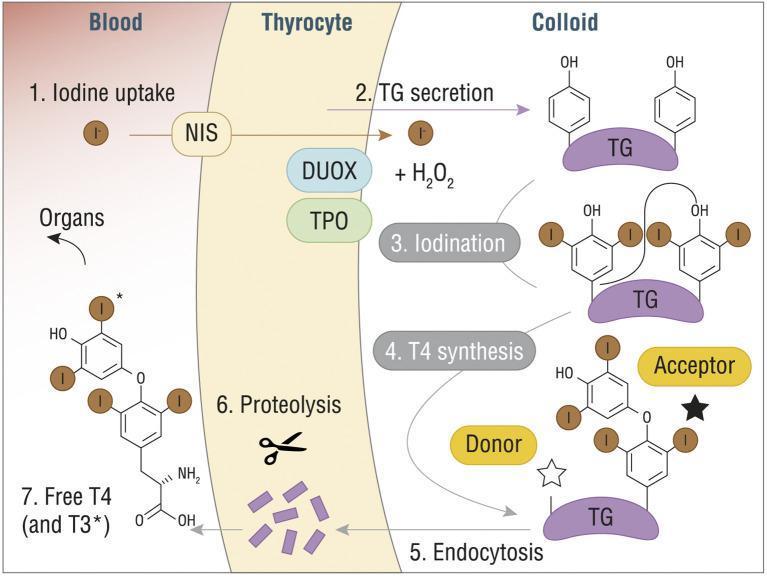
9. THYROID HORMONE SYNTHESIS
STEPS OF THYROID HORMONE SYNTHESIS
=====================================
Step 1: IODIDE UPTAKE
Iodide (I-) from blood is actively transported into the thyrocyte
by the SODIUM-IODIDE SYMPORTER (NIS) on the basolateral membrane.
(Na+/K+-ATPase provides energy gradient)
Step 2: THYROGLOBULIN (TG) SECRETION
Thyroglobulin (a large glycoprotein) is synthesized by ribosomes,
processed in Golgi, and secreted into the COLLOID lumen.
Step 3: IODINATION (ORGANIFICATION)
In the colloid, iodide is oxidized to iodine (I2) by
THYROID PEROXIDASE (TPO) using H2O2 (generated by DUOX enzyme).
Iodine attaches to TYROSINE residues on thyroglobulin:
- 1 iodine + Tyrosine = Monoiodotyrosine (MIT)
- 2 iodines + Tyrosine = Diiodotyrosine (DIT)
Step 4: COUPLING (T4 and T3 synthesis)
TPO catalyzes coupling of iodotyrosines:
- MIT + DIT = T3 (triiodothyronine)
- DIT + DIT = T4 (thyroxine)
T3 and T4 remain bound to thyroglobulin in the colloid.
Step 5: ENDOCYTOSIS
TSH stimulates thyrocytes to engulf colloid by ENDOCYTOSIS.
Colloid droplets fuse with lysosomes.
Step 6: PROTEOLYSIS
Lysosomal proteases cleave thyroglobulin, releasing
free T3, T4, MIT, and DIT.
Step 7: RELEASE
Free T3 and T4 are secreted across the basolateral membrane
into the bloodstream (via MCT8 transporter).
MIT and DIT are deiodinated intracellularly by DEHAL;
iodine is recycled.
9.1 Transport in Blood
| Form | Binding protein | % of total T4 |
|---|---|---|
| Bound to Thyroxine-Binding Globulin (TBG) | TBG | ~75% |
| Bound to Transthyretin (TTR) | TTR | ~15% |
| Bound to Albumin | Albumin | ~10% |
| Free (active) | None | 0.03% (T4), 0.3% (T3) |
9.2 T4 to T3 Conversion
- The thyroid secretes predominantly T4 (~93%) with small amounts of T3 (~7%)
- In peripheral tissues, deiodinase type 1 and 2 (DIO1, DIO2) convert T4 → T3
- T3 is 3–5x more potent than T4 and binds thyroid hormone nuclear receptors with 10-fold greater affinity
- T4 is considered a "prohormone" for T3
- Reverse T3 (rT3): Inactive metabolite; formed by DIO3; increases during illness, starvation, or amiodarone therapy
10. HYPOTHALAMO-PITUITARY-THYROID (HPT) AXIS
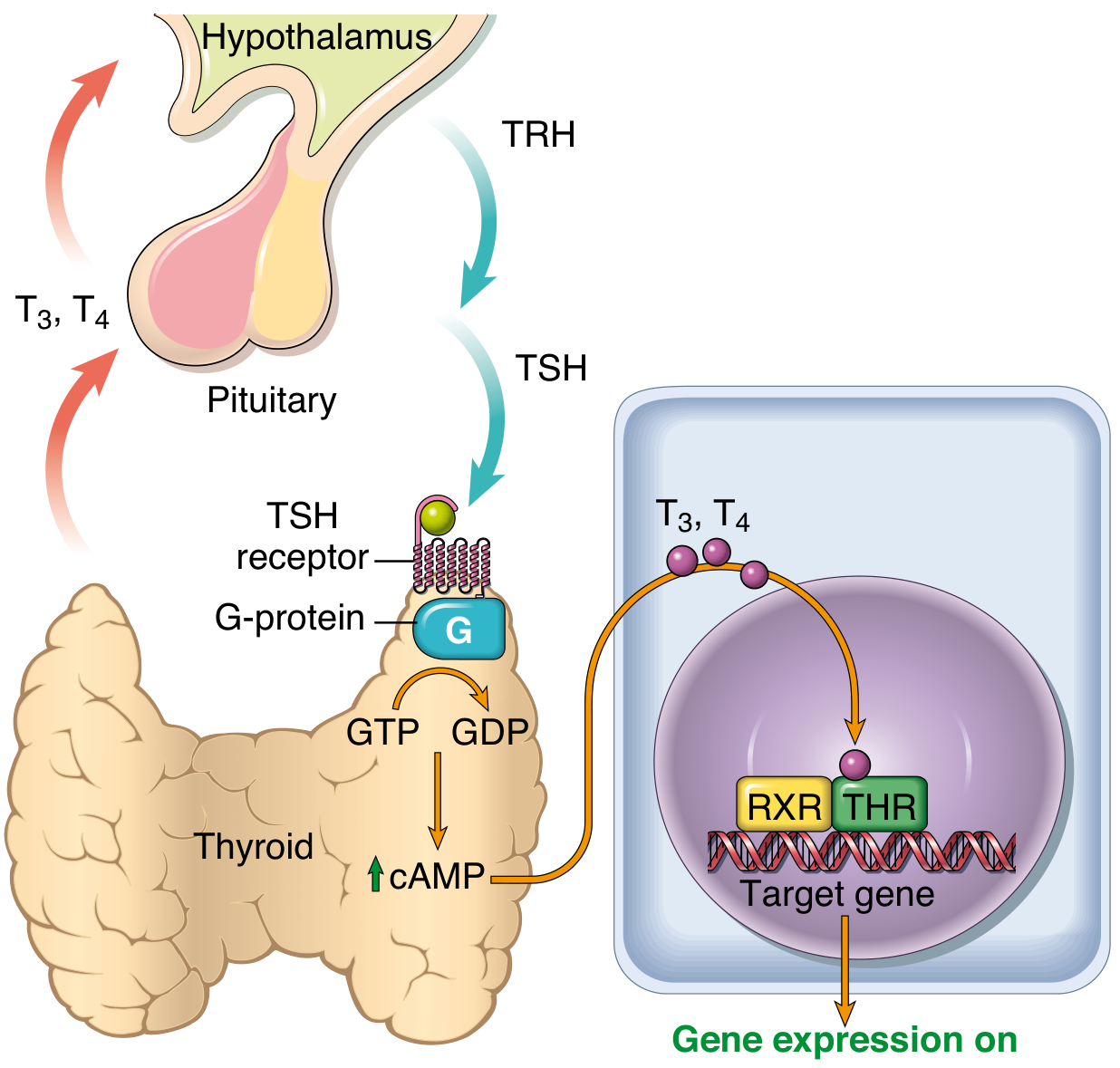
HYPOTHALAMO-PITUITARY-THYROID AXIS — FLOWCHART
================================================
LOW T3/T4 in blood
|
v
HYPOTHALAMUS releases TRH (thyrotropin-releasing hormone)
|
v
ANTERIOR PITUITARY thyrotrophs release TSH (thyroid-stimulating hormone)
|
v
THYROID GLAND: TSH binds TSHR --> Gs protein --> adenylyl cyclase
| --> increased cAMP
| --> PKA activation
v
INCREASED thyroid hormone synthesis AND release (T3 + T4)
|
v
T3/T4 rise in blood
|
v
NEGATIVE FEEDBACK:
T3/T4 suppress TRH from hypothalamus (long-loop)
T3/T4 suppress TSH from pituitary (long-loop)
TSH suppresses TRH (short-loop)
RESULT: T3/T4 maintained in narrow physiological range
CLINICAL USE:
TSH measurement is the BEST SINGLE TEST for thyroid function:
- TSH HIGH + low T4 = PRIMARY hypothyroidism
- TSH LOW + high T4 = PRIMARY hyperthyroidism
- TSH LOW + low T4 = SECONDARY (pituitary) hypothyroidism
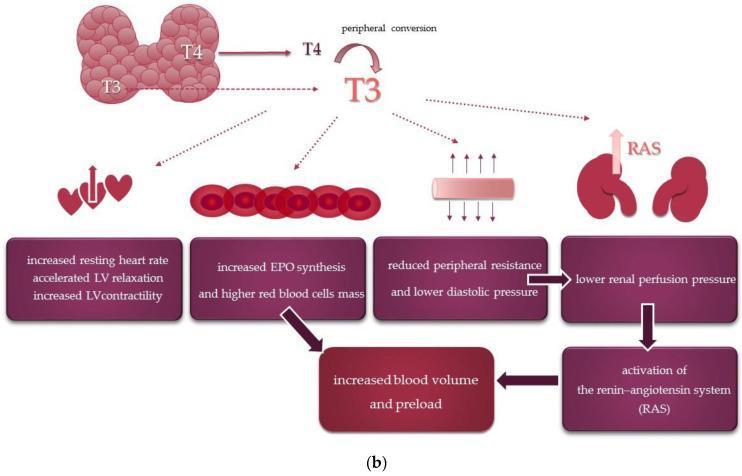
11. PHYSIOLOGICAL EFFECTS OF THYROID HORMONES
PHYSIOLOGICAL EFFECTS OF T3/T4 — ORGAN SUMMARY
=================================================
SYSTEM | EFFECT OF T3/T4 | EXCESS (Hyper) | DEFICIENCY (Hypo)
----------------|-----------------------------|-----------------|-----------------
Metabolic | Increases basal metabolic | Weight loss, | Weight gain,
| rate (BMR); stimulates | heat intol. | cold intol.
| carbohydrate + lipid | | fatigue
| catabolism | |
Cardiovascular | Increases HR, LV | Tachycardia, | Bradycardia,
| contractility, cardiac | palpitations, | low cardiac output
| output; reduces SVR | AF |
GI | Increases gut motility | Diarrhea | Constipation
CNS | Critical for brain | Anxiety, | Lethargy,
| development (fetus); | insomnia, | depression,
| stimulates CNS in adults | tremor | myxedema
Musculoskeletal | Promotes protein synthesis; | Muscle weakness | Muscle cramps,
| bone turnover | wasting | myopathy
Skin/Hair | Affects keratin synthesis | Warm, moist, | Cool, dry, coarse
| | silky skin | skin; hair loss
Reproductive | Required for normal | Oligomenorrhea | Menorrhagia,
| menstrual cycles | | infertility
12. DISORDERS OF THE THYROID GLAND
12.1 Hypothyroidism
HYPOTHYROIDISM — CLASSIFICATION AND CAUSES
============================================
PRIMARY (thyroid gland failure):
- Hashimoto thyroiditis (autoimmune, most common in iodine-sufficient areas)
- Iodine deficiency (most common worldwide)
- Post-radioactive iodine (RAI) therapy
- Post-thyroidectomy
- Drugs: amiodarone, lithium, carbimazole/PTU (iatrogenic)
- Congenital: thyroid dysgenesis, dyshormonogenesis
SECONDARY (pituitary TSH deficiency):
- Pituitary adenoma, Sheehan syndrome, pituitary irradiation
TERTIARY (hypothalamic TRH deficiency):
- Hypothalamic tumor, head injury
LAB PATTERN:
Primary: TSH HIGH, free T4 LOW
Secondary: TSH LOW/normal, free T4 LOW
Tertiary: TSH LOW/normal, free T4 LOW, TRH LOW
- S — Slow heart rate (bradycardia)
- L — Low basal metabolic rate (weight gain, fatigue)
- O — Oedema (non-pitting, myxedema; periorbital puffiness)
- W — Weight gain, cold intolerance
- E — Edema (myxedema coma in severe hypothyroidism)
- D — Delayed tendon reflexes, dry skin, depression, constipation
12.2 Hyperthyroidism (Thyrotoxicosis)
HYPERTHYROIDISM — CAUSES AND CLASSIFICATION
=============================================
COMMON CAUSES:
1. Graves disease (Diffuse toxic goiter)
- Autoimmune: TSH receptor-stimulating antibodies (TSI/TRAb)
- Triad: Hyperthyroidism + Goiter + Exophthalmos (proptosis)
2. Toxic multinodular goiter (Plummer disease)
- Autonomous hyperfunctioning nodules, no autoimmune component
3. Toxic adenoma (single autonomously functioning nodule)
4. Thyroiditis (subacute, Hashimoto's - initial phase)
- Release of preformed hormone
5. Iatrogenic / Factitious
- Excess levothyroxine intake
- Amiodarone (high iodine content causes both hyper- and hypothyroidism)
SEVERE COMPLICATION: THYROID STORM
- Life-threatening exacerbation of hyperthyroidism
- Triggers: surgery, infection, trauma
- Management: PTU + beta-blocker (propranolol) + steroids + iodine
13. PHARMACOLOGICAL MANAGEMENT OF THYROID DISORDERS
13.1 Treatment of Hypothyroidism
- Drug of choice for all forms of hypothyroidism
- Synthetic T4 — converted peripherally to active T3
- Given as once-daily oral dose, preferably on an empty stomach (30–60 min before breakfast)
- Half-life: ~7 days → allows once-daily dosing; dose adjustments take 4–6 weeks to reach new steady state
- Monitoring: TSH is the primary monitoring parameter
- Target TSH: 0.5–2.5 mIU/L (general adult); 0.1–0.5 mIU/L (thyroid cancer suppression)
LEVOTHYROXINE DRUG INTERACTIONS — PHARMACY NOTE
=================================================
Drug/Food | Effect | Management
-------------------|---------------------------|------------------
Calcium carbonate | Reduced LT4 absorption | Separate by ≥4 h
Ferrous sulfate | Reduced LT4 absorption | Separate by ≥4 h
Aluminum antacids | Reduced LT4 absorption | Separate by ≥4 h
Cholestyramine | Reduced LT4 absorption | Separate by ≥4 h
Rifampicin | Increased LT4 metabolism | Increase LT4 dose
Phenytoin | Increased LT4 metabolism | Increase LT4 dose
Warfarin | LT4 potentiates warfarin | Monitor INR closely
Pregnancy | LT4 requirements increase | Increase dose ~30-50%
| by ~30-50% | Monitor TSH each trimester
- Synthetic T3 — faster onset and shorter duration than T4
- Used for myxedema coma (IV) and short-term hypothyroidism during thyroid cancer treatment
- Not preferred for routine maintenance (wide fluctuations)
13.2 Treatment of Hyperthyroidism
HYPERTHYROIDISM TREATMENT OPTIONS
===================================
MODALITY | Mechanism | Advantages | Disadvantages
------------------|----------------------|-------------------|------------------
Antithyroid drugs | Block TPO enzyme | Reversible; | Must take for
(PTU, Methimazole)| --> block T3/T4 | no radiation; | 12-18 months;
| synthesis | non-invasive | relapse common;
| | | agranulocytosis
Radioactive | I-131 incorporated | Effective; | May cause
Iodine (RAI) | into thyroid --> | single dose often | permanent
therapy | destroys follicular | sufficient | hypothyroidism;
| cells (beta radiation)| | contraindicated
| | | in pregnancy
Thyroidectomy | Surgical removal of | Rapid, | Surgical risks;
(subtotal or | thyroid tissue | definitive | hypoparathyroidism;
total) | | | RLN injury
14. ANTITHYROID DRUGS — DETAILED MECHANISMS
14.1 Thioamide Group
MECHANISM OF THIOAMIDE ANTITHYROID DRUGS
==========================================
Normal synthesis:
Iodide (I-) --> TPO + H2O2 --> Iodine (I2)
Iodine + Tyrosine on TG --> MIT, DIT
MIT + DIT / DIT + DIT --> T3/T4 (via TPO coupling)
Thioamide action:
PTU/MMI --> INHIBIT THYROID PEROXIDASE (TPO)
--> Block organification of iodide (step 3)
--> Block coupling of iodotyrosines (step 4)
--> NO NEW T3/T4 synthesis
ADDITIONAL ACTION OF PTU ONLY:
PTU --> Inhibits peripheral deiodinase (DIO1)
--> Blocks T4 --> T3 conversion in liver/kidney
--> Faster reduction of active T3 levels
--> Preferred in THYROID STORM
DOES NOT affect:
- Pre-formed hormone already in colloid
- Thyroid gland vascularity (hence lag period of 4-8 weeks
before clinical improvement)
| Parameter | PTU | Methimazole |
|---|---|---|
| Plasma protein binding | ~75% | Nil |
| Half-life | 1–2 hours | 6–9 hours |
| Dosing frequency | 3x daily | Once or twice daily |
| Crosses placenta | Less (preferred in 1st trimester) | Yes (preferred 2nd/3rd trimester) |
| Inhibits T4→T3 | Yes | No |
| Risk of agranulocytosis | Yes (0.1–0.5%) | Yes (0.1–0.5%) |
| Hepatotoxicity | Higher risk (black box) | Lower |
- Report fever or sore throat immediately — may signal agranulocytosis
- Do not stop medication suddenly — rebound hyperthyroidism
- PTU preferred in first trimester pregnancy and thyroid storm
- Methimazole preferred at all other times (simpler dosing, lower hepatotoxicity)
14.2 Iodine and Iodide Solutions
WOLFF-CHAIKOFF EFFECT
======================
Large doses of iodide -->
Transiently INHIBIT thyroid hormone synthesis
(believed to involve decreased TPO activity)
--> Thyroid hormone DECREASES (short-term)
ESCAPE from Wolff-Chaikoff:
After 1-2 weeks, NIS expression decreases
--> Less iodide taken up --> synthesis resumes
--> Wolff-Chaikoff effect overcome
CLINICAL USES OF IODIDE:
1. Pre-operative preparation for thyroidectomy
(reduces gland vascularity and friability over 10-14 days)
2. Thyroid storm (combined with PTU or MMI)
- Given 1 hour AFTER antithyroid drug
(to prevent iodide being used as substrate for MORE hormone)
3. Radiation emergency (KI tablets protect thyroid from I-131 uptake)
- Administered orally
- Taken up by NIS into thyroid follicular cells
- Emits beta particles (destructive) → cell death and fibrosis
- Onset: 6–18 weeks; often leads to permanent hypothyroidism
- Contraindicated in pregnancy and breastfeeding
14.3 Beta-Adrenergic Blockers in Hyperthyroidism
BETA-BLOCKER ROLE IN HYPERTHYROIDISM
======================================
Thyroid hormones --> Increased adrenergic receptor expression
--> Amplified sympathetic responses
Beta-blockers BLOCK:
- Tachycardia
- Palpitations
- Tremor
- Anxiety
- Sweating (partially)
Propranolol ADDITIONALLY:
- Inhibits peripheral T4 --> T3 conversion (DIO1)
- Provides faster symptom relief
- Used in thyroid storm
IMPORTANT: Beta-blockers do NOT reduce thyroid hormone levels
They only relieve adrenergic symptoms
14.4 Goitrogens (Pharmacological and Dietary)
COMMON GOITROGENS
==================
PHARMACOLOGICAL:
- Amiodarone (high iodine; can cause both hypo- and hyperthyroidism)
- Lithium (blocks hormone release and synthesis)
- Sulfonamides, sulfonylureas (weak goitrogenic effect)
- Phenylthiourea, thiocyanate
DIETARY:
- Cassava, cabbage, kale, Brussels sprouts, soy
(contain precursors of thiocyanate and goitrin)
Effect clinically significant only with iodine deficiency
15. COMPARISON TABLE — PITUITARY vs. THYROID
PITUITARY GLAND vs. THYROID GLAND — PHARMACY STUDENT COMPARISON
=================================================================
Feature | PITUITARY GLAND | THYROID GLAND
------------------|---------------------------|---------------------------
Weight | ~0.5–0.6 g | ~20–30 g
Location | Sella turcica, brain base | Anterior neck, trachea
Developmental | Rathke's pouch + | Foramen cecum
origin | hypothalamic downgrowth | pharyngeal evagination
Primary hormones | GH, PRL, ACTH, TSH, | T3, T4 (follicular cells)
| FSH, LH, ADH, Oxytocin | Calcitonin (C cells)
Hormone chemistry | Peptides/Glycoproteins | Iodinated amino acids
| | (thyronines)
Receptor type | Membrane receptors | Nuclear receptors
| (JAK-STAT, cAMP, IP3) | (THR-alpha, THR-beta)
Storage | Released on demand | Stored as colloid
| (minimal storage) | (2–3 months supply)
Feedback | Negative feedback from | Negative feedback from
mechanism | target gland hormones | T3/T4 on hypothalamus
| (cortisol, T3, sex | and pituitary
| steroids, IGF-1) |
Key disorder | Pituitary adenoma | Grave's disease (hyper)
(excess) | (GH/PRL/ACTH) | Hashimoto's (hypo)
Key drug for | Cabergoline (PRL), | Levothyroxine (hypo)
disorders | Octreotide (GH) | PTU/MMI (hyper)
Lab test | Individual hormone levels | TSH (best single test)
| + stimulation/suppression |
| tests |
16. SUMMARY FLOWCHARTS
Flowchart A — Thyroid Function Testing and Diagnosis
APPROACH TO THYROID FUNCTION TESTS
====================================
[Check SERUM TSH]
|
________|________
| |
TSH NORMAL TSH ABNORMAL
(0.4-4.0 mU/L) |
| ______|______
Thyroid | |
function TSH LOW TSH HIGH
likely (<0.4) (>4.0)
normal | |
v v
[Check free T4] [Check free T4]
| | | |
fT4 fT4 fT4 fT4
HIGH LOW LOW NORMAL
| | | |
v v v v
PRIMARY SECONDARY PRIMARY SUBCLINICAL
HYPER- HYPO- HYPO- HYPO-
THYROID THYROID THYROID THYROID
(pituitary)
Flowchart B — Treatment Algorithm for Hyperthyroidism
NEWLY DIAGNOSED HYPERTHYROIDISM
=================================
[Confirm diagnosis: Low TSH, High fT4/fT3]
|
v
[Identify etiology:
TRAb, thyroid scan, RAIU]
|
______________|_______________
| | |
GRAVES TOXIC MNG TOXIC
DISEASE or ADENOMA THYROIDITIS
| | |
v v v
[3 treatment [RAI or [Supportive:
options:] Surgery] Beta-blocker,
| NSAIDs; self-
______|______ limiting]
| | |
v v v
MMI/ RAI Surgery
PTU
(12-18
months)
|
v
[If relapse after
medical therapy]
|
v
[RAI or Surgery]
|
v
[Monitor for post-treatment
HYPOTHYROIDISM q6-12 months
--> start Levothyroxine]
Flowchart C — Drug Mechanism Summary
SITE OF ACTION OF ANTITHYROID DRUGS
=====================================
Blood Thyrocyte Colloid
------ --------- -------
|
Iodide --[NIS]--> I- + H2O2
(I-) | (DUOX)
[TPO]--<+ <-- PTU/MMI BLOCK HERE (step 3)
| (organification)
v
MIT, DIT on TG <-- PTU/MMI BLOCK HERE (step 4)
(coupling)
|
T3/T4 on TG
|
[Endocytosis]
|
[Proteolysis]
|
T3, T4 <-----------+
released
to blood
|
v
T4 --> T3 <-- PTU BLOCKS (peripheral DIO1)
(liver) Propranolol also partially blocks
|
v
Nuclear receptor
--> Gene expression
IODIDE (large dose): Blocks steps 3+4 (Wolff-Chaikoff)
+ Blocks hormone RELEASE (Plummer effect)
RADIOACTIVE I-131: Destroys follicular cells directly (beta radiation)
17. REFERENCES
-
Kumar V, Abbas AK, Aster JC. Robbins and Cotran Pathologic Basis of Disease, 10th edition. Elsevier, 2020. — Pituitary and Thyroid Gland chapters (pp. 971–1010).
-
Brunton LL, Hilal-Dandan R, Knollmann BC (eds). Goodman & Gilman's The Pharmacological Basis of Therapeutics, 14th edition. McGraw-Hill, 2023. — Chapter 47: Thyroid and Antithyroid Drugs.
-
Guyton AC, Hall JE. Textbook of Medical Physiology, 14th edition. Elsevier, 2021. — Chapter on Thyroid Metabolic Hormones and the Anterior Pituitary.
-
Melmed S, et al. Williams Textbook of Endocrinology, 14th edition. Elsevier, 2020.
-
Ross DS, Burch HB, Cooper DS, et al. 2016 American Thyroid Association Guidelines for Diagnosis and Management of Hyperthyroidism. Thyroid 2016;26(10):1343–1421.
-
Jonklaas J, Bianco AC, et al. Guidelines for the Treatment of Hypothyroidism. Thyroid 2014;24(12):1670–1751.
-
Rajput AS, et al. Early prediction of oestrus for herd fertility management. Reprod Domest Anim 2024. [PMID: 38798195]
Your credits are exhausted. Your daily credits reset tomorrow, or you can purchase a top-up for more.