
Enlist organic food its importance
organic food importance health benefits 2025
organic food vegetables fruits healthy eating

Summary : This illustration shows a person meditating with various fruits and vegetables floating above their head, suggesting a focus on healthy eating or nutrition. illustration: Scene Overview : • Main subject is a person seated in a meditative pose with hands in a mudra gesture. • Above the person, six food items are depicted: corn, tomato, cucumber, pineapple, apple, and broccoli. • The foods are arranged in an arc, implying balance or variety. • The background is a light pastel shade, creating a calm and inviting atmosphere. • The colour palette is soft, with muted tones for both the person and the foods. Technical Details : • No scale bar, magnification, or scientific annotation present. • No text or labels on the image. • The illustration style is flat and vector-based. Spatial Relationships : • The person is centrally placed in the foreground. • The foods are evenly spaced in an arc above the person’s head, suggesting a halo or focus on nutrition. • The composition uses symmetry and balance. Analysis : • The image visually communicates the concept of mindfulness or meditation in relation to healthy eating. • The variety of fruits and vegetables suggests an emphasis on a balanced diet. • The calm and balanced composition reinforces the theme of wellness and holistic health.
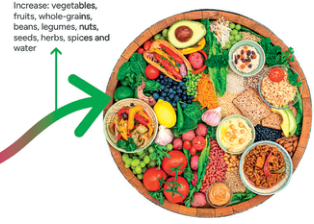
Summary : This image is an illustration of a healthy eating plate, emphasizing the increase of certain food groups for a balanced diet. illustration: Main Message : • The image shows a round plate filled with a variety of foods, primarily vegetables, fruits, whole grains, beans, legumes, nuts, seeds, and herbs. • A large green arrow points to the plate, accompanied by the text: "Increase: vegetables, fruits, whole-grains, beans, legumes, nuts, seeds, herbs, spices and water". Scene Overview : • The plate is visually divided into sections, each containing different plant-based foods such as leafy greens, tomatoes, berries, grains, nuts, and legumes. • The foods are presented in bowls and loose arrangements, with vibrant colors (greens, reds, yellows, browns) dominating the palette. • The background is white, and the plate is bordered with a wooden rim. Technical Details : • No scale bar or magnification is present. • The only on-image text is the dietary recommendation. • The illustration is clear, with high contrast and realistic food depictions. Spatial Relationships : • The arrow and text are positioned to the left of the plate, directing attention to the food selection. • Foods are evenly distributed around the plate, with no single food group dominating the visual space. Analysis : • The illustration visually reinforces the recommendation to increase intake of plant-based foods and water for a healthy diet. • The diversity of foods shown suggests variety and balance, with an emphasis on minimally processed, whole foods. • The absence of animal products or processed foods highlights a plant-forward dietary pattern.
Organic Food: What It Is and Why It Matters
What Is Organic Food?
- Synthetic pesticides and herbicides
- Chemical fertilizers
- Genetically modified organisms (GMOs)
- Antibiotics and synthetic growth hormones (in livestock)
- Irradiation
Types of Organic Food
| Category | Examples |
|---|---|
| Fruits & Vegetables | Apples, spinach, strawberries, tomatoes |
| Grains & Legumes | Organic wheat, lentils, oats, rice |
| Dairy | Organic milk, cheese, yogurt, butter |
| Meat & Poultry | Grass-fed beef, free-range chicken, pasture-raised pork |
| Eggs | Free-range, pasture-raised organic eggs |
| Packaged Foods | Organic snacks, cereals, condiments |
| Beverages | Organic teas, juices, wine, coffee |
| Baby Food | Organic purees, infant formula |
Importance of Organic Food
1. Reduced Pesticide Exposure
2. Higher Nutrient Density
- Vitamin C
- Iron
- Magnesium
- Phosphorus
- Omega-3 fatty acids (especially in organic dairy and meat)
3. Lower Cancer Risk
4. Better for Soil Health
5. Environmental Protection
- Reduces chemical runoff into rivers and groundwater
- Protects pollinators (bees, butterflies) from pesticide harm
- Lowers greenhouse gas emissions through better soil carbon storage
- Preserves biodiversity on and around farms
6. Improved Animal Welfare
7. Protects Farm Workers
8. No Artificial Additives
9. Supports Local & Sustainable Agriculture
Who Benefits Most From Organic Food?
- Pregnant women - lower fetal exposure to pesticides
- Infants and young children - developing nervous systems are highly sensitive
- People with chemical sensitivities - reduced toxic load
- Anyone with chronic illness - fewer synthetic inputs in diet
Practical Tip: The "Dirty Dozen"
The Bottom Line
Merits and demerits of genetically modified and inflammatory food such as fried food cookies red meat, pizza, burger
genetically modified food merits demerits health effects 2025
inflammatory foods fried food red meat pizza burger health risks benefits
inflammatory foods fried food burger pizza red meat effects
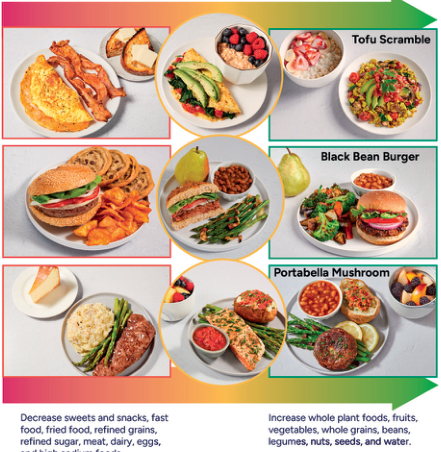
Summary : This figure visually compares typical Western-style meals with more plant-based alternatives for breakfast, lunch, and dinner, illustrating a dietary shift from foods high in sweets, snacks, fast food, fried food, refined grains, refined sugar, meat, dairy, and eggs toward meals rich in whole plant foods, fruits, vegetables, whole grains, beans, legumes, nuts, seeds, and water. photo: # Layout & Structure : • The figure is divided into three horizontal sections, each representing a meal: breakfast (top), lunch (middle), and dinner (bottom). • Each section contains three columns: left (red border, less healthy/Western-style), center (yellow border, transitional), and right (green border, plant-based/healthier). • Each meal section is labeled with a plant-based dish name in the green column: "Tofu Scramble" (breakfast), "Black Bean Burger" (lunch), and "Portabella Mushroom" (dinner). # Meal Comparisons : ## Breakfast : • Left (red): Omelet with bacon, toast, and a cookie. • Center (yellow): Vegetable omelet with avocado toast and a bowl of berries. • Right (green): Tofu scramble with vegetables, oatmeal with strawberries, and a bowl of mixed fruit. ## Lunch : • Left (red): Hamburger with potato chips and chocolate chip cookies. • Center (yellow): Grilled chicken sandwich with asparagus, baked beans, and a pear. • Right (green): Black bean burger with whole grain bun, side salad, and a pear. ## Dinner : • Left (red): Meatloaf with mashed potatoes, asparagus, and a slice of cheesecake. • Center (yellow): Salmon fillet with asparagus, brown rice, and a bowl of fruit. • Right (green): Portabella mushroom steak with baked beans, asparagus, and a bowl of mixed fruit. # Dietary Guidance (Text at Bottom) : • Left (red): "Decrease sweets and snacks, fast food, fried food, refined grains, refined sugar, meat, dairy, eggs." • Right (green): "Increase whole plant foods, fruits, vegetables, whole grains, beans, legumes, nuts, seeds, and water." # Design Encodings : • Color-coded borders (red = less healthy, yellow = transitional, green = more plant-based/healthy). • Each meal is visually represented with realistic food photography. • Plant-based meal names are labeled in the green column. # Analysis : • The figure visually communicates a dietary transition from Western-style meals high in animal products, refined grains, and sweets toward meals centered on whole plant foods. • The color gradient (red to green) reinforces the healthfulness spectrum. • The plant-based options (right column) consistently feature more fruits, vegetables, legumes, and whole grains, while the Western-style options (left column) are higher in processed foods, animal products, and sweets. • The central column offers intermediate choices, suggesting a gradual shift is possible.
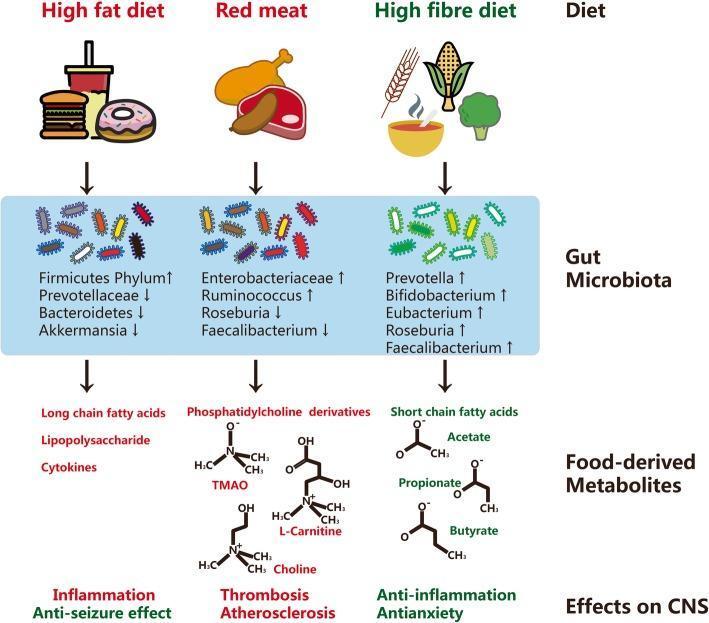
This pathophysiology diagram illustrates the bidirectional relationship between dietary patterns, gut microbiota composition, food-derived metabolites, and their subsequent effects on the Central Nervous System (CNS). The infographic is organized into three vertical columns based on diet type: High-fat diet, Red meat, and High-fibre diet. 1. High-fat diet: Associated with an increase in Firmicutes and decreases in Prevotellaceae, Bacteroidetes, and Akkermansia. This pathway leads to metabolites like long-chain fatty acids, lipopolysaccharide (LPS), and cytokines, resulting in pro-inflammatory effects and anti-seizure modulation. 2. Red meat: Linked to increased Enterobacteriaceae and Ruminococcus, and decreased Roseburia and Faecalibacterium. It focuses on phosphatidylcholine derivatives (TMAO, L-Carnitine, Choline), which are associated with thrombosis and atherosclerosis. 3. High-fibre diet: Shows a broad increase in beneficial taxa including Prevotella, Bifidobacterium, Eubacterium, Roseburia, and Faecalibacterium. This promotes the production of short-chain fatty acids (SCFAs) like acetate, propionate, and butyrate, leading to anti-inflammatory and anti-anxiety effects on the CNS. The diagram utilizes chemical structures for metabolites and color-coded text (red for potentially pathogenic effects, green for beneficial ones) to categorize clinical outcomes.
Part 1: Genetically Modified (GM) Foods - Merits & Demerits
What Are GM Foods?
✅ Merits of GM Foods
1. Higher Crop Yields
2. Pest and Disease Resistance
3. Enhanced Nutritional Profile
- Golden Rice is engineered with beta-carotene to combat Vitamin A deficiency in developing nations
- GM soybeans can have higher omega-3 fatty acid content
- Some GM crops have increased levels of antioxidants, iron, and zinc
4. Drought and Climate Tolerance
5. Longer Shelf Life
6. Lower Food Prices
7. Medical & Industrial Uses
8. Reduced Pesticide Use (in some crops)
❌ Demerits of GM Foods
1. Allergenicity Risk
2. Antibiotic Resistance Transfer
3. Possible Toxicity
4. Environmental Risks
- GM crops can cross-pollinate with wild relatives, spreading engineered traits uncontrollably
- "Superweeds" and "superbugs" have emerged as pests evolve resistance to GM crop defenses
- Once released into the environment, GMOs cannot be recalled
5. Herbicide Overuse
6. Corporate Monopoly & Seed Patenting
7. Loss of Biodiversity
8. Incomplete Long-Term Research
Part 2: Inflammatory Foods - Merits & Demerits
What Are Inflammatory Foods?
Food-by-Food Analysis
🍟 Fried Foods (French Fries, Fried Chicken, Donuts)
| Merits | Demerits |
|---|---|
| High calorie density - useful for energy-depleted individuals | Trans fats from frying oils raise LDL ("bad") cholesterol |
| Satisfying texture improves palatability of nutritious ingredients | Promote systemic inflammation via advanced glycation end-products (AGEs) |
| Widely available, affordable | Linked to heart disease, obesity, and type 2 diabetes |
| Deep-frying generates acrylamide, a potential carcinogen |
🍖 Red Meat (Steak, Burgers, Processed Meats)
| Merits | Demerits |
|---|---|
| Rich in complete protein, iron (heme iron), zinc, B12 | High saturated fat promotes LDL cholesterol and cardiovascular disease |
| Supports muscle building and repair | Processed red meats (bacon, sausage) classified as Group 1 carcinogens by WHO |
| Good source of creatine for athletic performance | Increases gut bacteria like Enterobacteriaceae linked to inflammation |
| Provides coenzyme Q10 and L-carnitine | Red meat consumption elevates TMAO (trimethylamine N-oxide), associated with atherosclerosis and thrombosis |
| Grilling/charring creates heterocyclic amines and polycyclic aromatic hydrocarbons - known carcinogens |
🍕 Pizza & 🍔 Burgers
| Merits | Demerits |
|---|---|
| Can contain vegetables, protein, and calcium (from cheese) | Refined white flour buns/bases cause rapid blood sugar spikes |
| Customizable - can be made with whole grains, lean proteins | High sodium content raises blood pressure |
| Tomato sauce provides lycopene, an anti-inflammatory antioxidant | Trans fat in processed cheese and fried patties fuels inflammation |
| Convenient, high caloric energy for active individuals | Ultra-processed combinations override satiety signals, encouraging overeating |
| Regular consumption associated with obesity, metabolic syndrome, and non-alcoholic fatty liver disease |
🍪 Cookies & Baked Goods
| Merits | Demerits |
|---|---|
| Quick energy source (high simple carbohydrates) | Refined sugar rapidly spikes blood glucose and insulin |
| Psychological comfort and satisfaction | Commercial baked goods contain trans fats (shortening, margarine) |
| Fortified varieties can deliver vitamins/minerals | High in empty calories with minimal nutritional value |
| Strongly linked to obesity, dental decay, and metabolic disease | |
| Promote pro-inflammatory cytokine release |
Chronic Diseases Linked to Inflammatory Diets
- Cardiovascular disease (heart attacks, strokes)
- Type 2 diabetes
- Certain cancers (colon, breast, prostate)
- Non-alcoholic fatty liver disease
- Rheumatoid arthritis
- Inflammatory bowel disease
- Obesity and metabolic syndrome
- Depression and cognitive decline
Practical Guidance
| Instead of... | Choose... |
|---|---|
| Deep-fried items | Baked, steamed, or stir-fried options |
| White burger bun | Whole wheat bun |
| Processed red meat | Fatty fish (salmon, mackerel) or legumes |
| Cookies and pastries | Fresh fruit, nuts, or dark chocolate |
| Regular pizza | Thin whole-grain base with vegetable toppings |
| Pepperoni/sausage topping | Grilled vegetables or lean chicken |
The Bottom Line
- GM foods offer real potential for solving food insecurity, improving nutrition, and reducing pesticide use - but carry genuine risks around allergenicity, environmental contamination, and corporate control. The key issue is independent, long-term safety research.
- Inflammatory foods like fried foods, red meat, pizza, and burgers are not inherently "evil" in moderation, but their routine consumption drives chronic inflammation - the underlying mechanism behind most modern chronic diseases. As Cleveland Clinic notes, occasional indulgence is fine; the danger lies in making these the foundation of your daily diet.