
Copd detailed information from basics to clinical with some case scenarios
Reading File
Now let me search the library comprehensively for COPD content across multiple angles simultaneously.
Finding Sources
Finding Sources
Searching PubMed
"chronic obstructive pulmonary disease"[MeSH Terms] AND "management"[MeSH Terms]
Now let me read the core COPD sections from multiple authoritative textbooks in parallel.
Reading File
Reading File
Reading File
Reading File
Now let me read the large Fishman's COPD section and Harrison's for clinical management.
Reading File
Finding Sources
Finding Sources
Reading File
Finding Sources
Finding Sources
Reading File
Finding Sources
Finding Sources
Reading File
Finding Sources
Loading Image
Finding Sources
I now have comprehensive information from multiple authoritative textbooks. Let me compile the complete COPD guide.
Chronic Obstructive Pulmonary Disease (COPD)
A Comprehensive Guide: From Basics to Clinical Practice
1. DEFINITION
COPD is a common, preventable, and treatable disease characterized by persistent, not fully reversible airflow limitation that is usually progressive and associated with an enhanced chronic inflammatory response in the airways and lungs to noxious particles or gases - most commonly cigarette smoke. It manifests primarily as emphysema and/or chronic bronchitis, which frequently coexist.
- Chronic bronchitis (clinical definition): Productive cough for at least 3 consecutive months in at least 2 consecutive years, without another identifiable cause.
- Emphysema (pathological definition): Permanent, abnormal enlargement of air spaces distal to the terminal bronchioles, with destruction of alveolar walls.
(Robbins & Kumar Basic Pathology; Katzung's Basic and Clinical Pharmacology, 16th Ed.)
2. EPIDEMIOLOGY & BURDEN
- Third most common cause of death in the United States
- Accounts for over $40 billion/year in direct and indirect healthcare costs
- Traditionally believed to develop in only 15-30% of habitual smokers - this figure is now challenged by radiographic studies showing progressive airway wall thickening and lung tissue loss even in smokers with normal spirometry
- The best predictor of future exacerbations is a prior history of frequent exacerbations
(Katzung's Basic and Clinical Pharmacology, 16th Ed.)
3. RISK FACTORS
| Factor | Details |
|---|---|
| Cigarette smoking | Major risk factor; dose-dependent relationship |
| Alpha-1 antitrypsin (A1AT) deficiency | Genetic cause; panacinar emphysema, lower lobe predominance, younger onset |
| Occupational exposures | Dust, fumes, biomass fuels |
| Air pollution | NO2, ozone, particulates - associated with hospitalization risk |
| Recurrent respiratory infections | Especially childhood infections |
| Genetic factors | Multiple susceptibility loci beyond A1AT |
4. PATHOPHYSIOLOGY
4a. Emphysema
Destruction of alveolar walls by proteases (especially neutrophil elastase) released from inflammatory cells - predominantly neutrophils and macrophages recruited by cigarette smoke. Normally, A1AT inhibits neutrophil elastase; in its absence or with overwhelming protease load, the protease-antiprotease balance shifts, destroying elastin in alveolar walls.
- Result: Loss of elastic recoil, air trapping, hyperinflation, reduced surface area for gas exchange
- Static lung hyperinflation at rest + dynamic hyperinflation during exercise (end-expiratory lung volume fails to fall normally)
- Increased lung compliance - chest wall pushed outward ("barrel chest")
Emphysema subtypes:
| Type | Location | Cause |
|---|---|---|
| Centriacinar (centrilobular) | Respiratory bronchioles - upper lobes | Cigarette smoking (most common) |
| Panacinar (panlobular) | Entire acinus - lower lobes | A1AT deficiency |
| Distal acinar (paraseptal) | Distal alveolar ducts | Spontaneous pneumothorax in young adults |
4b. Chronic Bronchitis
- Mucus overproduction from hyperplasia of tracheal/large airway mucous glands + surface epithelial mucous metaplasia
- Goblet cell metaplasia in small airways
- Airway obstruction primarily from small airway inflammation (bronchiolitis) + mucus plugging
- Ciliary dysfunction from smoke reduces mucociliary clearance
- Persistent airway infection with Haemophilus influenzae results from impaired clearance
- MUC5AC concentration increased 10-fold in severe COPD; MUC5B increased 3-fold
- Histology: Enlarged mucus-secreting glands, goblet cell metaplasia, inflammation, bronchiolar wall fibrosis
4c. Gas Exchange Abnormalities
The primary mechanism of hypoxemia is ventilation-perfusion (V/Q) mismatch:
- Some perfused alveoli are poorly ventilated (low V/Q) - shunt-like effect reduces PaO2
- Some ventilated alveoli have poor perfusion (high V/Q / dead space) - wasted ventilation
- Emphysema: tends toward V/Q mismatch but maintains near-normal PaO2 at rest ("pink puffer" physiology)
- Chronic bronchitis: more severe V/Q mismatch, hypoxemia AND hypercapnia ("blue bloater" physiology)
(Fishman's Pulmonary Diseases and Disorders; Costanzo Physiology 7th Ed.)
5. CLINICAL FEATURES
Symptoms
- Dyspnea - progressive, initially on exertion, eventually at rest
- Chronic productive cough - often worse in mornings
- Sputum production - mucoid; becomes purulent during exacerbations
- Wheeze - especially in chronic bronchitic phenotype
- Exercise intolerance - hallmark of moderate-severe COPD
Signs
- Barrel chest - increased AP diameter due to hyperinflation (compensatory mechanism to increase airway caliber and reduce resistance)
- Hyperresonance on percussion
- Reduced breath sounds
- Prolonged expiration / pursed-lip breathing
- Use of accessory muscles of respiration
- Cyanosis - in advanced disease with hypoxemia
- Signs of cor pulmonale in severe disease: raised JVP, ankle edema, loud P2, right ventricular heave
Classic Phenotype Comparison
| Feature | "Pink Puffer" (Emphysema) | "Blue Bloater" (Chronic Bronchitis) |
|---|---|---|
| Build | Thin, cachectic | Overweight |
| Cyanosis | Absent | Present |
| Dyspnea | Severe | Mild-moderate |
| Cough/sputum | Minimal | Prominent |
| PaO2 | Near-normal | Reduced |
| PaCO2 | Normal/low | Elevated |
| Polycythemia | No | Yes |
| Cor pulmonale | Late | Early |
(Note: These are archetypes; most patients have mixed features.)
6. SPIROMETRY AND DIAGNOSIS
Diagnosis requires post-bronchodilator spirometry showing:
FEV1/FVC < 0.70 (fixed ratio, GOLD criteria)
GOLD Staging by FEV1 (% predicted, post-bronchodilator):
| GOLD Grade | Severity | FEV1 % Predicted |
|---|---|---|
| GOLD 1 | Mild | ≥ 80% |
| GOLD 2 | Moderate | 50-79% |
| GOLD 3 | Severe | 30-49% |
| GOLD 4 | Very Severe | < 30% |
Additional spirometric findings in COPD:
- Reduced FEV1 (primary abnormality)
- FVC normal or near-normal early; reduced in severe disease
- Increased TLC, RV, FRC (air trapping/hyperinflation)
- Reduced DLCO (emphysema component)
The GOLD ABE assessment also incorporates symptom burden (CAT score or mMRC dyspnea scale) and exacerbation history to guide treatment, beyond spirometry alone.
7. INVESTIGATIONS
| Test | Finding in COPD |
|---|---|
| Spirometry | FEV1/FVC < 0.70 (obstructive pattern) |
| CXR | Hyperinflation, flat diaphragms, bullae, increased AP diameter |
| CT chest | Gold standard for emphysema characterization, airway wall thickening; can phenotype emphysema vs. airway predominant |
| ABG | Hypoxemia (PaO2 < 60 mmHg indicates LTOT), hypercapnia in severe disease |
| A1AT level | Screen all patients with persistent airflow obstruction; < 11 μmol/L (50 mg/dL) is concerning |
| Blood eosinophils | Guides ICS use: < 100/μL = low benefit; ≥ 300/μL = likely benefit from ICS |
| FBC | Polycythemia (secondary to chronic hypoxemia); elevated Hb |
| Serum bicarbonate | Elevated in chronic hypercapnia (compensatory metabolic alkalosis) |
| ECG/Echo | Assess for cor pulmonale, right ventricular hypertrophy/strain |
| Sputum culture | During exacerbations - H. influenzae, Streptococcus pneumoniae, Moraxella catarrhalis |
(Murray & Nadel's Textbook of Respiratory Medicine; Murray & Nadel's, Fishman's)
Chest X-ray of Panacinar Emphysema (Alpha-1 Antitrypsin Deficiency):
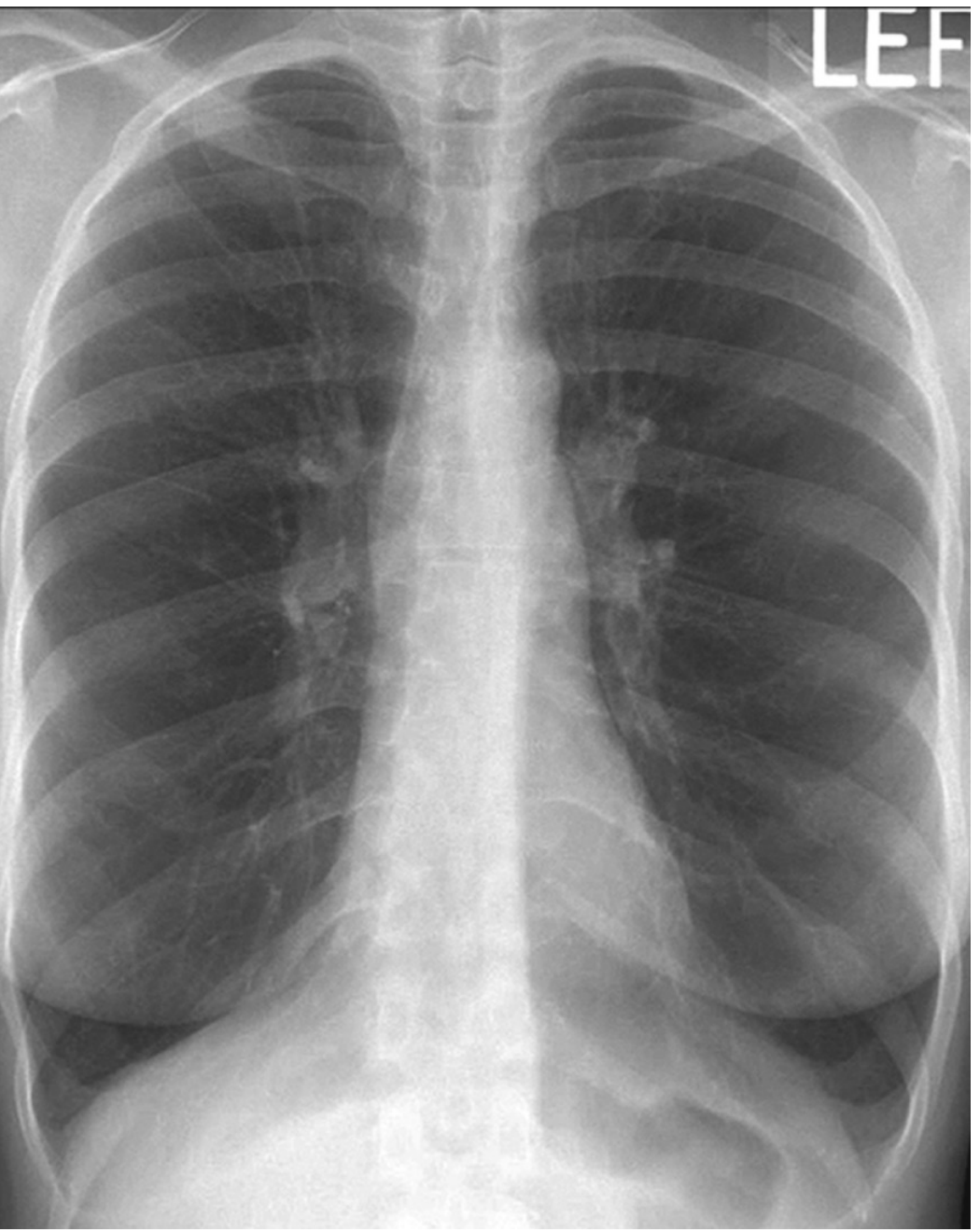
Frontal CXR in a 51-year-old woman with A1AT deficiency: note very large lung volumes, bilateral hyperlucency predominantly at the bases (panacinar pattern), and diaphragm flattening - contrast with the upper lobe predominance of smoking-related centriacinar emphysema. (Murray & Nadel's Textbook of Respiratory Medicine)
8. MANAGEMENT
8a. Non-Pharmacological
| Intervention | Notes |
|---|---|
| Smoking cessation | Single most important intervention - slows FEV1 decline; survival benefit proven |
| Pulmonary rehabilitation | Improves dyspnea, exercise capacity, quality of life |
| Long-term oxygen therapy (LTOT) | Indicated when resting PaO2 ≤ 55 mmHg, or 56-60 mmHg with cor pulmonale/polycythemia; at least 15 hours/day; proven mortality benefit |
| Vaccinations | Influenza (annual), pneumococcal, COVID-19 |
| Nutritional support | Address malnutrition in cachectic patients |
| Advance care planning | Particularly in GOLD 3-4 |
8b. Pharmacological - Stable COPD
Step-wise approach based on GOLD ABCD groups:
Short-acting bronchodilators (rescue):
- SABA - salbutamol/albuterol (short-acting β2-agonist)
- SAMA - ipratropium (short-acting muscarinic antagonist)
- Used for acute symptom relief in all patients
Long-acting bronchodilators (maintenance):
- LABA - salmeterol, formoterol, indacaterol
- LAMA - tiotropium, umeclidinium, aclidinium, glycopyrronium (preferred over LABA alone)
- LABA + LAMA combination - first choice for moderate-severe symptomatic COPD
Inhaled corticosteroids (ICS):
- Less central in COPD than asthma
- Indicated for: severe airflow obstruction, history of exacerbations, blood eosinophils ≥ 300 cells/μL, or known concurrent asthma
- Associated with increased risk of pneumonia - caution in GOLD 1-2
- Blood eosinophil-guided approach: < 100/μL = unlikely to benefit; ≥ 300/μL = likely benefit
Triple therapy (LAMA + LABA + ICS): For patients with persistent exacerbations on dual therapy, particularly those with eosinophilia
Roflumilast (PDE4 inhibitor):
- Selective phosphodiesterase-4 inhibitor
- Reduces exacerbation frequency and improves pulmonary function
- Approved as add-on therapy in severe COPD with chronic bronchitis phenotype
Theophylline:
- Historically used; a recent large placebo-controlled RCT of low-dose theophylline failed to show benefit on exacerbation frequency
- Narrow therapeutic index; drug interactions common; now rarely used
(Katzung's Basic and Clinical Pharmacology, 16th Ed.)
8c. Management of Acute Exacerbations (AECOPD)
Definition: Acute worsening of respiratory symptoms beyond normal day-to-day variation requiring change in medication.
Triggers: Viral infections (most common), bacterial infection (H. influenzae, S. pneumoniae, M. catarrhalis), air pollution
Severity assessment - Indications for hospitalization:
- Change in mental status (confusion, lethargy)
- Persistent/worsening hypoxemia, hypercapnia, or respiratory acidosis
- Need for mechanical ventilation
- Need for hemodynamic monitoring
- Inability to manage at home
Treatment:
| Intervention | Details |
|---|---|
| Bronchodilators | Increased frequency of SABA; add SAMA (ipratropium); nebulizer if severe dyspnea or coordination issues |
| Systemic corticosteroids | Prednisone 30-60 mg/day for 5-10 days; shortens symptom duration |
| Antibiotics | Indicated when purulent/increased sputum, increased dyspnea (Anthonisen criteria); CRP guides decision |
| Controlled oxygen | Target SpO2 88-92%; lowest FiO2 to reverse hypoxemia while minimizing hypercapnia risk |
| NIV (BiPAP) | For acute hypercapnic respiratory failure (pH 7.25-7.35); reduces intubation rate and mortality |
| Mechanical ventilation | Reserved for failure of NIV or contraindications |
Antibiotic choices for AECOPD:
| Category | Drug |
|---|---|
| First line | Amoxicillin 500-875 mg TID; Doxycycline 100 mg BID; Azithromycin 500 mg day 1, then 250 mg x4 days |
| Alternative | Amoxicillin-clavulanate; Clarithromycin; 2nd-generation cephalosporins |
| Gram-negative/previous AB failure | Levofloxacin 500-750 mg QD x7d; Ciprofloxacin 500 mg QD x7d |
(Fishman's Pulmonary Diseases and Disorders; Katzung's Basic and Clinical Pharmacology)
9. COMPLICATIONS
| Complication | Mechanism |
|---|---|
| Cor pulmonale | Hypoxic pulmonary vasoconstriction → pulmonary hypertension → right heart strain |
| Polycythemia vera | Secondary to chronic hypoxemia (erythropoietin-driven) |
| Pneumothorax | Rupture of emphysematous bullae |
| Respiratory failure | Progressive disease or severe exacerbation |
| Pulmonary hypertension | V/Q mismatch, hypoxia-driven vasoconstriction |
| Lung cancer | Shared risk factor (smoking); COPD is independent risk |
| Cardiovascular disease | Most common cause of death in mild-moderate COPD |
| Depression/anxiety | Common; underrecognized |
| Malnutrition/cachexia | Increased energy expenditure + reduced intake |
10. PROGNOSIS
- Prognosis varies with severity and frequency of exacerbations
- BODE index (BMI, Obstruction, Dyspnea, Exercise capacity) predicts mortality better than FEV1 alone
- Frequent exacerbators have worse outcomes
- LTOT in hypoxemic patients improves survival
- Smoking cessation at any stage slows decline
CASE SCENARIOS
CASE 1: Classic Emphysema (Pink Puffer)
Presentation: A 65-year-old man, 40-pack-year smoker, presents with progressive exertional dyspnea over 10 years and morning sputum. Now admitted with acute breathlessness. He is cyanotic, barrel-chested, respiratory rate 25/min, tidal volume 400 mL.
Blood gases:
- pH: 7.47
- PaO2: 60 mmHg (normal 100)
- PaCO2: 30 mmHg (normal 40)
- SpO2: 90%
- Hb: 14 g/dL
Analysis:
Using the alveolar gas equation: PAO2 = (760-47) × 0.21 - 30/0.8 = 113 mmHg
Measured PaO2 = 60 mmHg → A-a gradient = 53 mmHg (grossly elevated) → V/Q mismatch confirmed.
- Why low PaO2? V/Q mismatch - poorly ventilated alveoli dilute oxygenated blood.
- Why low PaCO2? Hypoxemia stimulates peripheral chemoreceptors → hyperventilation → CO2 blown off → mild respiratory alkalosis (pH 7.47).
- FEV1/FVC reduced with FEV1 60% predicted = obstructive pattern (GOLD 2 Moderate).
- Barrel chest = compensatory hyperinflation to increase airway caliber and reduce resistance.
Diagnosis: Moderate COPD, emphysematous phenotype.
Management: Smoking cessation, LAMA + LABA, pulmonary rehabilitation, annual influenza vaccine. Check A1AT levels given extent of disease. LTOT if PaO2 falls below 55 mmHg.
(Costanzo Physiology 7th Ed.)
CASE 2: Acute Exacerbation of COPD (AECOPD)
Presentation: A 70-year-old woman with known GOLD 3 COPD on tiotropium and salmeterol/fluticasone inhaler presents to the ED with 3-day history of worsening dyspnea, increased sputum volume with greenish discoloration, and fever (38.1°C). She is confused.
Observations: RR 32/min, SpO2 84% on room air, HR 110, BP 130/80.
ABG: pH 7.29, PaO2 52 mmHg, PaCO2 62 mmHg, HCO3 28 mEq/L
Analysis:
- pH 7.29 (acidic) + high PaCO2 = acute-on-chronic respiratory acidosis (HCO3 28 = some prior metabolic compensation)
- Confusion = ICU admission criterion
- Purulent sputum + fever = bacterial exacerbation likely
Management:
- Controlled O2: Target SpO2 88-92% (Venturi mask 24-28% FiO2) - avoid high-flow O2 which can worsen hypercapnia
- Bronchodilators: Nebulized salbutamol + ipratropium q20min initially
- Systemic steroids: Prednisolone 40 mg PO (or IV methylprednisolone)
- Antibiotics: Given purulent sputum - Amoxicillin/clavulanate or levofloxacin (given severity)
- NIV (BiPAP): pH 7.29 with hypercapnia = clear NIV indication; reduces intubation rate and mortality
- ICU transfer: Mental status change is an absolute indication for escalation
- CXR to exclude pneumonia or pneumothorax
Key teaching point: The controlled oxygen strategy is essential - hypoxic ventilatory drive is partially maintained in chronic hypercapnic COPD; over-oxygenation worsens CO2 retention.
CASE 3: Young Patient - Alpha-1 Antitrypsin Deficiency
Presentation: A 42-year-old non-smoker (occasional social smoker) presents with progressive dyspnea, recurrent respiratory infections, and reduced exercise tolerance. Her father died of emphysema at age 55. Spirometry shows FEV1/FVC 0.62, FEV1 58% predicted.
CXR: Large lung volumes, diaphragm flattening, lower lobe hyperlucency (as seen in the image above).
Analysis:
- Emphysema at a young age with minimal smoking history + family history = A1AT deficiency until proven otherwise
- Lower lobe predominance = panacinar emphysema (pathognomonic of A1AT deficiency; contrast with upper lobe in smoking-related centriacinar emphysema)
Investigations:
- A1AT serum level: < 50 mg/dL (< 11 μmol/L) → send genotype
- Genotype ZZ (homozygous null): most severe deficiency
- DLCO significantly reduced
Management:
- Smoking cessation absolutely mandatory
- Standard COPD pharmacotherapy (LABA/LAMA)
- A1AT augmentation therapy (IV pooled human A1AT, e.g., alpha1-proteinase inhibitor) - shown to slow emphysema progression on CT; indicated for ZZ or null genotype with FEV1 35-65%
- Referral for lung transplant evaluation if progressing despite maximal therapy
- Family screening (autosomal codominant inheritance)
CASE 4: COPD with Cor Pulmonale
Presentation: A 68-year-old heavy smoker with GOLD 4 COPD presents with bilateral ankle edema, orthopnea, and worsening dyspnea at rest. On examination: cyanosis, JVP elevated at 6 cm, loud P2, right parasternal heave, ankle pitting edema.
Investigations:
- ABG: PaO2 48 mmHg (severe hypoxemia), PaCO2 55 mmHg
- FBC: Hb 19 g/dL (polycythemia)
- Echo: RV dilatation, TR, estimated PA pressure 55 mmHg
- ECG: Right axis deviation, P pulmonale, RVH pattern
Pathophysiology: Chronic hypoxemia → hypoxic pulmonary vasoconstriction → pulmonary hypertension → right ventricular hypertrophy and eventual failure (cor pulmonale) → systemic venous hypertension.
Management:
- LTOT: PaO2 48 mmHg = clear indication; ≥15 hours/day; target SpO2 88-92%; only treatment proven to improve survival in hypoxemic COPD
- Optimize bronchodilators
- Diuretics for edema (furosemide)
- Venesection if Hb > 18-20 g/dL (polycythemia)
- Avoid vasodilators (can worsen V/Q mismatch)
- Consider lung volume reduction surgery or transplant assessment
Summary Table: Key COPD Concepts
| Domain | Key Point |
|---|---|
| Diagnosis | Post-BD FEV1/FVC < 0.70; spirometry mandatory |
| Mechanism of hypoxemia | V/Q mismatch (NOT diffusion limitation or hypoventilation alone) |
| Most common emphysema | Centriacinar - smoking |
| A1AT deficiency | Panacinar, lower lobe, young onset |
| Best predictor of exacerbations | Prior exacerbation history |
| Mortality-reducing interventions | Smoking cessation, LTOT (if PaO2 ≤ 55), NIV in acute hypercapnia |
| ICS guidance | Blood eosinophils: < 100 = no benefit; ≥ 300 = benefit |
| Acute exacerbation O2 target | SpO2 88-92% (controlled, not high-flow) |
| NIV indication in AECOPD | pH 7.25-7.35 with hypercapnia |
| Genetic cause | A1AT deficiency (ZZ genotype) |
Sources: Robbins & Kumar Basic Pathology | Fishman's Pulmonary Diseases and Disorders (2-Volume Set) | Katzung's Basic and Clinical Pharmacology 16th Ed. | Costanzo Physiology 7th Ed. | Murray & Nadel's Textbook of Respiratory Medicine | Grainger & Allison's Diagnostic Radiology
This is a shared conversation. Sign in to Orris to start your own chat.