
Optogenes
Reading File
Finding Sources
Searching PubMed
optogenetics
Searching the Web
optogenetics definition light-sensitive genes opsins
Reading File
Optogenetics is a research technique that uses light to control selected cells, especially neurons, after they have been genetically engineered to express light-sensitive proteins called opsins.
- Channelrhodopsin-2 (ChR2): blue light opens a cation channel, allowing Na+ and some Ca2+ inward. This depolarizes and activates the neuron.
- Halorhodopsin: yellow light drives Cl− into the cell, hyperpolarizing and usually inhibiting the neuron.
It gives researchers highly precise control of neural circuits by cell type, location, and millisecond timing. It is used mainly in experimental neuroscience to investigate functions such as sensation, memory, movement, reward, epilepsy, and neurodegenerative disease mechanisms. In some retinal disorders, optogenetic gene therapies are being studied to restore limited light responsiveness.
A basic workflow is: deliver an opsin gene to target cells, implant or direct a light source to that tissue, then observe or manipulate the resulting cellular activity or behavior.
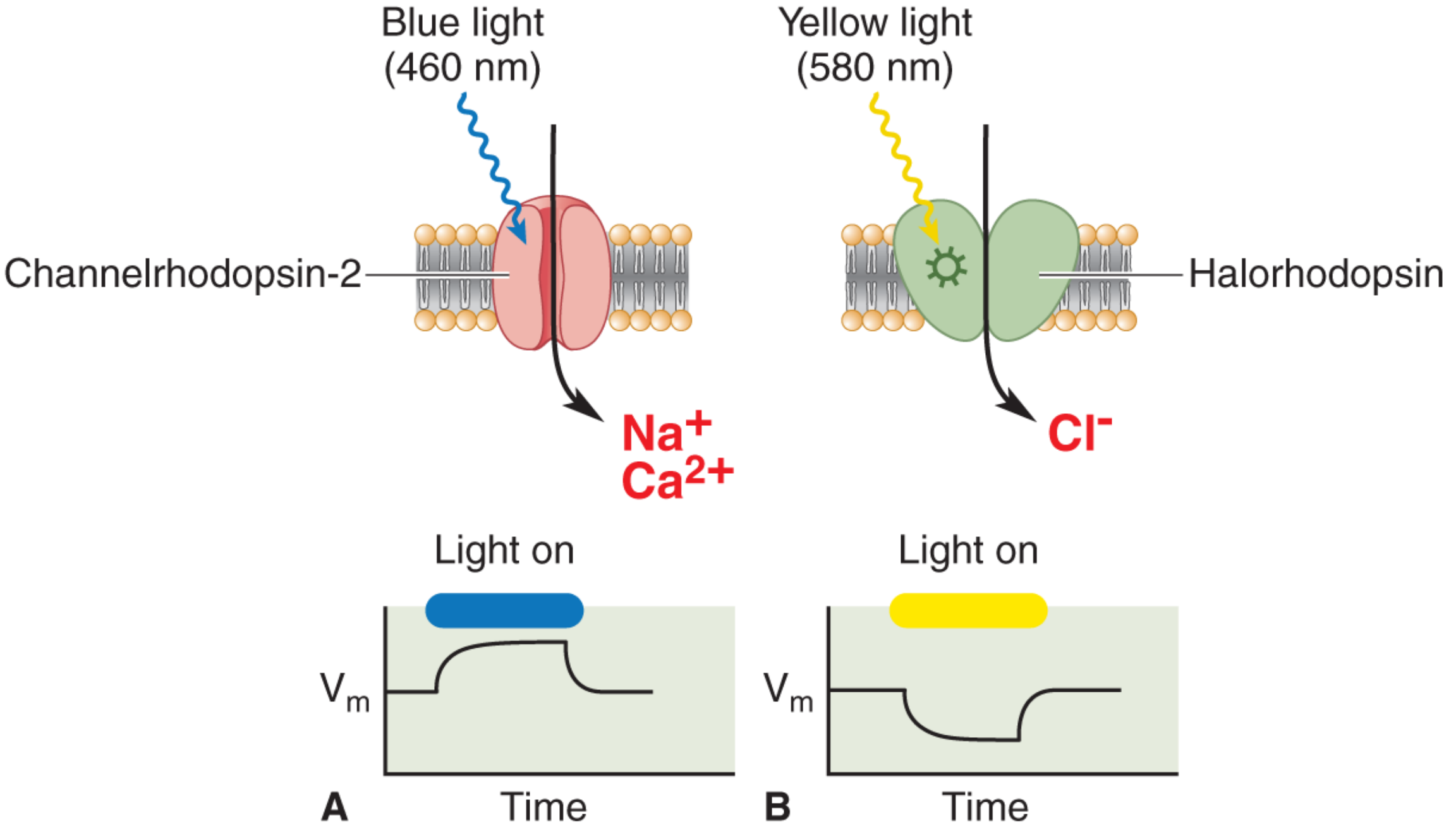
- Neuroscience: Exploring the Brain, 5th ed., p. 336
- A 2024 systematic review discusses optogenetics in chronic neurodegenerative disease research.
This is a shared conversation. Sign in to Orris to start your own chat.