

Give me the findings
Reading File
This is a cervical spine X-ray (AP and lateral views) of Mr. Sevam, 59Y/M, dated 22 Apr 2026, from Mani Bone & Joint Care, Red Hills, Chennai.
Cervical Spine X-ray Findings
Patient Details
- Name: Mr. Sevam
- Age/Sex: 59 years, Male
- Date: 22 April 2026
- Views: AP (left) + Lateral (right)
Findings
Lateral View:
-
Loss of normal cervical lordosis — The spine appears straightened (military neck), which may indicate muscle spasm or degenerative change.
-
Disc space narrowing — Reduced intervertebral disc height is visible at multiple levels, most notably at C5-C6 and C6-C7, consistent with degenerative disc disease (cervical spondylosis).
-
Osteophyte formation (Bony spurs) — Anterior and posterior osteophytes are visible at multiple cervical levels, particularly at C5-C6 and C6-C7. This is a hallmark of cervical spondylosis.
-
End plate sclerosis — Increased density at the vertebral end plates at affected levels, indicating chronic degenerative change.
-
No obvious fracture or dislocation — Bony alignment appears maintained; no acute traumatic disruption visible.
-
Posterior element changes — Facet joint arthritic changes appear present at lower cervical levels.
AP View:
-
Uncovertebral joint (Luschka's joint) hypertrophy — Lateral bony projections visible at lower cervical levels, which can contribute to foraminal narrowing and radiculopathy.
-
Vertebral body heights — Broadly maintained without obvious compression fractures.
-
No obvious atlantoaxial instability — C1-C2 relationship appears grossly normal.
Impression
Multilevel cervical spondylosis (degenerative cervical spine disease), predominantly at C5-C6 and C6-C7, with:
- Disc space narrowing
- Osteophytosis
- Loss of lordosis
- End plate sclerosis
Clinical Correlation
In a 59-year-old male, these findings are commonly associated with:
- Neck pain and stiffness
- Cervical radiculopathy (arm pain/tingling if foraminal narrowing is present)
- Cervical myelopathy if spinal canal compromise is significant (MRI recommended for further assessment)
⚠️ Disclaimer: This is an AI-assisted interpretation for educational/supportive purposes only. A qualified radiologist or orthopedic/spine specialist should provide the formal report and clinical management plan.
Explain in simple terms
What This Neck X-ray Shows — In Simple Terms
Think of your neck bones like a stack of 7 blocks (vertebrae), with soft cushions (discs) between them. This X-ray is of a 59-year-old man's neck.
What's Happening
1. 🔄 The neck has lost its natural curve
A healthy neck has a gentle "C" curve. This man's neck looks straight — like a soldier standing at attention. This usually means the neck muscles are tight or in spasm.
2. 💧 The cushions between the bones are worn down
The soft discs between the bones act like shock absorbers. In this X-ray, several of those cushions — especially in the lower neck — look thinner than they should. They've worn out over time.
3. 🦴 Bone spurs have formed
Where the cushions wore down, the body tried to "fix" itself by growing extra bone at the edges. These are called bone spurs (osteophytes). They look like small pointy growths on the bones.
4. 🔩 The joints show aging/wear
The small joints at the sides of the neck bones also show signs of wear and tear — like old, rusty hinges.
What Does This Mean Overall?
This is called Cervical Spondylosis — which simply means "wear and tear of the neck bones and discs due to aging." It is very common after age 50.
What Symptoms This Can Cause
| Symptom | Why |
|---|---|
| Neck pain & stiffness | Worn discs and bone spurs irritate the area |
| Pain/tingling down the arm | Bone spur pressing on a nerve |
| Weakness in hands | If a nerve is significantly compressed |
| Headaches at the back of the head | Tight neck muscles |
What Should Be Done Next?
- Physiotherapy — neck exercises and posture correction help a lot
- Pain relief medications — as prescribed by the doctor
- MRI scan — if there is arm pain or weakness, an MRI gives a clearer picture of whether any nerve is being pinched
- No surgery needed in most cases — this is managed conservatively
The good news: this is a very common, manageable condition. Most people do well with the right exercises and treatment. A spine specialist or orthopedic doctor can guide the best plan.
Why do wonen get strawberry skin
Reading File
Finding Sources
Reading File
Reading File
Reading File
Reading File
Loading Image
"Strawberry Skin" — What It Is & Why It Happens
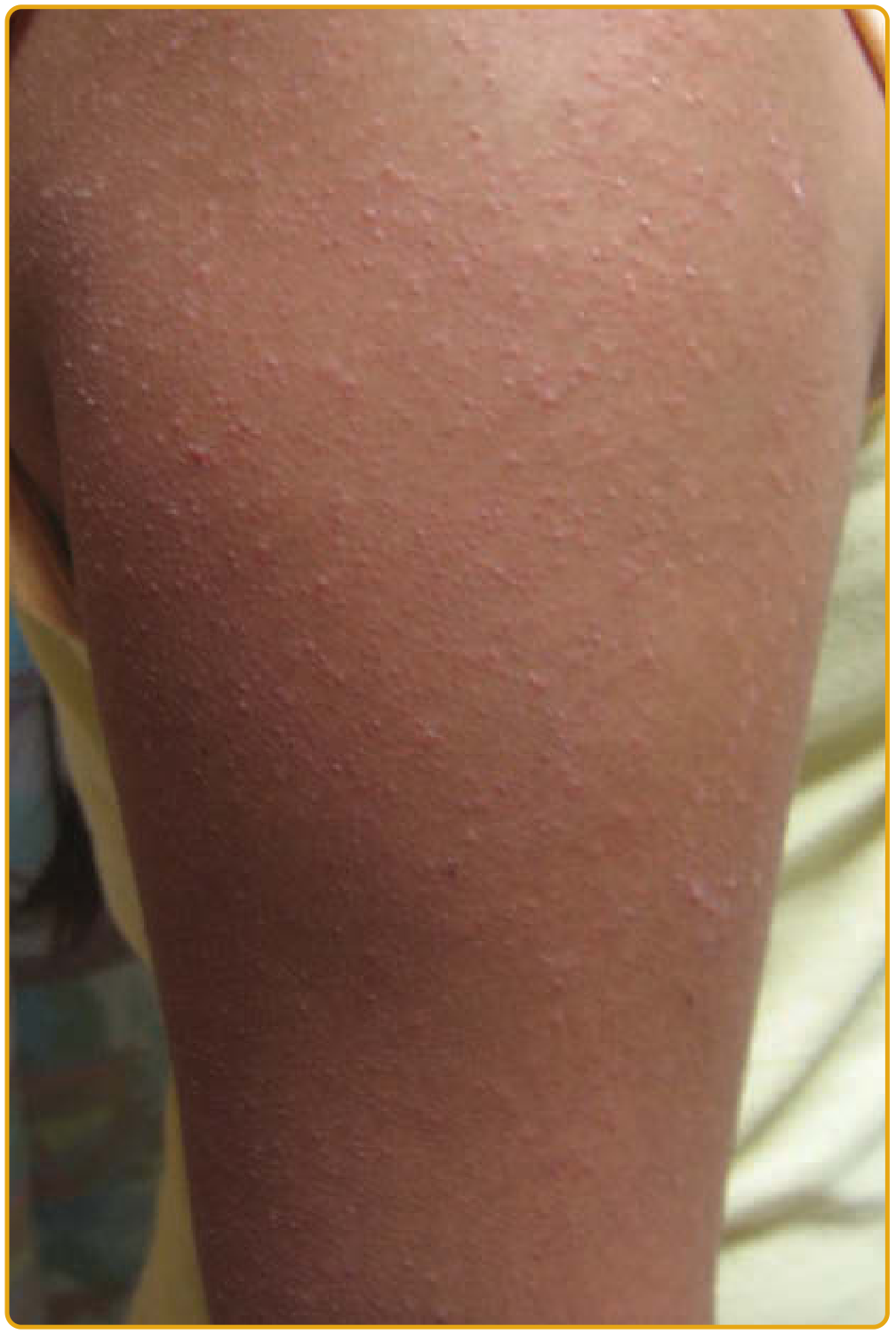
"Strawberry skin" is a popular nickname for a condition called Keratosis Pilaris (KP). Here's what's actually happening:
🍓 What Does It Look Like?
Tiny, rough bumps on the skin — usually on the upper arms, thighs, and buttocks — that look like the outside of a strawberry. Each bump has a small red or brown dot in the center (a blocked hair follicle).
🔍 What Causes It?
Every hair on your body grows out of a tiny hole called a follicle. Normally, dead skin cells shed off and leave. In KP:
- Dead skin cells build up around the follicle opening instead of shedding normally
- This forms a tiny hard keratin plug (keratin = the protein that makes up skin/hair/nails)
- The plug blocks the hair inside, which may coil underneath
- The body sees this as irritation → sends blood → causing the red dot around each bump
The result = hundreds of tiny red-dotted bumps = strawberry skin.
👩 Why Do Women (and Girls) Get It More Noticeably?
It actually affects both men and women equally — but women tend to notice it more because:
- Less body hair on arms and thighs makes the bumps more visible
- Shaving the legs can irritate follicles and make it worse
- Hormonal changes (puberty, pregnancy, periods) can trigger flare-ups — estrogen and androgens both influence skin cell turnover
- Women are more likely to seek treatment for cosmetic concerns
It's also genetic — if your mother has it, you're more likely to get it too.
📋 Who Gets It?
| Group | Likelihood |
|---|---|
| Teenagers / young adults | Very common |
| People with dry skin | Higher risk |
| People with eczema (atopic dermatitis) | Strong association |
| Overweight individuals | More common |
| People with hypothyroidism or PCOS | More prone |
✅ How to Reduce It
| Treatment | How It Helps |
|---|---|
| Moisturisers (urea cream, shea butter) | Softens and hydrates the plugs |
| Lactic acid / salicylic acid lotions | Dissolves the keratin buildup |
| Gentle exfoliation | Removes dead skin cells physically |
| Avoid hot showers | Hot water dries out skin and worsens KP |
| Humidifier in dry climates | KP gets worse in dry/cold weather |
The key fact: KP is completely harmless, not contagious, and cannot be permanently cured — but it can be managed well and often improves with age. Many people find it fades significantly in their 30s.
— Fitzpatrick's Dermatology, Vol. 1
This is a shared conversation. Sign in to Orris to start your own chat.