
median nerve anatomy
Reading File
Searching sources...
Finding Sources
Finding Sources
Now let me read the most comprehensive anatomy sources in parallel:
Reading File
Reading File
Reading File
Now let me read more of the Gray's and Bradley content, and look for the forearm/hand sections and images:
Reading File
Reading File
Reading File
Now let me fetch the key anatomy images:
Loading Image
Loading Image
Finding Sources
Let me get the origin section from Gray's and one more image showing the brachial plexus origin:
Reading File
Reading File
I now have comprehensive information to compile a detailed answer. Let me also fetch the brachial plexus/cord origin image:
Loading Image
I now have all the information needed for a thorough answer. Here is the full breakdown:
Median Nerve Anatomy
Origin and Roots
The median nerve arises from the lateral (C6, C7) and medial (C8, T1) cords of the brachial plexus. Its two roots unite anterior to the third part of the axillary artery to form the nerve proper. The full spinal root contribution is C5-C6-C7 (via lateral cord) and C8-T1 (via medial cord), making it a C6-T1 nerve overall.
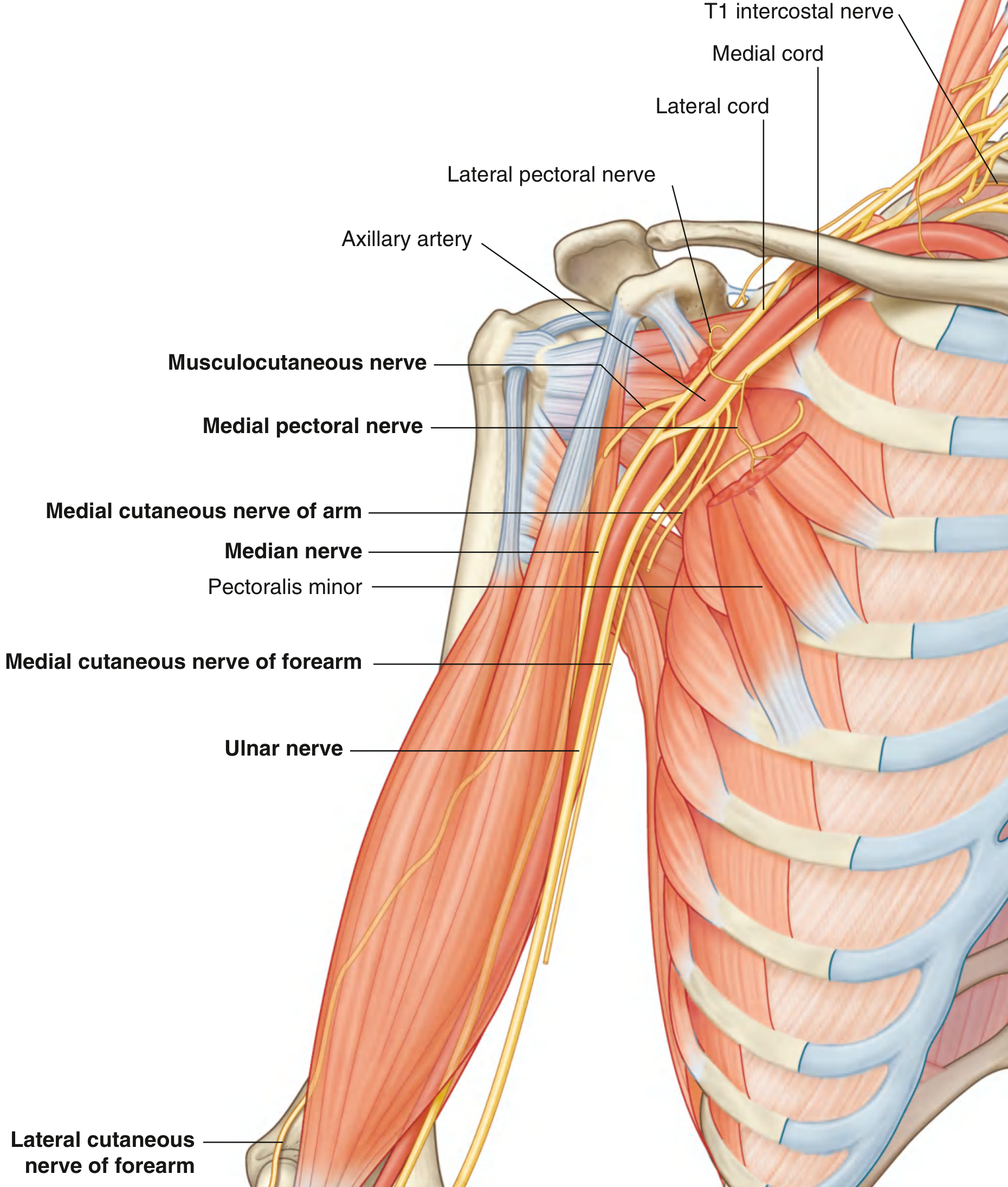
Course Through the Arm
- The nerve enters the arm from the axilla at the inferior margin of teres major and descends in the anterior compartment, closely related to the brachial artery throughout.
- Proximally: lies lateral to the brachial artery.
- Distally: crosses to the medial side of the brachial artery (in 74% of cases, the crossing is in the lower third of the arm) and lies anterior to the elbow joint.
- No major branches are given off in the arm - though a small branch to the pronator teres may arise just proximal to the elbow.
Course Through the Forearm
The nerve leaves the cubital fossa by passing between the two heads of the pronator teres, then passes between the humero-ulnar and radial heads of flexor digitorum superficialis.
It then travels distally deep to (on the deep surface of) flexor digitorum superficialis. Just proximal to the wrist it becomes more superficial, lying between the tendons of palmaris longus and flexor carpi radialis, before entering the carpal tunnel.
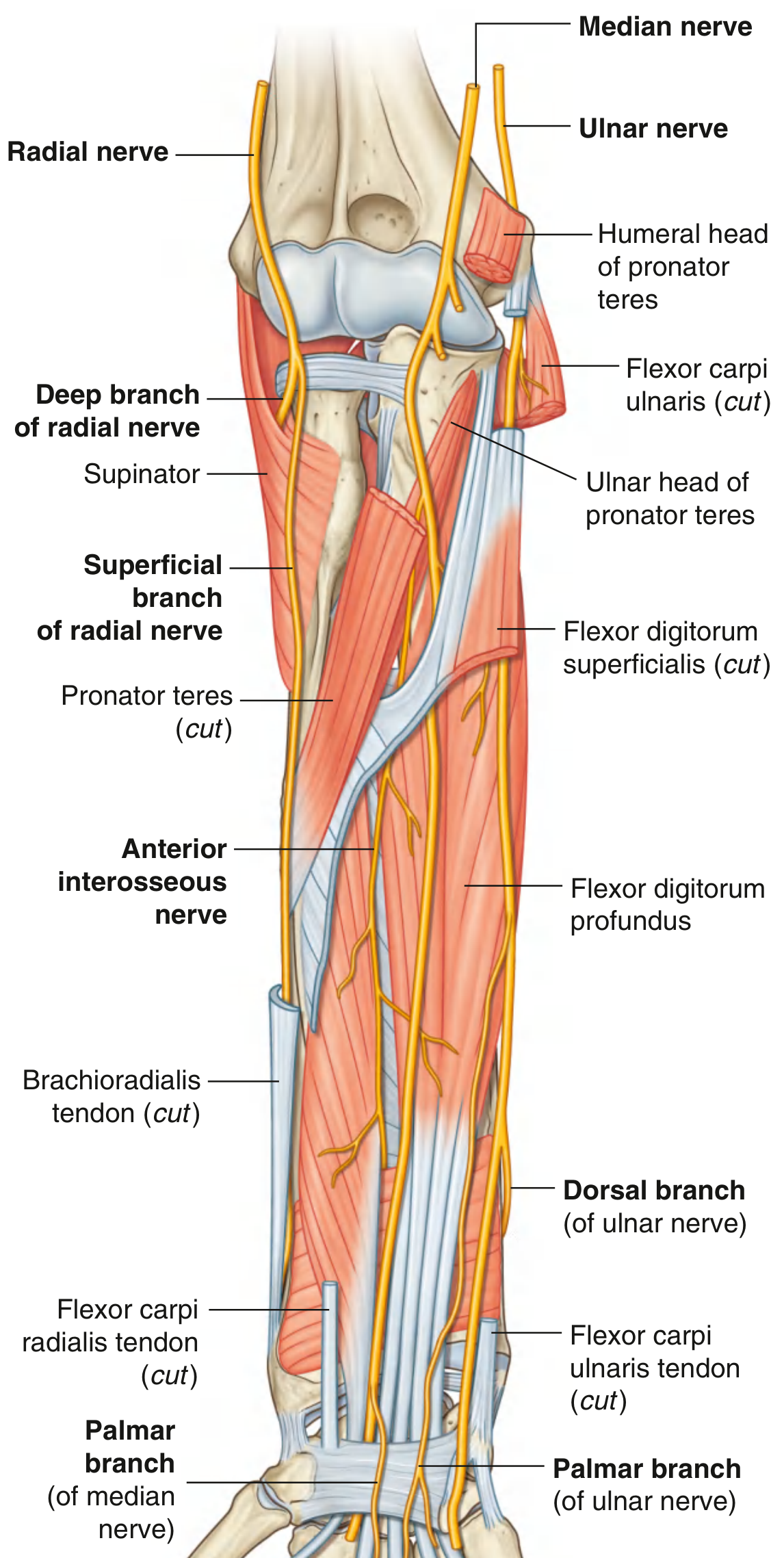
Branches in the Forearm
| Branch | Origin | Muscles Innervated |
|---|---|---|
| Muscular branches | Just distal to elbow | Pronator teres, flexor carpi radialis, palmaris longus, flexor digitorum superficialis |
| Anterior interosseous nerve (AIN) | Between the two heads of pronator teres | Flexor pollicis longus, lateral half of flexor digitorum profundus (index + middle), pronator quadratus |
| Palmar cutaneous branch | Just proximal to flexor retinaculum (passes superficial to it) | Skin over the base of the palm and thenar eminence |
The AIN is the largest branch of the median nerve in the forearm - it is a pure motor nerve, descending with the anterior interosseous artery on the anterior surface of the interosseous membrane. It terminates in articular branches to the distal forearm and wrist joints.
The palmar cutaneous branch is a key anatomical point: it travels subcutaneously, bypassing the carpal tunnel - so it is spared in carpal tunnel syndrome, which preserves sensation over the thenar eminence.
Course Through the Wrist and Hand
The median nerve enters the palm through the carpal tunnel, passing deep to the flexor retinaculum alongside the nine flexor tendons (4 from FDS, 4 from FDP, 1 from FPL). At the distal margin of the retinaculum, it divides into:
1. Recurrent (Thenar) Branch
- Arises from the lateral side of the median nerve just distal to the flexor retinaculum.
- Curves back proximally over the flexor retinaculum.
- Innervates the three thenar muscles: abductor pollicis brevis, flexor pollicis brevis (superficial head), and opponens pollicis.
- Responsible for opposition of the thumb.
2. Palmar Digital Branches
- Pass deep to the palmar aponeurosis and superficial palmar arch.
- Provide sensation to the palmar surface of the lateral 3.5 digits (thumb, index, middle, lateral half of ring finger), plus the nail beds (dorsal distal phalanges) of the same digits.
- Also innervate the lateral two lumbrical muscles (1st and 2nd lumbricals).
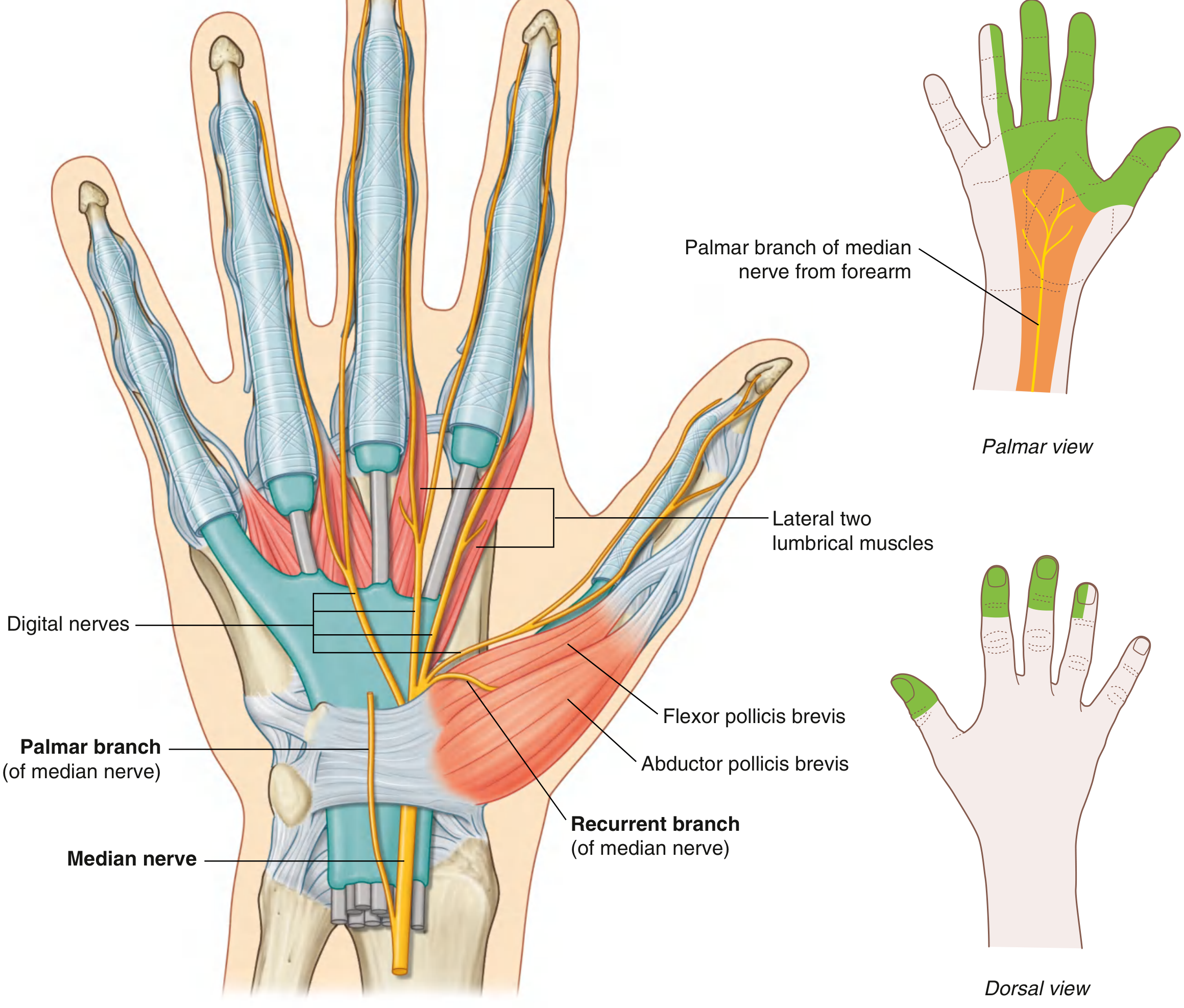
Motor Summary
| Region | Muscles |
|---|---|
| Forearm (anterior compartment, mostly superficial/intermediate) | Pronator teres, FCR, palmaris longus, FDS |
| Forearm (deep layer, via AIN) | FPL, lateral FDP (index + middle fingers), pronator quadratus |
| Thenar eminence (hand) | Abductor pollicis brevis, opponens pollicis, flexor pollicis brevis (superficial head) |
| Hand (intrinsics) | Lateral two lumbricals (1st and 2nd) |
Not innervated by median nerve: FCU, medial half of FDP (ring and little fingers) - these belong to the ulnar nerve.
Sensory Summary
- Palm: base and central palm via the palmar cutaneous branch (spared in CTS)
- Digits (palmar): thumb, index, middle, and lateral half of ring finger
- Digits (dorsal): distal phalanges (nail beds) of the same 3.5 fingers
Key Clinical Correlations
| Injury Level | Deficit |
|---|---|
| High lesion (elbow/above) | Loss of pronation, wrist flexion (radial deviation preserved), loss of thumb IP flexion + index DIP flexion, loss of thenar function, "hand of benediction" when trying to grip (index + middle cannot flex) |
| Anterior interosseous nerve | Cannot flex thumb IP joint + index DIP ("OK sign" failure); normal sensation |
| Carpal tunnel syndrome (wrist) | Nocturnal paresthesias in lateral 3.5 fingers, thenar atrophy, weak abductor pollicis brevis; thenar skin sensation spared (palmar cutaneous branch bypasses tunnel) |
Sources: Gray's Anatomy for Students (9780323934237); Bradley and Daroff's Neurology in Clinical Practice (9780323642613); General Anatomy and Musculoskeletal System - THIEME Atlas (9781626237186)
electron transport chain
Reading File
Searching sources...
Finding Sources
Finding Sources
Reading File
Reading File
Reading File
Reading File
Reading File
Finding Sources
Reading File
Reading File
Now let me fetch the key ETC diagram image:
Loading Image
Loading Image
I have everything needed for a comprehensive answer.
Electron Transport Chain (ETC)
Overview
The ETC is the final common pathway for oxidation of fuels in the body. Reduced coenzymes (NADH and FADH₂) generated by glycolysis, the TCA cycle, and fatty acid beta-oxidation donate their electrons to a series of protein complexes embedded in the inner mitochondrial membrane. As electrons flow down the chain to oxygen, the released energy pumps H⁺ ions across the membrane, building an electrochemical gradient that drives ATP synthesis. This coupling of electron flow to ATP production is called oxidative phosphorylation (OXPHOS).
Location and Structure
The mitochondrion has two membranes:
- Outer membrane: permeable to small ions and molecules via the protein porin
- Inner membrane: highly impermeable - no H⁺, ATP, ADP, or pyruvate can cross without specific transporters. It is folded into cristae to maximize surface area. This is where the ETC complexes live.
- Matrix: gel-like interior containing TCA cycle enzymes, fatty acid oxidation enzymes, mtDNA, and the NAD⁺/FAD required as electron acceptors.
The Four Complexes
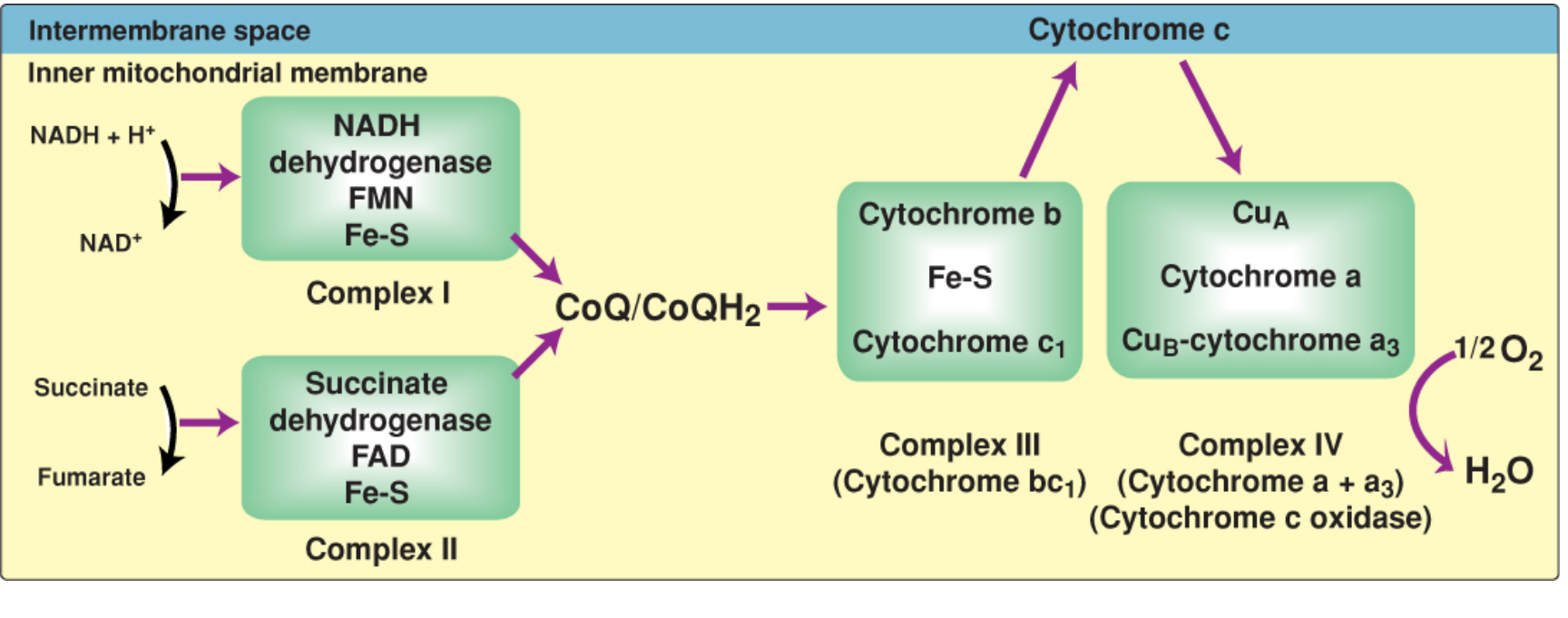
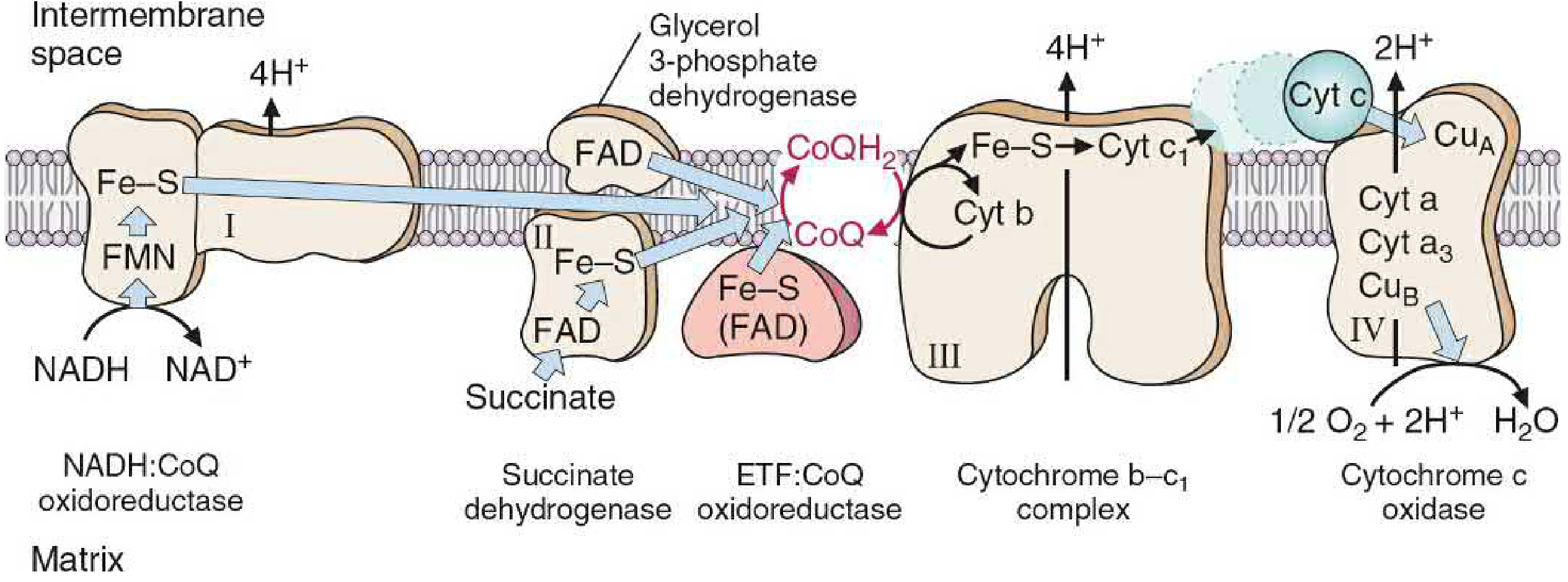
Complex I - NADH Dehydrogenase (NADH:CoQ Oxidoreductase)
- Accepts electrons from: NADH (generated by TCA cycle, pyruvate dehydrogenase, beta-oxidation)
- Prosthetic groups: FMN (flavin mononucleotide) + multiple Fe-S centers
- Electron flow: NADH → FMN → Fe-S centers → CoQ
- Protons pumped: 4 H⁺ from matrix to intermembrane space
- A massive 45-subunit complex spanning the inner membrane
Complex II - Succinate Dehydrogenase
- Accepts electrons from: FADH₂ (produced when succinate is oxidized to fumarate in the TCA cycle)
- Prosthetic groups: FAD + Fe-S centers
- Electron flow: FADH₂ → Fe-S → CoQ
- Protons pumped: 0 - this complex does not span the membrane and has no proton-pumping mechanism, which is why FADH₂ yields less ATP than NADH
- Also accepts electrons from glycerol-3-phosphate dehydrogenase and acyl-CoA dehydrogenases (fatty acid oxidation)
Mobile Carrier - Coenzyme Q (CoQ / Ubiquinone)
- A lipid-soluble quinone with a long hydrophobic isoprenoid tail - freely mobile in the lipid bilayer
- Acts as a junction point: collects electrons from Complexes I, II, glycerol-3-phosphate dehydrogenase, and ETF:CoQ oxidoreductase (fatty acid beta-oxidation)
- Transfers electrons to Complex III
- When reduced: CoQH₂ (ubiquinol)
Complex III - Cytochrome bc₁ (Ubiquinol:Cytochrome c Oxidoreductase)
- Accepts electrons from: CoQH₂
- Components: Cytochrome b, Fe-S protein (Rieske protein), cytochrome c₁
- Electron flow: CoQH₂ → cyt b → Fe-S → cyt c₁ → cytochrome c
- Protons pumped: 4 H⁺ into intermembrane space (via the Q cycle mechanism)
Mobile Carrier - Cytochrome c
- A small, water-soluble heme-protein located in the intermembrane space, loosely bound to the outer face of the inner membrane
- Shuttles single electrons from Complex III to Complex IV
- Iron in heme oscillates between Fe²⁺ and Fe³⁺
- Plays a separate role in apoptosis when released into the cytosol
Complex IV - Cytochrome c Oxidase (Cytochrome a + a₃)
- Accepts electrons from: cytochrome c
- Components: CuA, cytochrome a, cytochrome a₃, CuB
- Electron flow: cyt c → CuA → cyt a → cyt a₃ (with CuB) → O₂
- Terminal reaction: 4 electrons + O₂ + 4H⁺ → 2 H₂O
- This is the only complex where heme iron has a free coordination site that can directly bind O₂
- Protons pumped: 2 H⁺ into intermembrane space
- Requires copper (Cu) for the reaction to occur
Chemiosmosis and ATP Synthesis
The combined pumping of H⁺ at Complexes I, III, and IV creates:
- A chemical gradient (high [H⁺] in intermembrane space vs. matrix)
- An electrical gradient (positive outside, negative inside)
Together these form the proton-motive force (PMF). H⁺ ions flow back down this gradient through ATP synthase (Complex V), which uses the energy of proton flow to phosphorylate ADP → ATP. This is the binding change mechanism - the rotation of the γ-subunit driven by proton influx changes the conformation of the three αβ-subunit pairs, cycling through open, loose, and tight conformations to bind substrates, form ATP, and release the product.
ATP Yield
| Electron Donor | Protons Pumped (I+III+IV) | ATPs Produced |
|---|---|---|
| NADH | 4 + 4 + 2 = 10 H⁺ | ~2.5 ATP |
| FADH₂ (via Complex II) | 0 + 4 + 2 = 6 H⁺ | ~1.5 ATP |
- Overall free energy: NADH oxidation releases ~53 kcal/mol; FADH₂ ~41 kcal/mol
- Only ~30% of this energy is trapped as ATP; the rest is released as heat (the ETC is also the body's primary heat source)
- Approximately 3 H⁺ are needed per ATP synthesized, plus 1 H⁺ for phosphate transport into the matrix
Regulation
The ETC is regulated primarily through coupling to ATP demand:
- When cells use ATP, ADP + Pᵢ levels rise
- ADP binds ATP synthase → increased H⁺ influx → gradient dissipates
- Reduced gradient → Complexes I, III, IV pump faster → electron flow increases → O₂ consumption rises
- Increased NADH consumption signals the TCA cycle and fuel oxidation pathways to accelerate
This is why exercise increases both O₂ consumption and heat production proportionally.
Inhibitors
| Inhibitor | Site | Mechanism |
|---|---|---|
| Rotenone, Amytal | Complex I | Blocks NADH → CoQ electron transfer |
| Malonate | Complex II | Competitive inhibitor of succinate dehydrogenase |
| Antimycin A | Complex III | Blocks electron flow from cyt b to cyt c₁ |
| Cyanide (CN⁻), CO, H₂S, azide | Complex IV | Binds Fe in cyt a₃, blocks O₂ reduction |
| Oligomycin | ATP synthase | Blocks H⁺ channel (Fo subunit), halts ATP synthesis and secondarily halts the ETC |
| DNP (dinitrophenol), FCCP | Inner membrane | Proton ionophores - uncouplers: allow H⁺ to leak back without making ATP, causing heat generation and increased O₂ consumption with no ATP production |
Reactive Oxygen Species (ROS)
Electron leakage from the ETC (mainly at Complex I and III) partially reduces O₂ to superoxide (O₂⁻) rather than fully to H₂O. This generates:
- Superoxide (O₂⁻) → H₂O₂ (by superoxide dismutase, SOD) → OH• (hydroxyl radical via Fenton reaction)
Cellular defenses: SOD, catalase, glutathione peroxidase. Chronic ROS production contributes to aging, cancer, and neurodegeneration.
Cytoplasmic NADH: The Shuttles
NADH produced in the cytosol (e.g., during glycolysis) cannot directly cross the inner mitochondrial membrane. Two shuttles transfer its electrons:
- Malate-aspartate shuttle (heart, liver): delivers electrons to mitochondrial NAD⁺ → NADH → yield ~2.5 ATP
- Glycerol 3-phosphate shuttle (brain, muscle): delivers electrons to FAD → FADH₂ → yield ~1.5 ATP
Sources: Lippincott's Illustrated Reviews: Biochemistry, 8th ed. (9781975155063); Basic Medical Biochemistry: A Clinical Approach, 6e (9781975150143)
Blood Brain barrier
Searching sources...
Finding Sources
Finding Sources
Reading File
Reading File
Reading File
Reading File
Reading File
Reading File
Reading File
Reading File
Finding Sources
Now let me fetch the key structural images:
Loading Image
Loading Image
Loading Image
I now have everything needed for a thorough, well-illustrated answer.
Blood-Brain Barrier (BBB)
Historical Discovery
The BBB was first demonstrated by Paul Ehrlich in 1885 when he injected aniline dyes intravenously and found that all tissues stained except the brain. The dye-albumin complex crossed capillaries everywhere else in the body, but not the CNS. This "exclusion" property is what we now call the blood-brain barrier.
Why the BBB Exists
Blood is not a suitable environment for neurons. Blood composition fluctuates widely based on diet, metabolism, and disease:
- After a protein-rich meal, amino acid concentrations rise sharply - many amino acids are neurotransmitters (e.g., glutamate, glycine), so free diffusion would non-selectively activate receptors
- Exercise raises plasma K⁺ and H⁺ - elevated extracellular K⁺ would depolarize neurons indiscriminately
- Circulating hormones, cytokines, and inflammatory mediators would disrupt synaptic signaling
The BBB insulates the neuronal microenvironment, providing stability that is essential for orderly neural activity.
Structural Components
The BBB is not a single structure but a neurovascular unit composed of four elements working together:
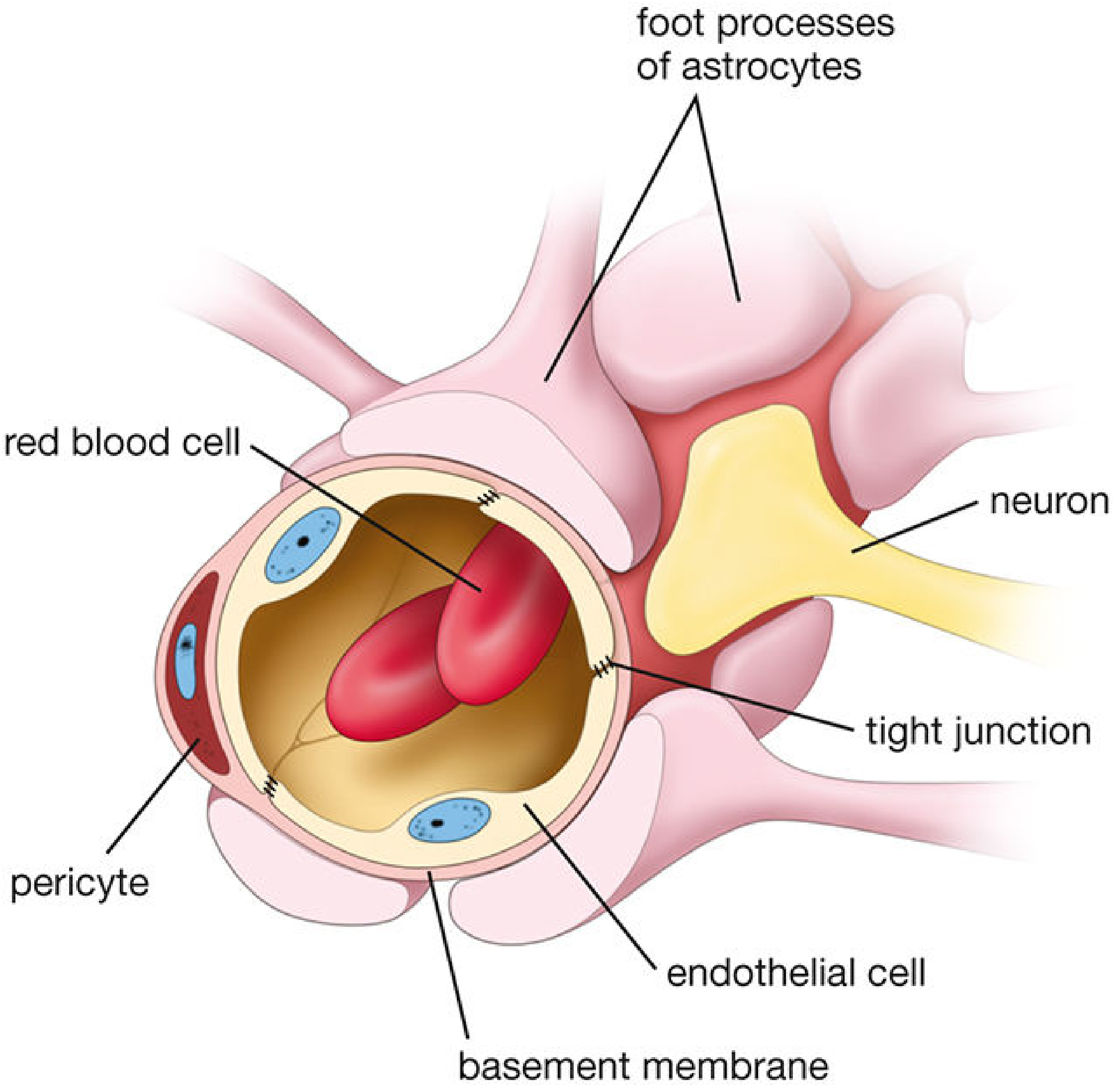
1. Capillary Endothelial Cells with Tight Junctions
The physical barrier resides in the single layer of continuous capillary endothelial cells linked by tight junctions (zonula occludens). These junctions are far more complex than those in systemic capillaries - they resemble epithelial tight junctions rather than the simple interendothelial clefts or fenestrae found elsewhere in the body.
- Electrical resistance of cerebral capillaries: 100-200× higher than systemic capillaries
- Tight junctions seal the paracellular route completely, forcing all transport through the endothelial cell itself (transcellular route)
- Transcytosis (vesicular transport) across brain endothelium is also severely restricted - far fewer endocytic vesicles than systemic endothelium
- Molecules >500 Da generally cannot cross
- Brain endothelial cells are rich in mitochondria (reflecting the high metabolic demand of active transport)
2. Basement Membrane
A thick basal lamina underlies the endothelial cells. Occasional pericytes are embedded within this basement membrane and help regulate the BBB - they signal to maintain tight junction integrity.
3. Astrocytic End-Feet (Glia Limitans)
Astrocytic processes wrap nearly the entire outer surface of brain capillaries. Their end-feet:
- Are required for induction of tight junction formation during development (and can induce tight junctions in non-CNS endothelial cells in vitro)
- Release soluble factors that increase barrier properties and tight junction protein content
- Contain AQP4 water channels that regulate water movement across the BBB in response to osmolality changes
- Buffer extracellular K⁺ (spatial buffering), assisted by K⁺-limiting transporters in endothelial cells
4. Neurons and Pericytes
Neuronal activity itself can regulate BBB efflux transporter expression (via circadian gene regulation in endothelium), creating a dynamic link between brain function and barrier permeability.
Comparison: Brain vs. Non-Brain Capillaries
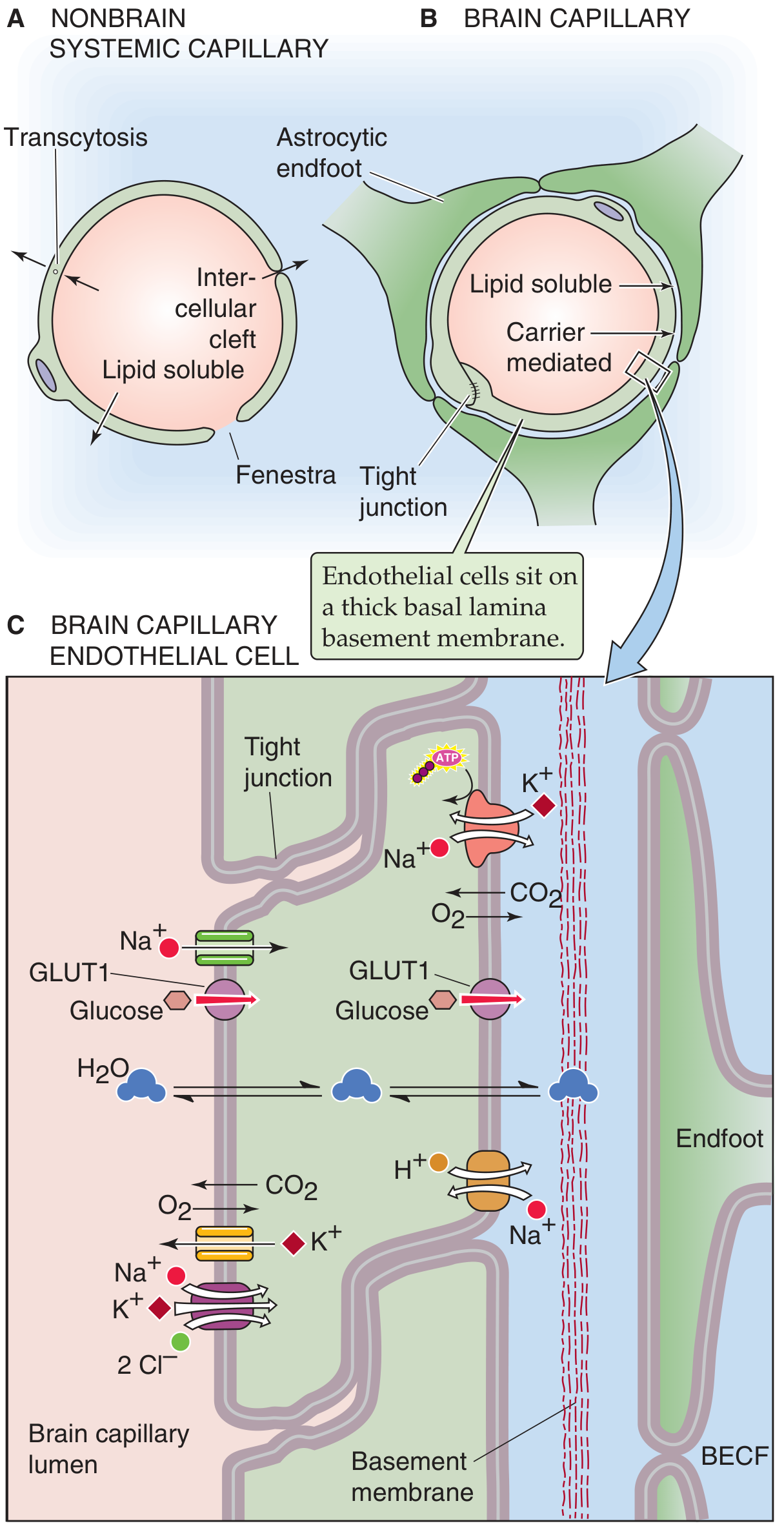
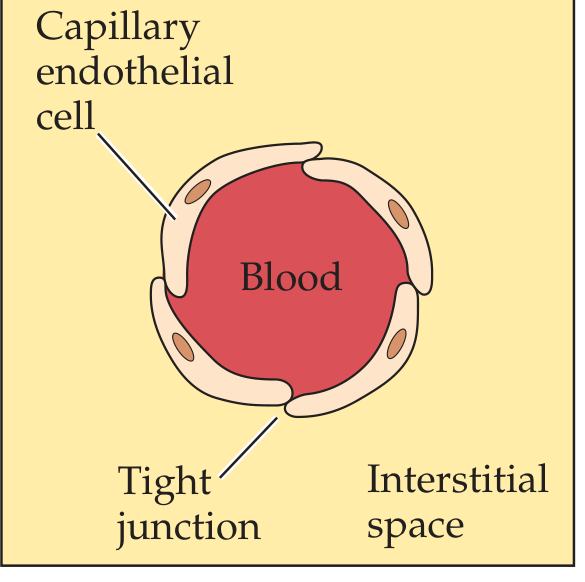
| Feature | Systemic Capillary | Brain Capillary |
|---|---|---|
| Interendothelial junctions | Clefts / fenestrae | Continuous tight junctions |
| Paracellular diffusion | Freely permeable | Blocked |
| Transcytosis | Common | Severely restricted |
| Mitochondrial content | Low | High |
| Electrical resistance | Low | 100-200× higher |
What Can Cross the BBB?
Freely Crosses (High Permeability)
- Gases: O₂, CO₂ (simple diffusion)
- Lipid-soluble, uncharged small molecules: ethanol, caffeine, nicotine, heroin, methadone, steroid hormones, most general anesthetics
- Water: via AQP4 channels in astrocytic end-feet (moves in response to osmotic gradients)
Crosses via Specific Transporters (Carrier-Mediated)
| Transporter | Direction | Substrates |
|---|---|---|
| GLUT1 (SLC2A1) | Influx | Glucose (primary brain fuel) |
| System L (SLC7A5 + SLC3A2) | Influx | Large neutral amino acids: Phe, Tyr, Leu; also L-DOPA, baclofen, gabapentin |
| SLC7A1 | Influx | Cationic amino acids |
| ABC transporters (P-gp, BCRP) | Efflux | Drugs, toxins, metabolic waste - pumped back into blood against gradients |
| Na⁺/K⁺-ATPase | Active | Ion homeostasis |
| AQP4 | Bidirectional | Water |
Largely Excluded
- Most water-soluble ions (K⁺, Mg²⁺ - have restricted, tightly regulated access)
- Protein-bound metabolites (e.g., bilirubin)
- Large proteins - degree of exclusion scales with molecular weight (see table):
| Protein | MW (kDa) | Plasma/CSF Ratio |
|---|---|---|
| Prealbumin | 61 | 14× |
| Albumin | 69 | 240× |
| IgG | 150 | 800× |
| Fibrinogen | 340 | 4,940× |
| β-lipoprotein | 2,240 | 6,210× |
Enzymatic Degradation at the BBB
Brain capillary endothelial cells express peptidases, acid hydrolases, and monoamine oxidase (MAO) that degrade enkephalins, substance P, norepinephrine, and dopamine. This is why oral dopamine does not treat Parkinson disease - it is destroyed at the BBB before reaching the brain. L-DOPA (its precursor) is used instead because it is transported by the System L amino acid transporter and then converted to dopamine inside neurons.
Where the BBB is Absent - Circumventricular Organs (CVOs)
Certain midline brain regions surrounding the ventricular system deliberately lack a BBB. Their capillaries are fenestrated and leaky, allowing direct chemical communication between blood and CNS:
| Circumventricular Organ | Function |
|---|---|
| Area postrema (paired; 4th ventricle) | Chemotactic trigger zone - detects circulating toxins → triggers vomiting |
| Subfornical organ | Fluid/osmolality sensing, body fluid homeostasis |
| Organum vasculosum of the lamina terminalis (OVLT) | Osmosensing; mediates fever via peripheral cytokines |
| Median eminence | Neuroendocrine control; hypothalamic releasing hormones enter portal circulation |
| Posterior pituitary | Oxytocin and ADH released into systemic circulation |
| Pineal gland | Melatonin secretion, circadian rhythms |
| Subcommissural organ | Function poorly understood |
At CVOs, the barrier is instead formed by specialized tight-junction-linked ependymal cells that separate the local CVO extracellular fluid from the CSF, preventing leaky CVO blood contents from contaminating the CSF.
Blood-CSF Barrier
A related but distinct barrier exists at the choroid plexus. The choroid plexus capillaries are freely permeable (fenestrated), but the choroid plexus epithelial cells are linked by tight junctions forming the blood-CSF barrier. This barrier filters blood to produce CSF.
CSF reabsorption occurs at the arachnoid granulations (arachnoid villi), where arachnoid villus cells perform one-way bulk transport of CSF into venous sinuses via giant vacuoles large enough to engulf red blood cells.
BBB Disruption - Clinical Significance
The BBB can be disrupted by:
| Cause | Mechanism |
|---|---|
| Severe/malignant hypertension | Forced transcytosis; mechanical breach |
| Brain tumors | Tumor angiogenesis produces leaky vessels (basis of contrast enhancement on MRI/CT) |
| Trauma (TBI) | Loss of tight junctions, altered astrocyte morphology |
| Stroke (ischemia) | Subacute structural breakdown → vasogenic edema, T2 hyperintensity on MRI |
| CNS infection (meningitis, encephalitis) | Inflammatory mediators degrade tight junctions |
| Severe hypoxia / hypercapnia | Vasodilation, membrane disruption |
| Sustained seizures | Excitotoxicity-related endothelial injury |
| Radiation therapy | Transient disruption → cerebral edema, raised ICP |
Clinical consequence of BBB breakdown: Vasogenic edema - fluid leaks from blood into brain extracellular space, causing swelling. On imaging, disrupted BBB allows gadolinium (MRI) or iodinated contrast (CT) to leak in, showing as enhancement in otherwise normally non-enhancing brain tissue.
Drug delivery problem: The intact BBB excludes most large therapeutic molecules (antibodies, gene therapies, many chemotherapy drugs) from reaching CNS targets - this is a major obstacle in treating brain tumors, neurodegeneration, and CNS infections.
Sources: Medical Physiology (9780323319737); Histology: A Text and Atlas, 7e (9781975181512); Neuroanatomy through Clinical Cases, 3rd ed. (9781605359625); Goldman-Cecil Medicine (9780323930345)
This is a shared conversation. Sign in to Orris to start your own chat.