
Homes adie pupils
I'll look up Holmes-Adie syndrome (tonic pupil) from the medical library right away.
Reading File
Now let me search the library and PubMed in parallel.
Finding Sources
Finding Sources
Searching PubMed
Holmes-Adie syndrome tonic pupil
Good results. Let me now read the key sections in parallel.
Reading File
Reading File
Reading File
Reading File
Excellent - I have rich content. Let me also grab the treatment section from Wills Eye and the clinical photo from Kanski's.
Reading File
Loading Image
Loading Image
I now have comprehensive material to write a full answer.
Holmes-Adie Pupil (Tonic Pupil / Adie Syndrome)
Pathophysiology
The Adie pupil results from degeneration of the ciliary ganglion and its postganglionic parasympathetic fibers that normally constrict the pupil (via the sphincter pupillae) and control accommodation (via the ciliary muscle). The mechanism behind the characteristic "tonic" behaviour is aberrant reinnervation: accommodative fibres regenerate into pupilloconstrictor pathways, explaining why the near response is not truly "spared" but rather "restored." This also accounts for denervation supersensitivity to dilute cholinergic agents.
- Kanski's Clinical Ophthalmology, p. 810
- Adams and Victor's Principles of Neurology, 12th ed.
- Localization in Clinical Neurology, 8th ed., p. 513
Clinical Features
Fig. 19.41A - Right Adie pupil: large, dilated right pupil vs normal left
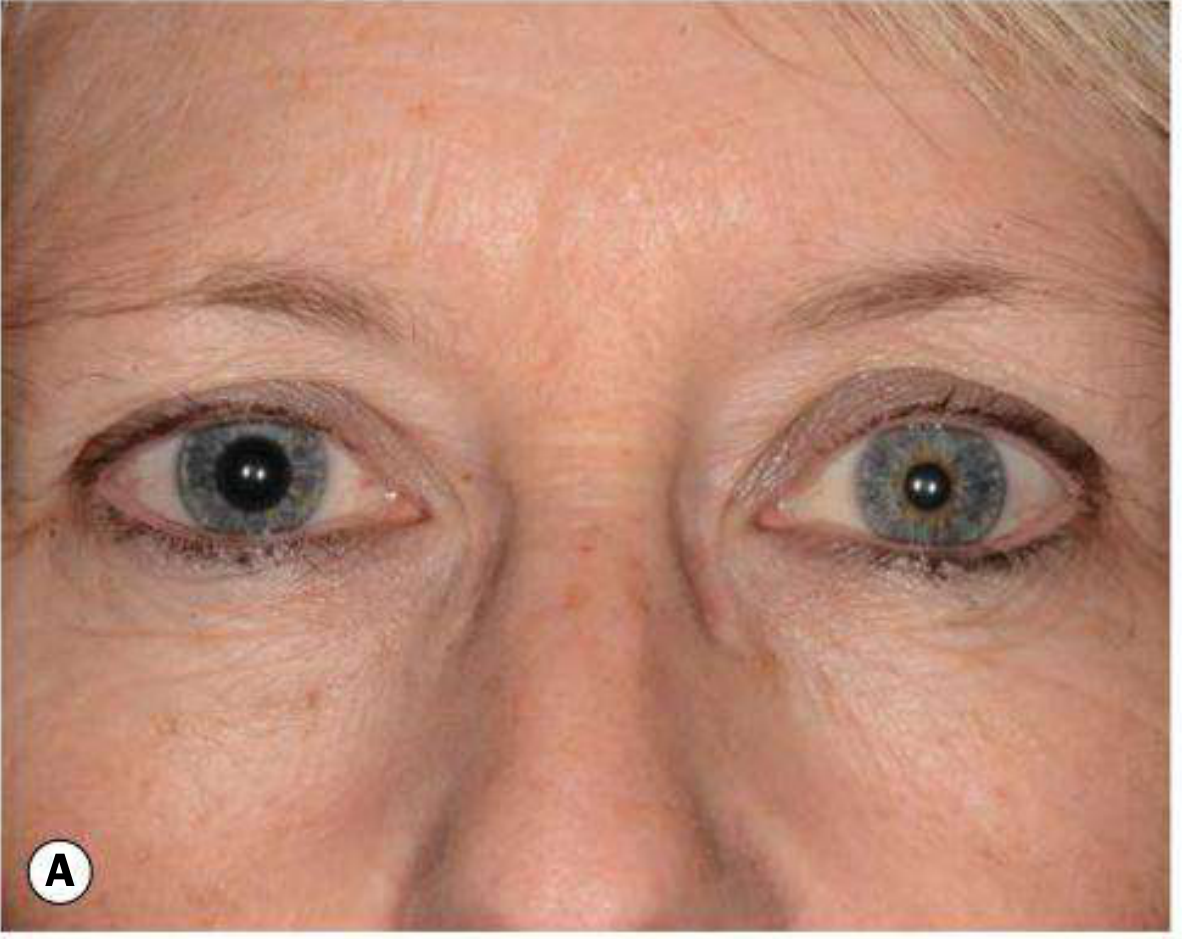
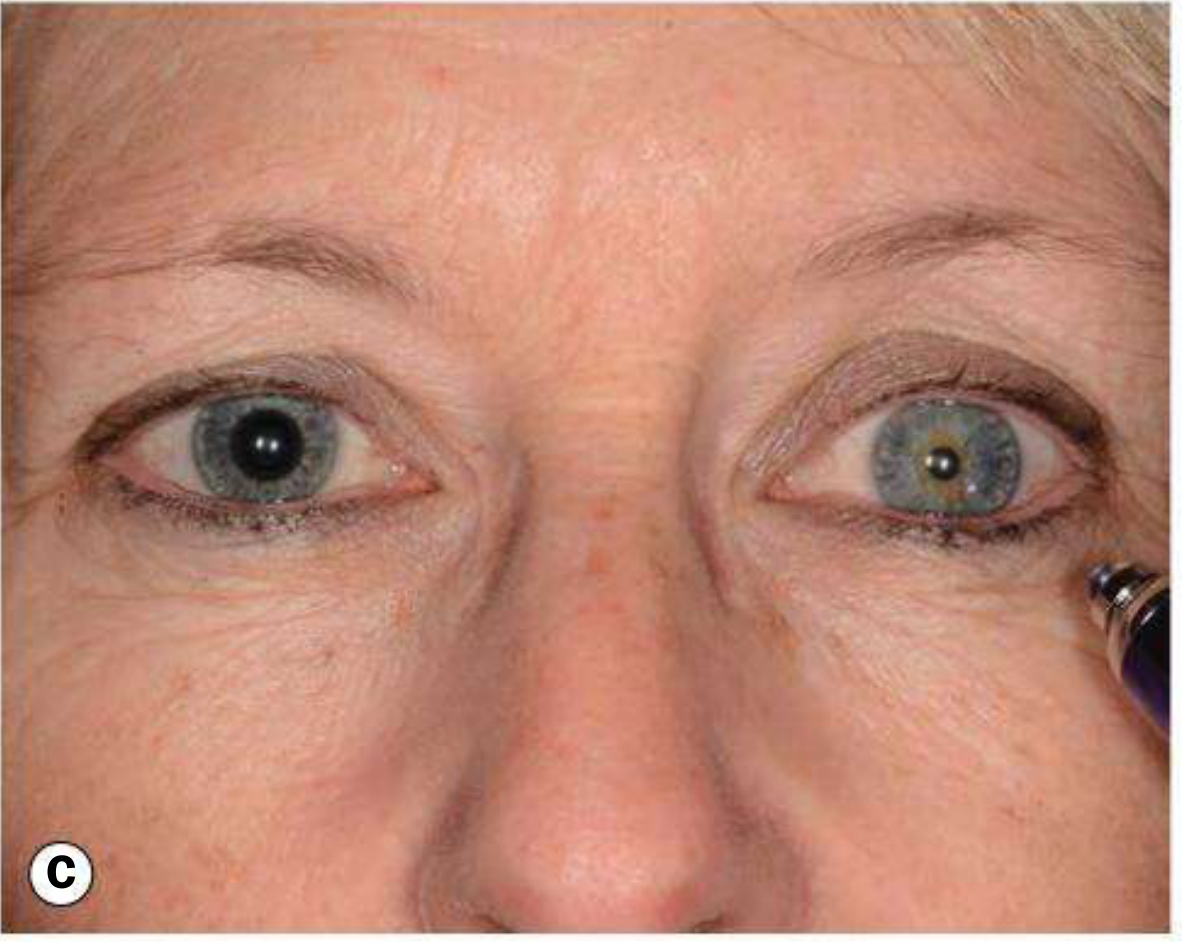
Fig. 19.41C - Right Adie pupil: consensual reflex testing
Pupillary signs
| Feature | Detail |
|---|---|
| Anisocoria | Affected pupil is larger in ambient/bright light |
| Direct light reflex | Absent or markedly reduced |
| Consensual light reflex | Also absent or reduced |
| Near (accommodation) response | Slow, tonic constriction - light-near dissociation |
| Redilation | Very slow after near effort - hallmark "tonic" feature |
| Vermiform movements | Worm-like irregular sphincter contractions at slit lamp |
| Segmental palsy | Sectors of the iris sphincter are paralysed - best seen with +10 lens |
| Chronic "little old Adie" | Over years, the pupil paradoxically becomes miotic as accommodation dysfunction resolves but sphincter paresis persists |
Symptoms
- Noticed anisocoria (incidental or cosmetic concern)
- Blurred near vision / impaired accommodation
- Photophobia
Demographics
- Most common in young women, ages 20-40
- ~80% unilateral at onset; the second eye often becomes involved over months or years
- May follow a viral illness or orbital/ocular surgery/trauma
- Occasionally autosomal dominant inheritance
Holmes-Adie Syndrome
When the tonic pupil is accompanied by absent or depressed deep tendon reflexes (typically knee and ankle jerks), the complete picture is called Holmes-Adie syndrome. Additional autonomic features may coexist:
- Ross syndrome: Adie pupil + areflexia + segmental anhidrosis (failure of sweating)
- Orthostatic hypotension
- Bladder/bowel dysfunction (rarely)
The reflex loss is thought to reflect a mild, mostly subclinical ganglionopathy affecting dorsal root ganglia.
Aetiology
| Category | Examples |
|---|---|
| Idiopathic | Most common (Adie syndrome proper) |
| Viral/Infectious | VZV, HSV, CMV, Parvovirus B19, Campylobacter, Diphtheria, HTLV-2, Lyme disease |
| Orbital/Ocular | Surgery, trauma, panretinal photocoagulation |
| Autoimmune | Sjögren syndrome, GCA |
| Paraneoplastic | Small cell lung cancer (anti-Hu), seminoma, Lambert-Eaton syndrome |
| Other | Early syphilis, botulism, endometriosis, Riley-Day syndrome (in infants) |
Pharmacological Testing
This is the definitive confirmatory test - it exploits denervation supersensitivity:
- Instil 0.1-0.125% pilocarpine (dilute - sub-threshold for normal pupil) in both eyes
- Recheck in 10-15 minutes
- Adie pupil constricts; normal pupil does not
If the pupil does NOT constrict to 0.125% pilocarpine (e.g., pharmacologic dilation suspected), escalate to 1% pilocarpine - both pupils constrict, confirming a normal cholinergic pathway.
Note: Some diabetics can also show supersensitivity; rarely both normal pupils constrict.
Workup
- Unilateral Adie pupil in an adult: no further lab testing is necessary if clinically typical
- Bilateral simultaneous Adie pupils: send syphilis serology (RPR/VDRL + TPHA), screen for systemic autoimmune and paraneoplastic causes
- Infant < 1 year: refer to paediatric neurology - rule out familial dysautonomia (Riley-Day syndrome)
- Slit-lamp examination for vermiform movements and segmental iris sphincter paresis
Differential Diagnosis
| Condition | Key distinguishing features |
|---|---|
| CN III palsy | Ptosis, exotropia, hypotropia; pupil may be involved; no cholinergic supersensitivity |
| Argyll Robertson pupil | Bilateral, very small (miotic) pupils; light-near dissociation; syphilis; no supersensitivity |
| Parinaud (dorsal midbrain) syndrome | Bilateral mid-dilated pupils; upgaze palsy, eyelid retraction (Collier sign), convergence-retraction nystagmus |
| Pharmacologic dilation | Large pupil, no response even to 1% pilocarpine |
| Physiologic anisocoria | Equal difference in dim and bright light, no reflex abnormality |
Treatment & Follow-up
- Pilocarpine 0.125% eye drops b.i.d. to q.i.d. - for cosmesis and to assist accommodation
- No treatment reverses the underlying ganglion degeneration
- Prognosis is benign for the isolated form
- Reading glasses may help with near vision impairment
- If the diagnosis is certain, routine follow-up is sufficient
Summary Memory Hook
"Adie" = Absent direct light reflex, Denervation supersensitivity (dilute pilocarpine), Iris vermiform movements, Enormous (dilated) pupil, women in their 20s-40s
Sources: Kanski's Clinical Ophthalmology 10th ed. | Wills Eye Manual | Adams & Victor's Principles of Neurology 12th ed. | Localization in Clinical Neurology 8th ed. | Rosen's Emergency Medicine
This is a shared conversation. Sign in to Orris to start your own chat.