
Classify LMA short note on baska and slipa lma
I'll read the medical library skill first, then research LMA classification and the Baska and SLIPA LMAs.
Reading File
Now let me search the library for LMA classification, Baska LMA, and SLIPA simultaneously.
Finding Sources
Finding Sources
Finding Sources
Let me search more broadly and read the relevant LMA section from Miller's Anesthesia.
Finding Sources
Finding Sources
Searching the Web
Baska mask LMA SLIPA classification supraglottic airway devices anesthesia
Now let me read the LMA section from Miller's Anesthesia and the detailed content on SLIPA/Baska from the web, and also read the Miller's Anesthesia block on SGAs.
Reading File
Reading Web Page
https://anaesthesianews.wordpress.com/2024/03/06/newer-supra…
Let me read more of the Miller's Anesthesia content on second-generation SGAs and also check for SLIPA specifically.
Reading File
Finding Sources
Reading File
I now have comprehensive information. Let me also quickly search for images of Baska and SLIPA to include visually.
Searching Images
SLIPA supraglottic airway device cuffless pharyngeal
Searching Images
Baska mask LMA supraglottic airway
I now have all the information needed. Let me compile a comprehensive answer.
Classification of LMA (Laryngeal Mask Airway / Supraglottic Airway Devices)
Overview
The Laryngeal Mask Airway (LMA) belongs to the broader category of Supraglottic Airway Devices (SGAs). No single universally accepted classification exists, but two major systems are used:
Classification Systems
1. Cook's Generation-Based Classification (most widely used clinically)
| Generation | Features | Examples |
|---|---|---|
| 1st Generation | Simple airway tube with mask or opening at larynx; no aspiration protection | LMA Classic, LMA Unique, CobraPLA, Laryngeal Tube |
| 2nd Generation | Gastric drainage port + improved aspiration protection + higher seal pressures | LMA ProSeal, LMA Supreme, i-gel, SLIPA, LTS-D, AuraGain, Baska Mask |
| 3rd Generation (proposed) | Dynamic self-sealing mechanism; no consensus yet on exact criteria | Baska Mask (some classify here), Elisha, 3gLM |
Note: Some sources classify the Baska Mask as 2nd generation (due to gastric drainage ports), while others propose it as 3rd generation due to its dynamic self-sealing cuff.
2. Miller's Sealing Mechanism Classification (used in Miller's Anesthesia)
| Type | Mechanism | Examples |
|---|---|---|
| Cuffed Perilaryngeal Sealers | Inflatable cuff seals around periglottic tissues | LMA Classic, ILMA (Fastrach), Air-Q, SureSeal |
| Cuffless Anatomically Preshaped Sealers | No cuff; anatomical shape provides seal | SLIPA, i-gel, Baska Mask |
| Cuffed Pharyngeal Sealers | Pharyngeal (and sometimes esophageal) sealing cuff | CobraPLA, Combitube, King LT, EasyTube |
Per Miller's Anesthesia 10e: "Cuffless anatomically preshaped sealers do not have a cuff; rather, they provide an airway seal by their anatomically preshaped design... The first of these devices, the SLIPA... Other cuffless devices such as the i-gel and the Baska Mask can also be included in this classification."
Short Note: SLIPA (Streamlined Liner of the Pharynx Airway)
Full name: Streamlined Liner of the Pharynx Airway
Manufacturer: Curveair, London, UK
Classification
- Miller: Cuffless anatomically preshaped sealer
- Cook: 2nd generation SGA
Design & Features
- Made of medical-grade thermoplastic - stiff at room temperature for easy insertion, softens at body temperature to improve pharyngeal seal
- No inflatable cuff - relies entirely on anatomical shape to conform to the pharynx
- The heel of the SLIPA sits snugly in the nasopharynx, providing a very stable airway
- Contains a unique hollow chamber at its base that acts as a reservoir for regurgitated gastric contents - significantly reduces risk of aspiration pneumonia
- Available in 6 adult sizes (47-57 mm) - size number indicates width at the bridge in millimeters
- Sizing is based on patient height and can be cross-checked against the width of the thyroid cartilage
- Each size is colour-coded for easy identification
Advantages
- Simple, quick insertion (no cuff inflation required)
- Aspiration protection via hollow reservoir chamber
- Softens to body temperature - reduced trauma, improved seal
- No pilot balloon or cuff inflation needed
Disadvantages
- No gastric suction channel (passive reservoir only, not active drainage)
- Limited evidence base compared to LMA Classic or ProSeal
- Cannot be re-sized easily once inserted (rigid initial shape)
Short Note: Baska Mask
Full name: Baska Mask Laryngeal Mask
Manufacturer: PROACT Medical Systems, Frenchs Forest, NSW, Australia
Designers: Australian anesthetists Dr. Kanag Baska and Dr. Meena Baska
Classification
- Miller: Cuffless anatomically preshaped sealer (membranous self-sealing cuff)
- Cook: 2nd generation (or proposed 3rd generation due to dynamic sealing)
Design & Features - What Makes It Unique
The Baska Mask represents a fundamentally different approach to cuff design:
-
Self-recoiling thin membranous cuff - no inflatable balloon, no pilot balloon/pilot tube
- The cuff pressure equals the maximum inspiratory pressure during IPPV - it dynamically adjusts with the ventilator cycle
- Soft membrane - lower propensity for nerve damage or oropharyngeal trauma
-
Sump area (reservoir) - collects and holds gastric fluid aspirates, similar to ProSeal
-
Two gastric drainage ports - active gastric drainage (unlike SLIPA's passive reservoir):
- One port can be connected to a 90° suction elbow for active suction
- The other must be left open to atmosphere (not obstructed)
-
Integrated bite block - protects the airway tube
-
Functions as an intubation conduit in some configurations
Advantages
- Dynamic self-sealing cuff adapts to airway pressures during IPPV
- No cuff inflation required
- Better protection against aspiration than 1st-generation SGAs
- Two gastric drainage channels for active decompression
- Lower trauma risk due to soft membrane cuff
Disadvantages
- Limited large-scale RCT evidence compared to i-gel or ProSeal
- Relatively newer device; fewer practitioners familiar with it
- Mixed comparative evidence vs. i-gel (some studies favour i-gel on certain parameters)
Summary Comparison: SLIPA vs. Baska Mask
| Feature | SLIPA | Baska Mask |
|---|---|---|
| Cuff type | Cuffless (anatomical shape) | Self-sealing membranous cuff |
| Gastric protection | Hollow reservoir chamber (passive) | Sump + two active drainage ports |
| Insertion ease | Simple, rigid-then-softens | Simple, no cuff inflation |
| Generation (Cook) | 2nd | 2nd (some: 3rd) |
| Miller class | Cuffless anatomically preshaped | Cuffless anatomically preshaped |
| Material | Thermoplastic (stiffens/softens with temp) | Soft membrane cuff |
| Pilot balloon | None | None |
| IPPV capability | Moderate seal | Dynamic seal (adjusts with pressure) |
| Gastric suction | Passive reservoir only | Active suction possible |
Sources: Miller's Anesthesia, 10e (Cuffless Anatomically Preshaped Sealers section); Anaesthesia News - Newer Supraglottic Airway Devices; OpenAirway SGA Classification; AIT Journal - Baska vs i-gel comparison
Short note on intubating lma
The Intubating LMA (ILMA / LMA Fastrach) is a modified LMA designed to facilitate blind or fiberoptic-guided tracheal intubation. It has a rigid, anatomically curved airway tube, epiglottic elevating bar, and comes with a dedicated silicone ETT.
Searching sources...
Finding Sources
Searching Images
intubating LMA Fastrach ILMA airway device
Reading File
Reading File
Finding Sources
Reading File
Reading File
Now let me fetch the ILMA component image from the textbook:
Loading Image
I now have all the information needed for a comprehensive short note.
Short Note: Intubating Laryngeal Mask Airway (ILMA / LMA Fastrach)
Definition & Introduction
The Intubating LMA (ILMA), commercially known as the LMA Fastrach, was invented by Dr. Archie Brain in 1997 (commercially available in the US shortly thereafter). It is a modified supraglottic airway device specifically designed as a conduit for tracheal intubation, allowing ventilation between attempts at intubation and serving as a crucial rescue device in difficult and failed airway scenarios.
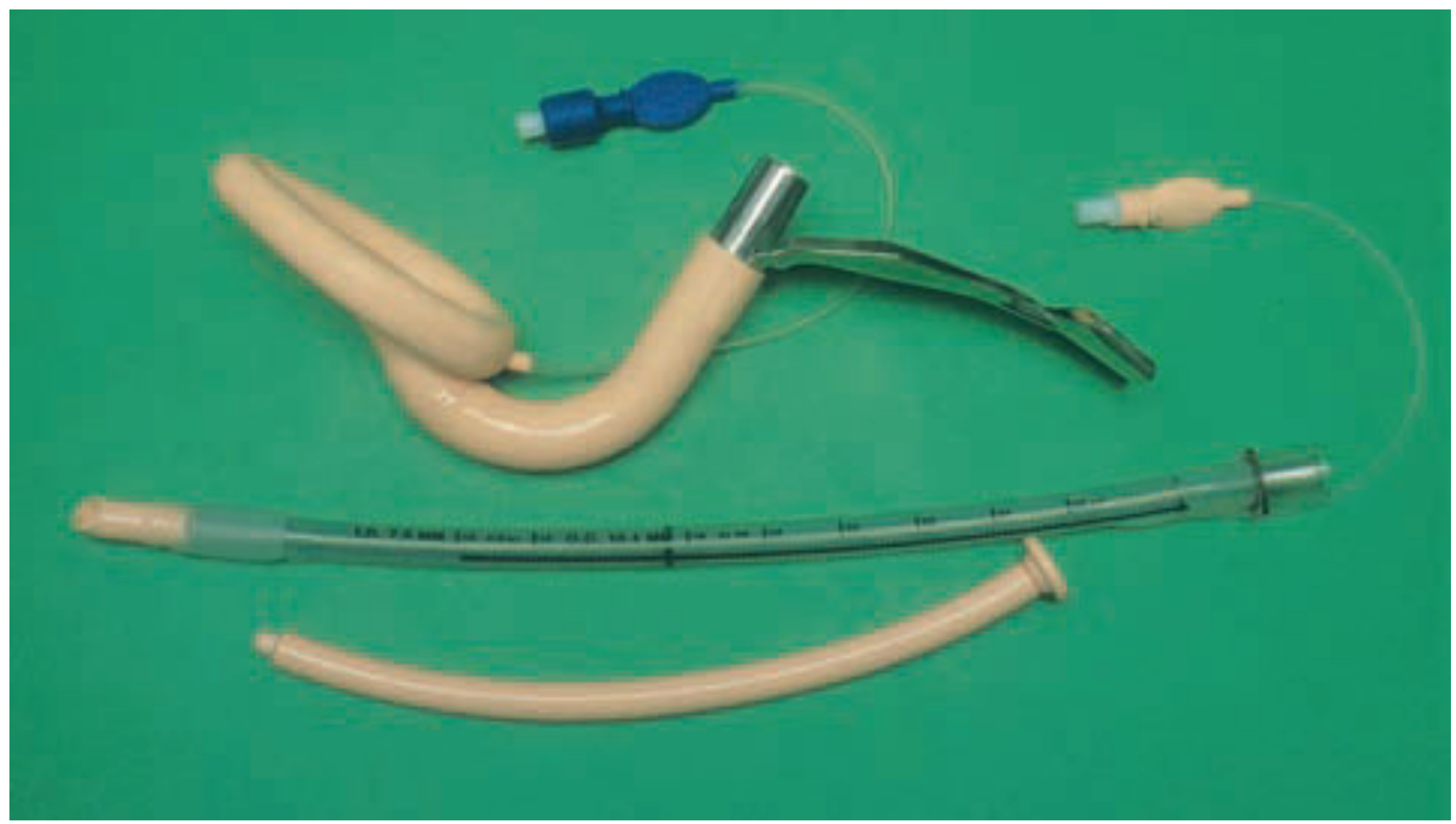
Classification
- Miller: Cuffed perilaryngeal sealer (with intubation capability)
- Cook: 1st generation SGA with intubation conduit function (designated "i" = intubating SGA)
- Considered a 1st generation SGA in terms of aspiration protection (no gastric drainage port in the standard Fastrach)
Differences from Classic LMA
| Feature | Classic LMA | ILMA (Fastrach) |
|---|---|---|
| Airway tube | Flexible, angled | Rigid, highly curved metal tube |
| Handle | Absent | Metal handle present |
| Epiglottic bar | Absent | Epiglottic elevating bar present |
| ETT | Standard ETT | Dedicated wire-reinforced ETT |
| Head position | Sniffing | Neutral position |
| Primary purpose | Airway maintenance | Airway + intubation conduit |
| Gastric port | No | No (Fastrach) |
Design Features
- Rigid, highly curved metal airway tube - enables precise positioning and control
- Metal handle - allows rapid, one-handed insertion and fine adjustments; enables lifting to improve glottic seal
- Epiglottic elevating bar (EEB) - a guiding ramp at the mask bowl that lifts the epiglottis as the ETT is advanced, clearing the path to the trachea
- Wide bore airway shaft - accommodates a standard ETT
- Dedicated ILMA ETT - straight, wire-reinforced silicone tube with a soft moulded atraumatic tip (novel bevel) that prevents impingement on laryngeal structures; straight design (not curved) to negotiate the ILMA shaft
- Available as reusable (original) and single-use disposable versions
Sizes
| Size | Patient Weight |
|---|---|
| 3 | 30-50 kg (smallest available for Fastrach) |
| 4 | 50-70 kg |
| 5 | >70 kg |
Note: The Fastrach is only available from size 3 upward (not for small children/neonates). Newer ILMAs (Air-Q, i-gel, AuraGain) are available in neonatal sizes.
Indications
- Failed rapid-sequence intubation (RSI)
- Cannot-intubate / cannot-ventilate (CICV) scenario - primary rescue device
- Difficult mask ventilation
- Anticipated or unanticipated difficult intubation
- Refractory hypoxemia despite preoxygenation
- Situations where conventional laryngoscopy is not possible (e.g., limited mouth opening > 2 cm, unstable cervical spine)
Contraindications
- Unable to open mouth (< 2 cm - minimum required)
- Awake/uncooperative patient (relative)
- Known pharyngeal/laryngeal pathology (tumor, abscess, foreign body)
- Latex allergy (earlier models contained latex)
Insertion Technique
- Head position: neutral (not the sniffing position used for cLMA)
- Cuff deflated and lubricated
- ILMA held by its metal handle and rotated into the pharynx in a smooth arc, pressing against the posterior pharynx
- Cuff inflated with appropriate volume (20 mL for size 4, 30 mL for size 5)
- Verify ventilation - if resistance encountered, perform the Chandy Maneuver:
- Step 1: Rotate the ILMA in the sagittal plane until ventilation resistance is minimal
- Step 2: Gently lift the handle away from the posterior pharyngeal wall just before passing the ETT
- Pass the specialized ILMA ETT through the shaft, advance slowly without force
- As the ETT tip exits the bowl, it lifts the epiglottic elevating bar and is directed into the trachea
- Confirm tracheal placement (capnography, auscultation)
- Remove the ILMA over the ETT using the dedicated pusher/stabilizer rod (the rigid ILMA causes tissue pressure if left in situ)
"Up-down maneuver" (if epiglottis is downfolded): Withdraw the ILMA ~5-6 cm along its curve while cuff remains inflated, then re-advance pressing against the posterior pharynx.
Success Rates
| Technique | Success Rate |
|---|---|
| Blind intubation (2-3 attempts) | ~95-96.5% |
| Fibreoptic-guided (FIS through ILMA) | ~100% |
| Awake fibreoptic vs. ILMA in difficult airway | Both 100% in comparative studies |
The Fastrach has significantly higher blind intubation rates than other ILMAs (Air-Q, i-gel). It is the only ILMA that can reliably facilitate blind intubation without endoscopic guidance. - Roberts and Hedges' Clinical Procedures in Emergency Medicine
Complications
- Laryngeal or esophageal injury from blind intubation attempts
- Aspiration (rare - no gastric drainage port)
- Tissue pressure injury if ILMA left in situ after intubation (due to rigidity)
- Hoarseness, sore throat
- Oropharyngeal mucosal trauma
Advantages
- Rapid insertion with single-hand technique via the metal handle
- Provides ventilation AND acts as intubation conduit
- Allows intubation in neutral head position - valuable in suspected cervical spine injury
- Very high blind intubation success rate (~96.5%)
- Fiberoptic guidance possible through the shaft for 100% success
- Well-studied, most validated rescue airway device in difficult airway algorithms
Limitations
- No gastric drainage channel (aspiration risk remains)
- Only available from size 3 (30 kg) - not usable in small children
- Significant learning curve for insertion vs. classic LMA
- Rigid body - must be removed after intubation; can cause tissue ischemia if left in
- More expensive and bulkier than classic LMA
- Single-use disposable versions add cost
Sources: Miller's Anesthesia 10e (Tracheal Intubation Through a Supraglottic Airway Device); Scott-Brown's Otorhinolaryngology Head & Neck Surgery Vol. 1 (Intubating Laryngeal Mask Airway); Roberts and Hedges' Clinical Procedures in Emergency Medicine (ILMA chapter)
Short note on IGel
The i-gel is a cuffless, anatomically preshaped supraglottic airway device made from a soft thermoplastic elastomer. It's a 2nd-generation SGA with a gastric channel, bite block, and non-inflatable mask that mirrors the perilaryngeal anatomy.
Searching sources...
Finding Sources
Finding Sources
Reading File
Finding Sources
Finding Sources
Reading File
Finding Sources
Loading Image
Now let me get the i-gel specific sizing, features, and Scott-Brown's content:
Reading File
Finding Sources
Searching the Web
i-gel LMA sizes colour coded features gastric channel oropharyngeal leak pressure anesthesia
Excellent - I now have comprehensive data. Let me compile the full short note.
Short Note: i-gel Supraglottic Airway
Introduction
The i-gel (Intersurgical Inc., Wokingham, Berkshire, UK) is a single-use, cuffless supraglottic airway device launched in 2007 after extensive research and development. The name reflects its key innovation - a soft, gel-like non-inflatable cuff made from thermoplastic elastomer (SEBS - styrene ethylene butadiene styrene) that mirrors the perilaryngeal anatomy without requiring cuff inflation.
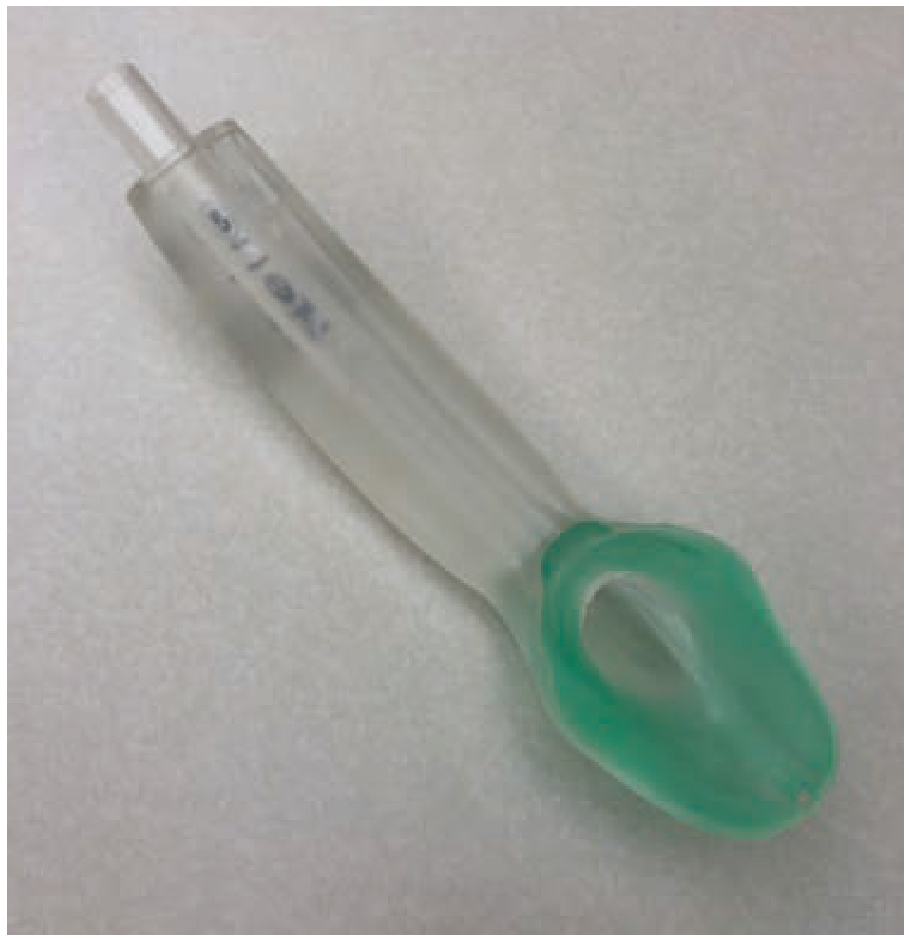
Classification
| System | Category |
|---|---|
| Cook (Generation) | 2nd generation SGA (gastric drainage port + improved seal) |
| Miller (Sealing mechanism) | Cuffless anatomically preshaped sealer |
Per Miller's Anesthesia 10e: "The i-gel is considered a second-generation SGA considering the presence of a gastric drainage port and higher seal pressure."
Design Features
The i-gel has several carefully engineered components:
-
Non-inflatable gel cuff - made from soft thermoplastic elastomer (SEBS); no inflation required; anatomically contoured to the perilaryngeal structures; reduces tissue compression compared to inflated cuffs
-
Gastric channel - present in all sizes except size 1 (neonate); allows:
- Early warning of regurgitation
- Passage of a nasogastric tube to empty stomach contents
- Venting of gastric gases
-
Integral bite block - prevents airway channel occlusion if patient bites down
-
Buccal cavity stabiliser - aids insertion and prevents rotation once placed
-
Epiglottic rest - a notch/rest at the distal end that reduces epiglottic downfolding and subsequent airway obstruction
-
Position guide (adult sizes only) - printed marker on shaft for confirmation of optimal insertion depth; the teeth/lips should align with this marking
-
Standard 15 mm connector - proximal end connects to any standard breathing circuit or BVM
-
Colour-coded packaging cradle/cage - maintains the device in correct anatomical flexion prior to use; also serves as a lubrication base during preparation
Sizes and Colour Coding
| Size | Patient Weight | Colour |
|---|---|---|
| 1 | 2-5 kg (neonate) | Pink |
| 1.5 | 5-12 kg (infant) | Light blue |
| 2 | 10-25 kg (small paediatric) | Grey |
| 2.5 | 25-35 kg (large paediatric) | White |
| 3 | 30-60 kg (small adult) | Yellow |
| 4 | 50-90 kg (medium adult) | Green |
| 5 | >90 kg (large adult) | Orange |
7 sizes total - from neonate (2 kg) to large adult (>90 kg).
Insertion Technique
- Select appropriate size based on patient weight
- Apply a thin layer of water-based lubricant to the posterior/dorsal surface of the gel cuff using the cradle/cage as a base - do not over-lubricate the anterior surface (risk of aspiration)
- Patient in sniffing position (neck flexed, head extended)
- Hold the i-gel at the bite block with the thumb and index finger; introduce into the mouth aiming toward the hard palate
- Advance smoothly in a downward-backward arc following the natural curve of the pharynx
- Continue until definite resistance is felt - this indicates the tip has seated in the hypopharynx
- Confirm correct placement: teeth/lips align with the position guide marking; satisfactory ventilation; normal capnography waveform; no audible leak
No cuff inflation required at any stage.
Seal Pressure (Oropharyngeal Leak Pressure - OLP)
| Device | Mean OLP |
|---|---|
| i-gel | ~27 cm H₂O |
| LMA ProSeal | ~24 cm H₂O |
| LMA Supreme | ~23 cm H₂O |
| LMA Classic | ~18-20 cm H₂O |
The i-gel provides higher oropharyngeal leak pressure than other 2nd-generation SGAs in most comparative studies, allowing use in situations requiring higher airway pressures. - PMC comparative study
Indications
- Routine airway management for elective surgery (spontaneous or controlled ventilation)
- Difficult airway - as a rescue device in failed intubation / cannot-intubate / cannot-ventilate
- Conduit for fibreoptic-guided intubation (sizes 3, 4 and 5 - indication added in 2012)
- Pre-hospital/emergency airway management
- CPR - featured in advanced airway management algorithms (high insertion success rate by non-anaesthetists)
- Patients requiring positive pressure ventilation (laparoscopic surgery, prone position)
Contraindications
- High aspiration risk (full stomach, not fasted, hiatus hernia) - relative
- Known pharyngeal/laryngeal pathology
- Mouth opening < 2 cm
- Morbid obesity with very high airway pressure requirements
Advantages
- No cuff inflation - simpler, faster insertion; no pilot balloon or syringe needed
- Fastest SGA to insert - studies confirm shorter insertion time than LMA ProSeal and Supreme
- Less sore throat than cuffed LMAs - reduced tissue compression
- Gastric channel - aspiration protection and gastric decompression
- Epiglottic rest - reduces epiglottic downfolding
- High seal pressure (~27 cm H₂O) - suitable for PPV and laparoscopic surgery
- Available in 7 sizes from neonate to large adult - widest range of any SGA
- Can be used as intubation conduit (fibreoptic, sizes 3-5)
- Single-use disposable - no sterilisation required; eliminates cross-infection risk
- Suitable for use by non-specialists - high first-attempt success rate
Disadvantages / Limitations
- No dynamic self-sealing (cuff doesn't adapt to airway pressure changes like the Baska Mask)
- Single-use only - higher per-case cost than reusable devices
- Gastric channel not present in size 1 (neonate)
- Intubation conduit use limited to fibreoptic guidance only in sizes 3-5 (no reliable blind intubation capability)
- Aspiration risk still present compared to ETT (2nd gen, not a definitive airway)
Comparison with Classic LMA
| Feature | LMA Classic | i-gel |
|---|---|---|
| Cuff | Inflatable | Non-inflatable gel |
| Generation | 1st | 2nd |
| Gastric channel | No | Yes (except size 1) |
| Seal pressure | ~18-20 cm H₂O | ~27 cm H₂O |
| Bite block | No | Yes (integral) |
| Epiglottic rest | No | Yes |
| Reusable | Yes (up to 40×) | No (single-use) |
| Sizes | 1-6 (6 sizes) | 1-5 (7 sizes) |
| Intubation conduit | Possible (with Aintree catheter + FIS) | Yes (FIS, sizes 3-5) |
Sources: Miller's Anesthesia 10e (Cuffless Anatomically Preshaped Sealers); Tintinalli's Emergency Medicine (I-GEL section); Scott-Brown's Otorhinolaryngology Vol. 1 (Supraglottic Airway Devices); Intersurgical i-gel product information; PMC - i-gel vs ProSeal vs Supreme OLP comparison
This is a shared conversation. Sign in to Orris to start your own chat.