
Katzung pharmacologynotes on estrogen, progestins and androgens
Reading File
Now let me search for the relevant sections in Katzung pharmacology on these topics simultaneously.
Finding Sources
Finding Sources
Let me search specifically for the Katzung pharmacology book and its relevant chapters.
Finding Sources
Finding Sources
Finding Sources
Finding Sources
Good. Now let me read the main block containing estrogens, progestins, and androgens from Katzung.
Reading File
Finding Sources
Reading File
Reading File
Reading File
Reading File
Reading File
Reading File
Now let me read the estrogens section starting earlier and the androgens section:
Reading File
Reading File
Reading File
Reading File
I now have comprehensive data from Katzung. Let me also read the androgens section in detail:
Reading File
I now have all the essential content from Katzung. Let me compile the comprehensive notes.
Katzung Pharmacology: Estrogens, Progestins & Androgens
(Katzung's Basic and Clinical Pharmacology, 16th Edition - Chapter 40)
THE ESTROGENS
Natural Estrogens
The three major endogenous estrogens are:
- Estradiol (17β-estradiol, E2) - the major secretory product of the ovary and the most potent
- Estrone (E1) - formed mainly in the liver from estradiol or in peripheral tissues from androstenedione
- Estriol (E3) - weakest; formed peripherally
Estradiol is produced by theca and granulosa cells of the ovarian follicle during the follicular phase. After ovulation, the corpus luteum produces estrogens and progesterone.
At menopause, significant estrogen levels persist via conversion of androstenedione to estrone and estradiol in adipose tissue.
Synthetic Estrogens
- Diethylstilbestrol (DES) - nonsteroidal; daughters of DES-treated mothers have increased risk of vaginal adenocarcinoma
- Ethinyl estradiol, mestranol - used in oral contraceptives
- Conjugated equine estrogens (Premarin) - used in HRT

Pharmacokinetics
- Estradiol is well absorbed via oral, transdermal, vaginal, and IM routes
- Oral estrogen undergoes significant first-pass metabolism; converted to estrone in gut/liver
- Transdermal route avoids first-pass effect: 50-100 mcg estradiol transdermally ≈ 0.625-1.25 mg oral conjugated estrogens for gonadotropin suppression
- Oral estrogen increases hepatic synthesis of CBG, SHBG, angiotensinogen (renin substrate), TBG - transdermal preparations do NOT
- Elimination: conjugated in liver, excreted in urine and bile
Mechanism of Action
- Estrogens diffuse into cells and bind cytoplasmic/nuclear estrogen receptors (ER-α, ER-β)
- Ligand-receptor complex dimerizes and binds estrogen response elements (EREs) on DNA
- Coactivators and corepressors modulate transcription
- Estrogen-receptor complex can also interact with transcription factors (AP-1, SP-1) without direct DNA binding
Physiologic & Pharmacologic Effects
| System | Effect |
|---|---|
| Female genitalia | Growth and development; endometrial proliferation; cervical mucus thinning |
| Breasts | Ductal development, fat deposition |
| Bone | Inhibits osteoclast activity, maintains bone density; epiphyseal closure |
| Cardiovascular | Favorable lipid profile (↑HDL, ↓LDL); vasodilation |
| Liver | ↑ CBG, SHBG, TBG, angiotensinogen, clotting factors (II, VII, IX, X) |
| CNS | Positive mood effects; hot flush relief |
| Metabolic | Slight ↑ glucose tolerance impairment at high doses |
Clinical Uses of Estrogens
- Menopausal hormone therapy (HRT) - vasomotor symptoms (hot flushes), urogenital atrophy, osteoporosis prevention; best initiated early in menopause
- Primary hypogonadism / ovarian failure - replacement in Turner syndrome, premature ovarian insufficiency
- Oral contraception (with progestins)
- Osteoporosis prevention/treatment
- Dysmenorrhea, endometriosis (with progestins)
- Acne/hirsutism - suppress ovarian androgen via gonadotropin suppression
- Formerly: prostate cancer (DES), breast cancer in postmenopausal women
Adverse Effects of Estrogens
- Uterine bleeding - most important; use smallest effective dose cyclically; always add progestin to prevent endometrial hyperplasia
- Cancer risk: endometrial carcinoma (15x risk with large-dose prolonged use; prevented by adding progestin); small ↑ in breast cancer with prolonged use
- Thromboembolic disease - ↑ risk via increased clotting factors
- Nausea, breast tenderness - minimize with lowest dose
- Cholestasis, gallbladder disease
- Hypertension
- Migraine headaches
- DES exposure in utero - vaginal adenocarcinoma in daughters
Contraindications
- Estrogen-dependent tumors (endometrial, breast carcinoma)
- Undiagnosed vaginal bleeding
- Active liver disease
- History of thromboembolic disorders
- Heavy smokers (especially >35 years)
THE PROGESTINS
Natural Progestins: Progesterone
- The most important human progestin; also a precursor to estrogens, androgens, and adrenocortical steroids
- Synthesized in ovary (primarily corpus luteum), testis, adrenal cortex, and placenta (during pregnancy)
- Normal male: 1-5 mg/day; females - follicular phase: minimal; luteal phase: 0.5-2+ mcg/dL
Synthetic Progestins
Two major classes:
- Progesterone derivatives (C-21): medroxyprogesterone acetate, megestrol acetate, hydroxyprogesterone caproate - low androgenic activity
- 19-Nortestosterone derivatives (C-19): norethindrone, norgestrel, levonorgestrel, desogestrel, gestodene, norgestimate - more androgenic; used in oral contraceptives
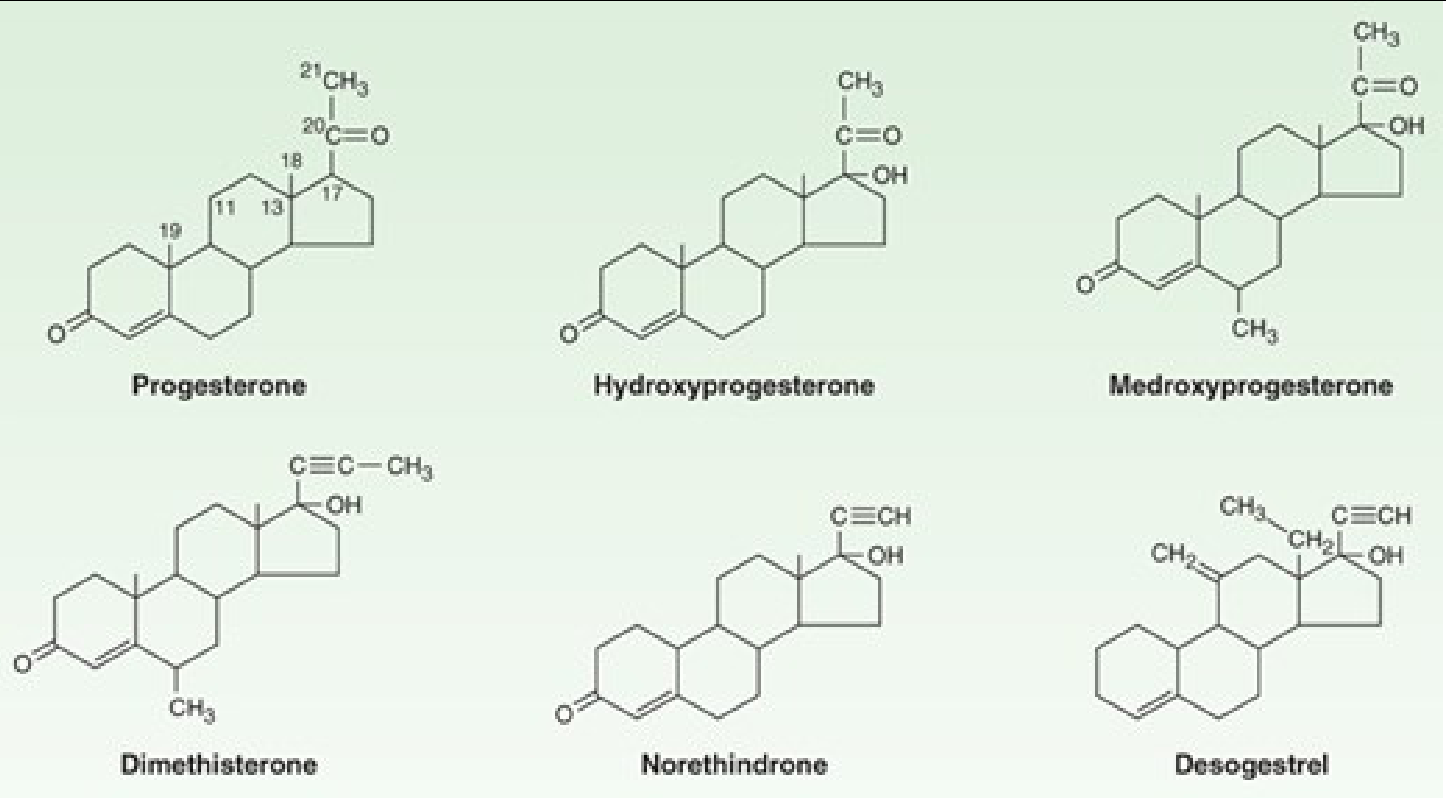
Pharmacokinetics
- Progesterone: rapidly absorbed by any route; half-life ~5 minutes; almost completely metabolized in first pass through liver - making ordinary oral preparations ineffective
- Micronized progesterone (oral) overcomes first-pass problem
- Metabolism: converted to pregnanediol in liver, conjugated with glucuronic acid, excreted in urine as pregnanediol glucuronide (used as index of progesterone secretion)
- Synthetic progestins: longer half-lives, less first-pass metabolism; most given orally or IM
Mechanism of Action
- Progestins enter cells, bind progesterone receptors (PR-A and PR-B) in nucleus and cytoplasm
- Ligand-receptor complex dimerizes and binds progesterone response elements (PREs)
- PRE is similar to corticosteroid response element; specificity depends on which receptor isoform is present
- PR forms homodimers (A-A, B-B) or heterodimers (A-B)
Physiologic Effects of Progesterone
| System | Effect |
|---|---|
| Uterus | Converts proliferative to secretory endometrium; ↓ uterine contractility (relaxes myometrium); ↑ viscosity of cervical mucus (blocks sperm penetration) |
| Temperature | ↑ basal body temperature by ~0.5°F after ovulation (thermogenic effect) |
| Breasts | Lobulo-alveolar development |
| Carbohydrate metabolism | ↑ basal insulin levels and insulin response to glucose; promotes glycogen storage (permissive for insulin); promotes ketogenesis |
| Aldosterone antagonism | Competes with aldosterone at mineralocorticoid receptor → natriuresis (compensatory aldosterone ↑ follows) |
| CNS | Mild sedative/anesthetic properties; raises seizure threshold |
| Fat | Stimulates lipoprotein lipase; favors fat deposition |
Clinical Uses of Progestins
- Hormonal contraception - most important use (with estrogen or progestin-only)
- Hormone replacement therapy (HRT) - added to estrogen to prevent endometrial hyperplasia/cancer in women with intact uterus
- Dysfunctional uterine bleeding - progesterone or MPA; withdrawal induces shedding
- Dysmenorrhea, endometriosis - suppress ovulation
- Endometrial carcinoma - high-dose megestrol or MPA for palliation
- Premenstrual syndrome - limited evidence; only effective with ovulation-suppressing doses
- Diagnostic use: administration followed by withdrawal bleeding confirms adequate estrogen priming (tests endometrial responsiveness)
- Threatened/habitual abortion - prevent miscarriage in corpus luteum deficiency
Adverse Effects & Contraindications
- Androgenic progestins (19-nortestosterone derivatives): ↓ HDL cholesterol - cardiovascular concern
- ↑ Blood pressure in some patients
- Combined estrogen + progestin HRT may ↑ breast cancer risk significantly more than estrogen alone
- Cholestatic jaundice (especially first 3 cycles)
- Depression in ~6-8% with some preparations
OTHER OVARIAN HORMONES
- The normal ovary also produces small amounts of testosterone, androstenedione, DHEA - physiologic roles include normal pubic/axillary hair, female libido, and metabolic effects
- Inhibin (αβ dimer): inhibits FSH secretion
- Activin (ββ dimer): stimulates FSH secretion; modulates response to LH/FSH in granulosa cells
- Relaxin: promotes cervical ripening, ↑ glycogen synthesis, ↓ uterine contractility
HORMONAL CONTRACEPTION
Combined Oral Contraceptives (COCs)
Contain estrogen (ethinyl estradiol) + progestin in fixed or sequential formulations.
Mechanism:
- Suppression of FSH and LH (prevents follicle development and ovulation)
- Alteration of cervical mucus (hostile to sperm)
- Alteration of endometrium (hostile to implantation)
- Altered tubal motility
Cardiovascular risks:
- Thromboembolism: ↑ 4-fold; attributable to estrogen component (↑ clotting factors)
- MI risk: increased in obese, hypertensive, hyperlipidemic, diabetic, or smoking women; risk 4/100,000 in non-smokers aged 30-40 vs. 185/100,000 in heavy smokers aged 40-44
- Stroke: risk ↑ in current users >35 years; subarachnoid hemorrhage ↑ in both current and past users
- Progestin component ↓ HDL proportional to its androgenic activity
Cancer:
- COCs may reduce risk of ovarian and endometrial cancer (protective with long use)
- Small ↑ in breast cancer with prolonged use (ongoing evidence assessment)
Other adverse effects:
- Cholestatic jaundice, hepatic adenomas
- Gallbladder disease
- Depression (6-8%)
- Hypertension (estrogen component via renin-angiotensin)
ESTROGEN & PROGESTIN ANTAGONISTS
Selective Estrogen Receptor Modulators (SERMs)
Tamoxifen:
- Partial agonist/antagonist; antagonist in breast, agonist in bone and uterus
- Used in ER-positive breast cancer treatment and chemoprevention
- 35% ↓ contralateral breast cancer
- Favorable lipid profile, ↑ bone density
- Risk: endometrial cancer (agonist at uterus)
Raloxifene:
- Antagonist at breast and uterus; agonist at bone
- No ↑ endometrial cancer risk (unlike tamoxifen)
- Used for postmenopausal osteoporosis and breast cancer risk reduction
Clomiphene:
- Partial agonist/antagonist; blocks estrogen feedback at hypothalamus
- Results in ↑ GnRH → ↑ FSH/LH → ovulation induction
- Used for anovulatory infertility (especially PCOS)
- Dose: 100 mg/day x 5 days
- Adverse effects: hot flushes, ovarian enlargement, ~10% multiple pregnancy, visual disturbances
- Caution: possible ↑ low-grade ovarian cancer risk with >1 year use
Mifepristone (RU-486):
- Potent progesterone and glucocorticoid receptor antagonist
- Used for medical abortion (with misoprostol), endometriosis, Cushing syndrome
THE ANDROGENS & ANABOLIC STEROIDS
Synthesis & Secretion
- Testosterone is the most important androgen secreted by the testis
- Males: ~8 mg/day produced; 95% from Leydig cells, 5% from adrenals
- Plasma levels: ~0.6 mcg/dL (post-pubertal males); ~0.03 mcg/dL (females)
- The testis also secretes small amounts of DHT, androstenedione, and DHEA
Binding & Transport
- 65% bound to SHBG (sex hormone-binding globulin)
- ~33% bound to albumin
- ~2% free (biologically active)
- SHBG ↑ by: estrogen, thyroid hormone, cirrhosis
- SHBG ↓ by: androgen, growth hormone, obesity
Metabolism
- In target tissues (prostate, skin, seminal vesicles), testosterone is converted to dihydrotestosterone (DHT) by 5α-reductase - the active form in those tissues
- In other tissues (liver, muscle), testosterone acts directly
- In brain: testosterone is aromatized to estradiol which mediates some CNS effects
- Testosterone is metabolized to 17-ketosteroids (androsterone, etiocholanolone) and excreted in urine
Mechanism of Action
- Testosterone or DHT (depending on the tissue) binds the intracellular androgen receptor (AR)
- Ligand-receptor complex translocates to nucleus, binds androgen response elements (AREs)
- Activates gene transcription for male secondary sex characteristics, spermatogenesis, protein anabolism
Physiologic & Pharmacologic Effects
Male secondary sex characteristics (puberty):
- Growth of penis, scrotum, prostate, seminal vesicles
- Pubic, axillary, facial, and body hair growth; male pattern baldness
- Laryngeal enlargement (voice deepening)
- Increased muscle mass and strength
- Bone growth and epiphyseal closure
- Erythropoiesis (↑ RBC production)
Adult males (large doses):
- Suppress FSH/LH → testicular atrophy and decreased spermatogenesis
Women receiving androgens:
- Facial and body hair, deepening voice, clitoral enlargement, frontal baldness, prominent musculature
Anabolic effects:
- ↓ urinary nitrogen excretion (↑ protein synthesis / ↓ protein breakdown)
- Effect more pronounced in women and children than in normal men
Clinical Uses of Androgens
-
Androgen replacement therapy in hypogonadal men:
- Testosterone enanthate or cypionate IM; transdermal patches/gels; subcutaneous pellets
- Start at puberty: 50 mg IM every 4 weeks, gradually increasing; adult dose 200 mg every 2 weeks
- Oral methyltestosterone (25-50 mg/day) or fluoxymesterone (2-10 mg/day) also used
-
Delayed puberty in boys - short-term testosterone to initiate pubertal development
-
Anemia - stimulate erythropoiesis (aplastic anemia, anemia of renal failure - largely replaced by erythropoietin)
-
Wasting/cachexia - anabolic steroids in AIDS wasting, burns, chronic illness
-
Breast cancer - previously used in postmenopausal women (now rarely)
-
Endometriosis - danazol (17α-ethinyl testosterone derivative) suppresses gonadotropins
-
Hereditary angioedema - danazol ↑ C1 esterase inhibitor
| Preparation | Route | Dose |
|---|---|---|
| Methyltestosterone | Oral/sublingual | 25-50 mg/d (oral); 5-10 mg/d (buccal) |
| Fluoxymesterone | Oral | 2-10 mg/d |
| Testosterone enanthate | IM | See text |
| Testosterone cypionate | IM | See text |
| Testosterone transdermal | Skin patch/gel | 2.5-10 mg/d (patch); 5-10 g/d (1% gel) |
Adverse Effects of Androgens
- Virilization in women: hirsutism, acne, clitoromegaly, voice deepening, menstrual irregularity
- Hepatotoxicity: especially 17-alkylated androgens (methyltestosterone, fluoxymesterone) - peliosis hepatis, cholestatic jaundice, hepatocellular carcinoma
- Oral testosterone → liver tumors (avoid)
- Suppression of spermatogenesis - testicular atrophy
- Polycythemia (↑ RBC)
- Premature epiphyseal closure in children
- Cardiovascular: anabolic steroids ↓ HDL, ↑ LDL → atherogenesis; hypertension
- Behavioral: aggression, psychosis with abuse
Androgen Suppression & Antiandrogens
Used in prostate cancer and conditions of androgen excess:
- GnRH agonists (leuprolide, goserelin): continuous stimulation → desensitization → ↓ LH → ↓ testosterone ("medical castration")
- 5α-Reductase inhibitors (finasteride, dutasteride): block conversion of testosterone → DHT; used in BPH, prostate cancer, male pattern baldness
- Androgen receptor antagonists (flutamide, bicalutamide): block AR; used with GnRH agonists for complete androgen blockade
- Abiraterone: inhibits CYP17 (17α-hydroxylase), blocks androgen synthesis; used in castration-resistant prostate cancer
- Spironolactone: aldosterone antagonist with anti-androgenic properties; used in PCOS, hirsutism
Preparations Available
| Class | Examples |
|---|---|
| Estrogens | Conjugated estrogens (Premarin), Estradiol, Estradiol transdermal (Estraderm), Estradiol cypionate (Depo-Estradiol), DES |
| Progestins | Progesterone (Prometrium), Medroxyprogesterone acetate (Provera), Levonorgestrel (Plan B), Megestrol (Megace), Norethindrone acetate (Aygestin) |
| Androgens/Anabolics | Testosterone, Testosterone enanthate (Delatestryl), Testosterone cypionate (Depo-testosterone), Testosterone transdermal (Androderm, AndroGel), Methyltestosterone (Android), Fluoxymesterone (Androxy), Nandrolone decanoate, Oxandrolone, Oxymetholone |
| Antagonists | Anastrozole (Arimidex), Tamoxifen, Raloxifene, Clomiphene, Mifepristone, Bicalutamide (Casodex), Abiraterone (Zytiga) |
Source: Katzung's Basic and Clinical Pharmacology, 16th Edition, Chapter 40 - The Ovary; Chapter 40 (continued) - The Testis
Very detailed pharmacologynotes on estrogen, progestins and androgens from katzung
I'll pull comprehensive, detailed content directly from Katzung in the medical library. Let me read all relevant sections in parallel.
Reading File
Reading File
Reading File
Reading File
Reading File
Reading File
Reading File
Reading File
Reading File
Reading File
Reading File
Reading File
Reading File
Reading File
Reading File
Here are the fully detailed pharmacology notes synthesized directly from Katzung's Basic & Clinical Pharmacology, 16th Edition, Chapter 40.
KATZUNG PHARMACOLOGY - DETAILED NOTES
Estrogens, Progestins & Androgens
(Chapter 40: The Ovary & The Testis)
PART I: THE ESTROGENS
1. Chemistry & Sources
Estrogenic activity is shared by many substances - steroidal, nonsteroidal, and plant-derived. Phytoestrogens (flavonoids) are found in soy, saw palmetto, and other foods. Bisphenols and phthalate phenols used in plastics are weakly estrogenic and may be linked to increased breast cancer incidence.
Natural Estrogens (the "three E's")
| Estrogen | Abbreviation | Source | Relative Potency |
|---|---|---|---|
| Estradiol (17β-estradiol) | E2 | Major ovarian secretory product; theca + granulosa cells | Most potent |
| Estrone | E1 | Liver from E2; peripheral tissues from androstenedione | Weak |
| Estriol | E3 | Liver from E2 + E1; fetoplacental unit (fetal adrenal + placental aromatase) | Weakest |
- Estradiol: plasma levels 50 pg/mL (early follicular) to 350-850 pg/mL (preovulatory peak)
- The stallion is one of the most prolific natural sources of estrogens (equilenin, equilin)
- During pregnancy, the fetoplacental unit is the main source: fetal adrenal secretes androgen precursors → placental aromatase converts to estriol. Maternal urinary estriol is used to assess fetal well-being
Equine Estrogens
Equilenin and equilin are unsaturated in both the A and B rings, recovered from horse urine - used in conjugated equine estrogens (Premarin)
Synthetic Estrogens
All modifications aim to increase oral bioavailability:
- Ethinyl estradiol (EE) - 17α-ethinyl group; resistant to first-pass metabolism; used in OCs (0.005-0.02 mg/d)
- Mestranol - 3-methyl ether of ethinyl estradiol; demethylated in liver to EE (prodrug)
- Diethylstilbestrol (DES) - nonsteroidal; stilbene derivative; high potency; now avoided (vaginal adenocarcinoma in daughters)
- Dienestrol, benzestrol, hexestrol, chlorotrianisene - other synthetic nonsteroidal estrogens
Commonly Used Estrogen Preparations (Table 40-1):
| Preparation | Average Replacement Dose |
|---|---|
| Ethinyl estradiol | 0.005-0.02 mg/d |
| Micronized estradiol | 1-2 mg/d |
| Estradiol cypionate (IM) | 2-5 mg every 3-4 weeks |
| Estradiol valerate (IM) | 2-20 mg every other week |
| Estropipate (oral) | 1.25-2.5 mg/d |
| Conjugated estrogens (oral) | 0.3-1.25 mg/d |
| Transdermal patch | 0.05-0.1 mg/d |
| Quinestrol | 0.1-0.2 mg/week |
2. Pharmacokinetics of Estrogens
- Binding: Estradiol binds strongly to α2-globulin (SHBG) and with lower affinity to albumin. Only the free fraction is physiologically active
- Oral: Rapidly absorbed but undergoes first-pass metabolism in gut and liver → converted to estrone (less potent). Conjugated metabolites (estrone sulfate, estrone glucuronide) are excreted in bile → hydrolyzed in intestine → enterohepatic recirculation
- Key oral effect: Oral estrogens reach high concentrations in the portal system → significantly stimulate hepatic protein synthesis (CBG, SHBG, TBG, angiotensinogen, clotting factors)
- Transdermal: Bypasses first-pass metabolism; 50-100 mcg/day estradiol transdermally ≈ 0.625-1.25 mg/day oral conjugated estrogens for gonadotropin suppression. Does NOT significantly increase CBG, SHBG, TBG, renin substrate, or cause same lipid changes
- IM injections: Long-acting; estradiol cypionate and valerate
- Metabolism: Liver converts E2 → E1 and E3 → hydroxylated catechol estrogens → glucuronide/sulfate conjugates → urine and bile
- Estrogens are also excreted in small amounts in breast milk
3. Mechanism of Action of Estrogens
Genomic (Classical) Pathway
- Estradiol (free) diffuses across the plasma membrane
- Enters nucleus and binds estrogen receptor α (ERα) or β (ERβ) - both encoded by separate genes; members of the nuclear receptor superfamily
- Receptors are normally stabilized by heat shock proteins (predominantly Hsp90)
- Hormone binding causes conformational change → release from Hsp90
- Receptor-hormone complex forms dimers: ERα-ERα, ERβ-ERβ, or ERα-ERβ heterodimers
- Dimers bind estrogen response elements (EREs) - palindromic sequences in gene regulatory regions
- Interaction with nuclear coregulators (coactivators and corepressors) and basal transcription machinery → altered gene transcription
- Protein synthesis → hormonal effects (takes hours)
ERα vs ERβ
- ERα: growth-promoting; predominant in uterus, liver, breast
- ERβ: acts as dominant-negative inhibitor of ERα; has antigrowth effects; activated by phytoestrogens → protects cells from ERα-driven proliferation
- Many phytoestrogens act preferentially via ERβ
Non-Genomic (Rapid) Pathway
- Rapid effects (e.g., granulosa cell Ca²⁺ uptake, increased uterine blood flow) do not require transcription
- Mediated by membrane-associated receptors (palmitoylated forms) interacting with cytoplasmic signaling pathways (MAPK, PI3K, adenylyl cyclase)
- All steroid receptors (except mineralocorticoid receptors) have palmitoylation motifs allowing membrane localization
Tissue Specificity
- Determined by the relative concentrations and types of ERs, coregulators, and transcription factors in each cell - this is the molecular basis of SERMs
4. Physiologic Effects of Estrogens
A. Female Sexual Maturation (Puberty)
- Growth and development of vagina, uterus, uterine tubes
- Breast: stromal development and ductal growth
- Accelerated skeletal growth phase then epiphyseal closure (long bones)
- Axillary and pubic hair growth; typical female fat distribution; skin pigmentation (nipples, areolae, genitalia)
B. Endometrial Effects
- Proliferative phase of cycle: estrogen drives endometrial proliferation (glands, stroma, blood vessels)
- Sensitizes endometrium to progesterone (↑ PR expression)
- Unopposed estrogen → endometrial hyperplasia → risk of endometrial carcinoma
C. Cervical/Vaginal Effects
- Cervical mucus: Estrogen makes it thin, watery, and copious ("ferning" pattern) - favorable for sperm penetration
- Vaginal epithelium: Promotes maturation and cornification
D. Ovarian/Menstrual Cycle Effects
- During follicular phase: estrogen → negative feedback on FSH (with inhibin)
- Rising estradiol approaching the LH surge: positive feedback → triggers midcycle LH surge → ovulation
- Post-ovulation: participates with progesterone from corpus luteum
E. Breast Effects
- Ductal growth and development; fat deposition
- High doses → breast tenderness and enlargement
F. Bone Effects
- Inhibits osteoclast activity (↑ OPG, ↓ RANKL signaling)
- Estrogen deficiency → accelerated bone loss (postmenopausal osteoporosis)
- Maintains bone mineral density; epiphyseal closure at puberty
G. Cardiovascular Effects
- Favorable lipid profile: ↑ HDL, ↓ LDL, ↑ triglycerides
- Vasodilatory effects (↑ NO synthesis)
- Oral estrogens: ↑ hepatic synthesis of angiotensinogen → may cause hypertension
- Increases clotting factors (II, VII, IX, X) and fibrinogen → ↑ thrombosis risk
H. Liver Effects (Critical for Exams)
- Oral estrogens → stimulate hepatic synthesis of:
- CBG (corticosteroid-binding globulin) → ↑ bound cortisol (but free cortisol normal)
- SHBG → binds androgens/estrogens
- TBG (thyroxine-binding globulin) → ↑ total T4/T3 (but free thyroid normal) - important when interpreting TFTs in OC users
- Angiotensinogen (renin substrate) → ↑ angiotensin II → hypertension
- Clotting factors II, VII, IX, X, fibrinogen
- Ceruloplasmin
- ↓ Haptoglobin (unique - most proteins are increased)
- Delay clearance of sulfobromophthalein; reduce bile flow; alter bile acid composition → cholelithiasis
- Transdermal route avoids all of these hepatic first-pass effects
I. Metabolic/Endocrine Effects
- ↑ Serum triglycerides, ↑ phospholipids, ↑ HDL
- May alter carbohydrate metabolism
- Thermogenic effect (minor, mostly from progesterone)
J. CNS Effects
- Estrogens tend to increase CNS excitability
- Relieve hot flashes by action on thermoregulatory centers
- Used in postpartum depression, premenstrual syndrome
5. Clinical Uses of Estrogens
1. Menopause / Hormone Replacement Therapy (HRT)
- Hot flushes (vasomotor symptoms) - most effective treatment
- Urogenital atrophy (vaginal dryness, dyspareunia, recurrent UTI)
- Prevention of postmenopausal osteoporosis
- Must add progestin in women with intact uterus to prevent endometrial hyperplasia/cancer
- Women post-hysterectomy: estrogen alone is sufficient
2. Hypogonadism & Primary Ovarian Insufficiency
- Turner syndrome, premature ovarian failure
- Replacement therapy to induce puberty and maintain secondary sex characteristics
- Requires cyclic progestin for endometrial protection
3. Dysmenorrhea & Endometriosis
- Combined E+P to suppress ovulation and reduce endometrial proliferation
4. Hirsutism / Androgen Excess (e.g., PCOS)
- Estrogen + progestin suppress pituitary → ↓ LH → ↓ ovarian androgen synthesis
- May need 50 mcg EE OCP or GnRH suppression for severe cases
5. Oral Contraception (see Hormonal Contraception section)
6. Prevention of Cardiovascular Disease (Controversial)
- Observational data suggested benefit; WHI trial showed increased risk with combined HRT (E+P); estrogen alone may be neutral or slightly protective in younger postmenopausal women
7. Breast Cancer (selected postmenopausal women, largely replaced)
8. Prostate Cancer - DES (largely replaced by GnRH analogs)
6. Adverse Effects of Estrogens
A. Uterine Bleeding
- Most common side effect; postmenopausal bleeding on unopposed estrogen
- Use smallest effective dose cyclically; add progestin to prevent endometrial hyperplasia
- Must always rule out endometrial carcinoma if unexpected bleeding occurs
B. Cancer Risks
- Endometrial carcinoma:
- Unopposed estrogen: 2-4x higher risk (low dose, short-term); up to 15x higher risk (high dose, >5 years)
- Adding cyclic progestin eliminates this excess risk and may actually reduce incidence below baseline
- Breast cancer:
- No adverse effect with short-term use
- Small ↑ with prolonged therapy (relative risk ~1.25; absolute impact significant since breast cancer affects 10% of women)
- Adding progestin to estrogen: greater breast epithelial proliferation than estrogen alone (terminal duct-lobular units); may increase risk more than E alone
- Tamoxifen post-breast cancer: 35% ↓ in contralateral breast cancer
- Vaginal adenocarcinoma: In daughters of mothers treated with DES in early pregnancy (peak age 14-44); rare (<1/1000 exposed)
C. Thromboembolic Disease
- ↑ clotting factors II, VII, IX, X → VTE risk
- Oral > transdermal for clot risk
D. Other Adverse Effects
- Nausea, breast tenderness (minimize with lowest effective dose)
- Hyperpigmentation (chloasma/melasma)
- Migraine headaches (increased frequency)
- Cholestasis and gallbladder disease (altered bile composition)
- Hypertension (via angiotensinogen ↑)
E. Contraindications
- Estrogen-dependent tumors: endometrial carcinoma, breast carcinoma
- Undiagnosed vaginal/uterine bleeding
- Active liver disease
- History of thromboembolic disorder
- Heavy smokers (especially >35 years)
PART II: THE PROGESTINS
1. Natural Progestins: Progesterone
- The most important progestin; also serves as precursor to estrogens, androgens, and adrenocortical steroids
- Synthesized in: corpus luteum (primarily), granulosa cells, adrenal cortex, testis, placenta (large amounts during pregnancy)
- Normal male: 1-5 mg/day; plasma ~0.03 mcg/dL
- Female - follicular phase: only a few mg/day; plasma level slightly above male
- Female - luteal phase: 0.5-2+ mcg/dL
- Peak levels: mid-to-late luteal phase and during pregnancy (placental production)
2. Synthetic Progestins
Class 1: C-21 Progesterone Derivatives
Similar to progesterone pharmacologically:
- Medroxyprogesterone acetate (MPA) - oral or IM (depot); widely used in HRT and contraception
- Megestrol acetate - oral; also used in cancer cachexia
- Hydroxyprogesterone caproate - IM; 8-14 day duration
- These have low androgenic activity
Class 2: 17α-Ethinyl Testosterone Derivatives
- Dimethisterone - oral; weak progestin
Class 3: 19-Nortestosterone Derivatives (C-19, "19-nor" compounds)
Derived from testosterone; more potent orally; variable androgenic activity:
- Norethindrone, norethindrone acetate - mildly androgenic
- Norgestrel, levonorgestrel - most androgenic (reduce HDL)
- Norethynodrel - has estrogenic activity
- Desogestrel, gestodene, norgestimate - 3rd-generation progestins; "13-nor, 13-ethyl" steroids; claimed lower androgenic activity than older 19-nor compounds; used in modern OCs
Table 40-2 Summary - Progestin Properties:
| Progestin | Estrogenic | Androgenic | Antiestrogenic | Antiandrogenic | Anabolic |
|---|---|---|---|---|---|
| Progesterone | - | - | + | - | - |
| Hydroxyprogesterone caproate | slight | slight | - | - | - |
| Medroxyprogesterone acetate | - | + | + | - | - |
| Megestrol acetate | - | + | - | + | - |
| Norethindrone | slight | + | + | - | + |
| Levonorgestrel | - | ++ | + | - | + |
| Desogestrel | - | - | - | - | - |
| Norethynodrel | + | - | - | - | - |
3. Pharmacokinetics of Progesterone & Synthetic Progestins
Progesterone
- Rapidly absorbed from any route
- Half-life in plasma: ~5 minutes
- Stored temporarily in body fat
- Almost completely metabolized on first pass through liver → ineffective by ordinary oral route
- Exception: micronized progesterone (Prometrium) - fine particle size increases oral bioavailability
- Hepatic metabolism: reduced to pregnanediol → conjugated with glucuronic acid → excreted in urine as pregnanediol glucuronide (used as index of corpus luteum function)
- Minor metabolites: 20α- and 20β-hydroxyprogesterone (~1/5th potency)
Synthetic Progestins
- Most are active orally (19-nor compounds especially)
- Longer half-lives than progesterone; less first-pass metabolism
- Duration varies (see Table 40-2): most oral forms act 1-3 days; depot MPA 4-12 weeks per injection
- Metabolized to inactive products, mainly excreted in urine
4. Mechanism of Action of Progestins
- Progestin enters cell → binds progesterone receptors (PR-A and PR-B) in nucleus and cytoplasm
- Both PR isoforms are produced by alternative splicing of the same gene
- Ligand-receptor complex forms homodimers (A-A or B-B) or heterodimers (A-B)
- Dimers bind progesterone response elements (PREs) in gene regulatory regions → activates transcription
- PRE is similar to the glucocorticoid response element (GRE) - specificity depends on which receptor is present plus cell-specific coregulators
- Progestins also modulate gene expression indirectly by interaction with transcription factors
5. Physiologic Effects of Progesterone
A. Uterine Effects
- Converts proliferative (estrogen-stimulated) endometrium to secretory endometrium
- Decreases endometrial sensitivity to estrogen (↓ ER expression)
- Inhibits estrogen-driven endometrial hyperplasia
- Cervical mucus: becomes thick, scanty, and viscous → hostile to sperm penetration (opposite of estrogen)
- Myometrium: decreases contractility (relaxes uterus) → prepares for implantation and maintains pregnancy
- Withdrawal of progesterone → menstruation
B. Thermogenic Effect
- Progesterone raises basal body temperature by ~0.5°F after ovulation
- Used clinically to confirm ovulation (charting method)
C. Carbohydrate Metabolism
- Increases basal insulin levels and insulin response to glucose
- Promotes glycogen storage in liver (permissive for insulin)
- Promotes ketogenesis
- Usually no overt change in glucose tolerance at physiologic doses, but marked impairment with potent progestins (norgestrel)
D. Fat Metabolism
- Stimulates lipoprotein lipase → favors fat deposition
- Androgenic progestins (levonorgestrel, norgestrel): ↓ HDL → cardiovascular risk
E. Aldosterone Antagonism
- Progesterone competes with aldosterone at the mineralocorticoid receptor → natriuresis
- Compensatory rise in aldosterone follows; pregnant women have elevated aldosterone levels as a result
F. CNS Effects
- Mild sedative and anesthetic properties
- Raises seizure threshold (unlike estrogen which lowers it)
- Thermogenic effect occurs via CNS action
G. Breast Effects
- Promotes lobulo-alveolar development (complementing estrogen-driven ductal development)
- High doses may cause breast tenderness
H. Respiratory Effects
- Progesterone is a respiratory stimulant - raises CO2 sensitivity of respiratory center
- Progesterone levels during the luteal phase cause relative hyperventilation (↓ PaCO2)
- Medroxyprogesterone used in obstructive sleep apnea and obesity-hypoventilation syndrome
6. Clinical Uses of Progestins
1. Hormonal Contraception (Most Important Use - See Section IV)
2. Hormone Replacement Therapy
- Added to estrogen in women with intact uterus to prevent endometrial hyperplasia
- Regimens: cyclic (days 15-28) or continuous combined (0.625 mg CEE + 2.5 mg MPA)
- Continuous combined = no withdrawal bleed; preferred by many women
3. Dysfunctional Uterine Bleeding (DUB)
- Progestin given for 5-7 days → withdrawal bleed → regulates irregular shedding
- Diagnostic use: MPA 10 mg/day × 5-7 days → withdrawal bleeding only if endometrium has been primed by estrogen → confirms adequate estrogen production in amenorrheic patients
4. Endometriosis
- Progestins (MPA, norethindrone) suppress ovulation and induce decidualization of ectopic endometrium → atrophy
5. Endometrial Carcinoma
- High-dose MPA or megestrol acetate for palliation of well-differentiated endometrial carcinoma
- Also used in breast cancer
6. Threatened/Habitual Abortion
- Progesterone supplementation when corpus luteum deficiency suspected in early pregnancy
7. Premenstrual Syndrome (PMS)
- Controlled studies have not confirmed effectiveness except when doses suppress ovulation
8. Cachexia/Anorexia
- Megestrol acetate stimulates appetite; used in AIDS wasting and cancer cachexia
7. Adverse Effects of Progestins
- Androgenic progestins (19-nortestosterone derivatives): ↓ HDL cholesterol → atherogenesis risk
- Hypertension: some progestational compounds alone or in OCs may increase BP in some patients
- Breast cancer risk: combined E+P in HRT significantly ↑ breast cancer risk vs. estrogen alone (WHI data). Breast proliferation localized to terminal duct-lobular units (main site of breast cancer origin)
- Cholestatic jaundice: especially first 3 cycles; similar to 17-alkyl-substituted steroids; more common with personal/family history of cholestasis in pregnancy; clears 1-8 weeks after stopping
- Gallbladder disease: altered bile acids
- Depression: ~6-8% of patients with some preparations require cessation
- Glucose intolerance (potent progestins)
- Weight gain (especially with androgenic progestins)
PART III: HORMONAL CONTRACEPTION
1. Types of Hormonal Contraceptives
A. Combined Oral Contraceptives (COCs)
- Most widely used
- Two formulation types:
- Monophasic: fixed E+P dose throughout cycle
- Multiphasic (biphasic, triphasic): dose of one or both components changes - reduces total hormone load without increasing breakthrough bleeding
B. Progestin-Only ("Mini-pill")
- Continuous low-dose progestin; no estrogen
- Does not reliably suppress ovulation
- Works primarily via cervical mucus thickening, endometrial atrophy
C. Depot Contraceptives
- DMPA (depot medroxyprogesterone acetate, Depo-Provera): 150 mg IM every 3 months; inhibits ovulation for ≥14 weeks
- Subcutaneous implant: etonogestrel capsules (Nexplanon); lasts 2-4 years; extremely effective; very low hormone levels → minimal lipid/carbohydrate effects
D. Intrauterine hormonal devices (levonorgestrel-IUD): local progestogenic effect
E. Vaginal rings (ethinyl estradiol + etonogestrel)
2. Mechanism of Action of Combined OCs
- Suppression of FSH and LH → inhibit follicular development → prevent ovulation (primary mechanism)
- Cervical mucus changes → thick, viscous, scanty → hostile to sperm penetration
- Endometrial changes → atrophic, unreceptive to implantation
- Altered tubal motility and secretion → impairs sperm and egg transport
3. Effects on Specific Systems
Ovary
- Chronic use: minimal follicular development; no corpora lutea; ovaries may shrink
- Return of fertility: 75% ovulate in first post-treatment cycle; 97% by 3rd cycle; ~2% remain amenorrheic for years
Uterus/Cervix
- Cervical hypertrophy and polyp formation with prolonged use
- Endometrium: glandular atrophy (especially 19-nor progestins with low estrogen)
Breast
- Mild stimulation and enlargement
- Small amounts cross into breast milk but not clinically significant
- Estrogen-containing OCs suppress lactation if started early postpartum
CNS
- Estrogens: increase excitability; may worsen or trigger migraine → discontinue if migraine begins on OCs
- Estrogens: used in PMS and postpartum depression
Blood/Hematology
- ↑ Serum iron and total iron-binding capacity (similar to hepatitis pattern)
- Folic acid deficiency anemia reported
- No consistent changes in cellular blood components
Liver
- Delayed clearance of sulfobromophthalein; reduced bile flow
- ↑ cholic acid / ↓ chenodeoxycholic acid in bile → cholelithiasis
- ↑ hepatic adenoma incidence
- Ischemic bowel disease (thrombosis of mesenteric vessels) reported
Lipid Metabolism
- Estrogen: ↑ triglycerides, ↑ cholesterol, ↑ phospholipids, ↑ HDL, ↓ LDL (at doses of ≥100 mcg mestranol/EE)
- Progestins (19-nor): antagonize estrogen's lipid effects; ↓ HDL, ↑ LDL
- Low-dose combined OCs: may slightly ↓ triglycerides and HDL
Carbohydrate Metabolism
- Reduction in GI absorption rate of carbohydrates
- Progesterone: ↑ basal insulin; ↑ insulin response to glucose
- Potent progestins (norgestrel): may cause progressive ↓ glucose tolerance over years (reversible)
Cardiovascular
- Small ↑ cardiac output, ↑ systolic and diastolic BP, ↑ heart rate (reversible on stopping)
- Monitor BP in all patients on OCs
Skin
- Chloasma (skin pigmentation): enhanced by dark complexion and UV exposure; incidence ~5% at 1 year, ~40% after 8 years; often reversible
- Androgenic progestins: may ↑ sebum → acne; however, since ovarian androgen is suppressed, most patients see ↓ acne and terminal hair
4. Adverse Effects of Combined OCs
Minor Adverse Effects
- Breakthrough bleeding (up to 25% on progestin-only; less with combined)
- Weight gain (~1-2 kg); more with androgenic progestins
- Increased skin pigmentation
- Acne (with androgenic progestins) or improvement (with non-androgenic OCs)
- Hirsutism worsened by 19-nortestosterone derivatives
- Ureteral dilation; ↑ bacteriuria
- Vaginal infections more common and harder to treat
- Amenorrhea post-pill (with or without galactorrhea) - check prolactin → may reveal prolactinoma
- Headache (mild, transient)
- Withdrawal bleeding failure - may be confused with pregnancy
Serious Adverse Effects
1. Vascular Disorders
Venous Thromboembolism (VTE)
- One of the earliest and most studied serious effects
- Estrogen component responsible via ↑ clotting factors
- Risk attributed to OCs: ~3x baseline (primarily from estrogen component)
Myocardial Infarction
- ↑ risk in women with obesity, history of preeclampsia/hypertension, hyperlipidemia, diabetes
- Much higher risk in smokers: risk in non-smokers 30-40 yo = ~4/100,000/year; in heavy smokers 40-44 yo = ~185/100,000/year
- Mechanism: accelerated atherogenesis from ↓ glucose tolerance, ↓ HDL, ↑ LDL, ↑ platelet aggregation, possible coronary artery spasm
- No increased risk in past users who have discontinued OCs
Stroke
- Risk concentrated in women >35 years
- ↑ in current users; not in past users
- Subarachnoid hemorrhage: ↑ in both current and past users; may increase with time
- Risk of thrombotic/hemorrhagic stroke: ~37/100,000/year (based on older high-dose preparations)
2. Gastrointestinal
- Cholestatic jaundice (first 3 cycles; genetic predisposition; resolves 1-8 weeks after stopping)
- ↑ symptomatic gallbladder disease (cholecystitis, cholangitis)
- Hepatic adenomas
- Ischemic bowel disease
3. Depression
- ~6-8% of patients; may require cessation
4. Cancer
- Protective: long-term use ↓ ovarian and endometrial cancer risk
- Breast cancer: small ↑ risk with prolonged use (ongoing investigation)
5. Progestin-Only Contraception
- Suitable for patients where estrogen is undesirable (breastfeeding, hypertension, prior DVT, hepatic disease, psychosis/mental retardation)
- Efficacy: comparable to IUDs or low-dose combined OCs
- High incidence of abnormal/breakthrough bleeding (25%+)
- DMPA specific concerns:
- Nearly all users: unpredictable spotting/bleeding (especially year 1) → progressively decreasing → amenorrhea
- Ovulation suppression can persist up to 18 months post last injection
- ↑ risk of endometrial cancer (protective long-term)
- Reversible ↓ bone density (suppresses endogenous estrogen)
- Changes in plasma lipids → ↑ atherosclerosis risk
- Implant (etonogestrel): lasts 2-4 years; minimal lipid/carbohydrate effects; requires surgical insertion/removal
6. Postcoital (Emergency) Contraception
Effective if begun within 72 hours - effective in 99% of cases
| Schedule | Notes |
|---|---|
| Conjugated estrogens 10 mg TID × 5 days | High nausea rate |
| Ethinyl estradiol 2.5 mg BD × 5 days | |
| Mifepristone 600 mg once + misoprostol 400 mcg once | |
| Levonorgestrel 1.5 mg once (Plan B One-Step) | Progestin-only; preferred |
| Levonorgestrel 0.75 mg BD × 1 day (Plan B) |
- 40% of patients experience nausea/vomiting → give antiemetics
- Other effects: headache, dizziness, breast tenderness, abdominal and leg cramps
- High-dose mifepristone (600 mg): long half-life (20-40 hours) → may delay ovulation in next cycle
PART IV: ESTROGEN & PROGESTIN ANTAGONISTS
1. Selective Estrogen Receptor Modulators (SERMs)
SERMs are partial agonist-antagonists with tissue-selective actions. Their specificity arises from different coregulator interactions in different cell types.
Tamoxifen
- Antagonist in breast; agonist in bone and uterus
- Uses: treatment and chemoprevention of ER-positive breast cancer
- Effects:
- 35% ↓ in contralateral breast cancer after unilateral excision
- Prevents lumbar spine bone density loss (estrogen-like on bone)
- Favorable lipid changes (↓ LDL) - estrogen-like
- Risk: increases endometrial cancer (agonist at uterus) → annual endometrial surveillance recommended
- Well tolerated; ↑ hot flashes
Raloxifene
- Antagonist at breast and uterus (no ↑ endometrial cancer risk)
- Agonist at bone and on lipids
- High first-pass effect but large Vd and long half-life (>24 hours) → once-daily dosing
- Approved: prevention of postmenopausal osteoporosis; breast cancer chemoprevention in high-risk women
- Does NOT stimulate endometrium or breast
Bazedoxifene
- 3rd-generation SERM; combined with conjugated equine estrogens (Duavee)
- Approved for menopausal symptoms and postmenopausal osteoporosis prevention
Clomiphene
- Older partial agonist-antagonist; weak estrogen + competitive inhibitor of endogenous estrogens
- Mechanism: blocks hypothalamic estrogen negative feedback → ↑ GnRH pulsatility → ↑ FSH and LH → follicular development → ovulation induction
- Most patients have PCOS: gonadotropin-dependent ovarian hyperandrogenism + anovulation + infertility; frequently associated with adrenal hyperandrogenism
- Dose: 100 mg/day for 5 days → LH/FSH rise after several days → second LH peak before ovulation
- Clinical use: anovulatory infertility (not useful in ovarian or pituitary failure)
- Induces single ovulation per course; must repeat for each attempt at pregnancy; normal cyclic function rarely resumes
- Adverse effects:
- Hot flushes (most common; mild; resolve on stopping)
- Ovarian enlargement (stimulation) - monitor; 10% multiple pregnancy
- Visual symptoms (intensification of afterimages; rare; use caution with driving) - stop drug if occurs
- Headache, constipation, reversible alopecia, nausea
- Mood changes, weight gain, breast tenderness, heavy menses
- Contraindication: enlarged ovaries (more sensitive); visual symptoms (check for papilledema)
- Long-term risk: treatment >1 year may ↑ risk of low-grade ovarian cancer (inconclusive)
2. Mifepristone (RU-486)
- 19-norsteroid; binds strongly to progesterone receptor AND glucocorticoid receptor - antagonist at both
- Luteolytic in 80% of women when given in the mid-luteal period (mechanism unclear)
- Half-life: 20-40 hours (long; complicates continuous contraceptive use)
- Single dose of 600 mg: effective emergency postcoital contraceptive; may delay ovulation in next cycle
- Medical abortion: 600 mg mifepristone + misoprostol 400 mcg
- Potential uses (experimental/approved): endometriosis, Cushing syndrome, breast cancer, meningiomas (contain PR/GR)
- Acts as glucocorticoid antagonist at the GR → careful monitoring needed in patients with adrenal insufficiency
PART V: THE ANDROGENS
1. Testicular Physiology
- Testis has dual function: gametogenic (seminiferous tubules) and endocrine (Leydig cells)
- FSH → controls spermatogenesis (acts on Sertoli cells in seminiferous tubules)
- LH → stimulates testosterone production by Leydig cells (interstitial cells)
- High local testosterone concentrations required for continuing sperm production
- Sertoli cells: synthesize and secrete:
- Müllerian duct inhibitory factor (MIF/AMH)
- Inhibin and activin (α and β subunits)
- Estradiol (via aromatization of locally produced testosterone)
- Inhibin (αβA or αβB): inhibits pituitary FSH secretion (combined with T and DHT for feedback)
- Activin (βAβA or βAβB): stimulates FSH release; structurally similar to TGF-β
2. Androgen Synthesis & Secretion
- Testosterone: most important testicular androgen
- Daily production in men: ~8 mg; 95% from Leydig cells, 5% from adrenals
- Testis also secretes: small amounts of DHT, androstenedione, DHEA, pregnenolone, progesterone
- Plasma testosterone levels:
- Post-pubertal males: ~0.6 mcg/dL
- Females: ~0.03 mcg/dL (equal parts from ovaries, adrenals, and peripheral conversion)
- Begin declining after age 50 in males
Adrenal Androgens
- Androstenedione, DHEA, DHEAS: produced mainly in adrenal gland
- Contribute to pubic/axillary hair, bone maturation
- DHEA/DHEAS may have CNS effects, improve well-being, inhibit atherosclerosis in men
- Can be converted peripherally to estrone (1-5%) via P450 aromatase
3. Binding & Distribution of Testosterone
- ~65% bound to SHBG (sex hormone-binding globulin; also called testosterone-binding globulin)
- ~33% bound to albumin (weakly bound; relatively available)
- ~2% free (unbound) = biologically active fraction
Factors altering SHBG:
- SHBG ↑ by: estrogens, thyroid hormone, cirrhosis of liver → ↓ free testosterone
- SHBG ↓ by: androgens, growth hormone, obesity → ↑ free testosterone
4. Metabolism of Testosterone
5α-Reduction to DHT
- In target tissues (prostate, seminal vesicles, skin, external genitalia): testosterone → dihydrotestosterone (DHT) by 5α-reductase
- DHT is the major active androgen in these tissues (higher affinity for AR than testosterone)
- 5α-reductase inhibitors (finasteride, dutasteride): block this conversion → used in BPH and prostate cancer
Aromatization to Estradiol
- Testosterone → estradiol by P450 aromatase in adipose tissue, liver, hypothalamus
- Important for: negative feedback on GnRH/LH in men; bone effects in men; CNS effects
- Adipose tissue aromatization: explains why obese men may have signs of estrogen excess (gynecomastia)
Hepatic Degradation
- Reduction of Δ4-ketone in A-ring → androsterone and etiocholanolone (inactive)
- Conjugated (glucuronide or sulfate) → excreted in urine as 17-ketosteroids
5. Mechanism of Action of Androgens
- Testosterone or DHT (tissue-dependent) diffuses into cell
- Binds androgen receptor (AR) in cytoplasm/nucleus
- Ligand-AR complex: conformational change → dissociation from Hsp90
- AR dimerizes → translocates to nucleus (if not already there)
- Dimer binds androgen response elements (AREs) in gene regulatory regions
- Recruits coactivators → activates transcription of androgen-responsive genes
- In hypothalamus: estradiol (converted from testosterone) acts at ERα to modulate gonadotropin feedback
6. Physiologic Effects of Androgens
A. Puberty in Males (mediated by testosterone and DHT)
- Genital development: penile and scrotal growth; prostate and seminal vesicle growth
- Skin: pubic, axillary, beard hair; ↑ sebaceous gland activity → oilier skin and acne; ↑ skin thickness
- Voice: laryngeal growth → thicker vocal cords → lower-pitched voice
- Bone: skeletal growth stimulated; epiphyseal closure accelerated
- Muscle: ↑ muscle mass and strength
- Blood: ↑ erythrocyte production (↑ erythropoietin stimulation)
B. Nitrogen Balance / Anabolic Effect
- Androgens ↓ urinary nitrogen excretion = ↑ protein synthesis / ↓ protein breakdown
- Effect more pronounced in women and children than in normal men (who are already androgen-replete)
C. Feedback on Gonadotropins
- Large doses of testosterone alone → suppresses LH and FSH → testicular atrophy
- Normal feedback involves inhibin + androgens together
- In women: androgens cause facial/body hair, ↓ voice pitch, clitoral enlargement, frontal baldness, prominent musculature
7. Clinical Uses of Androgens
A. Androgen Replacement Therapy in Hypogonadal Men
- Primary hypogonadism (testicular failure) or secondary (pituitary/hypothalamic)
- For hypopituitarism: start at puberty age; begin with long-acting IM preparations
- Dosing schedule for puberty induction:
- Start: 50 mg IM every 4 weeks
- Then: 50 mg every 3 weeks (after 3 months)
- Then: 50 mg every 2 weeks (after further 3 months)
- Then: 100 mg every 2 weeks until maturation complete
- Adult maintenance: 200 mg every 2 weeks
Table 40-6 - Androgen Preparations:
| Drug | Route | Dose |
|---|---|---|
| Methyltestosterone | Oral | 25-50 mg/day |
| Methyltestosterone | Sublingual (buccal) | 5-10 mg/day |
| Fluoxymesterone | Oral | 2-10 mg/day |
| Testosterone enanthate | IM | See dosing above |
| Testosterone cypionate | IM | See dosing above |
| Testosterone transdermal | Skin patch | 2.5-10 mg/day |
| Testosterone topical gel (1%) | Topical | 5-10 g/day |
- Testosterone propionate: potent but short duration → impractical for long-term
- Testosterone undecanoate (oral): 40 mg/day; NOT recommended due to hepatic tumor risk
- Transdermal systems (scrotal or non-scrotal skin) avoid first-pass hepatic metabolism
B. Delayed Puberty
- Short-term low-dose testosterone to initiate puberty in boys with constitutional delay
- Caution: premature epiphyseal closure → may reduce final height if overdone; effects continue months after stopping
C. Anemia
- Stimulate erythropoiesis in aplastic anemia, Fanconi anemia, sickle cell anemia, myelofibrosis, hemolytic anemias
- Largely replaced by recombinant erythropoietin
- Caution: hepatocellular carcinoma reported with androgen anabolic therapy in aplastic anemia → prefer EPO/CSFs
D. Osteoporosis
- Androgens and anabolic agents used (alone or with estrogen) but largely replaced by bisphosphonates except in hypogonadism
E. Cachexia/Wasting
- Anabolic steroids used in AIDS wasting, burns, chronic illness
F. Androgen Abuse in Sports
- Athletes use doses 10-200 times the daily normal production
- Believe it increases strength and aggressiveness
- Unequivocally demonstrated effects only in women
- Adverse effects make use inadvisable
- Sports organizations: sensitive assays, random testing, strong penalties
G. Aging Men (Late-Onset Hypogonadism)
- Testosterone declines gradually after age 50; ~10% of middle-aged/older men have low morning fasting testosterone (<250 ng/dL)
- Usually secondary hypogonadism (low/normal LH) - associated with chronic noncommunicable diseases
- Not FDA-approved for age-related decline
- RCT evidence shows: ↑ lean body mass, ↑ hematocrit, ↓ bone turnover, possible ↑ sense of well-being, ↑ energy and muscle strength
- No proven association with ↑ prostate cancer diagnosis to date
- Pros/cons discussion with physician required; prostate cancer risk screening before initiation
8. Adverse Effects of Androgens
In Women (Virilization)
- Hirsutism, acne (↑ sebum)
- Voice deepening (may be irreversible)
- Clitoral enlargement (may be irreversible)
- Frontal (male-pattern) baldness
- Menstrual irregularity / amenorrhea
- ↑ Muscle mass
In Men
- Suppression of spermatogenesis → infertility (reversible)
- Testicular atrophy
- Gynecomastia (from aromatization to estradiol, especially with oral methyltestosterone)
In Children
- Premature epiphyseal closure → stunted final height
- Premature virilization
Hepatotoxicity (17-Alkylated Androgens - Critical!)
- Methyltestosterone, fluoxymesterone, oxymetholone: hepatotoxic due to 17α-alkyl group
- Peliosis hepatis (blood-filled cysts in liver)
- Cholestatic jaundice
- Hepatocellular carcinoma (especially with anabolic steroid use for aplastic anemia)
- Creatinuria
- Oral testosterone → liver tumors: oral route NOT recommended
- Parenteral/transdermal testosterone: NOT hepatotoxic (no 17α-alkyl group)
Cardiovascular
- Anabolic steroids: ↓ HDL, ↑ LDL → accelerated atherogenesis
- Polycythemia (↑ RBC)
- Hypertension
- ↑ Platelet aggregation
Endocrine
- ↑ ACTH and adrenal steroid secretion
- Thyroid and prolactin effects
- Electrolyte retention (sodium, water)
PART VI: ANDROGEN SUPPRESSION & ANTIANDROGENS
Indications for Androgen Suppression
- Prostate carcinoma (advanced/metastatic): historically required orchiectomy or high-dose estrogens (gynecomastia from DES, psychological effects from castration → led to better alternatives)
1. GnRH Analogs (Medical Castration)
- Leuprolide, goserelin, nafarelin, buserelin: agonists at GnRH receptor
- Pulsatile administration: stimulates gonadotropin release (used for fertility)
- Continuous administration: receptor desensitization → ↓ LH → ↓ testosterone to castrate levels (used for prostate cancer, endometriosis)
- "Testosterone flare" in first 1-2 weeks → often combine with an antiandrogen initially
2. 5α-Reductase Inhibitors
- Finasteride: selective 5α-reductase type II inhibitor; reduces DHT in prostate
- Used: BPH (reduce prostate volume), male pattern baldness (androgenetic alopecia), prostate cancer prevention
- Dutasteride: inhibits both 5α-reductase type I and II → greater DHT suppression
- Used: BPH
3. Androgen Receptor Antagonists
First Generation:
- Flutamide: pure AR antagonist; used in prostate cancer (with GnRH analog for complete androgen blockade)
- Hepatotoxic → monitor LFTs
- Bicalutamide (Casodex): AR antagonist; longer half-life than flutamide; less hepatotoxicity; used in prostate cancer
- Nilutamide: AR antagonist; may cause interstitial pneumonitis, visual disturbances
Second Generation:
- Enzalutamide: next-generation AR antagonist; no agonist activity; works in castration-resistant prostate cancer; prevents AR nuclear translocation
Spironolactone
- Aldosterone antagonist with anti-androgenic properties (competes at AR)
- Used clinically for hirsutism, PCOS, acne in women
Cyproterone Acetate
- Potent AR antagonist; also progestational activity; used in Europe for hirsutism and hyperandrogenism
4. Androgen Synthesis Inhibitors
Ketoconazole
- Antifungal; inhibits adrenal and gonadal steroid synthesis (inhibits CYP enzymes)
- Does not affect ovarian aromatase; reduces human placental aromatase
- Displaces E2 and DHT from SHBG in vitro
- Not clinically useful for hirsutism in women (toxicity at 400-800 mg/d required)
- Used experimentally in prostate cancer but results not encouraging
Abiraterone (Zytiga)
- Inhibits CYP17 (17α-hydroxylase/C17,20-lyase) → blocks steroid synthesis in testes, adrenals, AND prostate tumor cells
- Used in castration-resistant prostate cancer (after or before docetaxel)
- Given with prednisone (to offset ↓ cortisol and resulting ↑ ACTH/mineralocorticoid excess)
Summary Comparison Table
| Feature | Estrogens | Progestins | Androgens |
|---|---|---|---|
| Primary source | Ovarian follicle/corpus luteum | Corpus luteum | Leydig cells (testis) |
| Main endogenous hormone | Estradiol (E2) | Progesterone | Testosterone |
| Receptor | ERα, ERβ (nuclear) | PR-A, PR-B (nuclear) | AR (nuclear/cytoplasmic) |
| Active metabolite | Estrone, estriol | Pregnanediol (inactive) | DHT (in prostate/skin); E2 (CNS) |
| SHBG binding | Yes (high affinity) | No | Yes (65%) |
| First-pass metabolism | Significant (oral) | Extensive (progesterone) | Significant (most oral forms) |
| Key hepatic effects | ↑ CBG, SHBG, TBG, clotting factors | Minor | Hepatotoxicity (17-alkylated) |
| Bone effect | ↓ Osteoclast activity | Minor | Stimulate growth; close epiphyses |
| Lipid effect | ↑ HDL, ↓ LDL | ↓ HDL (androgenic progestins) | ↓ HDL, ↑ LDL (anabolic steroids) |
| Key contraindication | Estrogen-dependent tumors; DVT | Active liver disease | Prostate/breast cancer |
Source: Katzung's Basic and Clinical Pharmacology, 16th Edition, Chapter 40 - The Ovary (Estrogens, Progestins, Hormonal Contraception) and The Testis (Androgens, Antiandrogens)
This is a shared conversation. Sign in to Orris to start your own chat.