
Short note on hamstring muscle
Reading File
Now let me search the medical library for hamstring muscle content in parallel.
Finding Sources
Finding Sources
Good - Gray's Anatomy for Students has a dedicated "Hamstring muscle injury" section. Let me read that along with broader anatomy content.
Reading File
Finding Sources
Good data from Gray's. Now let me read the hamstring injury section and get the full muscle table:
Reading File
Reading File
I now have comprehensive content. Let me fetch the anatomy diagram image for inclusion in the answer.
Loading Image
I now have everything needed for a comprehensive short note. Here is the answer:
Hamstring Muscles - Short Note
Overview
The hamstring muscles are a group of three muscles occupying the posterior compartment of the thigh. They are so named because their long tendons are prominent behind the knee ("ham" = back of thigh, "string" = tendon). They are biarticular - crossing both the hip and knee joints.
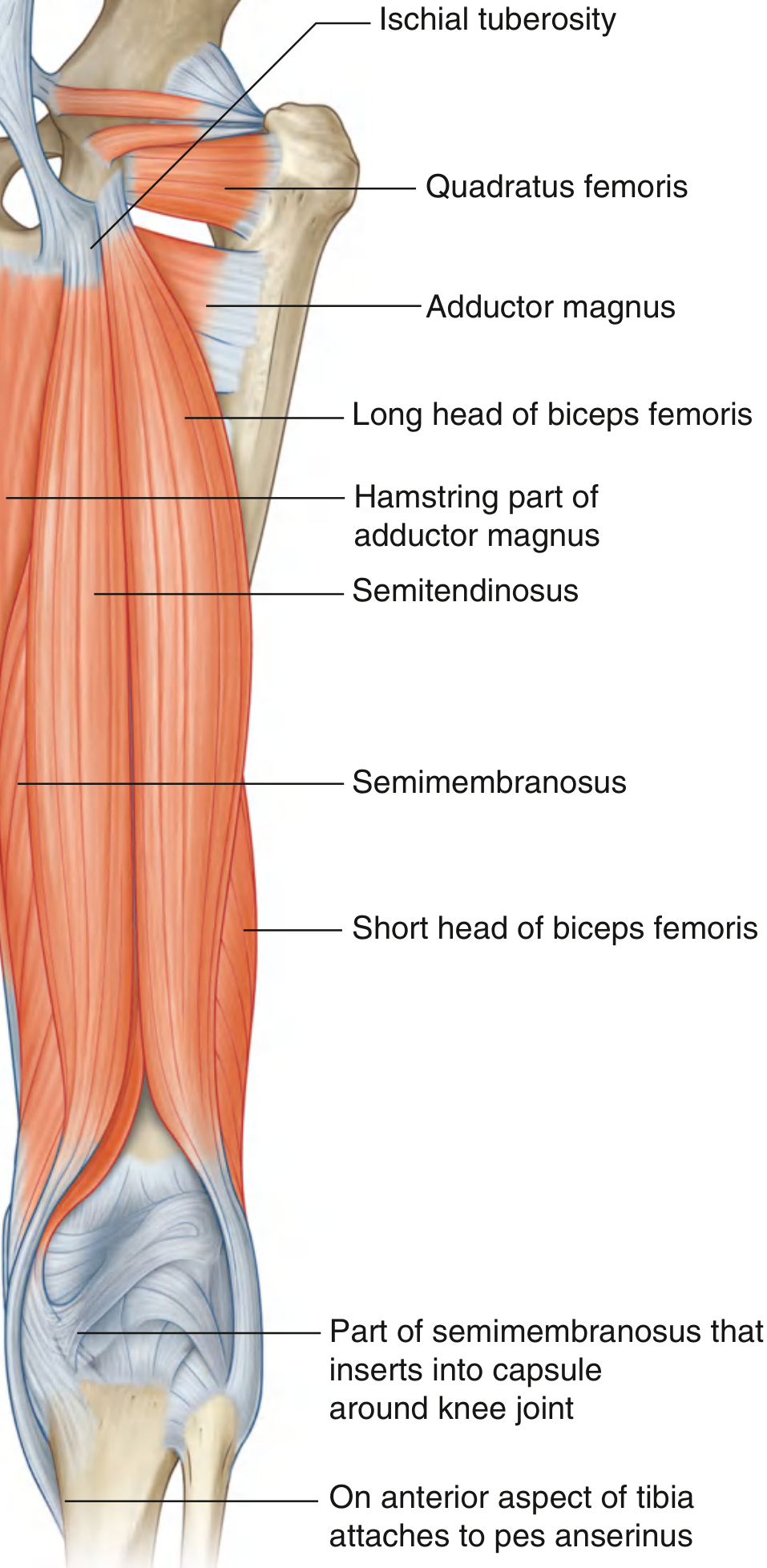
Fig. 6.63 - Muscles of the Posterior Compartment of the Thigh (Posterior view) — Gray's Anatomy for Students
The Three Hamstring Muscles
1. Biceps Femoris
- Two heads - long head and short head
- Long head origin: Inferomedial part of the upper area of the ischial tuberosity (with semitendinosus)
- Short head origin: Lateral lip of the linea aspera on the femoral shaft
- Insertion: Head of the fibula (lateral side of knee)
- Innervation: Long head - tibial division of sciatic nerve; short head - common fibular division of sciatic nerve (L5, S1, S2)
- Action: Flexes knee; long head also extends hip and laterally rotates thigh. With knee partly flexed, laterally rotates the leg
2. Semitendinosus
- Origin: Inferomedial part of the upper area of the ischial tuberosity (shared with long head of biceps femoris)
- Insertion: Medial surface of proximal tibia, as part of the pes anserinus (along with gracilis and sartorius)
- Innervation: Tibial division of sciatic nerve (L5, S1, S2)
- Action: Flexes knee, extends hip, medially rotates thigh at hip and leg at knee
- Note: The spindle-shaped belly ends midthigh, continuing as a long cord-like tendon
3. Semimembranosus
- Origin: Superolateral impression on the ischial tuberosity
- Insertion: Groove and adjacent bone on medial and posterior surface of the medial tibial condyle; expansions contribute to ligaments and fascia around the knee
- Innervation: Tibial division of sciatic nerve (L5, S1, S2)
- Action: Flexes knee, extends hip, medially rotates thigh and leg (with semitendinosus)
- Note: Lies deep to semitendinosus; its tendon is flat and membranous proximally - hence the name
Summary Table
| Muscle | Origin | Insertion | Nerve | Key Actions |
|---|---|---|---|---|
| Biceps femoris (long head) | Ischial tuberosity | Head of fibula | Sciatic - tibial division (L5, S1, S2) | Flexes knee; extends + laterally rotates hip |
| Biceps femoris (short head) | Lateral lip, linea aspera | Head of fibula | Sciatic - common fibular division (L5, S1, S2) | Flexes knee |
| Semitendinosus | Ischial tuberosity | Medial tibia (pes anserinus) | Sciatic - tibial division (L5, S1, S2) | Flexes knee; extends + medially rotates hip |
| Semimembranosus | Ischial tuberosity | Medial tibial condyle | Sciatic - tibial division (L5, S1, S2) | Flexes knee; extends + medially rotates hip |
Nerve Supply
All three muscles are innervated by the sciatic nerve (L5, S1, S2). The tibial division supplies all three plus the long head of biceps femoris, while the short head of biceps femoris is the only hamstring supplied by the common fibular (peroneal) division.
Blood Supply
The hamstrings are supplied primarily by the perforating branches of the profunda femoris artery and the inferior gluteal artery (to the proximal portions).
Functions
- Knee flexion - primary action; all three muscles
- Hip extension - two-joint muscles extend the hip (e.g., rising from a chair, running)
- Rotation - semitendinosus and semimembranosus medially rotate; biceps femoris laterally rotates the leg at the knee
- Pelvic control - stabilize the pelvis during gait
Clinical Relevance - Hamstring Injuries
Hamstring injuries are among the most common musculoskeletal injuries in athletes, particularly in sports requiring high power and speed (sprinting, track and field, football). - Gray's Anatomy for Students, p. 701
Types of injury:
- Mild strain - micro-tears within the muscle belly; focal fluid on MRI/ultrasound
- Partial tear - more muscle fibers involved
- Complete tear/rupture - at the musculotendinous junction (most common site in adults)
- Proximal avulsion - avulsion of the ischial tuberosity; common in adolescents during sudden hip flexion because the ischial apophysis is the weakest element in this age group
Mechanism: Typically occurs during sudden acceleration/deceleration, rapid change in direction, or the late swing phase of running (when the hamstring contracts eccentrically to decelerate the leg).
Imaging: Both ultrasound and MRI can assess the injury. MRI provides extent of injury and prognostic information (risk of re-tear, loss of function).
Pes Anserinus - The combined insertion of sartorius, gracilis, and semitendinosus at the medial tibia is a clinically important landmark for surgical harvesting (e.g., hamstring autograft in ACL reconstruction).
Sources: Gray's Anatomy for Students, pp. 699-702; Campbell's Operative Orthopaedics 15th Ed 2026
This is a shared conversation. Sign in to Orris to start your own chat.