
What is the effect of coffee on brain and does the hot chocolate,Team have same effect
Reading File
Now let me search the medical library and web in parallel for comprehensive information.
Finding Sources
Finding Sources
Searching the Web
caffeine effects on brain neuroscience coffee vs tea hot chocolate theobromine
Now let me pull the detailed textbook content and get info on tea/theobromine simultaneously.
Reading File
Reading File
Finding Sources
I now have rich content from authoritative textbooks and web sources. Let me also fetch the caffeine-adenosine diagram image mentioned in the textbook.
Loading Image
Finding Sources
I now have all the information needed for a comprehensive answer. Here is a full breakdown:
Effects of Coffee on the Brain — and How Tea & Hot Chocolate Compare
☕ Coffee: The Mechanism
Coffee's primary active compound is caffeine, the most widely consumed CNS stimulant in the world. Its brain effects are well-characterized pharmacologically.
1. Adenosine Receptor Antagonism (Primary Mechanism)
Caffeine is structurally similar to adenosine, an endogenous neuromodulator. You can see this structural resemblance clearly:
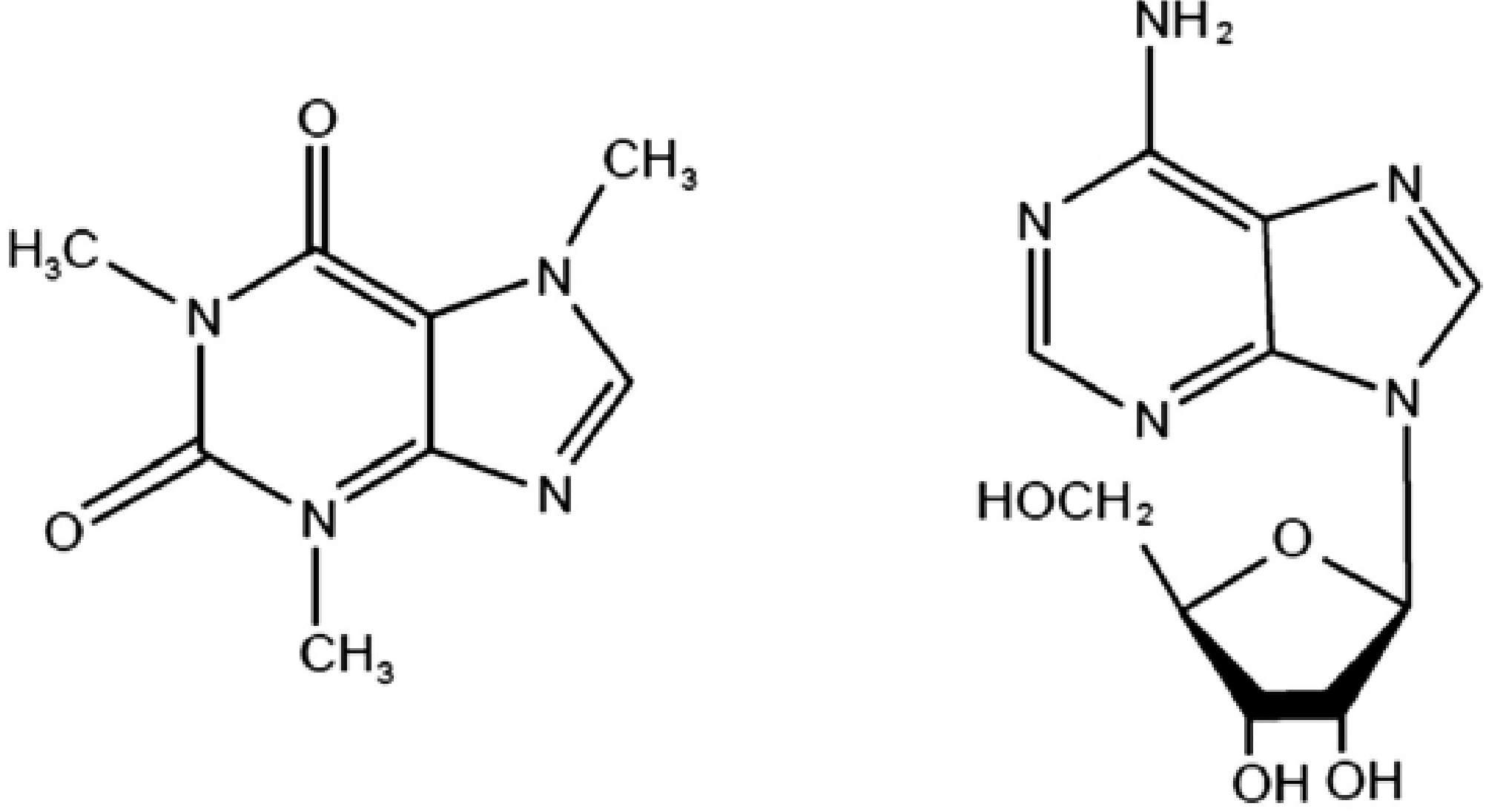
Adenosine normally:
- Reduces spontaneous electrical activity in the brain
- Dilates blood vessels in the brain
- Promotes drowsiness and sleep
Caffeine competitively blocks adenosine A1 and A2A receptors, reversing all these effects — producing CNS stimulation, cerebral vasoconstriction, and wakefulness.
— Kaplan & Sadock's Comprehensive Textbook of Psychiatry
2. Dopamine Enhancement
By antagonizing adenosine at A2A–D2 receptor heteromers, caffeine increases dopamine receptor sensitivity in the nucleus accumbens. This underlies its mood-enhancing, rewarding, and mildly addictive properties.
— Kaplan & Sadock's Comprehensive Textbook of Psychiatry
3. Dose-Dependent CNS Effects
| Dose | Effect |
|---|---|
| 100–200 mg (1–2 cups) | ↓ Fatigue, ↑ mental alertness, cortical stimulation |
| ~1.5 g (12–15 cups) | Anxiety, tremors |
| 2–5 g | Spinal cord stimulation, convulsions |
| ~10 g (~100 cups) | Lethal — cardiac arrhythmias |
— Lippincott's Illustrated Reviews: Pharmacology
4. Other Brain-Related Effects
- Inhibits cyclic nucleotide phosphodiesterases → raises cAMP/cGMP
- Mildly increases norepinephrine (NE) and dopamine (DA) release
- Rapidly crosses the blood-brain barrier (peak brain concentration within 30–60 min)
- Half-life: 3–10 hours (highly variable by genetics, pregnancy, smoking, medications)
5. Tolerance & Withdrawal
Tolerance develops quickly to stimulant effects. Sudden cessation in habitual users (>600 mg/day) causes headache, fatigue, lethargy, and irritability — a recognized withdrawal syndrome.
🍵 Tea: Similar but Milder
Tea contains caffeine as its primary stimulant (in fact, tea leaves contain more caffeine by weight than coffee beans, though brewing dilutes it). However, tea also contains two other methylxanthines and one unique compound:
| Compound | Found in | Brain effect |
|---|---|---|
| Caffeine | Tea, coffee | Strong CNS stimulant via adenosine antagonism |
| Theophylline | Tea | Weaker adenosine antagonist; more bronchodilatory than CNS-stimulating |
| L-Theanine | Tea (unique) | Promotes calming, reduces anxiety; synergizes with caffeine |
The combination of caffeine + L-theanine in tea produces a smoother, less jittery alertness compared to coffee. The energy feels more sustained, with less spike-and-crash.
🍫 Hot Chocolate: Related but Distinctly Different
Hot chocolate (from cacao) contains theobromine as its primary stimulant, with only a small amount of caffeine.
Theobromine vs. Caffeine
Both are methylxanthines and block adenosine receptors, but they differ in one key molecular detail — caffeine has three methyl groups, theobromine has two. This single difference has major consequences:
| Property | Caffeine | Theobromine |
|---|---|---|
| Adenosine receptor affinity | High | 2–3× lower than caffeine |
| Blood-brain barrier crossing | Easily crosses | Crosses less readily |
| CNS stimulation | Strong | Mild/weak |
| Vasodilation | Vasoconstricts brain vessels | Acts as a vasodilator |
| Onset | Fast (30–60 min) | Slower |
| Duration | Short-lived (3–10 hr half-life) | Longer-lasting |
| Addictive potential | Yes (dopamine release) | Minimal |
| Anxiety/jitteriness | Common at moderate doses | Rarely causes jitters |
Because theobromine crosses the blood-brain barrier less effectively, the CNS stimulation from hot chocolate is mild and diffuse rather than sharp. Theobromine also acts as a vasodilator, which actually has a relaxing effect on the body — giving a feeling of calm energy rather than the intense alertness of coffee.
Summary Comparison
| Drink | Main Active Compound | Brain Effect |
|---|---|---|
| Coffee | Caffeine (high) | Strong CNS stimulation, alertness, vasoconstriction, dopamine boost, addiction risk |
| Tea | Caffeine + L-Theanine | Smoother alertness, reduced anxiety, calming-energy synergy |
| Hot Chocolate | Theobromine (+ trace caffeine) | Mild stimulation, vasodilation, calm energy, longer-lasting, non-addictive |
All three beverages work through the same methylxanthine adenosine-antagonist pathway, but the intensity, duration, and side-effect profile differ significantly. Coffee is the strongest CNS stimulant, tea is intermediate and more calming, and hot chocolate is the mildest with the most relaxing profile.
Sources: Kaplan & Sadock's Comprehensive Textbook of Psychiatry; Lippincott's Illustrated Reviews: Pharmacology; Goodman & Gilman's The Pharmacological Basis of Therapeutics
This is a shared conversation. Sign in to Orris to start your own chat.