
Anatomical position Planes and axes Types of joints Types of muscles
Reading File
Now let me search the library for all four topics in parallel.
Finding Sources
Finding Sources
Finding Sources
Finding Sources
Reading File
Reading File
Finding Sources
Finding Sources
Reading File
Reading File
Finding Sources
Reading File
Finding Sources
Reading File
Finding Sources
Now let me fetch the key anatomical diagrams:
Loading Image
Loading Image
Loading Image
Loading Image
I now have comprehensive content from the textbooks. Let me compile the full answer.
Anatomical Foundations: Position, Planes, Joints & Muscles
1. Anatomical Position
The anatomical position is the universal reference standard for describing body structures. The body is in anatomical position when:
- Standing upright, feet together, toes pointing forward
- Face looking forward (eyes open, neutral expression)
- The inferior margin of the orbit (rim under the eyes) is level with the top of the external auditory meatus (ear opening)
- Hands at the sides with palms facing forward (supinated), fingers straight and together, thumb pad turned 90° to finger pads
All anatomical descriptions of location and direction assume this position.
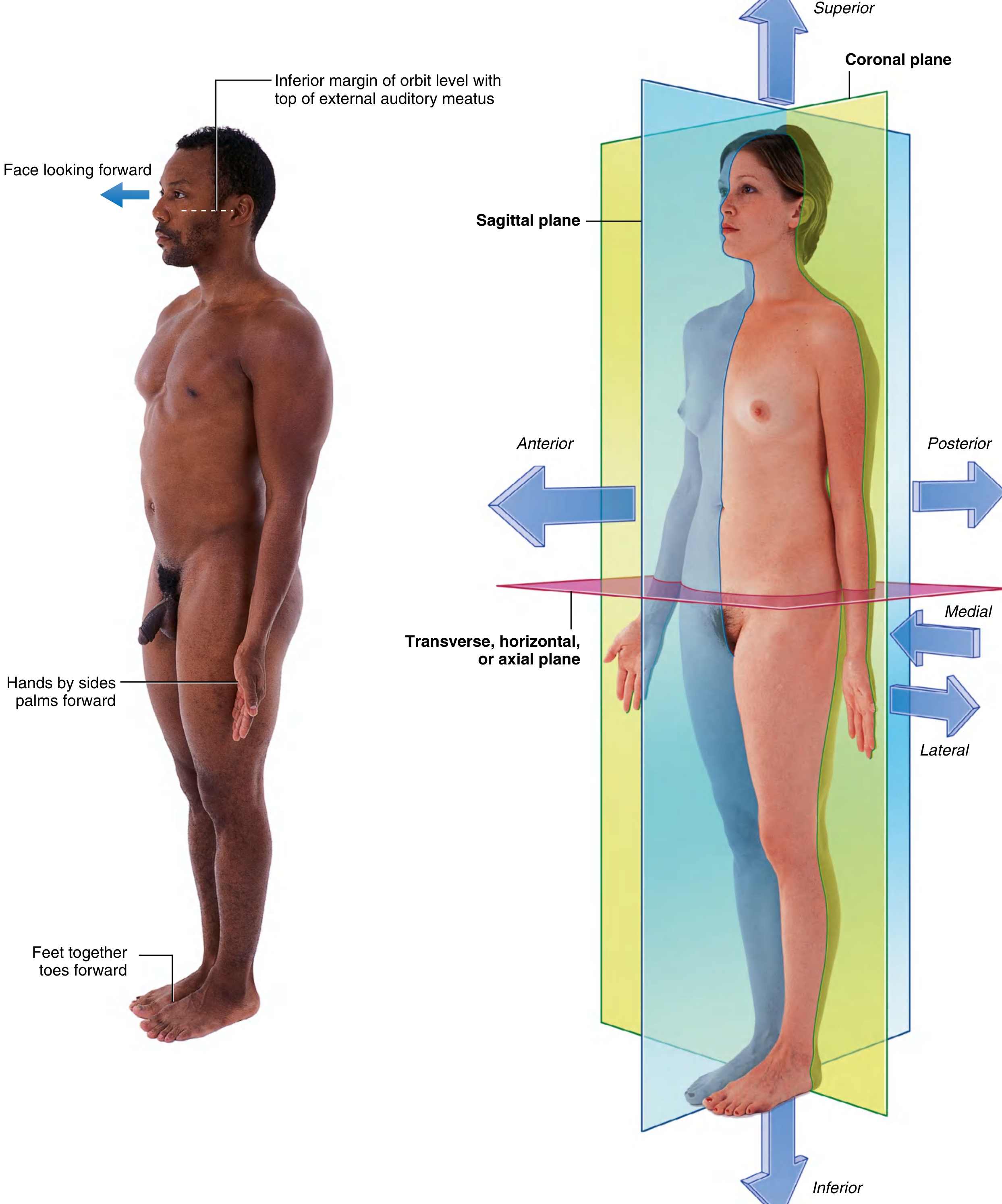
Directional Terms
| Term | Meaning | Example |
|---|---|---|
| Anterior (ventral) | Toward the front | Nose is anterior to the ears |
| Posterior (dorsal) | Toward the back | Vertebral column is posterior to the sternum |
| Superior | Toward the head | Head is superior to the shoulders |
| Inferior | Toward the feet | Knee is inferior to the hip |
| Medial | Toward the midline | Nose is medial to the eyes |
| Lateral | Away from the midline | Thumb is lateral to the little finger |
| Proximal | Closer to origin | Glenohumeral joint is proximal to the elbow |
| Distal | Further from origin | Hand is distal to the elbow |
| Cranial | Toward the head | (synonym: superior) |
| Caudal | Toward the tail | (synonym: inferior) |
2. Planes and Axes
Three cardinal planes and three corresponding axes pass through the body and are perpendicular to one another.
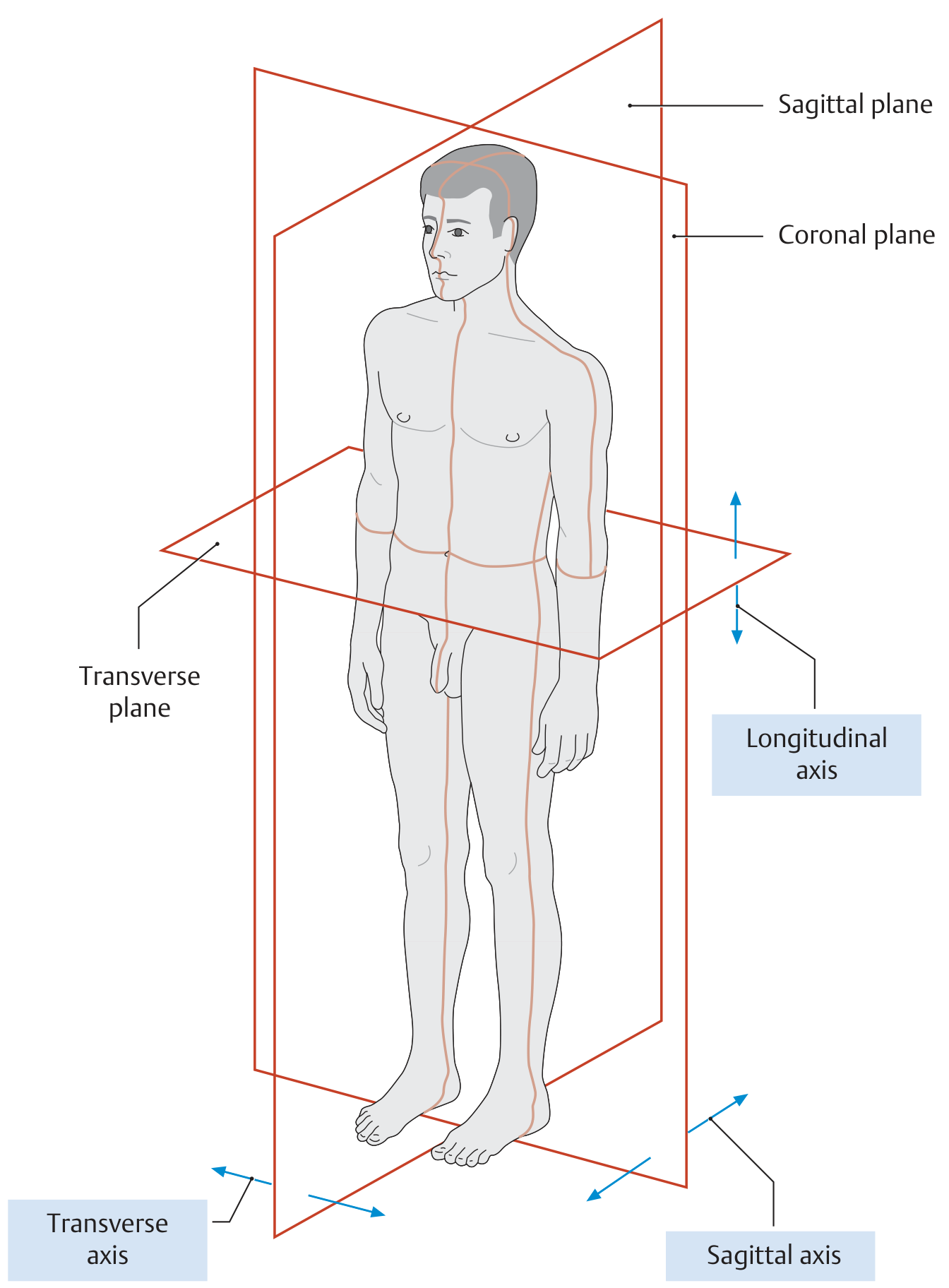
The Three Cardinal Planes
| Plane | Orientation | Divides body into... |
|---|---|---|
| Sagittal plane | Vertical, front-to-back | Right and left parts. The midsagittal (median) plane divides into equal halves |
| Coronal (frontal) plane | Vertical, side-to-side | Anterior (front) and posterior (back) parts |
| Transverse (axial/horizontal) plane | Horizontal | Superior (upper) and inferior (lower) parts |
The Three Cardinal Axes
Each axis lies at the intersection of two planes and is perpendicular to the third. Movements of joints occur around these axes.
| Axis | Direction | Lies at intersection of | Movement around it |
|---|---|---|---|
| Vertical (longitudinal) | Craniocaudal (head-to-foot) | Coronal + sagittal planes | Rotation (e.g., turning head left/right) |
| Sagittal (anteroposterior) | Front-to-back | Sagittal + transverse planes | Abduction / adduction (e.g., raising arm sideways) |
| Transverse (horizontal) | Side-to-side | Coronal + transverse planes | Flexion / extension (e.g., bending elbow) |
3. Types of Joints
Joints (articulations) are sites where two skeletal elements meet. They are classified into two major categories based on whether a cavity is present.
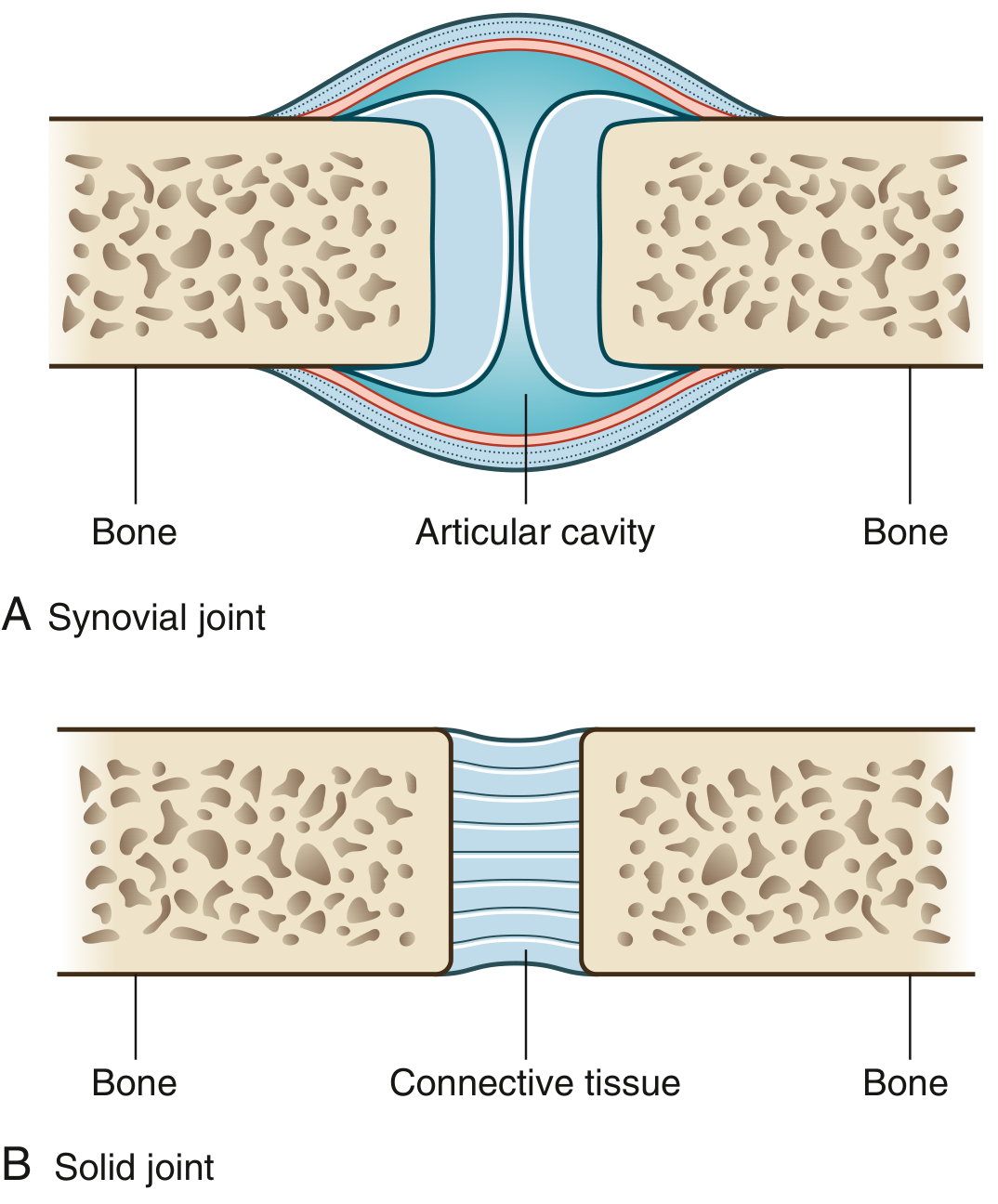
A. Synovial Joints (Diarthroses)
Skeletal elements are separated by an articular cavity. These are the most mobile joints. Key features:
- Hyaline cartilage covers articulating surfaces (bone does not contact bone directly)
- Joint capsule = inner synovial membrane (produces lubricating synovial fluid) + outer fibrous membrane
- Ligaments reinforce the capsule
- Accessory structures: articular discs (fibrocartilage), fat pads, bursae, tendon sheaths
Subtypes of synovial joints (by shape and movement):
| Type | Axes of Movement | Movement Permitted | Example |
|---|---|---|---|
| Plane (gliding) | Non-axial | Sliding/gliding | Acromioclavicular joint |
| Hinge | Uniaxial | Flexion, extension | Elbow (humero-ulnar joint) |
| Pivot | Uniaxial | Rotation only | Atlanto-axial joint |
| Bicondylar | Primarily uniaxial + limited rotation | Flexion, extension, slight rotation | Knee joint |
| Condylar (ellipsoid) | Biaxial | Flexion, extension, abduction, adduction, circumduction | Wrist joint |
| Saddle | Biaxial | Flexion, extension, abduction, adduction, circumduction | Carpometacarpal joint of thumb |
| Ball-and-socket | Multiaxial | All movements incl. rotation | Hip joint, shoulder joint |
B. Solid Joints (Synarthroses / Amphiarthroses)
No cavity - bones are connected by connective tissue or cartilage. Movement is more restricted.
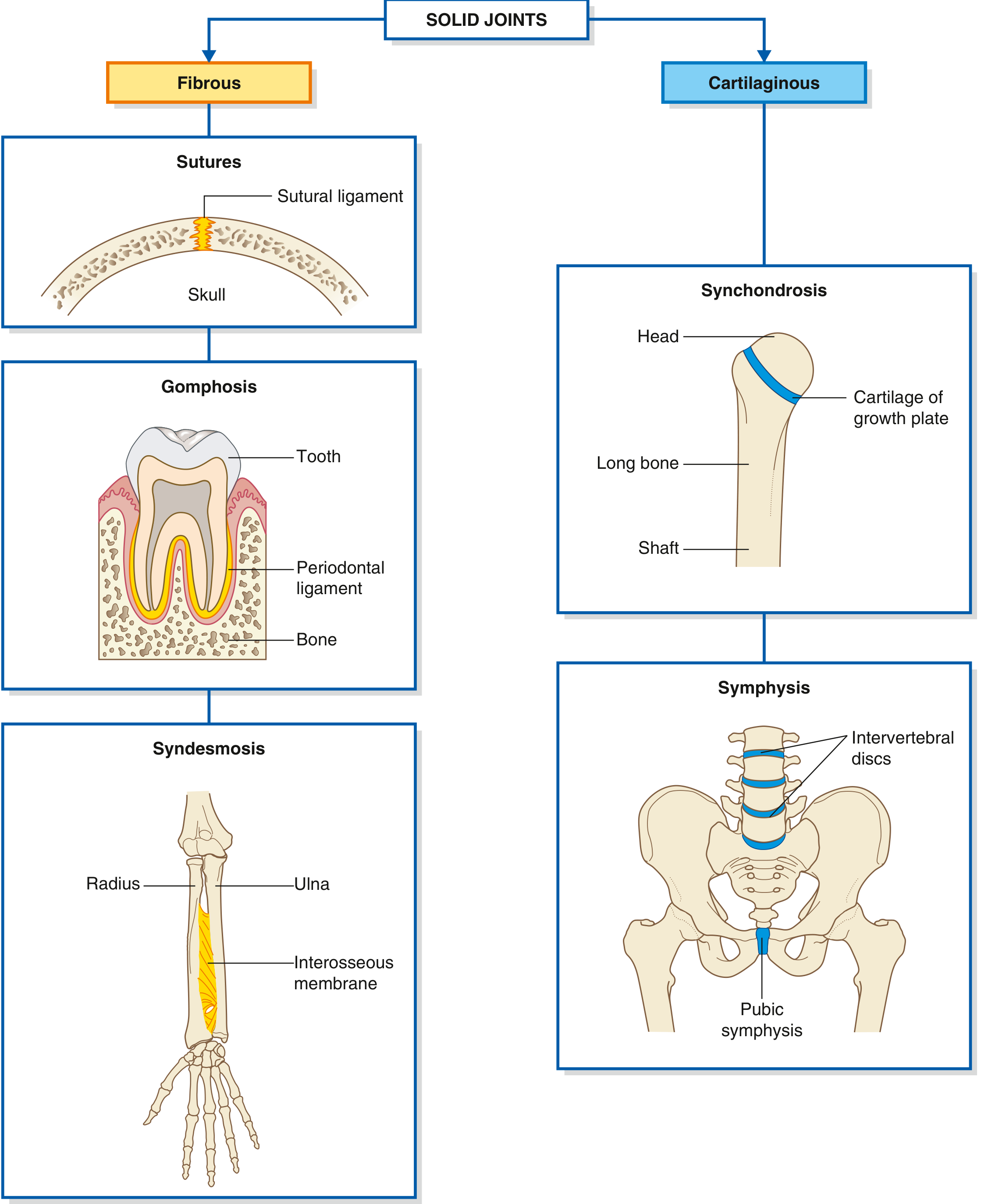
Fibrous joints - joined by fibrous connective tissue:
| Subtype | Description | Example |
|---|---|---|
| Sutures | Thin sutural ligament between skull bones; essentially immovable | Coronal suture, sagittal suture |
| Gomphoses | Tooth root anchored in bony socket by periodontal ligament | Tooth-to-alveolar bone |
| Syndesmoses | Two bones linked by a ligament or interosseous membrane | Radio-ulnar interosseous membrane; ligamentum flavum |
Cartilaginous joints - joined by cartilage:
| Subtype | Description | Example |
|---|---|---|
| Synchondroses | Two ossification centers separated by cartilage; allow growth, eventually ossify | Epiphyseal growth plates of long bones |
| Symphyses | Two separate bones interconnected by fibrocartilage; slight movement permitted | Pubic symphysis, intervertebral discs |
4. Types of Muscles
Three types of muscle tissue exist in the body, differing in structure, control, and function.
| Feature | Skeletal | Cardiac | Smooth |
|---|---|---|---|
| Striations | Yes | Yes | No |
| Control | Voluntary (conscious) | Involuntary | Involuntary |
| Nuclei per cell | Multiple (multinucleated) | 1-2 (centrally located) | 1 (centrally located) |
| Location | Attached to skeleton | Heart wall (myocardium) | Walls of hollow organs (vessels, gut, bladder, uterus) |
| Force direction | One dimension (like a coil spring) | One dimension | All directions (like a balloon skin) |
| Speed of contraction | Fast (variable) | Intermediate, rhythmic | Slow, sustained |
| Fatigue | Fatigues | Does not fatigue | Does not fatigue |
Key Details
Skeletal Muscle
- Composed of long multinucleated muscle fiber cells enclosed by a plasma membrane called the sarcolemma
- Organized into myofibrils containing interdigitated thick (myosin) and thin (actin) filaments
- The sarcomere (region between two Z-lines) is the functional contractile unit, repeating every 1,500-2,300 nm
- Contraction follows the sliding filament model: thin and thick filaments slide past each other; H zones and I bands shorten while A band length stays constant
- Produces alternating A bands (dark, contain myosin) and I bands (light, contain only actin), giving the striated appearance
Cardiac Muscle
- Striated like skeletal muscle but involuntary
- Cells (cardiomyocytes) are interconnected by intercalated discs allowing electrical coupling
- Contracts rhythmically and continuously without fatigue
Smooth Muscle
- No striations due to random orientation of contractile fibrils
- Contracts in all directions simultaneously
- Found in blood vessel walls, GI tract, respiratory tract, urinary bladder, uterus
- Can sustain prolonged tone (e.g., vascular tone)
Sources: Gray's Anatomy for Students; THIEME Atlas of General Anatomy and Musculoskeletal System; Harper's Illustrated Biochemistry, 32nd Ed.
Upper Limb Bones: Scapula, Clavicle, Humerus, Radius, Ulna
Reading File
This is a broad visual anatomy topic. Let me search all five bones in parallel.
Finding Sources
Finding Sources
Finding Sources
Finding Sources
Gray's Anatomy for Students has all the key anatomy content. Let me read all sections in parallel.
Reading File
Reading File
Finding Sources
Reading File
Reading File
Reading File
Finding Sources
Now let me look for the THIEME Atlas scapula/clavicle content and the Gray's humerus/radius/ulna sections in parallel:
Finding Sources
Reading File
Reading File
Now I have enough content. Let me fetch all the key anatomical images in parallel:
Loading Image
Loading Image
Loading Image
Loading Image
Loading Image
Excellent - I now have all the images and content needed. Let me also fetch the full humerus image:
Loading Image
Loading Image
I have all the images and content needed. Let me now compile the comprehensive answer.# Upper Limb Bones
Overview of the Upper Limb Skeleton
The upper limb is composed of the shoulder girdle (clavicle + scapula), arm (humerus), forearm (radius + ulna), and hand (carpals, metacarpals, phalanges). The shoulder girdle connects the upper limb to the axial skeleton.
1. Clavicle
The clavicle is the only bony attachment between the trunk and the upper limb. It is subcutaneous and palpable along its entire length.
Shape and Orientation
- S-shaped bone, approximately 12-15 cm long in adults
- Medial two-thirds are convex anteriorly; lateral one-third is concave anteriorly
- The sternal (medial) end is rounded/quadrangular - larger and more robust
- The acromial (lateral) end is flat and has a small oval facet
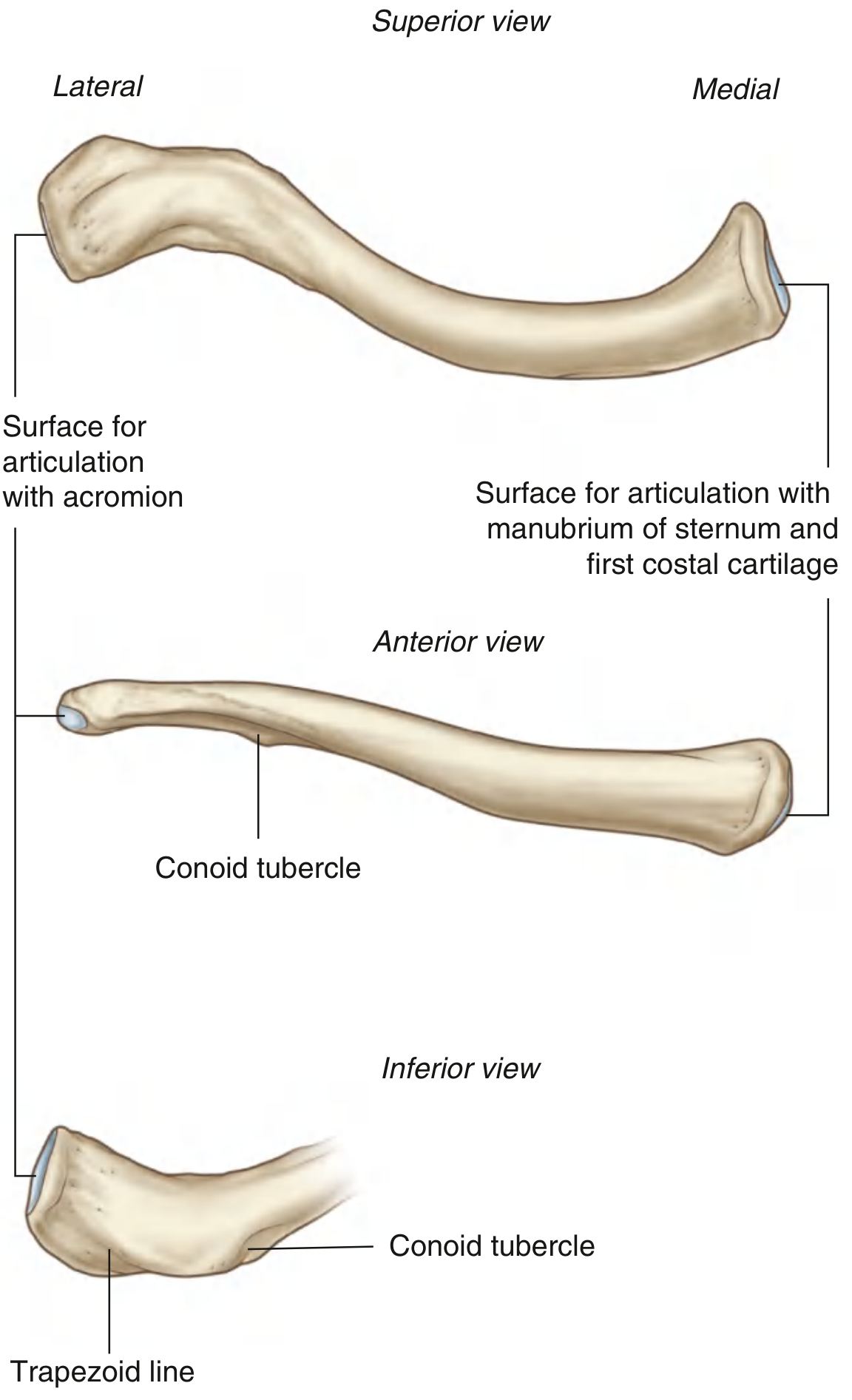
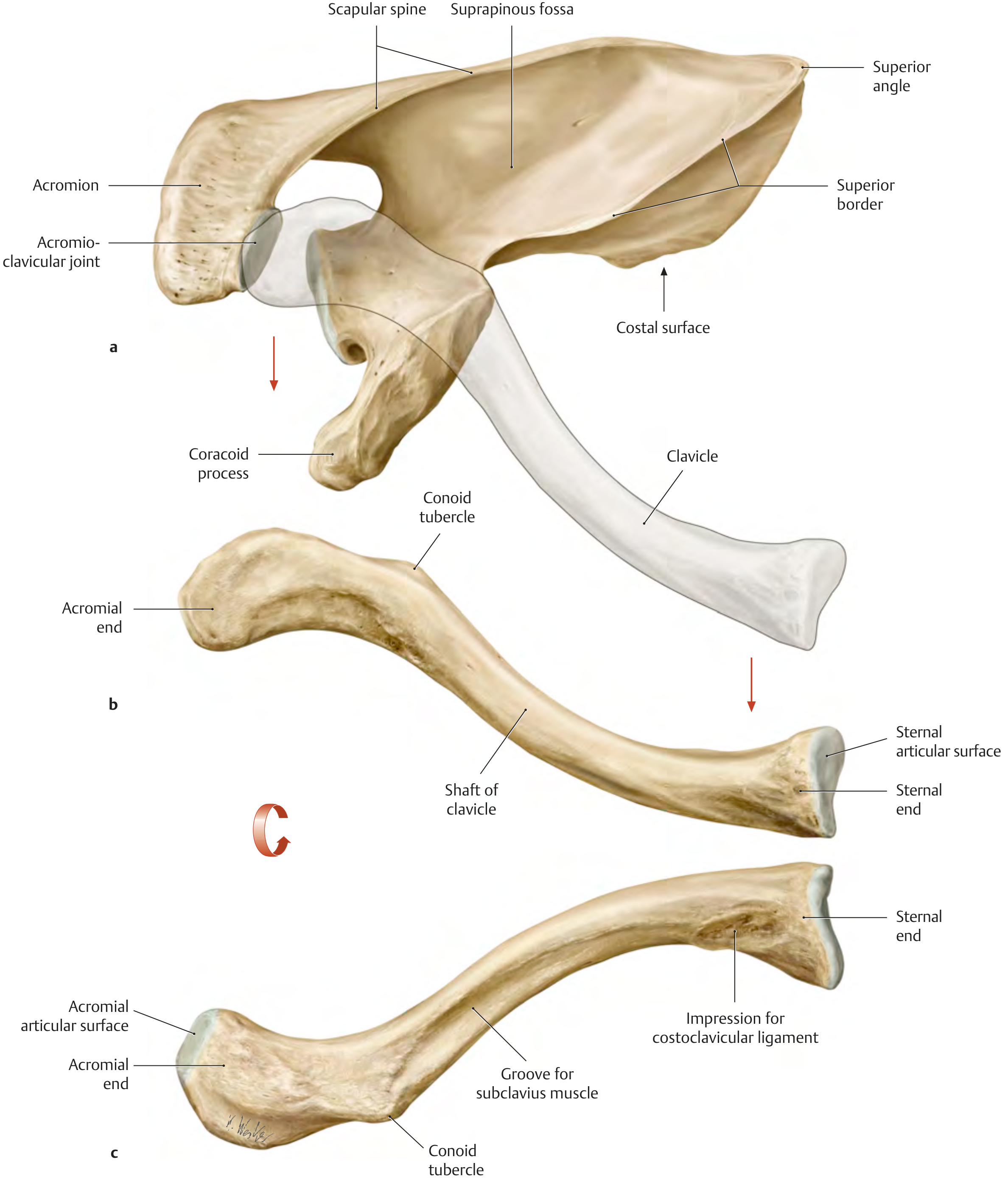
Key Landmarks
| Landmark | Location | Significance |
|---|---|---|
| Sternal articular surface | Medial end | Articulates with manubrium sterni + 1st costal cartilage (sternoclavicular joint) |
| Acromial articular surface | Lateral end | Articulates with acromion of scapula (acromioclavicular joint) |
| Conoid tubercle | Inferior surface, lateral third | Attachment for conoid part of coracoclavicular ligament |
| Trapezoid line | Inferior surface, lateral third | Attachment for trapezoid part of coracoclavicular ligament |
| Impression for costoclavicular ligament | Inferior surface, medial end | Anchors clavicle to 1st rib |
| Groove for subclavius muscle | Inferior surface, shaft | Attachment of subclavius muscle |
Clinical note: Fracture of the middle third of the clavicle is one of the most common fractures in both children and adults. The clavicle is the only long bone that ossifies by membranous ossification (not endochondral).
2. Scapula
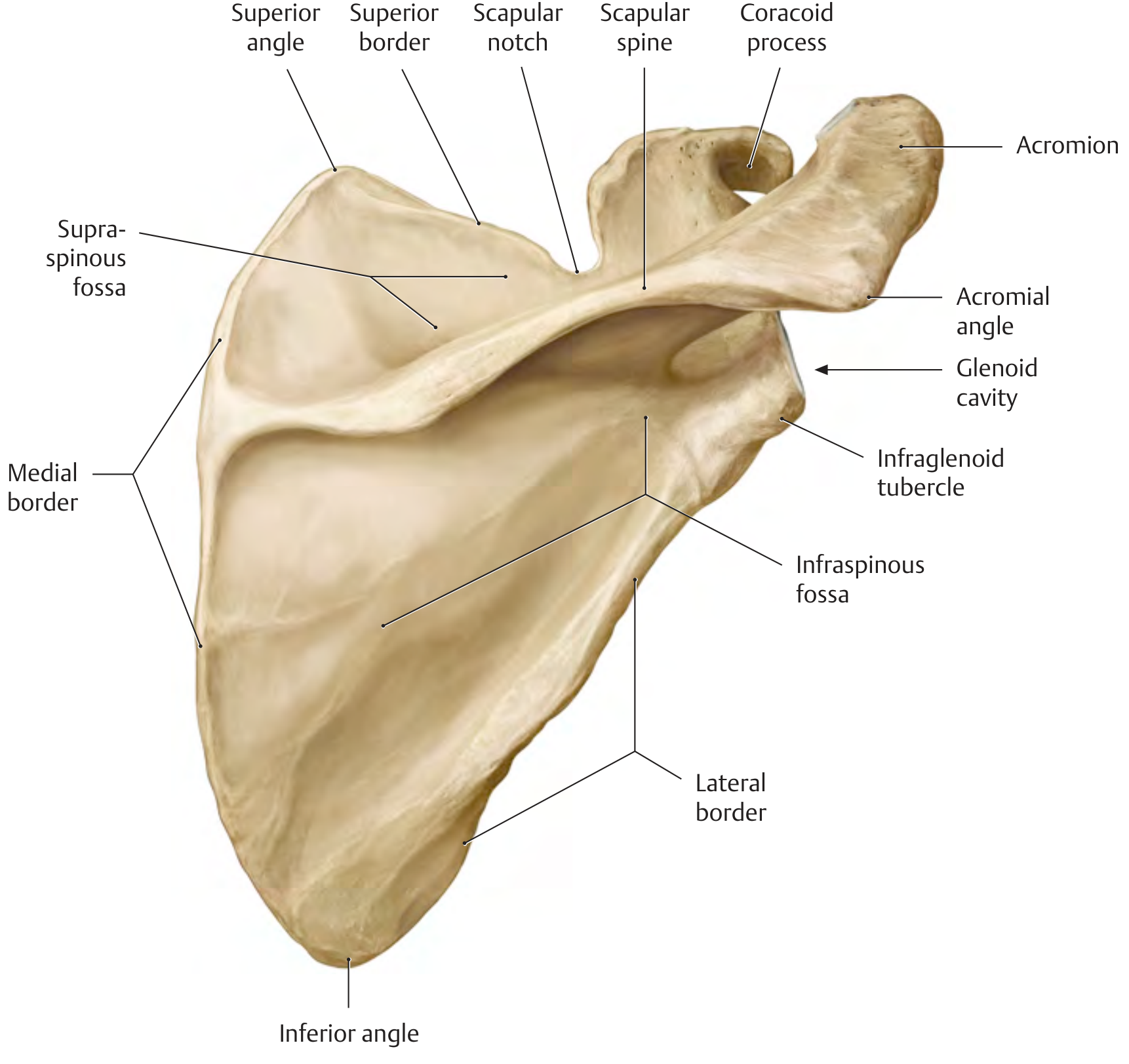
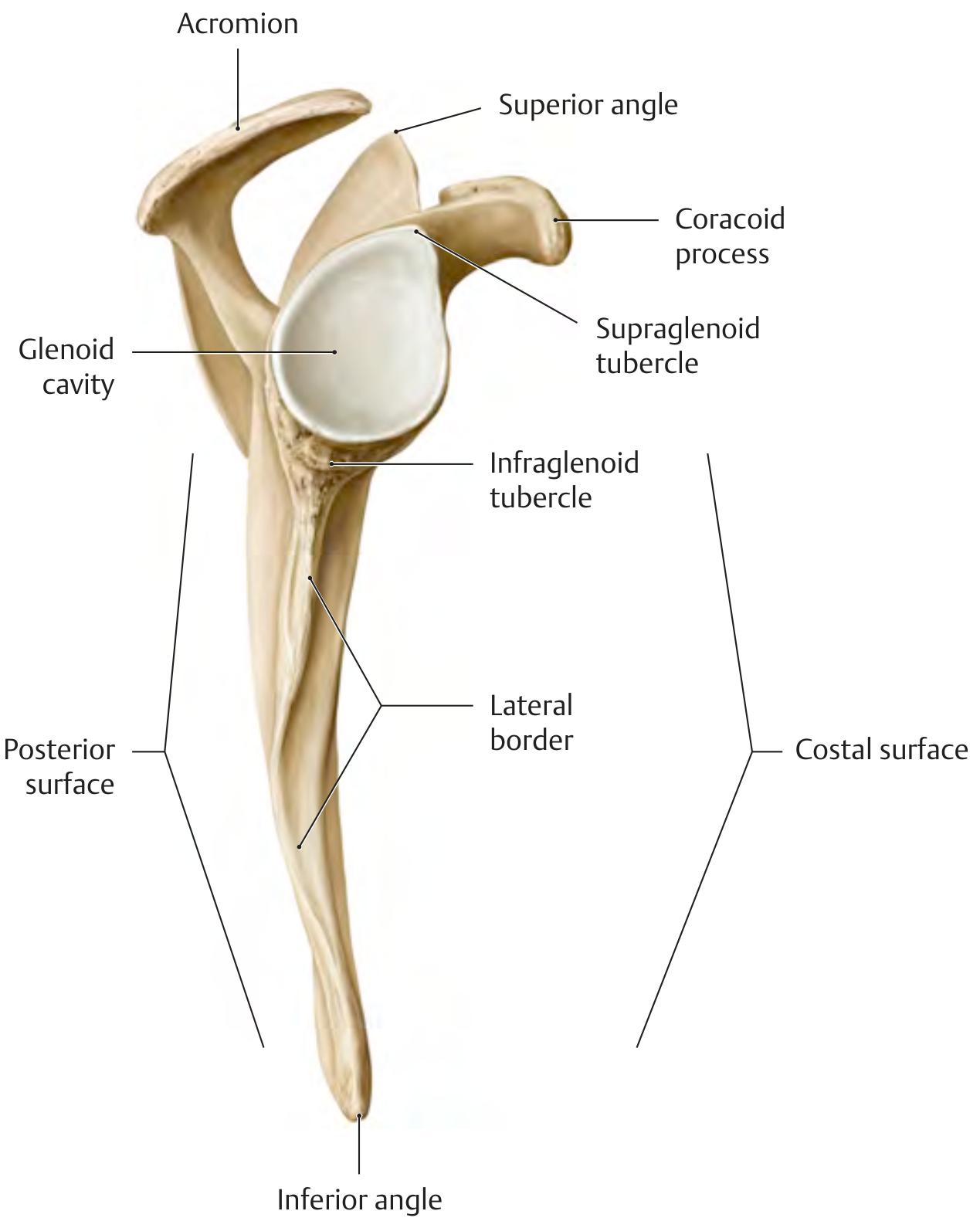
The scapula is a large, flat, triangular bone that lies on the posterior thorax, overlying ribs 2-7. In the anatomical position, the scapula forms a 30° angle with the coronal plane, orienting the glenoid cavity slightly anterolaterally.
Bony Framework
| Feature | Details |
|---|---|
| 3 Angles | Superior, Inferior, Lateral |
| 3 Borders | Superior, Medial (vertebral), Lateral (axillary) |
| 2 Surfaces | Costal (anterior/subscapular fossa) and Posterior (supraspinous + infraspinous fossae) |
| 3 Processes | Acromion, Spine, Coracoid process |
Key Landmarks and Their Significance
| Landmark | Description | Clinical/Functional Significance |
|---|---|---|
| Glenoid cavity | Shallow, comma-shaped fossa at lateral angle | Articulates with head of humerus → glenohumeral (shoulder) joint |
| Supraglenoid tubercle | Above glenoid cavity | Origin of long head of biceps brachii |
| Infraglenoid tubercle | Below glenoid cavity | Origin of long head of triceps brachii |
| Acromion | Lateral projection of the spine | Articulates with clavicle (AC joint); roof of shoulder joint; attachment of deltoid and trapezius |
| Spine of scapula | Posterior horizontal ridge | Divides posterior surface into supraspinous and infraspinous fossae; level with T3 spinous process |
| Coracoid process | Hook-shaped process at superior-lateral aspect | Attachment for pectoralis minor, short head of biceps, coracobrachialis; coracoclavicular ligament |
| Scapular notch | Notch on superior border | Suprascapular nerve passes through; suprascapular artery passes over |
| Supraspinous fossa | Above scapular spine, posterior surface | Lodges supraspinatus muscle |
| Infraspinous fossa | Below scapular spine, posterior surface | Lodges infraspinatus muscle |
| Subscapular fossa | Costal (anterior) surface | Lodges subscapularis muscle |
| Inferior angle | Lowest point | Level with T7 spinous process; landmark for counting ribs |
3. Humerus
The humerus is the long bone of the arm, articulating proximally at the shoulder joint and distally at the elbow joint.
Proximal Humerus
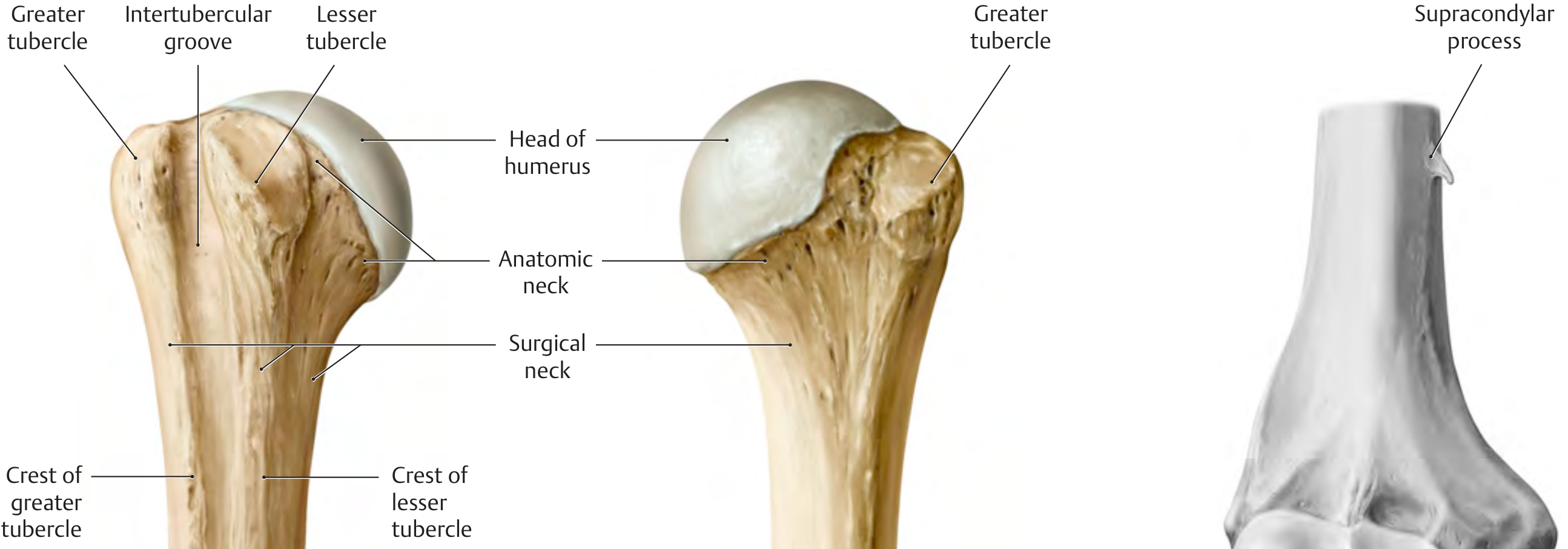
| Landmark | Description | Significance |
|---|---|---|
| Head | Rounded articular surface, faces superomedially | Articulates with glenoid cavity of scapula |
| Anatomical neck | Groove between head and tubercles | Attachment of glenohumeral joint capsule |
| Surgical neck | Narrowing below tubercles | Most common site of proximal humerus fracture; axillary nerve at risk |
| Greater tubercle | Lateral prominence | Insertion of supraspinatus, infraspinatus, teres minor (rotator cuff) |
| Lesser tubercle | Anterior prominence | Insertion of subscapularis (rotator cuff) |
| Intertubercular (bicipital) groove | Between greater and lesser tubercles | Contains long head of biceps tendon; floor gives attachment to latissimus dorsi, teres major, pectoralis major |
| Crest of greater tubercle | Below greater tubercle | Insertion of pectoralis major |
| Crest of lesser tubercle | Below lesser tubercle | Insertion of teres major |
Shaft of Humerus
| Landmark | Description | Significance |
|---|---|---|
| Deltoid tuberosity | V-shaped roughening on lateral shaft | Insertion of deltoid muscle |
| Radial (spiral) groove | Oblique groove on posterior shaft | Transmits radial nerve and profunda brachii artery; fractured shaft can injure radial nerve → wrist drop |
Distal Humerus
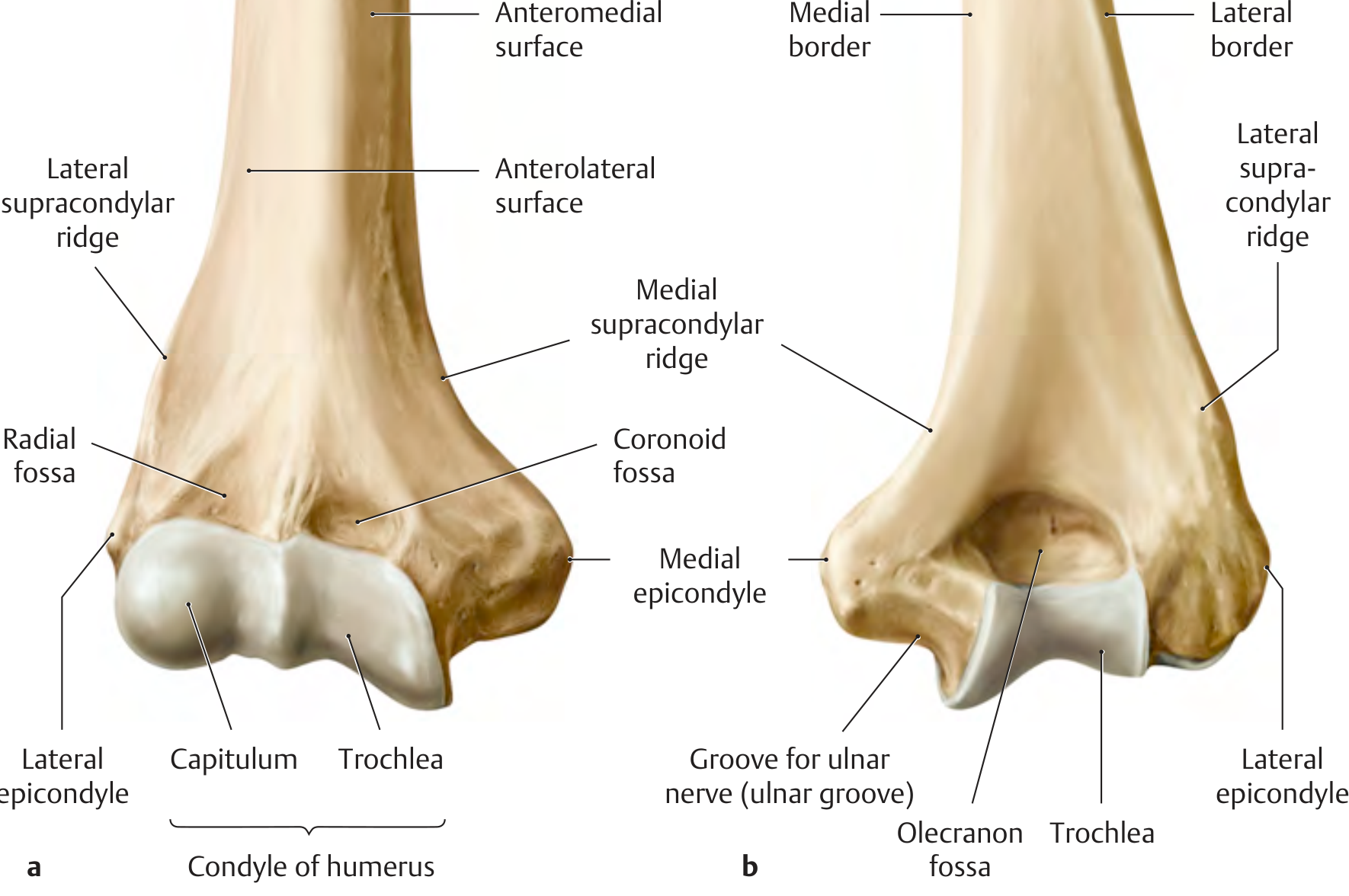
| Landmark | Description | Significance |
|---|---|---|
| Capitulum | Rounded lateral articular surface | Articulates with head of radius |
| Trochlea | Pulley-shaped medial articular surface | Articulates with trochlear notch of ulna |
| Condyle of humerus | Collective term for capitulum + trochlea | Distal articular region |
| Medial epicondyle | Medial bony prominence | Common flexor origin; ulnar nerve passes in groove behind it → "funny bone" |
| Lateral epicondyle | Lateral bony prominence | Common extensor origin |
| Olecranon fossa | Posterior depression, distal humerus | Receives olecranon of ulna in full extension |
| Coronoid fossa | Anterior depression, distal humerus | Receives coronoid process of ulna in flexion |
| Radial fossa | Anterior, lateral - smaller depression | Receives head of radius in full flexion |
| Medial supracondylar ridge | Proximal to medial epicondyle | Attachment of pronator teres and common flexors |
| Lateral supracondylar ridge | Proximal to lateral epicondyle | Attachment of brachioradialis and extensor carpi radialis longus |
4. Radius
The radius is the lateral bone of the forearm. It is shorter proximally and widens distally, contributing the majority of the wrist joint surface.
Overview
In supination, the radius and ulna are parallel. In pronation, the radius crosses over the ulna. Pronation/supination occurs at the proximal and distal radioulnar joints.
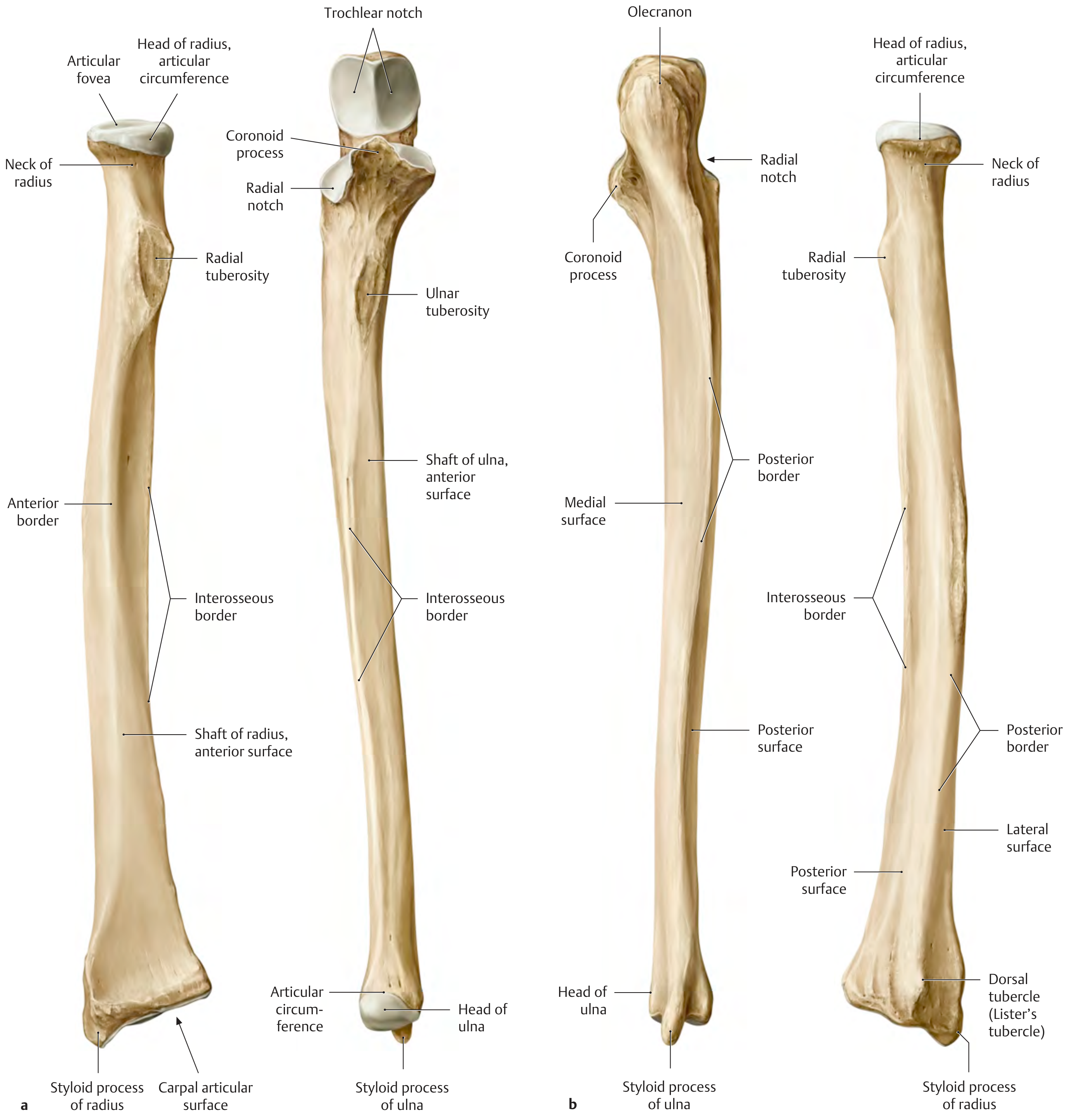
Key Landmarks of the Radius
| Landmark | Location | Significance |
|---|---|---|
| Head of radius | Proximal end | Disc-shaped; articular circumference articulates with radial notch of ulna (proximal radioulnar joint); articular fovea articulates with capitulum of humerus |
| Neck of radius | Below head | Narrow region |
| Radial tuberosity (bicipital tuberosity) | Medial, just below neck | Insertion of biceps brachii tendon |
| Anterior border | Shaft | Attachment of interosseous membrane |
| Interosseous border | Medial sharp border of shaft | Attachment of interosseous membrane connecting radius to ulna |
| Styloid process of radius | Distal lateral end | Extends more distally than ulnar styloid (~1 cm); attachment of brachioradialis; landmark for wrist |
| Carpal articular surface | Distal end | Articulates with scaphoid and lunate (radiocarpal/wrist joint) |
| Dorsal tubercle (Lister's tubercle) | Posterior distal end | Pulley for extensor pollicis longus tendon |
Clinical note: Colles' fracture = fracture of distal radius with dorsal displacement ("dinner fork" deformity) - the most common fracture in adults over 50, typically from a fall on outstretched hand (FOOSH).
5. Ulna
The ulna is the medial bone of the forearm. It is the primary stabilizer of the elbow joint and is larger proximally, tapering distally (opposite to radius).
Key Landmarks of the Ulna
| Landmark | Location | Significance |
|---|---|---|
| Olecranon | Proximal posterior projection | Forms the "elbow point"; insertion of triceps brachii; forms the posterior wall of the trochlear notch |
| Trochlear (semilunar) notch | Proximal, anterior | Large concave surface - articulates with trochlea of humerus (hinge joint of elbow) |
| Coronoid process | Anterior projection of proximal ulna | Forms anterior wall of trochlear notch; receives coronoid fossa of humerus in flexion |
| Radial notch | Lateral surface of coronoid process | Articulates with head of radius (proximal radioulnar joint) |
| Ulnar tuberosity | Below coronoid process | Attachment of brachialis muscle |
| Interosseous border | Lateral sharp border of shaft | Attachment of interosseous membrane |
| Head of ulna | Distal end | Small rounded head; articulates with ulnar notch of distal radius (distal radioulnar joint) |
| Styloid process of ulna | Posteromedial, distal end | Shorter than radial styloid; attachment of ulnar collateral ligament |
Radius vs Ulna: Quick Comparison
| Feature | Radius | Ulna |
|---|---|---|
| Position | Lateral (thumb side) | Medial (little finger side) |
| Larger end | Distal | Proximal |
| Elbow joint | Capitulum (small contribution) | Trochlea (primary articulation) |
| Wrist joint | Major contributor (carpal surface) | Minimal (via articular disc) |
| Key tuberosity | Radial tuberosity (biceps insertion) | Ulnar tuberosity (brachialis insertion) |
| Distal styloid | Extends ~1 cm more distally | Shorter |
Summary: Upper Limb Bones at a Glance
| Bone | Region | Key Articulations | Key Clinical Point |
|---|---|---|---|
| Clavicle | Shoulder girdle | Sternoclavicular, Acromioclavicular | Most common fracture site: middle third |
| Scapula | Shoulder girdle | Glenohumeral (via glenoid), AC (via acromion) | Winged scapula: long thoracic nerve injury |
| Humerus | Arm | Shoulder (proximal), Elbow (distal) | Surgical neck → axillary nerve; radial groove → radial nerve |
| Radius | Forearm (lateral) | Elbow (proximal), Wrist (distal), Radioulnar | Colles' fracture at distal end |
| Ulna | Forearm (medial) | Elbow (primary), Radioulnar joints | Olecranon fracture; Monteggia fracture |
Sources: Gray's Anatomy for Students; THIEME Atlas of General Anatomy and Musculoskeletal System
This is a shared conversation. Sign in to Orris to start your own chat.