
Myasthenia Gravis from Sullivan booki need proper notes as i need for university exam
Reading File
Now let me search the library for Myasthenia Gravis in Sullivan's book.
Finding Sources
Finding Sources
I don't see a "Sullivan" book directly. Let me search for it specifically and also look for the comprehensive neurology content on MG.
Finding Sources
Finding Sources
There's no "Sullivan" book in the library. The best comprehensive sources are Bradley and Daroff's Neurology (the premier neurology reference) and Robbins Pathology. Let me read the dedicated MG sections from these books - they'll give excellent exam notes.
Reading File
Reading File
Reading File
Now let me read the dedicated MG section from Bradley and Daroff's (the main comprehensive neurology block) and Henry's lab methods book for diagnostics:
Reading File
Reading File
Now let me get the main dedicated chapter from Bradley and Daroff's block 18 which has the most comprehensive MG section:
Reading File
Reading File
Excellent! I found the main comprehensive MG chapter in Bradley and Daroff's block 29. Let me continue reading this chapter - it's the key reference:
Reading File
Reading File
Reading File
I now have very comprehensive information. Let me also fetch the MG clinical image for inclusion in the notes:
Loading Image
I now have all the material needed for comprehensive exam notes. Note: "Sullivan" is not a book in the library - the closest matches for authoritative MG content are Bradley and Daroff's Neurology in Clinical Practice (the gold standard neurology reference) and Robbins Pathology. Here are your detailed university exam notes:
Myasthenia Gravis (MG) - Comprehensive Exam Notes
Sources: Bradley and Daroff's Neurology in Clinical Practice | Robbins & Kumar Basic Pathology | Henry's Clinical Diagnosis | Medical Physiology
Note: A "Sullivan" textbook was not found in the library. These notes are compiled from the most authoritative neurology and pathology references available - Bradley and Daroff's Neurology (the primary neurology reference for MG) plus Robbins Pathology.
1. DEFINITION
Myasthenia Gravis (MG) is an autoimmune disorder of the neuromuscular junction (NMJ) characterized by:
- Fatigable skeletal muscle weakness that worsens with activity and improves with rest
- Caused by autoantibodies directed against postsynaptic NMJ proteins, most commonly the acetylcholine receptor (AChR)
2. EPIDEMIOLOGY
| Feature | Detail |
|---|---|
| US Prevalence | ~20/100,000 (~60,000 patients total) |
| Sex | Women affected 3x more than men before age 40; males predominate after age 50 |
| Age of onset (women) | Mean 28-35 years |
| Age of onset (men) | Mean 42-49 years; increasing in elderly |
| Overall trend | Increasing prevalence over past 50 years |
- Bimodal distribution: Early onset (2nd-3rd decade, female predominance) and late onset (6th-8th decade, male predominance)
3. PATHOPHYSIOLOGY
The Neuromuscular Junction in MG
The NMJ has no blood-nerve barrier, making it particularly vulnerable to circulating immune factors.
Normal NMJ: Acetylcholine (ACh) released from presynaptic vesicles → binds postsynaptic nicotinic AChR → muscle action potential → contraction.
In MG: Autoantibodies attack the postsynaptic AChR → reduced number of functional receptors → impaired neuromuscular transmission → fatigable weakness.
Antibody Types and Mechanisms
| Antibody | % of MG | Mechanism |
|---|---|---|
| Anti-AChR (binding) | 85-90% (generalized), 50% (ocular) | Activate complement → destroy NMJ postsynaptic membrane |
| Anti-AChR (blocking) | Subset | Block ACh binding to AChR directly |
| Anti-AChR (modulating) | Subset | Cross-link receptor subunits → internalization; associated with thymoma-related MG |
| Anti-MuSK | ~50% of AChR-negative GMG | IgG4 antibodies against muscle-specific tyrosine kinase (needed for AChR clustering); more common near equator; female predominance |
| Anti-LRP4 | 1-3% | Against lipoprotein receptor-related protein 4; mild-moderate symptoms |
| Seronegative | ~5% | Negative for both AChR and MuSK; may have striational antibodies (anti-titin, anti-ryanodine receptor) |
4. THYMIC ABNORMALITIES
Found in ~75% of MG patients:
- Thymic hyperplasia (reactive B-cell follicles): 60-70% of cases - perturb tolerance to self-antigens → generate anti-AChR antibodies
- Thymoma (neoplasm of thymic epithelium): 10-15% of cases
- 1/3 of thymoma patients develop MG
- Nearly always associated with AChR antibodies (not MuSK or LRP4)
- Often have additional antibodies against titin and ryanodine receptor
- Thymic carcinoma: rare association
5. CLINICAL FEATURES
Cardinal Features
- Fatigable weakness - worsens with repetitive use, improves with rest
- Fluctuating - usually worst in the evening, least in the morning
- Tendon reflexes and sensation are NORMAL (key exam point)
Ocular Symptoms (initial in ~2/3 of patients)
- Ptosis (drooping eyelids) - often asymmetric, worsens with sustained gaze
- Diplopia (double vision) - from extraocular muscle weakness
- Progressive right lid ptosis during sustained forward gaze (fatigable)
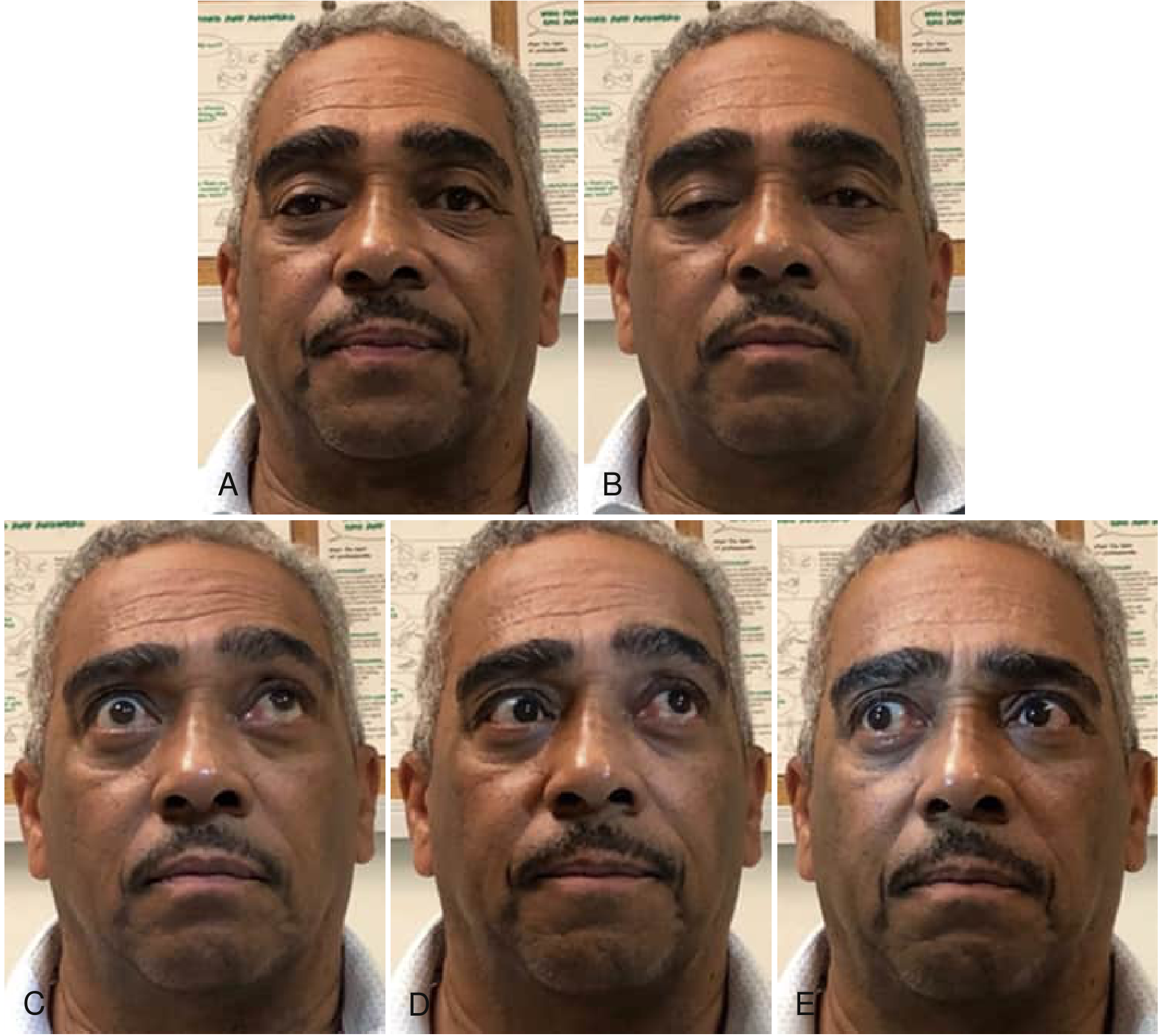
Bulbar Symptoms
- Dysphagia (difficulty swallowing) - oral, pharyngeal, and esophageal phases affected; silent aspiration in >35%
- Dysarthria (nasal or slurred speech)
- Jaw weakness - worsens with prolonged chewing (tough/fibrous foods)
- Dysphagia is a major precipitant of myasthenic crisis (56% of cases)
Distribution of Initial Symptoms
| Symptom | % of patients |
|---|---|
| Ptosis/diplopia | ~66% (most common initial) |
| Bulbar (chewing/swallowing/speech) | ~16% |
| Limb weakness | ~10% |
| Neck/respiratory weakness | Rare initial |
Disease Forms
- Ocular MG - confined to eyelids and extraocular muscles (10-15% of patients; up to 58% in Asian/pediatric populations)
- Generalized MG (GMG) - involves facial, oropharyngeal, limb, and/or respiratory muscles
Disease Course (Historical, Pre-immunosuppression)
- 1/3 improved spontaneously
- 1/3 became worse
- 1/3 died of the disease
Stages:
- Active stage: Fluctuating, then progressively more severe
- Inactive stage: Fluctuations still occur but attributable to identifiable triggers
- Burnt-out stage: Fixed weakness, muscle atrophy (rare today)
Factors That Worsen MG
- Emotional upset
- Systemic illness (especially viral respiratory infections)
- Thyroid dysfunction (hypo- or hyperthyroidism)
- Pregnancy and menstrual cycle
- Surgery, fever
- Drugs affecting NMT (see below)
6. MuSK-ANTIBODY MG (Special Features)
- Predominantly female, childhood through middle age
- Prominent cranial and bulbar muscle weakness with atrophy (often marked tongue wasting)
- Neck, shoulder, and respiratory weakness with little/no ocular involvement in some
- Electrodiagnostic abnormalities may be restricted (examine different muscles)
- Often does NOT improve with cholinesterase inhibitors - some worsen; fasciculations common
- Responds well to plasmapheresis and corticosteroids
- Rituximab strongly supported by retrospective studies
- Thymic changes absent or minimal; role of thymectomy unclear
7. DIAGNOSIS
Diagnostic Criteria
Diagnosis requires: compatible clinical history + serologic positivity for AChR antibody + abnormal electrodiagnostic study + beneficial response to acetylcholinesterase inhibitors
1. Serology (Antibody Testing)
| Test | Method | Notes |
|---|---|---|
| AChR binding antibodies | Radioimmunoassay (RIA) | Most sensitive; bind complement |
| AChR blocking antibodies | Flow cytometry | Interfere with ACh binding |
| AChR modulating antibodies | Flow cytometry | Cross-link/internalize AChR |
| Anti-MuSK | RIA | In 30-40% of AChR-negative patients |
| Striational antibodies | EIA or IIF | Anti-titin, anti-ryanodine, anti-VGKC; in thymoma-related MG |
2. Pharmacological Tests
- Edrophonium (Tensilon) test - IV short-acting ChEI; dramatic improvement in MG (no longer available at bedside in some settings)
- Neostigmine test - IM alternative
3. Electrodiagnostic Testing
- Repetitive nerve stimulation (RNS): Characteristic decremental response (decrease in amplitude of successive responses) - the hallmark finding
- Single-fiber EMG (SFEMG): Most sensitive; increased jitter (variability in firing of adjacent muscle fibers); may show blocking
- MuSK MG may have restricted EMG abnormalities - test different muscles
4. Imaging
- CT or MRI of the chest - to detect thymoma (present in 10% of MG patients)
8. CLASSIFICATION (MGFA - Myasthenia Gravis Foundation of America)
| Class | Description |
|---|---|
| I | Ocular MG only |
| II | Mild generalized (IIa - predominantly limbs/axial; IIb - predominantly oropharyngeal/respiratory) |
| III | Moderate generalized |
| IV | Severe generalized |
| V | Intubation required (myasthenic crisis) |
9. MYASTHENIC CRISIS
- Severe exacerbation requiring mechanical ventilation due to respiratory failure
- Precipitants: infections (especially respiratory), surgery, medications, dysphagia, pregnancy
- Emergency treatment: Intubation + mechanical ventilation + plasma exchange (PLEX) or IVIG
Cholinergic Crisis (vs. Myasthenic Crisis)
- From overdose of cholinesterase inhibitors
- Features: SLUDGE/DUMBELS (muscarinic excess) + weakness (nicotinic excess)
- Key: muscarinic side effects (diarrhea, bradycardia, miosis, hypersalivation, bronchospasm) point to cholinergic crisis
10. TREATMENT
A. Symptomatic Treatment - Cholinesterase Inhibitors (ChEIs)
| Drug | Dose | Onset | Notes |
|---|---|---|---|
| Pyridostigmine (Mestinon) | 30-60 mg TID initially; 60-120 mg TID to 5x/day; max 480 mg/day | 15-30 min | First-line symptomatic; avoid in MuSK MG |
| Neostigmine | Used for IV/IM routes | - | Alternative |
Adverse effects (muscarinic): Nausea, vomiting, abdominal cramps, diarrhea, increased secretions, sweating, miosis
Management of GI side effects: Glycopyrrolate, hyoscyamine, propantheline, diphenoxylate/atropine, loperamide
B. Short-Term (Rapid-Onset) Immune Therapies
| Therapy | Mechanism | Use | Duration of Benefit |
|---|---|---|---|
| Plasma Exchange (PLEX) | Removes circulating antibodies | Myasthenic crisis, pre-surgery, steroid-induced exacerbation | Days to weeks; 4 weeks typically, up to 3 months |
| IVIG | Immunomodulation | Crisis, rapid control | Days to weeks |
- PLEX regimen: 5-6 exchanges every other day; 2-3 L plasma per exchange
- PLEX side effects: Paresthesias (citrate-induced hypocalcemia), hypotension, cardiac arrhythmias, nausea, edema
C. Long-Term Immunosuppression
| Drug | Dose | Onset | Notes |
|---|---|---|---|
| Corticosteroids (Prednisone) | Variable; start low, increase | Weeks-months | May initially worsen MG; mainstay long-term |
| Azathioprine | - | Months | Monitor LFTs, CBC; avoid in pregnancy |
| Mycophenolate mofetil | - | Months | Teratogenic - 2 forms contraception required; avoid in pregnancy |
| Cyclosporine / Tacrolimus | - | Months | Calcineurin inhibitors |
| Methotrexate | - | Months | Alternative |
| Rituximab | Anti-CD20 | Weeks-months | Especially effective in MuSK MG; avoid in pregnancy (crosses placenta) |
| Eculizumab | Complement C5 inhibitor | - | Newer targeted therapy |
D. Surgical Treatment - Thymectomy
- Indications: Thymoma (mandatory); generalized AChR-positive MG (beneficial)
- Timing: Effect is delayed; advise pregnancy planning ~1 year after surgery
- Role in MuSK MG: Unclear (thymic changes absent/minimal)
- Benefits are most evident in younger patients with thymic hyperplasia
E. Amifampridine (3,4-DAP)
- Potassium channel blocker (increases action potential duration at presynaptic membrane)
- Preliminary evidence for benefit in some MG patients, especially MuSK MG
11. MEDICATIONS TO AVOID IN MG
(Drugs that can worsen neuromuscular transmission)
- Aminoglycosides (gentamicin, neomycin, streptomycin)
- Fluoroquinolones (ciprofloxacin)
- Macrolides (azithromycin)
- Beta-blockers
- Calcium channel blockers
- Neuromuscular blocking agents (curare-type)
- Magnesium (in high doses)
- D-penicillamine (can actually induce MG)
- Chloroquine / hydroxychloroquine
- Lithium
12. MG IN SPECIAL POPULATIONS
Pregnancy
- Fertility not affected by MG; oral contraceptives do not worsen symptoms
- ~2/3 of patients report some worsening during pregnancy/puerperium
- Highest risk: First trimester and puerperium
- MG does not affect uterine smooth muscle contractions, postpartum hemorrhage, or toxemia
- Safe drugs: Anticholinesterases (edrophonium, neostigmine), PLEX
- Drugs to avoid: Azathioprine, cyclosporine; mycophenolate (teratogenic); rituximab (crosses placenta)
- Neonatal MG: Transplacental transfer of AChR antibodies from affected mother → transient neonatal MG in ~10-15% of neonates; resolves within weeks
Pediatric Forms
- Neonatal MG (transient) - from maternal antibody transfer
- Congenital myasthenic syndromes - genetic, not autoimmune
- Juvenile MG - similar to adult form; more common in females, early school age
13. PROGNOSIS
- Significantly improved with modern treatment; most patients have a normal lifespan
- ~10% of cases are treatment refractory
- Some patients still die from respiratory failure
- MuSK MG patients often require more immunosuppression but long-term outcome is generally good
14. COMPARISON: MG vs. LAMBERT-EATON SYNDROME
| Feature | Myasthenia Gravis | Lambert-Eaton Syndrome |
|---|---|---|
| Site of defect | Postsynaptic NMJ | Presynaptic NMJ |
| Antibody target | AChR (postsynaptic) | VGCC (voltage-gated Ca²⁺ channels, presynaptic) |
| Muscles most affected | Ocular, bulbar, facial | Proximal limbs (legs > arms); respiratory/bulbar spared |
| Reflexes | Normal | Decreased (but may improve briefly after exercise) |
| Autonomic features | Absent | Present (dry mouth, constipation, impotence) |
| EMG (RNS) | Decremental response | Incremental response (increase with high-frequency stimulation) |
| Response to ChEIs | Improves | Does NOT improve |
| Association | Thymoma | Small cell lung carcinoma (~40-60% paraneoplastic) |
| Prognosis | Better | Worse (due to underlying malignancy) |
15. KEY EXAM MNEMONICS & HIGH-YIELD POINTS
PTOSIS = the hallmark initial sign
"Worse with work, better with rest" - the defining feature
AChR antibodies (85-90%) → complement activation → destroys NMJ
MuSK antibodies → IgG4, no complement, worse bulbar/facial, bad with ChEIs
Decremental response on RNS = hallmark EMG finding in MG
Thymoma in 10% → mandatory thymectomy; always associated with AChR abs
Myasthenic crisis = respiratory failure requiring ventilation → treat with PLEX or IVIG
PLEX = rapid but temporary (4 weeks); Azathioprine = slow but sustained
Neonatal MG = transient (maternal antibody transfer, resolves in weeks)
Sources: Bradley and Daroff's Neurology in Clinical Practice (7e) - Ch. 108 | Robbins & Kumar Basic Pathology | Henry's Clinical Diagnosis and Management by Laboratory Methods | ROSEN's Emergency Medicine
This is a shared conversation. Sign in to Orris to start your own chat.