
teach me full concept of urinary antiseptics pharmacology mbb s
Reading File
Now let me search the library for urinary antiseptics content in parallel.
Finding Sources
Finding Sources
Excellent! Multiple sources found. Let me now read the key sections in parallel - Katzung (most comprehensive for MBBS), Goodman & Gilman, and Jawetz.
Reading File
Reading File
Reading File
Good, I have the Katzung content. Let me now read more of the Katzung section (methenamine, fosfomycin, nalidixic acid parts) and the Goodman & Gilman section:
Reading File
Reading File
Let me get the rest of Goodman & Gilman's content (nalidixic acid and remaining Nitrofurantoin ADRs):
Reading File
Reading File
I now have comprehensive content from Katzung (16th ed), Goodman & Gilman, and Jawetz. I have everything needed to write a thorough MBBS-level pharmacology lecture on urinary antiseptics. Let me now compile the full answer.
Urinary Antiseptics - Complete MBBS Pharmacology
What Are Urinary Antiseptics?
Urinary antiseptics are oral drugs that exert antibacterial activity specifically in the urine but achieve little or no systemic antibacterial effect. They are concentrated in the lower urinary tract at levels sufficient to kill or inhibit bacteria, but safe oral doses do not produce effective plasma concentrations against systemic infections.
Their usefulness is therefore limited to lower urinary tract infections (UTIs) - primarily uncomplicated cystitis and UTI prophylaxis.
Sources: Katzung's Basic and Clinical Pharmacology, 16th ed. p. 1395 | Goodman & Gilman's Pharmacological Basis of Therapeutics, p. 1192
Drugs Classified as Urinary Antiseptics
| Drug | Class |
|---|---|
| Nitrofurantoin | Synthetic nitrofuran |
| Methenamine mandelate | Formaldehyde-releasing prodrug + mandelic acid |
| Methenamine hippurate | Formaldehyde-releasing prodrug + hippuric acid |
| Fosfomycin | Phosphonic acid derivative |
| Nalidixic acid | First-generation quinolone |
1. NITROFURANTOIN (Most Important for MBBS)
Mechanism of Action
Nitrofurantoin is a synthetic nitrofuran. Its mechanism is complex and not fully understood, but the key steps are:
- Nitrofurantoin enters the bacterial cell
- Bacterial reductases rapidly convert it to highly reactive intermediates (nitroso and hydroxylamine derivatives)
- These intermediates react nonspecifically with ribosomal proteins and disrupt multiple processes: protein synthesis, RNA synthesis, DNA synthesis, and cell metabolism
- Bacteria reduce nitrofurantoin far more rapidly than mammalian cells - this selectivity accounts for its antibacterial (not host-toxic) action at therapeutic urinary concentrations
- The antibacterial activity is higher in acidic urine (pH < 5.5)
Spectrum of Activity
| Susceptible | Resistant |
|---|---|
| E. coli (most strains) | Pseudomonas aeruginosa |
| Enterococci | Proteus spp. (most strains) |
| Staphylococcus saprophyticus | Many Enterobacter, Klebsiella strains |
| Many gram-positive organisms |
- Bacteriostatic at ≤32 µg/mL; bactericidal at ≥100 µg/mL
- No cross-resistance with other antimicrobials - resistance emerges very slowly
Pharmacokinetics
| Parameter | Detail |
|---|---|
| Absorption | Well absorbed from GI tract |
| Distribution | NOT distributed to tissues in effective concentrations |
| Metabolism | Rapidly metabolized in liver and peripheral tissues |
| Excretion | Both glomerular filtration AND tubular secretion into urine |
| Urine concentration | ~200 µg/mL at standard doses |
| Plasma t½ | 0.3 to 1 hour |
| Active in | Acidic urine (pH < 5.5 maximizes activity) |
Key point: The drug is eliminated so rapidly that no systemic antibacterial action is achieved. This is a pharmacokinetic explanation for why it is a "urinary-only" antiseptic.
Formulations
- Standard: 50-100 mg, four times daily (with meals)
- Macrocrystalline (Macrobid): 100 mg, twice daily - contains 25% macrocrystalline nitrofurantoin (slower absorption, better tolerated) + 75% monohydrate in a gel matrix
Clinical Uses
- First-line for uncomplicated cystitis (especially E. coli)
- UTI prophylaxis: single 50-100 mg dose at bedtime
- Not for: pyelonephritis, prostatitis, or upper UTIs (drug levels are inadequate in renal parenchyma)
- Pediatric dose: 5-7 mg/kg/day; prophylaxis: 1 mg/kg/day
Contraindications & Precautions
- Renal insufficiency (creatinine clearance <30-60 mL/min): drug fails to reach adequate urine concentrations AND toxic blood levels accumulate
- Pregnancy at term / neonates <1 month: risk of hemolytic anemia (immature erythrocyte enzyme systems)
- G6PD deficiency: hemolytic anemia
Adverse Effects (High-Yield for Exams)
| Category | Effect |
|---|---|
| GI (most common) | Anorexia, nausea, vomiting, diarrhea (macrocrystalline form is better tolerated) |
| Pulmonary | Acute: hypersensitivity pneumonitis (fever, chills, cough, eosinophilia) - reversible; Chronic: pulmonary fibrosis with prolonged use |
| Neurological | Peripheral neuropathy - especially in renal impairment |
| Hematological | Hemolytic anemia (G6PD deficiency); leukopenia, granulocytopenia |
| Hypersensitivity | Rashes, drug fever, chills |
| Other | Hepatotoxicity (rare); brown/rust discoloration of urine |
Important Drug Interaction
- Nitrofurantoin antagonizes nalidixic acid and some fluoroquinolones (norfloxacin, ciprofloxacin) - do not combine
2. METHENAMINE (Mandelate & Hippurate)
Chemistry & Mechanism of Action
Methenamine (hexamethylenamine) is a prodrug that releases formaldehyde in acidic urine:
N₄(CH₂)₆ + 6H₂O + 4H⁺  →  6HCHO + 4NH₄⁺
         (Methenamine)         (Formaldehyde)
- At pH 7.4: virtually no decomposition; no formaldehyde generated
- At pH 6.0: ~6% formaldehyde yield
- At pH 5.0: ~20% formaldehyde yield
- Requires ~3 hours to reach 90% completion of the reaction
- Formaldehyde is a non-specific denaturant of proteins and nucleic acids - bactericidal to virtually all bacteria at 20 µg/mL
- No resistance develops to formaldehyde - organisms cannot become resistant to protein denaturation
Two Formulations
| Formulation | Salt Partner | Purpose |
|---|---|---|
| Methenamine mandelate | Mandelic acid (also an antiseptic) | Dual antibacterial + urine acidification |
| Methenamine hippurate | Hippuric acid | Similar; hippuric acid has milder antiseptic properties |
Mandelic acid and hippuric acid are themselves bacteriostatic in acidic urine and help acidify the urine, enhancing methenamine activity.
Pharmacokinetics
- Well absorbed orally (but 10-30% decomposes in gastric acid, so enteric-coated tablets preferred)
- Urine excretion is nearly quantitative
- Daily dose of 2 g with urine pH ≤6 → urine formaldehyde concentration of 18-60 µg/mL (above MIC for most uropathogens)
Clinical Use
- Only for suppression/prophylaxis of chronic or recurrent UTI - NOT for acute treatment
- Dose: Methenamine mandelate 1 g QID; Methenamine hippurate 1 g BID
- Children (6-12 years): 500 mg QID or BID respectively
- Best for E. coli; also useful for common gram-negative organisms, S. aureus, S. epidermidis
- Proteus and Enterobacter aerogenes are often resistant (Proteus is urease-producing → raises urine pH → prevents formaldehyde release)
To Achieve Adequate Urinary Acidification
Give alongside urinary acidifiers:
- Ascorbic acid 4-12 g/day
- Ammonium chloride
- Methionine
- Cranberry juice (mild effect)
Contraindications
- Hepatic insufficiency - produces ammonia (NH₄⁺) as a byproduct
- Urinary tract obstruction - drug must contact bacteria in urine for sufficient time
- Renal failure (no urine concentration)
Drug Interactions
- Do NOT combine with sulfonamides - formaldehyde + sulfonamides form an insoluble precipitate in urine → crystalluria
- Falsely elevates catecholamine metabolite tests (urine 17-hydroxycorticosteroids, VMA)
Adverse Effects
- GI irritation
- Dysuria (irritation from formaldehyde at high doses)
- Bladder irritation
3. FOSFOMYCIN
Mechanism of Action
Fosfomycin (a phosphonic acid derivative) inhibits MurA - the enzyme enolpyruvyl transferase that catalyzes the first committed step in bacterial cell wall peptidoglycan synthesis.
- This mechanism is unique among antibacterials, so no cross-resistance with other drug classes
- Spectrum: E. coli, Proteus, Enterococcus, S. saprophyticus; variable against Klebsiella, Enterobacter, Serratia; Pseudomonas and Acinetobacter are resistant
Pharmacokinetics
- Available in USA as oral powder (fosfomycin tromethamine)
- Oral bioavailability ~40%, t½ = 5-8 hours
- Single oral dose of 3 g → urine concentrations of 1000-4000 µg/mL (very high!)
- Systemic concentrations are low at oral doses
Clinical Use
- Single-dose (3 g) therapy for uncomplicated cystitis - excellent compliance
- Some clinicians use 3 g every other day × 3 doses for complicated UTI
- 3 g every 10 days for prophylaxis
Adverse Effects
- Generally well tolerated
- GI distress, headache, dizziness, vaginitis
4. NALIDIXIC ACID (First-Generation Quinolone)
Mechanism
- Inhibits DNA gyrase (topoisomerase II), preventing DNA replication in bacteria
- Bactericidal; active mainly against gram-negative organisms
- Only active at urinary concentrations (too low systemic levels for systemic infections)
Important Limitation
- Resistance emerges rapidly (single-step mutations in DNA gyrase gene) - a major clinical limitation
- Now largely replaced by fluoroquinolones in clinical practice
Clinical Use
- Uncomplicated lower UTIs caused by gram-negative organisms
- Not for gram-positive infections (Pseudomonas is intrinsically resistant)
Adverse Effects
- GI symptoms
- CNS effects: headache, dizziness, visual disturbances, rarely convulsions (especially in children with febrile seizure history)
- Photosensitivity
- Not recommended in children, pregnancy, and patients with seizure disorders
Quick Comparison Table (High-Yield)
| Drug | Class | Mechanism | Key Use | Key Toxicity | Contraindication |
|---|---|---|---|---|---|
| Nitrofurantoin | Nitrofuran | Reactive intermediates → multi-target damage | Cystitis (1st line) | Pulmonary fibrosis, neuropathy, hemolysis (G6PD) | Renal failure, G6PD deficiency, pregnancy (term) |
| Methenamine | Prodrug | Releases HCHO at pH <5.5 | UTI prophylaxis only | GI, dysuria | Hepatic failure, sulfonamide co-use |
| Fosfomycin | Phosphonic acid | MurA inhibition (cell wall) | Single-dose cystitis | GI distress | - |
| Nalidixic acid | Quinolone | DNA gyrase inhibition | Lower UTI | CNS effects, photosensitivity | Seizures, children, pregnancy |
Key Exam Points to Remember
- Definition: Urinary antiseptics work in urine, NOT in blood/tissues
- Nitrofurantoin = first-line for uncomplicated cystitis; avoid in renal failure (CrCl <30-60 mL/min)
- Methenamine = prophylaxis ONLY, not acute treatment; needs acidic urine (pH <5.5)
- Fosfomycin = single-dose convenience; unique MurA mechanism; no cross-resistance
- Nalidixic acid = historical significance; resistance emerges rapidly; largely replaced
- Never combine methenamine + sulfonamides (precipitate forms)
- Nitrofurantoin + nalidixic acid = antagonism
- Acidic urine (pH <5.5) enhances activity of both nitrofurantoin AND methenamine
- Urea-splitting organisms like Proteus alkalinize urine → resist methenamine
- Pulmonary fibrosis is a chronic ADR specific to nitrofurantoin (not other UTI drugs)
Sources: Katzung's Basic and Clinical Pharmacology, 16th Ed. pp. 1395-1396 | Goodman & Gilman's Pharmacological Basis of Therapeutics pp. 1192-1193 | Jawetz, Melnick & Adelberg's Medical Microbiology, 28th Ed. p. 415
teach me full concept of antiretroviral drugs pharmacology
Reading File
Now searching for antiretroviral drug sections across multiple textbooks in parallel:
Finding Sources
Finding Sources
Let me search more specifically in the pharmacology textbooks:
Finding Sources
Finding Sources
Found key sources. Let me now read in parallel from Goodman & Gilman block17, Lippincott block4, and the TOC for Katzung:
Reading File
Reading File
Let me now read more G&G content (continuing from NRTI section) and the HIV treatment section in Lippincott:
Reading File
Reading File
Excellent content coming in. Let me fetch the key diagram images and continue reading NNRTIs, PIs, Integrase inhibitors, and Entry inhibitors sections:
Loading Image
Reading File
Reading File
Great content. Now I need the NNRTIs, Protease inhibitors, Integrase inhibitors, and Entry inhibitors sections from Lippincott:
Reading File
Let me read more - continuing with PIs, integrase inhibitors, and entry inhibitors:
Reading File
I now have comprehensive content from multiple authoritative textbooks. Let me compile the complete MBBS-level lecture on antiretroviral drugs.
Antiretroviral Drugs - Complete MBBS Pharmacology
HIV Life Cycle - The Foundation of ART
Before understanding the drugs, you must know where they act in the HIV replication cycle:
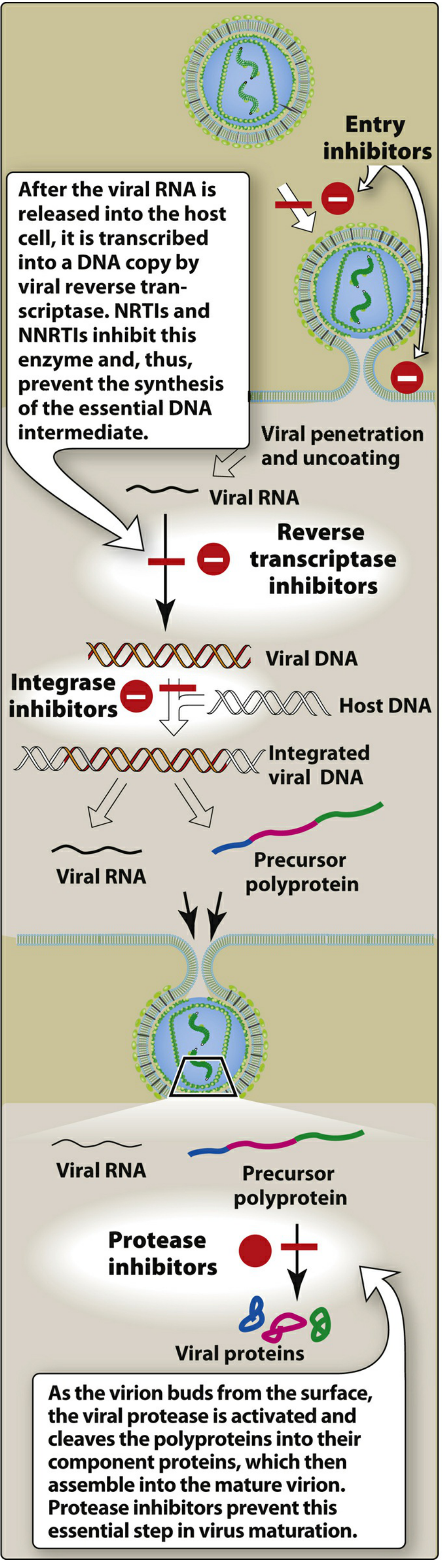
Steps of HIV replication:
- Attachment - HIV gp120 binds to CD4 receptor on T-helper cells
- Co-receptor binding - gp120 binds to chemokine co-receptors (CCR5 or CXCR4)
- Fusion - gp41 mediates viral membrane fusion; viral RNA enters the cell
- Reverse transcription - Viral RNA → DNA (by reverse transcriptase, RT)
- Integration - Viral DNA integrates into host chromosome (by integrase)
- Transcription & translation - Host machinery produces viral proteins as long polyproteins
- Maturation/Cleavage - HIV protease cleaves polyproteins into functional proteins
- Budding - New virions released
Each step is a drug target.
Classification of Antiretroviral Drugs
| Class | Abbreviation | Target Step |
|---|---|---|
| Nucleoside/Nucleotide Reverse Transcriptase Inhibitors | NRTIs / NtRTIs | Reverse transcription (Step 4) |
| Non-nucleoside Reverse Transcriptase Inhibitors | NNRTIs | Reverse transcription (Step 4) - different site |
| Protease Inhibitors | PIs | Maturation / cleavage (Step 7) |
| Integrase Strand Transfer Inhibitors | INSTIs | Integration (Step 5) |
| Entry Inhibitors (Attachment, CCR5 antagonist, Fusion inhibitor) | - | Entry (Steps 1-3) |
| Pharmacokinetic Enhancers (Boosters) | - | Not antiviral; boost drug levels |
I. NUCLEOSIDE/NUCLEOTIDE REVERSE TRANSCRIPTASE INHIBITORS (NRTIs)
Mechanism of Action
NRTIs are analogs of natural nucleosides that lack a 3'-hydroxyl group. They work in 3 steps:
- Enter the host cell passively
- Phosphorylated by cellular kinases to the active triphosphate form
- Incorporated into the growing viral DNA chain by reverse transcriptase (RT)
- Because the 3'-OH group is absent, a 3',5'-phosphodiester bond cannot form → chain termination
- They also competitively inhibit RT (compete with natural nucleotide substrates)
Key concept: NRTIs are prodrugs - they require intracellular phosphorylation to become active. They are competitive substrate analogs + chain terminators.
- Affinities for human DNA polymerases are lower than for HIV RT (explains selectivity)
- Exception: Mitochondrial DNA polymerase γ is also inhibited → cause of mitochondrial toxicities
Individual NRTIs
1. Zidovudine (AZT, ZDV)
- Thymidine analogue
- First FDA-approved antiretroviral drug
- Active against HIV-1, HIV-2, HTLV-I and II
- Phosphorylated to ZDV-5'-triphosphate; terminates viral DNA elongation
- Also inhibits mitochondrial DNA polymerase γ (→ toxicity)
- Resistance mutations: at RT codons 41, 44, 67, 70, 210, 215, 219 (Thymidine Analogue Mutations = TAMs)
- M184V mutation (lamivudine resistance) restores sensitivity to ZDV
- Oral bioavailability: 64%; crosses blood-brain barrier; excreted in breast milk and semen
- Adverse effects:
- Bone marrow suppression - anemia, granulocytopenia (most important)
- Fatigue, malaise, nausea, headache, insomnia (early, usually transient)
- Myopathy with long-term use (mitochondrial damage)
- Lipoatrophy, lactic acidosis, hepatic steatosis (class effect)
- Drug interaction: Stavudine competes for intracellular phosphorylation - never combine ZDV + stavudine
- Special use: Prevention of mother-to-child transmission (PMTCT); IV formulation available
2. Lamivudine (3TC)
- Cytidine analogue; active against HIV-1, HIV-2, and Hepatitis B virus (HBV)
- Enters cells by passive diffusion → phosphorylated to 3TC-5'-triphosphate
- Low affinity for human DNA polymerases → low host toxicity
- Resistance: M184V or M184I mutation in RT → high-level resistance, but restores ZDV sensitivity
- Oral bioavailability: 86-87%; minimal toxicity
- Adverse effects: Generally very well tolerated; rare peripheral neuropathy
- Very commonly used as backbone of regimens
3. Emtricitabine (FTC)
- Cytidine analogue; structurally similar to lamivudine
- Active against HIV-1 and HBV
- Oral bioavailability: 93% (highest of all NRTIs)
- Resistance: same M184V/I mutation as lamivudine; cross-resistance with 3TC
- Well tolerated; may cause skin hyperpigmentation
- Available as fixed-dose combination with tenofovir (Truvada, Descovy)
4. Tenofovir (TDF & TAF)
- Nucleotide analogue (acyclic phosphonate) - unique among NRTIs because it already has one phosphate group → requires only two phosphorylation steps instead of three
- Available in two prodrug forms:
- TDF (Tenofovir Disoproxil Fumarate): Oral bioavailability ~25% (with high-fat meal); prodrug converted in gut/plasma
- TAF (Tenofovir Alafenamide): Improved intracellular delivery to lymphoid cells - 5-7x higher intracellular diphosphate levels; lower plasma tenofovir → fewer systemic adverse effects
- Active against HIV-1, HIV-2, HBV
- Adverse effects of TDF: Nephrotoxicity (proximal tubular dysfunction - Fanconi syndrome), decrease in bone mineral density
- TAF has significantly reduced renal and bone toxicity compared to TDF
- TDF + emtricitabine (Truvada) = approved for PrEP (pre-exposure prophylaxis)
5. Abacavir (ABC)
- Guanosine analogue
- High oral bioavailability (83%); metabolized by alcohol dehydrogenase and glucuronyl transferase
- Does NOT require dose adjustment in renal failure (only NRTI that is primarily hepatically metabolized)
- Resistance: K65R mutation
- Critical adverse effect: Hypersensitivity Reaction (HSR)
- Occurs in ~5% of patients
- Multi-system: fever, rash, GI symptoms (nausea, vomiting, diarrhea), malaise, respiratory symptoms
- Linked to HLA-B*5701 allele - genotyping is mandatory before prescribing abacavir
- NEVER rechallenge a sensitized patient - can be rapidly fatal
- Used in pediatric HIV treatment
6. Didanosine (ddI)
- Adenosine analogue; must be taken on empty stomach (reduced absorption 55% with food/acidity)
- Metabolism impaired by acid → enteric-coated formulation used
- Adverse effects: Peripheral neuropathy, pancreatitis, lipoatrophy (all due to mitochondrial toxicity)
- Rarely used today due to mitochondrial toxicity profile
Class Adverse Effects of NRTIs (All NRTIs)
| Adverse Effect | Mechanism |
|---|---|
| Lactic acidosis + hepatomegaly + steatosis | Mitochondrial DNA polymerase γ inhibition → impaired mitochondrial respiration |
| Lipoatrophy (fat redistribution) | Mitochondrial toxicity in adipocytes |
| Peripheral neuropathy | ddI, stavudine (mitochondrial) |
| Pancreatitis | Mainly ddI |
| Bone marrow suppression | Mainly ZDV |
| Hypersensitivity | Abacavir (HLA-B*5701) |
II. NON-NUCLEOSIDE REVERSE TRANSCRIPTASE INHIBITORS (NNRTIs)
Mechanism of Action
NNRTIs are highly selective, non-competitive inhibitors of HIV RT. They work differently from NRTIs:
- Bind to an allosteric hydrophobic pocket adjacent to (but NOT at) the active site of RT
- Cause a conformational change in the enzyme → reduce RT activity
- Do NOT require intracellular phosphorylation (not prodrugs)
- Only active against HIV-1 (not HIV-2 - HIV-2 RT lacks the allosteric binding pocket)
- Cross-resistance is common among first-generation NNRTIs (they share the same binding pocket)
Drugs
1. Efavirenz (EFV)
- Most widely used NNRTI globally
- Potent, once-daily dosing
- CNS adverse effects (most characteristic): vivid dreams, nightmares, dizziness, impaired concentration, psychiatric symptoms (usually resolve after 2-4 weeks)
- Teratogenic in first trimester - avoid in pregnancy (neural tube defects in monkeys; category D)
- Strong inducer of CYP450 → multiple drug interactions
- Advantage: Compatible with rifampicin (TB treatment) - lower interaction risk than other NNRTIs
- Metabolized by CYP2B6; poor metabolizers have higher plasma levels and more CNS toxicity
2. Nevirapine (NVP)
- Older first-generation NNRTI
- Adverse effects: Severe hepatotoxicity (especially in women with CD4 >250 and men with CD4 >400 at initiation), life-threatening skin rash (Stevens-Johnson syndrome)
- Rarely used in adults today; still used for PMTCT (single-dose NVP at delivery in resource-limited settings)
- Inducer of CYP450
3. Rilpivirine (RPV)
- Second-generation NNRTI
- Smallest tablet size - good for patients with dysphagia
- Must be taken with a meal (≥390 kcal)
- Limitation: Inferior efficacy at baseline HIV RNA >100,000 copies/mL or CD4 <200
- Good CNS tolerability vs. efavirenz
- Available as long-acting injectable form (with cabotegravir) for monthly dosing
4. Etravirine (ETR)
- Second-generation; active against many HIV strains resistant to first-generation NNRTIs
- Reserved for treatment-experienced patients with multidrug-resistant HIV
5. Doravirine (DOR)
- Newest NNRTI; once daily
- CNS tolerability advantage over efavirenz
- Fewer drug interactions than efavirenz or rilpivirine
- Efficacy maintained even with high viral load (advantage over rilpivirine)
Class Adverse Effects of NNRTIs
| Adverse Effect | Details |
|---|---|
| Rash | Most common class effect; can be severe (SJS/TEN with nevirapine) |
| Hepatotoxicity | Nevirapine > others |
| CNS symptoms | Efavirenz (vivid dreams, dizziness) |
| Drug interactions | CYP450 inducers (efavirenz, nevirapine) or inhibitors (delavirdine) |
III. PROTEASE INHIBITORS (PIs)
Mechanism of Action
- HIV protease cleaves large viral polyproteins (Gag-Pol polyprotein) into functional structural proteins (p24, p17) and enzymes during viral maturation
- PIs are peptidomimetics - they mimic the peptide substrate of HIV protease and competitively inhibit the enzyme
- Without protease activity, virions bud but remain immature and non-infectious
- PIs have high genetic barrier to resistance - multiple mutations needed → preferred in patients with uncertain adherence
Key concept: PIs act AFTER integration - they block viral maturation, not transcription. New virions form but are non-functional.
Pharmacokinetic Boosting
All PIs are metabolized by CYP3A4. Their plasma levels drop too fast without boosting.
Boosters: Low-dose ritonavir (RTV) or cobicistat inhibit CYP3A4 → increase PI plasma levels → allow lower PI doses and improve pharmacokinetics. This is called pharmacokinetic enhancement.
- Ritonavir at therapeutic doses = PI with severe toxicity (rarely used as antiviral)
- Ritonavir at low dose (100-200 mg) = CYP3A4 inhibitor booster only
- Cobicistat = pharmacokinetic enhancer with no antiviral activity; less drug interactions than RTV
Individual PIs
| Drug | Key Feature | Key Adverse Effect |
|---|---|---|
| Darunavir (DRV) | Current preferred PI; high genetic barrier | GI, rash, headache |
| Atazanavir (ATV) | Once daily; does not cause dyslipidemia (unique) | Hyperbilirubinemia (jaundice without liver damage), kidney stones |
| Lopinavir/r (LPV/r) | Only available coformulated with RTV | GI side effects, hyperlipidemia, insulin resistance |
| Saquinavir | First PI ever approved; poor oral bioavailability | GI, elevated transaminases; must take with high-fat meal |
| Tipranavir | Active vs. multi-PI-resistant HIV | Severe hepatotoxicity, intracranial hemorrhage |
| Nelfinavir | Used in pregnancy (no ritonavir boosting needed) | Diarrhea (most common) |
| Fosamprenavir | Prodrug of amprenavir | GI, rash, oral paresthesia |
Class Adverse Effects of PIs
| Adverse Effect | Details |
|---|---|
| Lipodystrophy | Fat redistribution: central adiposity (buffalo hump, protease paunch), peripheral lipoatrophy |
| Dyslipidemia | Elevated triglycerides, LDL (exception: atazanavir) |
| Insulin resistance / Diabetes | Class effect |
| GI symptoms | Nausea, diarrhea (especially lopinavir/r, nelfinavir) |
| Hepatotoxicity | Especially tipranavir; all PIs - elevated transaminases |
| Nephrotoxicity / Kidney stones | Atazanavir, indinavir |
| Drug interactions | All PIs are CYP3A4 inhibitors → major DDIs |
| Skin rash | Especially amprenavir/fosamprenavir |
IV. INTEGRASE STRAND TRANSFER INHIBITORS (INSTIs)
Mechanism of Action
- After reverse transcription, HIV integrase processes the viral DNA ends (3'-processing)
- The processed viral DNA enters the nucleus and integrase catalyzes strand transfer - inserting viral DNA into host chromosomal DNA
- INSTIs chelate the Mg²⁺ ions in the catalytic site of integrase and block the strand transfer step
- Viral DNA cannot integrate → replication halted
INSTIs are now the preferred initial antiretroviral class globally (preferred backbone in most guidelines) due to excellent efficacy, tolerability, and high genetic barrier (especially dolutegravir and bictegravir).
Drugs
| Drug | Key Feature | Adverse Effects |
|---|---|---|
| Dolutegravir (DTG) | Preferred first-line; high genetic barrier; once daily | Weight gain, insomnia, headache; neural tube defects risk in early pregnancy (use with caution in women of childbearing potential without adequate contraception) |
| Bictegravir (BIC) | Only available as fixed-dose combo (BIC/TAF/FTC = Biktarvy); high genetic barrier | Generally well tolerated |
| Cabotegravir (CAB) | Available as long-acting injectable (monthly or every 2 months with rilpivirine) | Injection site reactions; also used for PrEP |
| Raltegravir (RAL) | First-in-class INSTI; twice daily; lower genetic barrier than DTG/BIC | GI, headache, elevated CPK, myopathy |
| Elvitegravir (EVG) | Requires boosting with cobicistat; once daily | Nausea, diarrhea |
Resistance: M148H/I/K mutation → reduces sensitivity to raltegravir and elvitegravir; dolutegravir and bictegravir maintain activity against many resistant strains.
V. ENTRY INHIBITORS
Three Subclasses Based on the Step of Entry Blocked
A. Attachment Inhibitors
Fostemsavir (FTR)
- Prodrug → active drug temsavir
- Binds to HIV gp120 envelope glycoprotein → prevents conformational change needed for attachment to host CD4 receptor
- Indicated for heavily treatment-experienced adults with multidrug-resistant HIV
- Oral, twice daily
- CYP450 substrate - contraindicated with strong inducers
B. CCR5 Antagonists (Co-receptor Antagonists)
Maraviroc (MVC)
- Binds to the host CCR5 co-receptor (not the virus) → blocks HIV from using CCR5 as an entry co-receptor
- Only active against CCR5-tropic ("R5") HIV strains
- Before use, a tropism test (genotypic or phenotypic) is MANDATORY - if patient has CXCR4-tropic or dual/mixed-tropic virus, maraviroc will not work
- Adverse effects: Cough, fever, upper respiratory infections, hepatotoxicity
- Drug interactions: CYP3A4 substrate; dose adjustment needed with RTV/cobicistat
C. Fusion Inhibitors
Enfuvirtide (T-20)
- Peptide (36 amino acid) that mimics the HR2 region of HIV gp41
- Binds to the HR1 region of gp41 → prevents the conformational change needed for fusion of viral and host cell membranes
- Subcutaneous injection only (cannot be given orally - peptide destroyed by gut)
- Twice-daily injections
- Adverse effects: Injection site reactions (almost universal - nodules, cysts, ecchymosis), increased rate of bacterial pneumonia
- Reserved for treatment-experienced patients with multidrug-resistant HIV (expensive, injection-based)
D. CD4-Directed Post-Attachment Inhibitor
Ibalizumab (IBA)
- Monoclonal antibody against domain 2 of the CD4 receptor
- Prevents post-attachment conformational changes required for HIV entry
- Inhibits HIV entry without blocking normal CD4 T-cell function (binds to domain 2, not domain 1 where MHC-II binds)
- Given as IV infusion every 2 weeks
- For multidrug-resistant HIV in treatment-experienced patients
VI. PHARMACOKINETIC ENHANCERS (Boosters)
These are NOT antivirals. They increase plasma concentrations of co-administered antiretrovirals.
| Booster | Mechanism | Notes |
|---|---|---|
| Ritonavir (low dose) | Strong CYP3A4 inhibitor | Used to boost PIs; at full dose it is a PI itself but too toxic |
| Cobicistat | CYP3A4 inhibitor | No antiviral activity; used to boost atazanavir, darunavir, elvitegravir; inhibits tubular secretion of creatinine (raises serum creatinine without affecting GFR) |
VII. COMBINATION THERAPY - ART (Antiretroviral Therapy)
Why Combination Therapy?
- HIV replicates rapidly (~10⁹ virions/day) with high error rate → mutations arise constantly
- Monotherapy → rapid selection of resistant mutants → treatment failure
- Using 2-3 drugs targeting different steps → resistant mutants to all 3 drugs simultaneously are vanishingly rare
Recommended Initial Regimens (General Principles)
Standard preferred regimen structure:
- 2 NRTIs + 1 INSTI (most guidelines, e.g., WHO, DHHS)
Most common preferred first-line regimens:
- TDF/FTC + DTG (Tenofovir/Emtricitabine + Dolutegravir) - WHO preferred
- TAF/FTC + BIC (Tenofovir alafenamide/Emtricitabine + Bictegravir) - single tablet (Biktarvy)
- TDF/FTC + EFV (Tenofovir/Emtricitabine + Efavirenz) - widely used in resource-limited settings
When to Start ART
- All HIV-infected individuals regardless of CD4 count (current WHO/DHHS guidance)
- ASAP in opportunistic infections EXCEPT TB meningitis and cryptococcal meningitis (defer slightly)
- Pregnant women: immediately regardless of CD4 count
Goals of ART
- Suppress viral load to undetectable (<50 copies/mL)
- Allow CD4 cell count recovery
- Prevent opportunistic infections
- Prevent HIV transmission (Undetectable = Untransmittable, U=U)
- Prevent development of resistance
VIII. POST-EXPOSURE PROPHYLAXIS (PEP) & PRE-EXPOSURE PROPHYLAXIS (PrEP)
| PEP | PrEP | |
|---|---|---|
| Timing | After exposure | Before potential exposure |
| Duration | 28 days | Ongoing while at risk |
| Drugs | TDF/FTC + RAL or DTG or LPV/r | TDF/FTC (Truvada) or TAF/FTC (Descovy); also injectable cabotegravir |
| Start PEP within | 72 hours | - |
IX. SPECIAL SITUATIONS
HIV in Pregnancy
- ART should be started/continued in ALL pregnant women
- ZDV reduces MTCT (given IV during labor + oral to neonate for 6 weeks)
- Avoid efavirenz in first trimester; dolutegravir requires counseling (neural tube defect risk with periconceptional exposure)
- Preferred: TDF/FTC + RAL or LPV/r during pregnancy (well-studied safety data)
HIV + Tuberculosis Co-infection
- Start TB treatment first, then ART within 2-8 weeks (immediately if CD4 <50)
- Preferred NNRTI: Efavirenz (less interaction with rifampicin than other antiretrovirals)
- Avoid PI-based regimens with rifampicin (rifampicin markedly reduces PI levels)
- Dolutegravir requires dose adjustment (increase to twice daily) with rifampicin
HIV + Hepatitis B Co-infection
- Treat both simultaneously
- Choose NRTI backbone that covers both: TDF or TAF + emtricitabine or lamivudine (active against both HIV and HBV)
- Never stop these NRTIs suddenly in co-infected patients → risk of HBV flare
X. HIGH-YIELD EXAM SUMMARY TABLE
| Class | Drugs | MOA | Key Toxicity | Key Fact |
|---|---|---|---|---|
| NRTIs | ZDV, 3TC, FTC, TDF/TAF, ABC, ddI | Triphosphate → chain termination of RT | Lactic acidosis, lipoatrophy; ZDV → anemia; ABC → HSR (HLA-B*5701); TDF → nephrotoxicity | Need intracellular phosphorylation |
| NNRTIs | EFV, NVP, RPV, ETR, DOR | Allosteric RT inhibition | Rash (SJS-NVP); CNS (EFV); hepatotoxicity (NVP) | No phosphorylation needed; HIV-1 only |
| PIs | DRV, ATV, LPV/r, SQV | Competitive inhibition of HIV protease | Lipodystrophy, dyslipidemia, DM; ATV → hyperbilirubinemia | Boosted with RTV/cobicistat; high genetic barrier |
| INSTIs | DTG, BIC, CAB, RAL | Chelate Mg²⁺ in integrase → block strand transfer | Weight gain; DTG → neural tube defects (periconception); RAL → myopathy | Preferred initial class; DTG/BIC - high genetic barrier |
| Entry - Fusion | Enfuvirtide | Binds gp41 HR1 → blocks fusion | Injection site reactions | SC only; peptide drug |
| Entry - CCR5 | Maraviroc | Binds host CCR5 receptor | Hepatotoxicity | Tropism test mandatory first |
| Entry - Attachment | Fostemsavir | Binds gp120 → blocks CD4 attachment | Nausea | For MDR-HIV only |
| Boosters | Ritonavir (low dose), Cobicistat | CYP3A4 inhibition | Cobicistat raises creatinine (no GFR change) | Not antivirals |
Key Mnemonics & Exam Points
- NRTI mechanism: "No 3'-OH = No chain extension" → chain termination
- Abacavir: Always check HLA-B*5701 before prescribing; rechallenge = potentially fatal
- NNRTIs = HIV-1 ONLY (no HIV-2 activity)
- PIs = Peptidomimetic + boosted with ritonavir/cobicistat
- INSTIs preferred in current guidelines for treatment-naive patients
- Enfuvirtide = only SC antiretroviral (peptide, cannot be given orally)
- Maraviroc = check tropism first (only for CCR5-tropic virus)
- ZDV contraindication: Avoid combining with stavudine (competition for phosphorylation)
- Never stop TDF/FTC in HBV co-infected patients (risk of hepatitis flare)
- Atazanavir = only PI that does NOT cause dyslipidemia; causes benign hyperbilirubinemia
- PEP must start within 72 hours of exposure; continue for 28 days
- Dolutegravir = current WHO preferred first-line (most countries); concern for neural tube defects in periconceptional use
Sources: Lippincott Illustrated Reviews Pharmacology, 8th Ed. pp. 1133-1155 | Goodman & Gilman's Pharmacological Basis of Therapeutics, pp. 1263-1285 | Park's Textbook of Preventive and Social Medicine
This is a shared conversation. Sign in to Orris to start your own chat.