

IMG-20260611-WA0001.jpg
Can you describe what it is diagnose this and oths treatment
I can see the image clearly. The arm shows multiple small, round, hypopigmented (lighter than surrounding skin) macules - these are discrete, well-defined pale spots scattered over the forearm/arm area.
Searching sources...
Reading File
Searching the Web
multiple small hypopigmented macules arm diagnosis differential
Finding Sources
Searching PubMed
idiopathic guttate hypomelanosis treatment
Reading File
Reading File
Loading Image
The textbook image matches the lesions in your photo almost exactly. Here is the full clinical breakdown:
Diagnosis: Idiopathic Guttate Hypomelanosis (IGH)
The image shows multiple small (2-6 mm), round to oval, sharply defined, pale/porcelain-white macules scattered over the extensor surface of the forearm. This is the classic presentation of Idiopathic Guttate Hypomelanosis - compare it to the textbook image below:
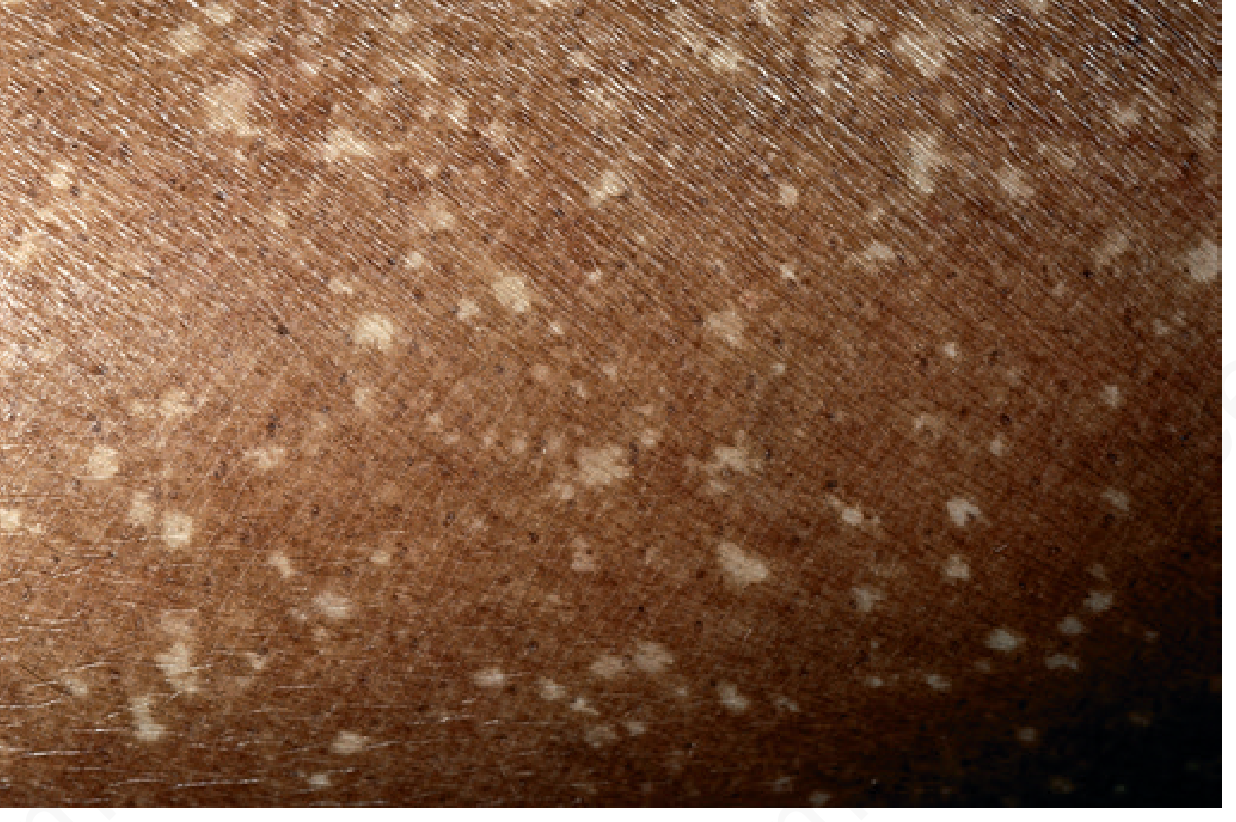
What is IGH?
- A very common, benign, acquired pigmentation disorder
- Prevalence increases sharply with age (up to 80-90% of people over age 60-70)
- Affects all races and skin types, but is more visible/striking on darker skin
- Occurs most often on extensor forearms and shins - areas with high sun exposure
- More cosmetically noticeable in people with deeper skin tones
- Lesions do not itch, hurt, or cause any symptoms
- Not contagious
What causes it?
The exact cause is unknown, but cumulative sun (UV) exposure is strongly implicated. Histologically there is:
- Flattening of the dermal-epidermal junction
- Reduced numbers of melanocytes (10-50% fewer than normal skin)
- Reduced melanin in the basal layer
- Epidermal atrophy (thinning)
Hair within the lesions usually retains its color, which is a helpful distinguishing feature.
Differential Diagnosis
These spots can sometimes be confused with:
| Condition | How to differentiate |
|---|---|
| Vitiligo (guttate) | More complete depigmentation (pure white), can affect any body site, may affect hair |
| Pityriasis alba | Poorly defined borders, scaling, usually in children, often on face |
| Pityriasis versicolor (tinea versicolor) | Has fine scale, KOH scraping shows fungal hyphae, trunk more common |
| Post-inflammatory hypopigmentation | Preceded by skin injury, rash, or inflammation |
| Progressive macular hypomelanosis | Usually on trunk, not extremities |
| Leprosy | Reduced sensation in macules, nerve involvement |
Treatment
IGH is a benign condition and treatment is not medically necessary. However, for cosmetic concerns:
First line / preventive:
- Daily broad-spectrum sunscreen - most important step to prevent new lesions
- Protective clothing to reduce UV damage
Options for existing lesions (partial evidence):
| Treatment | Evidence / Notes |
|---|---|
| Topical tacrolimus (0.1%) | Stimulates melanocyte migration and activity; shown to promote repigmentation |
| Topical calcineurin inhibitors (tacrolimus, pimecrolimus) | Preferred non-steroid option |
| Cryotherapy (liquid nitrogen) | Creates controlled skin injury to stimulate repigmentation; variable results |
| Fractional CO2 laser | Studies show improvement in appearance |
| 88% phenol ("therapeutic wounding") | Controlled chemical injury to stimulate repigmentation |
| 5-fluorouracil (5-FU) via tattoo needle | Newer technique - decreases fibrosis, may help melanocyte migration |
A 2025 systematic review (PMID 40192523) confirmed these options are the current evidence base, with topical calcineurin inhibitors and laser treatments showing the most consistent benefit.
Key Takeaway
This is a harmless cosmetic condition - not a sign of any serious disease. The most practical advice is to use daily sunscreen to prevent new spots from forming. If the appearance is bothersome, a dermatologist can discuss topical tacrolimus or laser options.
Important disclaimer: This analysis is for educational purposes. A dermatologist should examine the lesions in person to confirm the diagnosis, particularly to rule out conditions like leprosy (if you are in an endemic region) or guttate vitiligo.
- Andrews' Diseases of the Skin, Clinical Dermatology, p. 1000
- Dermatology 2-Volume Set 5e, p. 1329
This is a shared conversation. Sign in to Orris to start your own chat.