
Primary adrenal insufficiency
"primary adrenal insufficiency" AND "Addison disease"
python3 -c " import pdfplumber pdf_path = '/home/daytona/workspace/attachments/e9461612-2f79-44c1-bae9-7098b5ba7763/Part 24 -The Endocrine System - Nelson 2024 (1).pdf' with pdfplumber.open(pdf_path) as pdf: print(f'Total pages: {len(pdf.pages)}') # Print text from first 3 pages to find the adrenal section for i, page in enumerate(pdf.pages[:5]): text = page.extract_text() if text: print(f'--- PAGE {i+1} ---') print(text[:500]) "
python3 -c " import pdfplumber pdf_path = '/home/daytona/workspace/attachments/e9461612-2f79-44c1-bae9-7098b5ba7763/Part 24 -The Endocrine System - Nelson 2024 (1).pdf' with pdfplumber.open(pdf_path) as pdf: print(f'Total pages: {len(pdf.pages)}') # Search for adrenal content pages for i, page in enumerate(pdf.pages): text = page.extract_text() or '' if 'adrenal insufficiency' in text.lower() or 'Addison' in text or 'adrenal cortex' in text.lower(): print(f'--- PAGE {i+1} ---') print(text[:200]) print('...') " 2>&1 | head -100
python3 -c " from pypdf import PdfReader pdf_path = '/home/daytona/workspace/attachments/e9461612-2f79-44c1-bae9-7098b5ba7763/Part 24 -The Endocrine System - Nelson 2024 (1).pdf' reader = PdfReader(pdf_path) print(f'Total pages: {len(reader.pages)}') for i, page in enumerate(reader.pages): text = page.extract_text() or '' if 'adrenal insufficiency' in text.lower() or 'Addison' in text: print(f'--- PAGE {i+1} ---') print(text[:300]) print() " 2>&1 | head -120
python3 -c " from pypdf import PdfReader pdf_path = '/home/daytona/workspace/attachments/e9461612-2f79-44c1-bae9-7098b5ba7763/Part 24 -The Endocrine System - Nelson 2024 (1).pdf' reader = PdfReader(pdf_path) # Search specifically for Chapter 609/610 - Adrenal Cortex for i, page in enumerate(reader.pages): text = page.extract_text() or '' if 'Chapter 609' in text or 'Chapter 610' in text or 'Adrenal Cortex' in text or 'adrenocortical' in text.lower(): print(f'--- PAGE {i+1} ---') print(text[:500]) print() " 2>&1 | head -200
python3 -c " from pypdf import PdfReader pdf_path = '/home/daytona/workspace/attachments/e9461612-2f79-44c1-bae9-7098b5ba7763/Part 24 -The Endocrine System - Nelson 2024 (1).pdf' reader = PdfReader(pdf_path) # Pages 95-105 correspond to Chapter 615 on adrenal insufficiency (0-indexed: 94-104) for i in range(94, 107): page = reader.pages[i] text = page.extract_text() or '' print(f'=== PAGE {i+1} ===') print(text) print() " 2>&1
Primary Adrenal Insufficiency (Addison Disease)
Definition
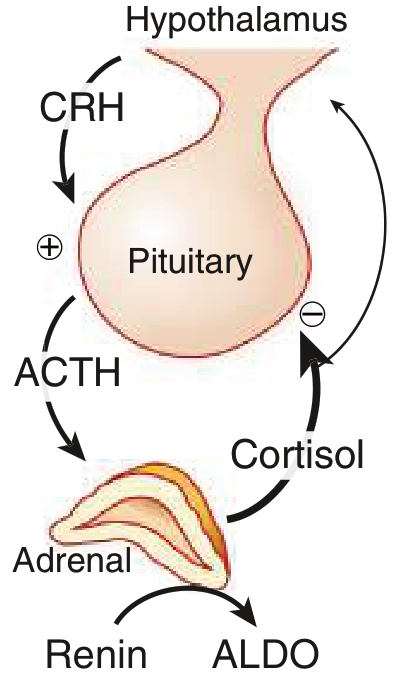
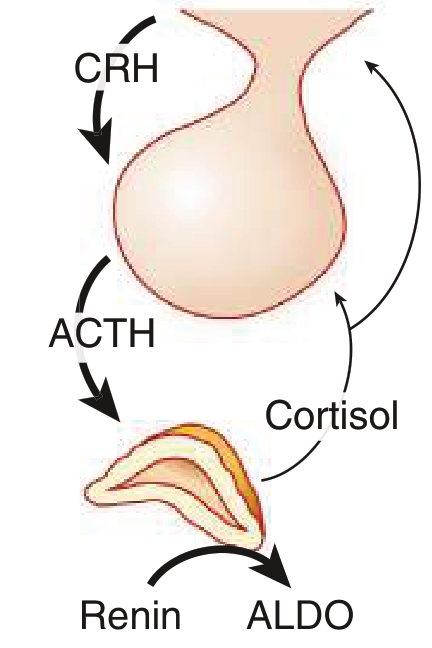
Etiology
In Children — Genetic causes predominate (>65% of childhood PAI)
| Category | Examples |
|---|---|
| Inborn errors of steroidogenesis (CAH) | 21-hydroxylase def. (CYP21A2), 11β-hydroxylase def. (CYP11B1), 3β-HSD def., lipoid adrenal hyperplasia (StAR) — most common cause of PAI in infancy (~59%) |
| ACTH unresponsiveness | Familial glucocorticoid deficiency type 1 (MC2R), type 2 (MRAP); Triple A/Allgrove syndrome (AAAS) |
| Adrenal hypoplasia congenita | X-linked (NR0B1/DAX1) — common in males; NR5A1 (SF-1) deficiency |
| Peroxisomal defects / lipid metabolism | X-linked adrenoleukodystrophy (ABCD1/Xq28) — most common in preadolescent boys; Zellweger syndrome, neonatal ALD |
| Mitochondrial / redox defects | NNT, TXNRD2 deficiency |
| Syndromic / growth restriction | IMAGe syndrome (CDKN1C), MIRAGE syndrome (SAMD9), Pallister-Hall (GLI3) |
In Adults — Acquired causes predominate
| Cause | Notes |
|---|---|
| Autoimmune (Addison disease) | ~80% in developed countries; anti-CYP21A2 antibodies; isolated or as APS-1 (AIRE mutation: + hypoparathyroidism + mucocutaneous candidiasis) or APS-2 (+ autoimmune thyroid disease or T1DM) |
| Infections | TB (historically), meningococcemia (Waterhouse-Friderichsen syndrome), histoplasmosis, cryptococcosis, CMV in AIDS |
| Infiltration / metastases | Lung, breast, kidney, colon carcinoma; lymphoma; amyloidosis; hemochromatosis |
| Adrenal hemorrhage | Neonatal (breech delivery); anticoagulated adults; antiphospholipid syndrome |
| Drugs | Ketoconazole, mitotane, etomidate, abiraterone, immune checkpoint inhibitors (nivolumab, pembrolizumab) |
| Adrenoleukodystrophy | Present in childhood/adolescence; ↑ plasma C26:0 very-long-chain fatty acids |
Pathophysiology
| Deficiency | Consequence |
|---|---|
| Cortisol ↓ | ↓Cardiac output + vascular tone; catecholamine resistance → hypotension, shock; ↓gluconeogenesis → hypoglycemia; ↓free water excretion → hyponatremia; loss of negative feedback → ↑↑ACTH → hyperpigmentation |
| Aldosterone ↓ | ↓Na⁺ reabsorption → hypovolemia, hyponatremia, salt craving; ↓K⁺ excretion → hyperkalemia |
| ↑↑ ACTH / POMC peptides | Skin hyperpigmentation (via γ-MSH); prominent in creases, buccal mucosa, scars, nipples |
Clinical Manifestations
Table: Signs, Symptoms, and Prevalence (Nelson 2024, Table 615.6)
| Feature | Mechanism | Prevalence |
|---|---|---|
| Fatigue, anorexia, weight loss | GC deficiency | ~90% |
| Nausea, vomiting | GC + MC deficiency | ~90% |
| Hyperpigmentation (primary only) | Excess ACTH/POMC | ~70% |
| Hypotension / orthostatic hypotension | MC + GC deficiency | 70–100% |
| Hyponatremia | MC + GC deficiency | ~90% |
| Hyperkalemia (primary only) | MC deficiency | ~50% |
| Hypoglycemia | GC deficiency | ~30% |
| Salt craving (primary only) | MC deficiency | ~20% |
| High ACTH | GC deficiency | 100% |
| High plasma renin activity | MC deficiency | 100% |
Age-specific features:
- Infants: Hyperkalemia, hyponatremia, hypoglycemia dominate; hyperpigmentation absent (takes weeks/months); decompensation can occur within days
- Older children/adults: Insidious onset of weakness, malaise, weight loss, orthostatic hypotension; often misdiagnosed as chronic fatigue, depression, or anorexia nervosa; acute adrenal crisis can be precipitated by minor illness
Adrenal Crisis (acute):
Diagnosis
Primary Adrenal Insufficiency suspected
│
├─ Measure 17-OH-progesterone
│     (+) >1000 ng/dL → CAH (21-hydroxylase deficiency)
│     (−) ↓
│
├─ 21-OH Antibody (if >6 months)
│     (+) → Autoimmune AI (consider APS-1/APS-2)
│     (−) ↓
│
├─ VLCFA (males) → Adrenoleukodystrophy
│     (+) → ALD
│     (−) ↓
│
└─ CT Adrenals → Infiltrative disease, hemorrhage, infection, malignancy
   If negative → Genetic syndromes (rare CAH, AHC, etc.)
Key lab tests:
| Test | Interpretation |
|---|---|
| Morning serum cortisol | <3 μg/dL diagnostic; >18 μg/dL excludes; 3–18 μg/dL indeterminate |
| ACTH stimulation test (gold standard) | 250 μg cosyntropin IV; cortisol <18 μg/dL at 30–60 min = PAI |
| Low-dose ACTH test | 1 μg/1.73 m² — more sensitive for secondary AI |
| Plasma ACTH | High in primary; low/normal in secondary |
| Plasma renin activity | Elevated in primary (aldosterone deficiency) |
| Electrolytes | Hyponatremia, hyperkalemia, hypoglycemia |
| Anti-CYP21A2 antibodies | Autoimmune Addison; small adrenals on imaging |
| VLCFA | Adrenoleukodystrophy (screen all males with PAI) |
| CT/MRI adrenals | Large +/− calcified (TB, fungal, hemorrhage); small (autoimmune) |
Treatment
Acute Adrenal Crisis
- Draw blood for cortisol, ACTH, aldosterone, renin, electrolytes, glucose before treatment if possible
- IV fluids: 5% dextrose in 0.9% NaCl — corrects hypoglycemia, hypovolemia, hyponatremia. Avoid hypotonic fluids.
- Hydrocortisone sodium succinate IV bolus, then q6h × 24 hours:
- Infants: 10 mg bolus
- Toddlers: 25 mg
- Older children: 50 mg
- Adolescents: 100 mg
- Treat hyperkalemia if severe: IV calcium, bicarbonate, glucose/insulin, Kayexalate
Chronic Replacement
| Drug | Dose | Notes |
|---|---|---|
| Hydrocortisone (glucocorticoid) | 10–15 mg/m²/day PO ÷ 3 doses | Monitor with ACTH levels (morning ACTH 1–4× ULN acceptable) |
| Fludrocortisone (mineralocorticoid) | 0.05–0.2 mg/day PO | Monitor with plasma renin activity; if primary AI only |
| DHEA | Adults: controversial | May improve fatigue/energy, especially in women |
Stress dosing:
- Minor illness / fever: 2–3× usual hydrocortisone dose
- Major surgery / GA: High-dose IV hydrocortisone (as for acute crisis)
⚠️ Caution: If concurrent hypothyroidism, treat adrenal insufficiency first — thyroxine accelerates cortisol clearance and can precipitate crisis if GC replacement is inadequate.
⚠️ Rifampicin, phenytoin, and phenobarbital induce hepatic steroid metabolism and reduce effectiveness of corticosteroid replacement — higher doses may be needed.
Key Distinguishing Features: Primary vs. Secondary AI
| Feature | Primary | Secondary |
|---|---|---|
| Cause | Adrenal gland destruction | Pituitary/hypothalamic ACTH or CRH ↓ |
| Cortisol | ↓ | ↓ |
| Aldosterone | ↓ | Normal |
| ACTH | ↑↑ | ↓ or inappropriately normal |
| Hyperpigmentation | Yes | No |
| Hyperkalemia | Yes | No |
| Hyponatremia | Yes | Yes (mild) |
| Adrenal size on imaging | Small (autoimmune) or large (infiltration) | Normal or small |
Recent Evidence
- Increased pregnancy/fetal complications in PAI (PMID: 39277840) — systematic review confirming adverse obstetric outcomes; relevant for management in women of reproductive age.
- Increased mortality in PAI (PMID: 40966723) — 2025 meta-analysis confirming excess mortality, reinforcing the need for adequate replacement and sick-day rules.
From Nelson only