
Takayasu arteritis follow-up investigations
"Takayasu arteritis" AND "follow-up" AND monitoring
PMID: 37550004
Takayasu arteritis follow-up investigations monitoring guidelines 2024 2025
Takayasu Arteritis: Follow-up Investigations
1. Clinical Assessment
- Blood pressure (both arms) — detect new asymmetry (>10 mmHg difference) suggesting progressive subclavian or aortic disease
- Peripheral pulse examination — loss or reduction of previously palpable pulses indicates disease progression
- Auscultation for bruits — over carotid, subclavian, renal, and aortic territories
- Symptoms review — claudication (upper > lower limb), carotidynia, headache, visual symptoms, renovascular hypertension, chest/abdominal pain
2. Laboratory Investigations
| Test | Role | Limitations |
|---|---|---|
| ESR | Reflects systemic inflammation; serial trend useful | Does not correlate with PET activity or patient-reported outcomes in LVV |
| CRP | Modest correlation with disease activity; more sensitive than ESR for acute flares | Can be normal in active disease |
| FBC | Anaemia of chronic disease (mild), thrombocytosis in active disease | Non-specific |
| γ-globulins / immunoglobulins | Elevated in active disease | Non-specific |
| Renal function (eGFR, creatinine) + urinalysis | Detect renal artery stenosis–mediated ischaemic nephropathy | Structural, not inflammatory |
| Pentraxin-3 (PTX3) | More specific than CRP for vascular wall inflammation; studied but not yet in routine use | Not widely available |
| IL-6, MMP-3, MMP-9 | Proposed biomarkers; elevated in active TA | Not validated for clinical practice |
Key point: ESR and CRP are unreliable markers of vascular disease activity. Normal inflammatory markers do not exclude active arteritis, and imaging remains essential for relapse detection. — Brenner and Rector's The Kidney; Current Surgical Therapy 14e
3. Imaging Investigations
3a. MRI / MR Angiography (MRA) — Preferred modality for TA
- MRI is the preferred imaging modality per EULAR 2023 recommendations for TA
- Demonstrates wall oedema (active inflammation), wall thickening, gadolinium enhancement, and structural changes (stenosis/aneurysm)
- MRA provides luminography — identifies stenoses, occlusions, aneurysms, and collaterals
- No ionising radiation — preferred for serial follow-up studies (especially in young women)
- Limitation: Wall changes do not always correlate with disease activity; gadolinium avoidance needed in renal impairment
3b. CT Angiography (CTA)
- High-resolution assessment of vessel wall thickening, calcification, stenosis, aneurysms
- Preferred when MRI is contraindicated or unavailable
- Limitation: Radiation exposure — a concern given repeated imaging in young patients
- May demonstrate mural thickening with enhancement during active inflammation
3c. ¹⁸F-FDG PET/CT or PET/MRI
- Detects metabolically active vascular inflammation even before structural changes appear
- Particularly useful to differentiate active ("hot") from burned-out ("cold") disease
- Used for evaluating suspected relapse and assessing response to therapy
- Limitation: Not validated as a reliable measure of disease activity in follow-up; FDG uptake may reflect chronic remodelling; not widely available; radiation exposure
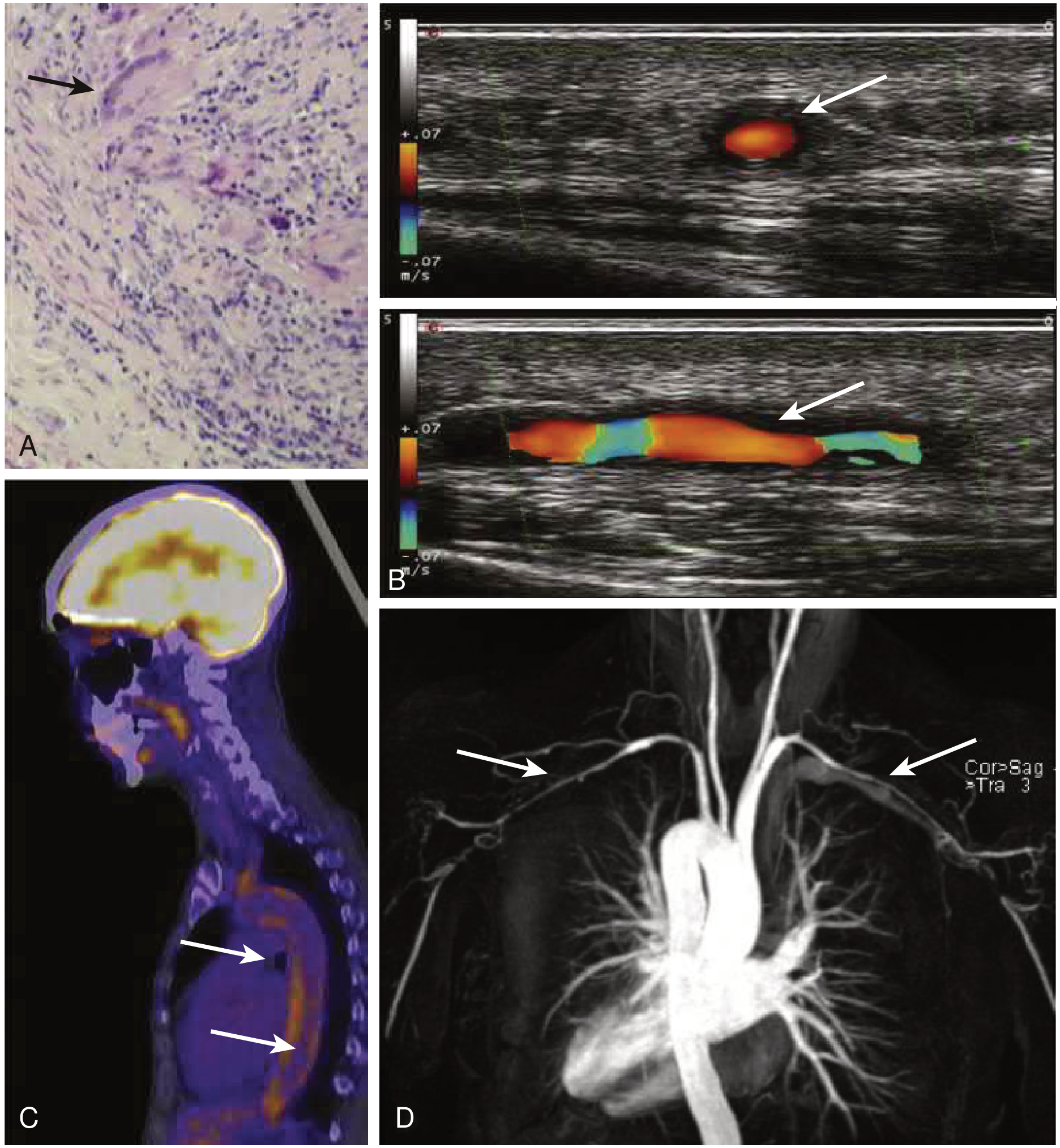
3d. Vascular Ultrasound (Duplex/Colour Doppler)
- Assesses carotid, subclavian, axillary, and renal arteries for wall thickening, flow velocity (stenosis), and intima-media thickness
- Useful at bedside and in serial monitoring — no radiation
- Detects the "macaroni sign" (circumferential wall thickening) in large vessels
- Limited to accessible vessels; operator-dependent; cannot image thoracic aorta directly
3e. Conventional (Catheter) Angiography
- Previously the gold standard; now largely replaced by CTA/MRA
- Provides luminography only — no vessel wall information
- Reserved for pre-intervention planning (angioplasty, stenting, bypass)
- Noninvasive imaging is preferred per ACR/VF 2021 and EULAR guidelines
Summary: Imaging Choice by Purpose
| Purpose | Preferred Modality |
|---|---|
| Routine structural monitoring (long-term) | MRA or CTA |
| Detecting active inflammation / suspected relapse | MRI with contrast or FDG-PET/CT |
| Monitoring accessible vessel territories (carotid, subclavian) | Duplex ultrasound |
| Pre-interventional planning | CTA or catheter angiography |
| Serial follow-up (radiation-sparing) | MRA |
4. Echocardiography
- Assess for aortic root dilation and aortic regurgitation (AR) — occurs in ~18% of TA patients due to ascending aortic inflammation
- AR requiring valve replacement affects approximately 15% of patients
- Also evaluates left ventricular function, coronary artery origins (coronary arteritis), pulmonary arterial pressure (pulmonary artery involvement in up to 50%)
- Annual or biennial echocardiography is recommended in patients with aortic involvement
5. Blood Pressure Monitoring
- Serial bilateral arm BP measurement at every visit
- Ambulatory blood pressure monitoring (ABPM) for accurate assessment where subclavian/axillary disease affects peripheral readings
- Renal artery stenosis is a common cause of renovascular hypertension — renal duplex Doppler or CTA/MRA of renal arteries if BP is difficult to control
6. Ophthalmologic Review
- Indicated in patients with carotid/vertebral involvement or symptoms
- Fundoscopy for hypertensive retinopathy, retinal vein/artery occlusion, optic atrophy
- Visual field assessment if visual symptoms occur
7. ACR/VF 2021 Recommendations for Monitoring (TA in Remission)
- Strong recommendation: Long-term clinical monitoring over no monitoring in patients in apparent remission
- Inflammatory markers (ESR/CRP) to assist monitoring, acknowledging limitations
- Noninvasive imaging over catheter angiography
- In remission with asymptomatic elevation of inflammatory markers: increase monitoring frequency rather than automatically escalating immunosuppression
- In remission with new vascular inflammation on imaging (new stenosis or wall thickening): conditionally recommend treating with immunosuppression
8. EULAR 2023 Imaging Recommendations (Relevant to TA Follow-up)
- MRI is the preferred imaging modality for TA (both diagnosis and follow-up)
- FDG-PET, CT, or ultrasound are acceptable alternatives
- Imaging not routinely recommended for follow-up — use when relapse is suspected or inflammatory markers are unreliable
- MR-angiography, CT-angiography, or ultrasound for long-term structural damage monitoring at sites of prior vascular inflammation
Summary Table: Follow-up Investigations in TA
| Domain | Investigation | Frequency |
|---|---|---|
| Clinical | BP (bilateral), pulses, bruits, symptoms | Every visit |
| Inflammatory markers | ESR, CRP, FBC | Every 1–3 months (active); every 3–6 months (remission) |
| Renal function | eGFR, urine protein:creatinine | Every 3–6 months |
| Structural imaging | MRA or CTA (whole aorta + branches) | Annually or at relapse; MRA preferred |
| Functional imaging | FDG-PET/CT | When relapse suspected and labs are unhelpful |
| Cardiac | Echocardiography | Annually if aortic root/valve involved |
| Ophthalmology | Fundoscopy, visual fields | If symptomatic or carotid disease present |
| Vascular lab | Duplex ultrasound (accessible vessels) | At follow-up visits for targeted territories |
Pid
"pelvic inflammatory disease" AND management
pelvic inflammatory disease PID diagnosis treatment guidelines 2024 2025
Pelvic Inflammatory Disease (PID)
Aetiology
| Organism | Notes |
|---|---|
| Neisseria gonorrhoeae | Predominant in high-gonorrhoea prevalence settings |
| Chlamydia trachomatis | ~35% of cases; may be mild/subclinical |
| Mycoplasma genitalium | Significantly associated with endometritis and salpingitis |
| BV-associated anaerobes | Prevotella spp., peptostreptococci, E. coli, H. influenzae, group B streptococci |
| Others | Cytomegalovirus, genital mycoplasmas; M. tuberculosis (haematogenous); secondary spread from appendicitis, diverticulitis |
Risk Factors
- Age <25 years; sexually active
- Multiple or new sexual partners
- Previous PID or STI history
- Bacterial vaginosis
- Recent IUD insertion, D&C, TOP, hysterosalpingography
- Vaginal douching
- Menstruation (facilitates ascending infection)
- Protective: oral contraceptive pills, tubal sterilisation
Clinical Spectrum
Endometritis (milder)
- Less severe tenderness; fewer constitutional symptoms
- Lower risk of subsequent tubal occlusion/infertility than salpingitis
Salpingitis (classic PID)
- Bilateral lower abdominal/pelvic pain — dull or aching, usually <3 weeks
- Abnormal vaginal discharge (mucopurulent cervicitis in majority)
- Abnormal uterine bleeding (~40%)
- Dysuria (~20%)
- Nausea, vomiting if peritonitis develops
- Examination: cervical motion tenderness (CMT), uterine tenderness, adnexal tenderness ± adnexal mass (in ~50%)
- Fever >38°C in only ~one-third
Perihepatitis (Fitz-Hugh–Curtis Syndrome)
- Right upper quadrant pleuritic pain ± tenderness in 3–10% of cases
- Can overshadow pelvic symptoms → mistaken for cholecystitis
- LFTs and RUQ ultrasound are nearly always normal
- Laparoscopy shows "violin-string" adhesions between liver capsule and peritoneum
Tubo-Ovarian Abscess (TOA)
- Severe illness, high fever, significant systemic toxicity
- Palpable adnexal mass
- Indication for hospitalisation and IV therapy
Diagnosis
Minimum Diagnostic Criteria (CDC)
- Cervical motion tenderness
- Uterine tenderness
- Adnexal tenderness
Additional Criteria (increase specificity)
- Temperature >38°C
- Mucopurulent cervical/vaginal discharge
- PMNs on wet prep of vaginal secretions (>30/HPF in cervical mucus)
- Elevated ESR (>15 mm/h — present in 75% with salpingitis) or elevated CRP
- WBC >10,000/µL (elevated in ~60%)
- Lab documentation of N. gonorrhoeae or C. trachomatis (endocervical or urine NAAT)
Laparoscopic confirmation
- Confirms salpingitis in ~60% of clinically suspected cases
- ~10–20% have endometritis alone; ~20–30% have an alternative diagnosis
- Required when diagnosis is uncertain, unilateral presentation, or failure to respond to therapy
Endometrial biopsy
- Histological endometritis (plasma cell infiltration) supports diagnosis
- Provides specimens for M. tuberculosis culture if suspected
Pregnancy test (β-hCG)
- Mandatory before diagnosing PID — exclude ectopic pregnancy
Investigations
Microbiological
- High vaginal swab — microscopy (WBCs, clue cells, Gram stain)
- Endocervical NAAT — N. gonorrhoeae and C. trachomatis (recommended; negative result does NOT exclude PID)
- M. genitalium NAAT — increasingly recommended given its treatment implications (requires moxifloxacin if macrolide-resistant)
- Blood cultures if severe systemic illness or TOA suspected
Haematological/Biochemical
- FBC — leukocytosis
- ESR, CRP — elevated in majority; useful to monitor response
- β-hCG — mandatory to exclude ectopic pregnancy
- LFTs — near-normal in Fitz-Hugh-Curtis (helps distinguish from cholecystitis)
- HIV testing — HIV increases severity of salpingitis and risk of TOA
Imaging
- Normal in mild/early PID (does not exclude diagnosis)
- Thickened, fluid-filled fallopian tubes (club-shaped) = pyosalpinx
- Hydrosalpinx (chronic): tubular, folded, well-defined echogenic wall with short linear intraluminal echoes
- Enlarged, cystic ovaries = oophoritis
- Complex multilocular adnexal mass with debris = tubo-ovarian abscess
- Free pelvic fluid
- Colour Doppler distinguishes hydrosalpinx from pelvic varices
- Best for evaluating extent of disease and complications (especially pre-drainage planning)
- Findings: thickened uterosacral ligaments, haziness/stranding of pelvic fat, bulky uterus with abnormal endometrial enhancement, thickened fallopian tubes (pyosalpinx), complex pelvic abscess
- Gas in abscess cavity suggests gas-forming organisms or bowel fistula
- Free fluid adjacent to liver on CT → Fitz-Hugh-Curtis
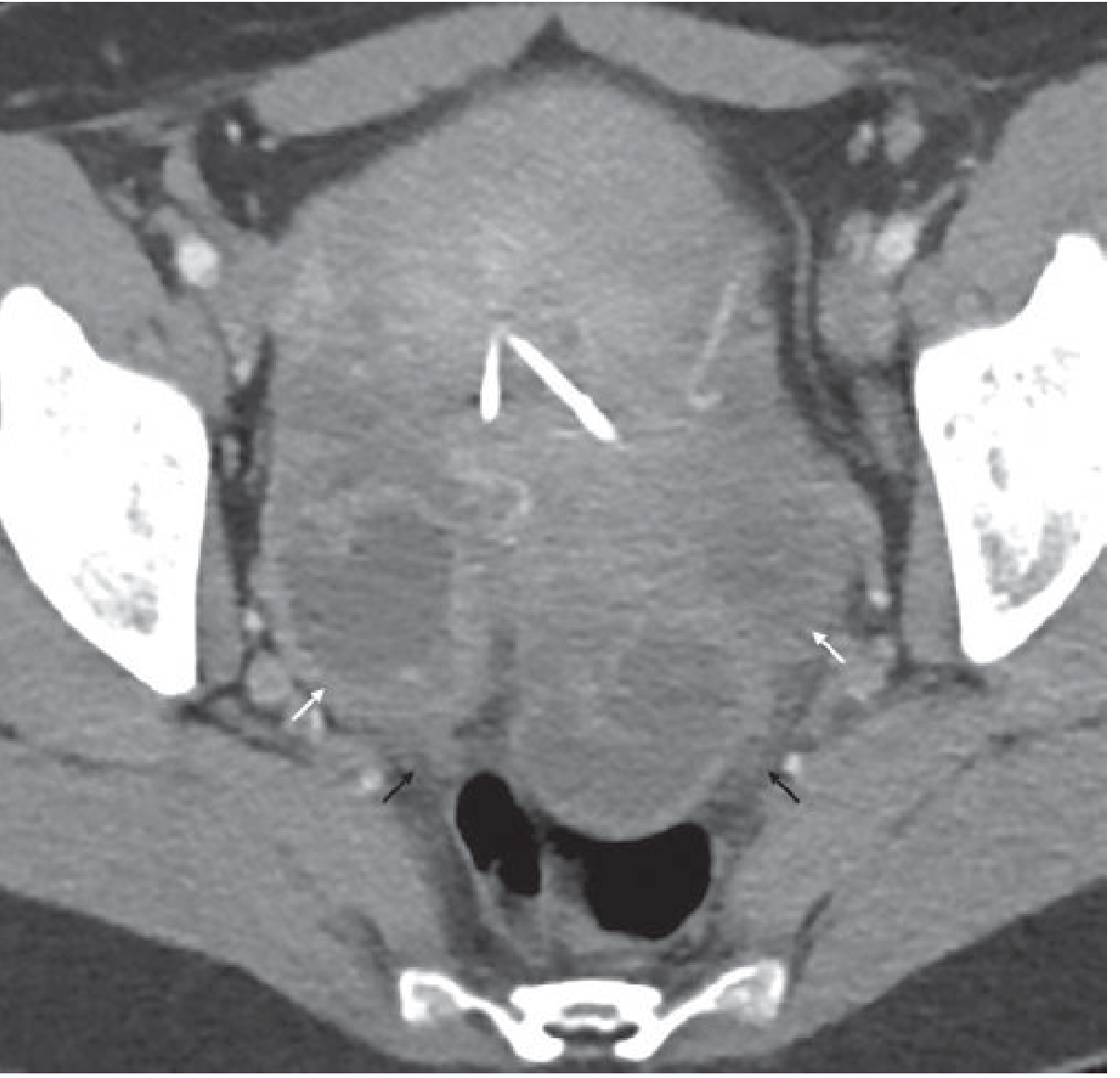
- Highest soft-tissue resolution; best for complex or atypical cases
- Demonstrates: tubal wall thickening, intratubal fluid, increased tubal diameter (salpingitis); complex adnexal collections (TOA)
- Useful when ultrasound is inconclusive and patient is not pregnant
- Also identifies alternative pathology (endometriosis, ovarian torsion, etc.)
Management
Indications for Hospitalisation and IV Therapy
- Diagnosis uncertain; cannot exclude surgical emergency (appendicitis, ectopic)
- Pregnancy
- Pelvic/tubo-ovarian abscess suspected
- Severe illness, vomiting precluding oral therapy
- HIV infection
- Failure of outpatient therapy (no improvement at 72-hour review)
- Unable to follow or tolerate oral regimen
- Some experts hospitalise all adolescents
Antibiotic Regimens (CDC 2021 / Harrison's 22e)
| Drug | Dose |
|---|---|
| Ceftriaxone | 500 mg IM single dose (1 g if ≥150 kg) |
| + Doxycycline | 100 mg PO BD × 14 days |
| + Metronidazole | 500 mg PO BD × 14 days |
- Cefotetan 2 g IV q12h or Cefoxitin 2 g IV q6h
- + Doxycycline 100 mg IV/PO q12h
- Continue IV until 48h after clinical improvement → switch to oral doxycycline ± metronidazole to complete 14 days
- Clindamycin 900 mg IV q8h
- + Gentamicin loading dose 2 mg/kg IV, then 1.5 mg/kg q8h
- After improvement → clindamycin 450 mg PO QDS or doxycycline 100 mg PO BD to complete 14 days
M. genitalium
- If NAAT positive, add moxifloxacin 400 mg PO OD × 14 days (if macrolide-resistant or macrolide treatment fails)
IUD Management
- No routine removal required; retain unless no clinical improvement within 48–72 hours of antibiotics
Partner Notification and Treatment
- All sexual partners within the preceding 60 days must be traced and offered testing/treatment for N. gonorrhoeae and C. trachomatis
Follow-up
- 72-hour clinical review mandatory in all outpatients — assess response to treatment
- Persistent or worsening symptoms → hospitalise, reassess imaging (TVUS/CT), consider laparoscopy
- Test of cure for N. gonorrhoeae and C. trachomatis at 2 weeks
- Counsel on long-term sequelae (see below)
Complications and Sequelae
| Complication | Notes |
|---|---|
| Infertility | Tubal factor infertility in ~12% after 1 episode, ~23% after 2, ~54% after 3 |
| Ectopic pregnancy | 6–10× increased risk due to tubal scarring |
| Chronic pelvic pain | In ~18% at long-term follow-up |
| Tubo-ovarian abscess | Requires IV antibiotics ± drainage |
| Fitz-Hugh–Curtis | Perihepatitis; "violin string" adhesions; right upper quadrant pain |
| Periappendicitis | Appendiceal serositis without mucosal involvement (~5%) |
| Increased cancer risk | Meta-analysis 2024 [PMID: 39327298]: PID associated with increased ovarian and uterine cancer risk |
Differential Diagnosis
- Ectopic pregnancy (must exclude)
- Acute appendicitis
- Ovarian cyst complication (torsion, rupture)
- Endometriosis
- Urinary tract infection
- Irritable bowel syndrome / other GI disorders
Bacterial meningitis
"bacterial meningitis" AND management
bacterial meningitis diagnosis treatment guidelines 2024 2025
bacterial meningitis meningococcal purpuric rash petechiae
Bacterial Meningitis
Epidemiology
| Organism | % of Cases |
|---|---|
| Streptococcus pneumoniae | ~50% |
| Neisseria meningitidis | ~25% |
| Group B Streptococcus | ~15% |
| Listeria monocytogenes | ~10% |
| Haemophilus influenzae type b | <10% |
Aetiology by Age Group
| Age | Common Pathogens |
|---|---|
| 0–1 month | Group B Strep, Listeria, E. coli, Klebsiella |
| 1–23 months | S. pneumoniae, N. meningitidis, GBS, H. influenzae, E. coli |
| 2–50 years | N. meningitidis, S. pneumoniae |
| >50 years | S. pneumoniae, L. monocytogenes, aerobic gram-negative bacilli |
| Basilar skull fracture | S. pneumoniae, H. influenzae, Group A streptococci |
| Post-neurosurgery / CSF shunt | S. aureus (including MRSA), coagulase-negative staphylococci, aerobic gram-negatives (incl. Pseudomonas) |
Pathophysiology
- Nasopharyngeal colonisation → mucosal invasion → bacteraemia → seeding of the meninges
- Bacterial cell-wall components (LPS, teichoic acid, peptidoglycan) stimulate microglia, astrocytes, and endothelial cells to release TNF-α, IL-1β, and other cytokines within 1–2 h of inoculation
- Cytokines increase blood-brain barrier permeability → vasogenic oedema; leukocyte migration → cytotoxic oedema
- Subarachnoid exudate obstructs CSF flow → communicating/obstructive hydrocephalus → interstitial oedema
- Vasculitis of the large arteries at the base and cortical veins → ischemia, infarction, venous sinus thrombosis
- Combined oedema types → raised ICP → herniation
Clinical Presentation
Classic Triad (present in ~85% of adults)
- Fever
- Headache (severe, often described as "worst headache of life")
- Neck stiffness (nuchal rigidity)
Additional Features
- Photophobia, phonophobia
- Nausea and vomiting (~35%)
- Kernig's sign — resistance to knee extension with hip flexed at 90°
- Brudzinski's sign — involuntary knee flexion on rapid neck flexion
- Seizures (~30%)
- Cranial nerve palsies, focal neurological signs (10–20%)
- Altered consciousness, confusion, stupor, coma
- Papilloedema (<1% early; if present early, suspect abscess/mass)
Meningococcal-Specific
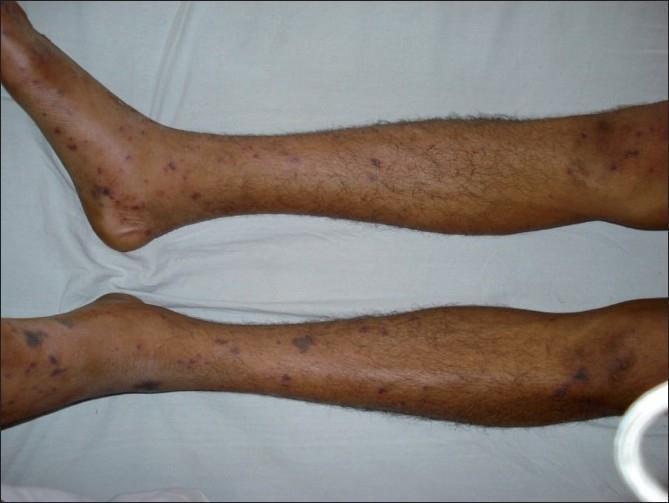
- Non-blanching petechial/purpuric rash — pathognomonic clue; begins as maculopapular then becomes petechial → purpuric
- Check entire body including conjunctivae; may be difficult to see on darker skin
- Fulminant course (purpura fulminans, DIC) possible — death within hours
Age-Specific Variations
- Neonates: poor feeding, irritability, temperature instability, bulging fontanelle (late sign), apnoea, seizures in ~40%; nuchal rigidity unreliable <1 year
- Elderly: insidious onset, variable meningeal signs, lethargy, altered cognition, often no fever
Predisposing Conditions
- Pneumococcal/sinusitis/otitis media (most common)
- Mastoiditis
- Basilar skull fracture with CSF rhinorrhea
- Alcoholism, diabetes, asplenia
- Hypogammaglobulinaemia, complement deficiency
- HIV/immunosuppression
- Recent neurosurgery, CSF shunt
- Perinatal exposure; non-immunised individuals
Investigations
Immediate / Before LP
- β-hCG (if applicable), blood glucose (for CSF glucose ratio)
- Blood cultures ×2 — before antibiotics if possible but must NOT delay treatment
- FBC, U&E, LFTs, coagulation — screen for sepsis, DIC, organ dysfunction
- CRP, procalcitonin — elevated; support diagnosis
- Blood glucose — simultaneous with LP for CSF:serum ratio
- CT head — required before LP if ANY of the following:
- Papilloedema
- Focal neurological signs
- Seizures
- Altered consciousness / GCS <12
- Immunocompromised
- History of CNS disease (tumour, stroke, focal infection)
Do NOT delay antibiotics for CT or LP — treat first if any delay is anticipated.
Lumbar Puncture — CSF Analysis (Gold Standard)
| Parameter | Bacterial Meningitis | Viral Meningitis |
|---|---|---|
| Opening pressure | >180 mmH₂O | Normal or mildly raised |
| Appearance | Cloudy/turbid/purulent | Clear |
| WBC | 10–10,000/µL; PMN predominance | 10–1000/µL; lymphocyte predominance |
| Protein | >0.45 g/L (often >1 g/L) | Mildly elevated or normal |
| Glucose | <2.2 mmol/L (<40 mg/dL) | Normal (>2.2 mmol/L) |
| CSF:serum glucose ratio | <0.4 | >0.6 |
| Gram stain | Positive in >60% | Negative |
| Culture | Positive in >80% | Negative |
| PCR | Detects bacterial DNA | Viral PCR positive |
| Lactate | Elevated (>3.5 mmol/L) | Normal |
Microbiology
- Gram stain — immediate; positive >60%
- Culture and sensitivity — gold standard; positive >80%; results guide targeted therapy
- CSF PCR panel (meningitis/encephalitis multiplex) — detects N. meningitidis, S. pneumoniae, L. monocytogenes, H. influenzae, viruses, fungi; rapid; useful if pre-treatment antibiotics reduce culture sensitivity
- Blood cultures — always; positive in ~50% of bacterial meningitis
- Throat swab / nasopharyngeal culture — for N. meningitidis in suspected meningococcal disease
- Skin lesion biopsy/Gram stain — if petechial/purpuric rash present; may reveal N. meningitidis
Neuroimaging
- CT head (pre-LP if indicated — see above): may show loss of sulci, cerebral oedema, hydrocephalus, empyema, abscess; meningeal enhancement is non-specific
- MRI brain with gadolinium: superior to CT; shows leptomeningeal enhancement (Fig. 143-2 in Harrison's); diffusion-weighted imaging identifies early ischaemia/infarction; NOT needed routinely but useful for complications
- Abnormalities on MRI (other than enhancement) suggest encephalitis or complications — not expected in uncomplicated meningitis
Other
- Urinary antigen (S. pneumoniae, H. influenzae type b) — can be positive even after antibiotics
- EEG — not routine; useful if seizures or to distinguish from HSV encephalitis (which causes periodic lateralising discharges)
- Echocardiogram — if infective endocarditis suspected as source
Management
Emergency Priority: TIME TO ANTIBIOTIC = KEY DETERMINANT OF OUTCOME
Step 1: Empirical Antibiotics (immediate, do not delay)
| Clinical Setting | Regimen |
|---|---|
| Adults 18–50 years | Ceftriaxone 2 g IV q12h + Vancomycin 15–20 mg/kg IV q8–12h |
| Adults >50 years or immunocompromised | Ceftriaxone 2 g IV q12h + Vancomycin + Ampicillin 2 g IV q4h (covers Listeria) |
| Neonates <1 month | Ampicillin + Cefotaxime or Ampicillin + Gentamicin |
| 1–23 months | Vancomycin + Ceftriaxone or Cefotaxime |
| Post-neurosurgery / CSF shunt / penetrating trauma | Vancomycin + Cefepime or Ceftazidime or Meropenem |
| Penicillin allergy | Chloramphenicol; moxifloxacin; or meropenem (depending on organism) |
Step 2: Dexamethasone (Adjunctive Therapy)
- Dexamethasone 0.15 mg/kg IV q6h × 4 days
- Give 10–20 min before or with the first dose of antibiotics
- Reduces meningeal inflammation, decreases risk of sensorineural hearing loss and neurological sequelae
- Most benefit for pneumococcal meningitis; recommended for all suspected community-acquired bacterial meningitis in adults pending culture results
- Discontinue if culture reveals an organism other than S. pneumoniae (debated for other organisms)
Step 3: Targeted (Pathogen-Directed) Therapy
| Organism | First-Line | Alternative |
|---|---|---|
| S. pneumoniae (pen-sensitive, MIC <0.06) | Penicillin G or Ampicillin | Ceftriaxone, Chloramphenicol |
| S. pneumoniae (pen-intermediate, MIC 0.1–1.0) | Ceftriaxone or Cefotaxime | Cefepime, Meropenem |
| S. pneumoniae (pen-resistant or ceph MIC ≥1.0) | Vancomycin + Ceftriaxone ± Rifampicin | Moxifloxacin |
| N. meningitidis (pen-sensitive) | Penicillin G or Ampicillin | Ceftriaxone, Chloramphenicol |
| N. meningitidis (pen-resistant) | Ceftriaxone or Cefotaxime | Chloramphenicol, Moxifloxacin |
| L. monocytogenes | Ampicillin + Gentamicin | TMP-SMX, Meropenem |
| H. influenzae (β-lactamase negative) | Ampicillin | Ceftriaxone, Chloramphenicol |
| H. influenzae (β-lactamase positive) | Ceftriaxone/Cefotaxime | Cefepime, Chloramphenicol |
| MSSA | Nafcillin or Oxacillin | Vancomycin, Meropenem |
| MRSA | Vancomycin ± Rifampicin | TMP-SMX, Linezolid |
| Gram-negative (Pseudomonas) | Cefepime or Ceftazidime | Meropenem, Aztreonam, Ciprofloxacin |
| Enterococcus (amp-sensitive) | Ampicillin + Gentamicin | — |
Duration of Antibiotic Therapy
| Organism | Duration |
|---|---|
| N. meningitidis | 7 days |
| S. pneumoniae | 14 days |
| L. monocytogenes | 21 days |
| Gram-negative enteric bacilli | 21 days |
| Group B streptococcus | 14–21 days |
Step 4: Raised ICP Management
- Head elevation 30–45°
- Avoid hypotension and hypoxia
- Intubation and hyperventilation (PaCO₂ 25–30 mmHg) — for acute decompensation
- Mannitol 0.25–1 g/kg IV — osmotic agent for ICP reduction
- ICU monitoring; ICP monitoring device if severe
Chemoprophylaxis for Close Contacts (Meningococcal Disease)
| Regimen | Dose |
|---|---|
| Rifampicin (first-line) | 600 mg PO q12h × 2 days (adults); 10 mg/kg q12h × 2 days in children >1 yr; avoid in pregnancy |
| Azithromycin (single dose) | 500 mg PO once |
| Ceftriaxone (single dose) | 250 mg IM once (adults); 125 mg IM in children |
| Ciprofloxacin | 500 mg PO once |
Differential Diagnosis
| Condition | Distinguishing Features |
|---|---|
| HSV encephalitis | Focal signs (dysphasia, hemiparesis), temporal lobe MRI signal on FLAIR/DWI, lymphocytic CSF with normal glucose, positive CSF HSV PCR |
| Viral (aseptic) meningitis | Lymphocytic pleocytosis, normal CSF glucose, less toxic |
| Subarachnoid haemorrhage | Thunderclap onset, xanthochromia on LP, CT shows blood |
| Brain abscess | Focal signs, papilloedema, normal/mild CSF pleocytosis, ring-enhancing lesion on MRI |
| Rocky Mountain spotted fever | Rash starts on wrists/ankles spreading centrally including palms/soles; tick bite history |
| Tuberculous meningitis | Subacute onset, lymphocytic CSF with very low glucose; contact history, AFB/PCR |
Complications
| Complication | Notes |
|---|---|
| Sensorineural hearing loss | Most common neurological sequela; assess all survivors |
| Intellectual impairment, memory deficits | ~25% of survivors have moderate/severe sequelae |
| Seizures (acute and post-infectious epilepsy) | ~30% acutely; ~4% develop epilepsy |
| Hydrocephalus | Communicating > obstructive; may require VP shunt |
| Cerebral infarction / stroke | Due to arteritis, venous sinus thrombosis |
| Subdural empyema / brain abscess | More common in children |
| Cranial nerve palsies | CN III, VI, VII most common |
| Waterhouse-Friderichsen syndrome | Bilateral adrenal haemorrhage in meningococcaemia; adrenal crisis |
| DIC / purpura fulminans | Meningococcal disease; requires FFP, cryoprecipitate |
| Gait disturbances, vestibular dysfunction | — |
Prognosis
| Organism | Mortality |
|---|---|
| H. influenzae / N. meningitidis / Group B Strep | 3–7% |
| L. monocytogenes | ~15–27% |
| S. pneumoniae | ~20% (highest morbidity) |
Asthma mdi
asthma MDI metered dose inhaler technique steps spacer 2024 2025 GINA guidelines
Asthma: Metered-Dose Inhaler (MDI)
What is a pMDI?
- A pressurised canister containing the drug as a liquid suspension or solution in a hydrofluoroalkane (HFA) propellant (CFC-free since the early 2000s)
- A metering valve that releases a fixed dose on each actuation
- A plastic actuator (mouthpiece) through which the aerosol is inhaled
Drugs Available as pMDI
| Drug Class | Examples | Role |
|---|---|---|
| Short-acting β₂ agonists (SABA) | Salbutamol (albuterol), Levalbuterol | Reliever: rapid bronchodilation (onset 5–15 min, duration 3–6 h); acute symptom relief |
| Long-acting β₂ agonists (LABA) | Formoterol, Salmeterol | Controller: bronchodilation ≥12 h; never use as monotherapy in asthma |
| Inhaled corticosteroids (ICS) | Beclomethasone, Budesonide, Fluticasone, Ciclesonide | Controller: anti-inflammatory; cornerstone of persistent asthma management |
| ICS + LABA combinations | Budesonide/formoterol, Fluticasone/salmeterol, Beclomethasone/formoterol | Controller + Reliever (MART strategy) |
| Short-acting muscarinic antagonists (SAMA) | Ipratropium bromide | Acute exacerbations; especially useful if SABA response is poor |
| Long-acting muscarinic antagonists (LAMA) | Tiotropium (2.5 µg pMDI) | Add-on controller at Step 4–5 |
Pharmacology of Key pMDI Drugs
ICS (e.g., Budesonide, Beclomethasone)
- Reduce airway inflammation by suppressing eosinophils, macrophages, T-lymphocytes
- Reverse mucosal oedema, decrease capillary permeability, inhibit leukotriene release
- After months of regular use, reduce airway hyperresponsiveness to allergens, irritants, cold air, and exercise
- Only 10–20% of inhaled dose reaches the lungs; 80–90% deposits in the oropharynx/is swallowed
- Adverse effects (local): hoarseness, oropharyngeal candidiasis → prevent by rinsing mouth after use and using a spacer
SABAs (e.g., Salbutamol/Albuterol)
- Directly relax airway smooth muscle via β₂ receptor → ↑ cAMP → bronchodilation
- Onset: 5–15 min; duration: 3–6 hours
- No anti-inflammatory effect — must not be used as monotherapy in persistent asthma
- Adverse effects: tachycardia, tremor, hypokalaemia, hyperglycaemia (minimised with inhaled route vs systemic)
- Chronic overuse leads to β₂ receptor downregulation/desensitisation — sign of poorly controlled asthma
Formoterol (LABA — rapid-onset)
- Onset similar to salbutamol; duration ≥12 hours
- Because of rapid onset, ICS/formoterol combinations (e.g., budesonide/formoterol) can serve as both controller AND reliever — the basis of the GINA MART strategy (GINA 2025)
pMDI Technique — Step-by-Step
Without Spacer (Open-Mouth or Closed-Mouth Technique)
- Remove the cap and shake the inhaler well for 3–5 seconds (resuspends the drug)
- Prime the inhaler if new or not used for >2 weeks (fire 2–4 test puffs into the air)
- Stand or sit upright — allows optimal lung expansion
- Exhale fully and gently away from the inhaler to empty the lungs
- Place the mouthpiece between the lips (closed-mouth) — or hold 3–4 cm in front of the open mouth (open-mouth)
- Begin inhaling slowly — then press the canister down in the first second of inhalation
- Continue inhaling slowly, deeply, and fully over ~5 seconds ("slowly, gently, naturally, deeply, and comfortably")
- Hold breath for 5–10 seconds (allows particles to settle in airways)
- Breathe out slowly through the nose
- Wait 30–60 seconds before the second puff (allows the valve to refill)
- Replace the cap
Most common error: Inhaling too fast and/or failing to coordinate inhalation with actuation. Failure to inhale slowly and deeply is actually more common than pure hand-mouth coordination failure. — Fishman's Pulmonary Diseases and Disorders
With Spacer (Valved Holding Chamber — Preferred)
- Shake the inhaler and attach to the spacer
- Prime the spacer first with 1 actuation (reduces electrostatic charge)
- Exhale fully away from the spacer
- Place the spacer mouthpiece in the mouth (lips sealed) — or apply face mask (for children/infants)
- Fire ONE puff into the spacer — then inhale immediately
- Inhale slowly and deeply over 3–5 seconds
- Hold breath for 5–10 seconds
- Breathe out slowly back through the spacer or through the nose
- Wait 30–60 seconds, then repeat for the second puff
- Never fire multiple puffs simultaneously into the spacer — each puff must be inhaled separately
Advantages and Disadvantages of pMDI
| Feature | pMDI |
|---|---|
| Advantages | Compact and portable; multidose; quick treatment time; drug sealed in canister; inexpensive; no minimum inspiratory flow required |
| Disadvantages | High oropharyngeal deposition (~80%); hand-mouth coordination required; "cold Freon effect" (HFA aerosol may trigger reflex breath-hold); difficult to assess when canister is empty |
Spacer: Purpose and Benefits
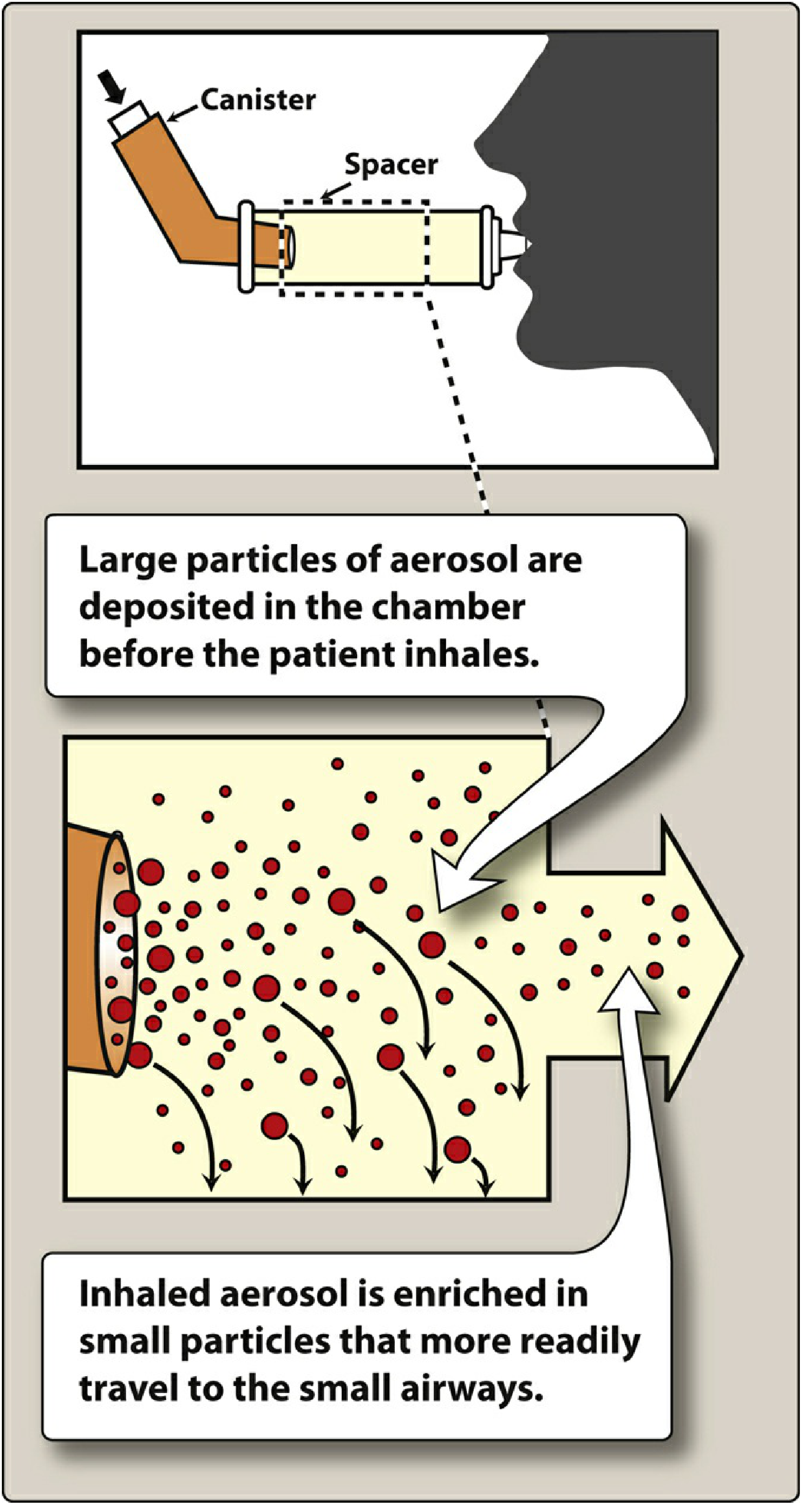
- Reduces oropharyngeal deposition — large, high-velocity particles impact the chamber walls rather than the pharynx
- Eliminates coordination requirement — patient can inhale after actuating; critical for children, elderly, and patients with poor coordination
- Reduces local ICS side effects — less drug deposited in the mouth/larynx → less hoarseness and oral candidiasis
- Reduces systemic ICS absorption — less drug swallowed → less GI absorption → fewer systemic effects
- Enriches lung-deposited aerosol with small particles — only fine particles (~1–5 µm) travel past the chamber and reach the lower airways
Spacers should be prescribed with the compatible pMDI only (different brands are not always interchangeable). — Fishman's Pulmonary Diseases
Spacer Maintenance
- Wash weekly with mild ionic detergent, air-dry (do not rub dry — creates electrostatic charge)
- Priming with 1 puff before use reduces electrostatic charge
- Replace every 6–12 months
- Rinse/wash spacer mouthpiece to prevent bacterial/fungal growth
Types of MDI Devices
| Device Type | Description | Best For |
|---|---|---|
| Standard pMDI | Requires hand-mouth coordination | Most adults with good technique |
| pMDI + Spacer | Eliminates coordination; reduces oropharyngeal deposition | Children, elderly, poor coordinators, high-dose ICS |
| Breath-actuated MDI (e.g., Autohaler, Easi-Breathe) | Triggered by inspiratory flow; no manual coordination needed | Poor coordination; not better than good conventional technique |
| Soft-mist inhaler (e.g., Respimat) | Aqueous solution; slower, longer spray; no propellant | Alternative for patients who don't tolerate cold aerosol |
GINA 2025 Treatment Steps: Inhaler Relevance
| Step | Track 1 (Preferred) | Track 2 (Alternative) |
|---|---|---|
| Step 1–2 | Low-dose ICS-formoterol as needed (AIR-only) | Low-dose ICS taken whenever SABA taken |
| Step 3 | Low-dose ICS-formoterol maintenance + reliever (MART) | Low-dose ICS-LABA or medium-dose ICS |
| Step 4 | Medium-dose ICS-formoterol MART | Medium-dose ICS-LABA |
| Step 5 | Add-on LAMA (tiotropium pMDI); refer for phenotyping/biologics | High-dose ICS-LABA + add-ons |
Key 2025 update: SABAs alone are no longer recommended as the sole reliever for adults and adolescents. All patients should be on ICS-containing therapy, with ICS-formoterol as the preferred reliever.
Common MDI Technique Errors
| Error | Consequence |
|---|---|
| Not shaking before use | Uneven drug:propellant ratio; inconsistent dose |
| Inhaling too fast (>60 L/min) | Increased oropharyngeal impaction; reduced lung deposition |
| Firing after peak inspiration or before starting inhale | Most of the dose hits the pharynx |
| Not holding breath after inhalation | Reduced airway deposition |
| Multiple puffs fired together into spacer | Electrostatic aggregation; reduced drug delivery |
| Not rinsing mouth after ICS | Oral candidiasis, hoarseness |
| Using inhaler upside-down | Incorrect dose delivered |
| Not priming new/unused inhaler | Variable dose in first puffs |
Monitoring pMDI Use
- Dose counter — modern pMDIs include dose counters; patients should not guess by shaking
- "Float test" — unreliable for determining remaining doses; not recommended
- Increasing frequency of SABA rescue use is a marker of worsening asthma control — not a goal in itself
- Electronic adherence monitors can be attached to pMDIs to track real-time use and improve adherence
Tests for filariasis
filariasis diagnostic tests microfilariae antigen detection 2024
Tests for Filariasis
Filarial Species: Diagnostic Overview
| Organism | Disease | Microfilarial Location | Periodicity | Vector |
|---|---|---|---|---|
| Wuchereria bancrofti | Lymphatic filariasis | Blood | Nocturnal (subperiodic in Pacific) | Culex, Anopheles, Aedes mosquitoes |
| Brugia malayi | Lymphatic filariasis | Blood | Nocturnal | Mansonia, Anopheles mosquitoes |
| Brugia timori | Lymphatic filariasis | Blood | Nocturnal | Anopheles mosquitoes |
| Loa loa | Loiasis | Blood | Diurnal | Chrysops (deerflies) |
| Onchocerca volvulus | Onchocerciasis (river blindness) | Skin | Non-periodic | Simulium blackflies |
| Mansonella perstans | Mansonellosis | Blood | Non-periodic | Culicoides midges |
| Mansonella ozzardi | Mansonellosis | Blood | Non-periodic | Culicoides midges / Simulium |
| Mansonella streptocerca | Cutaneous filariasis | Skin | Non-periodic | Culicoides midges |
1. Blood Examination for Microfilariae
Timing
| Species | Optimal Bleeding Time |
|---|---|
| W. bancrofti, B. malayi, B. timori (nocturnal) | 10 pm – 2 am |
| W. bancrofti subperiodic (Pacific Islands) | Any time (peak afternoon) |
| Loa loa | Midday (~noon) |
| M. perstans, M. ozzardi | Any time (non-periodic) |
Methods (in order of increasing sensitivity)
a) Wet Blood Film (direct)
- A drop of fresh anticoagulated blood on a slide with a coverslip
- Motile microfilariae can be identified under low-power microscopy
- Rapid but low sensitivity; useful for high microfilaraemia
b) Thick Blood Film (Giemsa-stained)
- 20–60 µL blood spread thick, lysed, fixed, and stained with Giemsa
- Allows species identification via morphological features
- Standard method; sensitivity depends on microfilaraemia level
c) Thin Blood Film
- 1–2 µL blood, stained with Giemsa/Field stain
- Allows detailed morphological study; less sensitive than thick film
d) Concentration Methods (increased sensitivity — preferred when microfilaraemia is low)
- 1–2 mL anticoagulated blood + 10 mL 2% formalin → centrifuge → examine sediment
- Fixes and concentrates microfilariae; allows detailed species identification
- Sensitivity superior to direct thick film
- Anticoagulated blood mixed with saline → passed through a 3–5 µm polycarbonate membrane filter
- Filter washed, dried, fixed, and stained — or examined directly for motile microfilariae
- Most sensitive parasitological technique for low-level microfilaraemia
- Can also be applied to hydrocele fluid and other body fluids
2. Morphological Identification of Microfilariae
| Feature | W. bancrofti | B. malayi | L. loa | O. volvulus | M. perstans |
|---|---|---|---|---|---|
| Sheath | Present (does not stain pink) | Present (bright pink with Giemsa) | Present (does not stain) | Absent | Absent |
| Tail nuclei | Do NOT reach tip | Two discrete nuclei at tip (subterminal + terminal) | Extend to tip | Do not reach tip | Extend to tip |
| Size | 245–295 µm × 7–10 µm | 180–230 µm × 5–6 µm | 250–300 µm | 150–360 µm (skin) | 190–200 µm |
| Location | Blood | Blood | Blood | Skin | Blood |
Key point: The B. malayi sheath staining bright pink is a rapid first step in distinguishing it from W. bancrofti and L. loa. — Medical Microbiology 9e
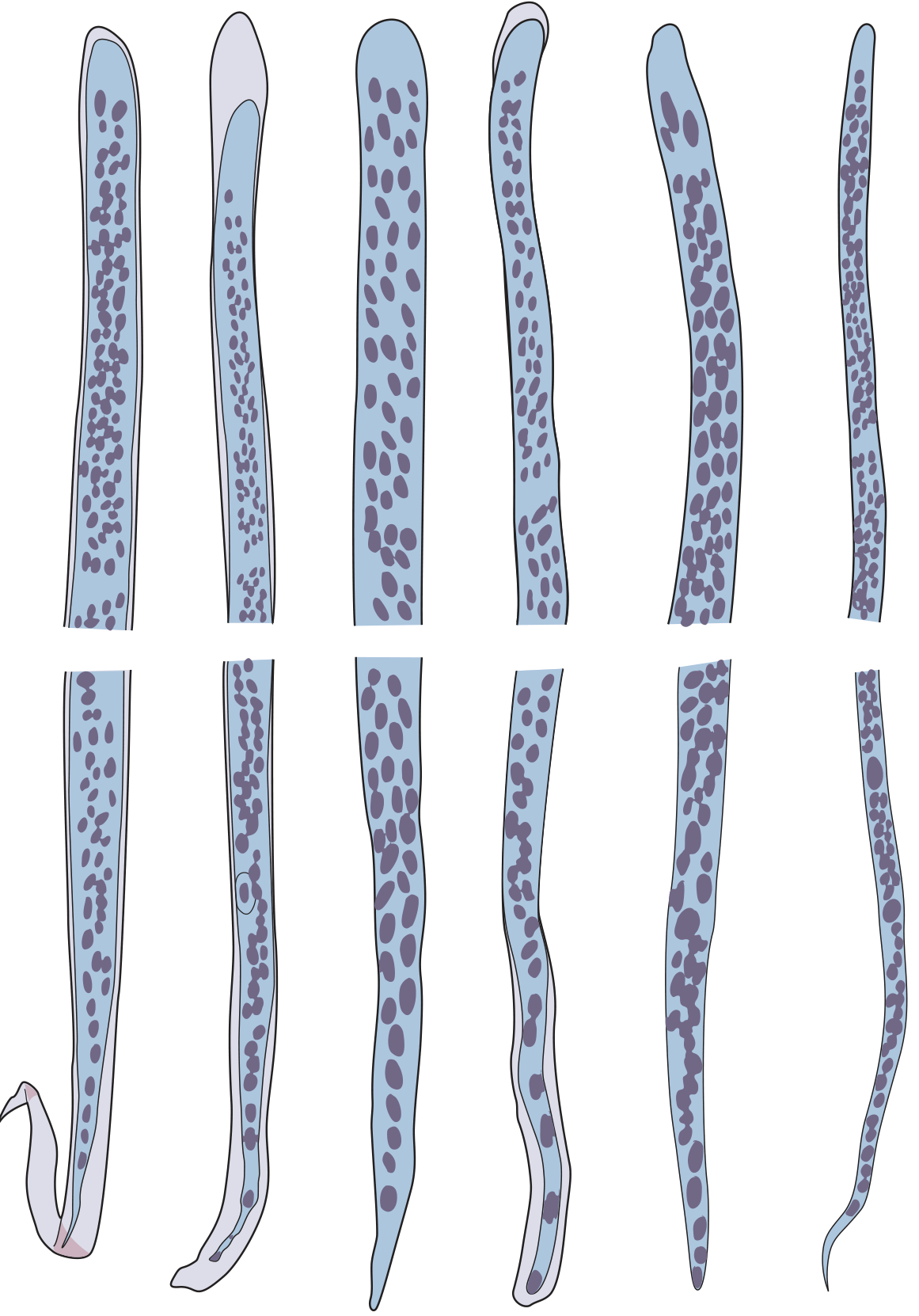
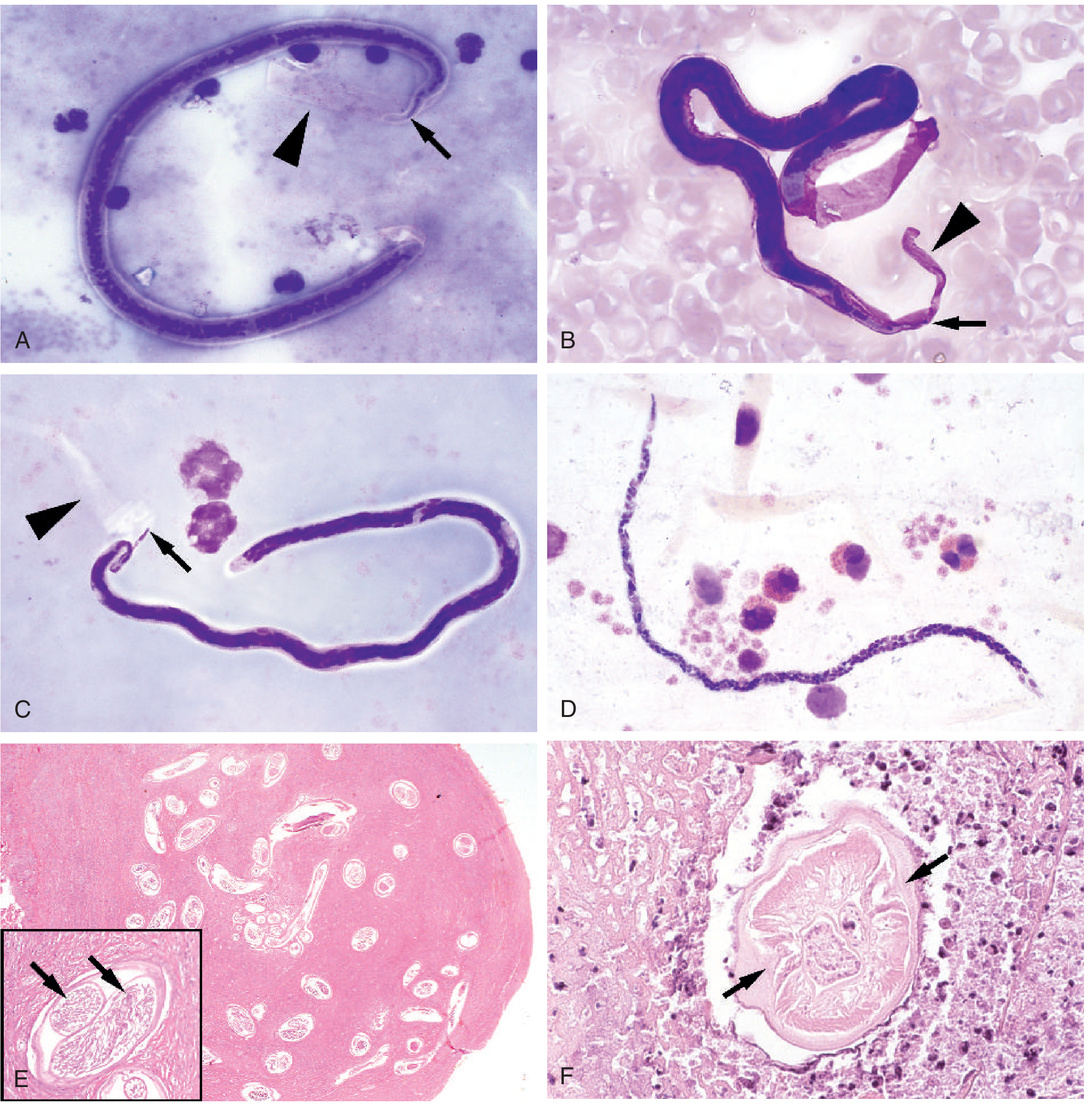
3. Skin Snip (for O. volvulus and M. streptocerca)
- Method: A bloodless piece of superficial skin (1–3 mm) obtained using a corneal-scleral punch or lifting skin with a needle and cutting with a scalpel blade
- Multiple snips taken from iliac crest, scapular, and calf sites (bilateral)
- Placed in saline or tissue culture medium on a glass slide
- Incubated 2–4 hours (overnight in light infections) at room temperature
- Emergent microfilariae visualised under low-power microscopy
- Alternatively, the snip can be fixed and processed for PCR
Mazzotti Reaction (provocation test — historical)
- Oral DEC (50 mg single dose) provokes an intense dermal reaction (pruritus, rash) in O. volvulus infected patients within 1–3 hours due to dying microfilariae releasing antigens
- Useful when skin snips are negative but infection is suspected
- Risk of severe systemic reactions — now largely replaced by serological and PCR methods
4. Circulating Filarial Antigen (CFA) Detection
For W. bancrofti (Bancroftian filariasis) — MOST IMPORTANT
- Detects soluble circulating antigens shed by adult female worms
- Key advantage: Can detect infection in amicrofilaraemic (cryptic) patients (those with adult worms but no detectable microfilaraemia in blood)
- Blood can be collected at any time of day or night — avoids the nocturnal timing constraint
- Two commercially available formats:
- ELISA (lab-based; quantitative)
- Immunochromatographic card test (ICT) / Filariasis Test Strip (FTS) — rapid point-of-care lateral flow format
- Sensitivity: 93–100%; Specificity: approaching 100% (rare false positives with Loa loa co-infection)
- Note: Approved for use in WHO lymphatic filariasis elimination programmes; not FDA-approved in the US
A newer ICT — the Alere Filariasis Test Strip (FTS) / STANDARD Q Filariasis Antigen Test — has shown improved sensitivity over older card tests in recent evaluation studies.
For B. malayi / B. timori
- No circulating antigen tests currently available
- Diagnosis relies on blood microfilariae examination + antibody tests
5. Serology / Antibody Detection
- Detects anti-filarial antibodies (IgG, IgG4, IgE)
- Available through reference/specialist laboratories
- Useful in:
- Travellers and expatriates (low microfilaraemia, pre-patent infections)
- Early or cryptic infection
- Tropical pulmonary eosinophilia (no detectable microfilaraemia)
Specific Tests
| Test | Species | Notes |
|---|---|---|
| IgG4 antibody ELISA / dipstick (BmR1 antigen) | B. malayi | High specificity for Brugian filariasis; dipstick (rapid) format available |
| Pan-filarial IgG4 ELISA | Multiple species | Cross-reactive; supports but doesn't confirm active infection |
| Og4C3 ELISA | W. bancrofti | Detects circulating antigen; different from antibody tests |
| Onchocerca-specific antibody assay | O. volvulus | Used in endemic areas and point-of-care formats |
Caution: Seropositivity cannot be equated with active infection — residents of endemic areas can become sensitized without patent infection. Extensive cross-reactivity exists between filarial and other helminth antigens. — Harrison's 22e
6. Polymerase Chain Reaction (PCR)
- Detects parasite DNA in blood, skin snips, or other fluids
- Available for W. bancrofti, B. malayi, and O. volvulus
- Most sensitive diagnostic technique — sensitivity equivalent to or greater than parasitological methods
- Particularly valuable when:
- Microfilaraemia is very low (post-treatment monitoring)
- Blood collected at wrong time of day
- Blood drawn after partial treatment
- No commercially available platforms as of 2025; restricted to reference/research laboratories
- PCR on skin snips replacing incubation methods for O. volvulus in many settings
7. Ultrasound (High-Frequency / Doppler)
- High-frequency ultrasound (7.5–15 MHz) of scrotal/inguinal lymphatics, breasts, lymph nodes
- Live adult worms show a characteristic continuous wriggling movement within dilated lymphatics — the "filarial dance sign"
- Worms visualised in lymphatics of the spermatic cord in up to 80% of men infected with W. bancrofti
- Doppler assessment demonstrates flow characteristics of dilated lymphatics
- Confirms active infection; helps guide response to treatment
Ultrasound is particularly useful in amicrofilaraemic patients where blood tests are negative but clinical signs suggest lymphatic infection. — Harrison's 22e
8. Lymphoscintigraphy
- Radionuclide imaging of lymphatic drainage in the limbs
- Reliably demonstrates widespread lymphatic abnormalities in both subclinical microfilaraemic persons and those with clinical lymphatic pathology
- Delineates anatomical changes (lymphatic obstruction, abnormal drainage patterns)
- Principally a research tool and used for assessment of lymphoedema; not first-line for routine diagnosis
9. Biopsy / Histopathology
- Excision of subcutaneous nodule (onchocercoma) for O. volvulus: demonstrates adult worm surrounded by fibrous tissue and inflammatory cells on H&E stain
- Lymph node / lymphatic vessel biopsy for lymphatic filariasis: adult worms in lymphatics with granulomatous reaction; not performed routinely
- Hydrocele fluid examination for microfilariae (useful in scrotal filariasis)
- Conjunctival examination in L. loa: adult worm may be visualised crossing the conjunctiva or subconjunctival space
10. Supporting (Non-Specific) Tests
| Test | Findings | Significance |
|---|---|---|
| FBC | Eosinophilia | Common in acute/early infection; non-specific for species |
| Serum IgE | Elevated | Raised in all filarial infections; non-specific |
| Serum IgG4 | Elevated | Supports helminth infection |
| Chest X-ray | Bilateral diffuse infiltrates | Tropical Pulmonary Eosinophilia (TPE) — W. bancrofti or B. malayi |
| Slit-lamp / ophthalmoscopy | Microfilariae in anterior chamber, corneal opacities, chorioretinitis | O. volvulus ocular disease |
Diagnostic Algorithm by Clinical Context
| Suspected Disease | Specimen | Test |
|---|---|---|
| Lymphatic filariasis (W. bancrofti) | Nocturnal blood | Thick film/Knott's + CFA antigen test (ICT/FTS) |
| Brugian filariasis (B. malayi) | Nocturnal blood | Thick film/Knott's + IgG4 antibody (BmR1) |
| Loiasis (L. loa) | Midday blood | Thick film/Knott's; direct wet prep |
| Onchocerciasis (O. volvulus) | Skin snip | Microfilariae by incubation/microscopy; PCR; serology |
| Mansonellosis | Blood (any time) | Thick film/concentration |
| Active lymphatic worm (adult) | Scrotal/inguinal ultrasound | Filarial dance sign on Doppler US |
| Amicrofilaraemic / cryptic | Blood any time | CFA test (W. bancrofti); PCR |
| Traveller from endemic region | Blood + serology | Antibody panel (IgG4); CFA; PCR |
Hemochromatosis
"hereditary hemochromatosis" AND management
hereditary hemochromatosis diagnosis management guidelines 2024 2025
Hemochromatosis
Classification
1. Hereditary (Primary) Hemochromatosis
| Type | Gene | Mutation | Inheritance | Notes |
|---|---|---|---|---|
| HFE-hemochromatosis (Type 1) — most common | HFE | C282Y (homozygous: 80–85%); C282Y/H63D compound heterozygous (4%); H63D homozygous (1%) | Autosomal recessive | Northwestern European origin; affects ~1/200–300 Caucasians |
| Juvenile hemochromatosis (Type 2) | HJV (2A), HAMP (2B) | Loss of function | Autosomal recessive | Severe; presents in 2nd–3rd decade with cardiac and endocrine involvement |
| TFR2-hemochromatosis (Type 3) | TFR2 | Loss of function | Autosomal recessive | Adult onset; resembles Type 1 |
| Ferroportin disease (Type 4) | SLC40A1 | Ferroportin mutation | Autosomal dominant | Macrophage iron overload; normal/low TSAT, elevated ferritin |
2. Secondary (Acquired) Hemochromatosis
- Chronic haemolytic anaemias with iron loading (β-thalassaemia, sideroblastic anaemia, myelodysplastic syndrome)
- Multiple blood transfusions
- Ineffective erythropoiesis → ↓ hepcidin via erythroferrone → ↑ iron absorption
- Chronic liver disease (alcoholic, viral hepatitis — exacerbate HFE iron loading)
- Dietary iron overload (African siderosis)
Pathogenesis
- HFE, HJV (hemojuvelin), TFR2 act as hepatic iron sensors that together stimulate HAMP (hepcidin) expression when iron is sufficient
- Mutations in any of these genes → ↓ hepcidin → ↑ ferroportin expression on enterocytes → unregulated intestinal iron efflux → iron overload
- Iron accumulates at ~0.5–1 g/year; clinical disease develops when stores reach ~20 g (total body iron may exceed 50 g in severe cases — normal ~3–4 g)
- Iron toxicity: lipid peroxidation via free radical reactions, hepatic stellate cell activation → fibrosis, DNA damage → hepatocellular carcinoma risk
Clinical Features
Presentation in Symptomatic Disease (typically 5th–6th decade in men, later in women)
| Organ System | Manifestations |
|---|---|
| Liver | Hepatomegaly, raised LFTs, micronodular cirrhosis (late), hepatocellular carcinoma (200-fold increased risk) |
| Pancreas | Diabetes mellitus (up to 80% of advanced cases) — "bronze diabetes" |
| Skin | Grey-brown hyperpigmentation (metallic/slate grey) — most prominent in sun-exposed areas, genitalia, axillae; mucous membranes in ~20% |
| Joints | Arthropathy in ~40–50% — classically 2nd and 3rd MCP joints first; calcium pyrophosphate deposition (pseudogout); progressive polyarthritis |
| Heart | Dilated cardiomyopathy, restrictive cardiomyopathy, arrhythmias, heart failure |
| Endocrine | Hypogonadism (↓ LH/FSH from pituitary iron deposition), amenorrhoea, impotence, loss of libido; secondary diabetes |
| Pituitary | Gonadotrophin deficiency — testicular atrophy |
Diagnosis
Serum Iron Studies (First-Line Screening)
| Test | Normal | In Hemochromatosis | Notes |
|---|---|---|---|
| Serum iron | 60–170 µg/dL | Elevated | Not used alone |
| Total iron-binding capacity (TIBC) | 250–370 µg/dL | Decreased (inverse of ferritin) | TIBC is usually low-normal or low |
| Transferrin saturation (TSAT) = Serum Fe/TIBC × 100 | <45% (men); <35% (pre-menopausal women) | >45% (often 70–100%) | Best initial screening test; sensitivity >90% for HFE-HH |
| Serum ferritin | 15–300 µg/L (men); 12–150 µg/L (women) | Elevated (often >300 µg/L; >1000 in significant overload) | Reflects total body iron stores; elevated in inflammation, obesity, alcohol, viral hepatitis — not specific alone |
Diagnostic threshold: TSAT ≥45% (≥35% in premenopausal women) + elevated ferritin → proceed to HFE gene testing. A TSAT <45% with normal ferritin effectively excludes significant iron overload.
Note on ferritin: Ferritin >50,000 µg/L is usually NOT hemochromatosis — consider haemophagocytic lymphohistiocytosis or Still's disease. Hyperferritinemia with normal TSAT and cataracts in a young patient → hyperferritinaemia-cataract syndrome (FTL gene mutation).
HFE Gene Testing (Genetic Diagnosis)
| Genotype | Interpretation |
|---|---|
| C282Y homozygous | Confirms HFE-HH; most common (80–85%); proceed to assess iron burden |
| C282Y/H63D compound heterozygous | Associated with mild-moderate iron overload; phenotypic expression variable |
| H63D homozygous | Usually normal iron studies; severe overload only with co-factors (alcohol, hepatitis) |
| H63D heterozygous | ~20% of Caucasians; almost always normal iron studies; if iron overload present, likely another cause |
| No HFE mutations | Consider non-HFE hereditary HH (TFR2, ferroportin, hemojuvelin, hepcidin mutations); secondary causes |
Genetic testing is not recommended in children (organ damage uncommon; risk of insurance discrimination/stigmatisation). Genetic testing has limited utility in non-Caucasian populations — HFE mutations rare in Asian/African populations; use clinical criteria + liver biopsy/MRI instead.
Liver Biopsy (Selective Use)
- Ferritin >1000 µg/L
- Elevated LFTs / suspected cirrhosis
- Age >40 years (higher risk of fibrosis)
- When non-invasive tests are equivocal
- Non-HFE patients with iron overload of uncertain cause
- Prussian blue (Perls') stain — demonstrates hemosiderin as blue granules in hepatocytes
- Iron deposited initially in periportal hepatocytes (zone 1), spreading toward central vein with increasing load
- Hepatic iron index (HII) = µmol iron/g dry liver ÷ age — HII ≥1.9 supports HH (pre-genetic era marker; now less used)
- Fibrous septa, bridging fibrosis, micronodular cirrhosis in advanced disease
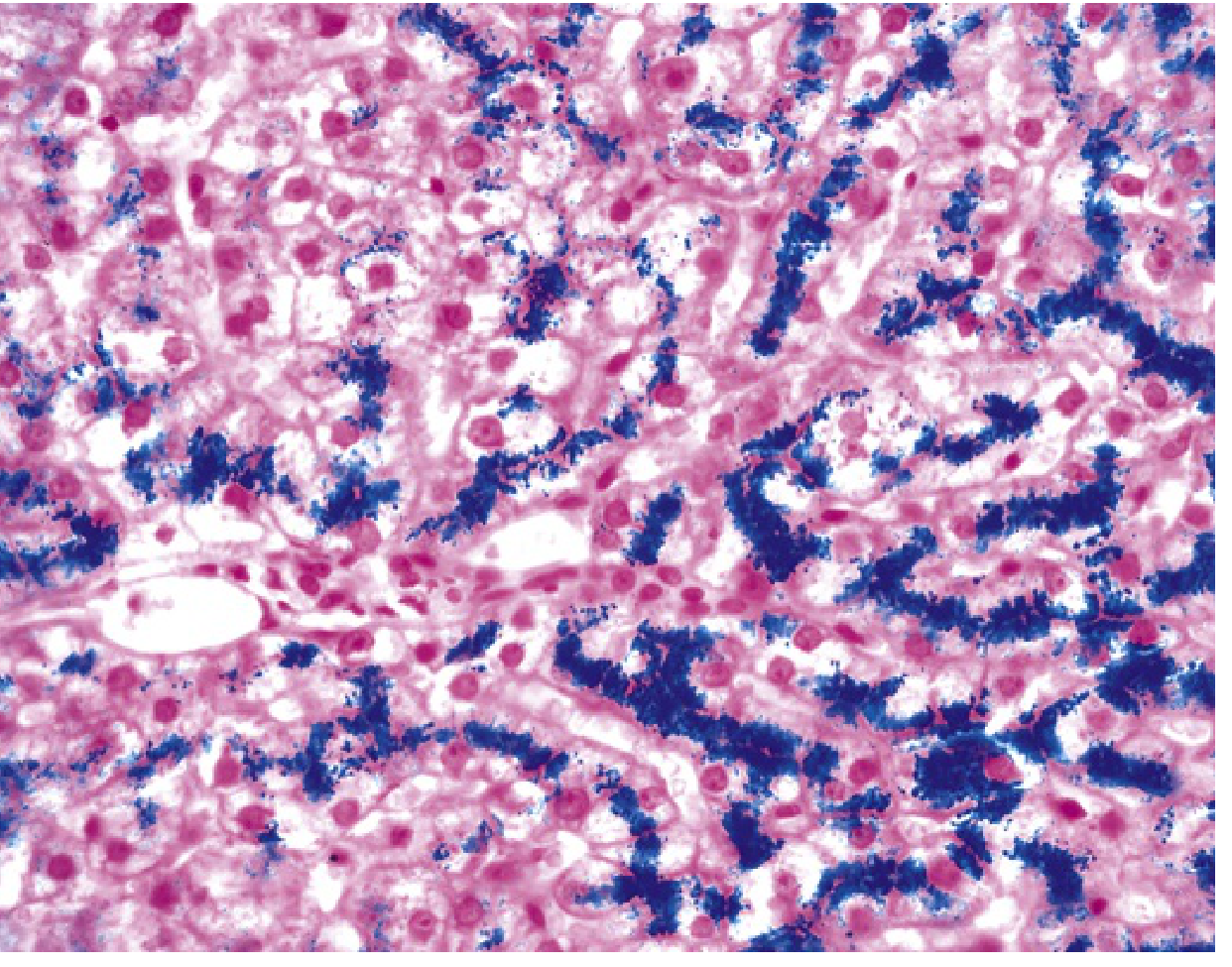
MRI Liver (Non-invasive Iron Quantification)
- MRI T2 (R2) and T2 (R2) sequences** — detect and quantify hepatic iron concentration (HIC) non-invasively
- Can demonstrate moderate-to-severe iron overload; correlates with HIC
- Detects cirrhosis features (nodularity, ascites, splenomegaly), portal hypertension, and hepatocellular carcinoma
- Splenic iron on MRI — prominent in ferroportin disease (macrophage iron loading); absent or minimal in HFE-HH
- CT scan can also demonstrate iron overload (increased liver density), though MRI is more sensitive and quantitative
Additional Investigations
| Investigation | Indication / Findings |
|---|---|
| LFTs (ALT, AST, ALP, bilirubin, albumin, PT) | Hepatic iron overload; assess severity of liver disease |
| Fasting blood glucose / HbA1c | Diabetes mellitus |
| Echocardiogram | Cardiomyopathy (dilated/restrictive), pericardial effusion |
| ECG | Arrhythmias, conduction defects |
| LH, FSH, testosterone/oestrogen | Hypogonadotrophic hypogonadism |
| Thyroid function tests | Hypothyroidism from thyroid iron deposition |
| Joint X-rays | Chondrocalcinosis, joint space narrowing (CPPD arthropathy); classically 2nd–3rd MCPs |
| Abdominal ultrasound | Hepatomegaly, cirrhosis, HCC surveillance |
| α-fetoprotein (AFP) | HCC surveillance (6-monthly if cirrhosis present) |
| Skin biopsy (Prussian blue) | Demonstrates dermal iron deposition in pigmented skin |
Diagnostic Algorithm
Elevated transferrin saturation (≥45%) and/or raised ferritin
↓
HFE gene testing
↓
C282Y homozygous ──────→ Iron studies confirm overload
Ferritin <1000 + normal LFTs + age <40
→ No liver biopsy needed
Ferritin >1000 OR elevated LFTs OR age >40
→ Liver biopsy (assess fibrosis/cirrhosis)
↓
C282Y/H63D compound het → Monitor iron studies; biopsy if iron overload
↓
No HFE mutations ────────→ MRI liver, exclude secondary causes
Consider TFR2, ferroportin, HJV gene testing
Liver biopsy for diagnosis/prognosis
Family Screening
- First-degree relatives of a proband (C282Y homozygote) should be screened
- Siblings have a 25% risk of being homozygous (highest priority)
- Screen with: fasting TSAT + serum ferritin + HFE genotyping
- Relatives negative for HFE mutations require no further testing
- Relatives positive → monitor ferritin annually; commence phlebotomy when indicated
Treatment
Phlebotomy (Venesection) — First-Line
- Induction phase: Remove 450–500 mL blood (=200–250 mg iron) weekly or twice weekly
- Target: Serum ferritin <50 µg/L (or 50–100 µg/L per AASLD) + TSAT <50%
- Monitor ferritin and haemoglobin before each session
- Induction phase typically takes 1–3 years depending on iron burden
- Maintenance phase: 3–4 venesections/year to maintain ferritin <50–100 µg/L
- With regular phlebotomy — life expectancy is normal if started before cirrhosis develops
Critical: Phlebotomy initiated before cirrhosis prevents progression to cirrhosis. Once cirrhosis is established, phlebotomy does not prevent hepatocellular carcinoma (which occurs in ~30% of cirrhotic hemochromatosis patients).
Iron Chelation — For Patients Who Cannot Tolerate Phlebotomy
- Deferoxamine (parenteral) — parenteral; used in secondary iron overload (thalassaemia, MDS)
- Deferasirox (oral) — used in transfusional iron overload
- Deferiprone (oral) — particularly effective for cardiac iron
Dietary/Lifestyle
- Avoid vitamin C supplements — ascorbic acid mobilises iron and may precipitate cardiac arrhythmias
- Avoid raw seafood (Vibrio vulnificus infection risk markedly increased in iron overload)
- Limit alcohol — exacerbates liver disease, worsens iron overload
- Moderate dietary iron — avoid supplemental iron; avoid excessive red meat; cooking in cast iron cookware discouraged
Liver Transplantation
- For end-stage cirrhosis from hemochromatosis
- Note: The transplanted liver has normal HFE genes → iron overload does not recur in the graft, but extrahepatic iron remains
Prognosis
| Stage | Outcome |
|---|---|
| Diagnosed and treated before cirrhosis | Normal life expectancy with regular phlebotomy |
| Cirrhosis present at diagnosis | HCC risk ~30% despite treatment; 5-year survival reduced |
| Untreated | Progressive organ damage; death from cirrhosis, cardiac failure, or HCC |
Iv rate comtroller agents for af with fvr
IV rate control agents atrial fibrillation rapid ventricular response 2024 guidelines doses
IV Rate Control Agents for AF with Rapid Ventricular Response (RVR)
Before reaching for rate control agents: If the RVR is driven by a reversible trigger (sepsis, hypovolemia, PE, tamponade, thyrotoxicosis, decompensated HF), address the underlying cause first — rate control alone will be ineffective and potentially harmful.
Haemodynamic instability (severe hypotension, active ischaemia, decompensated HF) → urgent synchronised DC cardioversion, not pharmacological rate control.
Absolute Contraindication Before Choosing Agent
- AV nodal blockers (beta-blockers, non-DHP CCBs, digoxin, adenosine) are contraindicated — blocking the AV node may accelerate conduction down the accessory pathway → ventricular fibrillation
- Treatment: Procainamide IV or electrical cardioversion
IV Rate Control Drugs: Doses, Onset, and Key Points
1. Beta-Blockers — First-Line (haemodynamically stable, no decompensated HF)
Metoprolol Tartrate (IV)
| Parameter | Detail |
|---|---|
| Loading dose | 2.5–5 mg IV bolus over 2 min; repeat every 5 min as needed |
| Maximum | Up to 15 mg total |
| Onset | ~20 min IV |
| Duration | 1–2 hours |
| Maintenance (oral) | Metoprolol tartrate 25–100 mg BD; succinate 25–200 mg OD |
| Key notes | Use metoprolol tartrate IV/orally in acute setting — succinate has too-slow onset for acute use; titrate to HR response; preferred in ischaemia/post-MI |
| Contraindications | Decompensated HFrEF, reactive airway disease, bradycardia/heart block, cardiogenic shock |
Esmolol (IV) — Short-Acting, Titratable
| Parameter | Detail |
|---|---|
| Loading dose | 0.5 mg/kg (500 µg/kg) IV over 1 min |
| Infusion | Start at 50 µg/kg/min; titrate up by 50 µg/kg/min every 4 min |
| Maximum infusion | 200 µg/kg/min |
| Onset | 2–10 min |
| Duration | Very short — ~10–20 min after stopping (t½ ~9 min) |
| Maintenance | IV infusion only (no oral equivalent) |
| Key notes | Ideal for ICU/perioperative settings; easily reversible; useful when haemodynamic response uncertain |
| Contraindications | Same as metoprolol; also watch for hypotension at higher infusion rates |
Propranolol (IV)
| Parameter | Detail |
|---|---|
| Dose | 1 mg IV over 1 min; repeat every 2 min up to 3 doses total (max 3 mg) |
| Onset | 2–5 min |
| Duration | 1–2 hours |
| Key notes | Non-selective; less commonly used IV now; historically used; caution with bronchospasm, HF |
2. Non-Dihydropyridine Calcium Channel Blockers (Non-DHP CCBs) — First-Line (no HFrEF)
Diltiazem (IV) — Most Commonly Used IV CCB for AF
| Parameter | Detail |
|---|---|
| Loading dose | 0.25 mg/kg (typically 15–25 mg) IV over 2 min; if inadequate response after 15 min → repeat 0.35 mg/kg (typically 20–25 mg) IV over 2 min |
| Infusion | 5–10 mg/h continuous IV infusion; up to 15 mg/h |
| Onset | 3 min (very rapid) |
| Duration | 1–3 hours (bolus); continuous while infusing |
| Maintenance (oral) | 120–480 mg/day in divided doses or sustained-release formulation |
| Key notes | Rapid onset makes it popular in the ED/ICU; more effective than metoprolol in some studies for HR control and symptom relief; watch for hypotension; can be followed by oral diltiazem |
| Contraindications | HFrEF (EF <40%), significant LV dysfunction, cardiogenic shock, bradycardia/AV block, WPW |
Verapamil (IV)
| Parameter | Detail |
|---|---|
| Loading dose | 5–10 mg (0.075–0.15 mg/kg) IV over 2 min |
| Repeat dose | 10 mg bolus 15–30 min after initial dose if needed |
| Infusion | 5 mg/h IV (less commonly used) |
| Onset | 3–5 min |
| Maintenance (oral) | 120–480 mg/day in divided doses or SR formulation |
| Key notes | Also effective; more negative inotrope than diltiazem — generally prefer diltiazem IV; can interact with digoxin (↑ digoxin levels); check blood pressure before repeat doses |
| Contraindications | HFrEF, significant LV dysfunction, bradycardia/AV block, WPW, concurrent IV beta-blocker use (risk of severe bradycardia/AV block) |
3. Cardiac Glycoside
Digoxin (IV) — Second-Line / Adjunct
| Parameter | Detail |
|---|---|
| Loading dose | 0.25–0.5 mg IV; then 0.25 mg IV every 6 hours to a total of 0.75–1.5 mg in 24 hours |
| Maintenance (oral) | 0.125–0.25 mg/day (renally adjust) |
| Onset | Slow — IV onset 30–60 min; peak effect 2–4 hours |
| Key notes | Rate control primarily at rest (vagotonic mechanism); less effective during activity/exercise/high adrenergic states; preferred when HFrEF (EF <40%) is present — negative inotropy of CCBs/high-dose BBs not tolerated; can be added to BB or CCB for additive effect; narrow therapeutic window (toxicity: nausea, bradycardia, heart block, arrhythmias) |
| Monitor | Serum digoxin level (therapeutic 0.5–0.9 ng/mL), potassium (hypokalaemia precipitates toxicity), renal function |
| Contraindications | WPW/pre-excitation, 2nd/3rd degree AV block, hypertrophic obstructive cardiomyopathy |
4. Amiodarone (IV) — Reserve / Special Circumstances
| Parameter | Detail |
|---|---|
| Loading dose | 150–300 mg IV over 10–20 min (slow infusion) |
| Infusion | 1 mg/min for 6 hours; then 0.5 mg/min for 18 hours; or adjusted by response |
| Onset | Rate slowing: variable (minutes to hours) |
| Key notes | Not first-line for rate control; may cause chemical cardioversion to sinus rhythm — risk of thromboembolic event if duration unknown and patient not adequately anticoagulated; use when beta-blockers AND CCBs are contraindicated or fail; effective in HF patients who cannot tolerate high-dose BBs; has multiple side-effect profile (thyroid, lung, liver, peripheral neuropathy with long-term use) |
| Specific contraindication | Absolutely contraindicated in pre-excited AF (WPW) — may accelerate ventricular rate and precipitate VF |
Drug Selection by Clinical Context
| Clinical Scenario | Preferred IV Agent(s) | Avoid |
|---|---|---|
| Haemodynamically stable, no HF, no contraindications | Diltiazem or Metoprolol (first-line, equally effective) | — |
| Active ischaemia / ACS with AF | Metoprolol (cardioprotective) | Verapamil (negative inotrope) |
| HFrEF (EF <40%) | Digoxin ± Amiodarone | Beta-blockers at high dose if decompensated; Non-DHP CCBs (diltiazem, verapamil) contraindicated |
| HFpEF / diastolic dysfunction | Beta-blockers or Diltiazem (lower doses with caution) | — |
| Bronchospasm / COPD (significant) | Diltiazem or Verapamil | Beta-blockers |
| Perioperative / ICU (rapidly titratable needed) | Esmolol IV infusion | — |
| Pre-excited AF (WPW, wide QRS) | IV Procainamide or DC cardioversion | ALL AV nodal blockers — BBs, CCBs, digoxin, adenosine, amiodarone — ALL CONTRAINDICATED |
| Thyrotoxicosis-induced AF | Propranolol (non-selective BB, inhibits T4→T3 conversion) | — |
| Refractory to first-line agents | Add Digoxin to existing BB or CCB; consider Amiodarone | — |
Rate Control Targets (AHA/ACC)
- Strict: Resting HR ≤80 bpm (Class IIa — preferred if symptomatic or with HF)
- Lenient: Resting HR <110 bpm (Class IIb — acceptable if asymptomatic with preserved LV function)
Quick Reference Summary Table
| Drug | IV Loading Dose | Infusion | Onset | HFrEF Safe? | WPW Safe? |
|---|---|---|---|---|---|
| Metoprolol | 2.5–5 mg q5min up to 15 mg | No | 20 min | ❌ if decompensated | ❌ |
| Esmolol | 0.5 mg/kg over 1 min | 50–200 µg/kg/min | 2–10 min | ❌ if decompensated | ❌ |
| Diltiazem | 0.25 mg/kg over 2 min | 5–15 mg/h | 3 min | ❌ | ❌ |
| Verapamil | 5–10 mg over 2 min | 5 mg/h | 3–5 min | ❌ | ❌ |
| Digoxin | 0.25 mg q6h up to 1–1.5 mg total | No | 30–60 min | ✅ | ❌ |
| Amiodarone | 150–300 mg over 10–20 min | 1 mg/min × 6h → 0.5 mg/min | Variable | ✅ (with caution) | ❌ Contraindicated |
| Procainamide | 15–17 mg/kg at 25–50 mg/min | 1–4 mg/min | Minutes | Use with caution | ✅ Drug of choice for WPW |
Wernicke’s encephalopathy treatment
Wernicke encephalopathy treatment thiamine dose protocol 2024 guidelines
Wernicke's Encephalopathy - Treatment
- Ophthalmoplegia (lateral rectus palsy, conjugate gaze palsy)
- Cerebellar ataxia
- Global confusion / altered mental status
The full triad is present in only 10–20% of cases — do not wait for all three features before treating. Any single feature in an at-risk patient is sufficient grounds for immediate treatment.
Pathophysiology Relevant to Treatment
- Mammillary bodies
- Dorsomedial thalamic nuclei
- Periaqueductal grey matter
- Floor of the fourth ventricle
- Cerebellar vermis
Causes (Treatment Must Address the Underlying Aetiology)
| Category | Examples |
|---|---|
| Alcohol dependence (most common in Western world) | Reduced intake + malabsorption + impaired hepatic storage |
| Non-alcoholic malnutrition | Anorexia nervosa, AIDS, starvation |
| Prolonged vomiting | Hyperemesis gravidarum, chemotherapy, post-surgery |
| Bariatric/GI surgery | Gastric bypass, gastrectomy |
| Prolonged IV feeding without supplementation | TPN without thiamine addition |
| Chronic dialysis | Thiamine is water-soluble and dialysed out |
| Refeeding syndrome | Glucose load in depleted state |
| Drugs inhibiting thiamine transport | Metformin, verapamil (inhibit intestinal ThTR-2) |
| Diuretic therapy | Increased urinary thiamine losses |
Treatment Principle — Why Parenteral?
- Alcohol-related enteropathy and impaired active transport
- Vomiting
- Intestinal mucosal damage
Thiamine Replacement Protocol
Acute/Established WE (Suspected or Confirmed)
| Phase | Dose | Route | Frequency | Duration |
|---|---|---|---|---|
| Acute loading | 500 mg | IV (in 100 mL normal saline, infused over 30 min) | Three times daily | 2–3 days |
| Step-down | 250 mg | IV or IM | Once daily | 5 more days |
| Maintenance (oral) | 100 mg | Oral | Once daily | Until no longer at risk / nutritional status restored |
Harrison's 22e: "Wernicke's disease is a medical emergency and requires immediate administration of high-dose thiamine, in a dose of 500 mg IV. The dose should be begun prior to treatment with IV glucose solutions and continued three times daily for 2–3 days."
Bradley and Daroff's Neurology: "A dose of 500 mg should be given IV in the acute stage, followed by 100 mg 3 times daily during the first week."
Adams and Victor's Principles of Neurology: Higher doses of 500 mg parenterally for several days are needed to replete vitamin stores in alcoholic patients — recommended in EFNS and Royal College of Physicians guidelines.
Prophylaxis — At-Risk Patients Without WE
| Setting | Dose | Route | Duration |
|---|---|---|---|
| Community | 200–300 mg IM | IM | Once daily × 3 days |
| Hospital (inpatient) | 200–300 mg IV/IM | IV or IM | Once daily × 3–5 days with daily review |
| After parenteral course | 300 mg/day | Oral | During withdrawal period and while at-risk |
Emergency Department / Pre-IV Glucose Rule
Give thiamine before any glucose-containing IV fluid in any malnourished, alcoholic, or nutritionally at-risk patient.
Adjunct Treatments
1. Magnesium
- Mandatory co-treatment — magnesium is an essential cofactor for thiamine-dependent enzymes (transketolase requires Mg²+)
- Hypomagnesaemia is common in alcoholics and impairs thiamine utilisation
- Check serum magnesium; replace with IV magnesium sulphate (e.g., 2–4 g IV) if low, or give empirically
- Without magnesium repletion, thiamine therapy may be partially ineffective
2. Other B Vitamins
- Alcoholic and malnourished patients are typically deficient in multiple B vitamins (B2, B6, B12, folate, niacin)
- Administer a multivitamin B complex parenterally alongside thiamine
- Nicotinic acid deficiency can cause pellagra with concurrent neurological features
- Oral supplementation of all B vitamins should follow the parenteral course
3. Rehydration and Electrolyte Correction
- Correct hypokalaemia, hypophosphataemia (especially in refeeding states)
- IV crystalloids for dehydration
- Antiemetics (ondansetron, metoclopramide, prochlorperazine) for persistent vomiting — address the cause of poor intake
4. Nutritional Support
- Referral to dietitian once acute phase managed
- Balanced diet reinstated as soon as possible
- Oral thiamine 100 mg/day continued until full nutritional recovery
Monitoring and Response to Treatment
| Feature | Expected Response |
|---|---|
| Ocular signs (ophthalmoplegia) | Improve within hours of thiamine — most rapid response |
| Nystagmus | Partially improves; fine horizontal nystagmus persists in ~60% |
| Ataxia | Improves over days to weeks; may be abnormal months later in >1/3 |
| Confusion / encephalopathy | Clears over days; if persistent → Korsakoff syndrome developing |
| Korsakoff syndrome | If amnestic syndrome persists after acute WE resolves — only <20% fully recover |
Failure to respond to thiamine in 24–48 hours despite adequate IV dosing should prompt reconsideration of alternative diagnoses (hepatic encephalopathy, meningitis, subdural haematoma, septic encephalopathy) and review of magnesium replacement.
MRI Findings (Diagnostic Support)
- Mammillary bodies (T1 post-contrast enhancement — highly specific)
- Dorsomedial thalami (bilaterally)
- Periaqueductal grey matter
- Tectum of midbrain
- Periventricular hypothalamus
Do not delay treatment to obtain imaging. MRI is supportive, not a prerequisite for starting thiamine.
Progression to Korsakoff Syndrome — Prevention is the Goal
- Severe anterograde amnesia (inability to form new memories)
- Confabulation
- Relative preservation of immediate recall and long-term memory
- Personality change
Treatment Summary at a Glance
SUSPECTED WE (any feature: confusion, ataxia, ophthalmoplegia, nystagmus, hypothermia, coma)
↓
GIVE THIAMINE FIRST — before any glucose
↓
500 mg IV TDS × 2–3 days
(dilute in 100 mL NS, infuse over 30 min)
↓
250 mg IV/IM OD × 5 days
↓
Oral thiamine 100 mg/day (maintenance)
↓
ALWAYS add: Mg²⁺ replacement + B-complex vitamins
+ Treat underlying cause
+ Nutritional support
Subacute combined degeneration
subacute combined degeneration spinal cord vitamin B12 deficiency pathophysiology treatment 2024
Subacute Combined Degeneration (SCD) of the Spinal Cord
Aetiology and Causes of Cobalamin Deficiency
| Category | Specific Causes |
|---|---|
| Pernicious anaemia (most common) | Autoimmune destruction of gastric parietal cells → absent intrinsic factor → terminal ileum absorption failure |
| Dietary deficiency | Strict veganism/vegetarianism; protein-energy malnutrition; infants of B12-deficient mothers (breastfed) |
| Gastric causes | Total/partial gastrectomy, gastric bypass (bariatric surgery), atrophic gastritis, H. pylori infection |
| Intestinal causes | Terminal ileal resection or disease (Crohn's), blind loop syndrome with bacterial overgrowth, fish tapeworm (Diphyllobothrium latum) |
| Pancreatic insufficiency | Pancreatic enzymes required to release cobalamin from R-binders in the duodenum |
| Drugs | Metformin (reduces B12 absorption — inhibits ileal calcium-dependent transport); proton pump inhibitors (prolonged); nitrous oxide (see below) |
| Nitrous oxide (N₂O) inhalation | Irreversibly oxidises cobalamin → inactivates methionine synthase and methylmalonyl-CoA mutase; occurs after surgical/dental anaesthesia or recreational use ("whippets"); even brief exposure can precipitate SCD in those with marginal B12 stores |
| Chronic dialysis | Haemodialysis removes water-soluble vitamins including B12 |
| Other | HIV/AIDS; multiple myeloma; pregnancy (increased demand); anticonvulsants, oral contraceptives |
Important: Neurological features may be present with normal haematology — anaemia and macrocytosis are absent in up to 28% of cases with documented SCD. Never exclude B12 deficiency on the basis of a normal blood count.
Pathogenesis
1. Methionine Synthase (methylcobalamin-dependent)
- Converts homocysteine → methionine (requires methylcobalamin as cofactor)
- Methionine is essential for S-adenosylmethionine (SAM) synthesis — the primary methyl donor for myelin synthesis, neurotransmitter metabolism, and DNA methylation
- Deficiency → ↑ homocysteine, ↓ SAM → impaired myelin maintenance
2. Methylmalonyl-CoA Mutase (adenosylcobalamin-dependent)
- Converts methylmalonyl-CoA → succinyl-CoA (enters Krebs cycle)
- Deficiency → accumulation of methylmalonyl-CoA and propionyl-CoA
- Propionyl-CoA displaces succinyl-CoA as a fatty acid synthesis primer → incorporation of odd-chain fatty acids into myelin lipids → structurally abnormal, unstable myelin
- Earliest and most prominent: posterior column demyelination (dorsal columns — proprioception, vibration)
- Subsequently: lateral column (corticospinal tract) involvement — upper motor neurone signs
- Peripheral nerve involvement: debated — most likely due to posterior root entry zone involvement rather than primary peripheral neuropathy in pure cobalamin deficiency
Neuropathology
- Earliest change: Swelling of myelin sheaths with intramyelinic vacuole formation and separation of myelin lamellae
- Progressive change: Coalescence of small foci into larger vacuolated, sieve-like areas of tissue destruction
- Both myelin sheaths and axons are damaged; myelin involved earlier and more severely
- Begins in posterior columns of lower cervical/upper thoracic segments, spreads up and down the cord and anteriorly into lateral and anterior columns
- The lesion is a diffuse myelinopathy scattered irregularly through white matter — not confined to specific tract systems
- Brain white matter, optic nerves, and peripheral nerves can be affected in severe/advanced cases
Clinical Features
Onset
- Insidious, progressive over weeks to months (subacute)
- Sensory symptoms almost always precede motor ones
- Both sides affected symmetrically — asymmetry or predominant motor onset from the start should suggest an alternative diagnosis
Sensory Symptoms (Posterior Column Involvement)
- Tingling, numbness, "pins and needles" in hands and feet — usually hands first, then feet
- Constant, progressive, distressing paresthesias
- Loss of vibration sense — most consistent sign; more prominent in feet/legs
- Loss of proprioception / joint position sense — in parallel
- Romberg sign positive — unsteady on standing with eyes closed
- Lhermitte sign may be present (electric shock sensation down the spine on neck flexion)
Motor Symptoms (Lateral Column Involvement)
- Leg stiffness, weakness (usually proximal lower limbs)
- Progressive spastic ataxic gait → eventually paraplegia if untreated
- Upper motor neurone signs: spasticity, clonus, extensor plantar responses (Babinski sign)
- Paradoxical finding: reflexes may be diminished or absent (due to peripheral neuropathy component) despite Babinski sign being present — this combination is a diagnostic clue
Cognitive / Neuropsychiatric
- Irritability, apathy, somnolence, suspiciousness, emotional instability
- Confusional states, psychosis, dementia — in advanced cases
- Neuropsychiatric symptoms (depression, cognitive impairment) can occasionally be the sole presenting feature
Visual
- Optic neuropathy — bilateral centrocaecal scotomata, visual impairment, optic atrophy — in severe/longstanding cases
- Visually evoked potentials may be abnormal subclinically
Bladder/Bowel
- Sphincteric disturbance in advanced cases (urinary urgency, retention, impotence)
Investigations
1. Serum Vitamin B12 (Cobalamin)
| Level | Interpretation |
|---|---|
| <100 pg/mL | Almost always associated with neurological deficiency |
| <200 pg/mL | Warrants further investigation |
| 200–300 pg/mL | Still may represent deficiency in 5–10% of cases — do not exclude |
Note: Serum B12 is not a reliable measure of tissue stores — levels can remain normal for months to years after absorption ceases.
2. Serum Methylmalonic Acid (MMA) — Most Sensitive/Specific Metabolic Test
- Normal: 73–271 nmol/L
- Elevated in cobalamin deficiency even when serum B12 is borderline-normal
- Reflects intracellular cobalamin availability directly
- Highly sensitive for true functional B12 deficiency
3. Serum Homocysteine
- Normal: 5.4–16.2 mmol/L
- Elevated in B12 deficiency (also elevated in folate deficiency — not specific to B12)
- Useful corroborating test
Best diagnostic combination: Low/low-normal serum B12 + elevated MMA + elevated homocysteine = high-confidence cobalamin deficiency. Elevated MMA with normal homocysteine = isolated B12 deficiency. Elevated homocysteine with normal MMA = folate deficiency.
4. Full Blood Count and Blood Film
- Macrocytic anaemia (MCV >100 fL) — classic but absent in up to 28% of neurological cases
- Hypersegmented neutrophils (>5 lobes in >5% of neutrophils, or any cell with ≥6 lobes)
- Megaloblastic changes in bone marrow smear
- Thrombocytopenia, leukopenia in severe cases
5. Investigations for Aetiology
| Test | What it Detects |
|---|---|
| Anti-intrinsic factor antibodies | Pernicious anaemia — highly specific (95%), positive in 60% |
| Anti-parietal cell antibodies | Pernicious anaemia — sensitive (90%) but less specific |
| Serum gastrin | Elevated in pernicious anaemia (achlorhydria → loss of feedback inhibition) |
| Schilling test (two-stage) | Distinguishes intrinsic factor deficiency from malabsorption (largely replaced by antibody tests) |
| H. pylori testing | Associated with atrophic gastritis |
| Upper GI endoscopy / gastric biopsy | Atrophic gastritis, parietal cell loss |
6. MRI Spine (T2/FLAIR)
- Characteristic finding: Bilateral T2 hyperintensity in the posterior columns, appearing as a linear "inverted V" or "inverted U" signal on axial views
- Most commonly seen at C2–C5 levels
- May also involve the lateral columns in advanced disease
- Lesions may enhance with IV gadolinium in active disease
- MRI can be normal — especially early in the course; a normal MRI does not exclude SCD
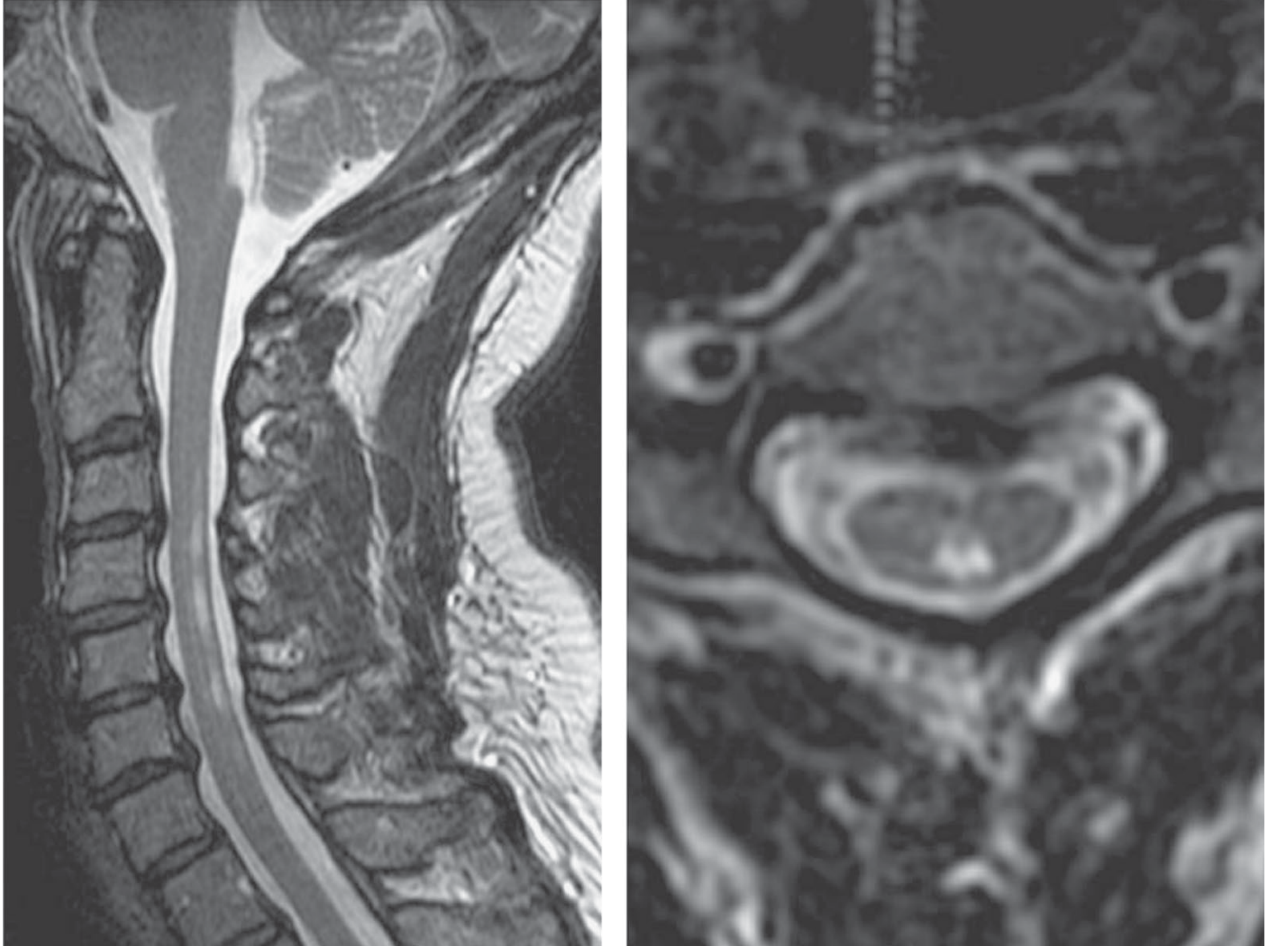
7. Neurophysiology
- Somatosensory evoked potentials (SSEPs): Frequently abnormal — delayed central conduction — confirms posterior column involvement; useful when MRI is normal
- Nerve conduction studies: Variable — may show sensory axonal neuropathy or be normal; slowing of distal sensory conduction, reduced amplitude sensory potentials
- Motor evoked potentials: Affected in more advanced cases
8. CSF Analysis
- Usually normal
- Moderate protein elevation in some cases
- Used mainly to exclude MS, infection, or other myelopathies in the differential
Differential Diagnosis
| Condition | Distinguishing Features |
|---|---|
| Cervical spondylotic myelopathy | Older patients, neck pain, focal level, MRI shows disc/osteophyte compression; B12 normal |
| Multiple sclerosis | Young adults, relapsing-remitting, oligoclonal bands in CSF, periventricular brain lesions on MRI; B12 normal |
| Hypocupric myelopathy | Identical MRI appearance to SCD; B12 normal; low serum copper and ceruloplasmin; often after bariatric surgery or excess zinc intake |
| Tabes dorsalis (neurosyphilis) | Lightning pains, Argyll Robertson pupils, positive VDRL/TPHA |
| Friedreich's ataxia | Genetic (frataxin mutation), childhood/adolescent onset, cardiomyopathy, pes cavus; autosomal recessive |
| Folate deficiency myelopathy | Rare since fortification; elevated homocysteine, normal MMA; always treat B12 first if both deficient — folate alone can worsen SCD |
| HTLV-1 associated myelopathy (tropical spastic paraparesis) | Endemic areas; positive HTLV-1 serology |
| Vitamin E deficiency | Malabsorption history; affects posterior columns and spinocerebellar tracts; low serum vitamin E |
Critical clinical point: If both B12 and folate are deficient, always treat B12 first. Giving folate alone corrects the anaemia but may precipitate or worsen the neurological manifestations of SCD.
Treatment
Vitamin B12 (Cyanocobalamin or Hydroxocobalamin) Replacement
Regimen for Established SCD (Neurological Disease)
| Phase | Dose | Route | Frequency | Duration |
|---|---|---|---|---|
| Loading (induction) | 1000 µg cyanocobalamin or hydroxocobalamin | IM | Daily for 5–7 days | 1 week |
| Consolidation | 1000 µg | IM | Weekly | 4–8 weeks |
| Maintenance | 1000 µg | IM | Monthly (lifelong if pernicious anaemia) | Indefinite |
Hydroxocobalamin vs. Cyanocobalamin
- Hydroxocobalamin (UK/Europe preferred) — longer duration of action (retained in tissues better); fewer injections needed long term; preferred in UK
- Cyanocobalamin (US) — effective but shorter tissue retention; requires more frequent dosing
Oral Maintenance (selected patients)
- High-dose oral cobalamin 500–2000 µg/day can be used for maintenance in patients with dietary deficiency (vegans) or food-cobalamin malabsorption (atrophic gastritis) where intrinsic factor mechanism is partially intact
- A small proportion (~1–2%) of dietary B12 is absorbed by passive diffusion even without intrinsic factor — this is exploited by high-dose oral therapy in pernicious anaemia
- Caveat: Oral treatment is not recommended as primary treatment for manifest SCD with neurological signs — parenteral therapy is safer and more reliable
Associated/Adjunct Management
| Intervention | Indication |
|---|---|
| Folate supplementation | Give only AFTER B12 therapy has been started; co-deficiency common in malnutrition/alcoholism; ensure B12 is first |
| Iron supplementation | Haematological response to B12 increases iron consumption; monitor and supplement as needed |
| Physiotherapy / gait rehabilitation | Ataxia and spasticity management; crucial for functional recovery |
| Bladder management | If sphincteric involvement: urodynamic assessment, anticholinergics or catheterisation as indicated |
| Treat the underlying cause | Pernicious anaemia → lifelong replacement; dietary deficiency → dietary change + supplementation; bariatric surgery → prophylactic B12 for life |
| Screen first-degree relatives (pernicious anaemia) | Autoimmune condition with familial clustering |
Response to Treatment and Prognosis
| Factor | Outcome |
|---|---|
| Duration of symptoms <3 months | Complete or near-complete recovery likely |
| Duration 3–6 months | Partial improvement; neurological deficits may persist |
| Duration >1 year | At best, arrest of progression; residual disability likely |
| Optic neuropathy / cognitive impairment | Can improve with B12 treatment |
| Once treatment started | Haematological response: reticulocytosis within 5–7 days; normalisation of FBC in 6–8 weeks |
| Neurological improvement | Begins over first 3–6 months; continues (more slowly) over 1 year or more |
"The most important factor influencing response to treatment is the duration of symptoms... The greatest improvements occur in patients whose disturbance of gait has been present for less than 3 months." — Adams and Victor's Principles of Neurology 12e
Nitrous Oxide (N₂O) - Special Note
- Elderly patients with unrecognised atrophic gastritis
- Vegans/vegetarians undergoing surgery
- Recreational N₂O abusers ("whippets")
- Operating room personnel with repeated low-level exposure
Thyroid storm
thyroid storm management treatment guidelines 2024 Burch Wartofsky score
Thyroid Storm (Thyrotoxic Crisis)
Definition and Pathophysiology
- Adrenergic hyperactivity (increased catecholamine receptor sensitivity or upregulation)
- Relatively higher free thyroid hormone levels compared to uncomplicated thyrotoxicosis (increased T4 → T3 peripheral conversion, displacement of T4/T3 from binding proteins by precipitating stress)
- Multi-organ decompensation — the thyroid hormone load overwhelms the body's compensatory capacity
- T3 acts directly on nuclear thyroid hormone receptors → increases basal metabolic rate, thermogenesis, adrenergic receptor density, heart rate, and contractility
- Peripheral tissues outpace their metabolic capacity → heat production, high-output cardiac failure, hepatic dysfunction
Precipitating Causes
| Category | Examples |
|---|---|
| Systemic illness / infection | Sepsis, pneumonia, UTI (most common) |
| Surgery | Thyroidal or non-thyroidal surgery (including anaesthesia) |
| Trauma | Physical injury, burns |
| Cardiovascular | Myocardial infarction, pulmonary embolism, stroke |
| Endocrine | Diabetic ketoacidosis, hyperosmolar coma |
| Obstetric | Labour and delivery, pre-eclampsia/eclampsia, hyperemesis gravidarum |
| Thyroid-related | Radioactive iodine therapy (releases stored hormone), iodine administration (contrast dye), thyroid gland palpation or biopsy, abrupt withdrawal of antithyroid drugs |
| Drug-related | Amiodarone (iodine load), certain medications |
| Unknown | In up to 25% of cases |
Clinical Features
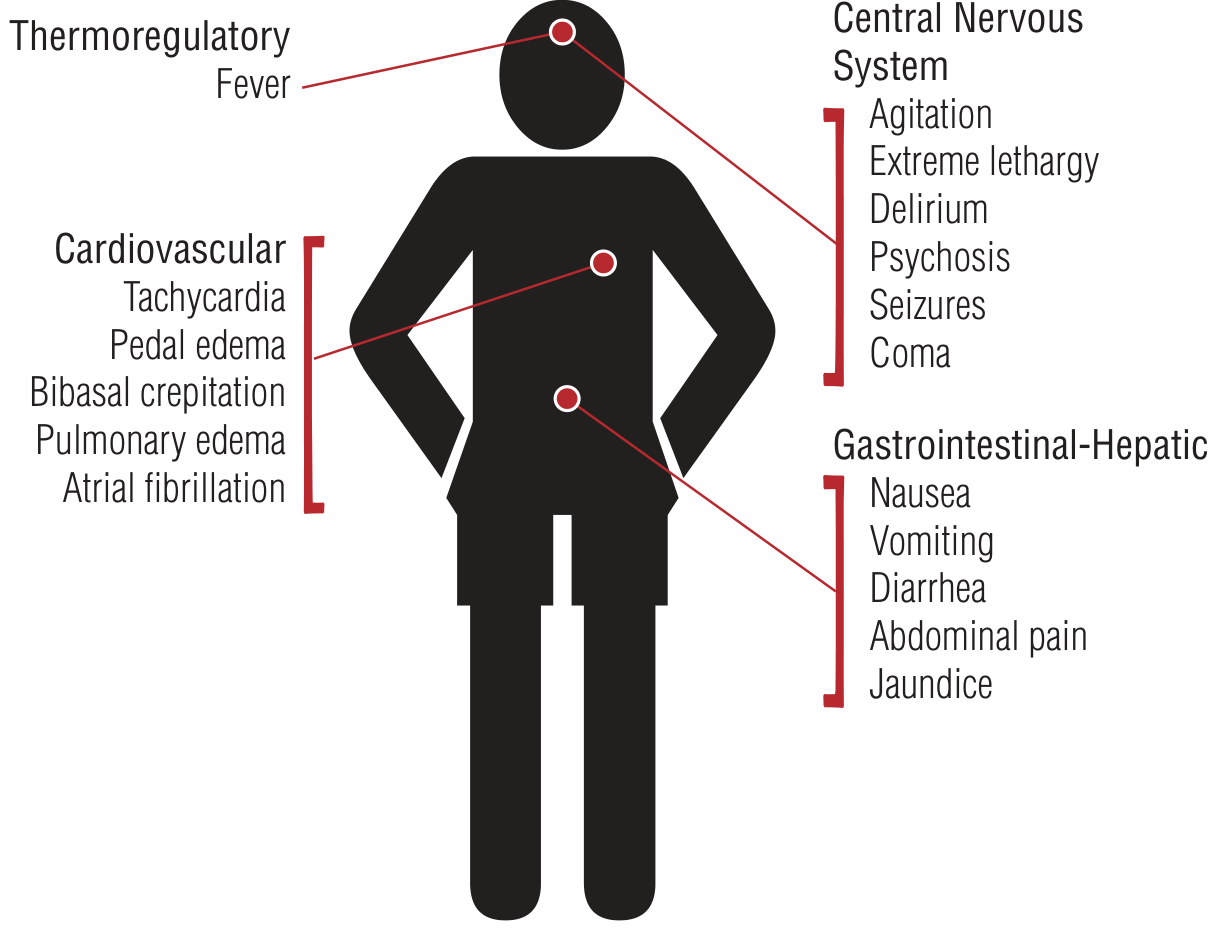
Thermoregulatory
- High fever — often ≥40°C (104°F); fever out of proportion to apparent illness is a hallmark
- Diaphoresis, heat intolerance
Cardiovascular
- Marked tachycardia (often >140 bpm) — out of proportion to the degree of fever
- Atrial fibrillation — in 10–35% of cases; more common in elderly patients
- High-output cardiac failure: elevated systolic BP, widened pulse pressure
- Decompensated heart failure: pulmonary oedema, bibasal crepitations, pedal oedema
- Hypotension (from volume depletion or cardiac failure)
Central Nervous System
- Agitation, anxiety, restlessness (earliest CNS feature)
- Delirium, psychosis
- Extreme lethargy, confusion
- Seizures, coma (severe cases)
Gastrointestinal/Hepatic
- Nausea, vomiting, diarrhoea, abdominal pain
- Hepatic dysfunction: elevated liver enzymes, cholestatic jaundice (poor prognostic sign)
"Apathetic" Thyroid Storm (Elderly)
- Elderly patients may lack classic features — presenting instead with weakness, depression, and weight loss without obvious agitation; diagnosis easily missed
Diagnostic Scoring: Burch-Wartofsky Point Scale (BWPS)
| Parameter | Finding | Score |
|---|---|---|
| Temperature | 37.2–37.7°C (99–99.9°F) | 5 |
| 37.7–38.3°C (100–100.9°F) | 10 | |
| 38.3–38.8°C (101–101.9°F) | 15 | |
| 38.9–39.4°C (102–102.9°F) | 20 | |
| 39.4–39.9°C (103–103.9°F) | 25 | |
| ≥40°C (≥104°F) | 30 | |
| CNS effects | Absent | 0 |
| Mild agitation | 10 | |
| Moderate (delirium, psychosis, extreme lethargy) | 20 | |
| Severe (seizures, coma) | 30 | |
| Tachycardia (beats/min) | 90–109 | 5 |
| 110–119 | 10 | |
| 120–129 | 15 | |
| 130–139 | 20 | |
| ≥140 | 25 | |
| Congestive heart failure | Absent | 0 |
| Mild (pedal oedema) | 5 | |
| Moderate (bibasal rales) | 10 | |
| Severe (pulmonary oedema) | 15 | |
| GI-hepatic dysfunction | Absent | 0 |
| Moderate (diarrhoea, nausea/vomiting, abdominal pain) | 10 | |
| Severe (unexplained jaundice) | 20 | |
| Atrial fibrillation | Absent | 0 |
| Present | 10 | |
| Precipitant history | Absent | 0 |
| Present | 10 |
- ≥45: Highly suggestive of thyroid storm — begin immediate aggressive treatment
- 25–44: Impending thyroid storm — treat as storm
- <25: Unlikely thyroid storm
Investigations
- Thyroid function: TSH (suppressed/undetectable <0.01 mU/L), free T4 (elevated), free T3 (elevated) — confirm thyrotoxicosis but do NOT delay treatment
- FBC: Leukocytosis (may reflect precipitating infection)
- BMP/electrolytes: Hyperglycaemia (catecholamine-mediated glycogenolysis, insulin inhibition); mild hypercalcaemia (bone resorption)
- LFTs: Elevated (hepatic involvement common; baseline needed — 30% of patients on PTU develop transient enzyme elevation)
- Serum cortisol: High (expected stress response); low cortisol → suspect adrenal insufficiency
- ECG: Sinus tachycardia most common; AF in 10–35%; PVCs, atrial flutter
- Chest X-ray: Exclude pneumonia (precipitant); assess for pulmonary oedema
- Blood/urine cultures: If infection suspected as precipitant
- Pregnancy test: Before starting treatment — affects antithyroid drug choice
Treatment — Sequential and Simultaneous
Beta-blocker → Thionamide → Iodine (≥1 hour after thionamide) → Corticosteroid → Treat precipitant
Step 1 — Supportive Care (Immediate)
| Intervention | Detail |
|---|---|
| Airway/Oxygen | High-flow oxygen; secure airway if GCS impaired |
| IV access, cardiac monitoring | Continuous ECG and SpO₂ monitoring, ICU admission |
| Fluid resuscitation | IV normal saline + 5–10% dextrose (replaces glycogen stores depleted by hypermetabolism) |
| Antipyresis | Paracetamol (acetaminophen) 325–650 mg PO/PR q4–6h |
| Aspirin is CONTRAINDICATED — displaces T4 and T3 from binding proteins → increases free hormone levels | |
| Physical cooling | Cooling blankets, ice packs, fans, tepid sponging |
| Nutrition | IV glucose, multivitamins, thiamine, folate (depleted by hypermetabolism) |
| Sedation/anxiolysis | Lorazepam or diazepam IV (reduces central sympathetic outflow and agitation) |
Step 2 — Inhibit Peripheral Adrenergic Effects (Beta-Blockade)
| Drug | Dose | Notes |
|---|---|---|
| Propranolol (preferred) | IV: 0.5–1 mg over 10 min, then 1–2 mg q10–15 min to HR <100; or PO: 60–80 mg q4h | Drug of choice — non-selective; also blocks T4 → T3 peripheral conversion (additional mechanism vs. selective BBs); reduces fever, tremor, tachycardia |
| Esmolol (alternative) | IV load: 250–500 µg/kg; infusion: 50–100 µg/kg/min titrated | Preferred in cardiac failure (short-acting, reversible if deterioration occurs) |
| Metoprolol / Atenolol | Standard cardioselective doses | Use if bronchospasm or reactive airway disease precludes propranolol (but lose T4→T3 conversion blocking benefit) |
| Diltiazem | If beta-blockers are contraindicated | Rate control in AF |
Note: In high-output cardiac failure from thyroid storm, beta-blockers should be used cautiously with close monitoring — inotropic agents (digoxin if AF present) may be needed adjunctively.
Step 3 — Inhibit New Thyroid Hormone Synthesis (Thionamides)
| Drug | Dose | Notes |
|---|---|---|
| Propylthiouracil (PTU) | Loading: 500–1000 mg PO/NG; then 250 mg q4h | Preferred for thyroid storm — inhibits thyroid hormone synthesis AND blocks peripheral T4 → T3 conversion (via inhibition of deiodinase type 1); preferred in first trimester of pregnancy |
| Methimazole | 20 mg PO/NG q6h (or 60–80 mg/day) | Preferred outside pregnancy — longer duration of action (24 h); no hepatotoxicity concern; avoid in first trimester (teratogenic — aplasia cutis) |
| Route | PO or nasogastric tube; may be given PR (per rectum) via enema prepared by pharmacy if patient cannot swallow | Same dose for all routes |
PTU black box warning (FDA 2010): Rare but severe hepatic failure — monitor LFTs; some authorities now prefer high-dose methimazole except in pregnancy or if T4→T3 conversion blocking is critical.
Step 4 — Inhibit Thyroid Hormone Release (Iodine)
| Drug | Dose | Mechanism |
|---|---|---|
| Lugol's solution (8 mg iodide/drop) | 8–10 drops PO/PR q6–8h | Rapidly inhibits thyroid hormone release; Wolff-Chaikoff effect |
| SSKI (saturated potassium iodide, 50 mg/drop) | 1–2 drops PO/PR q8h (or 5 drops q6h) | Same mechanism |
| Sodium iodide | 500–1000 mg IV q8–12h | Used if oral route unavailable |
| Lithium carbonate (if iodine allergy) | 300 mg PO q6h (target serum level ~1 mEq/L) | Inhibits thyroid hormone release; do not use in pregnancy |
| Cholecystographic agents (ipodate/iopanoic acid) | 0.5–3 g/day | Block T4→T3 conversion AND release; particularly useful in thyroiditis or hormone ingestion overdose |
Step 5 — Block T4 → T3 Peripheral Conversion (Corticosteroids)
| Drug | Dose | Notes |
|---|---|---|
| Hydrocortisone (preferred) | 300 mg IV initially, then 100 mg IV q8h | Also treats relative adrenal insufficiency (adrenal reserve can be overwhelmed by hypermetabolic demand); improves survival |
| Dexamethasone (alternative) | 2 mg IV q6h |
Corticosteroids are essential for blocking peripheral conversion of T4 to T3. Their use is associated with improved survival. They also provide cover for potential concurrent adrenal insufficiency.
Step 6 — Prevent Free Hormone Reabsorption (Enterohepatic Circulation Interruption)
| Drug | Dose | Notes |
|---|---|---|
| Cholestyramine | 4 g PO q6h | Binds thyroid hormones in the gut; interrupts enterohepatic recirculation; used in severe or refractory cases |
Step 7 — Identify and Treat the Precipitant
- Empirical broad-spectrum antibiotics if infection is suspected or cannot be excluded as a precipitant
- Treat underlying cause (e.g., DKA, MI, PE, surgical drainage of abscess)
Step 8 — Definitive Therapy (After Stabilisation)
- Radioactive iodine (RAI) ablation — once patient is euthyroid and stable; most common definitive treatment for Graves' disease
- Thyroidectomy — for patients in whom RAI is contraindicated (e.g., pregnancy), for large goitres causing compression, or for rapid definitive treatment after medical stabilisation
- Patients must be rendered euthyroid before surgery to minimise perioperative risk
Step 9 — Rescue Therapies (Refractory Cases)
- Therapeutic plasmapheresis / plasma exchange — removes circulating thyroid hormones rapidly
- Peritoneal dialysis / charcoal haemoperfusion — last resort
Special Situations
Pregnancy
- First trimester: PTU is preferred (methimazole teratogenic — aplasia cutis, choanal atresia)
- Second/third trimester: Switch to methimazole (PTU has greater hepatotoxicity risk in pregnancy)
- Both PTU and methimazole cross the placenta and can cause foetal hypothyroidism — use lowest effective dose
- RAI is absolutely contraindicated in pregnancy
AF in Thyroid Storm
- Rate control with propranolol IV (preferred) or digoxin (if severe HF precludes beta-blockade)
- Most AF resolves once euthyroid state is restored
- Anticoagulation should be considered (high thromboembolic risk)
Beta-Blocker Contraindications
- Severe bronchospasm → use diltiazem for rate/adrenergic control
- Decompensated heart failure → use short-acting esmolol with careful titration; or reserpine/guanethidine as alternative
Differential Diagnosis
| Condition | Distinguishing Features |
|---|---|
| Sepsis | Thyroid function normal; cultures positive |
| Neuroleptic malignant syndrome | Recent antipsychotic use; rigidity; raised CK |
| Serotonin syndrome | Recent serotonergic drug; myoclonus, hyperreflexia |
| Malignant hyperthermia | Inhalational anaesthetic exposure; raised CK; rigidity |
| Heatstroke | Environmental exposure; anhidrosis; TFTs normal |
| Phaeochromocytoma | Paroxysmal hypertension; elevated catecholamines; TFTs normal |
| Anticholinergic toxidrome | Dry skin; dilated pupils; no sweating; TFTs normal |
| Sympathomimetic toxidrome | Drug history (cocaine, amphetamine); TFTs normal |
Prognosis and Monitoring
- Mortality with treatment: 10–30%
- Mortality without treatment: approaches 100%
- Death occurs from: high-output cardiac failure, arrhythmias, multi-organ failure, DIC, hypoxic brain injury, sepsis
- Hepatic failure with jaundice carries the worst prognosis
- Improvement in heart rate and temperature should be seen within 12–24 hours of appropriate therapy
- Thyroid hormone levels normalise over days to weeks (large thyroid hormone body stores)
- ICU admission mandatory for all cases
Krait bite
krait Bungarus snakebite envenomation clinical features treatment antivenom 2024
Krait Bite (Bungarus species)
The Snake
| Species | Common Name | Distribution |
|---|---|---|
| Bungarus caeruleus | Common/Indian krait | India, Pakistan, Sri Lanka, Bangladesh |
| Bungarus candidus | Malayan krait | Thailand, Malaysia, Indonesia, Southeast Asia |
| Bungarus multicinctus | Chinese/many-banded krait | China, Taiwan, Southeast Asia |
| Bungarus fasciatus | Banded krait | South and Southeast Asia |
| Bungarus ceylonicus | Sri Lankan krait | Sri Lanka |
Venom Composition and Mechanism
Alpha-Bungarotoxins (postsynaptic neurotoxins)
- Competitive antagonists at the nicotinic acetylcholine receptor (nAChR) on the muscle end-plate
- Bind with very high affinity, blocking postsynaptic transmission
- In principle, antivenom can compete with these and reverse the blockade if given early
Beta-Bungarotoxins (presynaptic neurotoxins — more clinically important)
- Phospholipase A2 toxins that damage presynaptic nerve terminals
- Deplete acetylcholine vesicles and destroy the presynaptic membrane
- Once presynaptic damage occurs, the axon terminal must physically regrow — a process taking days to weeks
- Antivenom cannot reverse established presynaptic damage; it can only prevent progression if given before terminal destruction is complete
This explains why krait envenomation carries high mortality and why early antivenom is critical — delay is irreversible.
Epidemiology
- India/Pakistan: 15,000–30,000 deaths/year from snakebite; B. caeruleus is one of the "Big Four" (alongside Russell's viper, saw-scaled viper, cobra)
- Sri Lanka: >60,000 bites and ~1,000 deaths/year; B. caeruleus is a major contributor
- Southeast Asia (Thailand): 88.6% of Bungarus bite patients develop neurotoxic signs within 8 hours; 76% require mechanical ventilation
Clinical Features
The Bite Itself
- Often painless — the bite may not wake the sleeping victim
- Fang marks may be inconspicuous — small puncture wounds, often barely visible
- No significant local swelling, redness, or tissue destruction — this is a hallmark distinguishing krait from viper bites
- The victim may wake at night with symptoms but be uncertain they were bitten
Premonitory/Early Symptoms (Hours 1–4)
- Abdominal pain (colicky, crampy) — a distinctive feature of krait envenomation, thought to be autonomic in origin; present with or without paralysis
- Nausea, vomiting, diarrhoea
- Excessive salivation
- Profuse sweating
- Anxiety, restlessness
Neurotoxic Paralysis (Descending Flaccid Paralysis)
- Ptosis — earliest and most reliable sign; "failure of lid retraction" when the patient looks upward; "hooding of the pupil"
- External ophthalmoplegia — starting with loss of upward gaze, progressing to complete ophthalmoplegia
- Facial and bulbar palsy — facial paralysis, inability to open mouth, dysarthria, dysphagia, pooling of secretions
- Neck flexor weakness — patient cannot lift head off the pillow
- Limb weakness — descending pattern, lower limbs usually last
- Respiratory muscle paralysis — intercostal muscle failure, diaphragmatic involvement → respiratory failure and death
Respiratory arrest can occur within a few hours of severe envenomation, or may be delayed up to 10–24 hours. The speed of progression is unpredictable.
WHO Clinical Syndrome Classification for Krait (Syndrome 4A)
- Neurotoxic paralysis
- Minimal or no local effects at bite site
- Bitten while sleeping on the ground/floor
- With or without abdominal pain
- Likely snake: Krait
Other Features
- Autonomic effects: bradycardia, hypotension, hypersalivation, miosis or mydriasis
- Consciousness: usually preserved until respiratory failure supervenes — patients may be fully conscious while paralysed (this is extremely distressing)
- No haematotoxicity: no coagulopathy, no bleeding, WBCT normal
Investigations
| Investigation | Finding/Purpose |
|---|---|
| 20-minute Whole Blood Clotting Test (WBCT20) | Normal in krait bite (distinguishes from viper envenomation); if blood fails to clot → viper |
| FBC | Leukocytosis possible |
| Renal function, electrolytes | Baseline; AKI rare but possible |
| LFTs, CK | Baseline; rhabdomyolysis rare in krait (unlike sea snake/Russell's viper) |
| ECG | Bradycardia, arrhythmias |
| Pulse oximetry / ABG | Mandatory — monitor for impending respiratory failure |
| Peak expiratory flow / vital capacity | Serial measurements to detect respiratory muscle weakness early |
| Ptosis assessment | Most sensitive early neurological sign — test upward gaze |
| Neostigmine test (Tensilon equivalent) | Edrophonium 0.25 mg/kg IV (after atropine pre-treatment) — to assess response to anticholinesterase |
| Snake identification | Photo (safe to obtain only if snake already dead) — guides antivenom selection |
Management
Pre-Hospital First Aid
- Reassure the patient — calm handling reduces venom spread
- Immobilise the bitten limb — splint + firm crepe bandage to reduce muscular movement (reduces lymphatic spread)
- Pressure-immobilisation bandaging — for confirmed or strongly suspected elapid/krait bite: apply a firm crepe bandage along the entire limb from bite site upward; aim to delay venom absorption until the patient reaches a facility with intubation/ventilation capability
- Pressure: enough to occlude lymphatics but not arterial flow (~40–70 mmHg on limb)
- Keep patient as still as possible; do not walk
- Transport immediately to a hospital with antivenom and ventilatory support — rapidly and passively
- If neurological signs appear before reaching hospital and intubation is unavailable, apply a tight (arterial) tourniquet above the bite for no more than 2 hours (releasing for 1 min every 30 min) as a last resort to delay respiratory arrest
- Incisions, excisions, sucking, cauterisation
- Electric shock therapy
- Herbal/traditional remedies
- Ice packs
- Tourniquets unless neurotoxic elapid confirmed and facilities unavailable
Hospital Management
Step 1 — Assessment and Monitoring
- All patients bitten by a krait (confirmed or suspected) require minimum 24 hours observation regardless of initial symptoms
- Attach pulse oximeter, set up IV access, continuous ECG monitoring
- Serial neurological examination: ptosis, upward gaze, swallowing, neck flexion strength, respiratory rate, peak expiratory flow / vital capacity
- Establish WBCT20 immediately to rule out viper coagulopathy
Step 2 — Secure the Airway Early
"Do not wait for respiratory arrest before intubating."
- Signs requiring urgent intubation:
- Ptosis with progressive ophthalmoplegia
- Inability to lift the head
- Dysphagia, pooling of secretions
- SpO₂ falling
- Vital capacity <15–20 mL/kg or PEF dropping rapidly
- Any bulbar palsy
- Early elective intubation and mechanical ventilation is lifesaving — respiratory failure can be sudden
- Patients may require days to weeks of ventilation for presynaptic neurotoxin damage to resolve
Step 3 — Antivenom (Definitive Treatment)
- Any neurotoxic sign (ptosis, ophthalmoplegia, facial palsy, dysphagia, limb weakness)
- Evidence of systemic envenomation
- Confirmed krait bite within 6 hours — some authorities recommend antivenom even before symptoms appear, given the near-universal development of neurotoxicity and high ventilation rate (76% in Thai series); retrospective data shows better outcomes with antivenom given within 4 hours of bite
- Polyvalent (polyspecific) antivenom covering Bungarus species — most commonly available in India, Sri Lanka, Southeast Asia
- In India: Central Research Institute (CRI) Kasauli or VINS/BHARAT polyvalent ASV — covers cobra, common krait, Russell's viper, saw-scaled viper (the "Big Four")
- In Thailand: Bungarus candidus monovalent antivenom (Thai Red Cross) — specific for Malayan krait
- Children require the same dose as adults (not weight-adjusted — the venom dose is the same regardless of body weight)
- Initial dose: typically 10 vials (10 mL each = 100 mL) of polyvalent ASV
- Dilute in 100–250 mL normal saline; infuse over 30–60 minutes IV
- Observe closely during infusion for anaphylaxis
- If signs persist or worsen, repeat dose within 1 hour
- Important: Antivenom cannot reverse established presynaptic terminal damage — it is most effective when given early, before full neurological paralysis develops
| Reaction Type | Timing | Features | Treatment |
|---|---|---|---|
| Early anaphylactic | Within 10 min–2 h | Urticaria, pruritus, tachycardia, bronchospasm, hypotension | IM adrenaline 0.5 mg (adult); 0.01 mg/kg (child) + IV antihistamine (chlorphenamine 10 mg adult, 0.2 mg/kg child) + slow infusion restart |
| Pyrogenic | 30 min–2 h | Fever, rigors | Cooling + paracetamol |
| Serum sickness (Type III) | 5–24 days | Urticaria, fever, arthralgia, lymphadenopathy | Oral antihistamine; prednisolone 5 mg QID × 5 days for severe cases |
Pre-treatment with subcutaneous adrenaline, antihistamine, or hydrocortisone before antivenom infusion reduces early reactions (used routinely in some centres).
Step 4 — Anticholinesterase Therapy (Neostigmine Test)
- Pre-medicate with atropine sulphate IV — adult: 0.6 mg; children: 50 µg/kg — to block muscarinic side effects
- Give edrophonium (Tensilon) IV — adult: 10 mg; children: 0.25 mg/kg — slowly
- Observe for improvement in ptosis, respiratory muscle strength, or swallowing within 5–10 minutes
- If positive response → maintain on neostigmine 0.5–2.5 mg IM/SC every 30 min + atropine 0.6 mg
Step 5 — Supportive Care
| Issue | Management |
|---|---|
| Respiratory failure | Early intubation and mechanical ventilation; continue until spontaneous recovery (days to weeks) |
| Secretions | Regular suctioning; chest physiotherapy |
| Autonomic instability | Treat bradycardia (atropine); hypotension (IV fluids, dopamine if refractory — 2.5–5 µg/kg/min) |
| Nutrition | Nasogastric feeding during prolonged paralysis |
| DVT prophylaxis | In ventilated paralysed patients |
| Pressure care | Frequent repositioning |
| Psychosocial | Patients may be fully conscious while paralysed — reassurance and communication are essential |
| Tetanus prophylaxis | Tetanus toxoid booster if not up to date |
| Wound care | Minimal local wound care; prophylactic antibiotics (penicillin or erythromycin) if wound was tampered with |
Step 6 — Monitoring Recovery
- Neurological recovery follows reversal order — limb strength returns before bulbar function
- Ptosis is often last to resolve
- Pre-synaptic damage requires axonal regeneration — mechanical ventilation may be needed for 1–6 weeks in severe cases
- Serial peak flow / vital capacity guides extubation timing
Prognosis
- Untreated respiratory paralysis → death
- With early antivenom + mechanical ventilation: mortality can be low, but neurological recovery is slow
- Full recovery is expected if the patient survives the respiratory phase
- In Taiwan: B. multicinctus bite carries 18% case mortality — one of the highest among krait species
WHO Syndrome 4A Summary (Krait)
| Feature | Krait Bite |
|---|---|
| Local effects | Minimal or none |
| Systemic toxicity | Pure neurotoxicity |
| Coagulopathy | Absent (WBCT normal) |
| Bite circumstances | Often while sleeping on floor/ground at night |
| Characteristic symptom | Abdominal pain + descending flaccid paralysis |
| Immediate threat | Respiratory failure |
| Treatment priority | Antivenom (early) + mechanical ventilation |
Autoimmune hemolytic anemia treatment
autoimmune hemolytic anemia treatment guidelines 2024 warm cold AIHA rituximab
Autoimmune Haemolytic Anaemia (AIHA) — Treatment
Classification — The Foundation of Treatment Decisions
| Type | Antibody | Temperature | Mechanism | Main Site of Destruction |
|---|---|---|---|---|
| Warm AIHA (65–70%) | IgG (rarely IgA) | Maximal at 37°C | IgG-opsonised RBCs phagocytosed by Fcγ receptor-bearing macrophages | Spleen (extravascular) |
| Cold Agglutinin Disease (CAD) (15–20%) | IgM (monoclonal) | Maximal at 4°C; reacts at <30°C | IgM activates classical complement → C3b opsonisation → Kupffer cell phagocytosis + MAC-mediated intravascular haemolysis | Liver (extravascular) + intravascular |
| Paroxysmal Cold Haemoglobinuria (PCH) (rare) | Donath-Landsteiner IgG (anti-P) | Biphasic: binds in cold, lyses at 37°C | Complement-mediated intravascular haemolysis | Intravascular |
| Mixed AIHA | IgG + IgM | Both | Combined mechanisms | Spleen + liver |
Diagnosis Checklist Before Treatment
- ↓ Hb, ↑ reticulocyte count, ↑ LDH, ↑ indirect bilirubin, ↓ haptoglobin, blood film: spherocytes (wAIHA), agglutination (CAD), fragmentation (mixed/PCH)
- Direct Antiglobulin Test (DAT / direct Coombs) — positive for IgG (warm), C3d (cold), or both
- Indirect Coombs — detects serum autoantibodies
- Lymphoproliferative: CLL, lymphomas
- Autoimmune: SLE, rheumatoid arthritis
- Infections: EBV, CMV, M. pneumoniae (cold AIHA), HIV, HCV
- Drugs: fludarabine, checkpoint inhibitors (anti-PD1, anti-CTLA4), alemtuzumab, methyldopa, penicillin
- Post-HSCT
Supportive Care (All Types)
Folic Acid
- 5–10 mg/day orally in all patients with active AIHA
- Increased erythropoiesis depletes folate; deficiency mimics treatment failure
Blood Transfusion
- Indicated when: severe symptomatic anaemia (Hb <6–8 g/dL), haemodynamic compromise, significant cardiac comorbidity
- Do not withhold transfusion because of "incompatible crossmatch" — the DAT will always interfere with crossmatching in AIHA
- Blood bank must be notified; provide least-incompatible packed RBCs
- Transfuse slowly: ≤1 mL/kg/hour (transfused cells will also be destroyed)
- In CAD and PCH: use pre-warmed RBCs (warmed to 37°C through a blood warmer)
- Rate: no more than 1 unit at a time, with close observation
Plasma Exchange (Plasmapheresis)
- Temporary measure — removes circulating antibodies
- No robust evidence for efficacy; use for life-threatening haemolysis while waiting for definitive therapy to work, or pre-operatively in cardiac/cold-exposure surgery
- More rational in IgM-mediated disease (CAD) as IgM is largely intravascular
WARM AIHA — Treatment Algorithm
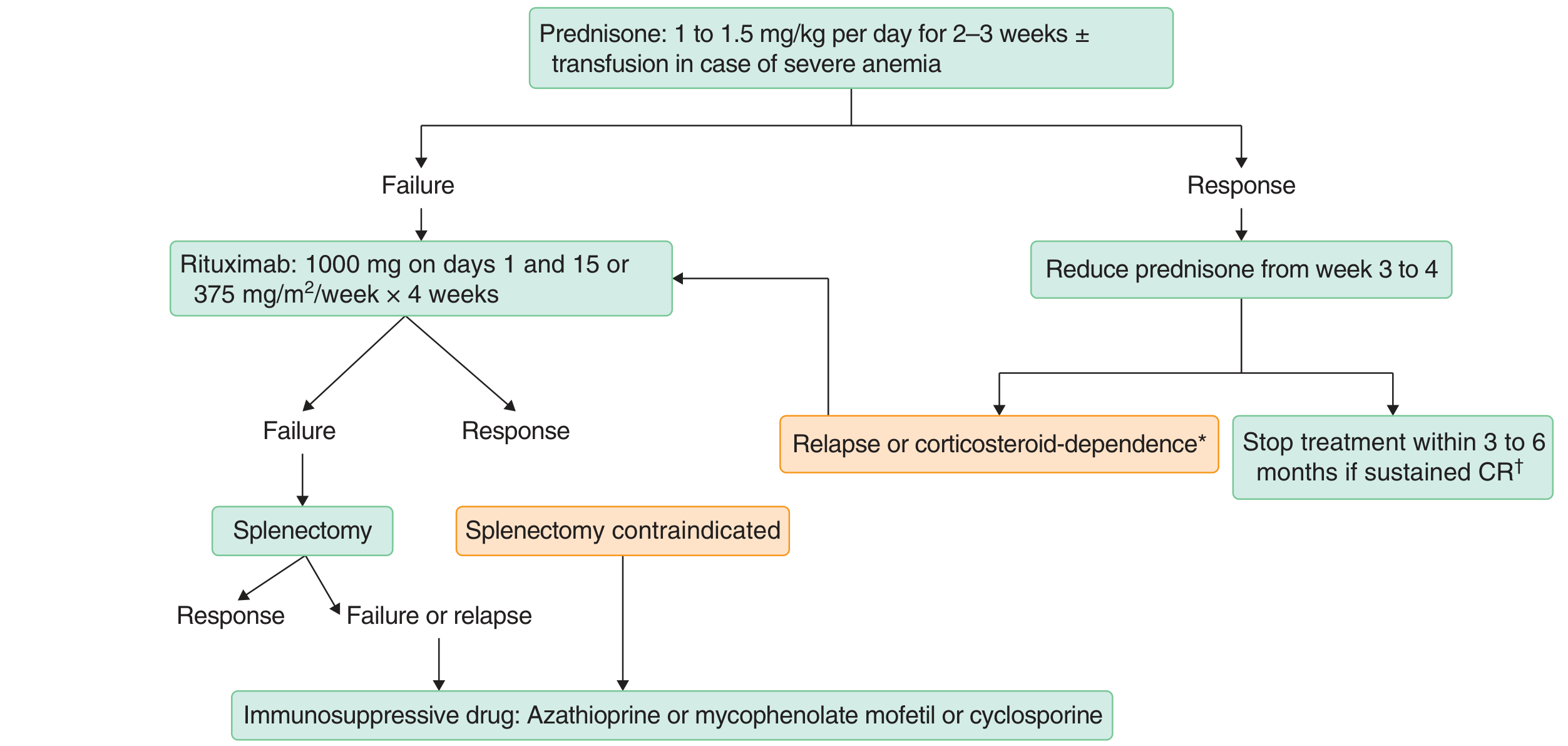
First-Line: Corticosteroids
| Regimen | Dose |
|---|---|
| Oral prednisone/prednisolone | 1–2 mg/kg/day (most commonly 1–1.5 mg/kg/day) |
| Initial duration | Maintained for 3–4 weeks until response; then taper progressively |
| Taper | Reduce from weeks 3–4 if response; total treatment minimum 3 months after complete response |
| IV methylprednisolone (severe cases) | 250–1000 mg/day IV × 1–3 days for profound anaemia, then switch to oral |
- 80–85% of patients show significant improvement within 2–3 weeks
- Complete remission (CR = Hb ≥12 g/dL, no haemolysis): only ~30%
- 50–60% become corticosteroid-dependent — requiring >10–15 mg/day to maintain remission
- Only ~1/3 achieve sustained off-treatment CR at 1 year
Second-Line: Rituximab (preferred before splenectomy)
| Parameter | Detail |
|---|---|
| Indication | Corticosteroid failure, corticosteroid-dependence, unacceptable steroid side effects (e.g., diabetes) |
| Mechanism | Anti-CD20 monoclonal antibody → B-lymphocyte depletion → reduced autoantibody production |
| Dose | 375 mg/m² IV weekly × 4 weeks (standard lymphoma dosing) OR 1000 mg IV on days 1 and 15 (RA regimen) |
| Response rate | 75% overall response at 1 year in randomised trials; higher in children |
| Combination | Rituximab + corticosteroids (first-line in some centres): 75% vs 36% response at 12 months vs prednisone alone (Phase 3 trial) |
| Low-dose rituximab | 100 mg/week × 4 weeks — explored as alternative with fewer infusion reactions and lower cost; efficacy data available |
| Relapse | May repeat rituximab — often effective again |
| PCP prophylaxis | Trimethoprim-sulfamethoxazole 160/800 mg three times per week during and after rituximab treatment |
| Late-onset neutropenia | Monitor FBC for 3–6 months post-treatment |
Current consensus: Rituximab is the preferred second-line agent before splenectomy in adults, and increasingly used as first-line together with corticosteroids.
Third-Line: Splenectomy
| Parameter | Detail |
|---|---|
| Indication | Failure of or contraindication to both corticosteroids and rituximab |
| Rationale | Removes the primary site of IgG-mediated extravascular haemolysis AND a major source of autoantibody production |
| Response rate | ~60–70% sustained response; 25% of responders relapse within 1 year |
| Technique | Laparoscopic preferred (mortality <1%) |
| Pre-operative | Vaccinate ≥2 weeks before against Streptococcus pneumoniae, Neisseria meningitidis, Haemophilus influenzae type b |
| Post-operative | Daily penicillin V prophylaxis for minimum 2 years (lifelong if at high risk) |
| Key complication | Overwhelming post-splenectomy infection (OPSI) — fatal sepsis from encapsulated organisms; and splanchnic vein thrombosis (use perioperative LMWH, especially if antiphospholipid antibodies positive) |
| Avoid in | Children <5–7 years (delay as long as possible); patients with haematological malignancies that may respond to specific therapy |
| CAD: | Splenectomy NOT effective — liver is the primary site of destruction |
Fourth-Line: Other Immunosuppressives / Cytotoxics
| Drug | Dose | Notes |
|---|---|---|
| Azathioprine | 50–200 mg/day | Useful steroid-sparing; 6–8 week lag before effect; monitor FBC, LFTs |
| Mycophenolate mofetil (MMF) | 500–1500 mg BD | Better tolerated than azathioprine; good evidence in SLE-associated AIHA |
| Cyclosporine | 3–5 mg/kg/day | Monitor levels, renal function, BP |
| Cyclophosphamide | Low-dose oral or IV pulse | Reserved for severe/refractory; higher toxicity |
| Danazol | 400–800 mg/day | Attenuated androgen; useful as steroid-sparing in corticosteroid-dependent patients (>15 mg/day prednisone to maintain remission); androgenic side effects limit use in women |
| Bortezomib + dexamethasone | Per protocol | Promising for multirefractory cases — targets plasma cells |
| IVIG | 2 g/kg over 2 days | Limited efficacy in AIHA (unlike ITP); consider only as rescue for severe transfusion-dependent disease with no response to corticosteroids |
COLD AGGLUTININ DISEASE (CAD) — Treatment
Key Differences from Warm AIHA
- Corticosteroids: generally NOT effective (IgM-mediated complement activation is not suppressed by steroids)
- Splenectomy: NOT effective (destruction occurs in liver, not spleen)
- Avoid cold exposure: essential and always first step
General Measures (All CAD Patients)
- Avoid cold — especially cold air, cold water, cold food/drink, cold IV fluids
- Prompt treatment of intercurrent infections (M. pneumoniae, EBV) — infections → ↑ C3/C4 → exacerbation of haemolysis
- Influenza and pneumococcal vaccination (infections precipitate crises)
- Use blood warmers for all IV fluids and transfusions
Acute/Transient CAD (Post-infection)
- Usually self-limiting over weeks to months as underlying infection resolves
- Prewarmed packed RBCs if transfusion required
- Antibiotics for underlying M. pneumoniae (azithromycin, doxycycline)
- Short course of corticosteroids occasionally considered for severe cases
- Monitor; most resolve without specific immunosuppressive therapy
Chronic CAD (Symptomatic, Transfusion-Dependent)
| Drug | Dose | Notes |
|---|---|---|
| Rituximab (first-line for chronic CAD) | 375 mg/m² IV weekly × 4 weeks | ~60% response rate; preferred de facto first-line for chronic CAD; remissions may not be durable |
| Rituximab + Bendamustine | Rituximab 375 mg/m² + Bendamustine 70–90 mg/m² IV × 4–6 cycles | ~75% response rate; most durable responses; preferred for CAD associated with lymphoproliferative disorder; risk of severe infections in frail elderly |
| Rituximab + Fludarabine | Combination chemotherapy | Alternative to bendamustine; similar efficacy; more myelosuppression |
| Sutimlimab (anti-C1s) | 45–60 mg/kg IV weekly × 4 weeks, then every 2 weeks | Complement inhibitor — targets C1s, blocking the classical pathway upstream; reduces haemolysis rapidly; approved for transfusion-dependent CAD; hemolysis returns when stopped (not disease-modifying); does not affect underlying B-cell clone |
| Ibrutinib | BTK inhibitor | Emerging evidence in smaller studies; useful if underlying B-cell lymphoma/CLL |
| Bortezomib + dexamethasone | Per protocol | Some responses reported in refractory CAD |
| Plasma exchange | Temporary | Rapidly removes IgM; useful in acute severe haemolysis or pre-operatively; not a durable solution |
| Erythropoiesis-stimulating agents (off-label) | Standard EPO dosing | Transfusion-sparing in inadequate reticulocyte response; temporary measure |
Sutimlimab provides rapid reduction of haemolysis but requires ongoing administration — it blocks complement but does not deplete the underlying autoantibody-producing B-cell clone. It is particularly useful while waiting for rituximab to take effect.
MIXED AIHA
- Both IgG and IgM antibodies present
- Usually steroid-responsive (IgG component)
- Can be treated with corticosteroids and splenectomy
- Responds to immunosuppressive therapy
DRUG-INDUCED AIHA
- Stop the offending drug — this is the primary treatment
- IgG drug-adsorption type (penicillin): haemolysis resolves once drug is stopped
- True autoantibody type (methyldopa, fludarabine, checkpoint inhibitors): may persist after drug withdrawal; treat as warm AIHA
- Checkpoint inhibitor-related AIHA: high-dose corticosteroids; consider rituximab; hold or permanently discontinue checkpoint inhibitor
SECONDARY AIHA — Treat the Underlying Cause
| Underlying Cause | Specific Action |
|---|---|
| SLE | Hydroxychloroquine + corticosteroids; consider MMF or belimumab |
| CLL | Avoid fludarabine (worsens AIHA); use ibrutinib, venetoclax, or bendamustine + rituximab |
| Lymphoma | Treat lymphoma; AIHA usually responds |
| Infection | Treat infection (transient CAD resolves) |
Response Definitions (Used for Treatment Decisions)
| Response | Definition |
|---|---|
| Complete remission (CR) | Hb ≥12 g/dL (adults), no active haemolysis (normal LDH, bilirubin, haptoglobin) |
| Partial response (PR) | Hb increase ≥2 g/dL from baseline with some reduction in haemolysis |
| Failure | No response or progression despite treatment |
| Corticosteroid-dependence | Requires >10–15 mg/day prednisone to maintain ≥ partial response |
Treatment Comparison Summary
| Treatment | Warm AIHA | CAD | Notes |
|---|---|---|---|
| Corticosteroids | ✅ First-line | ❌ Not effective | IgG-mediated only |
| Rituximab | ✅ Second-line (or 1st + steroids) | ✅ First-line | CD20 B-cell depletion |
| Rituximab + Bendamustine | ✅ (refractory) | ✅ Best response rate | More toxic |
| Splenectomy | ✅ Third-line | ❌ Not effective | Remove IgG haemolysis site |
| Sutimlimab | ❌ Not indicated | ✅ Complement inhibitor | Ongoing administration required |
| Azathioprine / MMF | ✅ Steroid-sparing | ❌ Limited | Fourth-line warm AIHA |
| Danazol | ✅ Steroid-sparing | ❌ | Androgenic side effects |
| Plasmapheresis | Limited (IgG intravascular) | ✅ Temporary (IgM intravascular) | Bridge therapy only |
Pid treatment
PID pelvic inflammatory disease treatment CDC 2021 guidelines regimens
https://www.cdc.gov/std/treatment-guidelines/pid.htm