
sarcidosis
I'll look up sarcoidosis from the medical library right away.
Reading File
Searching sources...
Finding Sources
Searching PubMed
sarcoidosis
Good - I have several textbook sections. Let me read the most comprehensive ones in parallel.
Reading File
Reading File
Finding Sources
Good. Now let me pull detailed content from the respiratory medicine textbooks which will have the most thorough coverage.
Finding Sources
Reading File
Now let me get the main respiratory medicine chapter on sarcoidosis for pathophysiology, diagnosis, and management.
Reading File
Reading File
Excellent - I have very rich content. Let me get the key sections on pathophysiology and treatment from Murray & Nadel.
Reading File
Reading File
Now let me get the treatment and pathophysiology sections.
Reading File
Finding Sources
Finding Sources
Reading File
I now have comprehensive content to write a thorough answer. Let me also fetch an image to illustrate.
Loading Image
I now have all the material needed to write a thorough, well-organized answer. Here it is:
Sarcoidosis
Definition and Epidemiology
Sarcoidosis is a chronic multisystem granulomatous disease of unknown etiology, characterized by the formation of non-caseating (non-necrotizing) granulomas in affected tissues. It occurs worldwide, in patients of every age, ethnicity, and socioeconomic class, though patterns of prevalence vary considerably.
- Prevalence: Highest in Scandinavia (Sweden: 64/100,000). In the United States: 10.9/100,000 in White persons vs. 35.5/100,000 in African Americans.
- Sex: Women are slightly more affected, particularly African American women aged 30-39. Late-onset disease (ages 65-69) is 5x more common in women.
- Lifetime risk: 0.85% (White U.S. residents) vs. 2.4% (Black U.S. residents).
- Onset: Most commonly between ages 20-40, with a second peak at ages 65-69.
- Andrews' Diseases of the Skin, p. 1321
Pathophysiology
The disease is driven by a Th1/Th17 immune response in which activated macrophages and CD4+ helper T cells form granulomas. IL-2 and IFN-γ secreting CD4+ Th cells play a key role, along with TNF and other Th1/Th17 cytokines.
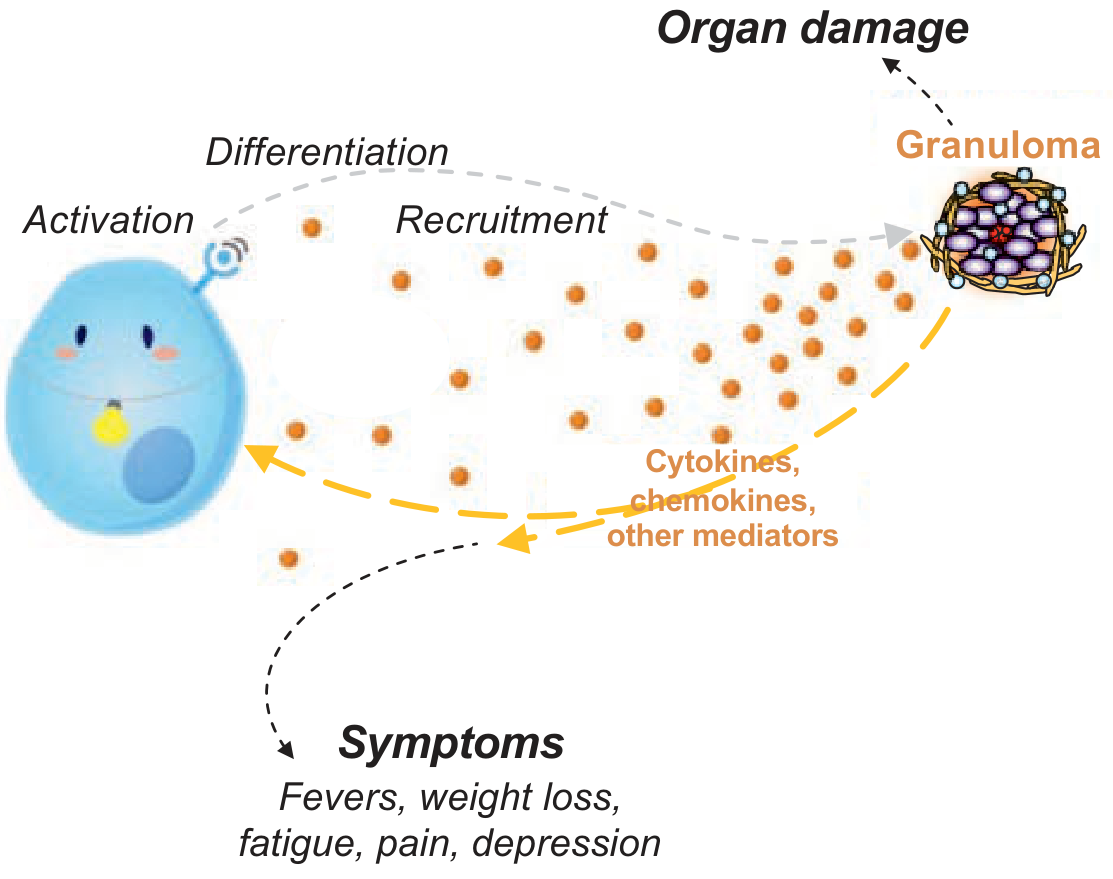
Circulating cytokines, chemokines, and other mediators not only cause direct granulomatous organ damage but also produce systemic symptoms (fatigue, fever, weight loss, depression) through non-tissue-damaging mechanisms - called parasarcoidosis syndromes.
Key genetic associations:
- HLA-DRB1 variants increase risk
- HLA-DQB1*0201 and HLA-DRB1*0301 associate with acute disease and good prognosis
- HLA-B8/DR3 associated with Löfgren syndrome
- TNF promoter polymorphisms linked to erythema nodosum
- ANXA11, BTNL2, CCR5 polymorphisms also identified
A notable metabolic effect: active sarcoidosis upregulates 1-alpha-hydroxylase, converting inactive 25-OH vitamin D to active 1,25-OH vitamin D, causing hypercalcemia.
- Fishman's Pulmonary Diseases and Disorders, pp. 470-475
Organ Involvement
Sarcoidosis earns its reputation as a "great imitator" - it can affect virtually any organ.
| Organ System | Prevalence | Key Manifestations |
|---|---|---|
| Pulmonary | >90% | Restrictive/obstructive disease, reduced DLCO, bilateral hilar adenopathy, pulmonary fibrosis, pulmonary hypertension |
| Constitutional | >50% | Fever, night sweats, fatigue, weight loss |
| Skin | 20-30% | Lupus pernio, papules/plaques/nodules, erythema nodosum, scar/tattoo granulomas |
| Eyes | 20-30% | Anterior/posterior uveitis, optic neuritis, chorioretinitis |
| Hematologic | 20-30% | Lymphadenopathy, splenomegaly, anemia, lymphopenia |
| Cardiac | 5-20% | Arrhythmias, heart block, dilated cardiomyopathy, sudden death |
| Liver/abdominal | 10-20% | Hepatomegaly, granulomatous hepatitis, portal hypertension |
| Joints/MSK | 10-20% | Arthralgia, polyarthritis, Achilles tendinitis, dactylitis |
| Neurologic | 5-10% | Bell's palsy (most common), basilar meningitis, optic neuropathy, small fiber neuropathy |
| Renal | <10% | Nephrocalcinosis, renal calculi, interstitial nephritis |
- Fishman's Pulmonary Diseases and Disorders, Table 53-2
Key Specific Syndromes
Löfgren Syndrome: Acute triad of erythema nodosum + bilateral hilar adenopathy + periarthritis/arthritis, typically with fever. Generally carries a good prognosis.
Lupus Pernio: Indurated plaques/nodules on the nose and central face - a marker of chronic sarcoidosis strongly associated with upper airway granulomatous infiltration, pulmonary fibrosis, and persistent pulmonary involvement.
Cardiac Sarcoidosis: Clinically apparent in <10% of U.S. cases, but autopsy studies show myocardial involvement in >20% (U.S.) and >50% (Japan). Ventricular arrhythmias and high-degree heart block can cause sudden death.
Neurosarcoidosis: Cranial neuropathies dominate; VII nerve (Bell's) palsy is most common. Hypothalamic involvement can cause diabetes insipidus, hypogonadism, or hyperprolactinemia.
Chest Radiographic Staging (Scadding)
| Stage | Finding | Prognosis |
|---|---|---|
| 0 | Normal | - |
| I | Bilateral hilar adenopathy only | >80% resolve at 2-5 years |
| II | Hilar adenopathy + parenchymal infiltrates | Intermediate |
| III | Parenchymal infiltrates only (no adenopathy) | <30% resolve |
| IV | Pulmonary fibrosis | Does not resolve |
Diagnosis
The diagnosis is never fully secure and requires:
- Compatible clinical and radiologic presentation
- Histologic demonstration of non-necrotizing granulomas (ideally in two or more organs)
- Exclusion of other causes (especially tuberculosis, fungal infections, other granulomatous diseases)
Useful workup:
- Chest radiograph and HRCT
- Pulmonary function tests (FVC, DLCO - DLCO is the most sensitive early marker)
- Serum ACE (angiotensin-converting enzyme) - elevated in ~60%, neither sensitive nor specific
- 24-hour urinary calcium (hypercalciuria)
- LFTs, renal function, serum calcium
- Ophthalmologic examination (slit-lamp)
- ECG (screening for cardiac involvement)
- Serum LDH, lysozyme
- BAL: CD4:CD8 ratio >3.5 is suggestive
- FDG-PET/CT: useful for detecting active inflammation in cardiac and neurologic sarcoidosis and identifying the best biopsy site
- Cardiac MRI with gadolinium: reveals myocardial inflammation and scarring in a non-coronary distribution
Biopsy sites (least invasive first): skin lesions, peripheral lymph nodes, transbronchial lung biopsy (high yield ~70-90%), EBUS-guided mediastinal biopsy.
The historical Kveim test (intradermal inoculation of sarcoid splenic tissue) is now essentially obsolete.
- Murray & Nadel's Textbook of Respiratory Medicine, pp. 3565-3575
Treatment
There are no FDA-approved systemic therapies for sarcoidosis. Treatment is indicated for threatened organ function, not just for the presence of disease.
Indications for Treatment
- Severe ocular, cardiac, or neurologic disease
- Progressive, persistent, or symptomatic pulmonary disease
- Disfiguring cutaneous disease (especially lupus pernio)
- Persistent hypercalcemia
- Renal or hepatic dysfunction
- Symptomatic myopathy, painful lymphadenopathy
- Severe fatigue and weight loss
Treatment Ladder
1. Corticosteroids (first-line)
- Prednisone 20-40 mg/day, tapered slowly to maintenance 5-15 mg/day
- Duration: minimum 6-24 months (premature taper leads to relapse)
- Inhaled corticosteroids have limited effectiveness alone
- Löfgren syndrome: NSAIDs first; corticosteroids if arthritis is disabling
2. Steroid-sparing agents (second-line)
- Hydroxychloroquine (200-400 mg/day): particularly for skin and hypercalcemia
- Methotrexate (7.5-15 mg/week): most widely used second-line agent
- Azathioprine: alternative immunosuppressant
3. Biologics (refractory disease)
- Infliximab (anti-TNF): evidence-based for pulmonary and cutaneous sarcoidosis; a recent 2025 systematic review and meta-analysis (PMID: 40393718) confirmed efficacy of biologic and targeted synthetic therapies in sarcoidosis
- Adalimumab: alternative anti-TNF
- Caution: anti-TNF agents are contraindicated in active infections (especially TB - screening required)
Cutaneous disease specifically:
-
Intralesional corticosteroid injections (first-line for localized lesions, repeated every 2-4 weeks)
-
Topical steroids often inadequate (poor penetration of thick granulomas)
-
Hydroxychloroquine or methotrexate for refractory/widespread disease
-
Fishman's Pulmonary Diseases and Disorders, pp. 597-619
-
Textbook of Family Medicine 9e, p. 489
Prognosis
- Stage I disease: excellent prognosis; most resolve spontaneously
- Stage II/III: ~50-70% improve with treatment
- Stage IV (fibrotic): irreversible
- Chronic progressive disease occurs in >20% overall
- Monitoring for at least 3 years after apparent remission is recommended; longer for serious pulmonary or extrapulmonary disease
- Special concern: aspergilloma can develop in cavitary/fibrotic upper lobe lesions and is a serious complication
Recent evidence: A 2025 systematic review and meta-analysis in Thorax (PMID: 40393718) confirmed the efficacy of biologics (particularly anti-TNF agents) in sarcoidosis - relevant for refractory cases where standard immunosuppression has failed.
Search for recent clinical guidelines on cardiac sarcoidosis screeningnd year CNS chapter full questions and answers for mpmsu exam
I'll clarify before diving in - your message has two distinct parts.
Asking for Preferences
For cardiac sarcoidosis screening guidelines - what do you need? · For MPMSU CNS chapter Q&A - which year's exam questions are you looking for? · Which subject/paper is the CNS chapter from?
pharmacology 2nd year mbbs CNS chapter answers and questions for mpmsu exams
Reading File
Searching the Web
MPMSU 2nd year MBBS pharmacology CNS chapter previous year questions
Good - the SMCI list is exactly the MPMSU-style CNS pharmacology topic list. Now let me pull content from the pharmacology textbook for each major topic.
Finding Sources
Finding Sources
Finding Sources
Finding Sources
Finding Sources
Finding Sources
Finding Sources
Finding Sources
Finding Sources
Excellent - I have Goodman & Gilman, Katzung, Lippincott, Stahl, Adams & Victor - the core pharmacology references. Let me now pull the key detailed content from these for each CNS topic.
Reading File
Reading File
Reading File
Now let me get morphine/opioid and benzodiazepine content.
Finding Sources
Finding Sources
Finding Sources
Finding Sources
Finding Sources
Good. Now let me read these key passages in parallel.
Reading File
Reading File
Finding Sources
Reading File
Finding Sources
Finding Sources
I now have all the material needed. Here is a comprehensive MPMSU-pattern CNS Pharmacology Q&A:
2nd Year MBBS Pharmacology - CNS Chapter
MPMSU Exam Questions & Answers
Topics based on MPMSU/MCI 2nd Prof pattern: General Anesthesia, Sedative-Hypnotics, Antiepileptics, Antiparkinsonians, Antipsychotics, Antidepressants, Opioid Analgesics, Alcohol
SECTION A - LONG ANSWER QUESTIONS (10 Marks)
Q1. Classify antiepileptic drugs. Describe the pharmacological actions, mechanism of action, uses, and adverse effects of Phenytoin.
CLASSIFICATION OF ANTIEPILEPTIC DRUGS:
Based on mechanism:
| Drug | Mechanism | Seizure Type |
|---|---|---|
| Phenytoin | Na⁺ channel blocker | Focal, generalized tonic-clonic |
| Carbamazepine | Na⁺ channel blocker | Focal, generalized tonic-clonic |
| Valproic acid | Multiple (Na⁺ block + GABA ↑ + T-Ca²⁺ block) | All types including absence |
| Phenobarbital | GABA potentiation | Focal, generalized |
| Ethosuximide | T-type Ca²⁺ channel blocker | Absence seizures only |
| Benzodiazepines (Diazepam, Lorazepam) | GABA-A potentiation | Status epilepticus, acute |
| Levetiracetam | SV2A modulation | Focal and generalized |
| Lamotrigine | Na⁺ channel blocker | Focal and generalized |
PHENYTOIN (Diphenylhydantoin)
Mechanism of Action:
- Blocks voltage-gated sodium channels in a use-dependent (frequency-dependent) manner
- Preferentially binds to the inactivated state of Na⁺ channels, prolonging the refractory period
- Prevents repetitive high-frequency neuronal firing without affecting normal low-frequency firing
- Also has minor effects on calcium channels and GABA
Pharmacological Actions:
- Anticonvulsant: suppresses focal seizure activity and prevents spread
- Antiarrhythmic: Class IB (stabilizes cardiac membranes)
- No sedation at therapeutic doses (unlike phenobarbital)
Pharmacokinetics:
- Oral bioavailability: ~90%
- Protein binding: ~90% (to albumin)
- Zero-order (non-linear) kinetics at therapeutic doses - small dose increments cause disproportionate rise in plasma levels
- Hepatic enzyme inducer (CYP2C9, CYP2C19): reduces efficacy of warfarin, OCP, corticosteroids
- Therapeutic plasma level: 10-20 mcg/mL
- Half-life: variable (dose-dependent), approximately 20-60 hours
Uses:
- Generalized tonic-clonic seizures (first-line)
- Focal (partial) seizures
- Status epilepticus (IV phenytoin/fosphenytoin)
- Trigeminal neuralgia
- Cardiac arrhythmias (digitalis-induced)
Adverse Effects:
- Dose-related (common): Nystagmus (earliest sign), ataxia, diplopia, mental confusion, sedation
- Chronic/long-term:
- Gingival hyperplasia (common in children, due to collagen accumulation)
- Hirsutism, acne
- Coarsening of facial features
- Folate deficiency → megaloblastic anemia
- Vitamin D deficiency → osteomalacia
- Peripheral neuropathy
- Idiosyncratic: Skin rashes (morbilliform), Stevens-Johnson syndrome
- Teratogenic: Fetal hydantoin syndrome (cleft palate, digital/nail hypoplasia, microcephaly)
- IV rapid infusion: Hypotension, cardiac arrhythmias, "purple glove syndrome"
Adams and Victor's Principles of Neurology, 12th Ed; Katzung's Basic & Clinical Pharmacology, 16th Ed
Q2. Classify antipsychotic drugs. Describe the pharmacological actions, mechanism of action, uses, and adverse effects of Chlorpromazine.
CLASSIFICATION OF ANTIPSYCHOTIC DRUGS:
First Generation (Typical/Conventional) - D2 antagonists:
- Phenothiazines:
- Aliphatic: Chlorpromazine, Triflupromazine
- Piperazine: Fluphenazine, Trifluoperazine
- Piperidine: Thioridazine
- Butyrophenones: Haloperidol, Droperidol
- Thioxanthenes: Flupenthixol
Second Generation (Atypical) - D2 + 5-HT2A antagonists:
- Clozapine (gold standard for refractory schizophrenia)
- Risperidone, Olanzapine, Quetiapine, Aripiprazole, Ziprasidone
CHLORPROMAZINE (CPZ)
Mechanism of Action:
- Primary: Blocks postsynaptic D2 dopamine receptors (mesolimbic and mesocortical pathways)
- Also blocks: α1-adrenoceptors, H1-histamine, muscarinic (M1), and 5-HT2 receptors
- The antipsychotic effect is due to D2 blockade in the mesolimbic pathway (reduces positive symptoms)
- D2 blockade in the nigrostriatal pathway causes extrapyramidal side effects
- D2 blockade in the tuberoinfundibular pathway causes hyperprolactinemia
Pharmacological Actions:
CNS effects:
- Antipsychotic: reduces hallucinations, delusions (positive symptoms)
- Sedation (via H1 blockade)
- Antiemetic: blocks D2 in chemoreceptor trigger zone (CTZ)
- Hypothermia (poikilothermia)
- Lowers seizure threshold
Peripheral effects:
- Hypotension: α1 blockade (orthostatic hypotension)
- Anticholinergic effects: dry mouth, urinary retention, constipation, blurred vision
- Antihistaminic: sedation, weight gain
Uses:
- Schizophrenia, mania, acute psychosis
- Antiemetic (nausea/vomiting due to drugs, radiation, surgery)
- Hiccups (intractable)
- Pre-anesthetic medication (potentiates anesthetics)
- Tetanus (as adjunct)
- Chlorpromazine equivalents (reference drug for antipsychotic dosing)
Adverse Effects:
Extrapyramidal effects (EPS) - most important:
- Acute dystonia (within hours-days): involuntary muscle spasms of face/neck - Rx: benztropine/diphenhydramine
- Akathisia (weeks): restlessness, inability to sit still - Rx: propranolol, benzodiazepines
- Drug-induced Parkinsonism (weeks-months): tremor, rigidity, bradykinesia - Rx: anticholinergics (trihexyphenidyl)
- Tardive Dyskinesia (months-years): repetitive, involuntary orofacial movements - irreversible, no reliable treatment
Endocrine:
- Hyperprolactinemia → galactorrhea, amenorrhea, gynecomastia, sexual dysfunction
Autonomic:
- Orthostatic hypotension (dangerous in elderly), anticholinergic effects
Metabolic:
- Weight gain, glucose intolerance (more with atypicals)
Rare but serious:
- Neuroleptic Malignant Syndrome (NMS): hyperthermia, muscle rigidity, autonomic instability, elevated CPK - life-threatening emergency - Rx: stop drug, dantrolene, bromocriptine
- Cholestatic jaundice, agranulocytosis (rare)
- Lowers seizure threshold
Skin/eyes (chronic):
- Photosensitivity, skin pigmentation
- Corneal/lens deposits
- Retinal pigmentation (thioridazine)
Goodman & Gilman's Pharmacological Basis of Therapeutics; Kaplan & Sadock's Comprehensive Textbook of Psychiatry
Q3. Classify opioid analgesics. Describe the pharmacological actions, mechanism, uses, and adverse effects of Morphine. Compare Morphine and Pethidine.
CLASSIFICATION OF OPIOID ANALGESICS:
| Category | Drugs |
|---|---|
| Strong agonists (mu) | Morphine, Pethidine (Meperidine), Fentanyl, Methadone, Oxycodone |
| Moderate agonists | Codeine, Tramadol, Propoxyphene |
| Mixed agonist-antagonists | Pentazocine (κ agonist, μ antagonist), Buprenorphine (partial μ agonist) |
| Pure antagonists | Naloxone, Naltrexone |
Opioid Receptor Types:
- μ (Mu): Analgesia (supraspinal + spinal), euphoria, respiratory depression, constipation, physical dependence
- κ (Kappa): Spinal analgesia, sedation, dysphoria, miosis
- δ (Delta): Analgesia, mood modulation
- All are GPCRs (Gi linked) → ↓ cAMP, ↑ K⁺ conductance (hyperpolarization), ↓ Ca²⁺ conductance
MORPHINE
Mechanism: Activates μ-opioid receptors (primarily) → inhibits adenylyl cyclase → hyperpolarizes neurons → decreases nociceptive transmission in dorsal horn and supraspinal centres
Pharmacological Actions:
CNS:
- Analgesia: Effective for severe visceral and somatic pain; raises pain threshold and alters pain perception (reduces suffering)
- Euphoria (in pain patients) or dysphoria (in pain-free subjects)
- Sedation and drowsiness
- Respiratory depression (medullary respiratory centre; most dangerous effect - due to μ receptor)
- Antitussive: Suppresses cough reflex
- Miosis (pin-point pupils): due to stimulation of Edinger-Westphal nucleus (parasympathetic) - does NOT develop tolerance - useful diagnostically in overdose
- Nausea/vomiting: Stimulates CTZ
CVS:
- Vasodilation (histamine release), orthostatic hypotension
- Bradycardia
GIT:
- Constipation: ↓ GI motility (peripheral μ receptors) - tolerance does NOT develop
- Spasm of sphincter of Oddi (increases biliary pressure - caution in biliary colic)
Other:
- Urinary retention (detrusor relaxation, sphincter contraction)
- Pruritus (histamine release)
Pharmacokinetics:
- Poor oral bioavailability (~25%) due to first-pass metabolism
- Protein binding: ~35%
- Metabolized in liver to morphine-6-glucuronide (active, potent) and morphine-3-glucuronide (inactive)
- Duration: 4-6 hours
- Excreted in urine (dose reduction needed in renal failure)
Uses:
- Severe pain - post-op, MI (drug of choice for pain of MI), cancer pain
- Acute pulmonary edema (via vasodilation, reduces preload + allays anxiety)
- Preanesthetic medication
- Antidiarrheal (as codeine/loperamide)
- Cough suppression
Adverse Effects:
- Respiratory depression (most dangerous), constipation, nausea/vomiting
- Addiction/dependence and withdrawal syndrome
- Histamine release → pruritus, bronchospasm
- Urinary retention, biliary colic exacerbation
Tolerance: Develops to analgesia, euphoria, respiratory depression, nausea; does NOT develop to constipation and miosis
Opioid Overdose Triad: Coma + Pin-point pupils + Respiratory depression
- Treatment: IV Naloxone (μ antagonist, 0.4-2 mg IV)
COMPARISON: MORPHINE vs PETHIDINE
| Feature | Morphine | Pethidine (Meperidine) |
|---|---|---|
| Chemical class | Phenanthrene alkaloid | Phenylpiperidine (synthetic) |
| Potency | Standard (10 mg) | Less potent (75-100 mg = 10 mg morphine) |
| Duration | 4-6 hours | 2-3 hours (shorter) |
| Smooth muscle | More spasm (biliary, urinary) | Less smooth muscle spasm |
| Biliary/renal colic | Contraindicated (worsens spasm) | Preferred (less spasm) |
| CVS | Bradycardia | Tachycardia (atropine-like effect) |
| Antitussive | Yes | Less effective |
| Antidiarrheal | Used | Not used |
| Constipation | More | Less |
| Metabolite toxicity | Morphine-6-glucuronide (active) | Norpethidine (toxic - CNS excitation, seizures) |
| Seizure risk | Less | High (norpethidine) |
| Use in obstetrics | Prolonged effect on neonate | Preferred (shorter duration) |
| Use in MAO inhibitor patients | Safer | Contraindicated (serotonin syndrome risk) |
Goodman & Gilman's Pharmacological Basis of Therapeutics, 14th Ed
SECTION B - SHORT ANSWER QUESTIONS (5 Marks)
Q4. Write a short note on Benzodiazepines / Diazepam.
BENZODIAZEPINES
Mechanism of Action:
- Positive allosteric modulators of GABA-A receptors
- Bind to the benzodiazepine binding site (between α and γ subunits of GABA-A receptor)
- Increase the frequency of Cl⁻ channel opening (NOT the duration - that is barbiturates)
- Result: enhanced Cl⁻ influx → hyperpolarization → reduced neuronal excitability
- Require endogenous GABA to be present (cannot activate Cl⁻ channel alone)
Pharmacological Actions:
- Anxiolytic (reduce anxiety without sedation at low doses)
- Sedative-hypnotic
- Anticonvulsant
- Centrally-acting muscle relaxant
- Anterograde amnesia
Uses:
- Anxiety disorders (GAD, panic disorder) - lorazepam, alprazolam
- Insomnia - temazepam, nitrazepam, triazolam
- Status epilepticus - IV diazepam or lorazepam (drug of choice)
- Alcohol withdrawal - chlordiazepoxide, diazepam
- Preanesthetic medication - midazolam
- Muscle relaxant - diazepam
- Procedural sedation - midazolam
Adverse Effects:
- Sedation, psychomotor impairment, anterograde amnesia
- Respiratory depression (less than barbiturates)
- Dependence and withdrawal (anxiety, insomnia, tremors, seizures)
- Flumazenil (competitive antagonist) reverses effects
Advantage over barbiturates: Safer (wide therapeutic index, respiratory depression only at very high doses)
Q5. Write a short note on Levodopa (L-DOPA) in Parkinsonism.
PARKINSON'S DISEASE (PD):
Degenerative loss of dopaminergic neurons in the substantia nigra (pars compacta) → depletion of dopamine in the striatum → imbalance between dopamine (reduced) and acetylcholine (relatively increased) → tremor, rigidity, bradykinesia, postural instability
LEVODOPA (L-DOPA):
Why not dopamine? Dopamine does not cross the blood-brain barrier (BBB). Levodopa (L-3,4-dihydroxyphenylalanine) is the amino acid precursor of dopamine and crosses the BBB via amino acid transporter.
Mechanism: L-DOPA → converted to dopamine by DOPA decarboxylase in the brain → replenishes striatal dopamine levels
Combined with Carbidopa:
- Carbidopa is a peripheral DOPA decarboxylase inhibitor (does not cross BBB)
- Prevents peripheral conversion of L-DOPA to dopamine
- Benefits: Reduces dose of L-DOPA needed by ~75%, reduces peripheral side effects (nausea, vomiting, cardiac arrhythmias), increases CNS bioavailability
- Standard preparation: Sinemet (carbidopa:levodopa = 1:4 or 1:10)
Pharmacological Effects:
- Ameliorates all motor symptoms of PD: tremor, rigidity, bradykinesia (most effective drug for motor symptoms)
- Akinesia and rigidity respond better than tremor
Adverse Effects:
Peripheral (due to dopamine formation outside CNS):
- Nausea, vomiting (most common, reduced with carbidopa)
- Cardiac arrhythmias
- Orthostatic hypotension
Central:
- Dyskinesias (involuntary choreoathetoid movements) - most troublesome long-term
- On-off phenomenon (wearing-off and unpredictable fluctuations) - due to disease progression and altered pharmacokinetics
- Psychiatric effects: vivid dreams, hallucinations, psychosis, impulse control disorders
- Sleep attacks
Drug Interactions:
- Pyridoxine (Vit B6) ↑ peripheral decarboxylation of L-DOPA → counteracts effect (not a problem with carbidopa combination)
- MAO inhibitors (non-selective) → hypertensive crisis (contraindicated)
- Antipsychotics (D2 blockers) → worsen parkinsonism
- High-protein meals → compete with L-DOPA for intestinal transport
Katzung's Basic & Clinical Pharmacology, 16th Ed
Q6. Classify sedative-hypnotic drugs. Write the mechanism of action and uses of Barbiturates.
CLASSIFICATION OF SEDATIVE-HYPNOTICS:
- Benzodiazepines: Diazepam, Lorazepam, Alprazolam, Midazolam, Nitrazepam
- Barbiturates: Phenobarbital (long-acting), Thiopental (ultra-short), Amobarbital (intermediate)
- Non-benzodiazepine hypnotics (Z-drugs): Zolpidem, Zopiclone, Zaleplon
- Melatonin receptor agonists: Ramelteon
- Miscellaneous: Chloral hydrate, Buspirone (for anxiety)
BARBITURATES:
Mechanism:
- Enhance GABA-A receptor activity - INCREASE duration of Cl⁻ channel opening (vs. benzodiazepines which increase frequency)
- At high doses, can directly activate Cl⁻ channel even without GABA (explaining their greater CNS depression and lethality)
- Also block AMPA (glutamate) receptors
Thiopental Sodium (IV anesthesia):
- Ultra-short acting (duration ~5-10 min) due to rapid redistribution from brain to muscle and fat
- Used for induction of general anesthesia
- Anticonvulsant (lowers cerebral metabolic rate - used in status epilepticus/raised ICP)
- Stages of anesthesia: Analgesia → Excitement → Surgical anesthesia → Medullary depression
Phenobarbital:
- Long-acting (t½ = 80-120 hours)
- Antiepileptic: used in all types of seizures except absence
- Hepatic enzyme inducer
Q7. Write a short note on Status Epilepticus and its treatment.
DEFINITION: Continuous seizure activity lasting >5 minutes OR ≥2 seizures without recovery of consciousness between them
Emergency management (stepwise):
| Time | Drug | Dose/Route |
|---|---|---|
| 0-5 min | Airway, oxygen, IV access, blood glucose | - |
| 5-20 min | Lorazepam IV (first line) or Diazepam IV/rectal | Lorazepam 0.1 mg/kg IV |
| 20-40 min | Fosphenytoin or Valproate IV if benzodiazepine fails | 20 mg/kg IV |
| 40+ min (refractory) | Phenobarbital IV or Midazolam/Propofol/Thiopental infusion (general anesthesia) | ICU setting |
IV Lorazepam is drug of first choice for immediate management of status epilepticus.
Q8. Write a short note on Classification of Antidepressants with mechanism and uses.
CLASSIFICATION:
| Class | Drugs | Mechanism |
|---|---|---|
| SSRIs (first line) | Fluoxetine, Sertraline, Paroxetine, Citalopram, Escitalopram | Block serotonin (5-HT) reuptake transporter (SERT) |
| SNRIs | Venlafaxine, Duloxetine | Block SERT + norepinephrine transporter (NET) |
| TCAs | Imipramine, Amitriptyline, Clomipramine | Block SERT + NET; also block H1, M1, α1 (many side effects) |
| MAO Inhibitors | Phenelzine, Tranylcypromine (irreversible); Moclobemide (reversible, MAO-A) | Inhibit MAO-A → ↑ 5-HT, NE; MAO-B inhibitors → ↑ dopamine (used in PD: selegiline) |
| Atypicals | Bupropion (NDRI), Mirtazapine (NaSSA), Trazodone | Various mechanisms |
Key side effects to remember:
- SSRIs: sexual dysfunction, serotonin syndrome (with MAOIs), GI upset, SIADH
- TCAs: anticholinergic (dry mouth, retention, constipation), cardiotoxic (QT prolongation, arrhythmias in overdose), sedation, weight gain
- MAOIs: Cheese reaction (hypertensive crisis with tyramine-rich food like aged cheese, red wine, beer)
- Bupropion: lowers seizure threshold, no sexual dysfunction
Uses of antidepressants:
- Major depressive disorder (primary use)
- Anxiety disorders, OCD (SSRIs/SNRIs)
- Neuropathic pain (duloxetine, amitriptyline)
- Nocturnal enuresis (imipramine)
- Panic disorder (SSRIs, TCAs)
SECTION C - SHORT NOTES / VIVA TOPICS (2-3 Marks)
Q9. Classify General Anesthetics. Write stages of anesthesia.
Classification:
- Inhalational: Gas - Nitrous oxide (N₂O); Volatile liquids - Halothane, Isoflurane, Sevoflurane, Desflurane
- Intravenous: Thiopental, Propofol, Ketamine, Etomidate, Midazolam
Stages of General Anesthesia (Guedel's - described for diethyl ether):
| Stage | Name | Features |
|---|---|---|
| Stage I | Analgesia | Patient conscious, pain threshold raised, amnesia begins |
| Stage II | Excitement/Delirium | Irregular breathing, vomiting risk, dangerous stage - avoid stimulation |
| Stage III | Surgical Anesthesia | Regular breathing, muscle relaxation, 4 planes |
| Stage IV | Medullary Depression | Respiratory and CVS failure, death |
Pre-anesthetic medication: Diazepam/midazolam (anxiolytic), morphine (analgesia), atropine (dry secretions, prevent bradycardia), metoclopramide (antiemetic)
Q10. Nitrous Oxide (Laughing Gas)
- Colorless, odorless gas; weak anesthetic (MAC >100%) - cannot produce surgical anesthesia alone
- Mechanism: NMDA receptor antagonism (blocks glutamate)
- Used in combination with other agents (reduces their dose)
- Excellent analgesia; used in dental procedures and obstetric analgesia
- Diffuses rapidly into gas-filled cavities - contraindicated in: pneumothorax, bowel obstruction, middle ear surgery
- Megaloblastic anemia with prolonged use (oxidizes Vit B12, inactivates methionine synthase)
Q11. Drug of Choice (DOC) - CNS Quick Reference
| Condition | Drug of Choice |
|---|---|
| Status epilepticus (immediate) | IV Lorazepam (or Diazepam) |
| Tonic-clonic seizures | Valproate / Phenytoin |
| Absence seizures | Ethosuximide (or Valproate) |
| Febrile seizures | Diazepam (rectal/IV) |
| Parkinson's disease | Levodopa + Carbidopa |
| Schizophrenia | Haloperidol (typical) / Risperidone (atypical) |
| Refractory schizophrenia | Clozapine |
| Opioid overdose | Naloxone IV |
| Benzodiazepine overdose | Flumazenil IV |
| Neuroleptic Malignant Syndrome | Dantrolene + Bromocriptine |
| Manic episode | Lithium (or Valproate, Olanzapine) |
| Depression (first-line) | SSRI (Fluoxetine/Sertraline) |
| Nocturnal enuresis | Imipramine |
| Cheese reaction (MAOI) | Phentolamine (alpha blocker) |
| Methanol poisoning | Ethanol / Fomepizole + Folate |
Q12. Alcohol (Methyl Alcohol Poisoning)
Methanol (wood alcohol) poisoning:
- Metabolized by alcohol dehydrogenase → Formaldehyde → Formic acid (toxic metabolites)
- Features: Visual disturbances → blindness (optic nerve/retina damage), metabolic acidosis (high anion gap), CNS depression
- Treatment:
- Ethanol (competitive substrate for alcohol dehydrogenase - prevents methanol metabolism) OR
- Fomepizole (alcohol dehydrogenase inhibitor - preferred, fewer side effects)
- Sodium bicarbonate (correct acidosis)
- Folate (enhances formate metabolism)
- Hemodialysis (severe cases)
IMPORTANT EXAM MNEMONICS
Side effects of Chlorpromazine = ABCDE:
- Agranulocytosis (rare), Anticholinergic effects
- Blood pressure (hypotension), Block (heart - ECG changes)
- Cholestatic jaundice, Corneal/lens deposits
- Dyskinesias (tardive), Dopamine block → prolactin ↑
- EPS (extrapyramidal side effects)
Opioid tolerance - "CAD" (where tolerance DOES develop):
Cough suppression, Analgesia, respiratory Depression, euphoria
(Tolerance does NOT develop to: Constipation, Miosis)
NMS vs Serotonin Syndrome:
| Feature | NMS | Serotonin Syndrome |
|---|---|---|
| Cause | Antipsychotics (D2 block) | Serotonergic drugs (SSRI + MAOI) |
| Onset | Days-weeks | Hours |
| Muscle findings | Lead-pipe rigidity | Clonus, hyperreflexia |
| Temp | Hyperthermia | Hyperthermia |
| Treatment | Dantrolene + Bromocriptine | Cyproheptadine (5-HT antagonist) |
Sources: Goodman & Gilman's Pharmacological Basis of Therapeutics | Katzung's Basic & Clinical Pharmacology, 16th Ed | Adams & Victor's Principles of Neurology, 12th Ed | Kaplan & Sadock's Comprehensive Textbook of Psychiatry | Stahl's Essential PsychopharmacologyHere is a complete MPMSU-pattern CNS Pharmacology Q&A, organized exactly as the exam expects.
What's Covered (All Major MPMSU CNS Topics):
Long Answer Questions (10 marks each):
- Antiepileptic drugs - classification + Phenytoin (mechanism, uses, adverse effects)
- Antipsychotics - classification + Chlorpromazine in full detail
- Opioid analgesics - classification + Morphine + Morphine vs Pethidine comparison table
Short Answer Questions (5 marks each):
- Benzodiazepines/Diazepam - GABA-A mechanism, frequency of Cl⁻ opening, uses
- Levodopa + Carbidopa - why L-DOPA is used, on-off phenomenon, adverse effects
- Sedative-hypnotics - classification + Barbiturate mechanism (duration of Cl⁻ channel opening)
- Status Epilepticus - stepwise treatment ladder (lorazepam → fosphenytoin → thiopental)
- Antidepressants - all classes (SSRI, TCA, MAOI, SNRI) with mechanisms
Short Notes / Viva (2-3 marks):
- General anesthesia stages (Guedel's stages I-IV)
- Nitrous oxide
- Drug of Choice table (must-memorize for MPMSU)
- Methanol poisoning treatment
Key Mnemonics: NMS vs Serotonin Syndrome, Opioid tolerance "CAD", CPZ side effects "ABCDE"
This is a shared conversation. Sign in to Orris to start your own chat.