I now have extensive material. Let me compile the comprehensive answer.
Neuromuscular Blocking Agents (NMBAs)
NMBAs are highly water-soluble quaternary ammonium compounds that mimic ACh at the neuromuscular junction. Because of this high water solubility, they do not cross the blood-brain barrier or the placenta. They are classified into two fundamental classes: depolarizing and nondepolarizing (competitive) agents.
1. Physiology of the Neuromuscular Junction
The motor end plate contains nicotinic acetylcholine receptors (nAChR, N_m subtype). When ACh is released from the presynaptic terminal, it binds these receptors, causing Na⁺ influx, generation of an end-plate potential (EPP), and ultimately muscle contraction. Acetylcholinesterase (AChE) in the synaptic cleft rapidly degrades ACh, terminating the signal. NMBAs exploit this pathway to produce flaccid paralysis.
2. Classification
A. Depolarizing Agent - Succinylcholine (Suxamethonium)
Only clinically used depolarizing agent.
Succinylcholine is structurally two ACh molecules joined end-to-end. It:
- Binds nAChRs and opens ion channels just like ACh
- Is resistant to AChE (only hydrolyzed by plasma pseudocholinesterase/butyrylcholinesterase)
- Produces prolonged, persistent depolarization of the end plate
Phase I Block ("Depolarizing Block"):
- Sustained depolarization keeps peri-junctional Na⁺ channels inactivated
- No further action potentials can fire
- Results in flaccid paralysis preceded by characteristic fasciculations (transient chaotic muscle contractions in >90% of patients)
Phase II Block:
- With large or repeated doses, the block can convert from Phase I to a Phase II (desensitization block) that resembles nondepolarizing blockade in its characteristics
- Reversal with anticholinesterases in Phase II is unpredictable
Pharmacokinetics:
- Onset: 0.8-1.4 minutes (fastest of all NMBAs)
- Duration: 6-11 minutes (ultra-short)
- Eliminated by plasma pseudocholinesterase (not AChE) before most of the drug even reaches the NMJ
Dosing (RSI): 1.5 mg/kg IV (based on total body weight, not adjusted for obesity)
B. Nondepolarizing (Competitive) Agents
These bind the nAChR competitively, blocking ACh access without activating the channel. No fasciculations occur. The block is reversible with anticholinesterases (neostigmine, pyridostigmine, edrophonium).
Structurally divided into:
| Chemical Class | Examples |
|---|
| Aminosteroids (AS) | Vecuronium, Rocuronium, Pancuronium |
| Benzylisoquinolines (BIQ) | Atracurium, Cisatracurium, Mivacurium |
| Mixed-onium chlorofumarates (MOCF) | Gantacurium |
3. Pharmacokinetic Comparison Table
(From Goodman & Gilman's, 16th Ed.)
| Agent | Class | Duration | Onset (min) | Duration (min) | Elimination |
|---|
| Succinylcholine | DCE, Depolarizing | Ultra-short | 0.8-1.4 | 6-11 | Plasma pseudocholinesterase |
| Gantacurium | MOCF, Competitive | Ultra-short | 1-2 | 5-10 | Cysteine adduction, ester hydrolysis |
| Mivacurium | BIQ, Competitive | Short | 2-3 | 15-21 | Plasma pseudocholinesterase |
| Vecuronium | AS, Competitive | Intermediate | 2-3 | 25-40 | Hepatic and renal |
| Atracurium | BIQ, Competitive | Intermediate | 3 | 45 | Hofmann elimination + ester hydrolysis |
| Rocuronium | AS, Competitive | Intermediate | 0.5-2 | 36-73 | Hepatic |
| Cisatracurium | BIQ, Competitive | Intermediate | 2-8 | 45-90 | Hofmann elimination |
| Pancuronium | AS, Competitive | Long | 4-6 | 60-120 | Renal (primarily) |
4. Key Individual Drugs
Succinylcholine
- Indication: RSI, electroconvulsive therapy (ECT)
- Advantages: Fastest onset, shortest duration, most reliable intubating conditions
- Side effects:
- Fasciculations and myalgia (post-op muscle pain in ~50%)
- Hyperkalemia - physiologic rise of 0.5-1.0 mEq/L normally; can be fatal (>5 mEq/L rise) in at-risk patients due to receptor upregulation
- Increased intraocular pressure (caution in open globe injury)
- Increased intragastric pressure
- Bradycardia (especially with repeat doses - muscarinic stimulation)
- Malignant hyperthermia (in susceptible patients)
Contraindications to Succinylcholine (Hyperkalemia risk):
| Condition | Period of Risk |
|---|
| Burns >10% BSA | >5 days after injury until healed |
| Crush injury | >5 days after injury until healed |
| Denervation (stroke, SCI) | >5 days to 6 months post-injury |
| Neuromuscular disease (ALS, MS, MD) | Indefinitely |
| Intra-abdominal sepsis | >5 days until resolved |
- Safe within first 24-48 hours of acute burn/trauma/stroke/SCI
- For any doubt about timing, replace with rocuronium
- Rosen's Emergency Medicine, 10e, p. 34-35
Rocuronium
- Aminosteroid, intermediate duration
- Onset: 0.5-2 min (fastest nondepolarizing agent; at 1.2 mg/kg approaches succinylcholine onset)
- Duration at RSI dose (1.2 mg/kg): 60-90 min
- No histamine release, minimal cardiovascular effects - drug of choice when succinylcholine is contraindicated
- Eliminated primarily by hepatic route
- Uniquely reversible by sugammadex (cyclodextrin) even at deep block levels
Vecuronium
- Aminosteroid, intermediate duration
- Very stable cardiovascular profile
- Hepatic/renal elimination; use caution in hepatic failure
- Used for post-intubation paralysis (0.1 mg/kg IV)
Atracurium & Cisatracurium
- Benzylisoquinolines
- Hofmann elimination - spontaneous non-enzymatic degradation at physiologic pH and temperature; safe in renal AND hepatic failure
- Atracurium releases histamine (can cause flushing, hypotension, bronchospasm) - cisatracurium does not
- Cisatracurium is preferred in ICU patients with multi-organ failure (3x more potent, no histamine release, no cardiovascular effects)
- Laudanosine (Hofmann metabolite) can theoretically cause CNS excitation in very high doses (rarely clinically significant)
Pancuronium
- Long-acting aminosteroid
- Causes tachycardia and hypertension (vagolytic + sympathomimetic)
- Renally eliminated - avoid in renal failure
Mivacurium
- Short-acting benzylisoquinoline
- Also hydrolyzed by plasma pseudocholinesterase (like succinylcholine)
- Releases histamine at higher doses
- Not available in all countries
5. Phase I vs Phase II Block Characteristics
| Feature | Phase I (Depolarizing) | Phase II (Desensitization) |
|---|
| Fasciculations | Present | Absent |
| Train-of-Four (TOF) | Reduced but no fade | Fade present |
| Tetanic stimulation | No fade | Fade |
| Post-tetanic facilitation | Absent | Present |
| Effect of anti-AChE | Enhances block | Partially reverses (unpredictable) |
| Effect of nondepolarizing agent | Antagonizes | - |
- Goodman & Gilman's, 16th Ed., Table 13-1
6. Reversal of Neuromuscular Blockade
Anticholinesterases (for nondepolarizing block)
Inhibit AChE → increases synaptic ACh → competitively displaces nondepolarizing agent:
- Neostigmine 0.04-0.07 mg/kg IV (most commonly used)
- Pyridostigmine 0.1-0.25 mg/kg
- Edrophonium 0.5-1.0 mg/kg
Must co-administer a muscarinic antagonist (atropine or glycopyrrolate) to prevent bradycardia, salivation, and other muscarinic side effects.
Do NOT use anticholinesterases to reverse depolarizing blockade - they enhance it.
Sugammadex (for rocuronium/vecuronium)
- A modified gamma-cyclodextrin that encapsulates rocuronium (and vecuronium) molecules in a 1:1 ratio, rapidly removing them from the NMJ
- Works for all depths of block, including deep block
- Dose: 2 mg/kg (moderate block), 4 mg/kg (deep block), 16 mg/kg (immediate reversal/RSI emergency)
- Does not require muscarinic antagonist co-administration
- Does not reverse benzylisoquinolines or succinylcholine
7. Clinical Uses
- Facilitate endotracheal intubation (RSI and standard induction)
- Intraoperative muscle relaxation - especially abdominal surgery
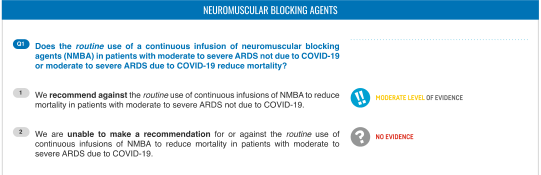
- Mechanical ventilation management in ICU (e.g., severe ARDS, patient-ventilator dyssynchrony) - though current evidence recommends against routine continuous NMBA infusion for ARDS not related to COVID-19
- Electroconvulsive therapy (ECT) - succinylcholine to prevent fractures from convulsions
- Tetanus - control of muscle spasms
- Laryngospasm management
8. Drug Interactions
| Drug/Class | Effect on NMB |
|---|
| Volatile anesthetics (desflurane > sevoflurane > isoflurane > halothane) | Potentiate nondepolarizing block (reduce dose needed) |
| Aminoglycoside antibiotics | Potentiate block (inhibit presynaptic ACh release via Ca²⁺ competition) |
| Ca²⁺ channel blockers | Enhance both competitive and depolarizing blockade |
| Magnesium sulfate | Enhances nondepolarizing blockade (reduces Ca²⁺-dependent ACh release) |
| Tetracyclines, polymyxin B, clindamycin | Potentiate blockade |
| Lithium | Prolongs succinylcholine and nondepolarizing block |
| Anticholinesterases (neostigmine) | Reverse nondepolarizing; worsen depolarizing |
| Pseudocholinesterase deficiency (hepatic disease, malnutrition, atypical enzyme gene) | Prolongs succinylcholine and mivacurium duration |
9. Monitoring Neuromuscular Block
Ulnar nerve stimulation at the wrist with monitoring of the adductor pollicis (thumb) muscle is standard:
- Train-of-Four (TOF): 4 stimuli at 2 Hz; ratio of 4th to 1st twitch <0.9 = residual block
- Tetanic stimulation (50 Hz): fade indicates nondepolarizing or Phase II block
- Post-tetanic count (PTC): used at deep block when TOF is absent
- Airway muscles (larynx, diaphragm) recover faster than the adductor pollicis, so TOF recovery at the thumb ensures adequate respiratory muscle function for extubation
Key sources:
- Goodman & Gilman's The Pharmacological Basis of Therapeutics, 14th Ed., Chapter 13
- Rosen's Emergency Medicine, 10th Ed., Chapter 1
- Miller's Anesthesia, 10th Ed., Chapter 62
- Morgan and Mikhail's Clinical Anesthesiology, 7th Ed., Chapter 11

![<table><tr><td>Short-acting non-depolarizing neuromuscular blocking agents should be considered prior to CPB, particularly for fast-track/enhanced recovery protocols.</td><td>IIa</td><td>B</td><td>[665, 667]</td></tr><tr><td>The protocolized use of reversal agents during tracheal extubation should be considered, guided by quantitative neuromonitoring, particularly for fast-track/enhanced recovery protocols.</td><td>IIa</td><td>B</td><td>[674-676]</td></tr></table>](https://cdn.orris.care/cdss_images/GLGCA_4542999_1766781082725_78be6a50-d79a-40c1-bf54-93df548de876_bd5cef83-ec7c-4994-9c9a-632209a33845.png)