

IMG_3804.jpeg
Ans to this question
The question asks about the anatomical site responsible for this patient's neurological deficits. Let me analyze the clinical picture quickly.
Quick Answer:
This patient has:
- Bilateral lower extremity weakness
- Loss of pain and temperature sensation in both legs
- Intact light touch and vibratory sensation in both legs
- Normal upper extremity motor and sensory exam
- Cervical collar in place (trauma mechanism)
This is the classic presentation of anterior cord syndrome - the lesion is in the anterior spinal cord (anterior columns + spinothalamic tracts), sparing the posterior columns (which carry light touch and vibration).
The answer is the anterior spinal artery territory / anterior cord at the cervical level.
Searching sources...
Reading File
Finding Sources
Finding Sources
Reading File
Reading File
Loading Image
Answer: Anterior Cord (Anterior Spinal Cord)
The most likely site of this patient's neurological deficits is the anterior spinal cord (ventral two-thirds of the cord) - this is Anterior Cord Syndrome.
Clinical Reasoning
| Feature | This Patient | Anterior Cord Syndrome |
|---|---|---|
| Bilateral lower extremity weakness | Yes | Yes - corticospinal tract damage |
| Loss of pain & temperature sensation bilaterally | Yes | Yes - spinothalamic tract damage |
| Preserved light touch & vibration | Yes | Yes - posterior columns SPARED |
| Normal upper extremity exam | Yes | Consistent with lower cervical/thoracic level |
| Mechanism | High-speed hyperflexion trauma | Hyperflexion compressing anterior cord |
Anatomy Explained
The spinal cord cross-section shows exactly why this pattern occurs:
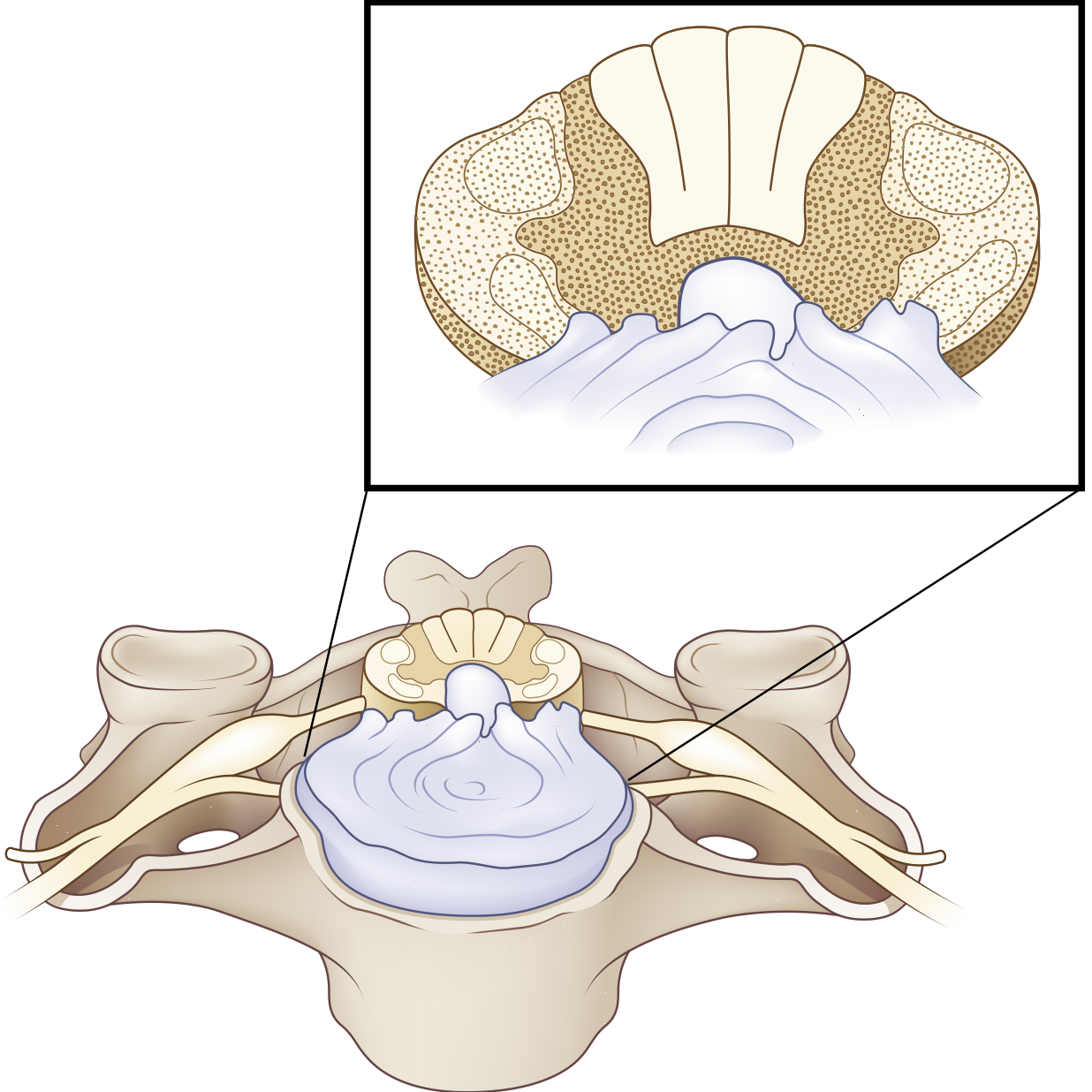
The anterior two-thirds of the cord contains:
- Corticospinal tracts (motor) - damaged → bilateral weakness
- Spinothalamic tracts (pain & temperature) - damaged → loss of pain/temperature
The posterior columns (dorsal white matter - shown in white/cream above) carry:
- Vibration, proprioception, and crude touch → PRESERVED in this patient
Why NOT other syndromes?
- Central cord syndrome: Would cause arms > legs weakness (opposite of this case where arms are normal)
- Brown-Sequard: Would be unilateral deficits with contralateral sensory loss (not bilateral)
- Posterior cord syndrome: Would lose vibration/proprioception, not pain/temperature
- Complete transection: Would have complete loss of ALL modalities bilaterally
Mechanism in This Case
This patient's high-speed motorcycle crash caused a cervical hyperflexion injury. The anterior cord is compressed either by:
- Direct contusion to the anterior cord
- Retropulsed bone/disc fragments pushing into the anterior canal
- Compromise of the anterior spinal artery
"Anterior cord syndrome occurs with injuries to the ventral two-thirds of the cord, while sparing the posterior column. Motor function is lost distal to the site of the injury. Spinothalamic function may be disrupted, leading to loss of pain and temperature sensation. Because the posterior columns remain intact, the sensations of vibration, position, and crude touch will not be affected."
- Bradley and Daroff's Neurology in Clinical Practice
Important note: Anterior cord syndrome carries the worst prognosis among incomplete cord injury syndromes - only 10-20% of patients regain some motor function.
This is a shared conversation. Sign in to Orris to start your own chat.