
write about indices for child oral health surveys- scope and limitations as mds level answer in simple words
indices child oral health surveys scope limitations dmft def plaque gingival index MDS
oral health indices children survey validity reliability
https://www.slideshare.net/slideshow/dental-indices/51458579
WHO oral health survey methodology indices DMFT def PUFA CAST SiC early childhood caries scope limitations pediatric
Indices for Child Oral Health Surveys - Scope and Limitations
1. Introduction - What is a Dental Index?
- Simple to use and easy to understand
- Valid (measures what it claims to measure)
- Reliable/reproducible (same result across examiners)
- Sensitive enough to detect small changes
- Acceptable to subjects (non-invasive)
- Amenable to statistical analysis
2. Classification of Indices Used in Child Surveys
- Irreversible (cumulative) - e.g., DMFT, deft
- Reversible - e.g., Plaque Index, Gingival Index
- Tooth-based (DMFT)
- Surface-based (DMFS/defs)
- Tissue-based (Gingival Index, Russell's Periodontal Index)
- Caries
- Oral hygiene/plaque
- Gingival/periodontal
- Fluorosis
- Malocclusion
- Consequences of untreated caries
3. Caries Indices
A. DMFT / DMFS Index (Klein, Palmer, Knutson - 1938)
- D = Decayed teeth/surfaces
- M = Missing due to caries
- F = Filled teeth/surfaces
- Gold standard for epidemiological caries surveys worldwide
- Used by WHO in all national/global oral health surveys
- Allows comparison across time, populations, and countries
- Can be expressed as mean DMFT (population) or prevalence (% with DMFT > 0)
- Surface version (DMFS, max score 128) gives more precise data
- Cannot be used alone in children - only for permanent dentition; mixed dentition phase creates confusion
- Does not record severity of individual lesions - a small enamel lesion and a deep pulpal lesion both score "D=1"
- Missing (M) component is unreliable in children - missing teeth may be due to orthodontic extraction or normal exfoliation, not caries
- Gives equal weight to D, M, and F - a well-restored tooth scores the same as a decayed one
- Does not detect early/non-cavitated caries - surveys are done without radiographs, so approximal caries and early lesions are missed
- Overestimates caries burden - filled teeth counted even if restored for cosmetic or preventive reasons (sealants)
- DMFT = 0 does not mean caries-free for life - just caries-free at time of examination
- Poor sensitivity for root caries and enamel caries
- High-caries children can "dilute" population mean (skewed distribution problem)
- Does not record active vs. arrested caries
B. deft / defs Index (Gruebbel - 1944)
- d = decayed primary teeth
- e = teeth indicated for extraction due to caries
- f = filled primary teeth
- "e" replaces "M" of DMFT because missing primary teeth may be from normal exfoliation
- Specifically designed for primary dentition in young children (3-6 years)
- Important for Early Childhood Caries (ECC) surveys
- Used by WHO for 5-year-old index age group
- df index (dropping 'e') is used when exfoliation status is ambiguous
- dft (tooth-based) vs dfs (surface-based) versions available
- dmft/dmfs (Backer Dirks 1961): Uses lower case for primary teeth; includes molars and canines for 7-11 year age group in mixed dentition
- df index: "missing" component dropped because it is unreliable in young children
- In mixed dentition: DMFT (permanent) and deft (primary) are calculated separately and never added together
- "e" component is subjective - depends on examiner's judgment about whether extraction is indicated
- In mixed dentition, distinguishing exfoliated vs. extracted primary teeth is difficult
- Cannot differentiate between caries-free and caries-susceptible children
- No assessment of caries activity (active vs. arrested)
- Misses early demineralization and non-cavitated lesions
- Underestimates in populations where extraction is unaffordable/unavailable (d rises, e and f stay artificially low - "d-e-f imbalance")
- Max score varies depending on number of teeth expected at age of examination
C. SiC Index - Significant Caries Index (Bratthall - 2000)
- Designed to overcome the problem of skewed caries distribution - in many populations, caries is heavily concentrated in a high-risk minority
- WHO included a target: SiC Index < 3 at age 12 by 2015
- Identifies the vulnerable group that needs targeted intervention
- Useful in low-caries populations where mean DMFT is low but a subgroup still suffers heavily
- Helps in planning targeted school dental programs
- Derived from DMFT, so inherits all DMFT limitations
- The "one-third" cutoff is arbitrary - no biological justification
- No WHO target established for SiC in primary dentition (dmft of 5-6 year olds)
- Cannot be used independently - requires full DMFT data first
- Limited use in very high-caries populations where distribution is less skewed
D. PUFA / pufa Index (Monse et al. - 2010)
- P/p = Pulpal involvement (visible pulp chamber through caries)
- U/u = Ulceration from tooth fragments
- F/f = Fistula
- A/a = Abscess
- Captures the clinical impact of untreated dental caries - something DMFT misses
- Upper case = permanent teeth; lower case = primary teeth
- Very relevant for developing countries and child populations with poor dental access
- Fast and simple - no instruments beyond a probe and mirror
- Used alongside DMFT/deft in WHO-style surveys
- Identifies children in need of urgent care
- Shows the burden of oral disease on general health (sepsis risk, school absenteeism)
- Should NOT be used alone - only meaningful alongside DMFT or deft
- Cannot identify moderate-stage caries affecting quality of life
- Does not record active vs. healed fistula/abscess
- Missing component and extracted teeth not captured
- Examiner calibration required for consistent pulp exposure assessment
- Limited data on psychometric properties (validity/reliability) compared to DMFT
E. ICDAS II - International Caries Detection and Assessment System (2005)
- Detects early, non-cavitated (white spot) lesions - far superior sensitivity vs. DMFT
- Records both severity (0-6) and activity (active/inactive)
- Suitable for both primary and permanent teeth
- Used in research settings and some national surveys
- Can be collapsed to WHO-equivalent criteria for comparison
- Requires tooth surface drying - not feasible in large-scale field surveys
- Takes significantly longer per child - high time cost
- Needs extensive examiner training and calibration
- Not suitable for rapid, low-resource community surveys
- Complex data management and analysis
- No single summary score comparable to DMFT
- Has not fully replaced DMFT in population surveys
F. CAST - Caries Assessment Spectrum and Treatment (Frencken - 2011)
- Designed to overcome limitations of both DMFT and ICDAS II
- Includes enamel lesions (ICDAS) + consequences (PUFA) in one instrument
- Does not require tooth surface drying - more field-friendly than ICDAS II
- Good intra-examiner reliability; feasible in resource-limited settings
- Suitable for primary and permanent teeth in children
- Hierarchical scoring means one tooth gets one score (most severe condition)
- WHO endorsed for newer global surveys
- Relatively new - less comparative data vs. DMFT
- Specificity/sensitivity against histological criteria not fully established
- Complex scoring; more training needed than DMFT
- Not easily converted to DMFT data for historical comparisons
4. Oral Hygiene and Plaque Indices
A. OHI - Oral Hygiene Index (Greene and Vermillion - 1960) and OHI-S (Simplified - 1964)
- Quick and simple for large surveys
- OHI-S reduces examination time by using 6 representative teeth
- Measures both plaque (DI-S: 0-3) and calculus (CI-S: 0-3)
- Good for tracking oral hygiene education program outcomes in schoolchildren
- Widely used in Indian and Asian child oral health surveys
- Only 6 teeth are examined - may miss localized plaque patterns
- Cannot be used in children with < 6 specific index teeth (very young children, mixed dentition)
- Does not differentiate supragingival from subgingival calculus on clinical significance
- Scores plaque presence, not quality or bacterial content
- Not sensitive enough to detect small changes in oral hygiene behavior
- Debris and calculus assessed together - separate components less sensitive individually
B. Plaque Index (PlI) - Silness and Loe (1964)
- Measures plaque as it relates to gingivitis (gingival margin plaque)
- More clinically relevant than OHI-S for gingival health studies
- Sensitive to small changes - good for intervention/clinical trial use in children
- No disclosing agent needed (thickness assessed with probe)
- Subjective - subjective assessment of plaque thickness (0-3) without staining
- More time-consuming than OHI-S
- Not ideal for large community surveys due to time
- Individual tooth variation complicates group comparison
5. Gingival and Periodontal Indices
A. Gingival Index (GI) - Loe and Silness (1963)
- Standard index for gingivitis assessment in children and adolescents
- Reversible - tracks improvement with treatment/prevention programs
- Used in school dental health surveys to assess relationship between plaque and gingivitis
- Good reliability when examiners are properly calibrated
- Bleeding on probing (score 2) is subjective unless standardized pressure used
- Cannot distinguish puberty gingivitis from plaque-induced gingivitis in children
- Time-consuming for full mouth; often limited to index teeth
- Does not assess attachment loss or bone level - cannot assess periodontitis
B. CPITN - Community Periodontal Index of Treatment Needs (WHO - 1978, later CPI)
- Code 0: Healthy
- Code 1: Bleeding on probing
- Code 2: Calculus
- Code 3: Shallow pocket (4-5 mm)
- Code 4: Deep pocket (≥ 6 mm)
- WHO-recommended for national periodontal surveys including in adolescents (15+ years)
- Fast and standardized; ball-ended probe reduces tissue trauma
- Identifies treatment needs at population level
- Modified for children: 10-year-olds examined for bleeding and calculus only (pocket codes not used)
- Not recommended for children under 15 years for pocket scoring - pseudo-pockets are common during tooth eruption and overestimate disease
- Sextant scoring ignores intra-sextant variation
- Does not assess clinical attachment level or bone loss
- Treatment needs estimation has been criticized as oversimplification
- Ball probe may miss sub-0.5 mm probe depths
- Not reliable in primary dentition
6. Fluorosis Indices
A. Dean's Fluorosis Index (H. T. Dean - 1942)
- Standard index for fluorosis prevalence in national surveys
- Used in children aged 12-14 years (when permanent dentition is established)
- Simple visual examination - no instruments needed
- Community Fluorosis Index (CFI) derived from Dean's index gives population-level score
- Used in national fluoride mapping surveys (India NOHS 2004)
- Does not give information on distribution of fluorosis within the dentition
- Isolated defects not recorded - affects reproducibility
- Categories are not clearly defined - distinction between "very mild" and "mild" is unclear
- Though an ordinal scale, it is often averaged - statistically inappropriate
- Cannot differentiate fluorosis from other enamel opacities (hypoplasia, amelogenesis imperfecta)
- High inter-examiner variability
7. Malocclusion Index
A. DAI - Dental Aesthetic Index (WHO/Johnson - 1993)
- Recommended by WHO for international epidemiological surveys
- Combines clinical and aesthetic components
- Simple, can be used by calibrated field examiners
- Identifies children needing orthodontic care at community level
- Regression weights derived from North American population - may not be culturally/aesthetically appropriate for all populations (e.g., Asian, African children)
- Does not assess skeletal discrepancies
- Cannot assess functional malocclusion
- Not suited for primary or early mixed dentition surveys in young children
- Crossbite and deepbite components are weighted low despite clinical significance
8. Quality of Life Indices
A. Child-OIDP / Child-OHIP
- Captures the subjective experience of oral disease - complement to clinical indices
- Suitable for children 8+ years who can self-report
- Parental version for younger children (Early Childhood Oral Health Impact Scale - ECOHIS)
- Used in school-based surveys alongside clinical indices
- Age-dependent self-reporting ability limits use in very young children
- Cultural/language adaptation needed for each population
- Does not diagnose clinical disease
- Recall bias; social desirability bias in parent-report versions
- Not a substitute for clinical examination
9. General Scope of Child Oral Health Surveys Using These Indices
- Baseline/prevalence data - establishing the oral health burden in school/preschool children
- Trend monitoring - comparing DMFT/dmft across survey years (e.g., India 1973-2004 NOHS)
- Program evaluation - measuring impact of fluoridation, school dental programs, tooth-brushing campaigns
- Health planning - estimating workforce needs, treatment costs, target group identification
- International comparison - WHO uses standardized indices (DMFT, CPI, Dean's) to enable cross-national data comparison
- Risk stratification - SiC index, PUFA identify high-risk subgroups for targeted care
- Research - evaluating new interventions (ICDAS II, CAST used in clinical trials)
WHO Index Age Groups in Child Surveys:
| Age | Dentition | Primary Index |
|---|---|---|
| 5 years | Primary | dmft, pufa |
| 6 years | Early mixed | dmft (primary) separately |
| 12 years | Permanent | DMFT, CPI, Dean's |
| 15 years | Permanent | DMFT, CPI |
10. General Limitations Common to All Child Oral Health Survey Indices
- No radiographs - surveys done with mirror and probe only; approximal and early caries missed; indices underestimate true caries experience
- Mixed dentition problem - in 6-11 year children, primary and permanent teeth coexist; no single index captures both; DMFT and deft must be recorded separately and never combined
- Cross-sectional snapshot - indices measure disease at one point in time; cannot assess caries activity or predict future disease
- Threshold problem - most indices use cavitation as threshold for "D" - misses 30-50% of caries in enamel/early dentin
- Examiner variation - inter-examiner and intra-examiner reliability can be poor without rigorous calibration, especially for gingival and fluorosis indices
- Cultural and access bias - "F" (filled) and "M" (missing/extracted) components reflect access to dental care, not just disease severity. In low-income populations, many decayed teeth are never filled or extracted; this skews D:F:M ratio
- Age-appropriateness - DMFT cannot be used in children (primary teeth); CPITN pseudo-pockets overestimate periodontitis in adolescents; DAI not valid in primary dentition
- Skewed distribution - in low-caries communities, caries is concentrated in a minority; mean DMFT/dmft underrepresents the high-risk group (hence SiC index was developed)
- No quality of life capture - clinical indices measure disease presence/severity but not the child's pain, chewing difficulty, or social impact; OHRQoL instruments (ECOHIS, Child-OIDP) needed to complement
- Rapidly evolving disease concepts - traditional indices were developed when cavitated caries was the primary target; modern understanding of caries as a continuum (enamel lesions to severe complications) is not captured by DMFT alone
Summary Table
| Index | Condition | Age Suitability | Key Limitation |
|---|---|---|---|
| DMFT/DMFS | Permanent caries | 12+ years | Cannot use in children; misses early lesions |
| deft/defs | Primary caries | 3-6 years | "e" subjective; exfoliation confusion |
| SiC | High-risk caries subgroup | 12 years | Derived from DMFT; arbitrary 1/3 cutoff |
| PUFA/pufa | Caries consequences | Any | Must use with DMFT; misses moderate stages |
| ICDAS II | Early-advanced caries | Any | Needs drying; time-consuming; complex |
| CAST | Full caries spectrum | Any | New; limited comparative data |
| OHI-S | Oral hygiene | ≥6 index teeth | Insensitive; mixed dentition problems |
| PlI | Gingival margin plaque | Any | Subjective; slow |
| GI | Gingivitis | Any | Pseudo-pockets in children |
| CPITN/CPI | Periodontitis | ≥15 years | Not valid <15 yrs; no attachment level |
| Dean's | Fluorosis | 12-14 years | Category overlap; no isolated defects |
| DAI | Malocclusion | Permanent dentition | Western norms; no skeletal assessment |
| ECOHIS/Child-OIDP | OHRQoL | 5+ years | Subjective; needs adaptation |
write about scope of caries vaccine in india as mds level answer in simple language
dental caries vaccine Streptococcus mutans India
scope of caries vaccine India Streptococcus mutans anticaries vaccine development challenges
PMID: 40911429
PMID: 19336869
https://pmc.ncbi.nlm.nih.gov/articles/PMC12412414
caries vaccine India public health burden dental caries prevalence children DMFT why vaccine needed India 2023 2024
PMID: 34083906
Scope of Caries Vaccine in India
1. Why Do We Need a Caries Vaccine? - The Public Health Justification
- Overall prevalence of dental caries in the Indian population is approximately 54% (National Oral Health Survey, DCI 2004)
- In children aged 3-18 years, caries prevalence is around 52-58% by DMFT criteria
- In school-going children in North India (6-11 years), prevalence reaches as high as 84.4%
- Caries prevalence increases with age - from 51.9% in 5-year-olds to 85% in adults aged 65-74 years
- The "filled" component of DMF is extremely low in India - meaning most decay goes untreated
- Tribal and rural populations suffer disproportionately higher caries burden
2. Infectious Nature of Dental Caries - The Rationale for Vaccination
- Primary causative organism: Streptococcus mutans (Gram-positive, facultative anaerobe)
- Also involved: Streptococcus sobrinus, Lactobacillus acidophilus, Actinomyces viscosus
- S. mutans colonizes the mouth only after teeth erupt (window of infectivity: 19-28 months of age)
- Transmitted from mother to child via saliva (vertical transmission)
- S. mutans produces:
- Glucosyltransferases (Gtf) - synthesize sticky glucans from sucrose, enabling biofilm/plaque adhesion
- Fructosyltransferases
- Glucan-binding proteins (Gbp)
- Surface protein antigen PAc (Protein Antigen c) - mediates initial adhesion to tooth surface
- Lactic acid - demineralizes enamel and initiates caries
3. Key Antigens Targeted in Caries Vaccine Research
| Antigen | Function of S. mutans | Why Target It? |
|---|---|---|
| PAc (Protein Antigen c) / Antigen I/II | Surface adhesin - helps bacteria stick to tooth | Blocking adhesion prevents colonization |
| Glucosyltransferases B, C, D (GtfB, GtfC, GtfD) | Synthesize water-insoluble glucans (sticky plaque matrix) | Blocking Gtf disrupts biofilm formation |
| Glucan-binding proteins (GbpB) | Help bacteria bind to glucan matrix in plaque | Blocking reduces plaque accumulation |
| Fructosyltransferase (Ftf) | Produces fructans (storage polysaccharides) | Energy source for bacteria in plaque |
| WapA | Wall-associated protein A - adhesion | Alternative adhesin target |
4. Types of Caries Vaccines Developed
A. Active Immunization (Body generates its own antibodies)
- Uses killed/inactivated whole S. mutans cells
- Early approach - used in animal studies (rhesus monkeys - Lehner 1970s)
- Effective in reducing S. mutans colonization in animals
- NOT used in humans - risk of cross-reactivity with heart tissue (S. mutans antigens structurally similar to human cardiac myosin)
- Only specific purified proteins/antigens used, not whole bacteria
- Safer - avoids cross-reactive antigens
- Examples: purified PAc, Gtf components
- Routes tested:
- Subcutaneous (systemic IgG response)
- Oral/intragastric (secretory IgA in saliva)
- Intranasal (mucosal IgA - most effective for oral protection)
- Tonsillar/salivary gland injection
- Only the specific immunogenic peptide sequences (epitopes) of the antigen are synthesized
- More targeted, avoids unwanted epitopes that cross-react with heart
- Peptides from CAT region (catalytic domain) and GBD region (glucan-binding domain) of GtfB used
- Still experimental
- Plasmid DNA encoding target antigens injected → host cells express the antigen → immune response
- Good results in animal models (rats, rhesus monkeys)
- pVAX-based plasmids encoding PAc or Gtf tested
- No approved human DNA anticaries vaccine yet
- Combining multiple antigens in one construct
- Example: KFD2-rPAc (Kill Formalin-treated Donor strain 2 + recombinant PAc) - showed 83% inhibitory efficacy against caries in rat models (Kumar et al., 2025, PMID 40911429)
- Recombinant proteins produced in E. coli or yeast - scalable and safer
B. Passive Immunization (Ready-made antibodies given externally)
- Guy-Russe & Lehner: passive immunization with anti-I/II monoclonal IgG antibody
- Applied to teeth after professional cleaning - prevented S. mutans recolonization for several months
- Clinical trials showed short-term effectiveness but recolonization occurred after antibody degraded
- CaroRx (Planet Biotechnology): Plant-derived monoclonal anti-S. mutans antibody produced in transgenic tobacco plants; Phase II clinical trials done; Phase III discontinued in 2016
- Chicken immunized with S. mutans antigens → IgY antibodies extracted from egg yolk
- Anti-CAT-IgY (targets glucosyltransferase catalytic domain)
- Applied as mouthwash or toothpaste
- Studies show reduction in S. mutans counts and plaque formation
- Safe - IgY is not recognized by human complement or Fc receptors; no systemic reaction
- Relatively cheap and scalable - egg yolk is an accessible raw material
- Requires repeated application - not one-time protection
- This approach has significant potential in India for cost-effective passive protection
- Hyperimmune bovine colostrum/milk - cows immunized with S. mutans antigens
- Anti-caries antibodies in milk products
- Concept of functional food for caries prevention
5. Route of Administration - Why This Matters
- Oral cavity protection requires secretory IgA (sIgA) in saliva - this is what blocks S. mutans from adhering to teeth
- Systemic IgG (from injectable vaccines) does NOT effectively reach saliva in high enough concentrations
- Therefore, mucosal routes (intranasal, oral, tonsillar) are preferred for caries vaccines
- Cholera toxin B subunit (CTB)
- Freund's adjuvant (animal use only)
- Aluminum hydroxide (alum)
- Mucosal adjuvants - CpG oligodeoxynucleotides
6. Current Status of Caries Vaccine Globally and in India
- Pooled risk ratio of 0.53 (95% CI: 0.46-0.62) - meaning a 47% reduction in caries risk across vaccinated groups
- KFD2-rPAc and anti-CAT-IgY antibodies showed the most consistent prophylactic effects
- No vaccine has yet received regulatory approval
- Most evidence is still from animal models (rats, monkeys)
- Research is being conducted at dental colleges under Rajiv Gandhi University of Health Sciences (Bangalore) and other institutions
- Indian journals (IJDR, JCD) have published several reviews on caries vaccination
- The prevalence data from India (54-84% caries burden) strongly justifies investment in vaccine research
- No Indian-developed caries vaccine has reached clinical trial stage yet
- India's vaccine manufacturing infrastructure (e.g., Serum Institute, Bharat Biotech) provides a platform that could be leveraged once an effective formulation is approved
7. Scope of Caries Vaccine in India - Specific Reasons
a. High Disease Burden
b. Limited Dental Workforce and Access
c. Cost-Effectiveness at Population Level
d. Integration with Universal Immunization Programme (UIP)
e. Window of Infectivity Strategy
f. Fluoride Limitations in India
g. Antibiotic Resistance Concerns
8. Challenges and Limitations - Why the Vaccine is Not Available Yet
a. Cross-Reactivity with Heart Tissue
b. Multifactorial Nature of Caries
c. Genetic Variability of S. mutans
d. Mucosal Immunity is Difficult to Sustain
e. Oral Tolerance Mechanism
f. Regulatory and Ethical Hurdles
g. Commercial Viability Gap
h. Need for Repeated Administration
9. Future Directions
- Recombinant fusion vaccines: Combining catalytic and glucan-binding domains of Gtf with safe adjuvants for intranasal delivery - most promising active approach
- DNA vaccines: Once regulatory hurdles are overcome, DNA-based anti-Gtf/PAc vaccines could provide durable protection without protein purification challenges
- Nanoparticle-based delivery: Nanoparticles can protect antigens from mucosal degradation and enhance uptake - improving oral/intranasal delivery; a 2023 study (Yu et al., Microbiology Spectrum) showed nanoparticle-based anticaries vaccine enhanced persistent immune response
- IgY toothpaste/mouthwash: Passive protection via daily application - near-term commercially viable option; could be integrated into school oral health programs in India
- Mother-targeted vaccination: Immunizing pregnant/lactating mothers to increase salivary IgA, reducing S. mutans transmission to infants during the window of infectivity
- Replacement therapy (BCS3-L1 by Oragenics): Genetically modified S. mutans that colonizes but does NOT produce lactic acid - replaces cariogenic strains naturally. This is not a vaccine per se but uses similar colonization principles.
10. Summary - Scope vs. Challenge Matrix
| Dimension | Scope | Challenge |
|---|---|---|
| Disease burden in India | Very high - 54-84% prevalence | High-risk subgroups are hardest to reach |
| Delivery infrastructure | UIP already exists | Mucosal immunization not in UIP yet |
| Cost | IgY approach could be cheap | Commercial R&D investment lacking |
| Safety | Passive IgY is safe | Active vaccines - cardiac cross-reactivity |
| Efficacy | 47% risk reduction in meta-analysis | No approved human vaccine yet |
| Sustainability | One-time active vaccine ideal | Passive vaccines need repeat dosing |
| India-specific strains | Research opportunity | Strain variability complicates formulation |
Key Points for Exam
- The infectious nature of caries (S. mutans as primary agent) provides the rationale for vaccination.
- The main antigens are PAc, GtfB/C/D, and GbpB - targeting adhesion and glucan synthesis.
- Active immunization stimulates the body's own immune response; passive immunization provides ready-made antibodies (IgY, monoclonal).
- The biggest safety hurdle is cardiac cross-reactivity of PAc with cardiac myosin.
- Mucosal salivary IgA is the effector mechanism that blocks S. mutans colonization; systemic IgG is less useful.
- India's scope is enormous due to high disease burden, poor dental access, existing UIP infrastructure, and IgY production feasibility - but no vaccine is commercially available yet.
- The 2025 meta-analysis (Kumar et al., PMID 40911429) showed a 47% risk reduction - confirming anticaries vaccines are promising but not yet ready for routine use.
discuss pit and fissure sealants in children. indications, material choices, isolation strategies, retention factors, and evidence on caries prevention. add a note on recent advances. write as mds level answer in simple language.
pit fissure sealants children caries prevention
pit fissure sealants children indications materials isolation retention caries prevention evidence recent advances MDS review
PMID: 38488955
PMID: 35146744
PMID: 33142363
https://ijohd.org/archive/volume/11/issue/3/article/24864/pd…
pit fissure sealant over incipient carious lesion sealed caries arrested evidence bioactive sealant 2023 2024 2025
sealant over carious lesion arrested incipient caries evidence
Pit and Fissure Sealants in Children
1. Introduction
2. Indications
A. Definite Indications
- V-shaped, I-shaped, or IK-shaped fissures that are deep and narrow
- Grooves that are "sticky" on probing (probe catches in the fissure but no frank cavitation)
- High caries experience in primary teeth (dmft > 2)
- Siblings or parents with high caries experience
- Poor oral hygiene / high plaque levels
- Frequent sugar consumption / cariogenic diet
- Low socioeconomic status with limited access to dental care
- Low fluoride exposure (no fluoridated water, no fluoride toothpaste use)
- Presence of visible plaque on smooth surfaces
- History of white spot lesions on smooth surfaces
- Children with special needs or physical disability limiting oral hygiene
- First permanent molars soon after eruption (most critical - highest caries risk in early mixed dentition)
- Second permanent molars soon after eruption
- Primary molars in high-caries-risk children (evidence is weaker; see section 8)
- Premolars with deep occlusal morphology
- Buccal pits of lower molars and palatal pits of upper molars
- Lingual pits of upper incisors (less common but valid in selected cases)
- ICDAS score 1, 2, or 3 (enamel lesions, outer third of dentine)
- Sealing prevents lesion progression by starving the bacteria
- Current evidence supports sealants as a valid non-restorative caries control strategy for non-cavitated lesions
B. Contraindications
- Frank cavitation (ICDAS 5, 6) - requires restorative treatment first
- Dentinal caries that has cavitated - restoration needed
- Partially erupted teeth where adequate isolation cannot be achieved (relative - see isolation section)
- Children with known allergy to BPA or resin components (rare)
- Very shallow, self-cleansing fissures with no risk indicators - no benefit
C. WHO and AAPD Recommendation (Key for Exams)
3. Material Choices
A. Resin-Based Sealants (RBS) - First Choice
- Bis-GMA (bisphenol A glycidyl methacrylate) monomer + diluent monomers (TEGDMA)
- Initiator (camphorquinone for light-cure; benzoyl peroxide + amine for auto-cure)
- Filler particles (filled/unfilled)
- Coupling agent (silane)
| Type | Advantage | Disadvantage |
|---|---|---|
| Light-cured (third generation) | Most common; controlled working time; better quality | Needs curing light |
| Auto-cured (second generation) | No equipment needed | Short working time; technique-sensitive |
| UV-cured (first generation) | Historical; not used now | UV hazard; inconsistent cure depth |
- Unfilled (e.g., Delton, Concise): low viscosity, better fissure penetration, less wear resistant
- Filled (e.g., Helioseal F): better wear resistance, higher viscosity, slightly less fissure penetration
- Added sodium fluoride or fluoroaluminosilicate glass
- Examples: Clinpro (3M), Helioseal F (Ivoclar), Fissurit FX
- Release fluoride initially (burst release) and act as a reservoir for re-uptake from fluoride toothpaste
- Clinically, fluoride benefit is modest compared to fluoride varnish but sealant effect dominates
B. Glass Ionomer Cement (GIC) Sealants
- Fluoride release throughout the material's life (sustained, not just burst)
- Bonds chemically to tooth - no acid etching required
- Moisture tolerant - works in partially erupted teeth where perfect isolation is impossible
- No BPA concern
- Good for primary teeth and partially erupted permanent teeth
- Significantly lower retention than RBS (GIC is brittle, wears rapidly under occlusal load)
- Despite poor retention, some studies show similar caries prevention - possibly because GIC fluoride effect continues even after material loss, and ions penetrate enamel
- Conventional GIC (e.g., Fuji IX, Ketac-Molar)
- Resin-Modified GIC (RMGIC) (e.g., Vitremer, Fuji II LC) - better physical properties, improved retention, still releases fluoride; often preferred over conventional GIC
- High-viscosity GIC (HVGIC) (e.g., Fuji IX GP Extra, Ketac-Molar Easymix) - better compressive strength, suitable for ART (Atraumatic Restorative Treatment) approach
- Partially erupted molars (moisture control difficult)
- Very young or uncooperative children where rubber dam is not feasible
- Primary teeth in high-risk children
- As interim sealant until the tooth fully erupts and RBS can be placed
C. Compomer Sealants
- Polyacid-modified composite resin
- Combines some fluoride release of GIC with better mechanical properties of composite
- Examples: Dyract Seal (Dentsply)
- Intermediate properties - more fluoride than RBS, better retention than GIC
- Not widely used in routine practice; more research needed
D. Comparison Table
| Property | RBS (unfilled) | RBS (filled) | GIC | RMGIC |
|---|---|---|---|---|
| Retention | Highest | High | Low | Moderate |
| Fluoride release | Low/nil | Moderate (if added) | High (sustained) | Moderate |
| Moisture tolerance | Low | Low | High | Moderate |
| Fissure penetration | Best | Good | Good | Good |
| Wear resistance | Low | Moderate-High | Low | Moderate |
| Best use | Permanent teeth (dry field) | Permanent teeth | Partial eruption, young children | Compromise situations |
4. Isolation Strategies
A. Rubber Dam - Gold Standard
- Provides the best and most reliable isolation for sealant placement
- Completely eliminates saliva and gingival crevicular fluid contamination
- Recommended whenever feasible, especially for:
- Molars in cooperative children
- Research/clinical trials (standard isolation method)
- Challenges in children: young children, small mouth, partially erupted molars where clamp placement is difficult
- Studies consistently show higher retention rates with rubber dam vs. cotton rolls
B. Cotton Roll Isolation
- Most commonly used in general pediatric dental practice
- Practical, fast, does not require special equipment
- Upper molars: cotton rolls buccally and palatally + saliva ejector
- Lower molars: Garmer clamp or lip/cheek retractor + cotton rolls + saliva ejector
- Limitations: moisture from gingival sulcus can contaminate the field, especially in partially erupted teeth; needs constant assistant support and frequent cotton roll changes
C. Isolite / Isodry / Isolite 3 System
- Combined cheek retractor, tongue shield, bite block, and continuous suction in one device
- Provides better isolation than cotton rolls with less patient management difficulty
- A 2023 RCT (Mattar et al.) comparing rubber dam, Isolite, and cotton roll isolation found no statistically significant difference in sealant retention among the three methods - suggesting that with proper technique, cotton rolls and Isolite are acceptable alternatives to rubber dam in routine practice
- Good for children with limited cooperation as it reduces the number of items placed in the mouth
D. Dry Field Assistance Tips
- Apply a light blast of air to dry the tooth before etching and before sealant application
- Work quickly once etching is complete - re-contamination within seconds can occur
- If contamination occurs after etching: re-etch for 10 seconds, re-dry, and proceed
- Triangular wedge + saliva ejector combination is useful in young children
- Topical anesthesia on gingival tissue around partially erupted molar can reduce sulcular fluid flow
E. Partially Erupted Molars - Special Strategy
- Full isolation is often impossible when the distal aspect is subgingival
- Options:
- Wait until adequate eruption (ideal but delays prevention at peak risk period)
- Place GIC sealant - moisture-tolerant; acts as interim sealant
- Apply topical anesthetic to distal gingival tissue, use cotton roll wedging, work quickly with thin, low-viscosity sealant
- Re-evaluate every 3-6 months and replace with RBS when full eruption is achieved
5. Retention Factors - What Makes a Sealant Last?
A. Tooth-Related Factors
- Fissure morphology - Wider fissures allow better resin penetration and tag formation; very narrow (I-type) fissures may not be fully penetrated
- Degree of eruption - Fully erupted teeth allow better isolation and etching → better retention
- Enamel maturity - Newly erupted enamel (first 2 years post-eruption) is hypomineralized and less crystalline → etching creates deeper tags → better retention. Paradoxically, this is also when caries risk is highest.
- Molar hypomineralization (MIH) - Hypomineralized enamel in MIH teeth etches differently; sealant retention may be lower; however, sealing MIH teeth is strongly recommended to protect the weak enamel
B. Material-Related Factors
- Viscosity - Lower viscosity materials penetrate fissures better → deeper resin tags → better retention
- Film thickness - Adequate thickness needed for mechanical durability
- Polymerization shrinkage - Excessive shrinkage can create marginal gaps and microleakage
C. Operator/Technique Factors (Most Modifiable)
- Moisture control - Most critical; any saliva contamination dramatically reduces retention
- Acid etching - 37% phosphoric acid for 15-20 seconds on permanent enamel (10-15 seconds on primary enamel which is more porous). Creates microporosities for resin tag formation. Correct etch time is essential - over-etching weakens enamel surface.
- Rinsing - Thorough rinsing (minimum 15 seconds per area) to completely remove acid and reaction products
- Drying - Completely dry surface before sealant application; etched enamel should appear chalk-white/frosted
- Application technique - Working sealant into fissures with a probe/brush tip to ensure complete fissure penetration; avoid air bubble entrapment
- Curing - Adequate curing time and light intensity (≥500 mW/cm² for 20-30 seconds); ensure light tip is close to the sealant surface
- Occlusal check - Premature contacts on the sealant increase shear forces → early loss; careful occlusal adjustment needed
D. Patient-Related Factors
- Cooperation - Uncooperative children impair isolation quality and technique execution → lower retention
- Parafunctional habits - Bruxism, clenching accelerate sealant wear
- Recall compliance - Regular monitoring and resealing when needed
E. Resin Tag Formation (Mechanism of Retention)
6. Evidence on Caries Prevention
A. Permanent Teeth (Strongest Evidence)
- 76% reduction in occlusal caries in permanent molars at 2-3 years (OR 0.24, 95% CI 0.19-0.30)
- StatPearls review: 37% caries risk reduction in one key study; 44% lower caries risk over 3 years for first permanent molars with sealants
- Long-term (7+ year) studies show sustained benefit as long as sealant integrity is maintained
- 11 trials, 3374 children
- Uncertain superiority of either intervention over the other (OR 0.67, 95% CI 0.37-1.19; high heterogeneity)
- ADA guideline (from 3 RCTs): sealants may reduce caries by 73% compared to fluoride varnish at 2-3 years in sound permanent molars (OR 0.27, 95% CI 0.11-0.69)
- Conclusion: Sealants and fluoride varnish are complementary, not competing interventions. High-risk children benefit from both.
- 7 systematic reviews included, 12-36 month follow-up
- Sealants are more effective than no treatment for caries prevention in permanent molars
- Insufficient evidence to rank sealant materials by effectiveness
- More RCTs with longer follow-up needed
B. Primary Teeth (Weaker Evidence)
- 9 studies, 1120 children aged 18 months to 8 years
- Results are inconclusive for preventing caries in primary molars
- GIC vs. no sealant: equivocal results (one study OR 0.97, another showed large benefit)
- Cannot pool data due to heterogeneity
- Conclusion: Evidence is insufficient to routinely recommend sealants for all primary molars; but they remain indicated in high-risk children with caries-prone primary molars
C. Sealants Over Non-Cavitated Lesions (Therapeutic Use)
- Evidence supports sealing ICDAS 1, 2, 3 (enamel and outer dentinal lesions)
- Studies show bacterial counts in sealed lesions drop rapidly due to oxygen exclusion and substrate deprivation
- Caries does NOT progress under intact sealed lesions
- A 24-month follow-up study (PMC, 2022) found no significant difference in caries progression between sealants on sound surfaces (ICDAS 0) vs. ICDAS 1-3 lesions - confirming therapeutic efficacy
- ADA guideline also endorses sealants as secondary prevention for non-cavitated lesions
- Caveat: Seal integrity must be monitored regularly; if the seal fails, exposed carious dentine must be treated restoratively
D. Cost-Effectiveness
- School-based sealant programs targeting high-risk children are cost-effective (JADA, Gooch et al. 2009)
- Selective targeting (high-risk children only) is more cost-effective than universal application
- A single sealant prevents multiple restorations over a child's dental lifetime
7. Sealant Application Technique (Step-by-Step)
- Prophylaxis - Clean the fissure with a rotating brush or rubber cup and pumice (not fluoride-containing paste - fluoride blocks etch sites). Some clinicians use air abrasion for deeper cleaning. Fissurotomy (minimal opening with a fine diamond bur) may be done if fissure is very deep and stained.
- Rinse and dry thoroughly
- Isolation - Rubber dam or cotton rolls as described
- Acid etch - 37% phosphoric acid gel applied to the entire occlusal surface and 2-3 mm of the buccal/lingual pit area; 15-20 seconds permanent; 10-15 seconds primary; apply with a brush/disposable tip
- Rinse - Minimum 15 seconds; remove all acid
- Dry - Use air syringe; etched enamel should appear chalky white (frost appearance)
- Moisture check - If any saliva contamination has occurred, re-etch for 10 seconds
- Sealant application - Apply with a syringe tip or brush; work the material into fissures with a probe tip to ensure complete penetration; avoid air bubbles
- Cure - Light-cure for 20-40 seconds (per manufacturer); ensure tip is within 2 mm of the sealant surface
- Check occlusion - Articulating paper; adjust any high spots with a round bur
- Apply fluoride varnish - Some clinicians apply fluoride varnish to the margins and adjacent surfaces after sealing
- Record and recall - Document placement date; schedule 6-monthly recalls for evaluation
8. Monitoring and Recall
- Every 6 months: examine sealant integrity visually and with a probe
- Classifications of sealant status:
- Intact (complete sealant, no gaps)
- Partial loss
- Complete loss
- Resealing: When partial or complete loss is detected, clean, re-etch, and reseal. Studies show that retention of replacement sealants is similar to first-time placement.
- Monitoring sealed caries: If a sealant was placed over an ICDAS 1-3 lesion, periodic bitewing radiographs are needed (annually) to ensure no lesion progression under the seal.
9. Recent Advances
A. Bioactive Sealants (Smart Materials)
- AmorphousCalcium Phosphate (ACP)-containing sealants: Release Ca²⁺ and PO₄³⁻ ions to remineralize enamel adjacent to the sealant margin. Example: Aegis Pit and Fissure (Harry J. Bosworth). Studies show superior remineralization vs. fluoride-only sealants. A 24-month RCT (2025, Scientific Reports) comparing bioactive "Biocoat" (SmartCap technology) vs. Clinpro (fluoride releasing) found both arrested non-cavitated carious lesions with comparable retention.
- Nano-hydroxyapatite sealants: Release nano-HAP particles that substitute into enamel crystal structure; improved biocompatibility and remineralization
- Bioactive glass-containing sealants: Release Ca, Si, P ions; antibacterial properties; currently under investigation
B. Antibacterial Sealants
- Incorporation of quaternary ammonium compounds (QAC) (e.g., MDPB - methacryloxydecyl pyridinium bromide) into resin matrix - permanently kills bacteria even after sealant placement
- Chlorhexidine-containing sealants: Provides dual benefit - physical barrier + antibacterial; challenges include compromised material properties with high CHX concentrations
- Silver nanoparticle (AgNP) sealants: Silver ions kill S. mutans; also have antifungal properties; concerns about ion release, cytotoxicity, and color change being studied
- Zinc oxide-containing sealants: ZnO has established antibacterial properties; being explored as filler material
C. Moisture-Tolerant/Hydrophilic Sealants
- Conventional RBS require a perfectly dry field; new moisture-tolerant sealants use hydrophilic resin chemistry with moisture-activated acid-integrating chemistry
- Work in saliva-contaminated or poorly isolated environments without significant retention loss
- Potentially game-changing for primary teeth and partially erupted molars where isolation is always compromised
- Examples: Embrace WetBond (Pulpdent) - specifically marketed as moisture-tolerant
D. Self-Etch Adhesive-Based Sealants
- Combine primer and adhesive in one step - no separate acid etching needed
- Reduce technique sensitivity and chair time - beneficial for children
- Bond to both enamel and dentine without the phosphoric acid step
- Not yet mainstream; some reviews show comparable but not superior retention to conventional etch-and-rinse approach
E. Organically Modified Ceramic (Ormocer) Sealants
- Ormocer = organically modified ceramic - hybrid material between inorganic ceramic and organic polymer
- Better aesthetics (translucent), reduced polymerization shrinkage, low BPA/monomer release
- Example: Admira Seal (Voco)
- Comparable retention to conventional RBS in 2-year clinical evaluations
F. Fluorescent Sealants
- Example: Seal-N-Glo - contains fluorescent agent; emits blue/white fluorescence under UV light
- At recall appointments, UV pen light instantly reveals sealant margins and confirms retention
- Clinically useful for monitoring, especially in school-based programs where many children need to be assessed quickly
G. Laser-Assisted Sealant Placement
- Er:YAG laser used for:
- Fissure preparation (laser fissurotomy) - more precise than bur preparation
- Enamel conditioning (as alternative to acid etching) - creates microtextured surface
- Studies show comparable or slightly lower resin tag formation vs. acid etch; still experimental
- May improve cooperation in children (no bur vibration/sound)
H. Air Abrasion
- Aluminum oxide particles propelled at high pressure to clean and micro-roughen fissures
- Useful for cleaning stained fissures before sealing without complete fissure opening
- Improves sealant retention by creating a more irregular etch-like surface
- Beneficial in anxious children who refuse bur preparation
I. Sealants in ART (Atraumatic Restorative Treatment) Programs
- WHO-endorsed ART uses HVGIC for both restorations and sealants in field conditions without electricity
- ART sealants (finger-pressed HVGIC into fissures) are now widely used in school programs in developing countries including India
- Retention is lower than RBS but the simplicity and no-equipment approach allows coverage of large underserved populations
10. Summary for Exam
| Topic | Key Points |
|---|---|
| Best evidence for | Permanent molars in children (76% caries reduction vs. no treatment) |
| Material of choice | Resin-based sealant (light-cured, filled/unfilled) |
| When to use GIC | Partial eruption, young/uncooperative child, primary teeth |
| Most critical step | Moisture control - isolation |
| Retention mechanism | Resin tags in acid-etched enamel microporosities |
| Sealant over caries | Valid for ICDAS 1-3 (non-cavitated); requires monitoring |
| Primary teeth evidence | Inconclusive; use selectively in high-risk children |
| Recent advances | Bioactive (ACP/nano-HAP), antibacterial (QAC/AgNP), moisture-tolerant, fluorescent sealants |
| Recall | Every 6 months; reseal if lost |
define epidemiology. discuss the epidemiological triad. classify various epidemiological methods. difference between descriptive and analytical epidemiology.
Epidemiology: Definition, Triad, Methods, and Descriptive vs. Analytical
1. Definition of Epidemiology
Historical Definitions (Evolution)
| Author | Year | Definition |
|---|---|---|
| Parkin | 1873 | "That branch of medical science which treats of epidemics" |
| Frost | 1927 | "The science of mass phenomena of infectious diseases" |
| Greenwood | 1934 | "The study of disease, any disease, as a mass phenomenon" |
| MacMahon | 1960 | "The study of distribution and determinants of disease frequency in man" |
Modern Definition (Most Accepted)
"The study of the occurrence and distribution of health-related events, states, and processes in specified populations, including the study of the determinants influencing such processes, and the application of this knowledge to control relevant health problems." (Park's Textbook of Preventive and Social Medicine)
- Study - includes surveillance, observation, hypothesis testing, experiments, screening, and prediction
- Occurrence and distribution - analysis by time, place, and person (the three axes of epidemiology)
- Health-related events, states, processes - diseases, outbreaks, deaths, disorders, behaviours, effects of preventive programs, use of health services
- Specified populations - groups with common, identifiable characteristics (not just random individuals)
- Determinants - biological, behavioural, social, cultural, economic, geophysical, and political factors that influence health
- Application to control - this is what separates epidemiology from pure academic enquiry; the goal is action to protect and restore health
Three Core Components Common to All Definitions
- Disease frequency - measuring how often the disease occurs (rates, ratios)
- Distribution - who gets it, where, and when (person, place, time)
- Determinants - why they get it (cause and risk factors)
Epidemiology vs. Clinical Medicine (Key Exam Distinction)
| Feature | Clinical Medicine | Epidemiology |
|---|---|---|
| Unit of study | Individual patient (case) | Defined population |
| Concern | Sick individual | Both sick and healthy |
| Approach | Patient comes to doctor | Investigator goes to community |
| Subject matter | Easily perceived (clinical signs, labs) | Conceptual (tables, graphs, rates) |
| Goal | Diagnosis and treatment of individual | Control of disease in population |
2. The Epidemiological Triad
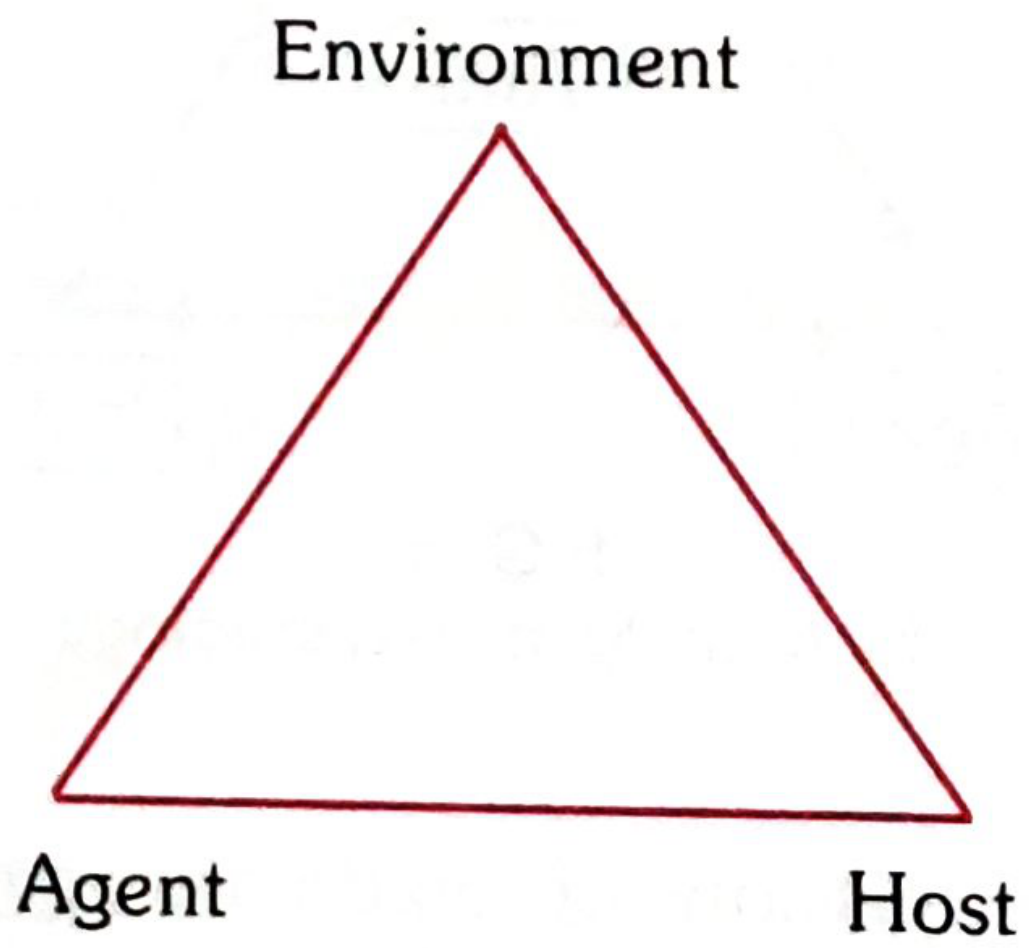
A. Agent
- Bacteria (TB, typhoid, cholera)
- Viruses (measles, HIV, influenza)
- Fungi (candidiasis, ringworm)
- Parasites (malaria, filariasis)
- Rickettsia (scrub typhus)
- Heat (heat stroke, burns)
- Cold (hypothermia, frostbite)
- Radiation (cancer, radiation burns)
- Trauma/mechanical forces (injuries, fractures)
- Noise (occupational hearing loss)
- Exogenous: pesticides, heavy metals (lead, mercury), industrial chemicals, drugs
- Endogenous: metabolic waste products (uric acid in gout, urea in renal failure)
- Deficiency: vitamin C deficiency (scurvy), iron deficiency (anaemia)
- Excess: obesity, hypervitaminosis A
- Stress, trauma, poverty, social isolation
- Infectivity - ability to invade and multiply in host
- Pathogenicity - ability to produce clinical disease once inside host
- Virulence - severity of disease produced
- Antigenicity/Immunogenicity - ability to stimulate immune response
- Communicability - ease of transmission from one host to another
B. Host
- Age - infants and elderly are generally more susceptible; some diseases prefer specific age groups (measles in children, cardiovascular disease in elderly)
- Sex - some diseases are more common in males (gout, coronary artery disease), others in females (autoimmune diseases, thyroid disease)
- Genetic constitution - certain genotypes confer susceptibility (sickle cell trait protects against P. falciparum malaria; HLA types predispose to autoimmune disease)
- Immunity - natural or acquired; humoral (antibody-mediated) or cellular; innate or adaptive
- Nutritional status - malnutrition increases susceptibility to almost every infection
- Physiological state - pregnancy, puberty, menopause alter disease susceptibility
- Habits and lifestyle - smoking, alcohol use, dietary patterns, exercise
- Occupation - silicosis in miners, asbestos-related disease in construction workers
- Personal hygiene and sanitation practices
- Marital status and sexual behaviour - STDs, cervical cancer
- Migration and travel - exposure to new pathogens
- Stress, mental health status, social support network
- Health-seeking behaviour - whether the person accesses care
C. Environment
- Climate: temperature, humidity, rainfall - affect vector survival and multiplication (mosquitoes thrive in warm, humid conditions → malaria transmission)
- Geography: altitude, soil type, water sources
- Housing quality and crowding (tuberculosis spreads in poorly ventilated homes)
- Air, water, and food quality
- Presence and density of vectors (mosquitoes, ticks, sandflies)
- Reservoirs of infection (animals, water, soil)
- Availability of intermediate hosts
- Competing microorganisms in the environment
- Socioeconomic status (poverty → poor nutrition, housing, healthcare access)
- Population density - affects disease spread
- Education and health literacy
- Cultural and religious practices
- Healthcare infrastructure (availability of hospitals, immunization programs, safe water supply)
- Occupation and urbanization patterns
The Triad Interaction

- A susceptible host is exposed to
- A virulent agent in
- A facilitating environment
- Attack the agent - antibiotics, vaccination, vector control
- Strengthen the host - immunization, nutrition, health education
- Modify the environment - safe water, sanitation, waste management, housing improvement
Limitations of the Triad Model
- Best suited for infectious diseases; less applicable to complex chronic diseases (coronary artery disease has no single "agent")
- Does not account for the time dimension (when intervention happens in natural history)
- Replaced/supplemented for chronic disease by the "web of causation" concept (MacMahon, 1960) - multiple interacting causes forming a web, as seen in myocardial infarction
- The more modern Wheel Model (Mausner and Bahn) places the host (with a genetic core) at the center surrounded by biological, social, and physical environment - emphasizing the host-environment relationship
3. Classification of Epidemiological Methods
EPIDEMIOLOGICAL METHODS
│
├── I. OBSERVATIONAL (no intervention by investigator)
│   ├── A. Descriptive Epidemiology
│   │   ├── Case reports and case series
│   │   ├── Cross-sectional surveys (prevalence studies)
│   │   └── Ecological (correlational) studies
│   │
│   └── B. Analytical Epidemiology
│       ├── Observational analytical
│       │   ├── Case-control studies (retrospective)
│       │   └── Cohort studies (prospective / retrospective)
│       └── (Cross-sectional can also be analytical)
│
└── II. EXPERIMENTAL (investigator intervenes)
    ├── Randomized Controlled Trial (RCT)
    │   ├── Clinical trial (individual randomization)
    │   └── Community trial / Field trial
    └── Quasi-experimental (non-randomized)
        └── Natural experiments
A. Descriptive Epidemiology
- A report of one case (case report) or several cases (case series) with unusual or notable features
- Generates hypotheses about new diseases or unusual presentations
- Example: early AIDS cases in 1981 were first described as case reports of unusual pneumocystis carinii pneumonia in young men
- No comparison group; cannot establish causation
- A snapshot of a population at one point in time
- Measures both exposure and disease simultaneously
- Gives prevalence data
- Example: National Oral Health Survey measuring DMFT in a representative sample of Indian children
- Fast and relatively cheap; good for planning health services
- Cannot determine cause and effect (temporal relationship unknown)
- Unit of analysis is populations or groups, not individuals
- Correlates disease rates with population-level exposures
- Example: countries with high salt intake have higher rates of hypertension; areas with fluoridated water have lower DMFT rates
- Quick and uses existing data (mortality statistics, census data)
- Subject to ecological fallacy - correlation at group level does not prove causation at individual level
B. Analytical Epidemiology
- Starts with people who already have the disease (cases) and compares them to people without the disease (controls)
- Looks backwards in time to identify past exposures
- Measures the Odds Ratio (OR) as the measure of association
- Example: cases of oral cancer vs. controls; looking back at tobacco chewing history
- Good for: rare diseases, rapid results, multiple exposures studied at once, cheap
- Limitations: recall bias; selection bias in choosing controls; cannot directly calculate incidence
- Starts with people without the disease, classified by exposure status (exposed vs. not exposed)
- Followed forward over time to see who develops the disease
- Directly measures Incidence Rate and Relative Risk (RR)
- Example: Framingham Heart Study - followed healthy adults for decades to study development of cardiovascular disease
- Prospective cohort: followed forward from present into future
- Retrospective cohort: uses historical records; exposure and outcome both already occurred but examined as a cohort design
- Good for: common outcomes, understanding temporal relationship clearly, multiple outcomes from one exposure
- Limitations: expensive, long follow-up, loss to follow-up (attrition bias), not suitable for rare diseases
- When used analytically, compares exposure and outcome simultaneously in a population
- Example: comparing DMFT scores between children who brush twice daily vs. once daily
- Measures Prevalence Ratio or Odds Ratio
- Useful for generating hypotheses but cannot establish cause-effect because exposure and outcome are measured at the same time (no temporality)
C. Experimental Studies
- Participants randomly allocated to intervention group (treatment) or control group (placebo/no treatment)
- Gold standard for testing efficacy of interventions
- Randomization controls for known and unknown confounders
- Example: testing fluoride varnish vs. no treatment on caries incidence in schoolchildren
- Types:
- Individual RCT (each person randomized)
- Cluster RCT (whole communities/schools randomized)
- Intervention given to healthy people in the community to prevent disease
- Example: polio vaccine trial by Salk (1954)
- Expensive and logistically demanding
- Entire communities are the unit of randomization
- Example: comparing DMFT in communities with vs. without water fluoridation programs
- Used for public health interventions that cannot be applied at individual level
- No true randomization; but still has an intervention
- Example: before-after study of school dental health program
4. Difference Between Descriptive and Analytical Epidemiology
| Parameter | Descriptive Epidemiology | Analytical Epidemiology |
|---|---|---|
| Primary question | What? Who? Where? When? | Why? How? What causes this? |
| Objective | Describe the distribution of disease | Test hypotheses; find cause-effect associations |
| Hypothesis | Generates hypotheses | Tests hypotheses |
| Direction | Observes and describes | Analyses and compares groups |
| Comparison group | No comparison group | Always has a comparison (exposed vs. unexposed, cases vs. controls) |
| Variables | Person, place, time | Exposure/risk factor vs. outcome/disease |
| Study types | Case reports, case series, cross-sectional surveys, ecological studies | Case-control, cohort, cross-sectional (analytical) |
| Measures used | Prevalence, incidence, rates, proportions | Relative risk, odds ratio, attributable risk, hazard ratio |
| Causal inference | Cannot establish causation | Can suggest causal associations (especially cohort and RCT) |
| Temporal relationship | Not established | Established in cohort (exposure before outcome) |
| Cost and complexity | Simpler, cheaper, faster | More complex, expensive, longer |
| Use | Baseline data, health planning, hypothesis generation | Etiology research, identifying risk factors, guiding interventions |
| Example in dentistry | NOHS India 2004 - measuring DMFT by age group and region | Case-control study comparing fluoride exposure in DMFT=0 vs. high DMFT children |
Logical Sequence of Epidemiological Enquiry
Observe a pattern
      ↓
DESCRIPTIVE study (Who? Where? When?)
      ↓
Generate hypothesis (e.g., "smoking causes oral cancer")
      ↓
ANALYTICAL study (case-control or cohort) tests hypothesis
      ↓
Find association
      ↓
EXPERIMENTAL study (RCT) confirms causation and tests intervention
      ↓
Public health action
Summary Points for Exam
-
Best definition for exam: "Study of occurrence and distribution of health-related events, states, and processes in specified populations, including study of determinants influencing such processes, and application of this knowledge to control health problems." (Last reference Park's)
-
Epidemiological triad: Agent + Host + Environment interact to cause disease. Disturbing any one side can prevent/control disease.
-
Agent = causative factor (biological, physical, chemical, nutritional, social)
-
Host = susceptible organism (age, sex, immunity, genetics, nutrition, behaviour)
-
Environment = physical, biological, social surroundings that facilitate interaction
-
Methods hierarchy: Descriptive → Case-control → Cohort → RCT (increasing strength of causal evidence)
-
Descriptive = no comparison group; generates hypotheses; answers Who/Where/When
-
Analytical = has comparison group; tests hypotheses; answers Why/How
-
Experimental = investigator intervenes; tests causation; RCT is gold standard
-
Ecological fallacy - the trap in ecological studies - group correlation does not mean individual causation
- Park's Textbook of Preventive and Social Medicine, pp. 44-46, 65-66
write about plaque control in pediatric dentistry along with its use in special healthcare childrens. write as mds level answer in simple language
plaque control pediatric dentistry special healthcare needs children oral hygiene methods flossing fluoride MDS review
https://pmc.ncbi.nlm.nih.gov/articles/PMC11941194
plaque control oral hygiene children special healthcare needs intellectual disability
plaque control toothbrushing techniques children age-appropriate fluoride toothpaste amount Bass modified Fones interdental aids chlorhexidine
toothbrushing techniques plaque removal children powered manual brush
PMID: 40739767
plaque control special healthcare needs children autism cerebral palsy Down syndrome oral hygiene adaptations chlorhexidine powered toothbrush caregiver
Plaque Control in Pediatric Dentistry
1. Introduction
- Rapidly changing dentition (primary → mixed → permanent)
- Limited manual dexterity in young children
- Motivational difficulties and short attention spans
- Need for parental involvement at every stage
- Specific anatomical differences (pits and fissures, contact points, cervical margins of primary teeth)
- Wide range of patients from healthy infants to complex special healthcare needs (SHCN) children
2. Goals of Plaque Control in Children
- Prevent dental caries - by disrupting the cariogenic biofilm and limiting acid production at tooth surfaces
- Prevent gingivitis and periodontal disease - by removing bacterial plaque from gingival margins
- Establish lifelong oral hygiene habits - habits formed in childhood predict adult oral health behavior
- Reduce oral microbial load - including Streptococcus mutans vertical transmission from mother to child
- Complement other preventive measures - sealants, fluoride, and dietary control work best when combined with good plaque control
3. Dental Plaque - Brief Overview
- Acquired enamel pellicle forms within seconds on a clean tooth surface (salivary proteins, glycoproteins)
- Early colonizers (Streptococcus sanguis, S. mitis) adhere to pellicle within 2-4 hours
- S. mutans and Lactobacillus join later - especially when sucrose is available
- S. mutans produces glucosyltransferases (Gtf) → water-insoluble glucans → sticky matrix that anchors biofilm
- Mature plaque forms by 24-72 hours; becomes pathogenic after 24 hours without disruption
4. Mechanical Plaque Control
A. Toothbrushing
i. Toothbrush Selection for Children
- Always soft or extra-soft bristles - hard bristles cause gingival trauma and enamel abrasion
- Nylon bristles preferred over natural bristles (natural bristles harbor bacteria)
- Rounded filament ends reduce soft tissue injury
- Age-appropriate - small head to navigate child's mouth and reach all surfaces
- Infant/toddler: very small head (~14 × 8 mm)
- Child (3-6 years): small head (~19 × 10 mm)
- Junior (7-12 years): slightly larger but still compact
- Straight, easy-grip handle for children
- Wide, flat handles aid grip for children with limited hand coordination
- For children with physical disabilities: built-up handles (foam, bicycle grip), angled handles, or Velcro straps
- Toothbrush should be replaced every 3 months or when bristles show fraying
- Replace after any oral infection (herpetic gingivostomatitis, pharyngitis)
ii. Toothbrushing Techniques - Age by Age
- Teeth are in occlusion
- Large circular strokes covering both upper and lower teeth simultaneously
- Radius of circle = approximately the combined height of both arches
- Easy to learn, requires minimal dexterity
- Good for parent-performed brushing on a young child
- Not ideal for sulcular cleaning but appropriate for the age group
- Simple back-and-forth horizontal strokes on all surfaces
- Naturally favored by children due to simplicity
- High risk of toothbrush abrasion if done aggressively with a hard brush and abrasive paste
- Must use a soft brush and gentle pressure
- Limited sulcular penetration
- Bristles placed at the gingival margin, angled apically
- Rotated/rolled from gingiva toward the occlusal surface with a sweeping motion
- Covers both cervical and occlusal-third of crown
- Removes plaque from gingival margin and lateral tooth surfaces
- Moderate technique difficulty - suitable once dexterity develops
- Bristles placed at 45° angle to the long axis of the tooth, directed toward the gingival sulcus
- Gentle horizontal vibratory jiggling (10 strokes per area) to penetrate the sulcus
- Then a rolling/sweeping stroke toward the occlusal surface to clear loosened plaque
- Best technique for sulcular plaque removal - highly effective for gingivitis prevention
- Requires more coordination - appropriate from adolescence
- Gold standard for periodontal health
| Technique | Age | Motion | Sulcular Cleaning | Difficulty |
|---|---|---|---|---|
| Fones | 2-5 years | Large circular | Minimal | Very easy |
| Scrub | 3-6 years | Horizontal | Poor | Easy |
| Roll | 6-12 years | Sweeping roll | Moderate | Moderate |
| Modified Bass | ≥12 years | 45° vibration + roll | Best | Moderate-high |
iii. Brushing Duration and Frequency
- Twice daily - at minimum (morning + before bedtime)
- Before bedtime brushing is most critical - salivary flow decreases at night, reducing natural clearance; any remaining plaque is highly cariogenic
- 2 minutes per session - recommended by AAPD and ADA
- A practical trick for children: use a 2-minute timer, a song, or a brushing app to maintain duration
- Studies show children consistently brush for less than 1 minute without supervision
iv. Parental Supervision and Role
- Birth to first tooth: Clean gums with a clean, damp cloth or silicone finger brush
- First tooth erupts: Begin toothbrushing immediately - parent brushes the child's teeth
- 0-3 years: Parent does all brushing; child cannot be trusted to do it alone
- 3-6 years: Parent-assisted brushing - child can start, parent finishes and checks
- 6-8 years: Supervised brushing - child brushes, parent supervises and corrects technique
- 8-10 years: Child brushes independently but parent checks periodically
- After 10 years: Child brushes independently; reinforcement and monitoring at dental visits
v. Powered (Electric) Toothbrushes in Children
- Power toothbrushes (PTB) provide statistically significant better plaque removal than manual toothbrushes (MTB) in children (DiffM = -0.26; p < 0.00001)
- Effect is sustained over follow-up periods
- No significant difference in gingival index - but plaque reduction may prevent gingivitis development
- Oscillating-rotating (OR) mode PTBs showed the clearest benefit
- Children with limited hand dexterity
- Children with physical disabilities (cerebral palsy, muscular dystrophy)
- Children who are poorly motivated or not cleaning adequately with a manual brush
- Children with fixed orthodontic appliances
- SHCN children where caregiver is brushing
- Some children find the vibration sensation frightening initially - gradual introduction needed
- Heavier weight may be a problem for children with hand weakness
- Cost is higher but effectiveness justifies recommendation in appropriate cases
B. Fluoride Toothpaste - The Critical Companion to Brushing
| Age | Amount | Fluoride Concentration |
|---|---|---|
| First tooth - 3 years | Smear (rice grain size) | 1000-1500 ppm |
| 3-6 years | Pea-sized (0.25 g) | 1000-1500 ppm |
| 6+ years | Pea-sized to small strip | 1000-1500 ppm |
| High-risk children | Higher concentration on prescription | 2800-5000 ppm (Rx) |
- Children under 6: should spit, not rinse (or spit and minimal rinse) - keeping fluoride in the mouth longer enhances uptake
- Children under 3: parents apply the toothpaste; not the child (who will eat it)
- Children with swallowing difficulties (neurological conditions): use minimum amount, consider fluoride-free paste with other antimicrobial agents in some cases
C. Interdental Plaque Control
- When to start: As soon as any two adjacent teeth are in contact (usually primary molars, around age 2-3)
- Who should floss: Parents should floss children's teeth until the child has the dexterity to do it independently (typically around age 8-10)
- Technique:
- Use approximately 45 cm of floss
- Wind most around middle fingers, guide with thumb and index finger
- Gently slide between contacts using a zigzag motion (never snap)
- Curve into a "C" around each tooth
- Slide up and down below the contact into the sulcus
- Floss types for children: Waxed floss (easier to slide), floss picks (easier for children and parents to use in the back of the mouth), floss holders
- Small cylindrical/conical brushes that fit in interdental spaces
- More effective than floss for wider interdental spaces (common in spaced primary dentition, post-extraction spaces, around implants)
- Sizes (color-coded): select a brush that fills the interdental space without forcing
- Less technique-sensitive than floss; suitable for older children with adequate interdental spaces
- Not suitable for tight contacts in young children where spaces are small
- Pulses of water remove loose debris and disrupt loosely adherent plaque
- Good adjunct for children with fixed orthodontic appliances
- Does not replace floss or interdental brushes - cannot remove firmly adherent plaque
- Not recommended as primary interdental cleaning for young children
D. Tongue Cleaning
- The tongue is a reservoir for S. mutans, Lactobacillus, and Streptococcus salivarius
- Tongue cleaning reduces total bacterial load and volatile sulfur compounds (VSC) responsible for halitosis
- In children: soft toothbrush over dorsal tongue surface; tongue scrapers can be used from school age
- Important in children with poor oral hygiene and high plaque levels
5. Chemical Plaque Control
A. Fluoride
B. Chlorhexidine (CHX)
- 0.12% or 0.2% mouthwash
- 1% gel
- 0.12% spray
- CHX-containing toothpaste/gel
- Chlorhexidine chips (professional, for periodontal pockets)
- Mouthwash: Not recommended below age 6 due to swallowing risk
- For children aged 6-12: 0.12% CHX mouthwash rinse 30 seconds twice daily for 1-2 week courses
- For very young or SHCN children who cannot rinse: CHX gel applied by parent/caregiver with a cotton swab or finger brush
- For mothers: Pre-delivery and early postnatal CHX application to the mother's oral cavity reduces vertical transmission of S. mutans to the infant (mother is the primary source of early S. mutans colonization)
- Staining of teeth and tongue (brown discoloration with prolonged use)
- Altered taste sensation
- Not for long-term continuous use - intermittent courses preferred
- Interaction with fluoride (do not use CHX rinse and fluoride toothpaste simultaneously - space them by 30 minutes)
- Possible hypersensitivity reactions (rare)
C. Essential Oil Mouthwashes (Listerine-type)
- Thymol, eucalyptol, menthol, methyl salicylate
- Anti-plaque and anti-gingivitis properties; ADA accepted
- Not recommended below age 6 - alcohol content (in some formulations)
- Alcohol-free formulations available and safer for children
- Less substantivity than CHX but fewer side effects; suitable for short-term adjunctive use in older children
D. Cetylpyridinium Chloride (CPC)
- Quaternary ammonium compound with antibacterial properties
- Found in many over-the-counter mouthwashes (Act, Scope)
- Less potent than CHX but fewer side effects; suitable for regular use in children from age 6+
- Good option for supplementing daily brushing in school-age children
E. Xylitol
- Sugar alcohol that is non-fermentable - S. mutans cannot metabolize xylitol into acid
- Xylitol gum, lozenges, or toothpaste used daily reduce S. mutans counts in saliva and plaque
- Evidence supports 3-5 exposures per day for maximum effect
- Safe for all ages; xylitol-containing toothpaste and wipes suitable for young children
- Important for children of mothers with high S. mutans levels (xylitol reduces maternal S. mutans → reduces transmission)
F. Probiotics
- Emerging role in plaque control
- Lactobacillus reuteri, Streptococcus salivarius M18 have shown reduction in S. mutans levels and gingivitis in children
- Mechanism: competitive inhibition, production of hydrogen peroxide and bacteriocins that inhibit cariogenic bacteria
- Available as probiotic drops for infants, tablets for older children
- Not yet in mainstream guidelines but promising adjunct
G. Povidone-Iodine
- Broad-spectrum antiseptic; sometimes used as oral rinse for acute infections
- Evidence for plaque control is limited in children
- Not a routine plaque control agent
6. Age-Specific Plaque Control Program
| Age | Mechanical Control | Fluoride | Chemical Adjuncts |
|---|---|---|---|
| 0-6 months (pre-eruption) | Gum wipe with damp cloth | None | None |
| 6-12 months (primary tooth eruption) | Parent brushes with infant brush | Smear fluoride toothpaste (1000 ppm) | Xylitol wipes if high risk |
| 1-3 years | Parent brushes twice daily; Fones technique | Smear toothpaste; spit not rinse | Fluoride varnish by dentist |
| 3-6 years (primary dentition complete) | Parent-assisted brushing + flossing | Pea-sized toothpaste | CHX gel for high-risk; fluoride varnish |
| 6-12 years (mixed dentition) | Supervised brushing; child flosses with help | Pea-sized; consider Rx fluoride if high-risk | CPC or CHX mouthwash (age ≥6) |
| 12+ years (permanent dentition) | Independent brushing (Bass); floss independently | Standard paste; Rx fluoride if needed | Mouthwash as adjunct |
7. Professional Plaque Control (In-Office)
A. Prophylaxis (Scaling and Polishing)
- Removal of supragingival plaque, stain, and calculus by the dentist/hygienist
- AAPD policy (2022): professional prophylaxis using rubber cup, hand instruments, or toothbrush
- Frequency based on caries risk:
- Low risk: every 12 months
- Moderate risk: every 6 months
- High risk: every 3-6 months
- Polishing paste should be fluoride-containing; rubber cup and low-abrasive paste preferred over airpolishing in primary teeth
- Important: Professional prophylaxis is NOT required before fluoride varnish application - plaque/pellicle do not significantly reduce fluoride uptake in enamel (AAPD policy evidence)
B. Disclosing Agents
- Erythrosine (red), basic fuchsin, fluorescein (requires UV light), 2-tone disclosing solution
- Applied to tooth surfaces; patient rinses; remaining stain shows plaque
- Highly effective motivational tool - children are often shocked to see how much plaque remains after brushing
- Use at every recall appointment to demonstrate technique gaps
- 2-tone disclosing agents differentiate old (dark) from new (light) plaque - helps identify areas consistently missed
C. Fissure Sealants as Plaque Control
- Not a direct plaque control measure but eliminates the retentive fissure anatomy that traps plaque and resists toothbrushing
- Reduces plaque accumulation on occlusal surfaces effectively
8. Motivational Strategies for Children
- Toddlers (1-3 years): Make brushing a game; same song every time; reward chart; favorite character toothbrush
- Preschool (3-5 years): Let them choose their toothbrush color/flavor; "modeling" - brush together; sticker charts
- School age (6-12 years): Disclosing tablets to show plaque; explain why ("sugar bugs"); positive reinforcement
- Adolescents: Connect oral health to self-esteem and social acceptance (fresh breath, white smile); motivational interviewing
- Parental oral health attitudes and behaviors directly predict child's plaque control compliance
- Caregiver education at every visit is as important as the child's instruction
9. Plaque Control in Children with Special Healthcare Needs (SHCN)
A. Definition of SHCN
- Neurological/Developmental: Autism Spectrum Disorder (ASD), Intellectual Disability (ID), ADHD
- Physical/Motor: Cerebral Palsy (CP), Muscular Dystrophy, spina bifida
- Genetic/Chromosomal: Down syndrome (Trisomy 21), Turner syndrome
- Systemic diseases: Diabetes, epilepsy, leukemia, congenital heart disease, HIV
- Sensory: Visual impairment, hearing impairment
- Psychiatric/Behavioral: Anxiety disorders, schizophrenia
B. Why SHCN Children Have Worse Plaque Control
- Motor impairment (cerebral palsy, muscular dystrophy) - limited hand coordination makes self-brushing ineffective or impossible
- Intellectual disability - cannot understand the concept of oral hygiene; cannot follow instructions
- Sensory issues (autism) - tactile hypersensitivity to toothbrush, taste of toothpaste, or dental environment causes refusal
- Behavioral challenges - uncooperative behavior, self-injurious behavior, aggression
- Medications - many drugs cause xerostomia (dry mouth → reduces salivary plaque clearance), gingival hyperplasia (phenytoin, cyclosporine, nifedipine - makes plaque control difficult), increased caries risk (sucrose-containing liquid medications)
- Dietary factors - soft/pureed diets required for many children with swallowing disorders → food stagnation; nocturnal tube feeding; frequent snacking
- Mouth breathing (common in Down syndrome, cerebral palsy) - dries oral mucosa, reduces saliva, promotes plaque accumulation
- Gag reflex abnormalities - hypersensitive gag reflex makes toothbrushing and dental visits distressing
- Family/caregiver burden - caregivers are often exhausted and overwhelmed; oral hygiene may be deprioritized
- Access barriers - dental practices may be physically inaccessible; few dentists are trained in SHCN management; cost and transportation issues
C. Oral Health Status in Specific SHCN Conditions
i. Autism Spectrum Disorder (ASD)
- Oral findings: High plaque levels, gingivitis, xerostomia (due to medications like risperidone), bruxism, self-injurious behavior affecting oral tissues
- Key issue: Sensory processing disorder - may be hypersensitive to toothbrush texture, taste, vibration, or even the act of opening the mouth
- Behavioral approach: Desensitization program - gradual introduction (finger, then finger brush, then child toothbrush); use preferred flavor toothpaste; visual schedules and social stories about brushing; consistent routine at a fixed time and place (reduces anxiety)
ii. Down Syndrome (Trisomy 21)
- Oral findings: Macroglossia, mouth breathing, high caries rate, severe periodontal disease disproportionate to plaque levels (immune dysfunction - neutrophil chemotaxis defect), hypodontia, delayed eruption
- Key issue: Severe gingivitis and early-onset periodontitis despite moderate plaque levels - immune dysfunction drives destructive periodontal response
- Plaque control approach: Meticulous daily brushing by caregiver; powered toothbrush helpful; frequent professional prophylaxis (every 3 months); chlorhexidine rinse/gel as adjunct; caregiver education is paramount
- Note: Subacute bacterial endocarditis (SBE) prophylaxis considerations for those with congenital heart defects (common in Down syndrome)
iii. Cerebral Palsy (CP)
- Oral findings: High plaque and calculus, drooling (sialorrhea), bruxism (causing severe wear), malocclusion, enamel hypoplasia, dysphagia-related diet changes (soft food → high caries risk)
- Key issue: Motor impairment makes independent brushing impossible; spasticity of jaw muscles makes mouth opening difficult; uncontrolled movements make brushing hazardous
- Plaque control approach:
- Caregiver performs all oral hygiene
- Positioning is critical - child positioned in a stable, supported chair with head reclining slightly; use mouth prop to keep mouth open safely
- Powered toothbrush - oscillating head reduces the need for precise manual strokes; however weight may be an issue for some
- Mouth props (Molt gag, McKession mouth prop) to maintain opening
- CHX gel applied by caregiver if mouthwash is not tolerated
- Mouthwashes contraindicated in children with oral motor control problems - risk of aspiration
- High-fluoride prescription toothpaste for high-risk cases
iv. Intellectual Disability (ID) / Global Developmental Delay
- Oral findings: High plaque, gingivitis, caries; often on multiple long-term medications
- Key issue: Cannot understand or follow brushing instructions; behavioral cooperation variable
- Approach: Systematic plaque control by caregiver; hand-under-hand technique (caregiver places their hand under the child's hand and guides the brush movement - helps the child feel the motion without resisting); consistent daily routine; behavioral reinforcement with rewards
- A systematic review (McGrath et al., 2019) found that with structured oral hygiene programs targeting both caregivers and individuals with ID, plaque scores improved significantly
v. Epilepsy
- Oral findings: Gingival hyperplasia from phenytoin (Dilantin hyperplasia), dry mouth from some antiepileptics, bruxism
- Key issue: Drug-induced gingival overgrowth creates pseudo-pockets that are very difficult to clean
- Approach: Meticulous plaque control to limit severity of hyperplasia (hyperplasia is triggered by plaque inflammation); Bass technique or powered toothbrush to access pseudopockets; if possible, discuss with neurologist about alternative antiepileptic agents (carbamazepine, valproate have lower gingival hyperplasia risk)
vi. Congenital Heart Disease (CHD)
- Oral relevance: Risk of infective endocarditis from bacteremia; plaque-induced gingivitis → transient bacteremia during brushing
- Approach: Excellent daily plaque control is essential to minimize chronic gingivitis and reduce frequency of bacteremia; SBE prophylaxis for dental procedures per current AHA guidelines
D. Adapted Toothbrush Modifications for SHCN Children
- Built-up handle - foam tube, bicycle grip, or wrapped toweling increases handle diameter for weak grip
- Angled handle - bent to access difficult areas; useful for caregivers positioning brush inside a resistant mouth
- Extended handle - for children who cannot bring arm to mouth
- Three-sided toothbrush - three rows of bristles simultaneously clean buccal, occlusal, and lingual surfaces; reduces brushing time significantly; ideal for uncooperative children
- Soft silicone finger brush - worn on the caregiver's index finger; very low stimulation; ideal for infants, toddlers, and hypersensitive children; good for desensitization
- Suction toothbrush - mounted with suction apparatus; used in bedridden patients and those who cannot sit upright
- Long-handle flosser / floss pick - for caregivers performing interdental cleaning on children who cannot cooperate with conventional flossing
E. Chemical Plaque Control Adaptations for SHCN
| Agent | Standard Use | Adaptation for SHCN |
|---|---|---|
| Fluoride toothpaste | Self-applied | Applied by caregiver; minimum smear amount to reduce swallowing risk |
| CHX mouthwash | Swish and spit | Use CHX gel on a cotton swab or finger brush; or CHX spray for children who cannot rinse |
| Fluoride varnish | Applied by dentist | Applied more frequently (every 3 months); consider home varnish application by trained caregiver |
| Mouthwash | Swish and spit | Contraindicated in children with aspiration risk (CP, swallowing disorders); use gel formulations instead |
| Xylitol | Gum, lozenges | Xylitol wipes or toothpaste; not gum (choking risk) |
F. Professional Care Strategies for SHCN Children
- Tell-Show-Do (TSD) - explain, demonstrate, then perform; essential even for SHCN children at whatever cognitive level they can process
- Desensitization - multiple short visits to familiarize with dental chair and instruments before actual treatment
- Nitrous oxide/oxygen sedation - first-line pharmacological approach for anxious SHCN children; safe, reversible, good for cooperative children requiring additional relaxation
- Oral sedation (midazolam, hydroxyzine) - for moderately uncooperative children
- General anesthesia (GA) - required for severely uncooperative SHCN children; allows comprehensive treatment and professional deep cleaning; GA visits should include as much preventive treatment as possible since re-treatment under GA is a significant burden
- AAPD emphasizes that caregiver education is as important as patient treatment in SHCN management
- Caregivers need instruction in:
- Proper positioning during home brushing
- Appropriate toothbrush and toothpaste selection
- How to modify oral hygiene aids
- Dietary counseling specific to the child's feeding method
- Recognizing signs of oral disease and when to seek care
- Importance of regular dental visits despite the child's resistance
- SHCN children should be seen more frequently - every 3 months for professional prophylaxis and monitoring if they are high-risk
- Fluoride varnish at every visit
10. Role of Diet in Plaque Control
- Sucrose is the most cariogenic substrate - S. mutans uses it to synthesize glucans (adhesion) and produces more acid from it than any other sugar
- Frequency of sugar exposure matters more than total amount - every sugar exposure creates an acid attack lasting 20-30 minutes
- Sticky, retentive foods (toffee, dried fruit, crackers) stay in contact with plaque longer
- Diet counseling is an integral part of plaque control: limit sugar frequency, avoid between-meal sugary snacks, encourage water and cheese, avoid sugary medicines
11. Evidence Summary
| Intervention | Evidence Level | Key Finding |
|---|---|---|
| Twice-daily brushing with fluoride toothpaste | Level I (multiple RCTs, Cochrane) | Most effective single caries prevention measure |
| Powered vs. manual toothbrush in children | Level I (Dağdeviren et al. 2025, PMID 40739767) | PTB reduces plaque significantly more; moderate evidence |
| Parent-supervised brushing | Level II | Significantly better plaque scores vs. child alone |
| CHX in SHCN children | Level III (controlled trials) | Reduces S. mutans and plaque when applied as gel |
| Xylitol in children | Level II (multiple RCTs) | Reduces S. mutans; reduces ECC in high-risk children |
| Disclosing agents for motivation | Level III | Improves technique and motivation when used regularly |
| Structured oral hygiene programs for ID children | Systematic review (McGrath 2019) | Significant plaque reduction with caregiver-targeted programs |
| Professional prophylaxis frequency | Expert guideline (AAPD 2022) | Every 3-6 months for high-risk; 6-12 months for low-risk |
12. Summary for Exam
-
Plaque control = mechanical + chemical + professional + dietary + behavioral management combined
-
Toothbrushing technique by age: Fones (preschool) → Roll (school-age) → Modified Bass (adolescent)
-
Fluoride toothpaste rules: Smear (0-3 years), pea-sized (3+), spit not rinse, parent applies for young children
-
Powered toothbrush: Moderate evidence of superior plaque removal in children (PMID 40739767); especially valuable in SHCN
-
SHCN plaque control = extra burden + extra adaptations + caregiver-centered care
-
Key challenges in SHCN: Motor limitations, sensory issues, behavioral non-cooperation, xerostomia from medications, gingival hyperplasia from antiepileptics
-
Mouthwashes are contraindicated in children with aspiration risk (CP, swallowing disorders)
-
Three-sided toothbrush, built-up handles, CHX gel, suction toothbrush, finger brushes - key adaptations for SHCN
-
Caregiver education is as critical as patient treatment in SHCN oral care (AAPD principle)
-
GA visits for severely uncooperative SHCN children should include maximum preventive treatment (prophylaxis, fluoride, sealants, restorations) to reduce frequency of GA re-interventions
discuss with studies the potential systemic role of diet in dental caries development and arrest. write in simple words as mds level answer
diet dental caries systemic role sugar nutrients vitamin mineral
systemic role of diet in dental caries development arrest vitamin D calcium phosphorus sugar frequency studies evidence MDS
https://pmc.ncbi.nlm.nih.gov/articles/PMC11124059
sugar intake dental caries children systematic review frequency amount
PMID: 35302414
https://pmc.ncbi.nlm.nih.gov/articles/PMC11124059
vitamin D dental caries children systematic review
Vipeholm study Hopewood House Turku sugar study local vs systemic diet caries Mellanby Price phytate calcium phosphorus 2024
PMID: 37858104
PMID: 38589811