
Premenstrual syndrome
"premenstrual syndrome"[MeSH Terms] AND treatment
premenstrual syndrome menstrual cycle hormones diagram
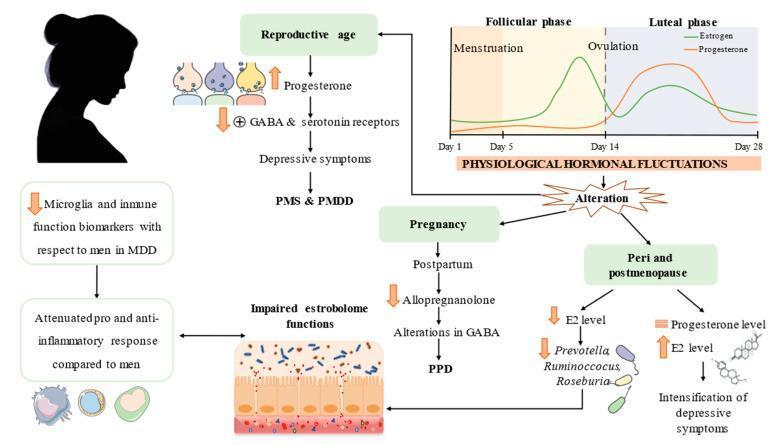
This pathophysiology diagram illustrates hallmarks of major depressive disorder (MDD) across various stages of the female reproductive lifespan, including reproductive age, pregnancy, and peri- and postmenopause. A line graph labeled 'Physiological Hormonal Fluctuations' depicts the 28-day menstrual cycle, showing estrogen peaks prior to ovulation (Day 14) and progesterone dominance during the luteal phase. A signaling pathway shows how progesterone fluctuations lead to GABA and serotonin receptor modulation, contributing to premenstrual syndrome (PMS) and premenstrual dysphoric disorder (PMDD). In the pregnancy/postpartum pathway, reduced allopregnanolone levels and GABA alterations are linked to postpartum depression (PPD). The peri- and postmenopausal section illustrates declining estradiol (E2) and progesterone, linked to the intensification of depressive symptoms. The diagram also highlights secondary factors, including impaired estrobolome function (gut-microbiome-estrogen axis) involving bacteria like Prevotella and Ruminococcus, and an immune component characterized by attenuated microglia and inflammatory responses compared to men. This visualization integrates endocrinology, neurobiology, and immunology to explain sex-specific vulnerabilities in mood disorders.
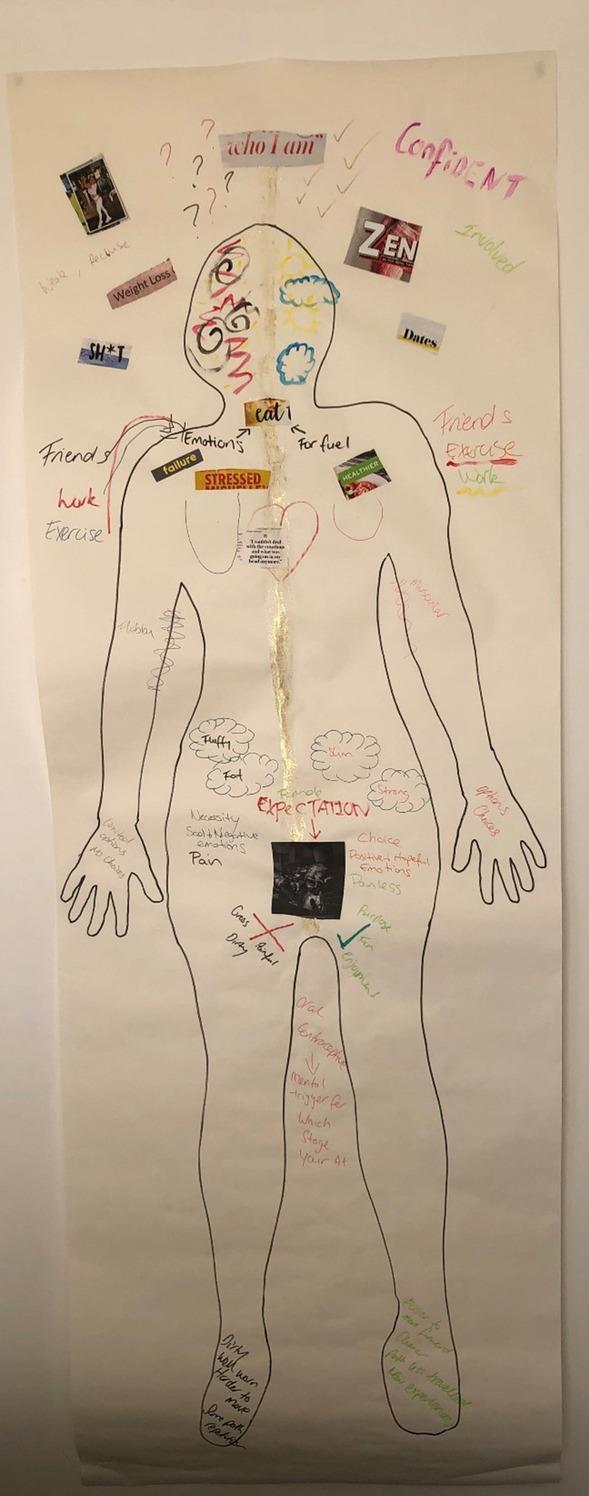
This visual content is a clinical qualitative tool known as a 'body map,' used in psychology and women's health to illustrate the embodied experience of Premenstrual Syndrome (PMS). The diagram features a life-sized human silhouette divided into two sides, representing the contrast between the premenstrual phase and the rest of the cycle. The left side (premenstrual) is densely populated with negative annotations and symbols, including terms like 'failure,' 'STRESSED,' 'Weight Loss,' 'Pain,' and 'Dirty,' accompanied by red crosses and images of a thin female figure to represent body dissatisfaction. The head region contains swirling lines and question marks labeled 'who I am,' signifying cognitive clouding or identity disruption. In contrast, the right side features positive descriptors like 'Confident,' 'ZEN,' 'Strong,' 'Painless,' and 'Enjoyment' with green checkmarks. Central themes include the 'Female Expectation' of thinness, the use of 'Oral Contraceptives,' and the impact on daily activities like 'Exercise' and 'Work.' This illustration serves as an educational tool for healthcare providers to understand the psychosocial and physical dimensions of premenstrual distress through the patient's subjective narrative.
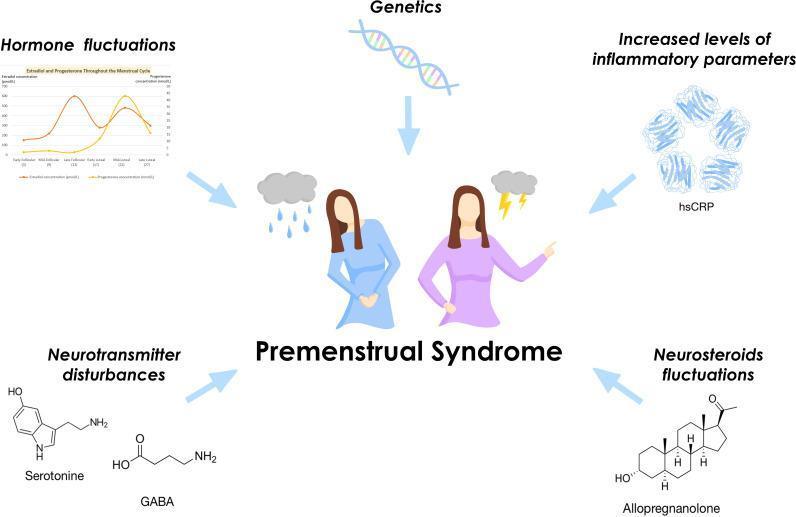
A pathophysiology diagram illustrating the multifactorial etiology of Premenstrual Syndrome (PMS). The central focus features two human figures depicting somatic and psychological symptoms, labeled 'Premenstrual Syndrome'. Surrounding this center are five key influencing factors: 1) Hormone fluctuations, shown via a graph of estradiol and progesterone levels throughout the follicular and luteal phases; 2) Genetics, represented by a DNA double helix; 3) Increased levels of inflammatory parameters, specifically high-sensitivity C-reactive protein (hsCRP) molecular structures; 4) Neurosteroid fluctuations, illustrated by the chemical structure of allopregnanolone; and 5) Neurotransmitter disturbances, depicted by the molecular structures of Serotonin and GABA. This educational graphic synthesizes hormonal, biochemical, and genetic contributors to the clinical manifestation of PMS, emphasizing the complex interplay between systemic inflammation, steroidal metabolites, and neurotransmission in reproductive health.
Premenstrual Syndrome (PMS)
Definition
Epidemiology
- Approximately 50% of menstruating women have symptoms of varying severity
- Prevalence estimates range from 25-100% depending on definition used
- 3-5% of reproductive-age women have symptoms severe enough to interfere significantly with daily functioning - this end of the spectrum is classified as PMDD (Premenstrual Dysphoric Disorder)
- Most women seek help in their 30s, often after 10+ years of symptoms
- Many report onset at menarche; ~50% note worsening after childbirth; severity often increases with successive pregnancies and advancing age
- Goldman-Cecil Medicine, p. 2555
Pathophysiology
| Factor | Role |
|---|---|
| Hormone fluctuations | Normal cyclical changes in estradiol and progesterone trigger symptoms in vulnerable women - not abnormal hormone levels per se |
| Neurosteroid changes | Progesterone metabolite allopregnanolone is a positive allosteric modulator of GABA-A receptors; its fluctuations during the luteal phase alter GABAergic tone |
| Serotonin dysregulation | Estrogen and progesterone modulate serotonergic pathways; decreased serotonin activity in the luteal phase contributes to mood symptoms |
| Genetics | Women who are constitutionally sensitive to normal hormonal changes are at highest risk |
| Inflammation | Elevated hsCRP and other inflammatory markers have been found in women with PMS |
Clinical Features
Somatic Symptoms
- Abdominal bloating, weight gain, peripheral edema
- Breast engorgement and tenderness
- Headache, acne, clumsiness
- Constipation or diarrhea
- Alcohol intolerance
Emotional / Psychological Symptoms
- Irritability, mood swings, hostility
- Anxiety, panic attacks
- Depression, lethargy, fatigue
- Inability to concentrate
- Food cravings (especially salt and sugar)
- Insomnia, change in libido
- Withdrawal from others, marital discord
Diagnosis
- Best established by prospective daily symptom records kept over 2-3 months
- Less than 50% of women who self-report PMS are confirmed when such records are reviewed
- Records of emotions/behaviors should be kept separate from menstrual records to avoid confounding
- Screen for domestic abuse and other life circumstances that may contribute
- Goldman-Cecil Medicine, p. 2555
PMDD (Severe End of Spectrum) - DSM-5 Criteria
- Marked affective lability
- Marked irritability/anger/interpersonal conflict
- Marked depressed mood/hopelessness/self-deprecating thoughts
- Marked anxiety/tension
- Markedly interfere with work, family, or academic responsibilities
- Not be an exacerbation of another existing disorder
- Be confirmed by at least 2 months of prospective daily ratings
Treatment
1. Lifestyle Measures (First-line for mild PMS)
- Daily mild aerobic exercise
- Reduction in caffeine, salt, refined sugar (especially in the luteal phase)
- Smoking cessation
- Regular meals with complex carbohydrates
- Adequate sleep and stress reduction
- Goldman-Cecil Medicine, p. 2555
2. Non-Hormonal Pharmacotherapy
| Agent | Use | Notes |
|---|---|---|
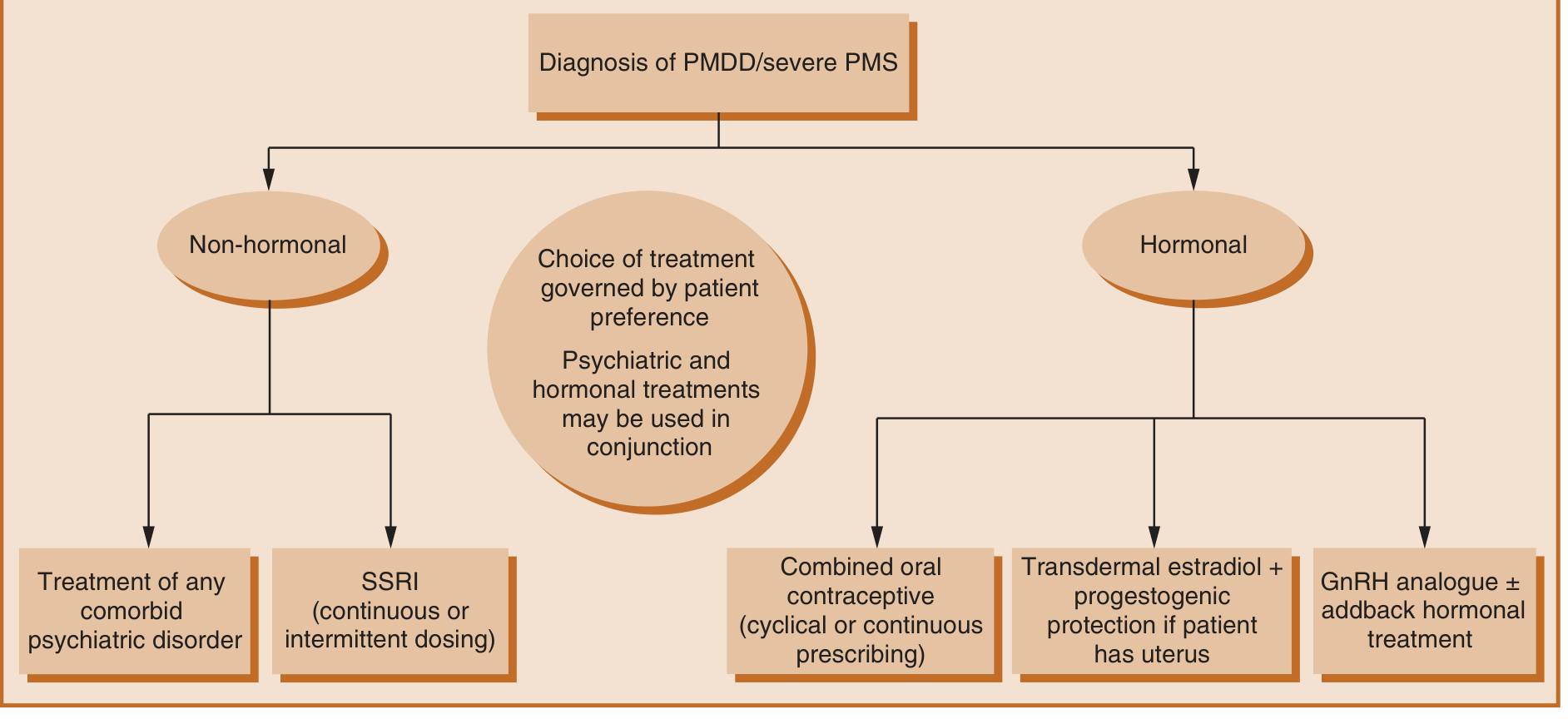
| SSRIs (e.g., fluoxetine 10-20 mg, sertraline) | First-line for PMDD; emotional symptoms | Can be given continuously or intermittently (luteal phase only). Luteal-phase dosing works by directly promoting progesterone-to-allopregnanolone conversion, enhancing GABAergic tone |
| NSAIDs | Pain, headaches | Symptomatic relief |
| Spironolactone (up to 100 mg/morning) | Cyclic edema | Mild diuretic, antiandrogenic |
| Anxiolytics/mild sedatives | Insomnia, anxiety | Short-term, as needed |
| Bromocriptine (2.5 mg twice daily, off-label) | Mastalgia | Evidence limited |
| Danazol (100-400 mg/day, off-label) | Mastalgia | Evidence limited |
3. Hormonal Pharmacotherapy
| Agent | Notes |
|---|---|
| Combined oral contraceptive pill (COCP) | First-line hormonal option. Can be prescribed cyclically or continuously (e.g., 3 months back-to-back). Drospirenone/EE (3 mg/20 μg) on a 24/4 schedule is widely used. Improves overall symptoms but not specifically premenstrual depressive symptoms |
| Transdermal/percutaneous estradiol (bioidentical, continuous) | Second-line if COCP fails; requires progestogen cover if uterus is present |
| GnRH agonists ± addback therapy | Induce reversible medical menopause. Used as a diagnostic test for PMDD or before surgical decision. Requires estradiol ± progestogen addback to prevent menopausal side effects |
4. Surgical (Last Resort)
PMDD/Severe PMS - Management Flowchart
What Does NOT Work (Common Misconceptions)
- Natural progesterone (vaginal suppositories) - not of documented benefit
- Large doses of multivitamins - not of documented benefit
- Oil of evening primrose - not of documented benefit
- St. John's wort - studies contradictory, no validated benefit
- Berek & Novak's Gynecology; Goldman-Cecil Medicine
Prognosis
Recent Evidence (2024-2025)
- A 2024 Cochrane review on SSRIs for PMS/PMDD (PMID 39140320) confirms their efficacy across different agents and dosing regimens
- A 2024 systematic review on biological rhythms in PMS/PMDD (PMID 39375682) highlights the role of circadian and sleep dysregulation in pathogenesis
- A 2025 systematic review of nutritional interventions (PMID 38684926) found some benefit from dietary modifications (calcium, magnesium, vitamin B6) on psychological symptoms, warranting further RCT confirmation