
Swelling over left elbow joint case sheet orthopaedics and importantpoints
Reading File
Now let me search the library for relevant content on elbow swelling in orthopaedics, along with a web search for case sheet format.
Finding Sources
Finding Sources
Finding Sources
Searching the Web
orthopaedics case sheet swelling over left elbow joint clinical examination important points
Finding Sources
Finding Sources
Finding Sources
Reading File
Reading File
Reading File
Finding Sources
Finding Sources
Searching Images
elbow joint swelling olecranon bursitis clinical examination orthopaedics
Now I have enough material. Let me compile the comprehensive orthopaedic case sheet.
🦴 Orthopaedics Case Sheet: Swelling Over Left Elbow Joint
PART I — CASE SHEET FORMAT
SECTION 1: PATIENT IDENTIFICATION
| Field | Details |
|---|---|
| Name | |
| Age / Sex | |
| Occupation | |
| Address | |
| IP/OP Number | |
| Date of Admission | |
| Referred by |
SECTION 2: CHIEF COMPLAINT
Swelling over the left elbow joint since _______ (duration)
- ± Pain
- ± Restriction of movement
- ± Redness / warmth
SECTION 3: HISTORY OF PRESENTING ILLNESS
For each complaint, ask:
- Onset — Sudden (trauma/infection) or gradual (chronic/inflammatory)?
- Duration — Acute (<2 wks) vs. chronic (>2 wks)
- Progression — Increasing / static / decreasing in size
- Site — Posterior (olecranon bursa, triceps), anterior (cubital fossa), medial, lateral
- Character of swelling — Soft/fluctuant (bursitis, effusion), firm (lipoma, ganglion), hard (bony, osteochondroma)
- Pain — Present or absent; if present: severity, character (aching, throbbing), aggravating/relieving factors
- H/o trauma — Specific blow, fall on outstretched hand, repetitive pressure (leaning on elbow), occupational exposure (plumbing, gardening, carpet laying → "student's elbow")
- Fever / chills — Suggests septic bursitis / septic arthritis
- Constitutional symptoms — Weight loss, loss of appetite, night sweats (tuberculosis, malignancy)
- H/o preceding skin breach — Insect bite, abrasion, puncture wound over olecranon (entry point for septic bursitis)
- H/o joint disease elsewhere — Rheumatoid arthritis, gout (uric acid tophi at elbow), psoriatic arthritis
- H/o similar swelling in past — Recurrent bursitis
SECTION 4: PAST HISTORY
- H/o tuberculosis / contact with TB
- H/o diabetes mellitus (immunocompromised → septic bursitis)
- H/o steroid use / fluoroquinolone use → tendinopathy
- H/o malignancy
- H/o previous surgeries around elbow
SECTION 5: PERSONAL / SOCIAL HISTORY
- Occupation (manual laborer, plumber, gardener, student → repetitive elbow pressure)
- Smoking (associated with distal biceps tendon rupture)
- Alcohol use (gout)
- Diet (purine-rich → gout)
SECTION 6: FAMILY HISTORY
- H/o gout, rheumatoid arthritis, psoriasis in family
SECTION 7: DRUG HISTORY
- NSAIDs, steroids, fluoroquinolones, allopurinol, methotrexate
PART II — CLINICAL EXAMINATION
GENERAL EXAMINATION
- Built, nourishment, pallor, icterus, cyanosis, clubbing, lymphadenopathy, edema
- Temperature (fever → infection), pulse, BP, respiratory rate
- Skin — rheumatoid nodules, gouty tophi (ear, other joints), psoriatic plaques
LOCAL EXAMINATION OF LEFT ELBOW
A. INSPECTION (Look)
Position of patient: Seated, arm relaxed at side, compare both elbows
| Finding | Significance |
|---|---|
| Site of swelling | Posterior (olecranon bursa), lateral (radial head effusion), antecubital fossa (lipoma, ganglion) |
| Size & shape | Hemispherical, well-defined (olecranon bursitis); diffuse (joint effusion) |
| Skin over swelling | Erythematous + warm → septic/gouty; normal skin → traumatic/aseptic |
| Sinus / scar | TB bursitis (sinuses), previous surgery |
| Carrying angle | Cubitus valgus (>15°) → post-lateral condyle fracture; cubitus varus ("gunstock deformity") → malunited supracondylar fracture |
| Valgus deformity | Tardy ulnar nerve palsy (late complication of cubitus valgus) |
| Muscle wasting | Disuse atrophy of forearm muscles |
B. PALPATION (Feel)
| Parameter | Normal / Abnormal |
|---|---|
| Temperature | ↑ in septic bursitis, gout; normal in aseptic bursitis |
| Tenderness | Present in septic / gouty; absent in aseptic bursitis |
| Fluctuation test | Two-finger test → positive in fluid-filled swelling (bursitis, effusion) |
| Consistency | Soft & cystic (bursa/ganglion), firm (lipoma), hard (bony exostosis, osteochondroma) |
| Surface | Smooth (bursa), irregular (tophi, malignancy) |
| Transillumination | Positive in clear fluid (ganglion); negative in blood / pus |
| Reducibility | Not reducible in bursitis; reducible in ganglion |
| Bony landmarks — "Triangle of Elbow" | Medial epicondyle, lateral epicondyle, olecranon — in extension: all three in a straight line; in 90° flexion: equilateral triangle (Hueter's line / triangle) — disturbed in fractures |
| Tenderness over epicondyles | Lateral → Tennis elbow (lateral epicondylitis); Medial → Golfer's elbow (medial epicondylitis) |
| Ulnar nerve | Palpate in cubital tunnel: thickened, tender, subluxing? |
| Radial head | Tenderness → radial head fracture |
| Joint line tenderness | Medial/lateral → ligamentous injury |
⚠️ Important: Olecranon bursitis swelling is posterior and separate from the joint — elbow flexion/extension is preserved, differentiating it from a true joint effusion.
C. RANGE OF MOVEMENT (Move)
| Movement | Normal ROM | Note |
|---|---|---|
| Flexion | 0–145° | Limited in joint effusion, arthritis |
| Extension | 0° (or -10° hyperextension) | Limited in joint effusion |
| Pronation | 0–80° | Limited in radial head pathology |
| Supination | 0–80° | Limited in radial head pathology |
- Flexion limited by pain in bursitis = tightening of skin over inflamed bursa
- Full painless movement = suggests isolated olecranon bursitis (not joint pathology)
D. SPECIAL TESTS
| Test | Condition |
|---|---|
| Tennis elbow test (Cozen's / Mill's) | Lateral epicondylitis |
| Valgus stress test | Medial collateral ligament laxity |
| Varus stress test | Lateral collateral ligament laxity |
| Tinel's sign at cubital tunnel | Ulnar nerve entrapment (cubital tunnel syndrome) |
| Moving valgus stress test | UCL instability |
| Pivot-shift test (posterolateral rotatory instability) | Lateral ligament complex injury |
E. NEUROVASCULAR EXAMINATION
- Ulnar nerve — Intrinsic muscle power (1st dorsal interosseous), sensation little finger / hypothenar, Froment's sign
- Radial nerve / PIN — Wrist and finger extension
- Median nerve — "OK sign," sensation index finger pulp
- Radial pulse — Compare both sides
- Brachial artery — In supracondylar fractures (absent pulse = emergency)
PART III — INVESTIGATIONS
| Investigation | Purpose |
|---|---|
| X-ray elbow AP & Lateral | Fracture, dislocation, loose bodies, calcific deposits, bony spurs, periosteal reaction (TB), soft tissue shadow of bursitis |
| Ultrasound elbow | Confirm fluid in bursa, assess wall thickness, vascularity (Doppler), guide aspiration |
| MRI elbow | Soft tissue masses, tendon tears (biceps/triceps), ligamentous injury, occult fractures |
| Bursal fluid aspiration | Key test: differentiate septic vs. non-septic |
| Bursal fluid analysis | WBC count, Gram stain, culture & sensitivity, crystals (uric acid = gout; calcium pyrophosphate = pseudogout) |
| Serum uric acid | Gout |
| CBC, ESR, CRP | Infection, inflammation |
| Rheumatoid factor / Anti-CCP | Rheumatoid arthritis |
| Mantoux / CBNAAT / Biopsy | Tuberculosis bursitis |
| Blood glucose | Diabetes (immunocompromised host) |
Bursal Fluid Interpretation
| Type | Appearance | WBC/mm³ | Gram Stain | Crystals |
|---|---|---|---|---|
| Traumatic / Aseptic | Straw-colored / serosanguineous | <1,000 | Negative | None |
| Septic | Purulent / serosanguineous | >10,000 (mean ~54,000) | Positive in 70% | None* |
| Crystal-induced (gout) | Straw to bloody | 1,000–6,000 | Negative | Uric acid crystals |
*Crystals do not rule out co-infection — Tintinalli's Emergency Medicine
PART IV — DIFFERENTIAL DIAGNOSIS
Swelling over left elbow — Differential Diagnosis (by site):
Posterior Elbow
- Olecranon bursitis (most common) — traumatic / aseptic / septic / gouty / rheumatoid
- Distal triceps tendon rupture — pain + swelling proximal to olecranon, diminished extension
- Tophaceous gout — firm, irregular, uric acid crystals
- Rheumatoid nodule — firm, subcutaneous, over pressure points
- TB cold abscess / bursitis — painless, fluctuant, sinus formation, no heat
Joint Effusion (Lateral / Diffuse)
- Septic arthritis — hot, red, painful, restricted all movements
- Rheumatoid arthritis — bilateral, morning stiffness, systemic features
- Post-traumatic hemarthrosis — following fracture/dislocation
Bony Swellings
- Osteochondroma (sessile/pedunculated) — hard, non-tender, arising from bone
- Malignant bone tumor (osteosarcoma, chondrosarcoma) — rare
PART V — DIAGNOSIS
(To be completed after investigations)
Most likely diagnosis: Olecranon bursitis (aseptic / septic / gouty) depending on clinical features
PART VI — MANAGEMENT
Non-septic / Aseptic Bursitis
- Compression bandage, ice packs
- NSAIDs (ibuprofen / naproxen)
- Avoidance of precipitating activity (elbow padding)
- Aspiration (diagnostic + therapeutic) — relieves pressure and pain
- Intra-bursal corticosteroid injection (after ruling out infection)
- Surgery (bursectomy) — for refractory cases
Septic Bursitis
- Aspiration and drainage of bursa
- Antibiotics: cover Staphylococcus aureus (most common organism, 80–90% of cases)
- Empirical: Co-trimoxazole DS BD or Doxycycline 100 mg BD × 10–14 days (oral)
- If immunocompromised / severe: IV Vancomycin 15–20 mg/kg
- MRSA coverage included empirically
- Surgical incision and drainage if refractory
- Re-check within 24–48 hours
Gouty Bursitis
- Colchicine / NSAIDs (acute attack)
- Long-term: Allopurinol (reduce uric acid), dietary modification
TB Bursitis
- Anti-tubercular therapy (ATT) × 9–12 months
- Surgical debridement / excision if refractory
PART VII — IMPORTANT POINTS (High-Yield Exam Points)
Anatomy
- The olecranon bursa is the only bursa of the elbow joint — located between skin and olecranon process.
- Cubital fossa contents (lateral to medial): Really Need Beer To Be Very Nice — Radial nerve, N. (biceps tendon), Brachial artery, Bicipital aponeurosis, Vein (median cubital).
- Hueter's triangle (equilateral at 90° flexion, straight line at full extension) — disrupted in supracondylar fracture, intact in simple elbow dislocation.
Clinical
- Key differentiating point: In olecranon bursitis, elbow flexion and extension are preserved (bursa is extra-articular). In joint effusion/arthritis, movement is restricted.
- "Student's elbow" / "Miner's elbow" = olecranon bursitis from repetitive pressure.
- "Popeye joint" = bulging olecranon bursitis appearance.
- Septic bursitis — acute onset, warm, erythematous, tender; fever in <50%; most common organism: Staphylococcus aureus.
- Entry point for infection — skin abrasion, insect bite, or puncture over posterior elbow → bacteria spread from skin flora.
- Cubitus valgus (>15°) — commonest cause: malunited lateral condyle fracture in children → late complication = tardy ulnar nerve palsy.
- Cubitus varus / Gunstock deformity — commonest cause: malunited supracondylar fracture → cosmetic deformity, no neurological complication usually.
Investigations
- Bursal fluid WBC >10,000/mm³ → septic; <1,000/mm³ → aseptic.
- Bursal fluid: serum glucose ratio <50% in 90% of septic cases → diagnostic.
- Gram stain positive in 70% of septic bursitis.
- Crystals do not rule out infection (co-infection with gout + septic bursitis possible).
- X-ray soft tissue shadow may show olecranon bursitis; bony spurs in chronic cases.
Surgical Anatomy
- Nerve at risk in lateral epicondyle surgeries: posterior interosseous nerve (PIN) / deep branch of radial nerve.
- Nerve at risk in medial epicondyle / cubital tunnel: ulnar nerve.
- Anterior transposition of ulnar nerve = treatment for cubital tunnel syndrome / tardy ulnar palsy.
PART VIII — CLINICAL IMAGE
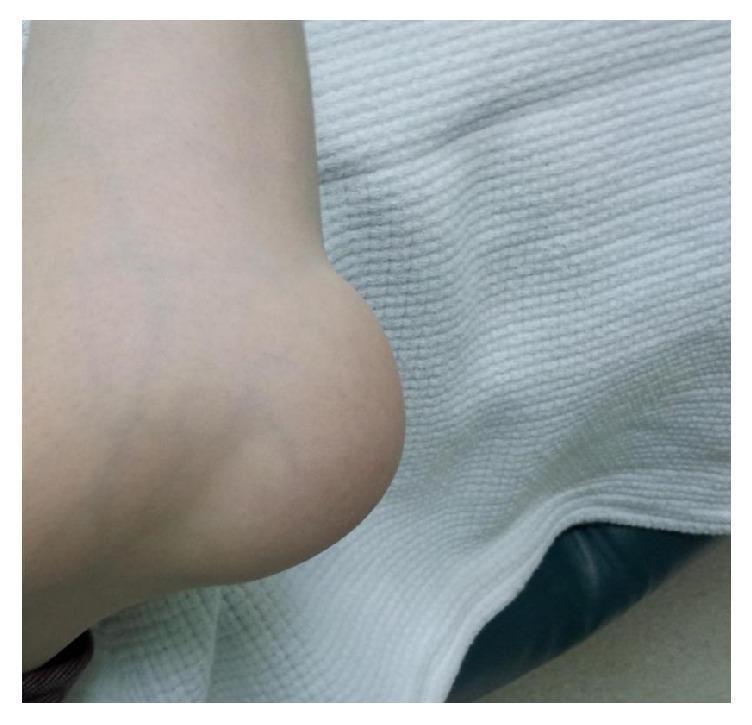
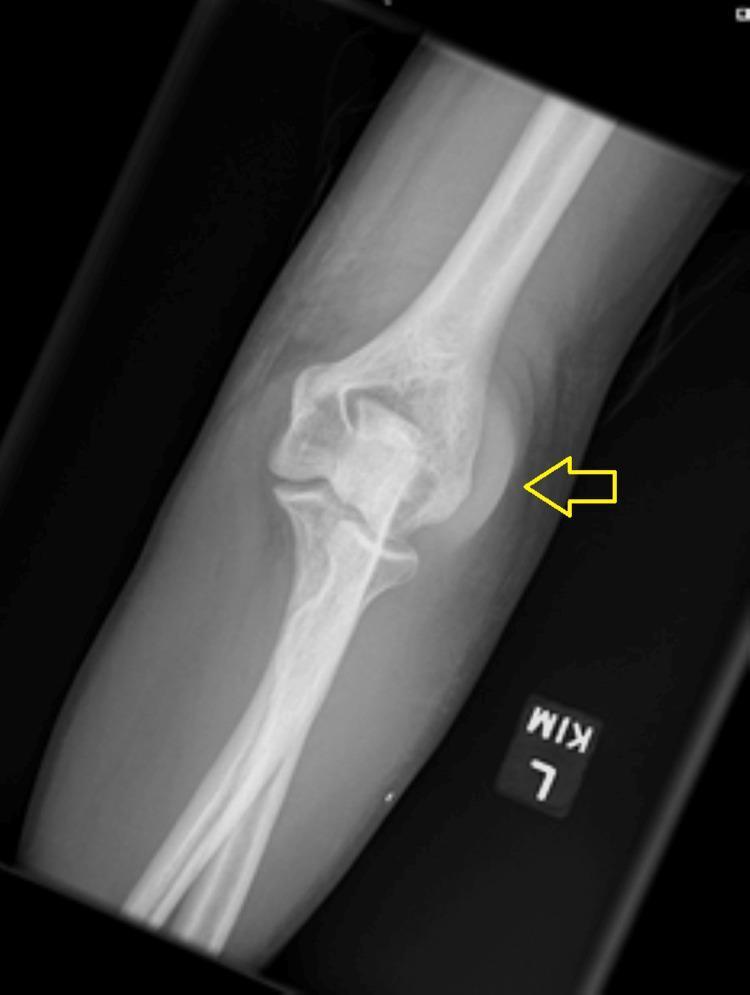
Quick Summary Card
| Feature | Aseptic Bursitis | Septic Bursitis | Gouty Bursitis |
|---|---|---|---|
| Onset | Gradual | Acute | Acute/Recurrent |
| Pain | Mild / absent | Severe | Severe |
| Skin | Normal | Red, warm | Red, tophi may be present |
| Fever | Absent | Present (<50%) | Absent/low grade |
| WBC fluid | <1,000 | >10,000 | 1,000–6,000 |
| Crystals | Absent | Absent* | Urate crystals |
| Treatment | NSAIDs, compression | Antibiotics + drainage | Colchicine, allopurinol |
Sources: ROSEN's Emergency Medicine; Tintinalli's Emergency Medicine; Roberts & Hedges' Clinical Procedures in Emergency Medicine; Miller's Review of Orthopaedics 9e; Goldman-Cecil Medicine
Management?
Finding Sources
Finding Sources
Searching PubMed
"olecranon bursitis" AND treatment
Reading File
Finding Sources
Reading Article
PMID: 37945181
Reading File
Finding Sources
Your credits are exhausted. Your daily credits reset tomorrow, or you can purchase a top-up for more.
This is a shared conversation. Sign in to Orris to start your own chat.